Jade and cream make a useful two-color combination for textured crochet slipper socks because each shade can take a different visual role. Jade can carry the larger foot and ankle sections, while cream can pick out ribbing, raised stitches, cuffs, toes, or other areas where extra separation helps the crochet texture remain visible.

The most important choice is where to make the color change. Slipper socks have several natural divisions—the toe, foot, heel, ankle, and cuff—and using those boundaries usually creates a cleaner result than scattering small patches of cream throughout a jade background. These 11 ideas explore different ways to distribute the same palette while keeping texture central to the finished pair.
Quick List
- Jade Body And Cream Shell Cuff Crochet Textured Slipper Socks
- Jade And Cream Post Stitch Crochet Slipper Socks
- Cream Ridged And Jade Led Crochet Textured House Slipper Socks
- Jade Body And Cream Mini Bean Cuff Crochet Slipper Socks
- Jade And Cream Crocodile Texture Crochet Slipper Socks
- Jade And Cream Back Loop Ribbed Crochet Slipper Socks
- Jade Led And Cream Trimmed Knit Look Crochet Slipper Socks
- Cream Puff Stitch And Jade Crochet Textured Slipper Socks
- Jade And Cream Tall Crochet Textured Slipper Socks
- Jade Foot And Cream Cuff Crochet Slipper Socks
- Cream Bordered Jade One Piece Crochet Textured Slipper Socks
Let Jade Lead Without Hiding Crochet Slipper Sock Texture
Jade can cover most of a slipper sock without making the design feel flat, provided the texture creates enough surface variation. On pronounced post stitches, ribs, shells, or puffed sections, using one uninterrupted jade field may actually help the raised work remain easier to follow than frequent color changes would.
Cream is most useful where it clarifies a boundary. A cream cuff above a jade foot, a cream toe against a jade body, or a narrow cream edge around the opening gives the eye a clear transition without competing with the texture.
Use Cream Where Jade Crochet Texture Needs More Separation
A light cream can emphasize raised crochet details when the jade yarn is medium or dark. Instead of placing cream randomly between textured stitches, give it a specific role: a cuff, ridge section, toe, heel, trim, or repeated narrow band.
Check the yarns side by side before committing to the pair. If your jade is unusually pale, cream may produce only subtle value contrast. That can work for a soft tonal result, but it will not define small textured areas as strongly as a deeper jade paired with the same cream.
1. Jade Body And Cream Shell Cuff Crochet Textured Slipper Socks
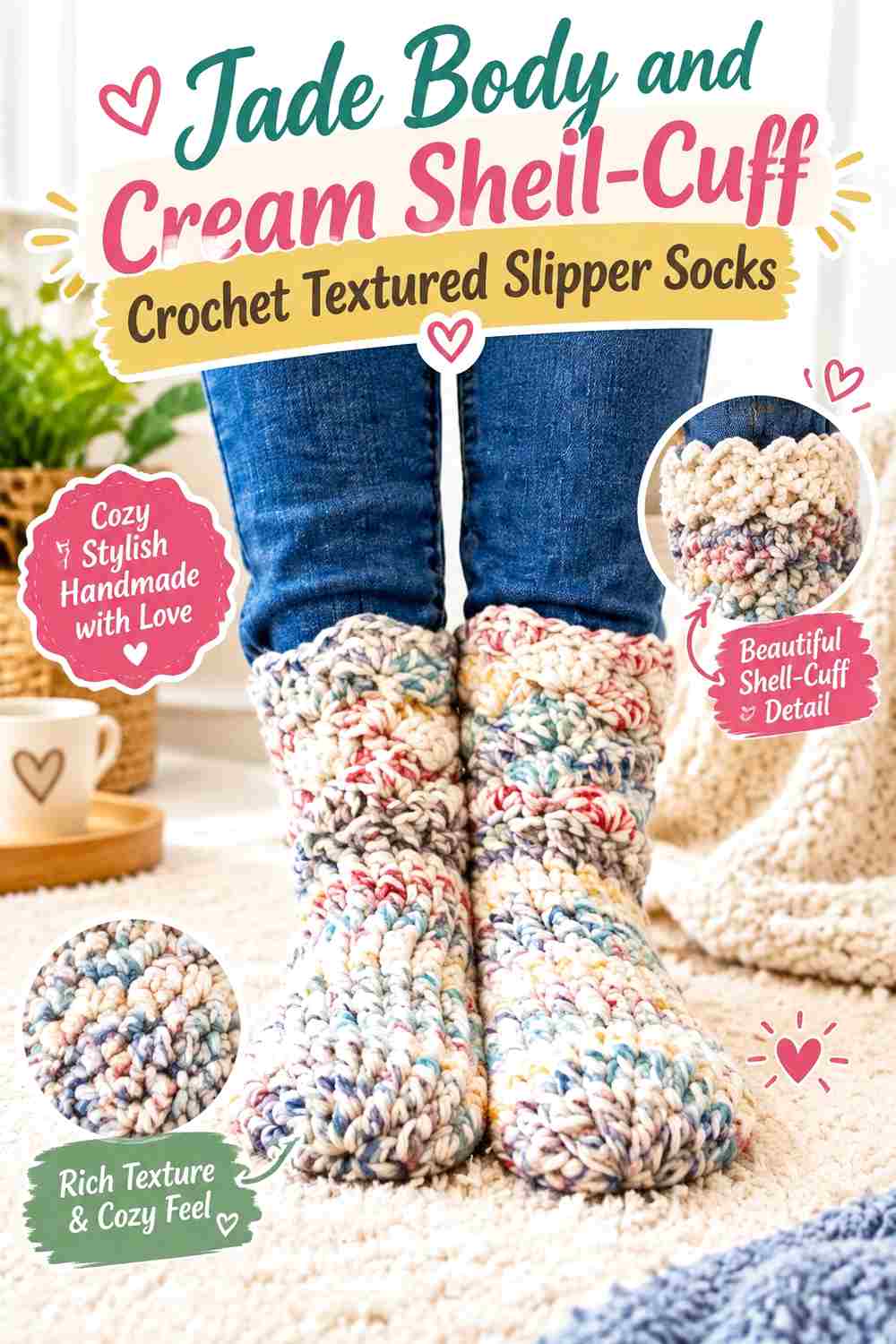
This version keeps jade across the toe, foot, and lower ankle while reserving cream for the more decorative upper texture. The color division gives the slipper sock a clear hierarchy: jade establishes the wearable base, and cream becomes the lighter finish around the ankle.
Jade Keeps the Crochet Slipper Sock Foot Visually Continuous
Let jade run through most of the foot when the sock already contains noticeable stitch texture. Keeping that area in one color allows the ridges and shaping to create the visual changes instead of breaking the foot into multiple small bands.
Cream Makes the Jade Slipper Sock Cuff Easier to Read
A cream upper section can give shell-like or decorative cuff texture more separation from the jade foot. Keep the cream concentrated around the ankle rather than repeating it throughout every textured section; that preserves a stronger jade-led design.
Jade Can Return Above a Cream Textured Cuff Detail
If the cuff has enough height for another color decision, a narrow jade finishing edge can reconnect the top with the foot. The repetition works best when it remains smaller than the main jade body rather than creating three equal color blocks.
Creator Credit: B.Hooked Crochet
2. Jade And Cream Post Stitch Crochet Slipper Socks
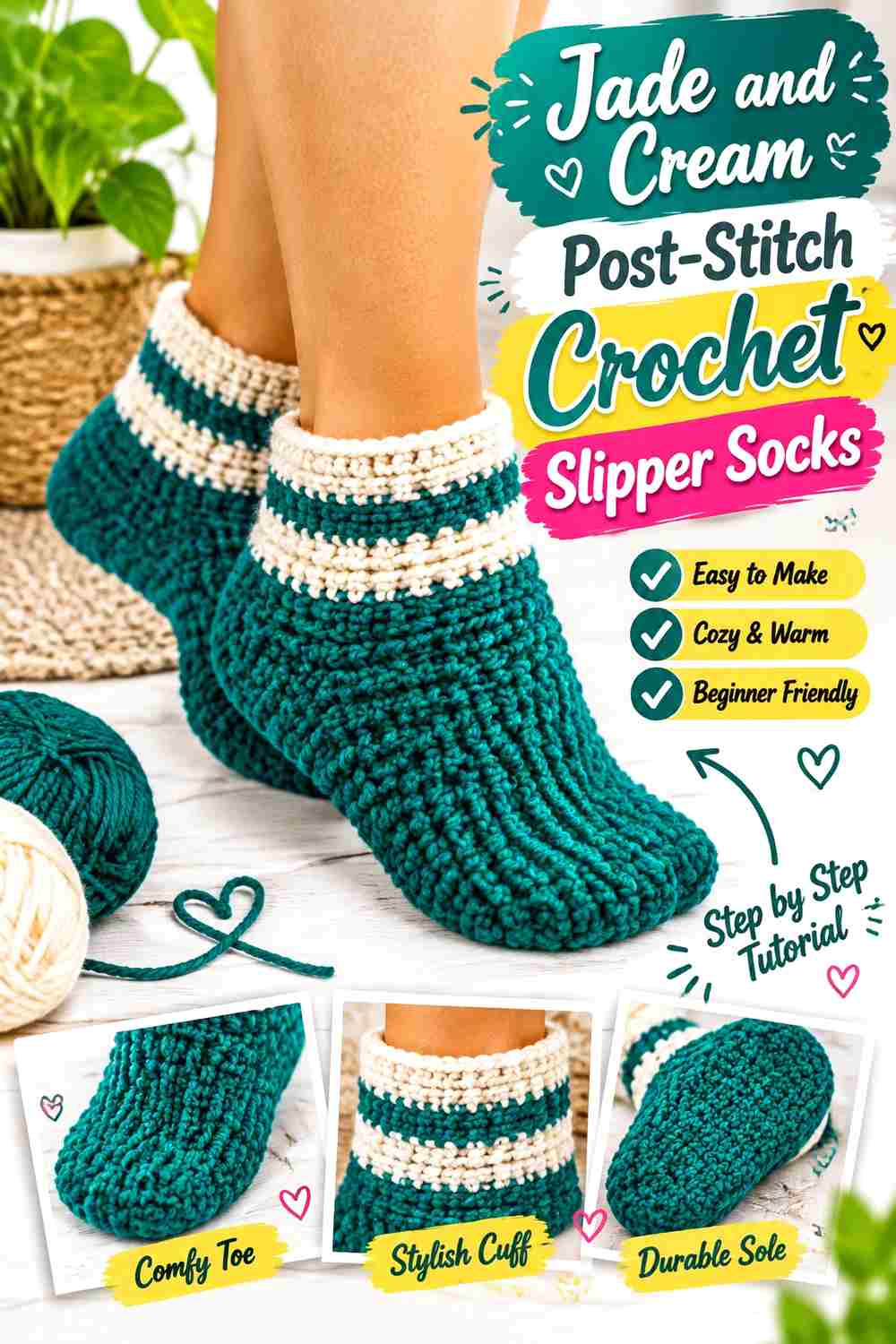
Post stitches produce pronounced vertical texture, making this construction well suited to a simple jade-and-cream split. Jade can dominate the foot and lower ankle, while cream defines the upper ribbed area so the change in texture and color occurs in the same place.
Jade Gives Post-Stitch Crochet Texture a Strong Main Field
Use jade across a substantial area of the slipper sock instead of changing colors between individual raised stitches. Alternating colors too frequently can compete with the shadow lines created by post-stitch texture.
Cream Separates the Jade Crochet Cuff From the Foot
Changing to cream at the cuff creates an obvious visual boundary between the foot and ankle. This is particularly useful when both areas use pronounced texture because the color change prevents the different surfaces from blending into one long section.
Jade Edging Can Reconnect a Cream Slipper Sock Cuff
A slim jade finishing line above cream can echo the body color without reducing the light appearance of the cuff. Keep this return of jade narrow if cream is supposed to remain the main texture-highlighting shade at the ankle.
Creator Credit: Littlejohn’s Yarn
3. Cream Ridged And Jade Led Crochet Textured House Slipper Socks

This palette direction uses jade for most of the slipper while giving cream selected areas around the top texture. Because raised front- and back-post-style surfaces already create alternating light and shadow, the yarn colors do not need to alternate stitch by stitch.
Jade Should Cover the Largest Crochet Slipper Surface
Keep the toe and main foot in jade so the slipper reads as one cohesive shape. This also lets pronounced crochet ridges remain the main surface feature instead of forcing the reader to process texture and frequent color changes simultaneously.
Cream Can Highlight the Jade Slipper Sock Opening
Cream around the opening creates a lighter frame above the darker jade foot. The location is practical visually because the top edge naturally marks the transition from foot to ankle.
Jade and Cream Need Clear Boundaries Around Raised Texture
If both shades appear within a ridged area, organize them into complete bands rather than scattered stitches. A full cream band followed by jade makes the texture easier to follow and keeps the pair visually matched.
Creator Credit: Stephanie Zed
4. Jade Body And Cream Mini Bean Cuff Crochet Slipper Socks

A textured cuff gives cream a natural place to become more prominent without taking over the entire slipper sock. Use jade for the larger foot and ankle sections, then let cream cover the cuff where smaller raised texture benefits from lighter visual separation.
Jade Keeps the Crochet Slipper Boot Body Grounded
Using jade across the foot creates a solid visual base beneath a more detailed cuff. Avoid introducing alternating cream stripes through the foot unless the body itself needs more contrast; the strong cuff already gives the second shade an important role.
Cream Brings Out the Jade Slipper Sock Cuff Texture
Cream can make small raised cuff details easier to distinguish, especially when the jade body is substantially darker. This is one place where a larger cream section makes sense because the change in color reinforces a genuine change in crochet texture.
Jade Can Define the Edge of a Cream Textured Cuff
A jade border along the uppermost edge can keep the cream cuff connected to the rest of the slipper. Repeat only enough jade to frame the cream rather than reducing the cuff to a narrow light stripe.
Creator Credit: A Crocheted Simplicity – Jennifer Renaud
5. Jade And Cream Crocodile Texture Crochet Slipper Socks

Dimensional scale-like texture already creates considerable visual detail, so this idea benefits from disciplined color placement. Use jade across the main slipper area and place cream in the textured cuff, or reverse a limited number of scale sections rather than alternating every detail.
Jade Prevents the Crochet Scale Texture From Becoming Too Busy
Keeping a large textured section in jade lets the dimensional stitch work supply the pattern. When every scale changes color, the eye may notice the color sequence before the texture itself.
Cream Can Separate Individual Jade Textured Cuff Areas
Cream works well as a controlled interruption within a jade-heavy upper section. A cream band or grouped section creates a brighter break while preserving the larger scale pattern.
Jade Should Repeat Around a Cream Slipper Sock Finish
If cream occupies most of the decorative cuff, returning to jade at the final edge or lower transition can tie the upper detail back to the foot. The repeated jade gives the two-color design more continuity.
Creator Credit: KnitcroAddict
6. Jade And Cream Back Loop Ribbed Crochet Slipper Socks

Back-loop construction creates long linear ribs that can carry two colors without requiring complicated placement. One effective approach is a jade-dominant ribbed body with cream limited to the toe-side or ankle-side portion, allowing the ribs to continue visually across the color boundary.
Jade Lets Crochet Ribbing Run Continuously Across the Sock
Use jade through most of the ribbed surface so the repeated lines remain the strongest visual feature. A large jade field also keeps the sideways construction from looking like a stack of unrelated narrow stripes.
Cream Can Mark One End of the Jade Ribbed Slipper Sock
Choose the toe or upper ankle for the main cream section rather than automatically placing cream at both ends. Concentrating the contrast makes the direction of the ribbing easier to appreciate.
Jade and Cream Ribbing Needs Consistent Color Placement Across the Pair
Because linear ribs make differences easy to spot, compare both slipper socks before finishing. Keep the jade-to-cream transition at corresponding positions so one sock does not appear to have a substantially larger cream section.
Creator Credit: Yay For Yarn
7. Jade Led And Cream Trimmed Knit Look Crochet Slipper Socks
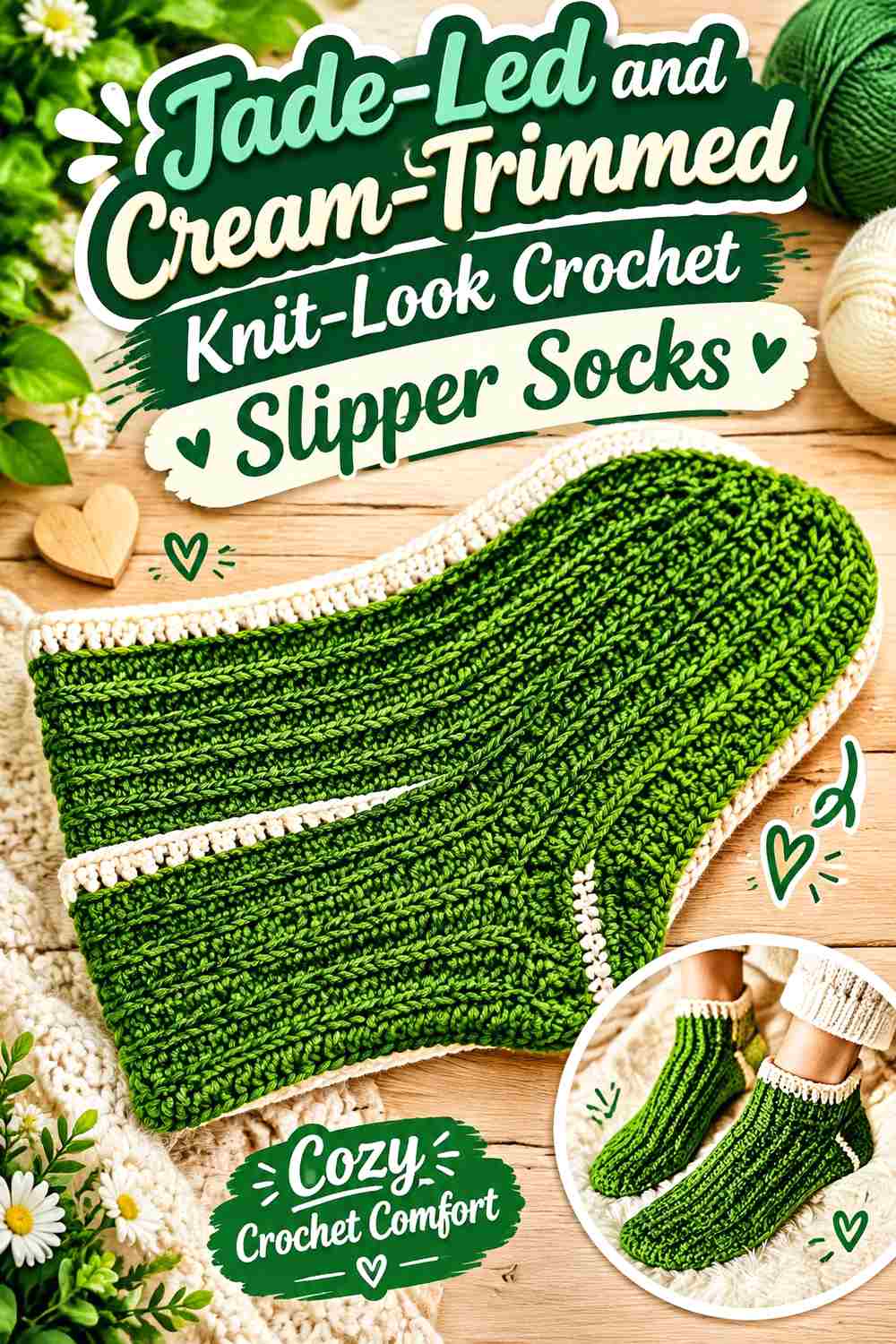
A crochet fabric with a knit-like surface benefits from restrained color blocking because the stitch texture itself is part of the appeal. Jade can cover almost the entire sock, while cream appears at the cuff and perhaps one additional structural area such as the toe or heel.
Jade Makes the Knit-Look Crochet Texture the Main Feature
Keep most of the fabric jade when you want the dense linear surface to remain uninterrupted. Frequent cream stripes would emphasize the stripe pattern instead of the knit-like texture.
Cream Gives the Jade Crochet Slipper Sock Cuff a Crisp Finish
A cream cuff introduces contrast at a natural stopping point. If the cuff is narrow, choose a cream that is visibly lighter than the jade so the change does not disappear into the textured surface.
Cream Toe Accents Need Restraint Against a Jade Sock Body
If you repeat cream at the toe, keep it smaller than the cuff. Using equally large cream sections at both ends can make the middle jade block feel isolated rather than dominant.
Creator Credit: NATESSA | Sacred Crochet Art
8. Cream Puff Stitch And Jade Crochet Textured Slipper Socks

Puff texture creates distinct raised points, making cream useful as a selective highlight. Rather than alternating every puff between jade and cream, group the lighter shade into one defined area so the texture stays readable.
Jade Gives Puff-Stitch Crochet Slippers a Strong Background
Use jade across the broader upper or foot section when you want the puff texture to create shadow without excessive color variation. A consistent jade base makes the raised surface easier to see as one connected design.
Cream Can Highlight a Jade Puff-Stitch Toe Section
A cream toe or upper band can draw attention toward the most textured portion of the slipper. Keep the color boundary aligned with the construction rather than changing shades halfway through individual raised details.
Jade Edging Helps Contain a Cream Textured Slipper Section
If cream occupies a prominent puff-stitch panel, a narrow jade border can prevent it from looking detached from the rest of the slipper. Repeating the dominant shade around the edge creates a visual frame.
Creator Credit: Handmade By Mei
9. Jade And Cream Tall Crochet Textured Slipper Socks

A taller slipper sock gives this two-color palette more vertical space. Jade can cover the foot and much of the leg while cream forms one or two broad ankle bands, creating contrast without reducing the tall silhouette to many short stripes.
Jade Should Dominate the Long Crochet Slipper Sock Section
Let jade continue from the toe through a substantial portion of the leg. The uninterrupted shade emphasizes the taller sock shape and provides a consistent background for the crochet surface.
Cream Bands Can Break Up a Tall Jade Slipper Sock
A broad cream section higher on the leg can prevent a long jade field from becoming visually heavy. Give the cream enough height to read as intentional rather than as an accidental single-round change.
Jade Can Finish the Cream Crochet Slipper Sock Cuff
Returning to jade at the top edge creates repetition between the foot and cuff. This three-part distribution—jade, cream, jade—works especially well when the middle cream section remains clearly smaller than the combined jade areas.
Creator Credit: Fiber Flux
10. Jade Foot And Cream Cuff Crochet Slipper Socks
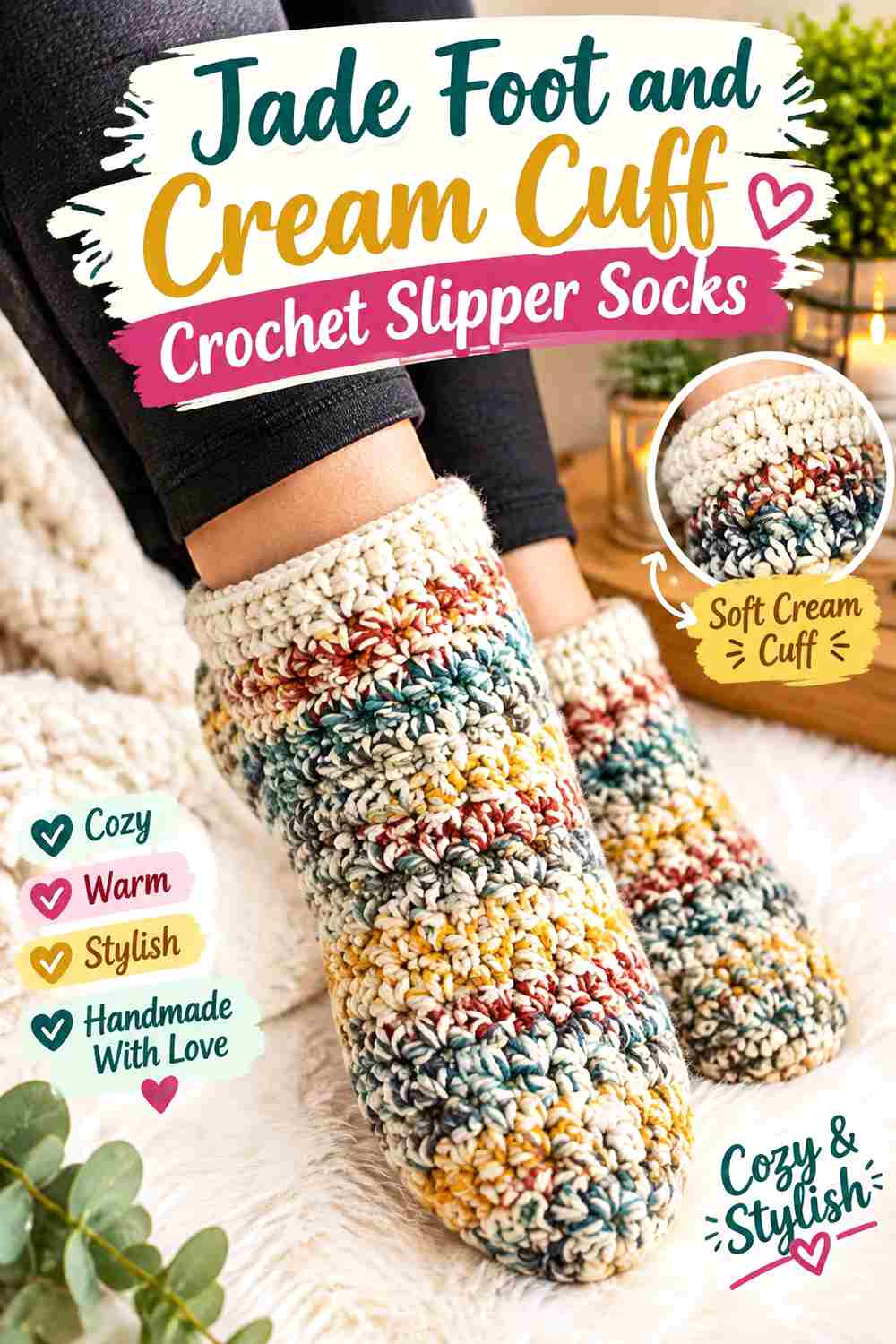
This is the most straightforward two-color arrangement: keep jade throughout the foot, then switch to cream at the ankle. The simple split is useful when the crochet sock construction already includes enough shaping and surface detail to keep the design interesting.
Jade Keeps the Crochet Slipper Sock Toe and Heel Connected
Using the same jade across toe, foot, and heel creates continuity around the parts of the sock that change direction. That reduces visual fragmentation and leaves cream free to define the upper opening.
Cream Gives the Jade Slipper Sock a Clear Ankle Transition
Start cream where the ankle section visibly begins. Aligning the color change with the change in shape makes the two-tone design look deliberate and helps the cuff read as a separate component.
Jade Can Be Repeated Sparingly Inside a Cream Cuff
If the cuff needs more connection with the foot, add one narrow jade accent rather than several alternating bands. Too much repetition would weaken the clean jade-foot-and-cream-cuff structure.
Creator Credit: Carroway Crochet
11. Cream Bordered Jade One Piece Crochet Textured Slipper Socks
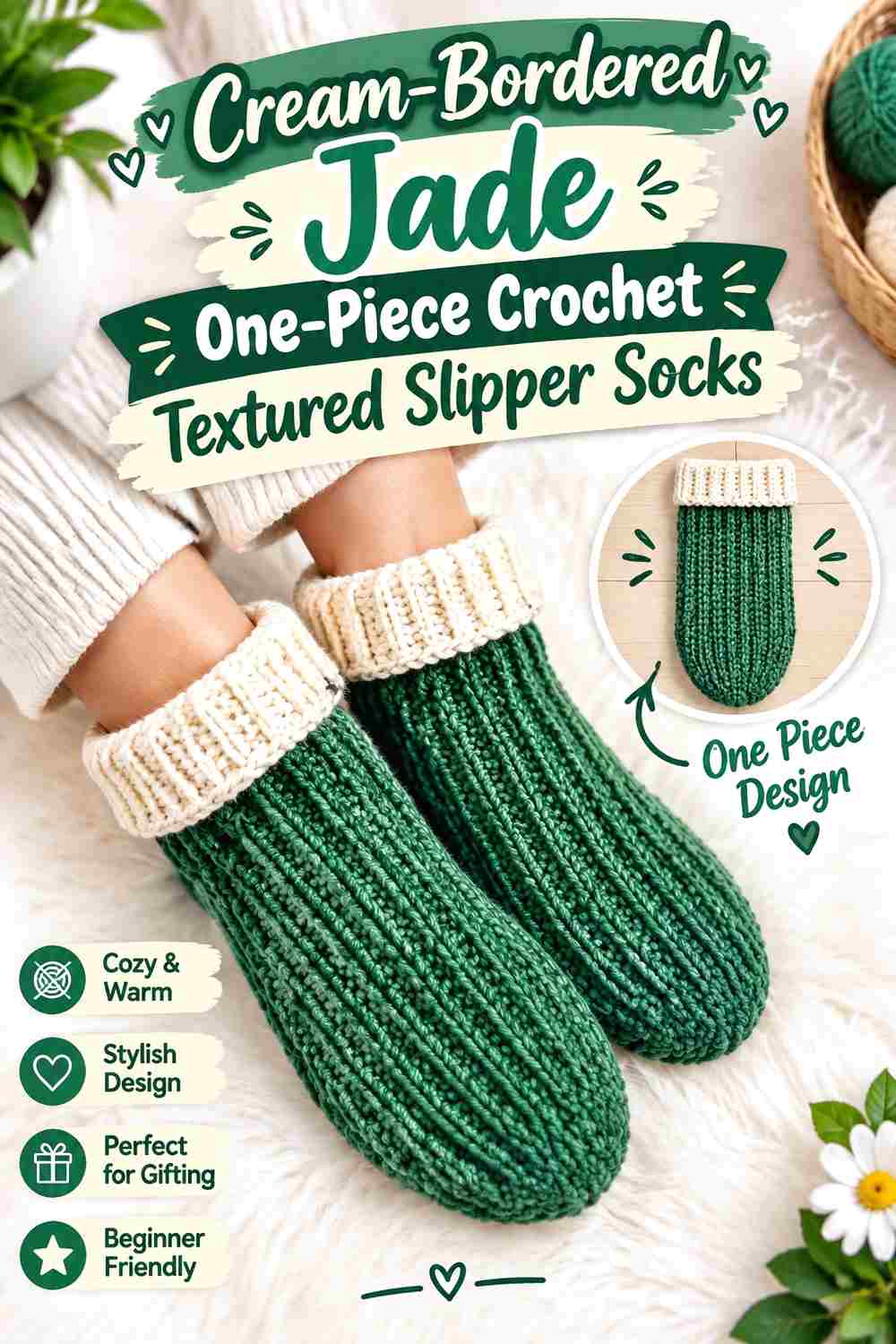
A one-piece construction is a good match for a mostly jade palette because the uninterrupted color reinforces the simple shape. Cream can be introduced after the main body as a border or opening detail, giving the finished slipper sock contrast without complicating the central surface.
Jade Suits the Continuous Crochet Slipper Sock Body
Work the broad one-piece surface in jade when you want construction and texture to remain easy to read. One dominant color also makes folds and seams less visually disruptive.
Cream Can Trace the Opening of a Jade One-Piece Slipper Sock
A cream border around the opening adds a lighter outline exactly where the foot enters the slipper. This is more purposeful than inserting small cream patches into the center of the jade body.
Jade and Cream Should Not Compete Along the Slipper Sock Seam
Keep seam-adjacent color changes simple. If cream is used as an edge, maintain it consistently around the intended opening rather than allowing uneven patches of cream to appear beside the jade seam.
Creator Credit: Sirin’s Crochet
Comparing Jade and Cream Textured Slipper Sock Directions
Choose a jade-dominant design when you want the crochet texture to carry most of the visual interest. The post-stitch, ribbed, knit-look, and one-piece options all benefit from larger uninterrupted jade areas.
Use more cream when you specifically want to emphasize a cuff or raised upper texture. Mini-bean, puff, shell, and crocodile-style surfaces give cream a strong reason to occupy a separate section because the lighter color can distinguish that detail from the jade foot.
For the cleanest two-color result, match the color change to an existing structural boundary. Toes, cuffs, heels, ankle transitions, and upper edges usually provide more intentional placement than unrelated color changes in the middle of the foot.
Conclusion
Jade and cream can create very different textured slipper socks depending on which shade receives the larger visual area. A mostly jade sock with a cream cuff keeps the palette calm and lets the crochet surface lead. A larger cream textured section creates stronger contrast and puts more attention on the ankle or upper detail.
For pronounced ribs, post stitches, and knit-look surfaces, fewer color changes generally keep the texture easier to see. For shells, puffs, mini-bean stitches, or dimensional cuffs, cream can be used more deliberately to separate the decorative texture from the jade foot.
Use the linked tutorials for their exact construction instructions, then plan the jade-and-cream distribution according to the texture you want to emphasize.
Frequently Asked Questions
Should jade or cream dominate textured crochet slipper socks?
Jade works well as the dominant shade when you want the slipper sock to have a strong continuous color field. Cream is particularly useful as a supporting shade around cuffs, toes, edges, or raised textured sections where lighter contrast can improve separation.
Where should cream go on jade crochet slipper socks?
Start with natural construction boundaries. The cuff, opening, toe, heel, or a distinct textured panel usually gives cream a clearer purpose than scattering it randomly across the jade body.
Will jade and cream show crochet texture clearly?
That depends partly on how light or dark the chosen jade is. A medium or deeper jade against cream usually creates clearer value separation. A pale jade and cream pairing produces a softer transition, which may make small raised details less obvious.
Can I alternate jade and cream in every textured crochet row?
You can, but consider what you want readers to notice first. Frequent color changes can turn a textured slipper sock into a stripe-focused design. Larger jade and cream sections usually let ribbing, shells, puffs, and post stitches remain more visible.
Should cream be used on both the toe and cuff of jade slipper socks?
It can be, but the two cream sections do not need equal visual weight. A substantial cream cuff paired with a much smaller cream toe detail usually preserves a clearer jade-dominant hierarchy.
How can I substitute a different jade yarn without changing the palette?
Preserve the relationship between the two colors. Choose a green that still reads as jade in your intended palette and remains sufficiently distinct from the cream. If strong texture visibility matters, prioritize a noticeable light-dark difference between the two yarns.
How do I keep two jade-and-cream slipper socks visually matched?
Compare the pair before finishing each major color section. Keep the jade-to-cream transitions in corresponding structural areas, especially around cuffs, toes, heels, and stripes, where even small placement differences can be noticeable.