Basketweave texture gives a Crochet sweater strong visual depth, while a turtleneck adds warmth and a clear winter silhouette. This guide compares seven verified sweater references that help readers study those two features without pretending every source combines them in exactly the same way. Two projects focus on true basketweave fabric, while the remaining designs show high-neck, mock-neck, colour-block, and top-down constructions that can guide your choice of shape. You will find practical notes on ease, collar height, yarn behaviour, seams, sleeve fit, and blocking. Use the ideas to decide whether you prefer an all-over raised texture, a smoother body with a dramatic collar, or a lighter knit-look finish. Each Crochet option links to a complete free page with visible project photos and working instructions.
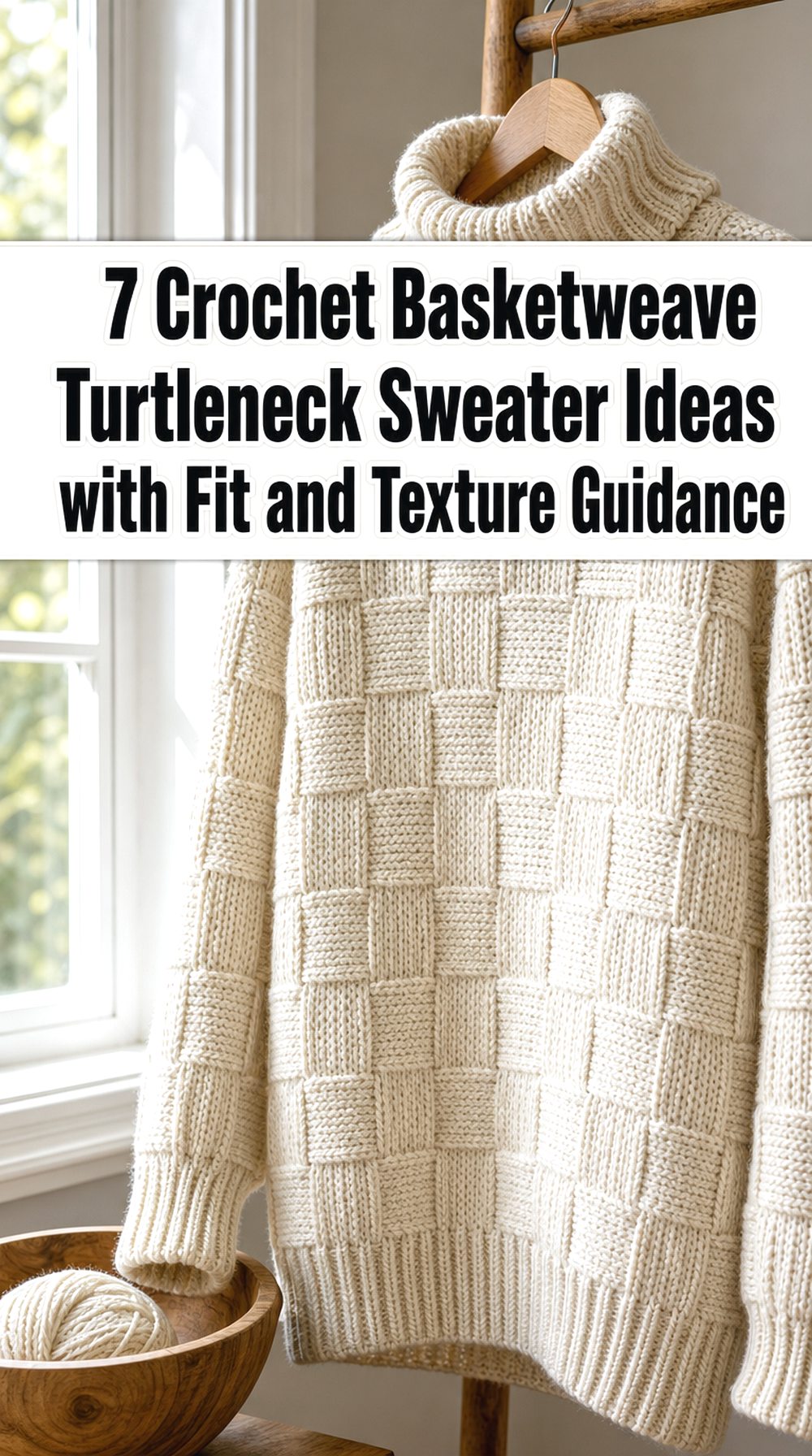
Quick List
- Crochet All-Over Basketweave Sweater with Ribbed Edges
- Crochet Centre-Panel Basketweave Pullover with Shaped Sleeves
- Crochet Colour-Block Turtleneck Sweater with V-Stitch Collar
- Crochet Classic Turtleneck Pullover with Relaxed Ease
- Crochet Knit-Look Turtleneck Sweater with Post-Stitch Ribbing
- Crochet Striped Mock-Neck Sweater with Adjustable Fit
- Crochet Top-Down Turtleneck Sweater with Colour Blocks
How to Choose a Crochet Basketweave Turtleneck Sweater for Fit and Comfort
Start with fit, because basketweave fabric can feel thicker and less fluid than a plain stitch. Compare the finished garment measurements with your body measurements and decide how much positive ease you want before choosing a size. Next, check the collar. A deep fold-over turtleneck needs enough stretch to pass comfortably over the head, while a mock neck can feel lighter and sit more neatly beneath a coat.
Yarn choice affects both texture and weight. A lofty yarn can make raised post stitches look bold, but too much bulk may create a stiff body or heavy neckline. Smoother yarns show the woven blocks clearly and are easier to inspect for consistent tension. Construction also matters: seamed panels offer predictable shaping, whereas top-down yokes let you try on the sweater as it grows. Finally, swatch the basketweave repeat and the collar ribbing separately. They may behave differently after blocking, so test both before committing to the full Crochet sweater.
Crochet All Over Basketweave Sweater with Ribbed Edges
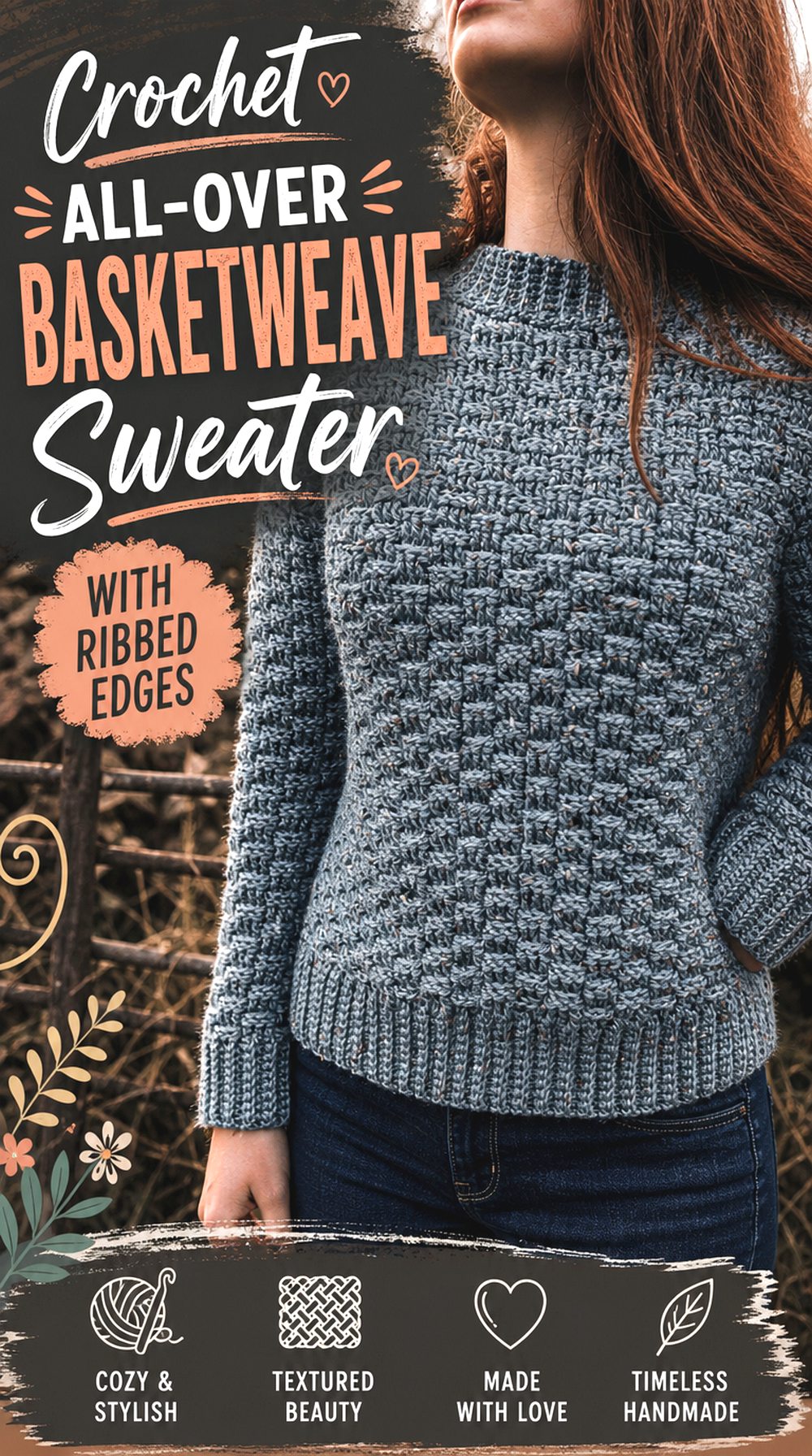
Design Details: This Crochet sweater uses front-post and back-post double crochet to create an all-over basketweave effect across the body and sleeves. Separate front, back, and sleeve panels begin with ribbed edges, then the finished pieces are seamed and completed with a ribbed neckline.
Best Use: The strong texture suits a winter pullover that can carry a solid or lightly flecked colour without looking plain. Its straight panel construction also makes the silhouette easy to compare against a favourite loose sweater.
Before You Choose: The raised fabric is visually substantial, so check the listed finished bust rather than relying only on the size label. A softer colour keeps the woven blocks visible without making the garment feel overly busy. The crew neckline is not a turtleneck, making this source most useful for studying basketweave body construction.
Crochet Centre Panel Basketweave Pullover with Shaped Sleeves
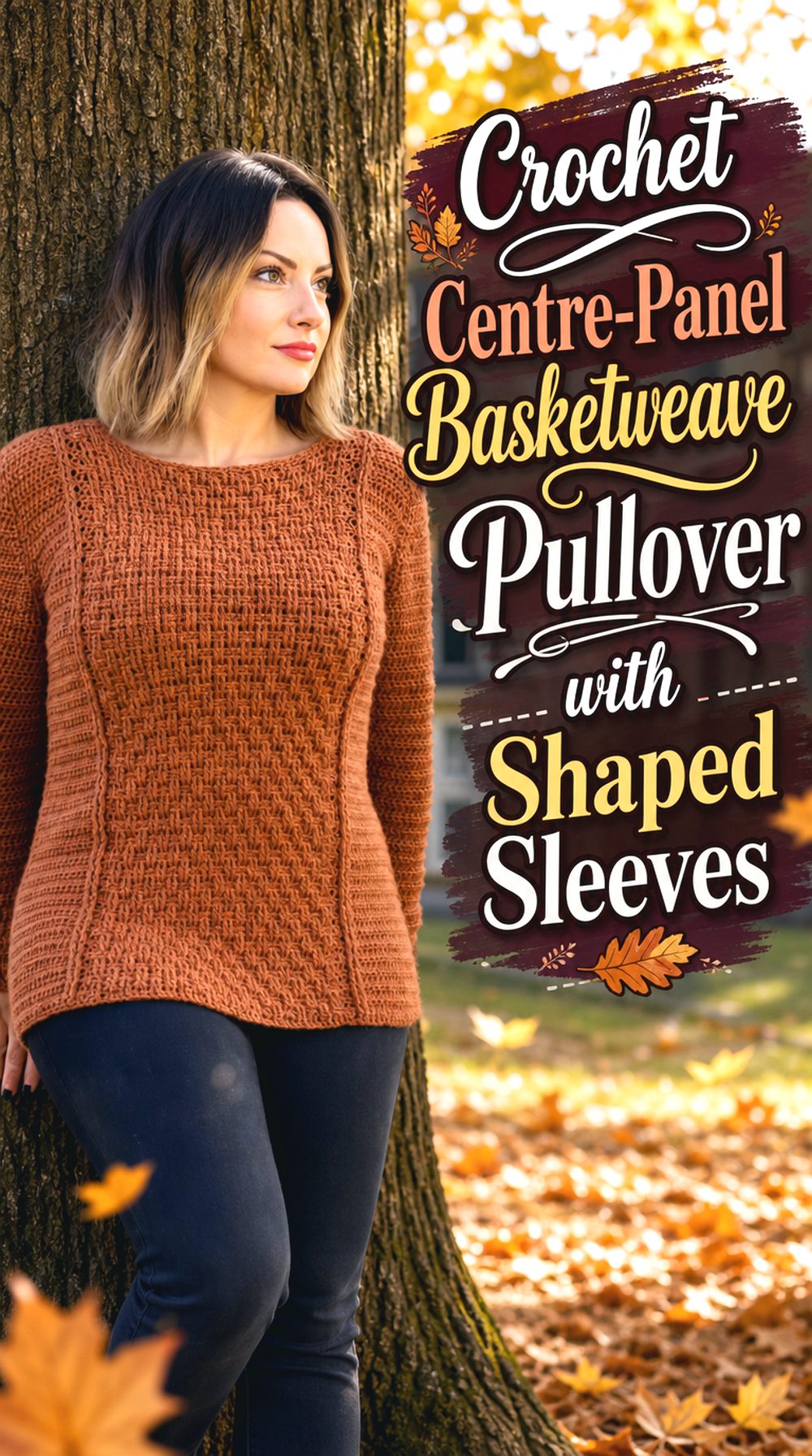
What Stands Out: A defined basketweave panel runs through this fitted Crochet pullover, while smoother sections and shaped sleeves keep the texture from overwhelming the whole garment. The pattern is worked from the bottom up in four pieces, then seamed, with the neckline edging added afterwards.
Fit and Finish: This version is better suited to readers who prefer a closer, more tailored outline than a boxy drop-shoulder sweater. The lighter yarn and sleeve-cap shaping support a cleaner line beneath coats or jackets.
Practical Point: Basketweave gauge deserves careful checking because the raised post stitches and surrounding fabric must stay balanced. Blocking is also part of the finishing plan, so leave time for the pieces to settle before seaming. The neckline is a simple edge rather than a high collar, but the project gives a clear reference for a refined textured body.
Crochet Colour Block Turtleneck Sweater with V Stitch Collar
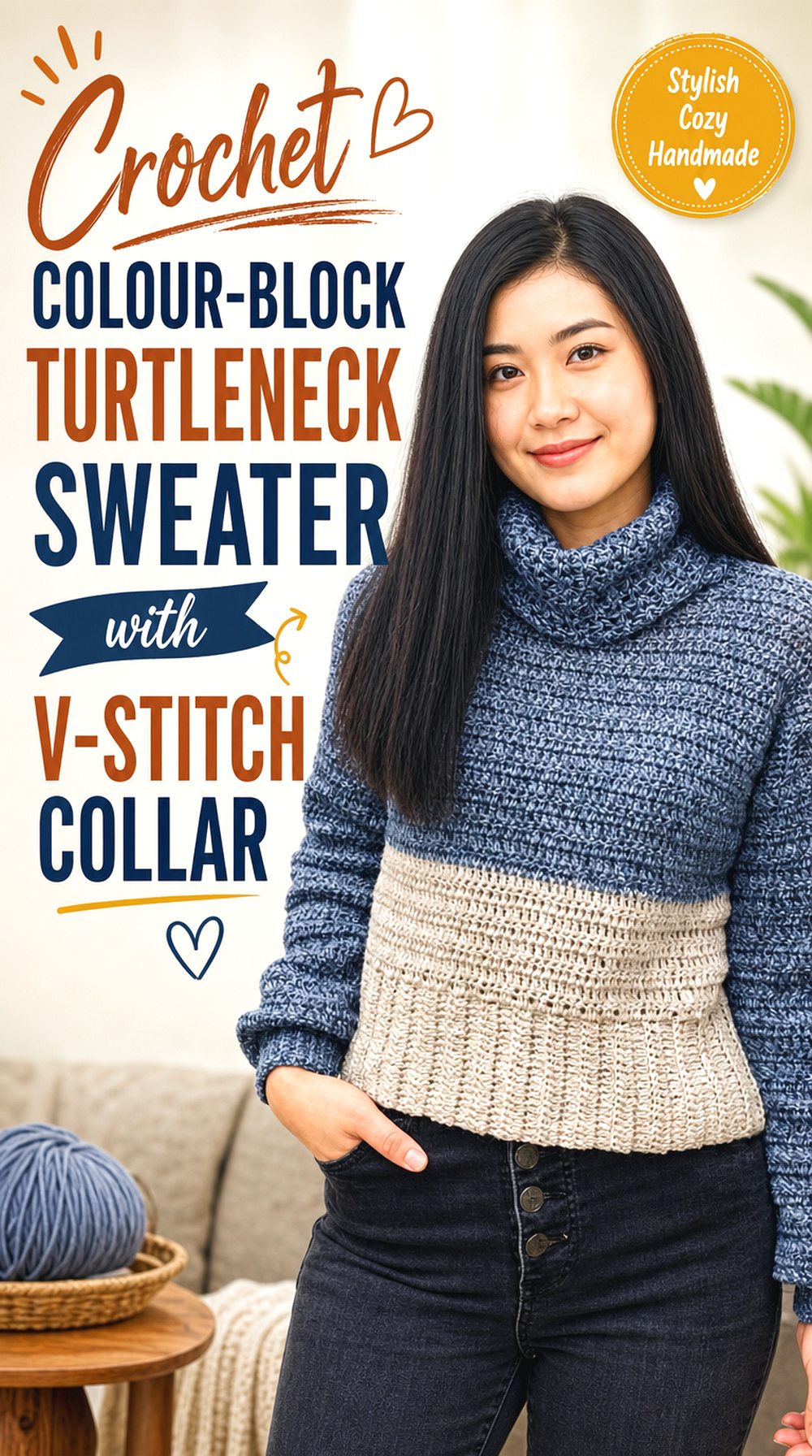
Design Details: This Crochet turtleneck uses a colour-blocked body, ribbed lower edges, and a tall V-stitch collar added after the seamed panels are assembled. The two-colour layout places contrast at the hem and neckline, giving the sweater a clear horizontal structure.
Who It Suits: The design works well for readers who want a noticeable turtleneck without an all-over heavy texture. It is offered in several women’s sizes, and the collar length can be adjusted by changing how many rounds are worked.
Customisation Idea: Use one colour for a quieter finish, or keep the contrast only at the collar to draw attention upward. Because the body is worked in separate pieces, take care to keep matching rows consistent before sewing. This is a useful high-neck construction reference, but its main fabric is smoother than a true basketweave sweater.
Crochet Classic Turtleneck Pullover with Relaxed Ease
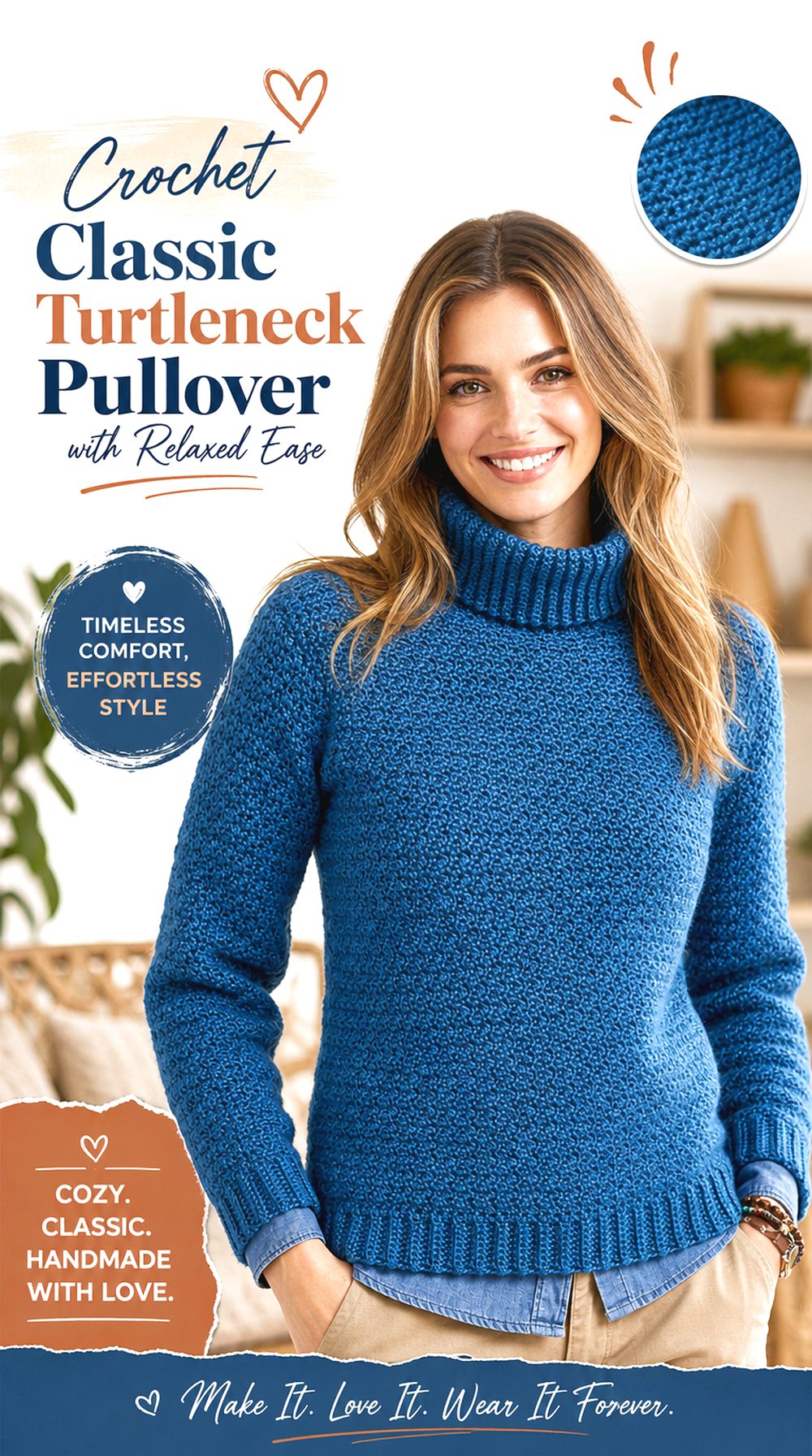
Why It Works: This classic Crochet turtleneck pullover has a clean, straightforward silhouette with long sleeves, a high folded neckline, and enough finished ease to layer over a light base top. The plain surface keeps the collar and overall proportion as the main visual features.
Best Use: Choose it when warmth and uncomplicated styling matter more than decorative stitchwork. A solid neutral can make it an everyday wardrobe layer, while a saturated colour gives the simple shape more presence.
Good to Know: The source provides multiple size groupings and clearly separates body measurements from finished garment measurements, which helps when choosing ease. Gauge should be checked before starting because the collar, shoulders, and body all depend on the intended dimensions. The design is not basketweave, but it offers a practical reference for turtleneck fit, length, and care.
Crochet Knit Look Turtleneck Sweater with Post Stitch Ribbing
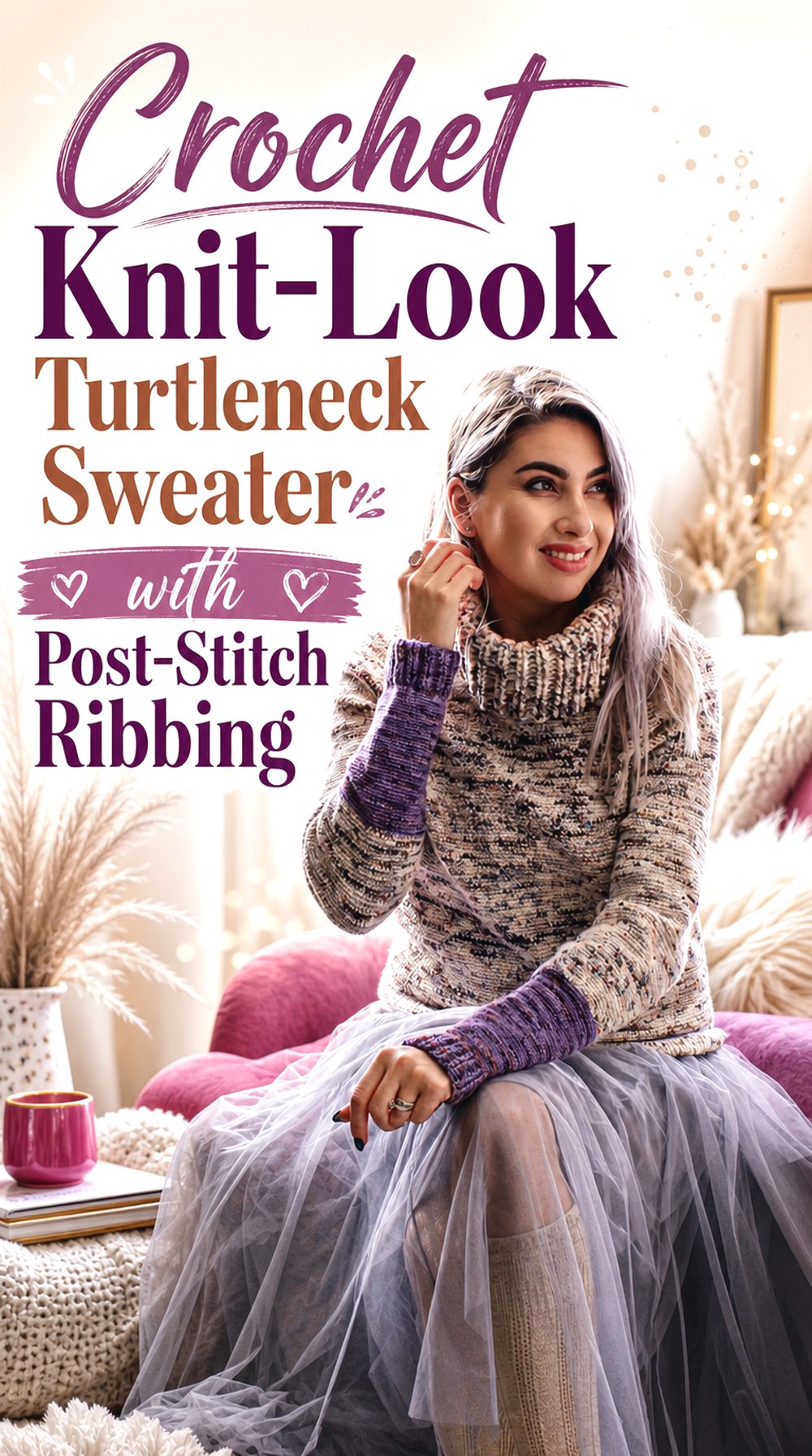
Construction Focus: The Sterling Road Crochet sweater begins at the collar and continues top down in continuous rounds. A deep ribbed turtleneck uses alternating front-post and back-post half double crochet, while the main body shifts to a smoother, knit-like surface.
What Stands Out: The tall collar creates the strongest texture, and the shaped yoke avoids separate shoulder seams. Sizes extend across a broad range, making the proportions useful to compare before committing to a fitted high-neck style.
Before You Choose: This is a detailed project rather than a fast rectangular sweater. The light yarn and smaller hook produce a finer fabric, so expect more rows and closer attention to gauge. Speckled or heathered yarn can add interest without hiding the ribbing. Readers seeking basketweave everywhere may prefer another source, but this design shows how post-stitch ribbing can frame a smoother Crochet body.
Crochet Striped Mock Neck Sweater with Adjustable Fit
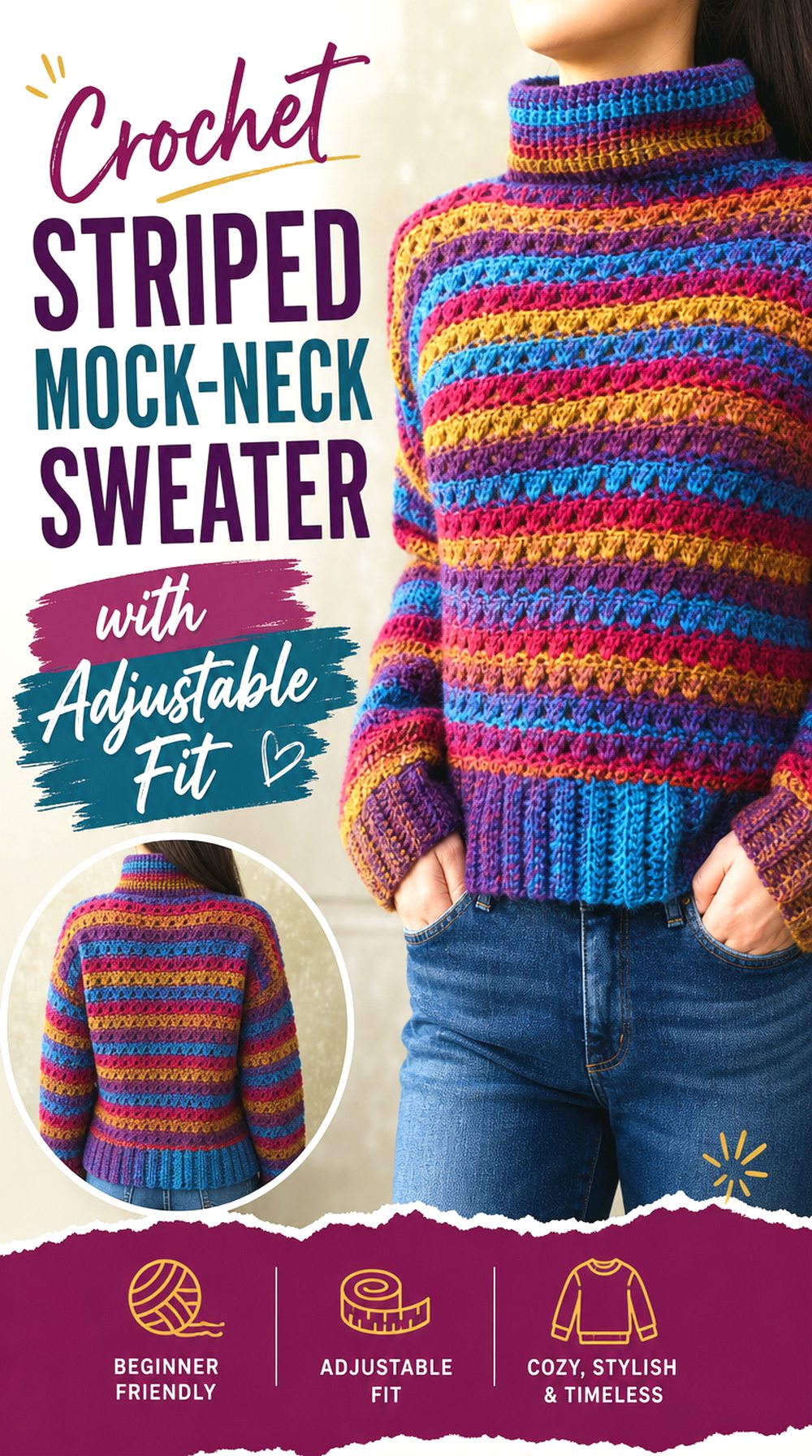
Fit and Finish: This made-to-measure Crochet sweater combines a loose body, ribbed hem and cuffs, and a mock neckline that can be adjusted wider, tighter, shorter, or long enough to roll. The main panels have visible texture, while self-striping yarn creates changing bands without manual colour planning.
Who It Suits: It is a practical choice for readers who dislike a close turtleneck but still want neck coverage. The relaxed shape can work over a thin shirt, though the positive ease should be planned rather than guessed.
Colour Direction: Self-striping yarn gives every version a different arrangement, while a solid shade makes the stitch pattern easier to read. Match the front and back lengths carefully before seaming, especially when stripes are involved. This design is not a traditional post-stitch basketweave, but it combines texture and an adjustable high neckline in one free sweater pattern.
Crochet Top Down Turtleneck Sweater with Colour Blocks
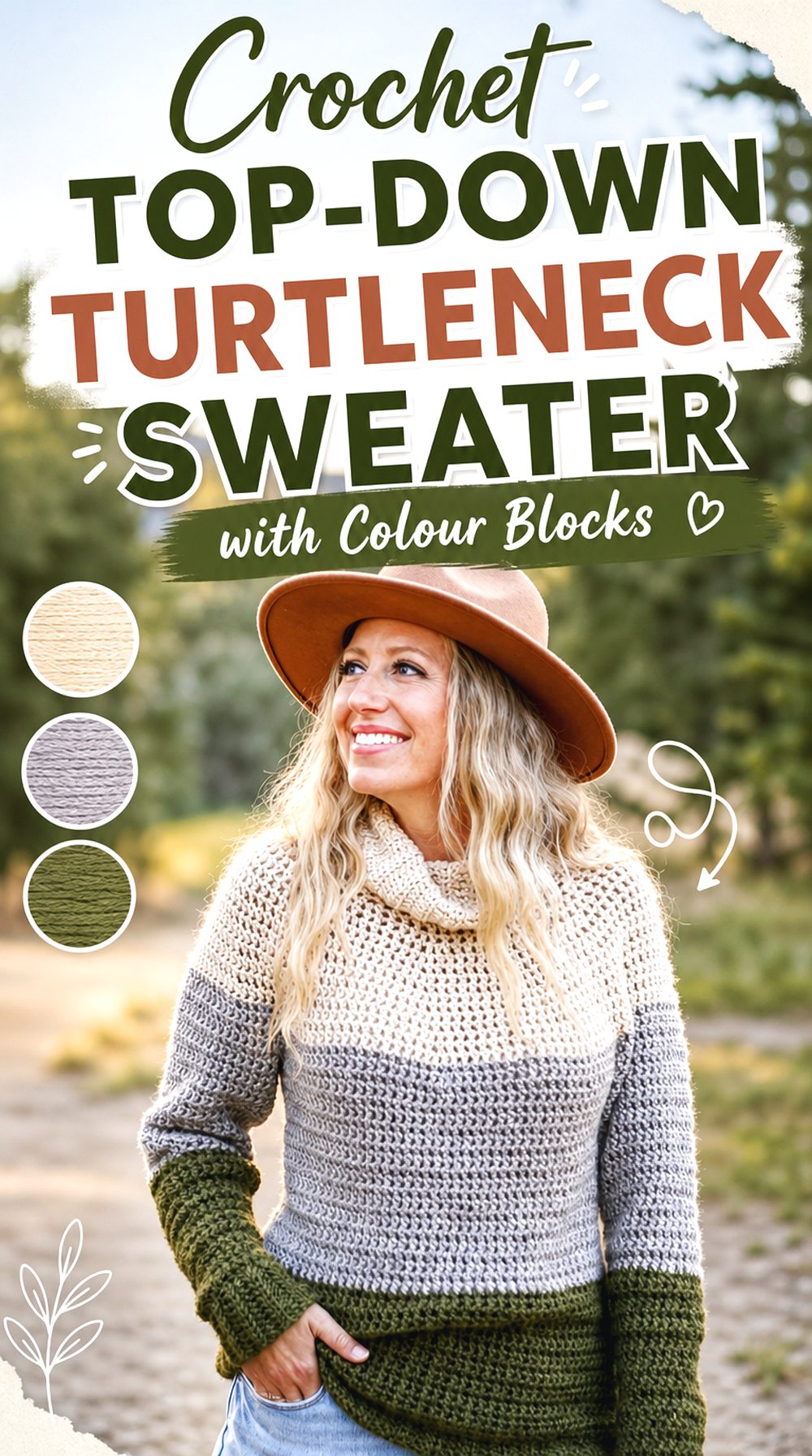
What Stands Out: The Snowbound Crochet pullover is worked from the turtleneck downward, with a shaped yoke, colour-blocked body, ribbed hem, and ribbed cuffs. The top-down method lets the maker check body and sleeve length as the garment develops.
Best Use: This is a useful option for a relaxed winter sweater with a substantial collar and uncomplicated main stitch. The pattern also explains how to shorten the collar into a mock neck or omit it, making the neckline easier to match to personal comfort.
Practical Point: Worsted yarn and a large hook create a faster-growing fabric, but the finished drape still depends on accurate gauge and light blocking. Colour blocks can visually divide the torso, so place the darkest shade where it best suits the intended look. The body is not basketweave, yet the construction offers a clear top-down route for a Crochet turtleneck silhouette.
Useful Crochet Notes
Swatch Both Fabrics
Do not judge a basketweave body from a plain-stitch gauge square. Raised post stitches can change width, thickness, and drape, while ribbed collar fabric stretches in another direction. Make separate swatches, wash or block them as planned, and measure only after they have dried completely.
Check Collar Comfort Early
A turtleneck should pass over the head without strain and rest against the neck without feeling restrictive. Test the collar tube before attaching or continuing into the yoke. Glasses, hairstyles, and sensitivity to close necklines can all make a shorter mock neck the more wearable choice.
Plan Seams and Blocking
For panelled Crochet sweaters, block matching pieces to the same dimensions before sewing. Basketweave ridges can make edges look uneven even when the row counts match. Use removable markers to align hems, underarms, and shoulders, then seam without pulling tightly enough to shorten or pucker the fabric.
Conclusion
Choose the all-over basketweave projects when raised texture is the main priority, or begin with one of the verified turtleneck constructions when collar comfort and shaping matter more. Panelled sweaters offer clear pieces and deliberate seams; top-down versions allow more fit checks during the work. A careful swatch will quickly reveal whether your chosen yarn produces the drape, weight, and stitch definition you want.
FAQs
Can I add a turtleneck to a basketweave sweater?
A collar can sometimes be added after a sweater is seamed, but the neckline opening, stitch multiple, and fabric stretch must support it. Treat this as a design adjustment rather than an automatic swap. Test a removable collar sample first and avoid forcing a tight tube onto a wide or rigid neckline.
Which yarn shows basketweave texture clearly?
A smooth, evenly spun yarn usually makes raised blocks easier to see than a fuzzy or highly variegated yarn. Moderate loft can add depth, but excessive bulk may make a sweater heavy. Swatch the full repeat in the intended colour because dark or busy shades can hide the woven effect.
How much ease should a textured turtleneck have?
The right ease depends on the fabric and intended layering. Dense basketweave generally benefits from enough room for movement, while a finer top-down sweater may sit closer to the body. Compare your bust measurement with the pattern’s finished bust and consider what you plan to wear underneath.
How do I stop a Crochet turtleneck from feeling stiff?
Use a yarn with suitable softness and flexibility, keep collar stitches relaxed, and avoid downsizing the hook without testing. A shorter mock neck may be more comfortable than a deep fold-over collar. Blocking can improve the fabric, but it cannot fully correct a collar crocheted too tightly.
Should I block sweater pieces before or after seaming?
For panelled basketweave designs, blocking pieces before seaming helps align dimensions and smooth the edges. A light final block can then settle the seams. Seamless top-down sweaters are usually blocked after completion. Always follow the fibre’s care limits and support the garment’s weight while drying.


