Cobalt and Cream create unusually clear color separation on crochet headphone covers. Cobalt can give the earcups a saturated blue focal surface, while Cream provides a much lighter counterpoint that can define rims, reveal stitch texture, and keep small decorative details from disappearing.

Because headphone covers have limited surface area, the most important decision is how much of each color to use. A mostly Cobalt cover with a narrow Cream rim reads very differently from a Cream-centered design with a Cobalt outer edge. Large blocks, concentric areas, contrasting pairs, and controlled motifs also let the same two colors produce noticeably different results without adding more shades.
The tutorials below demonstrate several headphone-cover formats, including round and oval earcup covers, compact headset covers, removable constructions, and decorative versions. The Cobalt-and-Cream palettes are editorial adaptations; the creators do not necessarily use these colors. Compare any tutorial with your own headphones before adapting it, especially around ear cushions, controls, ports, hinges, headband sliders, and microphone hardware.
Quick List
- Cobalt Dominant Crochet Headphone Covers With Cream Rims
- Cream Dominant Crochet Headphone Covers With Cobalt Edges
- Cobalt Crochet Headphone Covers With Cream Center Circles
- Cream Textured Crochet Headphone Covers With Cobalt Outer Rings
- Cobalt Crochet Headphone Covers With Cream Decorative Accents
- Cream Crochet Headphone Covers With Cobalt Framing
- Cobalt Crochet Headset Covers With Cream Hardware Side Accents
- Cream Crochet Headphone Covers With Cobalt Motif Centers
- Minimal Cobalt Crochet Headphone Covers With Cream Edge Details
Decide Whether Cobalt or Cream Should Lead the Headphone Covers
Cobalt has much more visual intensity than Cream, so the two colors do not need equal surface area to feel balanced. A relatively small Cobalt section can still attract attention on a mostly Cream cover, while a narrow Cream ring can remain clearly visible against a Cobalt earcup face because of the strong light-dark difference.
For a bolder headset, put Cobalt across most of each outer earcup. For a lighter result, reverse the proportions and use Cream as the main field with Cobalt around the perimeter or on a central motif. Decide on that hierarchy before adding decorative details.
Use Cream to Keep Cobalt Crochet Texture Visible
Dark or saturated yarn can make subtle crochet texture less obvious, particularly on a small curved earcup. Cream can create strategic separation around raised areas, motifs, edges, or bands without needing to cover half the project.
The strongest contrast should usually go where it serves a purpose. If a Cobalt motif needs to stand apart, place it on Cream. If Cobalt is already covering a broad textured surface, a Cream perimeter may be enough to prevent the whole cover from reading as one solid blue shape.
Keep Cobalt and Cream Clear of Headphone Hardware
Color placement should follow the actual shape of the headphones. Before planning a Cobalt border or Cream decorative ring, locate controls, charging ports, cable jacks, hinges, vents, sliders, and microphone attachments.
A beautifully balanced color edge loses its usefulness if it creeps across a button or restricts movement. Fit one cover first, check the headphones through their normal range of adjustment, and then mirror or adapt the second cover.
1. Cobalt Dominant Crochet Headphone Covers With Cream Rims
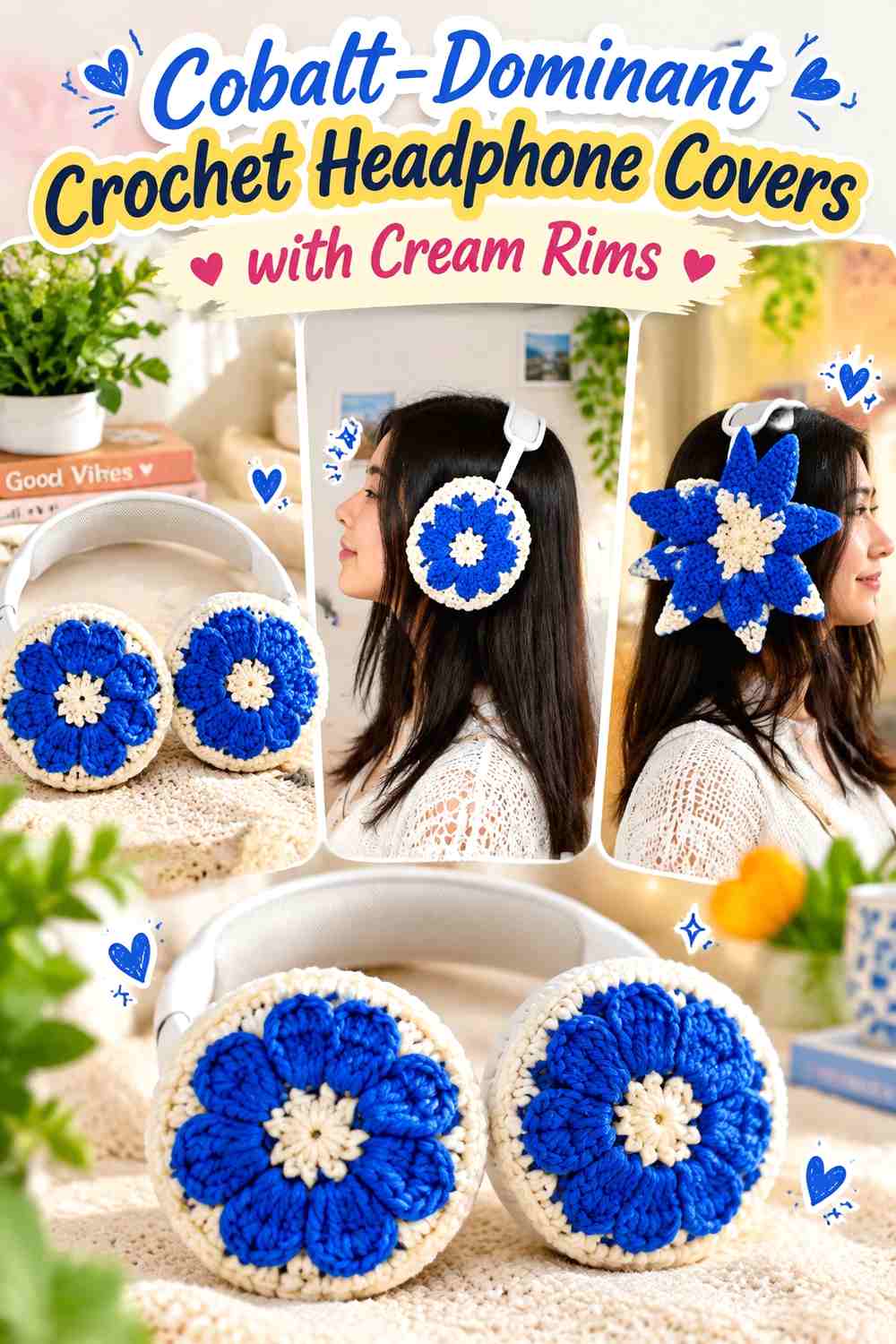
This is the clearest Cobalt-led version. Cover most of each outer earcup in Cobalt and reserve Cream for the retaining edge or visible rim. The light border outlines the saturated blue surface and makes the overall cup shape easier to read.
Cobalt Should Occupy the Broadest Headphone-Cover Surface
A large uninterrupted Cobalt area gives stitch texture enough room to show without frequent color changes. This is especially useful on round or oval covers where several narrow stripes could make the small face look crowded.
Check the Cobalt area while the cover is installed, not only when it is lying flat. Part of the crochet may wrap around the cup edge and become less visible from the side.
Cream Can Give the Cobalt Earcup a Clean Visual Boundary
Use Cream around the outer perimeter where the cover transitions toward the headphone housing. The value contrast creates a clear frame and prevents a dark headphone body from visually swallowing the Cobalt edge.
Keep the Cream border controlled so it defines the Cobalt rather than becoming a second equally large field.
Creator Credit: Alexandria Masse
2. Cream Dominant Crochet Headphone Covers With Cobalt Edges

Reverse the hierarchy by placing Cream across most of each outer cover and using Cobalt around the perimeter. This produces a lighter overall headset while preserving a strong blue outline.
Cream Makes the Main Headphone-Cover Texture Easier to See
A broad Cream surface can reveal stitch changes and small shadows more readily than a deeper Cobalt field. This makes Cream particularly useful when the crochet surface itself is one of the features you want noticed.
Keep the Cream fabric cleanly fitted around the cup because high contrast at the Cobalt edge can make rippling or uneven placement more obvious.
Cobalt Can Define the Cream Cover Without Taking Over
A Cobalt outer edge gives the Cream center enough definition to remain distinct from pale headphone hardware or cushions.
If the Cobalt border already creates a strong outline, there is little need to add numerous extra Cobalt details through the center. Let the simple contrast do the work.
Creator Credit: Julianne’s Jems
3. Cobalt Crochet Headphone Covers With Cream Center Circles

Put Cobalt across the majority of each earcup and reserve Cream for the central face. This creates a target-like arrangement with the lightest area positioned where the eye naturally meets the outer cup.
Cream Centers Break Up a Large Cobalt Headphone Surface
A Cream center prevents a broad Cobalt circle or oval from reading as one flat block. It can also provide a light background for a small decorative feature if the chosen cover construction allows one.
Keep the center large enough to register clearly; an extremely small Cream dot may look disconnected rather than intentional.
Cobalt Should Form a Strong Continuous Area Around Cream
Let Cobalt surround the Cream center rather than repeatedly interrupting it with additional color changes. The deep outer field visually ties the center to the shape of the headphone cup.
Check that the Cobalt area does not extend so far inward around the actual cushion that the decorative color plan starts affecting the wearer-facing portion of the headphones.
Creator Credit: theshadepcks
4. Cream Textured Crochet Headphone Covers With Cobalt Outer Rings

Use Cream over the textured face and move Cobalt to the outermost visible ring. This palette direction gives stitch definition priority while Cobalt creates a saturated boundary.
Cream Lets Headphone-Cover Texture Become the Main Detail
When the crochet includes visible ridges, posts, or other surface changes, Cream can help those shadows remain readable. There is less need to add many color changes because the stitches already provide visual variation.
Look at the fitted cover under normal room lighting before deciding whether more Cobalt is necessary.
Cobalt Rings Can Contain the Cream Texture Visually
A Cobalt outer ring acts like a frame around the lighter center. It is particularly effective when the headphone body itself is dark because the Cobalt-to-Cream transition stays obvious.
Follow the actual perimeter rather than forcing the color ring across controls or an irregular hardware opening.
Creator Credit: Ohchives
5. Cobalt Crochet Headphone Covers With Cream Decorative Accents
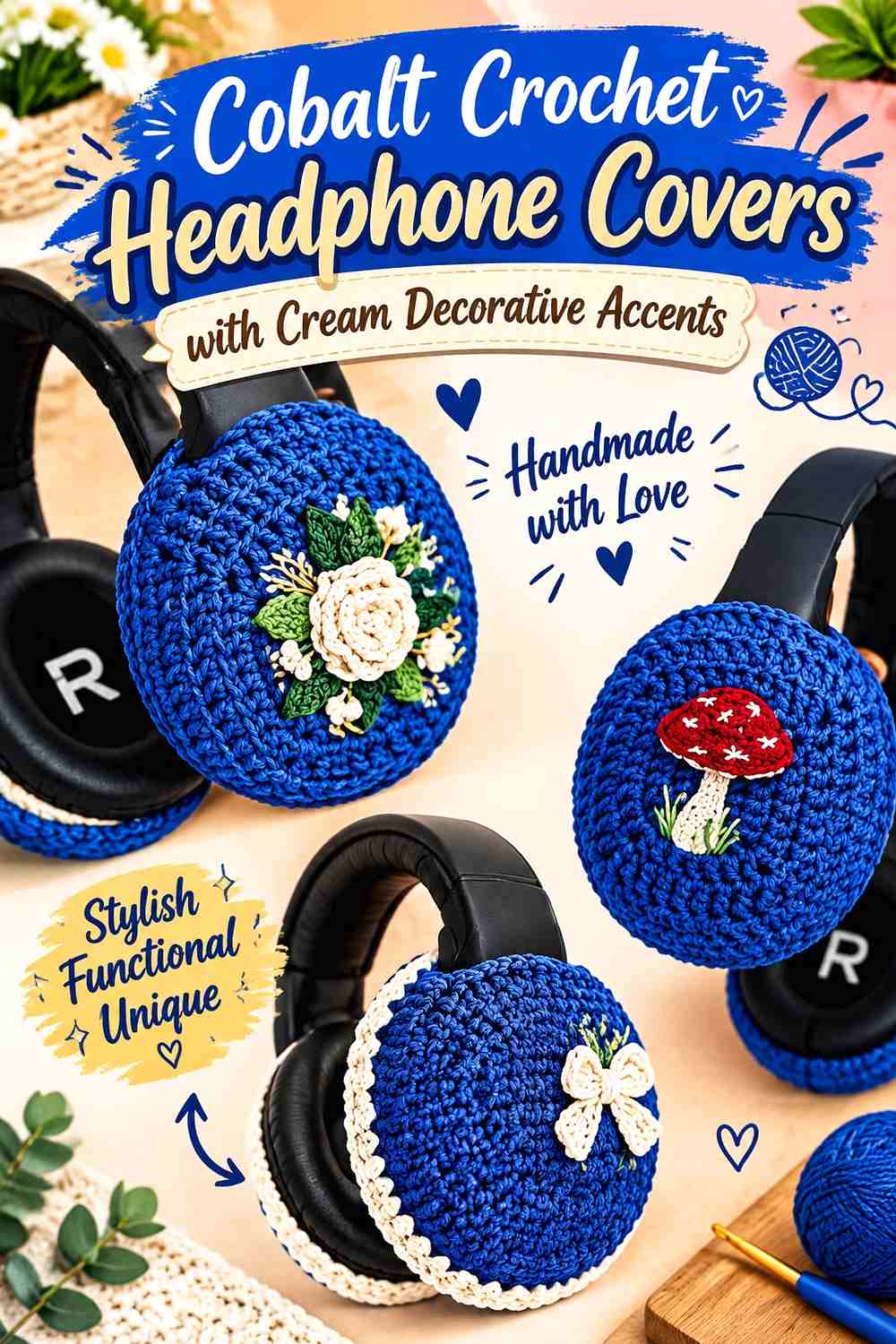
Use Cobalt as the base and introduce Cream through a limited motif, appliqué, bow, or other decoration supported by the chosen headphone-cover concept. The high contrast lets even a relatively small Cream accent remain visible.
Cream Accents Need Clear Space on the Cobalt Headphone Cover
Place the Cream detail where it does not compete with hinges, cup joints, or the headband connection. An accent near the center of a broad Cobalt surface is generally easier to read than one squeezed into a crowded hardware edge.
Before attaching anything dimensional, rotate or fold the headphones through their normal range.
Cobalt Should Stay Quiet Behind the Cream Decoration
If Cream provides the main motif, avoid surrounding it with excessive Cobalt texture that fights for attention. A relatively consistent Cobalt field gives the lighter accent a clearer silhouette.
The same principle helps a matched pair: repeat the Cream accents deliberately rather than placing unrelated motifs on each side unless asymmetry is the goal.
Creator Credit: Woodland Stitchcraft
6. Cream Crochet Headphone Covers With Cobalt Framing
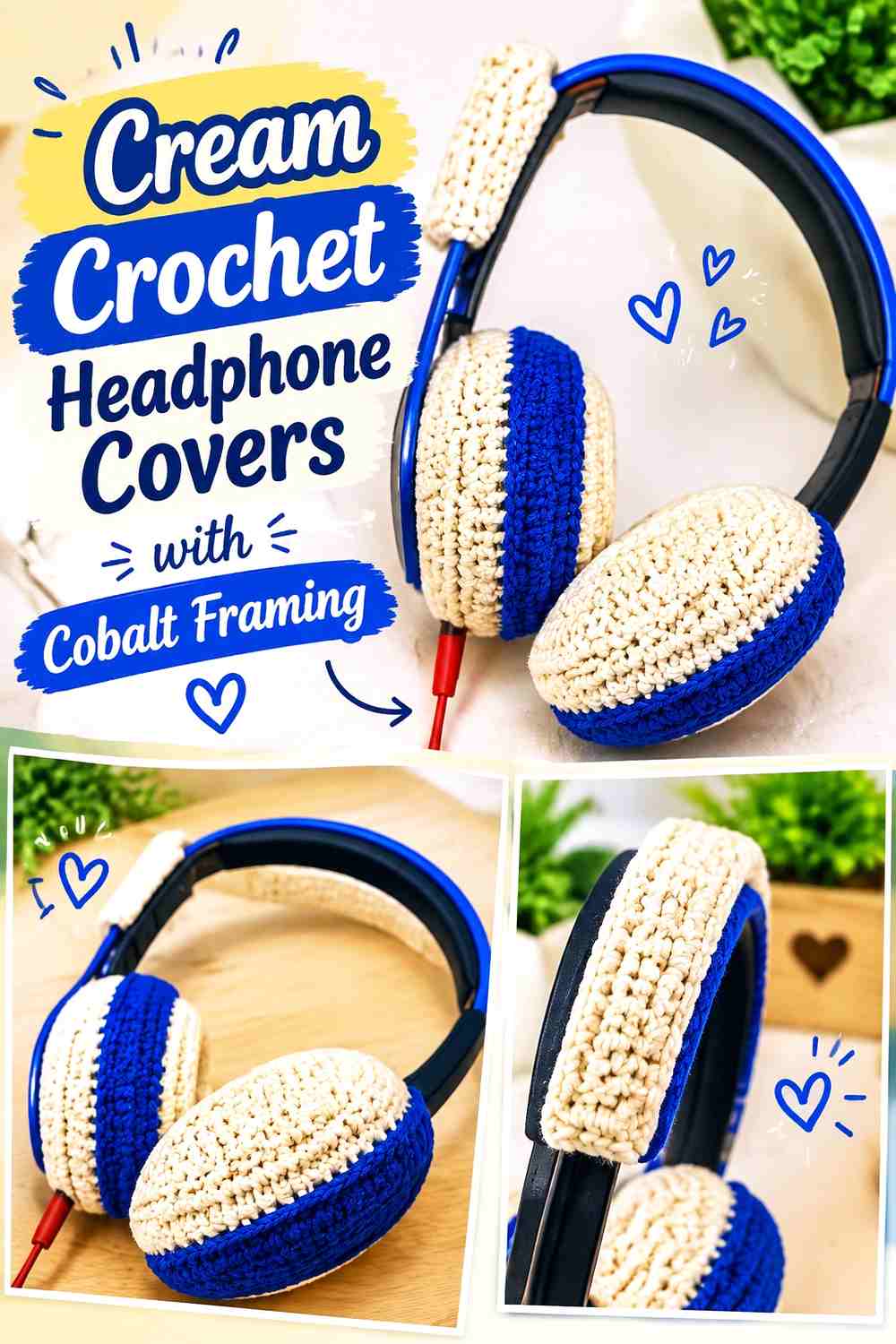
This arrangement puts Cream across the full outer face and uses Cobalt wherever the crochet needs visual definition—around the perimeter, fastening area, or other structural boundary.
Cream Gives the Headphone Covers a Light Main Field
Keeping the center Cream makes the covers noticeably lighter than the Cobalt-dominant versions. The simple surface also provides room for texture without requiring additional colors.
When the original headphone housing is light, confirm that the Cream still looks deliberate rather than blending entirely into the hardware.
Cobalt Can Frame Cream Around Functional Cover Edges
Use Cobalt where the cover visibly grips, fastens, or turns around the outer cup. This connects the color contrast to the construction instead of inserting Cobalt at arbitrary points.
Keep the Cobalt away from any actual speaker opening or wearer-facing cushion unless the tutorial specifically places crochet there.
Creator Credit: Crafter Mai
7. Cobalt Crochet Headset Covers With Cream Hardware Side Accents

For slimmer work or office headsets, keep the majority of each small cover Cobalt and place Cream only where it does not compete with microphones, control areas, or moving joints. Small earpieces benefit from a restrained palette.
Cobalt Should Stay Simple on Compact Headset Earpieces
A small headset pad provides much less visual room than a large over-ear cup. One consistent Cobalt surface prevents color changes from overwhelming the hardware.
Fit the Cobalt section around the actual earpiece before planning the Cream detail, since practical clearance should determine how much decorative area remains.
Cream Can Mark a Cobalt Edge Away from Controls
Put Cream on a portion of the perimeter that remains clearly visible but does not cover a button, cable entry, or microphone pivot.
Because Cream contrasts so strongly with Cobalt, a short repeated section can be enough. There is no need to surround every hardware edge with the accent.
Creator Credit: Fantik Crochet
8. Cream Crochet Headphone Covers With Cobalt Motif Centers

Make Cream the background and use Cobalt for a central decorative motif or concentrated shape. This reverses the more common dark-background arrangement and gives the blue detail maximum visibility.
Cobalt Motifs Stand Out Clearly Against Cream
A small Cobalt motif has much stronger definition against Cream than it would against a similarly dark background. That allows the decorative area to remain relatively compact.
Place it where the outer earcup is unobstructed so the motif does not disappear beneath a headband connection or dimensional attachment.
Cream Should Remain Uninterrupted Around the Cobalt Center
Leave enough Cream around the motif to act as true negative space. Filling every remaining area with additional Cobalt details weakens the advantage of having a light background.
Check both earcups side by side if the motif is repeated so its visual position remains consistent.
Creator Credit: Cassiekoy Crochet
9. Minimal Cobalt Crochet Headphone Covers With Cream Edge Details

For the most restrained palette, make almost the entire earcup cover Cobalt and use Cream only along one deliberate outer detail. This keeps the headphones strongly blue while giving the crochet edge enough definition to look finished.
Cobalt Can Carry the Whole Headphone Cover Without Extra Patterning
A nearly solid Cobalt surface works when the crochet already has visible stitch structure or when the goal is a cleaner tech-accessory look.
Check the first fitted cover before repeating it. A saturated single-color face makes differences in fit between the two sides easier to notice.
Cream Should Stay Limited Around the Cobalt Perimeter
Use Cream as a finishing accent rather than turning it into another broad field. One visible rim section or controlled outline can be enough to separate Cobalt from dark headphone hardware.
Keeping Cream restrained is what distinguishes this idea from the framed and Cream-dominant arrangements earlier in the list.
Creator Credit: My Rainbow Crochet
Which Cobalt & Cream Headphone Cover Direction Should You Choose?
For the strongest Cobalt presence, Ideas 1, 4, 7, and 13 keep blue across most of the earcup surface. Ideas 2, 5, 8, and 11 use more Cream, making stitch texture or Cobalt motifs easier to see against a lighter background.
Ideas 3, 6, and 12 make the two colors more comparable through split areas, broad bands, or large blocks. Idea 9 creates intentional asymmetry between the two earcups, while Idea 10 keeps the same palette compact enough for a slimmer headset.
The actual headphones should settle close decisions. Large smooth cups can accommodate broader color layouts, while small office-headset pads leave less room for complex placement. Hardware clearance and secure fit are more important than preserving a color arrangement that does not suit the device.
Conclusion
Cobalt and Cream work particularly well on crochet headphone covers because the palette already has strong visual hierarchy. Cobalt can command a large earcup face, while Cream can outline it, expose texture, or create a high-contrast background for smaller blue details.
Choose a Cobalt-dominant layout when you want saturated color to define the headset. Choose a Cream-dominant arrangement when stitch texture and lighter overall coverage matter more. Split panels, broad bands, reversed pairs, and color blocks give the two colors more equal influence without requiring additional shades.
Whichever direction you choose, fit the first cover to the actual headphones before completing the pair. Check cup shape, perimeter grip, cushion clearance, ports, controls, hinges, sliders, and any microphone hardware, then use the original creator tutorial for its exact construction details.
Frequently Asked Questions
Should Cobalt or Cream dominate crochet headphone covers?
Use Cobalt as the dominant color when you want the earcups to read as strongly blue. Use Cream as the main field when you want a lighter appearance or need Cobalt motifs and borders to stand out more clearly.
Does Cream provide enough contrast with Cobalt for small crochet details?
Usually the light-dark difference is substantial, but judge the actual yarns together rather than relying only on their color names. A lighter Cream beside a deep Cobalt generally gives small motifs, rings, and borders clearer separation than two similarly dark colors would.
Where should Cream go on mostly Cobalt crochet headphone covers?
Cream works particularly well around a perimeter, retaining edge, center motif, decorative appliqué, or other area that needs visual definition. Keeping Cream concentrated also allows Cobalt to remain the obvious main color.
Can one headphone cover be Cobalt and the other Cream?
Yes. A reversed pair can look intentional when both sides repeat at least one shared feature, such as a contrasting rim. Keep the physical fit consistent even if the color proportions are different.
Should the crochet cover extend over the headphone cushion?
Follow the construction demonstrated by the selected tutorial and compare it with your own headphone design. Avoid casually extending decorative crochet into speaker openings, controls, ports, or moving hardware simply to continue a Cobalt or Cream color section.
How can I adapt a Cobalt and Cream cover to oval headphones?
Start by comparing both the long and short dimensions of the earcup rather than treating it as a larger circle. Check how the cover wraps around the side and where controls or hinges interrupt the perimeter. Use a tutorial intended for a similar oval shape when possible.
What if the Cobalt crochet hides the stitch texture?
Increase the visual role of Cream around the textured area, or keep the most detailed stitches on a lighter Cream section. You can also compare the Cobalt swatch under the lighting where the headphones will normally be used before deciding whether the texture has enough definition.