Fig Purple and Oyster create a useful dark-and-light pairing for crochet coat hanger covers. Fig Purple can give the sloping shoulder arms a rich focal color, while Oyster provides lighter separation around edges, hook openings, seams, shells, and textured sections that might otherwise disappear into a deep purple field.
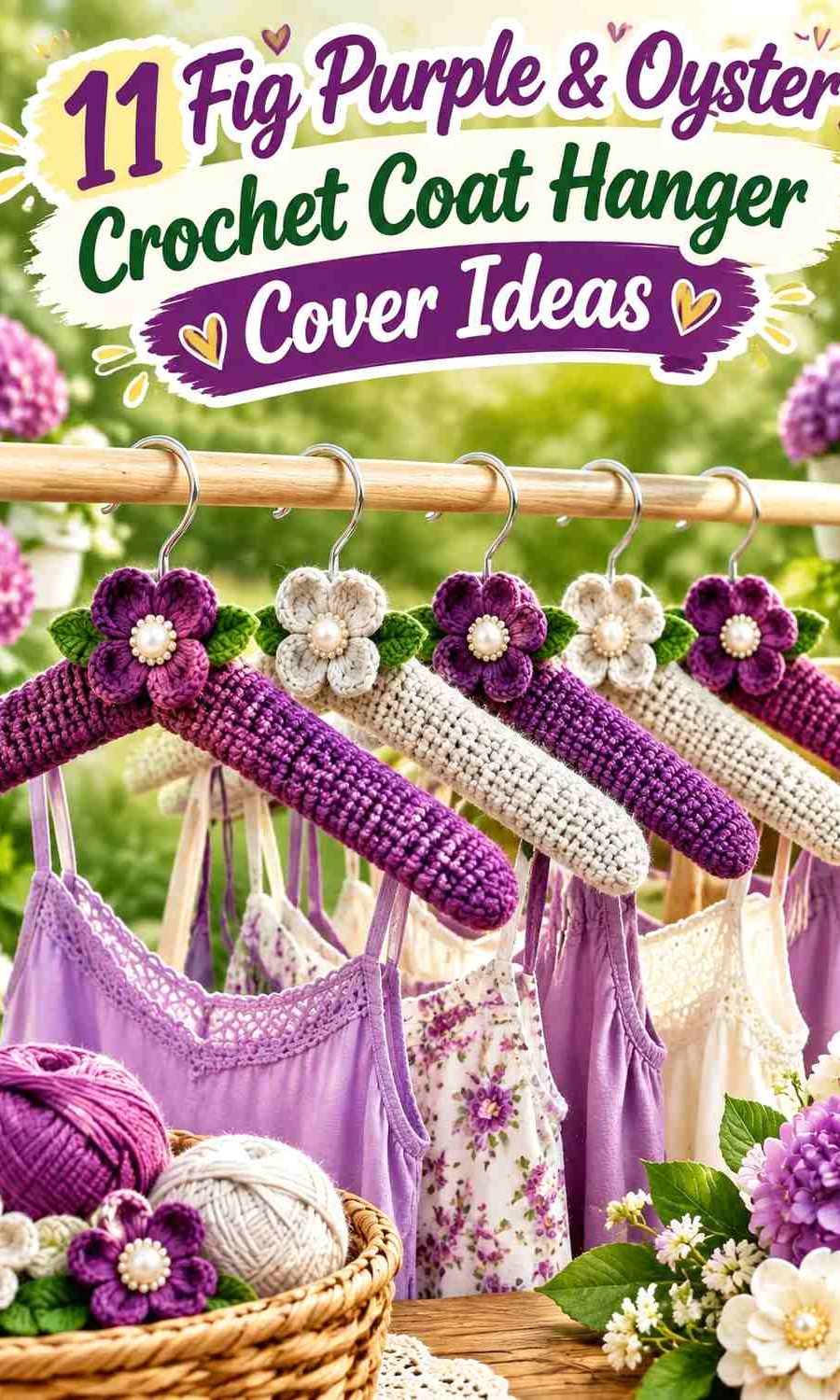
A hanger cover has an unusual shape to plan for. Two long shoulder arms meet at the center hook, the lower seam may remain visible beneath the hanger, and decorative edging can extend below the garment-contact area. Color therefore works best when it follows those structural zones instead of being scattered randomly across a narrow cover.
The tutorials below demonstrate crochet clothes-hanger covers in several styles, including close-fitting covers, scalloped edging, lace, ribbing, shell-stitch treatments, and direct coverage around different hanger forms. The Fig Purple-and-Oyster palettes are editorial adaptations; the creators do not necessarily use these colors. Fit any adaptation to the actual wooden, plastic, or wire hanger you intend to cover because shoulder length, thickness, center shape, and hook placement vary.
Quick List
- Fig Purple Crochet Coat Hanger Cover with Oyster Scalloped Edge
- Oyster Crochet Coat Hanger Cover with Fig Purple Shoulder Tips
- Fig Purple & Oyster Split-Shoulder Crochet Coat Hanger Cover
- Fig Purple Textured Crochet Coat Hanger Cover with Oyster Hook Opening
- Oyster Lace Crochet Coat Hanger Cover with Fig Purple Lower Border
- Fig Purple & Oyster Broad-Stripe Crochet Coat Hanger Cover
- Fig Purple Crochet Coat Hanger Cover with Oyster End Caps
- Oyster Ribbed Crochet Coat Hanger Cover with Fig Purple Seam
- Fig Purple Crochet Coat Hanger Cover with Oyster Shell Edge
- Oyster Crochet Coat Hanger Cover with Fig Purple Floral Center
- Fig Purple & Oyster Reversed-Pair Crochet Coat Hanger Covers
Plan Fig Purple and Oyster Across Both Hanger Shoulders
The two sloping arms are the largest visual areas on a coat hanger cover, so decide first whether Fig Purple, Oyster, or a balanced division should run across them. A Fig Purple-dominant cover looks deeper and more continuous, while Oyster across most of the shoulders makes stitch texture and Fig Purple accents easier to distinguish.
Check the finished color plan on the hanger rather than only on a flat crochet strip. The center bends around the hook, the ends taper with the hanger shape, and a lower seam or edging can change which shade appears most prominent.
Use Oyster to Separate Fig Purple Texture and Edging
Fig Purple can visually compress small raised details when several textures occupy a narrow cover. Oyster is useful around scallops, shells, hook openings, end sections, and other features that need a clearer boundary.
That does not mean every detail needs Oyster. One light edge or central break can be more effective than many tiny pale stitches. If your actual Fig Purple and Oyster yarns are closer in value than expected, enlarge the contrasting sections instead of adding more color changes.
1. Fig Purple Crochet Coat Hanger Cover with Oyster Scalloped Edge
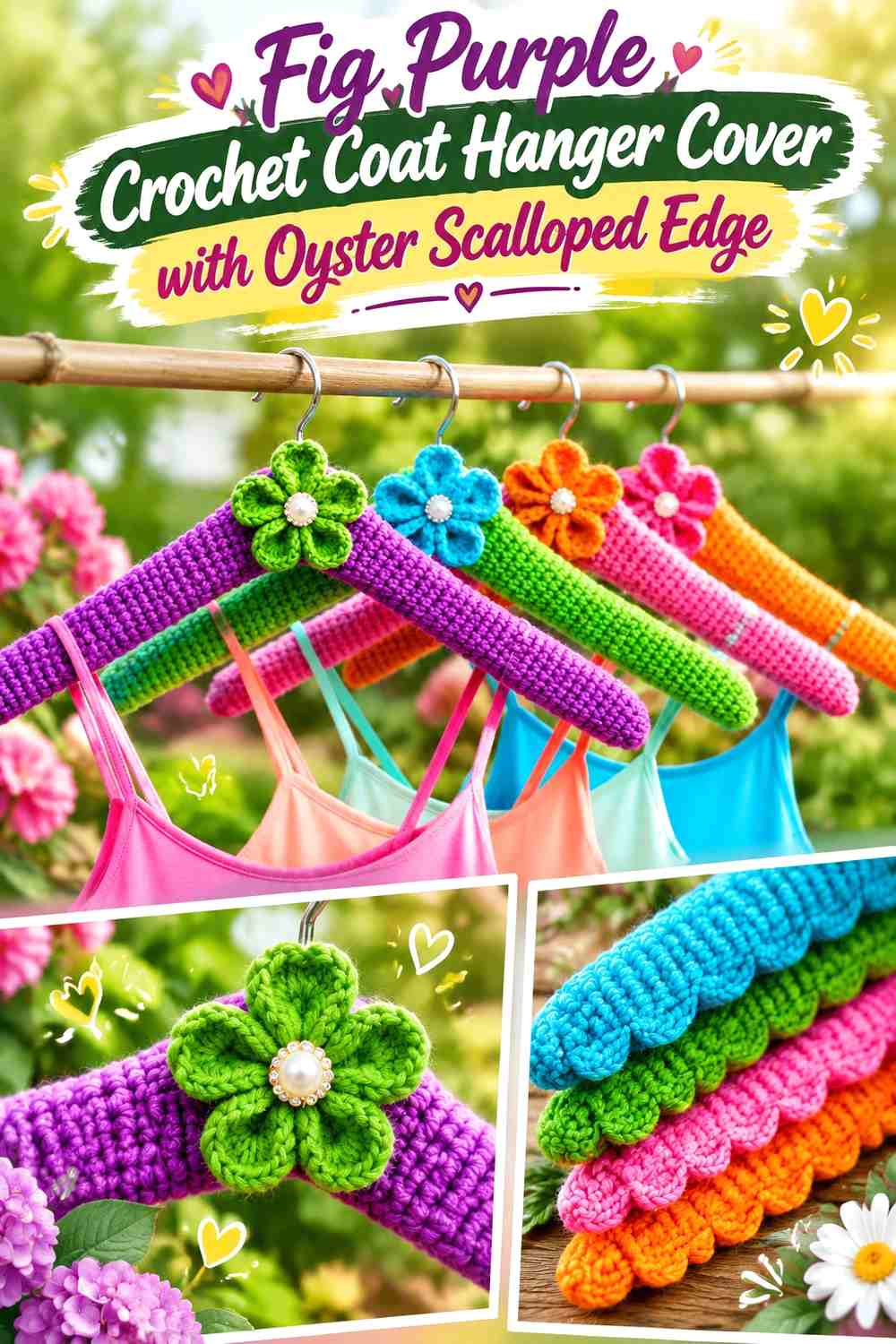
Keep the main shoulder cover Fig Purple and use Oyster only along a decorative lower edge. This lets the dark purple run continuously from one hanger arm toward the other while the lighter scallops create a visible finishing line beneath it.
Fig Purple Should Stay Continuous Across the Hanger Shoulders
Use Fig Purple through most of the garment-contact surface so the sloping arms read as one connected cover. This also gives stitch texture enough uninterrupted space to remain coherent.
Check the center around the hook before finishing. The Fig Purple sections from both sides should look balanced once the cover sits on the actual hanger rather than only when laid flat.
Oyster Can Make the Fig Purple Scalloped Edge Easier to See
Place Oyster along the lower decorative edge where the lighter shade can separate individual scallops from the Fig Purple body.
If the scallops are already visually prominent, keep Oyster restricted to that edge instead of repeating it across the shoulder surface. The contrast should frame the cover, not compete with it.
Creator Credit: naztazia
2. Oyster Crochet Coat Hanger Cover with Fig Purple Shoulder Tips
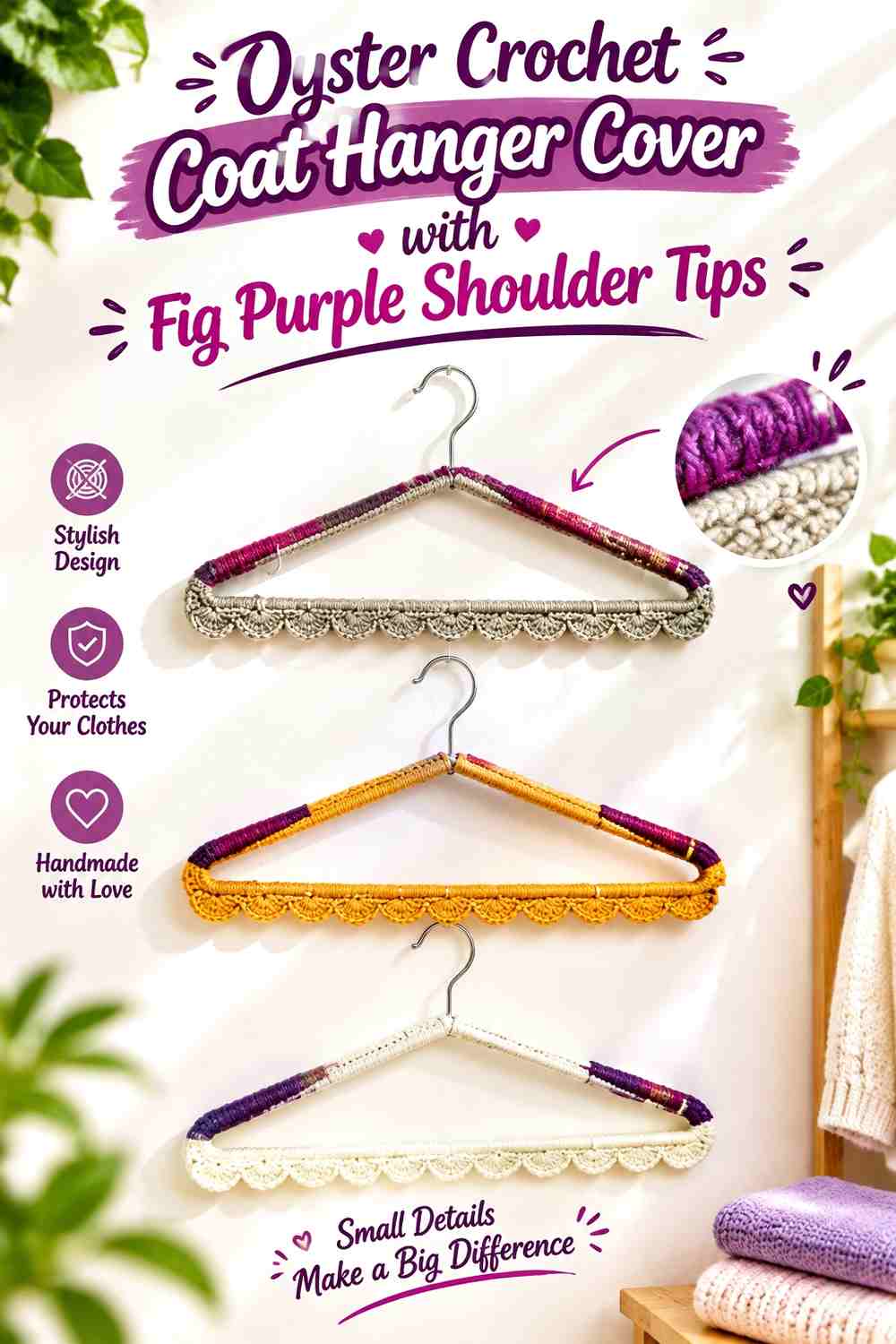
Use Oyster across most of the hanger and introduce Fig Purple near both outer shoulder ends. This shifts the darker visual weight away from the center and gives each end a deliberate finishing block.
Oyster Can Keep the Main Hanger Cover Light and Continuous
A broad Oyster center makes the cover visually lighter and gives simple crochet texture room to show from the hook area toward both shoulders.
Keep enough Oyster visible between the Fig Purple tips so the two end accents do not visually merge into a mostly purple hanger.
Fig Purple Shoulder Tips Should Match the Oyster Hanger Shape
Position the purple changes according to where the hanger actually begins to narrow or curve at the ends. The Fig Purple sections do not need to be long, but they should be large enough to read as intentional blocks rather than stray color changes.
Check both ends together before fastening off so one Fig Purple tip does not appear substantially heavier than the other unless asymmetry is deliberate.
Creator Credit: Yarnspirations
3. Fig Purple & Oyster Split-Shoulder Crochet Coat Hanger Cover
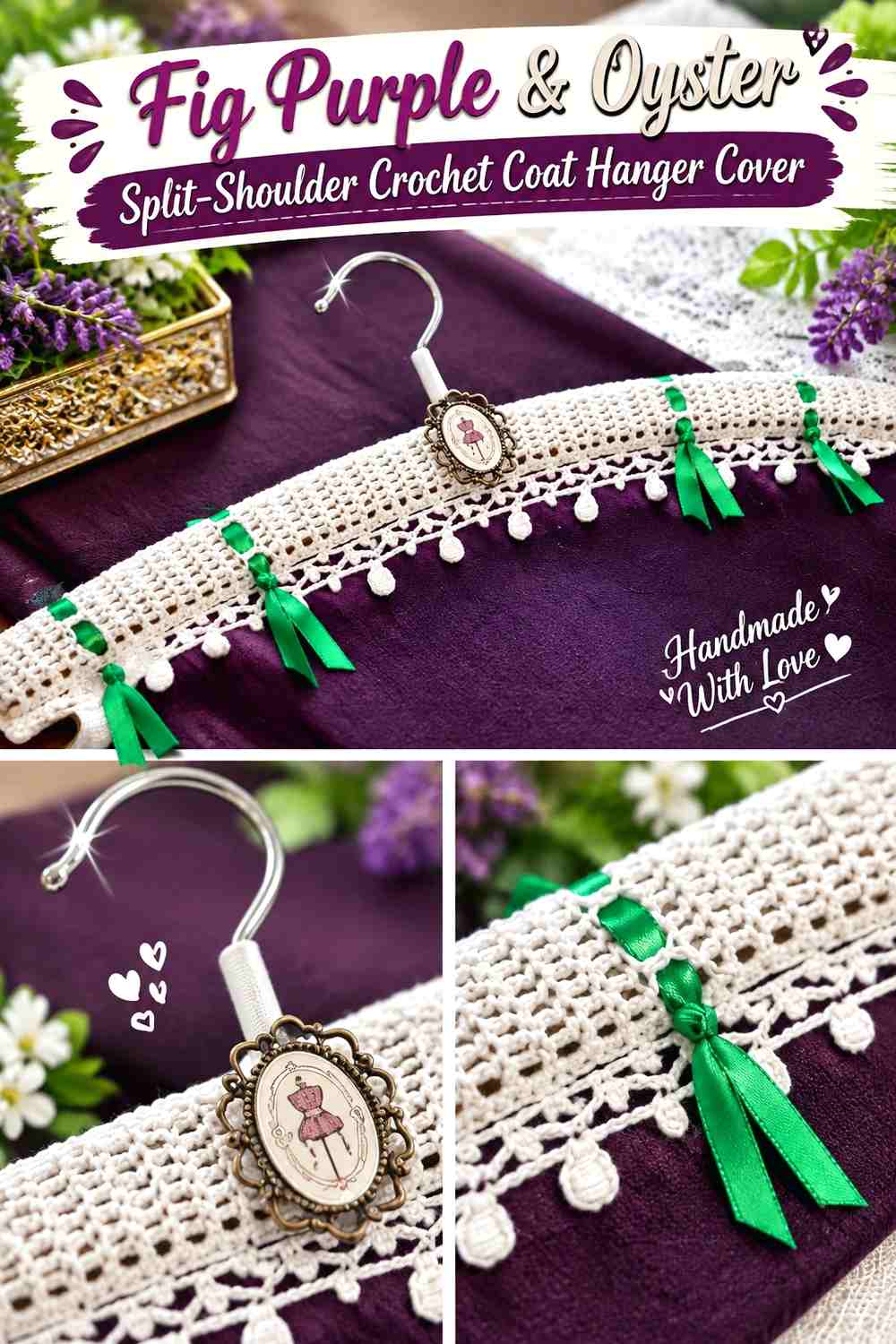
Give one hanger arm Fig Purple and the other Oyster, meeting the two colors around the center hook. This creates the clearest side-to-side division in the collection and lets both shades occupy substantial surface area.
Fig Purple Needs a Clean Meeting Point with Oyster at the Hook
The center becomes the most important visual checkpoint. Position the color transition deliberately around the hook opening so it does not appear accidentally shifted toward one shoulder.
Because hanger centers vary, mark the actual midpoint on the hanger before deciding where Fig Purple ends.
Oyster Can Balance Fig Purple Without Matching Its Visual Weight Exactly
Even with equal shoulder lengths, the light Oyster side may attract attention differently from the deeper Fig Purple side. Judge the pair from closet-viewing distance instead of assuming an equal stitch count automatically creates equal visual weight.
A small repeat of both colors in the lower seam can help connect the two halves if the center transition feels abrupt.
Creator Credit: Giani Art
4. Fig Purple Textured Crochet Coat Hanger Cover with Oyster Hook Opening
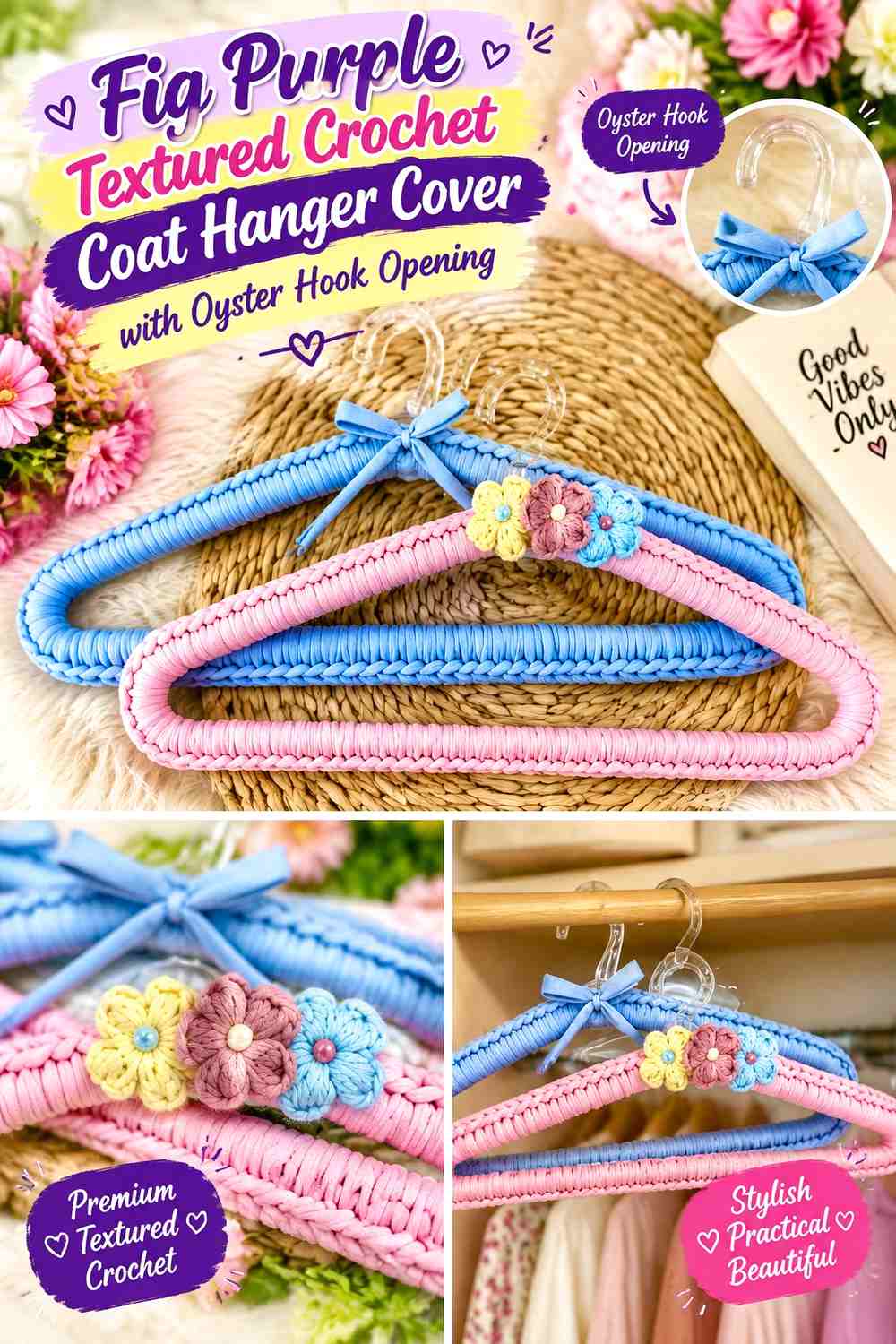
Let Fig Purple carry the textured shoulder sections while Oyster surrounds the center opening where the hanger hook emerges. The light center gives the two purple arms a visual break without interrupting their texture farther out.
Fig Purple Can Keep Textured Hanger Shoulders Visually Unified
Use one Fig Purple field across ridges, post stitches, or other pronounced texture. Frequent Oyster changes through the same area could make a narrow hanger cover look more crowded than the texture itself requires.
View both shoulder arms together to make sure the texture appears balanced on either side of the center.
Oyster Can Clarify the Fig Purple Hook Opening
A small Oyster section around the metal or wooden hook base distinguishes the structural center from the darker shoulder fabric.
Keep Oyster close to that opening if Fig Purple is meant to remain dominant. Expanding the light section too far down both arms turns the idea into a broader center block instead.
Creator Credit: Camila Passadori handmade
5. Oyster Lace Crochet Coat Hanger Cover with Fig Purple Lower Border
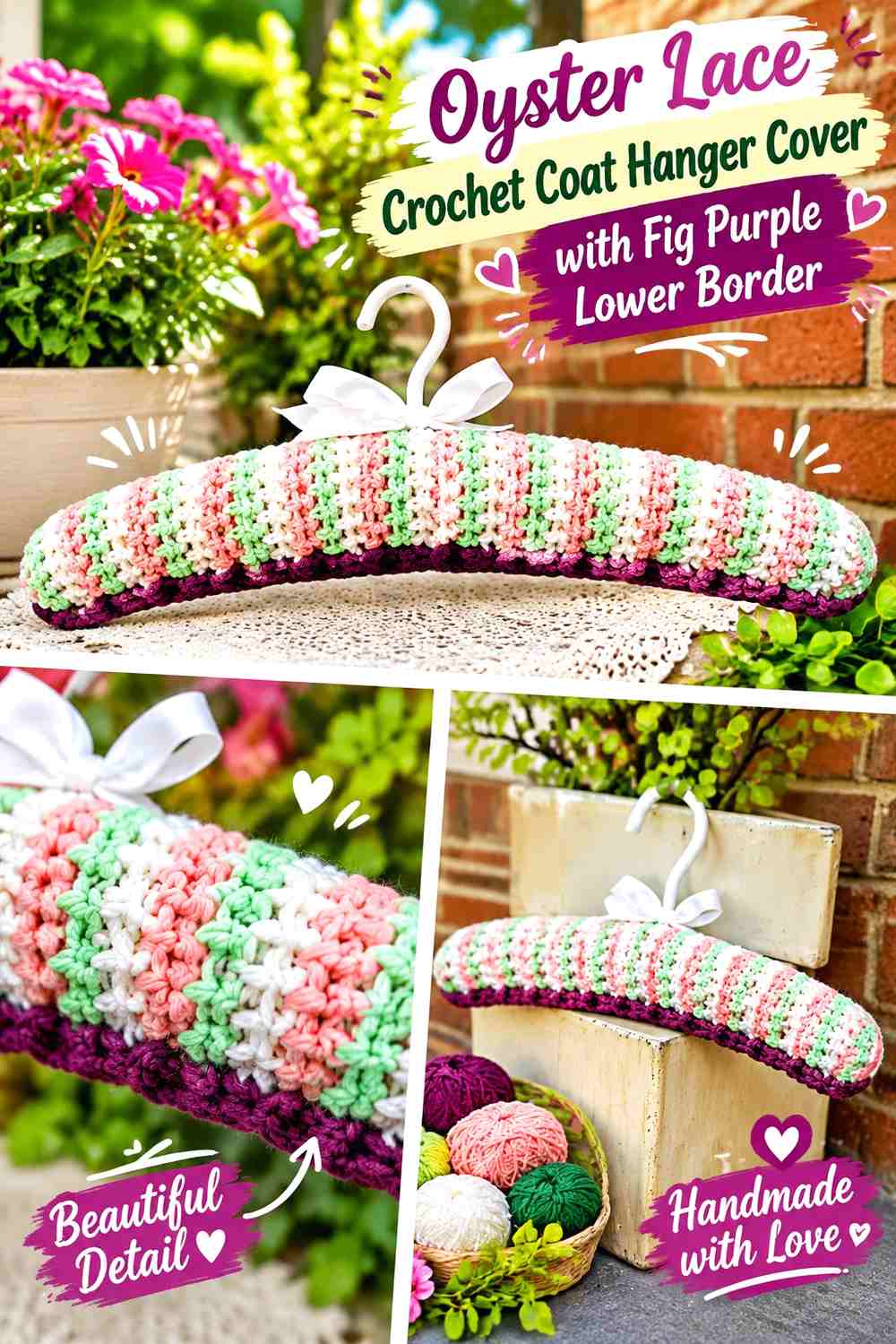
Use Oyster for the more open or lace-like body and place Fig Purple along the lower finishing edge. The light field preserves the airy character of the crochet, while the dark border gives the hanger a stronger visual base.
Oyster Can Keep Lace Detail Visible Across the Hanger
A mostly Oyster field allows open spaces and fine stitch changes to remain distinct without relying on multiple colors inside the lace.
If the hanger itself is dark, the light crochet may also make the outline of the shoulder arms more apparent through open sections.
Fig Purple Can Ground the Oyster Lace Along the Lower Edge
Run Fig Purple along the visible bottom line rather than scattering dark stitches through every lace section.
A continuous Fig Purple border creates one strong horizontal relationship beneath the two sloping Oyster arms and can make an ornate cover feel more visually organized.
Creator Credit: Wow! Crochet Designs
6. Fig Purple & Oyster Broad-Stripe Crochet Coat Hanger Cover

Alternate a limited number of broad Fig Purple and Oyster sections along the hanger arms. Larger bands suit the long narrow shape better than many tiny stripes because each color remains easy to identify around the center and shoulder curves.
Fig Purple Stripes Need Enough Length Beside Oyster
Make the Fig Purple areas substantial enough to look like true color sections rather than narrow outlines.
If the hanger has short shoulder arms, reduce the number of stripes rather than squeezing the same sequence into increasingly small bands.
Oyster Stripes Should Repeat Fig Purple in a Clear Hanger Rhythm
Use Oyster at deliberate intervals on both sides of the hook. Mirroring the general color rhythm across the two shoulders can make the hanger feel balanced even if the exact transition points differ slightly because of shaping.
Check the center carefully so two unrelated stripe sequences do not collide awkwardly around the hook.
Creator Credit: The Stitch Sessions – Crochet & Conversation
7. Fig Purple Crochet Coat Hanger Cover with Oyster End Caps
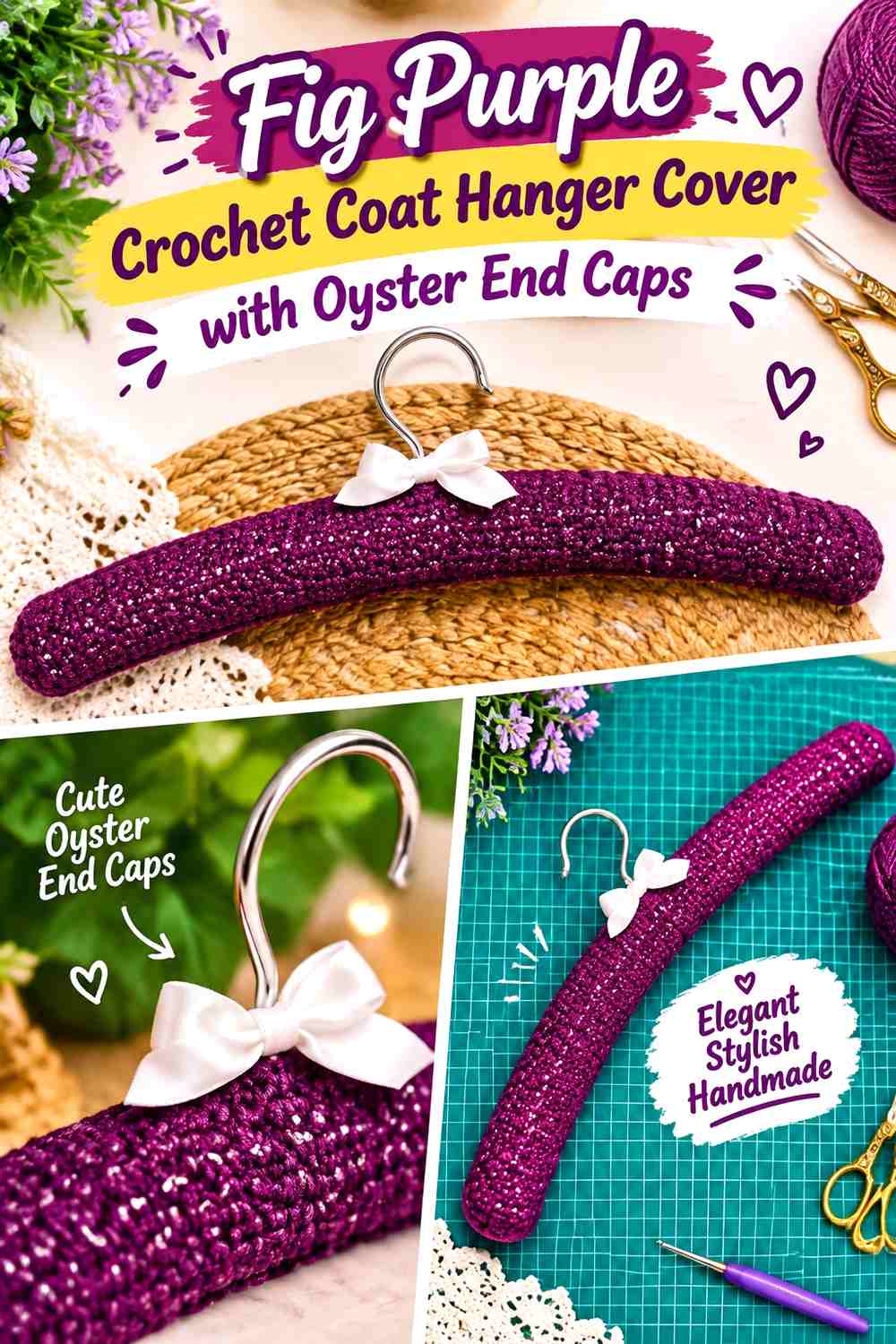
Keep the hook area and most of both shoulder arms Fig Purple, then finish each outer end in Oyster. Unlike Idea 2, the darker color dominates nearly the entire hanger while the light shade is restricted to compact terminal sections.
Fig Purple Should Connect Both Hanger Arms Through the Center
Run Fig Purple continuously across the shoulder area near the hook so the main shade forms one strong central span.
This creates a stable visual anchor and keeps the Oyster end sections from making the hanger look divided into several unrelated parts.
Oyster End Caps Can Finish the Fig Purple Shoulders Cleanly
Place Oyster where the cover reaches the outer ends of the hanger. Because those sections are small, make them large enough to remain visible from the front rather than disappearing entirely around the tips.
If the hanger ends have different shaping, prioritize a similar visible Oyster area rather than forcing identical hidden coverage.
Creator Credit: Nanny’s Storytime and Crochet
8. Oyster Ribbed Crochet Coat Hanger Cover with Fig Purple Seam
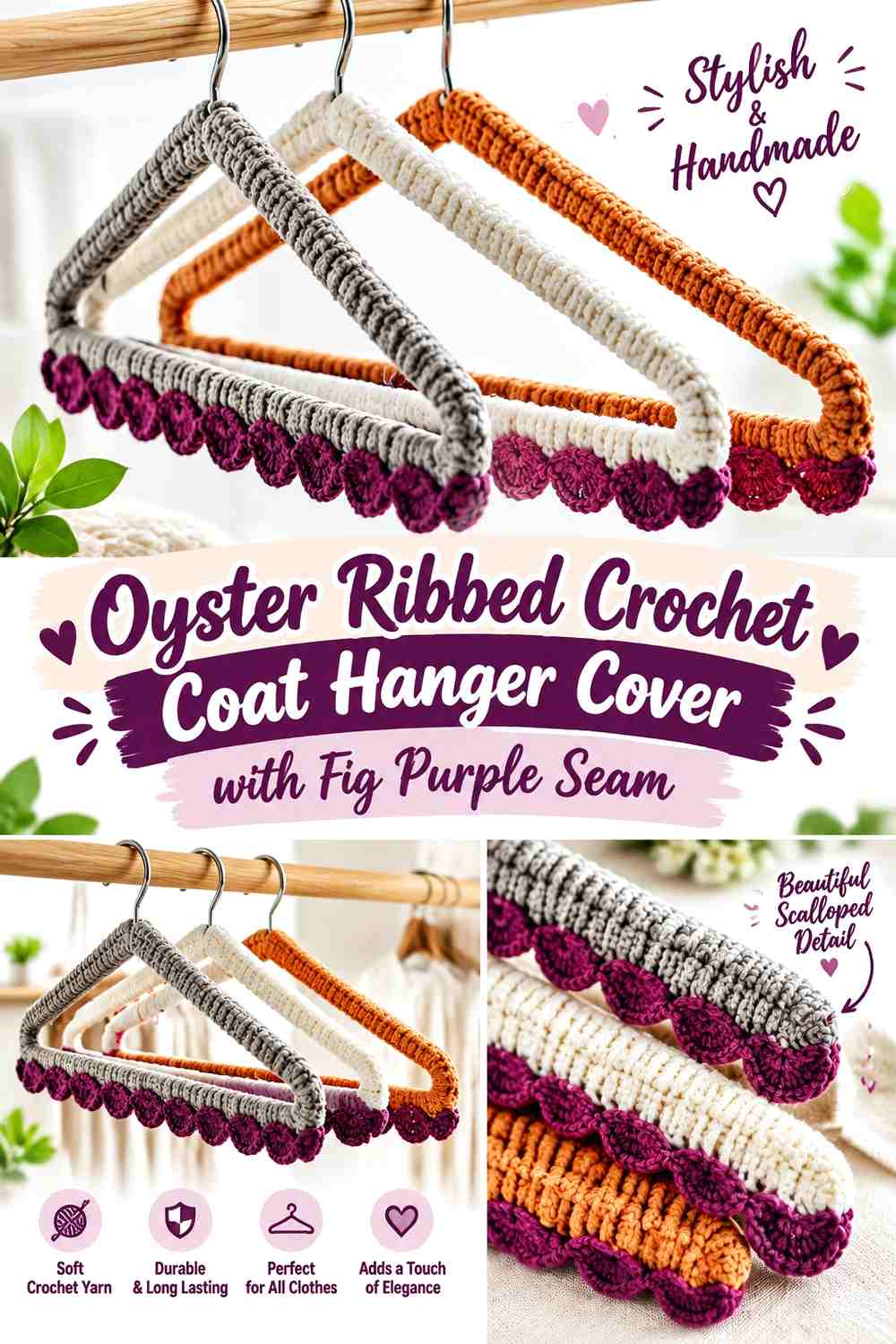
Use Oyster for the ribbed shoulder surface and keep Fig Purple along the lower joining line. This makes the texture the primary feature while the dark seam creates a narrow structural accent.
Oyster Lets Ribbed Hanger Texture Stay Easy to Follow
Keeping the ridges one light color allows their direction to remain continuous across each shoulder arm.
Avoid inserting frequent Fig Purple changes through the ribs if the purpose of the design is to showcase the repeating texture rather than color striping.
Fig Purple Can Turn the Oyster Lower Seam into a Design Line
Use Fig Purple where the cover closes beneath the hanger. A darker joining line can visually define the bottom edge without interrupting the Oyster top surface.
Check how much of the seam remains visible once clothes are hung. If only the center and outer edges show, focus the cleanest color finish in those areas.
Creator Credit: The Crochet Crowd
9. Fig Purple Crochet Coat Hanger Cover with Oyster Shell Edge
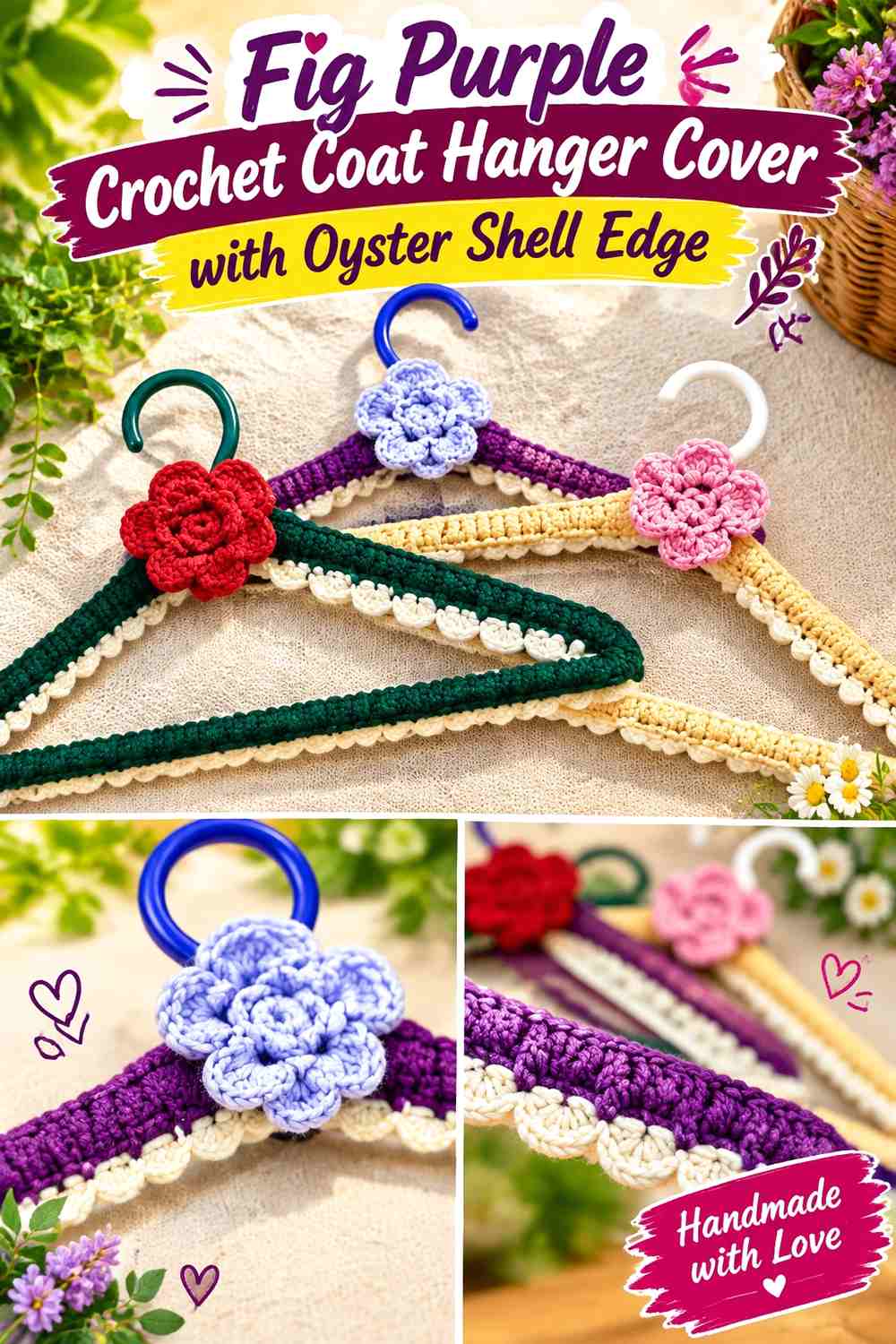
Make the cover body Fig Purple and reserve Oyster for a pronounced shell-style lower edge. The broad shell shapes give Oyster more visual area than the fine scallops in Idea 1 while still leaving the shoulder surface purple-dominant.
Oyster Shells Need Enough Fig Purple Background Around Them
Keep the main cover dark so each light shell remains distinct along the bottom line.
If Oyster begins appearing throughout the shoulder arms as well, the shell border loses some of its special role and the design starts to resemble a general two-color pattern.
Fig Purple Should Remain Broad Above the Oyster Shells
The purple field needs enough depth that the decorative edge looks attached to a substantial cover rather than becoming most of the visible fabric.
Judge the proportions on the hanger, particularly near the center where shell edging and the hook opening may visually compete.
Creator Credit: Rain Country
10. Oyster Crochet Coat Hanger Cover with Fig Purple Floral Center
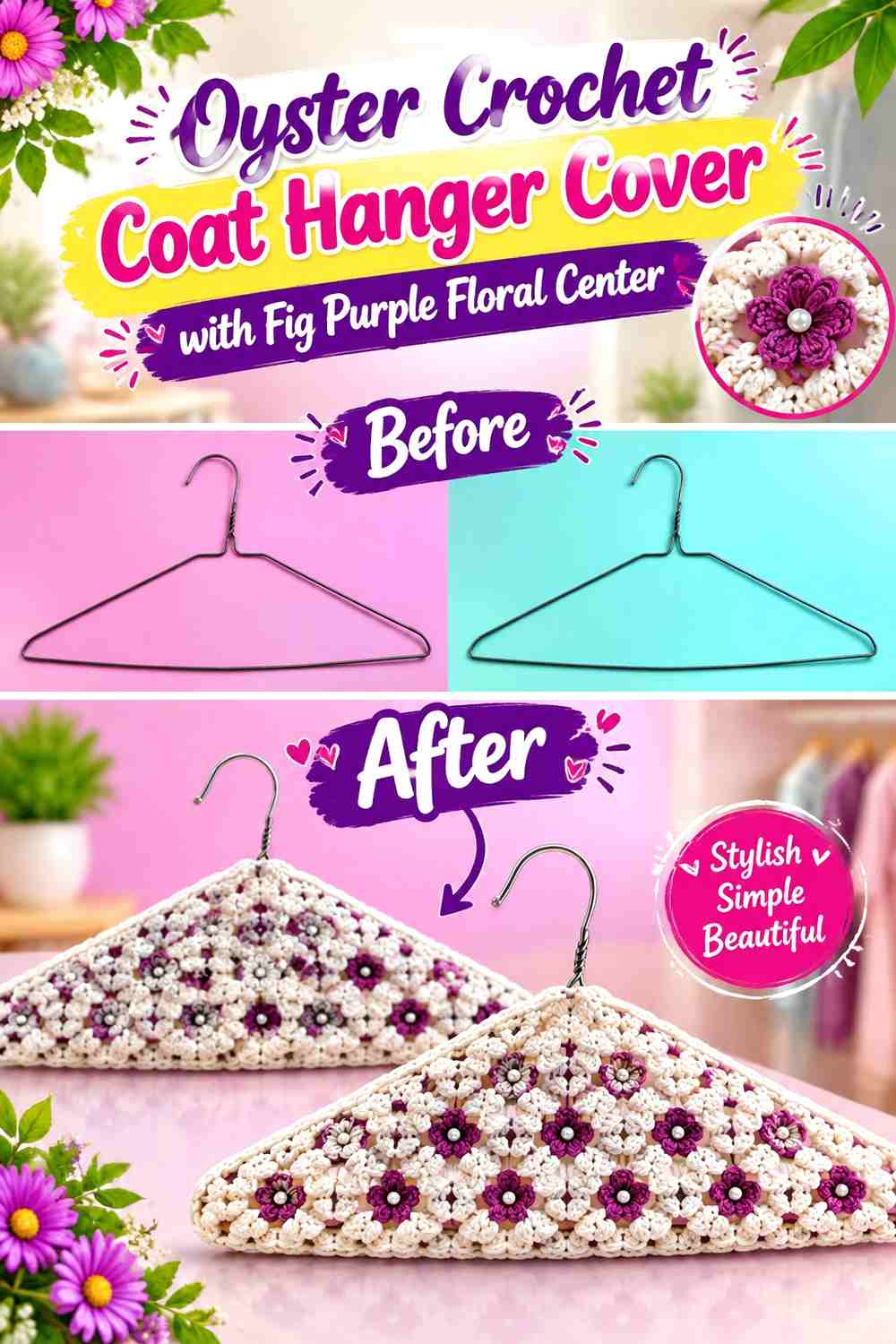
Use Oyster over both shoulders and concentrate Fig Purple around one flower or decorative center near the hook. This turns the central join into the focal point rather than relying on stripes or borders.
Fig Purple Flowers Need Clear Oyster Space at the Hanger Center
Leave enough plain Oyster around the purple motif for its silhouette to remain recognizable.
A central flower can easily become crowded if the hook opening, bows, beads, or additional accents all compete for the same small area, so keep the surrounding color plan simple.
Oyster Should Stay Continuous Across Both Fig Purple-Accented Shoulders
Run Oyster broadly toward both hanger ends to give the Fig Purple center a true background.
If you repeat purple elsewhere, limit it to a small lower edge or tip detail so the floral center still remains the strongest dark feature.
Creator Credit: Jayda InStitches
11. Fig Purple & Oyster Reversed-Pair Crochet Coat Hanger Covers
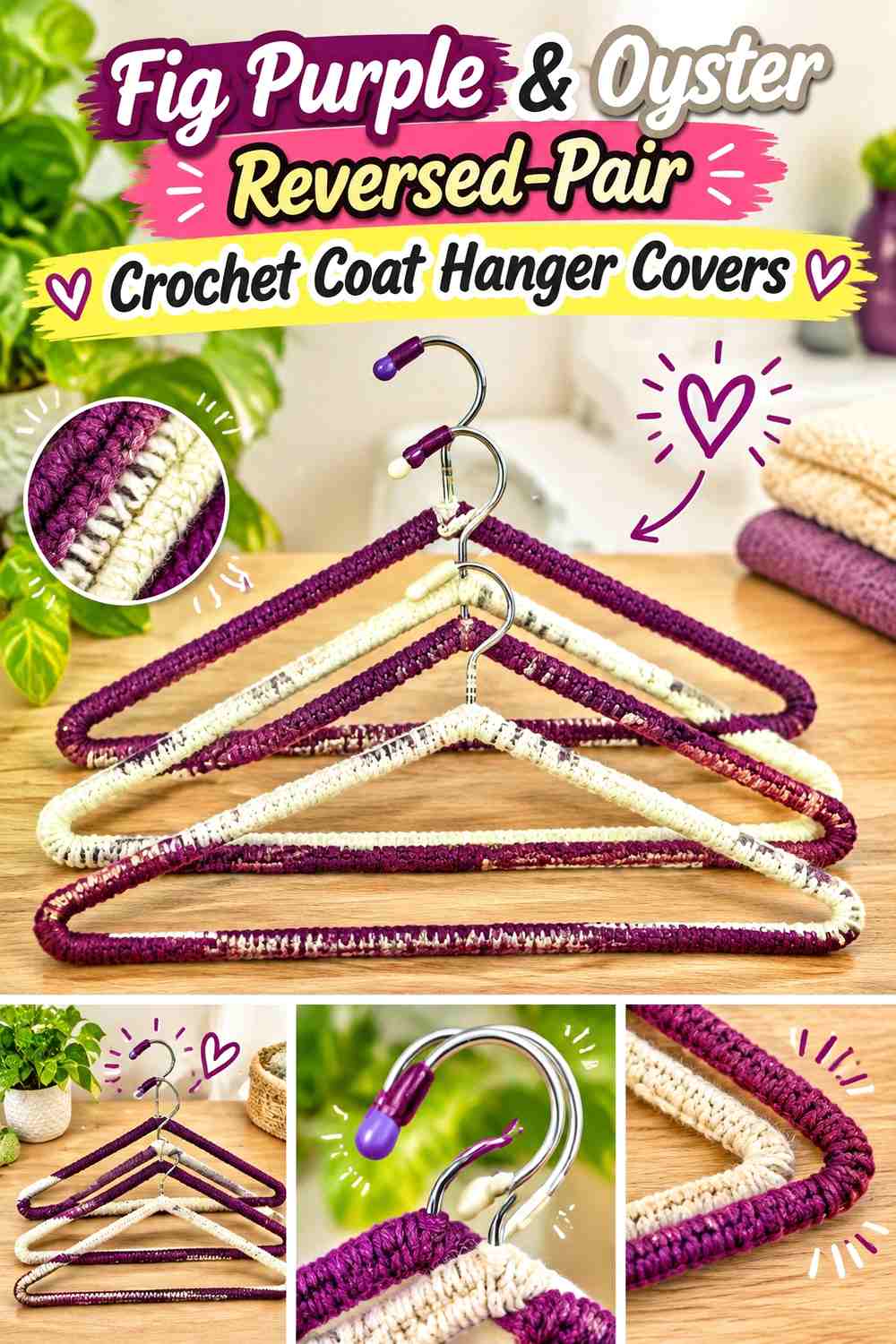
Create a coordinated pair rather than making both hangers identical. One can be Fig Purple-dominant with Oyster edging, while the second reverses the balance with Oyster shoulders and Fig Purple finishing details.
Fig Purple Can Lead One Hanger While Oyster Leads the Other
Make the reversal substantial enough to be obvious. Simply changing one small border is less effective than switching the main shoulder color between the two hangers.
Keep the same general cover shape so the pair is connected by construction while color creates the difference.
Oyster and Fig Purple Need One Shared Detail Across the Pair
Repeat one feature on both hangers, such as the same contrasting lower edge, matching center treatment, or similarly placed shoulder tips.
That repeated detail prevents the pair from looking like unrelated projects even though their dominant colors are reversed.
Creator Credit: Knit Crochet Home
Which Fig Purple & Oyster Coat Hanger Cover Layout Should You Choose?
For a clearly Fig Purple-dominant closet accent, Ideas 1, 4, 7, and 9 keep the deeper color across most of the shoulder surface. Oyster mainly reveals an edge, center opening, end cap, or decorative shell treatment.
Ideas 2, 5, 8, and 10 shift the cover toward Oyster. Those layouts are useful when you want crochet texture, lace, ribbing, or a dark central motif to stand out against a lighter field.
Ideas 3 and 6 give both colors more comparable importance through a split or broad stripes. Idea 11 is especially useful when you want a coordinated set without making every covered hanger identical.
The hanger itself should settle close decisions. A broad wooden hanger provides more visible shoulder surface for panels and stripes, while a slim wire or plastic form may benefit from simpler color placement that remains readable at a smaller scale.
Conclusion
Fig Purple and Oyster can produce noticeably different crochet coat hanger covers simply by changing where each shade sits on the hanger. Fig Purple works well as a continuous shoulder field, lower seam, shell border, end block, or central floral accent. Oyster can lighten the entire cover, separate dark texture, define the hook opening, or give decorative edging stronger visibility.
For the quietest approach, use one main color with a contrasting edge. For stronger two-color styling, divide the shoulders, add broad bands, or reverse the palette across a coordinated pair.
Before finishing any adaptation, place the crochet on the actual hanger and check the shoulder length, end shape, hook opening, lower seam, and any decorative edge. Use the linked creator tutorials for their demonstrated hanger-cover constructions and apply the Fig Purple-and-Oyster color scheme independently.
Frequently Asked Questions
Should Fig Purple or Oyster dominate a crochet coat hanger cover?
Use Fig Purple when you want the hanger to have a deeper, more dramatic shoulder surface. Choose Oyster when you want a lighter appearance or need Fig Purple borders, flowers, or seams to stand out clearly.
Where should Oyster go on a mostly Fig Purple crochet hanger cover?
Oyster works well around the hook opening, shoulder tips, lower scalloped or shell edge, end caps, or a narrow seam detail. These locations provide useful contrast without breaking up the entire Fig Purple surface.
How can I keep Fig Purple texture visible on a coat hanger cover?
Use larger uninterrupted Fig Purple sections and place Oyster near the boundaries of textured areas rather than changing color through every raised stitch. Compare the worked texture from normal closet-viewing distance before deciding whether more contrast is needed.
Can Fig Purple and Oyster be used equally on a hanger cover?
Yes. A split-shoulder layout or broad stripes can give both colors substantial visual space. Equal visual importance does not require identical stitch counts because light Oyster and dark Fig Purple attract attention differently.
Should the center around the hanger hook be Fig Purple or Oyster?
Either works. Oyster creates a light break between Fig Purple shoulder arms, while Fig Purple can act as a dark center connecting two Oyster sections. Choose according to which shade you want to emphasize and how much of the center remains visible on the actual hanger.
Can the lower Fig Purple or Oyster edge be decorative?
Yes, when the chosen hanger-cover construction supports an added scalloped, shell, or lace-style finish. Keep the decorative edge proportionate to the narrow hanger shape so it does not visually overwhelm the main shoulder cover.
Can the same Fig Purple and Oyster layout be used on wooden, wire, and plastic hangers?
The color idea can transfer, but the construction and visible proportions may change. Wooden hangers can have broader shoulders, while wire and plastic forms may be slimmer or shaped differently. Fit the crochet to the actual hanger before finalizing where the Fig Purple-to-Oyster transitions should fall.