Textured crochet throw pillows can change the look of a sofa, bed, reading chair, or bench without taking over the whole room. This collection focuses on surface detail: waffle blocks, raised popcorn stitches, puff texture, woven basket effects, chunky ridges, alpine stitches, cables, and chain-link shapes.
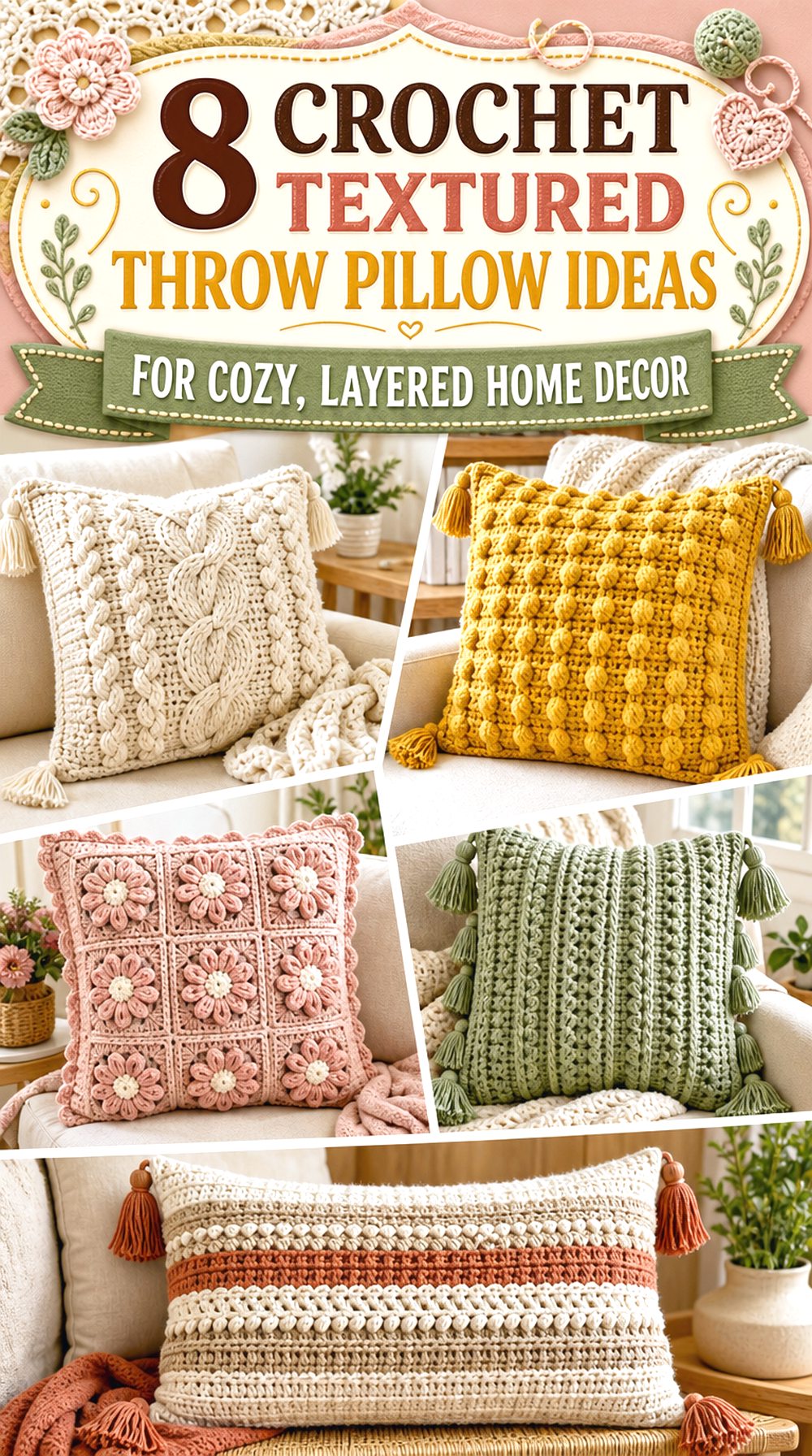
Each pillow idea offers a different kind of structure or finish. Some are square and bold, one is rectangular, and several use raised stitches that make the surface feel more dimensional. Use the list to compare texture, shape, closure details, insert fit, and how much visual weight each pillow may add to your space.
Quick List
- Crochet Waffle Stitch Pillow Cover
- Crochet Popcorn Texture Throw Pillow
- Crochet V-Puff Farmhouse Pillow Cover
- Crochet Basketweave Cushion Cover
- Crochet Chunky Rectangular Button Pillow
- Crochet Alpine Stitch Cushion Cover
- Crochet Cable Pillow Case
- Crochet Chain Links Throw Pillow
Why These Crochet Textured Throw Pillows Are Worth Making
Textured throw pillows are useful when a room needs softness, depth, or a stronger handmade focal point without adding many separate decorations. A flat pillow can blend into a sofa, but raised stitches, ridges, cables, and woven effects catch light differently and make the surface easier to notice.
They also help readers choose by placement. A rectangular pillow can sit in front of larger cushions, a cable pillow can bring a sweater-like look to winter decor, and a waffle or basketweave cover can suit a more structured arrangement. Before starting, it is worth checking insert size, closure style, yarn information, and whether the creator gives written support.
Crochet Waffle Stitch Pillow Cover
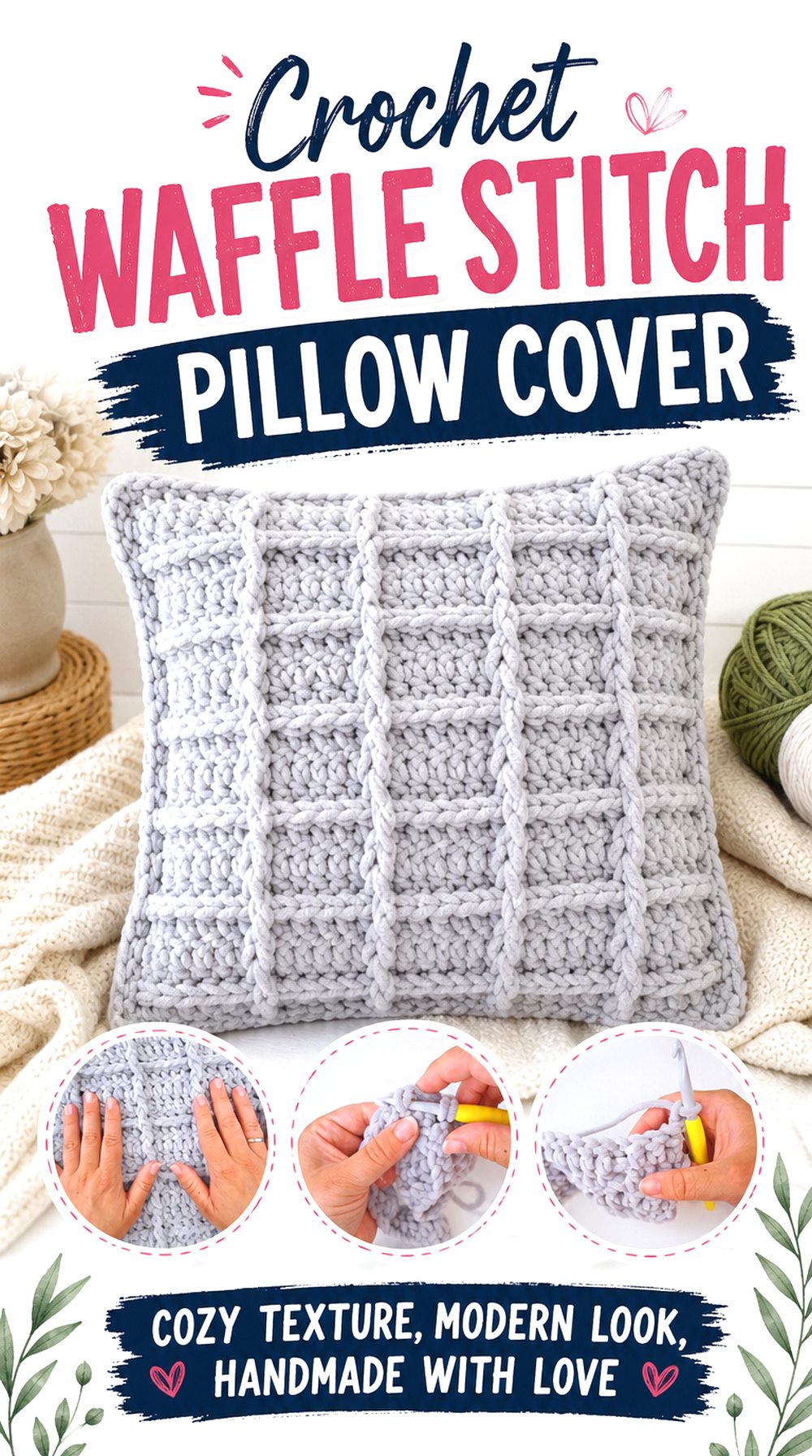
The waffle texture gives this pillow cover a squared, grid-like surface that feels neat and structured. It may work well on a sofa or bed where the goal is texture without a busy motif. The raised block pattern makes it different from softer puff and popcorn options because the surface looks more architectural and evenly spaced.
This tutorial is focused on a crochet pillow cover or cushion cover using waffle stitch in Bernat yarn, so readers can treat it as a home-decor project rather than just a stitch sample.
Check the Raised Grid Texture
The waffle surface is the main reason to choose this pillow. Its boxy texture can look tidy in a room with simple cushions, plain throws, or neutral bedding. Before choosing colors, think about whether the grid should stand out or blend in. Strong contrast may emphasize every raised section, while a softer shade may make the texture feel calmer.
Confirm the Pillow Insert Fit
A waffle stitch cover needs to fit its insert cleanly so the raised blocks do not look stretched unevenly. The creator’s material list and finished view are useful checkpoints before buying supplies. Readers planning to use an insert they already own should compare that insert with the tutorial information rather than assuming every cushion cover will fit the same size.
Watch the Final Cover Shape
The finished pillow cover is shown near the end of the tutorial, which gives readers a helpful way to judge the final shape. Pay attention to whether the corners, side edges, and surface tension match the look you want. A textured cover can look very different before and after the insert is added.
Crochet Popcorn Texture Throw Pillow
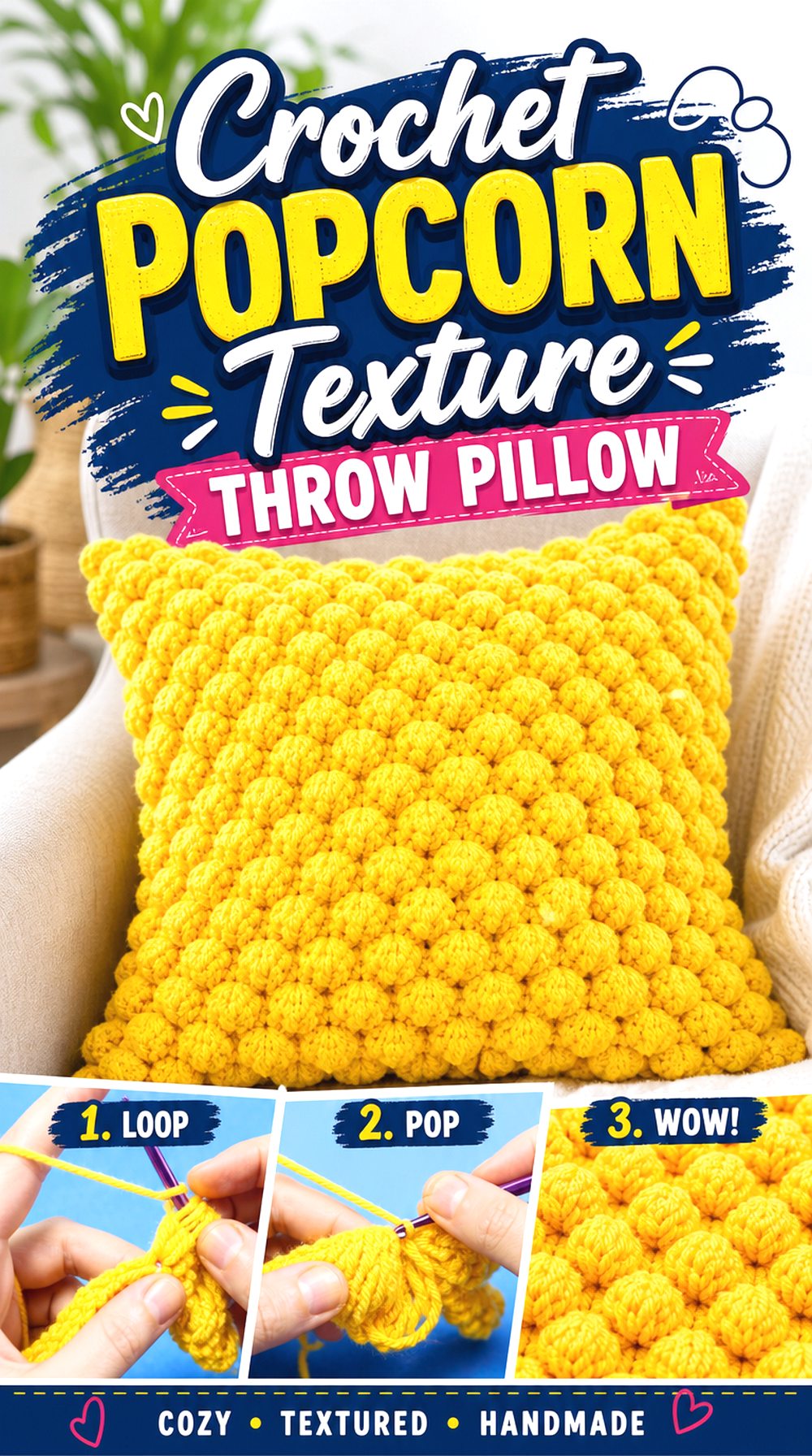
Raised popcorn stitches give this pillow a dotted, dimensional surface that feels softer and more decorative than a grid or basket pattern. The texture is the standout feature, making it a good option for readers who want a pillow that draws attention through stitch relief rather than color changes.
This project is presented as a decorative crochet pillow using popcorn stitch. Since the surface has many raised areas, it may be especially useful as an accent pillow placed in front of simpler cushions.
Let the Popcorn Texture Lead
The popcorn detail should be the main visual feature, so color choice matters. A solid or gently toned yarn may keep the raised stitches easier to read. Heavy variegation could compete with the texture, especially if the finished pillow will sit near patterned blankets or printed upholstery. The more visible the relief, the stronger the pillow’s decorative role becomes.
Confirm the Back and Insert Details
The search result clearly identifies this as a popcorn pillow tutorial, but readers should still check the original source for insert information, back treatment, and finishing details. These points affect how the pillow will sit on a sofa or bed. A polished front is only part of the decision; the back and closure also matter for everyday use.
Use Close-Up Sections Carefully
Popcorn texture can depend on consistent stitch handling, so close-up sections are worth slowing down. Readers do not need to memorize the whole process before starting, but it helps to review how the raised areas are formed and how the fabric looks after several repeats. Comparing the surface as it grows can prevent the texture from drifting visually.
Original Tutorial and Creator Credit
Creator: Jana Crochet
Crochet V Puff Farmhouse Pillow Cover
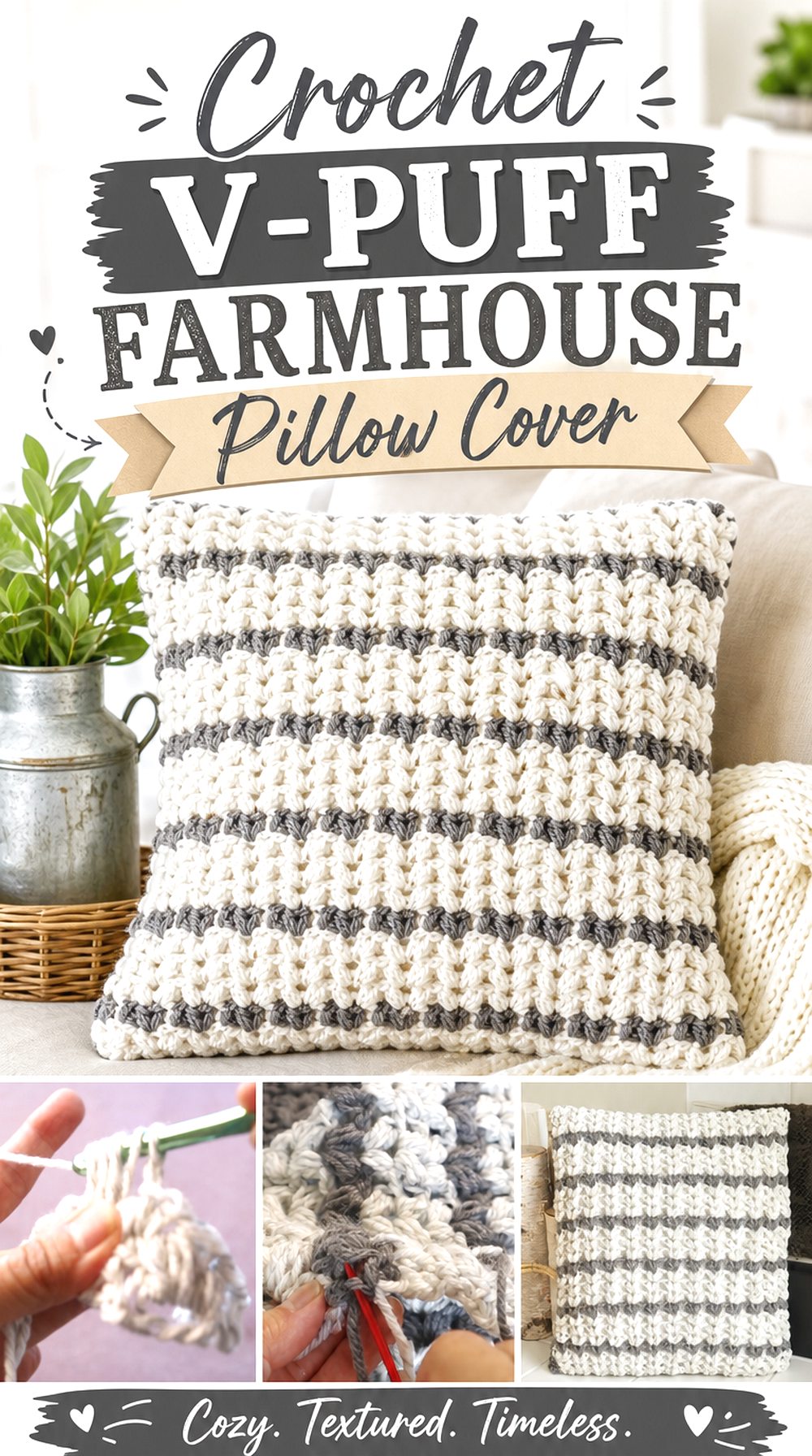
The V-puff texture gives this pillow cover a raised, patterned surface with a softer farmhouse look. It differs from the popcorn pillow because the texture appears more directional and arranged rather than dotted across the whole surface. The source description states that the cover fits an 18 x 18 inch pillow, making it useful for readers who already decorate with common square inserts.
This is a good option to consider when a room needs a cushion cover with visible stitch movement but not a heavy cable design.
Think About the 18-Inch Format
An 18 x 18 inch pillow is a common accent size, but it still needs to match the insert you plan to use. A cover that is too loose can make raised texture look flat, while a tight fit may stretch the puff detail. Compare the creator’s stated size with your insert before choosing this project for a specific room.
Balance the Two-Color Look
The source lists dark and light yarn amounts, so the design includes color planning as well as texture. Before starting, decide which shade should be dominant in the room. A darker main shade may feel grounded, while a lighter contrast can make the V-puff sections easier to notice. Keep the surrounding cushions in mind so the cover does not compete too much.
Review the Material List First
Because this pillow cover includes a stated size, yarn weights, and hook information in the source description, it is worth recording the full supply list before shopping. Do not rely only on the finished photo or title. Texture-heavy pillows often depend on the right balance between yarn, hook, and insert, so the original details matter.
Original Tutorial and Creator Credit
Creator: Crazy Cool Crochet
Crochet Basketweave Cushion Cover
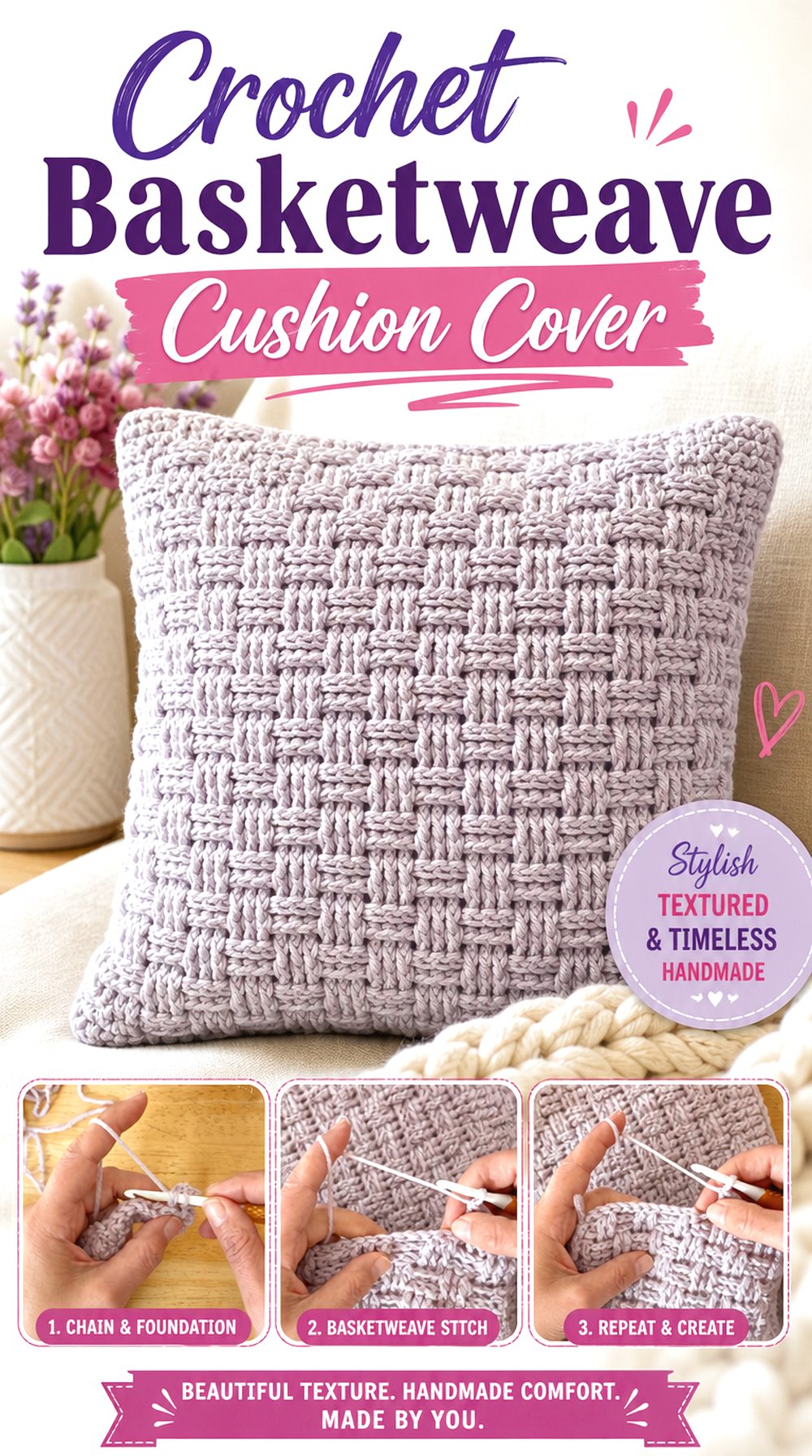
A basketweave cushion cover brings a woven look to crochet home decor. The raised over-and-under effect makes the pillow feel more tailored than a soft puff design, and it can pair well with solid blankets, leather seating, or simple bedding. This project stands apart because the texture looks like a structured fabric surface rather than separate raised dots or ridges.
The tutorial is presented as a step-by-step basketweave stitch pillow cover, with the finished result intended for home decor.
Match the Woven Look to the Room
Basketweave texture can feel orderly and slightly classic. It may suit spaces where the pillow needs to add detail without looking playful. Before choosing a color, consider nearby materials such as wood, linen, canvas, or smooth upholstery. The woven effect can look especially clear when the shade allows shadows to show between raised sections.
Check the Size and Style Notes
The source description mentions that the pillow cover can be customized by size and style, so readers should review the creator’s notes carefully. Customizing without checking proportions may change the look of the basket pattern. If the pillow is meant to match an existing insert, the insert should guide the planning instead of the other way around.
Compare the Texture as It Builds
Basketweave stitch is easier to judge once several sections are visible. As the fabric grows, compare the raised blocks with the tutorial’s finished look. This is not about recreating instructions from memory; it is about checking whether the woven effect is forming cleanly before too much of the cover is completed.
Original Tutorial and Creator Credit
Creator: Cozy Loop Crochet
Crochet Chunky Rectangular Button Pillow
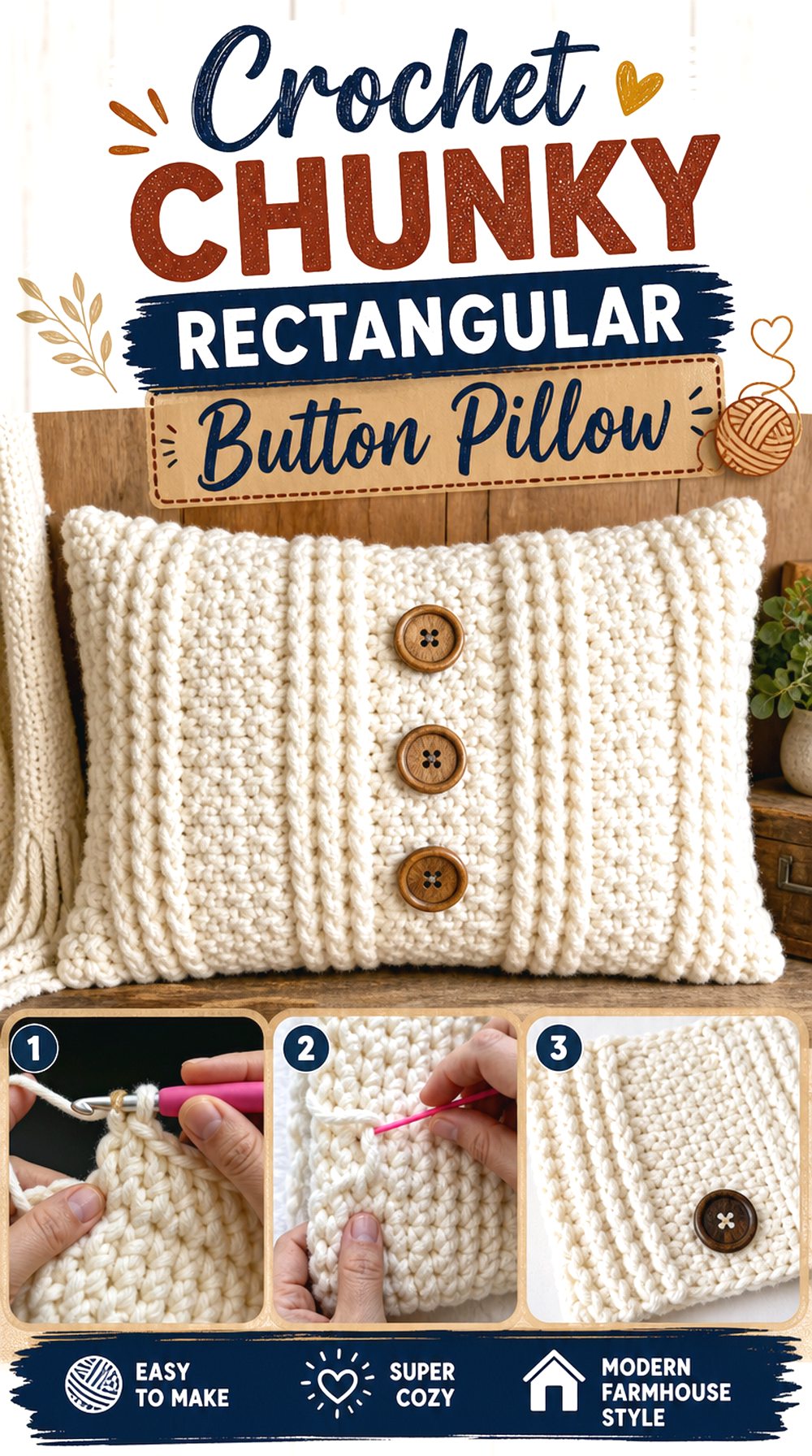
The rectangular shape makes this chunky textured pillow different from the square covers in the collection. At 12 x 20 inches in the source title, it may work well layered in front of larger square pillows or centered on a bed. The button detail also gives the design a visible finishing point, which can make the pillow feel more styled than a plain slip-on cover.
This project is useful for readers who want texture, but also want a shape that breaks up a row of square cushions.
Use the Rectangle for Layering
A rectangular pillow can add depth to a pillow arrangement without taking up as much height as a square cushion. It may sit nicely in front of larger pillows on a bed or across the center of a reading chair. Before choosing it, measure the space where it will sit so the long shape feels intentional rather than crowded.
Look Closely at the Button Finish
The source description mentions a button, so the closure or decorative finish is part of the project’s identity. Readers should check how the button is used and whether the size listed by the creator matches the look they want. Hardware details can change the final appearance, especially on a pillow placed where the front is always visible.
Plan Before Buying Chunky Yarn
Chunky texture can build a bold surface, but it also changes the weight and thickness of a pillow cover. Review the creator’s yarn information and written pattern link before gathering supplies. If you already have a pillow insert, compare it with the stated 12 x 20 inch format so the finished cover has the right shape.
Original Tutorial and Creator Credit
Creator: I-crochet
Crochet Alpine Stitch Cushion Cover
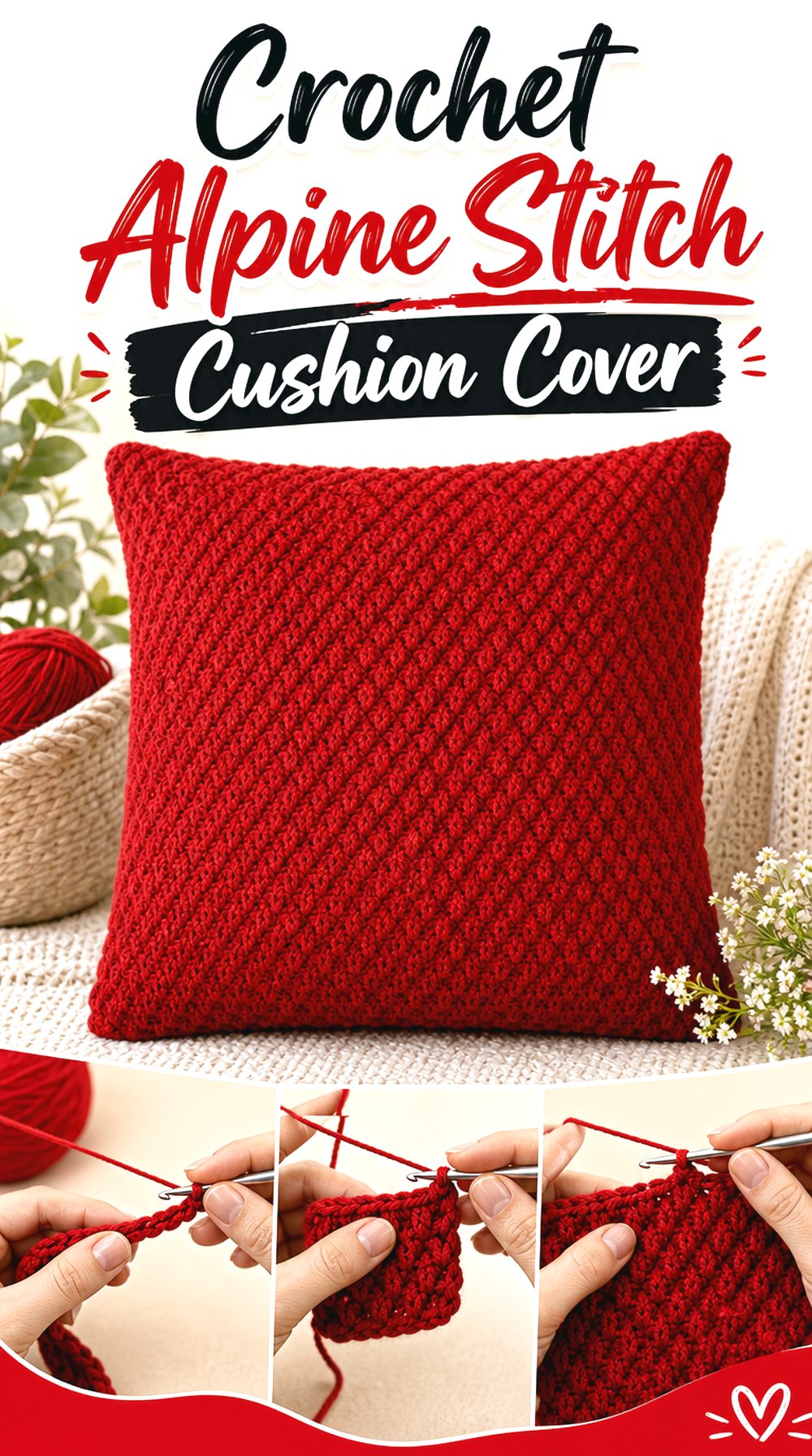
Alpine stitch gives this cushion cover a raised, staggered texture that feels more rhythmic than waffle stitch and less bulky than large cables. The surface has a repeated relief that can work in both modern and cozy spaces, depending on color. It is a strong option for readers who want an allover texture with movement, but not a separate motif or picture shape.
The tutorial is focused on making a crochet pillow in alpine stitch, so the texture remains the main feature from start to finish.
Notice the Staggered Surface
The alpine texture has a repeated, stepped look that can catch light across the pillow front. This makes it useful where a plain cushion would feel too flat. A single color may help the raised pattern stay visible, especially in natural daylight. The surface is the main decorative element, so it does not need extra trims to feel complete.
Confirm Language and Visual Clarity
This source appears through Oficina Dali, and readers should check whether the teaching format, captions, or visual pace works for them before committing. A pillow cover can still be followable when the close-ups are clear, but it is better to review a few sections first. That helps avoid starting a project that does not match your preferred learning style.
Check the Finished Edges
For a cushion cover, edges matter almost as much as the front texture. Review the finished view to see how the sides and corners look with the alpine stitch surface. Raised textures can draw attention to uneven tension at the edges, so readers may want to compare the overall shape before adding the insert or finishing the cover.
Original Tutorial and Creator Credit
Creator: Oficina Dali
Crochet Cable Pillow Case
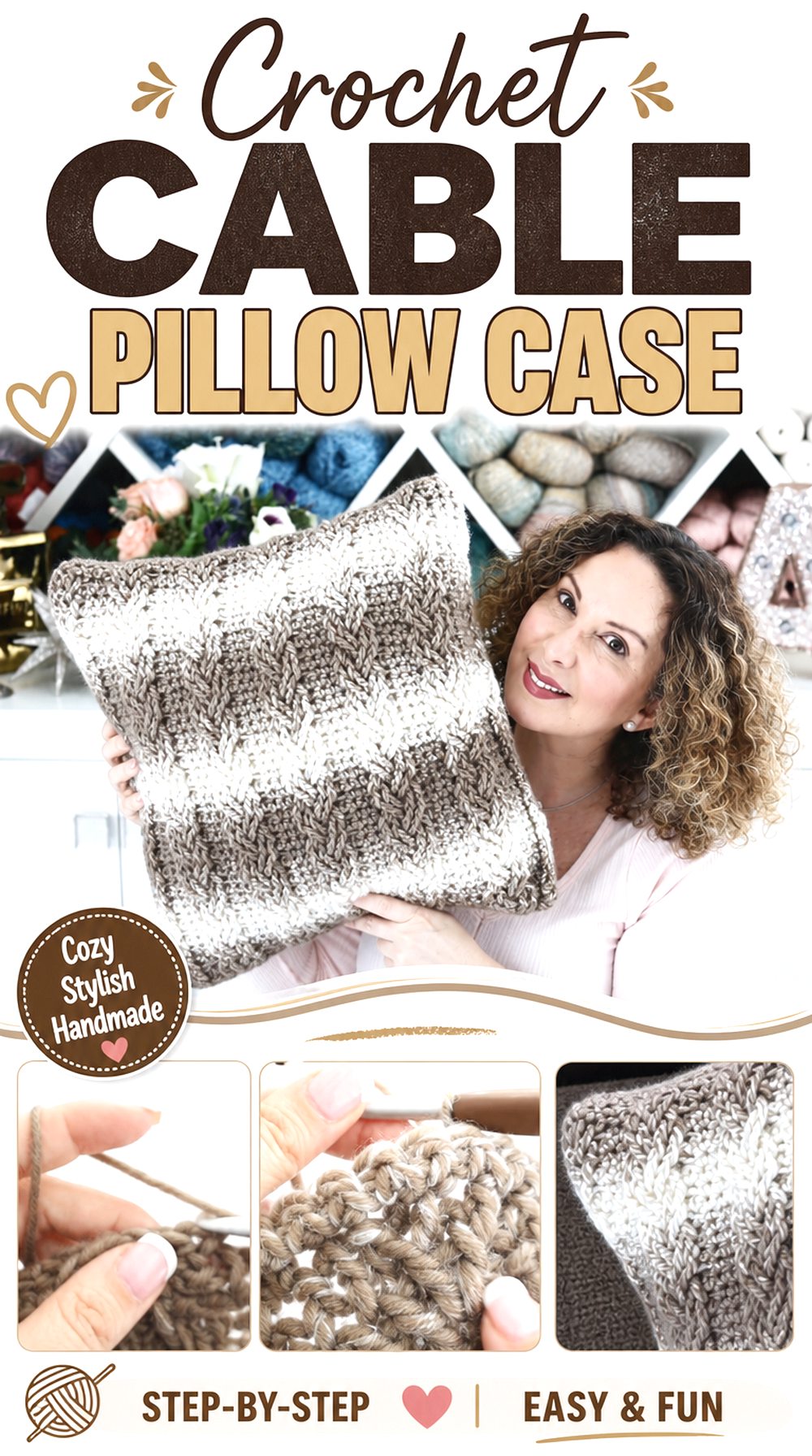
A crochet cable pillow case brings a sweater-like texture into home decor. The cable detail makes the surface feel more dimensional and formal than waffle, puff, or basketweave textures. The source description states that the project uses a 16 by 16 inch pillow insert, which gives readers a clear size point to check before starting.
This pillow idea suits a room where the cushion should feel substantial, cozy, and visually structured without needing bright color changes.
Make the Cable Detail Visible
Cables need enough contrast from light and shadow to show well. A very busy yarn may hide the raised crossing effect, while a simpler shade can let the texture become the focus. Think about where the pillow will sit during the day. Natural light from the side can make the cable relief easier to see.
Confirm the Insert Size
The source lists a 16 by 16 inch pillow insert, so readers should compare that size with their own decor plans. A smaller square pillow can work well as an accent, but it may look undersized on a deep sofa or large bed. Check the intended placement before treating this as the main pillow in an arrangement.
Slow Down Detailed Cable Sections
Cable texture usually rewards careful viewing because the raised sections need to line up cleanly. Readers should use the original tutorial for the exact construction details and pause during the cable portions when needed. The goal is not speed; it is keeping the surface balanced so the finished pillow case has the intended sculpted look.
Crochet Chain Links Throw Pillow
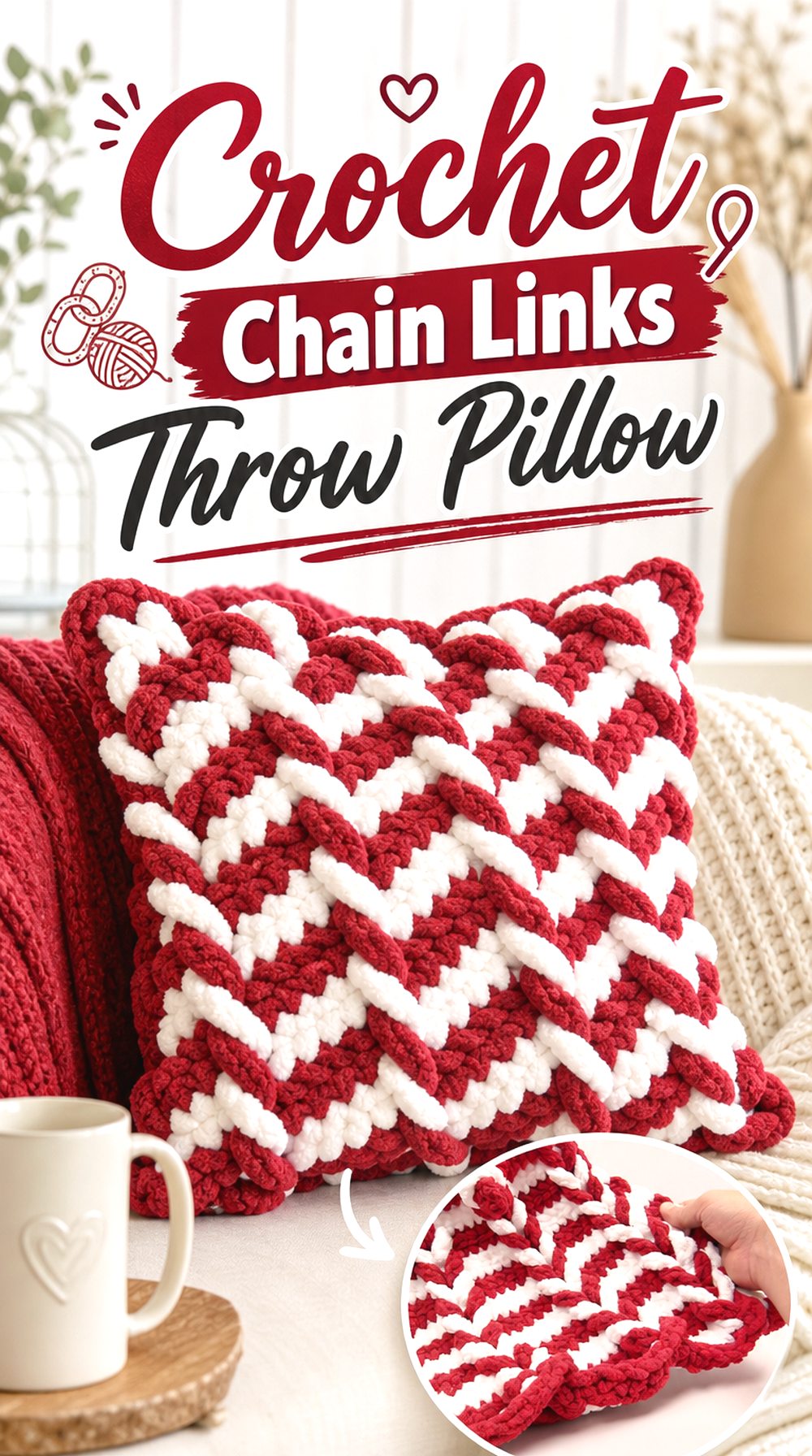
The chain links pillow has one of the most distinctive textures in this list. Instead of a flat raised stitch pattern, it uses a Jacob’s Ladder-style concept to create linked, braid-like surface detail. That makes it stand apart from waffle, alpine, and basketweave pillows because the texture reads almost like a separate dimensional feature on the front.
This project may suit readers who want a pillow that feels bold and tactile, especially when placed with simpler cushions.
Consider the Dimensional Front
The chain-link effect creates a strong surface feature, so this pillow may become a focal point in a room. It can work well as a single statement cushion rather than one of many busy textures. Before choosing it, think about whether the linked detail should be the main handmade element on the sofa or part of a larger textured grouping.
Check the Written Support
The source notes that free instructions are available with the video tutorial. That can be helpful for readers who prefer to cross-check visual guidance with written information. Since the chain-link look depends on the concept being formed correctly, using both formats may make the project easier to follow without relying only on memory.
Compare the Links Before Finishing
The linked texture should look consistent before the pillow is completed. Pause after the major texture changes and compare the developing front with the finished example. This is especially useful because the surface effect is more dimensional than a standard stitch pattern. Catching an uneven link early is easier than adjusting the look after the pillow is closed.
Original Tutorial and Creator Credit
Creator: The Crochet Crowd
Conclusion
These crochet textured throw pillow ideas offer different ways to add depth to a room. Choose the waffle or basketweave covers for a tidy, structured surface, the popcorn or V-puff pillows for raised softness, and the alpine stitch cover for repeated movement. The rectangular button pillow is useful for layering, while the cable and chain-link pillows create stronger statement texture. For exact construction details, sizing, supplies, and finishing steps, follow the original tutorials linked with each creator credit.
FAQs
How do I choose the right crochet textured throw pillow?
Start with placement. A sofa may handle one bold cable or chain-link pillow, while a bed can layer square and rectangular shapes more easily. Then compare insert size, surface height, closure style, and color. A raised texture should support the room, not fight with every other cushion nearby.
Should all textured crochet pillows use the same yarn?
Not necessarily. Each tutorial may use a different yarn weight, hook size, or fiber suggestion, so follow the creator’s supply information for that project. Changing yarn can affect size, firmness, stitch definition, and how the cover fits its insert. Check the source details before substituting.
Are raised crochet pillows practical for everyday use?
Raised textures can be decorative and comfortable, but daily handling depends on the yarn, construction, closure, and insert fit. A pillow used mostly for display may handle more surface detail than one used every day on a busy sofa. Check whether the creator gives care or finishing information.
Can I mix several textured crochet pillows together?
Yes, but choose contrast carefully. Pair one bold texture, such as cables or chain links, with quieter surfaces like waffle or alpine stitch. Varying shape also helps; a rectangular pillow can sit in front of square covers. Keeping colors related can make different textures feel intentional.
Can I sell pillows made from YouTube tutorials?
Do not assume selling is allowed. Check each creator’s written pattern terms, video description, website notes, and any licensing information. Some creators allow selling finished items with conditions, while others may limit use. Never reuse creator photos, thumbnails, charts, or video screenshots without permission.