Delft Blue and Apricot Mist create a useful dark-light relationship for a crochet bell sleeve shrug because the two colors can divide the garment by function. Delft Blue can anchor the shoulder panel, upper sleeves, joins, or neckline, while Apricot Mist can reveal the widening lower sleeves, open mesh, motifs, and decorative cuffs.

Bell sleeves make color placement especially visible. A shade introduced where the sleeve begins to flare emphasizes that change in silhouette, while a contrasting cuff concentrates attention at the hands. Extending Apricot Mist too far up both sleeves can make the lower half of the shrug visually heavier, so the amount of each color should be considered alongside the actual sleeve width.
The tutorials credited below include bell-sleeve shrugs, boleros, mesh layers, and bell-sleeve garments whose sleeve or cropped-body construction can inform a shrug adaptation. The Delft Blue and Apricot Mist palettes are independent editorial directions; the creators should not be assumed to have used these exact colors.
Quick List
- Delft Blue Mesh Crochet Bell Sleeve Shrug With Apricot Mist Cuffs
- Apricot Mist Mesh Crochet Bell Sleeve Shrug With Delft Blue Outlines
- Delft Blue Crochet Bell Sleeve Shrug With Apricot Mist Lower Flare
- Delft Blue Crochet Bell Sleeve Shrug With Apricot Mist Flare Bands
- Apricot Mist Floral Crochet Bell Sleeve Shrug With Delft Blue Joins
- Delft Blue Granny Crochet Bell Sleeve Shrug With Apricot Mist Openwork Breaks
- Delft Blue Textured Crochet Bell Sleeve Shrug With Apricot Mist Cuff Bands
- Apricot Mist Wrap-Inspired Crochet Shrug With Delft Blue Bell Sleeves
- Delft Blue Layered-Mesh Crochet Bell Sleeve Shrug With Apricot Mist Borders
- Delft Blue Cropped-Mesh Crochet Bell Sleeve Shrug With Apricot Mist Neckline
- Apricot Mist Draped Crochet Bell Sleeve Shrug With Delft Blue Cuffs
- Delft Blue Simple Crochet Bell Sleeve Shrug With Apricot Mist Flare Markers
- Delft Blue Crochet Bell Sleeve Shrug With Apricot Mist Body-and-Cuff Balance
Let Delft Blue Anchor the Shoulder Area Before the Bell Sleeves Expand
A bell sleeve already adds visual width below the elbow, so a darker Delft Blue shoulder and upper-sleeve section can keep the garment balanced. The darker color draws less attention to the widest part of the upper body while giving Apricot Mist room to become more noticeable as the sleeve expands.
This does not mean every shrug needs a blue body. An Apricot Mist shoulder panel can work when you want a lighter overall layer, but the darker shade should then have a repeated role—such as cuffs, sleeve outlines, front edges, or joins—so it does not appear in one isolated patch.
Use Apricot Mist to Show Where the Crochet Bell Sleeve Changes Shape
The beginning of the flare is one of the most useful places for a color transition. Moving from Delft Blue to Apricot Mist near that point makes the sleeve expansion easier to see and turns construction shape into part of the color design.
For a subtler result, keep the whole sleeve Delft Blue and reserve Apricot Mist for a narrow cuff. For stronger contrast, let Apricot Mist occupy the lower flare but repeat a small amount elsewhere, such as around the neckline, so the pale sleeve ends do not feel disconnected from the shrug body.
Check Delft Blue and Apricot Mist Across Both Sleeves Together
Bell sleeves need color symmetry as well as similar physical dimensions. Before finishing the second sleeve, compare where every major Delft Blue-to-Apricot Mist transition begins.
A pale band starting noticeably higher on one arm can make one bell sleeve appear longer or wider even if both sleeves have the same actual measurements. Lay the shrug flat and also try it on, because sleeve drape can change where the color boundary appears when the arms are hanging naturally.
1. Delft Blue Mesh Crochet Bell Sleeve Shrug With Apricot Mist Cuffs

This direction keeps the airy shrug predominantly Delft Blue and reserves Apricot Mist for the widest part of each sleeve. The blue mesh creates continuity across the shoulders and upper arms, while the pale cuffs make the bell silhouette more noticeable without dividing the entire garment into equal color blocks.
Delft Blue Should Carry the Main Mesh Shrug Surface
Use Delft Blue continuously across the back, shoulders, and narrower upper sleeves. A single dominant field lets the open mesh create texture while keeping the cropped shrug visually connected from arm to arm.
If the mesh is very open, also consider the color of the top underneath. That base layer will show through Delft Blue and become part of the finished color effect.
Apricot Mist Can Emphasize the Widest Bell Sleeve Area
Introduce Apricot Mist close to the point where the sleeve has clearly widened. The lighter value makes the flare easier to see and gives the lower sleeve a deliberate ending.
Keep the two Apricot Mist sections similar in depth. Unequal pale cuffs can exaggerate even a small difference between the sleeve lengths.
Creator Credit: Crochet Made By Eli
2. Apricot Mist Mesh Crochet Bell Sleeve Shrug With Delft Blue Outlines

Reverse the hierarchy for a lighter shrug. Apricot Mist can cover the open mesh body and sleeves while Delft Blue traces the neckline, sleeve openings, or another continuous outer edge. The dark outline prevents the pale mesh from looking visually unfinished.
Apricot Mist Keeps the Bell Sleeve Mesh Light Across the Whole Shrug
Use Apricot Mist continuously when you want the open fabric itself to be the main feature. Keeping one pale field across the shoulders and sleeves avoids interrupting the mesh with several dark bands.
Because Apricot Mist is lighter, small irregularities in the mesh may be easier to notice, so compare both sleeves frequently as they develop.
Delft Blue Can Give Apricot Mist Bell Sleeves a Defined Finish
A narrow Delft Blue cuff gives the wide sleeve opening a clean visual boundary. Repeating Delft Blue at the neckline can connect the two cuffs across the garment.
Avoid making every edge equally heavy. A slim blue outline can be enough to frame Apricot Mist without making the shrug look striped.
Creator Credit: Priya Crochets
3. Delft Blue Crochet Bell Sleeve Shrug With Apricot Mist Lower Flare

This idea changes color across a larger sleeve area. Delft Blue covers the cropped body, shoulders, and closer-fitting upper sleeve, while Apricot Mist begins as the lower arm starts opening into the bell. The transition deliberately highlights the difference between fit and flare.
Delft Blue Can Keep the Upper Bell Sleeve Visually Narrow
Use Delft Blue through the section that sits closer to the arm. The darker shade reinforces the straighter upper silhouette before the sleeve expands.
Check both sleeves at the same stage before changing colors so the Delft Blue portion ends at a consistent visual height.
Apricot Mist Can Follow the Full Lower Sleeve Flare
Once Apricot Mist begins, let it occupy enough of the widening section to look intentional rather than like an unusually deep cuff.
If the pale flare starts to feel disconnected from the body, repeat Apricot Mist in a very narrow neckline or front-edge detail instead of adding another large body panel.
Creator Credit: Chenda DIY
4. Delft Blue Crochet Bell Sleeve Shrug With Apricot Mist Flare Bands

Rather than giving the entire lower sleeve to Apricot Mist, keep Delft Blue dominant and add one or more controlled pale bands around the flare. This produces stronger horizontal rhythm while preserving the blue sleeve from shoulder to cuff.
Delft Blue Should Remain Continuous Through Most of the Bell Sleeve
Keeping Delft Blue above, between, and below the accent areas prevents the Apricot Mist bands from visually cutting the sleeve into unrelated pieces.
This approach works particularly well when the sleeve shape itself is dramatic enough that it does not need a full pale lower section.
Apricot Mist Bands Can Mark the Delft Blue Sleeve Expansion
Place the most visible Apricot Mist band near the section where the flare becomes obvious. The color change then reinforces an actual change in silhouette.
Compare the bands with your arms relaxed. Their position should match visually on both sleeves rather than only when the shrug is lying flat.
Creator Credit: Natalie
5. Apricot Mist Floral Crochet Bell Sleeve Shrug With Delft Blue Joins
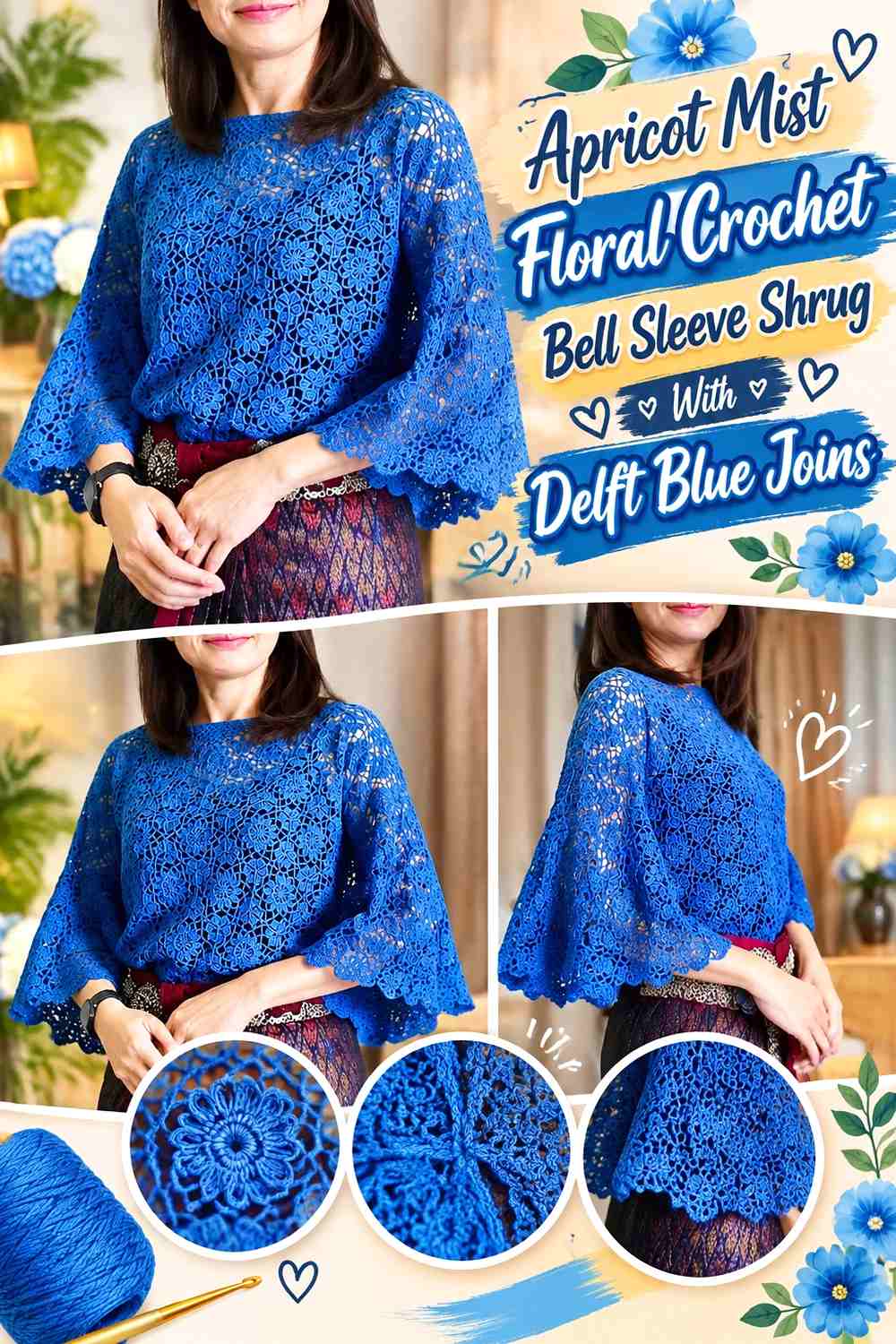
Floral surface detail benefits from a lighter field when you want individual motif shapes to remain visible. Apricot Mist can lead the flower sections, while Delft Blue handles joins, outer edges, and the narrower structural areas linking the motifs into sleeves.
Apricot Mist Can Keep Floral Bell Sleeve Motifs Distinct
Give Apricot Mist complete petals or larger motif areas rather than switching colors repeatedly inside tiny details.
Bell sleeves already place many motifs near one another as the circumference expands. A controlled pale field prevents the lower sleeve from becoming overly fragmented.
Delft Blue Can Separate Apricot Mist Flowers and Define the Sleeve Edge
Use Delft Blue consistently at motif connections or along the final cuff so the darker shade creates a framework around the floral areas.
Repeating Delft Blue at the shoulder connection can also make the decorative sleeves feel attached to the shrug rather than like separate floral tubes.
Creator Credit: Crochet by Somjit
6. Delft Blue Granny Crochet Bell Sleeve Shrug With Apricot Mist Openwork Breaks
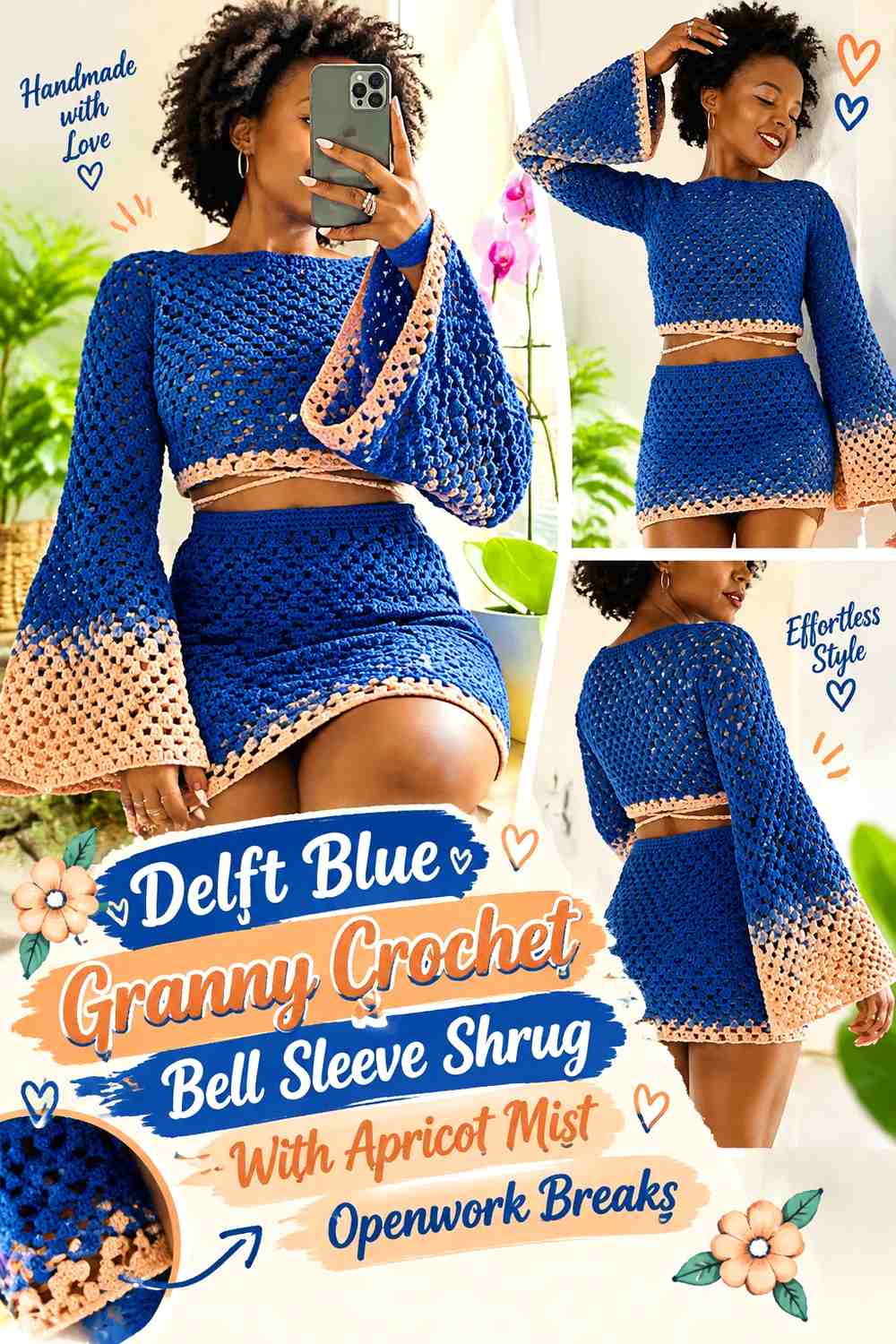
Granny-style fabric introduces its own repeated rhythm, so color changes should support that structure rather than compete with every cluster. Delft Blue can form the majority of the shrug while Apricot Mist appears in selected repeated sections through the bell sleeves.
Delft Blue Can Unite Granny Texture Across the Shrug
Keep Delft Blue repeating continuously through the shoulder area and several parts of each sleeve. A recognizable dominant color helps open granny-style fabric look like one garment.
The darker shade is also useful around the back and upper arms, where too many alternating bands could make the cropped shrug visually busy.
Apricot Mist Should Repeat Predictably Through the Delft Blue Bell Sleeves
Introduce Apricot Mist at regular visual intervals or reserve it for the lower flare. Consistency matters more than using a large amount.
Lay both sleeves side by side before finishing so every Apricot Mist repeat lines up at comparable points.
Creator Credit: AC Crochets
7. Delft Blue Textured Crochet Bell Sleeve Shrug With Apricot Mist Cuff Bands

A pronounced stitch texture can carry most of the visual interest, allowing the palette to remain simple. Delft Blue works across the body and textured sleeves, while Apricot Mist creates a narrow break just before the final bell edge.
Delft Blue Lets Bell Sleeve Texture Stay the Main Feature
Use Delft Blue through the textured sections instead of changing colors inside every repeat. This gives raised or patterned stitches enough uninterrupted area to be recognized.
If the dark surface makes small texture difficult to see, use Apricot Mist beside the texture rather than weaving pale color through every detail.
Apricot Mist Can Separate the Delft Blue Texture From the Cuff Edge
A pale band before the final edge acts as a visual pause. It can distinguish the widest part of the bell without covering the complete lower sleeve.
Keep the Apricot Mist depth modest if the texture is already visually strong; otherwise the sleeve has to compete with both heavy texture and heavy color blocking.
Creator Credit: TCDDIY
8. Apricot Mist Wrap-Inspired Crochet Shrug With Delft Blue Bell Sleeves

For a more body-focused color direction, let Apricot Mist occupy the cropped front and shoulder area while Delft Blue takes over through the sleeves. The darker sleeves create visual weight at the arms, while the lighter torso keeps the center of the garment distinct.
Apricot Mist Can Lighten the Cropped Shrug Body
Use Apricot Mist where the garment crosses or frames the front so the body remains visually separate from the stronger bell sleeves.
A lighter torso also provides a useful place to repeat a small amount of Delft Blue in edging if the sleeve transition feels abrupt.
Delft Blue Can Carry the Full Bell Sleeve From Upper Arm to Cuff
Keeping the sleeves entirely Delft Blue emphasizes their silhouette through shape rather than repeated color changes.
If you want Apricot Mist repeated at the hands, use only a narrow final edge so the dark bell remains the dominant sleeve statement.
Creator Credit: Muchacha Ganchillo
9. Delft Blue Layered-Mesh Crochet Bell Sleeve Shrug With Apricot Mist Borders

A layered mesh surface offers more torso coverage than a sleeve-only shrug, so Delft Blue can occupy a larger continuous area without feeling empty. Apricot Mist can then outline the lower sleeves and selected body edges.
Delft Blue Can Keep Expanded Mesh Panels Visually Connected
Use Delft Blue across the back and any cropped front panels so the extra mesh coverage reads as one layer.
Because the base garment will show through the openings, compare Delft Blue with the tops or dresses you expect to wear underneath before deciding how much Apricot Mist is necessary.
Apricot Mist Can Define the Delft Blue Bell Sleeve Borders
Place Apricot Mist around the widest sleeve openings where a pale edge will remain visible even when the arms are relaxed.
Repeating a narrower Apricot Mist line around the neckline can connect those cuffs without turning every garment edge into a contrasting border.
Creator Credit: Kenikse Crochet
10. Delft Blue Cropped-Mesh Crochet Bell Sleeve Shrug With Apricot Mist Neckline

This palette keeps both sleeves almost completely Delft Blue and moves the lightest accent to the neckline. The result makes the upper opening the Apricot Mist focal point while allowing the sleeve flare to rely on silhouette rather than contrasting cuffs.
Delft Blue Can Let the Cropped Bell Sleeve Silhouette Speak for Itself
Work the shoulders and sleeves in one Delft Blue field when you want a cleaner, less color-blocked garment.
This is particularly useful with open mesh, where stitch spacing already creates a strong repeated pattern.
Apricot Mist Can Brighten the Delft Blue Shrug Neckline
A narrow Apricot Mist neckline gives the pale shade a visible location between the two dark sleeves.
Keep the neckline edging balanced across the shoulders. Because it sits near the face and center of the garment, uneven Apricot Mist placement can attract more attention than the same variation at a cuff.
Creator Credit: D3 Crochet
11. Apricot Mist Draped Crochet Bell Sleeve Shrug With Delft Blue Cuffs
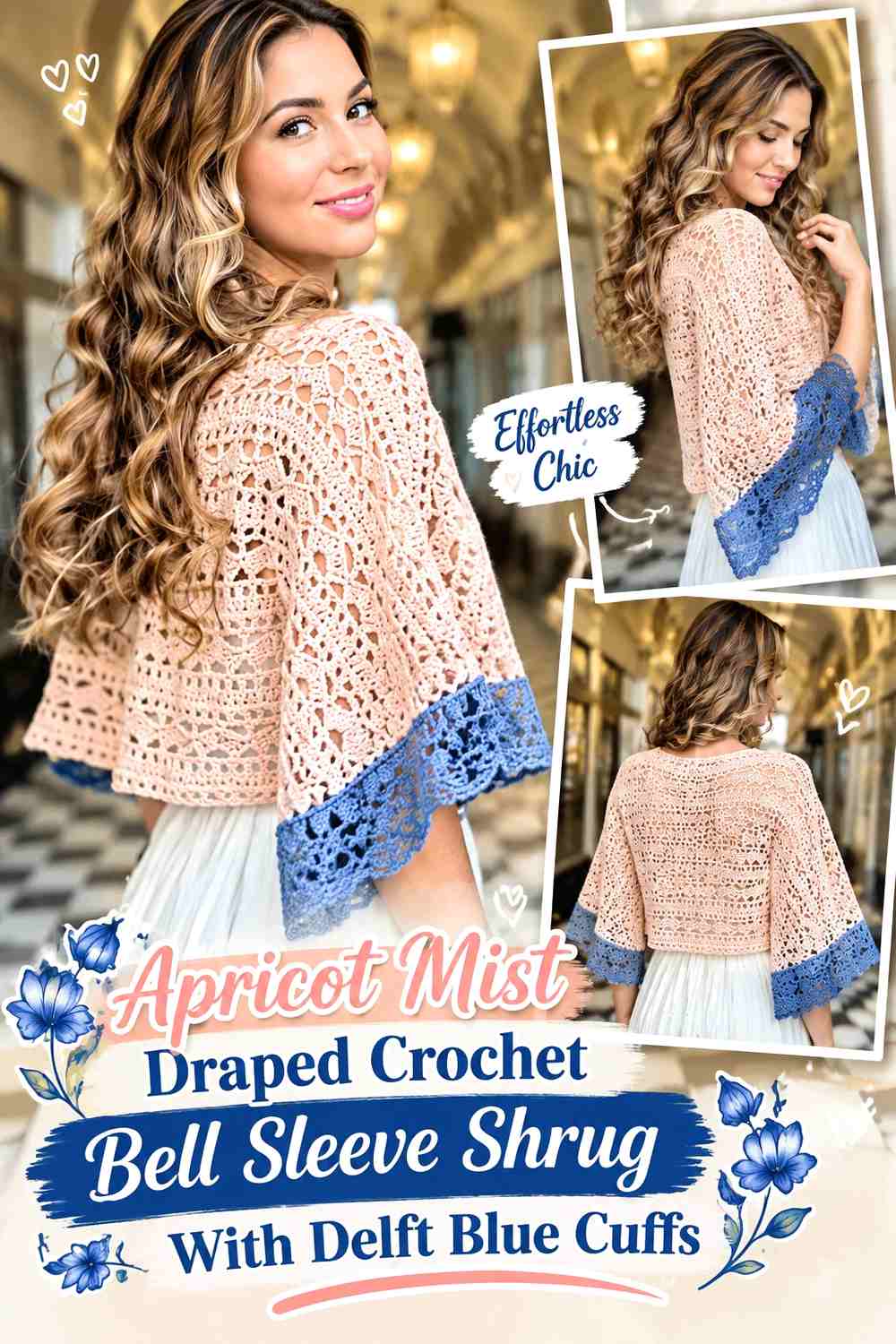
A softer bolero-style body offers a good opportunity to make Apricot Mist dominant. The lighter shade can carry the loose body and upper sleeves, while Delft Blue gathers visual weight at the lower sleeve openings.
Apricot Mist Can Keep a Draped Shrug Visually Light
Use Apricot Mist across the broader, softer body area so the folds and openwork remain easy to distinguish.
If the bolero has decorative stitch repeats, keeping them one color prevents the loose silhouette from becoming overly complex.
Delft Blue Cuffs Can Ground Wide Apricot Mist Bell Sleeves
A darker cuff gives each pale sleeve a defined endpoint and can make a loose lower edge look more deliberate.
The wider the bell, the more visual area the Delft Blue edge acquires. Keep that in mind before making the dark cuff deeper than necessary.
Creator Credit: Ophelia Talks Crochet
12. Delft Blue Simple Crochet Bell Sleeve Shrug With Apricot Mist Flare Markers

A simple garment surface leaves room for smaller color details. Let Delft Blue cover most of the shrug and place Apricot Mist only where the sleeve begins changing from straight to flared.
Delft Blue Keeps the Simple Bell Sleeve Shrug Cohesive
Use Delft Blue continuously through the shoulder panel and upper sleeves so the garment has one clear dominant color.
A simple field is also easier to combine with patterned dresses or tops because the shrug is not introducing several large color blocks.
Apricot Mist Can Mark the Beginning of the Delft Blue Bell Flare
A narrow pale line at the expansion point draws attention to the sleeve shaping itself. It tells the eye where the silhouette begins changing without taking over the lower sleeve.
Match this Apricot Mist line carefully on both arms. Its position can make the two sleeve proportions look unequal if one sits noticeably higher.
Creator Credit: Ascarcrochets
13. Delft Blue Crochet Bell Sleeve Shrug With Apricot Mist Body-and-Cuff Balance

For the final direction, keep Delft Blue dominant across the shoulders, sleeves, and most of the cropped body, but repeat Apricot Mist in two separated areas: a slim body edge and the bell cuffs. This creates a clear relationship between torso and sleeves without turning the shrug into broad color blocks.
Delft Blue Should Remain the Largest Visual Field Across the Shrug
Allow Delft Blue to connect both sleeves through the back and shoulder panel. This continuity is particularly useful on a small shrug because it prevents each cuff from looking like an independent color feature.
The dark main field also leaves more freedom to choose a light or neutral garment underneath.
Apricot Mist Can Connect the Bell Cuffs Back to the Delft Blue Body
Repeat a modest amount of Apricot Mist along the cropped body edge or neckline, then use a larger amount at the sleeve openings.
That repetition gives the cuffs a visual reference elsewhere on the shrug. Keep the body accent narrower so the sleeve flare remains the main place where Apricot Mist has impact.
Creator Credit: Yarnmaide
Comparing the 13 Delft Blue and Apricot Mist Bell Sleeve Shrugs
If You WantColor Direction to ConsiderClassic dark mesh with light cuffsDelft Blue body with Apricot Mist sleeve endsA lighter overall shrugApricot Mist mesh framed in Delft BlueMaximum emphasis on the flareDelft Blue upper sleeve changing to Apricot Mist belowSubtle horizontal sleeve contrastApricot Mist bands inside Delft BlueDecorative floral sleevesApricot Mist motifs with Delft Blue joinsOpen granny textureDelft Blue dominant with repeated Apricot Mist breaksStrong stitch textureDelft Blue surface with Apricot Mist cuff bandsLight body with dark statement sleevesApricot Mist torso and Delft Blue bellsMore torso-covering meshDelft Blue panels with Apricot Mist bordersMinimal sleeve color blockingDelft Blue sleeves with an Apricot Mist necklineSoft pale drape with grounded cuffsApricot Mist body with Delft Blue sleeve endsVery restrained two-color detailDelft Blue field with Apricot Mist flare markersMost balanced repeated accentDelft Blue body with Apricot Mist body edge and cuffs
Conclusion
Delft Blue is especially effective when the shrug needs one continuous color from sleeve to sleeve. It can anchor mesh, granny texture, raised stitchwork, and cropped shoulder panels while leaving Apricot Mist available for areas where contrast has more purpose.
Apricot Mist becomes most useful around the bell silhouette itself. A pale cuff emphasizes sleeve width, a band can identify where the flare begins, and a light lower sleeve creates the strongest visual separation between the fitted and widened portions of the arm.
For a quieter shrug, keep Delft Blue dominant and limit Apricot Mist to the neckline, body edge, or narrow cuff bands. For a stronger two-color statement, give Apricot Mist the entire lower flare or make it the body color while Delft Blue defines the sleeves. Whichever placement you choose, compare both sleeves throughout the project so the color transitions reinforce a symmetrical bell shape rather than making small differences more obvious.
Frequently Asked Questions
Should Delft Blue or Apricot Mist be the main color of a crochet bell sleeve shrug?
Delft Blue is useful when you want a stronger continuous base across the shoulders and sleeves. Apricot Mist makes openwork and texture more visible and creates a lighter overall garment. Choose the dominant color according to which part of the shrug you want to carry the most visual weight.
Where should Apricot Mist begin on a Delft Blue bell sleeve?
A useful location is near the point where the sleeve begins visibly widening. That lets the color transition reinforce the change in silhouette. For a subtler result, keep the flare Delft Blue and use Apricot Mist only at the final cuff.
How can I keep Delft Blue and Apricot Mist bell sleeves symmetrical?
Compare both sleeves at every major color transition rather than waiting until the garment is finished. Check where Apricot Mist begins, how deep each color section is, and how the boundaries look while the shrug is actually worn.
Can Apricot Mist be used only on the crochet shrug cuffs?
Yes. A narrow Apricot Mist cuff on an otherwise Delft Blue shrug is one of the most restrained ways to use the palette. It gives the sleeve opening clear definition without dividing the body or upper arms.
Does mesh change how Delft Blue and Apricot Mist look on a shrug?
Yes, because the clothing or skin visible through open crochet becomes part of the visual result. Test the yarn colors over the kinds of tops or dresses you intend to layer beneath the shrug rather than judging the yarn alone.
How can I stop an Apricot Mist bell sleeve from looking disconnected from a Delft Blue body?
Repeat a smaller amount of Apricot Mist elsewhere, such as a narrow neckline, front edge, or cropped-body border. That creates a visual link without taking attention away from the sleeve flare.
Can a bell-sleeve top or bolero tutorial be adapted into a shrug?
It can provide useful guidance for bell-sleeve shaping, cropped panels, openwork, or garment assembly, but the body proportions may differ. Decide how much front and back coverage you want from the shrug and follow the original creator for the construction their tutorial actually teaches rather than assuming every bell-sleeve garment has identical shaping.