Juniper Green and Butter Silk give a scalloped crochet neck kerchief a useful dark-light division. Juniper Green can carry the triangular body and ties, where a continuous deeper color keeps the small accessory visually grounded, while Butter Silk can expose shells, scallops, picots, openwork, or the lower point.
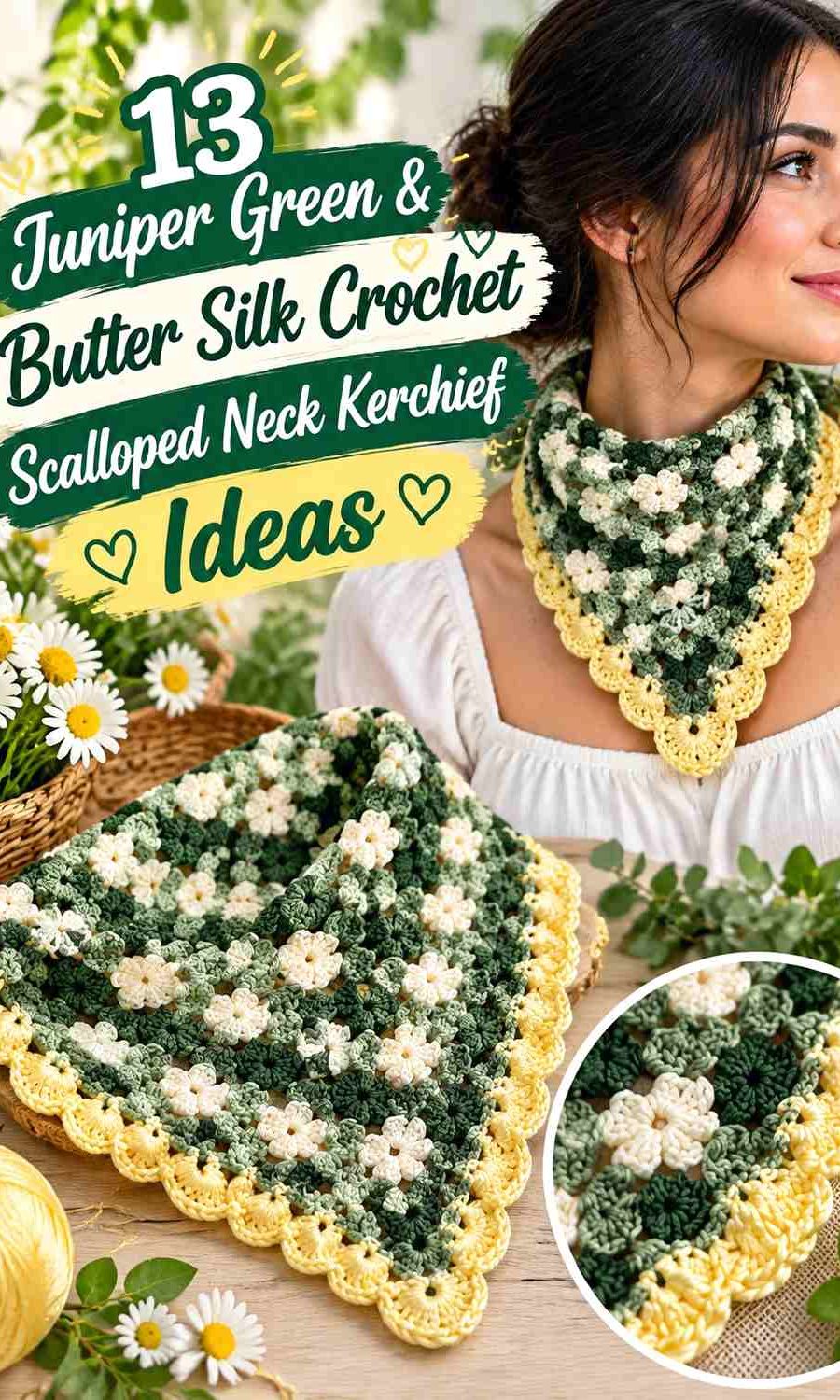
A neck kerchief also behaves differently from a head bandana once tied. Part of the upper edge may disappear behind the neck, while the lower triangle and its border remain fully visible at the front. That makes the scalloped sides and bottom point particularly valuable places for Butter Silk if you want the lighter color to remain noticeable.
The tutorials below support triangle kerchief, bandana, granny, picot, shell-border, and modular constructions that can be adapted to neck wear. The Juniper Green and Butter Silk palettes are independent editorial color directions, so the credited creators should not be assumed to have used these exact colors.
Quick List
- Juniper Green Granny Crochet Scalloped Neck Kerchief With Butter Silk Border
- Butter Silk Crochet Scalloped Neck Kerchief With Juniper Green Outline
- Juniper Green Triangle Crochet Neck Kerchief With Butter Silk Picot Scallops
- Juniper Green Crochet Neck Kerchief With Butter Silk Pointed Scallop Border
- Butter Silk Openwork Crochet Neck Kerchief With Juniper Green Ties
- Juniper Green Shell-Edge Crochet Neck Kerchief With Butter Silk Centers
- Juniper Green Wave Crochet Neck Kerchief With Butter Silk Scalloped Finish
- Juniper Green Modular Granny Crochet Neck Kerchief With Butter Silk Joins
- Butter Silk Picot-Texture Crochet Neck Kerchief With Juniper Green Frame
- Juniper Green Fine-Drape Crochet Neck Kerchief With Butter Silk Outer Scallops
- Juniper Green Compact Crochet Neck Kerchief With Butter Silk Tie Accents
- Butter Silk Granny Crochet Neck Kerchief With Juniper Green Lower Point
- Juniper Green Lace Crochet Neck Kerchief With Butter Silk Shell Edge
Let Juniper Green Carry the Main Neck Kerchief Triangle
A neck kerchief has limited surface area, so a strong dominant color usually gives the triangle more visual clarity than frequent alternating rows. Juniper Green can cover most of the center while Butter Silk is saved for the border and lower point.
That hierarchy also helps the scallops remain distinct. If Juniper Green and Butter Silk alternate through every row of the body, the border has less opportunity to stand apart as a finish.
For a lighter kerchief, reverse the arrangement: make Butter Silk dominant and repeat Juniper Green at the edging, ties, or lower point so the darker shade has a consistent structural role.
Use Butter Silk Where Scallops Need the Most Separation
Butter Silk is particularly useful on curved edging because the lighter value makes individual scallops easier to distinguish from a Juniper Green triangle. Complete pale scallops usually read more clearly than tiny Butter Silk fragments placed randomly through the border.
The bottom point deserves separate attention. If one scallop or shell sits directly at the tip, keeping its color placement symmetrical helps the kerchief hang visually straight when tied at the neck.
Check Juniper Green and Butter Silk in the Tied Position
A triangular kerchief can look balanced when flat but very different once the ties pull the upper corners around the neck. Before finalizing a border sequence, hold or pin the kerchief in its intended position and check how much of each color remains visible.
If Butter Silk disappears mostly behind the neck, move more of it onto the lower sides or center point. If the pale edging becomes too dominant across the front, keep the ties and upper corners Juniper Green to restore a darker frame.
1. Juniper Green Granny Crochet Scalloped Neck Kerchief With Butter Silk Border
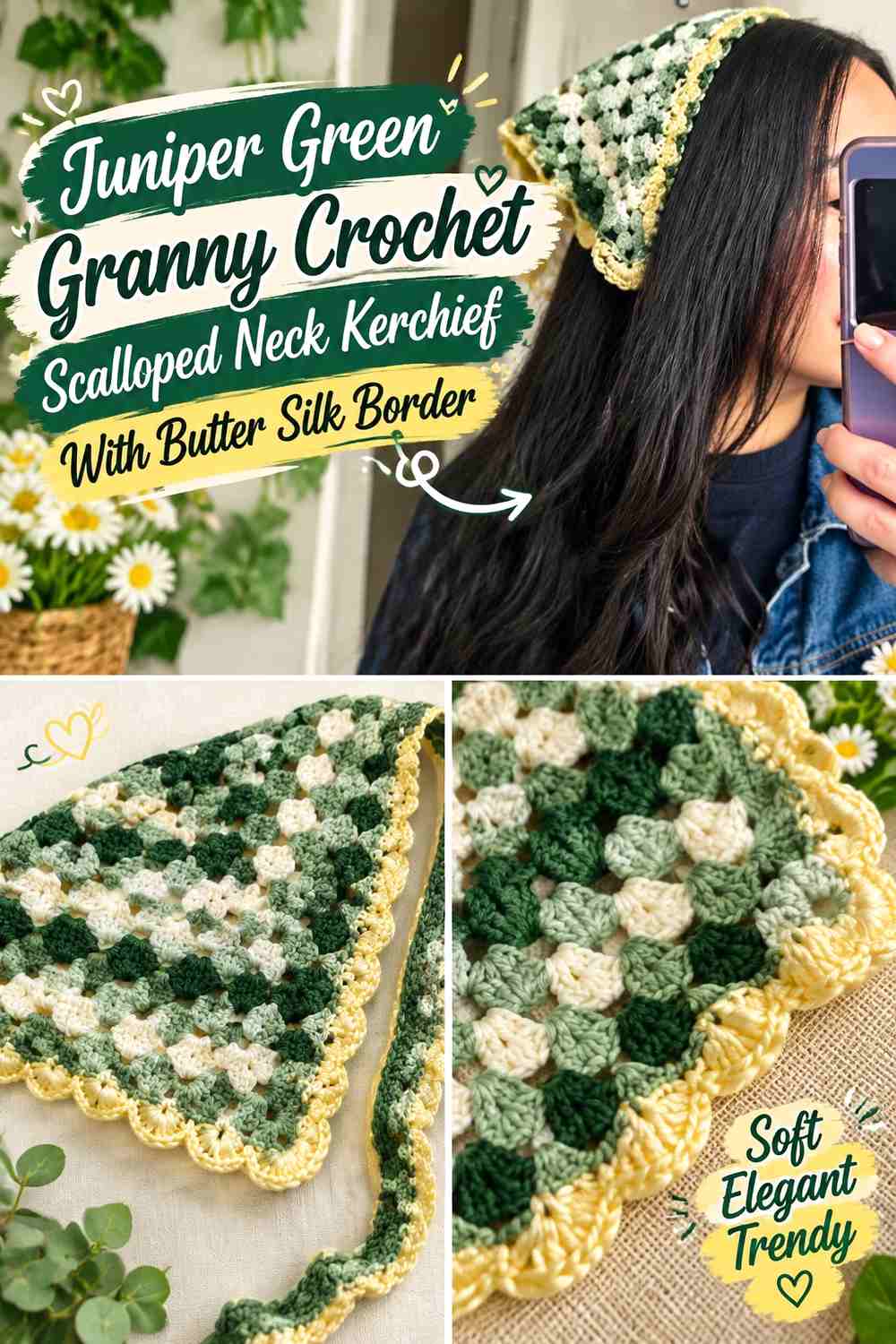
Juniper Green can fill the granny-style triangle while Butter Silk forms complete scallops down both angled sides. This gives the body one clear color and lets the lighter border trace the part of the kerchief that remains most visible when worn around the neck.
Juniper Green Keeps the Granny Kerchief Triangle Cohesive
Use Juniper Green through the main cluster field so the open granny texture has enough uninterrupted area to read as one fabric.
A continuous dark body also prevents the small kerchief from becoming visually striped before the decorative edge begins.
Butter Silk Can Make Juniper Green Scallops Easy to Follow
Work the visible scallop shapes in Butter Silk so each curve separates clearly from the Juniper Green body.
Pay particular attention to the bottom point. A centered Butter Silk scallop can make the triangle look more balanced than an edging sequence that ends awkwardly on one side.
Creator Credit: Honest Blossom
2. Butter Silk Crochet Scalloped Neck Kerchief With Juniper Green Outline
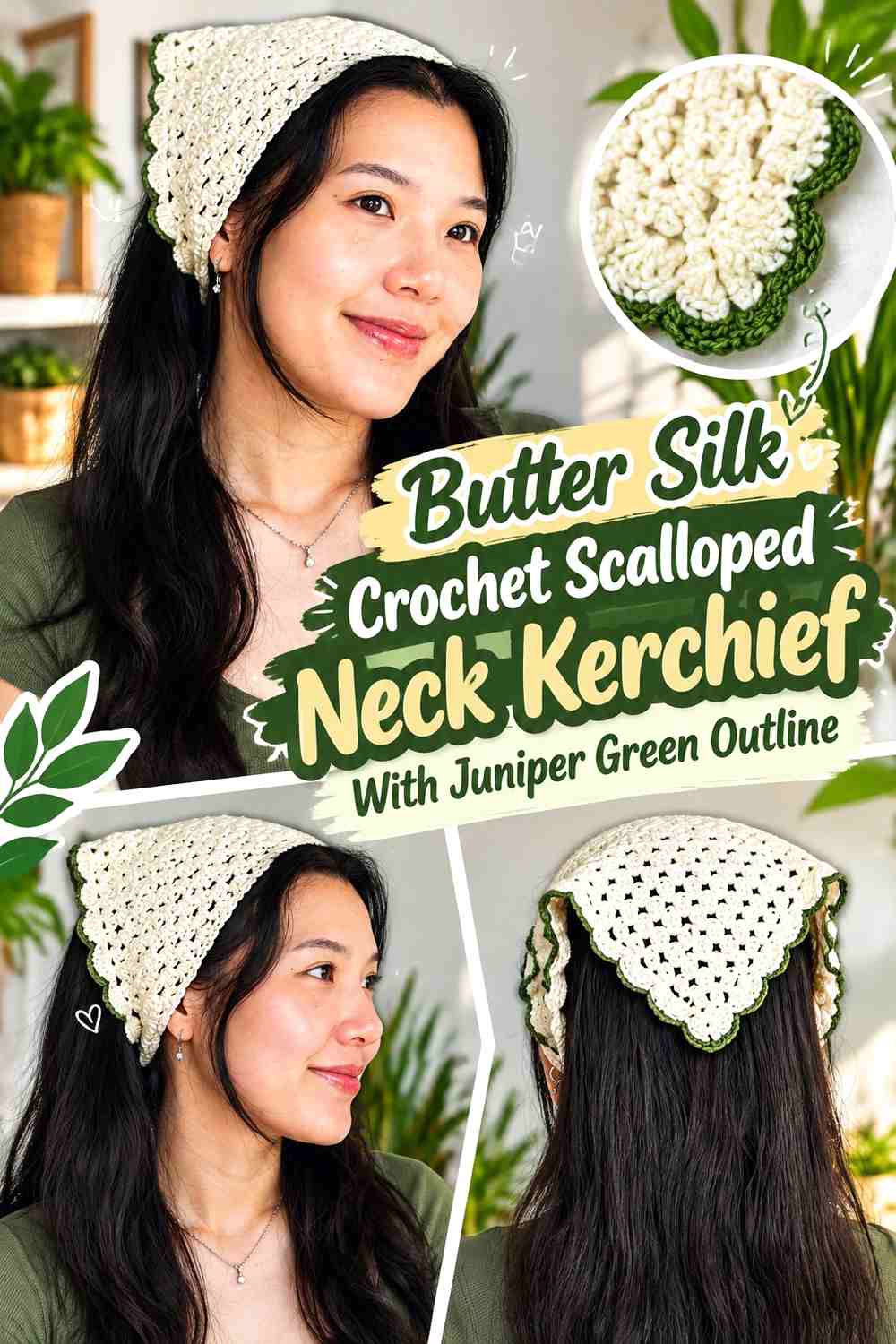
This arrangement reverses the palette. Butter Silk covers the main triangle, while Juniper Green provides a narrow dark line inside or beneath the scalloped edge. The lighter body makes the granny or mesh openings easy to see, and the green outline keeps the pale kerchief from losing definition against light clothing.
Butter Silk Can Keep the Kerchief Body Light
Use Butter Silk continuously through the center if you want the triangle itself to remain the dominant pale feature.
Avoid adding several broad Juniper Green bands across the body unless striping is intentional; the scalloped outline already provides a strong second-color role.
Juniper Green Can Give Butter Silk Scallops a Defined Base
Place Juniper Green immediately inside the scalloped border so the pale curves have a darker line to grow from.
Keep that dark line relatively narrow if Butter Silk is meant to remain the main color.
Creator Credit: VivCrochets
3. Juniper Green Triangle Crochet Neck Kerchief With Butter Silk Picot Scallops
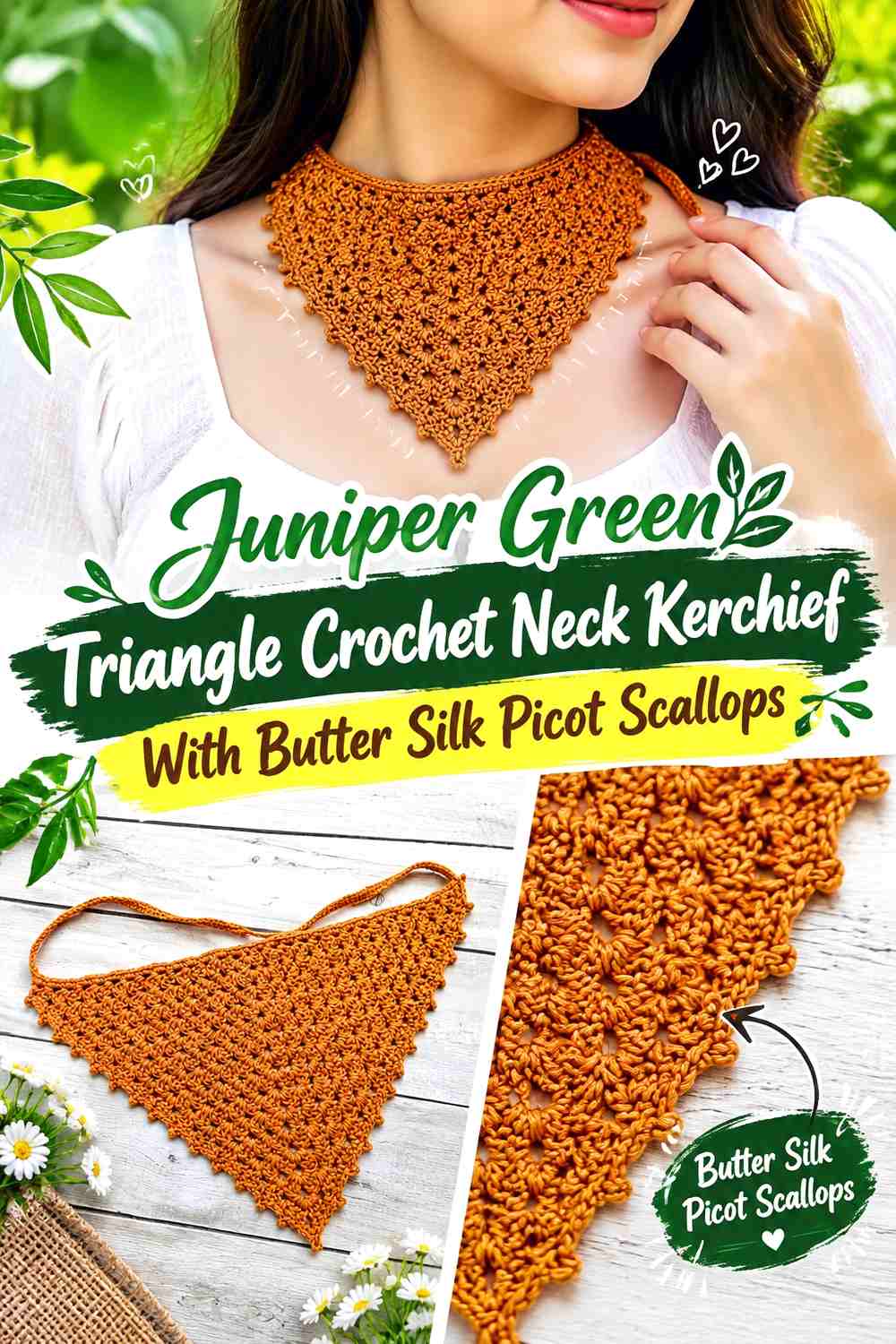
A picot-edged triangle gives Butter Silk a smaller role than broad shells. Juniper Green can remain dominant from the top edge to the bottom point, while pale picots interrupt the border at regular intervals.
Juniper Green Should Carry the Full Kerchief Triangle
Keep Juniper Green continuous through the body so the narrow accessory has a strong visual center.
This is especially useful when the stitch structure already creates open spaces and does not need several color blocks.
Butter Silk Picots Can Add Fine Detail to Juniper Green
Use Butter Silk consistently on the picot or pointed areas rather than scattering pale stitches between them.
From normal viewing distance, tiny picots may read as a dotted edge. That can work well as long as the spacing remains even on both sides of the triangle.
Creator Credit: Hopeful Turns
4. Juniper Green Crochet Neck Kerchief With Butter Silk Pointed Scallop Border
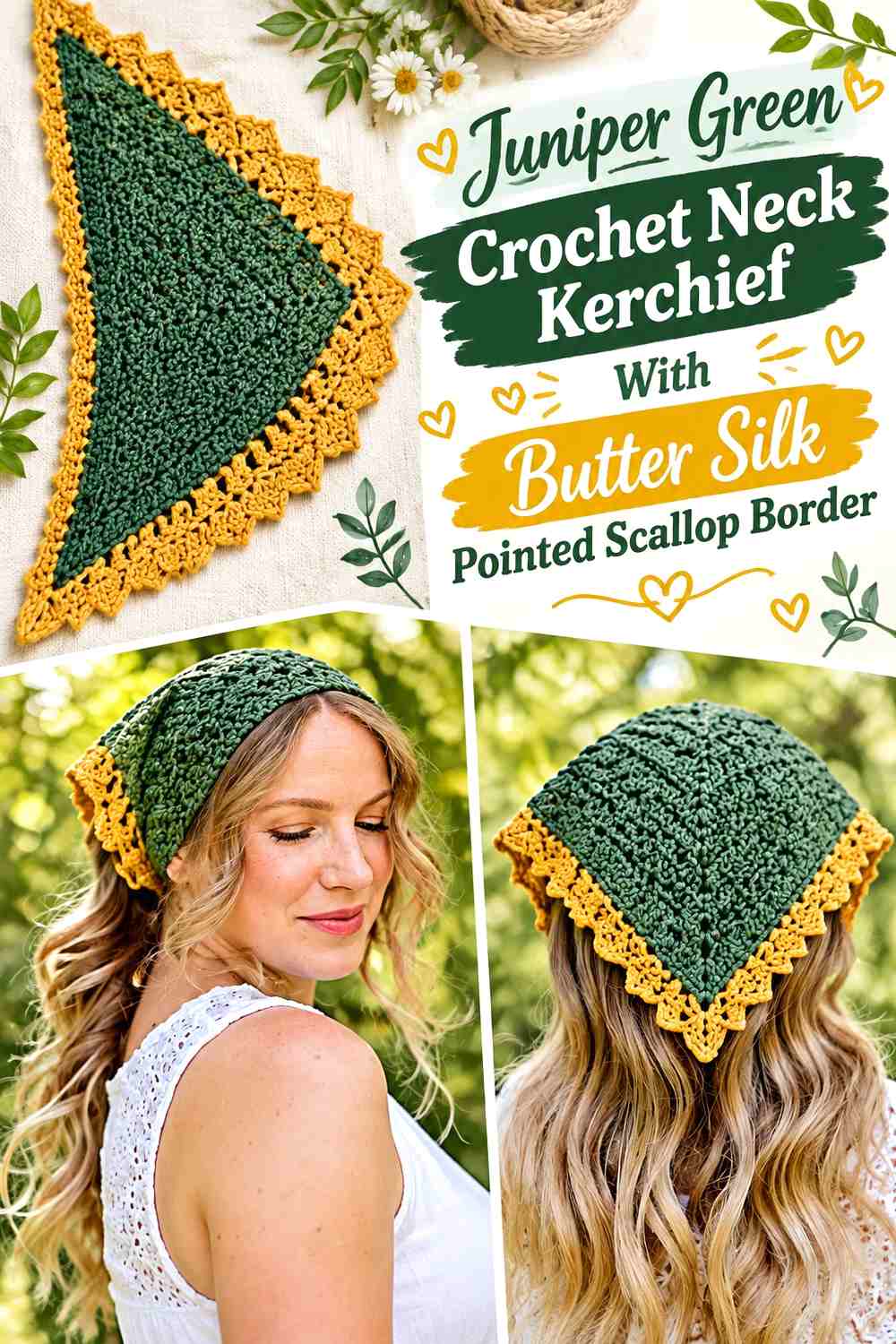
A more pronounced pointed border creates a stronger lower edge than tiny picots. Keep Juniper Green across the kerchief body and let Butter Silk form the repeated outer points, especially near the center tip.
Juniper Green Creates a Calm Base for a Pointed Kerchief Border
Use Juniper Green across the center so the eye is not asked to follow both a complicated body palette and a dramatic border.
That dark field gives Butter Silk enough contrast to make each point visible.
Butter Silk Should Stay Symmetrical Around the Juniper Green Point
Arrange the border so the pale details mirror each other on both sides of the center.
A pointed neck kerchief can look visually twisted if the Butter Silk repeats do not meet the lower tip evenly, even when the actual triangle is correctly shaped.
Creator Credit: The Turtle Trunk
5. Butter Silk Openwork Crochet Neck Kerchief With Juniper Green Ties
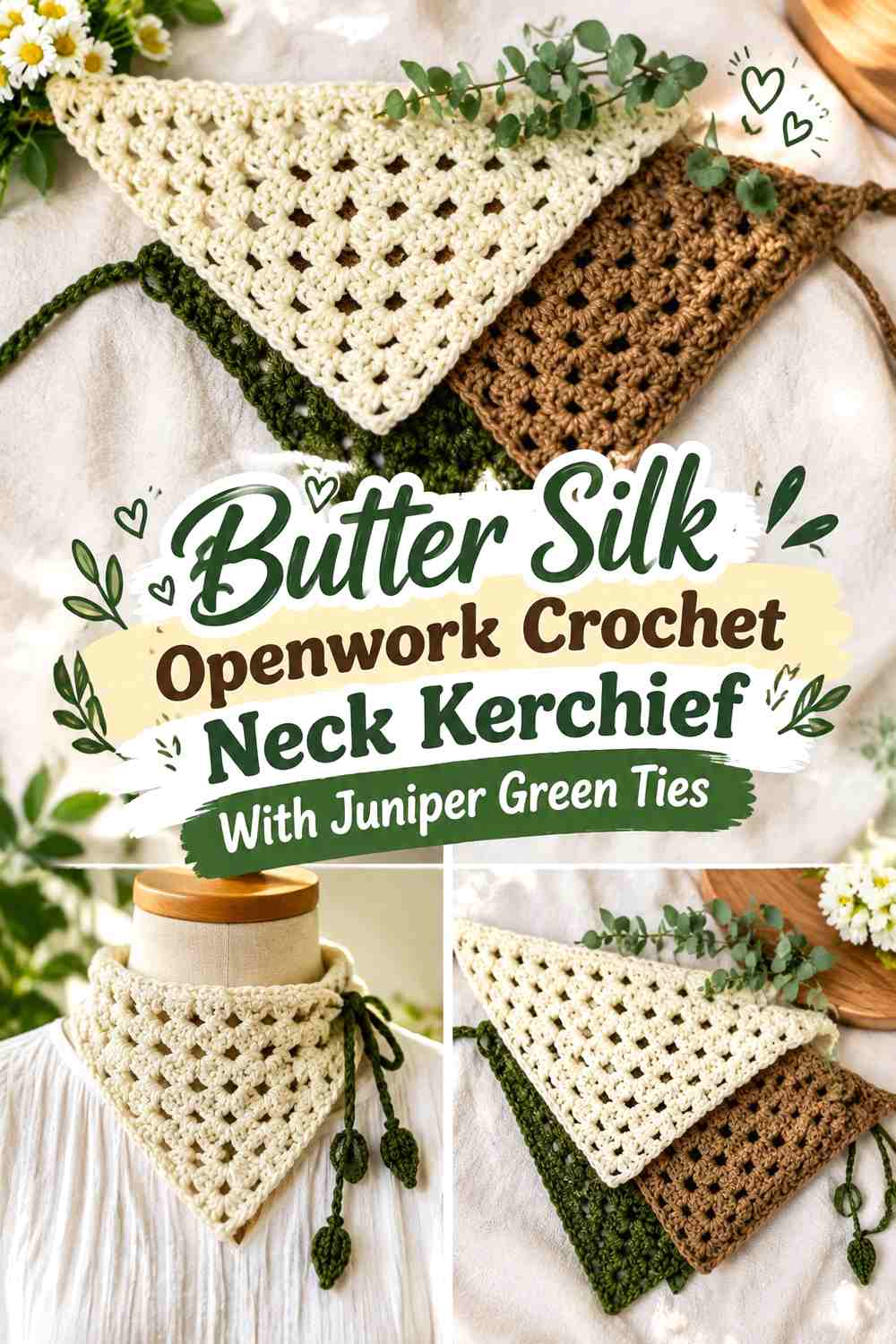
This version keeps the pale shade across the main triangle and moves Juniper Green primarily to the neck ties and upper edge. It is useful when you want the scalloped or openwork body to feel light while keeping the fastening area visually grounded.
Butter Silk Can Reveal the Openwork Kerchief Surface
Use Butter Silk across the triangle where lace spaces and granny openings need the most separation.
Because clothing will show through the openwork, test the kerchief over the tops or dresses you expect to wear with it.
Juniper Green Can Define the Butter Silk Neck Ties
Dark ties give Juniper Green a structural job and prevent the second color from appearing randomly inside the pale triangle.
Repeating a narrow Juniper Green line along the top edge can make the two ties look more connected to the body.
Creator Credit: trperrymakes
6. Juniper Green Shell-Edge Crochet Neck Kerchief With Butter Silk Centers
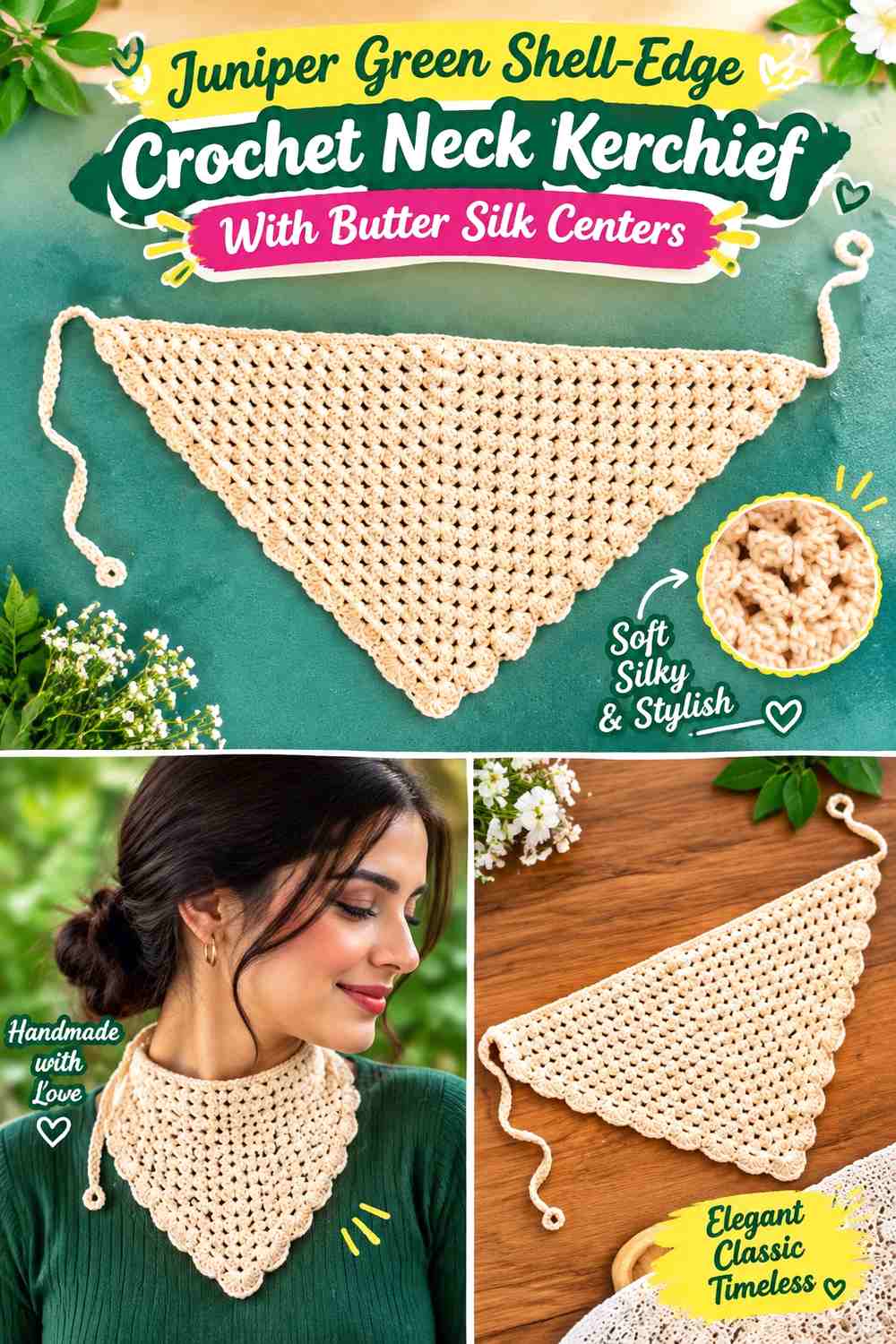
Instead of making each shell fully Butter Silk, keep much of the border Juniper Green and place the lighter shade inside selected shell centers. This creates a more restrained scalloped effect.
Juniper Green Can Connect Every Shell Along the Kerchief Edge
Use Juniper Green through the foundation and outer parts of the shell sequence so the border remains connected to the triangle.
That continuity is useful on a neck kerchief because the edging curves around a relatively small area.
Butter Silk Can Separate Juniper Green Shell Centers
Place Butter Silk in the same part of each shell so the light accents create rhythm down both angled sides.
Avoid shifting the pale section from shell to shell; irregular placement can make a symmetrical kerchief look uneven when tied.
Creator Credit: بافتنی با مهتاب
7. Juniper Green Wave Crochet Neck Kerchief With Butter Silk Scalloped Finish
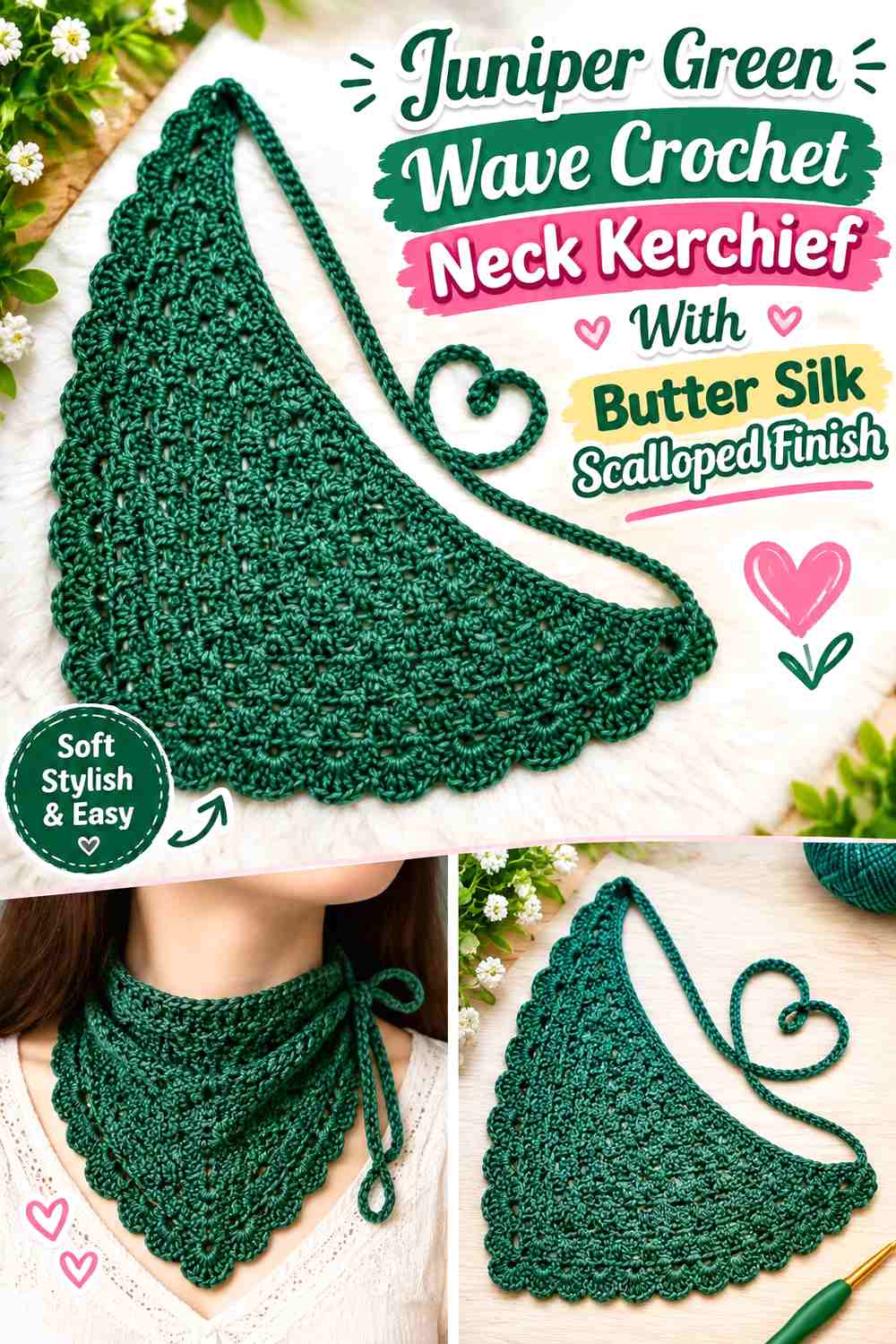
Wave texture introduces movement across the triangle before the border is added. Juniper Green can dominate the body, while Butter Silk appears in the final scalloped edge so the curved finish echoes the movement inside the fabric without turning the whole kerchief into alternating stripes.
Juniper Green Lets the Wave Kerchief Texture Stay Continuous
Keep the darker shade across most of the wave sections if you want stitch direction to remain the main body detail.
A continuous body also gives the border a clear starting point.
Butter Silk Can Echo Juniper Green Waves at the Outer Edge
Use Butter Silk for the final curved border so the lighter color repeats the visual idea of the wave without entering every body row.
Keep the center-point scallop aligned with the triangle so the pale edge hangs evenly at the throat.
Creator Credit: Yarn Stash with Marching North
8. Juniper Green Modular Granny Crochet Neck Kerchief With Butter Silk Joins

A modular construction creates more internal lines than a single granny triangle. Keep the individual motifs predominantly Juniper Green and use Butter Silk at the joins or outer scalloped edge so the second color organizes the units rather than competing inside each one.
Juniper Green Should Repeat Across Every Kerchief Motif
Give Juniper Green the same dominant role in each square or triangle so the assembled kerchief has one clear base color.
Changing the internal color order from motif to motif can make such a small accessory feel unnecessarily fragmented.
Butter Silk Can Separate Juniper Green Motifs and Scallops
Use Butter Silk consistently where motifs meet or where the final border curves around them.
If both the joins and scallops are pale, keep them relatively narrow so Butter Silk does not visually divide every Juniper Green unit into isolated blocks.
Creator Credit: Darn Good Yarn
9. Butter Silk Picot-Texture Crochet Neck Kerchief With Juniper Green Frame
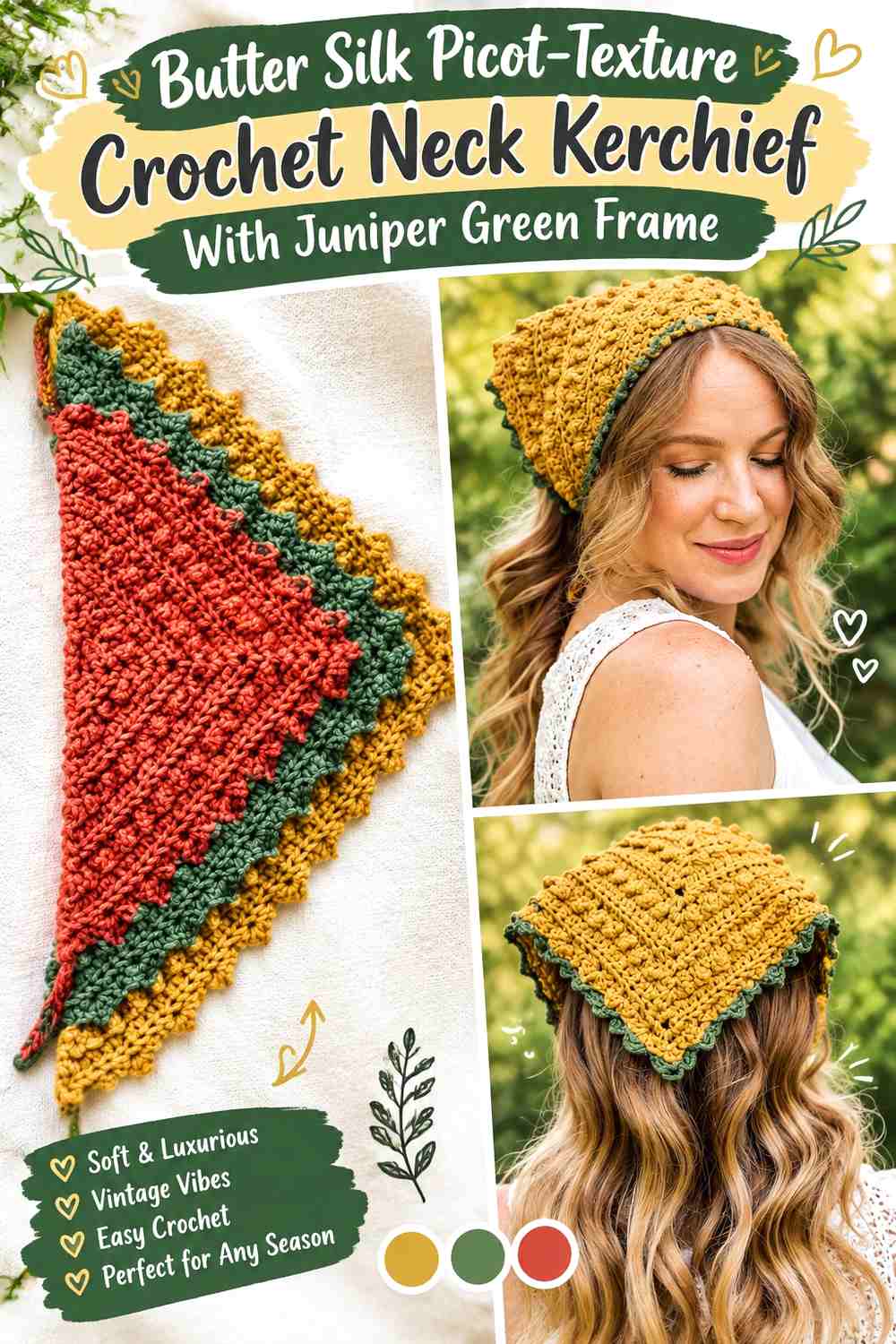
A heavily textured picot design can support Butter Silk as the dominant body color because the lighter shade exposes raised details. Juniper Green can then frame the upper edge, ties, or the inner line of the scalloped border.
Butter Silk Helps Small Kerchief Texture Stay Visible
Use Butter Silk through the textured field if the raised or pointed stitchwork is the feature you want readers to notice first.
Keeping the texture one color also avoids making tiny details look like unrelated spots.
Juniper Green Can Contain the Butter Silk Textured Edge
Run Juniper Green along the upper edge and repeat it near the lower border if the pale body needs stronger definition.
The dark frame should support the Butter Silk texture rather than become a broad second body section.
Creator Credit: The Turtle Trunk
10. Juniper Green Fine-Drape Crochet Neck Kerchief With Butter Silk Outer Scallops
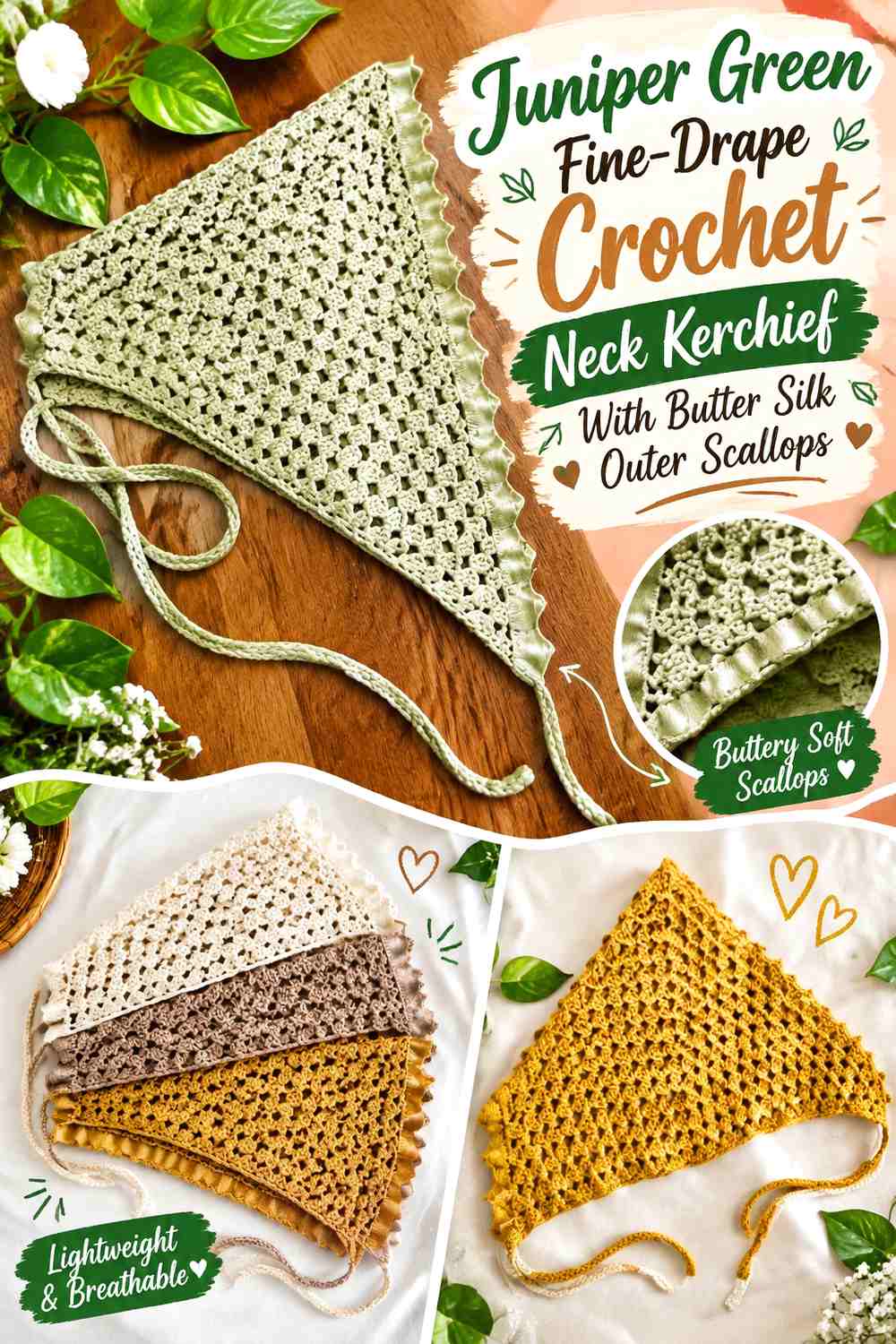
A finer, softer triangle gives the kerchief less visual bulk around the neck. Juniper Green can remain the body color, with Butter Silk confined to the outer scallops and perhaps the final portion of the ties.
Juniper Green Keeps a Fine Kerchief Visually Substantial
On a lighter-weight construction, a continuous Juniper Green field gives the small triangle enough visual presence without requiring dense texture.
It also lets the fabric drape without being broken by several high-contrast bands.
Butter Silk Can Lighten the Juniper Green Outer Edge
Use Butter Silk on complete scallops where the border is most visible against clothing.
If you repeat Butter Silk on the ties, keep that accent short so the border remains the primary pale feature.
Creator Credit: HayHay Crochet
11. Juniper Green Compact Crochet Neck Kerchief With Butter Silk Tie Accents
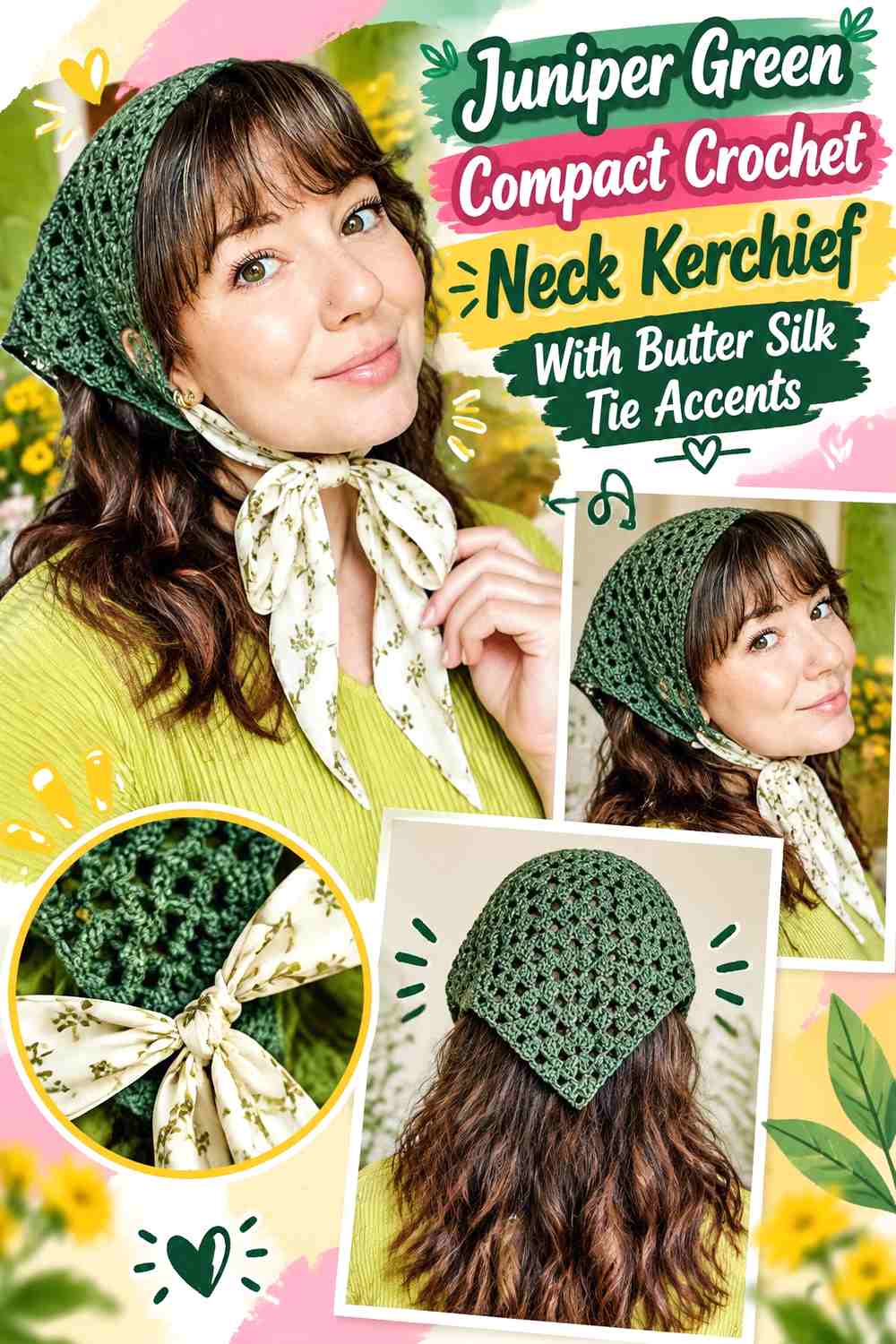
For a smaller neck kerchief, keep the scalloped body primarily Juniper Green and reserve Butter Silk for the first or final section of each tie. The pale accents remain visible near the side of the neck without taking space away from the central triangle.
Juniper Green Can Make a Small Kerchief Read as One Shape
Use Juniper Green through the body and most of the scalloped edge so the reduced triangle does not become visually chopped up.
This treatment works well when the kerchief is intended as a small accent rather than a deeper scarf.
Butter Silk Can Make the Juniper Green Ties Easier to Locate
A short Butter Silk section at each end gives the fastening pieces a clear visual marker.
Keep the pale lengths equal so one side does not appear longer after the kerchief is tied.
Creator Credit: Dorothy Jean Crochet
12. Butter Silk Granny Crochet Neck Kerchief With Juniper Green Lower Point
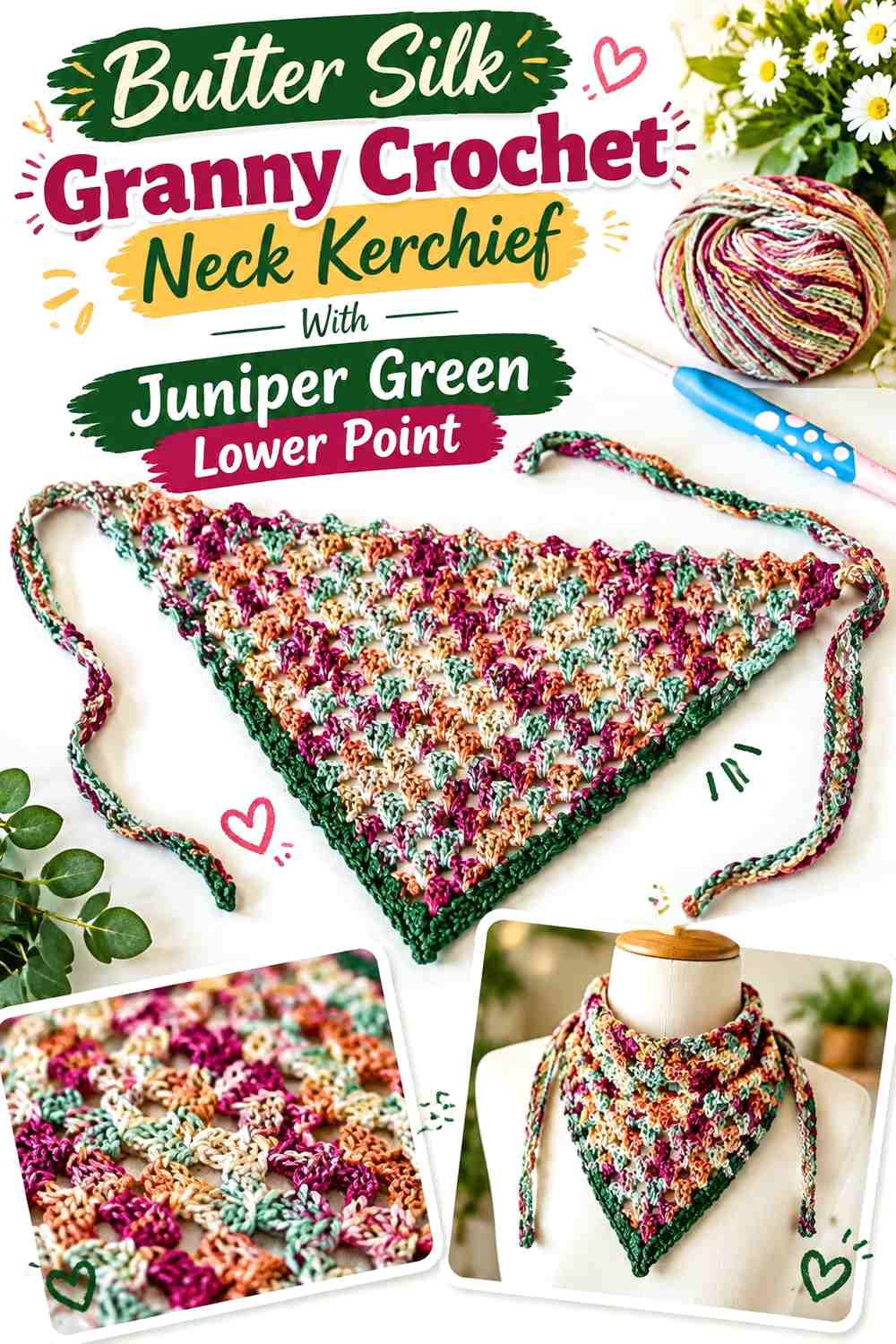
Instead of outlining the whole kerchief in dark color, concentrate Juniper Green at the bottom point and keep most of the granny triangle Butter Silk. This creates a center-weighted accent that draws attention downward rather than around every edge.
Butter Silk Can Keep the Granny Kerchief Light Across the Neck
Use Butter Silk through most of the body so the cluster pattern stays visible and the triangle reads as one pale field.
This treatment is particularly useful when you want the scalloped edges to remain subtle.
Juniper Green Can Anchor the Butter Silk Center Point
Introduce Juniper Green close to the tip or central scallop so the darkest color collects at the lowest visible part of the kerchief.
Keep the green centered. A dark point that shifts noticeably to one side can make the whole triangle look off balance.
Creator Credit: Blue Star Crochet | Veronika Cromwell
13. Juniper Green Lace Crochet Neck Kerchief With Butter Silk Shell Edge
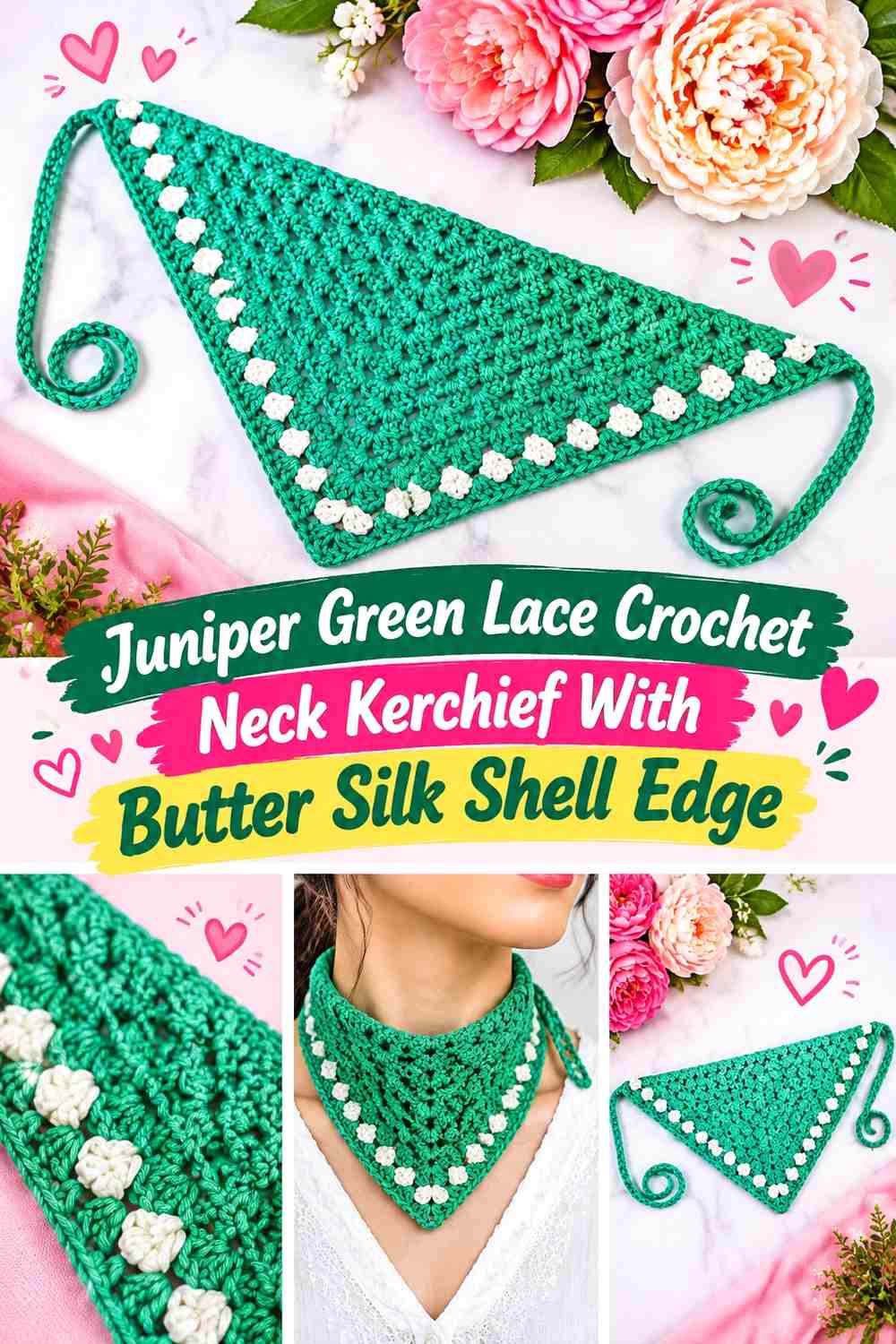
For the final direction, use Juniper Green across a lighter lace or granny-style triangle and let Butter Silk form a complete shell edge from one side to the other. This gives the pale shade its largest decorative role while still keeping the main kerchief dark.
Juniper Green Can Give the Lace Kerchief a Strong Center
A Juniper Green lace field keeps the triangular shape distinct even when clothing shows through the openings.
If the lace is very open, test it against both light and dark garments because the background can change how much visual contrast remains.
Butter Silk Shells Can Frame the Full Juniper Green Triangle
Use Butter Silk for complete shell units along both angled sides and the lower point.
Keep the shell scale proportional to the kerchief. An oversized pale border can visually reduce the Juniper Green center until the trim appears heavier than the body.
Creator Credit: Treasurie
Comparing the 13 Juniper Green and Butter Silk Neck Kerchief Directions
If You WantColor Direction to ConsiderClassic dark triangle with visible scallopsJuniper Green body with Butter Silk borderLight overall kerchiefButter Silk body with Juniper Green outlineSmall pointed edgingJuniper Green triangle with Butter Silk picotsMore pronounced lower edgeButter Silk pointed scallops on Juniper GreenPale openwork with dark fasteningButter Silk body with Juniper Green tiesRestrained shell contrastJuniper Green shells with Butter Silk centersCurved texture throughoutJuniper Green waves with Butter Silk borderModular constructionJuniper Green motifs with Butter Silk joinsHighly visible small textureButter Silk texture with Juniper Green frameSofter, finer appearanceJuniper Green drape with pale scallopsMinimal second-color useJuniper Green body with Butter Silk tie endsCenter-focused contrastButter Silk body with Juniper Green pointStrongest full-border contrastJuniper Green lace with Butter Silk shells
Conclusion
Juniper Green works well as the dominant color when you want the triangular shape of the neck kerchief to remain clear and uninterrupted. It can carry granny clusters, lace, wave texture, modular motifs, or a compact solid-looking body while leaving Butter Silk available for the edge.
Butter Silk is most effective when it has a specific job. Full scallops create the strongest outline, picots give a lighter dotted effect, and pale shell centers add contrast without turning the entire border light. Butter Silk can also move to the ties when you want the kerchief body to remain almost entirely Juniper Green.
For the most recognizable scalloped look, keep Juniper Green through the triangle and use Butter Silk in complete repeated curves. For a lighter kerchief, reverse the hierarchy and let Juniper Green define the ties, point, or border foundation. Check the palette after the kerchief is tied around the neck, because that worn position determines which sections of the edging actually remain visible.
Frequently Asked Questions
Should Juniper Green or Butter Silk dominate a crochet neck kerchief?
Juniper Green is useful for a darker, more continuous triangle, while Butter Silk gives openwork and stitch texture stronger visibility. The best dominant shade depends on whether you want the kerchief body or its scalloped finish to attract more attention.
Where should Butter Silk go on a mostly Juniper Green scalloped kerchief?
The outer scallops, shell centers, picot points, lower tip, or tie ends are useful locations. Giving Butter Silk one repeated role generally creates a clearer result than scattering pale stitches through the entire triangle.
How can I keep Butter Silk scallops even on both sides of a Juniper Green kerchief?
Plan the border around the center point and compare both angled sides before finishing. The visual sequence should mirror around the tip so one side does not appear to carry more pale trim than the other.
Can I use a crochet bandana tutorial to make a neck kerchief?
Yes, when the triangular construction and ties suit the intended neck placement. Check the width, triangle depth, and tie length against how you want to wear it rather than assuming a head-bandana size will automatically sit correctly around the neck.
Should Juniper Green or Butter Silk be used for the neck ties?
Juniper Green keeps the ties visually connected to a dark body and is useful when Butter Silk already dominates the scallops. Butter Silk tie ends can work when you want a small second-color detail without increasing the amount of pale edging.
How can I tell whether Juniper Green and Butter Silk have enough contrast?
Place the yarns together and check them from normal viewing distance. A grayscale photo can help confirm whether their light-dark values remain distinct. Stronger value separation is especially useful for small picots and shallow scallops.
What should I preserve if I substitute Juniper Green or Butter Silk?
Preserve the relationship between the shades rather than searching for identical names. Choose a darker, muted green to replace Juniper Green and a substantially lighter warm cream or pale yellow-cream for Butter Silk so the body-and-border hierarchy remains clear.