Damson Plum and Oat Cream are especially useful on a crochet poet sleeve shrug because the sleeve shape gives each color more room to change visually as it moves down the arm. Damson Plum can keep the shoulder and upper sleeve grounded while Oat Cream expands through a dramatic lower flare, or the relationship can be reversed so the deepest color appears only at the widest part of the sleeve.

For this article, “poet sleeve” refers to the visual direction of a fuller, bell-shaped, flared, or statement sleeve rather than one single construction method. Some credited tutorials directly demonstrate bell or strongly flared sleeves, while others provide compatible shrug or sleeve constructions that can serve as a base for the color-placement concepts.
The credited creators do not necessarily use Damson Plum and Oat Cream. Follow their tutorials for the demonstrated shrug construction and treat the palettes below as independent color adaptations.
Quick List
- Damson Plum Crochet Poet Sleeve Shrug With Oat Cream Flared Cuffs
- Oat Cream Crochet Poet Sleeve Shrug With Damson Plum Flared Cuffs
- Damson Plum Upper Sleeves With Oat Cream Lower-Flare Crochet Shrug
- Oat Cream Upper Sleeves With Damson Plum Lower-Flare Crochet Shrug
- Damson Plum Back Panel With Oat Cream Crochet Poet Sleeves
- Oat Cream Back Panel With Damson Plum Crochet Poet Sleeves
- Damson Plum Mesh Crochet Poet Sleeve Shrug With Oat Cream Borders
- Oat Cream Mesh Crochet Poet Sleeve Shrug With Damson Plum Sleeve Bands
- Damson Plum Sleeve Columns on an Oat Cream Crochet Poet Sleeve Shrug
- Oat Cream Scalloped Cuffs on Damson Plum Crochet Poet Sleeves
- Damson Plum and Oat Cream Graduated-Band Crochet Poet Sleeve Shrug
- Oat Cream Bell-Sleeve Crochet Shrug With Damson Plum Outer Edges
Decide Where Damson Plum Should Sit on a Voluminous Poet Sleeve
A poet or bell sleeve changes color balance because the lower sleeve can contain considerably more visible fabric than the wrist area of a straight sleeve. A Damson Plum cuff on a narrow sleeve might act as a small accent, while the same color across a broad flare can become one of the dominant areas of the entire shrug.
Before distributing the palette, decide whether the sleeve volume itself should attract attention. If so, put the stronger contrast near the flare. If the shrug body should remain the focal point, keep the lower sleeves closer to Oat Cream and concentrate Damson Plum around the shoulders, back, or upper arm.
Check the garment with both arms relaxed. Wide sleeves can fold inward and hide sections of color that seem prominent while the arms are extended.
Use Oat Cream to Separate Damson Plum From Sleeve Texture
Flared crochet sleeves often combine shape with noticeable stitch texture, openwork, or mesh. When Damson Plum covers a highly textured section, Oat Cream can be useful as a border or neighboring field because it gives the darker-looking surface a clearer visual boundary.
Compare the actual yarns before planning narrow stripes. A grayscale phone photo can show whether Damson Plum and Oat Cream have strong light-and-dark separation. If they do, slim bands can remain readable. If the values are closer than expected, use broader color blocks.
Avoid adding contrast to every textured area. On a dramatic sleeve, color placement and flare already provide two strong design elements.
Keep Damson Plum and Oat Cream Balanced Across Both Crochet Sleeves
Poet sleeves naturally draw attention to symmetry. If one Damson Plum band begins higher than the other or one Oat Cream flare contains noticeably more color, the difference may be obvious when the arms hang beside the body.
Compare the sleeves before finishing their edges. Check the shoulder transition, elbow area, beginning of the flare, and cuff width as a pair.
Intentional asymmetry can work, but it should be unmistakable. Two almost-matching sleeves usually look less deliberate than either a clearly mirrored pair or an obviously asymmetric design.
1. Damson Plum Crochet Poet Sleeve Shrug With Oat Cream Flared Cuffs
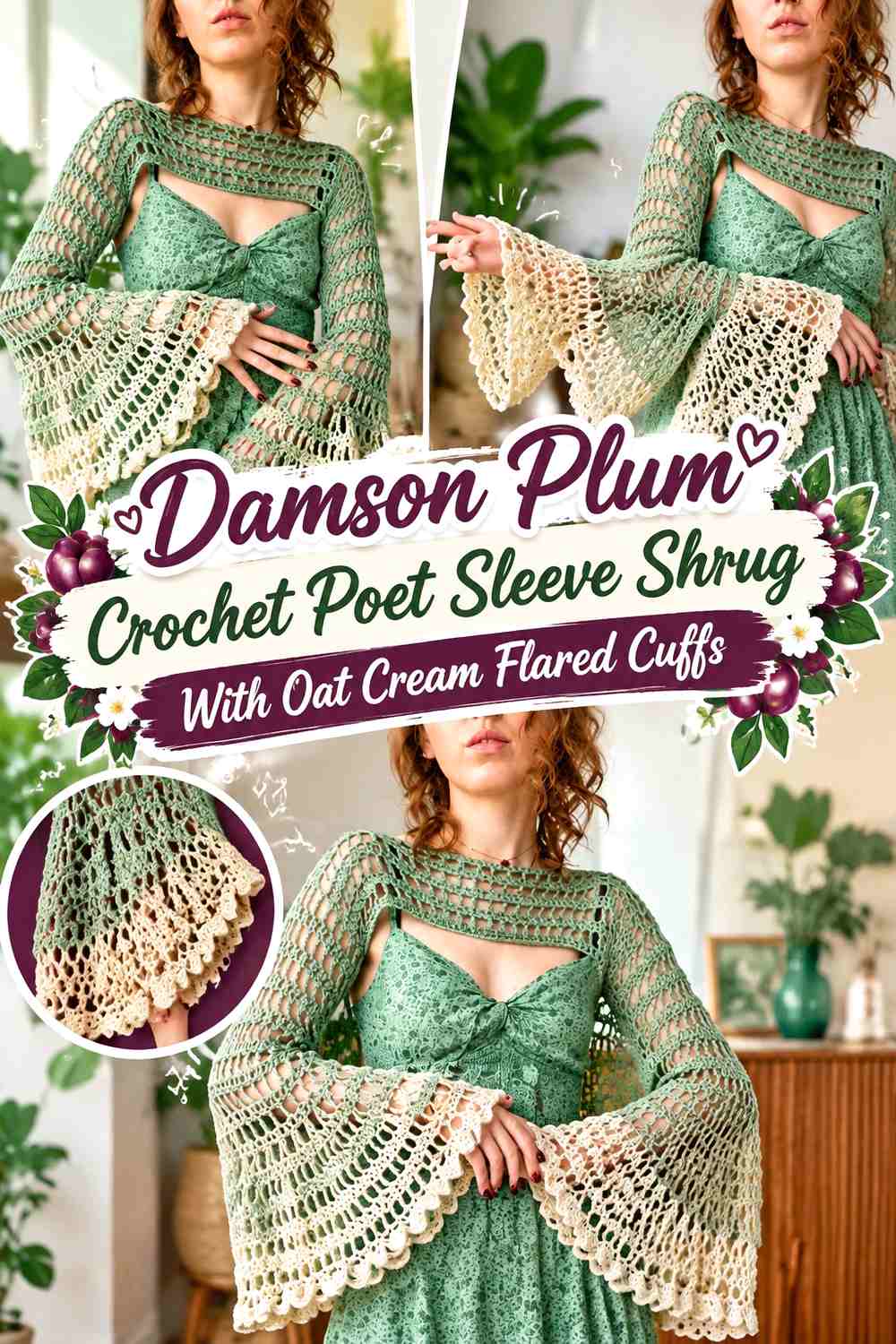
Keep the shrug body and most of each sleeve Damson Plum, then switch to Oat Cream where the sleeve begins to widen. This makes the flare itself the lightest section and allows its silhouette to stand apart from the narrower upper arm.
The transition works best when the Oat Cream section has enough length to look like a true lower-sleeve block rather than ordinary cuff edging.
Oat Cream Can Make the Damson Plum Poet Sleeve Flare More Visible
Begin the Oat Cream where the sleeve volume becomes important to the silhouette. A larger light-colored area can emphasize the widening lower section more clearly than a thin line at the wrist.
Check the color boundary with the sleeve hanging naturally because folds may make a straight transition appear uneven.
Damson Plum Should Stay Continuous Above the Oat Cream Cuff
Keeping Damson Plum uninterrupted from the shoulder through most of the arm visually connects the sleeves to the shrug body. That continuity also prevents the color scheme from becoming overly striped.
If Oat Cream is repeated around the neckline or back, keep those areas restrained so the flared cuffs remain the main light-colored feature.
Creator Credit: sunflowerandcrochet
2. Oat Cream Crochet Poet Sleeve Shrug With Damson Plum Flared Cuffs
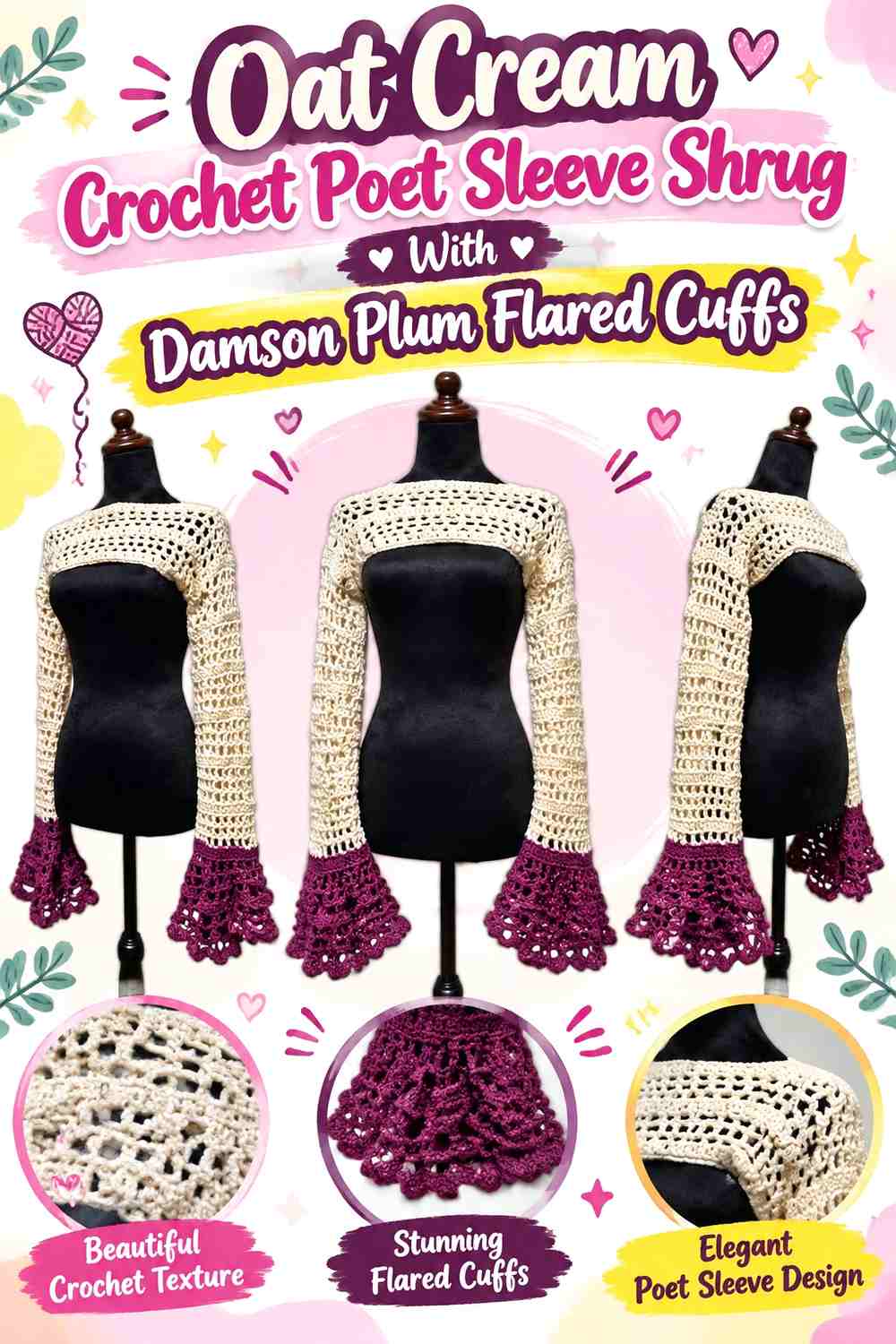
Reverse the first arrangement by keeping the body and upper sleeves Oat Cream and placing Damson Plum across the widest lower sections. The deeper color visually weights the cuffs and can make the sleeve flare feel more substantial.
Because Damson Plum occupies the largest part of the sleeve near the wrist, it can command considerable attention even if Oat Cream covers more total garment area.
Damson Plum Can Anchor the Widest Part of an Oat Cream Sleeve
Give Damson Plum enough height to follow the flare rather than limiting it to a narrow finishing edge. This makes the lower sleeve a true color block.
If the sleeve is very open or meshy, check the Damson Plum section over the clothing you plan to wear underneath because the background layer can affect how dense the color appears.
Oat Cream Keeps Damson Plum Away From the Shoulder Line
Using Oat Cream across the upper arm creates a calmer transition from the back and shoulders into the statement cuff. This helps the darker lower section remain the intentional focal area.
Avoid adding several extra Damson Plum shoulder stripes unless you want a much more evenly distributed palette.
Creator Credit: Crochet Made By Eli
3. Damson Plum Upper Sleeves With Oat Cream Lower-Flare Crochet Shrug
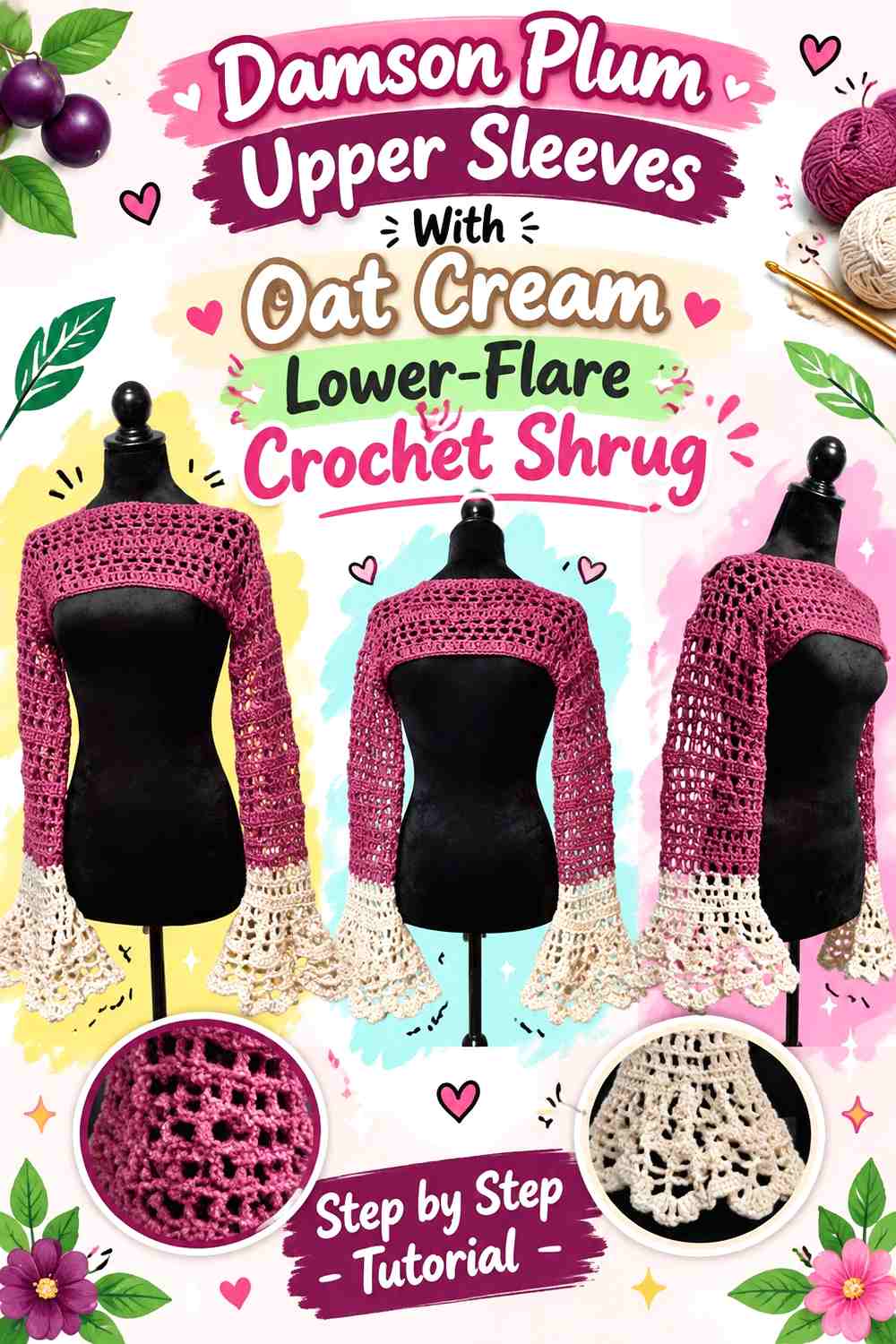
Use Damson Plum from the shoulder through the upper arm, then introduce Oat Cream farther down the sleeve before the flare reaches its widest point. Compared with a simple contrasting cuff, this creates a larger lower block and a more obvious two-part sleeve.
The boundary can sit above the elbow, near it, or below it depending on the chosen shrug construction, but it should align visually on both arms.
Damson Plum Can Give the Oat Cream Lower Sleeve a Strong Starting Point
A broad Damson Plum upper section makes the color change easy to recognize. Keep the shoulder area simple so the transition into Oat Cream becomes the main sleeve event.
If the shrug body is also Damson Plum, the upper arm will look continuous with the torso and the Oat Cream flare will appear almost attached as a lighter extension.
Oat Cream Needs Enough Length Below Damson Plum to Show the Poet Shape
The cream section should extend through enough of the flare that its growing width remains visible. A short Oat Cream band near the wrist will not emphasize the silhouette in the same way.
View the sleeve from the side as well as the front, because much of a poet flare may fall toward the back of the arm.
Creator Credit: Priya Crochets
4. Oat Cream Upper Sleeves With Damson Plum Lower-Flare Crochet Shrug
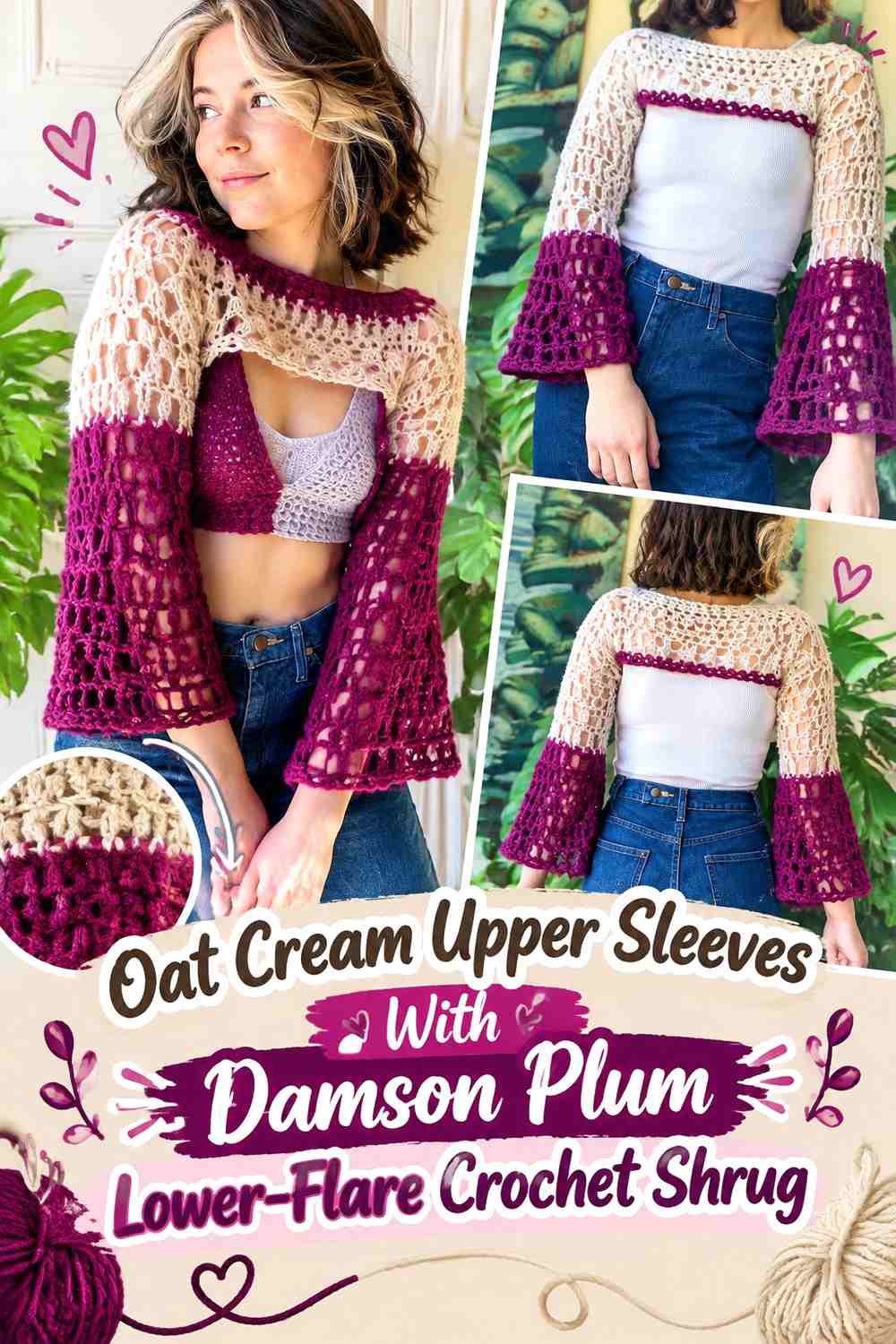
Let Oat Cream carry the shoulder and upper sleeve while Damson Plum begins lower on the arm and continues through the flare. This makes the widest sleeve area the darkest-looking portion of the shrug.
It is a useful distribution when the garment body is pale and you want the dramatic sleeve shape to become visually stronger toward the cuffs.
Damson Plum Should Expand With the Oat Cream Poet Sleeve Silhouette
Allow Damson Plum to cover the portion where the sleeve starts to widen instead of waiting until the final edge. The color then reinforces the physical expansion of the sleeve.
If the flare is especially large, check whether the amount of Damson Plum overwhelms a small Oat Cream body before finalizing the transition.
Oat Cream Can Keep the Damson Plum Flare From Reaching the Shoulders
A long Oat Cream upper sleeve leaves visual space between the darker cuffs and the face or neckline. This can keep a dramatic sleeve from making the entire upper garment feel color-heavy.
Use Oat Cream consistently across both shoulder areas so the sleeve pair stays balanced.
Creator Credit: made in the moment
5. Damson Plum Back Panel With Oat Cream Crochet Poet Sleeves
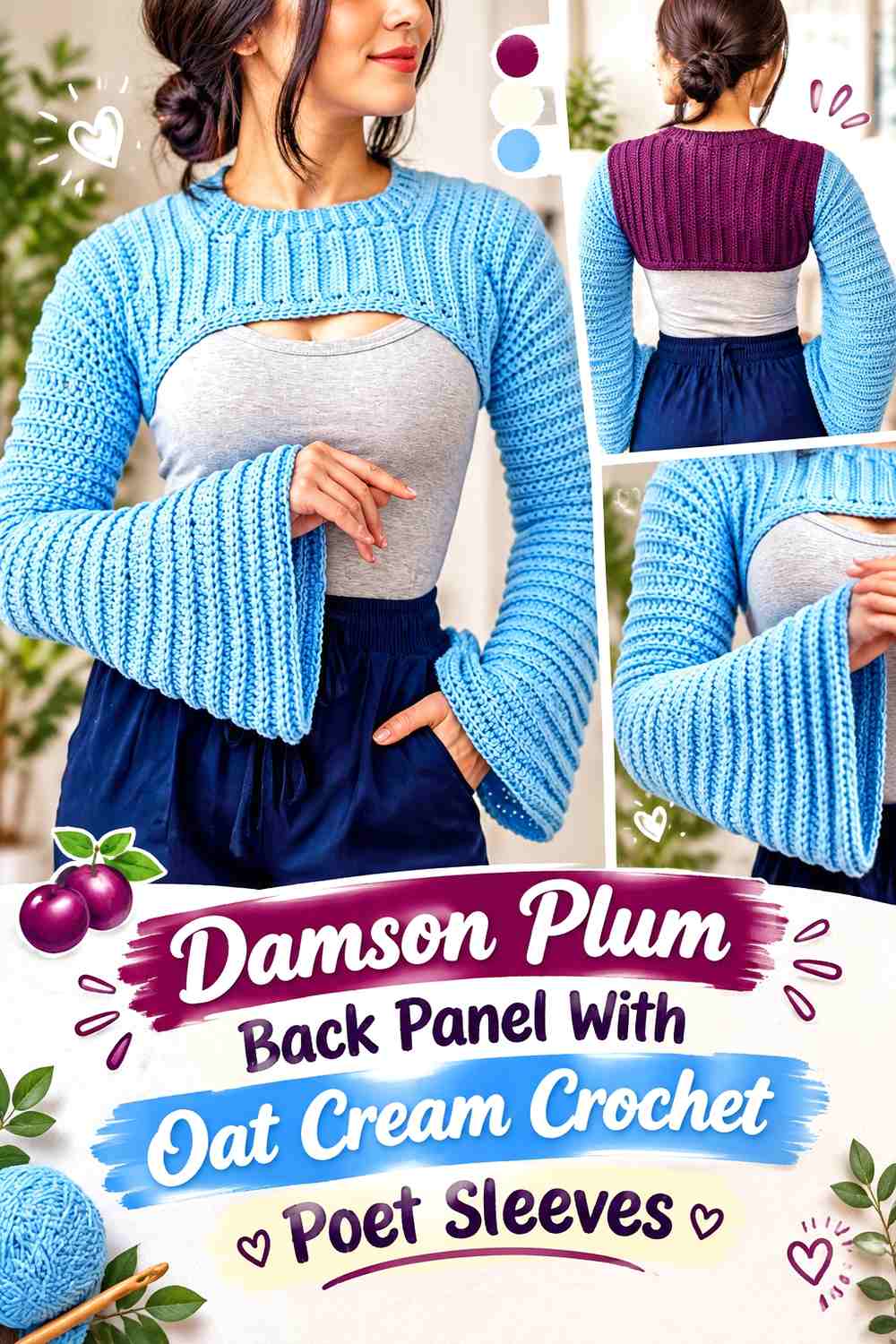
Concentrate Damson Plum across the central back or shoulder-spanning section and use Oat Cream throughout most of the sleeves. This moves the darkest color away from the cuffs and gives the shrug a strong center when viewed from behind.
The arrangement works particularly well when sleeve volume already supplies enough drama and you do not need another deep color across the flares.
Damson Plum Can Anchor Two Oat Cream Poet Sleeves at the Back
Keep the Damson Plum panel centered between the arms so it visually connects the two cream sleeves. A crooked or uneven transition becomes more noticeable because the sleeves create a strong horizontal reference.
If the shrug has only minimal back coverage, make the Plum section broad enough to remain recognizable.
Oat Cream Lets the Poet Sleeve Volume Lead Without Extra Damson Plum Weight
Using Oat Cream continuously through the sleeves allows the flare, rather than color blocking, to become their dominant feature. This is especially useful for openwork or highly textured sleeves.
A narrow Damson Plum cuff edge can be added if you want repetition, but it does not need to become another large block.
Creator Credit: TCDDIY
6. Oat Cream Back Panel With Damson Plum Crochet Poet Sleeves

Reverse the back-panel idea with Oat Cream across the shoulder or back section and Damson Plum running through both sleeves. The result places the strongest color on the arms while the center of the shrug remains lighter.
This can work particularly well when the sleeves are the primary reason for choosing a poet-style silhouette.
Damson Plum Can Turn Both Sleeves Into the Main Oat Cream Shrug Feature
Use Damson Plum consistently from the sleeve attachment through the flare if you want one strong, uninterrupted statement. Breaking the sleeves into many additional cream bands would reduce that effect.
Check both sleeves against the Oat Cream back while the shrug is worn so their color weight feels balanced on either side.
Oat Cream Creates a Visual Break Between Two Damson Plum Sleeves
The lighter back panel keeps the two deep-colored sleeves from blending into one continuous dark band across the shoulders.
If the neckline is also Oat Cream, the center section can remain cohesive while the Damson Plum stays concentrated on the arms.
Creator Credit: 75 emma
7. Damson Plum Mesh Crochet Poet Sleeve Shrug With Oat Cream Borders
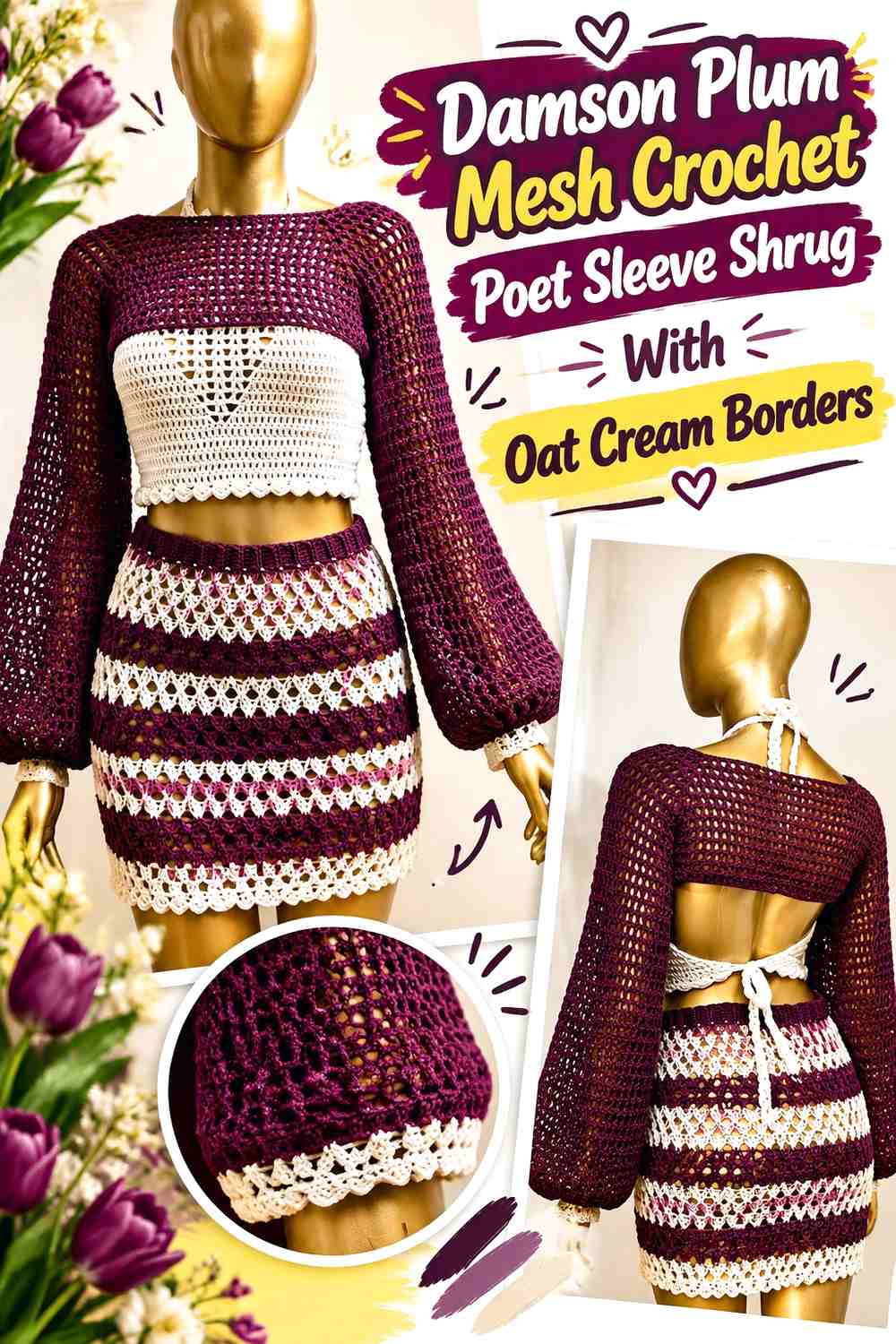
Use Damson Plum through an open mesh shrug and reserve Oat Cream for the sleeve ends, neckline, or selected outer edges. This lets the darker yarn describe the crochet structure while the lighter color clarifies the silhouette.
Because mesh reveals the garment underneath, test the palette over the tops or dresses you expect to wear beneath it.
Oat Cream Can Define the Edge of Damson Plum Mesh Poet Sleeves
A solid-looking Oat Cream border can create a clear stopping point at the end of a very open Damson Plum sleeve. Keep the border broad enough to remain visible against the mesh without making it look like a separate heavy cuff.
If the flare is especially wide, inspect the entire circumference so the border appears even when the sleeve folds.
Damson Plum Should Remain the Main Mesh Color Inside Oat Cream Edging
Keep the openwork predominantly Plum so the cream border has a specific purpose. Alternating colors repeatedly inside a large mesh pattern can make the sleeve structure harder to read.
If you repeat Oat Cream at the neckline, use a similar visual weight so the two edges feel related.
Creator Credit: Shyler crochets
8. Oat Cream Mesh Crochet Poet Sleeve Shrug With Damson Plum Sleeve Bands
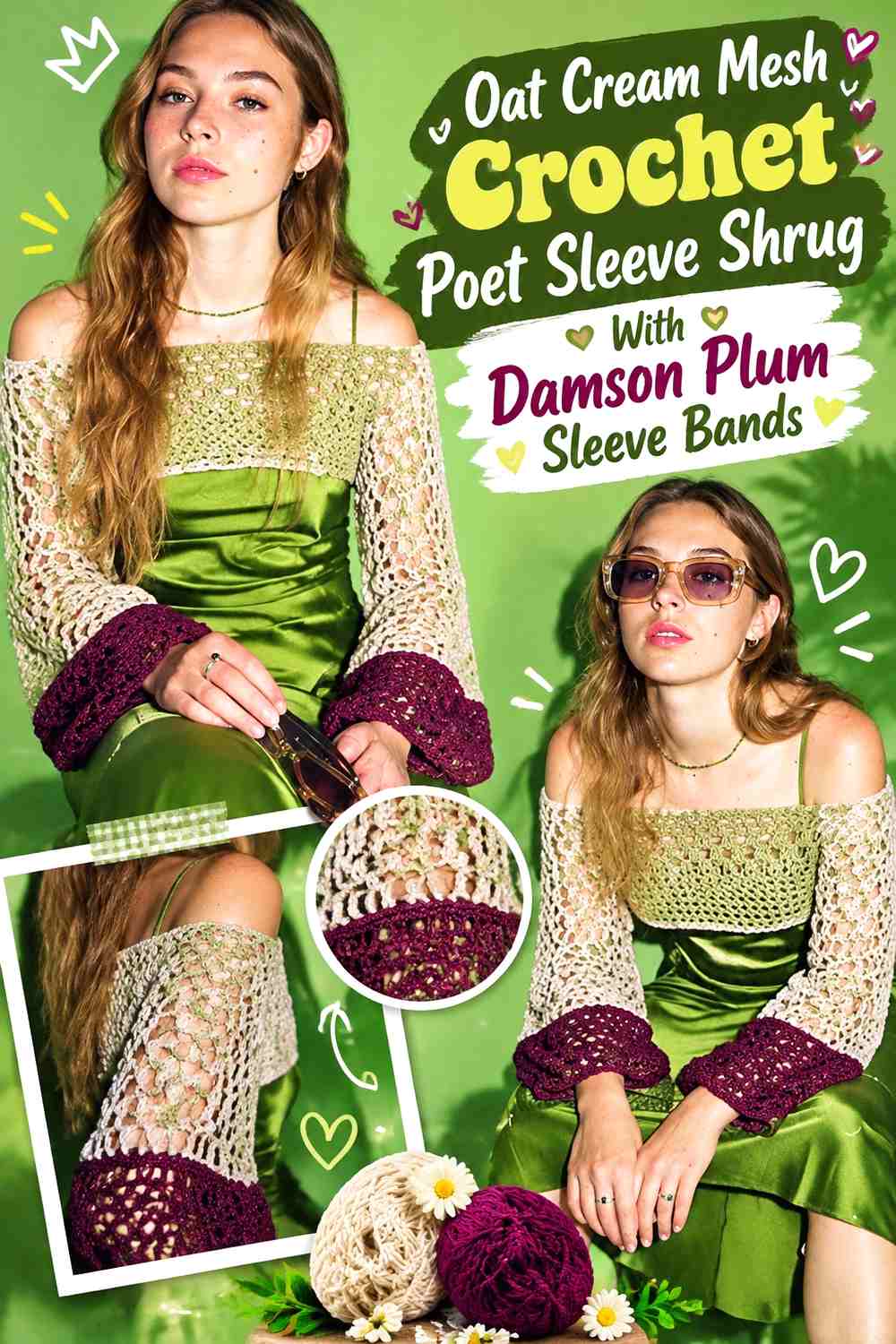
Let Oat Cream form the mesh body and sleeves, then insert several Damson Plum bands into the lower poet flare. This creates more rhythm than a single contrasting cuff while still keeping the lighter shade dominant.
The number of bands matters less than their spacing. On a wide lower sleeve, clearly separated stripes will usually remain easier to read than many narrow changes.
Damson Plum Bands Need Generous Oat Cream Spacing
Leave enough cream between the Plum stripes to keep each band distinct. If the gaps become very narrow, the sleeve starts to read as evenly striped rather than Oat Cream-led.
Consider making the lowest band the widest if you want more visual weight near the cuff without adding another color.
Oat Cream Should Carry Most of the Poet Sleeve Between Damson Plum Stripes
Preserve large uninterrupted cream sections through the upper arm and between the bands. This maintains the airy mesh effect and prevents the darker accents from dominating the whole sleeve.
Repeat the same band logic on both arms so the pair remains visually coordinated.
Creator Credit: Ella.Price.Crochet
9. Damson Plum Sleeve Columns on an Oat Cream Crochet Poet Sleeve Shrug
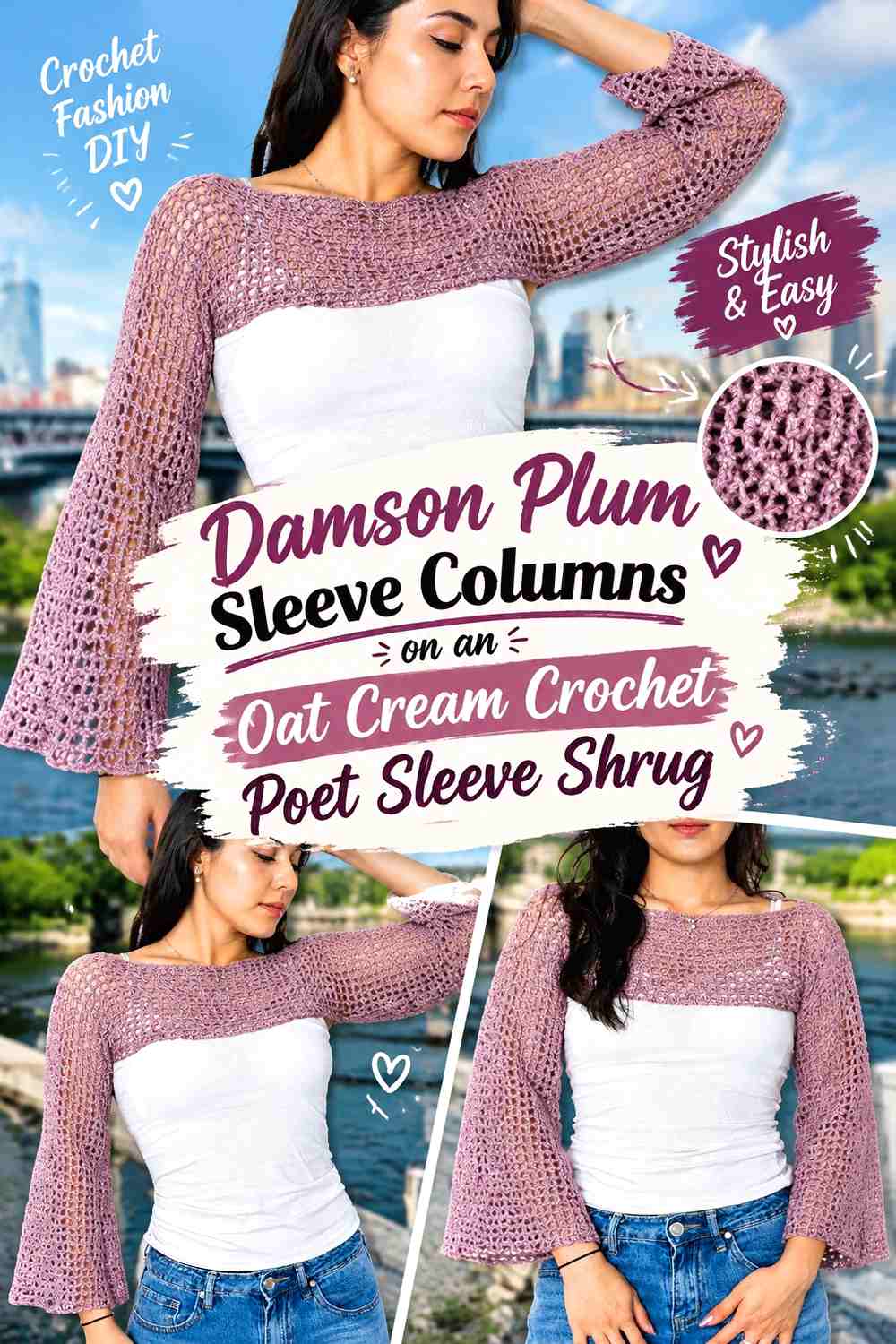
Use Oat Cream as the main shrug color and place Damson Plum in one vertical or lengthwise accent line along each sleeve. Instead of emphasizing horizontal cuff width, this treatment draws the eye from shoulder toward the flare.
The Plum column should remain visible as the sleeve widens. A line that looks substantial near the upper arm can appear proportionally smaller near a broad poet cuff.
Damson Plum Should Stay Visually Consistent as Oat Cream Sleeves Widen
Consider whether the Plum accent needs to become slightly broader in visual terms as the sleeve expands. The goal is not necessarily identical stitch width but a column that still looks intentional through the flare.
Position the feature consistently on both sleeves—center top, outer arm, or another chosen line.
Oat Cream Gives the Damson Plum Sleeve Column Room to Read
Keep the surrounding Oat Cream uncomplicated so the vertical detail remains the clear accent. Adding several horizontal bands as well would create competing directional lines.
A simple Oat Cream back also keeps attention on the two long sleeve details.
Creator Credit: VivCrochets
10. Oat Cream Scalloped Cuffs on Damson Plum Crochet Poet Sleeves

Keep Damson Plum across most of each statement sleeve and finish the widest edge with Oat Cream scallops or another softly shaped border compatible with the chosen construction. This lets the shape of the cuff and the color change reinforce each other.
Because the decorative edge already has movement, the rest of the sleeve can remain relatively simple.
Oat Cream Can Make the Damson Plum Poet Cuff Shape Easier to See
Place Oat Cream only where the shaped edge begins if you want the border to remain distinct. Extending cream far up the sleeve can turn a decorative finish into a full lower-sleeve block.
Check the scalloped edge while the arm is relaxed so you can see how the shapes hang rather than only how they look flat.
Damson Plum Should Stay Broad Behind the Oat Cream Cuff
A large uninterrupted Plum field gives the lighter edge enough contrast. This is particularly useful when the poet sleeve itself already has strong texture or flare.
If Oat Cream also appears at the neckline, keep that second border quieter so the sleeves retain priority.
Creator Credit: KnitcroAddict
11. Damson Plum and Oat Cream Graduated-Band Crochet Poet Sleeve Shrug
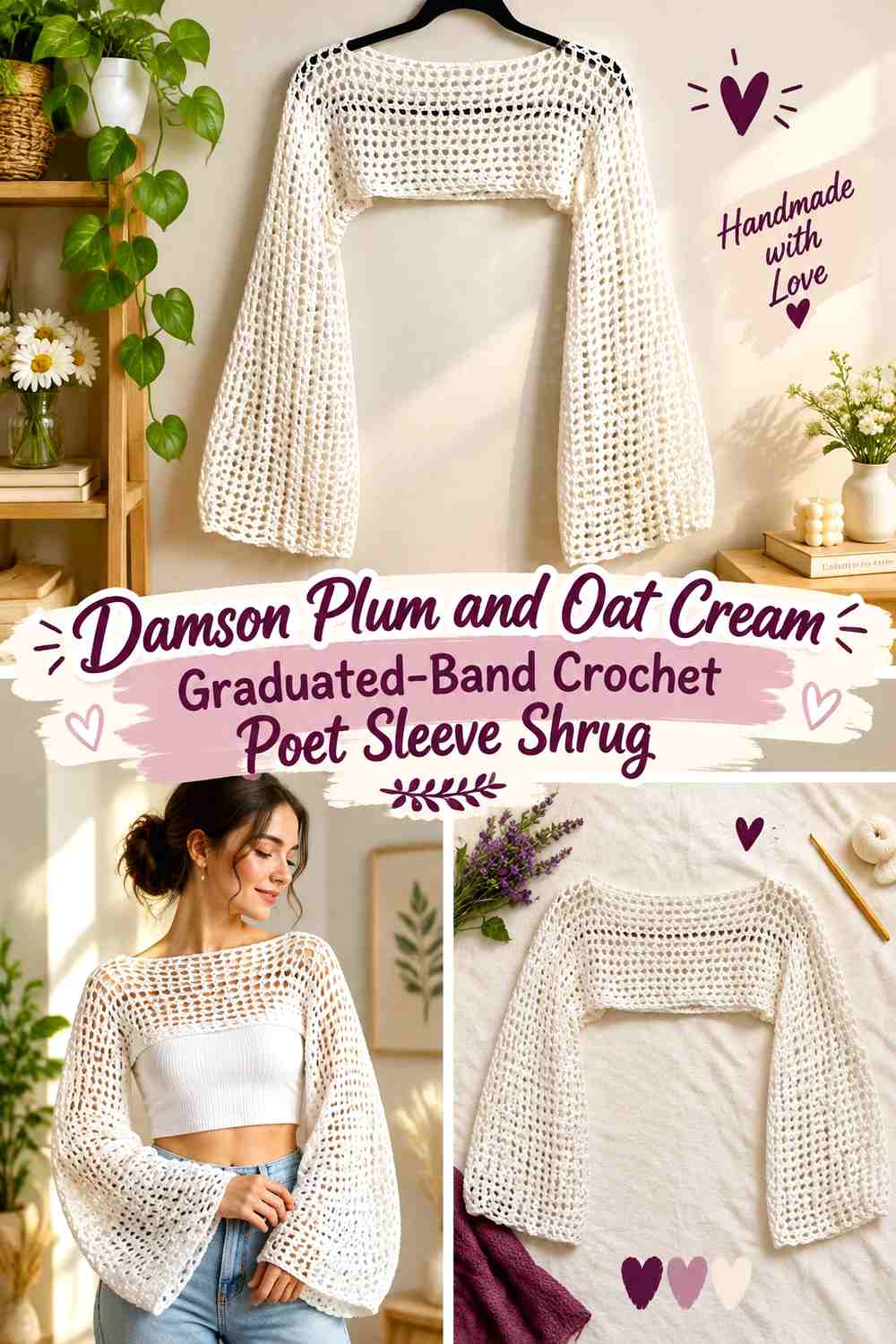
Use Oat Cream through the upper sleeves, then introduce Damson Plum in progressively more visually substantial bands toward the lower flare. The palette becomes darker toward the cuff without pretending to create an actual yarn-color gradient.
This idea is more active than a two-block sleeve, so keep the shrug body simple. The band pattern itself should provide most of the visual detail.
Damson Plum Can Increase Toward the Oat Cream Poet Cuff
Let the amount of Plum become more prominent as the sleeve widens. For example, the lower part can contain broader Plum sections than the upper arm without requiring a precise repeated sequence.
The important point is that the darker color gains visual area toward the flare.
Oat Cream Should Remain Visible Between Damson Plum Bands
Preserve enough cream to separate the darker sections. Without that spacing, the lower sleeve may simply appear Damson Plum with occasional pale lines.
Check the full sleeve from shoulder to cuff before duplicating the arrangement on the second side.
Creator Credit: DIY From Home
12. Oat Cream Bell-Sleeve Crochet Shrug With Damson Plum Outer Edges

Use Oat Cream throughout the shrug and bell sleeves, then place Damson Plum around the outer cuff edge and selected shrug borders. Instead of filling the flare with Plum, this approach traces its final outline.
It is one of the more restrained palettes in the collection and works well when the sleeve silhouette should remain the main feature.
Damson Plum Can Trace the Widest Edge of an Oat Cream Poet Sleeve
Keep the Plum border continuous enough to make the flare easy to follow visually. A broken or inconsistent line can make one part of the cuff appear heavier.
Because the circumference of a bell sleeve can be large, view the edge from several angles before deciding whether the border needs more width.
Oat Cream Should Remain Broad Inside the Damson Plum Sleeve Outline
Preserve the cream field through most of the sleeve so the edging does not become another full cuff block. This keeps the palette light while still giving the sleeve a clear frame.
A matching Damson Plum neckline or back edge can connect the border treatment across the shrug without changing the overall hierarchy.
Creator Credit: Naztazia
Comparing Damson Plum and Oat Cream Poet Sleeve Directions
For the strongest Damson Plum dominance, choose Oat Cream cuffs, Oat Cream borders, Oat Cream sleeve channels, or an Oat Cream back panel. These approaches preserve large Plum areas while allowing the lighter shade to clarify the flare or garment edge.
For an Oat Cream-led shrug, use Damson Plum lower flares, stripes, sleeve columns, or outer edging. Because Damson Plum is visually concentrated in strategic areas, it can remain noticeable without occupying most of the garment.
If the main goal is to emphasize sleeve volume, put the strongest contrast in the lower half of the sleeve. Ideas 1 through 4 make the transition between narrow upper arm and wide cuff particularly clear.
For mesh or openwork shrugs, simpler color blocking usually keeps the crochet structure easier to see. More solid sleeves can comfortably support stripes, columns, frames, or shaped edging.
Conclusion
Damson Plum and Oat Cream give a crochet poet sleeve shrug enough contrast to emphasize either the garment center or the dramatic sleeve silhouette without requiring a larger palette.
Choose Damson Plum across the upper body and sleeves when you want Oat Cream to illuminate the flare, cuff, or border. Reverse the relationship when you want a light shrug with concentrated Plum weight at the lower sleeves. For a more graphic direction, use sleeve bands or vertical columns; for a quieter version, keep one color across the entire sleeve and reserve the other for the outer edge.
Before finishing both sleeves, compare them while the shrug is worn. Check the height of each color transition, how the bands behave when the sleeves fold, whether both cuffs show comparable amounts of color, and how the back panel connects the two arms. Follow the credited creator for the demonstrated shrug construction and treat the Damson Plum and Oat Cream palette as your independent adaptation.
Frequently Asked Questions
Should Damson Plum or Oat Cream dominate a crochet poet sleeve shrug?
Either can lead. Damson Plum creates a stronger visual anchor when it covers the body or entire sleeve, while Oat Cream gives the larger flared sections a lighter appearance. The best hierarchy depends on whether you want the shrug body or the sleeve volume to attract more attention.
Where should Damson Plum go if I want to emphasize the poet sleeve flare?
Place Damson Plum across the lower sleeve, in widening bands, or along the broad cuff edge. Concentrating the deeper color near the widest part of the sleeve makes that area more noticeable than putting the same amount close to the shoulder.
Can Oat Cream help textured Damson Plum sleeves stay readable?
Yes. Oat Cream can separate a Plum cable, mesh section, raised texture, or decorative cuff from the rest of the sleeve. Keep the contrast area purposeful rather than outlining every individual stitch feature.
How can I tell whether Damson Plum and Oat Cream have enough contrast for narrow sleeve stripes?
Compare the actual yarns side by side and consider viewing them in grayscale. If they remain clearly different in lightness, narrow stripes should separate more easily. If their values are closer, broader bands or large two-color sections will usually remain clearer.
Should both Damson Plum and Oat Cream poet sleeves have identical color placement?
For a traditional matching pair, aim for comparable transition points, band widths, and cuff coverage. Slight differences can become obvious because flared sleeves draw attention to both arms. Intentional asymmetry can work, but make the difference clear enough that it reads as a design choice.
How do I keep Damson Plum and Oat Cream from making flared sleeves look too busy?
Limit the number of competing details. If the sleeve has pronounced mesh, lace, or texture, use larger color fields. If the crochet surface is relatively simple, you have more room for bands, columns, or contrasting borders.
Can I replace Damson Plum or Oat Cream with similar colors?
Yes. Preserve the role each shade plays. A Damson Plum substitute should maintain the depth or visual strength needed for the body, bands, or cuff accents, while an Oat Cream substitute should remain light or quiet enough to create the intended separation around the flare, border, or supporting field.