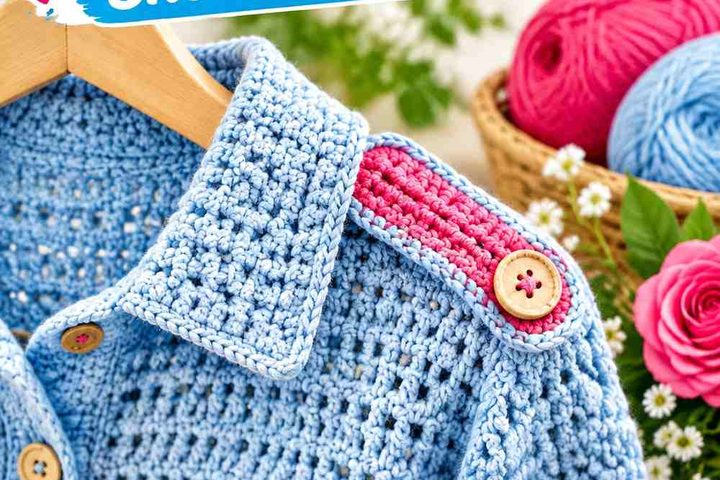
Glacier Blue and Oxblood create a particularly useful two-color direction for a crochet fichu because the garment has several distinct visual zones despite its relatively small size. Oxblood can frame the neckline and pointed front while Glacier Blue spreads softly across the shoulders, or Glacier Blue can define lace edging around a deeper Oxblood field.
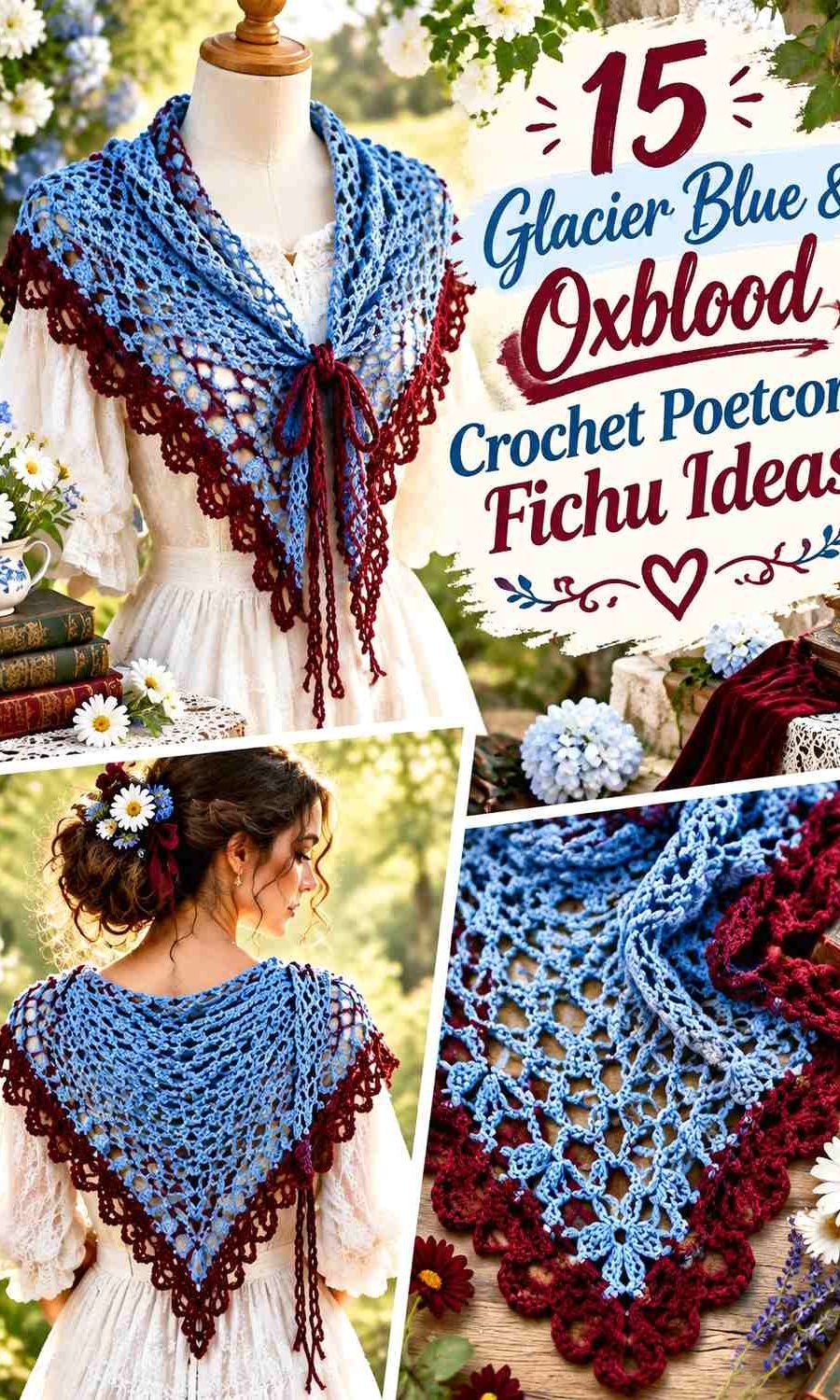
For this article, “poetcore” describes a soft, literary, vintage-inspired styling direction rather than a specific historical crochet pattern. A fichu may sit close around the neck and shoulders, fall into a triangular point, tie at the front, or behave like a small shawl or shoulder scarf. That makes neckline placement, front-point balance, and border color more important than simply dividing the yarn evenly.
The credited tutorials below include triangle scarves, shawls, kerchiefs, and related crochet constructions. Not every source is an exact fichu pattern, so use each tutorial for the construction it actually demonstrates and verify its finished scale before adapting it into a shorter shoulder-covering fichu. The Glacier Blue and Oxblood palettes below are independent color treatments rather than descriptions of the creators’ original projects.
Quick List
- Glacier Blue Crochet Poetcore Fichu With an Oxblood Neckline
- Oxblood Crochet Poetcore Fichu With Glacier Blue Lace Edging
- Glacier Blue Shoulder Field With an Oxblood Crochet Fichu Front Point
- Oxblood Shoulder Crochet Fichu With Glacier Blue Front Ties
- Glacier Blue Center Triangle With an Oxblood Crochet Fichu Frame
- Oxblood Center Triangle With a Glacier Blue Crochet Fichu Frame
- Glacier Blue Lace Crochet Fichu With Oxblood Scallops
- Oxblood Lace Crochet Fichu With Glacier Blue Picot Edging
- Glacier Blue Crochet Fichu With Oxblood Corner Motifs
- Oxblood Crochet Fichu With a Glacier Blue Neck Band
- Glacier Blue Striped Crochet Fichu With Oxblood Lower Bands
- Oxblood Crochet Fichu With Glacier Blue Side Panels
- Glacier Blue Granny Crochet Fichu With Oxblood Outer Rounds
- Oxblood Pointed Crochet Fichu With Glacier Blue Shoulder Edges
- Glacier Blue and Oxblood Split-Color Crochet Poetcore Fichu
Decide Whether Glacier Blue Should Frame the Face or Cover the Shoulders
A fichu places color close to the neckline, so even a small contrasting band can become visually important. Glacier Blue around the neck creates a lighter transition between the garment and a blouse or dress, while Oxblood at the neckline produces a deeper frame and can make the front point feel more connected to the collar area.
The shoulder field usually occupies more surface, but it does not automatically need the dominant-looking color. A relatively small Oxblood border can still attract considerable attention around an otherwise Glacier Blue triangle.
Think about the fichu in its worn position rather than judging a flat triangle alone. Part of the side edge may fall behind the shoulders, while the center point and neckline remain fully visible from the front.
Use Glacier Blue and Oxblood Contrast to Protect Lace and Front-Point Definition
Compare the actual yarns side by side before using narrow borders or tiny motifs. Different hues can still have similar light-and-dark values, and that can make a delicate Oxblood picot edge disappear against Glacier Blue more than expected.
A grayscale phone photo is a simple check. If the shades remain clearly separated, narrow borders and small corner motifs can work well. If their values merge, broader color areas—such as a complete neckline band or substantial lower border—will usually remain easier to see.
Lace creates another consideration. Openwork already produces shadows and visible spaces, so avoid changing color inside every small opening. On a compact fichu, one strong border or central point often gives the lace enough structure.
Balance Glacier Blue and Oxblood Around the Fichu Point and Ties
The center point naturally attracts attention because it extends lower than the shoulder edges. If Oxblood appears only there, it can function as the primary accent even when Glacier Blue covers most of the fichu.
Front ties behave differently. Their color may look minor while the fichu is open but become concentrated at the center once they are knotted or bowed. Check the tied and untied views before deciding whether that color needs to be repeated elsewhere.
For a more cohesive two-color piece, repeat the accent once in a secondary location—a neckline edge with a matching point, for example—rather than outlining every available edge.
1. Glacier Blue Crochet Poetcore Fichu With an Oxblood Neckline
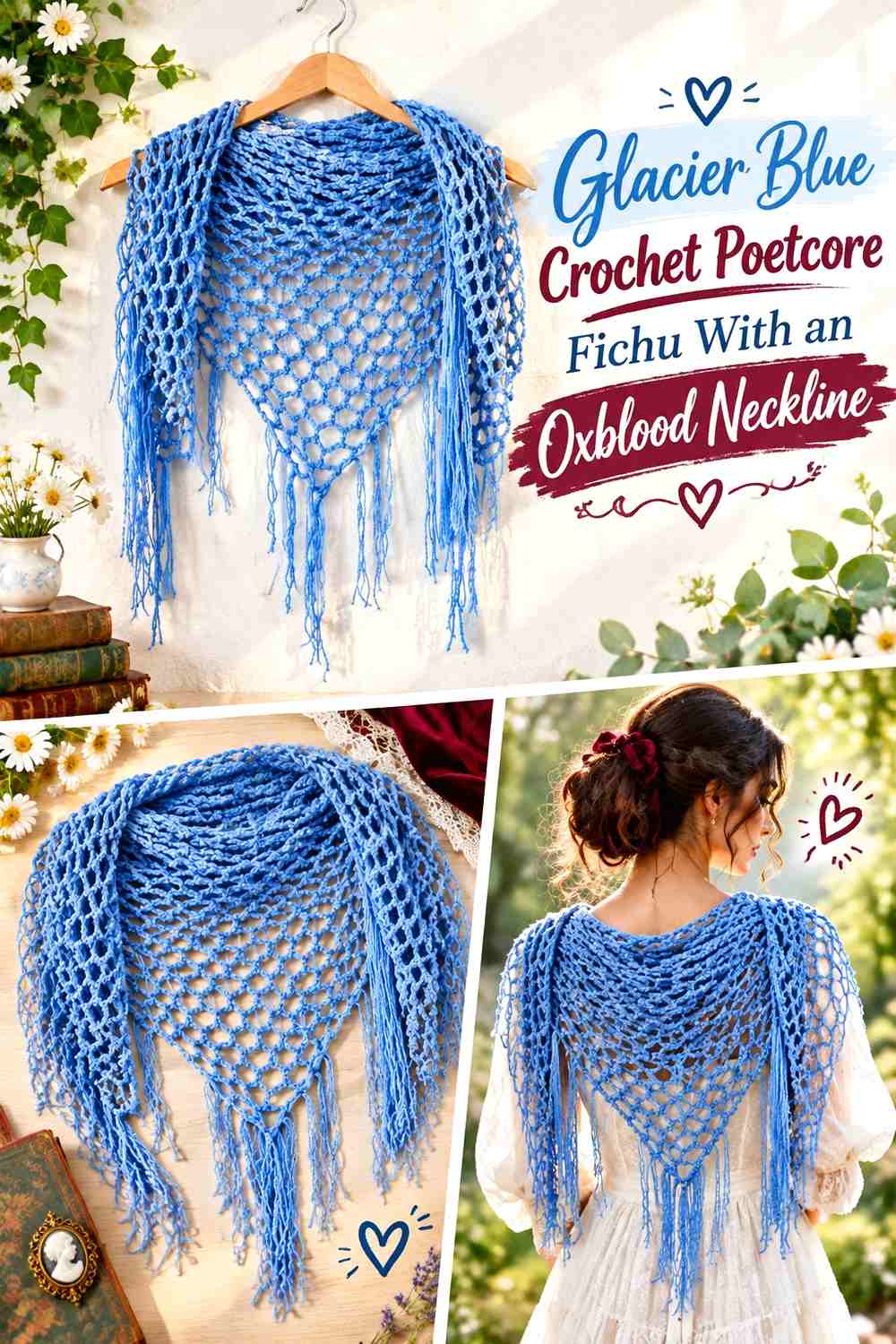
Let Glacier Blue cover the triangular shoulder field and use Oxblood around the neckline. This keeps the larger fichu light while creating a deeper visual frame exactly where the crochet sits closest to the face.
The Oxblood band should be substantial enough to look deliberate but restrained enough that it does not turn into a dark upper yoke. If the fichu ties at the front, decide whether those ties remain Glacier Blue or continue the Oxblood neckline.
Oxblood Can Give the Glacier Blue Fichu a Defined Neck Frame
Keep Oxblood continuous across the visible neckline so it reads as one purposeful border. Broken or uneven color sections can make the neck opening appear irregular even when the underlying crochet is balanced.
If the fichu includes openwork below the neck, let Glacier Blue begin cleanly after the border rather than inserting multiple thin transition stripes.
Glacier Blue Should Stay Broad Below the Oxblood Neckline
Preserve enough Glacier Blue across the shoulders and center triangle for it to remain the primary field. A large uninterrupted surface also gives lace or stitch texture room to remain visible.
If you want Oxblood repeated, use it at the center point rather than around every side edge.
Creator Credit: Ani Tugushi (Turtle Whicky)
2. Oxblood Crochet Poetcore Fichu With Glacier Blue Lace Edging
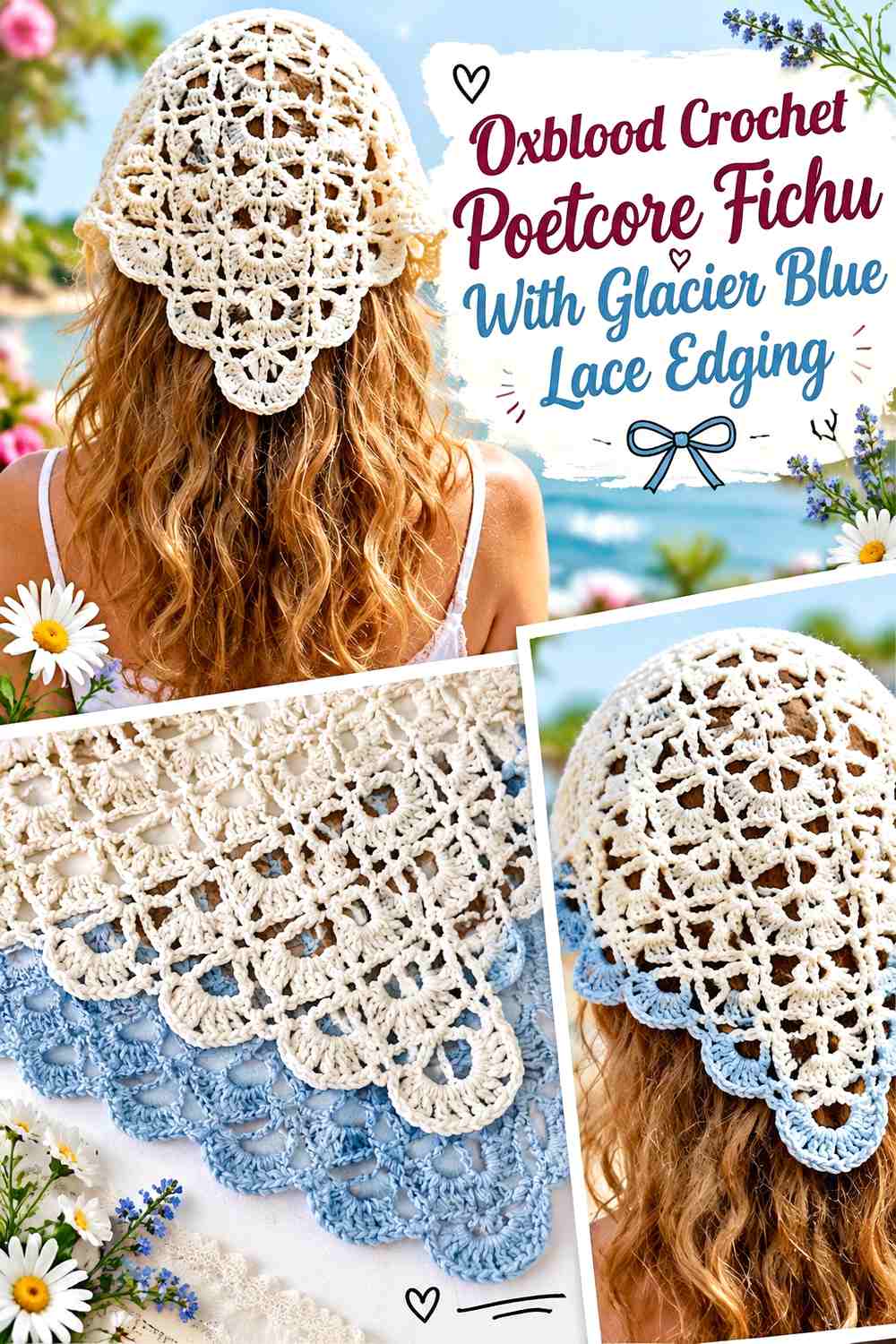
Use Oxblood throughout the main triangle and reserve Glacier Blue for the outer lace or decorative edge. The lighter-looking border can separate a deep body color from a dark blouse while also clarifying the triangular silhouette.
This direction is especially effective when the edging already has picots, shells, or another shaped finish. Color and edge shape can work together instead of adding more pattern inside the fichu.
Glacier Blue Can Make the Oxblood Fichu Edge Easier to Follow
Use Glacier Blue consistently along the visible lower sides and point. If the edge turns behind the shoulders, check whether enough of the blue remains visible from the front to connect both sides of the triangle.
A border that is too narrow may disappear against heavily textured Oxblood stitches, so compare its visual weight with the scale of the lace.
Oxblood Should Remain Uninterrupted Inside the Glacier Blue Border
Keep the interior largely Oxblood when the edging is supposed to be the primary contrast. Adding repeated Glacier Blue motifs across the center would weaken the clean framed effect.
The solid deeper field also lets the outer lace silhouette remain the most decorative part of the fichu.
Creator Credit: Tuğba Kahcevioğlu
3. Glacier Blue Shoulder Field With an Oxblood Crochet Fichu Front Point
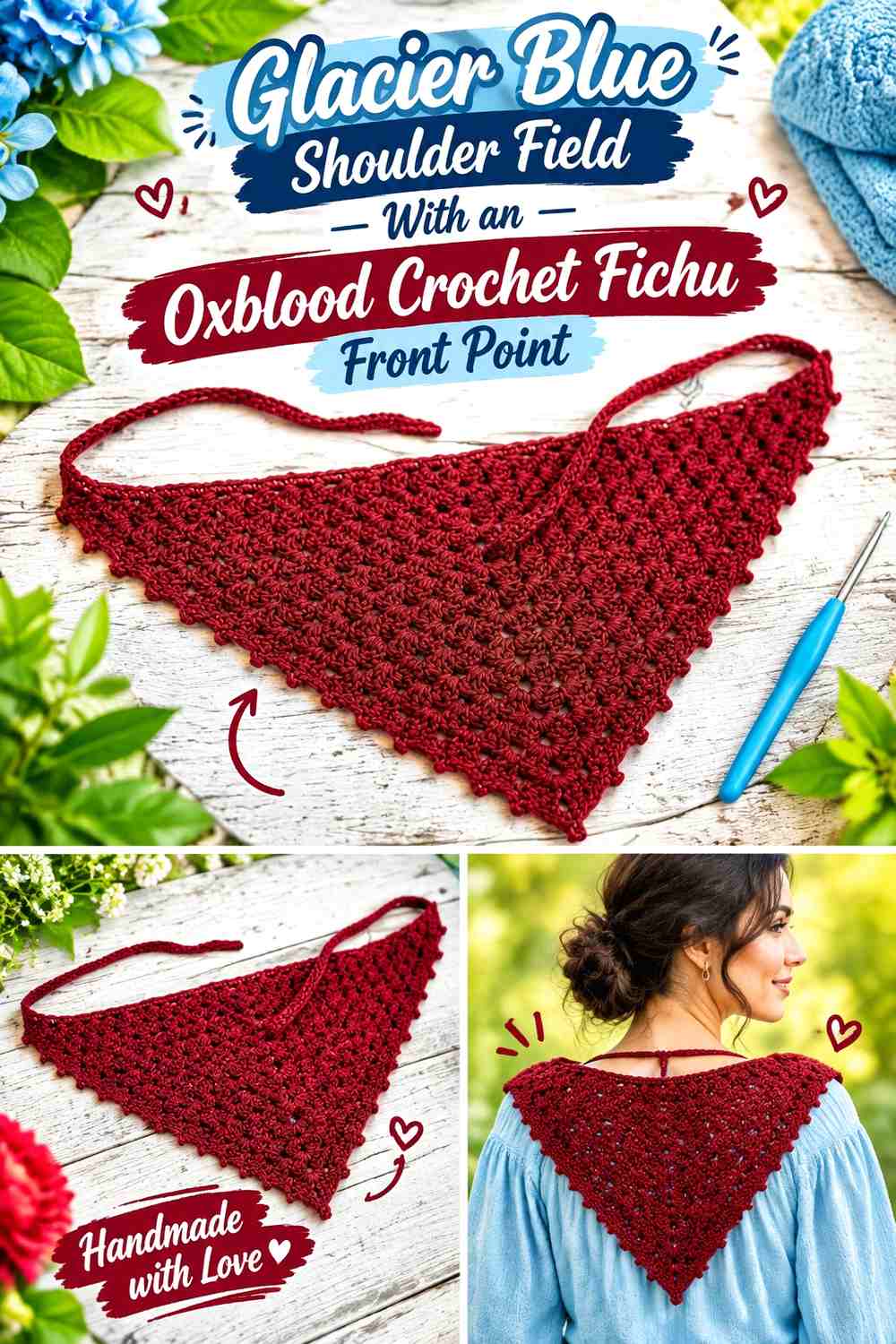
Keep the shoulders and upper triangle Glacier Blue, then transition to Oxblood around the lowest front point. This concentrates the deepest color where the fichu naturally extends downward.
The Oxblood section should be large enough to read as a deliberate lower block rather than a tiny corner. A broad point also stays clearer when the fichu drapes and the sides angle backward over the shoulders.
Oxblood Can Make the Glacier Blue Fichu Point the Main Front Detail
Let Oxblood extend upward enough to establish a recognizable triangular section. A small accent at the final tip may look more like edging than color blocking.
Center the transition carefully because an uneven Oxblood point can make the entire fichu appear twisted when viewed from the front.
Glacier Blue Should Keep the Oxblood Point Separate From the Neckline
Preserve a generous Glacier Blue field between the dark point and the neck. This gives the project a clear top-to-bottom hierarchy instead of concentrating Oxblood in several competing places.
If you want a second Oxblood repetition, a narrow neckline edge is usually enough.
Creator Credit: Hopeful Turns
4. Oxblood Shoulder Crochet Fichu With Glacier Blue Front Ties
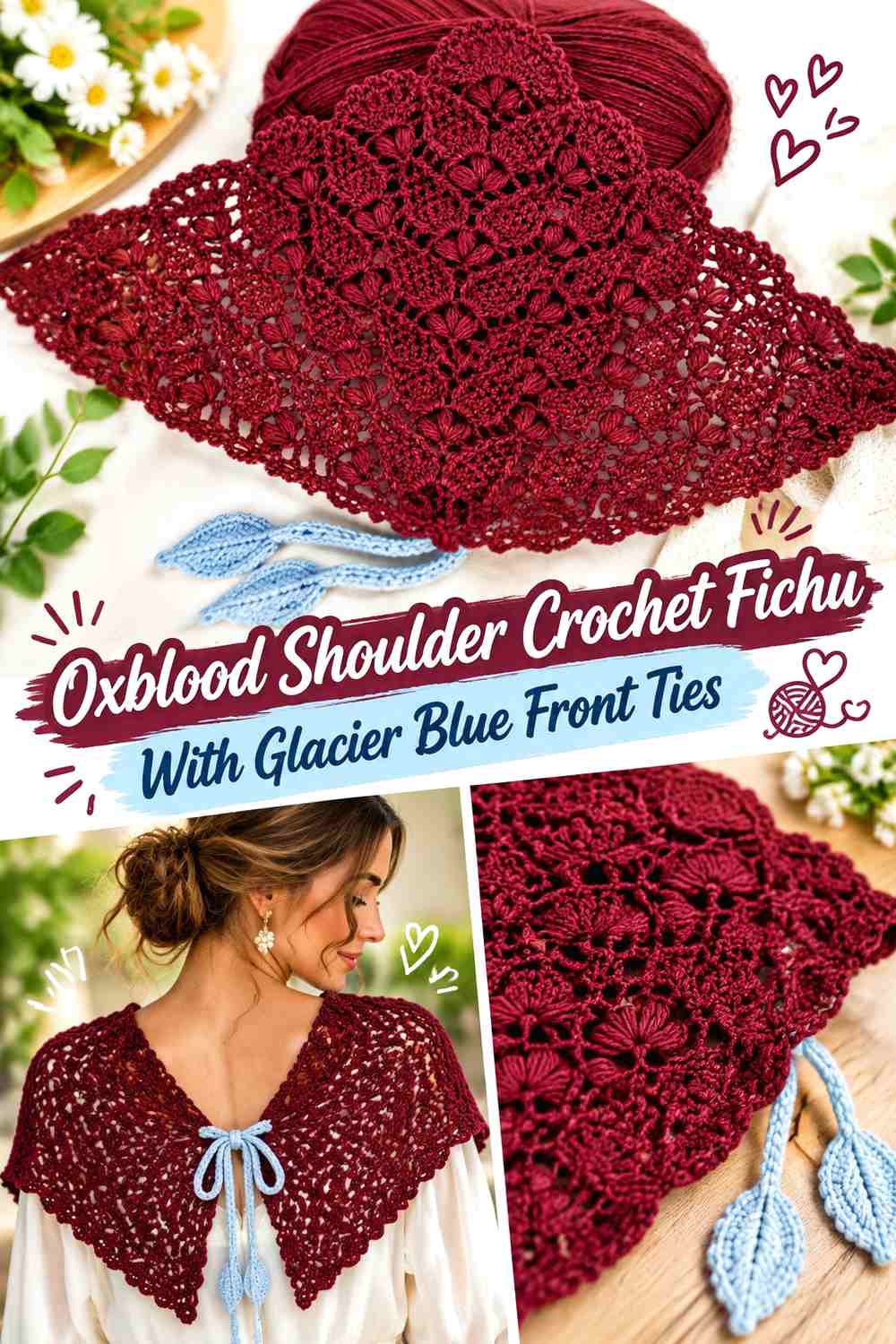
Use Oxblood for most of the shoulder triangle and switch to Glacier Blue only for the front ties or extended corner ends when your chosen fichu construction includes them. This leaves the body visually rich while placing the lighter shade where the two sides meet.
Because ties move and overlap, their final color weight depends on how they are worn. A bow concentrates Glacier Blue at the center, while loose ends create two separate vertical accents.
Glacier Blue Can Keep Oxblood Fichu Ties Visible at the Center
Use Glacier Blue consistently through the visible tie length if you want the closure to remain easy to distinguish against the darker body.
Check how much blue remains visible after tying. Very short exposed ends may need a slightly broader Glacier Blue starting section to keep the contrast meaningful.
Oxblood Should Stay Broad Behind the Glacier Blue Tie Area
Leave the neckline and shoulders mainly Oxblood so the lighter closure has a stable background. Avoid adding several large Glacier Blue panels nearby unless you want a more evenly divided palette.
A continuous Oxblood center also helps the fichu retain a strong shoulder-covering appearance.
Creator Credit: Crochet Knitting Sort
5. Glacier Blue Center Triangle With an Oxblood Crochet Fichu Frame
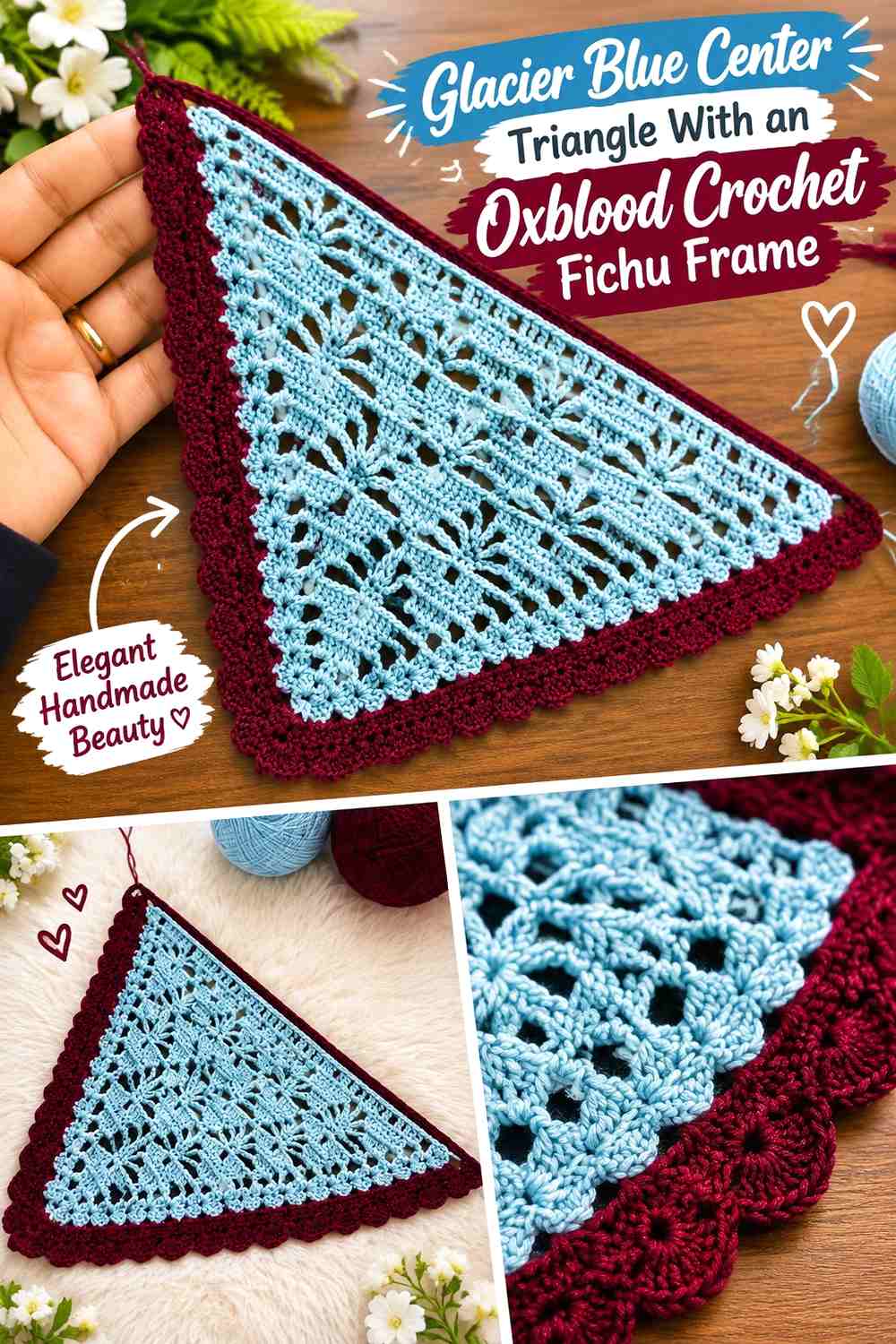
Place Glacier Blue across the main triangular field and surround it with Oxblood along the neckline and two lower side edges. This creates a fully framed composition rather than highlighting only one boundary.
The Oxblood frame should remain narrow enough for Glacier Blue to occupy most of the surface. On a small fichu, thick framing can quickly reduce the center to a narrow inset.
Oxblood Can Give the Glacier Blue Triangle a Complete Visual Frame
Keep the border visually connected at the corners so the center reads as one enclosed Glacier Blue field. If the neckline border and lower edging have very different widths, the frame may feel top-heavy.
At the point, check whether Oxblood remains visible without becoming a large separate triangular block.
Glacier Blue Needs Enough Space Inside the Oxblood Fichu Border
A broad blue center gives lace or decorative stitchwork room to read clearly. It also prevents the border from becoming the dominant part of the fichu.
If the center is highly textured, avoid inserting additional Oxblood stripes within it.
Creator Credit: FUNDA’ NIN ÖRGÜLERİ -knitting patterns
6. Oxblood Center Triangle With a Glacier Blue Crochet Fichu Frame
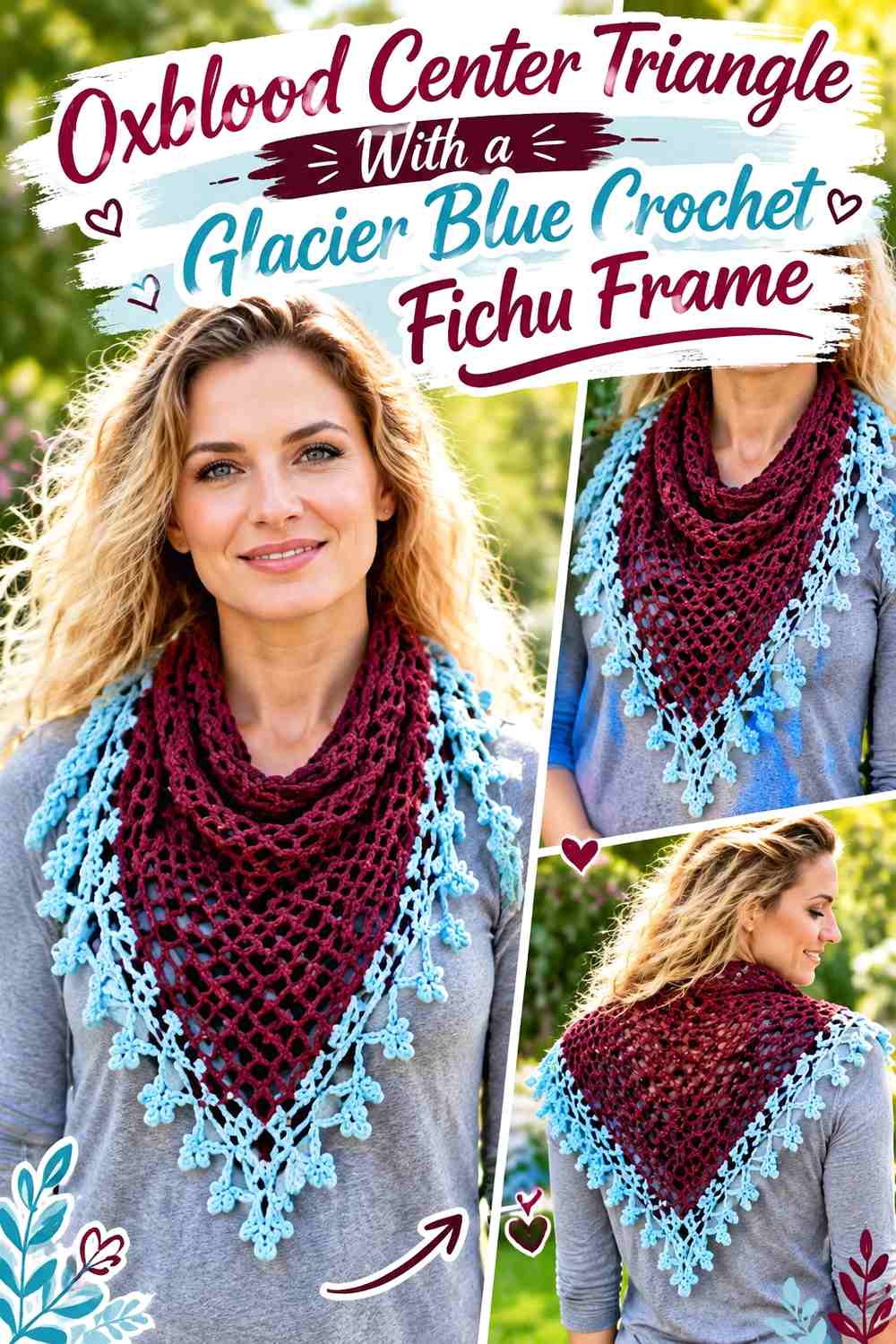
Reverse the framed arrangement with an Oxblood center and Glacier Blue around the outside. This gives the light border a larger role because it touches both the neckline and the outer silhouette.
The combination can be useful when you want a deep triangular center without allowing Oxblood to run directly into a dark blouse or dress underneath.
Glacier Blue Can Separate the Oxblood Fichu From the Outfit Beneath It
Use Glacier Blue along the outer edge where it can create a visible boundary against surrounding clothing. The lighter frame may be especially helpful around the shoulder sections, which can otherwise blend into a dark layer.
Keep the border consistent enough that one side does not appear visually heavier.
Oxblood Should Remain the Main Field Inside Glacier Blue
Give the center enough surface for Oxblood to remain the dominant shade. If Glacier Blue becomes too broad around all three sides, the hierarchy can reverse.
One uninterrupted central field also keeps the triangle looking deliberate rather than patchworked.
Creator Credit: naztazia
7. Glacier Blue Lace Crochet Fichu With Oxblood Scallops
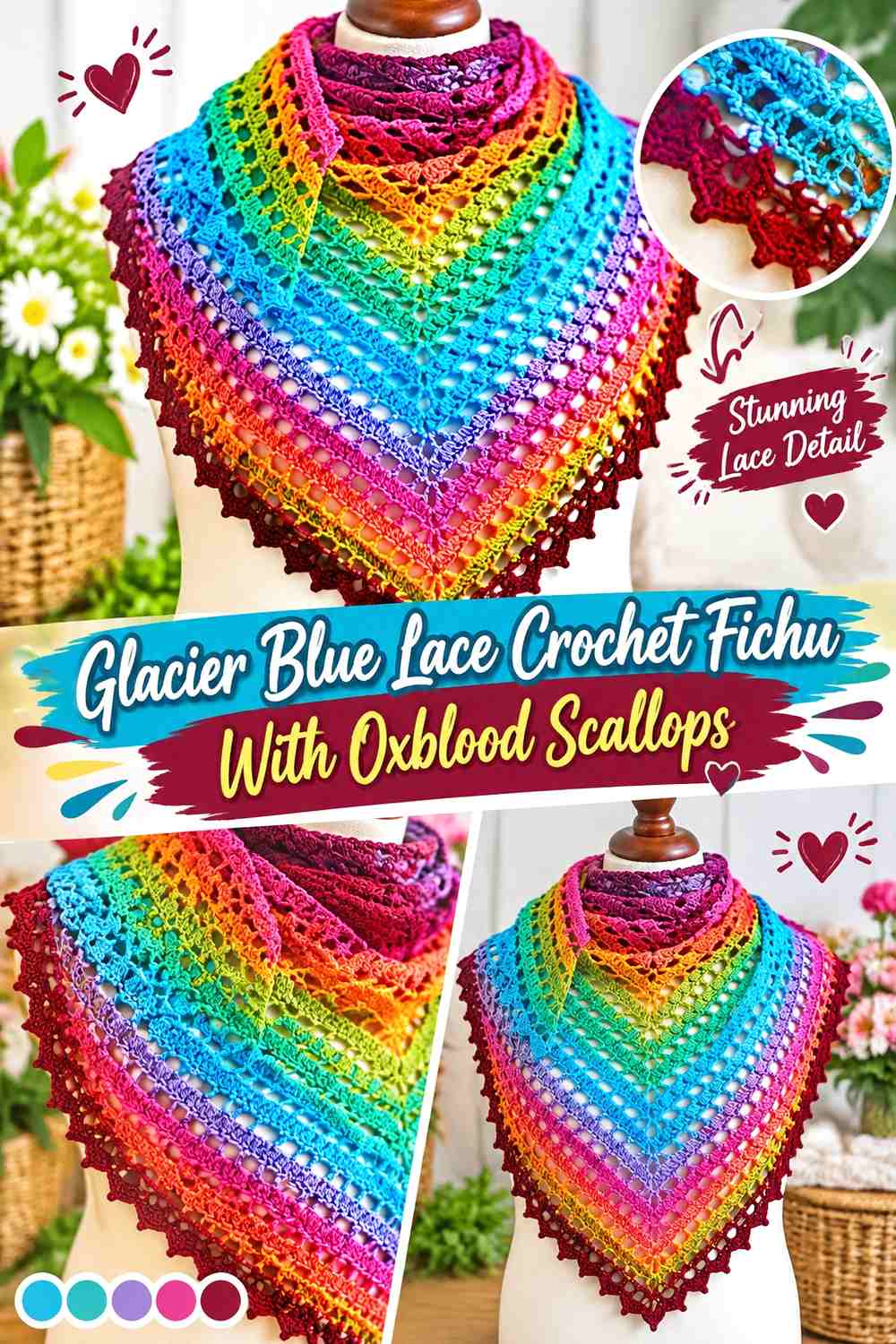
Use Glacier Blue throughout an open or lace-focused fichu and reserve Oxblood for a scalloped or shaped lower border. This lets the lighter shade carry the airy texture while the deeper color defines the decorative edge.
The scallops should not be so large that they overwhelm the relatively compact fichu. Their job is to finish the shape and introduce Oxblood, not create a second full garment layer.
Oxblood Can Clarify the Glacier Blue Scalloped Fichu Edge
Use Oxblood continuously through the shaped border so the scallops remain visually connected. Isolated dark sections may make an otherwise smooth edge feel interrupted.
Check the center point because several shaped repeats can crowd together where the two side edges meet.
Glacier Blue Should Keep the Oxblood Scallops From Competing With Lace
Preserve the main lace field in Glacier Blue. This gives the openwork and dark shaped border different visual jobs.
If Oxblood is repeated at the neckline, use a restrained amount so the lower scallops remain the strongest dark detail.
Creator Credit: Hooked by Robin
8. Oxblood Lace Crochet Fichu With Glacier Blue Picot Edging
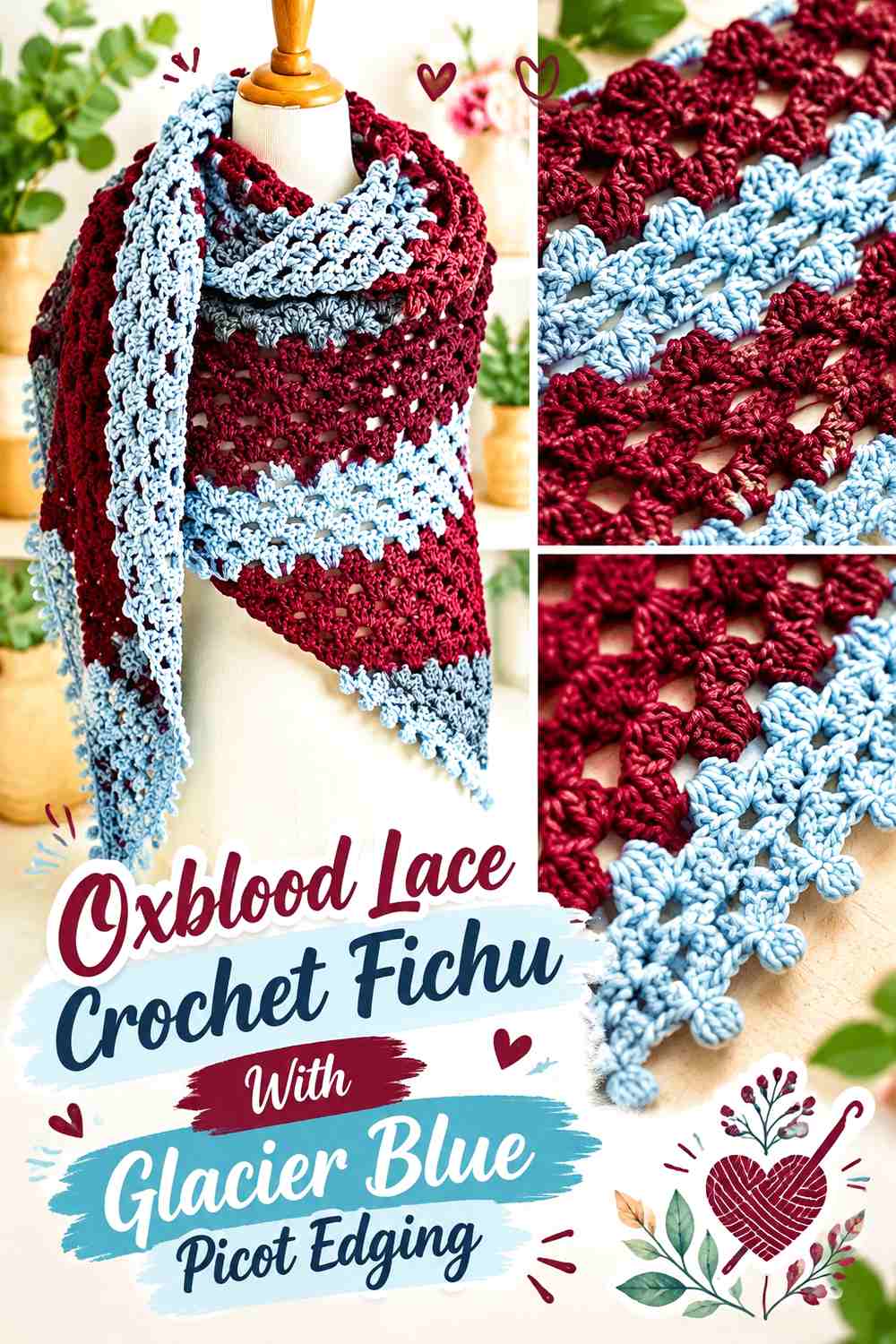
Let Oxblood carry the main lace structure and use Glacier Blue only in a delicate picot or narrow decorative finish. This produces a more restrained two-color look than a broad border.
Because the color section is small, sufficient value contrast matters. If Glacier Blue and Oxblood are close in grayscale, the fine edging may need more visual width to stay distinct.
Glacier Blue Can Give the Oxblood Lace Fichu a Fine Outer Outline
Use the lighter shade along the full visible edge rather than only around the point. The repeated small projections can create a consistent finishing line without interrupting the Oxblood lace field.
View the fichu from normal wearing distance before deciding the edging needs to be thinner.
Oxblood Should Remain the Strongest Color Behind Glacier Blue Picots
Keep the body and major lace motifs Oxblood so the tiny blue edge remains an accent. Repeating Glacier Blue extensively through the interior would remove the quiet outline effect.
This approach is particularly useful when the lace itself already contains substantial visual movement.
Creator Credit: Fiber Flux
9. Glacier Blue Crochet Fichu With Oxblood Corner Motifs
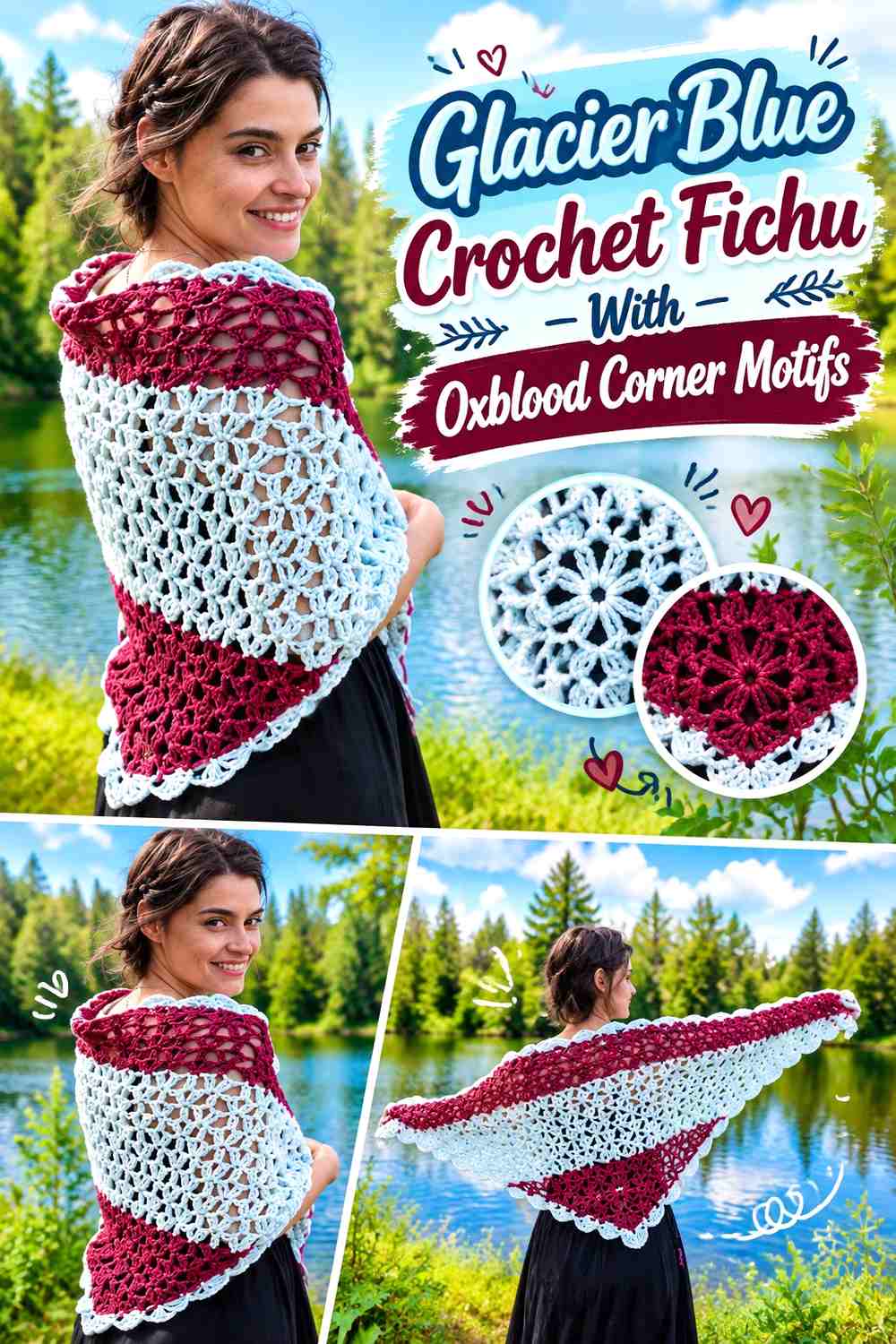
Use Glacier Blue across the central field and place Oxblood motifs or blocks near the two shoulder corners and lower point. Instead of outlining the whole piece, the deeper shade appears only where the triangle changes direction.
This creates a more scattered poetcore accent than a formal frame, but repetition should remain controlled so the fichu does not become visually fragmented.
Oxblood Corner Motifs Need Clear Glacier Blue Space Around Them
Leave enough blue between the motifs for each dark detail to remain independent. If the corner accents spread inward and meet, the design begins to resemble a wide border.
Keep left and right shoulder motifs comparable if you want the fichu to look symmetrical when worn.
Glacier Blue Connects Separate Oxblood Fichu Motifs Into One Field
A continuous Glacier Blue center links the three accent areas. Avoid adding unrelated dark stripes between them unless you intentionally want a more complex layout.
The light field also gives the center front enough visual quiet for blouse collars, ribbons, or other layered poetcore styling.
Creator Credit: Jayda InStitches
10. Oxblood Crochet Fichu With a Glacier Blue Neck Band
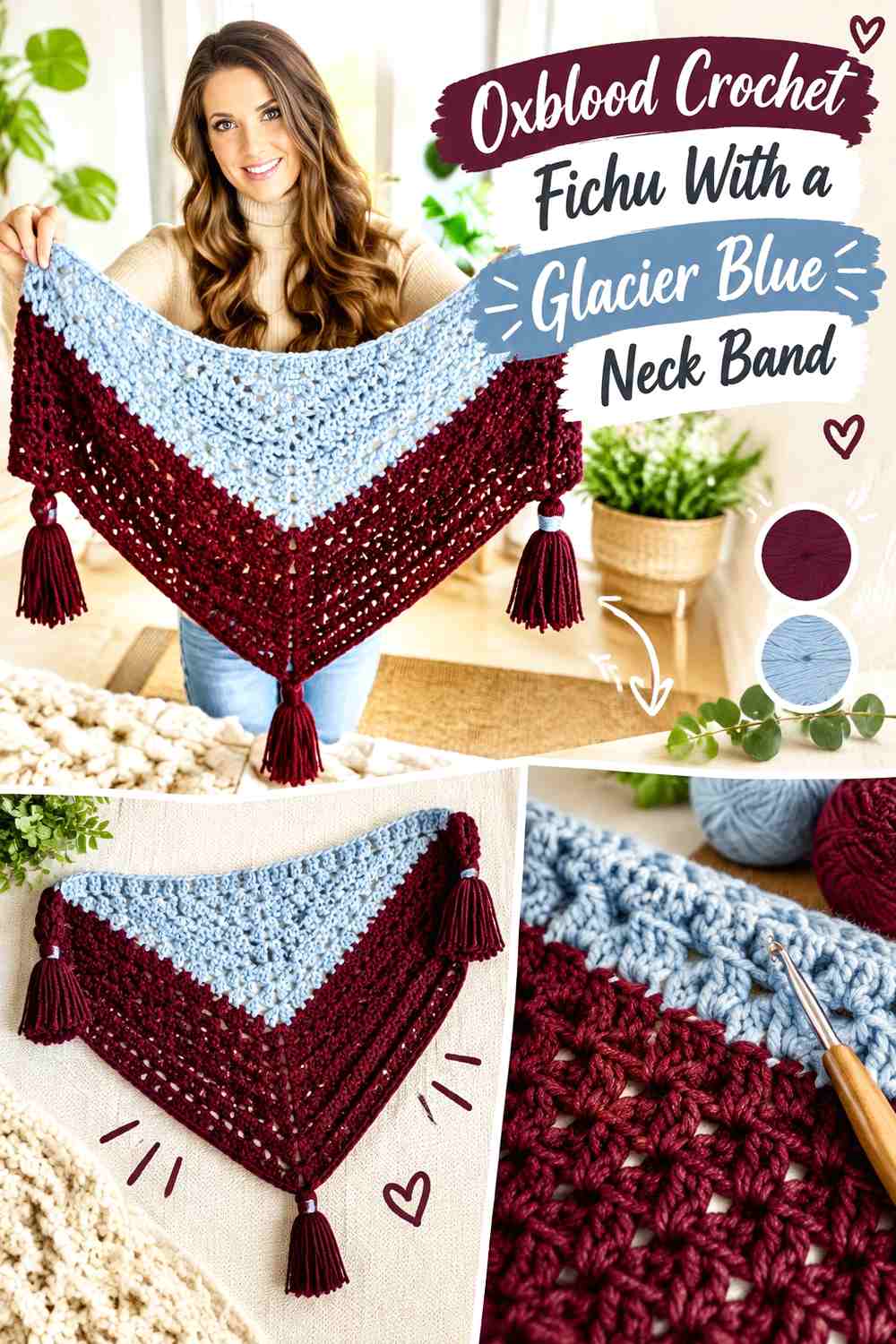
Keep the entire shoulder and point section Oxblood and use Glacier Blue only around the neck. This is one of the most concentrated two-color ideas because the lighter shade stays close to the face instead of continuing down the sides.
The neck band can visually separate a dark fichu from dark hair, a high-neck blouse, or another deep layer without changing the strong Oxblood body.
Glacier Blue Can Give the Oxblood Fichu a Clear Neckline Opening
Keep the Glacier Blue band even around the visible neck curve. Because it sits high on the body, small irregularities are easier to notice than they would be near the lower point.
If the fichu ties at the front, decide whether the ties continue in Glacier Blue for continuity or switch back to Oxblood.
Oxblood Should Stay Unbroken Below the Glacier Blue Neck Band
Preserve the shoulder field and point in Oxblood when you want a simple, dramatic body. Additional Glacier Blue stripes below the neckline would weaken the concentrated face-framing effect.
Texture can provide the remaining detail instead of more color changes.
Creator Credit: MJ’s Off The Hook Designs
11. Glacier Blue Striped Crochet Fichu With Oxblood Lower Bands
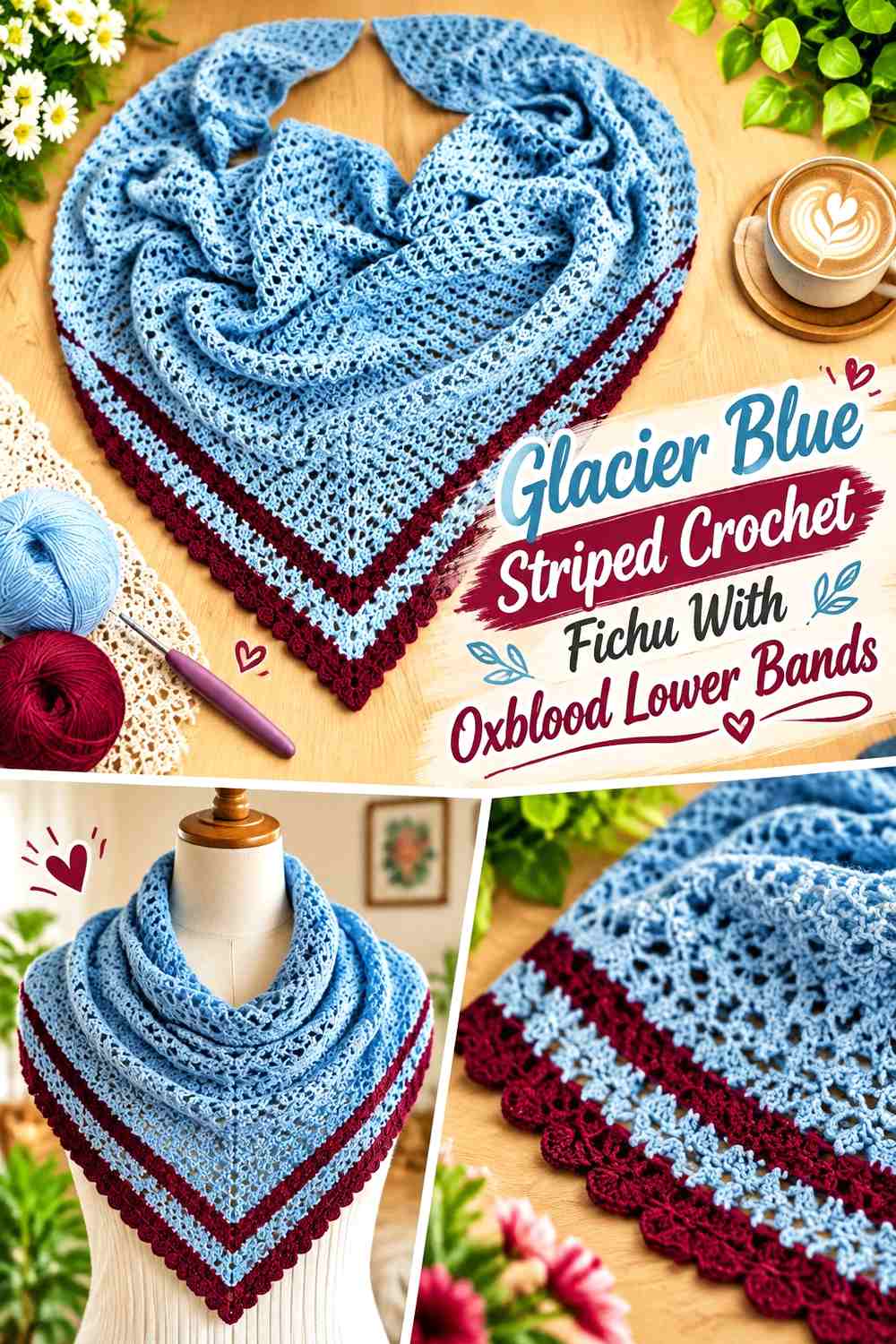
Use Glacier Blue as the main field and introduce a few Oxblood bands as the triangle approaches its lower point. The darker shade therefore becomes more prominent toward the front without covering the neckline.
Keep the number of stripes restrained. A small shoulder scarf can look crowded quickly when several narrow bands compete with lace or textured crochet.
Oxblood Bands Need Enough Glacier Blue Space Between Them
Leave visible blue gaps so each Oxblood stripe remains distinct. If the gaps become too narrow near the point, the lower fichu may simply read as predominantly dark.
Broader stripes near the bottom can create stronger progression without adding more color changes.
Glacier Blue Should Remain Dominant Above the Oxblood Fichu Bands
Keep the neck and shoulders largely Glacier Blue so the color hierarchy is clear from the front. That lighter upper area also gives the lower bands a deliberate directional role.
If the side edges need finishing, use Glacier Blue there rather than introducing another Oxblood frame.
Creator Credit: Sirin’s Crochet
12. Oxblood Crochet Fichu With Glacier Blue Side Panels
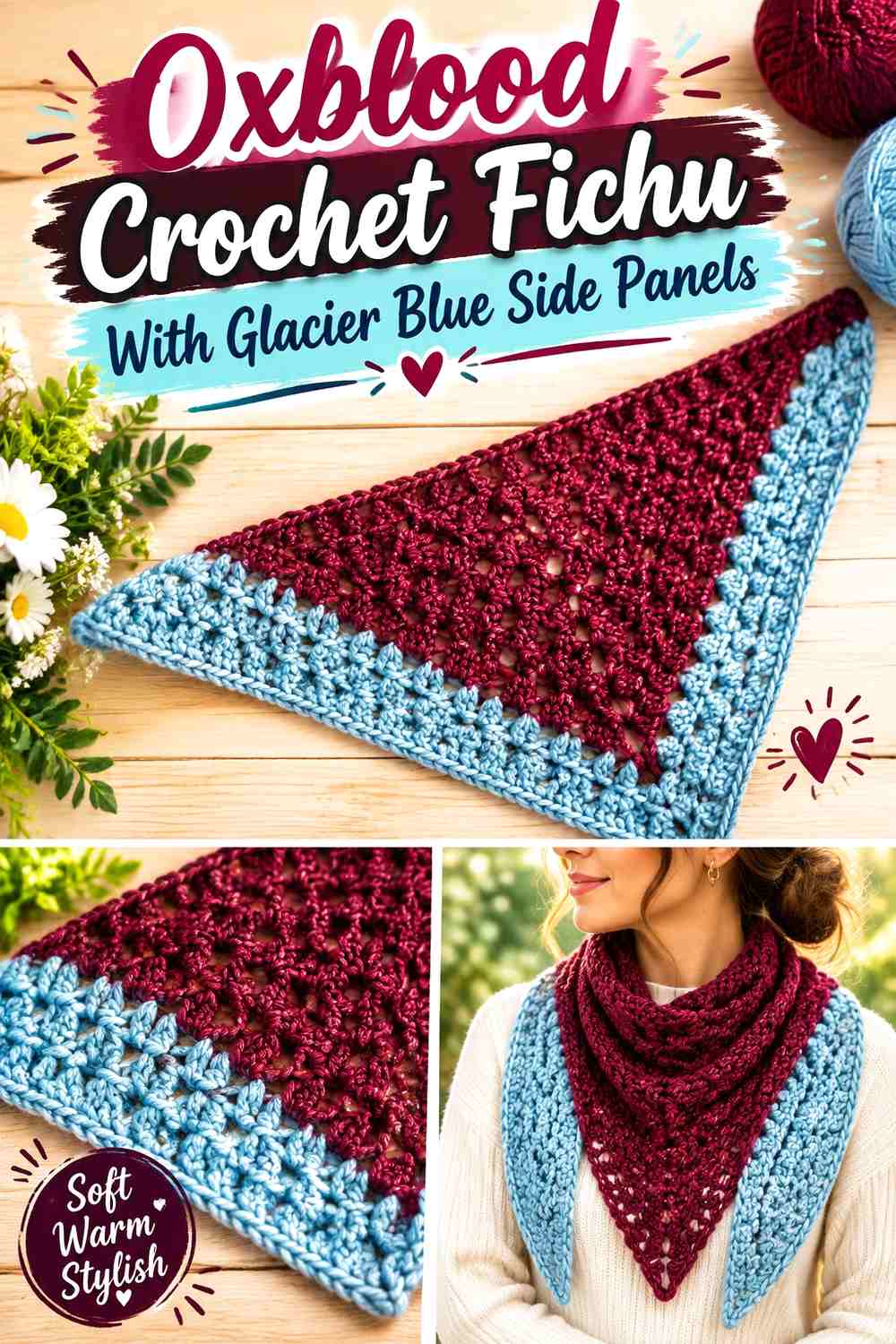
Use Oxblood through the center triangle and position Glacier Blue along the two side sections that travel over the shoulders. This keeps the deepest shade at the front while allowing the lighter color to appear as the fichu wraps around the body.
The Glacier Blue side panels should be broad enough to remain visible from a slight front angle rather than disappearing completely behind the shoulders.
Glacier Blue Side Panels Need Enough Width Beside Oxblood
Check the fichu while worn because a flat triangle can overstate how much of the side color will remain visible. Increase the visual width before finishing if the blue vanishes entirely around the shoulders.
Keep the two side areas similar unless intentional asymmetry is part of the styling.
Oxblood Should Stay Connected Through the Glacier Blue Shoulder Sections
Maintain a broad Oxblood center from neckline to point so the fichu retains one strong central axis. Avoid inserting extra Glacier Blue motifs into that field if the side panels are meant to be the only major light-colored blocks.
This creates a clear front-versus-shoulder color distinction.
Creator Credit: Blossom Crochet
13. Glacier Blue Granny Crochet Fichu With Oxblood Outer Rounds
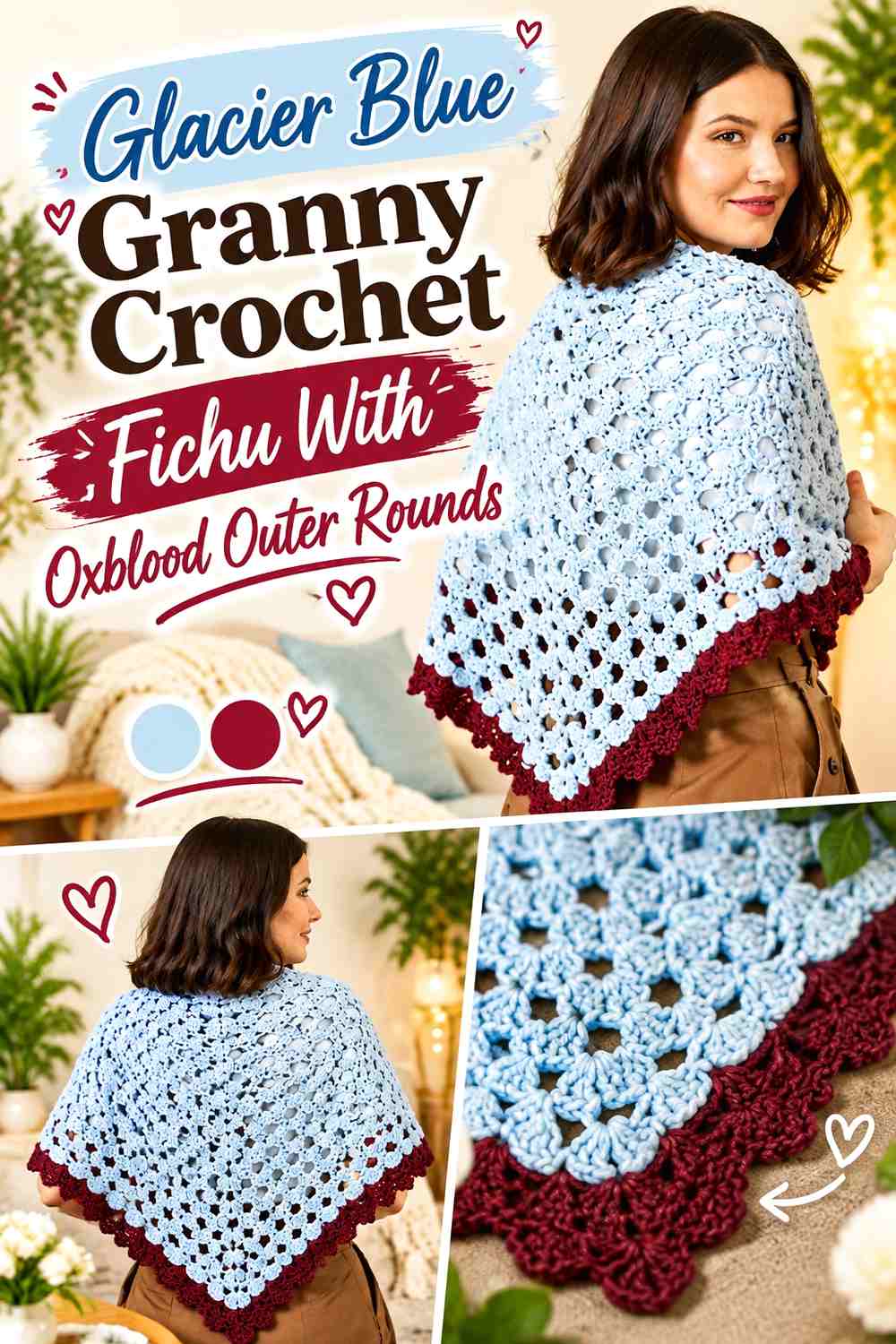
Use Glacier Blue through the inner triangle and switch to Oxblood in the outermost granny-style sections. This creates a gradual structural frame without alternating colors in every cluster.
For a smaller fichu adaptation, pay attention to scale: too many Oxblood outer sections can make the dark border occupy most of the finished piece.
Oxblood Outer Rounds Can Strengthen a Glacier Blue Granny Triangle
Let Oxblood appear only after enough Glacier Blue has established the inner field. The outer dark section can then emphasize the triangle shape instead of dividing it into many equal stripes.
At the center point, check that Oxblood does not build into a visually oversized dark corner.
Glacier Blue Should Fill Enough Granny Texture Before Oxblood Begins
Preserve a substantial inner area so the lighter color remains meaningful. This also keeps the repeated cluster texture readable without constant color interruption.
If the neckline needs finishing, Glacier Blue can maintain continuity with the center rather than adding another Oxblood band.
Creator Credit: The Crochet Crowd
14. Oxblood Pointed Crochet Fichu With Glacier Blue Shoulder Edges
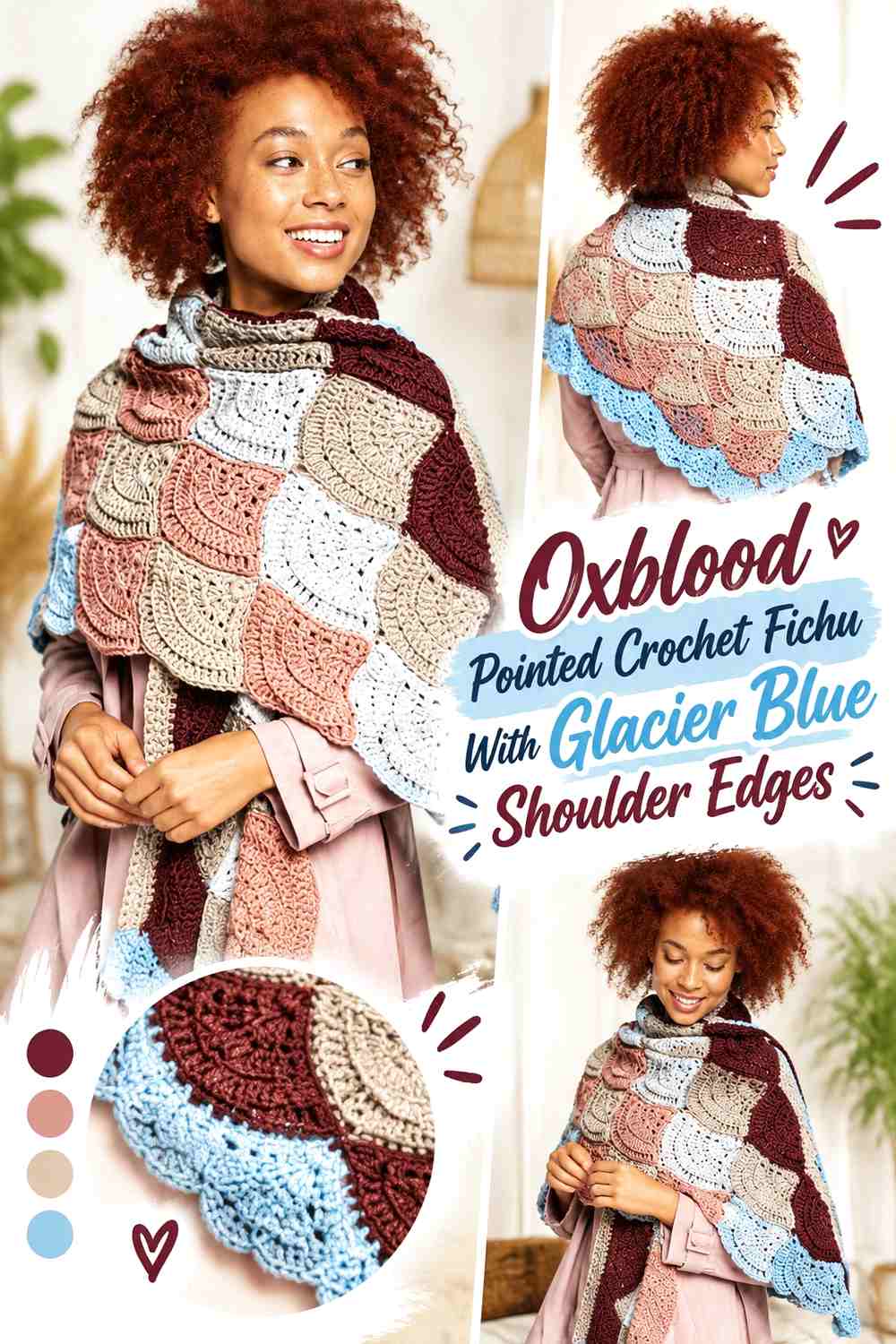
Let Oxblood cover the center and point while Glacier Blue appears only along the upper side edges where the fichu crosses the shoulders. This keeps the lower front dramatic but introduces a lighter line around the upper silhouette.
Unlike full framing, the blue does not continue around the bottom point, so the Oxblood front remains uninterrupted.
Glacier Blue Can Define the Oxblood Fichu Across the Shoulders
Use Glacier Blue where the edges are most visible beside the neckline and upper arms. A clean upper outline can help distinguish the fichu from a similarly dark garment underneath.
Stop the blue deliberately before it reaches the lower point rather than letting it taper away inconsistently.
Oxblood Should Carry the Front Point Below Glacier Blue Edges
Keep the center and lowest triangle fully Oxblood so the downward shape remains the strongest dark feature.
This arrangement can work particularly well with a simple center because the unusual partial border already provides a clear color decision.
Creator Credit: Yarnspirations
15. Glacier Blue and Oxblood Split-Color Crochet Poetcore Fichu
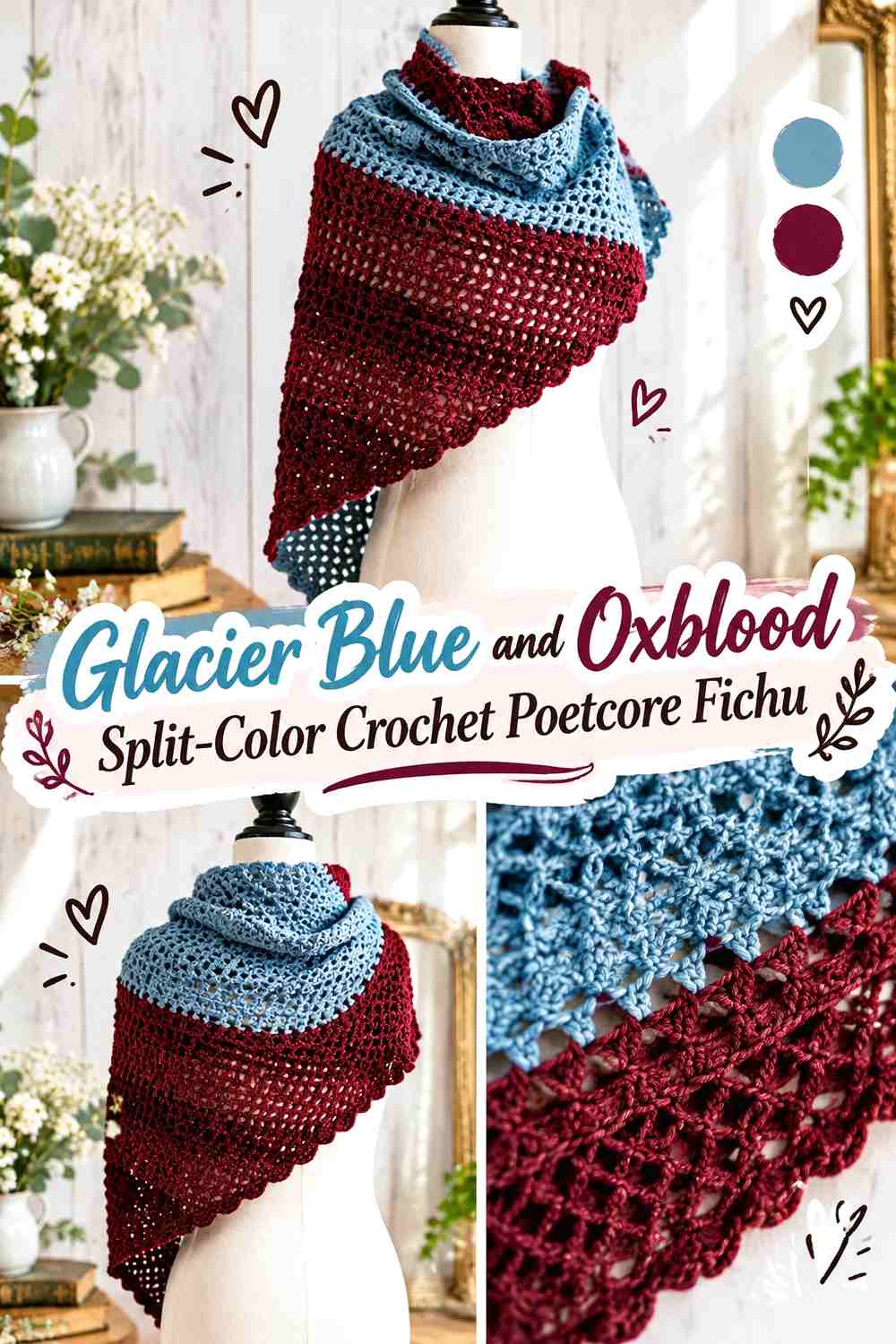
Divide the fichu into two substantial color fields, with Glacier Blue on one side and Oxblood on the other. This gives the two shades the most equal visual roles and creates an intentionally asymmetric poetcore accessory.
Because the center division runs through a prominent triangular shape, alignment matters. Decide whether the split follows the center line or uses an intentional diagonal before beginning the color layout.
Glacier Blue Should Hold a Clear Half Beside Oxblood
Give Glacier Blue enough uninterrupted surface to remain an equal partner rather than a narrow side panel. If the fichu drapes asymmetrically, check how much blue remains visible after one side falls farther over the shoulder.
A centered split usually creates the most balanced two-color result.
Oxblood Needs a Clean Boundary Against Glacier Blue
Keep the transition visually deliberate from neckline toward the point. A wavering boundary can look accidental on a simple triangular accessory unless the irregularity is clearly part of the stitch design.
Use one-color edging or a restrained continuation of the split rather than introducing a third visual division around the perimeter.
Creator Credit: Rich Textures Crochet
Comparing Glacier Blue and Oxblood Poetcore Fichu Directions
For the strongest Glacier Blue dominance, choose an Oxblood neckline, dark front point, scalloped edge, corner motifs, or lower bands. These layouts preserve a broad light field while concentrating Oxblood where the fichu naturally attracts attention.
For a more Oxblood-led fichu, use Glacier Blue edging, a neck band, side panels, shoulder borders, or front ties. A relatively small amount of Glacier Blue can remain noticeable because it sits against the deeper central field.
If the fichu uses delicate lace, simpler color placement usually keeps the openwork easier to appreciate. Solid or granny-textured triangles can support stronger bands, framed centers, or split-color layouts without losing their stitch structure.
For the most romantic or softly layered poetcore direction, a light Glacier Blue shoulder field with a controlled Oxblood point or border keeps the accessory airy while retaining a deep accent. For a darker, more dramatic interpretation, reverse the hierarchy and use Glacier Blue only to define the neckline or lace edge.
Conclusion
Glacier Blue and Oxblood can make a crochet fichu feel airy and delicate, dark and dramatic, formally framed, or intentionally asymmetric depending on where each shade sits.
Use Glacier Blue across the shoulders when you want the fichu to remain visually light and let Oxblood define the neckline, front point, motifs, or lower border. Reverse the relationship for an Oxblood-led accessory with Glacier Blue ties, lace edging, or shoulder sections.
Before finishing the palette, drape the fichu in the way you actually plan to wear it. Check how much of each side remains visible, whether the center point still appears centered, and how ties or borders change once the triangle curves around the shoulders. Use the credited tutorials for the triangle scarf or shawl construction they demonstrate, and verify the finished scale before adapting a larger shawl into a shorter fichu-style layer.
Frequently Asked Questions
Should Glacier Blue or Oxblood dominate a crochet poetcore fichu?
Either can lead. Glacier Blue creates a lighter shoulder field that allows Oxblood to emphasize the point, neckline, or edging. Oxblood creates a deeper main triangle while smaller Glacier Blue details can brighten the face-framing areas.
Where should Oxblood go if I want the fichu to feel light rather than heavy?
Keep Oxblood concentrated at the front point, neckline, narrow border, or a few corner motifs instead of covering the entire shoulder field. A broad Glacier Blue center preserves more light visual space.
How can I tell whether Glacier Blue and Oxblood have enough contrast for lace edging?
Compare the actual yarns side by side and consider taking a grayscale photo. If the colors remain clearly different in lightness, narrow lace or picot edging should separate more easily. If they look similar, use a broader border or larger color section.
Can a triangle shawl tutorial be adapted into a Glacier Blue and Oxblood fichu?
A triangle-shawl or scarf tutorial can provide a useful construction reference, but the finished scale may be much larger than a fichu. Check the creator’s construction and finished dimensions where available, then plan the shoulder coverage you actually want rather than assuming every shawl automatically fits like a small fichu.
Should Glacier Blue and Oxblood ties match the main fichu color?
They do not have to. Contrasting ties can make the center closure more noticeable, while matching ties keep attention on the body or border. Remember that tied ends concentrate color in one place, so judge the palette with the ties fastened as well as loose.
How do I keep Glacier Blue and Oxblood from making a lace fichu look too busy?
Choose one main contrast feature. A lace body may need only an Oxblood neckline, point, or outer edge. Avoid combining heavy striping, multiple motifs, contrasting ties, and several borders unless you deliberately want a highly decorative result.
Can I replace Glacier Blue or Oxblood with similar colors?
Yes. Preserve the role each shade plays rather than matching the name exactly. For Glacier Blue, choose a lighter or quieter color that can keep lace, shoulder panels, or borders visually open. For Oxblood, choose a deeper accent that remains distinct enough to define points, necklines, motifs, or frames.