8 Crochet Turtleneck Sweater Ideas for Layering, Texture, and Fit
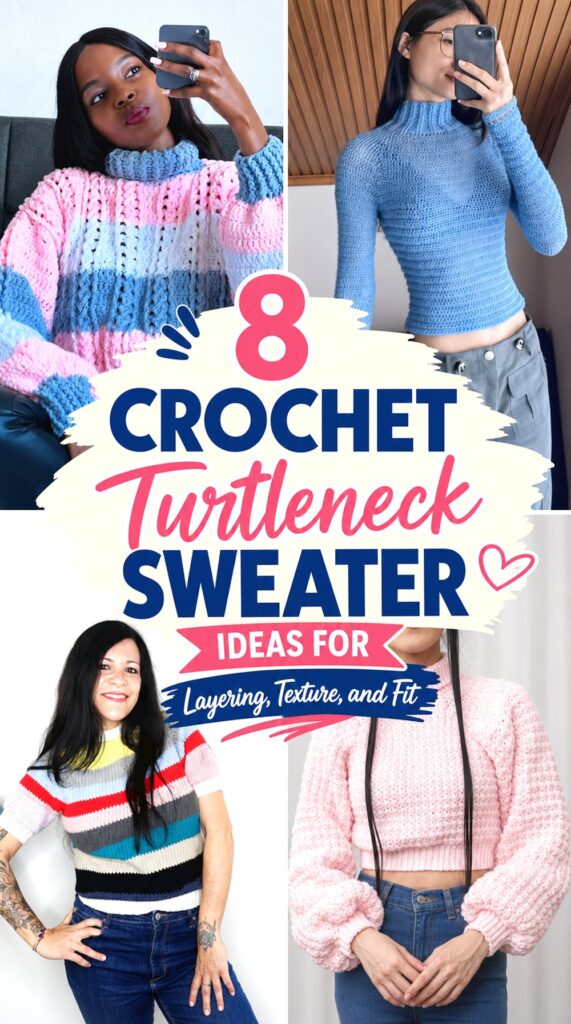
Crochet turtleneck sweaters can vary more than they first appear. Some focus on a full long-sleeve pullover shape, while others use a cropped length, a sleeveless body, a fluffy roll neck, or a stronger surface texture. This collection gives readers a practical way to compare the neck shape, sleeve style, fit, and overall use before choosing a tutorial.
The selected projects include fitted and oversized shapes, smoother and more textured finishes, and options that may work for layering over different base pieces. Instead of treating every high-neck sweater the same way, this list separates them by the detail that matters most: coverage, movement, construction style, and finished silhouette.
Quick List
- Crochet Classic Size-Range Turtleneck Sweater
- Crochet Fluffy Roll-Neck Turtleneck Jumper
- Crochet Oversized Cable Turtleneck Sweater
- Crochet Simple Roll-Neck Turtleneck Pullover
- Crochet Sleeveless Top-Down Turtleneck Sweater
- Crochet Ribbed Panel Turtleneck Sweater
- Crochet Bulky Oversized Turtleneck Sweater
- Crochet Balloon Sleeve Turtleneck Sweater
Why These Crochet Turtleneck Sweater Projects Are Worth Making
Turtleneck sweaters are useful projects when the neckline is part of the design rather than an afterthought. A higher neck changes how the garment layers, how much coverage it gives, and how visible the collar becomes under coats, jackets, and vests. That makes fit information especially important, because a neck that looks relaxed on one person may sit differently on another.
These ideas also show how sleeve shape and body length can change the whole feel of a sweater. A sleeveless version may be easier to layer, a bulky oversized version creates more volume, and a cable-textured sweater puts the surface detail at the center of the design.
Crochet Classic Size Range Turtleneck Sweater
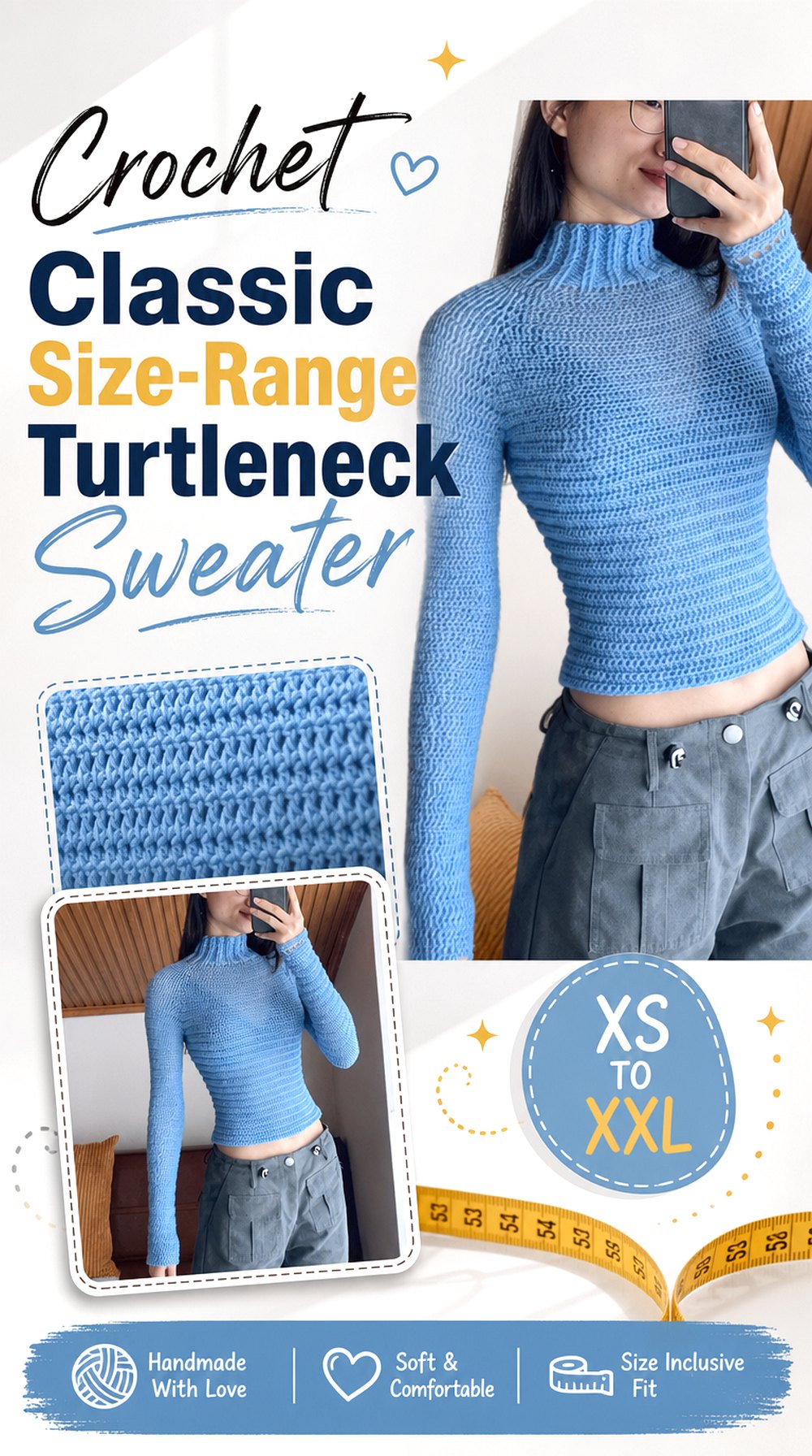
A classic pullover is a practical starting point for readers who want a recognizable crochet turtleneck sweater with a full garment shape. This tutorial is presented with a size range from XS to XXL, so it may suit readers who prefer to begin by comparing listed sizing rather than adapting a one-size project. The high neckline keeps the sweater category clear, while the long-sleeve pullover format makes it different from the sleeveless and cropped options later in the list.
Review the Size Range
The listed XS to XXL range is the main planning detail for this sweater. Readers should compare the creator’s size information with their own body measurements and preferred ease before choosing a size. A turtleneck pullover needs attention at the bust, shoulder, sleeve, and neck areas, because all of those points affect how the finished garment sits when worn.
Look at the Neckline Shape
The turtleneck is the feature that separates this from a standard crochet pullover. Readers should look closely at how tall the neck appears, whether it folds or stands, and how it connects to the body. Neck height can change the styling of the whole sweater, especially if the garment will be worn under a coat or layered with scarves.
Check What Is Included
Because garment tutorials vary in how they present sizing, materials, and written support, it is worth reviewing the full guide before buying yarn. Check whether the creator includes measurements, gauge notes, and any linked pattern information. That helps readers know whether they can follow the video alone or would rather use the written support alongside it.
Crochet Fluffy Roll Neck Turtleneck Jumper
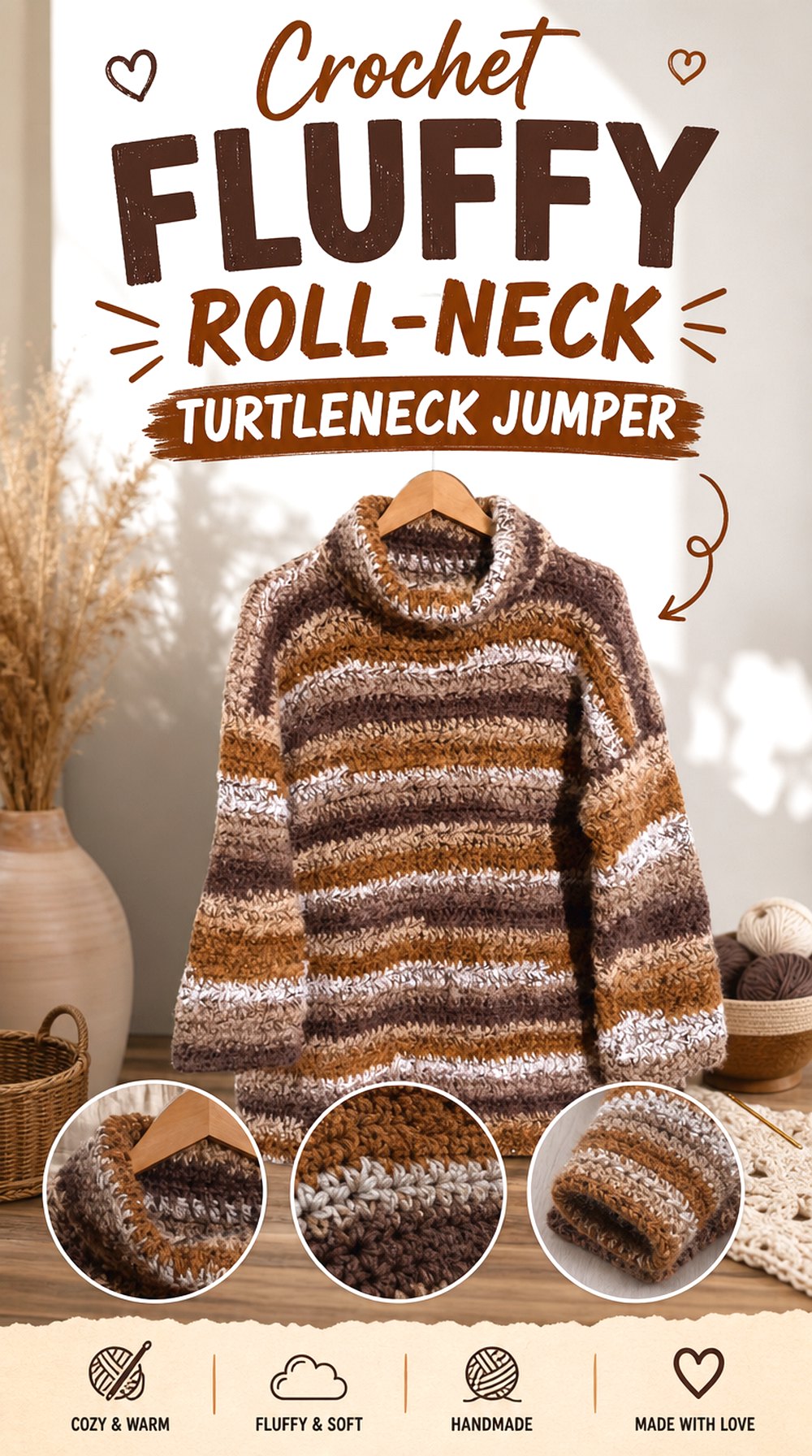
A fluffy roll-neck jumper has a softer visual texture than a smoother high-neck sweater. The title points to a roll-neck shape and a fluffy finish, making this option useful for readers who want the collar to look cozy and rounded rather than sharply structured. It also adds a jumper-style choice to the list, which helps separate it from the classic size-range pullover and the more defined cable sweater.
Think About Texture and Bulk
A fluffy surface can make a sweater look fuller even when the shape is simple. Readers should consider whether they want that softer volume around the neck and body, especially if the jumper will be worn under outerwear. Texture also affects stitch visibility, so it is useful to check how clearly the creator demonstrates the fabric and joining areas.
Confirm the Finished Fit
Roll-neck jumpers can appear relaxed, but the finished fit still matters at the shoulders, sleeves, and lower edge. Before starting, readers should check whether the tutorial gives measurements or fit guidance. A fluffy jumper may look different on various body shapes, so comparing the finished view with a similar sweater already owned can help with expectations.
Watch the Collar Area Carefully
The collar is the detail that defines this project. A roll neck needs enough height and clean shaping to sit intentionally, so viewers should slow down when the guide reaches that section. It is also helpful to check how the neckline behaves in the finished view, especially whether it folds softly or stands closer to the neck.
Original Tutorial and Creator Credit
Creator: Lucky Platypus Crochet
Crochet Oversized Cable Turtleneck Sweater
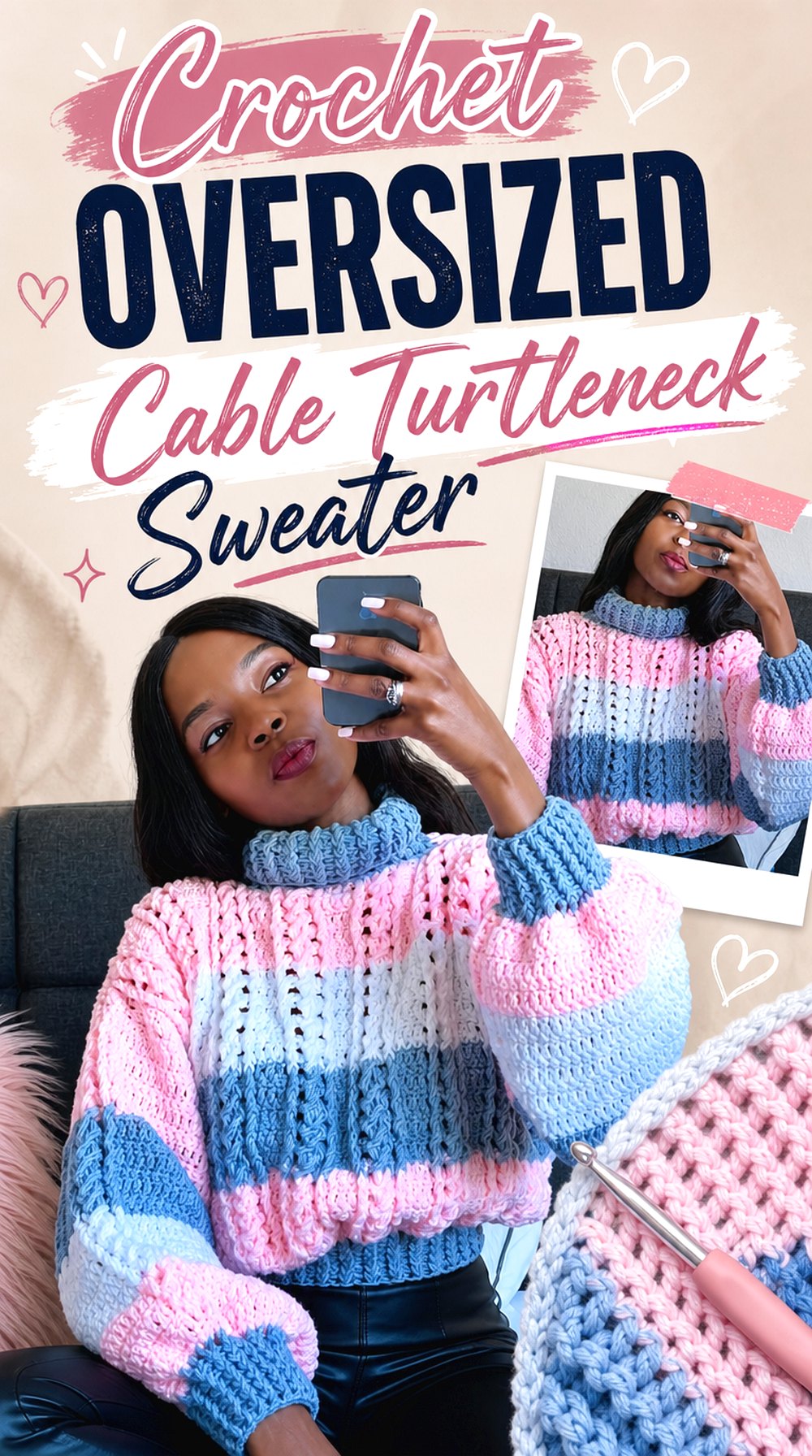
Raised cable-style texture gives this oversized turtleneck a stronger surface focus than the smoother pullovers. The project is described as an oversized turtle neck cable stitch sweater, and the creator notes that shoulder-to-shoulder measurements are needed. That makes it a useful pick for readers who want a sweater where texture, size planning, and high-neck coverage all matter at the same time.
Let the Cable Texture Lead
The cable detail is the main visual reason to choose this project. Readers should think about where they want the texture to draw attention and how visible it will be in their chosen color. Solid or lightly varied yarns often make raised texture easier to see, but the creator’s own material guidance should be checked before making substitutions.
Measure the Shoulder Area
The source specifically mentions shoulder-to-shoulder measurements, so this is not a detail to skip. Oversized does not mean the shoulder fit can be ignored. If the upper body width is off, the sleeves and neckline may not sit as intended, so readers should record their measurements before following the sizing approach.
Compare the Shape as You Work
Cable texture and oversized shaping can make progress harder to judge from a single close-up view. It helps to pause at major shape changes and compare the developing piece with the finished garment view. This keeps the focus on the overall sweater shape, not only the surface stitch detail.
Original Tutorial and Creator Credit
Creator: AC Crochets
Crochet Simple Roll Neck Turtleneck Pullover
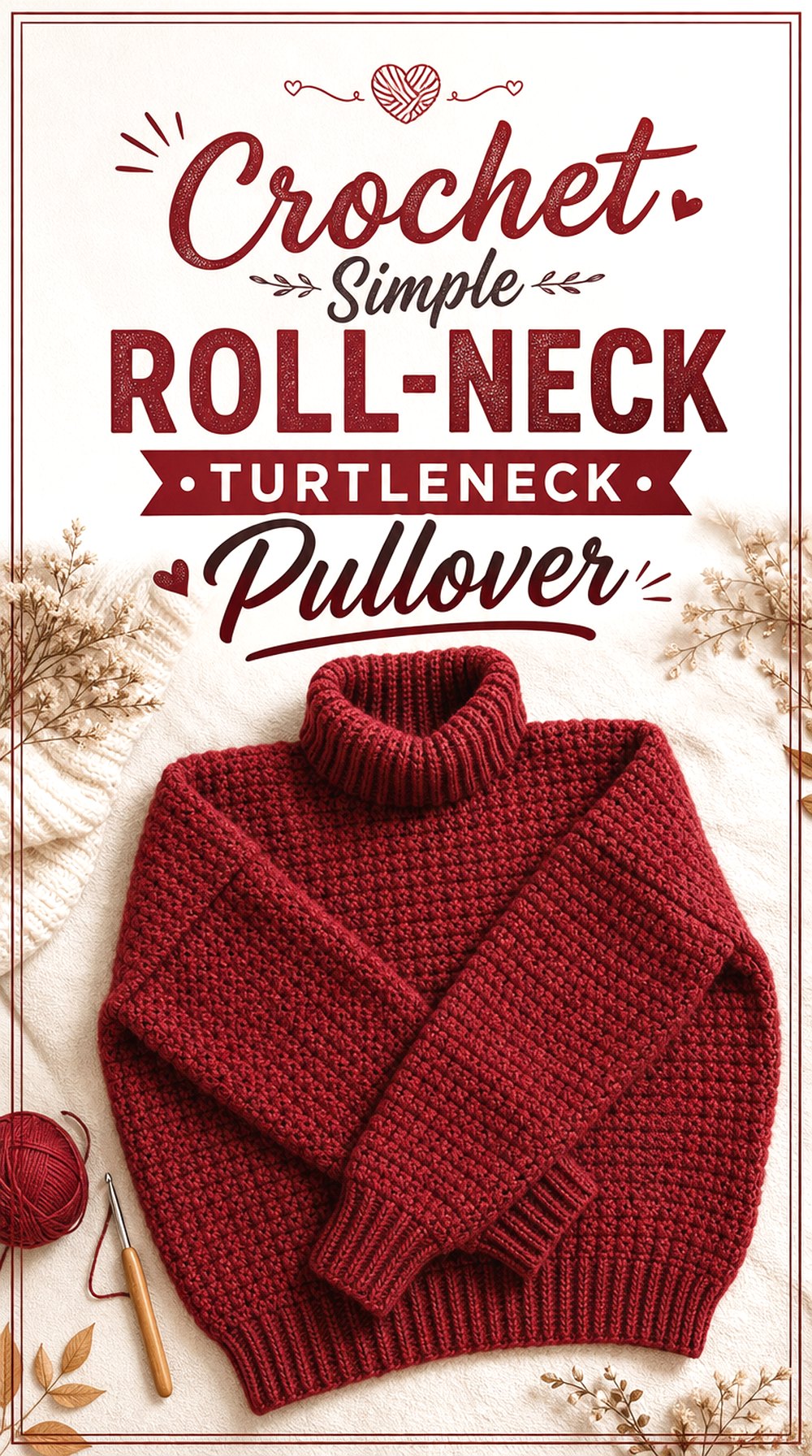
This roll-neck sweater has a straightforward high-collar focus and works well in the collection as a cleaner pullover option. It differs from the fluffy jumper because the emphasis is on the roll-neck sweater shape itself rather than a fuzzy surface. For readers comparing turtleneck styles, this project offers a more direct way to study the collar, body, and sleeve relationship without the added drama of cables or balloon sleeves.
Check the Roll-Neck Height
A roll-neck sweater depends on the collar looking intentional. Readers should watch for how tall the neck is in the finished garment and how it sits against the body. If the collar is meant to fold, the finished height matters even more, because too little or too much height can change the look of the neckline.
Review the Full Guide First
Before choosing yarn or size, it is helpful to preview the whole tutorial and note where the body, sleeves, and neck are handled. A simple-looking pullover can still include important shaping or joining decisions. Reviewing the guide first also helps readers decide whether the pace and camera angle match the way they prefer to learn.
Consider Layering Needs
A cleaner roll-neck pullover may work well as a visible top layer, but readers should still think about what they plan to wear underneath. The neck and sleeves should leave enough room for comfort without losing the intended shape. The tutorial’s own fit notes are the safest place to confirm those details.
Original Tutorial and Creator Credit
Creator: Fully Crochet
Crochet Sleeveless Top Down Turtleneck Sweater
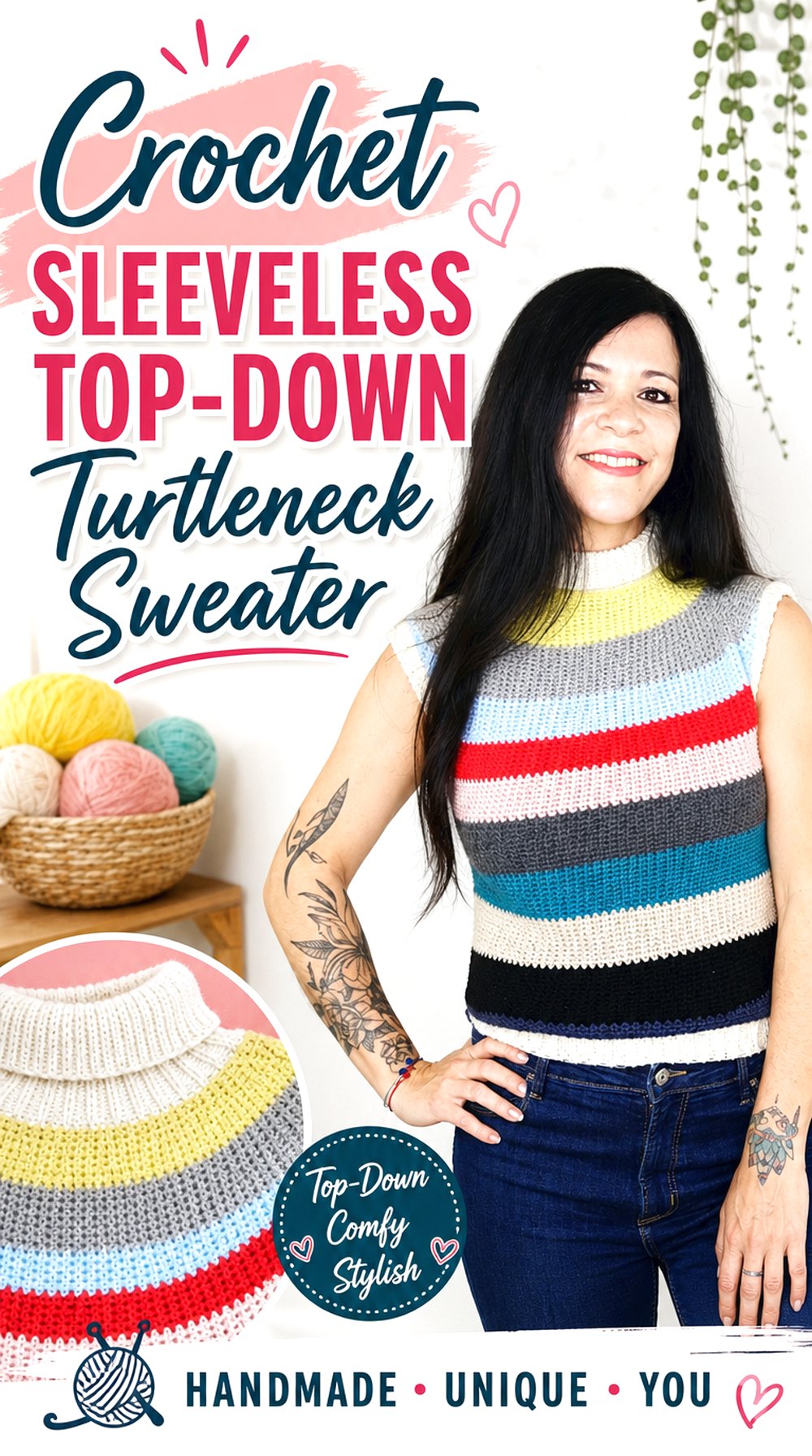
The sleeveless shape makes this turtleneck sweater stand apart from the long-sleeve options. The tutorial is described as a top-down, seamless sleeveless crochet turtleneck sweater, which gives readers a different construction style to consider. This is a useful project for someone who likes the high-neck look but wants open armholes for layering over shirts, fitted tops, or dresses instead of making a full sleeve garment.
Watch the Armhole Fit
With a sleeveless turtleneck, the armholes are just as important as the neck. Readers should check how closely the finished armholes sit and whether the tutorial explains sizing around that area. A clean armhole can make the sweater easier to layer, while an unclear fit may need extra attention before committing to materials.
Consider the Top-Down Structure
Top-down construction can help readers see the garment shape develop from the neckline downward. The source describes this sweater as top down and seamless, so viewers should pay attention to the early shaping stages. This is especially helpful for understanding how the neck, shoulders, and upper body relate before the rest of the garment is completed.
Plan What to Wear Underneath
A sleeveless turtleneck often depends on the base layer. Readers should think about sleeve length, color contrast, and neckline coverage underneath the finished sweater. Since the project already has a high neck, the underlayer should not compete with that area unless the layered look is intentional.
Original Tutorial and Creator Credit
Creator: Crochet Maniak
Crochet Ribbed Panel Turtleneck Sweater
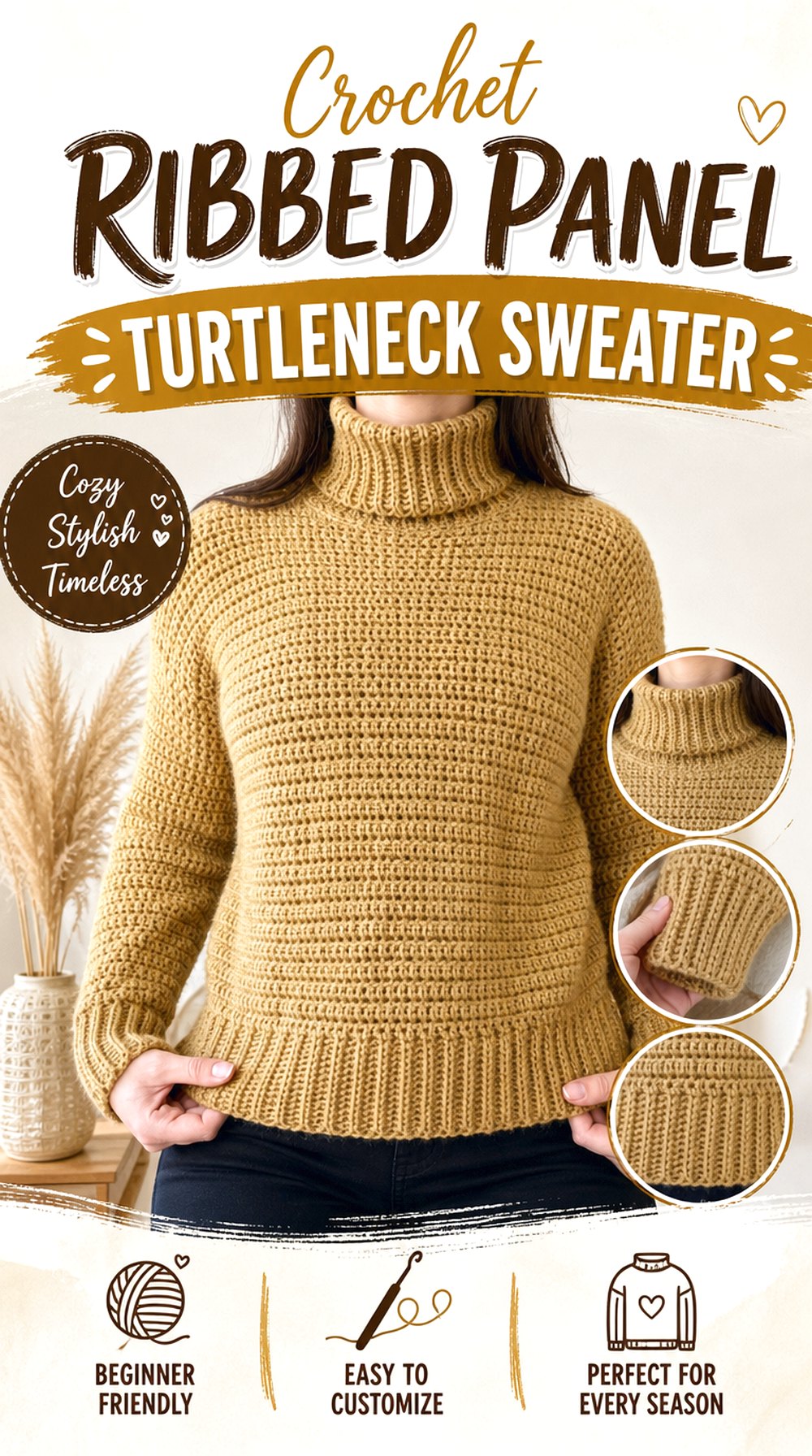
This turtleneck sweater tutorial includes clear garment sections such as body ribbing, front and back panels, cuffs, sleeves, sleeve attachment, and neckline work in the listed chapters. That makes it a helpful option for readers who want to think through a sweater as separate parts coming together. It is different from the seamless sleeveless project because the planning focus shifts toward panels, cuffs, and finishing.
Watch for Separate Pieces
The chapter list points to front and back panels, cuffs, sleeves, and attachment sections. Readers should keep track of each piece and how it relates to the final garment. Separate sections can make a sweater easier to understand in stages, but they also require careful attention to orientation and matching edges.
Review the Sleeve Finish
Sleeves are a major part of this design’s finished balance. The tutorial includes both cuffs and sleeves, so readers should look at how the cuff area changes the look of the arm. A defined cuff can make the sweater feel neater at the wrist, especially when paired with a high neckline.
Pause at the Neckline Section
The neckline comes later in the listed process, so it is worth treating it as a finishing detail rather than an afterthought. Readers should slow down when the guide reaches the neck and compare the result with the finished sweater. The turtleneck needs to connect cleanly to the body for the garment to look complete.
Original Tutorial and Creator Credit
Creator: Loopy Mountain Crochet
Crochet Bulky Oversized Turtleneck Sweater
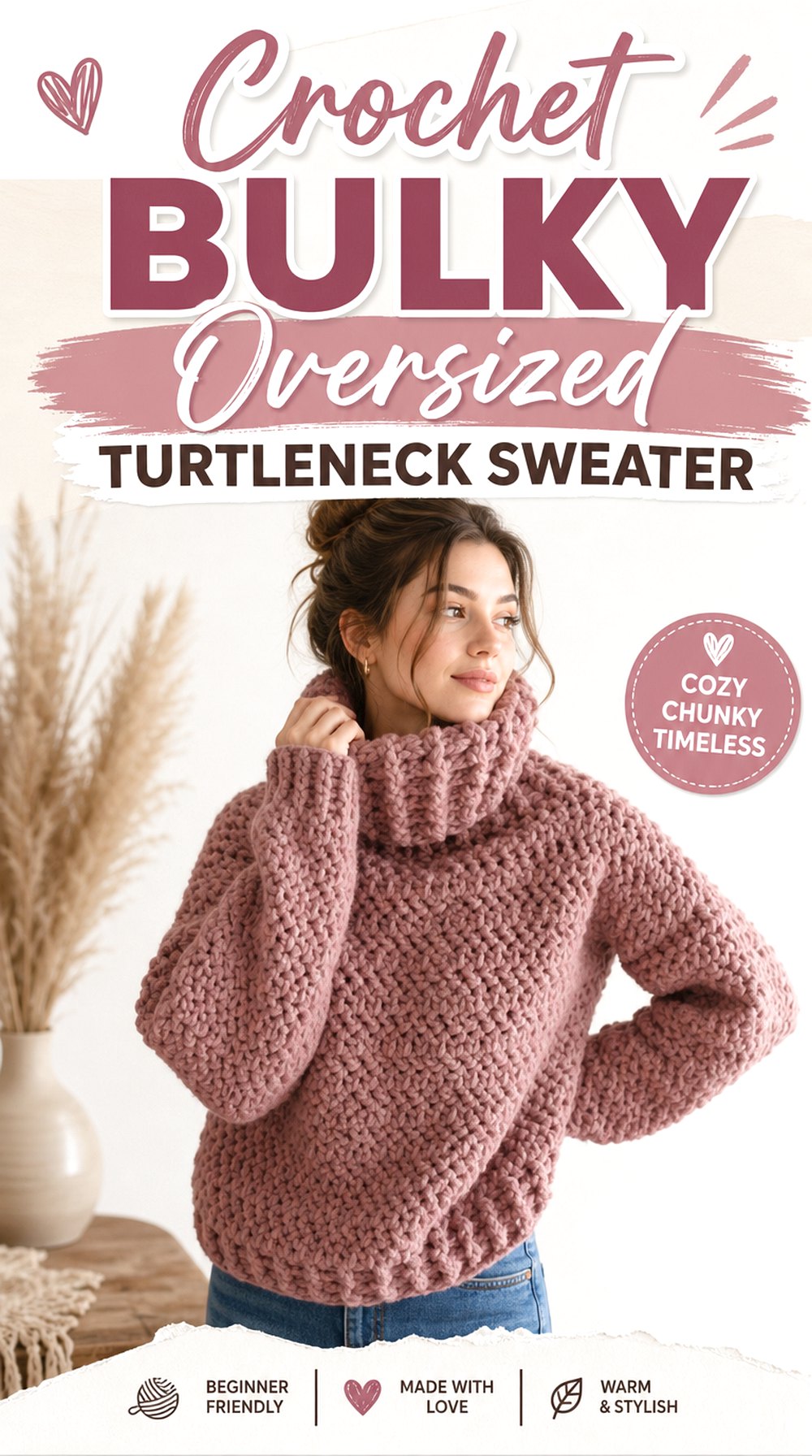
This oversized turtleneck sweater is described with bulky yarn and a large hook in the source description, giving it a heavier visual direction than the classic and ribbed-panel choices. The project may interest readers who want a roomier sweater shape with a strong cold-season look. It also adds a different scale to the list, because bulkier yarn can make the collar, body, and sleeves appear more substantial.
Think About Overall Volume
An oversized turtleneck already has extra presence, and bulky yarn can increase that effect. Readers should consider whether they want the sweater to feel roomy through the body and sleeves. It is also useful to compare the finished silhouette with outerwear plans, because a bulkier sweater may not layer under every jacket.
Confirm the Material Details
The source description lists bulky yarn and a larger hook, along with yarn amount information for a size small. Readers should still check the creator’s full material notes before buying supplies, especially if making another size. Yarn weight changes can affect drape, collar thickness, and the way the sweater hangs.
Check the Neck Comfort
A bulky turtleneck collar can look cozy, but it also takes up more space around the neck. Viewers should look at the finished collar from the front and side when possible. If the collar appears high or thick, that detail should be considered before choosing this over a lighter roll-neck option.
Original Tutorial and Creator Credit
Creator: Hey Carrie
Crochet Balloon Sleeve Turtleneck Sweater
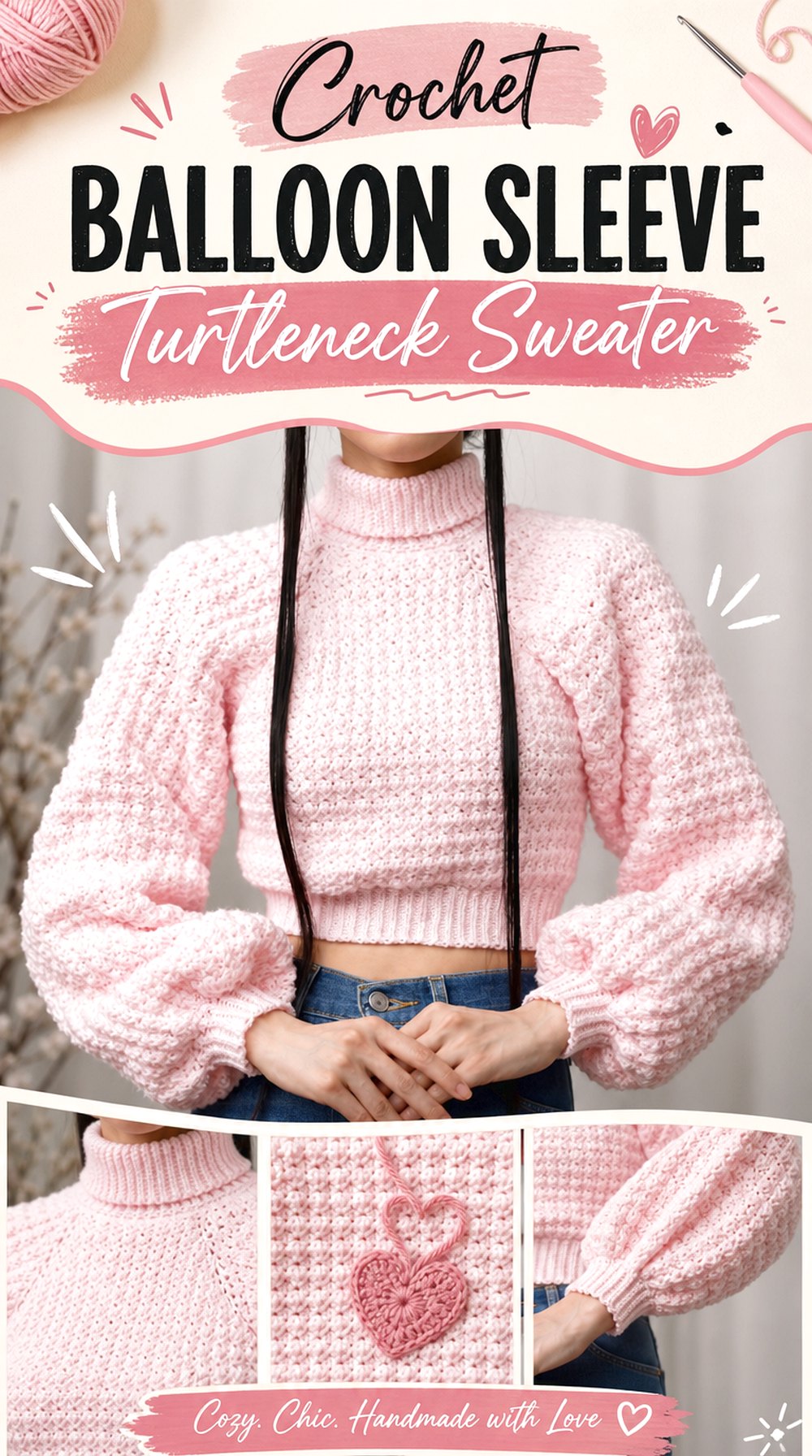
Balloon sleeves give this turtleneck sweater a different outline from the straighter sleeve options. The tutorial’s description lists a turtleneck section, sleeve increase and decrease sections, cuff work, and a bottom band, which suggests that the shaping details are central to the finished look. This project may suit readers who want the high-neck sweater category but prefer a more dramatic sleeve shape.
Focus on the Sleeve Shape
The balloon sleeve is the feature that makes this sweater stand out. Readers should look closely at where the sleeve becomes fuller and how it narrows again near the cuff. That shape affects the whole silhouette, so it is worth choosing this project only if the sleeve volume is part of the desired look.
Check the Cuff and Bottom Band
The listed sections include cuff length and bottom band length, which are important finishing areas. A defined cuff helps control the wider sleeve shape, while the bottom band affects where the sweater sits on the body. Readers should compare those areas with their preferred garment length and wrist fit.
Slow Down the Shaping Sections
Because the tutorial includes sleeve increase and decrease points, viewers should avoid rushing through those changes. Marking the stopping point or replaying the shaping sections can help keep both sleeves consistent. The goal is not to memorize the method, but to follow the creator’s exact instructions without losing the intended balloon shape.
Conclusion
These crochet turtleneck sweater ideas cover more than one kind of high-neck garment. Choose the classic size-range pullover for a familiar shape, the fluffy or roll-neck options for softer collar styling, the cable sweater for texture, or the sleeveless top-down version for layering without sleeves. The bulky oversized sweater gives the most volume, while the balloon sleeve design puts the focus on silhouette. Use the original tutorials for exact construction details, sizing notes, and material requirements before starting.
FAQs
How do I choose the right crochet turtleneck sweater tutorial?
Start with the part of the sweater that matters most to you: neckline height, sleeve shape, body length, or fit. Then check whether the creator provides the size range, measurements, gauge, and material details you need. A pretty finished sweater is not enough if the fit information does not match your planning needs.
Should a crochet turtleneck sweater be fitted or oversized?
That depends on the tutorial and how the sweater will be worn. A fitted turtleneck may layer more neatly under jackets, while an oversized version gives more visible volume. Compare the finished garment views with your own measurements and check whether the creator explains ease or sizing before choosing.
What should I confirm before changing yarn for a turtleneck sweater?
Confirm the yarn weight, hook size, gauge, and finished measurements from the creator’s information. Turtleneck sweaters are sensitive to fabric thickness because the collar sits close to the neck. A yarn change can affect drape, stretch, sleeve fit, and how bulky the neckline feels.
Are sleeveless crochet turtleneck sweaters useful for layering?
They can be, especially when the armholes and body fit are clearly shown. A sleeveless turtleneck may work over fitted tops or shirts, but readers should check armhole placement, garment length, and neckline height first. The underlayer should also be considered so the finished outfit feels balanced.
Can I sell a crochet turtleneck sweater made from a YouTube tutorial?
Do not assume selling is allowed. Check the creator’s pattern terms, video description, linked written pattern, and any license wording before making items for sale. Some creators allow finished-item sales, while others limit use. Local labeling, fiber, and business requirements may also apply.