A crochet top handle bag can be anything from a compact structured purse with rigid hardware to a soft granny-square handbag with crocheted handles. The important differences are not simply color or stitch pattern. Handle attachment, opening shape, base construction, fabric density, lining, closure, and the amount of stretch all affect how the finished bag looks and functions.

These 22 ideas cover rigid wood and bamboo handles, metal hardware, crocheted hand handles, Japanese knot closures, raffia, T-shirt yarn, granny squares, and more architectural handbag shapes. For crochet bags, especially useful comparison points include stretch, handle reinforcement, opening width, lining, base shape, and how well the fabric retains its form.
Quick List
- Structured Ribbed Crochet Top Handle Handbag
- Chunky Wooden-Handle Crochet Tote Bag
- Macramé Crochet Handbag with Built-In Hand Handles
- Ribbon Crochet Clutch with a Short Carry Handle
- Round-Wood-Handle Crochet Handbag
- Raffia Crochet Handbag with Jute Top Handles
- Raised-Flower Crochet Bag with Bamboo Handles
- Folded-Stitch Crochet Handbag with Metal Handles
- Framed Crochet Top Handle Satchel
- Sunflower Granny Square Crochet Handbag
- Star-Stitch Crochet Handbag with Attached Handles
- Classic Textured Crochet Handbag Purse
- Granny Square Crochet Handbag Tote
- Japanese-Style Crochet Hand Bag with Ring Handle
- T-Shirt Yarn Crochet Handbag with Twin Handles
- Japanese Knot Crochet Handbag
- Granny-Style Crochet Tote with Bamboo Handles
- Embossed Crochet Handbag with Rigid Handles
- Compact Crochet Bag with a Rigid Wooden Handle
- Chunky Crochet Handbag with Wooden Handles
- Basket-Weave Crochet Mod Tote with Handles
- Simple Crochet Handbag for Everyday Carry
Choose the Handle Before You Commit to the Bag Body
On a top handle bag, the handle is part of the structure rather than a finishing detail. A rigid round or rectangular handle controls the width of the upper edge and can pull the fabric inward where it attaches. Crocheted handles allow more freedom, but their stretch has to be considered before deciding how long or narrow they should be.
Compare the handle opening with the widest part of your hand and think about how the bag will actually be carried. A beautiful small ring may suit a compact purse but feel awkward on a larger tote. When substituting handles, confirm the attachment area in the tutorial before assuming that a different shape will fit the same bag body.
Yarn Choice Changes Both Drape and Shape Retention
Dense crochet fabric does not automatically mean a rigid bag. Fiber, yarn construction, stitch density, bag size, and the weight of the handle hardware all contribute to how much the finished piece stretches. T-shirt yarn and heavy cord can create substantial fabric, while raffia can give a lighter, drier structure. Softer yarn can make the same basic silhouette relax more noticeably.
Before substituting yarn, compare the resulting fabric rather than relying only on the label weight. Crochet a small sample and hold it vertically. If it elongates easily, a tall bag or unsupported handle area may need more planning. If it feels extremely stiff, consider whether thick seams and gathered areas will become bulky.
Plan the Opening, Lining, and Reinforcement Together
A top handle can look polished while the opening underneath remains the most important functional feature. Open totes provide quick access, whereas magnetic buttons, spring frames, or structured flaps change both security and the way the upper edge must behave.
Lining is particularly useful when the crochet fabric contains openings, stretches significantly, or will carry small items that could poke through. It can also help isolate the contents from decorative stitches, although a lining alone should not be treated as a guarantee that a bag can support heavy loads. If hardware, plastic canvas, a frame, or a clasp is important to your version, verify when the creator installs it before changing the bag dimensions.
Structured Ribbed Crochet Top Handle Handbag
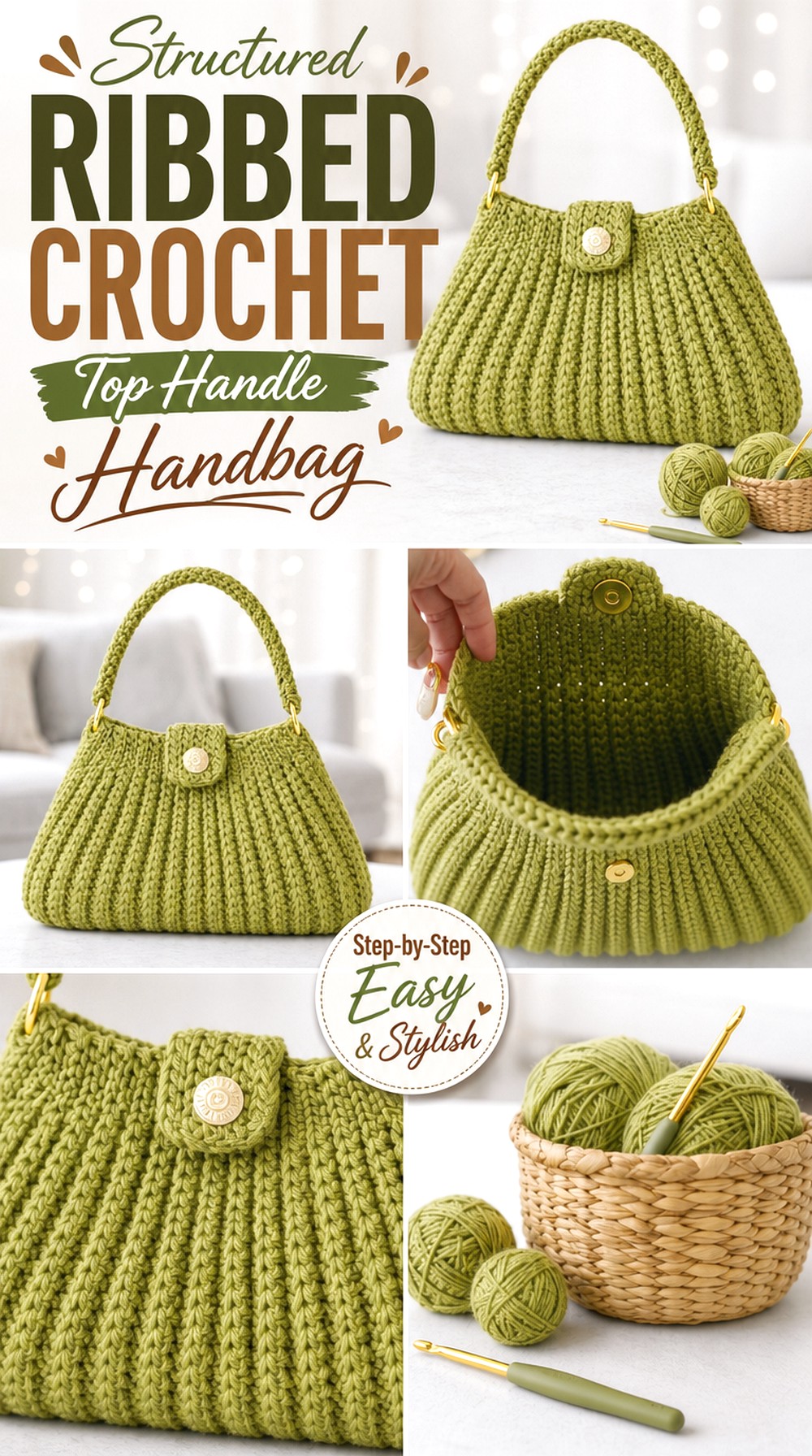
This compact handbag puts the short top handle at the center of the design rather than treating it as an added strap. The tutorial shows a structured-looking body with pronounced vertical ribbing and a button closure, creating a more tailored silhouette than a soft tote. It is a useful direction when you want crochet to read as a small handbag instead of a market bag.
The biggest planning decision is how much firmness you want. A highly flexible substitute yarn may soften the ribbed walls, while an extremely stiff yarn can make the gathered transition toward the handle harder to shape neatly.
Ribbing Can Make a Soft Bag Look More Architectural
Vertical texture draws the eye from the base toward the handle and can visually lengthen a small handbag. Check whether your yarn keeps the ribs crisp after the fabric is handled. If the ridges flatten easily, the finished silhouette may look softer than the tutorial sample even when the overall dimensions are similar.
Protect the Handle Area from Uneven Stretch
A narrow top handle concentrates movement in a relatively small section of crochet. Before finishing, hold the empty bag by the handle and look at both attachment points. They should pull evenly. If one side distorts more, resolve the tension or attachment imbalance before adding decorative finishing.
Structured Ribbed Crochet Top Handle Handbag
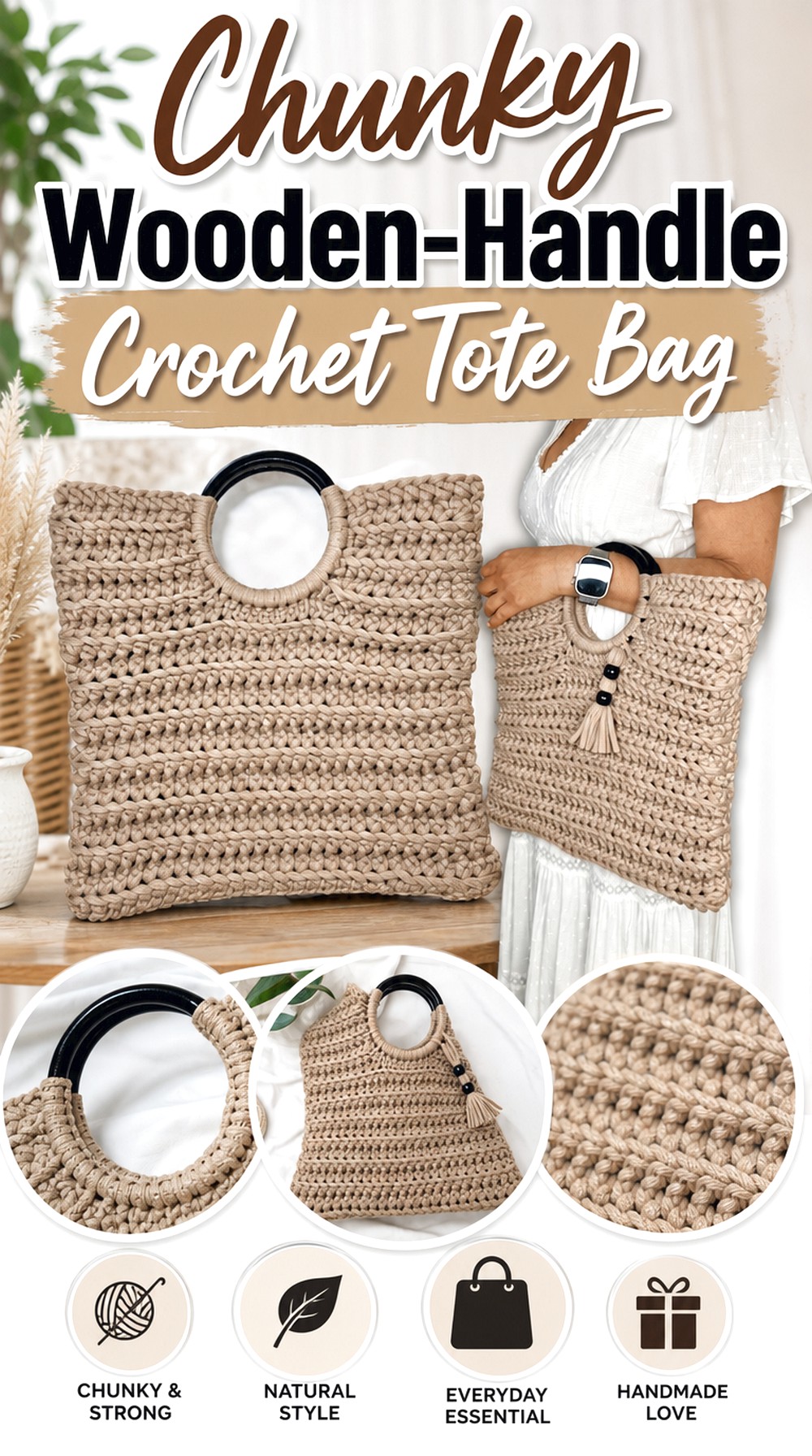
Rigid wooden handles completely change the character of this chunky tote. Mermaids and Hooks builds the Delaney Tote as two pieces associated with the handles, using a super-bulky construction that gives the bag a substantial, graphic look. The large body distinguishes it from the smaller ring-handle purses elsewhere in this list.
This style makes sense when you want a roomy hand-carried bag and like the contrast between soft crochet and smooth hardware. Because the handles cannot stretch with the fabric, pay particular attention to the transition where the crocheted panels meet the rigid wood.
Oversized Wooden Handles Need Visual Balance
A large handle can overwhelm a shallow bag, while a very tall body can make the handle look undersized. If you change the proportions, evaluate the handle and panel together rather than resizing the crochet in isolation. Lay the work flat beneath the handles periodically to judge the relationship before completing both panels.
Bulky Yarn Makes Every Seam More Noticeable
Thick yarn magnifies small differences in row alignment and edge tension. Before joining major sections, compare the two pieces directly. Matching their outer dimensions is more important than forcing a panel that has relaxed differently into position during seaming.
Original Tutorial and Creator Credit
Creator: Mermaids and Hooks
Macramé Crochet Handbag with Built In Hand Handles
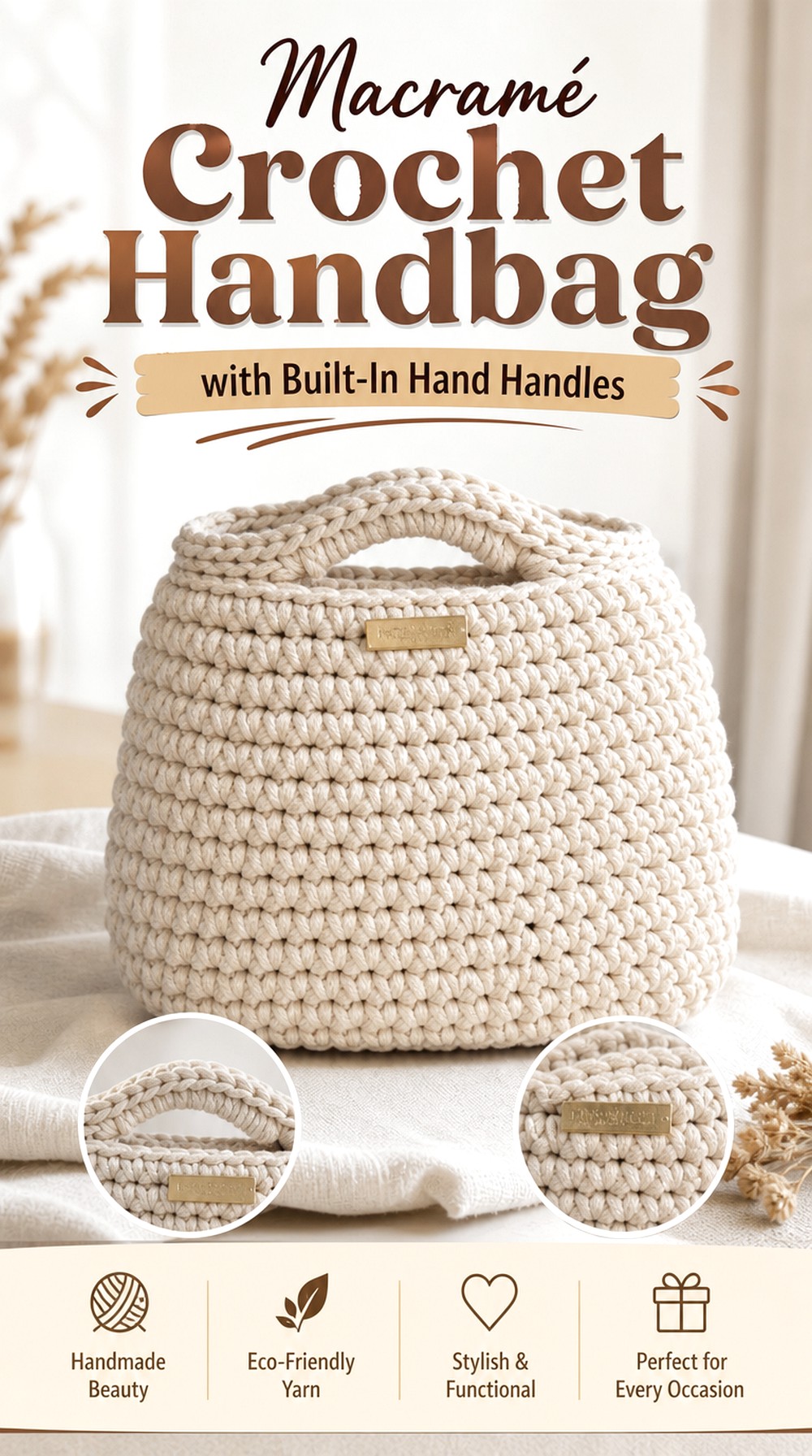
Crochetricot de Marie’s bag offers a broad handbag shape with handles integrated into the overall construction and an optional lining. The creator uses macramé-style yarn, giving the finished piece a substantial hand-carried appearance without relying on decorative rigid rings.
Compared with a framed purse, this approach feels softer and more casual while still keeping the carry point near the top of the bag. It is worth considering when you prefer an uninterrupted crochet surface. If you substitute a softer fiber, however, the handle openings and upper edge may stretch differently from the example.
Hand Clearance Has to Be Planned at the Opening
An integrated handle can look generous while the actual opening feels restrictive. Before assuming a changed handle size will work, consider both hand clearance and access to the bag interior. Increasing one opening can also remove fabric that was helping stabilize the top edge.
A Broad Body Puts More Pressure on the Upper Edge
When the bag body is wider than the handle area, the fabric naturally funnels toward the carrying points. Hold the unfinished bag by those areas and watch where folds form. Symmetrical folds generally look intentional; strongly uneven bunching can signal a tension or alignment issue.
Original Tutorial and Creator Credit
Creator: Crochetricot de Marie
Ribbon Crochet Clutch with a Short Carry Handle
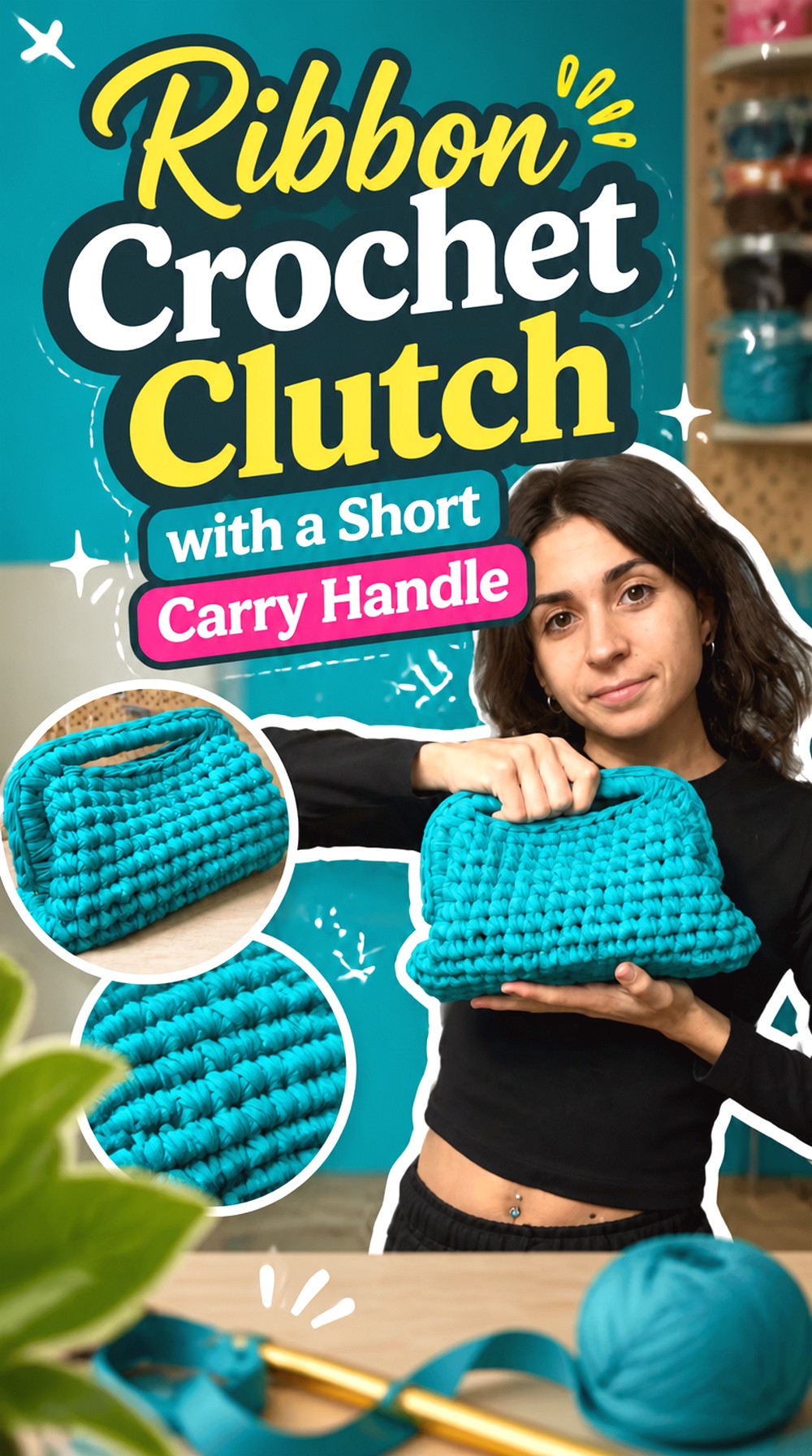
This ribbon-yarn clutch starts from a very different functional idea: a compact purse with a spring-style closure that can be made with or without a handle. That optional handle makes it a useful reference if you are deciding between a true clutch and a small top-handle evening bag.
The closure is more important here than on an open tote. It determines the shape of the upper edge and influences how the bag opens in the hand. If you adapt the handle, avoid changing its placement without first checking how it interacts with the closing mechanism.
The Closure Defines the Silhouette
A spring or frame-style opening can create a crisp upper profile even when the crochet body is soft. Before adding embellishments or a handle, operate the closure several times and make sure the crochet is not pulling it out of alignment.
Keep a Small Handle Proportional to the Clutch
A long or bulky handle can turn a compact clutch into an awkward hybrid. If you want the hand-carry version, judge the handle against the purse body while the bag is filled lightly with tissue or another temporary form so you can see its actual silhouette.
Original Tutorial and Creator Credit
Creator: vivi e cuci
Round Wood Handle Crochet Handbag
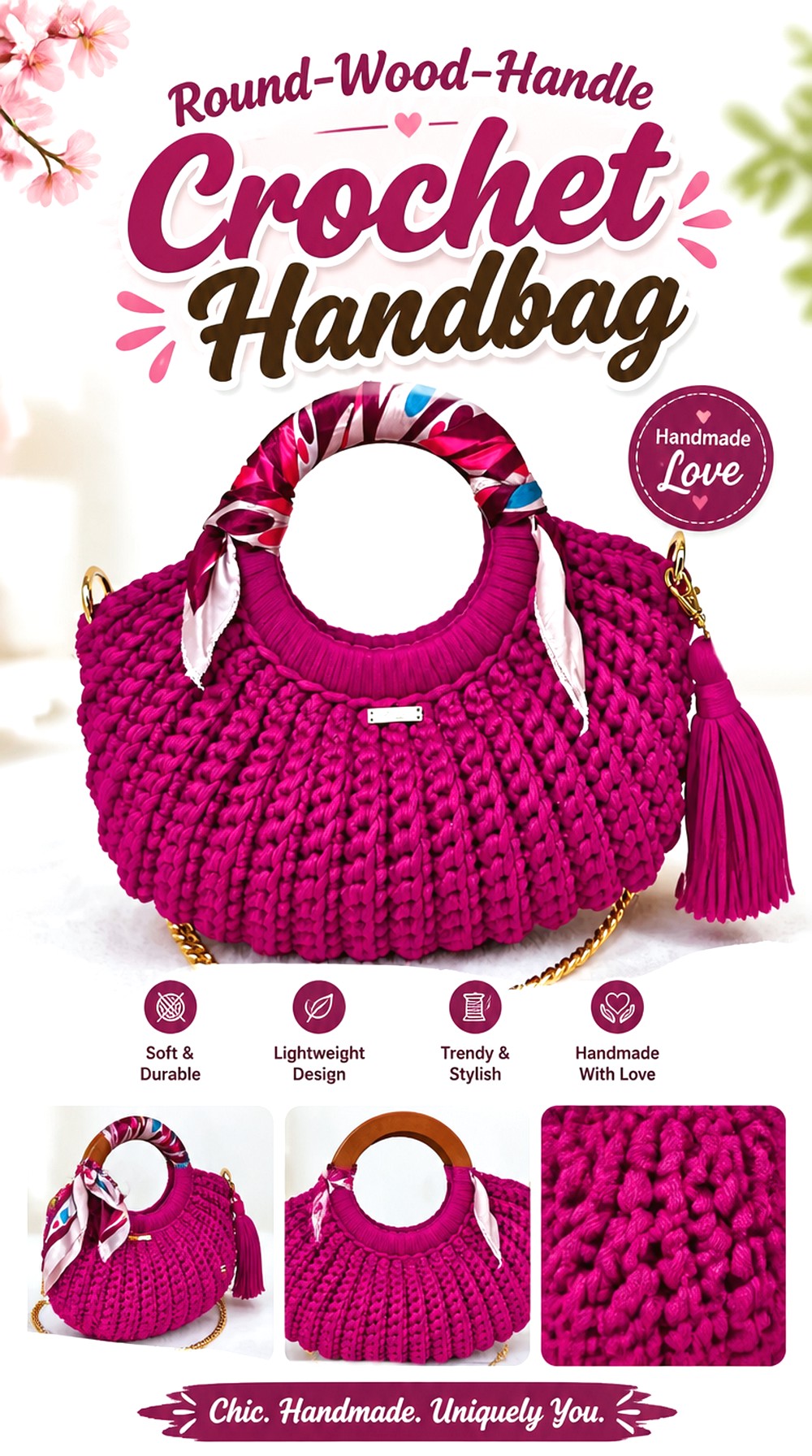
Large circular wooden handles immediately identify this bag as a hand-carried design. Mary Tejidos pairs them with a shaped crochet body and uses T-shirt-style yarn, creating a pronounced contrast between the rounded hardware and the denser bag fabric.
This is a good reference when the handle is meant to be a visible design element rather than disappear into the crochet. The rings occupy a significant portion of the upper silhouette, so changing their diameter can alter both the look and the way the upper edge gathers.
Round Handles Create Their Own Upper-Edge Curve
A circular handle encourages the crochet near it to follow a curved path. If you substitute a squarer handle, do not assume the same distribution will look identical. Lay the unfinished fabric against the replacement hardware and check whether it spreads or bunches naturally.
Hardware Weight Matters at the Connection Points
Wooden rings add weight before anything is placed inside the bag. Inspect how the crochet sits when the empty bag hangs from the handles. Excessive elongation near one connection point is easier to correct before the lining or decorative hardware is added.
Original Tutorial and Creator Credit
Creator: Mary Tejidos 🧶
Raffia Crochet Handbag with Jute Top Handles
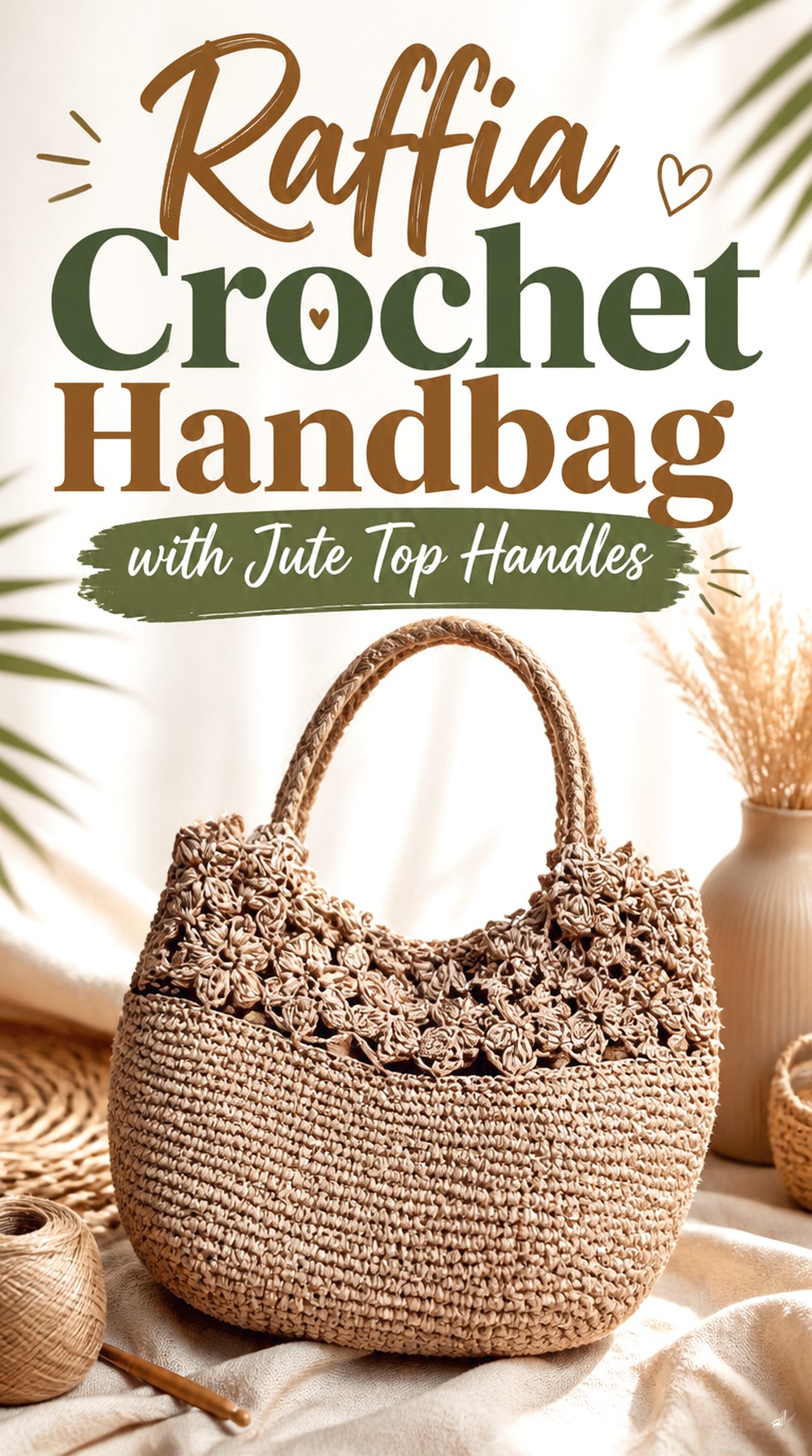
Raffia changes both the appearance and feel of a top handle bag. Handmade by Derya combines a raffia body with jute-twine handles, giving the handbag a natural-fiber look without relying on separate wooden or metal hardware. The tutorial also provides a useful contrast to the heavier T-shirt-yarn bags in this collection.
This is a strong option to study when you want the handle and bag to remain visually related while still using different materials. Raffia can behave quite differently from soft plied yarn, so substitution should be based on fabric behavior rather than color alone.
Raffia Highlights Shape More Than Plush Texture
A flatter, drier material can make the outline of a handbag more noticeable. Check the base and side walls as you work. Small shape irregularities that disappear into fluffy yarn can remain visible in a crisp raffia fabric.
Jute Handles Add a Different Surface Against the Hand
Using a second fiber for the handles changes both appearance and feel. Before copying the concept with another material, consider whether the handle surface is comfortable enough for the way you expect to carry the bag and whether it flexes more or less than the body.
Original Tutorial and Creator Credit
Creator: Handmade by Derya
Raised Flower Crochet Bag with Bamboo Handles
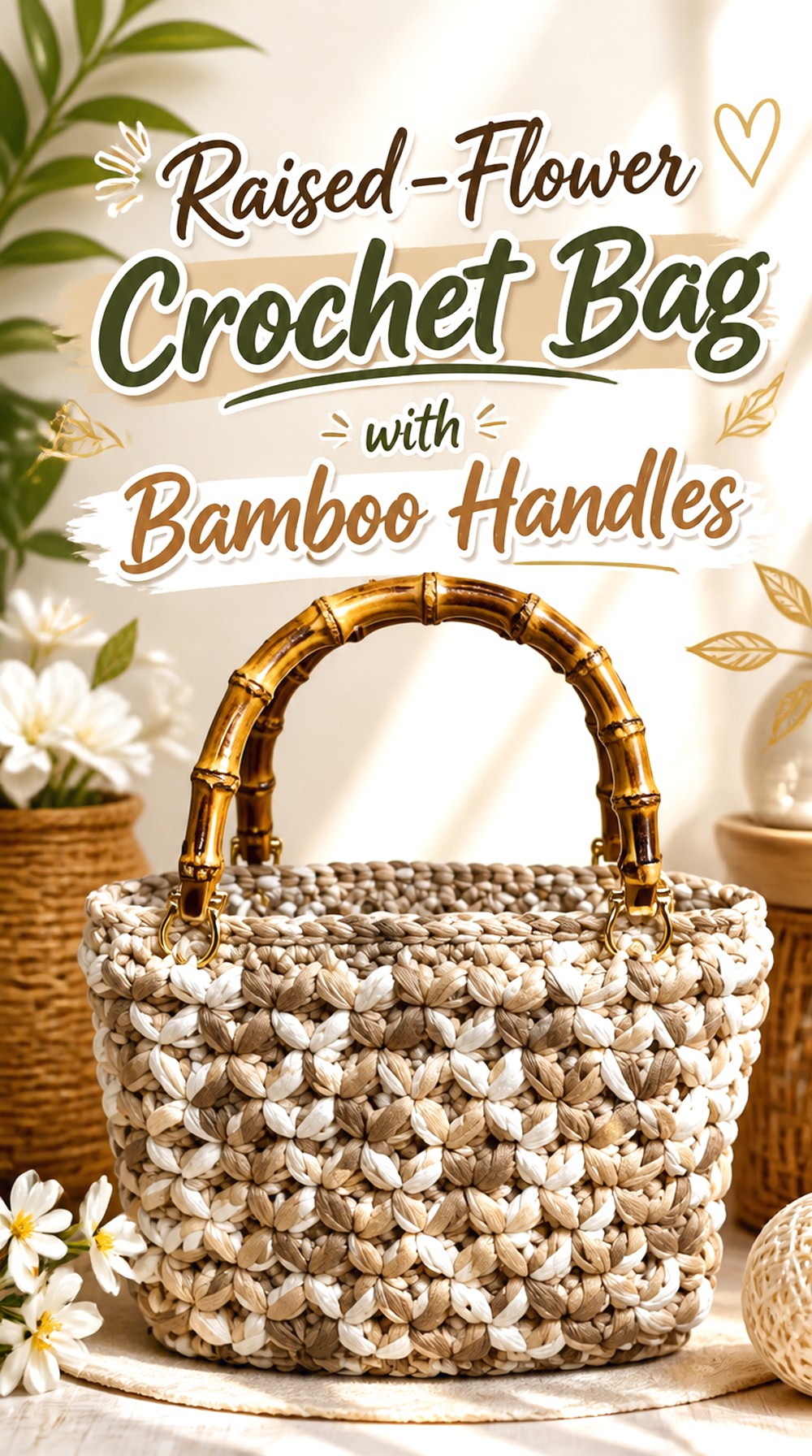
Texture is the main event in this bamboo-handle handbag. Crochet_Bags uses a raised flower stitch across the body and combines it with rigid bamboo handles, so the upper hardware stays visually simple while the crochet surface carries most of the decoration.
That balance makes this project distinct from bags where the handle itself is the statement. Raised stitches can add thickness and visual density, however, so think about whether you want the texture across the entire bag or only on the most visible panels if you adapt the concept.
Raised Flowers Need Enough Definition to Read Clearly
Highly dimensional stitches can lose their shape when worked in yarn that is fuzzy, loosely twisted, or too soft for the scale of the motif. Make a sample and view it from normal carrying distance, not only close up, before committing to a whole bag.
Bamboo Keeps the Top Edge Visually Quiet
The smooth handle contrasts with the textured body. If you replace it with highly decorative hardware, the two features may compete. Decide whether the focal point should remain the crochet texture or shift toward the handle itself.
Original Tutorial and Creator Credit
Creator: Crochet_Bags
Folded Stitch Crochet Handbag with Metal Handles
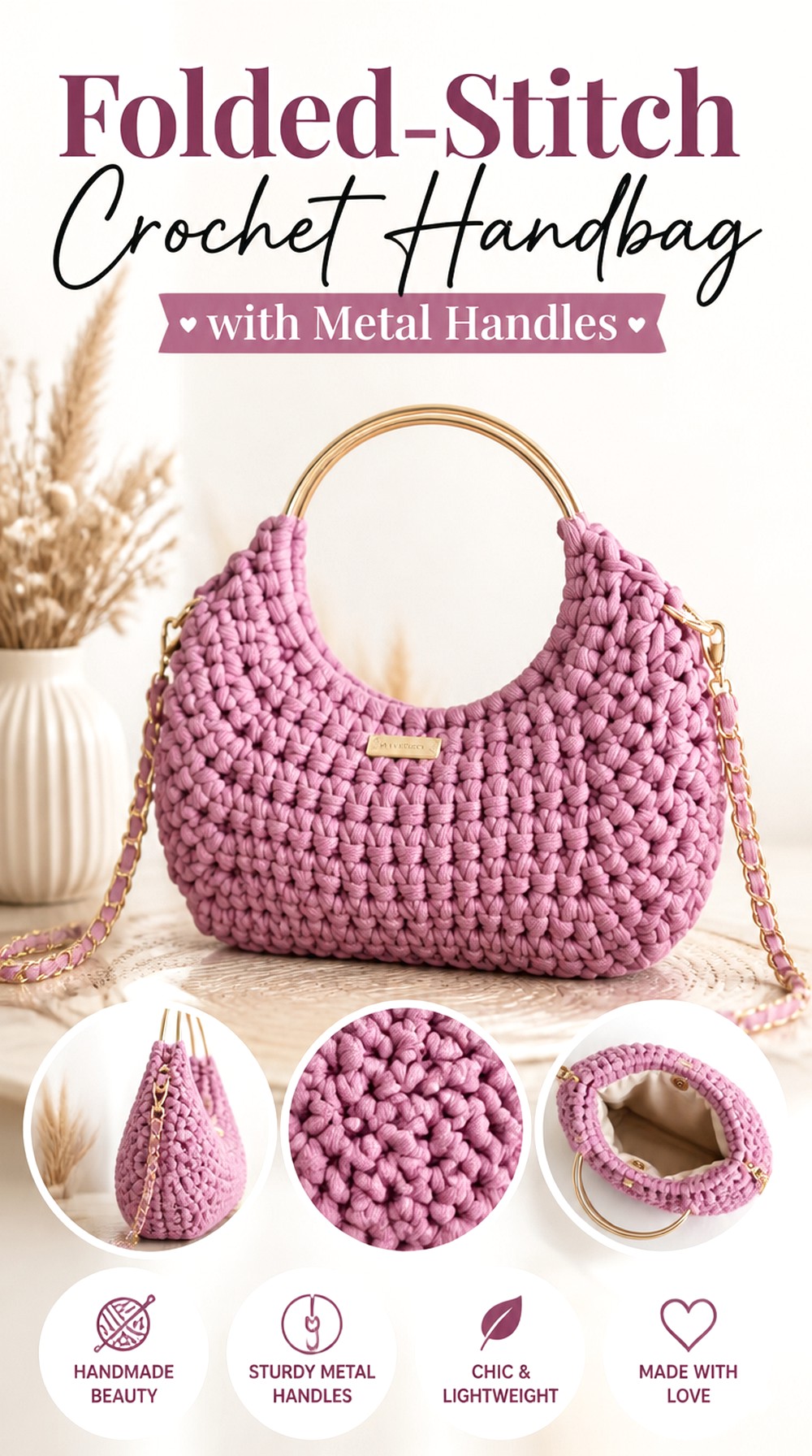
This Lany Artes Crochê design combines a dense folded-looking stitch treatment with rigid metal handles and a magnetic closure. The resulting upper edge feels more hardware-driven than the soft integrated-handle bags, making it a useful reference for a dressier structured purse.
Metal handles can introduce a sharper visual line than wood or crochet. They also make the attachment points more conspicuous, so neat alignment matters. If you change the bag width, verify that the hardware still looks centered rather than simply moving the original attachment positions outward.
Folded Texture Can Add Thickness at the Seams
A dense or doubled-looking stitch creates visual depth but can become bulky where multiple layers meet. Before finishing a side seam or upper edge, bring the pieces together by hand and check whether the join will sit flat enough for the silhouette you want.
Metal Handles Expose Small Alignment Errors
Rigid symmetrical hardware makes it easy to see when one side is attached higher than the other. Mark the intended attachment points on both sides before securing the handles, then compare the bag from the front rather than judging each side independently.
Original Tutorial and Creator Credit
Creator: Lany Artes Crochê
Framed Crochet Top Handle Satchel
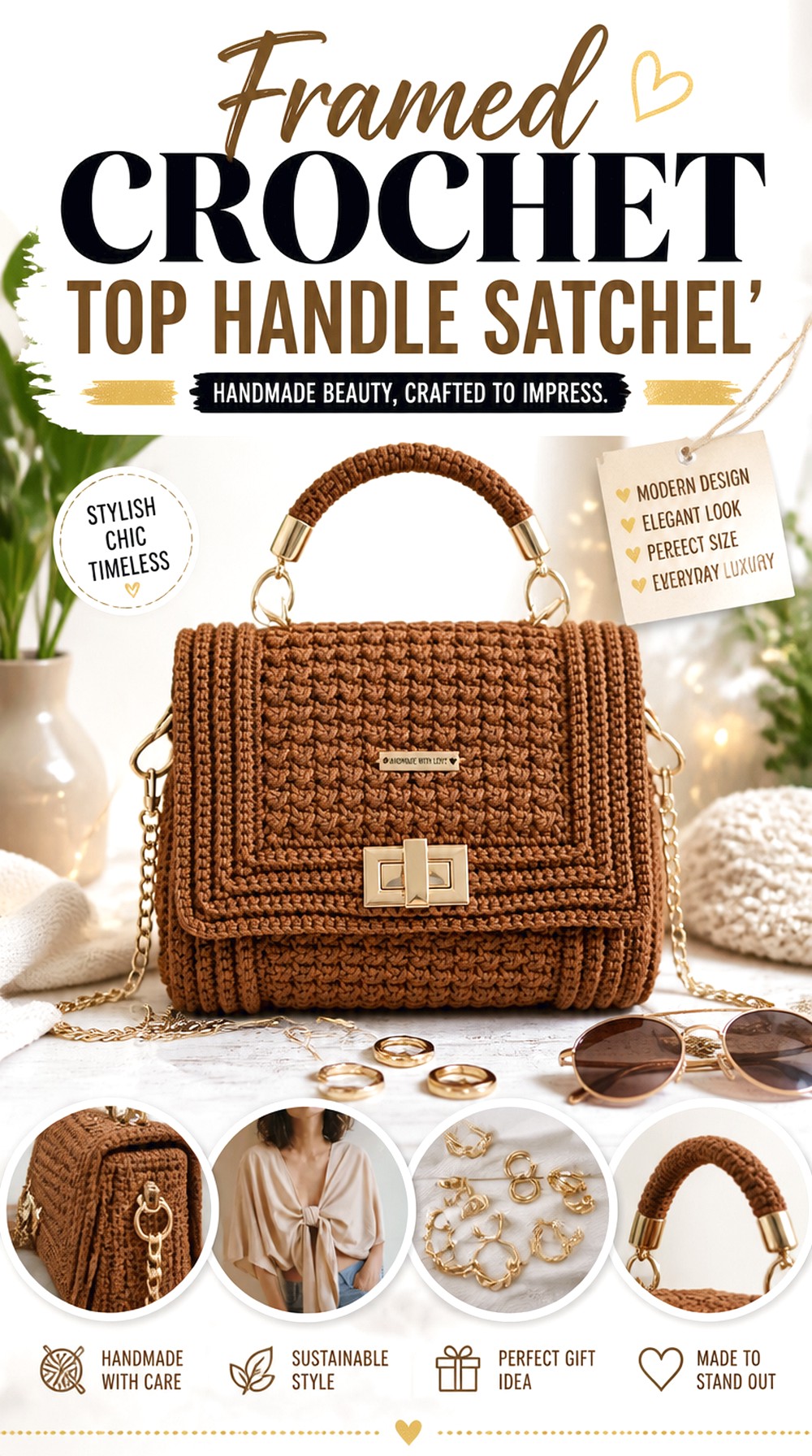
Cathérine Crochet’s handbag is one of the more architectural options here. It combines a defined main body, separate side treatment, closure hardware, a top handle, and optional plastic canvas for extra structure. That makes it closer to a conventional structured satchel than an open crochet tote.
Choose this direction when you care about a crisp bag profile and are comfortable coordinating crochet with several non-yarn components. Because the side pieces, closure, and handle all influence the final geometry, resizing one component can have consequences elsewhere.
Plastic Support Changes More Than Firmness
An internal support can help a panel resist collapsing, but it also reduces how freely the crochet can flex. If you use reinforcement, check that the bag can still open as intended and that corners do not become unnaturally stiff.
The Handle Should Follow the Bag’s Center Line
A structured satchel makes off-center placement obvious. Before fixing the handle, close the bag and view it from directly in front. The handle, lock, flap, and main body should read as one centered composition.
Coordinate the Closure Before Final Assembly
Hardware that bridges separate crochet sections needs accurate placement. Test the opening and closing action while access to the inside is still easy. Correcting a shifted closure after a lining or support layer is installed can be unnecessarily difficult.
Original Tutorial and Creator Credit
Creator: Cathérine Crochet
Sunflower Granny Square Crochet Handbag
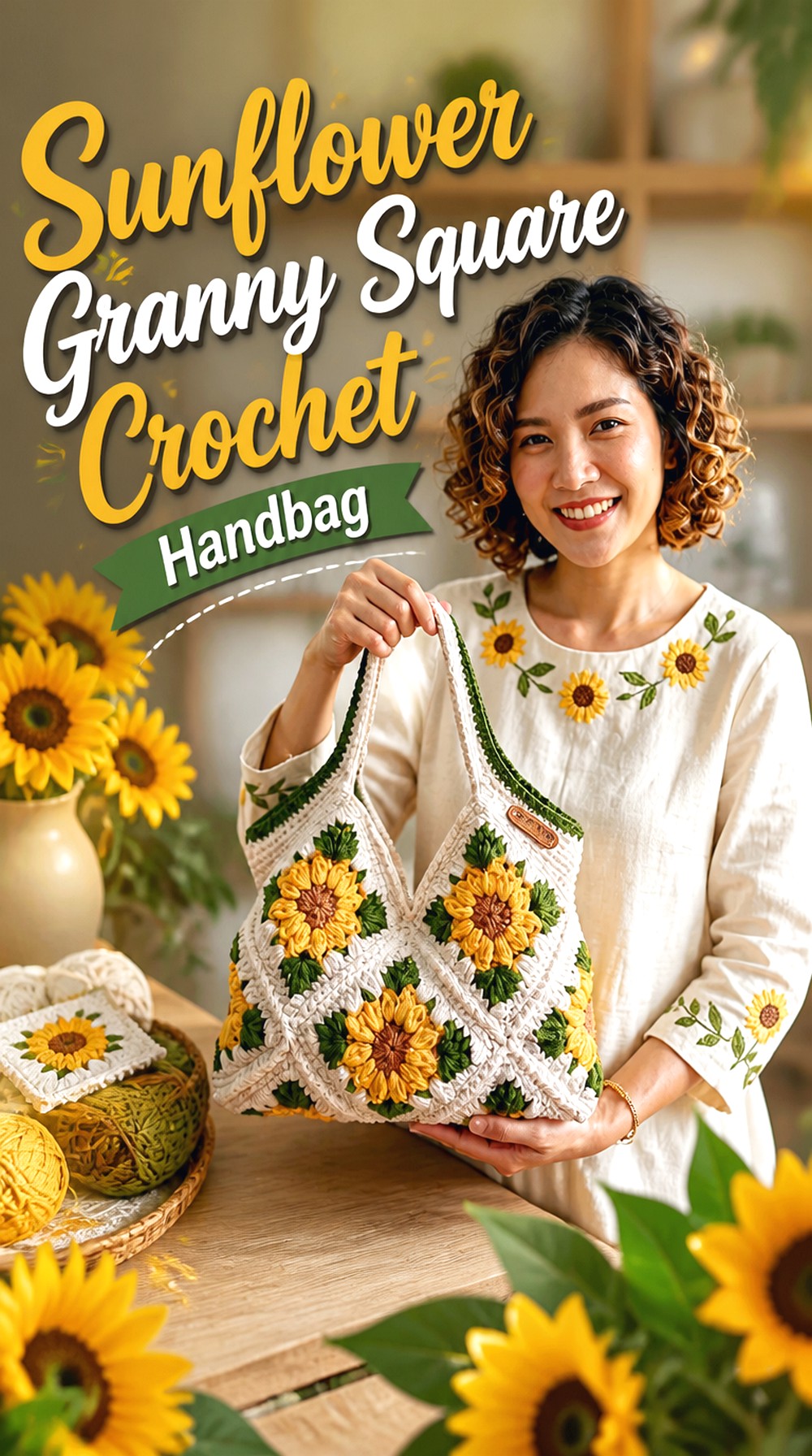
Kane Crochet’s sunflower handbag turns motif placement into the defining feature. The tutorial uses multiple flower granny squares assembled into a bag, followed by a strap and magnetic button, so it offers a completely different construction route from bags worked as one dense body.
For a top-handle interpretation, the most important planning step is the relationship between the motif grid and the final handle drop. Keep the floral layout intact first, then judge whether the demonstrated strap proportions produce the hand-carry look you want before altering them.
Block the Motifs Before Judging the Bag Width
Small differences between repeated squares accumulate once several motifs are joined. Compare their finished dimensions before assembly rather than relying on the number of rounds alone. Matching squares help the top edge and handle placement look more deliberate.
Keep the Flowers Oriented Intentionally
A motif bag can look random when flower centers or square directions shift unexpectedly. Lay the complete arrangement out before joining and decide which faces will become the front, back, sides, and upper edge.
Original Tutorial and Creator Credit
Creator: Kane Crochet
Star Stitch Crochet Handbag with Attached Handles
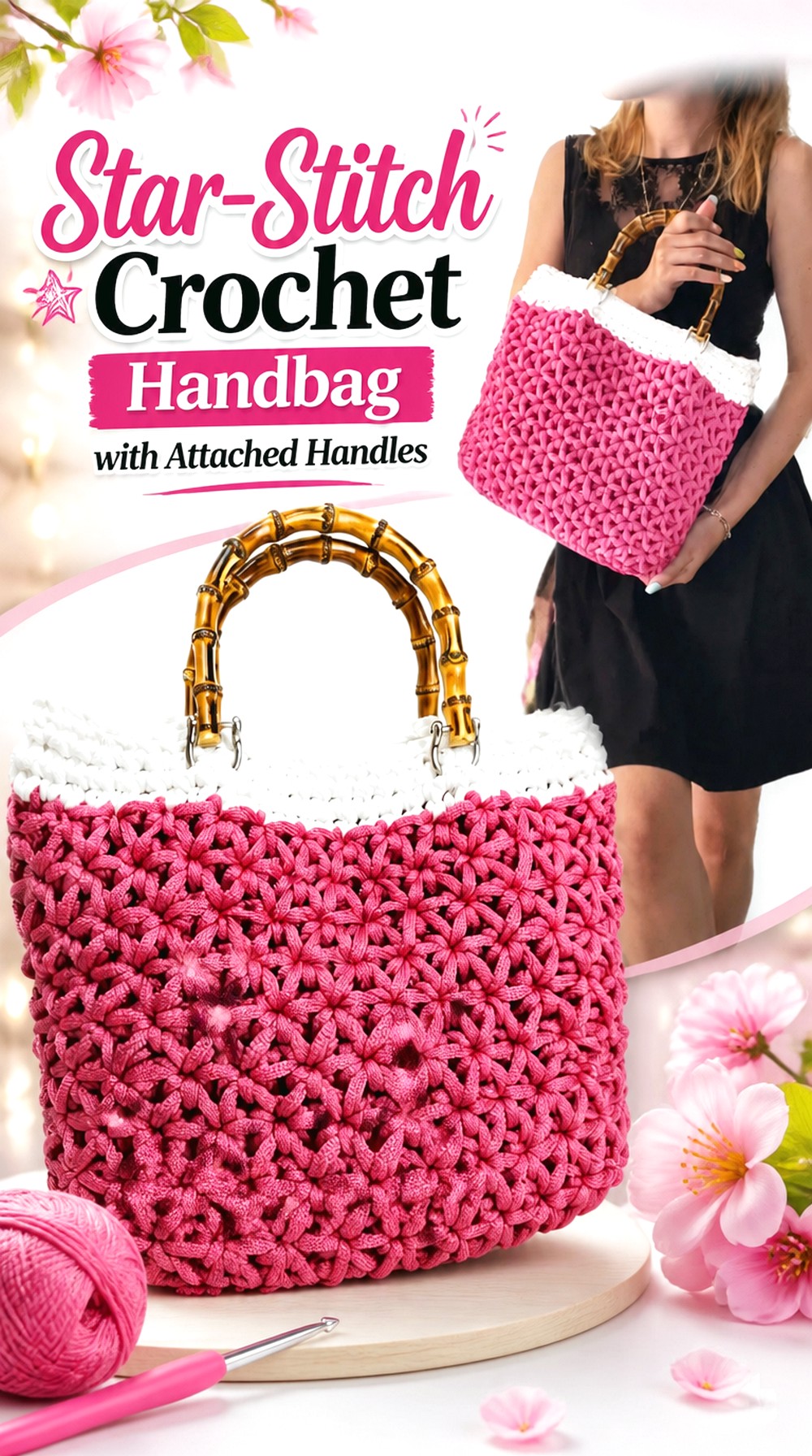
Katy Handmade uses star stitch across a substantial bag body and finishes the design with a pair of handles and an oval bottom. The star texture creates a much more continuous patterned surface than a granny-square bag while still giving the fabric strong visual interest.
This project is worth comparing with simpler dense-stitch handbags if you want texture without separate motifs. Since the stitch pattern and base both contribute to the final dimensions, changing yarn thickness can affect not only size but also how clearly the stars appear.
The Star Pattern Needs Consistent Visual Spacing
A repeating decorative stitch is easiest to judge by looking across several repeats rather than inspecting one stitch. If the stars compress or spread noticeably from row to row, resolve the tension issue early before the variation becomes obvious across a larger panel.
An Oval Bottom Changes How the Bag Stands
Unlike a flat two-panel purse, an oval base creates depth immediately. Before committing to the full body height, set the base flat and make sure the emerging walls are distributing evenly around it rather than leaning more on one side.
Original Tutorial and Creator Credit
Creator: Katy Handmade
Classic Textured Crochet Handbag Purse
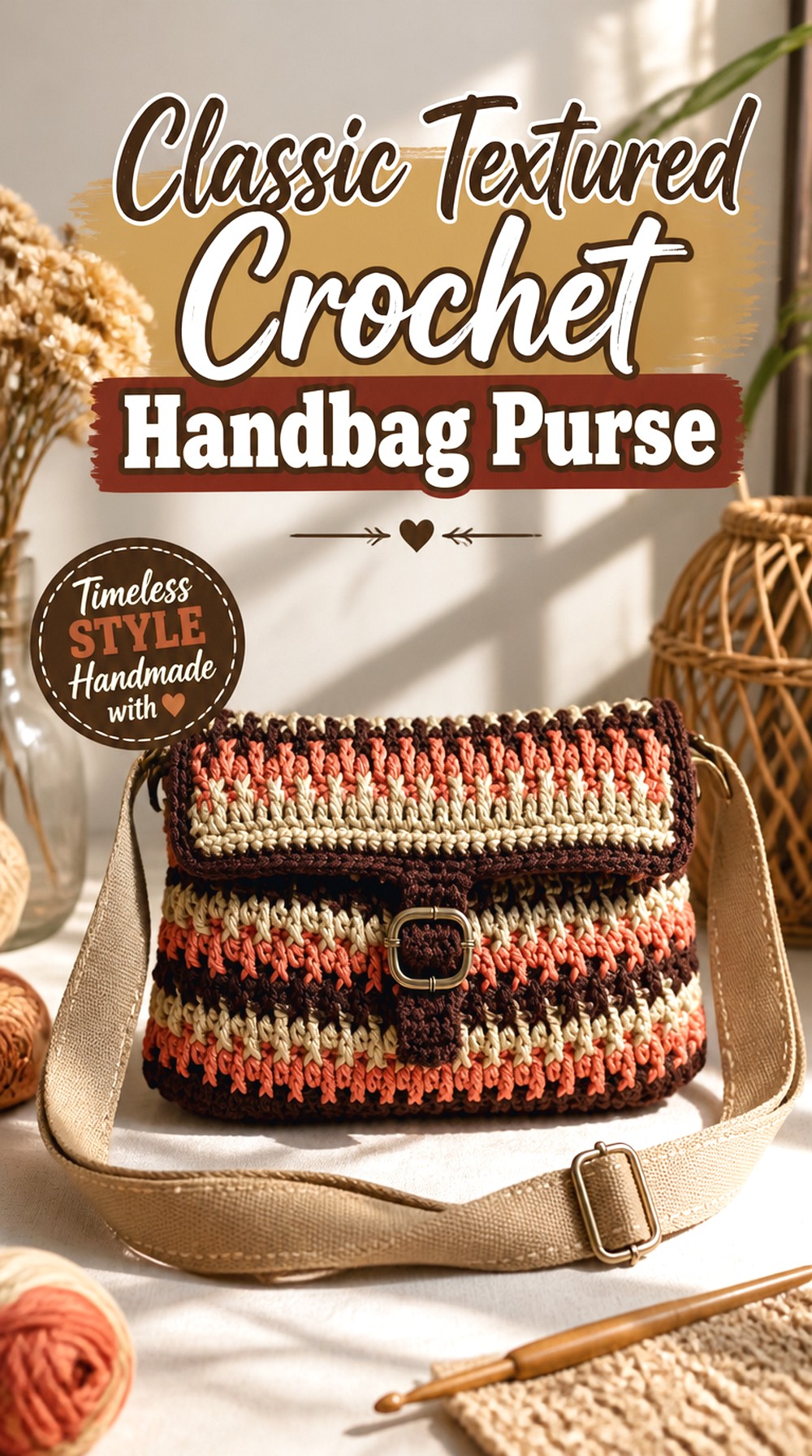
Bag-O-Day Crochet’s handbag tutorial offers a more traditional purse direction than the motif-heavy and hardware-driven designs above. Its value in this collection is the classic handbag format: a crochet body that can be assessed first for overall shape, then for how the handles and finishing affect everyday use.
This is a useful reference if you prefer a recognizable handbag silhouette rather than a novelty handle. When working from an older tutorial, watch the complete material and finishing sections before making substitutions, because the appearance of similar yarns and hardware can be misleading.
Traditional Shapes Put More Attention on Proportion
With fewer unusual construction features, width, height, and handle placement become especially visible. Before finishing the handle area, step away from the work and judge the full silhouette. A handle can be technically centered yet still feel too narrow or too wide for the body.
Decide How Much Interior Finishing You Need
A classic purse may be used for smaller everyday objects, which makes interior organization more relevant than it is for a decorative bag. If you want lining or pockets, plan them before the final upper-edge work makes the interior difficult to access.
Original Tutorial and Creator Credit
Creator: Bag-O-Day Crochet
Granny Square Crochet Handbag Tote
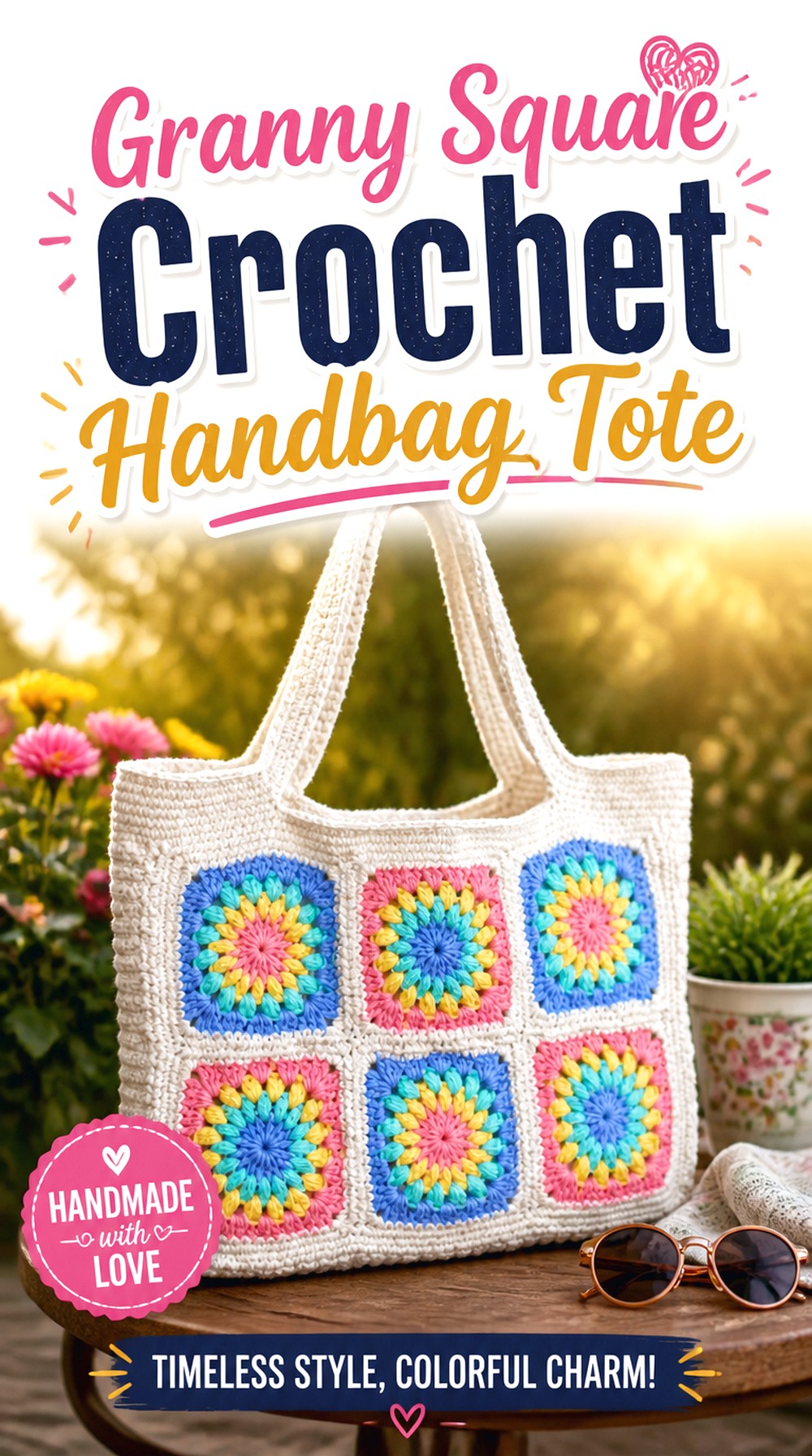
Naztazia’s version uses twelve granny squares and adds the handle after the motifs have been assembled. That sequencing makes it different from bags crocheted directly onto rigid hardware and gives you a clearer opportunity to judge the finished body before committing to the handle.
The design can be worked in one color or several, but the real planning issue is motif consistency. A multicolor layout will only look intentional if the squares also match in size and the joins produce a stable upper edge.
Handle Placement Comes After the Motif Geometry
Because the bag body is assembled from squares, the handle should respond to the final grid rather than an imagined width. Once the motifs are joined, lay the bag flat and identify the true center of each upper section before placing the handles.
Joins Affect the Finished Structure
Granny-square seams are not merely decorative. Uneven joining tension can pull the bag inward or create ridges where the motifs meet. Compare opposite seams as you work and correct major differences before the handle makes the distortion more noticeable.
Original Tutorial and Creator Credit
Creator: naztazia
Japanese Style Crochet Hand Bag with Ring Handle
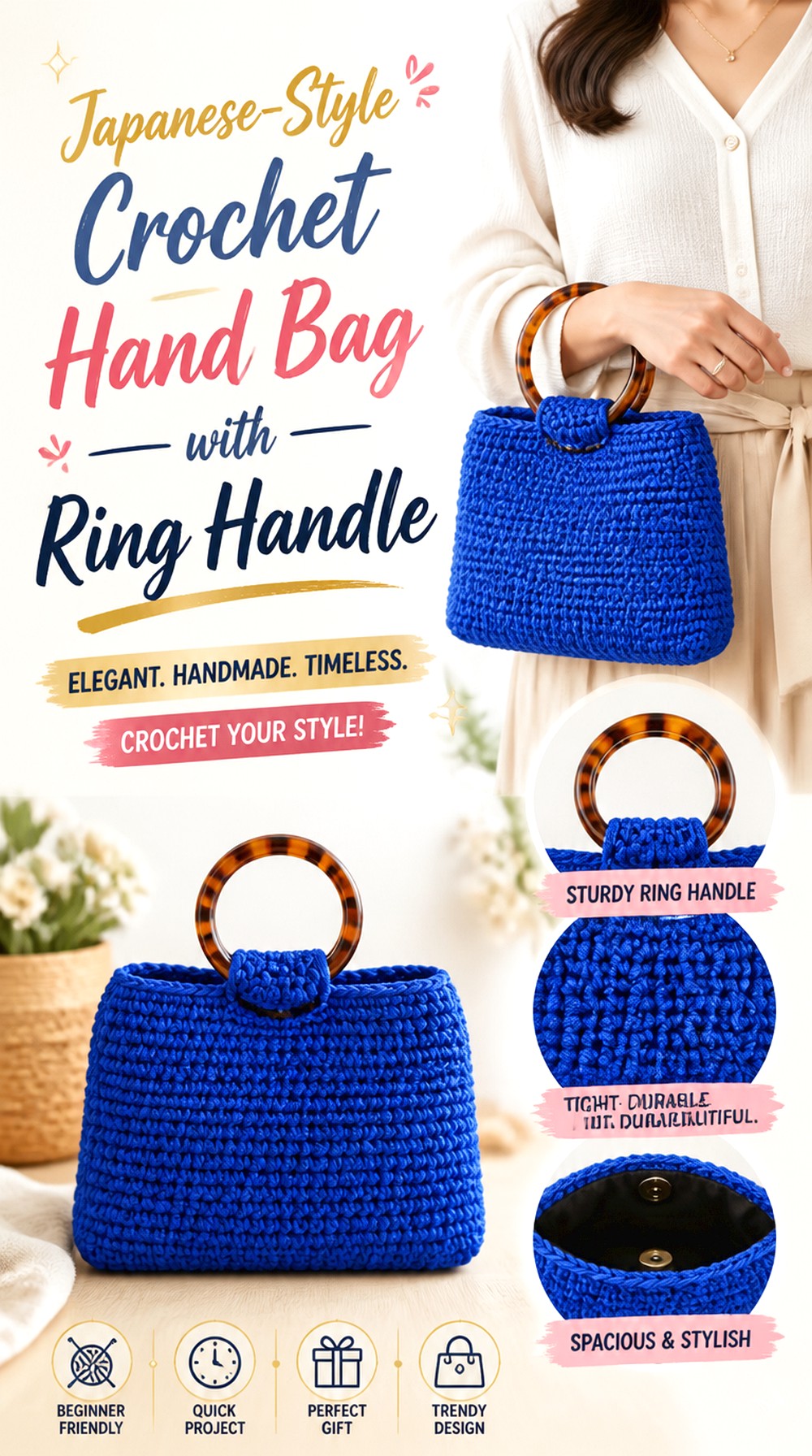
This tutorial from Learn crochet knot presents a Japanese-style crochet bag with a dedicated hand handle, including a resin ring among the materials. It also incorporates lining and additional hardware, making it more detailed than a plain ring-handle pouch.
The small ring creates a concentrated carrying point, so this design is useful if you like asymmetric or sculptural handbag silhouettes. If you change the ring diameter or its position, check how the bag hangs before completing the lining; the center of gravity can shift noticeably.
A Single Ring Creates an Intentional Focal Point
Unlike twin handles, one ring naturally draws the eye toward one area of the upper edge. Keep decorative additions restrained until you see the bag hanging from the ring, then decide whether it needs any additional visual emphasis.
Check the Hang Before Closing the Interior
A hand-ring bag can look balanced while lying flat and tilt once lifted. Temporarily attach the ring or required hardware and suspend the empty bag. Adjust obvious alignment problems before the lining hides the back of the attachment area.
Original Tutorial and Creator Credit
Creator: Learn crochet knot
T Shirt Yarn Crochet Handbag with Twin Handles

Madebymara’s T-shirt-yarn bag is built from an oval base and finished with two handles, giving it the familiar proportions of an everyday hand tote. The tutorial also emphasizes that the basic construction can be adjusted in size, making the finished form especially useful to study before planning your own proportions.
T-shirt yarn creates prominent stitches and a substantial surface, but it can vary significantly between products. Rather than assuming every fabric yarn will behave the same way, compare thickness, elasticity, and the resulting handle stretch.
Twin Handles Make Symmetry Easy to Evaluate
Place the bag flat and compare both handles before finishing. Their starting points, width, and visible drop should mirror one another. Even a small difference can become obvious when both handles sit together in the hand.
An Oval Base Gives More Capacity Than a Flat Seam
The curved base lets the body develop depth without adding separate side panels. Watch the transition from base to walls carefully. If the fabric begins to ripple or cup unexpectedly after a yarn substitution, the altered material may be affecting the shaping.
Original Tutorial and Creator Credit
Creator: madebymara
Japanese Knot Crochet Handbag
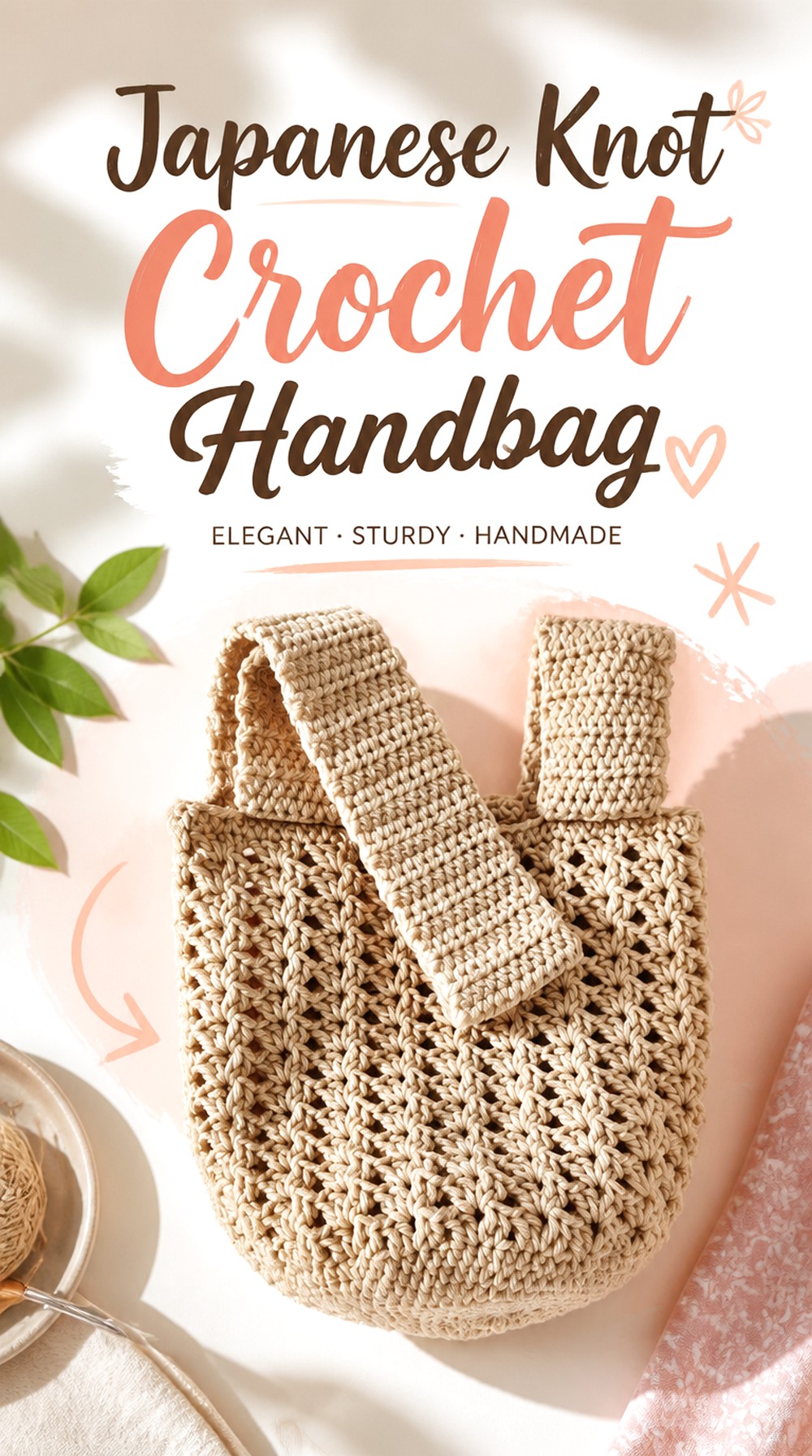
The Japanese knot bag uses its handles as both the carrying system and part of the closure. Let’s All Crochet demonstrates a design with a short handle and a long handle; one passes through the other to create the characteristic knot-style top.
That makes this one of the most functionally distinctive ideas in the collection. There is no need for a separate rigid handle or conventional clasp, but the two handle openings must work together comfortably. It is particularly useful for someone who wants a soft top-handle bag with minimal hardware.
The Two Handles Have Different Jobs
Do not judge the short and long handles as a matching pair. Their unequal lengths are central to how the bag closes and is carried. If you alter them, first understand which opening has to pass through the other.
The Closing Motion Reduces the Usable Opening
The bag may look generously open before the handles are engaged. Consider how easily you can reach the interior after the knot-style closure is formed, especially if you plan to change the body depth or use a stiffer yarn.
Original Tutorial and Creator Credit
Creator: Let’s All Crochet
Granny Style Crochet Tote with Bamboo Handles
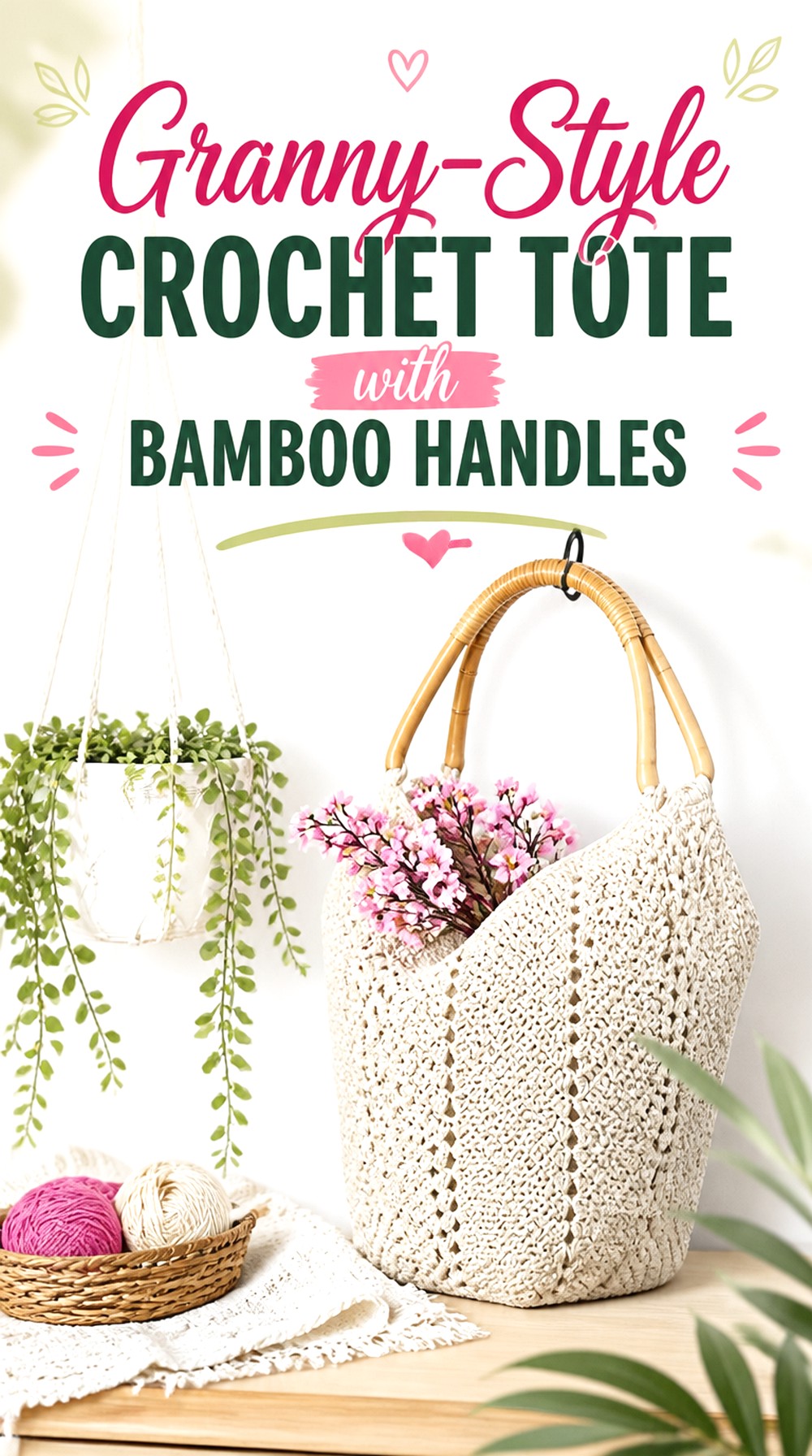
Crochet Maniak pairs granny-style crochet with a set of bamboo handles, combining a familiar open decorative stitch language with a rigid hand-carry finish. The bamboo handles make this version structurally and visually different from granny-square totes with soft crocheted straps.
This is a useful option when you want an airy-looking crochet body but do not want the handles themselves to stretch. If your chosen granny-style fabric has sizable openings, consider how the contents will interact with them and whether lining fits your intended use.
Open Crochet and Rigid Handles Create a Strong Contrast
The upper hardware stays firm while the bag body can move more freely. That contrast is part of the appeal, but excessive stretching immediately below the handles can make the transition look abrupt. Check that area while the bag is hanging.
A Lining Can Change the Appearance of Openwork
Fabric behind an open crochet pattern becomes visible through the stitches and effectively acts like another color. If you add lining, test the fabric beneath a sample first rather than choosing it independently of the yarn.
Original Tutorial and Creator Credit
Creator: Crochet Maniak
Embossed Crochet Handbag with Rigid Handles
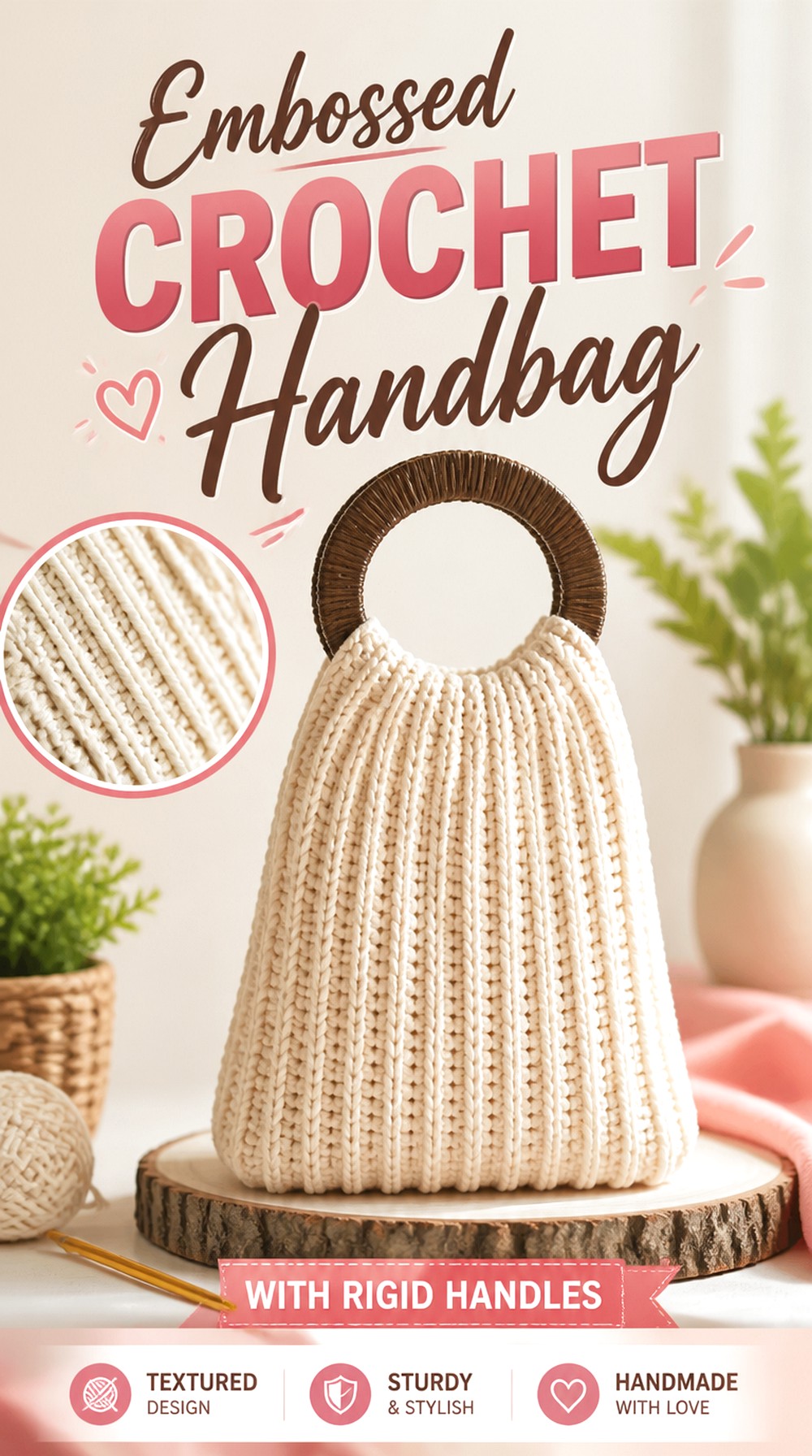
Ganchillo Crochet creates an embossed-looking surface using simple crochet techniques worked through the back loop and pairs the body with rigid handles. The result has a cleaner, more linear texture than the raised-flower or star-stitch bags.
This design is useful if you want texture that reads quietly from a distance rather than becoming the main decorative motif. The rigid handles also provide a fixed visual width at the top, making it easy to judge whether the fabric beneath them is gathering evenly.
Back-Loop Texture Emphasizes Straight Rows
Horizontal irregularities become easier to see when the stitch pattern forms continuous ridges. Periodically spread the panel on a flat surface and confirm that the sides remain reasonably parallel rather than waiting until handle attachment to discover a gradual width change.
The Handle Frame Sets a Hard Proportion
Crochet can stretch; rigid handles cannot. If you alter yarn thickness, compare your panel width with the actual hardware throughout the project so the final transition does not require excessive bunching or spreading.
Original Tutorial and Creator Credit
Creator: Ganchillo Crochet
Compact Crochet Bag with a Rigid Wooden Handle
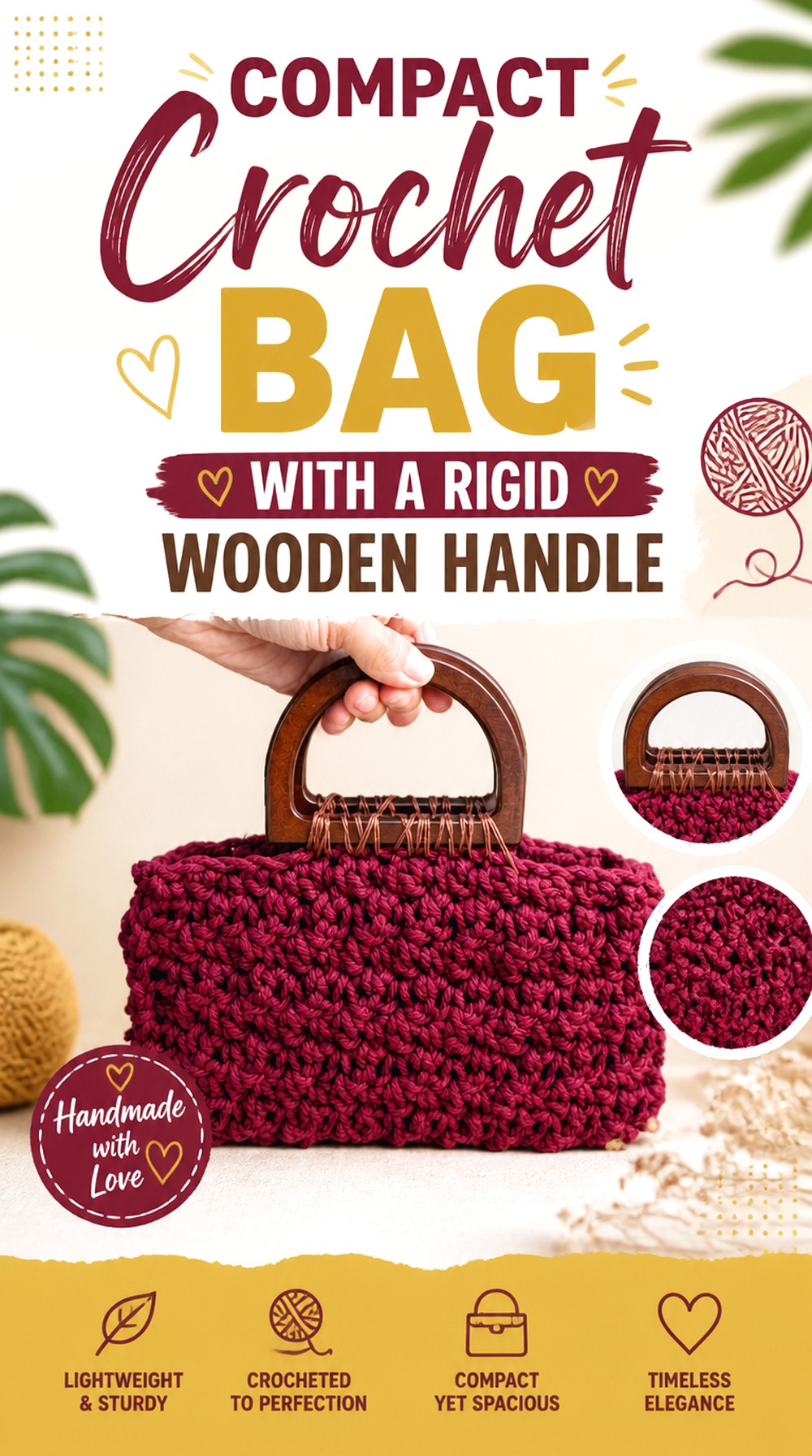
Fabcroc’s compact handbag is designed around a firm wooden handle and cord-like yarn, producing a small, focused silhouette rather than a large tote. The creator’s finished example is notably compact, which makes handle-to-body proportion especially important.
This direction works well when you want the rigid handle to dominate the upper profile. It is also a useful reminder that simply scaling a small bag upward can change the relationship between the handle, body, opening, and weight. Choose your final size as a complete composition.
Small Bags Magnify Hardware Choices
On a compact purse, the handle occupies a large percentage of the visible design. Test the actual handle against your yarn before starting. Its finish, thickness, and shape can influence the overall look as strongly as the crochet stitch.
Keep the Side Profile from Becoming Too Bulky
Thick cord can create surprisingly substantial edges on a small object. As the bag takes shape, inspect it from the side as well as the front. A neat front panel does not compensate for an overly heavy seam or folded edge.
Original Tutorial and Creator Credit
Creator: Fabcroc
Chunky Crochet Handbag with Wooden Handles
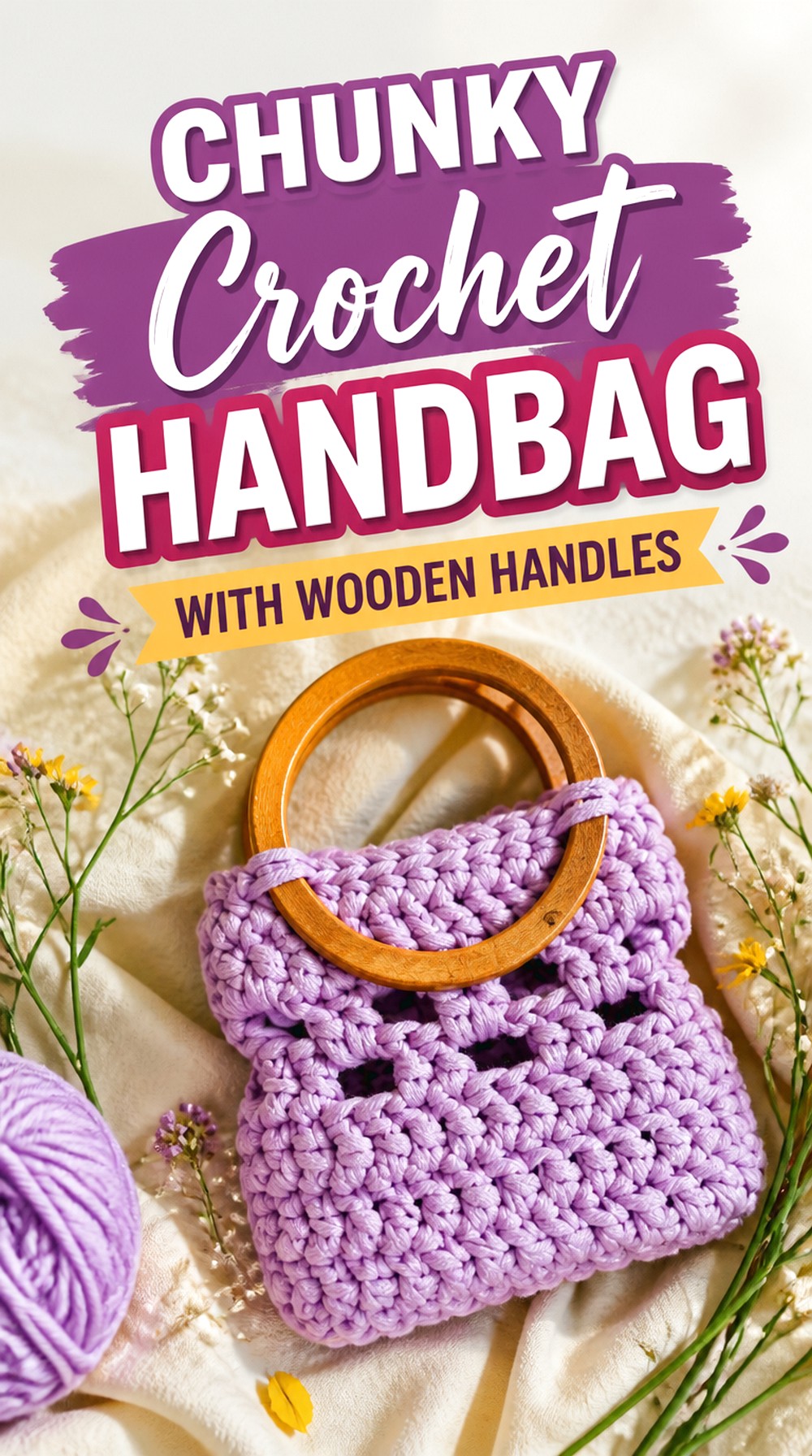
Felicia Crochet’s handbag uses chunky T-shirt yarn with two wooden handles, giving it a straightforward hand-carried form that is easy to compare with the softer twin-handle version from madebymara. Here, the rigid handles provide the contrast and the chunky body supplies most of the visual weight.
This is a useful idea for makers who like very visible stitches and minimal decorative hardware beyond the handles themselves. Because both yarn and handles are visually substantial, keep added embellishments restrained unless you intentionally want a more ornate result.
Chunky Stitches Need a Clean Upper Transition
Large stitches can look abrupt where they meet smooth wood. Before securing the handles permanently, distribute the crochet evenly and view the bag from the front. Crowding several thick stitches into one area can make the edge look lopsided.
Two Wooden Handles Should Move Together
If the handles are intended to sit side by side during carrying, confirm that both can rotate or rest naturally without twisting the upper edge. A small placement difference can cause one handle to sit forward while the other falls backward.
Original Tutorial and Creator Credit
Creator: Felicia Crochet
Basket Weave Crochet Mod Tote with Handles
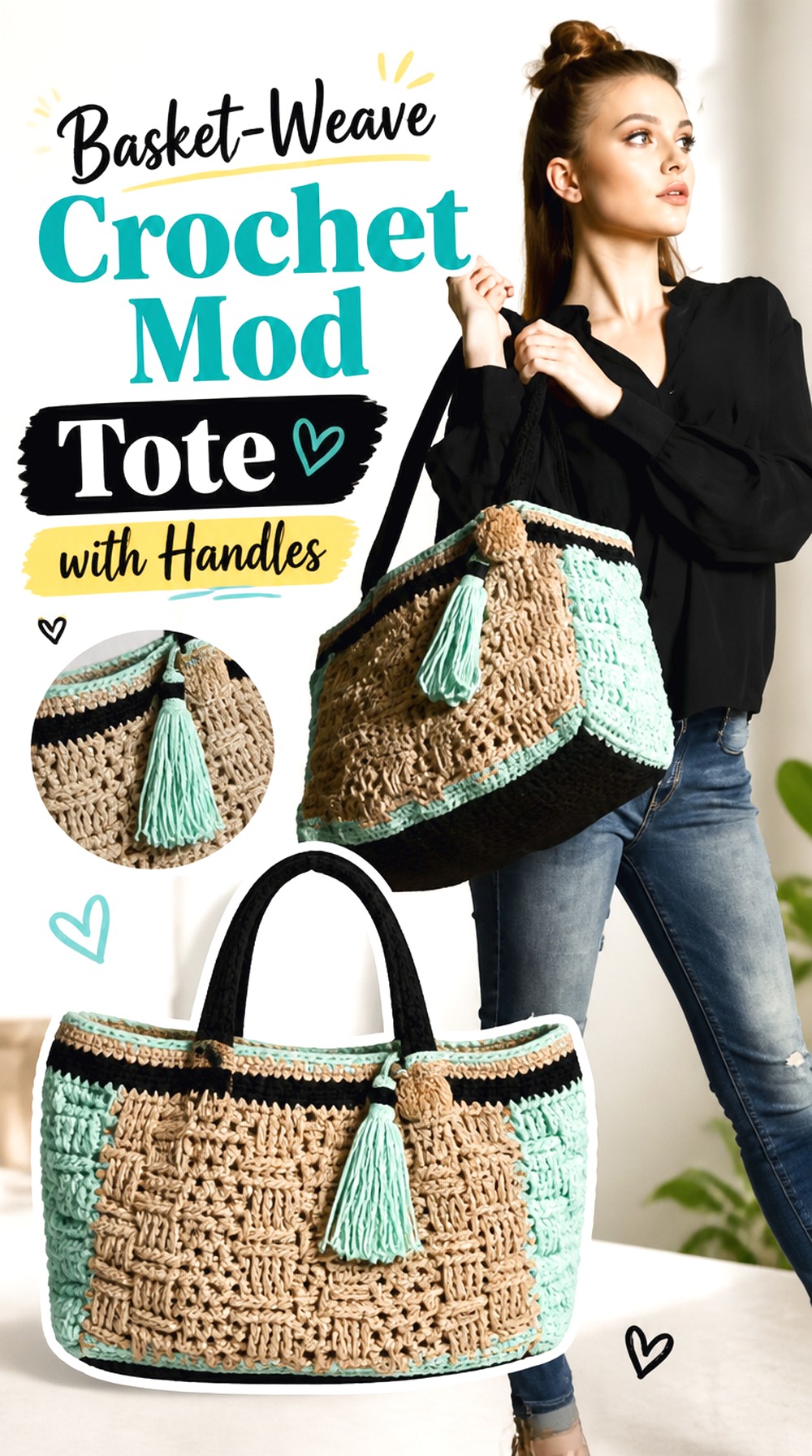
Littlejohn’s Yarn uses basket-weave texture for a substantial mod-style tote and includes dedicated handle construction. The bag is assembled from bottom and side sections rather than relying on a single simple rectangle, giving the finished piece more architectural definition.
The basket-weave surface is the main differentiator. It creates a blocky dimensional texture that suits a larger tote, but it can also add bulk. If you reduce the bag size, make sure enough of the texture remains visible for the pattern to read intentionally.
Basket-Weave Texture Adds Visual and Physical Depth
Raised crossing sections can make the fabric thicker than a flat stitch with the same yarn. Consider that extra bulk at side joins and the upper edge. A beautifully textured panel still needs to meet its neighboring sections without creating a stiff ridge.
Separate Panels Need Matching Finished Dimensions
When a tote includes short and long side sections, every edge involved in assembly needs to agree. Compare actual finished edges before seaming. If one panel differs noticeably, correcting it first is usually cleaner than forcing the seam to absorb the mismatch.
Handle Placement Should Respect the Panel Construction
The handles need to feel centered on the completed bag, not merely on an individual stitch section. Assemble enough of the body to identify the true front and back centers before judging placement.
Original Tutorial and Creator Credit
Creator: Littlejohn’s Yarn
Simple Crochet Handbag for Everyday Carry
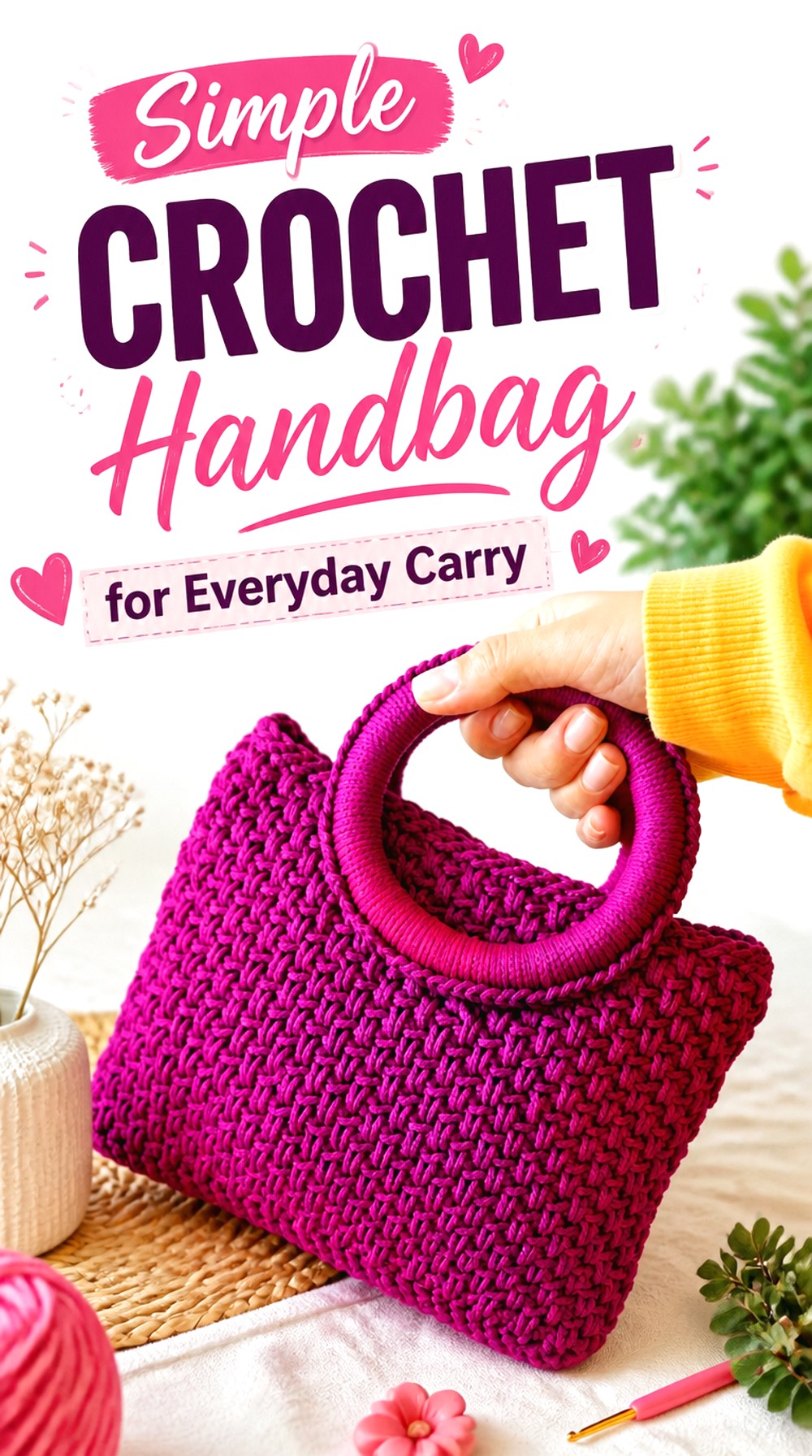
Sirin’s Crochet closes the collection with a straightforward handbag design rather than specialized rings, frames, flowers, or motif assembly. That simplicity is useful because it lets you focus on proportion and basic bag construction before deciding whether you want more elaborate hardware on a later project.
For a strict top-handle interpretation, watch the finished bag and handle section before making yarn substitutions or changing the carry length. A simple body is adaptable, but shortening or stiffening a handle changes the way the entire upper edge hangs.
Use the Plain Silhouette as a Proportion Check
A simple handbag makes it easier to notice whether the width, height, and handle drop work together. Photograph or hold the unfinished piece at arm’s length before finishing. The overall outline is often easier to judge from a distance than while the fabric is on your lap.
Add Complexity Only When It Solves a Purpose
A lining, closure, decorative hardware, or additional reinforcement can improve a bag when it addresses a real need. It can also make an otherwise clean design bulky. Decide what the bag needs to carry and how it needs to close before adding finishing elements.
How to Choose Among These Top Handle Bag Styles
| Style | Main structural feature | What deserves the closest attention |
|---|---|---|
| Round, rectangular, wood, or bamboo handles | Rigid upper carrying point | Handle-to-body proportion and even attachment |
| Metal or framed handbags | Hardware controls the opening | Alignment, reinforcement, and closure placement |
| Crocheted twin handles | Handle and body can both flex | Stretch, symmetry, and attachment width |
| Japanese knot bags | Handle system also closes the bag | Hand clearance and usable opening size |
| Granny-square handbags | Joined motifs determine body geometry | Blocked motif size, joins, and handle centering |
| Raffia or cord handbags | Material contributes strongly to shape | Flexibility, edge bulk, and stitch definition |
| Dimensional textured bags | Surface pattern adds thickness | Seam bulk and whether the texture remains clear |
A rigid handle is usually the clearest route when you want the top of the bag to hold a defined line. Crocheted handles make adaptation easier but place more importance on stretch. Motif bags need their squares resolved before handle placement, while framed bags require you to think about hardware much earlier in the construction.
Conclusion
The right crochet top handle bag depends less on one favorite stitch and more on the finished behavior you want. Choose wooden, bamboo, or metal handles when rigid hardware is part of the look; consider crocheted twin handles for a softer everyday bag; use a Japanese knot construction when you want the handle to double as the closure; and look at framed or reinforced designs when a crisp handbag silhouette matters most.
Before substituting materials, compare fabric stretch, handle size, opening width, and the way the empty bag hangs. Once you choose a direction, use the original tutorial linked with each idea for the creator’s exact construction and finishing details.
Frequently Asked Questions
What yarn qualities help a crochet top handle bag keep its shape?
Look at the fabric your yarn produces rather than relying on fiber name alone. A dense, relatively stable fabric generally keeps a defined handbag outline better than a loose, highly elastic one. Cord, raffia, T-shirt yarn, and ordinary plied yarn can all behave differently. Crochet a sample, hold it vertically, and see how much it lengthens or collapses before deciding whether it suits a structured bag.
Do rigid wooden or bamboo handles prevent a crochet bag from stretching?
They prevent the handle itself from stretching, but the crochet attached to the hardware can still elongate. The highest stress may simply move to the connection between the rigid handle and the bag body. Check those attachment areas with the empty bag hanging naturally, and consider whether your chosen yarn, stitch density, lining, or reinforcement is appropriate for the intended use.
When is lining especially useful in a crochet top handle bag?
Lining is worth considering when the crochet fabric has visible openings, stretches easily, or will hold small objects that could work through the stitches. It can also give the interior a cleaner finish. A lining does not automatically make a bag suitable for heavy contents, though. Handle attachment, seams, yarn behavior, and any structural support still need to work together.
How do I know whether a top handle opening will be comfortable?
Compare the usable opening with your hand rather than judging the outside dimensions of the handle. A thick rigid ring can have much less interior clearance than its overall diameter suggests. Also check whether the opening stays accessible once the bag is filled. Japanese knot handles, gathered ring handles, and narrow framed bags can all reduce usable access in different ways.
Can I convert a shoulder-bag tutorial into a top-handle bag?
Sometimes, but shortening a strap is not automatically a successful conversion. Handle placement affects balance, upper-edge tension, and how the bag hangs. First confirm that the original attachment points can support a hand-carry position and that the new handle does not obstruct the opening. When the tutorial already demonstrates a handbag or adjustable handle option, use that construction as your reference instead of improvising unsupported changes.
What should I verify before adding clasps, frames, or other bag hardware?
Confirm the actual dimensions of the hardware, the area where it attaches, and how much access you will have to the inside during installation. A magnetic clasp, spring closure, frame, or rigid support can change how the upper edge needs to flex. Test positioning before installing lining whenever possible, and follow the hardware manufacturer’s installation guidance where it applies.