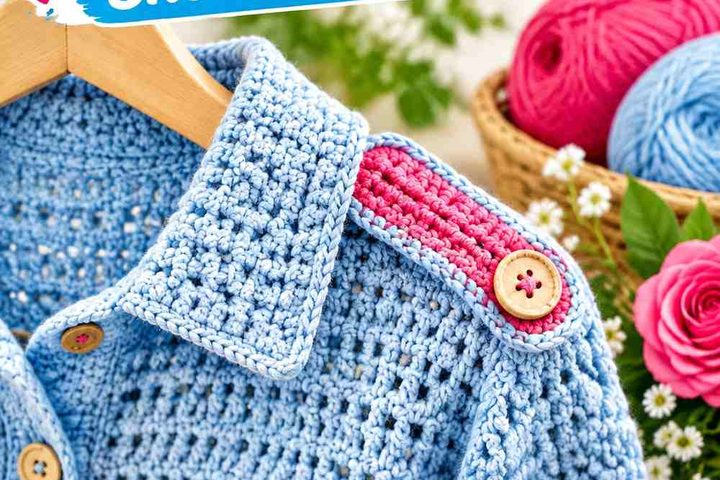
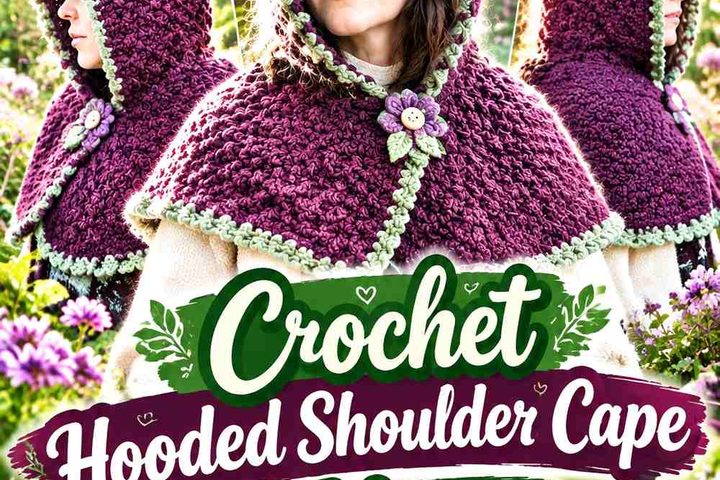
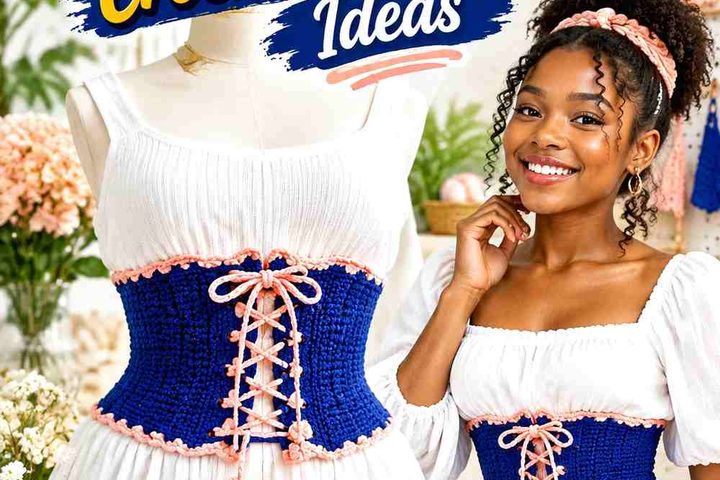
A crochet polo can sit anywhere between a lightweight collared shirt and a substantial long-sleeve sweater. That range is what makes the style interesting: one project may rely on airy mesh and a short collar, while another uses denser fabric, dropped shoulders, or a fold-over neckline for more coverage. Granny stitches, button plackets, cropped proportions, and straight-cut menswear shapes create even more possibilities.

The 25 ideas below include direct polo tutorials along with a few closely related collared-shirt references that are useful when you want to adapt sleeve length, neckline treatment, or overall silhouette. Pay attention to finished measurements, intended ease, neckline stability, and the way the collar behaves in the chosen yarn before committing to a design.
Quick List
- Crochet Classic Cotton Polo Shirt
- Crochet Relaxed Unisex Polo Sweater
- Crochet Fold-Over Collar Long-Sleeve Sweater
- Crochet Refined Short-Sleeve Polo Shirt
- Crochet Transitional-Weather Polo Sweater
- Crochet Soft-Point Collar Everyday Top
- Crochet Granny Stitch Summer Polo Shirt
- Crochet Clean-Line Unisex Polo Top
- Crochet Longline Polo Tunic Sweater
- Crochet Men’s Color-Block Polo Shirt
- Crochet Minimal Double-Crochet Polo Shirt
- Crochet Women’s Open-Mesh Polo Top
- Crochet Ribbed-Collar Cropped Polo Top
- Crochet Oversized Drop-Shoulder Polo T-Shirt
- Crochet Striped Mesh Polo Shirt
- Crochet Hexagon Granny Collar Shirt
- Crochet Granny Stitch Collar Tee
- Crochet Button-Placket Cotton Polo Shirt
- Crochet Straightforward Everyday Polo Shirt
- Crochet Soft-Collar Shirt
- Crochet Openwork Relaxed Polo Top
- Crochet Men’s Classic Polo Sweater
- Crochet Button-Up Collared Polo Top
- Crochet Geometric Openwork Polo Shirt
- Crochet Men’s Straight-Cut Polo Shirt
Fit the Collar, Shoulder, and Chest as One System
A polo neckline cannot be planned independently from the rest of the garment. A wider body with dropped shoulders may look intentional with a relaxed collar, while the same neckline can appear disproportionately large on a closer-fitting shirt. Before choosing a tutorial, compare its silhouette with a polo or sweater you already like wearing. Look at chest width, shoulder placement, armhole depth, overall length, and where the neckline begins.
The collar also adds fabric and weight around an area that needs to stay reasonably stable. If you alter the body width, neckline, or yarn, check the collar again rather than assuming it will behave exactly like the tutorial sample. With made-to-measure projects, evaluate the upper body before investing time in the full length.
Choose Yarn by Drape and Collar Support
Polo sweaters need a useful balance between movement and structure. A very fluid fabric can make a summer shirt comfortable, but it may also let a substantial collar spread or sag. A firmer fabric can sharpen the neckline and placket while making the entire garment feel more structured.
Think about the finished style first. Open mesh and granny-stitch polos usually benefit from enough drape to hang naturally without being stretched open by their own weight. Classic shirts can tolerate more body, particularly around the collar and front opening. Long-sleeve versions deserve an additional check because sleeves increase the amount of fabric hanging from the shoulders. Whenever you substitute yarn, make a fabric sample and evaluate both its relaxed appearance and its behavior after the care method you intend to use.
Decide Whether You Want a Shirt, Tee, or Sweater
The word “polo” describes the collared character of these projects, but the finished garments are not interchangeable. A short-sleeve mesh polo behaves more like a layering shirt. A granny-stitch collar tee is casual and open. A long-sleeve collared sweater provides substantially more coverage and puts greater emphasis on shoulder fit and garment weight.
That distinction should guide tutorial selection. If you want something to tuck into trousers, compare body length and hem bulk. For layering over another top, leave enough room through the torso and sleeves. If your goal is a winter-style pullover, prioritize fabric density and sleeve behavior rather than choosing a summer polo simply because you like its collar. Collared-top tutorials in this collection are best treated as adaptation references when their finished form differs from a traditional polo.
Crochet Classic Cotton Polo Shirt
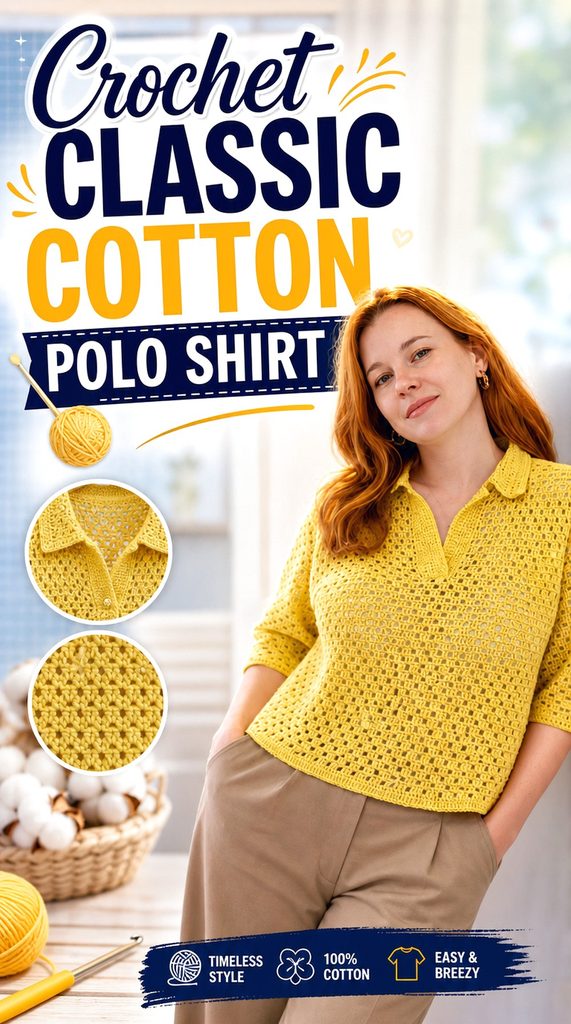
This is the starting point for readers who picture a familiar short-sleeve polo rather than an oversized sweater or open mesh top. A cotton-based fabric can give the shirt clear stitch definition while keeping the overall appearance neat and understated. The straightforward silhouette also leaves room to customize color without losing the recognizable polo shape.
Because a simple shirt has relatively few dramatic design elements, proportion matters. Pay particular attention to how the collar sits against the neckline, where the shoulders end, and whether the sleeve openings feel balanced with the body width. Those details will be more noticeable than they would be in a heavily textured garment.
Keep the Collar Scaled to the Neck Opening
A polo collar should look connected to the neckline rather than like an added strip of fabric. If you change yarn, hook, or body dimensions, compare the developing neckline with the tutorial’s finished proportions before committing to the collar. A collar that is too wide can spread toward the shoulders, while one that lacks enough room may pull the front opening upward.
Short Sleeves Put Shoulder Fit on Display
Short sleeves leave the shoulder line clearly visible, so an accidental drop shoulder is harder to disguise. Decide whether you want a conventional shoulder position or a deliberately relaxed one. Try the upper section against your body or a well-fitting shirt before finishing both sleeves, especially when your yarn produces a different fabric density from the tutorial.
Crochet Relaxed Unisex Polo Sweater
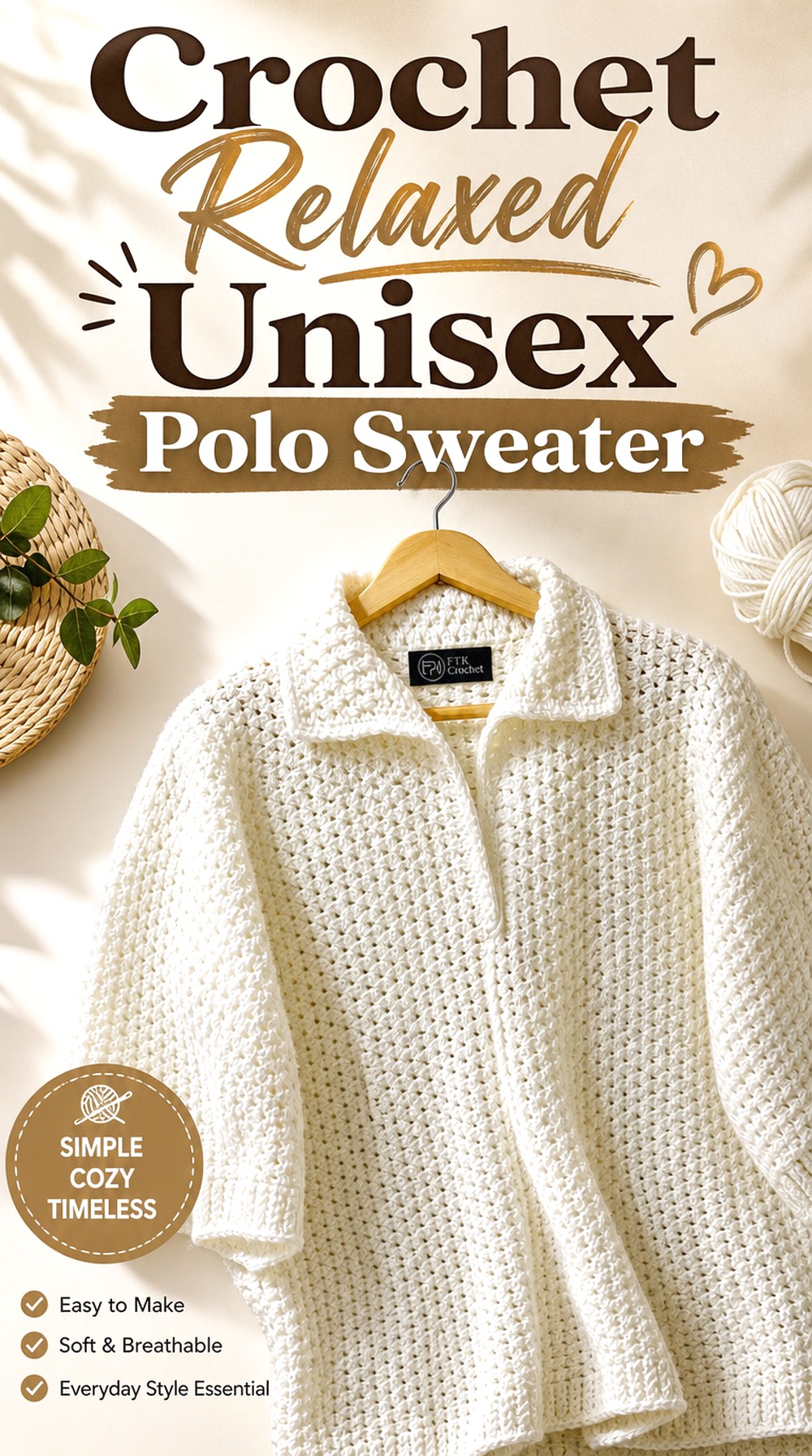
A relaxed unisex polo gives you more room through the body than a close-fitting shirt and can work well when you prefer casual, straight proportions. The extra ease also makes the garment more adaptable for layering, although adding width without considering shoulder placement can make the finished sweater look larger than intended.
This version is a good contrast to fitted or cropped polos because the silhouette does much of the styling. Rather than adding numerous decorative features, you can let a roomy body, uncomplicated collar, and comfortable sleeve shape create the look. Check how your chosen yarn hangs vertically; a heavier fabric can lengthen a loose garment noticeably once the entire sweater is assembled.
Decide on Ease Before You Add Body Length
Width and length influence one another visually. A very wide polo that is also extended significantly can read as an oversized tunic rather than a relaxed shirt. Determine which effect you want before extending the body. Comparing the work with an existing loose sweater is more useful than relying only on a generic size label.
Let Straight Panels Emphasize the Polo Details
A simple body makes the neckline, collar, edging, and any color changes more prominent. If you want a minimal sweater, keep those finishing areas especially consistent. If you want more personality, introduce contrast where it reinforces the garment structure—such as around the collar or edges—instead of adding unrelated details throughout the fabric.
Original Tutorial and Creator Credit
Creator: FTK Crochet
Crochet Fold Over Collar Long Sleeve Sweater
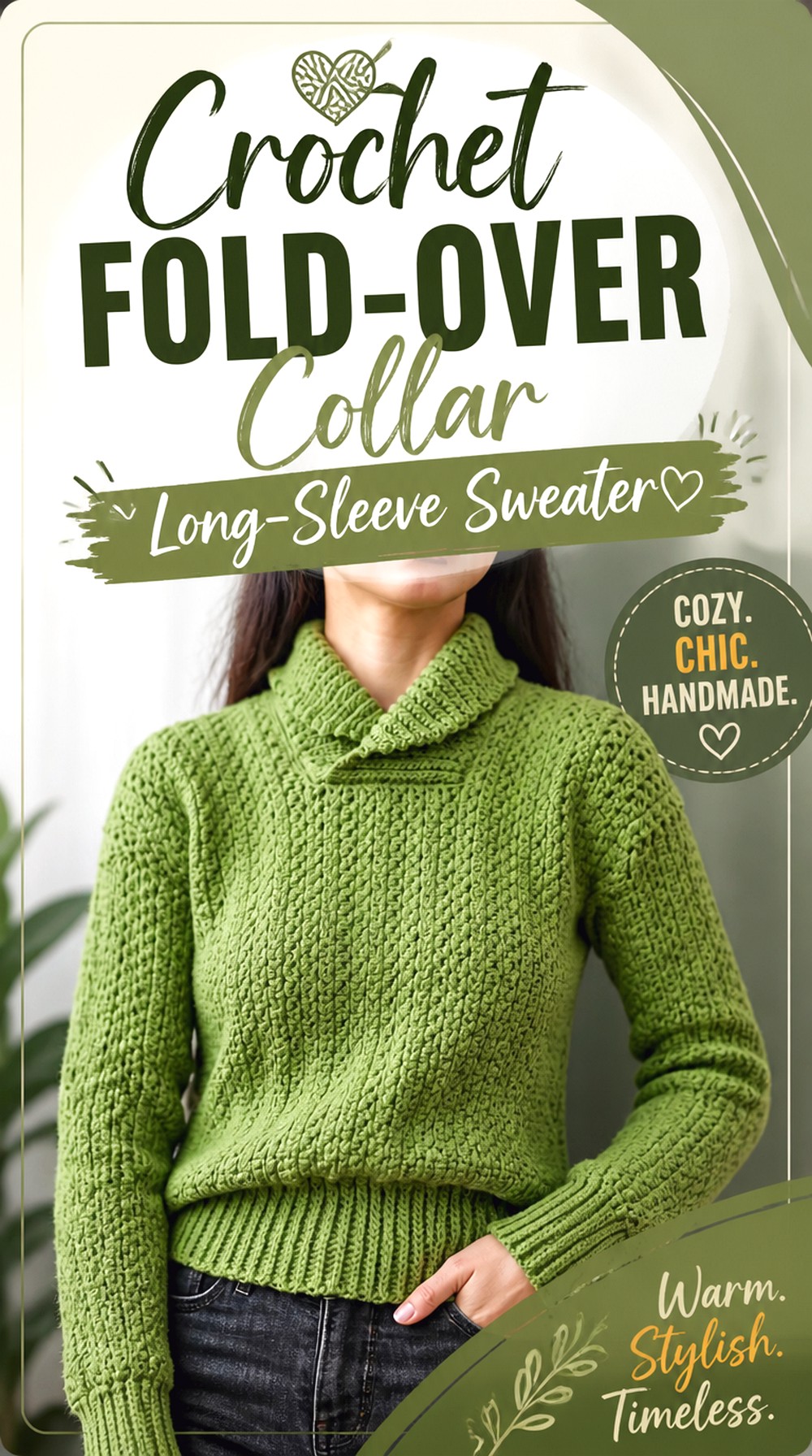
For a polo idea that feels closer to a cold-weather pullover, use a substantial fold-over collar and full-length sleeves. The extra coverage shifts the project away from a lightweight sport-shirt look and toward a true sweater. TCDDIY’s tutorial uses moss stitch and a collared long-sleeve construction, making it a useful reference for this heavier interpretation.
The main planning difference is weight distribution. A longer sleeve, denser body, cuffs, and larger collar place more fabric around the shoulders than a short-sleeve polo does. Yarn that feels perfectly manageable in a small sample may behave differently once the whole garment is hanging from the neckline.
Let the Fold-Over Collar Settle Before Judging It
A substantial collar can look different while the garment is flat than it does when worn. Assess it in the position it will actually sit, and give the fabric a chance to relax according to the yarn’s recommended care. If you substitute a much softer yarn, check whether the collar still has enough body to fold cleanly rather than collapsing.
Long Sleeves Increase the Pull at the Shoulder
Full sleeves add both length and weight. Before finishing the second sleeve, put the garment in a worn position and check the shoulder line, cuff location, and neckline. If the first sleeve changes how the body hangs, it is better to notice that before duplicating the same dimensions on the other side.
Original Tutorial and Creator Credit
Creator: TCDDIY
Crochet Refined Short Sleeve Polo Shirt
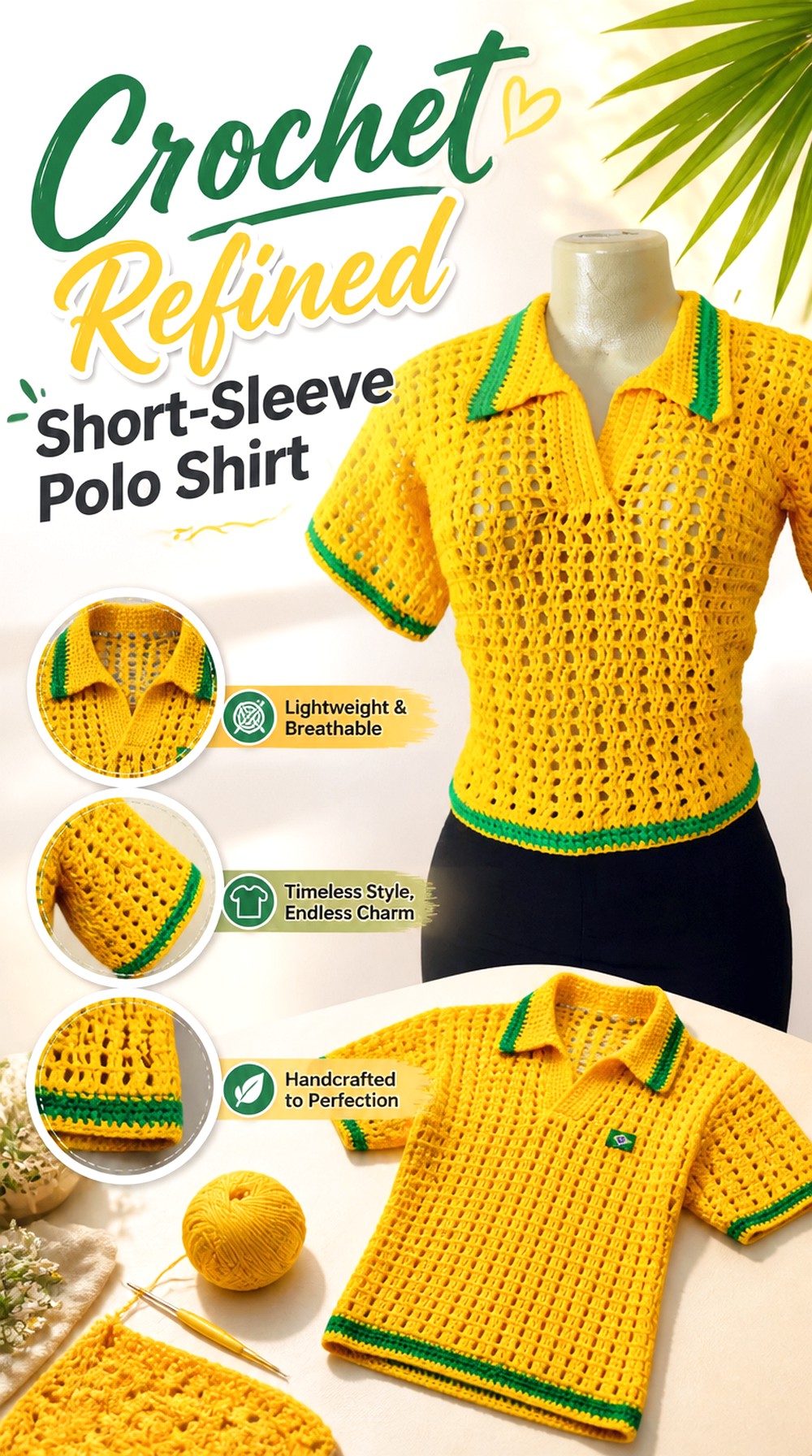
This short-sleeve option keeps the recognizable polo shape while offering an alternative reference to the more basic classic shirts in the collection. It suits a wardrobe where you want the crochet texture to remain visible without turning the garment into an overtly oversized, mesh, or granny-stitch piece.
A refined result depends heavily on finishing. Straight front edges, an even neckline, symmetrical sleeves, and a collar that lies predictably will matter more than elaborate embellishment. If you want to customize the look, consider changing the overall length or choosing a restrained contrast treatment rather than altering multiple structural features at once.
Clean Edges Matter on a Minimal Polo
A plain body gives the eye fewer places to look, so irregular hems or uneven front edges stand out. Check the garment on a flat surface during construction and compare corresponding sides before final finishing. Small differences are much easier to address before the collar and sleeve edges make the silhouette feel visually complete.
Check the Upper-Arm Opening Early
A short sleeve may look wide enough while the shirt lies flat but still feel restrictive when worn. Test the arm opening and shoulder movement before completing both sides. If you are adapting the garment for a different body shape, this checkpoint can be more informative than increasing the entire body indiscriminately.
Original Tutorial and Creator Credit
Creator: Ascarcrochets
Crochet Transitional Weather Polo Sweater
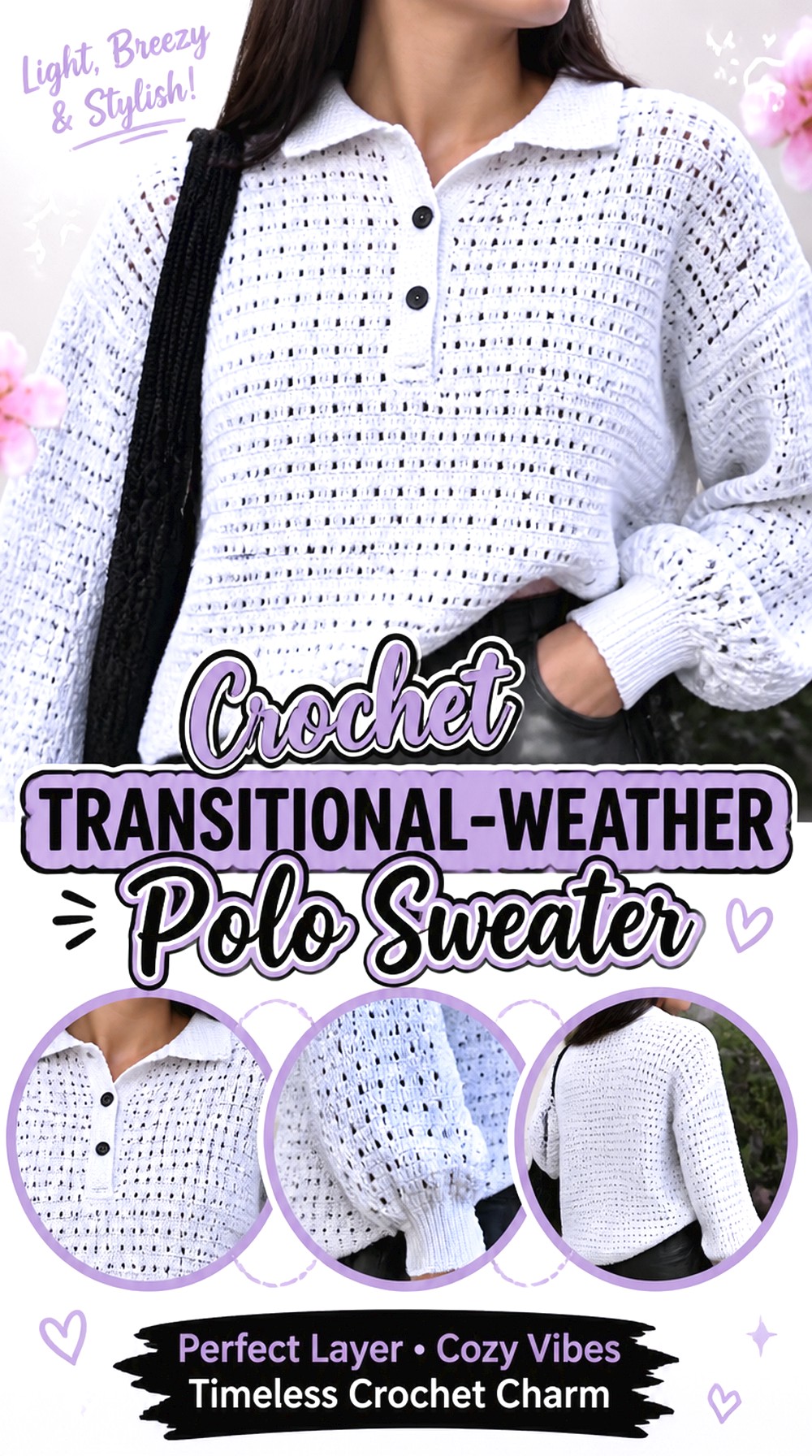
An all-season polo sweater sits between an airy summer top and a heavy winter pullover. That makes fabric choice especially important: the body needs enough movement for comfortable wear while still looking intentional when layered. This version works well with a straight silhouette and moderate coverage rather than extreme mesh or bulky texture.
Think about how you expect to wear it before deciding on fit. A polo intended for a single layer can sit closer to the body, while one that will regularly go over a tee or camisole needs more room through the chest and upper arms. The HookedByJessica tutorial is presented as a unisex polo sweater for all-season wear, offering a useful reference point for that middle ground.
Test Vertical Stretch Before Finalizing Length
Crochet fabric can gain length as the full garment weight accumulates. Hang or wear the developing sweater rather than judging its length only on a table. This is particularly useful for a transitional piece because you may want enough length for layering without ending up with a garment that feels noticeably longer after use.
Layering Room Belongs at the Chest and Arms
Simply making the hem wider does not create useful layering ease. If another top will sit underneath, check the chest, armholes, and upper sleeves. The garment should accommodate the layer where the extra fabric actually exists rather than becoming disproportionately wide only near the bottom.
Original Tutorial and Creator Credit
Creator: HookedByJessica
Crochet Soft Point Collar Everyday Top
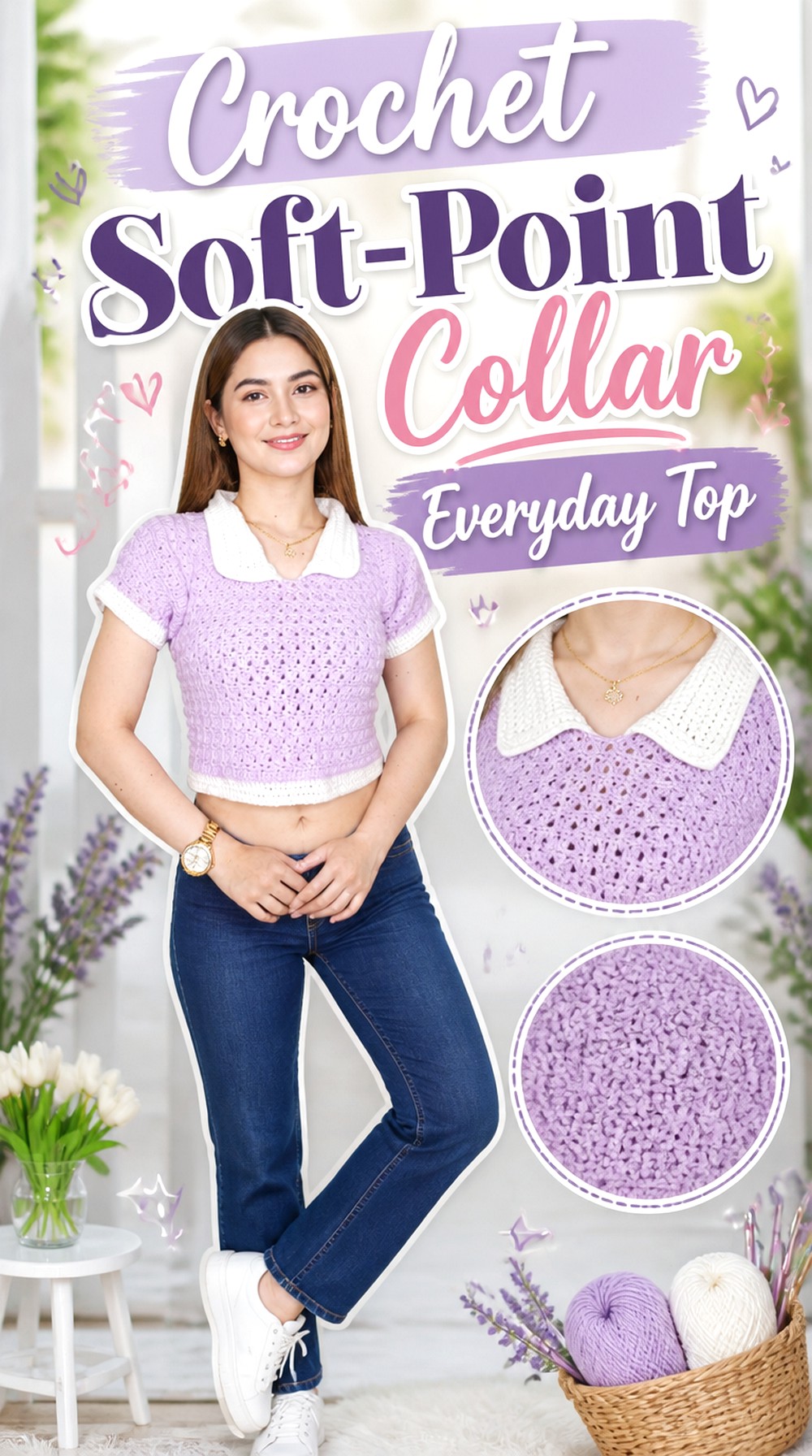
Not every collared crochet top needs a traditional polo placket. A softer point collar can provide the same polished neckline emphasis while keeping the garment closer to an everyday top. This is one of the adaptation-focused ideas in the collection: the CJ Crochet tutorial is for an Elle collared crochet top, so use it when the collar and overall top silhouette interest you rather than expecting a conventional sportswear polo.
This approach works particularly well when you prefer a less structured neckline. It also gives you a useful comparison point for deciding whether buttons or a deeper front opening are actually important to your own polo-inspired sweater.
A Soft Collar Still Needs a Stable Neckline
Drape in the body is helpful, but excessive stretch at the neck can make a collar spread farther than intended. Before completing the collar, check that the neckline holds a consistent shape without being pulled outward. If you change fibers, compare the new fabric with the original tutorial’s general behavior instead of assuming identical results.
Use Drape to Keep the Top From Feeling Stiff
A softer collared top should move with the body. When swatching an alternative yarn, hold the fabric vertically as well as horizontally. A sample that looks smooth on a table can feel much firmer when hanging. Choose enough structure to define the collar without sacrificing the relaxed quality that distinguishes this idea.
Original Tutorial and Creator Credit
Creator: CJ Crochet
Crochet Granny Stitch Summer Polo Shirt
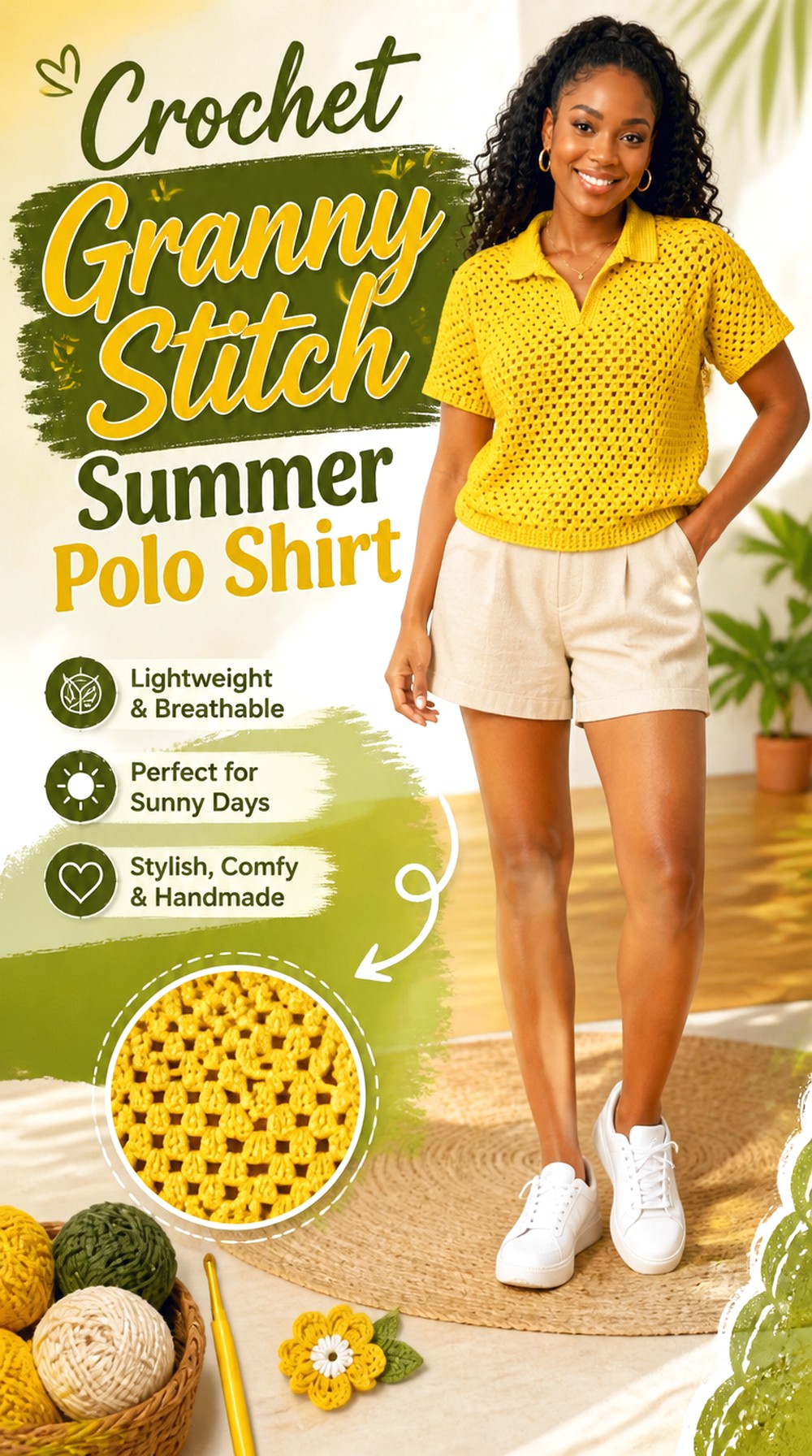
Granny stitch gives a polo a completely different surface from dense, conventional shirt fabric. The repeated clusters create visible rhythm and natural openness, making this version especially suited to a summer or layering wardrobe. The collar provides a structured visual counterpoint, so the finished garment still reads as a polo even though the body has a more relaxed crochet character.
Because the fabric already carries strong texture, this idea does not need complicated color placement to stand out. A limited palette can emphasize the stitch pattern, while multiple colors can push it toward a more playful patchwork look. Creative Hands by SHAY specifically demonstrates a granny-stitch polo shirt, making this a direct tutorial match.
Granny Clusters Already Provide Surface Interest
Before adding stripes, contrasting trim, or several accent colors, look at the fabric from a normal viewing distance. Granny stitch creates shadows and repeated openings on its own. If you want a calmer polo, let that texture be the main decorative feature and reserve stronger contrast for the collar or another small structural area.
Keep Open Edges Looking Deliberate
Cluster-based fabric can produce visibly stepped or open edges depending on the construction. Pay attention to the hem, sleeve openings, and neckline transitions so the finishing looks intentional. If an edge seems looser than the body, resolve that difference before adding a collar that will draw even more attention to the upper garment.
Original Tutorial and Creator Credit
Creator: Creative Hands by SHAY
Crochet Clean Line Unisex Polo Top
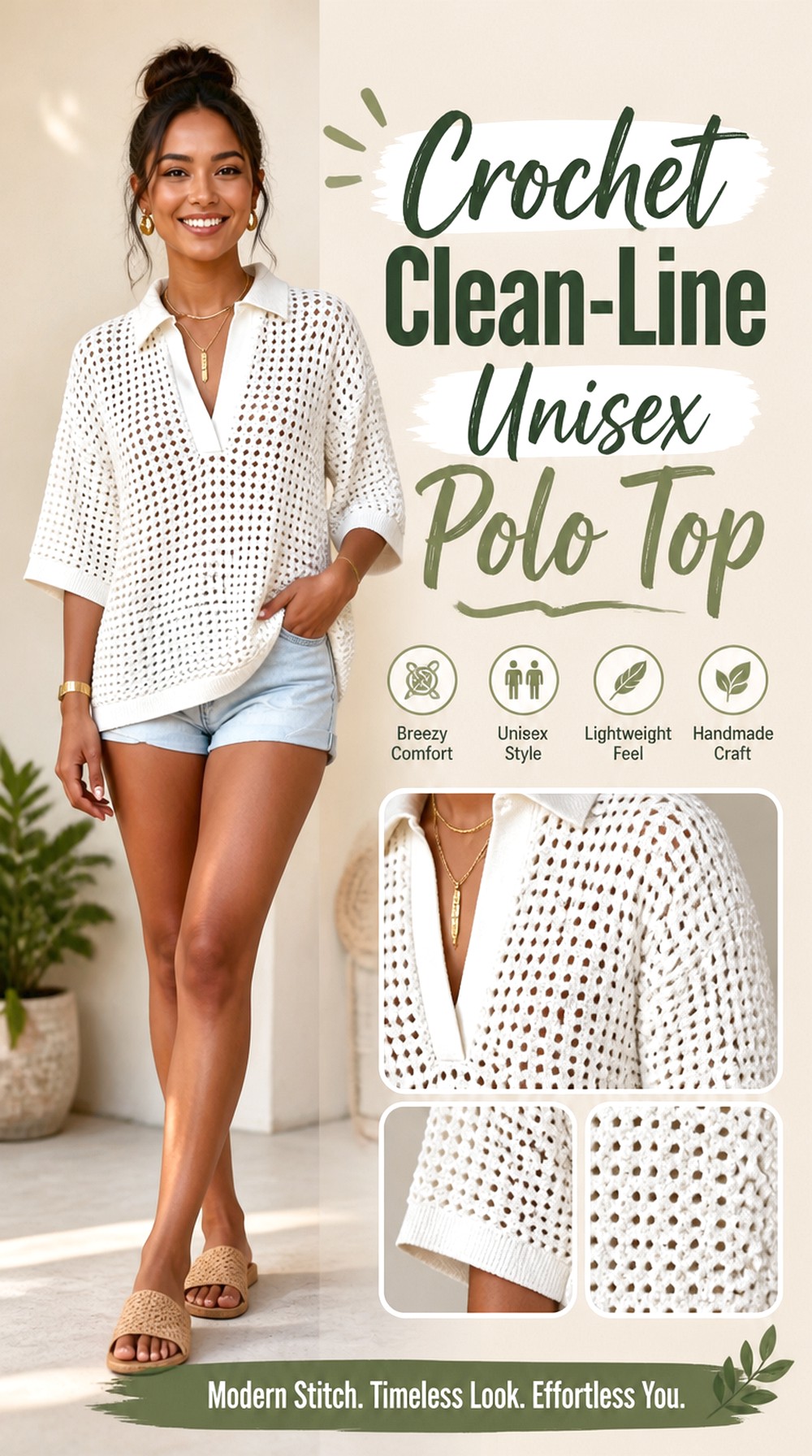
A clean unisex polo is a useful choice when you want the collar to provide most of the design identity. Keep the body uncomplicated and let overall proportions determine whether the garment feels neat, relaxed, or oversized. This type of shirt can also be a good base for a single contrast collar or small amount of color blocking because there is little competing texture.
Honey Loop Stitches’ polo tutorial presents a unisex collared top, making it a helpful direct reference for this direction. When adapting it, focus first on the shoulder and chest relationship rather than choosing size solely from how much ease you generally like in non-crochet clothing.
Clean Lines Make Proportion More Important
When there is no dramatic stitch motif to distract the eye, small proportion changes become noticeable. Compare collar width, sleeve length, body length, and hem width together. Lengthening only one element can change the visual balance of the whole shirt, so reassess the polo from a distance after any substantial modification.
Treat the Collar as the Main Finishing Detail
A clean body puts extra visual emphasis on the neckline. Before attaching or finishing a collar, make sure both sides of the front opening align and the neckline is not being stretched by the weight of the body. Careful preparation here can have more visual impact than adding another decorative feature elsewhere.
Original Tutorial and Creator Credit
Creator: Honey Loop Stitches
Crochet Longline Polo Tunic Sweater
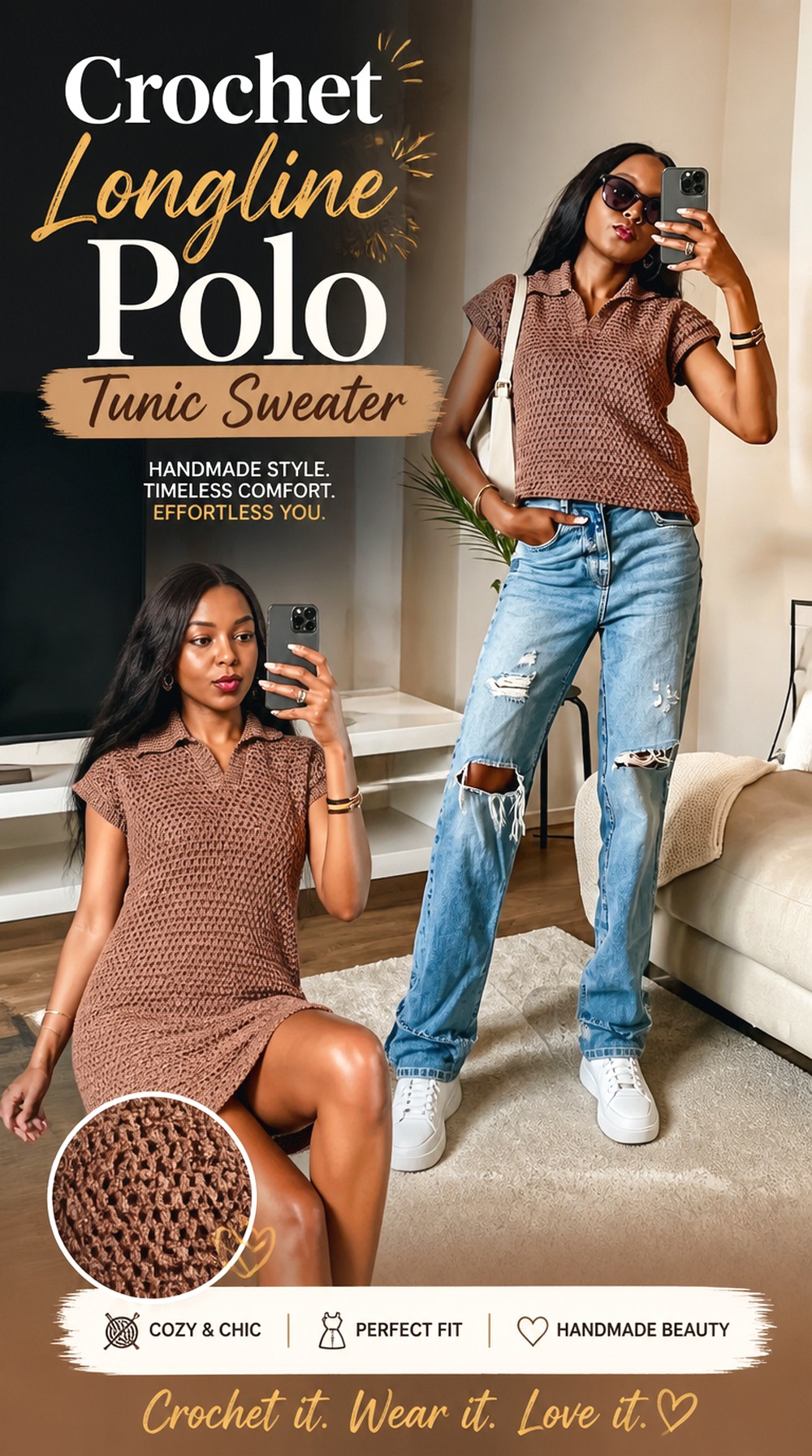
A longline polo extends the collared-shirt idea toward tunic territory. That extra length can create more coverage and a strong vertical line, but it also adds yarn weight and changes how the garment interacts with the hips. AC Crochets’ tutorial explicitly covers a polo shirt, dress, or top with a collar, making it a useful source when you want to explore a longer adaptation rather than stop at standard shirt length.
Plan the upper body first and extend only after the shoulder, armhole, and neckline fit are working. That prevents a length adjustment from becoming an accidental all-over size increase. A longline version can be straight, slightly relaxed, or dress-like depending on your intended use.
Added Length Changes More Than Hem Placement
The additional fabric affects weight, movement, and where the garment encounters the hips. Hold the developing piece vertically as you add length and check whether the fabric begins to stretch. If a straight body starts catching at the hips, reconsider overall shape rather than forcing the fabric to behave like a shorter shirt.
Preserve the Upper Fit When Extending the Body
If the neckline and shoulders already fit well, there is usually no reason to enlarge them merely because you want a longer garment. Treat length as its own design decision. This makes it easier to retain the recognizable polo shape at the top while changing coverage below.
Original Tutorial and Creator Credit
Creator: AC Crochets
Crochet Men’s Color Block Polo Shirt
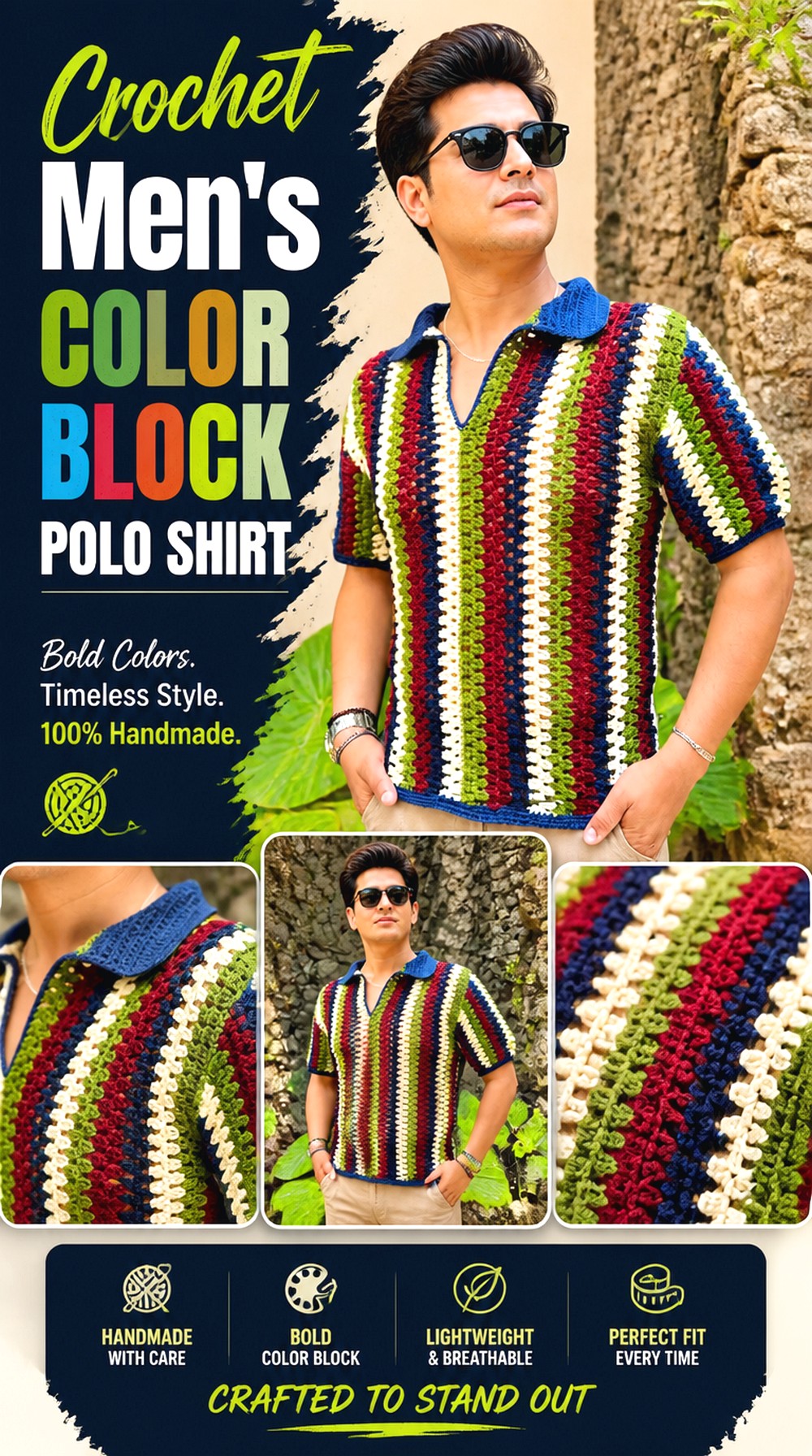
A men’s polo provides a different proportion reference from cropped or close-fitting women’s tops. Laura Cepeda English’s tutorial is specifically presented as a crochet polo shirt for men and uses multiple colors, making it useful for planning a color-block or multicolor version.
Keep the decorative treatment connected to the garment structure. Broad areas of color can highlight the chest, sleeves, collar, or body without needing complex surface texture. If you adapt the sizing for a particular wearer, compare actual garment measurements rather than assuming a generic “men’s” fit will produce the desired amount of ease. Shoulder width and upper-arm room are especially worth checking before repeating both sleeves.
Place Color Changes Where the Polo Structure Helps Them
Color blocking looks more intentional when transitions relate to visible garment divisions. The collar, sleeve area, or broad body sections can provide natural boundaries. Before committing, sketch or arrange yarn colors in approximate proportions; a shade that works as a small accent can dominate unexpectedly when used across a large torso panel.
Use a Favorite Shirt to Check Menswear Proportions
A familiar polo or sweater can provide practical comparison points for chest width, shoulder placement, sleeve opening, and length. Lay the crochet piece against it without stretching either item. You are not copying the garment as a pattern; you are using a known fit reference to catch major proportion differences early.
Original Tutorial and Creator Credit
Creator: Laura Cepeda English
Crochet Minimal Double Crochet Polo Shirt
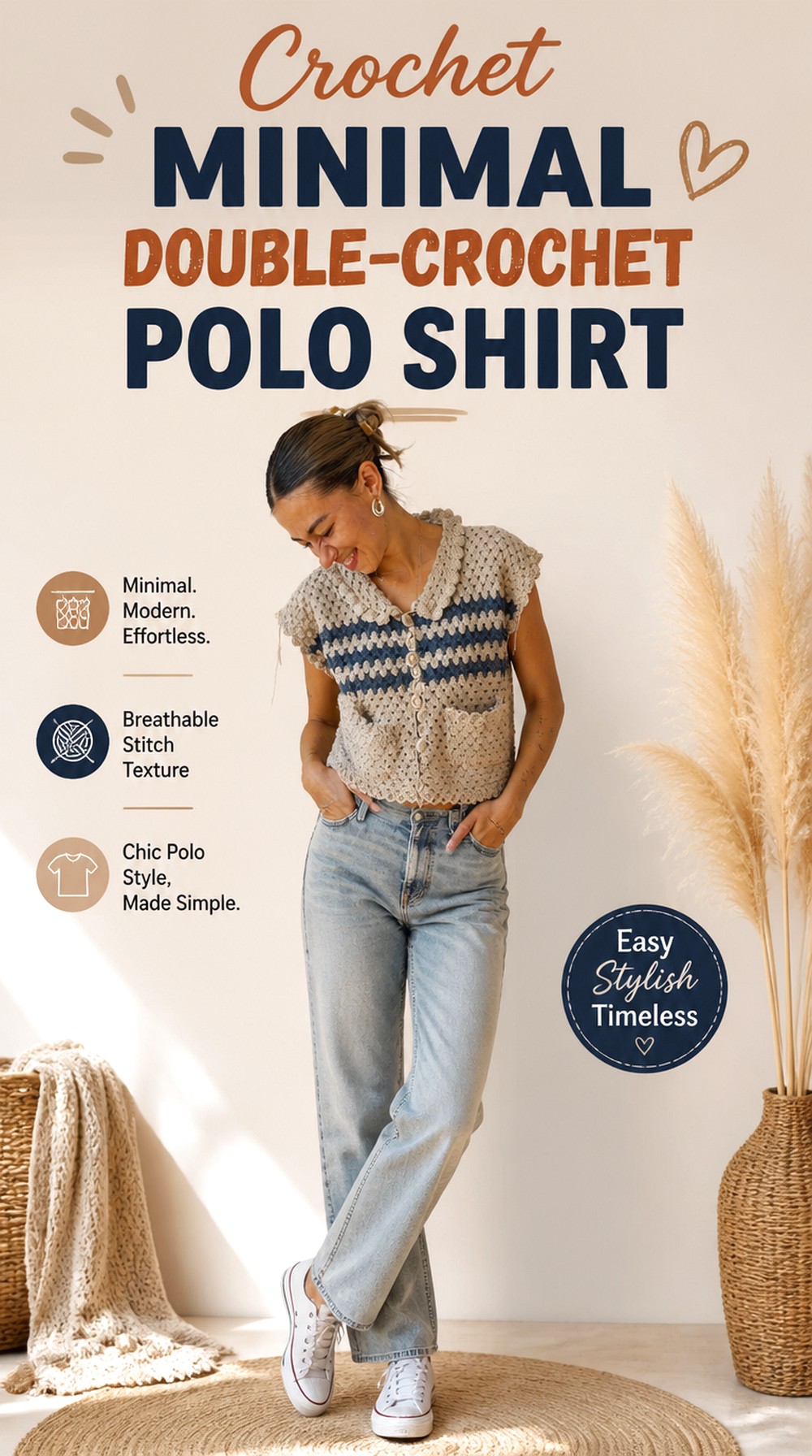
A polo built around a simple stitch surface can look remarkably clean. BELINA BELLWOOD’s tutorial identifies a one-stitch, double-crochet approach, which makes it a useful reference when you would rather concentrate on garment shape than combine several textures.
The simplicity is also revealing: tension changes, uneven edges, or inconsistent panel widths have nowhere to hide. Regularly compare the fabric with itself as it grows. This idea suits solid colors, subtle heathers, or restrained contrast because the goal is a quiet polo whose collar and silhouette do most of the visual work.
Simple Double Crochet Exposes Tension Drift
A repetitive stitch can create very readable horizontal or vertical lines. If the fabric gradually widens or narrows, those lines may make the change obvious. Check width periodically rather than waiting until an entire panel is finished. This is especially important if your tension changes between longer crochet sessions.
One Decorative Change Can Be Enough
A minimal polo does not need several embellishments to become distinctive. A contrasting collar, differently colored sleeve edge, or carefully chosen button treatment can create enough separation from the body. Keeping the rest restrained also makes it easier to preserve the clean character that makes this version different from the textured options.
Original Tutorial and Creator Credit
Creator: BELINA BELLWOOD
Crochet Women’s Open Mesh Polo Top
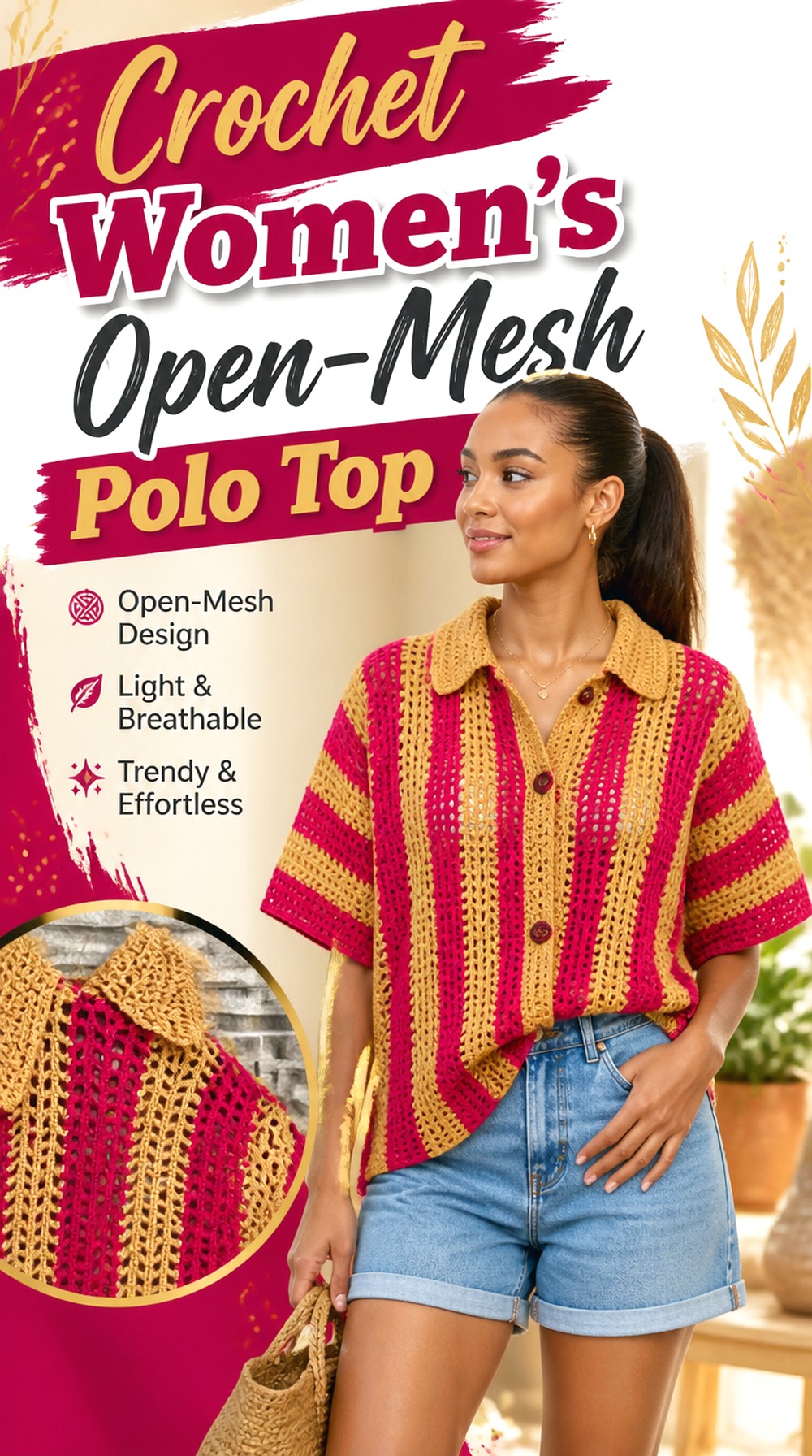
Open mesh changes a polo from a conventional shirt into an obvious layering piece. ZoeCrochetR’s tutorial combines a women’s polo-shirt idea with mesh fabric, providing a direct reference for this lighter, more open direction.
Instead of judging fit by how closely the mesh follows the body, consider how the openings look when the garment hangs naturally. Pulling an open fabric too tightly can distort both the stitch pattern and the collar area. This version is also one where the underlayer becomes part of the styling. A tank, camisole, dress, or other garment underneath can change the contrast and apparent density of the crochet considerably.
Mesh Fit Should Be Checked Without Pulling
Open stitches can appear smaller when fabric is relaxed and much larger when stretched. Try the developing top in the amount of ease you actually plan to wear. If the mesh has to be pulled firmly to achieve the intended width, the final appearance may be more open—and the neckline less stable—than expected.
Plan the Underlayer Before Choosing Yarn Color
The color behind mesh affects how strongly every opening reads. A high-contrast underlayer can emphasize the stitch pattern, while a similar tone creates a quieter look. Consider this before deciding that the crochet itself needs more color or texture; the styling underneath may already provide enough visual contrast.
Original Tutorial and Creator Credit
Creator: ZoeCrochetR
Crochet Ribbed Collar Cropped Polo Top
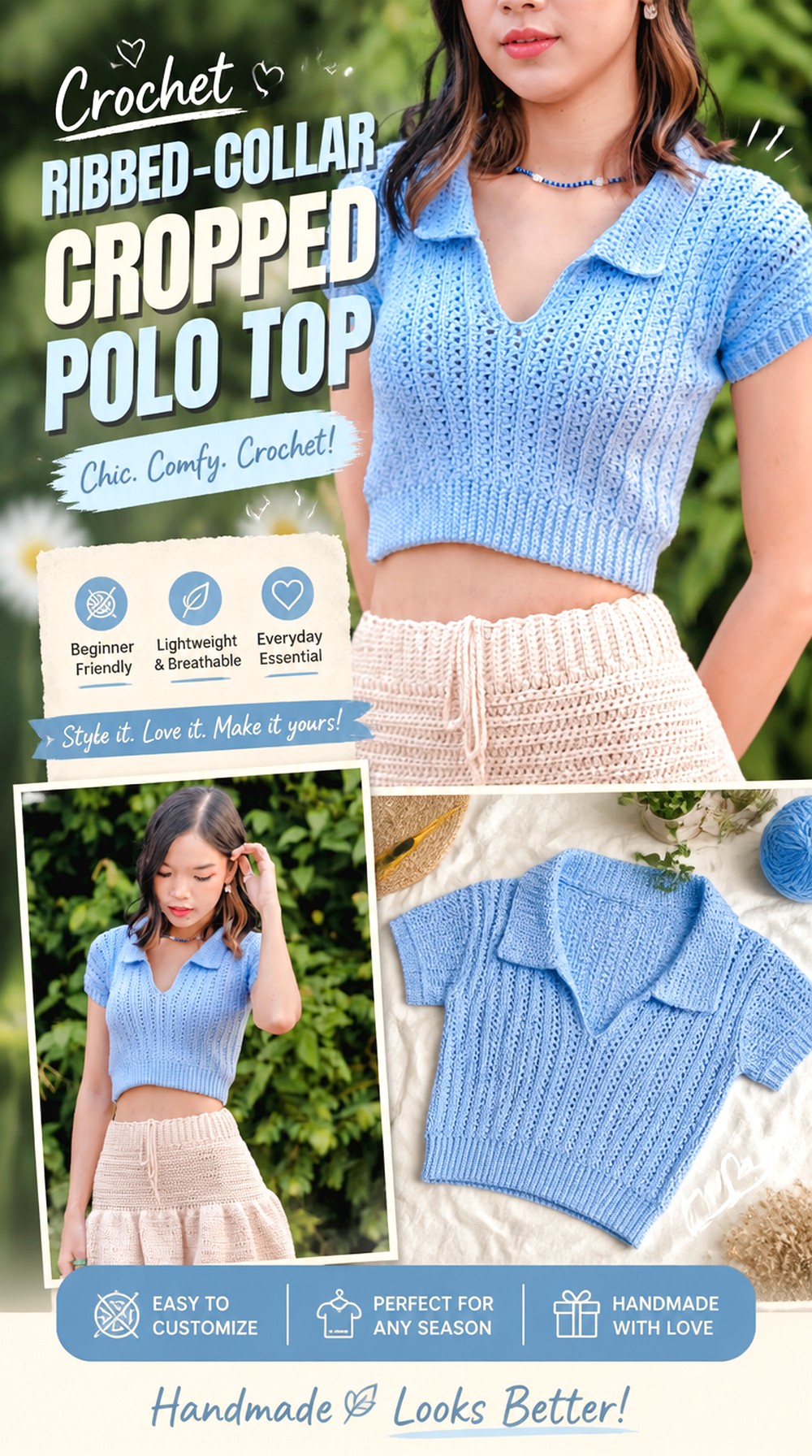
A ribbed collar immediately changes the visual language of a polo-inspired top. It creates a firmer, more linear neckline and works particularly well with a cropped body because both features keep the design compact. Chenda DIY’s tutorial is for a ribbed-collar crochet top, so this is an adaptation reference rather than a traditional polo tutorial.
The cropped length should be chosen alongside the bottoms you intend to wear. A top that looks balanced with high-rise pants may expose considerably more torso with lower-rise clothing. Rather than relying on a generic “cropped” measurement, hold the garment against your body and identify the actual hem position you prefer.
Ribbing Needs Recovery at the Collar
A ribbed collar should be able to sit neatly without permanently spreading after light stretching. When substituting yarn, make a small ribbed sample and see how well it returns toward its original shape. A yarn that produces beautiful body drape may not necessarily create the same collar behavior as the tutorial.
Crop Length Should Match the Bottoms You Wear
Decide whether you want the polo to meet a waistband, overlap it, or stop above it. That decision is more useful than copying another maker’s body length. Check the garment while wearing the type of pants or skirt you expect to pair with it, because waistband height changes the finished proportion significantly.
Original Tutorial and Creator Credit
Creator: Chenda DIY
Crochet Oversized Drop Shoulder Polo T Shirt
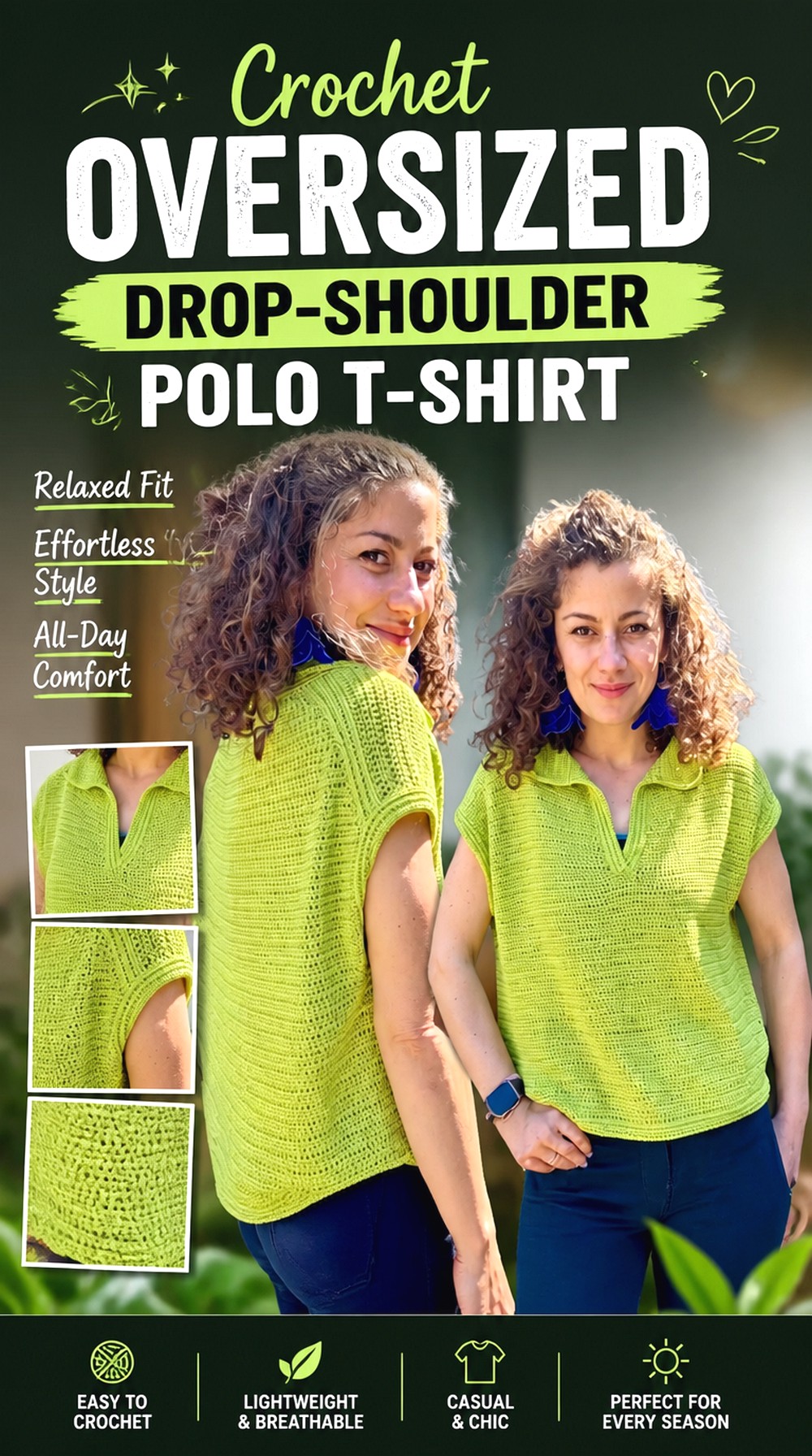
An oversized polo creates its shape through generous body width and a shoulder seam that sits farther down the arm. ByKaterina Designs’ Polo T-Shirt is described with an oversized fit and relaxed drop shoulder, making it a strong reference when you specifically want that silhouette instead of accidentally producing it through poor sizing.
The difference matters: intentional oversizing maintains balanced sleeve, collar, and body proportions. Simply choosing several sizes larger can enlarge areas you did not want to change. Compare finished measurements and shoulder placement rather than treating the size label as the only guide.
Drop Shoulders Need Fabric That Can Fall
A dropped shoulder creates extra fabric around the upper arm. If the crochet is very rigid, that area can project outward instead of falling naturally. Hold your swatch vertically and bend it over an edge to see whether it produces the relaxed transition you want from body to sleeve.
Finished Measurements Matter More Than the Size Label
Oversized garments depend on how much room exists relative to the wearer. Two people choosing the same labeled size can experience the silhouette very differently. Compare the tutorial’s available finished measurements with your body and a loose garment you already enjoy, then decide how much ease actually suits your preference.
Original Tutorial and Creator Credit
Creator: ByKaterina Designs
Crochet Striped Mesh Polo Shirt
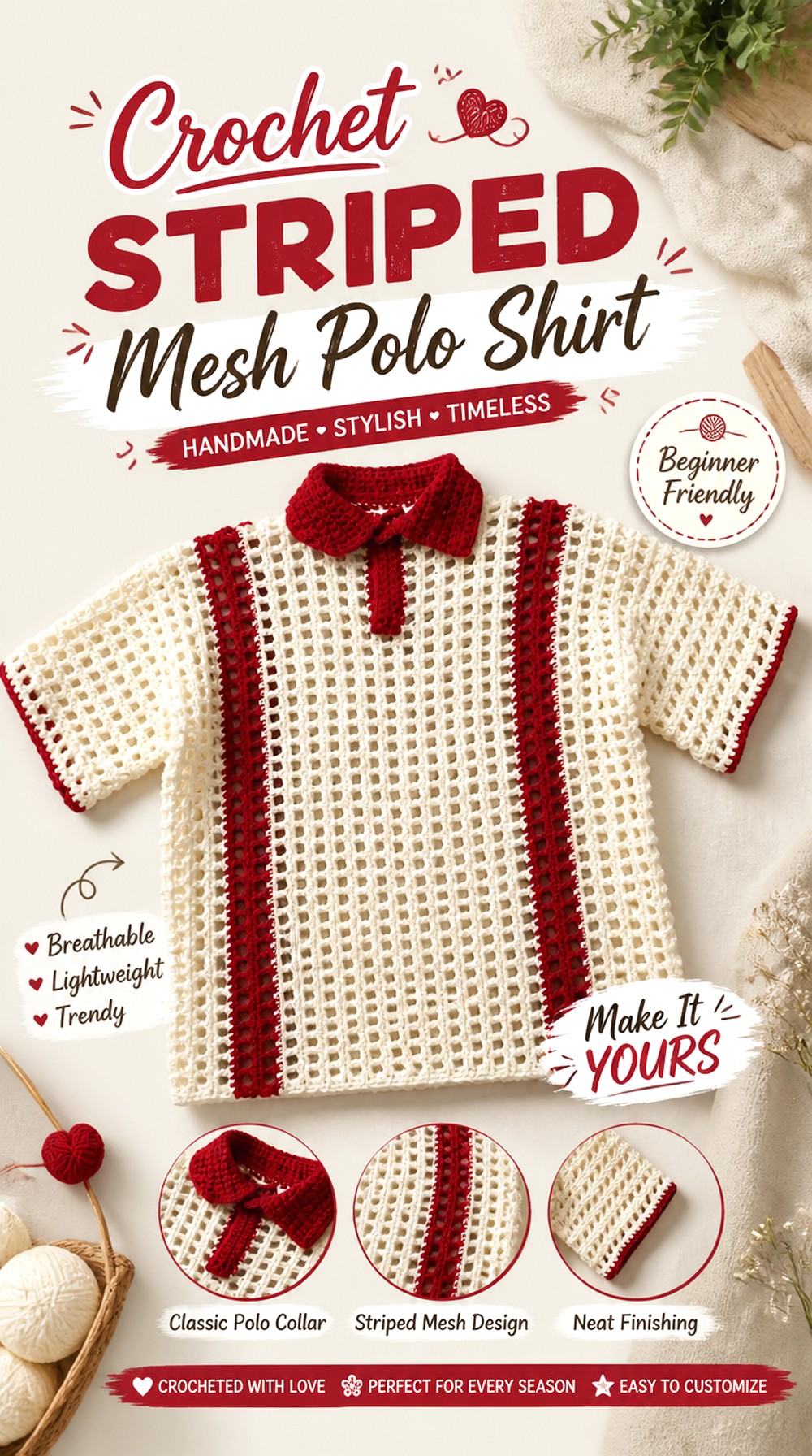
This idea combines two strong design elements—open mesh and stripes—without losing the recognizable collared-shirt shape. LaDenser Crochets demonstrates a mesh polo with bold stripe contrast, providing a useful reference for readers who want more graphic impact than a solid openwork top.
Stripe width, placement, and contrast influence the apparent proportions of the torso. Before changing the tutorial’s palette, consider whether you want the stripes to dominate or simply break up the mesh. Because open fabric can lengthen or widen when worn, assess stripe placement after allowing the garment to hang naturally rather than planning only from a flat panel.
Stripe Placement Can Emphasize Torso Width
A broad horizontal contrast area naturally attracts attention. If you want the collar to remain the focal point, keep your strongest contrast more restrained. If the stripes are meant to be the statement, distribute them deliberately instead of inserting leftover colors wherever convenient. A quick color sketch can prevent an unbalanced final layout.
Watch How the Mesh Opens Under Garment Weight
As the body grows, its own weight can change the shape of mesh openings. Hold the work vertically during progress checks and compare the top and bottom areas. If the lower fabric looks substantially more open, consider whether tension, garment weight, or handling is contributing before finishing the entire shirt.
Original Tutorial and Creator Credit
Creator: LaDenser Crochets
Crochet Hexagon Granny Collar Shirt
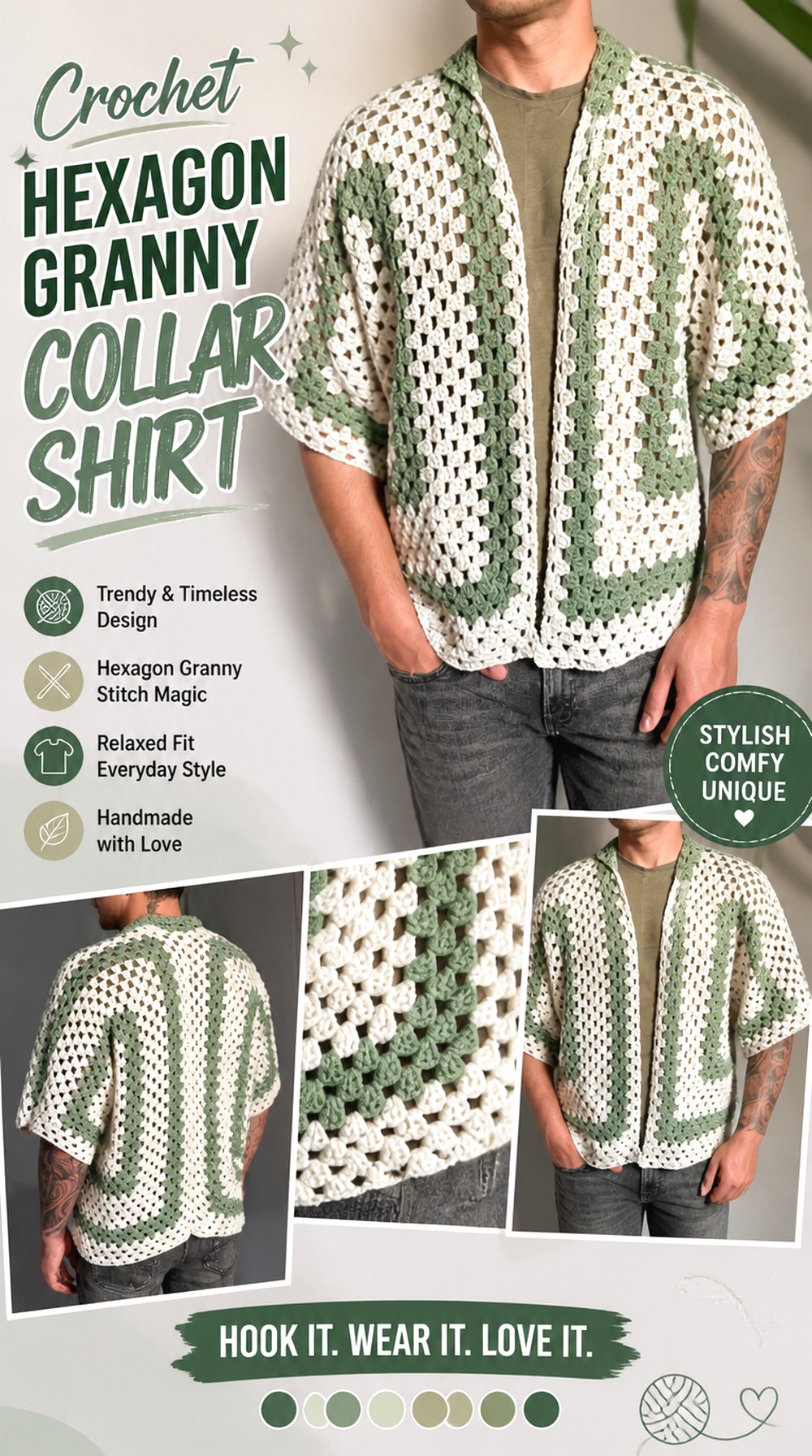
Hexagon construction offers one of the biggest structural departures in this collection. Instead of treating the body primarily as conventional shirt panels, this design uses the expanding geometry of crochet motifs to help form the garment. Kenikse Crochet’s tutorial combines a hexagon shirt with granny stitch and a collar, making it a good source for a polo-inspired piece with visibly different construction.
The trade-off is that enlarging a hexagon can affect several parts of the garment simultaneously. Do not assume that adding more growth will solve only chest width. Fold and position the developing pieces frequently so you can see what is happening to sleeve depth, body width, and length together.
Hexagon Growth Changes Several Dimensions Together
A geometric garment does not always let you alter width independently. As the motif expands, other edges also move. Before adding substantial size, identify which finished edge each part of the hexagon will become. This makes it easier to see whether continued growth improves the area you actually need.
Fold the Pieces Into Wearable Form Before Judging Fit
A flat hexagon tells you little about how the final shirt will hang. Arrange the pieces in their garment orientation at regular intervals and check the developing armhole, sleeve, and body. This visual checkpoint is especially valuable before joining because geometric fabric can look deceptively large or small while completely flat.
Original Tutorial and Creator Credit
Creator: Kenikse Crochet
Crochet Granny Stitch Collar Tee
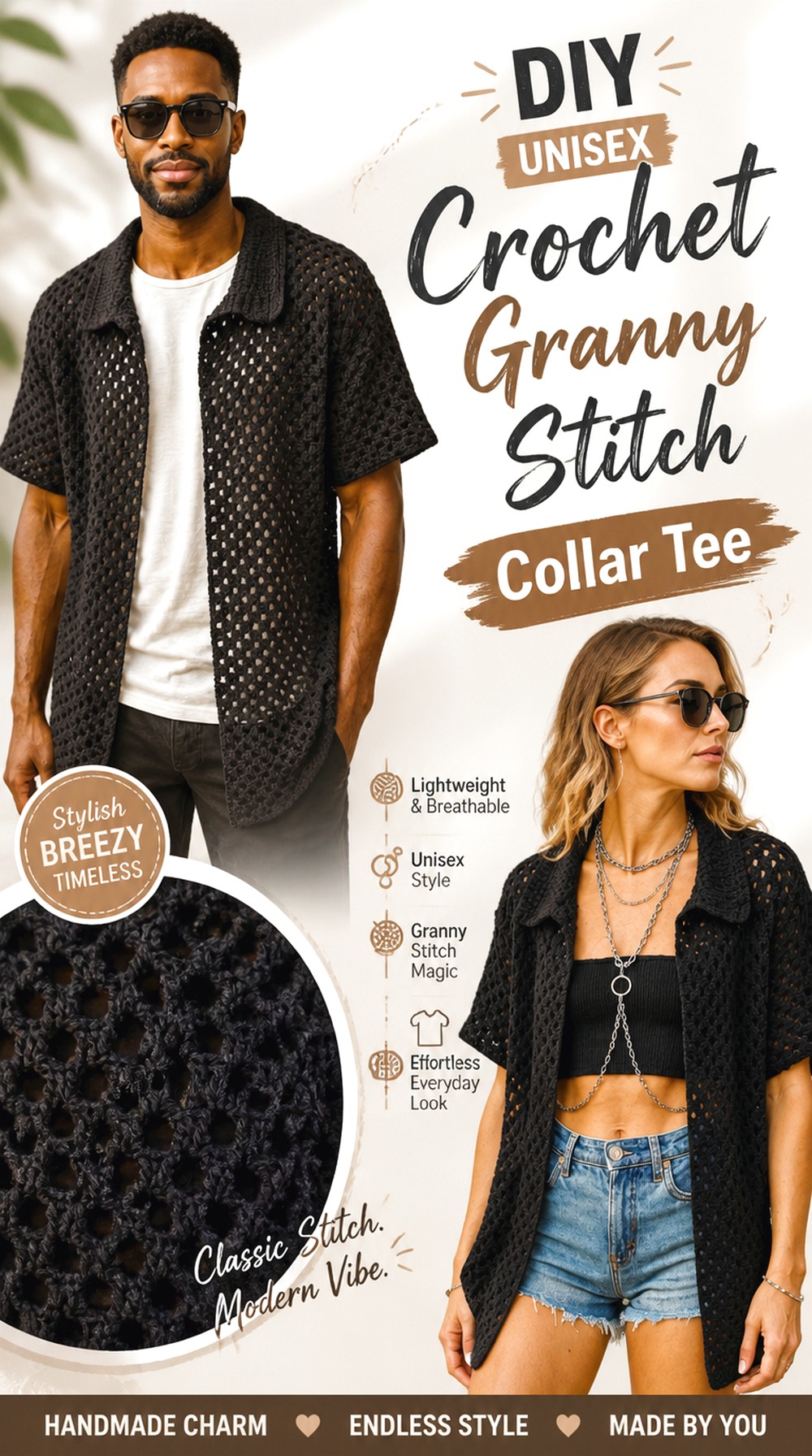
This project keeps the collar but shifts the rest of the garment toward a casual crochet tee. Shyler crochets uses granny stitch in a unisex collared T-shirt tutorial and describes it as a made-to-measure design, so it is useful when you want an airy, casual shirt rather than a structured placket polo.
Compared with the granny-stitch summer polo earlier in the list, this idea leans more strongly into a throw-on T-shirt character. That makes it a practical option for layering and relaxed styling. Keep the collar in proportion with the open body so it does not appear overly formal or heavy against the light cluster fabric.
Keep Tee Proportions Separate From Collar Scale
A casual tee can have a generous body without needing an equally oversized collar. When adjusting width, reconsider the neckline separately. The collar should frame the opening rather than expand automatically with every body modification. This is particularly important in made-to-measure projects where one dimension can otherwise drive unnecessary changes elsewhere.
Let the Granny Texture Carry the Design
Granny stitch already provides rhythm, openness, and shadow. If you also add fringe, strong striping, contrast edging, and a prominent collar, the design can become visually busy. Decide which one or two details matter most to you and let the remaining areas stay quieter.
Original Tutorial and Creator Credit
Creator: Shyler crochets
Crochet Button Placket Cotton Polo Shirt
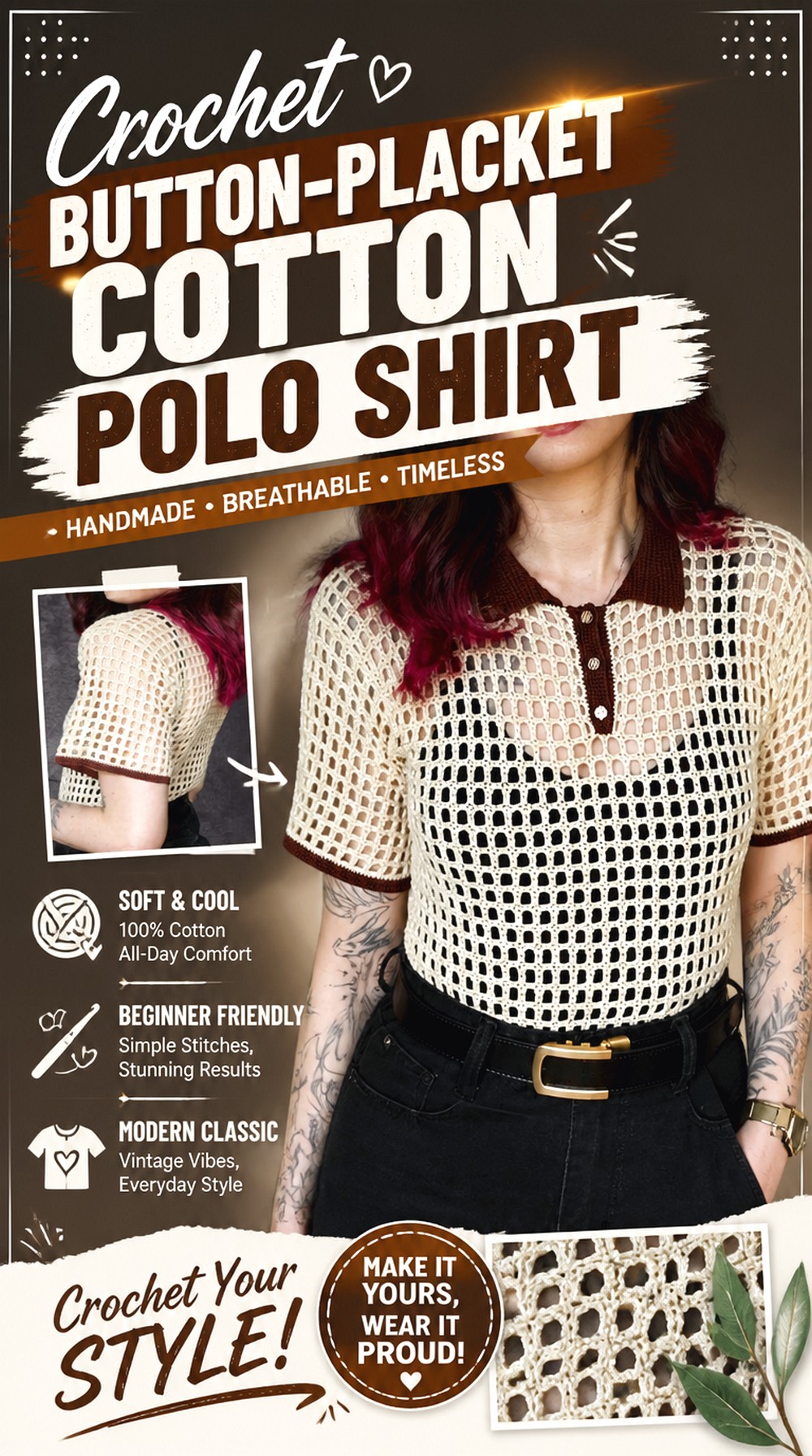
Buttons make this version read immediately as a classic polo. Masha Handmade’s tutorial uses mercerized cotton and includes three buttons in the demonstrated shirt, giving readers a direct reference for a crisp collared top with a functioning front placket.
The front opening deserves careful attention because the two sides sit next to each other and any mismatch is easy to see. Before adding fasteners, allow the front edges to relax and check whether they remain the same length. If you change the button size or number, plan the visual spacing before committing rather than treating buttons as an afterthought.
Buttons Make Placket Alignment More Visible
Buttoned fronts create repeated horizontal reference points. If one side stretches more than the other, the discrepancy can show as twisting or uneven spacing. Compare both edges flat and in a worn position before attaching the final fasteners. The goal is a placket that closes without forcing the neckline out of shape.
Mercerized Cotton Highlights Stitch Definition
The tutorial specifies mercerized cotton, a material that can produce a clearly defined surface. If you substitute another fiber, expect the visual character to change even when gauge is similar. A fuzzier or more elastic yarn may soften both the body texture and the crisp appearance of the collar.
Original Tutorial and Creator Credit
Creator: Masha Handmade
Crochet Straightforward Everyday Polo Shirt
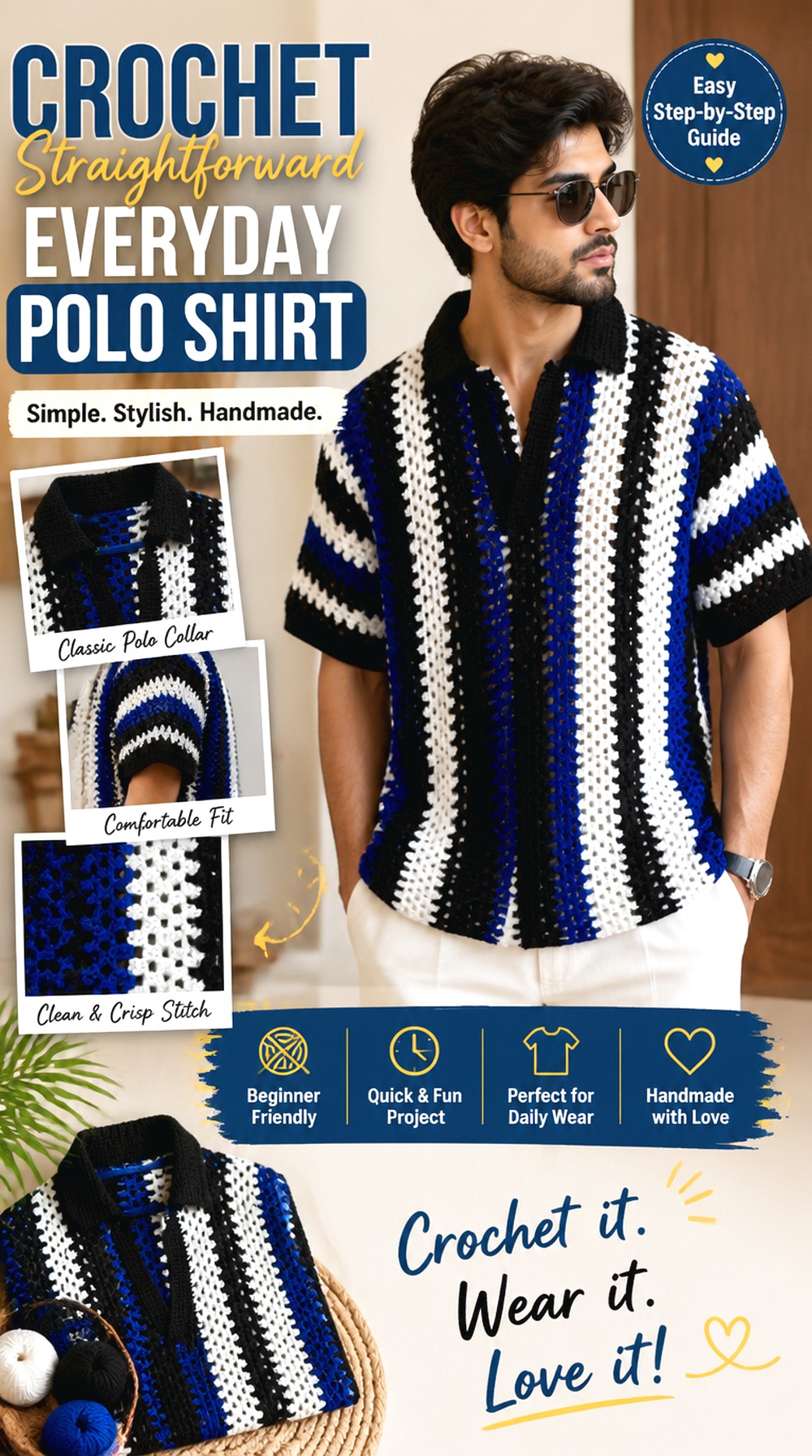
An uncomplicated everyday polo is useful when you want a recognizable collared shirt without mesh, oversized geometry, or a highly textured stitch pattern becoming the main feature. ToriaCrochet_ provides a direct polo-shirt tutorial, making this project a practical reference point between the more specialized ideas in the collection.
Use a version like this to focus on fundamental proportions: neckline, body width, sleeve opening, collar, and length. Once those work, subtle customization is easy to add. A restrained stripe, contrast edging, or adjusted sleeve length can make the shirt personal without changing the underlying identity of the garment.
Straightforward Fabric Rewards Regular Width Checks
Even simple construction can drift if tension changes. Measure or compare the fabric at several points as it grows instead of relying on a single check at the beginning. A consistent body width makes later collar and sleeve placement much easier to judge, especially when the design itself does not include intentional shaping.
Check the Collar Before Repeating the Second Sleeve
Once one sleeve and the collar area are present, put the garment in its worn orientation. This gives you a useful checkpoint for upper-body balance. If the shoulder or neckline has shifted under the added fabric, address that before duplicating the same sleeve dimensions on the other side.
Original Tutorial and Creator Credit
Creator: ToriaCrochet_
Crochet Soft Collar Shirt
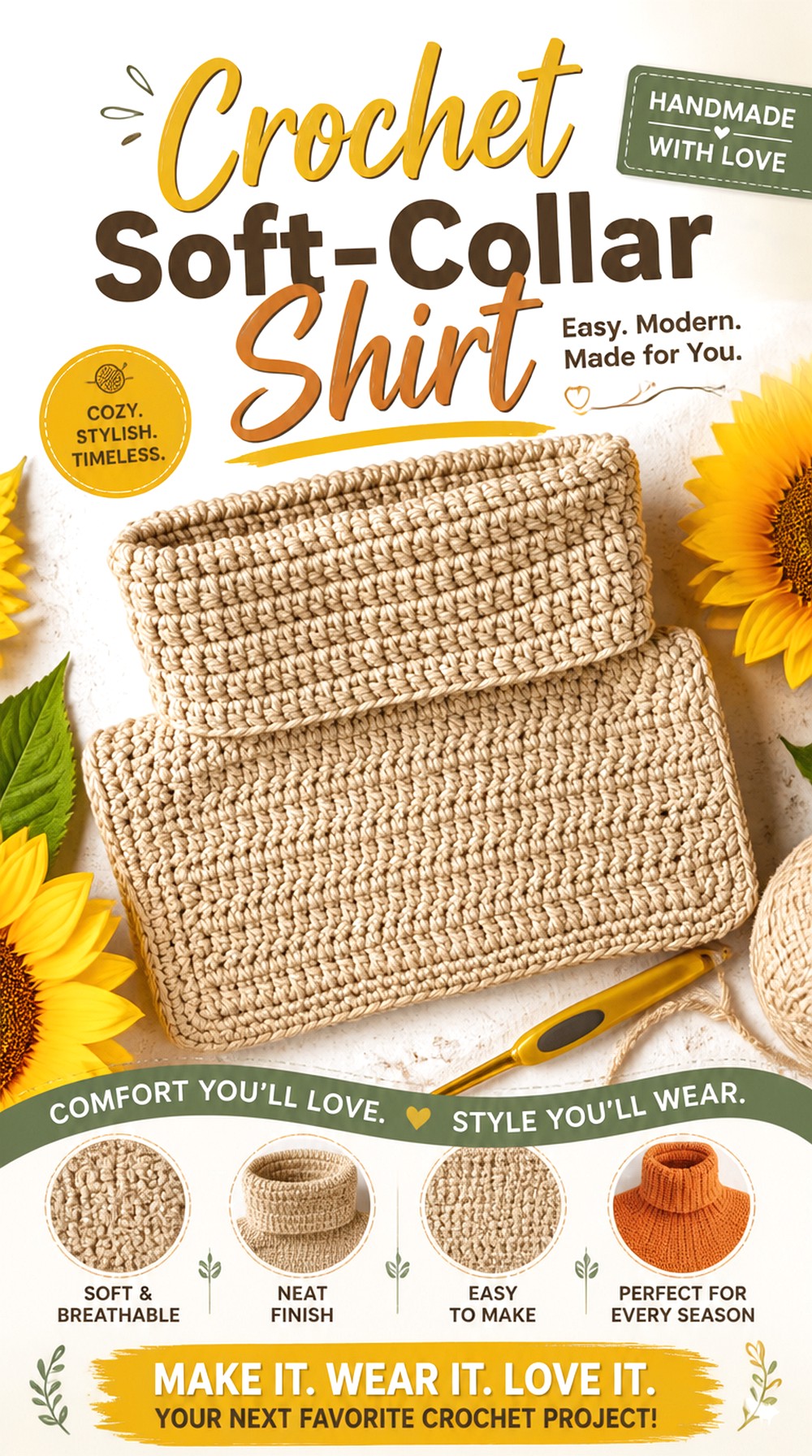
A small, soft collar can give crochet the neatness of a polo while keeping the overall garment light. Chely Chávez’s tutorial is specifically for a crochet collared shirt rather than a conventional polo sweater, so use this source when the neckline treatment appeals to you and you are comfortable adapting the broader shirt concept.
This style is a good option when a large fold-over collar would feel too heavy or formal. It also works well if the crochet fabric itself has enough personality and you want the neckline to frame it quietly. Before enlarging the collar, consider whether doing so would undermine the softer proportions that distinguish this project.
A Small Collar Reads More Like a Shirt
Collar depth changes the garment’s character quickly. A compact collar can feel crisp and casual, while a larger one begins to resemble a statement collar or sweater neckline. If you adapt the dimensions, compare them visually against the shoulder width before deciding that “more collar” will improve the polo effect.
Soft Fabric Still Needs Shoulder Stability
Drape does not eliminate the need for structure. If the shoulder line stretches significantly, the neckline and collar can move with it. Check how the upper garment hangs after the body gains weight, particularly when using a soft fiber. The ideal result is relaxed fabric without an uncontrolled neckline.
Original Tutorial and Creator Credit
Creator: Chely Chávez
Crochet Openwork Relaxed Polo Top
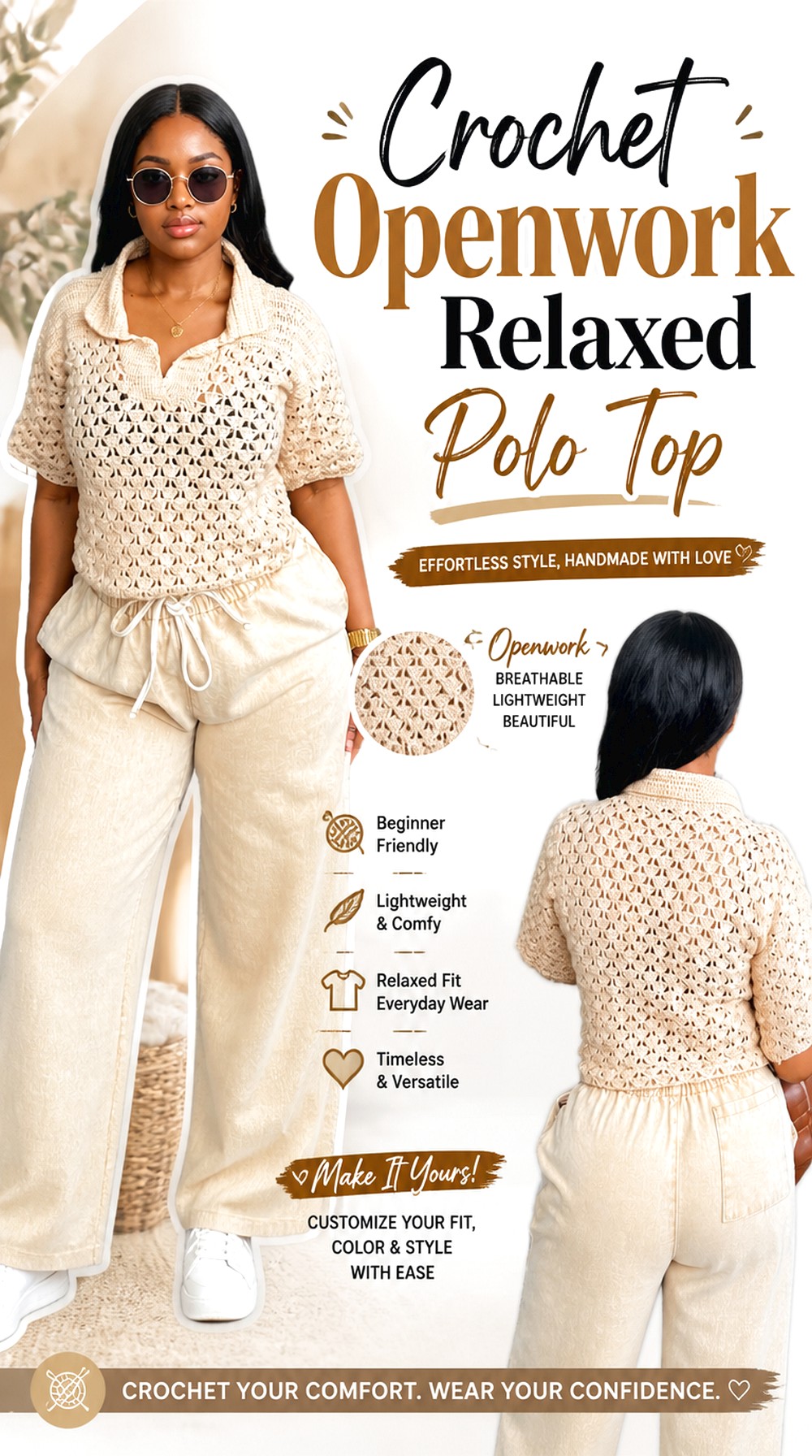
Mihankushea’s polo tutorial shows an openwork collared top with a relaxed character, giving this idea a different balance from both dense classic polos and regular grid-like mesh. The open surface can make a relatively simple shape feel decorative without adding motifs or multiple yarn colors.
This is a good direction for a layering piece where airflow and visible stitch pattern matter. The neckline should still retain enough stability to support the collar, so do not judge the fabric solely by how attractive or soft the openwork looks. Consider how the whole garment behaves vertically once enough length has been added.
Openwork Changes Opacity and Layering
The finished effect depends partly on what is worn underneath. Test your crochet over a few likely base layers before deciding whether the fabric is too open or too dense. This can prevent unnecessary changes to the stitch pattern when the real issue is simply contrast between the crochet and the garment beneath it.
Relaxed Fit Should Not Mean an Uncontrolled Neckline
Extra body ease can be comfortable, but the neck opening still needs to sit where you intend. When modifying width, monitor the neckline separately so it does not expand by default. A stable upper edge gives the collar something predictable to sit against even when the rest of the top is loose.
Original Tutorial and Creator Credit
Creator: Mihankushea
Crochet Men’s Classic Polo Sweater
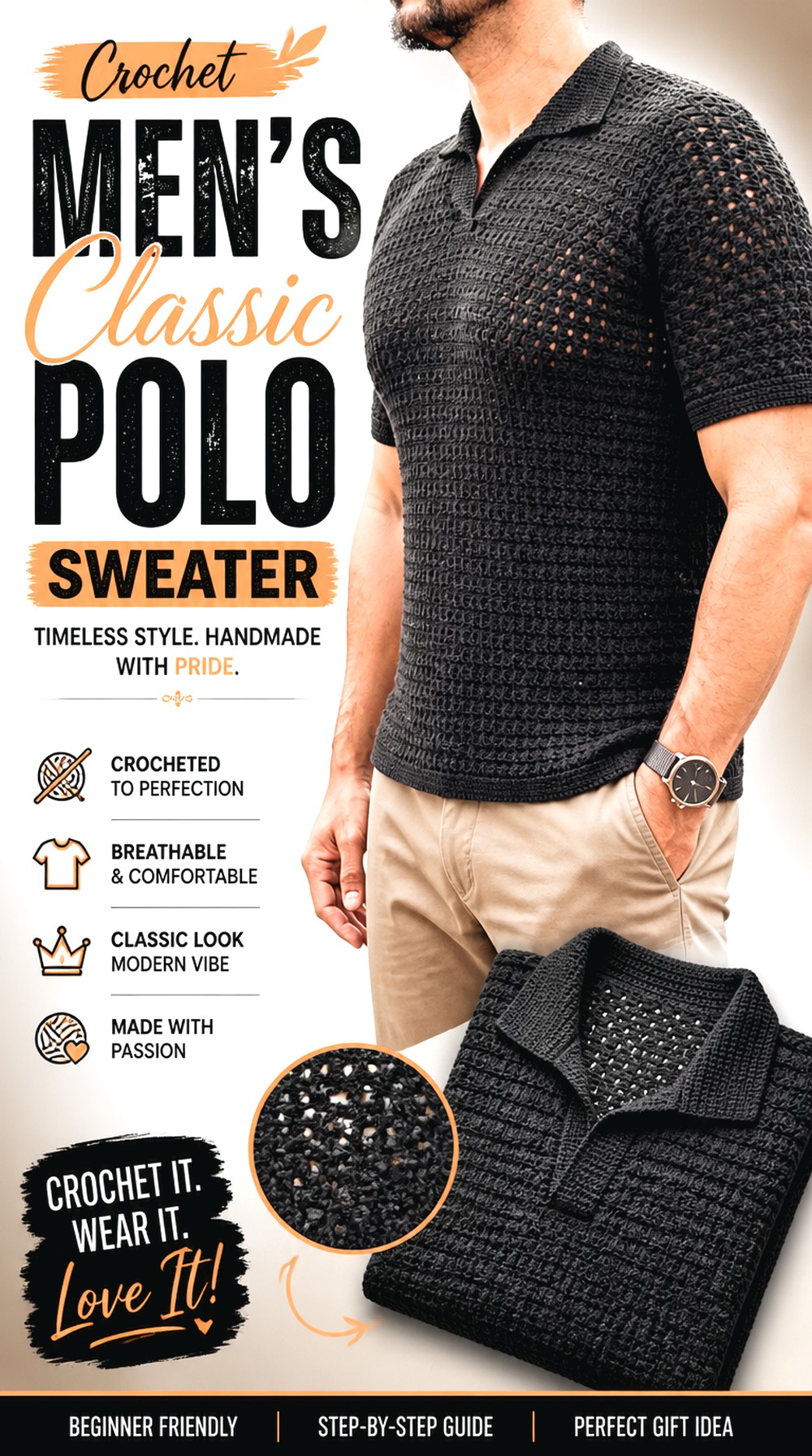
For a more traditional menswear direction, keep the silhouette restrained and let the collar define the garment. The Adonis polo tutorial from Gladys – Tuto Crochet & Tricot is specifically presented as a men’s crochet polo with a minimalist character, providing a useful reference for a classic rather than experimental shape.
This idea works well in a single color or limited palette because the focus stays on proportion and stitch texture. If making it for someone else, use their measurements or a shirt they already like instead of guessing from a generic size. The finished shoulder line and body length will influence whether the polo reads as neat, relaxed, or deliberately oversized.
A Classic Men’s Polo Starts With Shoulder Placement
The shoulder is one of the strongest visual cues in a restrained shirt. Decide whether the seam should sit near the natural shoulder or fall farther down for a casual fit. Check that placement before completing the sleeves, because sleeve length and upper-arm shape will be judged from wherever the shoulder actually lands.
Keep the Hem Compatible With How It Will Be Worn
A polo intended to be tucked needs different bulk and length considerations from one that will always remain untucked. Decide on the likely styling early. When adapting length, try the garment with the trousers or shorts it will usually accompany rather than assessing the hem position in isolation.
Original Tutorial and Creator Credit
Creator: Gladys – Tuto Crochet & Tricot
Crochet Button Up Collared Polo Top
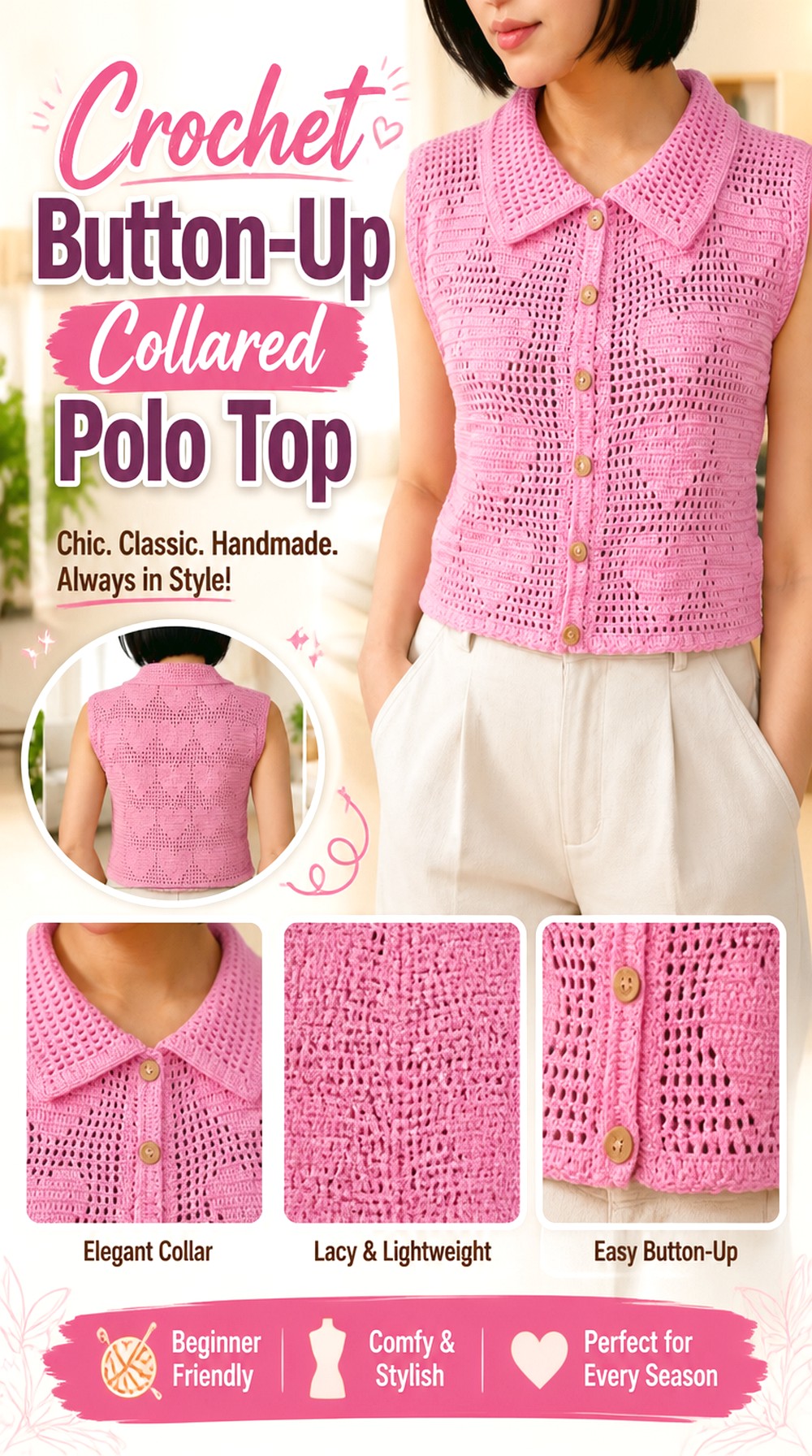
A full or more prominent buttoned front moves a crochet polo toward collared-shirt territory. Ler Crochet’s tutorial demonstrates a collared top with a button-up appearance, making this another intentional adaptation reference rather than an exact match for every traditional polo detail.
Choose this direction if you like the adjustability and vertical line of a front opening. Buttons also let the neckline be styled more open or closed, but they increase the importance of front-edge stability. Before adding them, check whether both sides hang evenly and whether the fabric can support the chosen fasteners without curling or stretching noticeably.
A Button-Up Opening Changes the Polo Look
A longer visible opening creates a stronger vertical line than the short placket associated with many polos. Decide deliberately how much shirt-like character you want. If adapting the idea toward a traditional polo, preserve the collar and upper opening features you like without assuming the entire front construction needs to remain unchanged.
Front Edges Need Symmetry Before Fasteners
Buttons cannot correct uneven front lengths. Place the garment flat, then hang or wear it and compare both edges before attaching anything permanent. If one side stretches more, address that behavior first. Fasteners should close the garment comfortably, not pull two mismatched edges into alignment.
Original Tutorial and Creator Credit
Creator: Ler Crochet
Crochet Geometric Openwork Polo Shirt
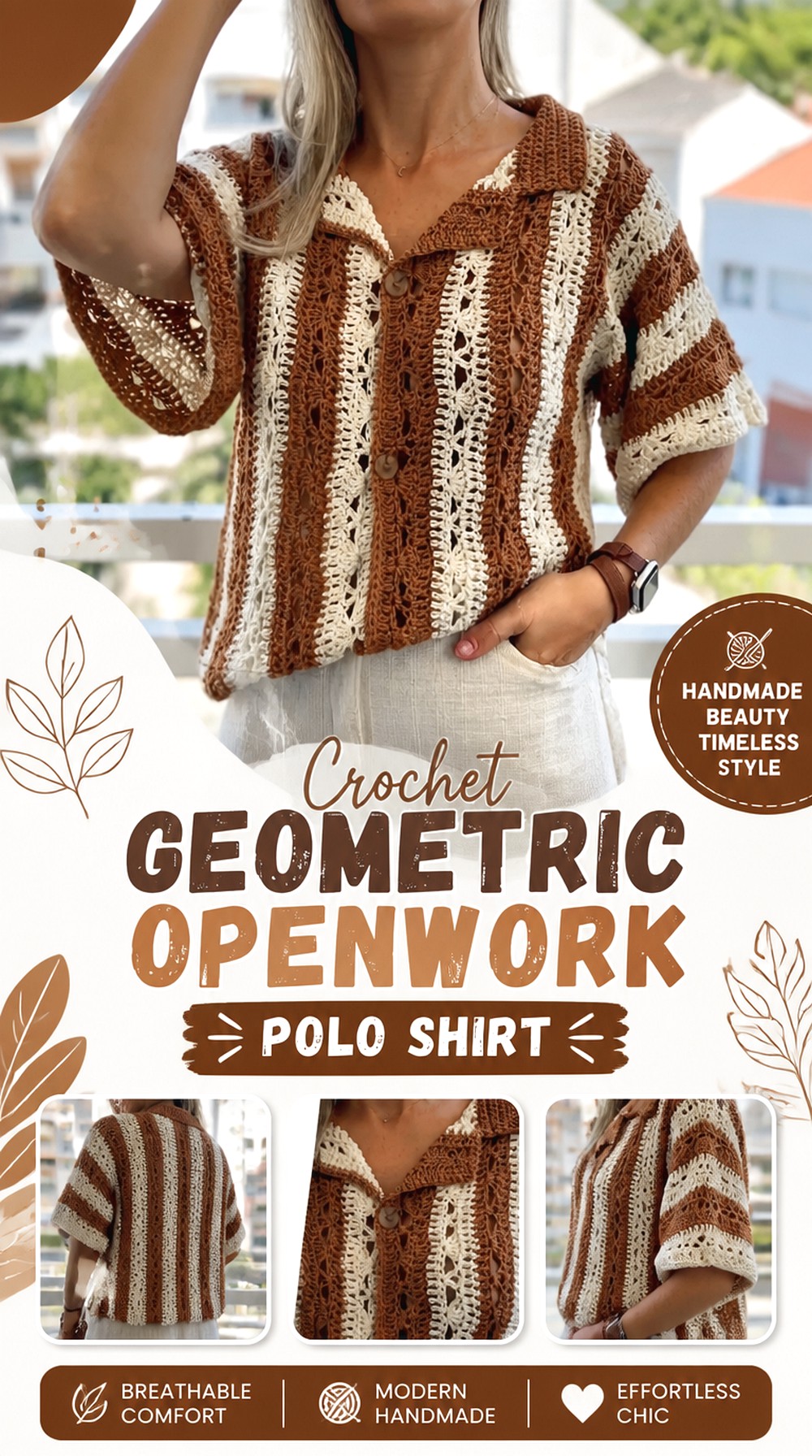
A geometric openwork polo allows the stitch pattern to become the dominant design element while the collar keeps the garment visually grounded. Crochê da Miranda’s Lisbon polo tutorial is based around a repeating pattern structure, making it a useful reference when you prefer ordered openwork rather than irregular lace or classic mesh.
Patterned fabric needs extra attention when you modify width. A change that seems small in inches may interrupt the visual repeat if it is not compatible with the stitch structure. Rather than inventing a new repeat, follow the creator’s construction logic and use your customization mainly for color, intended fit, or other aspects that the tutorial supports.
Geometric Openwork Needs Consistent Spacing
Repeated openings make tension differences easy to spot. Periodically view the fabric from a distance rather than focusing only on individual stitches. If the geometry starts compressing or spreading, correct the tension issue early. Consistency is particularly important near seams or joins where two patterned areas meet.
Collar Structure Can Balance an Airy Body
A defined collar creates a visual frame around open fabric. If you substitute a much softer yarn, make sure that the neckline treatment still has enough presence to balance the patterned body. Conversely, an overly rigid collar can feel disconnected from very fluid openwork, so evaluate the two textures together.
Original Tutorial and Creator Credit
Creator: Crochê da Miranda
Crochet Men’s Straight Cut Polo Shirt
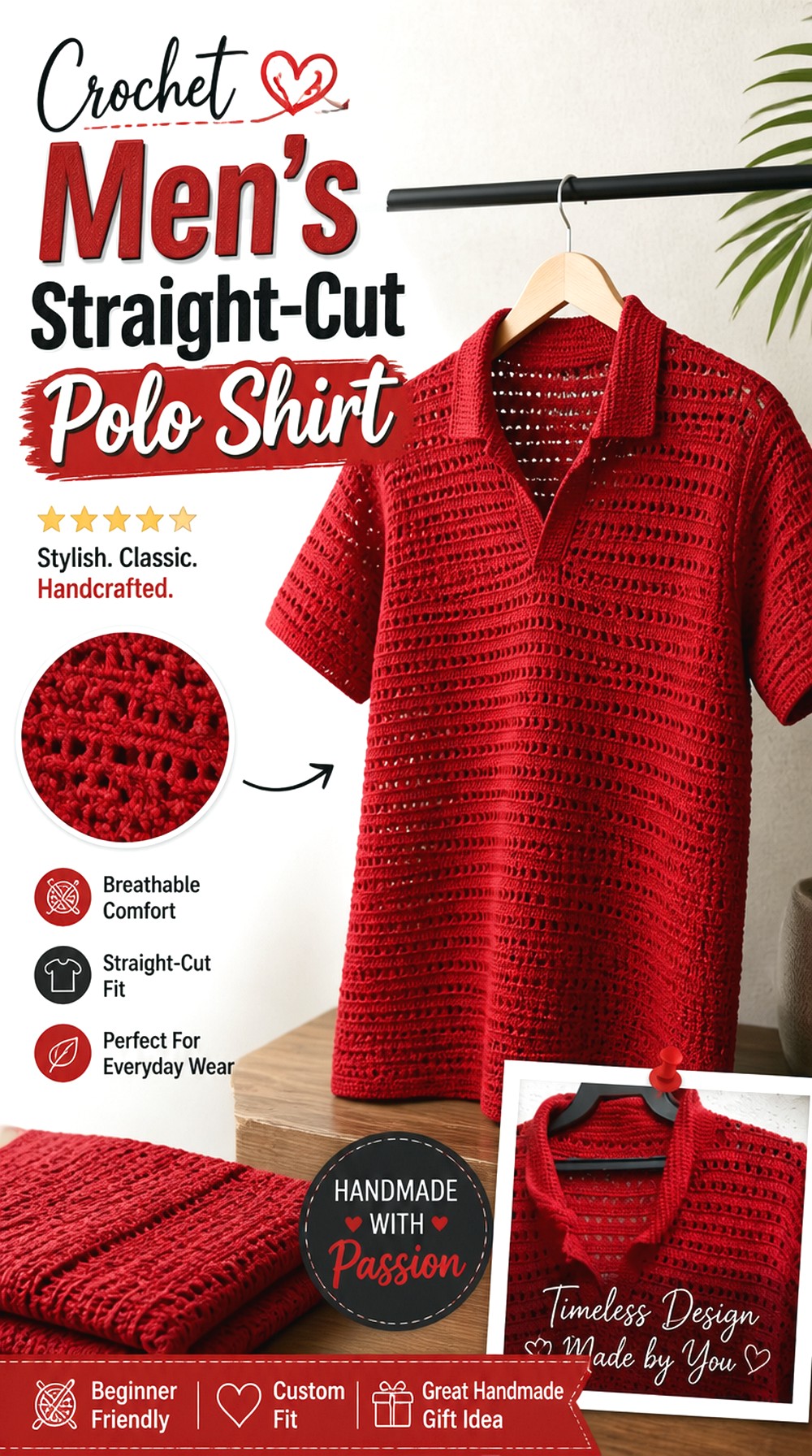
The final idea returns to a straightforward men’s short-sleeve polo, but with a useful difference in learning format: NishuLoop’s tutorial is presented in Sinhala. For readers who can follow the language—or who are comfortable using strong visual references—it offers another construction example without duplicating any creator used elsewhere in this roundup.
A straight-cut shirt is a practical canvas for solid colors, restrained striping, or contrast trim. Focus first on chest and shoulder fit. Because language may limit access to spoken details for some viewers, do not infer measurements or instructions from visuals alone; confirm any critical information you need before adapting the tutorial.
Use Visual Checkpoints When the Tutorial Language Differs
Even when the spoken language is unfamiliar, visible comparisons can help you study silhouette, component shape, and finished proportion. Keep those observations separate from exact pattern information. If a measurement, stitch count, or sizing instruction is not clear to you, do not guess—use translated captions where available or choose another source for that specific detail.
Straight-Cut Fit Still Needs Personal Measurements
A rectangular-looking body is not automatically one-size-fits-all. Compare the intended chest width, shoulder position, arm opening, and length with the wearer. If you need more room in one area, avoid enlarging the entire shirt unless that broader change also suits the desired silhouette.
How to Choose Among These Crochet Polo Sweater Ideas
| If your priority is… | Start with | Main point to verify |
|---|---|---|
| A traditional polo appearance | Ideas 1, 4, 8, 18, or 19 | Collar scale, placket alignment, and shoulder position |
| A warmer sweater | Ideas 3 or 5 | Sleeve weight, fabric density, and layering room |
| Lightweight summer wear | Ideas 7, 12, 15, or 21 | How much the open fabric stretches when worn |
| A relaxed or oversized silhouette | Ideas 2, 14, or 17 | Intended ease rather than size label alone |
| Unusual construction or texture | Ideas 16 or 24 | How motif or pattern repeats affect sizing |
| A men’s polo | Ideas 10, 22, or 25 | Chest, shoulder, sleeve, and final body length |
| A polo-inspired collared top | Ideas 6, 13, 20, or 23 | Which shirt features you want to retain or adapt |
| Extra body coverage | Idea 9 | Added weight and fit through the hips |
Conclusion
The most useful way to choose among these 25 crochet polo sweater ideas is to start with silhouette rather than color. For a familiar shirt, look at the classic cotton, button-placket, or clean-line options. Choose mesh, openwork, or granny stitch when layering and visible texture matter more. The fold-over collar sweater provides more coverage, while the cropped, oversized, hexagon, and longline ideas deliberately change the proportions.
Whichever direction you choose, evaluate the neckline, shoulders, yarn behavior, and intended ease together. A beautiful collar cannot compensate for an uncomfortable upper-body fit. Use the original tutorials near each idea for their exact construction details, and make adaptations only after you understand how your chosen garment is designed to fit.
Frequently Asked Questions
Can I turn a short-sleeve crochet polo into a long-sleeve sweater?
Sometimes, but sleeve length is not the only change to consider. Full sleeves add yarn weight and may alter how the shoulders and neckline hang. The original armhole and sleeve construction also needs to accommodate the longer sleeve appropriately. Choose a long-sleeve collared tutorial such as Idea 3 when possible, or carefully compare the construction of your short-sleeve source before adapting it.
How do I know if a crochet polo collar is too heavy?
Put the garment in its worn orientation and look at what happens around the neckline. If the collar consistently pulls the opening outward, drags the shoulders forward, or refuses to sit in its intended position, its fabric may be too heavy or too fluid for that neckline. Yarn substitution can change this behavior, so evaluate a sample and the developing garment rather than judging the collar only while it lies flat.
What yarn qualities work well for a crochet polo sweater?
That depends on the style. Summer mesh and granny-stitch polos usually benefit from a fabric with comfortable drape, while a crisp buttoned polo may need more shape definition around the collar and placket. Long-sleeve sweaters also require attention to finished weight. Instead of choosing by fiber name alone, make a sample and assess stitch definition, stretch, recovery, drape, and the care requirements listed for the yarn.
How can I adapt a collared-top tutorial into a more traditional polo?
First identify which features are missing rather than redesigning everything. A collared top may differ in front opening, collar depth, sleeve shape, or body length. Keep the parts you already like and use a direct polo tutorial to understand the type of neckline treatment you want. Avoid combining exact stitch counts from unrelated patterns because differences in gauge, construction, and proportions may make them incompatible.
Should I block a crochet polo before deciding whether the fit works?
Follow the care and finishing guidance appropriate to the yarn and tutorial, but do not wait until the very end to evaluate fit. Check the garment repeatedly while it is developing. A representative fabric sample can also show whether your yarn changes noticeably after its intended care treatment. That information is useful before you commit to final body length, collar proportions, or other areas affected by fabric relaxation.
How can I make a crochet polo look less boxy?
First determine why it looks boxy. The cause may be excessive chest ease, a dropped shoulder, rigid fabric, short body proportions, or all of those together. Compare the garment with a shirt whose silhouette you already like and identify the actual difference. Changing yarn for better drape or choosing a tutorial with closer shoulder placement may be more successful than adding unsupported shaping to a construction that was designed to remain straight.