Gold crochet jewelry can range from a fine thread bracelet that barely covers the wrist to a broad beaded cuff with enough texture to become the focus of an outfit. The important difference is not simply how much gold you use. Construction, width, closure, bead placement, drape, and the stiffness of the chosen fiber all change how the bracelet looks and wears.
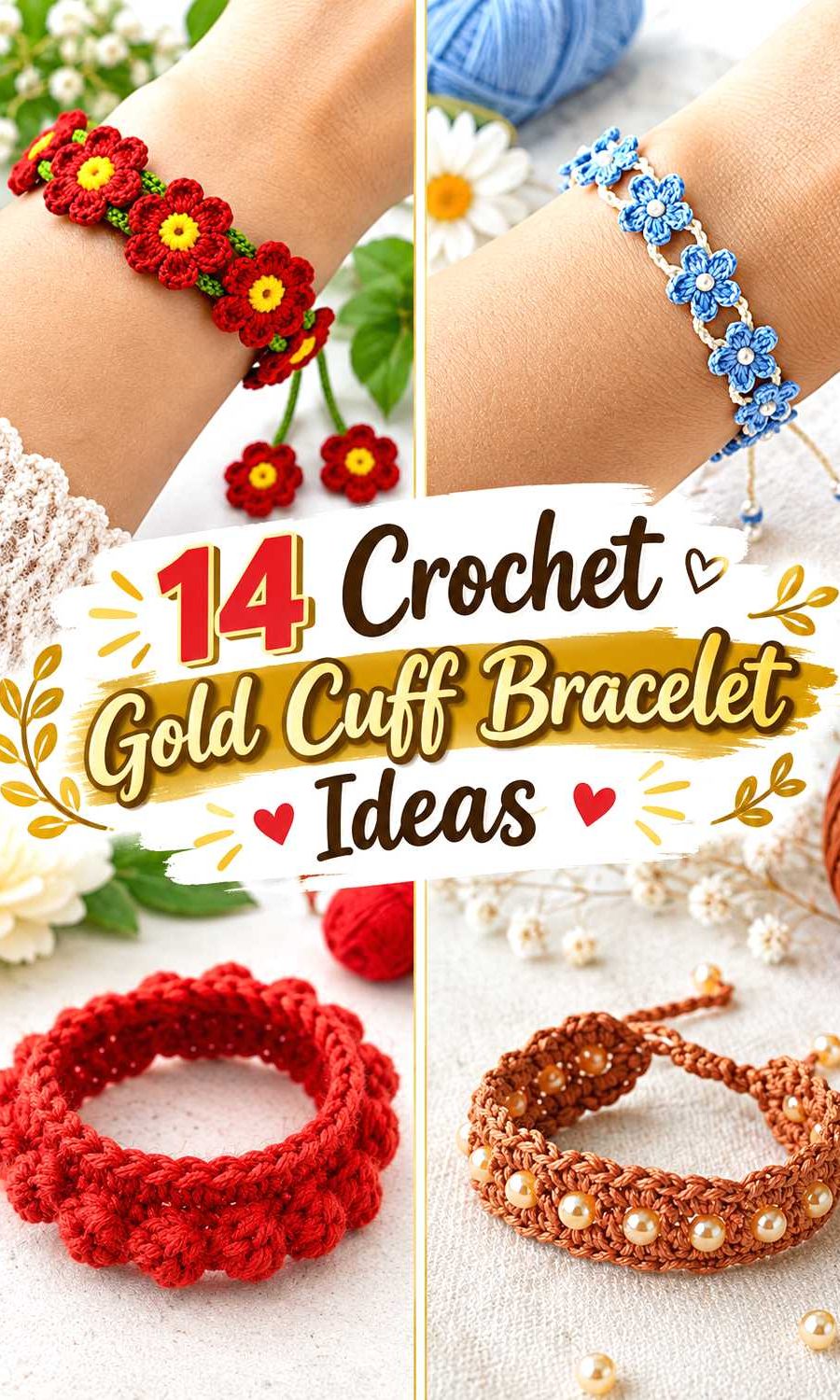
The tutorials below cover genuinely different bracelet constructions. Several creators demonstrate their projects in colors other than gold, so the gold treatment here is an adaptation idea rather than a claim about the original project. Use each tutorial for its actual construction and check the creator’s materials before substituting metallic thread, gold-colored yarn, beads, or findings.
Quick List
- Crochet Gold Reversible Beadwork Cuff
- Crochet Gold Tunisian Boho Bead Cuff
- Crochet Gold Adjustable Lace Cuff Bracelet
- Crochet Gold Puff-Stitch Bangle Cuff
- Crochet Gold Multi-Wrap Beaded Bracelet
- Crochet Gold Adjustable Bead-Tie Bracelet
- Crochet Gold Crystal-and-Charm Bracelet
- Crochet Gold Minimal Friendship Band
- Crochet Gold Chain-Stitch Friendship Bracelet
- Crochet Gold Flower-Chain Bracelet
- Crochet Gold Daisy Motif Bracelet
- Crochet Gold Beaded I-Cord Bracelet
- Crochet Gold Soft Bangle Bracelet
- Crochet Gold Macrame-Look Beaded Bracelet
Decide What “Gold” Means Before Choosing Your Bracelet
A gold crochet cuff does not require actual gold wire. You might use gold-colored crochet thread, a fiber with a metallic component, ordinary yarn in a warm golden shade, gold-tone beads, or gold-colored jewelry findings. These materials behave differently, so choosing by appearance alone can cause problems.
Fine metallic thread can emphasize jewelry-scale stitches but may feel firmer or less forgiving than a soft fiber. A conventional yarn in mustard, antique gold, or champagne tones usually behaves more like the yarn specified by a standard crochet tutorial. Jewelry wire is a separate construction material entirely; do not substitute it into a yarn-based bracelet merely because both look metallic. Follow a wire-specific design when you want an actual wire-crochet result.
Fit and Closure Matter More on Cuffs Than on Ordinary Bracelets
Measure for the construction you are actually making. A bracelet with a clasp only needs to close comfortably around the wrist, while a seamless slip-on bangle also has to pass over the widest part of the hand. An adjustable tie solves a different problem again: it offers fitting flexibility but leaves cords that may affect styling.
Wide cuffs deserve an additional checkpoint. Before final finishing, wrap or temporarily fasten the unfinished piece around the wrist and check whether the edges flare, buckle, or press uncomfortably when the wrist bends. Beads and dense textures may change how the band curves, so do not decide the final closure solely from the flat measurement.
Balance Shine, Structure, and Comfort
Metallic-looking yarn can make even a simple stitch pattern feel decorative, which means a gold cuff often needs less embellishment than the same bracelet in matte cotton. Dense stitchwork produces a stronger block of color, while lace, chains, and open beadwork let skin show through and make the metallic effect lighter.
Also consider what will touch the wrist. Raised beads, stiff joins, bulky knots, jump rings, and thread ends can become noticeable on a small accessory. For bead projects, confirm that the bead openings work with the material and method specified by the creator before buying a full set. If you change thread thickness, recheck fit rather than assuming the tutorial’s finished proportions will remain unchanged.
Crochet Gold Reversible Beadwork Cuff
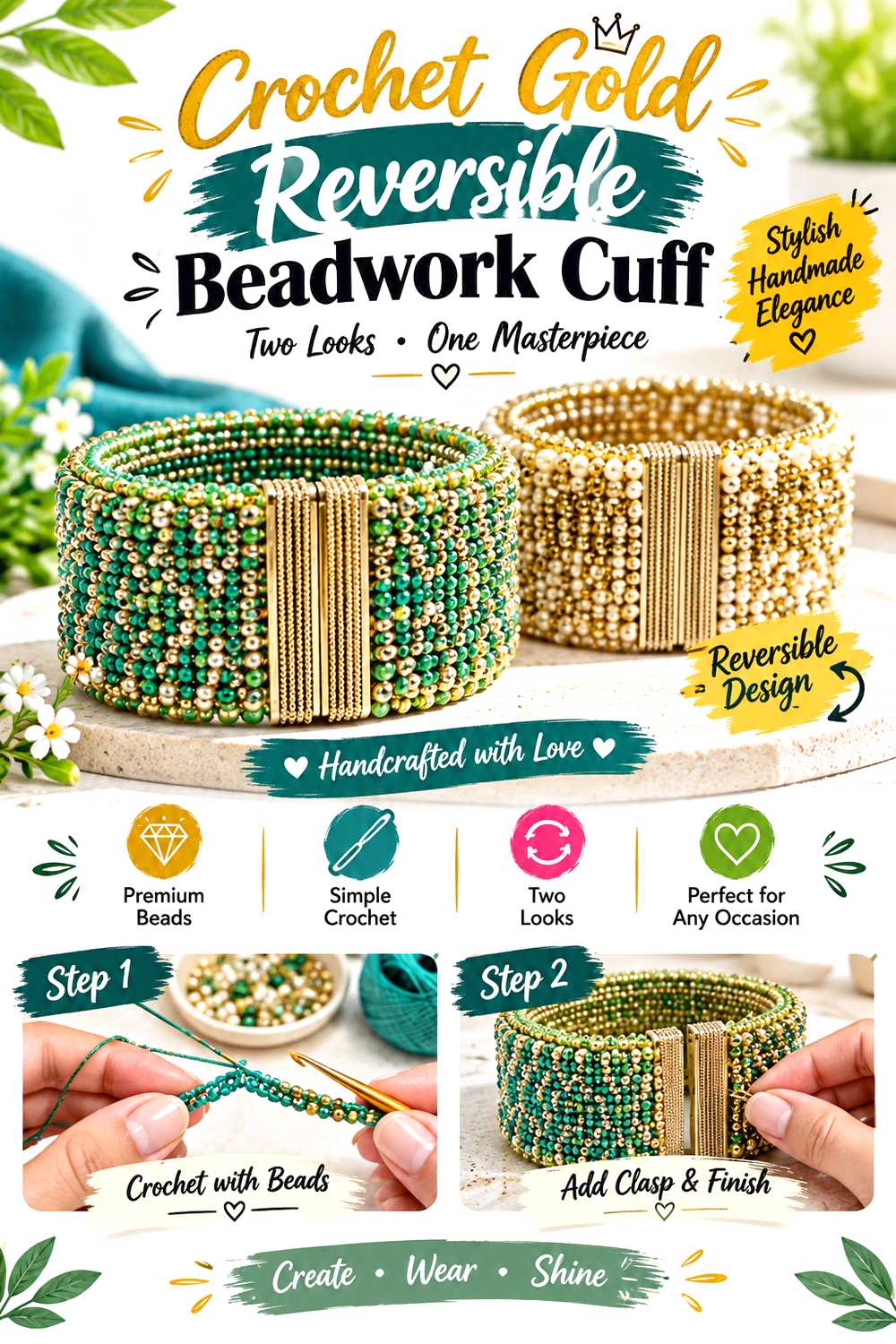
A reversible beaded construction is a strong starting point when you want the gold cuff to look intentionally jewelry-like rather than simply crocheted in metallic yarn. Ann Benson’s tutorial demonstrates a beaded cuff made with basic crochet stitches and specifically covers materials, tools, sizing, and finishing. The reversible character also makes this idea stand apart from cuffs designed with one obvious display side.
For a gold interpretation, decide whether the crochet ground, the beads, or both should supply the metallic effect. Keeping only one component strongly metallic can preserve the visibility of the bead pattern.
Reversibility Makes Bead Placement More Important
A cuff that can present either face gives you more styling flexibility, but irregular bead tension is harder to hide. Look at both sides of a sample section rather than evaluating only the face pointing toward you while you crochet. Beads that appear orderly from one direction may sit differently when the fabric is turned.
If you change bead size or thread, make a short sample first and check whether the fabric still bends around the wrist without forcing the beads into one another.
Choose Gold for the Ground or the Beads
Using metallic thread and highly reflective gold beads together can create a very dense visual surface. For clearer crochet definition, consider contrasting a warm matte-gold thread with brighter beads, or use understated thread and let metallic beads provide most of the shine.
This is an aesthetic decision rather than a pattern change. Keep the creator’s construction intact until you know how your substitute materials affect flexibility and spacing.
Check the Closure Before Adding the Last Beads
A beaded cuff can become less flexible as embellishment increases. Before final finishing, bring the two ends together around the wrist and check whether the proposed closure sits flat instead of pulling the edges into a point.
If your bead substitution makes the fabric noticeably thicker than the source version, confirm that any selected clasp or fastening method still works with that finished thickness.
Original Tutorial and Creator Credit
Creator: Ann Benson
Crochet Gold Tunisian Boho Bead Cuff

This option gives the wrist more visual coverage by placing a Tunisian crochet section at the center of a beaded bracelet. Naztazia’s tutorial uses regular crochet for the tapered ends and Tunisian simple stitch for the central beaded section; the creator also notes that the project can be worked with a regular crochet hook rather than requiring a special Tunisian hook.
Worked in a gold palette, the design can shift from casual boho styling toward a more formal cuff. The tapered transition is particularly valuable because it keeps a wider decorative center from demanding an equally wide closure.
A Tunisian Center Creates a Wider Jewelry Face
The wider center gives you room for visible bead rhythm without making the entire bracelet the same width. That matters when you want a statement cuff but prefer less bulk on the underside of the wrist.
Before adapting the color, look at where the broad section ends in relation to your wrist. Ideally, the decorative face should remain visually centered instead of disappearing around the sides.
Tapered Ends Keep the Cuff from Feeling Blocky
A rectangular cuff can feel visually heavy when the same width continues all the way to its fastening point. Tapering concentrates the decorated fabric where it can be seen while giving the closure a narrower area to manage.
If you substitute a thicker gold material, pay attention to whether the taper still lies smoothly. Increased thickness can make a transition appear more abrupt than it does in the original materials.
Metallic Thread Changes Hand Feel
Tunisian fabric and metallic-looking fibers can both add firmness, depending on the material selected. That combination may be attractive for a cuff, but it can also reduce the soft drape shown by another yarn.
Crochet a small sample before committing to the bracelet. Bend it around the wrist and check both the outside appearance and the inside surface, especially if the metallic component feels rough when held against skin.
Original Tutorial and Creator Credit
Creator: naztazia
Crochet Gold Adjustable Lace Cuff Bracelet
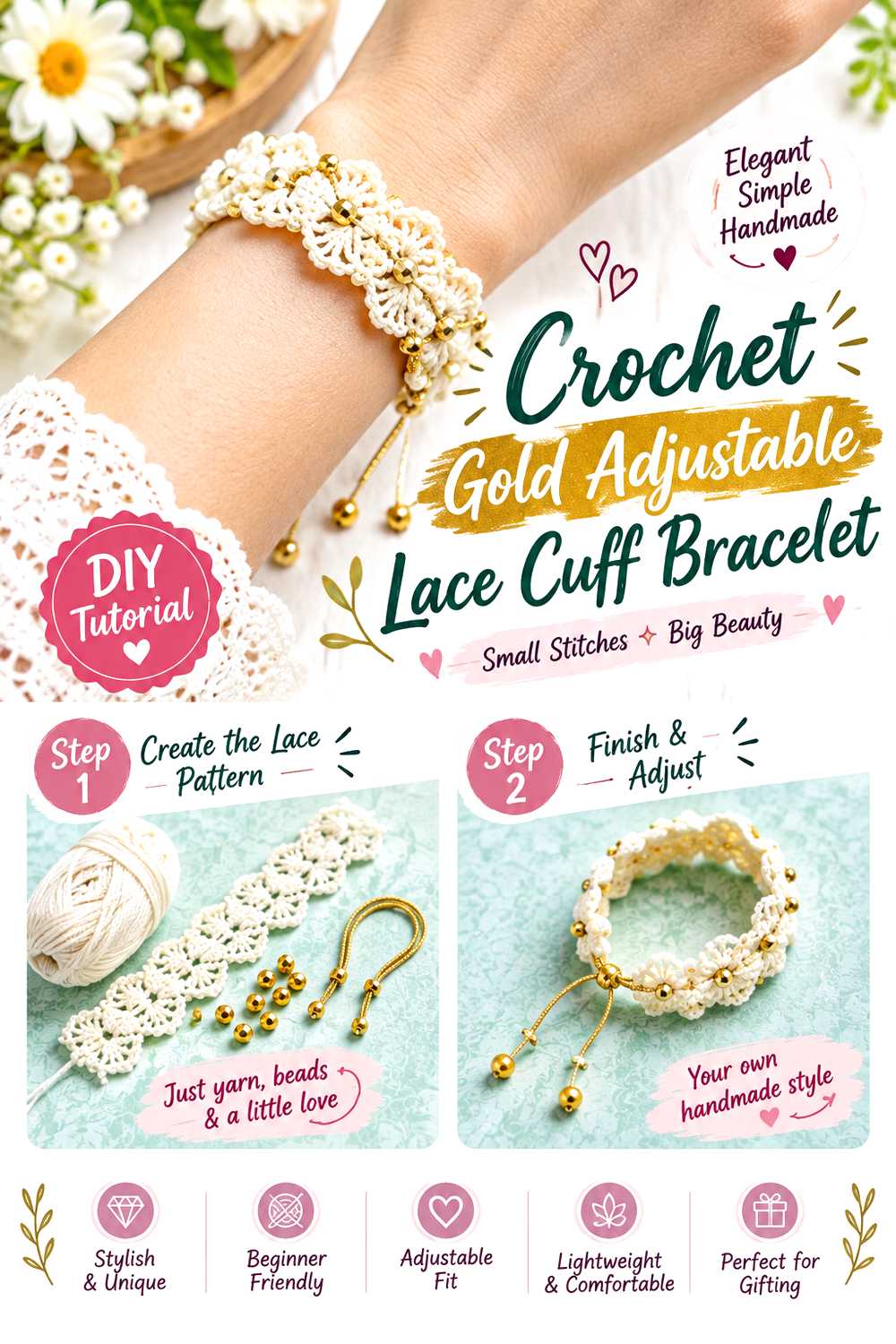
For a softer interpretation of the gold-cuff idea, the Sweet Softies tutorial provides an adjustable lacy bracelet rather than a rigid or heavily beaded band. Its original design uses a crochet-based adjustable fastening, so extra metal hardware is not essential to the construction. The creator also presents the concept as adaptable in size.
Gold-colored thread can give this open fabric a fine filigree quality without covering the entire wrist in dense metallic texture. It is especially appealing when you want the cuff effect to come from lace width and negative space rather than weight or a large number of embellishments.
An Adjustable Closure Helps with Gift Sizing
An adjustable fastening leaves more room for fitting differences than a fixed button or precisely sized clasp. That can be useful when the bracelet is intended as a gift and an exact wrist measurement is unavailable.
It still needs limits, however. Make sure the bracelet can tighten enough to sit where intended without leaving an excessive length of loose cord, and confirm that the widest opening is practical for putting the piece on.
Open Lace Lets the Gold Read Lightly
Metallic color can dominate a small object quickly. Lace breaks the color into narrow lines and open spaces, creating a less solid block of gold than a dense cuff.
This makes the idea worth considering if a fully metallic band feels visually heavy. When choosing thread, prioritize stitch visibility as well as shine; a very fuzzy or highly reflective material can make delicate lace structure harder to see.
Keep Edge Loops from Catching on Other Jewelry
Open fabric offers attractive negative space, but loose or oversized edge loops are more exposed to rings, watch hardware, and neighboring bracelets. Examine the blocked or finished edges before wearing the cuff in a stack.
If your substitute yarn makes the lace much looser than the creator’s version, changing color may have unintentionally changed structure as well. In that case, reconsider the material rather than relying on finishing alone to correct it.
Original Tutorial and Creator Credit
Creator: Sweet Softies
Crochet Gold Puff Stitch Bangle Cuff
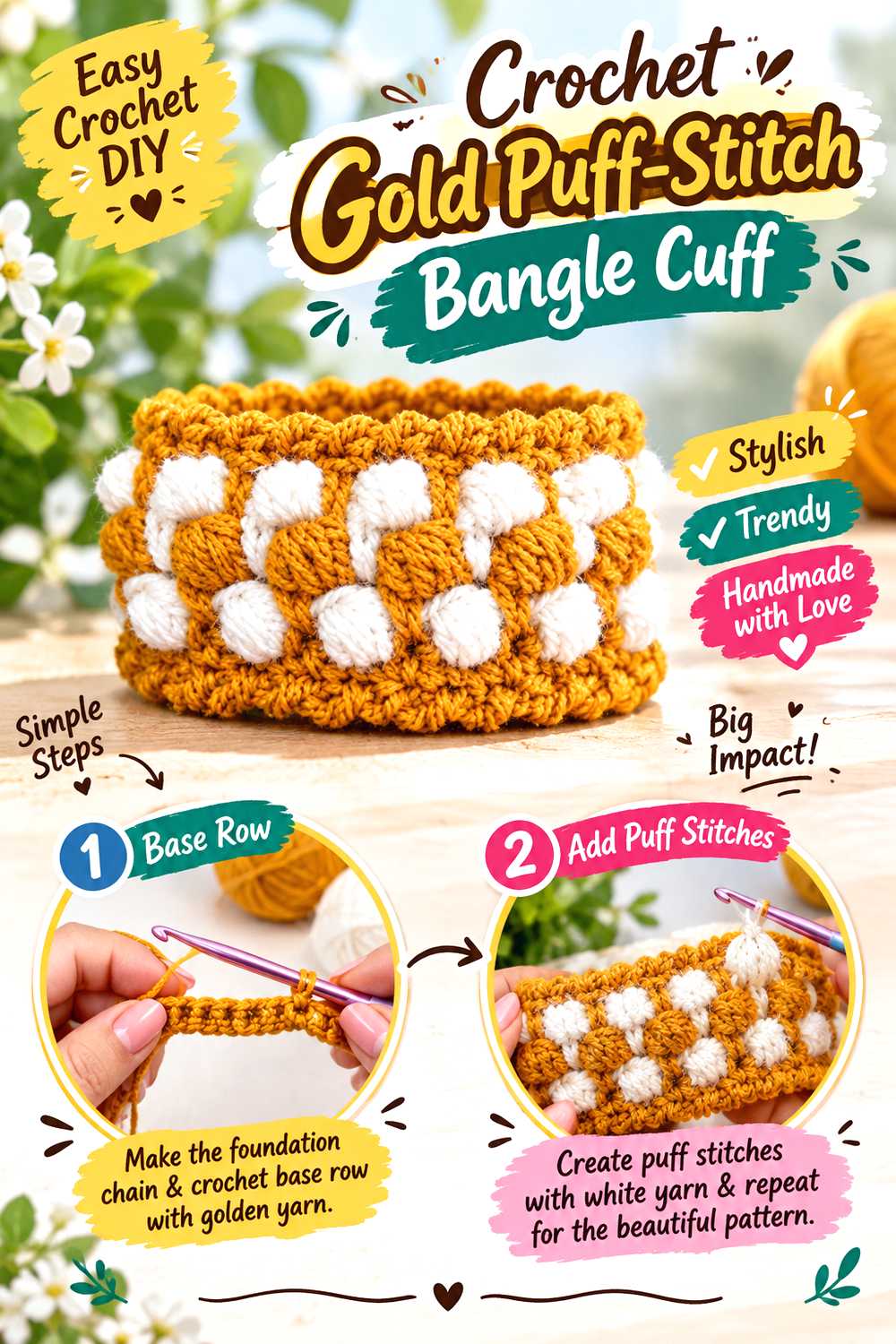
Puff stitches make this bangle concept visibly more dimensional than the lace and bead-mesh options. Meladora’s Creations for Crochet combines puff stitches with single crochet in the bracelet tutorial, producing a textured band rather than depending on attached charms for surface interest.
A gold version can work particularly well when the metallic color is subtle enough for shadows between raised stitches to remain visible. This is a better direction for someone who wants the crochet itself to be the decorative feature. Because the bracelet forms a bangle-style ring, fit around the hand deserves attention before the final join.
Puff Texture Gives Gold Yarn More Shadow
Flat metallic fabric reflects light fairly evenly, while raised crochet creates alternating highlights and recesses. That contrast can prevent an all-gold bracelet from looking visually flat.
Before choosing a highly reflective yarn, crochet several puff stitches and view them in ordinary daylight. If the surface shine hides the texture, a softer antique-gold or warm ochre fiber may communicate the stitch pattern more clearly.
A Slip-On Shape Must Clear the Hand
A closed bangle has a different sizing requirement from a bracelet that opens. It must fit the wrist without falling off while still passing over the hand comfortably.
Do not measure only around the wrist and immediately close the piece. Temporarily hold or secure the proposed ring shape and test the motion of putting it on and removing it. This checkpoint becomes especially important when the fabric is dense and not very stretchy.
Control Bulk Before Adding More Decoration
Puff texture already creates depth, so beads, charms, and thick metallic novelty yarn may compete with the underlying stitch design. If your goal is a polished gold cuff, consider allowing the texture to do most of the visual work.
Also check the inside surface. A bracelet can look excellent from the outside yet feel bulky where joins, yarn tails, or raised sections sit against the wrist.
Original Tutorial and Creator Credit
Creator: Meladora’s Creations for Crochet
Crochet Gold Multi Wrap Beaded Bracelet
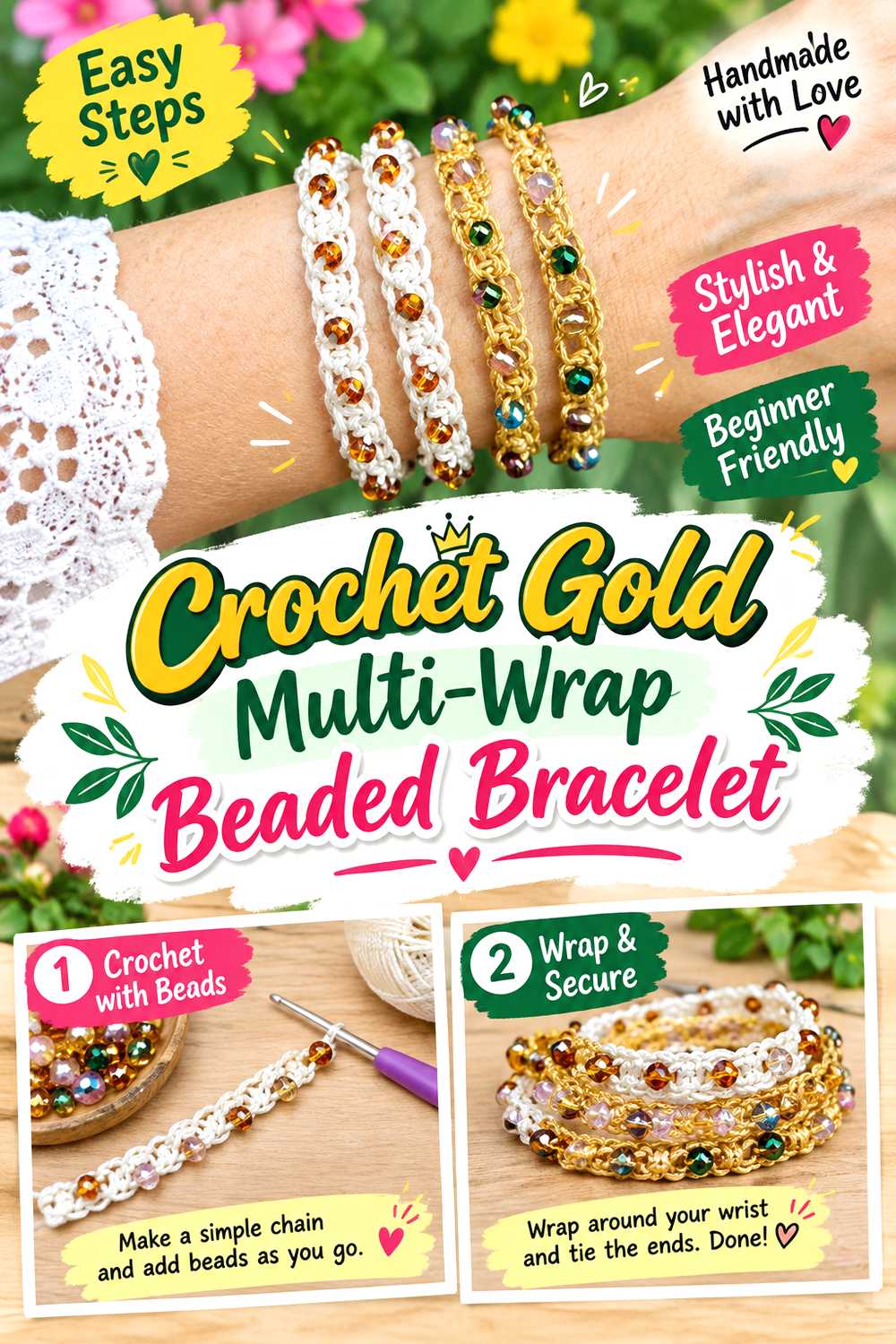
Instead of getting cuff width from one broad piece of fabric, this idea builds visual presence through wrapping. Crochet with Patricia’s beaded bracelet tutorial can be made as a single wrap or extended into several wraps, giving the same basic concept very different visual weight on the wrist.
That makes it a useful gold-cuff alternative for readers who prefer a layered look. A fine warm-gold thread with contrasting beads could produce a delicate stack, while a stronger metallic accent in the bead choice would concentrate the shine at repeated intervals rather than across a solid band.
Wrap Count Changes the Visual Weight
A one-wrap bracelet behaves like a narrow accent. Several wraps occupy more wrist space and begin to create the visual effect of a cuff without requiring one wide crocheted panel.
Before extending the piece, think about how much wrist coverage you actually want. Additional length also means additional beads and more material crossing the same area, so comfort and flexibility should be checked rather than judging the design only while it lies flat.
Beads Need Holes That Match the Thread
A color substitution is simple only when the physical dimensions remain compatible. Metallic thread, braided cord, and standard crochet yarn can have very different thicknesses even when they seem similarly fine in a photograph.
Test one of the intended beads with the actual gold material before purchasing or threading the full quantity. If it is difficult to move along the strand, forcing the pairing can damage the material or make crocheting unnecessarily awkward.
Plan the Fastening Before Committing to Length
Long wrap bracelets can look dramatically different depending on where the fastening lands after the final turn. As you assess length, wrap the unfinished strand in the direction you expect to wear it and note where the two ends naturally meet.
This prevents a decorative closing element from unexpectedly landing on the top of the wrist when you intended it to remain underneath or at the side.
Original Tutorial and Creator Credit
Creator: Crochet with Patricia
Crochet Gold Adjustable Bead Tie Bracelet

Loop on hook’s tutorial demonstrates an adjustable beaded bracelet, giving this idea a narrower and more flexible character than a fixed cuff. The source also uses US crochet terminology.
For the gold adaptation, beads can provide most of the jewelry effect while the crocheted portion remains relatively restrained. This works well when you like metallic accents but do not necessarily want a wide, highly reflective band. It can also sit beside a watch or another cuff more easily than a broad statement bracelet, provided the beads and closure do not interfere with neighboring pieces.
Adjustability Helps When the Band Is Narrow
A narrow bracelet can rotate more easily than a broad cuff, so the ability to tighten it may help keep the decorated area where you want it. Check the range of adjustment against the intended wrist rather than assuming an adjustable bracelet automatically fits every wearer.
The bracelet should still move naturally with the hand. Pulling an adjustable closure too tightly simply to stop rotation can make an otherwise comfortable design unpleasant to wear.
Let Beads Carry the Metallic Accent
If metallic crochet thread feels too stiff for your preferred band, use the tutorial’s bead-focused nature to shift the gold effect into the embellishment instead. A neutral or golden-beige crochet thread paired with gold-tone beads can still satisfy the palette.
Conversely, gold thread with contrasting dark, pearl-like, or translucent beads can make the crochet itself more visible. Compare both approaches before buying an entire bead set.
Watch for Cord Twist Around the Wrist
Fine adjustable bracelets can develop a twist that is barely noticeable when laid on a table but obvious after fastening. Before finishing the ends, wear the temporary band and check whether the bead line naturally faces outward.
If it repeatedly rolls, examine tension and the balance between bead weight and the crocheted cord rather than trying to correct the orientation only at the closure.
Original Tutorial and Creator Credit
Creator: Loop on hook
Crochet Gold Crystal and Charm Bracelet
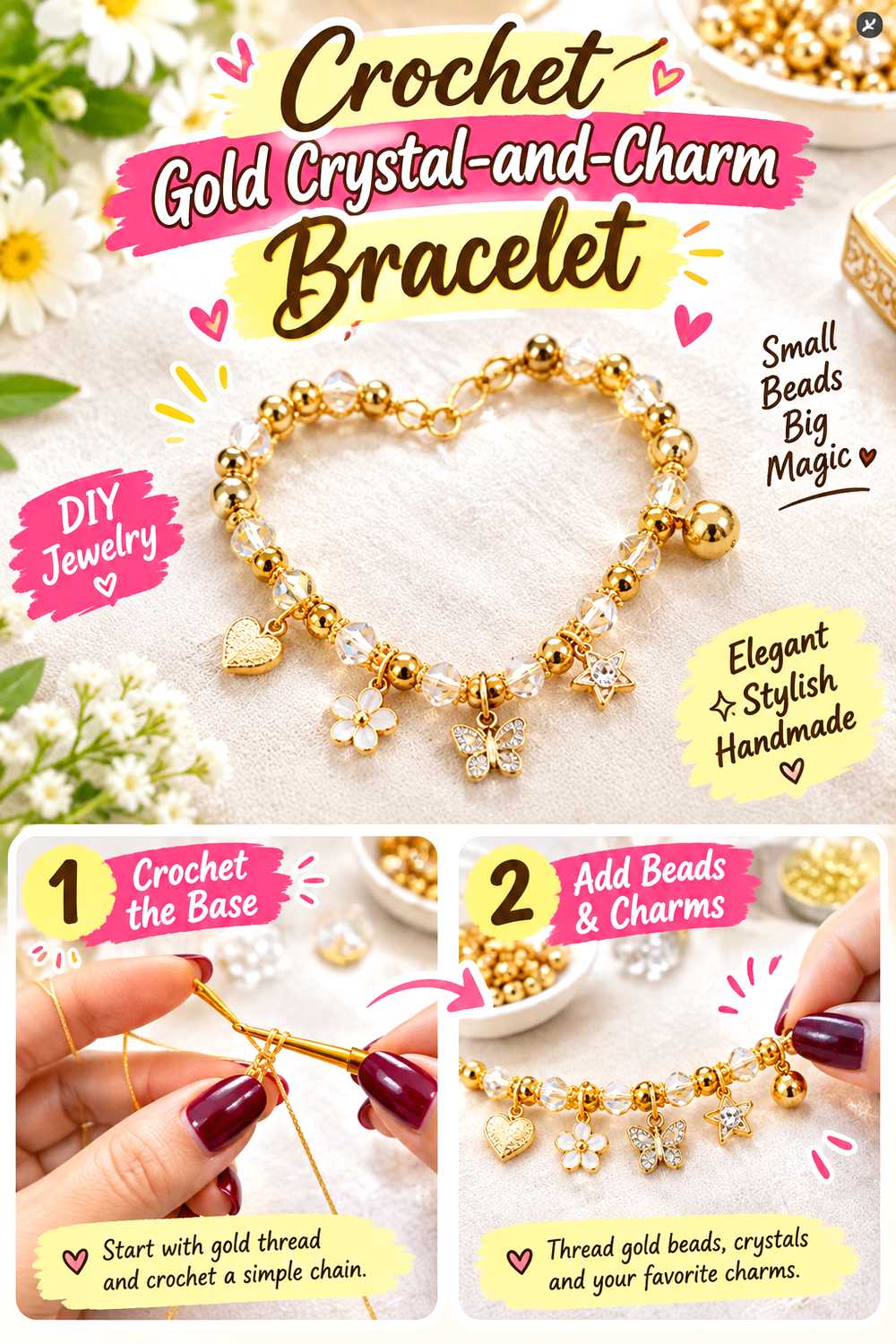
This mixed-media direction combines fine crochet with recognizable jewelry findings. La MAMU’s adjustable bracelet tutorial lists crystal accents, charms, rings, and clasp components alongside the crocheted portion, so the finished concept sits closer to textile jewelry than a simple yarn band.
A gold interpretation could use gold-colored thread and compatible gold-tone findings, but the important planning decision is balance. Once crystals and charms enter the design, the crochet does not need to carry every decorative detail. This is an appealing option when you want a dressier bracelet without making the crocheted section extremely wide.
Hardware Turns Crochet into Mixed-Media Jewelry
Jump rings, clasps, and charms introduce hard connection points into an otherwise soft construction. That can give the piece a more conventional jewelry finish, but it also makes attachment quality important.
Before committing to gold-tone findings, check that their openings and connection method work with the scale of the crocheted fabric shown by the creator. Oversized hardware can visually overwhelm a fine bracelet even when it is technically attachable.
Crystal Weight Can Pull on a Fine Band
Decorative beads and charms concentrate weight in small areas. If you substitute larger or heavier embellishments, the fabric may hang differently from the source project and the centerpiece may migrate toward the underside of the wrist.
Hold the unfinished bracelet horizontally and vertically with the intended embellishments attached temporarily. This gives you a better idea of how the textile portion responds before every connection is permanently closed.
Test Skin Contact at Rings and Charms
A jewelry component that looks smooth from the front can have a join, edge, or opening that becomes noticeable against the wrist. Run a finger around attachment points and inspect the inside of the finished bracelet before regular wear.
If you have known metal sensitivities, choose findings appropriate for your own skin requirements rather than relying on their gold color as an indication of composition.
Original Tutorial and Creator Credit
Creator: La MAMU ®️ – EMANUELA ESPOSITO Crochet Bijoux
Crochet Gold Minimal Friendship Band
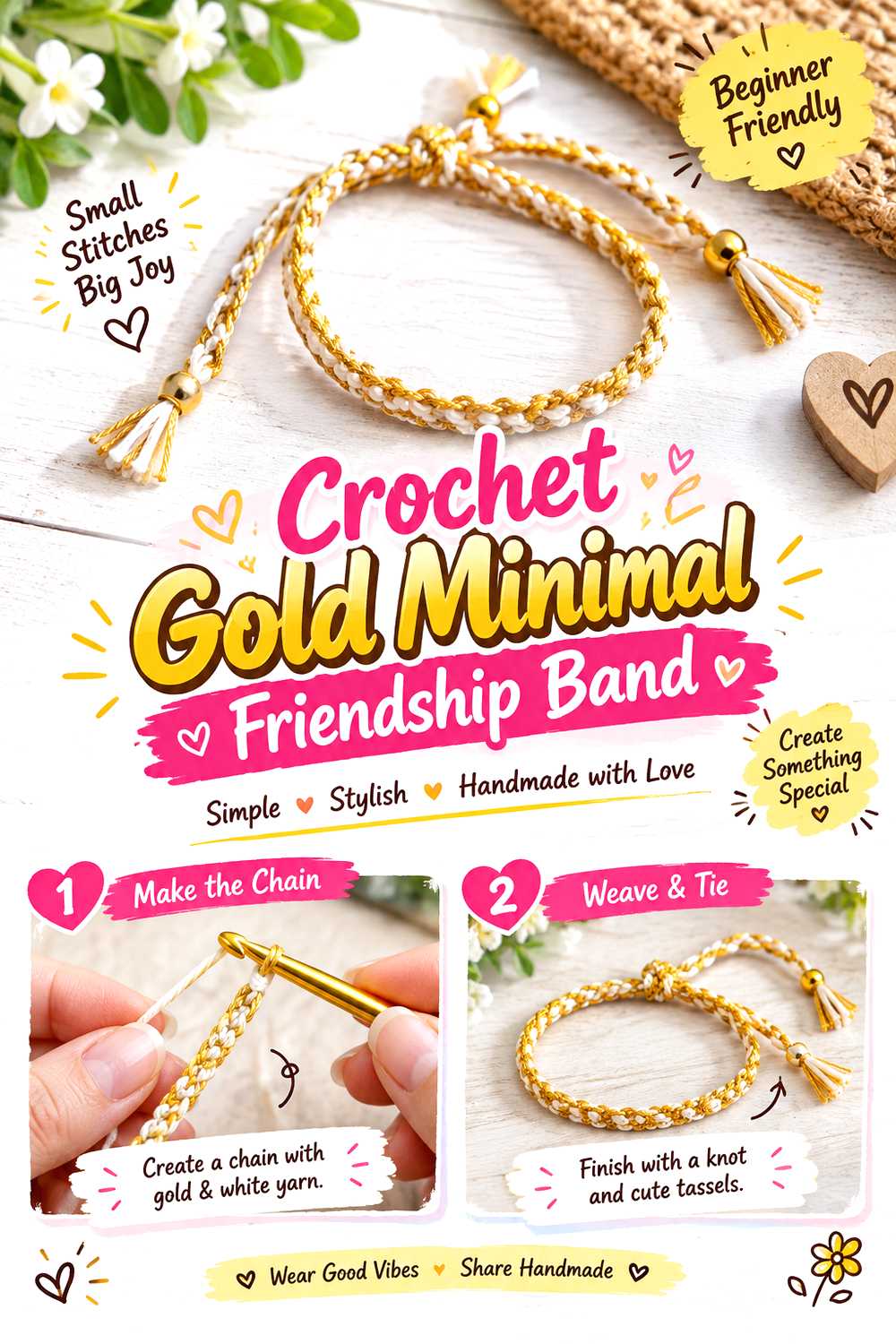
Not every gold bracelet needs the width of a dramatic cuff. Anita Louise Crochet’s friendship-bracelet tutorial offers a deliberately simple yarn-based option and is presented as a way to use small yarn scraps.
Within this collection, its value is restraint. Worked in a fine gold-colored yarn, a minimal band can be worn beside one of the larger cuffs instead of competing with it. It is also a practical way to sample an unfamiliar metallic yarn on the wrist before committing that material to a broad bracelet where stiffness, scratchiness, or uneven tension would be more noticeable.
A Minimal Band Works Best as a Gold Layer
A narrow band contributes a line of color rather than a solid metallic block. That makes it useful for stacking with matte bangles, a watch, or a wider crochet cuff.
When planning a stack, vary width rather than making every component equally prominent. A thin crocheted gold band can act as the connecting detail between larger pieces without needing beads, flowers, or a complicated surface pattern.
Simple Construction Makes Tension Visible
Basic bands provide fewer decorative elements to distract from uneven fabric. If the yarn changes thickness or your tension varies, the edge may show it immediately.
This makes the project useful as a material test. Wear the finished sample for a while and observe whether the yarn softens, twists, or irritates the wrist before choosing the same fiber for a more time-intensive gold cuff.
Original Tutorial and Creator Credit
Creator: Anita Louise Crochet
Crochet Gold Chain Stitch Friendship Bracelet
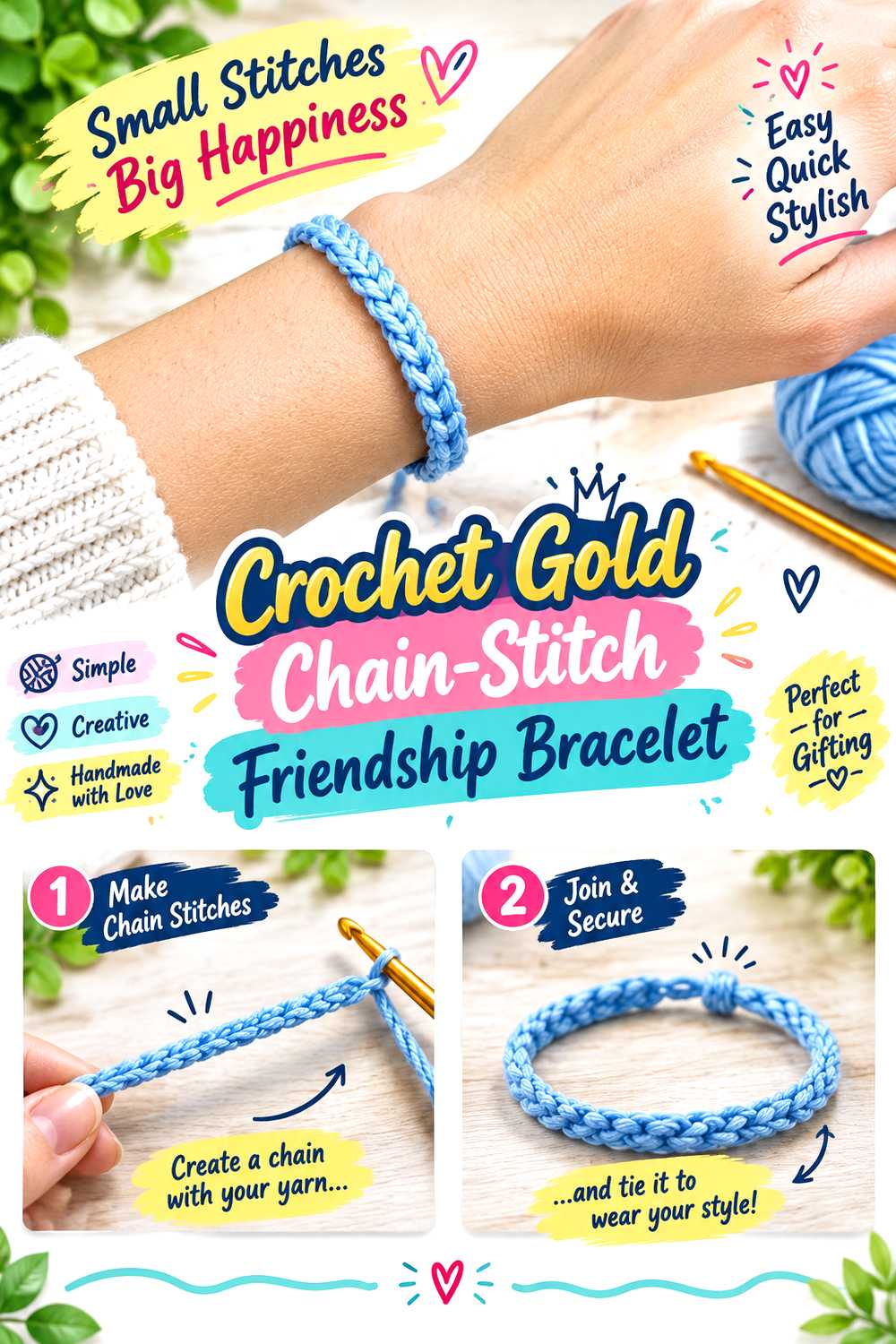
Louie’s Loops takes the minimal approach even further with a friendship bracelet designed around practicing the crochet chain. The creator describes it as an introductory project intended to build confidence with the chain stitch.
Rather than pretending this narrow bracelet is itself a wide cuff, use it as the lightest option in a gold wrist stack. Several separately made gold-toned strands can visually echo the layered quality of a cuff while still remaining individual bracelets. That also gives you the freedom to combine smooth, metallic, and matte fibers without altering the creator’s underlying tutorial.
Chain Stitch Creates the Lightest Gold Accent
A chain has far more open space than a solid crocheted band. With a shiny material, that can be an advantage because the metallic effect appears in small flashes rather than across the whole wrist.
The trade-off is structure. Fine chains can curl, twist, or disappear visually beside a large cuff, so judge the strand while worn rather than deciding its thickness from the worktable alone.
Stacking Is Better Than Forcing Extra Width
A simple introductory bracelet does not automatically become a successful cuff by adding arbitrary rows or reconstructing the pattern. If you want greater visual impact, making separate compatible strands preserves the original project’s logic.
This approach also lets you remove or rearrange individual pieces later. Combine different shades of gold or alternate plain and textured strands if you want a layered appearance without one heavy bracelet.
Original Tutorial and Creator Credit
Creator: Louie’s Loops
Crochet Gold Flower Chain Bracelet
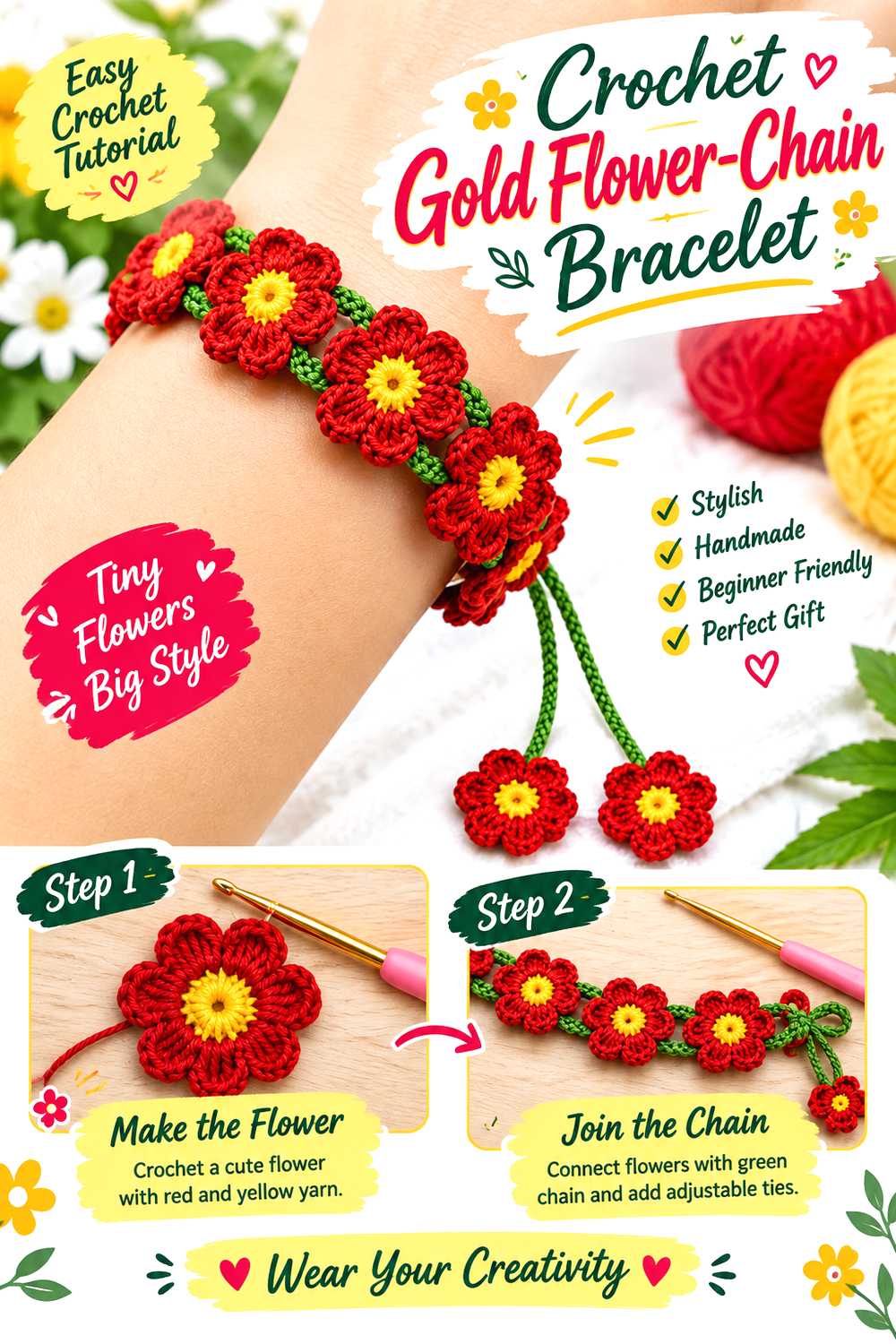
A floral chain gives the gold theme a more organic shape. Knitting Love’s tutorial features tiny crochet flowers, leaves, and an adjustable cord, which produces a visibly different silhouette from a rectangular cuff or continuous bangle.
An all-gold adaptation is possible, but contrast may make the individual motifs easier to read. For example, the connecting structure could stay gold while the botanical components use cream, deep green, bronze, or another complementary color. The useful decision here is whether “gold cuff” means a monochromatic bracelet or simply a gold-dominant piece with additional colors providing definition.
Flowers and Leaves Break Up an All-Gold Palette
Motifs create natural stopping points for color. That means you can keep the bracelet recognizably gold without forcing every flower, leaf, and connecting strand into the same shade.
Before deciding, place short lengths of the chosen colors next to one another in daylight. A pale champagne metallic beside cream can lose contrast, while a darker antique gold may separate more clearly from neighboring botanical shades.
Motif Scale Matters on a Small Wrist
A flower that looks delicate in isolation can occupy substantial space once positioned on the wrist. Consider how many focal shapes are visible from the front and whether leaves bunch together when the bracelet bends.
Do not judge spacing only with the piece stretched flat. Curve the developing bracelet around a wrist-sized form or gently hold it in position to see how the motifs overlap in actual wear.
An Adjustable Cord Keeps the Floral Front Centered
When the decorative area is concentrated on one side, closure positioning affects the entire composition. An adjustable cord can help accommodate fit differences, but the motif section still needs to land where intended.
Before securing the final ends, check the bracelet from above, from the side, and with the wrist turned. A floral section that is too long may wrap underneath and lose its intended focal presentation.
Original Tutorial and Creator Credit
Creator: Knitting Love
Crochet Gold Daisy Motif Bracelet
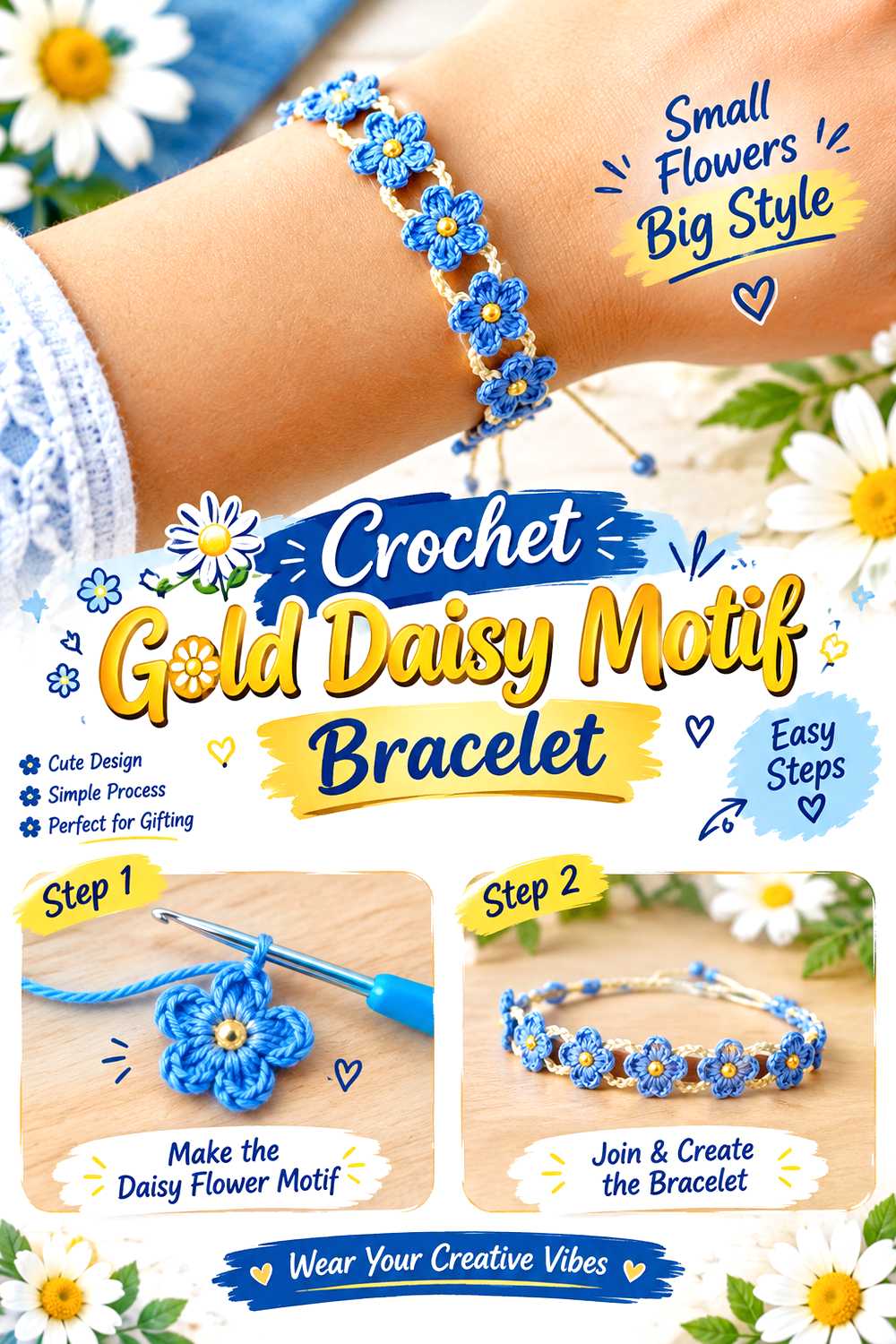
This daisy bracelet offers a more clearly repeated floral theme than the previous flower-and-leaf design. Crochet And Craft House demonstrates a daisy-style bracelet, making it useful when you want the motif rhythm itself to form the decorative band.
For a gold version, consider how much petal definition you want. Metallic fibers can look striking in simple shapes, but tiny reflective stitches may visually merge under strong light. A gold center with lighter petals, or vice versa, may preserve the daisy identity more clearly than making the entire motif a single reflective tone.
Daisy Repetition Creates a Softer Cuff Edge
A row of flower shapes produces an irregular outer edge, which is quite different from the straight top and bottom borders of a classic cuff. That softness can make the bracelet feel lighter even when several motifs span the wrist.
Look at how the flowers meet before changing yarn thickness. Larger motifs may overlap more strongly, while smaller ones can leave more visible gaps and change the overall rhythm.
Metallic Yarn Can Blur Tiny Petal Definition
Highly reflective strands may make small stitch boundaries harder to distinguish, particularly in a motif where the petal shape is the main design feature. Make one complete daisy with the proposed gold fiber before committing to the bracelet.
View the sample from normal wearing distance, not just close up. If the flower loses its outline, reserve the metallic yarn for centers or connecting sections instead.
Block Motifs Before Judging the Final Span
Small crochet flowers can appear uneven immediately off the hook, particularly when several need to align as a bracelet. If the creator’s chosen fiber benefits from blocking, evaluate the motifs after appropriate finishing rather than trying to force every petal into position during construction.
When substituting fibers, follow the care guidance for that actual material. Metallic components may have different heat or washing limitations from ordinary cotton.
Original Tutorial and Creator Credit
Creator: Crochet And Craft House
Crochet Gold Beaded I Cord Bracelet

Nicki’s Homemade Crafts teaches a beaded bracelet using a chained i-cord technique, offering a rounder textile profile than a flat lace or motif band. The source is a full instructional livestream rather than a short preview, and its focus is the bracelet construction and beadwork.
This can suit a gold jewelry look particularly well because the cord itself already resembles a soft strand. Metallic yarn can make that strand more prominent, while gold-tone beads can create a conventional jewelry impression even if the crochet fiber is matte. It also makes a useful contrast to broad cuffs when worn in a coordinated stack.
I-Cord Gives a Rounder Jewelry-Like Profile
A cord has depth around its entire circumference instead of presenting one broad flat face. That makes it behave more like a textile rope or chain than a miniature wristband.
When choosing metallic yarn, check whether the cord remains flexible after crocheting. A fiber that feels soft as a loose strand may become considerably firmer once worked into a compact three-dimensional structure.
Beads Should Sit Securely Without Fighting the Cord
The bead size needs to make sense beside the finished cord diameter. Beads that are too small can disappear visually, while very large ones may dominate the strand or pull it out of line.
Lay several candidate beads beside a sample of the completed gold cord. This quick comparison is more useful than evaluating beads against an unworked ball of yarn, since crochet changes the apparent scale.
Choose the Closure After Seeing the Cord Thickness
A round cord meets hardware differently from flat lace. If you plan to change the closure or findings, wait until you can see the actual finished cord thickness rather than selecting hardware solely from the yarn label.
Check how the end enters or meets the fastening component and whether that connection is smooth against the wrist. A refined closure should not create a visibly bulky interruption in an otherwise slim bracelet.
Original Tutorial and Creator Credit
Creator: Nicki’s Homemade Crafts
Crochet Gold Soft Bangle Bracelet
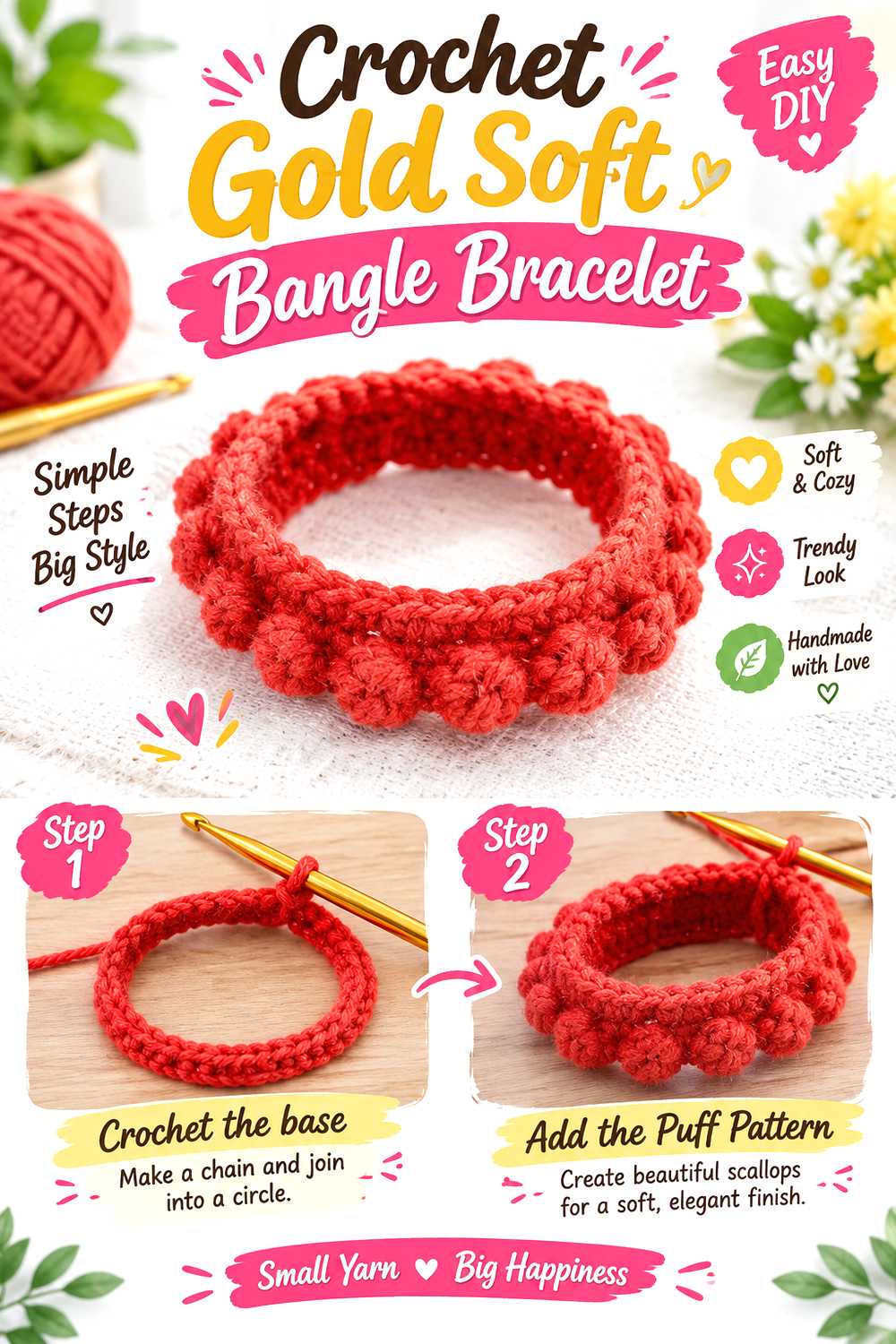
Guidecentral English’s tutorial focuses on a crochet bangle bracelet and lists yarn among its project supplies, making this a straightforward route for readers who prefer a ring-shaped bracelet instead of an adjustable or clasped piece.
The gold adaptation works best when you decide how soft or structured you want the finished bangle to appear. A warm-gold conventional yarn may preserve the behavior of the tutorial more closely than an unfamiliar stiff metallic substitute. This idea is less ornate than the heavily beaded cuffs, so the quality of the circular shape and finish becomes a larger part of the final appearance.
A Soft Bangle Reads Differently from a Flat Cuff
A bangle emphasizes its circular outline rather than a wide decorated front panel. That makes it particularly suitable for stacking, where several narrow shapes can build a larger visual composition.
For gold styling, consider making the surface texture the focus instead of immediately adding charms. A clean ring can provide useful contrast beside floral, bead-heavy, or lace bracelets in the same wrist stack.
Test the Ring Opening Before Final Joining
The critical fit point is whether the completed bracelet can pass over the hand without becoming so loose that it slides around excessively on the wrist. Test the proposed circumference before closing the ring permanently.
Material substitution matters here. A yarn with more or less stretch than the source material can change how the same apparent size behaves, so rely on the actual work in your hands rather than a general bracelet measurement.
Original Tutorial and Creator Credit
Creator: Guidecentral English
Crochet Gold Macrame Look Beaded Bracelet
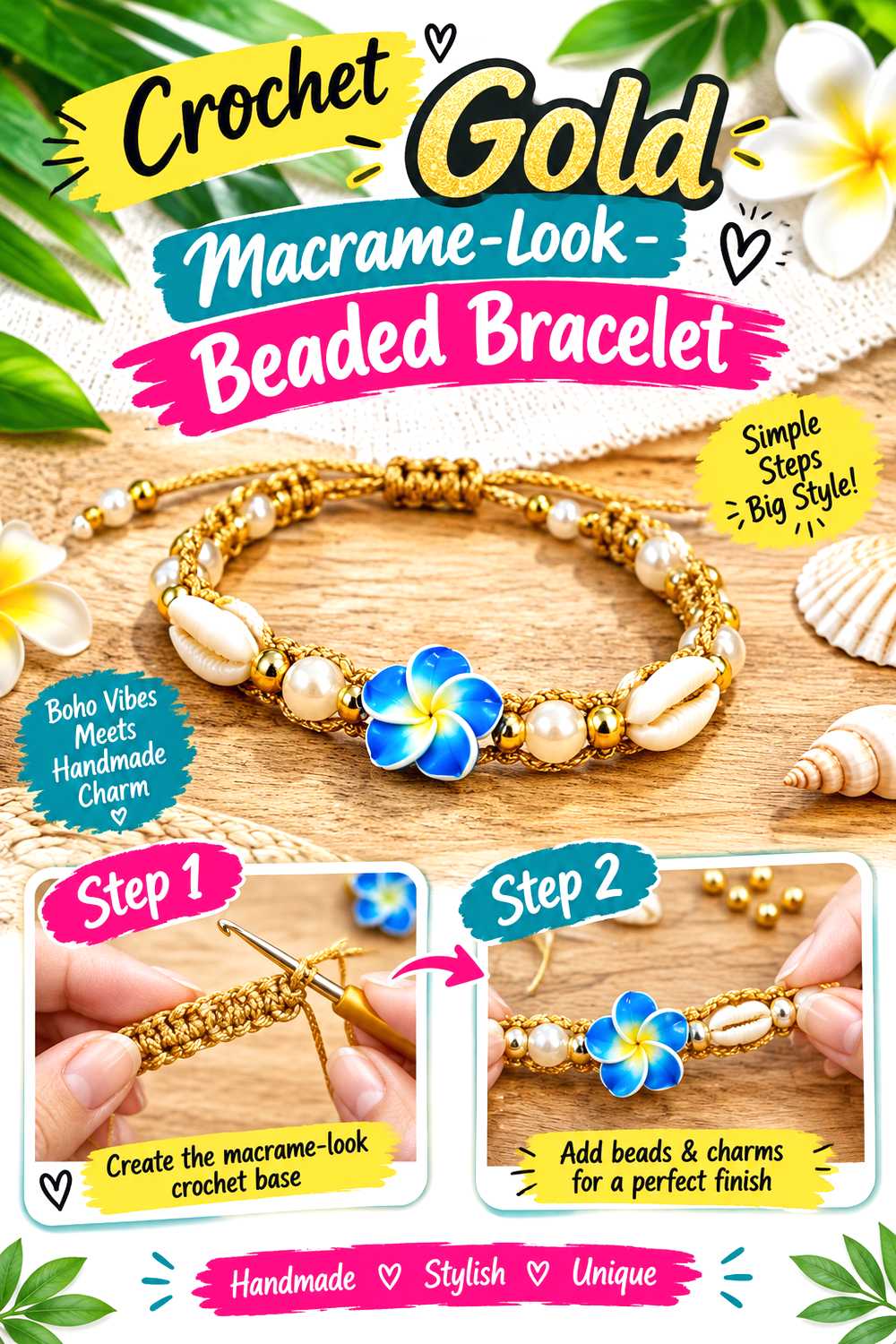
The final idea moves away from a conventional solid cuff and uses crochet to imitate some of the visual character associated with macrame. Celtic Knot Crochet’s Cowrie Bracelet combines crocheted sections with beads and a clasp; the creator specifically describes the design as having a macrame-like appearance and provides a step-by-step video for the project.
For a gold adaptation, changing the original neutral thread to a compatible gold-colored crochet thread can create a richer jewelry palette while allowing shell or bead elements to remain focal points. This is a strong choice when you want obvious mixed materials and separated decorative sections.
Macrame-Look Sections Add Structure Without a Solid Band
This bracelet does not depend on one uninterrupted rectangle of crochet. Separate visual sections make the piece feel more architectural while leaving open spaces around its decorative components.
Gold thread can highlight those connecting lines effectively, but check flexibility after making a sample. If the metallic replacement is significantly stiffer than the material used by the creator, the segmented design may stop curving naturally around the wrist.
Shells and Beads Need Stable Attachment Points
The source design includes cowrie, flower, and wooden bead elements, so successful adaptation depends on more than matching colors. If you replace them with gold-tone beads or other focal components, compare hole size, weight, and attachment possibilities rather than substituting by diameter alone.
After assembly, gently inspect each connection from both sides. Decorative pieces should not expose rough attachment points where they rest against the wearer.
Gold Should Support the Focal Beads, Not Hide Them
When both the crochet and every bead are the same bright gold, the segmented layout can lose some of its definition. Consider an antique-gold thread with pearl-like, shell, bronze, black, or cream focal pieces if you want the construction to remain easy to read.
If a monochromatic look is the goal, use differences in surface finish—matte versus reflective, for example—to create separation without introducing another color.
Original Tutorial and Creator Credit
Creator: Celtic Knot Crochet
Which Crochet Gold Cuff Style Should You Choose?
For the strongest cuff presence, start with the reversible beadwork or Tunisian beaded options; both give the wrist a broad decorative face. The puff-stitch and soft bangle ideas shift the focus toward crochet texture and a slip-on shape. Choose the adjustable lace, bead-tie, or crystal-and-charm projects when closure flexibility matters more than continuous wrist coverage.
For a lighter look, the friendship and chain bracelets work better as layers beside a larger cuff than as substitutes for one. The flower-chain and daisy designs suit readers who want recognizable motifs, while the beaded i-cord and macrame-look bracelet move closest to mixed-media textile jewelry.
Conclusion
A successful crochet gold cuff begins with construction, not metallic color. Choose a reversible or Tunisian cuff for broad coverage, a bangle or puff-stitch design for structure, a wrap style for layered width, or an adjustable bracelet when flexible fit matters most. Floral and macrame-look options create softer outlines, while beads, crystals, and findings can move the finished piece closer to conventional jewelry.
Whichever direction you choose, test the proposed gold material before replacing the creator’s yarn or thread, particularly when flexibility and bead compatibility matter. Use the original tutorials near each idea for exact construction, materials, sizing, and finishing details.
Frequently Asked Questions
Can I substitute metallic gold thread into any crochet bracelet tutorial?
Not automatically. Metallic yarns and threads vary considerably in thickness, stretch, firmness, and surface texture. A replacement that looks similar in diameter may still produce a stiffer or less flexible bracelet. Make a small sample first and compare it with the fabric behavior shown by the creator. For bead projects, also confirm that the new material passes through or works around the intended beads before beginning the full bracelet.
How should I size a crochet cuff differently from a bangle?
A cuff with an opening, clasp, button, or adjustable fastening is primarily fitted around the wrist. A closed slip-on bangle must also pass over the wider part of the hand. That means a wrist-only measurement is not enough for a seamless ring. Before permanent joining, temporarily form the bracelet into its finished shape and test both wearing comfort and removal using the actual yarn and stitch fabric.
What can I do if metallic yarn feels scratchy on my wrist?
Try the material against the skin before making a full cuff. If it feels uncomfortable as a small sample, a wide bracelet will expose even more skin to that texture. Consider a softer gold-colored yarn without a strong metallic component, or reserve the reflective material for small accents. Do not assume blocking will transform an uncomfortable fiber; follow the care instructions for the yarn and judge the finished sample directly.
Do beads make a crochet cuff less flexible?
They can, depending on bead size, quantity, placement, and the underlying crochet fabric. Closely packed beads may restrict how readily a section bends, while widely spaced beads on a flexible strand may have little effect. After completing a representative beaded section, curve it around the wrist before continuing. If it resists bending or causes neighboring beads to press together, reconsider the material combination before finishing the entire piece.
Can I replace crochet thread with gold-colored jewelry wire?
Only when the construction is designed to accommodate wire or you have enough experience to redesign the project independently. Wire and yarn behave very differently under a crochet hook, and a yarn tutorial does not automatically provide suitable tension, shaping, finishing, or comfort guidance for metal. For a true wire-crochet bracelet, choose a source specifically created for wire rather than treating wire as a simple color substitution.
How do I keep a wide crochet cuff from flaring at the edges?
First identify the cause rather than immediately adding a border. Uneven tension, a fiber substitution, a difference between the intended and actual fit, or an overly stiff embellishment can all affect the edge. Place the unfinished cuff around the wrist and see where the flare begins. If you changed yarn from the tutorial, compare your fabric with the creator’s visible result before altering the construction further.
Should gold crochet bracelets use matching gold beads and findings?
They can, but an exact match is not required. Differences in finish often make a bracelet more readable: matte thread beside polished beads, antique gold beside brighter findings, or gold crochet beside cream or dark focal beads can create useful separation. Lay the materials together under natural light before starting. Gold tones vary noticeably, so a combination that looked coordinated on separate product images may read differently side by side.