Persimmon and navy create a crochet palette with a naturally strong visual hierarchy. Persimmon brings a warm orange-red note, while a typical deep navy supplies a much darker, cooler anchor. That light-and-dark separation can make borders, ribbing, stripes, motifs, and structural details easier to distinguish than they would be in two similarly valued colors.

The pairing is also flexible. Persimmon can dominate a blanket or sweater while navy outlines the edges, or navy can cover most of a cardigan, bag, or poncho while smaller persimmon sections add warmth. On compact accessories, it is often more effective to give each shade a clear job rather than switching colors constantly.
The tutorials linked with each idea support the crochet construction concept. The persimmon-and-navy placements below are independent color adaptations, so use the creator’s tutorial for the original construction details.
Quick List
- Persimmon and Navy Striped Crochet Blanket
- Navy Crochet Cocoon Cardigan with Persimmon Edging
- Persimmon Crochet Market Bag with Navy Handles
- Navy and Persimmon Textured Crochet Pillow
- Navy Crochet Beanie with Persimmon Brim
- Persimmon Crochet Shawl with Navy Border
- Persimmon and Navy Checkerboard Crochet Vest
- Persimmon Crochet Bucket Hat with Navy Brim
- Navy Crochet Mesh Market Bag with Persimmon Top Band
- Persimmon Crochet Shoulder Bag with Navy Waffle Panels
- Navy Crochet Sweater Top with Persimmon Trim
- Persimmon Crochet Headband with Navy Center Stripe
- Navy Crochet Tie-Front Cardigan with Persimmon Edging
- Persimmon and Navy Color-Block Crochet Skirt
- Persimmon Crochet Bandana with Navy Border
- Navy Crochet Hanging Basket with Persimmon Rim
- Persimmon and Navy Crochet Balaclava
- Navy Crochet Tote Bag with Persimmon Side Panels
- Persimmon Crochet Slippers with Navy Cuffs
- Navy Crochet Handbag with Persimmon Accent Panel
- Navy Crochet One-Piece Cardigan with Persimmon Cuffs
- Persimmon Crochet Lace Hat with Navy Band
- Persimmon and Navy Crochet Storage Basket
- Persimmon Crochet Crop Sweater with Navy Ribbing
- Navy Crochet Poncho with Persimmon Border
- Persimmon Crochet Shawl with Navy Textured Bands
- Navy Crochet Oversized Storage Basket with Persimmon Stripe
- Navy Crochet Textured Beanie with Persimmon Ribbing
- Persimmon Crochet Chunky Cardigan with Navy Bands
- Persimmon Crochet Picot Beanie with Navy Texture Bands
Let Persimmon and Navy Have Different Crochet Jobs
Persimmon and navy do not need equal amounts of space. In fact, giving one color a clearly dominant role often makes the finished crochet item easier to read. A navy cardigan can use persimmon only at the cuffs and edging, while a persimmon blanket can reserve navy for repeated bands and its outer border.
Start by identifying the largest visual surface of the project. Decide which color should control that area, then place the secondary shade where it can repeat naturally. On garments, that might mean cuffs, necklines, hems, or selected panels. On bags, consider handles, bases, flaps, and openings. For home decor, borders and repeated textured sections provide obvious accent zones.
Use Navy to Give Persimmon Crochet Details More Definition
A deep navy can act almost like an outline against persimmon. That makes it especially useful around lighter warm sections, along motif borders, or beside ribbing and textured stitches.
The contrast should still be checked with your actual yarn. Persimmon ranges from light orange-red to deep rusty orange, while navy can range from bright blue-navy to nearly black. Place the skeins side by side before deciding how narrow your stripes or details can be. Stronger value contrast can support smaller color elements, while closer values usually benefit from larger blocks.
Add a Light Neutral Only When Persimmon and Navy Need Breathing Room
Persimmon and navy can easily carry a two-color crochet project on their own. Cream, oatmeal, or warm beige becomes useful when you want to lighten the overall design or visually separate complicated motifs.
Keep the neutral secondary to the main pairing. A narrow cream motif border, occasional granny-square round, or small separator stripe may be enough. If the neutral occupies too much space, the project can start reading as a three-color scheme rather than a persimmon-and-navy design.
1. Persimmon and Navy Striped Crochet Blanket

A blanket provides enough surface area to let persimmon and navy appear in substantial bands instead of tiny alternating stripes. Persimmon can cover more of the blanket for a warmer result, while navy creates darker intervals that give the stripe layout definition. Repeating navy at the outer border helps connect the edge to the interior color sequence.
Let Persimmon Form the Wider Crochet Blanket Stripes
Use persimmon for several of the broadest sections when you want the warm shade to control the finished blanket. Large areas also let crochet texture remain visible instead of interrupting it with constant color changes.
Varying stripe width can keep the layout from looking mechanically divided. The important checkpoint is repetition: if one persimmon band is especially wide, echo that visual weight elsewhere rather than concentrating all of the warm color in one part of the blanket.
Use Navy to Frame the Persimmon Crochet Blanket
A navy border can give the entire striped surface a defined outer edge. This works particularly well if navy already appears several times within the blanket because the border then feels connected to the established palette.
If the interior is already navy-heavy, consider finishing with persimmon instead. The border should support the color hierarchy rather than unintentionally reverse it.
Creator Credit: Daisy Farm Crafts
2. Navy Crochet Cocoon Cardigan with Persimmon Edging
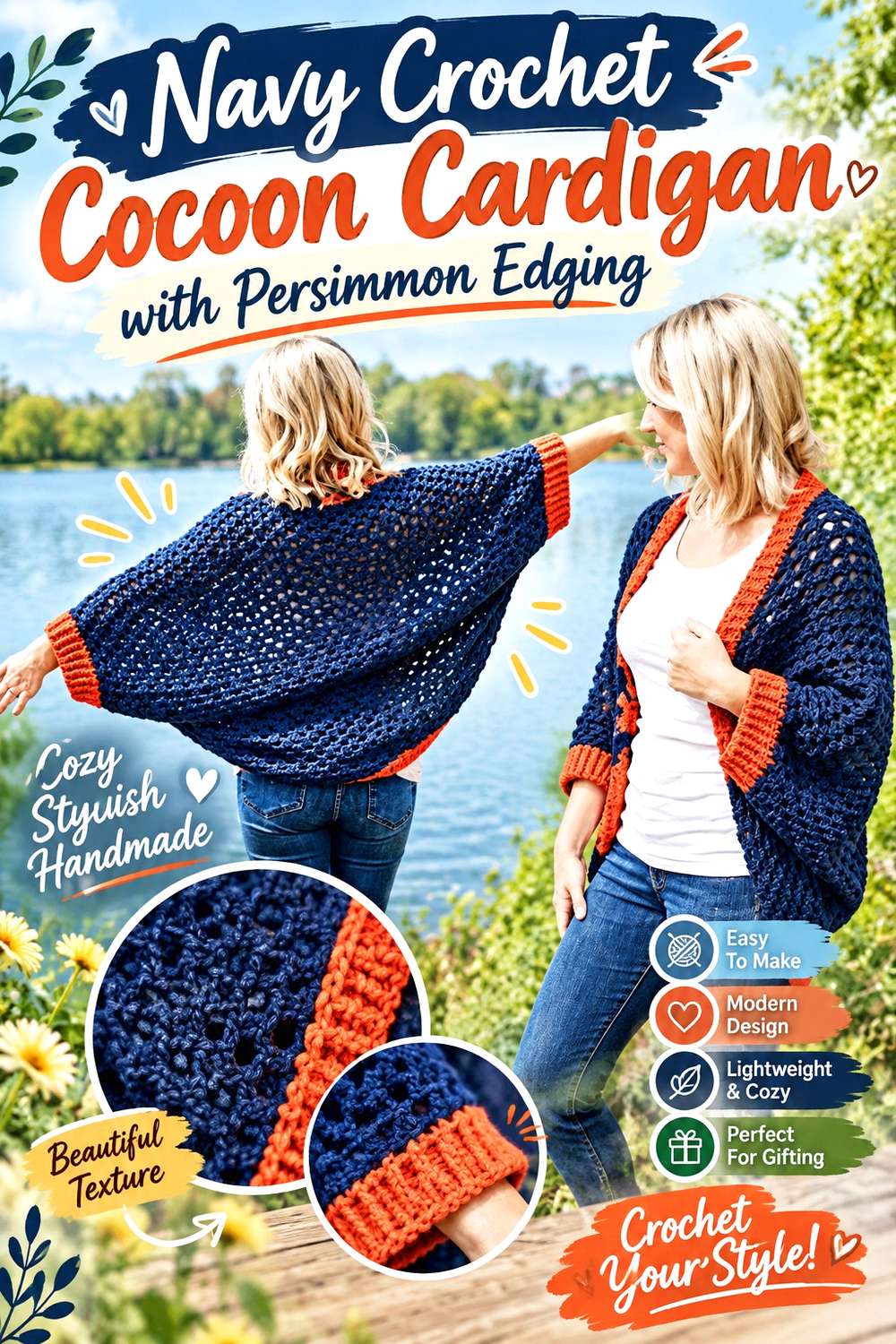
The broad body of a cocoon-style cardigan suits a navy-led palette because the dark color can remain continuous across the largest surface. Persimmon can then define the opening, cuffs, or other finished edges without dividing the relaxed silhouette into too many color sections.
Keep Navy Continuous Across the Crochet Cardigan Body
A mostly navy body gives this cardigan one clear visual field and keeps attention on its overall shape. That is especially useful for a construction with broad uninterrupted panels, where frequent color changes could make the fabric look segmented.
If you want persimmon inside the body, use a deliberate broad band rather than isolated rows that appear unrelated to the edging.
Repeat Persimmon Around the Navy Crochet Cardigan Edges
Use persimmon in more than one finishing area, such as the opening and cuffs. Repetition creates a connection between separated parts of the cardigan and prevents the warm color from looking accidental.
For a quieter adaptation, choose a deeper rusty persimmon. A clearer orange-red increases the contrast and makes the trim more prominent.
Creator Credit: Bella Coco
3. Persimmon Crochet Market Bag with Navy Handles

An open market bag can carry a substantial amount of persimmon without feeling like a heavy block of color because the open spaces break up the surface. Navy handles and upper edging can provide a darker visual frame around that warmer body.
Let Persimmon Cover Most of the Crochet Market Bag
Keeping the main bag body persimmon creates an uninterrupted warm field even though the fabric itself is open. Avoid changing between persimmon and navy too frequently through mesh sections unless distinct striping is the goal.
A consistent body color also makes the transition into navy handles easier to recognize.
Connect Navy Handles to the Persimmon Crochet Bag Body
Instead of introducing navy only at the handles, repeat it around the bag opening or in a lower accent band. That repetition visually attaches the handles to the rest of the project.
If the bag has a clearly defined base, navy can also be repeated there to create dark accents at both the top and bottom.
Creator Credit: Home Handwork Diy
4. Navy and Persimmon Textured Crochet Pillow

A heavily textured pillow already creates contrast through light and shadow, so the color plan should support rather than compete with that surface. A navy main face can make persimmon loops, bands, or edging more noticeable, while a persimmon-dominant face creates a warmer decor piece with navy used as definition.
Keep Navy Broad Around Detailed Persimmon Crochet Texture
If persimmon is used to highlight selected raised sections, give the surrounding navy enough uninterrupted space for those details to stand apart. Alternating every small textured repeat between the two colors may make the pillow visually crowded.
Consider where the pillow will be viewed from normal room distance, not just close up. Larger color zones usually remain clearer across a sofa or chair.
Use Persimmon to Break Up a Large Navy Crochet Pillow Face
Persimmon can appear as one substantial central band, selected textured rows, or a controlled border. Each option changes how much attention the warm color receives.
Avoid adding persimmon only to one tiny corner or isolated feature. Repeat it sufficiently for the color to look intentionally integrated.
Creator Credit: MJ’s Off The Hook Designs
5. Navy Crochet Beanie with Persimmon Brim
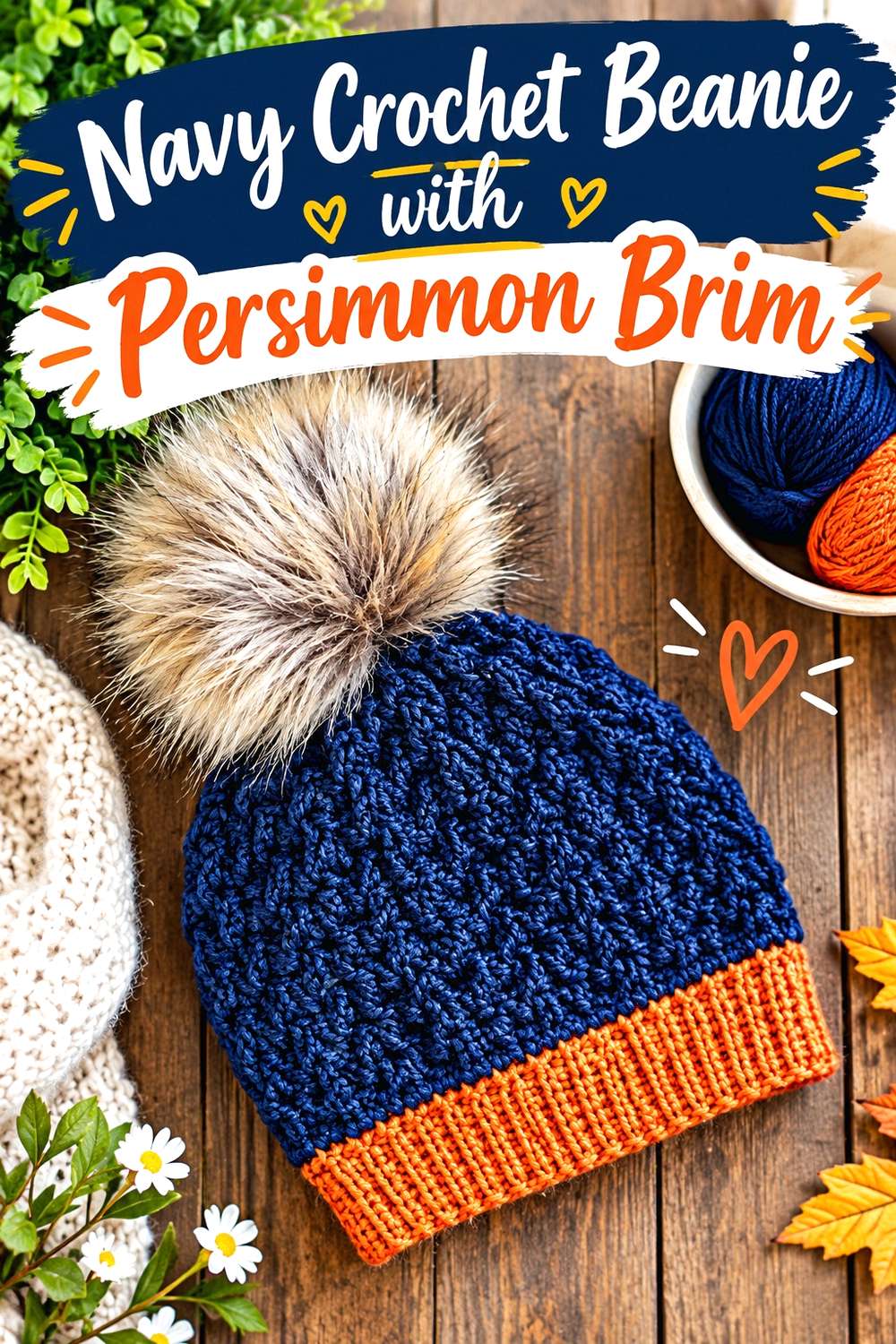
A compact beanie benefits from a simple hierarchy. A navy crown with a persimmon brim separates the two colors at a natural structural point and gives both enough space to remain recognizable.
Let Navy Keep the Crochet Beanie Crown Visually Unified
Use navy across most of the crown if the hat contains substantial stitch texture. Keeping one color through that section lets the texture remain visible without extra interruption from narrow stripes.
If more persimmon is wanted, consider one broad band before the brim rather than many tiny color changes.
Use Persimmon to Separate the Crochet Beanie Brim from Navy
Persimmon makes the brim an obvious finishing element against a deep navy body. Ribbing will already introduce strong vertical or horizontal texture, so a single warm color can be enough to emphasize that area.
Repeat a little persimmon near the top only if the brim otherwise feels disconnected.
Creator Credit: Rich Textures Crochet
6. Persimmon Crochet Shawl with Navy Border
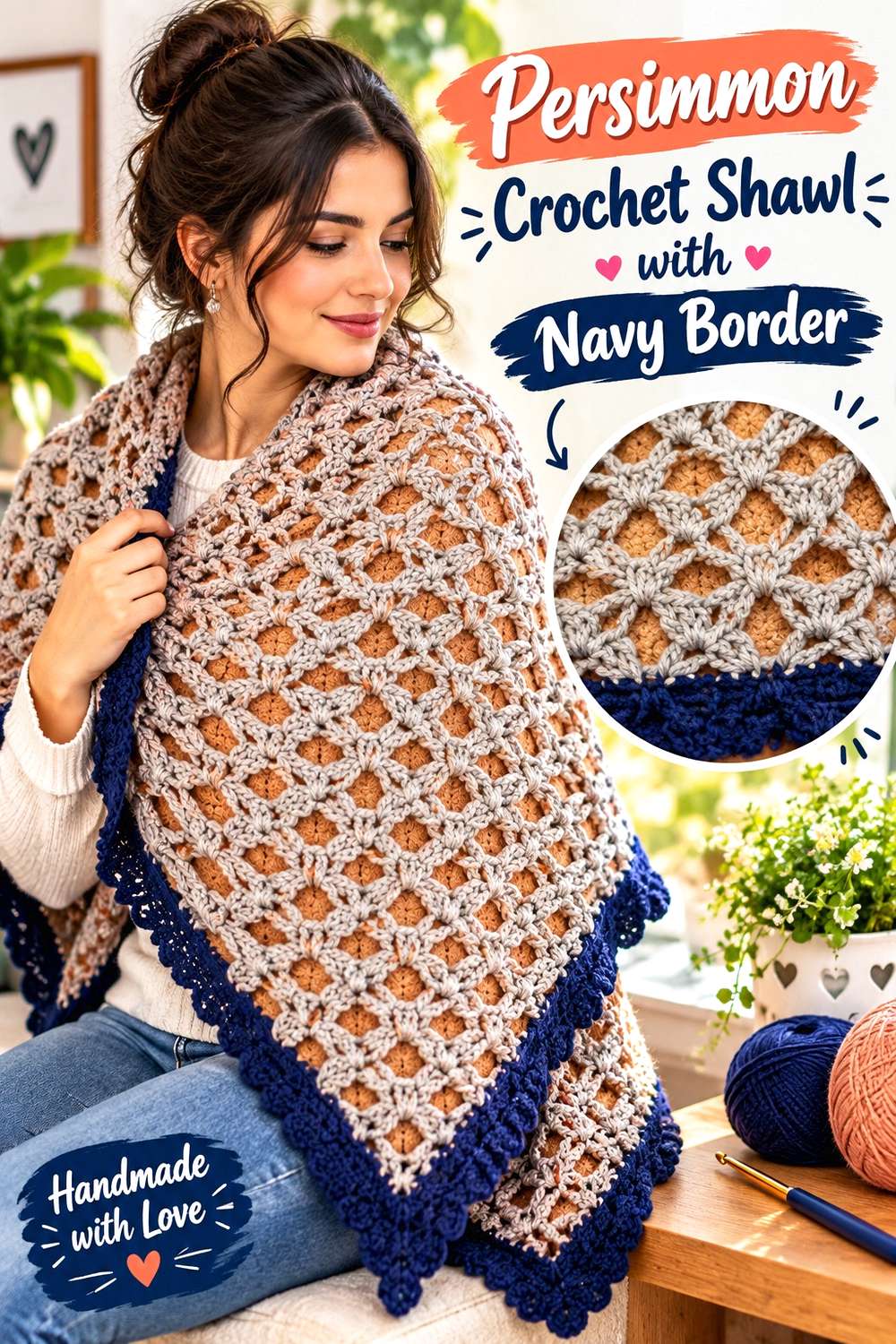
A shawl gives persimmon a wide field where openwork and texture can remain visible. Navy can be saved for the outer border, allowing the darker color to trace the finished shape without breaking up the main fabric.
Keep Persimmon Continuous Through the Crochet Shawl Center
A continuous persimmon center works especially well when the shawl pattern already contains strong stitch changes or open spaces. Color changes are not required to create visual movement when the fabric provides its own pattern.
If you want navy within the center, place it in broader repeated bands so it follows the shawl’s expanding shape.
Let Navy Define the Persimmon Crochet Shawl Edge
A navy outer section creates a strong outline around persimmon. On a pointed or triangular shawl, that darker edge can make the finished geometry particularly clear.
Check the contrast against the clothes you expect to layer beneath the shawl, especially if the fabric contains openwork through which the background remains visible.
Creator Credit: Fiber Spider
7. Persimmon and Navy Checkerboard Crochet Vest
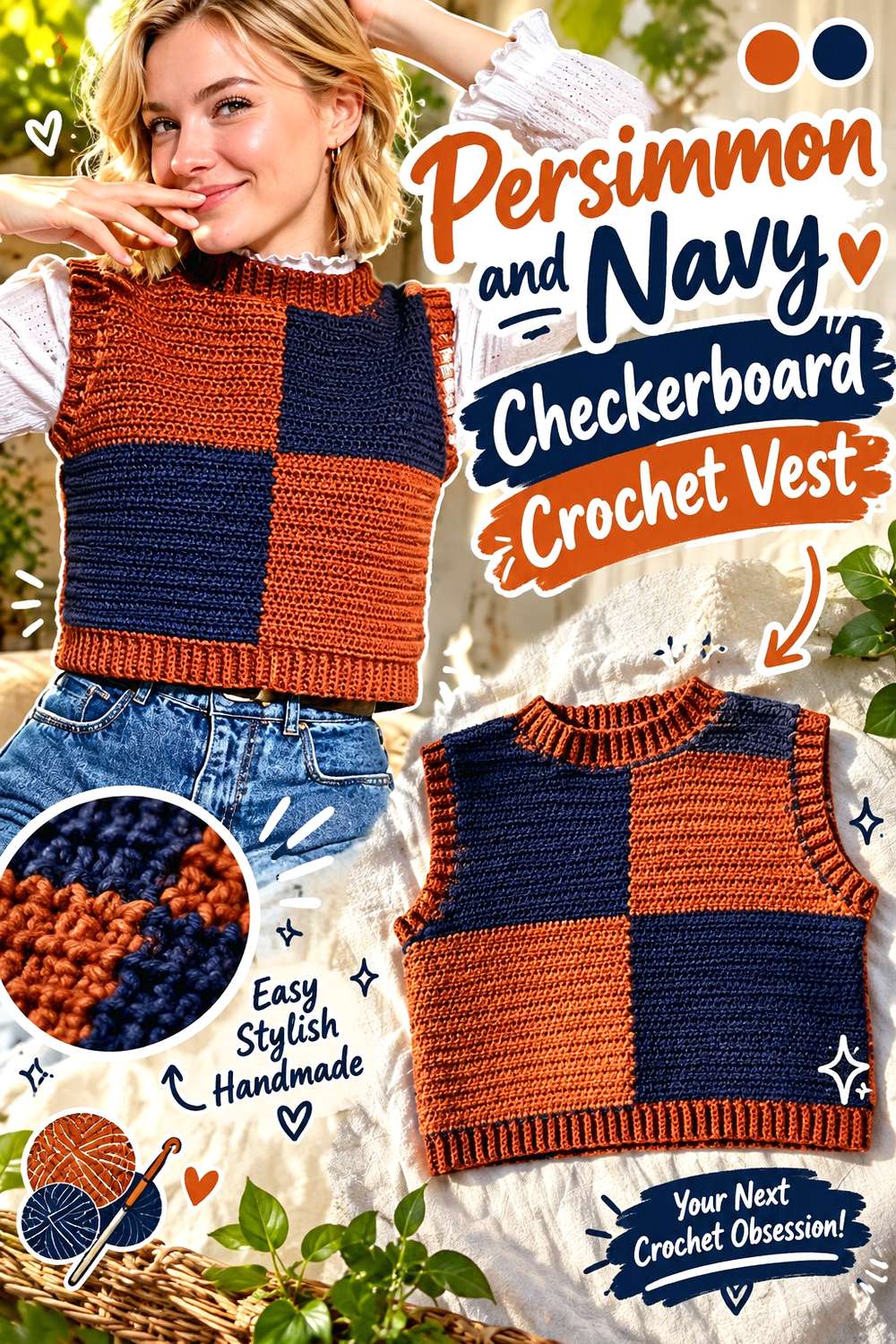
Checkerboard crochet gives persimmon and navy almost equal visual status, making it one of the strongest two-color treatments in this collection. The repeating blocks organize the contrast, so an additional accent color is usually unnecessary.
Check Persimmon and Navy Contrast Before Crocheting the Vest Blocks
Checkerboards rely on clear boundaries. Compare the actual yarns before committing to the layout, particularly if your persimmon is very dark.
A grayscale photo is a useful checkpoint. If the blocks remain noticeably different in grayscale, the checkerboard is more likely to stay clear from a distance.
Choose Navy or Persimmon for the Crochet Vest Trim
The neckline, armholes, and lower edging can shift the final balance. Navy trim makes the overall vest read darker and frames the checkerboard, while persimmon trim pushes the warmer shade forward.
Use one trim strategy consistently instead of switching edge colors from one opening to another without a visual reason.
Creator Credit: Hayhay Crochet
8. Persimmon Crochet Bucket Hat with Navy Brim

The separate crown, sides, and brim of a bucket hat provide convenient color zones. Keeping the upper hat persimmon and switching to navy at the brim lets the color change reinforce the change in shape.
Carry Persimmon Through the Crochet Bucket Hat Crown
Using persimmon continuously over the crown and sides keeps the rounded upper section cohesive. This is especially useful if the construction already creates visible increases or structural lines.
For additional navy, one band around the sides is usually clearer than many narrow alternating rounds.
Put Navy Where the Crochet Bucket Hat Brim Begins
A navy brim marks the outward flare of the hat and gives the lower edge a stronger outline. Because the brim is a relatively large area, navy receives enough visual space to balance the persimmon above.
If navy appears too dominant, use persimmon for a final outer edging to reconnect the brim with the crown.
Creator Credit: PassioKnit Kelsie
9. Navy Crochet Mesh Market Bag with Persimmon Top Band

Reversing the earlier bag hierarchy produces a noticeably different accessory. Navy can dominate the mesh while persimmon is concentrated around the opening, giving the warm color a smaller but more focused role.
Keep Navy Consistent Across the Crochet Mesh Bag
A continuous navy mesh body creates a darker reusable bag without requiring complicated color changes through the openwork. The negative space keeps the dark surface from appearing completely solid.
If you introduce persimmon lower in the bag, repeat it in one broad section rather than scattered single rows.
Use Persimmon Around the Navy Crochet Bag Opening
A persimmon top band is easy to see because it sits against a broad navy field. Carrying the same warm color into part of the handles can make the transition feel intentional.
If the handles remain navy, repeat persimmon elsewhere near the upper body so the band is not isolated.
Creator Credit: Her Science
10. Persimmon Crochet Shoulder Bag with Navy Waffle Panels

Pronounced waffle texture creates a grid of shadows, so this bag does not need frequent color changes. Persimmon can cover the most textured panels while navy is reserved for the base, border, strap, or selected structural areas.
Let Persimmon Show the Crochet Bag’s Waffle Texture
A single persimmon field allows the raised grid to create its own variations in light and shadow. Switching colors within every small textured section could distract from that surface.
If the chosen persimmon is particularly deep, inspect a swatch in normal indoor light to make sure the texture remains easy to see.
Use Navy to Frame the Persimmon Crochet Shoulder Bag
Navy around the outer edges or strap provides strong definition against the warm body. Repeating navy at the base can also connect the strap visually to the lower part of the bag.
Avoid using a third dark color for those areas unless it adds a clearly different role; navy already supplies the necessary visual anchor.
Creator Credit: Brunaticality
11. Navy Crochet Sweater Top with Persimmon Trim
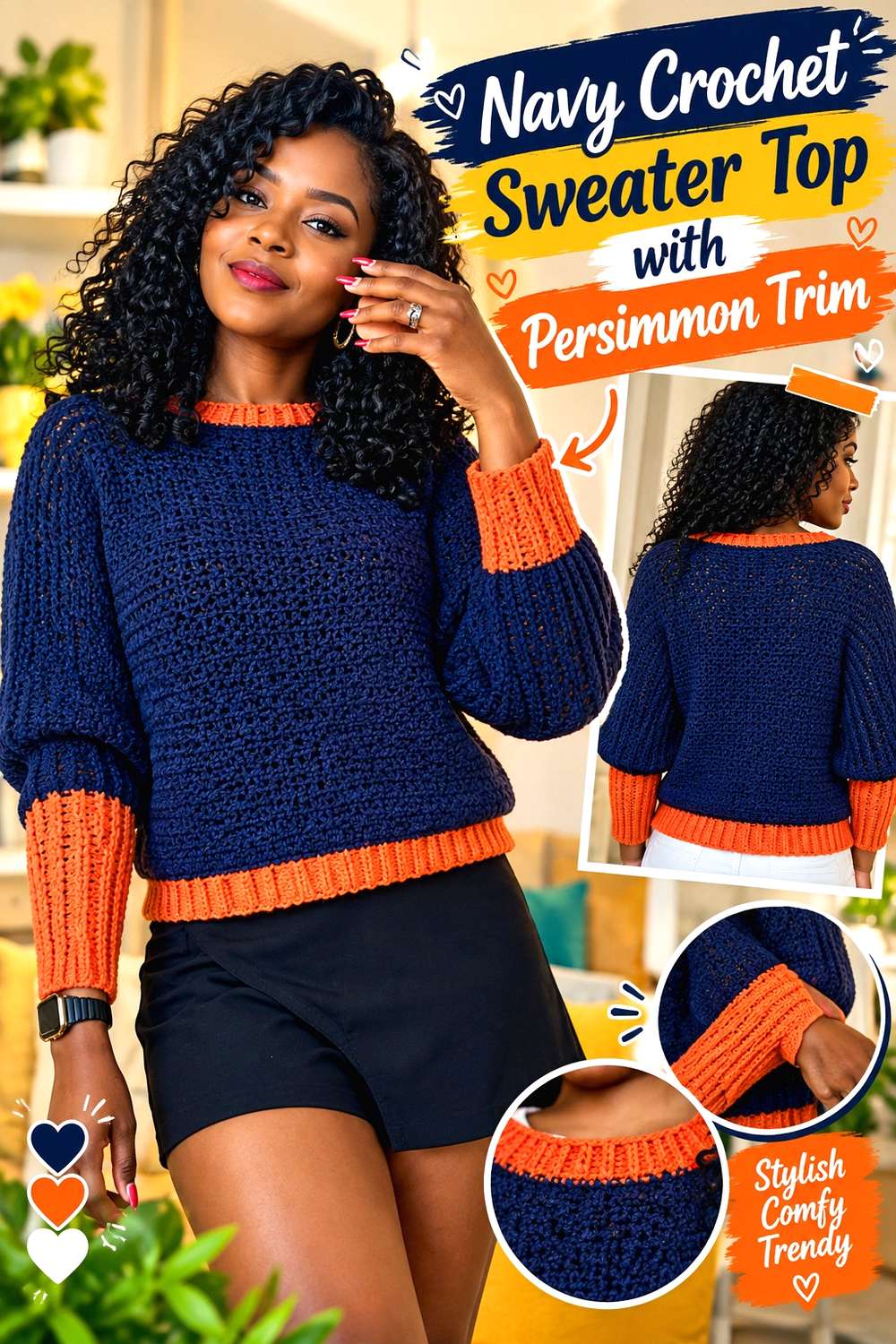
A navy sweater top creates a dark base that can take persimmon accents at the neckline, sleeve edges, or hem. Because these features naturally repeat around the garment, they offer a controlled way to distribute the warm color.
Keep Navy Across the Largest Crochet Sweater Panels
Using navy across the front and back keeps the main body unified. This is useful when the stitch design already contributes texture and you do not want additional color divisions competing with it.
Persimmon can still appear prominently through the finishing details without occupying half of the garment.
Repeat Persimmon Around Several Navy Crochet Sweater Edges
Use persimmon at two or more locations, such as the neckline and lower hem or the neckline and sleeves. Repetition connects the warm accents across the garment.
If you prefer less contrast, choose a deeper burnt persimmon instead of a bright orange-red.
Creator Credit: AC Crochets
12. Persimmon Crochet Headband with Navy Center Stripe

A headband has little surface area, making simple color placement especially important. Persimmon can remain the main shade while a single navy section creates definition without making the accessory look overly striped.
Give Persimmon Most of the Crochet Headband Surface
A broad persimmon field keeps the headband warm and prevents the small item from becoming visually chopped into multiple sections.
If the headband has a twist or gathered focal point, consider how the persimmon will fold there before placing the navy accent.
Position Navy Where the Persimmon Crochet Headband Needs Definition
A navy stripe near the center can emphasize the focal section, while navy edging creates a more outlined effect. Choose one purpose rather than adding dark details everywhere.
When navy is used at both edges, keep the central persimmon area wide enough to remain the dominant color.
Creator Credit: naztazia
13. Navy Crochet Tie-Front Cardigan with Persimmon Edging
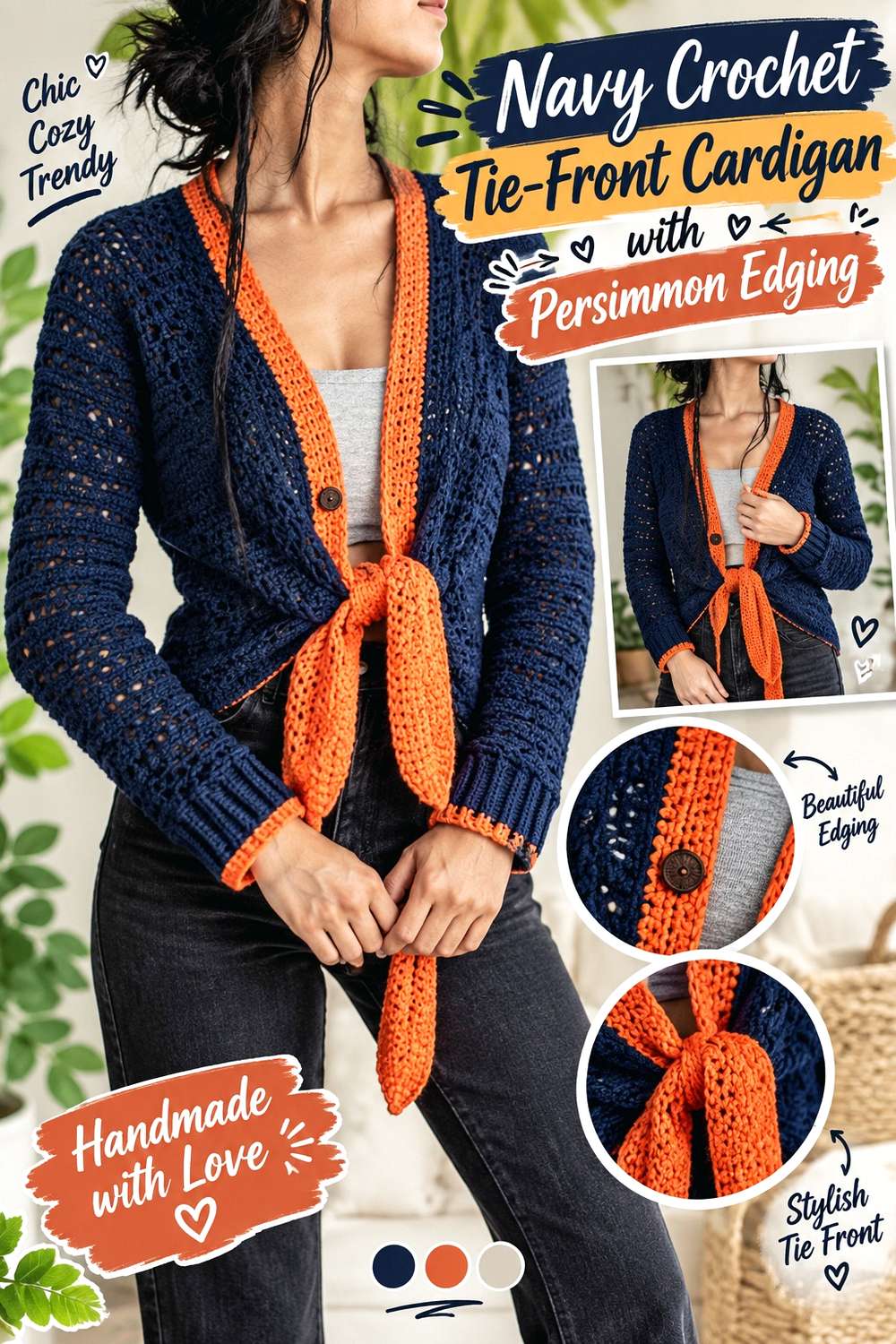
A tie-front cardigan naturally draws attention toward its opening. Navy can cover the broad body and sleeves while persimmon follows the front edges and ties, concentrating the warm color exactly where the garment closes.
Let Navy Carry the Crochet Cardigan Panels and Sleeves
Keeping the large areas navy gives the garment a consistent foundation. It also allows persimmon around the front to remain noticeable without requiring large orange-red panels.
If you want more persimmon, the cuffs offer a repeated location that will not interrupt the main body.
Extend Persimmon Along the Navy Crochet Cardigan Ties
Using persimmon on the edging and ties visually connects the closure to the neckline and front opening. That is more cohesive than adding persimmon only to the ends of the ties.
For a softer transition, a narrow persimmon edge is sufficient; for a bolder adaptation, allow the warm border to occupy more visible width.
Creator Credit: TCDDIY
14. Persimmon and Navy Color-Block Crochet Skirt

A skirt offers enough vertical length for large persimmon and navy sections. Broad blocks usually work better than numerous thin stripes because they avoid dividing the garment into too many horizontal lines.
Use Navy to Anchor the Persimmon Crochet Skirt Waist
A navy upper section or waistband creates a dark visual starting point before the skirt transitions into persimmon. Repeating navy again closer to the lower portion can connect the palette from top to bottom.
If navy is confined to the waistband alone, make the transition deliberate enough that it reads as a structural feature rather than a leftover accent.
Keep Persimmon Crochet Skirt Blocks Broad
Large persimmon areas allow the warm shade to remain clearly visible even as the skirt moves and folds. Narrow alternation can lose definition once the fabric is no longer lying flat.
For a more balanced design, use two or three substantial color zones rather than many equal stripes.
Creator Credit: Chenda DIY
15. Persimmon Crochet Bandana with Navy Border
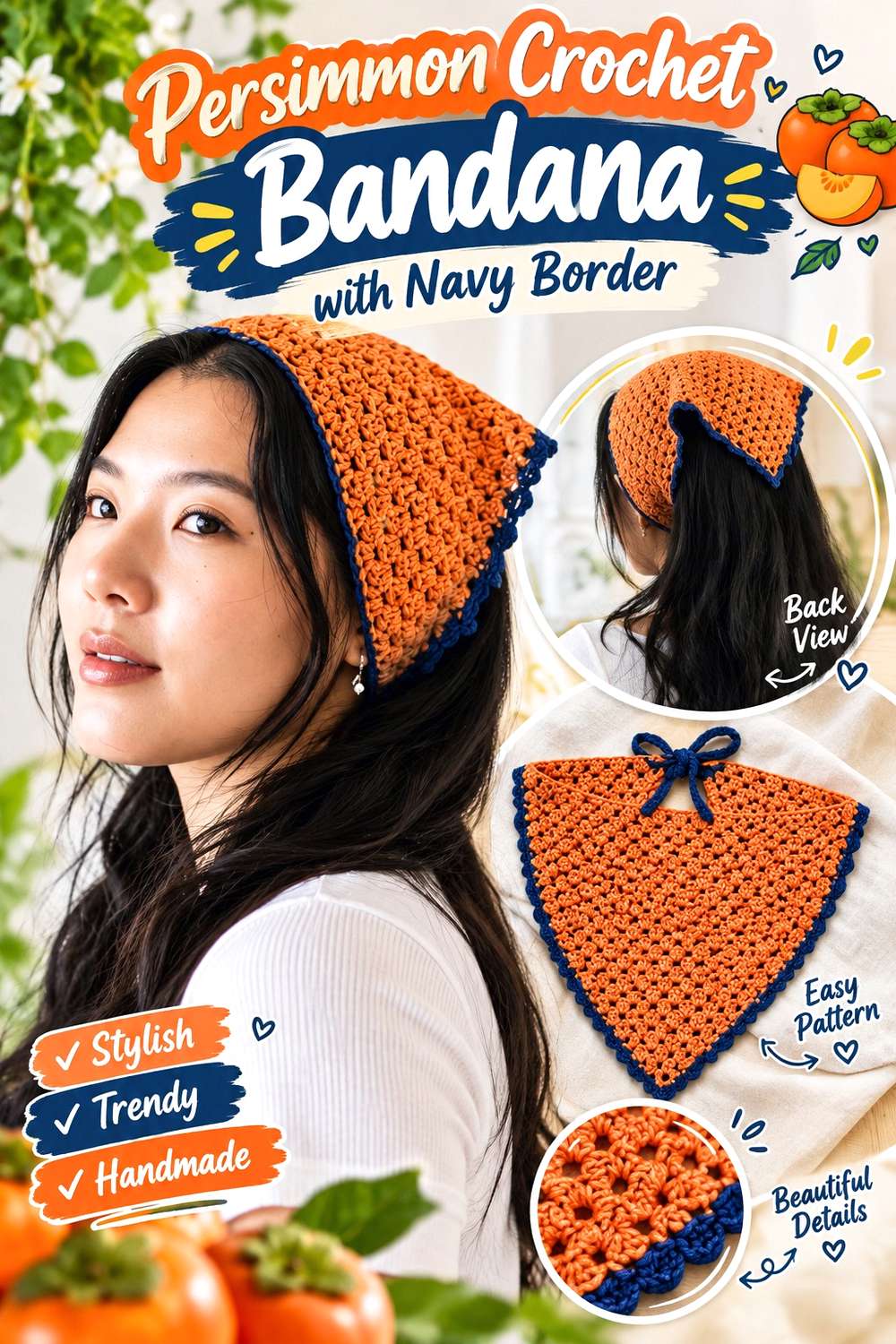
The triangular field of a bandana gives persimmon a clear center area, while navy can follow the outer edge and ties. This arrangement keeps the small accessory organized and makes the darker shade function as an outline.
Keep Persimmon Across the Crochet Bandana Center
A continuous persimmon center is particularly useful when the fabric contains decorative openwork. Let the stitch pattern create detail instead of interrupting it with constant color changes.
If you want some navy inside the center, one deliberate band near the edge will remain easier to read than scattered small accents.
Carry Navy from the Persimmon Crochet Bandana Edge into the Ties
Extending navy from the border into the ties makes the functional sections part of the color design. It also puts navy on both sides when the bandana is worn.
If the navy edging is very narrow, choose a persimmon with sufficient lightness difference so the outline does not disappear.
Creator Credit: VivCrochets
16. Navy Crochet Hanging Basket with Persimmon Rim
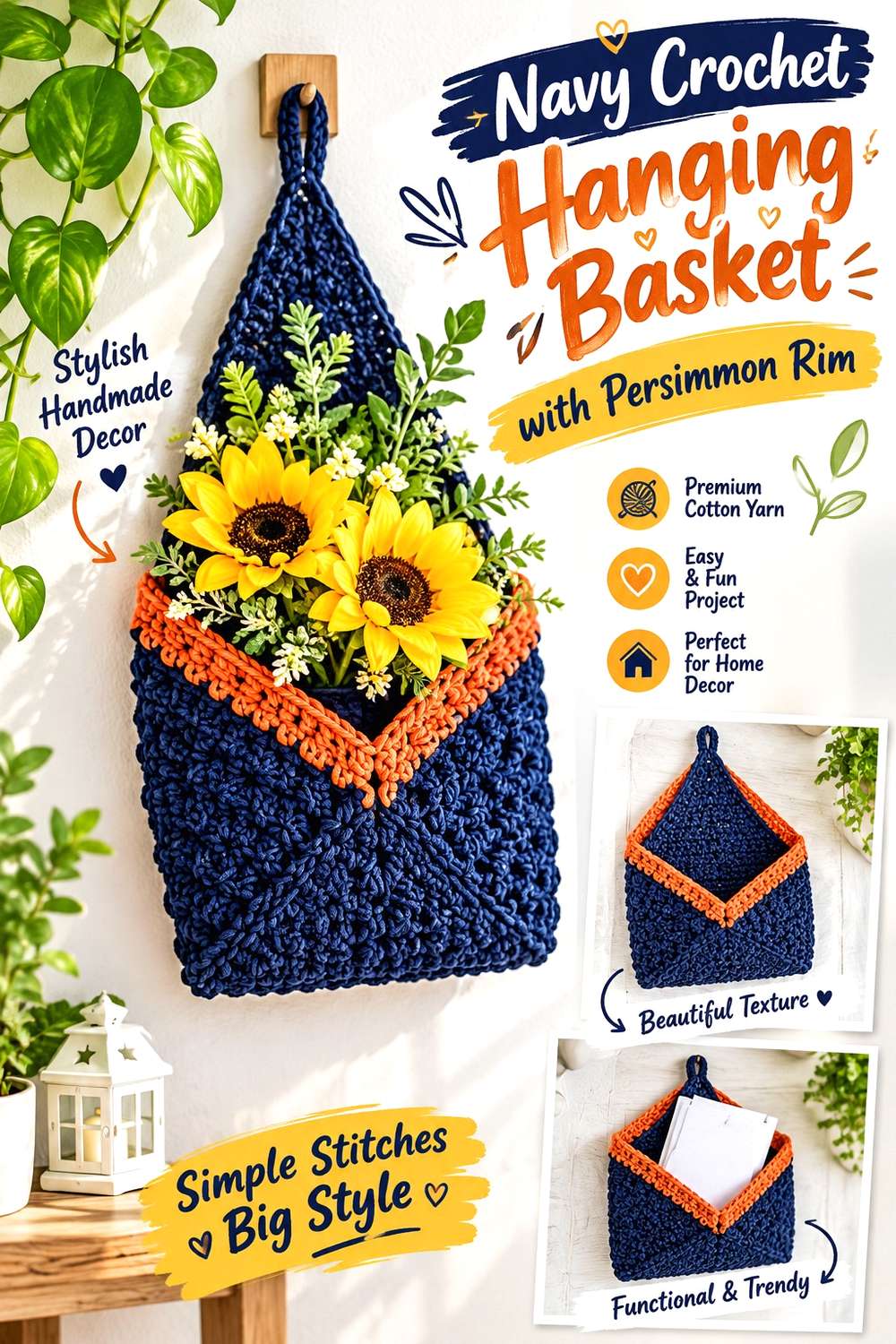
A hanging basket works well with vertical color placement. Navy can cover the lower storage area while persimmon appears near the opening, where the warmer color remains visible even when the basket contains items.
Put Navy on the Lower Crochet Hanging Basket
Navy gives the basket a strong lower field and can provide useful contrast against a light wall. Keeping the lower area one color also lets the shape remain clear.
Avoid adding tiny persimmon stripes near the base if the upper rim already provides a strong accent.
Use Persimmon Around the Navy Crochet Basket Opening
A persimmon rim draws attention to the upper outline and separates the opening from the darker body. Repeat the same warm shade in a small hanging detail if the construction offers an appropriate place.
This keeps persimmon connected to the overall item without letting it overwhelm a compact decor piece.
Creator Credit: Winding Road Crochet
17. Persimmon and Navy Crochet Balaclava
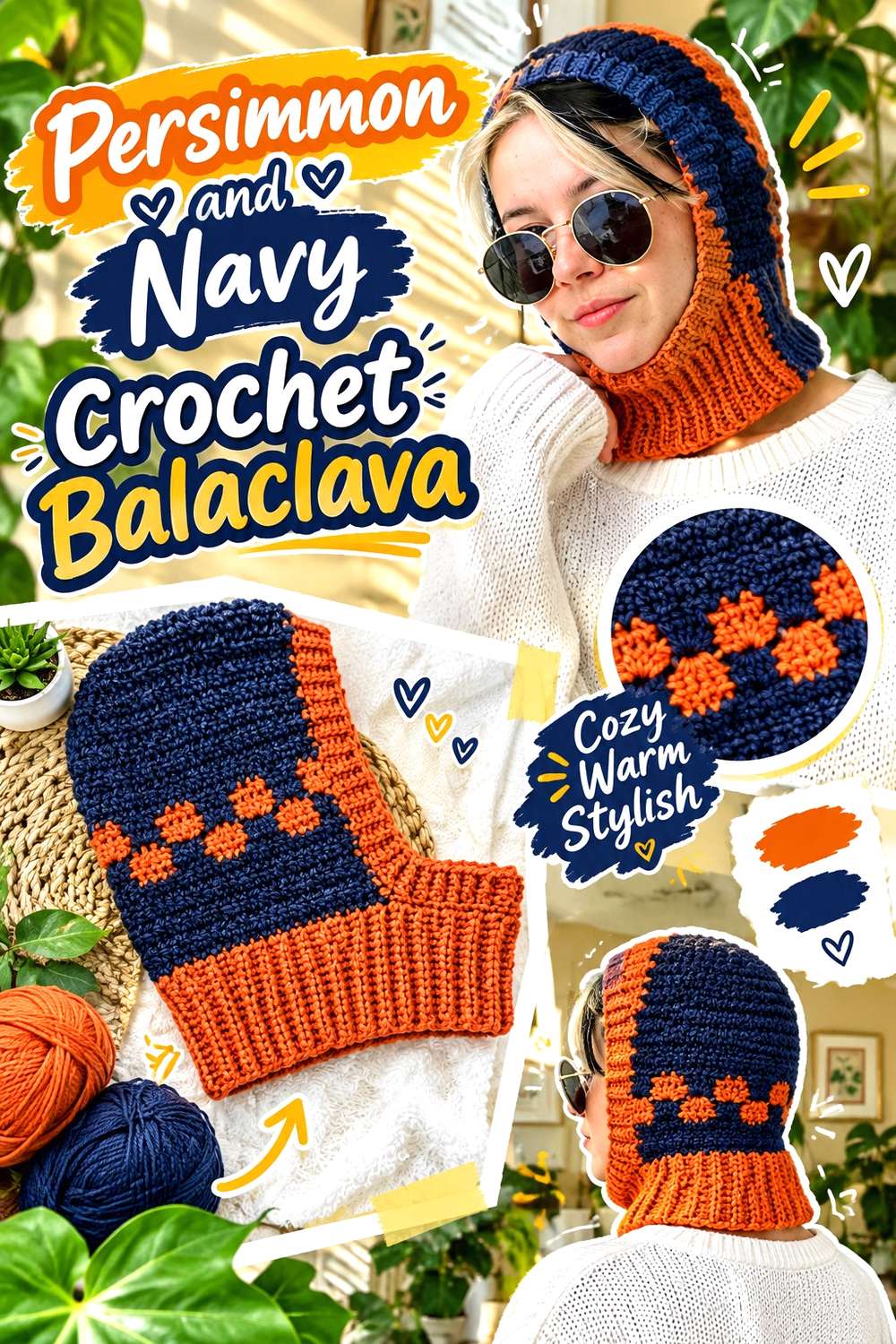
A balaclava has several visible zones around the crown, face opening, and lower edge. Those boundaries make a two-color approach possible without needing complicated all-over striping.
Let Persimmon Lead the Crochet Balaclava Crown
Persimmon across the crown and upper sides creates the warmest visual impression. Navy can then enter closer to the face opening or lower edge, where the darker shade has a clear structural reason to appear.
Keep color changes symmetrical unless an intentionally asymmetric look is part of your plan.
Use Navy to Outline the Persimmon Crochet Face Opening
A navy edge around the opening creates a strong contrast against persimmon. Because this is already a focal part of the shape, only a relatively narrow dark section may be necessary.
Repeat navy at the lower edge so the outline does not appear as the only dark element.
Creator Credit: made in the moment
18. Navy Crochet Tote Bag with Persimmon Side Panels
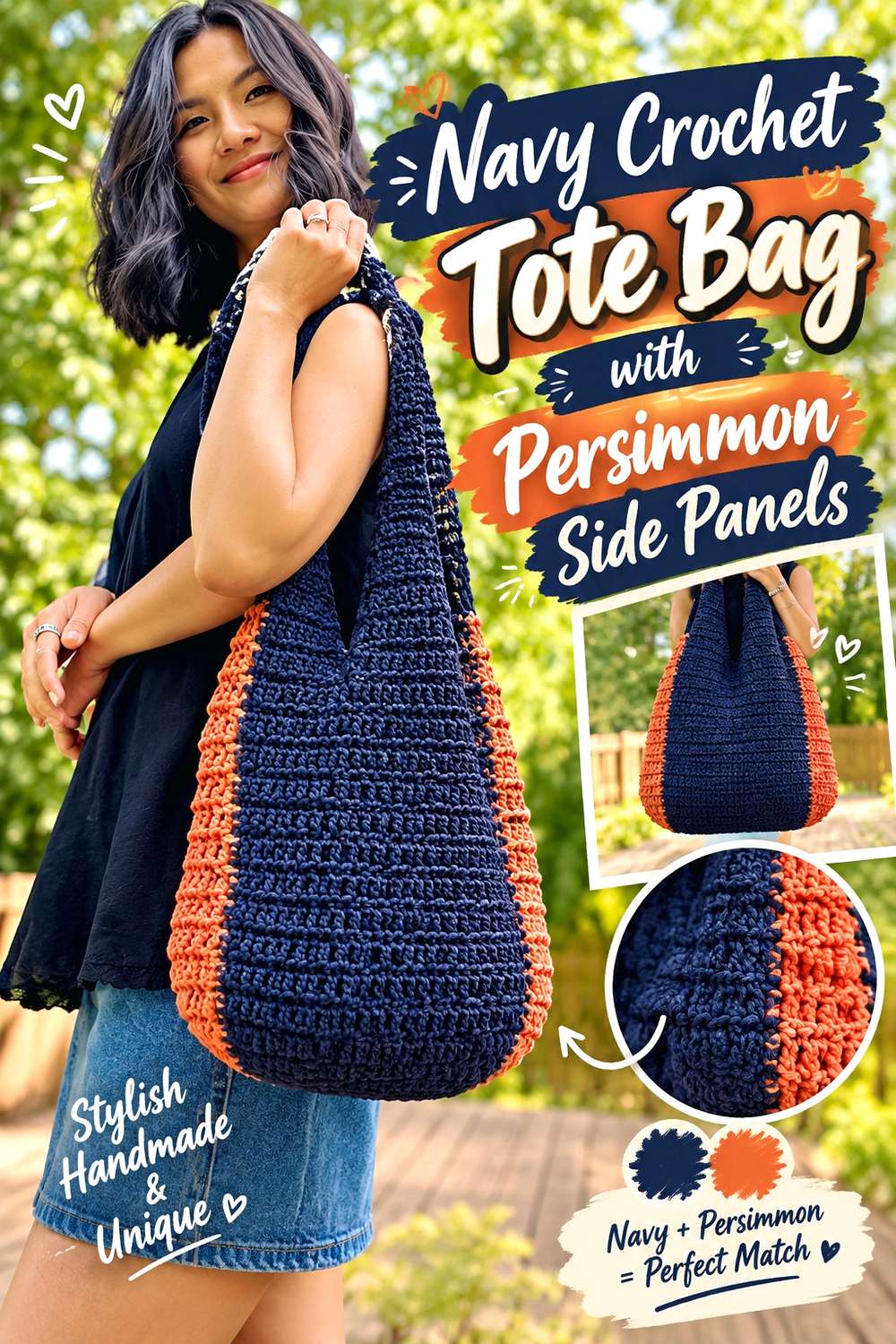
A tote provides large flat areas where color blocking remains easy to see. Navy can dominate the main front and back while persimmon appears on side panels, handles, or selected upper sections.
Keep Navy Broad on the Crochet Tote Front and Back
A navy front creates a strong background and keeps the tote visually grounded. This is useful when you want persimmon to be noticeable without letting it control the whole bag.
Before choosing panel colors, consider the bag from the side as well as the front so the palette works from multiple angles.
Repeat Persimmon from the Navy Crochet Tote Sides into the Handles
Persimmon side sections can connect naturally to persimmon handles or handle accents. That gives the warm color a continuous visual path through the bag.
If the handles remain navy, repeat persimmon at the top edge so the side panels do not end abruptly.
Creator Credit: KnitcroAddict
19. Persimmon Crochet Slippers with Navy Cuffs

Slippers benefit from a simple two-zone palette because their small scale leaves little room for complicated colorwork. Persimmon can cover the main upper while navy defines the opening or cuff.
Keep Persimmon Consistent Across Both Crochet Slippers
Use the same persimmon placement on each slipper so the pair reads as one coordinated set. Even a strong color scheme can look unbalanced when the proportions differ noticeably between the two pieces.
Compare the slippers side by side during color changes rather than waiting until both are finished.
Let Navy Define the Persimmon Crochet Slipper Opening
A navy cuff or upper edge creates a dark frame around the foot opening and gives the smaller accent a clear function.
If the construction has no substantial cuff, a narrower navy edging can provide the same visual separation without changing the overall color balance.
Creator Credit: crochetdreamz
20. Navy Crochet Handbag with Persimmon Accent Panel
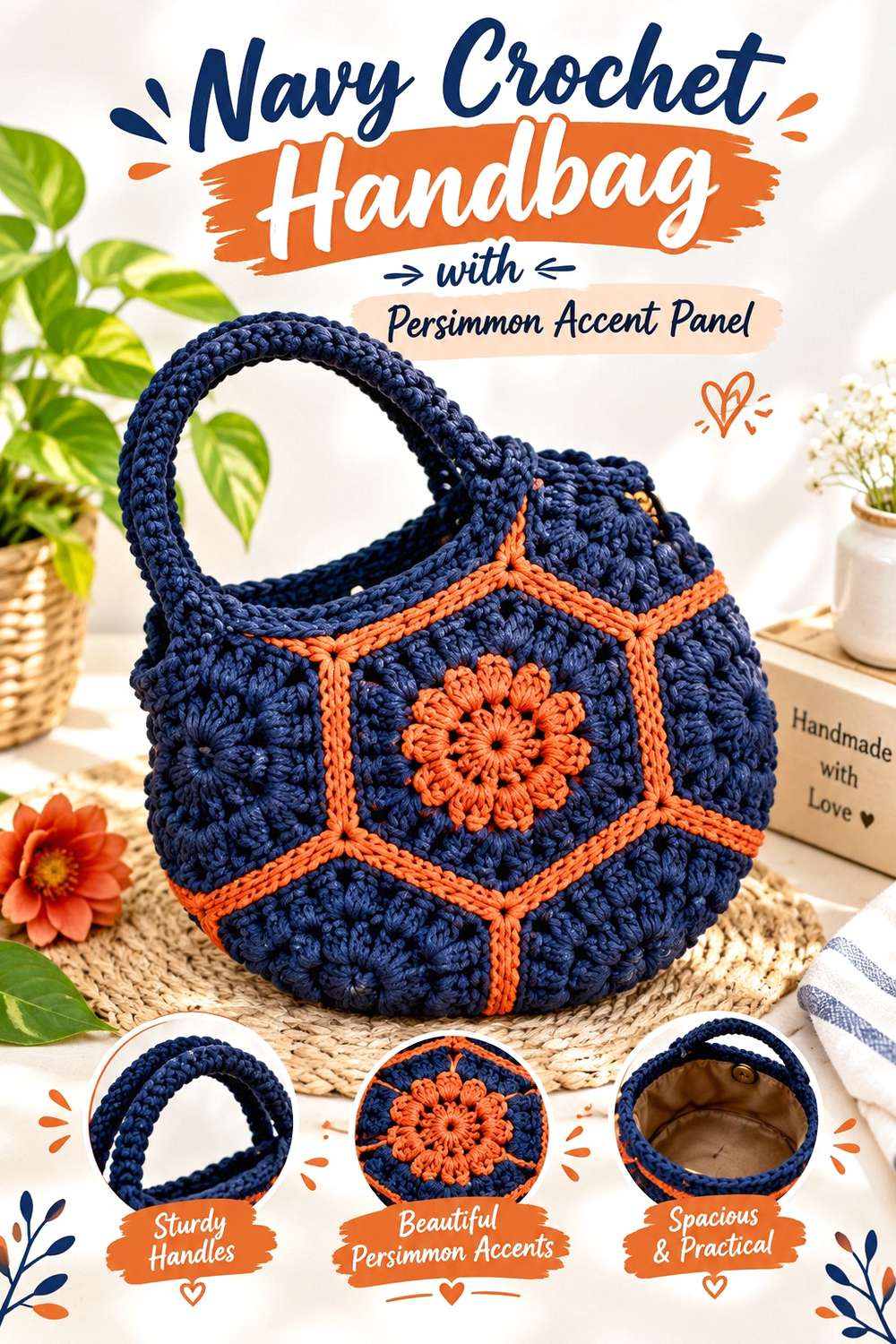
A compact handbag can use navy as its main field and reserve persimmon for one clearly defined front section. This creates a focal point without requiring several unrelated accents.
Let Navy Control the Crochet Handbag Structure
Use navy around the main body, sides, or upper edge when you want the bag to have a dark foundation. Large uninterrupted navy areas also allow any persimmon front feature to remain distinct.
Consider how the color will continue around side seams rather than planning only the front view.
Give Persimmon Enough Space on the Navy Crochet Handbag
A tiny persimmon patch may look incidental. A broader panel, band, or repeated detail creates a more convincing two-color design.
If a large persimmon panel feels too strong, repeat smaller warm accents at two or three intentional points instead.
Creator Credit: Sirin’s Crochet
21. Navy Crochet One-Piece Cardigan with Persimmon Cuffs
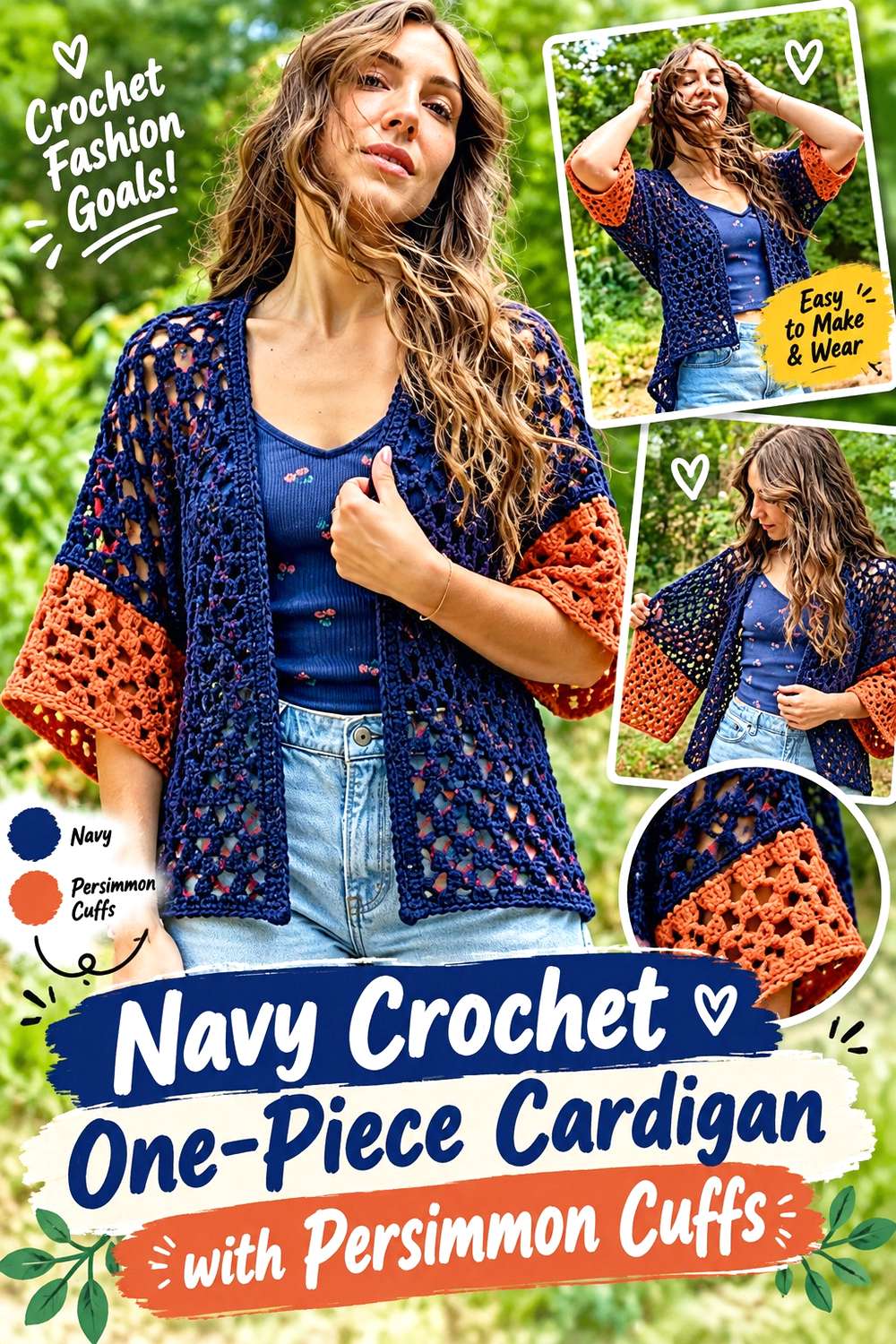
A cardigan with broad connected sections can stay mostly navy while persimmon identifies the sleeve ends and outer finishing. Keeping color changes near the edges preserves the uninterrupted look of the body.
Keep Navy Across the Connected Crochet Cardigan Body
Navy works well on a construction where large areas flow into one another because it prevents color breaks from obscuring that continuity.
If you add persimmon to the body, use one intentional section that relates to another warm detail elsewhere.
Repeat Persimmon on Both Navy Crochet Cardigan Cuffs
Matching persimmon cuffs automatically create balanced warm accents at opposite sides of the garment. Carrying persimmon into the front edging or lower hem can then link those separated sleeve details.
Avoid introducing a different accent color at the neckline unless you want a more complex three-color design.
Creator Credit: Evelyn And Peter Crochet
22. Persimmon Crochet Lace Hat with Navy Band
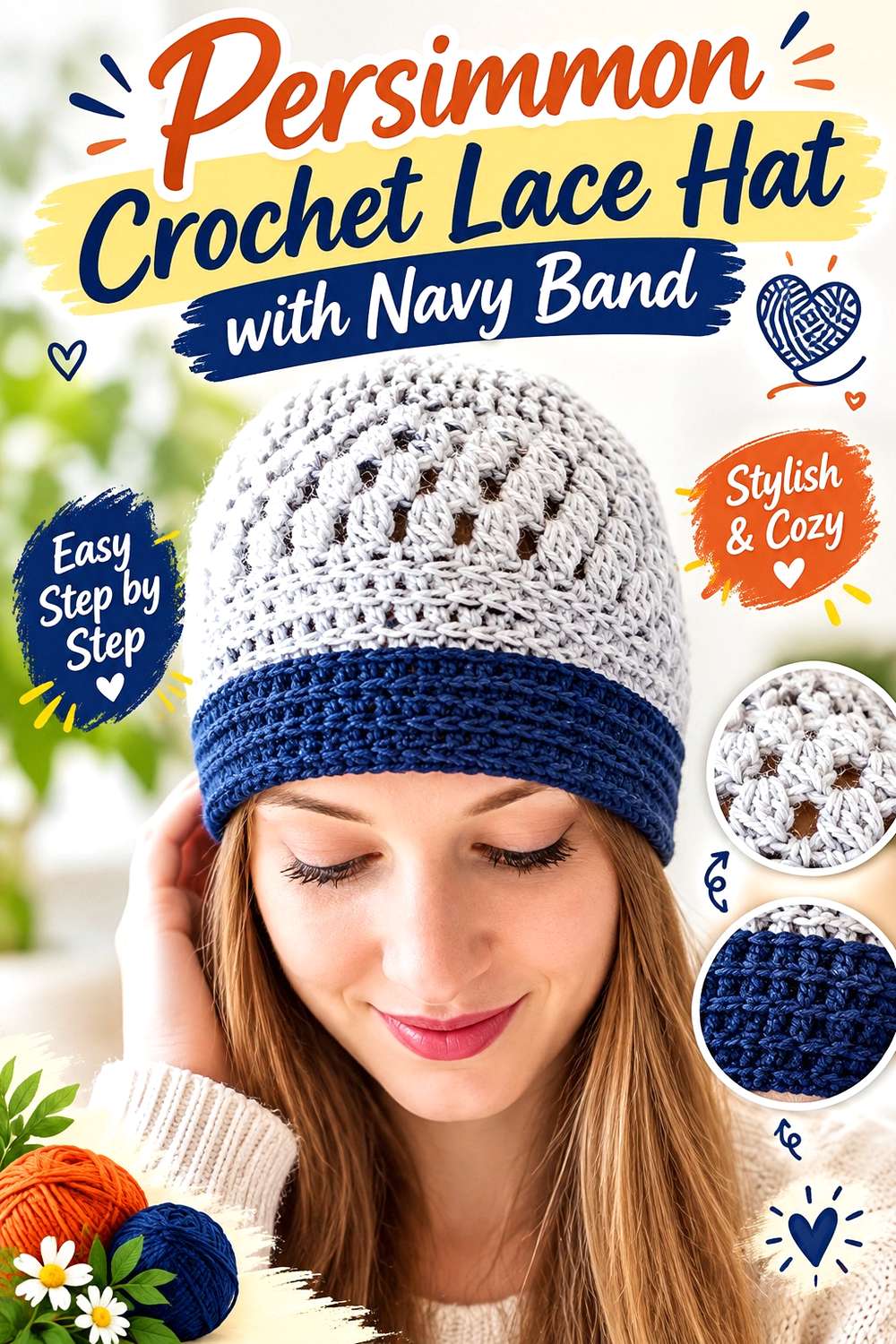
Lace or openwork provides visual pattern without requiring numerous colors. Persimmon can therefore cover the decorative upper section while navy gives the hat a strong lower band.
Let Persimmon Show Through the Crochet Hat Openwork
Using one persimmon shade across the lace keeps the openings and stitch shapes easy to follow. Small navy changes within the openwork could fragment that pattern.
Remember that whatever is behind the open crochet will also affect how the persimmon appears.
Put Navy Beneath the Persimmon Crochet Hat Texture
A solid or more substantial navy band can create a clear base beneath the lighter-looking openwork. This places the strongest dark color where the hat naturally needs a visual finish.
If the band becomes too dominant, add a final persimmon edging to rebalance the warm shade.
Creator Credit: B.Hooked Crochet
23. Persimmon and Navy Crochet Storage Basket
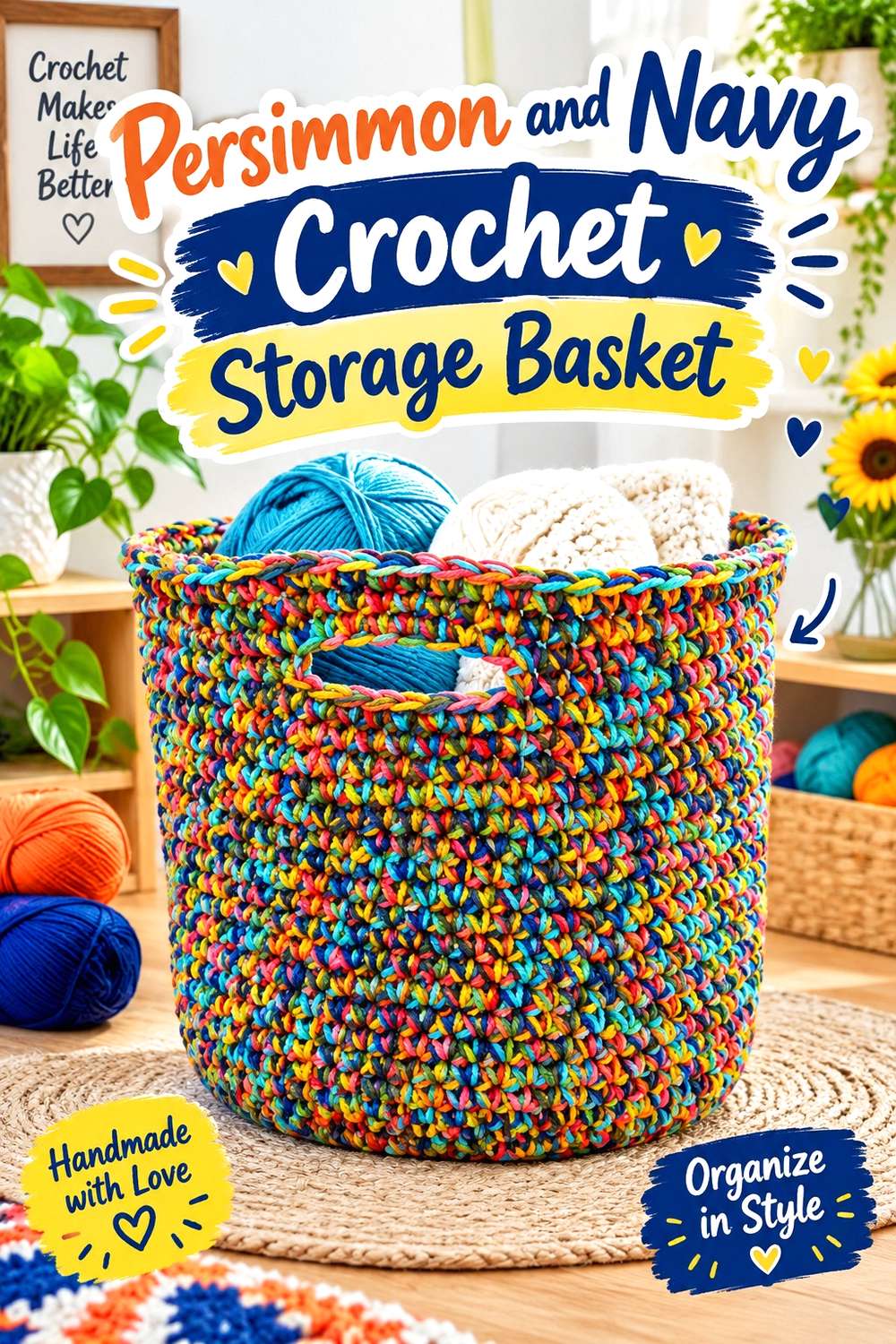
A freestanding basket can support broad horizontal color zones because its sides remain visible even when filled. Navy near the bottom creates a darker base, while persimmon higher on the walls keeps the warm color prominent.
Start the Crochet Basket with a Navy Visual Base
Using navy on the lower portion gives the basket a defined bottom without requiring an additional neutral. Bring navy slightly up the walls if you want the base color to remain visible when the basket is sitting on a shelf.
Keep the transition level consistent around the basket so the color block looks intentional.
Let Persimmon Cover the Upper Crochet Basket Walls
Persimmon near the opening keeps the warm shade visible even when contents conceal part of the interior. A broad upper field also prevents the basket from becoming overly striped.
Repeat navy in a narrow top edge only if you want the lower color echoed again.
Creator Credit: Jayda InStitches
24. Persimmon Crochet Crop Sweater with Navy Ribbing
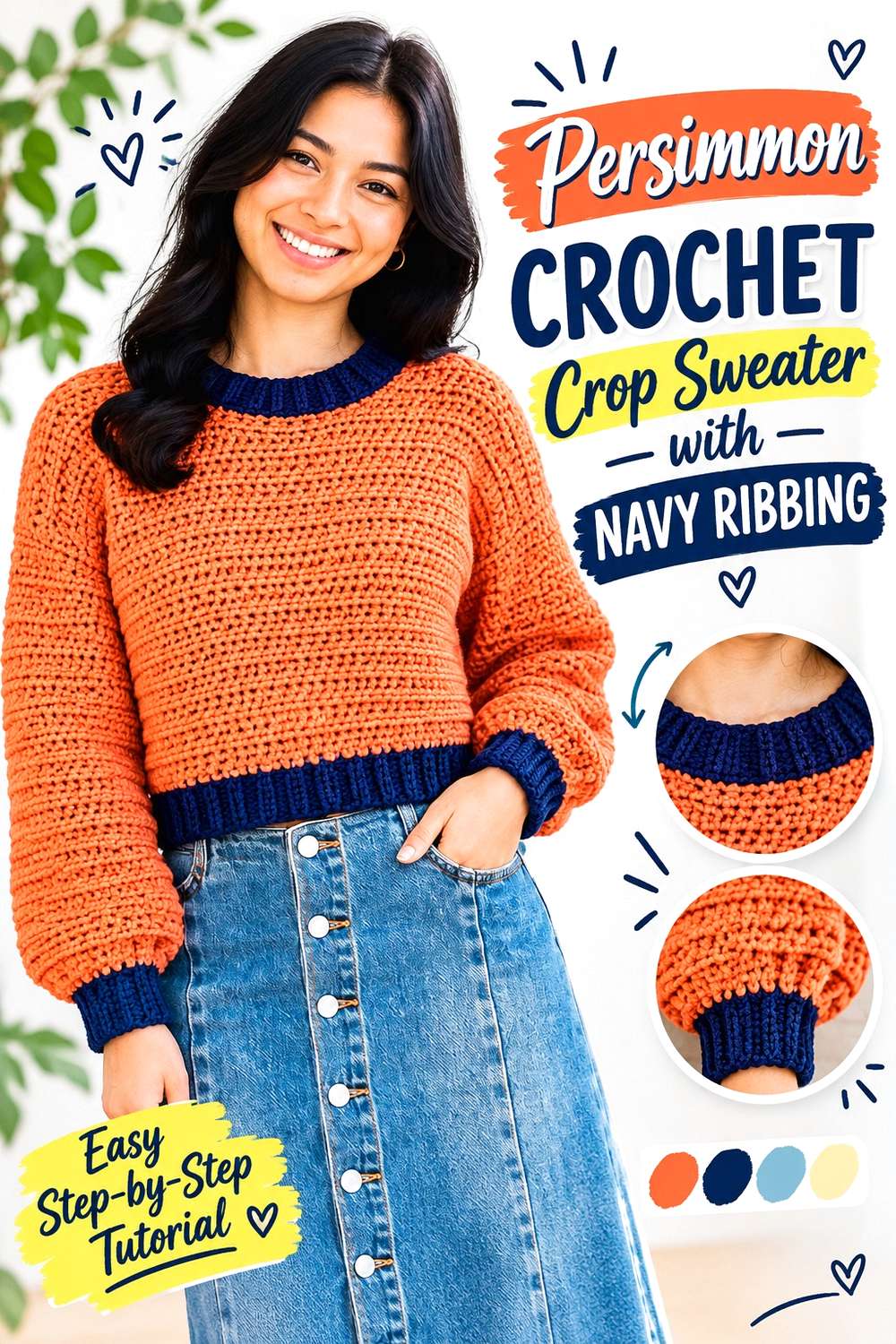
A cropped sweater offers a relatively compact body, making edge placement important. Persimmon can dominate the torso and sleeves while navy defines the neckline, cuffs, and lower ribbing.
Keep Persimmon Across the Crochet Crop Sweater Body
Using persimmon uninterrupted through the main panels allows the warm color to remain the garment’s clear identity. This is especially effective when the sweater already has interesting shaping or texture.
If navy enters the main body, repeat it in a deliberate band rather than isolated rows.
Connect Navy Ribbing Across the Persimmon Crochet Sweater
Using navy at the hem, cuffs, and neckline creates a repeated frame around the persimmon body. Those structural edges naturally relate to one another, making the dark color feel organized.
You can reduce navy to only two of those locations when a lighter overall balance is preferred.
Creator Credit: forthefrills
25. Navy Crochet Poncho with Persimmon Border

A poncho has enough surface area for navy to become a substantial background rather than just an accent. Persimmon can then follow the neckline and lower perimeter, emphasizing the garment’s overall outline.
Let Navy Cover the Broad Crochet Poncho Surface
A large navy field keeps the silhouette unified and avoids breaking the poncho into numerous horizontal sections. Stitch texture and drape can provide visual variation without extra colors.
If you want persimmon in the body, use broad repeated sections rather than scattered narrow lines.
Use Persimmon Around the Navy Crochet Poncho Perimeter
Persimmon bordering the lower edge gives the warm shade enough length to register clearly without competing with the navy center.
Repeating persimmon near the neckline connects the top and bottom of the garment and prevents the border from becoming an isolated accent.
Creator Credit: Bag-O-Day Crochet
26. Persimmon Crochet Shawl with Navy Textured Bands
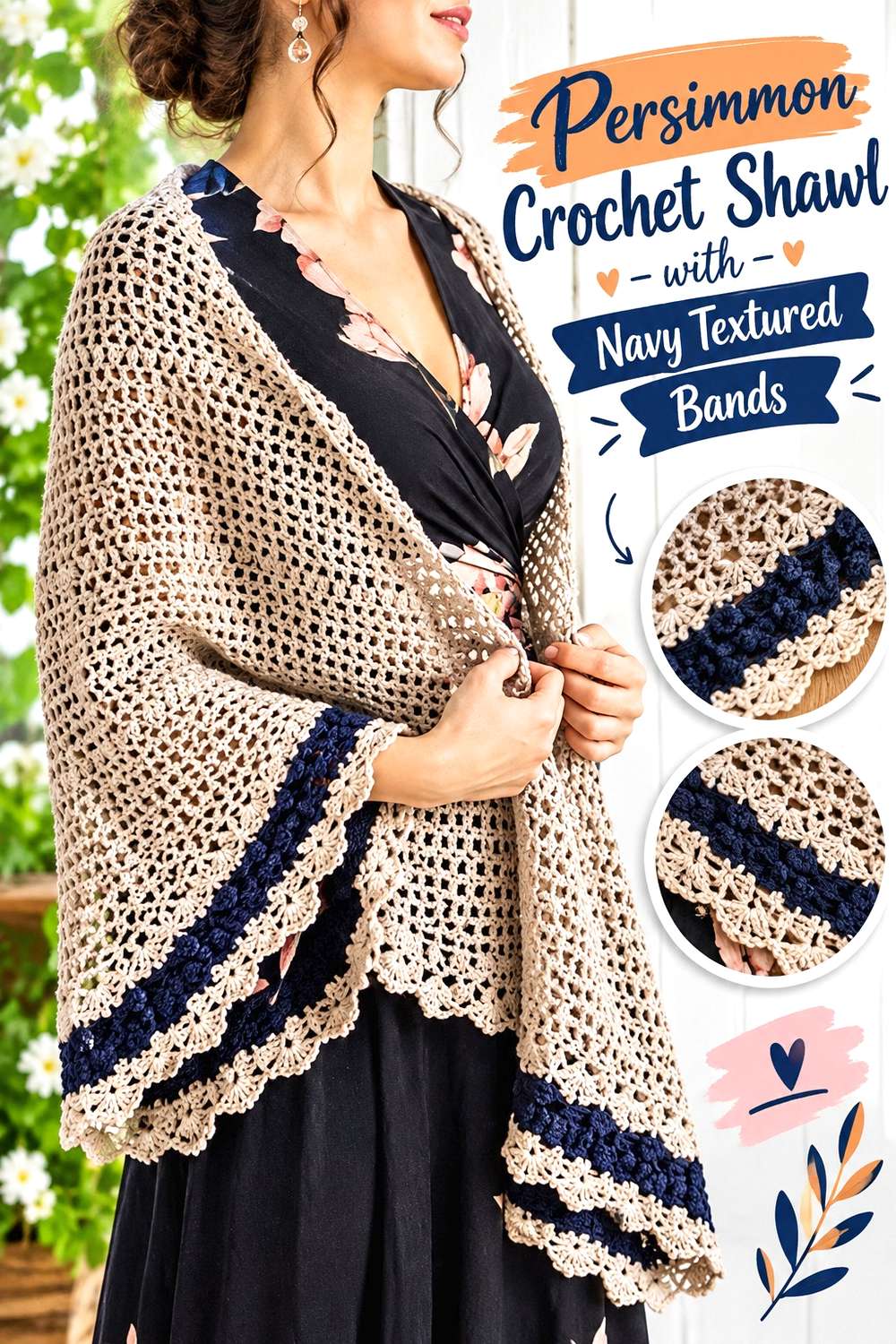
This shawl direction gives navy a stronger role than a simple outer border. Persimmon can remain the background while navy is introduced in selected textured bands, allowing the dark shade to emphasize changes in the fabric.
Keep Persimmon Between the Navy Crochet Shawl Bands
Give persimmon enough rows or visual area between navy sections so the warm field does not disappear. The contrast becomes more effective when each color has enough breathing room.
Avoid making every textured change a different color; some stitch transitions can remain persimmon so the palette does not feel overworked.
Place Navy Where the Persimmon Crochet Shawl Texture Changes
Navy can mark selected puffed, raised, or otherwise distinct bands, making those changes easier to see. This is more intentional than inserting dark stripes at arbitrary intervals.
If the edge already contains substantial navy, reduce the number of interior navy bands to maintain the persimmon-led balance.
Creator Credit: Wilmade
27. Navy Crochet Oversized Storage Basket with Persimmon Stripe

An oversized storage basket gives both colors plenty of physical scale. Navy can cover most of the container while a broad persimmon band breaks up the dark walls and makes the color pairing visible across a room.
Use Navy for Most of the Crochet Storage Basket Body
A mostly navy basket creates a strong solid field, which is useful on a large decor item where multiple saturated colors could otherwise become visually heavy.
Keep any additional decorative elements limited so the texture and two-color layout remain readable.
Make the Persimmon Crochet Basket Stripe Wide Enough to Matter
A tiny persimmon stripe can disappear on an oversized object. Give the accent enough width to be recognizable from normal room distance.
Consider placing the stripe above the midpoint if stored items may hide part of the lower basket.
Creator Credit: Repeat Crafter Me
28. Navy Crochet Textured Beanie with Persimmon Ribbing
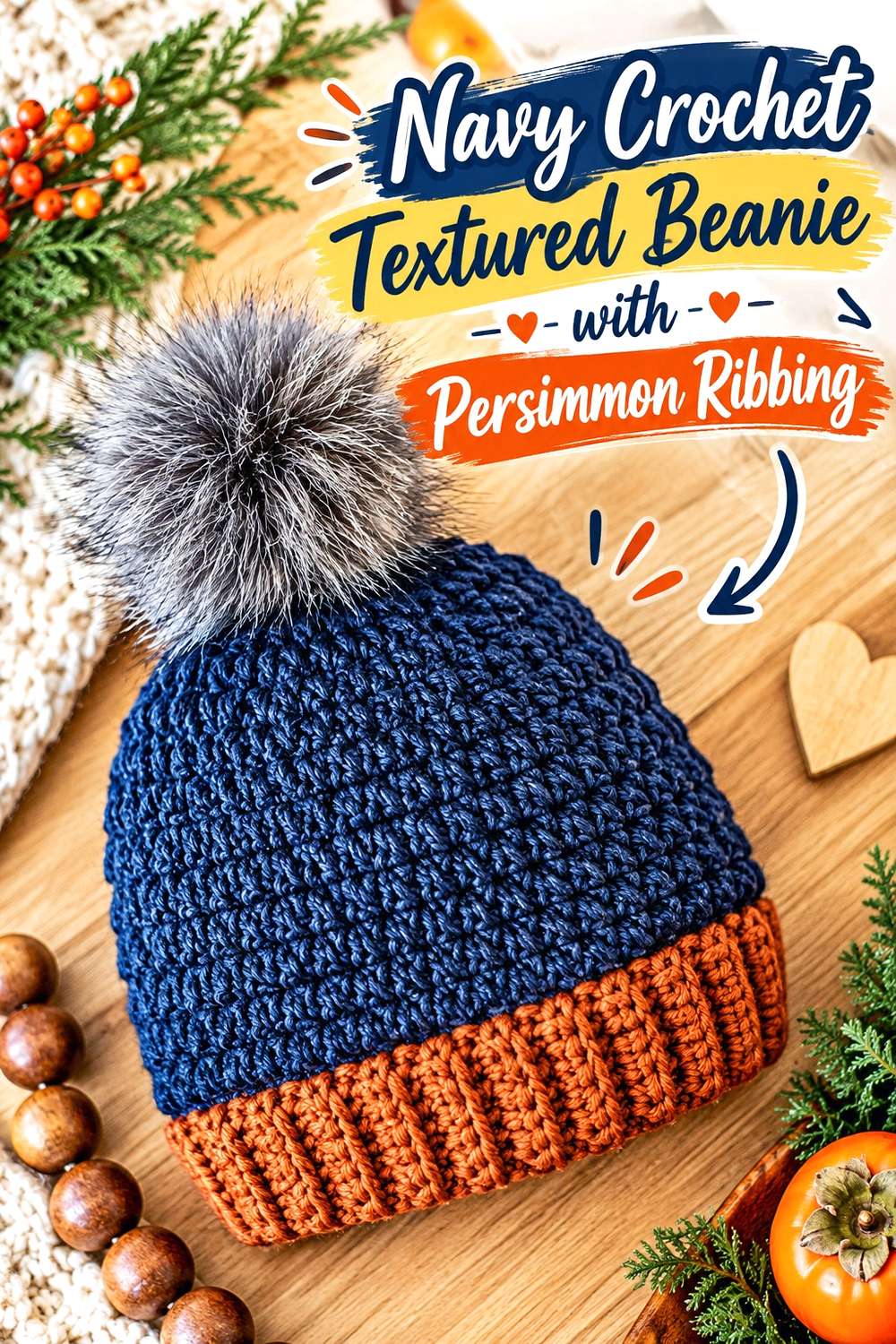
This beanie reverses the earlier hat hierarchy by keeping navy on the textured body and persimmon near the lower edge. The arrangement concentrates the warm shade close to the face while leaving the darker color across the crown.
Let Navy Carry the Crochet Beanie Texture
A continuous navy body gives raised or between-stitch texture a consistent background. Because dark yarn can sometimes reduce visible shadow contrast, inspect your swatch in ordinary lighting before committing to the whole hat.
A lighter or clearer navy may reveal texture more readily than an almost-black version.
Use Persimmon to Separate the Navy Crochet Beanie Ribbing
Persimmon ribbing creates an obvious transition at the lower edge and introduces warmth without interrupting the textured crown.
If you want the colors more evenly balanced, add one persimmon band higher on the body rather than alternating every round.
Creator Credit: Briana K
29. Persimmon Crochet Chunky Cardigan with Navy Bands

A substantial cardigan can support stronger color blocking than a small accessory. Persimmon can lead across the body while navy appears as broad sleeve bands, edging, or other repeated structural sections.
Give Persimmon the Largest Crochet Cardigan Panels
Keeping the body primarily persimmon ensures the warm color remains dominant even if navy bands are visually strong. This is important because a very dark accent can attract attention despite occupying less surface area.
Balance navy on both sides of the cardigan rather than concentrating all dark sections in one sleeve or panel.
Make Navy Crochet Cardigan Bands Broad and Intentional
A chunky garment benefits from substantial color blocks that match its overall visual scale. Very thin navy stripes may appear fussy against larger stitches and broad panels.
Repeat the navy band width or placement logic elsewhere so the dark sections form a recognizable system.
Creator Credit: TL Yarn Crafts
30. Persimmon Crochet Picot Beanie with Navy Texture Bands
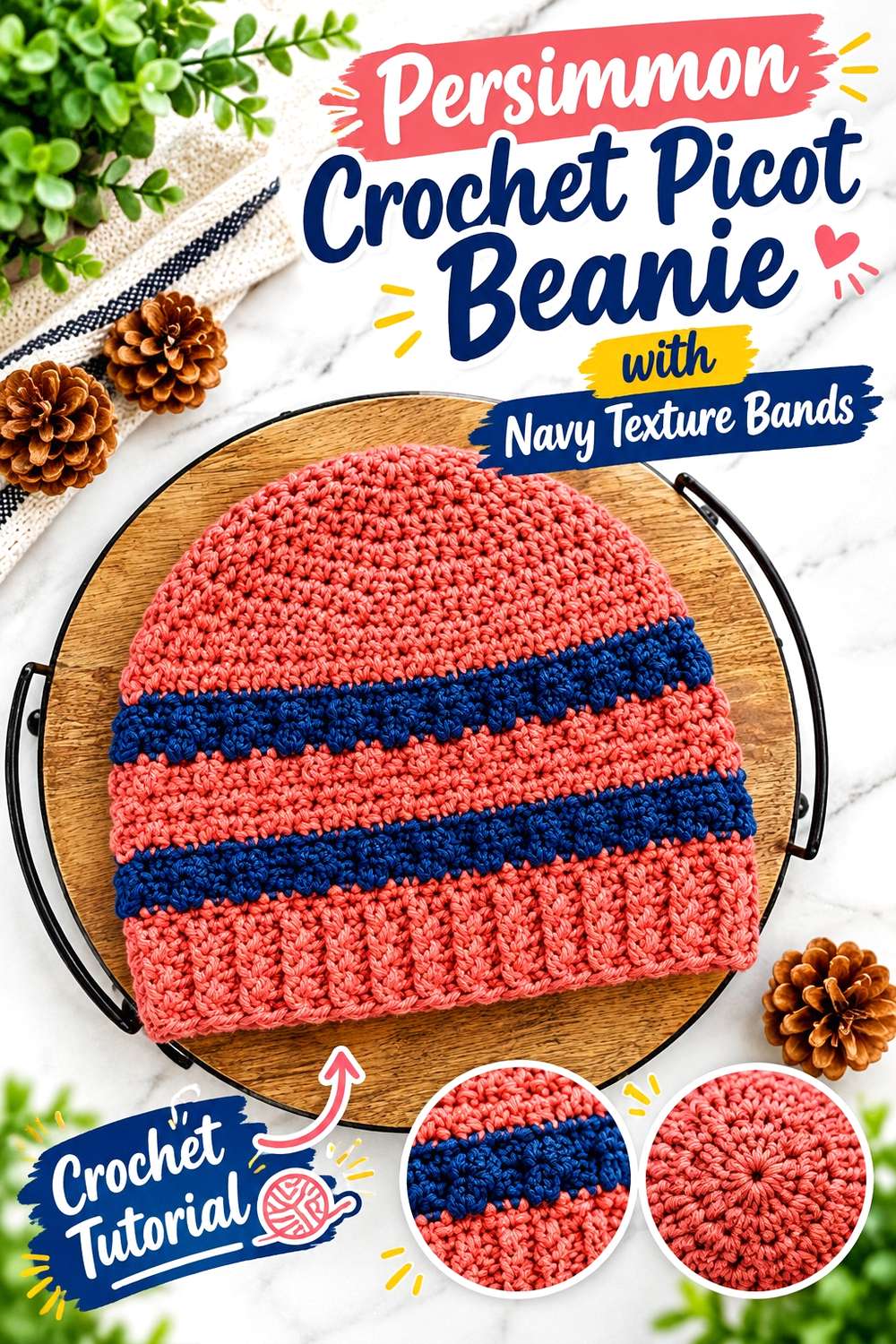
A heavily textured beanie offers another way to use color: let the shade changes correspond with changes in surface pattern. Persimmon can cover most of the hat while navy marks selected textured areas or the brim.
Keep Persimmon Across the Main Crochet Beanie Sections
Persimmon provides a warm background for the hat’s raised details. Leaving several adjacent texture sections in the same shade also prevents the surface from becoming overly busy.
Use navy selectively rather than changing color every time the stitch treatment changes.
Place Navy Where the Persimmon Crochet Beanie Texture Needs Separation
Navy can define one textured band and the lower ribbing, creating repeated dark points without taking over the entire hat.
If your navy is almost black, limit its share when you want the texture itself—not just the color contrast—to remain the main feature.
Creator Credit: The Turtle Trunk
Comparing Persimmon and Navy Crochet Color Directions
For a persimmon-led project, start with the striped blanket, market bag, bucket hat, bandana, crop sweater, or textured shawl. In these ideas, the orange-red shade occupies most of the visible surface while navy provides definition around edges or selected sections.
For a navy-led result, the cocoon cardigan, sweater top, poncho, tote, one-piece cardigan, and storage pieces place the darker shade across the broadest areas. Persimmon then works as a focused warm accent.
For a more balanced two-color look, the checkerboard vest, color-block skirt, balaclava, and some of the bag layouts allow persimmon and navy to occupy more comparable visual areas.
Texture matters too. When the crochet surface is already highly detailed, fewer color changes usually make the stitches easier to appreciate. Simple shapes and broad panels can carry stronger blocks, stripes, or checkerboard arrangements without becoming as visually crowded.
Conclusion
Persimmon and navy can move from strongly warm to predominantly dark depending on which shade receives the most surface area. If you want persimmon to lead, use navy where the item already has natural boundaries: borders, handles, cuffs, ribbing, brims, straps, and openings. If navy is dominant, persimmon becomes more effective when it repeats in several deliberate locations instead of appearing as one isolated accent.
For bold color blocking, the vest, skirt, tote, and chunky cardigan provide enough surface area to separate the two shades clearly. For smaller tests of the palette, the headband, bandana, beanies, bucket hat, and slippers require less visual complexity and make placement decisions easier to assess.
Most importantly, compare your actual persimmon and navy yarns before planning narrow details. Shade names are broad descriptions, and preserving the contrast and dominant-supporting relationship will matter more than matching one exact version of either color.
Frequently Asked Questions
Do persimmon and navy work well together for crochet?
They can create strong contrast because persimmon is generally warm and orange-red while navy is usually much darker and cooler. That difference makes the combination useful for borders, color blocks, stripes, and garment finishing. Check the actual yarns together, since individual shades can vary considerably.
Should persimmon or navy be the dominant crochet color?
Either can lead. Persimmon dominance produces a warmer finished item, while navy dominance creates a darker overall field with persimmon acting as a stronger accent. Base the choice on the item’s largest surface and where the secondary color can repeat naturally.
How much navy should I use with persimmon crochet?
There is no required ratio. On a persimmon-led project, navy might be limited to borders, cuffs, handles, or a few substantial bands. In a navy-led item, reverse those roles. What matters most is that the secondary shade appears intentionally rather than as one disconnected patch.
Can I add cream to persimmon and navy crochet?
Yes. A light cream or oatmeal shade can separate persimmon and navy around detailed motifs or lighten an otherwise saturated project. Keep it to smaller repeated areas if you want the piece to continue reading primarily as a persimmon-and-navy design.
How can I tell whether navy is too dark for crochet texture?
Make a small swatch and view it in the lighting where the finished item will normally be used or worn. If raised stitches and shadows become difficult to distinguish, consider a slightly lighter navy or reserve the darkest navy for borders and simpler stitch sections.
Where should navy go on a persimmon crochet garment?
Natural finishing points are good candidates: cuffs, neckline, hem, front edging, waistband, or selected sleeve bands. These areas already have structural importance, so the dark color reinforces the garment design instead of appearing randomly placed.
How do I substitute another persimmon or navy yarn?
Preserve the color roles rather than chasing an exact shade name. If persimmon is the warmer and lighter dominant color, choose a replacement that still contrasts clearly with the navy. If navy is meant to create a deep outline, select a blue dark enough to maintain that separation without hiding important crochet texture.