Persimmon and olive make a useful crochet pairing when you want warmth without relying on several competing colors. Persimmon can bring the stronger warm note, while olive provides a muted green counterweight. Either shade can lead, so the same two colors can produce noticeably different results depending on their placement.

Actual yarns labeled persimmon and olive can vary, so compare the skeins you plan to use rather than relying only on their names. Pay particular attention to lightness and darkness. If the two yarns are close in value, broad color blocks may work better than tiny contrasting details because small motifs can lose definition.
These 25 ideas show different ways to distribute persimmon and olive across blankets, garments, accessories, bags, and home decor. The linked tutorials support the crochet project concepts; the persimmon-and-olive schemes are color adaptations you can plan around those constructions.
Quick List
- Persimmon Baby Blanket With Olive Border
- Olive Granny Square Cardigan With Persimmon Centers
- Persimmon V-Neck Sweater With Olive Trim
- Olive Bucket Hat With Persimmon Brim
- Persimmon Triangle Bandana With Olive Edging
- Olive Tunisian Scarf With Persimmon Ends
- Persimmon Shawl With Olive Border
- Olive Baby Blanket With Persimmon Bands
- Olive Cowl With Persimmon Edges
- Persimmon and Olive Granny Square Motifs
- Persimmon Scarf With Olive End Sections
- Olive Cardigan With Persimmon Ribbing
- Persimmon Headband With Olive Accent
- Olive Crop Top With Persimmon Trim
- Persimmon Beanie With Olive Brim
- Persimmon Tote Bag With Olive Base and Handles
- Olive Tote Bag With Persimmon Upper Band
- Olive Market Bag With Persimmon Handles
- Persimmon Scrunchie With Olive Edge
- Olive Coasters With Persimmon Borders
- Persimmon Placemat With Olive Outer Band
- Olive Crochet Basket With Persimmon Rim
- Olive Poncho With Persimmon Edging
- Persimmon Pillow Cover With Olive Framing
- Olive Mittens With Persimmon Cuffs
Plan Persimmon and Olive by Visual Role
Before changing colors, decide which shade should occupy most of the finished crochet surface. Giving persimmon and olive noticeably different roles usually produces clearer color organization than switching between them every few stitches without a plan.
Persimmon can lead when you want the warmer shade to be immediately visible across a sweater body, pillow face, blanket field, or scarf. Olive works particularly well as a supporting border, ribbing, handle, cuff, or motif outline in that arrangement.
Reverse the relationship for a quieter olive-led project. A predominantly olive cardigan, basket, hat, or bag can use persimmon in smaller repeated areas, allowing the warmer color to act as a focal detail instead of covering the entire item.
Check Persimmon and Olive Value Contrast Before Starting
Different hues do not automatically provide strong contrast. A medium persimmon and medium olive may look clearly different as yarn but become less distinct when crocheted into small adjacent motifs.
Place the skeins together and view them from a distance. A quick grayscale photo can also help reveal whether one is meaningfully lighter or darker. If their values are similar, use larger blocks of each color or let stitch texture separate them instead of expecting a narrow stripe or tiny motif to provide sharp definition.
This matters most for granny-square centers, narrow borders, ribbing, and small accessories where each color occupies limited space.
Repeat Persimmon and Olive Where the Crochet Item Needs Definition
Accent placement works better when it relates to the item’s structure. On garments, repeated persimmon at the cuffs and neckline can visually connect separate areas of an olive body. On bags, olive can appear at both the base and handles rather than in one isolated patch. On blankets, a border can echo a color that already appears inside the main field.
Repetition does not require equal quantities. Even a small second appearance can keep an accent from looking disconnected from the rest of the project.
1. Persimmon Baby Blanket With Olive Crochet Border

Let persimmon cover most of the blanket field and use olive around the outside for a straightforward warm-and-earthy arrangement. Because a blanket gives the dominant color a large uninterrupted area, check a swatch first to make sure the persimmon is a shade you want to see across that much surface.
Persimmon Can Carry the Main Crochet Blanket Field
Using persimmon throughout the center makes its stitch texture part of the overall look instead of breaking that texture with frequent color changes. This is particularly useful when the blanket pattern already creates enough visual movement on its own.
If your persimmon is especially saturated, a somewhat muted olive border can contain the stronger color visually without requiring another neutral.
Olive Gives the Persimmon Blanket a Defined Outer Frame
Place olive at the perimeter where it can create a clear finish without interrupting the main blanket surface. A visibly darker olive gives stronger separation; a similar-value olive produces a softer transition.
Compare the two yarns before committing to a narrow border. If olive almost disappears beside persimmon, increasing the visual width of the olive area may make the two-color plan easier to read.
Creator Credit: Daisy Farm Crafts
2. Olive and Persimmon Crochet Granny Square Cardigan
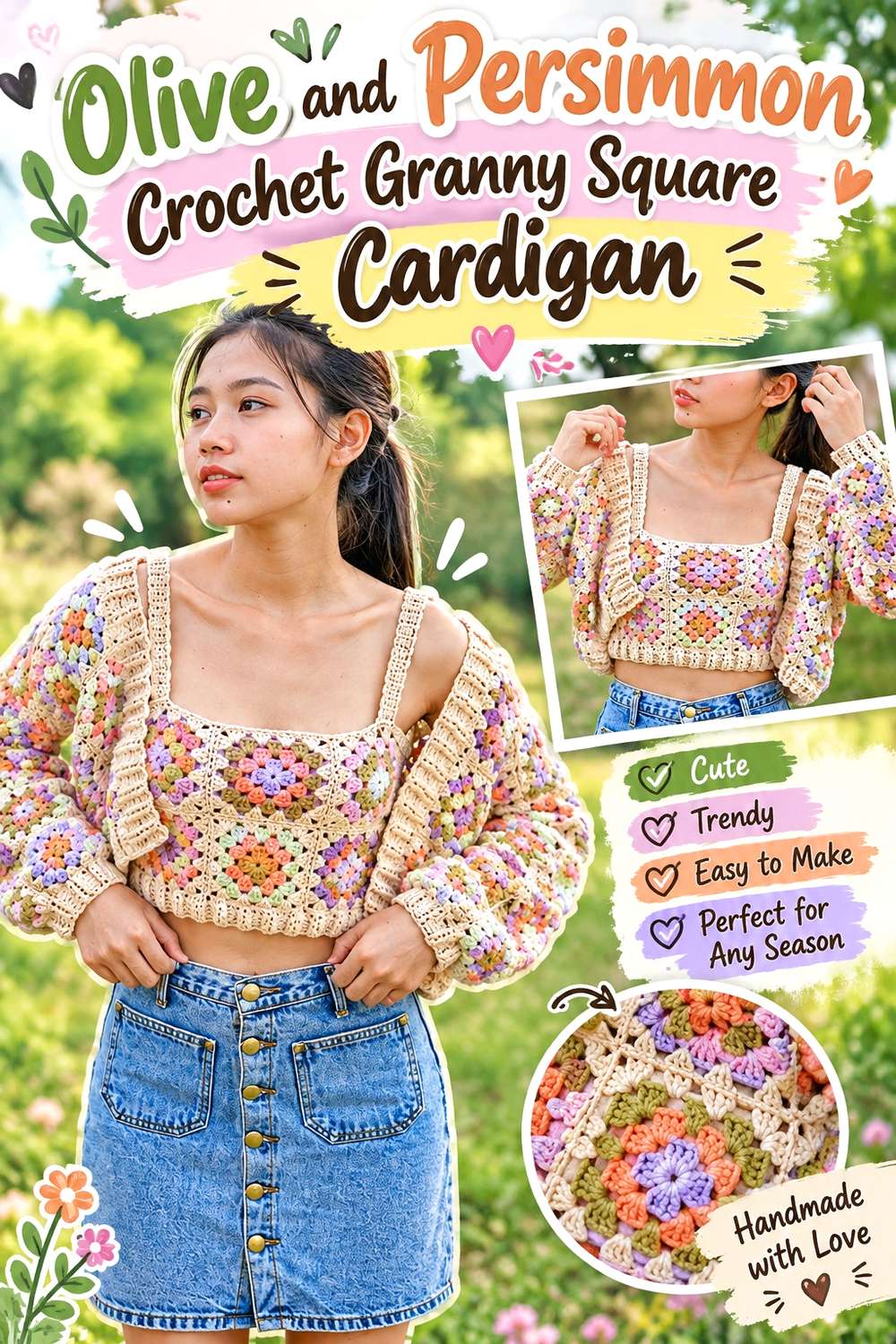
An olive-led granny-square cardigan gives you many natural places to repeat persimmon without letting it dominate the garment. Olive can form the larger square areas or outer rounds, while persimmon appears in motif centers that repeat across the body and sleeves.
Olive Can Keep the Crochet Cardigan Panels Visually Connected
When individual granny squares contain several visible rounds, repeating olive in a consistent position can make the assembled cardigan read as one garment rather than a collection of unrelated blocks.
You can also carry olive into cuffs or edging so the square layout has a color connection to the finished garment edges.
Persimmon Centers Can Create a Repeat Across Olive Crochet Squares
Use persimmon in comparable motif positions instead of scattering it randomly across only a few squares. Repetition gives the warm color a deliberate rhythm across the fronts, back, and sleeves.
Before finalizing placement, lay the squares out as garment panels. Check that persimmon is reasonably distributed rather than clustering heavily on one side of the cardigan.
Creator Credit: Chenda DIY
3. Persimmon V-Neck Crochet Sweater With Olive Trim
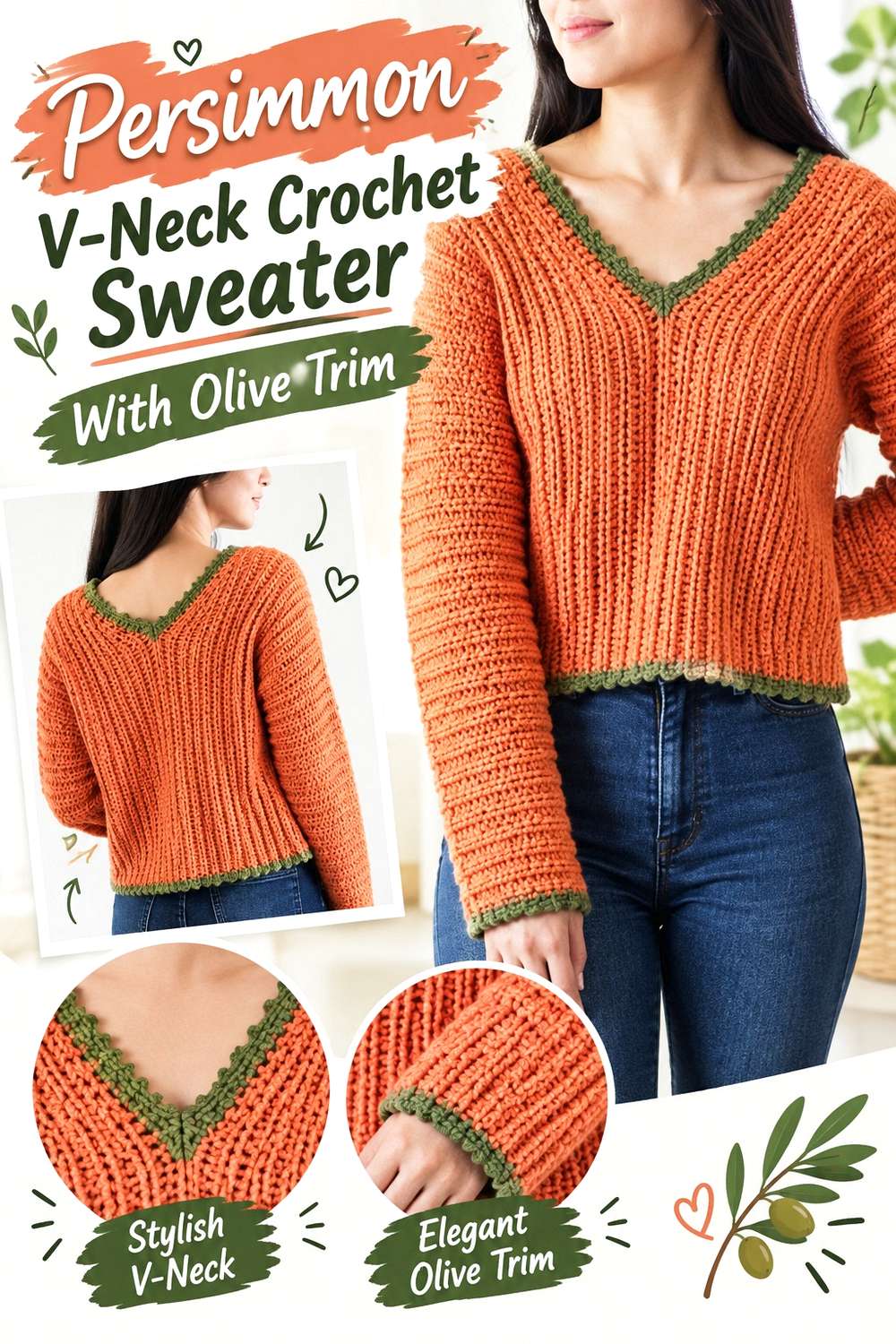
A persimmon sweater body makes the warm shade the clear focus, while olive can define smaller structural areas such as the neckline, cuffs, and lower edge. This approach lets the second color emphasize garment boundaries instead of dividing the torso into competing blocks.
Persimmon Works Well Across the Main Crochet Sweater Panels
Keeping persimmon continuous through the large front and back areas gives any visible stitch texture room to remain consistent. It also keeps the V-neck shape from competing with multiple large color changes.
If the persimmon is very vivid, reserve olive for more than one finishing area so it has enough presence to balance the body color.
Olive Can Outline a Persimmon V-Neck Without Taking Over
The V-neck already creates a strong visual line, making it a useful location for olive. Repeating that olive at the cuffs or hem can connect the neckline to the rest of the sweater.
Check the neckline contrast with a small sample if the two yarns are similar in value. A very narrow olive trim may disappear against persimmon even when the hues look different in the skeins.
Creator Credit: forthefrills
4. Olive Bucket Hat With Persimmon Crochet Brim

For a two-color bucket hat, olive can dominate the crown while persimmon becomes more concentrated around the brim. That placement puts the stronger warm color around the hat’s widest visual edge instead of breaking the crown into several small stripes.
Olive Keeps the Crochet Bucket Hat Crown Cohesive
An uninterrupted olive crown is useful when you want the hat’s shape and stitch texture to remain easy to read. It also gives you room to decide later how much persimmon the brim needs.
For a subtler result, carry olive partway into the brim before introducing persimmon rather than splitting the two areas exactly at their structural boundary.
Persimmon Can Turn the Olive Brim Into the Main Accent
Persimmon does not need to cover the entire brim. A broader band makes it a major second color, while a narrower outer section creates a smaller finishing accent.
View the hat from the front and side before settling on placement. Because a bucket-hat brim projects outward, persimmon there can appear more prominent than the same amount of color placed near the crown.
Creator Credit: PassioKnit Kelsie
5. Persimmon Triangle Bandana With Olive Crochet Edging
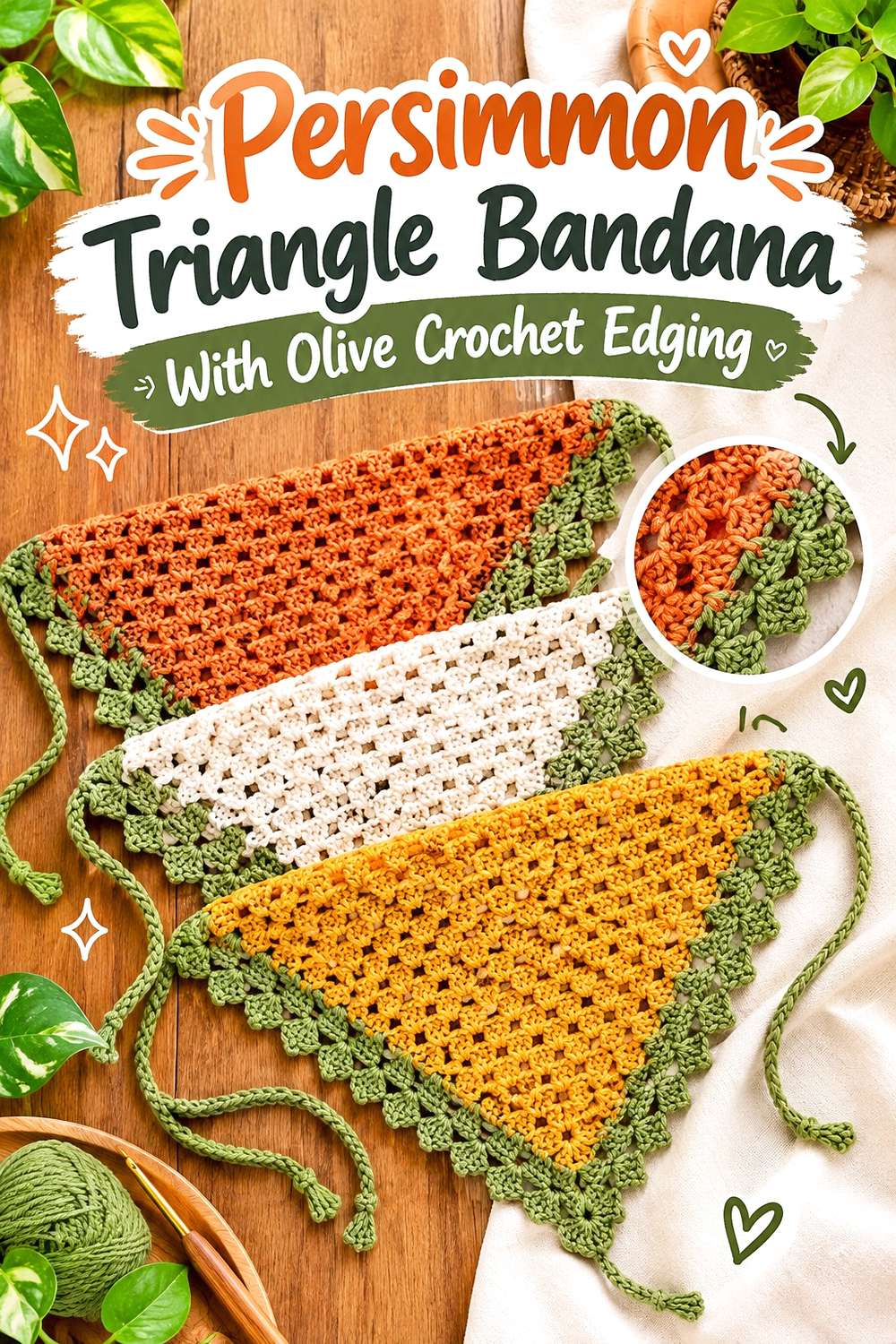
A triangle bandana gives persimmon a compact central field and olive a natural place along the outer edges. Because the item is smaller than a shawl, even a narrow olive accent can represent a noticeable share of the finished color scheme.
Persimmon Can Keep the Crochet Bandana Triangle Uninterrupted
Use persimmon across the main triangle when you want the stitch pattern to remain the primary surface detail. Frequent olive stripes could divide a small bandana into many competing sections.
A continuous main color also makes it easier to judge whether olive should be a quiet outline or a stronger secondary feature.
Olive Can Connect the Persimmon Edge and Bandana Ties
If the construction includes edge finishing or ties that can be adapted in a contrast color, olive can visually connect those functional outer areas. Keeping those details in one supporting shade prevents the small project from becoming overly segmented.
If olive and persimmon are close in value, make sure the edge is wide enough to remain visible against the main triangle.
Creator Credit: HayHay Crochet
6. Olive Tunisian Crochet Scarf With Persimmon Ends
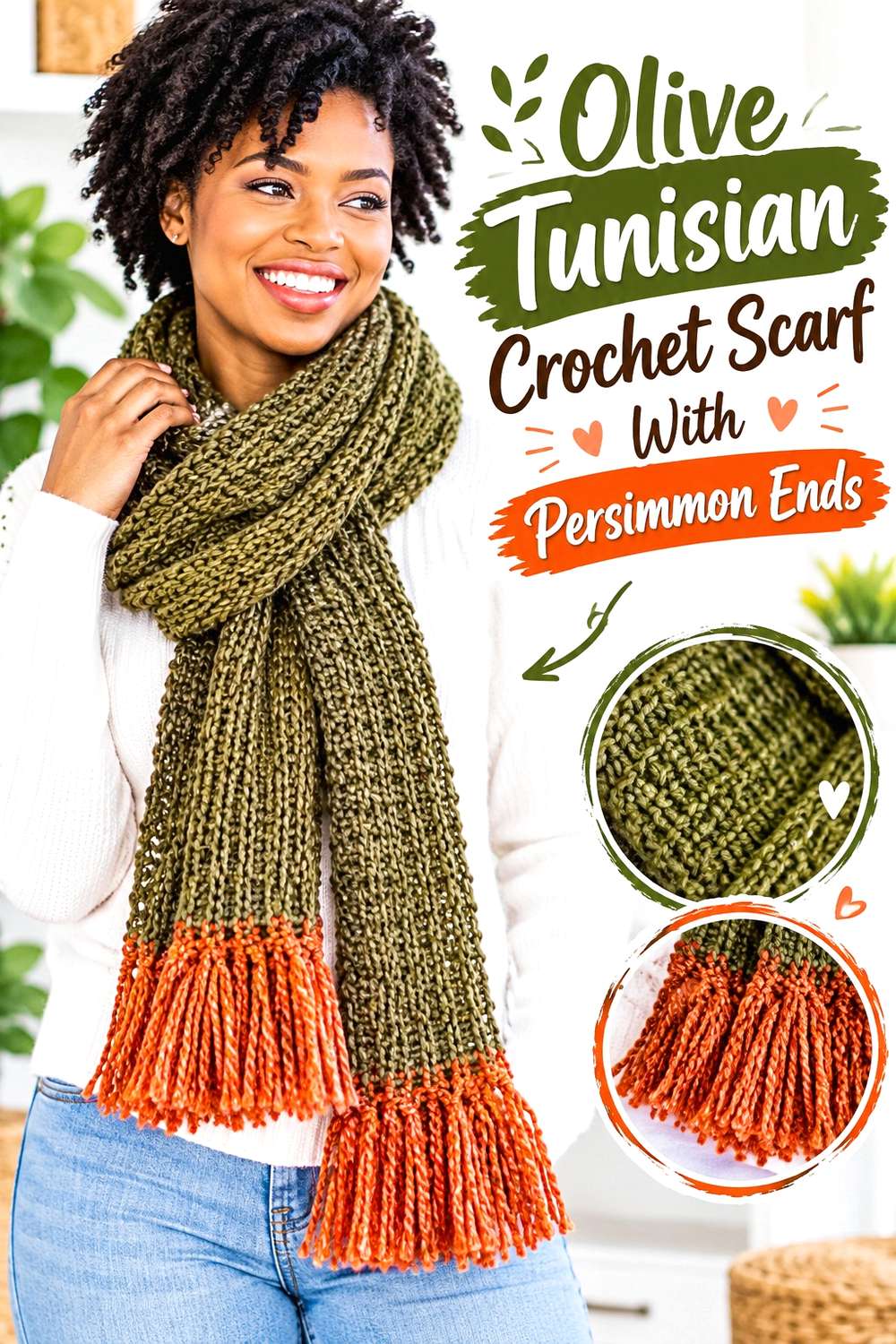
A long scarf provides enough length to let olive dominate without making persimmon disappear. Use olive through the central section and introduce persimmon toward both ends, creating color balance when the scarf hangs down on either side.
Olive Gives the Tunisian Crochet Scarf a Continuous Center
Keeping the central length olive allows the fabric texture to continue without repeated color interruptions. This can be especially useful when the crochet surface itself already has strong horizontal or vertical definition.
The large olive area also makes even relatively short persimmon end sections more noticeable.
Persimmon Should Appear at Both Olive Scarf Ends
Repeating persimmon on both ends makes the accent feel connected to the scarf’s overall layout. If only one end carries persimmon, the asymmetry becomes a much stronger design decision.
You can adjust how dominant the warm shade feels by changing the visual length of the end blocks without changing the basic two-color relationship.
Creator Credit: TL Yarn Crafts
7. Persimmon Shawl With Olive Crochet Border
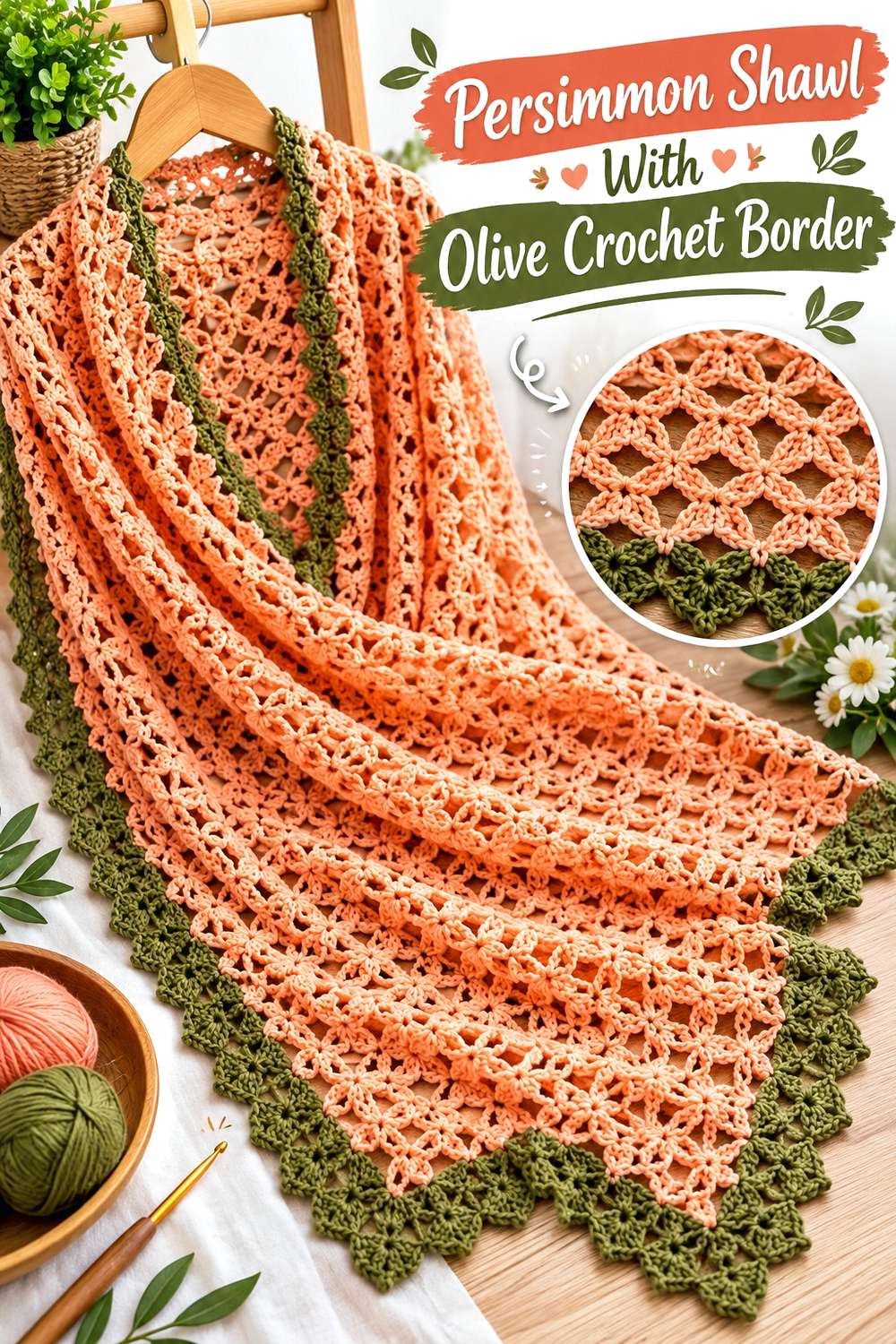
Persimmon can spread through the broad central area of a shawl while olive follows the expanding outer edge. This gives the border increasing visual importance as the shawl becomes wider, so a relatively small amount of olive can still frame a large piece effectively.
Persimmon Lets the Crochet Shawl Surface Stay Warm and Continuous
Use persimmon through the main body when you want the shawl’s shape and stitchwork to remain uninterrupted by repeated stripes. A consistent field can be especially effective where openwork or textured sections already supply surface variation.
Check a larger swatch if possible because persimmon can appear different when seen across a broad expanse rather than as a small skein.
Olive Gives the Persimmon Shawl Edge More Definition
An olive outer border creates a visible stopping point for the persimmon field. A darker olive increases the frame effect, while a similar-value olive keeps the transition more blended.
If the shawl already has a visually detailed edge, avoid making the olive so narrow that the color gets lost inside that texture.
Creator Credit: Fiber Spider
8. Olive Baby Blanket With Persimmon Crochet Bands

This reverses the first blanket idea by giving olive most of the visual area. Persimmon can then appear in deliberate bands or a broader border, creating warmer interruptions against the quieter green field.
Olive Can Dominate the Crochet Blanket Without Looking Flat
An olive field works particularly well when stitch texture supplies visual interest. Rather than adding many narrow persimmon stripes, consider fewer, more visible areas so the two colors remain easy to distinguish.
The calmer center also leaves room for persimmon to make a stronger statement around the outer portion.
Persimmon Bands Need Clear Spacing Across an Olive Blanket
If you introduce persimmon within the blanket rather than only at the edge, repeat it intentionally. Unevenly scattered bands can make a simple two-color blanket feel less organized.
Step back from the work occasionally. What looks like a substantial persimmon section close up may read as a very thin line across the full blanket width.
Creator Credit: The Crochet Crowd
9. Olive Cowl With Persimmon Crochet Edges
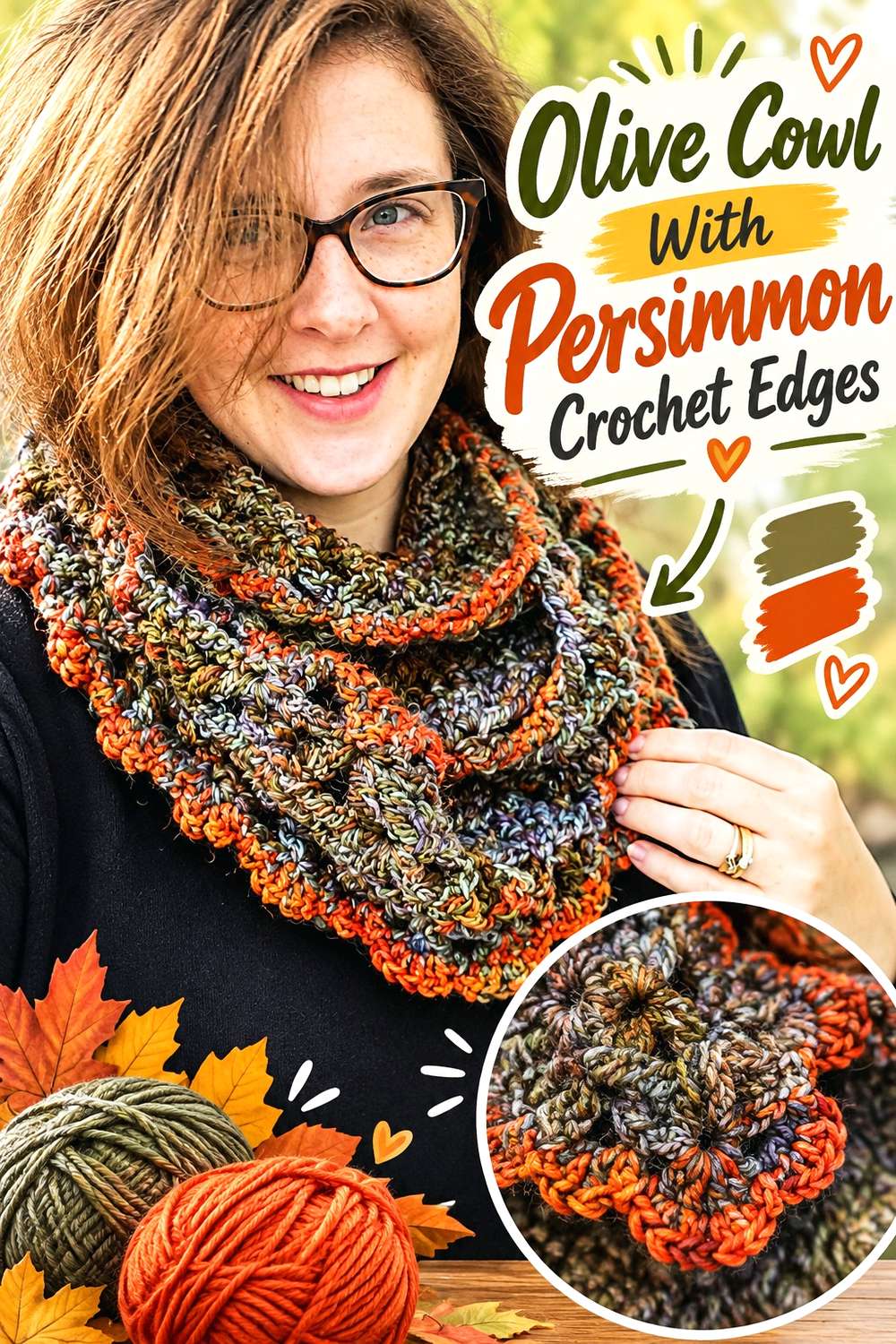
A cowl can stay predominantly olive while persimmon appears around the upper and lower edges. Because those edges sit close together when the cowl is worn, repeating the same warm color on both creates a clear frame around the central texture.
Olive Gives the Crochet Cowl Texture More Visual Space
Keep the middle olive when the stitch pattern has enough texture to carry the design. Large color blocks are often easier to read on a compact cowl than several small alternating bands.
A muted olive can also keep persimmon from occupying too much visual area near the face.
Persimmon Can Define Both Olive Cowl Openings
Repeating persimmon at the top and bottom gives the accent a clear purpose. If you want less contrast, use a narrower warm edge; if you want persimmon to become a stronger partner, increase its visible depth at both openings.
Check the finished cowl folded or draped, not only laid flat, because the lower edge may be partially hidden in actual use.
Creator Credit: Rich Textures Crochet
10. Persimmon and Olive Crochet Granny Square Motifs
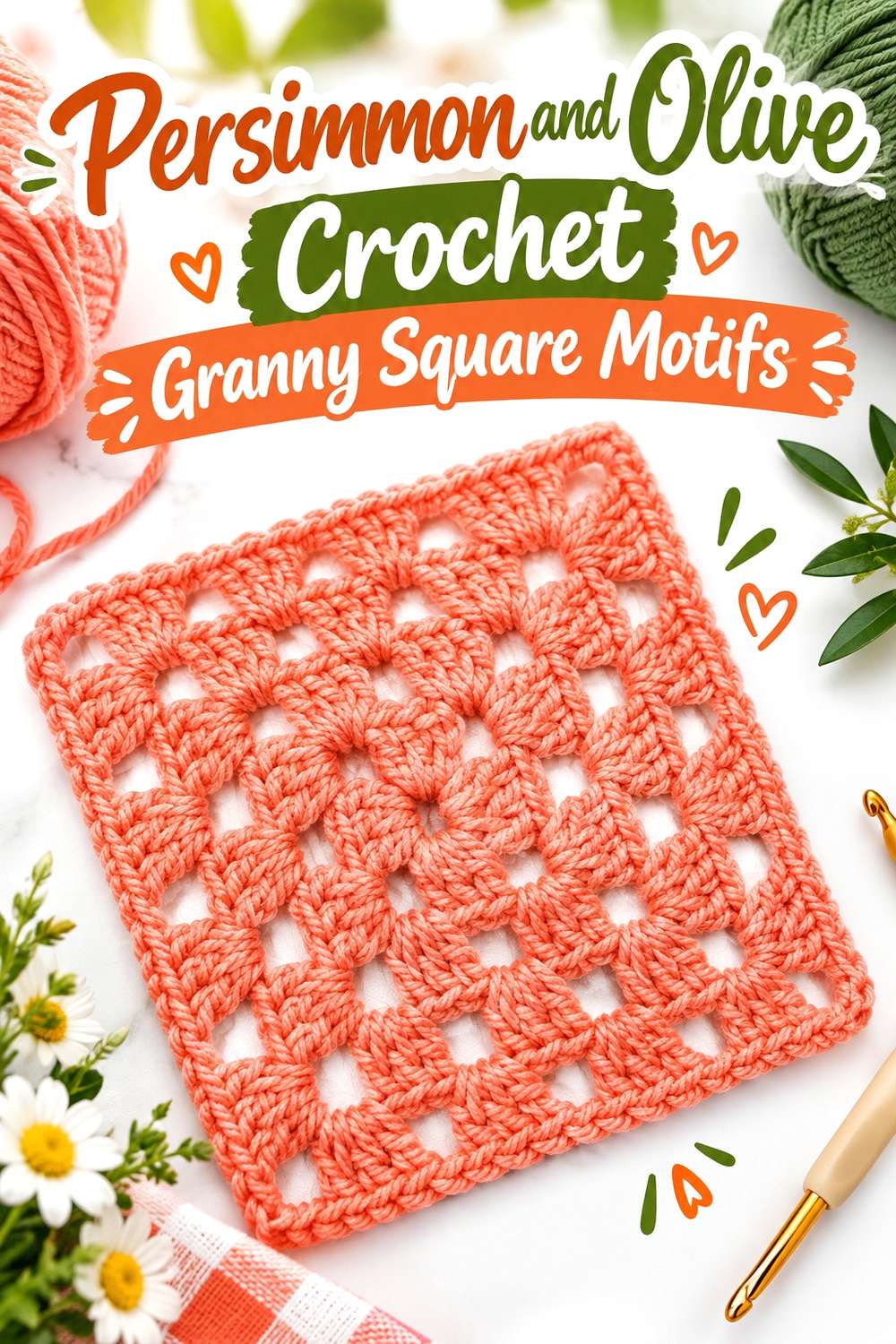
Granny squares make it possible to change the apparent balance of persimmon and olive simply by moving each color between the center and outer rounds. You can keep one arrangement throughout or alternate two reversed versions for a more varied motif layout.
Persimmon Centers Draw Attention Inside Olive Crochet Squares
Place persimmon toward the middle when you want each motif to have a warm focal point. Olive outer areas can then visually connect neighboring squares once the motifs are placed together.
Before making a large batch, set several sample squares side by side. A small persimmon center can look much more prominent when repeated many times.
Olive Centers Create a Quieter Persimmon Crochet Layout
Reverse the placement if you want olive to sit at the visual center and persimmon to form the outer framework. This can increase the overall share of persimmon because outer rounds generally occupy more visible area than tiny centers.
If you alternate both arrangements, plan the grid before joining so the two motif types remain distributed intentionally.
Creator Credit: Bella Coco
11. Persimmon Scarf With Olive Crochet End Sections
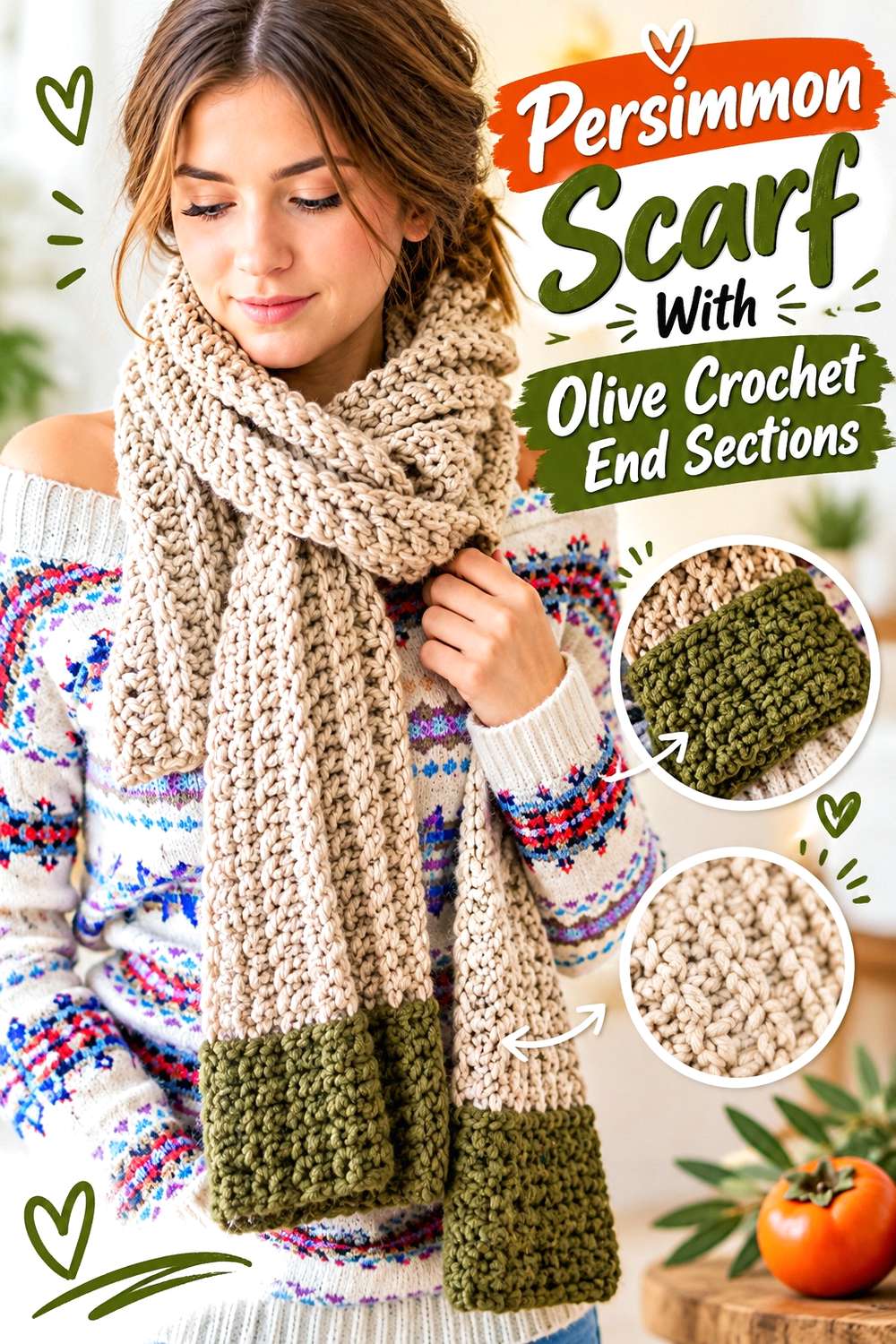
A conventional long scarf can make persimmon the main body color and use olive near the ends. Unlike the olive-led Tunisian scarf above, this arrangement gives the warm shade the majority of the visible length.
Persimmon Can Lead the Long Crochet Scarf Surface
Keeping the center persimmon makes the color highly visible when the scarf wraps around the neck. It also avoids interrupting texture with many small changes.
If the stitch pattern is visually dense, a single main color lets the texture carry more of the detail.
Olive End Sections Can Balance a Persimmon Crochet Scarf
Use olive on both ends to give the long persimmon field a clear finish. If you add fringe or another optional edge treatment, deciding whether it remains olive or returns to persimmon changes how sharply the ends are defined.
Compare the scarf both flat and folded. The olive areas may sit close together when worn, making them look more dominant than their total length suggests.
Creator Credit: B.Hooked Crochet
12. Olive Cardigan With Persimmon Crochet Ribbing
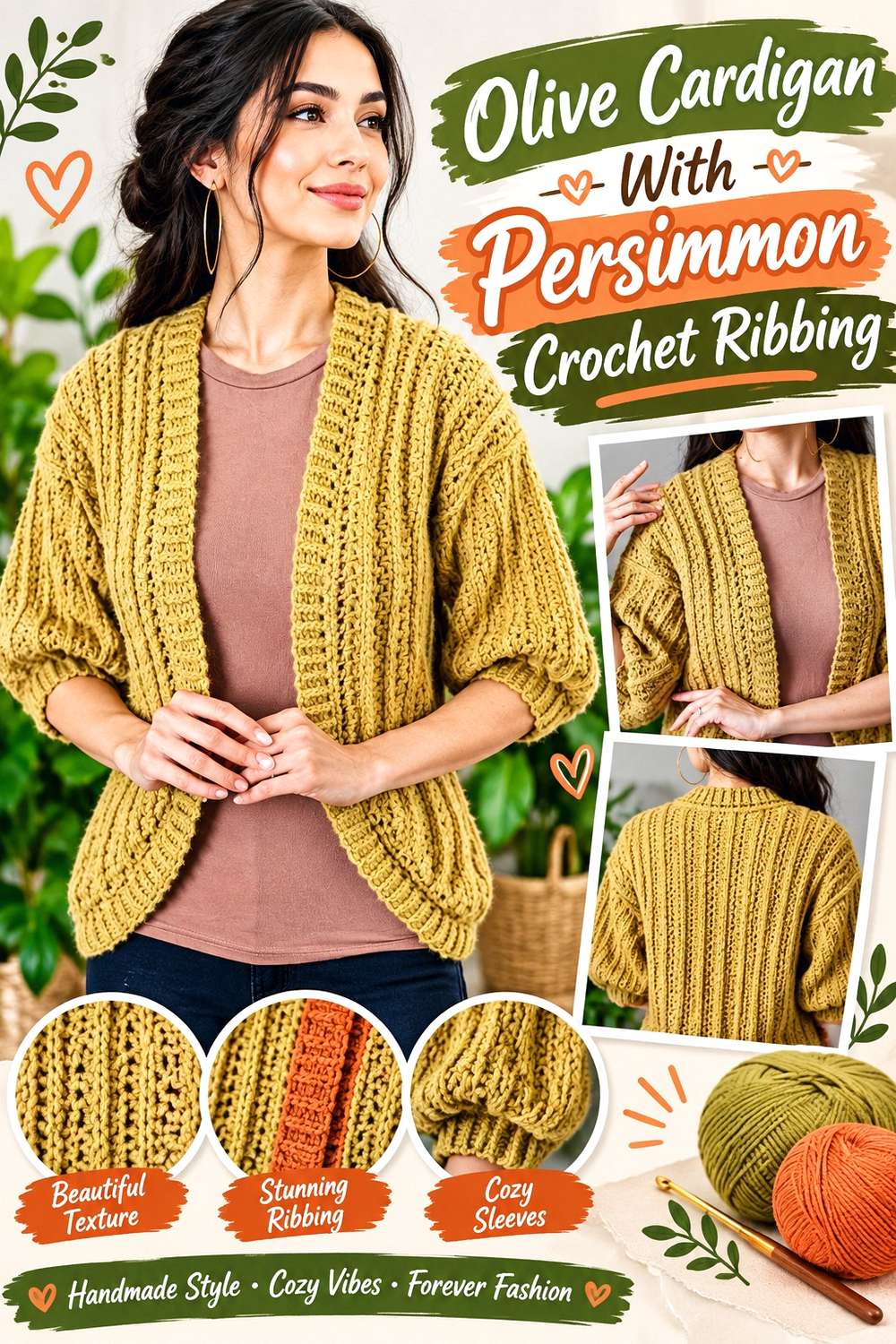
For a cardigan with larger body panels, olive can provide the uninterrupted garment base while persimmon follows repeated finishing areas. Cuffs, lower edging, and front or neckline trim can give the warm shade several connected appearances.
Olive Keeps the Crochet Cardigan Body Easy to Coordinate
Using olive through the main panels keeps most of the garment visually consistent, which is useful if you plan to layer it over simple wardrobe neutrals.
It also leaves persimmon free to emphasize edges rather than competing across the largest garment areas.
Persimmon Ribbing Can Link Separate Olive Crochet Panels
If the construction allows contrasting ribbing or edging, repeat persimmon across more than one location. Cuffs alone may look isolated, while cuffs plus a lower or front edge can create a clearer color relationship.
Lay the garment pieces together before committing to all the trim so you can judge the total amount of persimmon across the full silhouette.
Creator Credit: TCDDIY
13. Persimmon Headband With Olive Crochet Accent
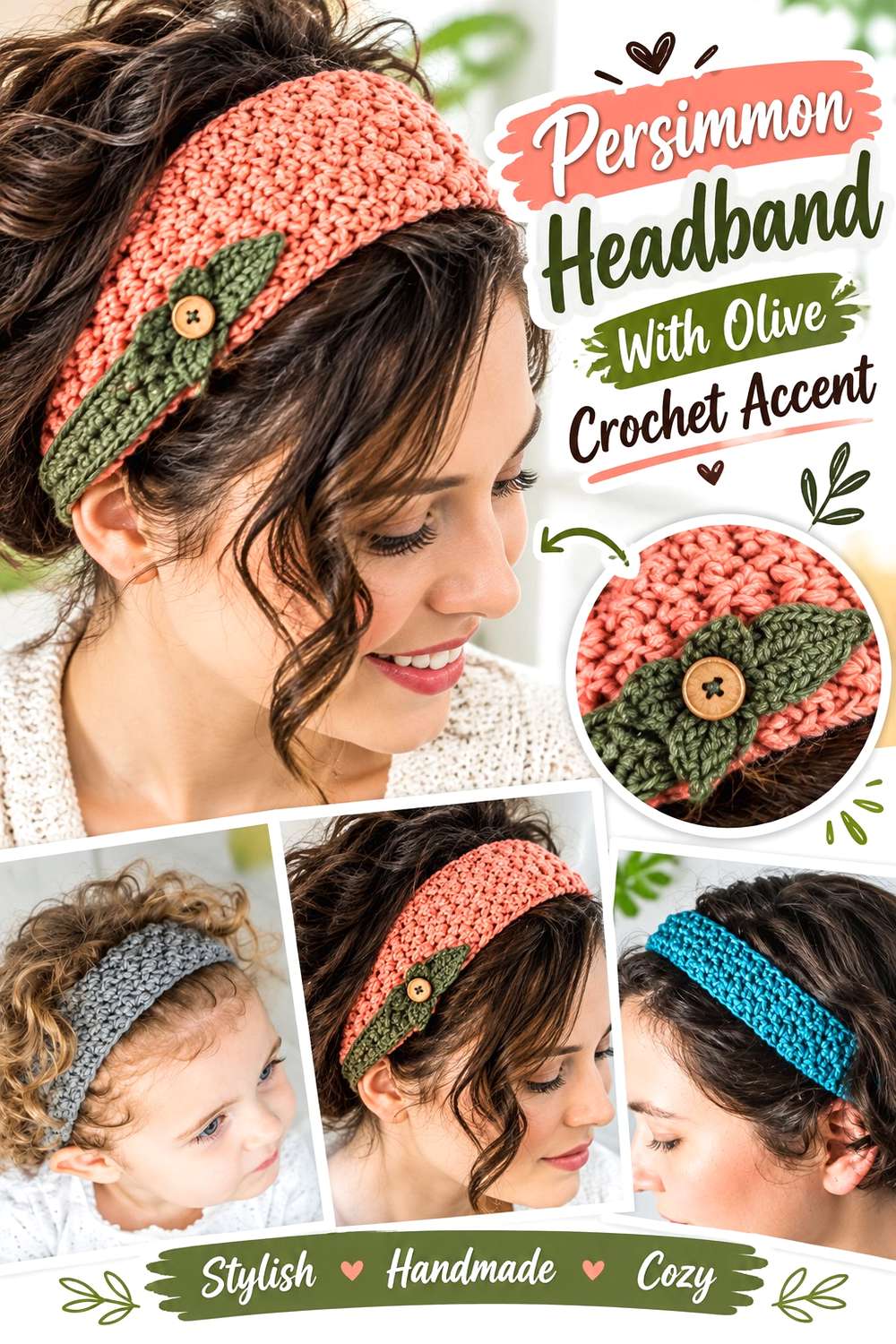
A headband has little surface area, so persimmon and olive do not need equal coverage to both remain visible. Let persimmon cover the main band and reserve olive for one clearly defined section or finishing detail.
Persimmon Should Stay Continuous Across Most of the Crochet Headband
A continuous persimmon base prevents a small accessory from becoming visually chopped into too many pieces. Texture can provide the variation that would otherwise come from repeated color changes.
This also makes the olive accent easier to recognize as intentional.
Olive Works Better as a Clear Accent on a Persimmon Headband
Place olive where the headband already has a visual focal area, such as a central section or edge treatment that suits the construction. A tiny isolated stitch or two may disappear.
Because the finished item is small, check the color balance at actual viewing distance rather than judging the yarn only close up.
Creator Credit: Winding Road Crochet
14. Olive Crop Top With Persimmon Crochet Trim
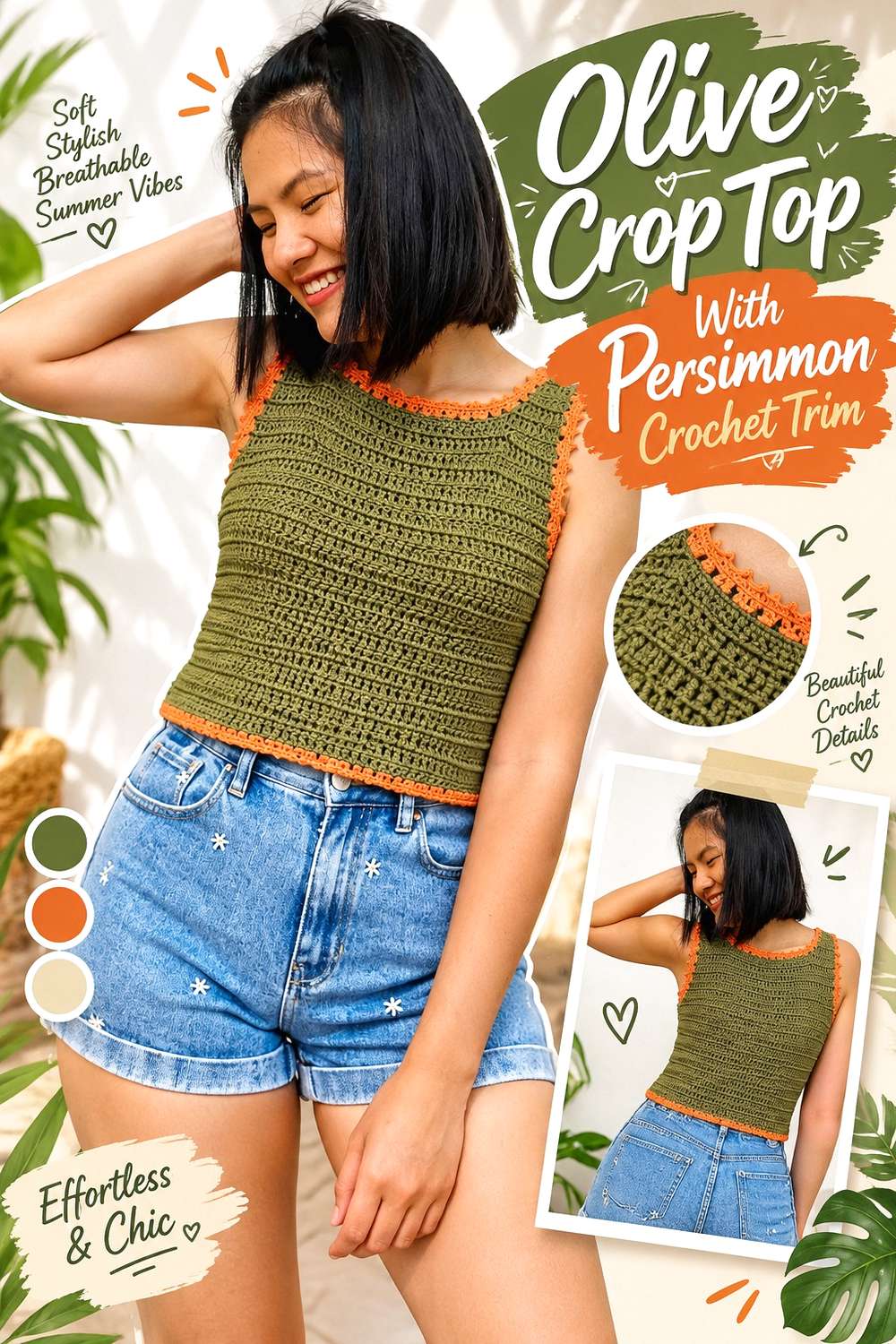
An olive-led crop top can use persimmon at garment boundaries without dividing the main body into many color blocks. Depending on the construction, the warm accent can be introduced around the lower edge, upper edge, straps, or another finishing area.
Olive Lets the Crochet Crop Top Body Remain the Main Field
Keeping the torso olive maintains a continuous visual surface and lets any openwork or stitch texture remain readable. This works particularly well when you want persimmon to be noticeable but not cover half the garment.
Check how much of the body will actually be visible when worn before deciding the final accent proportion.
Persimmon Can Emphasize the Olive Crochet Top Edges
Choose one or two related edge areas for persimmon instead of adding it everywhere. Repeating the same warm color at a lower band and another finishing detail can make the palette feel connected.
If your persimmon and olive are similar in darkness, a slightly wider trim may be more effective than a very thin line.
Creator Credit: KnitcroAddict
15. Persimmon Beanie With Olive Crochet Brim
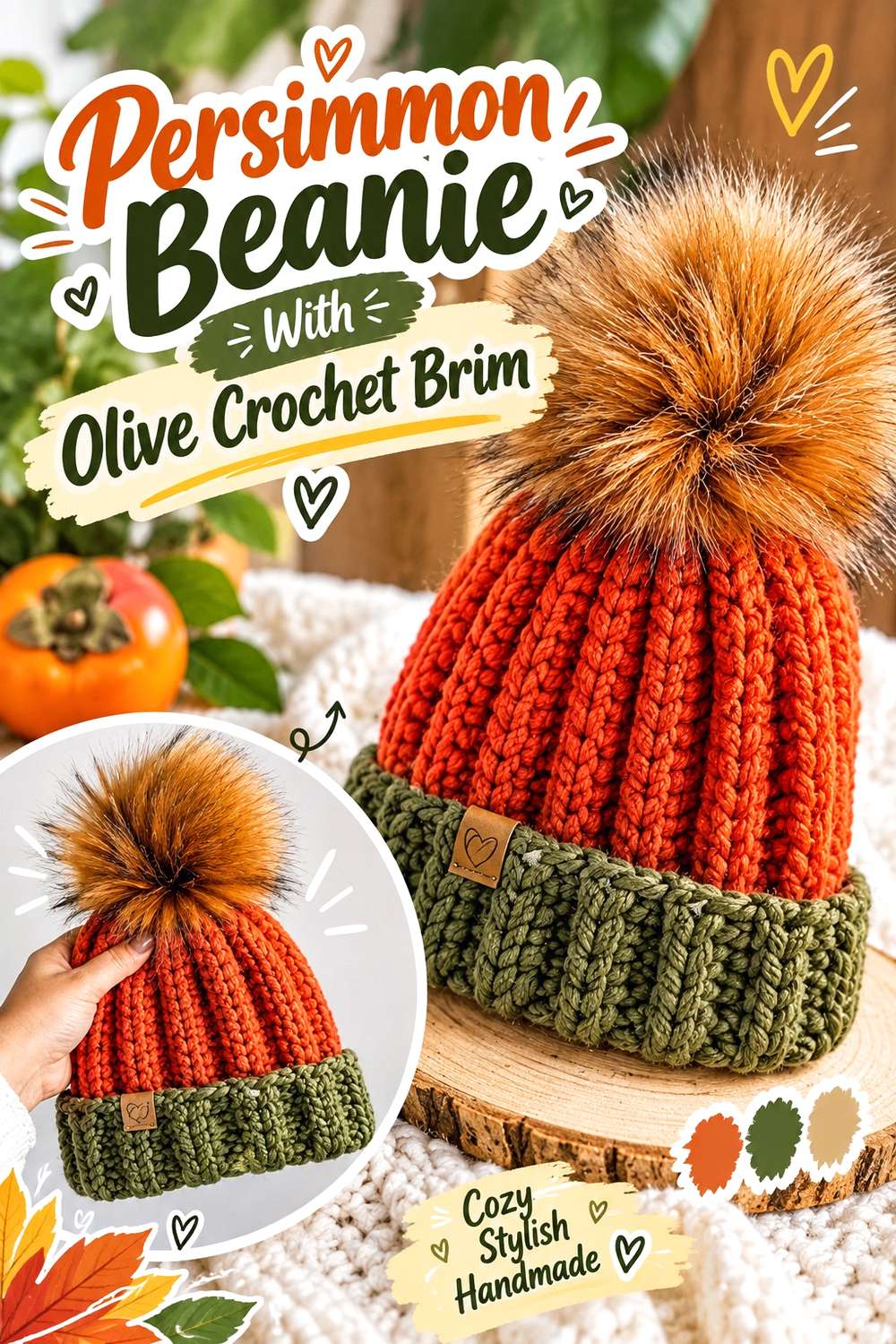
A persimmon beanie body with an olive brim creates a simple division between the crown and the area closest to the face. Because the brim is visually substantial on many beanies, olive can hold its own even when persimmon covers more total fabric.
Persimmon Makes the Crochet Beanie Crown the Warm Focal Area
Keep the crown persimmon when you want the warmer shade visible from most angles. An uninterrupted crown also helps textured stitches remain clear rather than being broken by short stripes.
If the persimmon is highly saturated, the darker or more muted olive brim can visually ground the lower edge.
Olive Gives the Persimmon Crochet Beanie a Strong Lower Edge
Olive works naturally around the brim because it creates a complete band rather than an isolated patch. This makes even a modest amount of green feel deliberate.
Check how the brim will be worn before planning the color depth. Folding or turning it can change how much olive remains visible.
Creator Credit: CJ Design
16. Persimmon Tote Bag With Olive Crochet Base and Handles

A persimmon bag body paired with an olive base and handles distributes the supporting color to areas that visually frame the main surface. This prevents the olive from looking like a random stripe while leaving enough persimmon for a strong front and back panel.
Persimmon Gives the Crochet Tote Panels a Clear Main Color
Use persimmon across the broad bag sides if you want them to carry the palette. Keeping those surfaces consistent is useful when the crochet texture is already detailed.
The large panels also give you an obvious place to judge whether your chosen persimmon is too strong or too close in value to olive.
Olive Can Connect the Persimmon Tote Base and Handles
Repeating olive at the bottom and top of the bag creates a visual path around the persimmon body. It makes the secondary color appear integrated even if its total surface area is smaller.
When adapting a tutorial, plan color changes around natural construction boundaries rather than forcing extra joins solely for color.
Creator Credit: crochet daniela
17. Olive Tote Bag With Persimmon Crochet Upper Band
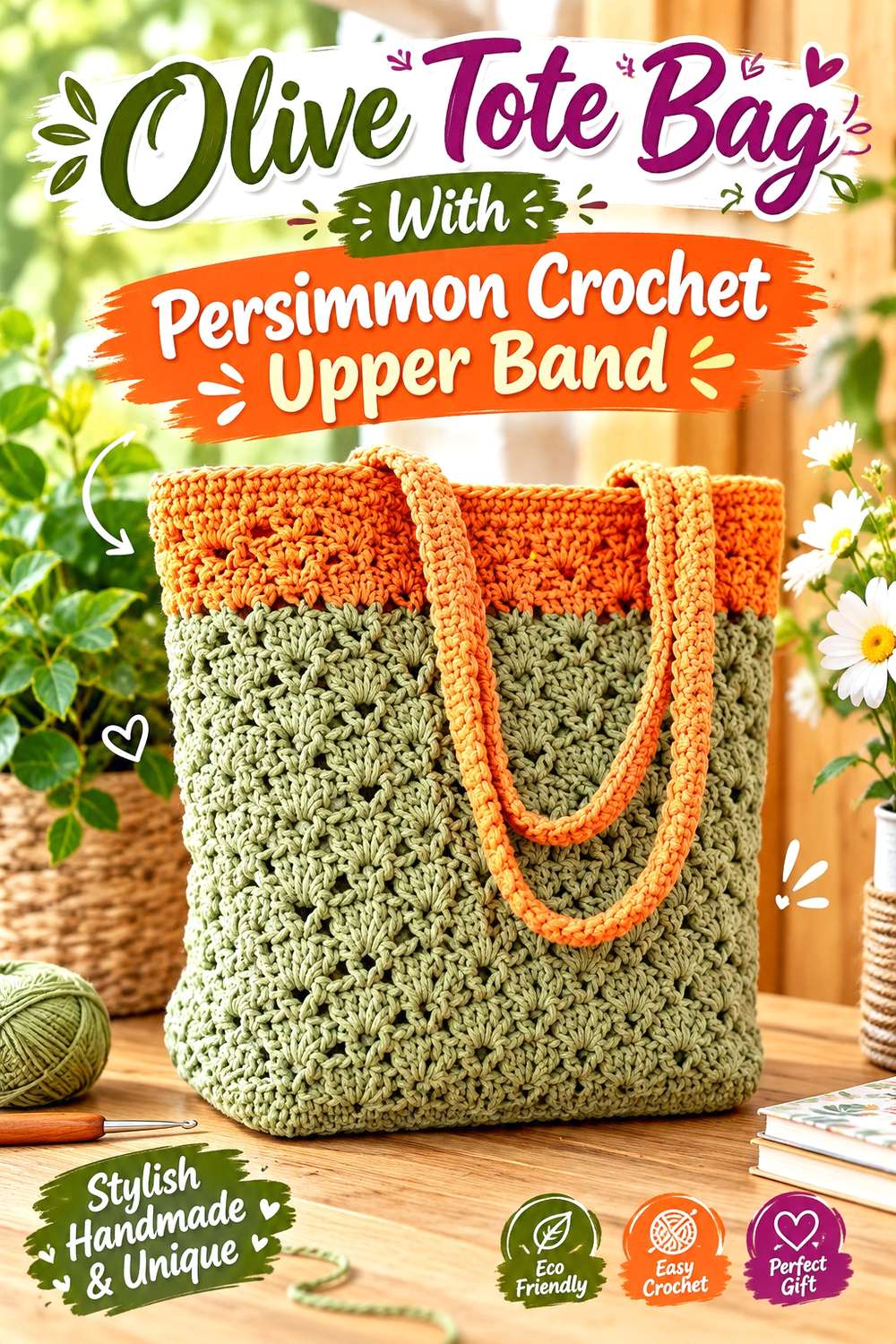
This tote reverses the previous arrangement. Olive becomes the main bag color, while persimmon is concentrated near the opening where it can be echoed in the handles or another upper detail if the construction allows.
Olive Can Cover the Main Crochet Tote Without Losing Persimmon
An olive body gives the bag an earthy base and leaves the warmer shade free to work as a more concentrated accent. The arrangement is useful when you prefer persimmon in smaller amounts.
If the bag has pronounced stitch texture, olive also provides a continuous field for that texture to remain visible.
Persimmon Can Draw Attention to the Olive Tote Opening
A persimmon band near the top separates the opening from the larger olive body. Repeating a small amount of persimmon higher on the handles can connect the accent rather than leaving it as one isolated horizontal line.
Keep the upper band broad enough to remain visible once the bag is filled and handled.
Creator Credit: Kristines Crochets
18. Olive Market Bag With Persimmon Crochet Handles
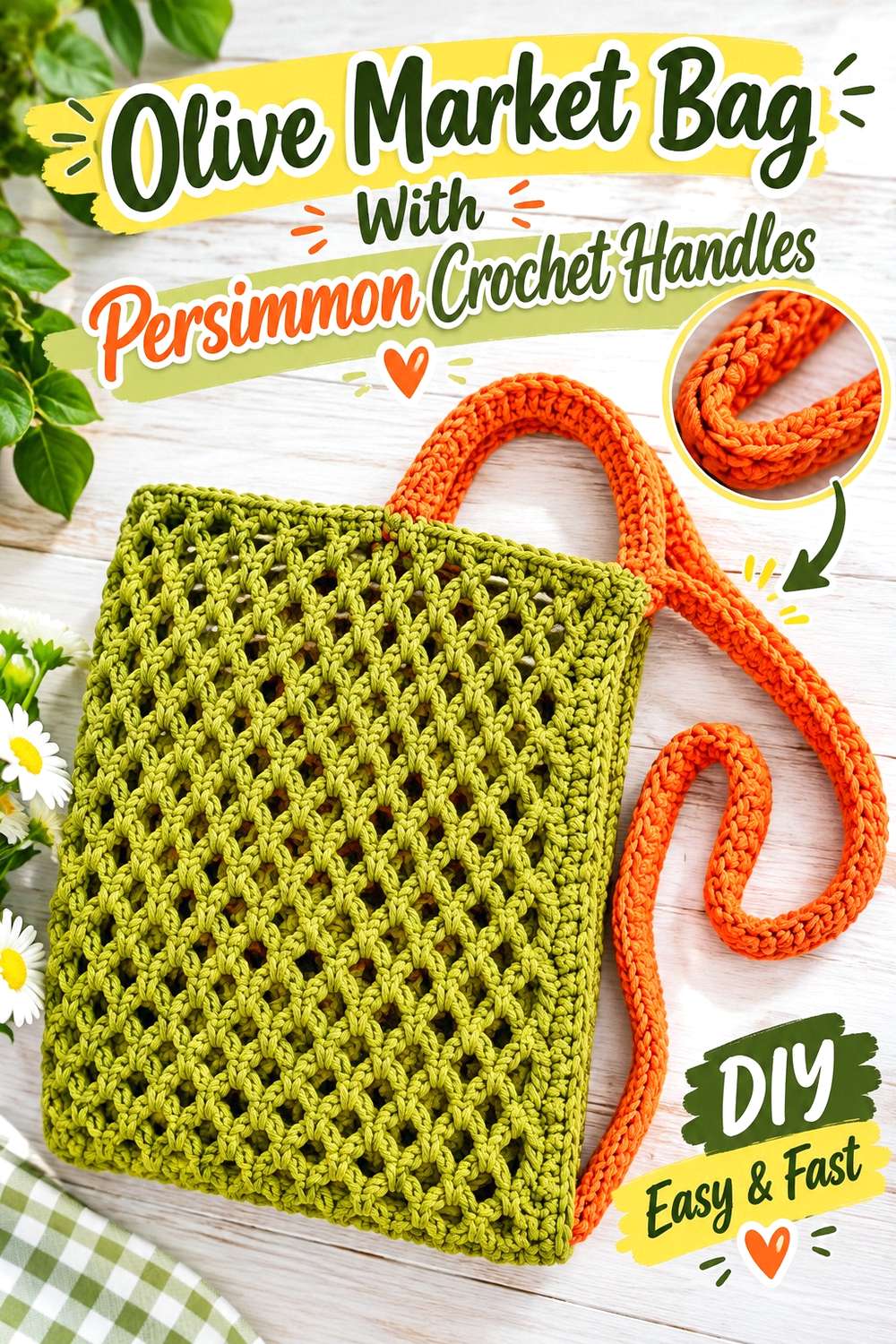
Market-bag fabric often has plenty of visual movement, so an olive main body can keep the surface from becoming overly busy while persimmon marks the more solid upper area. Concentrating color around the opening and handles creates a useful contrast between body and finish.
Olive Keeps the Crochet Market Bag Openwork Visually Consistent
Use olive throughout the main carrying section instead of switching colors frequently across open spaces. Larger uninterrupted areas make it easier to see the bag’s overall shape.
Because openwork also reveals whatever is inside the bag, a consistent main color prevents the palette from competing with changing background colors.
Persimmon Handles Can Give the Olive Market Bag a Clear Accent
Persimmon near the top is visible when the bag hangs from the hand or shoulder. If the rim and handles can both carry the same accent, repeating persimmon there creates a connected upper section.
Avoid introducing a third strong color unless you deliberately want to move away from the focused two-color palette.
Creator Credit: Diving Ducks Crochet
19. Persimmon Scrunchie With Olive Crochet Edge
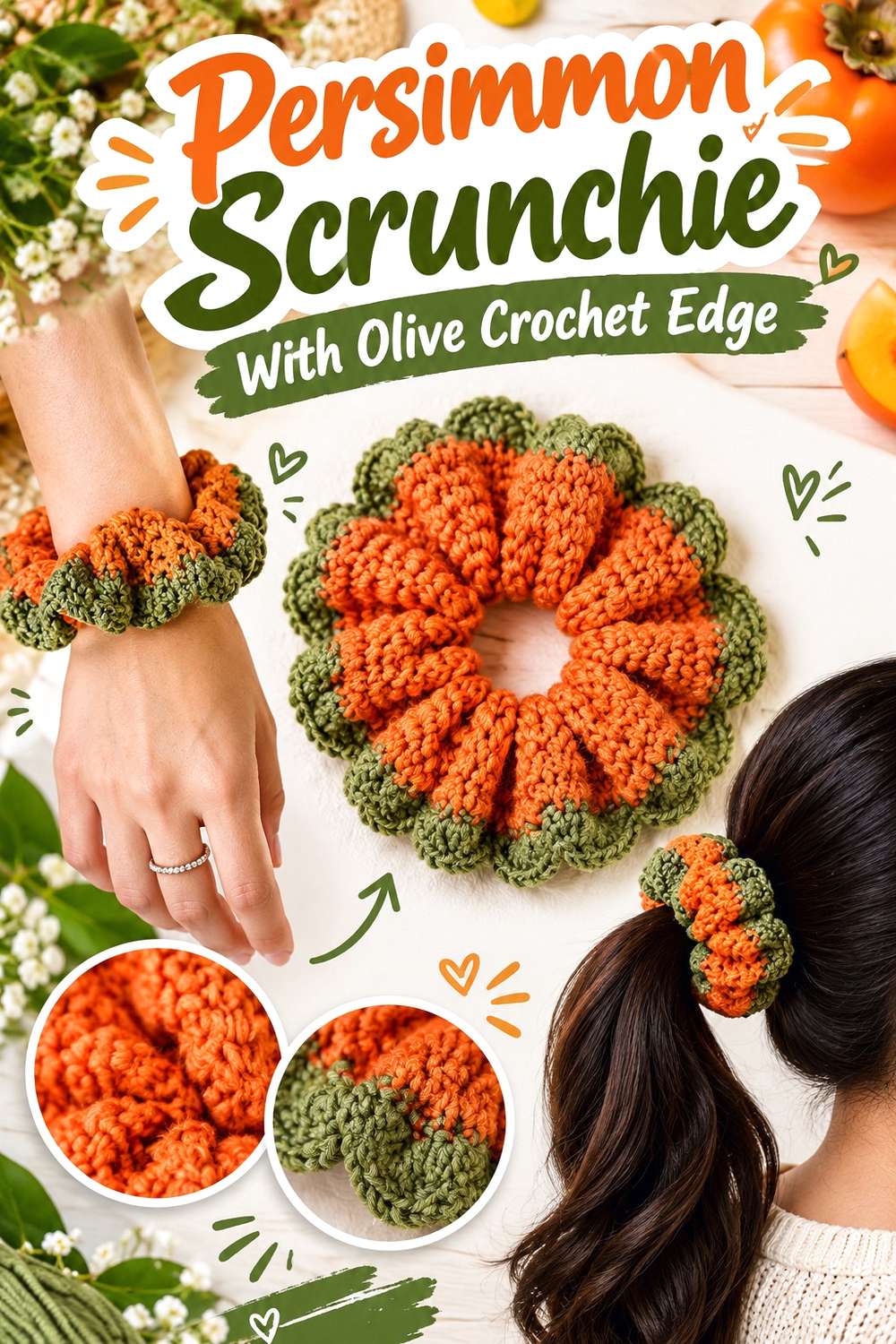
A scrunchie is small enough that complicated color blocking can disappear inside the gathers. A persimmon main body with a simple olive outer accent keeps both colors readable without requiring many changes.
Persimmon Can Cover Most of the Gathered Crochet Scrunchie
Use persimmon through the fuller portion so the warm shade remains visible even when the fabric compresses around the elastic. Tiny alternating sections can become difficult to distinguish once the scrunchie gathers.
A single main shade also lets the texture create most of the visual variation.
Olive Should Stay Visible Around the Persimmon Scrunchie Edge
If the construction allows an added or contrasting outer section, olive can form a narrow outline around the warmer center. Make sure enough olive remains exposed after gathering.
If your olive is almost the same value as persimmon, increase the width of the accent rather than relying on hue difference alone.
Creator Credit: VivCrochets
20. Olive Coasters With Persimmon Crochet Borders
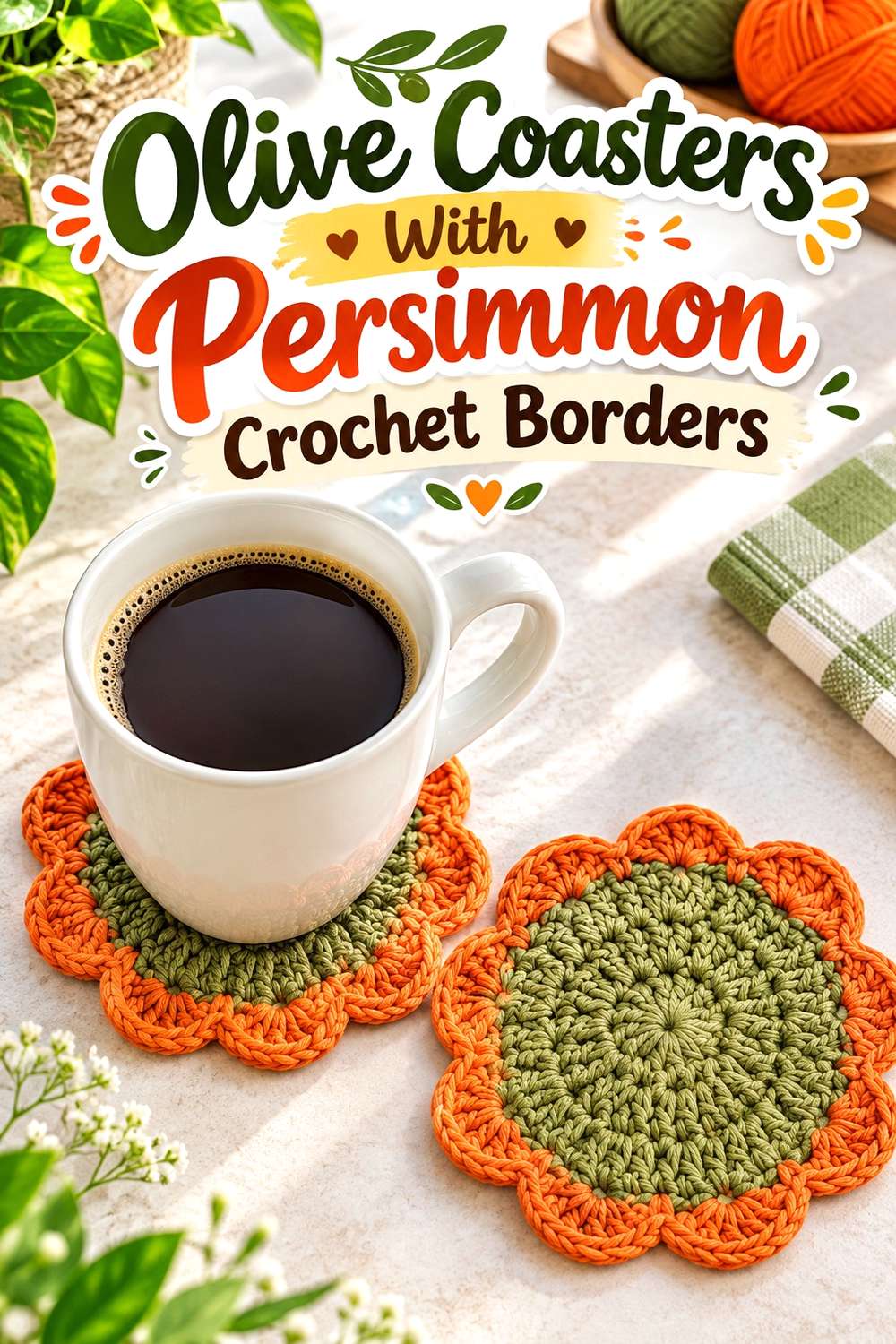
A coaster set is a good place to use olive and persimmon in small, repeated color blocks. Olive can fill the center while persimmon defines the perimeter, or you can reverse selected coasters while maintaining the same two-color family across the set.
Olive Centers Give the Crochet Coaster Set a Consistent Base
Using olive in the center of each coaster creates repetition across multiple small pieces. That consistency is useful if the outer shape or texture already supplies enough visual detail.
For more variety without introducing another color, reverse the dominant shade on only part of the set.
Persimmon Borders Can Separate Olive Crochet Coasters From the Table
A persimmon outer edge can give the olive center a clear visual boundary. How strong that frame appears depends on both the border width and the value difference between the yarns.
View a sample coaster on the surface where you expect to use it; surrounding table colors can affect which of the two shades appears more prominent.
Creator Credit: One Little Project
21. Persimmon Placemat With Olive Crochet Outer Band
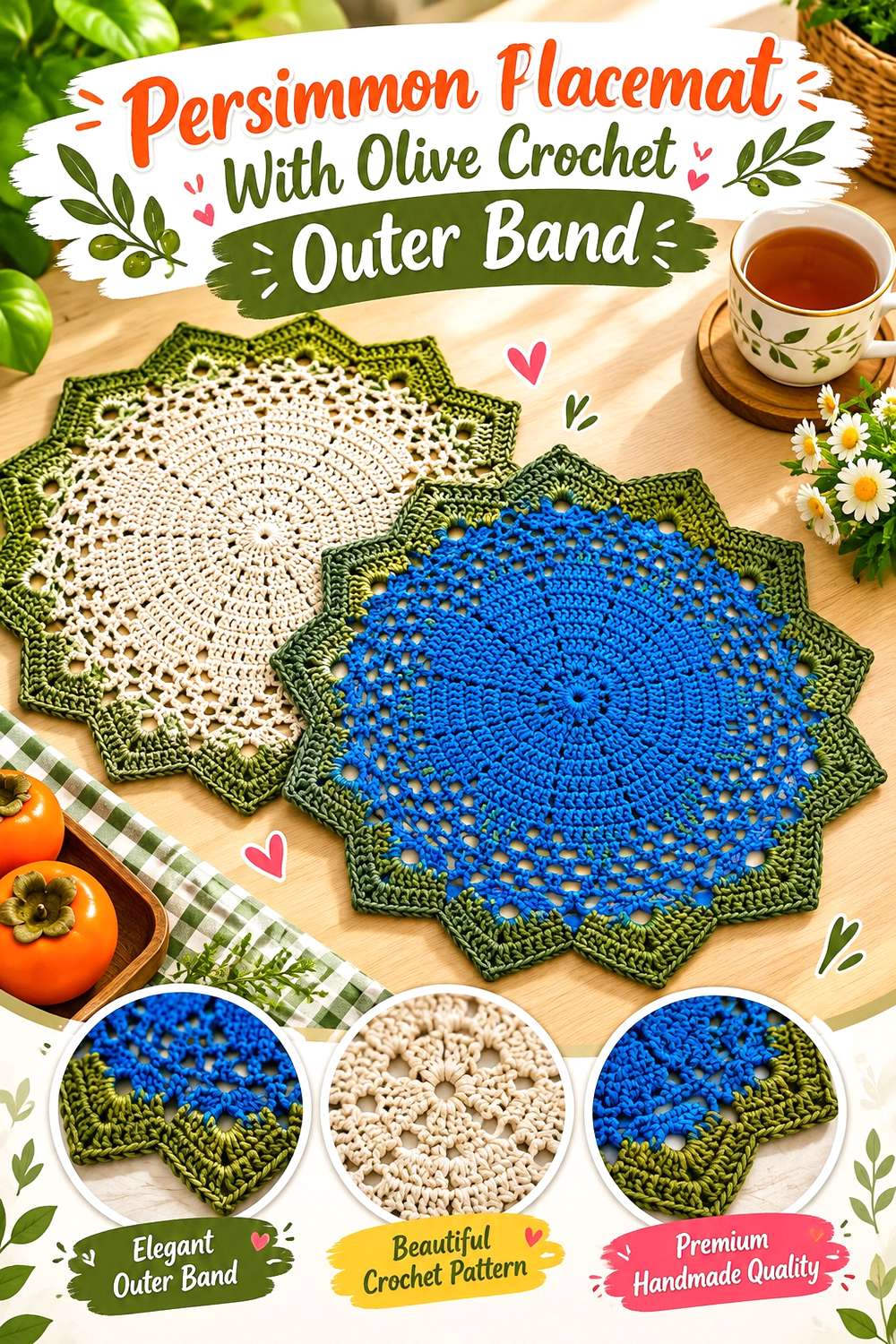
A placemat offers more surface than a coaster, so a large persimmon center can establish the palette before olive appears around the perimeter. This arrangement works especially well when you want the table setting to show a clear warm center surrounded by a quieter green frame.
Persimmon Can Lead the Broad Crochet Placemat Center
Use persimmon across most of the usable surface instead of alternating narrow bands throughout. A broad center makes the warm shade easy to see even when a plate covers part of the placemat.
If the texture is highly detailed, staying with one main color also helps that stitchwork remain readable.
Olive Can Frame the Persimmon Crochet Placemat Without Competing
Olive around the outer area gives the piece a defined boundary and keeps the second color visible beyond a plate placed in the center.
Check the finished proportions before making a whole set. An olive band that looks substantial on a small sample may appear much narrower once the placemat reaches its full dimensions.
Creator Credit: Crochê da Alessandra
22. Olive Crochet Basket With Persimmon Rim
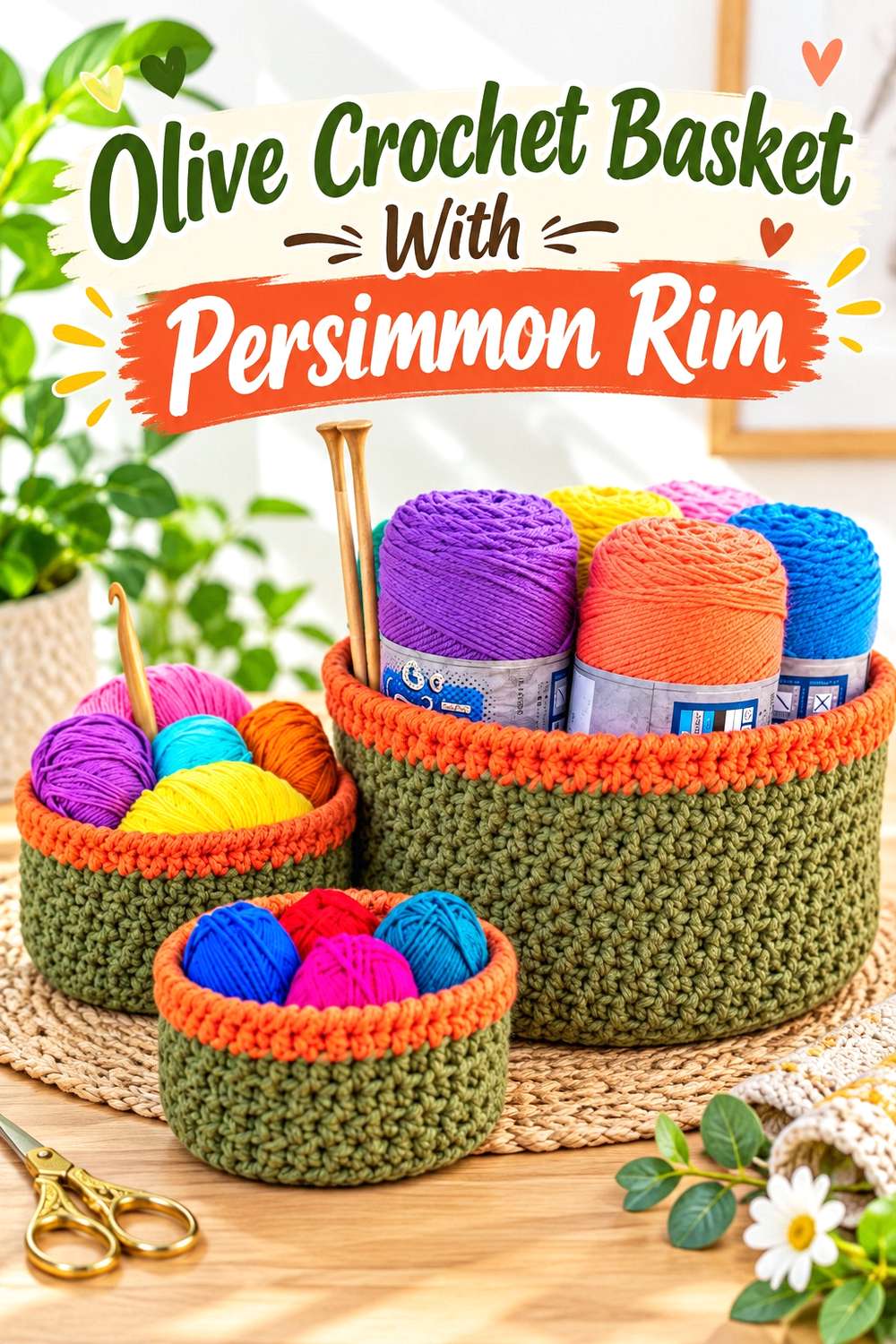
A basket benefits from a color plan that acknowledges its vertical sides, base, and opening. Olive can occupy the larger body, while persimmon circles the top as a strong finishing accent rather than being scattered randomly across the side walls.
Olive Keeps the Crochet Basket Body Visually Grounded
Using olive over the main basket surface allows texture and shape to remain the focus. It also makes the basket easier to coordinate with common wood, cream, beige, and other neutral surroundings without claiming an exact decor match.
If the basket has a strongly textured surface, a continuous olive section prevents frequent color changes from competing with that texture.
Persimmon Makes the Olive Crochet Basket Rim Easier to Notice
A persimmon rim places the warmest color at the opening, where it remains visible even when the basket contains other items. If handles or tabs are part of your chosen construction, you can decide whether they repeat persimmon or stay olive.
Avoid adding persimmon in one tiny unrelated patch on the basket wall; repetition at structural details usually looks more intentional.
Creator Credit: Naztazia
23. Olive Poncho With Persimmon Crochet Edging
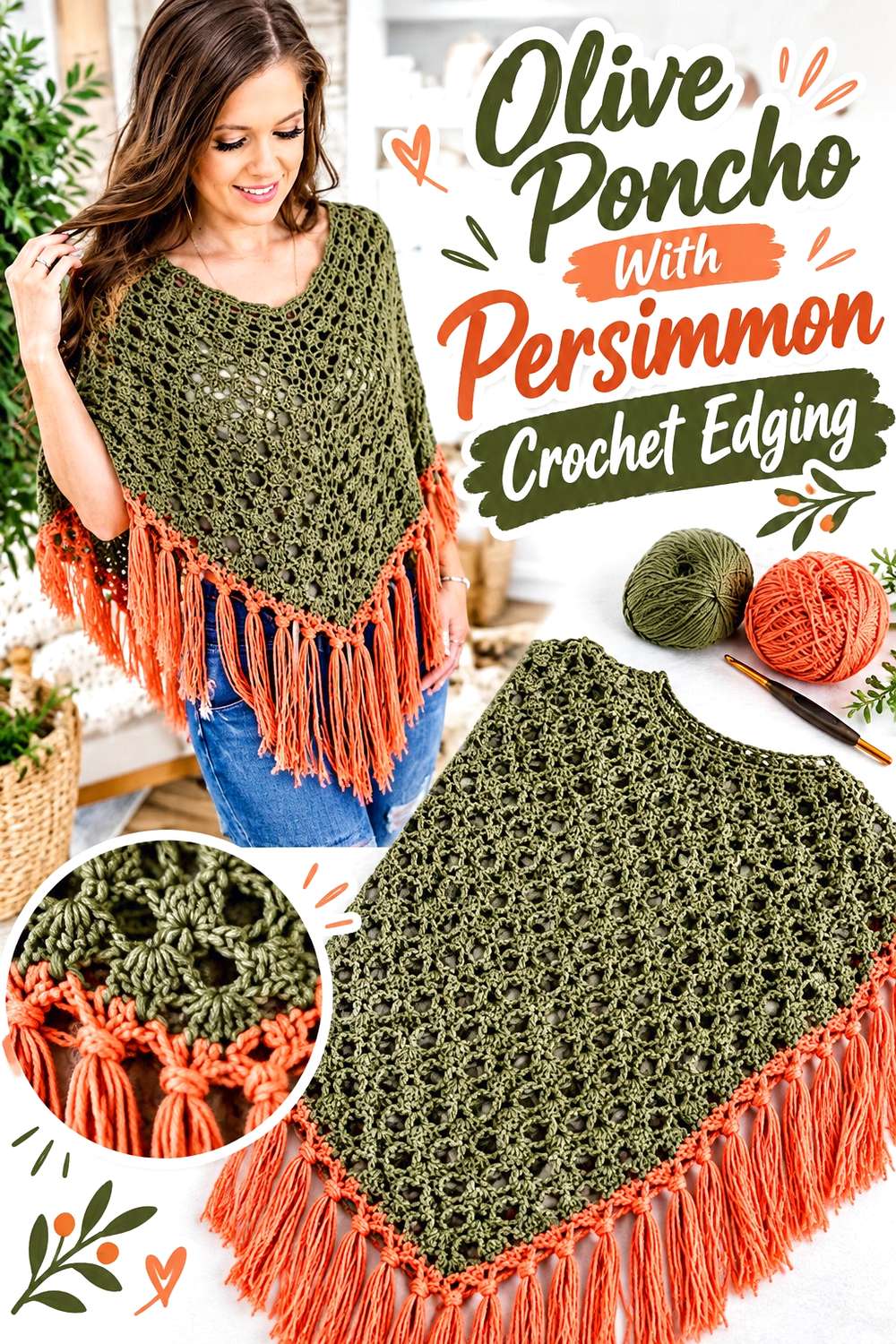
A poncho gives olive a large garment area, making persimmon most effective when it follows clear structural lines rather than appearing as many narrow stripes. The neckline and lower edge are two locations where the warm shade can repeat without fragmenting the main body.
Olive Gives the Crochet Poncho a Unified Main Surface
Let olive dominate the large draping area if you want the silhouette and stitch texture to remain visually continuous. Because a poncho can present a broad field of yarn, make a meaningful swatch before committing to a particular olive.
A muted medium or deep olive will create a different balance against persimmon than a lighter yellow-leaning version.
Persimmon Can Link the Olive Poncho Neckline and Lower Edge
Using persimmon at both the upper and lower boundaries distributes the warm color vertically through the garment. If you prefer a smaller accent, keep one area olive and concentrate persimmon only where it will remain visible during wear.
Check the lower edge while the poncho is draped, because folds can make some accent sections more visible than others.
Creator Credit: MJ’s Off The Hook Designs
24. Persimmon Pillow Cover With Olive Crochet Framing
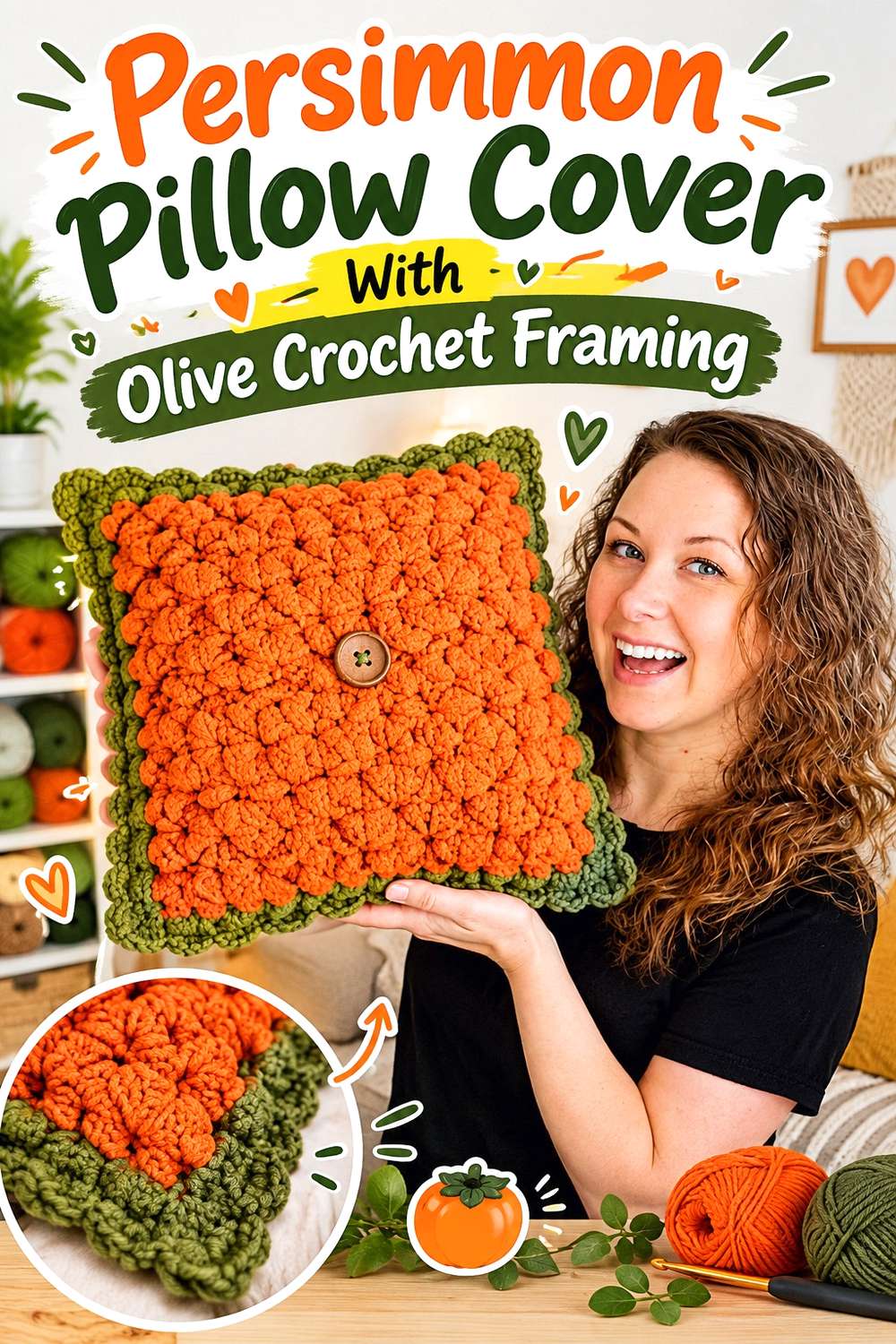
A crochet pillow gives persimmon a broad, front-facing surface where texture remains easy to see. Olive can frame that front, appear on an edge, or move to part of the reverse side so the palette changes depending on how the pillow is positioned.
Persimmon Can Dominate the Crochet Pillow Face
Use persimmon across the primary visible panel when you want the warm shade to have the greatest decor impact. A continuous field also gives raised or chunky texture more room to show without frequent color breaks.
Because pillows are often viewed from several feet away, judge your swatch at room distance as well as close up.
Olive Can Contain the Persimmon Crochet Pillow Surface
An olive edge or secondary panel gives the persimmon face a visual boundary. If you want olive to remain noticeable when the pillow is viewed straight on, keep some of it on the front rather than placing all of the green on the back.
For a subtler result, use olive mainly around the sides or reverse and let persimmon dominate the frontal view.
Creator Credit: Yarn Stash with Marching North
25. Olive Mittens With Persimmon Crochet Cuffs
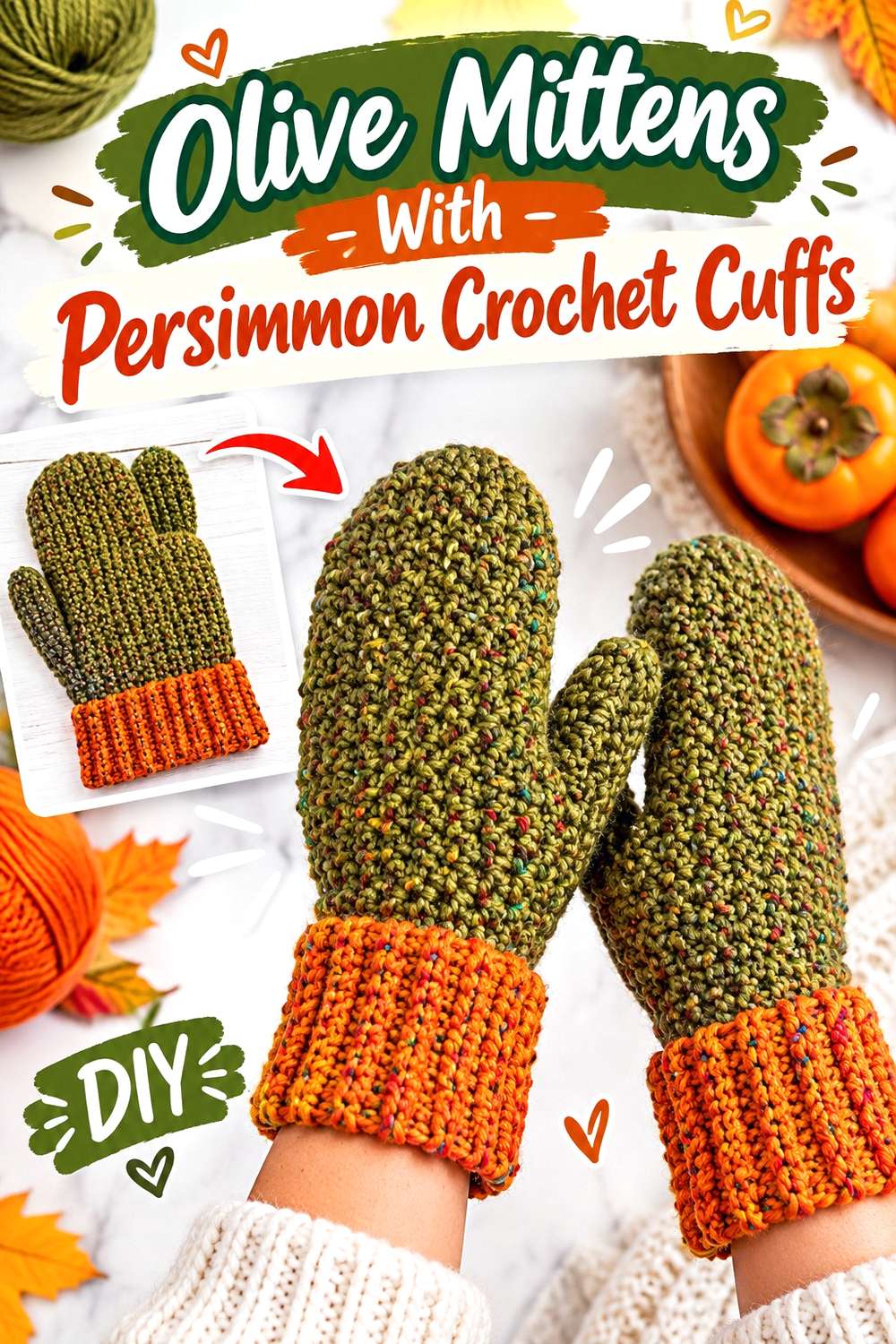
For mittens, color placement has the added challenge of keeping a pair visually consistent. Olive can cover both hands while persimmon forms matching cuffs, producing an obvious relationship between the two pieces without requiring complicated color changes around the fingers and thumbs.
Olive Keeps Both Crochet Mittens Consistent Through the Hand
Using olive throughout the main hand area keeps the pair visually unified. It also prevents small persimmon sections around shaped areas from becoming uneven focal points.
If you want a little more warm color, repeat persimmon in the same location on both mittens rather than improvising different placements.
Persimmon Cuffs Give the Olive Crochet Mittens a Matched Finish
Persimmon cuffs create a clear color block at the wrist and remain visible when the mittens are worn. Because the two cuffs sit near coat sleeves, consider how much persimmon you want exposed before deciding how dominant the accent should become.
If the two yarns are similar in value, a substantial cuff will show the color change more clearly than a thin decorative line.
Creator Credit: Brunaticality
Conclusion
Persimmon and olive can produce much more variety than a simple two-color description suggests. The biggest difference comes from deciding which shade owns the largest surfaces and where the second shade repeats.
For a persimmon-forward look, the baby blanket, sweater, shawl, scarf, beanie, tote, placemat, and pillow give the warm shade plenty of uninterrupted space. If you want olive to lead, the cardigan, bucket hat, cowl, market bag, basket, poncho, and mittens let persimmon work in smaller structural accents.
Motif projects such as the granny squares offer the most flexibility because simply exchanging the center and outer colors changes the visual balance without requiring a new palette. Small accessories such as the headband, scrunchie, and coasters benefit from simpler color placement because there is less space for several competing changes.
Whichever project you choose, compare your actual persimmon and olive yarns before starting. Preserve a clear dominant/supporting relationship, check light-dark contrast, and place repeated accents where they relate to the item’s edges, motifs, panels, handles, cuffs, or other visible structure. Use the credited tutorials for the exact construction details of each project.
Frequently Asked Questions
Is persimmon always the same orange shade in crochet yarn?
No. A color sold or described as persimmon can appear more orange, red-orange, coral, muted, or saturated depending on the yarn. Build the palette from the actual yarn in front of you rather than assuming every persimmon label represents the same color.
Should persimmon or olive be the dominant crochet color?
Either can lead. Persimmon works well when you want the warmer color across the most visible surface, while an olive-led project makes persimmon a more concentrated accent. Choose based on which shade you want to notice first and how much uninterrupted surface the crochet item provides.
How can I tell whether persimmon and olive have enough contrast?
Place the yarns side by side and compare them from a distance. You can also photograph them in grayscale to see whether one is clearly lighter or darker. If they look almost identical in grayscale, use larger color blocks rather than relying on tiny persimmon-and-olive details to remain sharply separated.
How can I keep persimmon and olive crochet from looking too busy?
Give one shade more visual area and repeat the second shade in planned locations. For example, an olive cardigan can repeat persimmon at the cuffs and edging, while a persimmon tote can repeat olive at the base and handles. Random small switches usually create more visual activity than a few deliberate color blocks.
Can I add a neutral to persimmon and olive crochet projects?
Yes, but first decide what the neutral needs to accomplish. A light cream or similar neutral can create additional separation when your persimmon and olive are close in value, while a darker neutral can add definition around borders or motifs. Keep the neutral subordinate if you still want persimmon and olive to read as the main palette.
What should I do if my persimmon and olive yarns are too similar in value?
Preserve the palette but change the placement. Put the colors into larger adjacent sections, use one mainly for borders or cuffs, or choose another persimmon or olive that creates more light-dark separation. This is especially important for small granny-square centers, narrow stripes, and fine edging where low contrast can make details merge visually.