Persimmon and charcoal create a crochet palette with a clear visual hierarchy. Persimmon supplies the warmer, more noticeable color, while charcoal can provide a dark frame that separates motifs, outlines edges, and gives larger projects more definition.
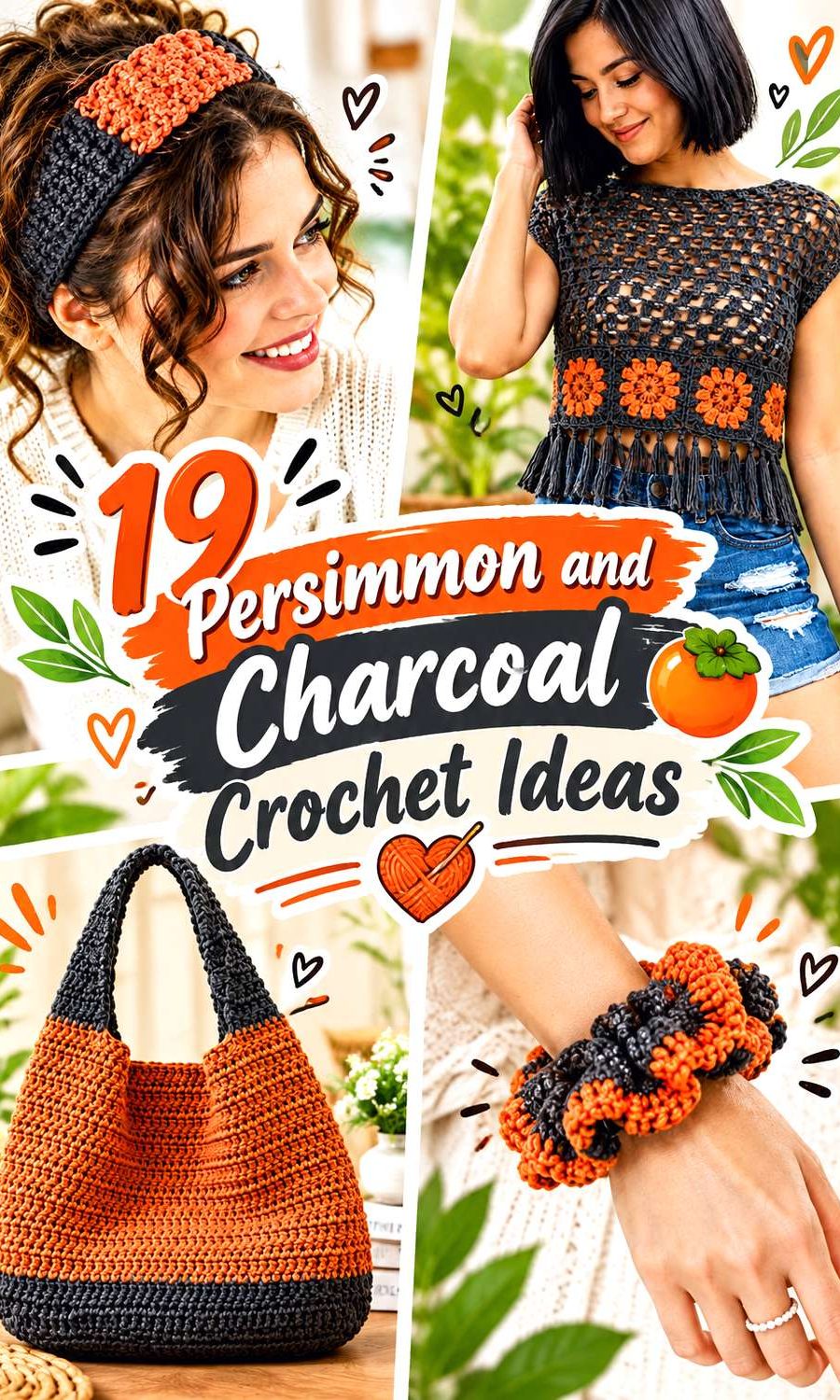
The amount of charcoal matters. A narrow charcoal border around a persimmon blanket behaves very differently from a charcoal cardigan covered with smaller persimmon motifs. You can also reverse the balance completely, using charcoal across the largest surfaces and reserving persimmon for cuffs, handles, borders, or motif centers.
Actual yarn colors vary, so compare the persimmon and charcoal you plan to use before committing to the whole project. If the charcoal is very dark, even a small amount may create strong definition. If your persimmon is deep or muted, make sure there is still enough light-dark separation for small details to remain visible.
The tutorials credited below support the crochet project or construction concept. The persimmon-and-charcoal color schemes are independent palette adaptations rather than claims about the colors used by the creators.
Quick List
- Persimmon Baby Blanket With Charcoal Border
- Charcoal Granny Square Cardigan With Persimmon Centers
- Persimmon V-Neck Sweater With Charcoal Trim
- Charcoal Bucket Hat With Persimmon Plaid
- Persimmon Bandana With Charcoal Edging
- Charcoal Tunisian Scarf With Persimmon End Blocks
- Persimmon Shawl With Charcoal Outer Border
- Charcoal Cowl With Persimmon Edges
- Persimmon and Charcoal Granny Squares
- Persimmon Tote Bag With Charcoal Base and Handles
- Persimmon Pillow Cover With Charcoal Framing
- Charcoal Basket With Persimmon Rim
- Persimmon Beanie With Charcoal Brim
- Charcoal Headband With Persimmon Center Accent
- Charcoal Crop Top With Persimmon Granny Squares
- Persimmon Poncho With Charcoal Edging
- Charcoal Mittens With Persimmon Cuffs
- Persimmon Coasters With Charcoal Borders
- Charcoal Scrunchie With Persimmon Outer Edge
Let Persimmon and Charcoal Have Different Crochet Roles
A strong two-color project does not require a 50/50 split. In fact, persimmon and charcoal often become easier to read when one color clearly dominates.
For home decor, persimmon can cover broad surfaces such as blanket centers or pillow faces while charcoal acts as a dark perimeter. For wearables, reversing the balance can make the garment easier to coordinate: charcoal can cover body panels while persimmon marks cuffs, necklines, motif centers, or other smaller details.
Before beginning, identify the project’s main visual area. That might be a sweater body, tote panel, blanket field, hat crown, or granny-square background. Assign the dominant color there first, then use the second color to define the construction rather than distributing both shades randomly.
Use Charcoal Where Persimmon Crochet Needs Clear Definition
Charcoal can create a strong boundary around persimmon because its darker value is often more important visually than the difference in hue. This makes charcoal particularly useful around borders, granny-square rounds, garment ribbing, bag bases, pillow edges, and small accessories.
That contrast can also become too dominant. A thick charcoal frame around a small persimmon item may visually reduce the warm center more than expected. Test the proportion on one motif, one border section, or a swatch before repeating it across the whole project.
For textured crochet, compare the colors in normal lighting as well as in a grayscale photo. If persimmon remains clearly lighter, dark charcoal details are more likely to stay distinct at normal viewing distance.
1. Persimmon Baby Blanket With Charcoal Crochet Border

Let persimmon cover the main blanket field and reserve charcoal for the perimeter. The large persimmon surface keeps the blanket warm and color-forward, while charcoal provides a definite stopping point around the outside without interrupting the center with frequent changes.
Persimmon Can Carry the Main Crochet Blanket Surface
A continuous persimmon field gives stitch texture room to remain visible across a broad area. This is particularly useful when the blanket pattern already contains enough surface movement and does not need several color changes for additional interest.
View a sizable swatch from across the room before committing. A persimmon that seems restrained in the skein can become much more visually dominant when repeated across an entire blanket.
Charcoal Gives the Persimmon Crochet Blanket a Strong Perimeter
Use charcoal around the outside when you want the border to read clearly against the main field. Because charcoal may be considerably darker than persimmon, you may need less of it than you would need from a lighter supporting color.
If the border starts overpowering the center, reduce its visual width rather than adding another color to soften the transition.
Creator Credit: Daisy Farm Crafts — YouTube tutorial
2. Charcoal Granny Square Cardigan With Persimmon Crochet Centers

A charcoal-led granny-square cardigan can use persimmon as a repeating focal color instead of spreading the warm shade across the full garment. Charcoal outer rounds or backgrounds help individual persimmon centers stay distinct once the squares are assembled into larger panels.
Persimmon Centers Can Repeat Across Charcoal Crochet Squares
Place persimmon in a consistent part of each motif if you want the warm color to create rhythm across the cardigan. Repeating similarly positioned centers makes the accent feel planned instead of scattered.
Before joining, arrange all squares as the cardigan fronts, back, and sleeves. Check that the persimmon concentration remains reasonably balanced from one side of the garment to the other.
Charcoal Can Connect Persimmon Crochet Motifs Into Larger Panels
Using charcoal toward the outside of the squares can visually link neighboring motifs. The darker color becomes a shared framework while persimmon remains visible as the interior accent.
Carrying charcoal into the cuffs or front edging can reinforce that connection between the motif layout and the garment’s finished boundaries.
Creator Credit: Chenda DIY — YouTube tutorial
3. Persimmon V Neck Sweater With Charcoal Crochet Trim

Persimmon can dominate the front, back, and sleeves while charcoal follows the V-neck and selected garment edges. The dark contrast draws attention to the sweater’s shape without requiring broad charcoal blocks across the torso.
Persimmon Keeps the Crochet Sweater Body Visually Continuous
Use persimmon throughout the large body panels when you want stitch texture and garment shape to remain uninterrupted. This also prevents the V-neck from competing with additional horizontal color bands.
If persimmon is already a deep shade, compare it directly with charcoal to make sure the neckline will still show enough separation.
Charcoal Can Sharpen the Persimmon V-Neck and Cuffs
The V-neck is a natural location for charcoal because its dark line can emphasize the neckline shape. Repeat charcoal at the cuffs or lower edge so the contrast does not appear only once.
Keep the trim proportion in scale with the sweater. Very wide charcoal edging can begin to compete with the persimmon body rather than simply defining it.
Creator Credit: forthefrills — YouTube tutorial
4. Charcoal Bucket Hat With Persimmon Crochet Plaid

A charcoal-dominant bucket hat can support stronger persimmon lines without making the overall hat excessively bright. Using persimmon within a structured plaid or repeated band arrangement gives the warm shade a recognizable pattern rather than an isolated patch.
Charcoal Gives the Persimmon Crochet Plaid a Dark Foundation
Let charcoal occupy the largest areas when you want persimmon to behave as the brighter pattern color. The dark field makes the warm intersections and bands more noticeable even when persimmon uses less yarn visually.
Check the pattern from several feet away. Plaid details that look distinct close up can merge when the hat is viewed at normal distance.
Persimmon Should Repeat Clearly Across the Charcoal Bucket Hat
Keep the persimmon placement consistent enough for the plaid concept to remain readable around the crown and brim. An isolated persimmon band will create a different effect from repeated warm lines.
Because the brim angles outward, persimmon placed there may appear especially prominent. Judge the color balance on the shaped hat rather than only on flat fabric.
Creator Credit: PassioKnit Kelsie — YouTube tutorial
5. Persimmon Bandana With Charcoal Crochet Edging
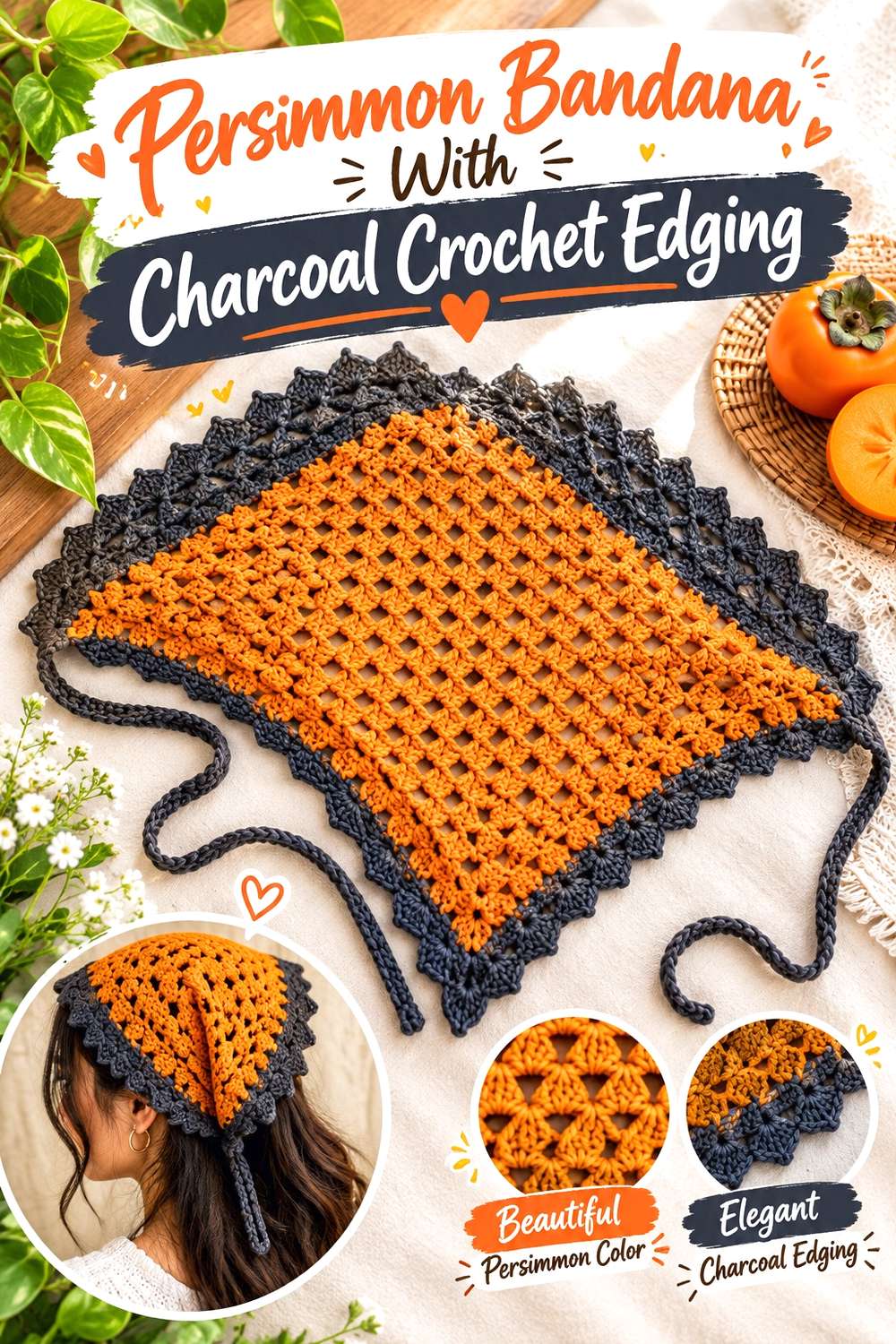
A compact bandana benefits from simple color distribution. Persimmon can occupy the main triangle while charcoal outlines the edge and, where appropriate to the construction, continues into the ties.
Persimmon Keeps the Crochet Bandana Triangle Easy to Read
Maintaining a persimmon center lets the triangle shape and granny-style or openwork texture remain visible without being divided into several narrow stripes.
This is particularly useful on a small accessory, where frequent color changes can make each section too narrow to establish a clear hierarchy.
Charcoal Can Connect the Persimmon Bandana Edge and Ties
Use charcoal along the outer boundary when you want the triangle to have a strong outline. Repeating charcoal in the ties can extend the same dark frame beyond the main fabric.
If that feels too heavy, keep the ties persimmon and reserve charcoal for the narrow edge only.
Creator Credit: HayHay Crochet — YouTube tutorial
6. Charcoal Tunisian Crochet Scarf With Persimmon End Blocks
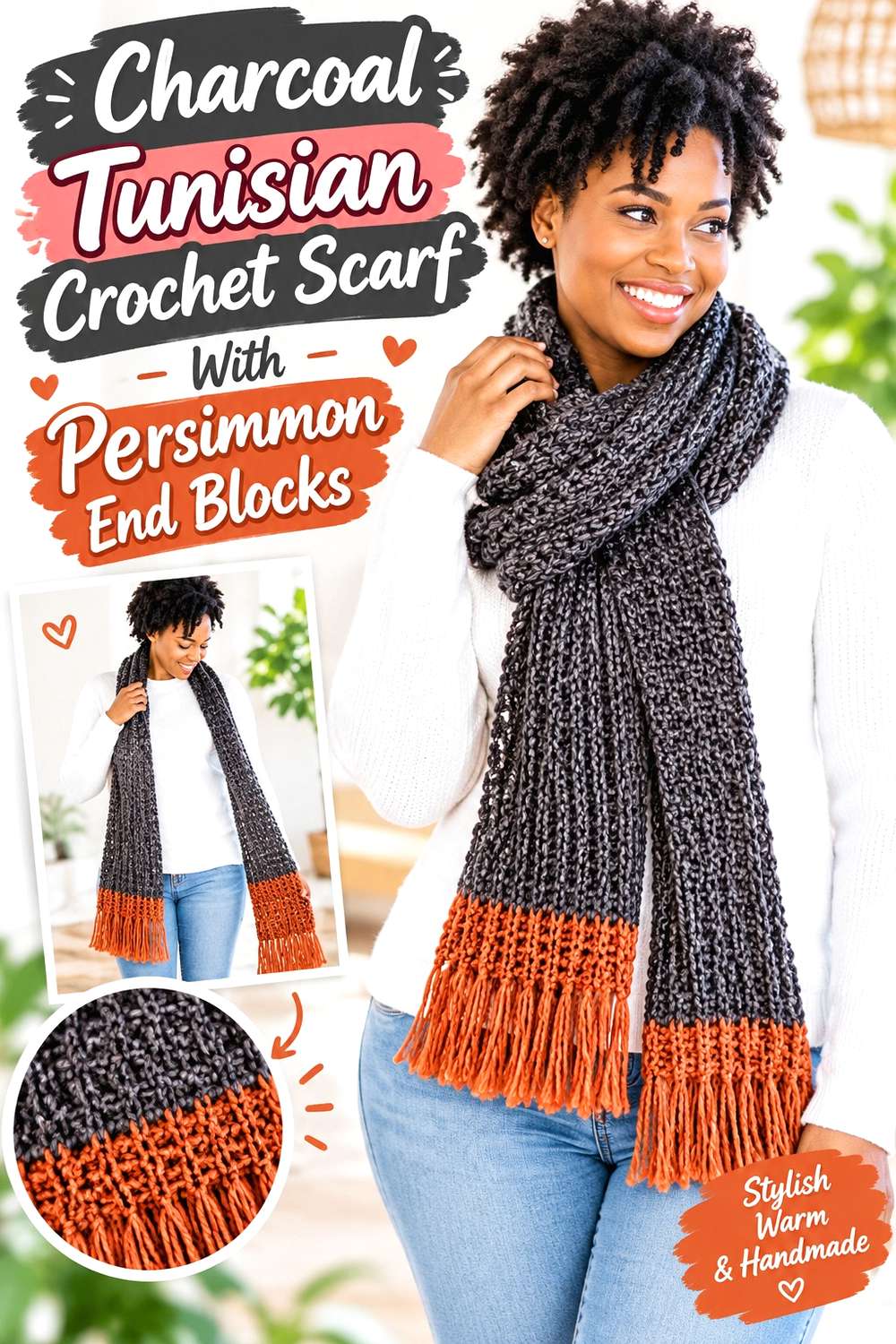
A long charcoal scarf can reserve persimmon for substantial sections near both ends. This arrangement keeps the center dark and versatile while allowing the warm color to remain visible when the scarf hangs down in front.
Charcoal Gives the Tunisian Crochet Scarf a Long Visual Anchor
Use charcoal across the central length to keep the scarf cohesive and let the Tunisian surface texture remain uninterrupted.
Because this area occupies most of the scarf, make sure the charcoal is not so dark that your preferred stitch definition disappears under the lighting where the scarf will usually be seen.
Persimmon End Blocks Balance the Charcoal Crochet Scarf
Repeat persimmon at both ends when you want a symmetrical result. The warm blocks can be long enough to register clearly without turning the scarf into many alternating stripes.
When the scarf is worn looped or folded, those two persimmon areas may sit close together, making the accent appear stronger than it does when the scarf lies flat.
Creator Credit: TL Yarn Crafts — YouTube tutorial
7. Persimmon Shawl With Charcoal Crochet Border
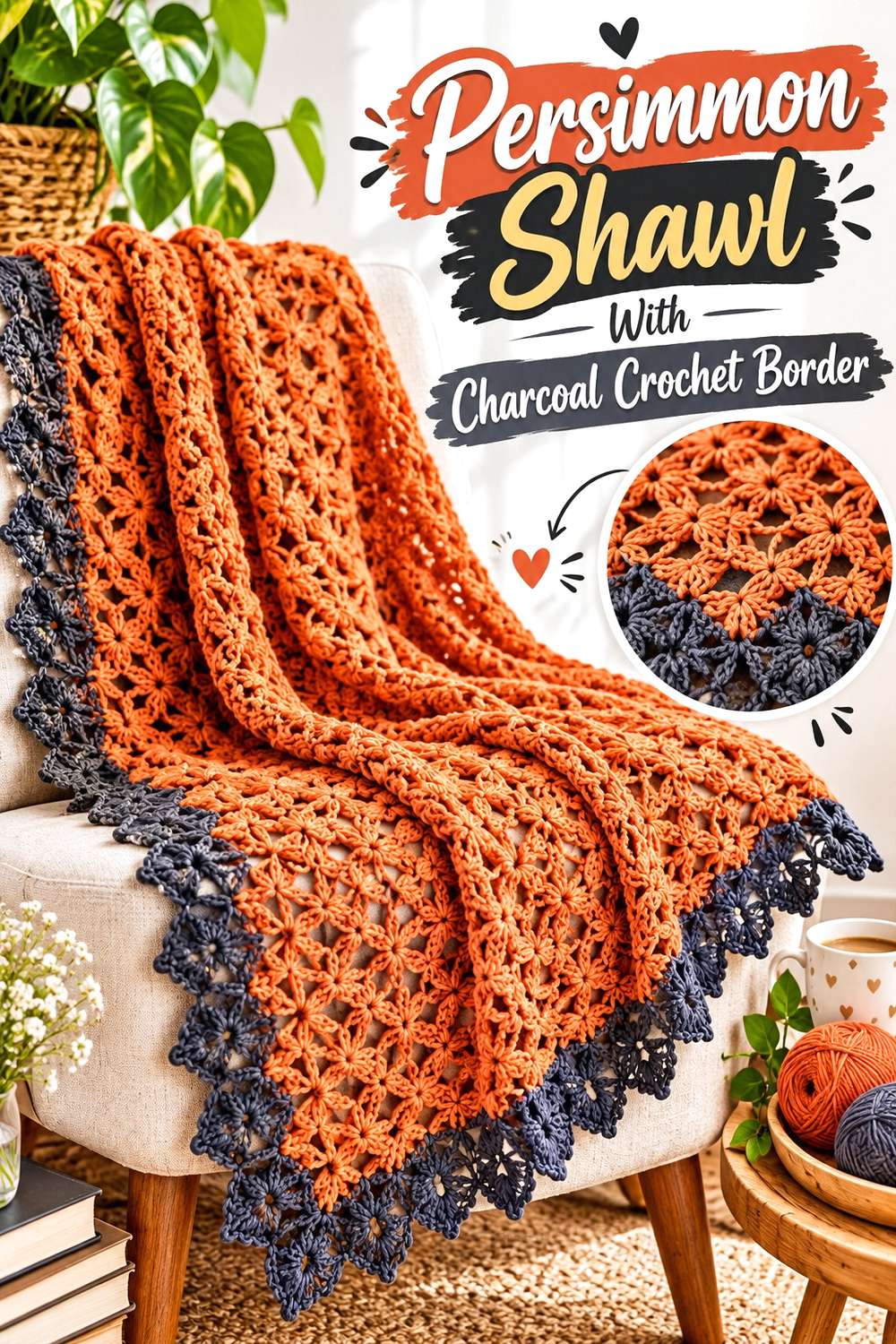
A broad persimmon shawl can use charcoal only along its expanding outer edge. This allows the warm field to remain visually dominant while the dark finish emphasizes the final silhouette.
Persimmon Can Keep the Crochet Shawl Surface Uninterrupted
Use persimmon through the main body when the shawl already includes openwork or textured stitching. One continuous color lets those stitch changes supply the detail instead of adding repeated color interruptions.
As the shawl grows, periodically view the whole piece rather than judging the color only from the newest rows.
Charcoal Can Frame the Persimmon Crochet Shawl Without Dividing It
A charcoal border creates a decisive outer line and can make pointed or scalloped edges more visually distinct.
Because the edge grows with the shawl, even a narrow charcoal finish can occupy considerable visual space. Decide on border depth after the main persimmon body is near its finished size.
Creator Credit: Fiber Spider — YouTube tutorial
8. Charcoal Cowl With Persimmon Crochet Edges
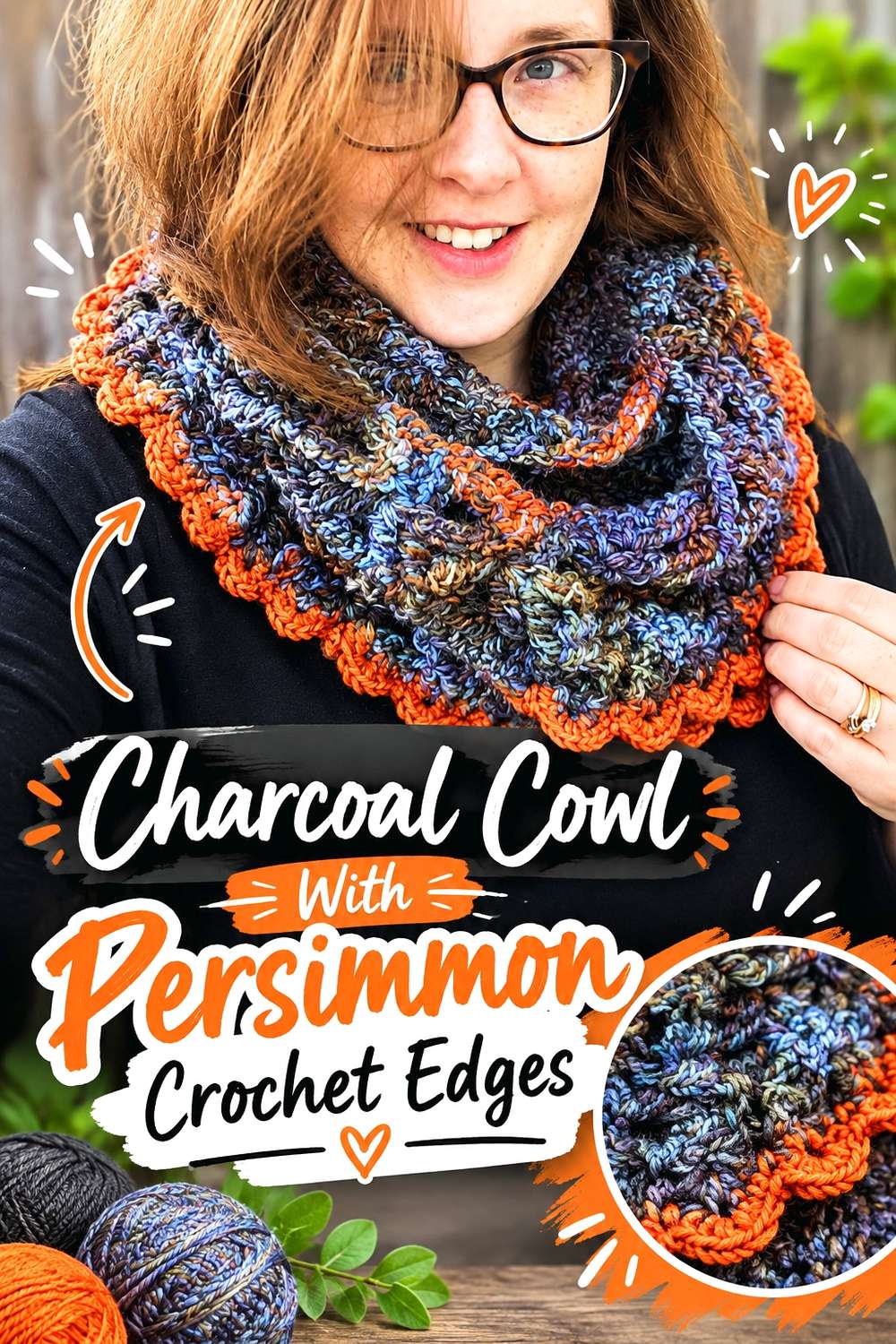
For a textured cowl, charcoal can cover the central body while persimmon appears along the upper and lower openings. This puts the warm color where it frames the item rather than interrupting texture throughout the middle.
Charcoal Gives the Crochet Cowl Texture a Consistent Background
A single charcoal field can make raised or directional texture the main feature of the center section. Avoid adding many persimmon stripes if the stitch pattern already has strong visual movement.
If your charcoal is very dark, test whether the texture remains visible before using it across the whole cowl.
Persimmon Can Define Both Charcoal Crochet Cowl Openings
Repeat persimmon at the upper and lower edges for a connected frame. The two warm bands will often appear closer together once the cowl is worn or folded.
For a quieter palette, narrow both persimmon areas rather than removing the color from one side entirely.
Creator Credit: Rich Textures Crochet — YouTube tutorial
9. Persimmon And Charcoal Crochet Granny Squares
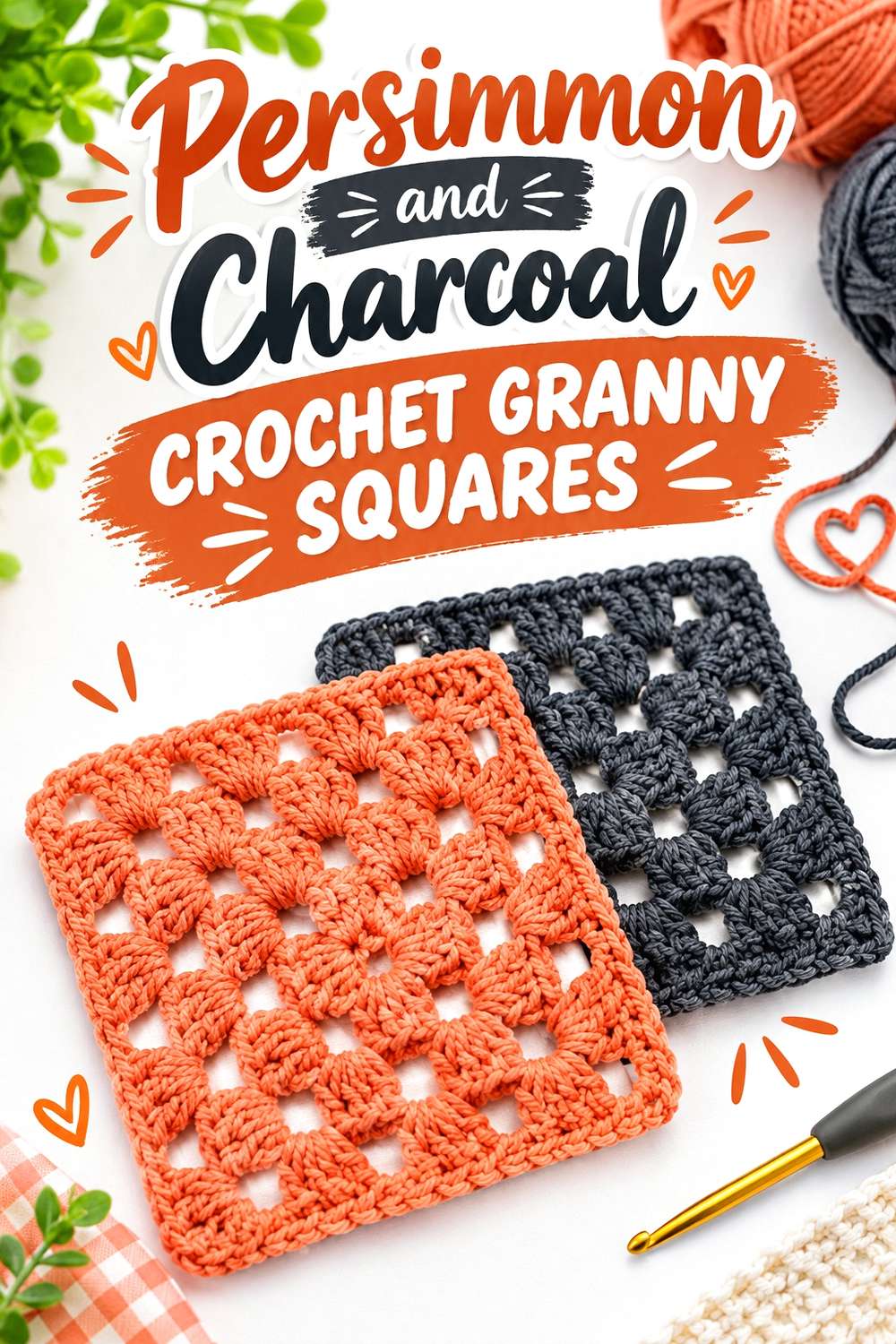
Granny squares make the persimmon-charcoal balance easy to change without changing the overall palette. Persimmon can occupy the center with charcoal outside, or the arrangement can be reversed for alternating motifs.
Persimmon Centers Stand Out Inside Charcoal Crochet Granny Squares
Place persimmon toward the center when you want each square to contain a compact warm focal point. Charcoal outer rounds can then visually connect the motifs after joining.
Make several samples before producing a full set. A small persimmon center becomes much more prominent once it repeats across dozens of squares.
Charcoal Centers Can Reduce Persimmon Across the Crochet Motif Field
Reverse the arrangement if you want a darker center and a warmer outer area. Because later granny-square rounds cover more surface than central rounds, this change can significantly increase the overall share of persimmon.
If both versions will appear in one project, plan their placement before joining so the alternating dark and warm centers form an intentional layout.
Creator Credit: Bella Coco — YouTube tutorial
10. Persimmon Tote Bag With Charcoal Crochet Base And Handles
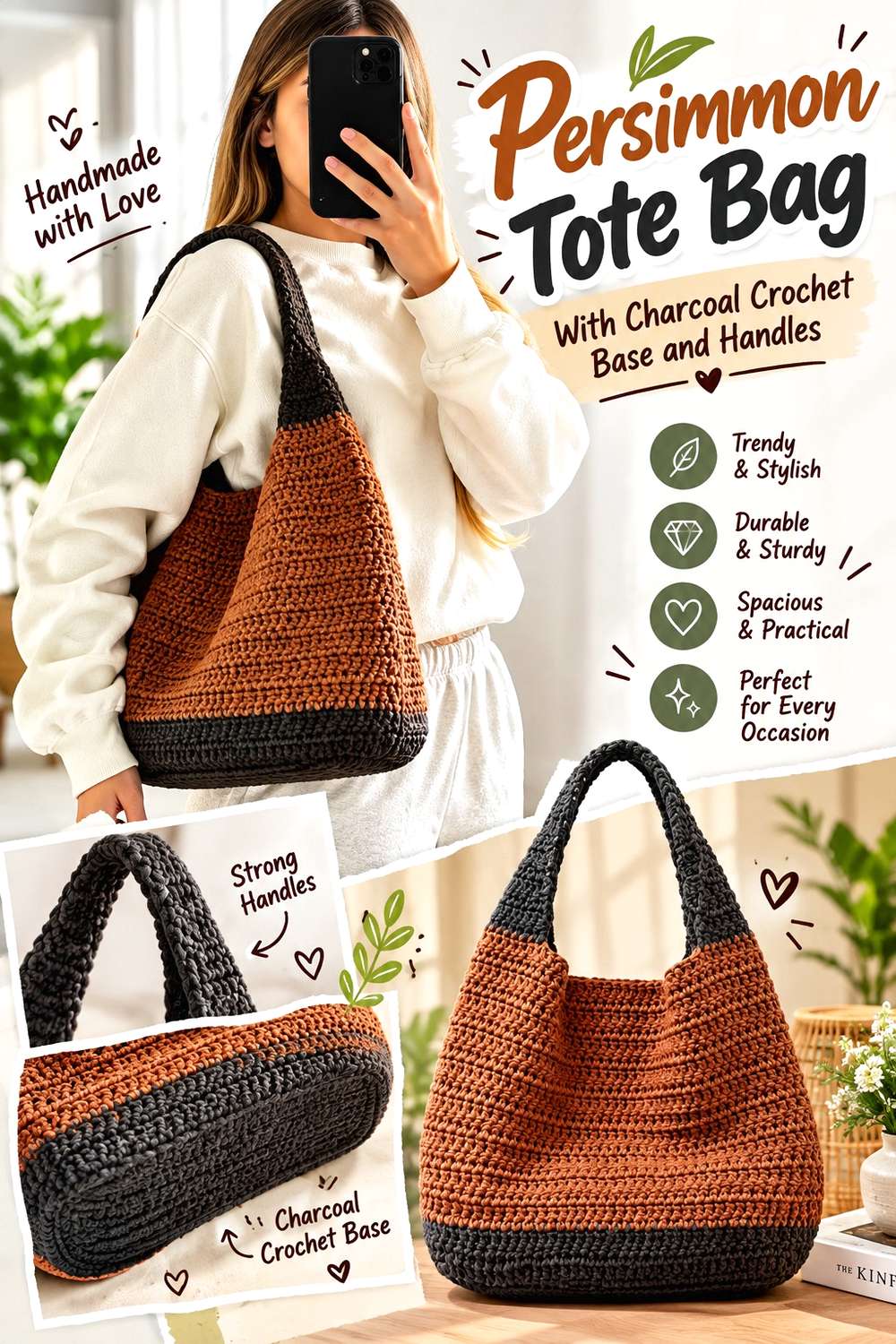
A persimmon tote body paired with a charcoal base and handles gives each color a clear structural role. The warm shade occupies the broad front and back panels while charcoal appears at the visual top and bottom.
Persimmon Makes the Crochet Tote Panels the Main Color Area
Use persimmon across the bag sides if you want the warm color to remain prominent while the tote is carried. An uninterrupted panel also gives stitch texture enough space to remain visible.
If the tote includes highly textured or open fabric, keeping one main panel color prevents the surface from becoming overly segmented.
Charcoal Connects the Persimmon Tote Base and Handles
Repeating charcoal at the base and handles prevents the dark shade from appearing as a single unrelated strip. The two charcoal areas visually frame the persimmon body.
When adapting the tutorial, place color changes at logical construction boundaries rather than introducing unnecessary joins simply to increase the amount of charcoal.
Creator Credit: crochet daniela — YouTube tutorial
11. Persimmon Pillow Cover With Charcoal Crochet Framing
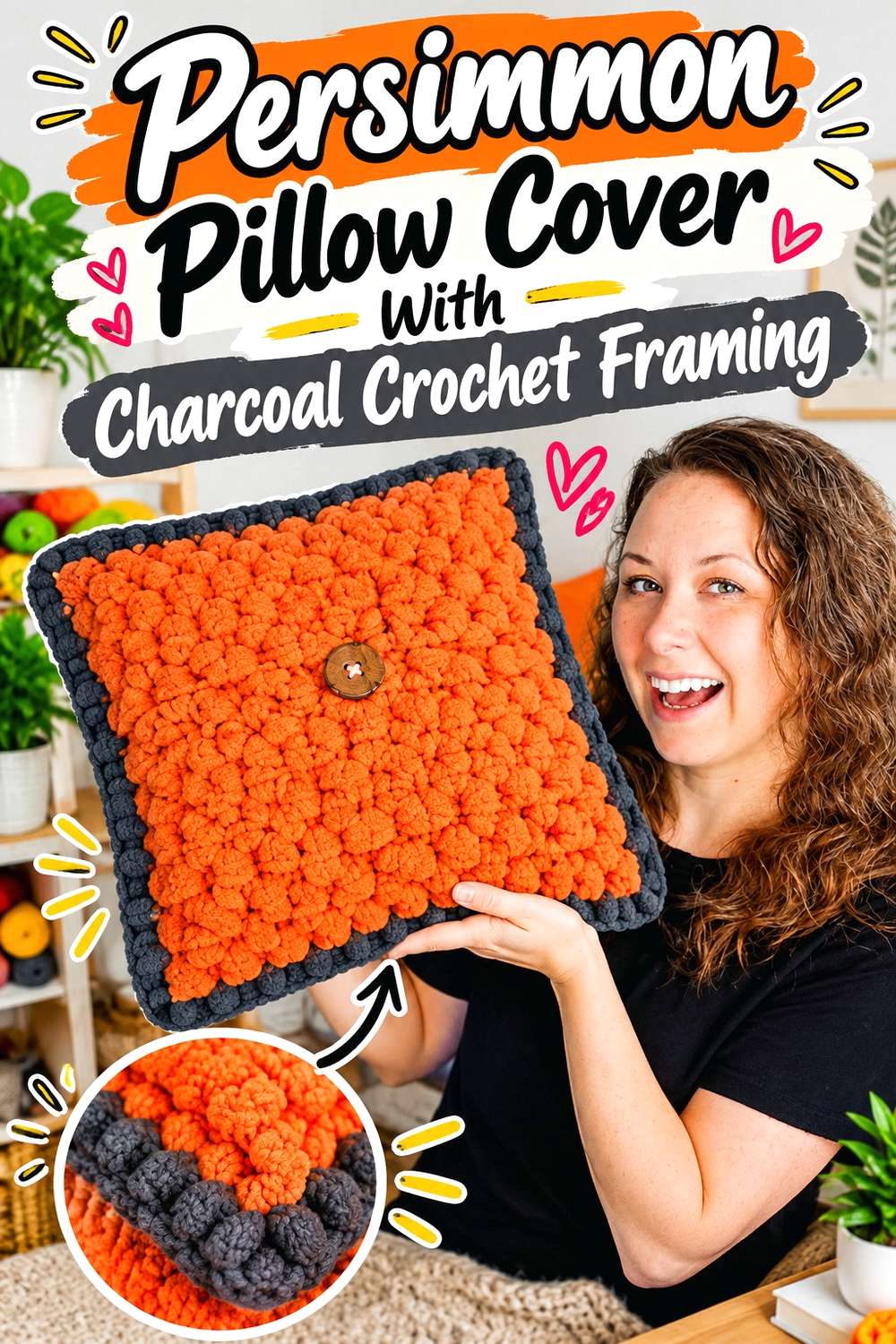
A pillow puts the persimmon-charcoal palette on a front-facing decor surface, making proportion especially noticeable. Persimmon can dominate the center panel while charcoal outlines the face or occupies secondary sections of the cover.
Persimmon Gives the Crochet Pillow Face More Warm Surface Area
Keeping most of the front persimmon gives raised stitches or chunky texture room to remain visible. It also prevents charcoal from making a relatively small pillow appear overly dark.
Judge the color from normal room distance, because the relationship between the center and border can look different than it does while you are crocheting up close.
Charcoal Can Make the Persimmon Crochet Pillow Edge More Defined
Place charcoal around the front edge when you want a strong visual frame. If the contrast feels too severe, move more charcoal to the sides or back instead of increasing the number of colors.
A narrow charcoal edge is often enough when the charcoal yarn is significantly darker than the persimmon.
Creator Credit: Yarn Stash with Marching North — YouTube tutorial
12. Charcoal Basket With Persimmon Crochet Rim
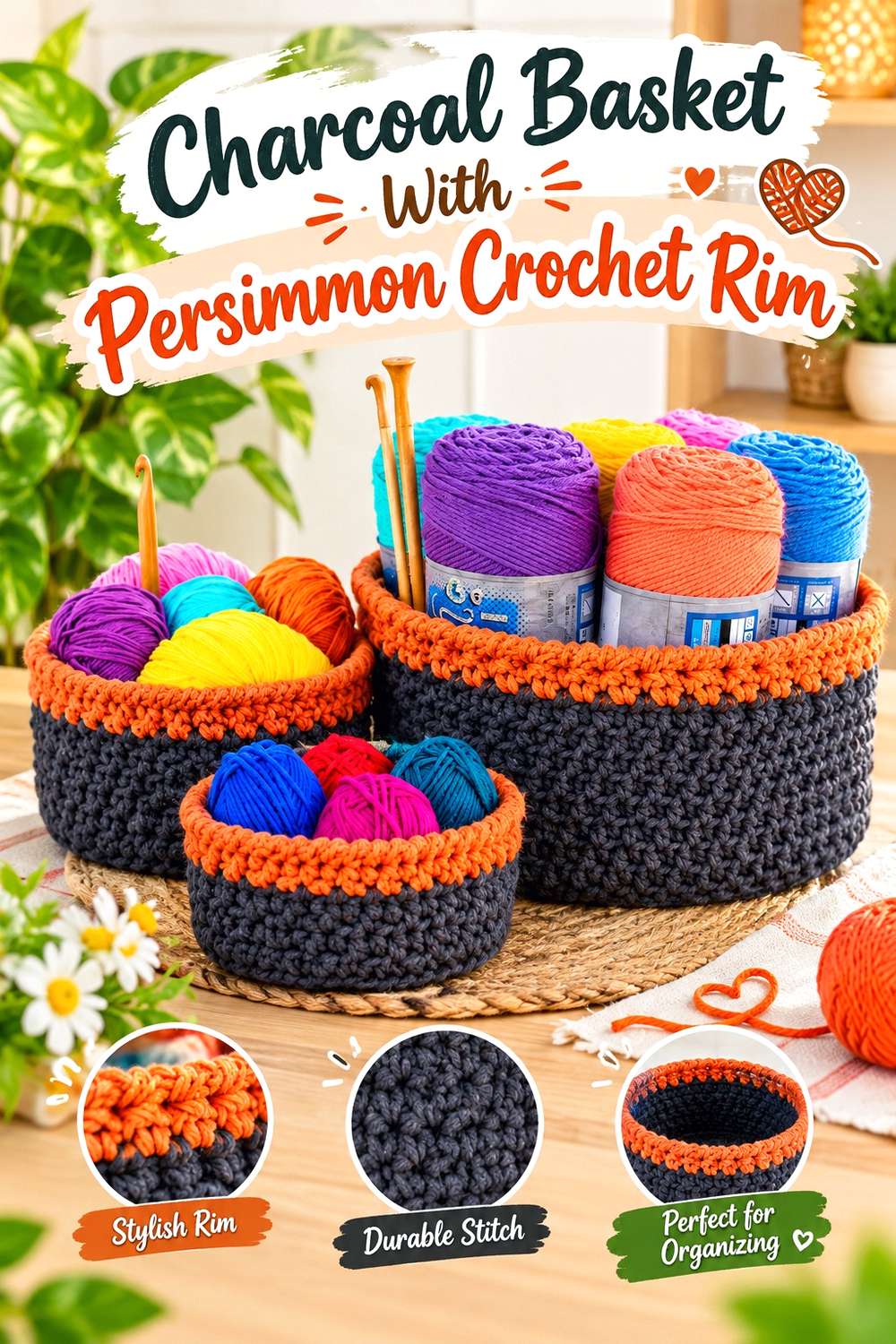
A charcoal basket body creates a dark storage piece while a persimmon rim keeps the warm shade visible even when the basket is filled. This separates the palette according to the basket’s structure rather than adding arbitrary stripes down the sides.
Charcoal Can Keep the Crochet Basket Body Visually Solid
Use charcoal across the base and side walls when you want the basket shape to feel unified. The large dark area also lets surface texture supply visual variation.
If the stitch texture is subtle, make a swatch in your chosen charcoal to confirm that it does not disappear under typical indoor lighting.
Persimmon Makes the Charcoal Crochet Basket Opening a Focal Area
A persimmon rim places the warm color around the basket opening, where it stays visible during use. If handles are part of the selected construction, you can repeat persimmon there to connect the upper details.
Avoid adding one isolated persimmon stripe lower on the basket unless that repetition serves a clear visual purpose.
Creator Credit: naztazia — YouTube tutorial
13. Persimmon Beanie With Charcoal Crochet Brim

A persimmon crown paired with a charcoal brim creates a clear division between the main hat body and its lower edge. The strong dark band can ground the warmer crown without requiring additional striping.
Persimmon Keeps the Crochet Beanie Crown Warm and Visible
Use persimmon through the crown if you want the warm color to remain noticeable from most viewing angles. A continuous shade also lets ribbing or other texture remain more consistent.
If the persimmon is quite dark, confirm that enough separation remains when it meets the charcoal brim.
Charcoal Gives the Persimmon Crochet Beanie a Strong Lower Band
A charcoal brim naturally circles the entire hat, so even a relatively small amount creates a clear visual anchor.
Check whether the brim will be folded or worn flat. A fold can double the apparent thickness of the charcoal section and substantially change the final color balance.
Creator Credit: CJ Design — YouTube tutorial
14. Charcoal Headband With Persimmon Crochet Center Accent
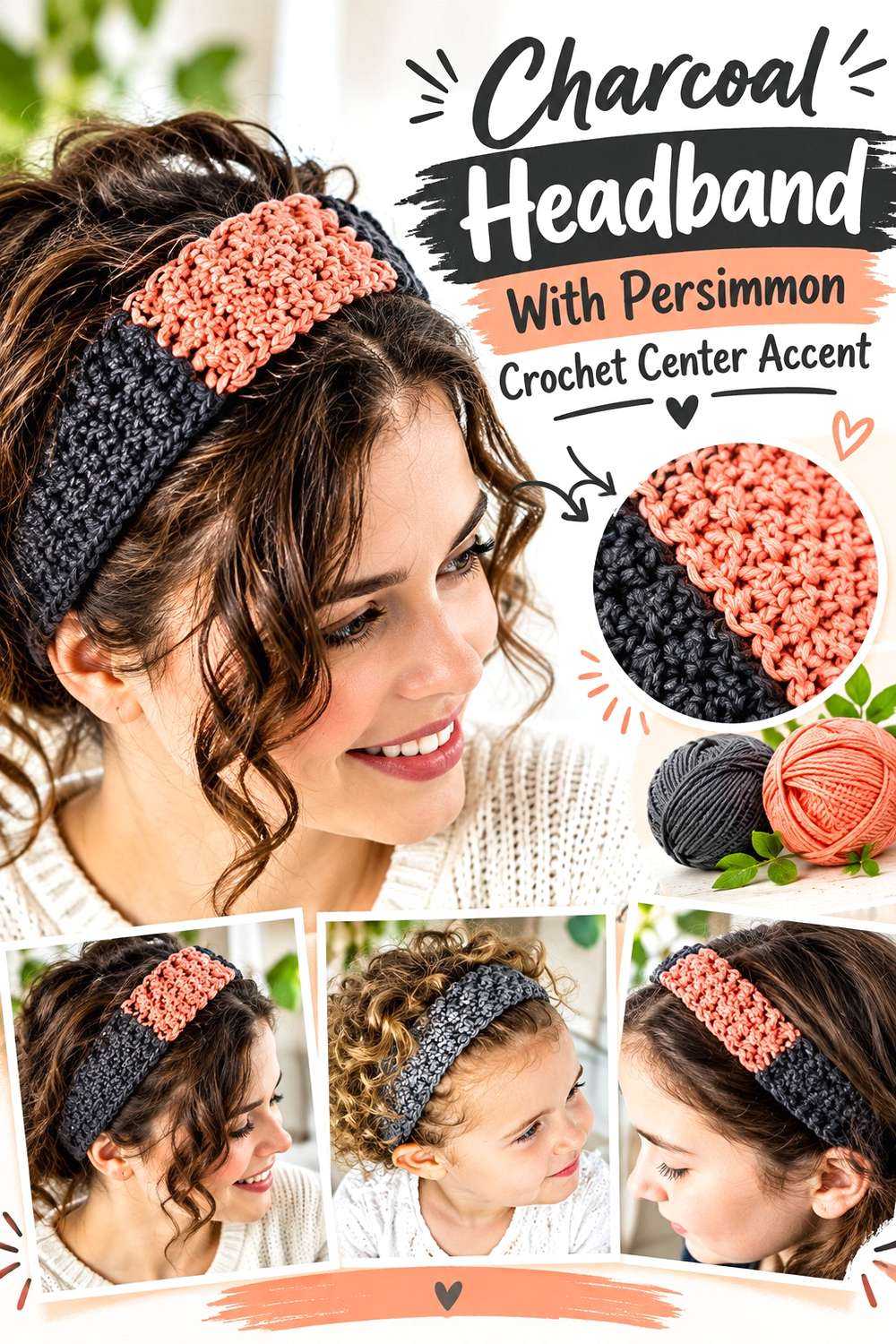
A small headband needs restrained color placement. Charcoal can cover most of the band while persimmon marks the center, twist, knot, or another existing focal area appropriate to the construction.
Charcoal Keeps the Crochet Headband From Looking Overly Segmented
Maintain charcoal through most of the band so its shape remains continuous. Several narrow alternating sections can make a small accessory visually busy because there is little space between color changes.
A larger dark field also gives a small persimmon area more impact.
Persimmon Should Sit at a Clear Charcoal Headband Focal Point
Use persimmon where the headband naturally draws attention rather than inserting a random stripe near one side. This lets the color reinforce the structure.
If your construction has no distinct center detail, a narrow persimmon edge may be more coherent than forcing a separate color block into the middle.
Creator Credit: Winding Road Crochet — YouTube tutorial
15. Charcoal Crop Top With Persimmon Crochet Granny Squares
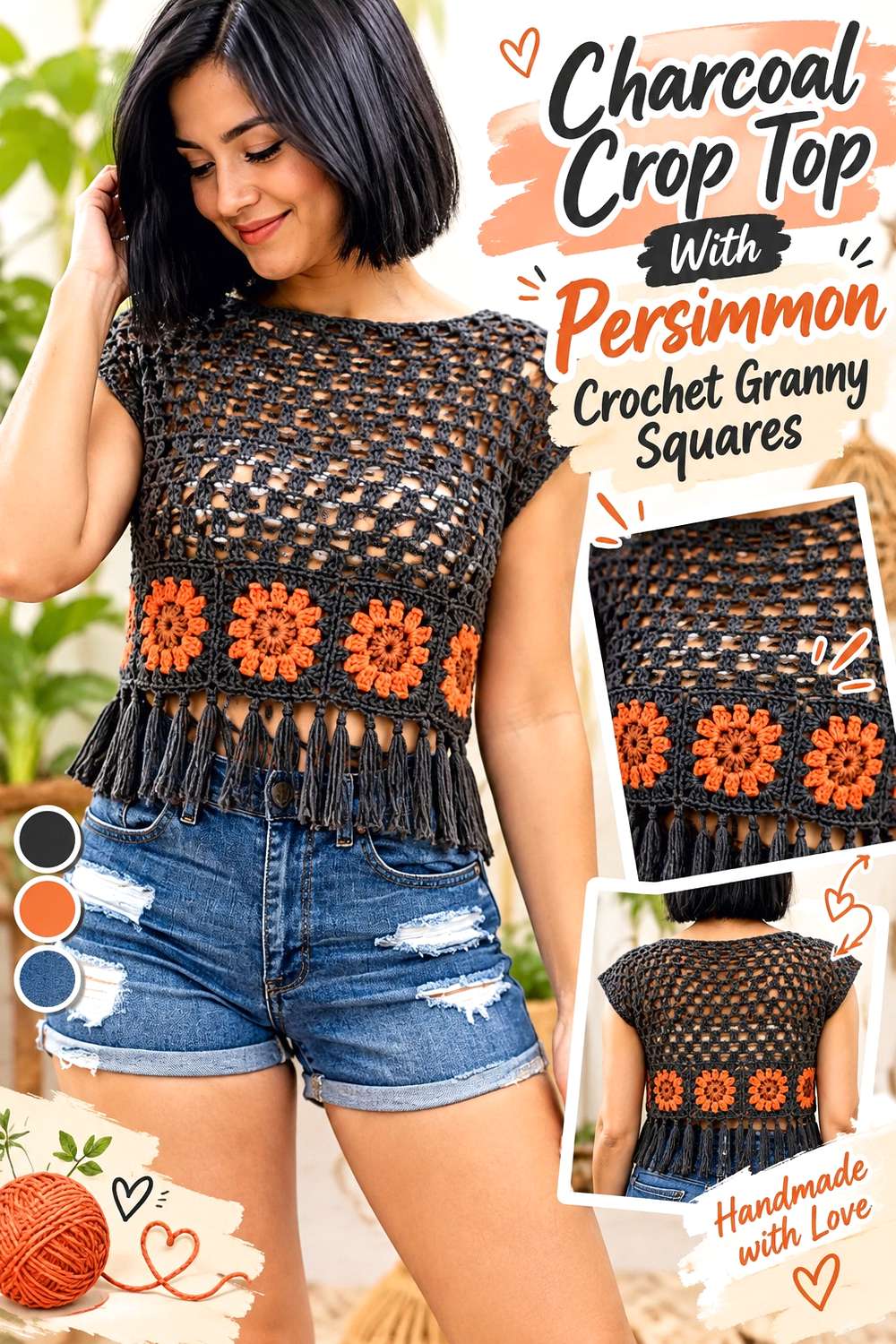
A charcoal crop top can use persimmon primarily within granny-square details, letting the warm color become decorative rather than covering the entire garment. The contrast is particularly effective when the motifs occupy a planned band or repeated section.
Persimmon Granny Squares Need Balanced Placement Across the Charcoal Crochet Top
Distribute persimmon motifs across the garment before joining or continuing the surrounding fabric. Clustering most of the warm color on one side can create an unintended imbalance.
Lay the pieces out in their final garment orientation rather than judging the squares individually.
Charcoal Can Connect Persimmon Crochet Motifs to the Main Top
Use charcoal in the areas between or beyond the motifs so the squares feel integrated into the garment rather than applied as unrelated color patches.
Repeating charcoal around sleeves or other finished edges can strengthen that connection without adding another palette color.
Creator Credit: KnitcroAddict — YouTube tutorial
16. Persimmon Poncho With Charcoal Crochet Edging
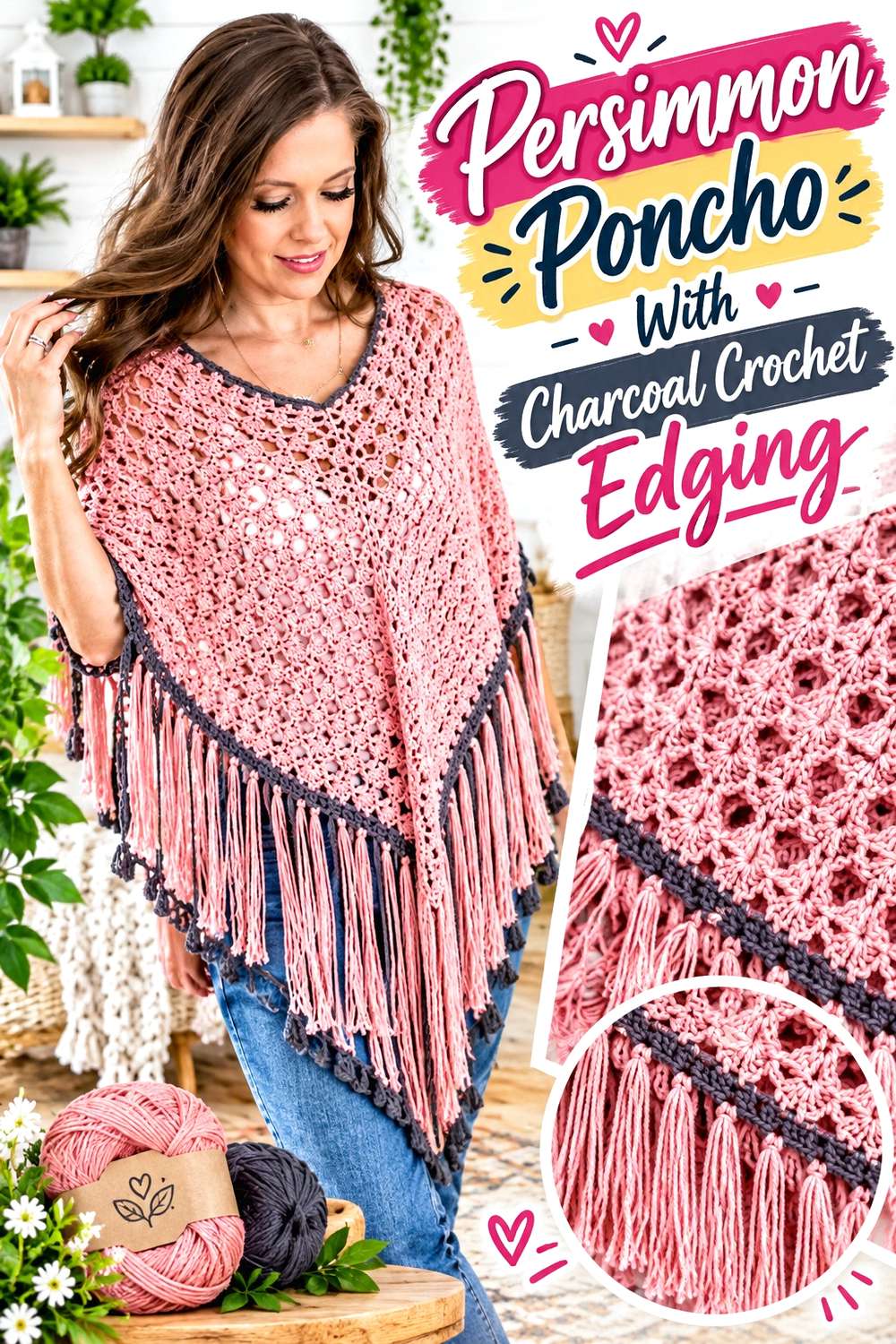
A poncho provides a very large surface, so persimmon can dominate the body while charcoal follows only key edges. The dark accent can define the neckline and lower perimeter without breaking the drape into multiple bands.
Persimmon Lets the Crochet Poncho Body Read as One Large Field
Use persimmon through most of the body when you want the warm color and stitch pattern to remain uninterrupted. A broad garment surface magnifies color, so judge a generous swatch before committing.
A muted persimmon produces a different effect from a vivid red-orange version even though both fit the same general color name.
Charcoal Can Outline the Persimmon Crochet Poncho at Two Boundaries
Repeating charcoal around the neckline and lower edge creates visual continuity from top to bottom. If the poncho includes fringe and you want a darker finish, decide whether the fringe should extend the charcoal area or return to persimmon.
Keep the final silhouette in mind: wide charcoal edging across a broad lower edge can occupy more visual area than expected.
Creator Credit: MJ’s Off The Hook Designs — YouTube tutorial
17. Charcoal Mittens With Persimmon Crochet Cuffs

Mittens are well suited to a simple division because both pieces need to look like a coordinated pair. Charcoal can cover the hand and fingers while matching persimmon cuffs create a warm block at each wrist.
Charcoal Keeps Both Crochet Mittens Consistent Through the Hand
Use charcoal throughout the shaped hand area to avoid creating small color changes around thumbs or fingertips that might be difficult to distribute identically between both mittens.
The dark main field also gives the persimmon cuffs a clear point of contrast.
Persimmon Cuffs Give the Charcoal Crochet Mittens a Matched Finish
Work persimmon at the same structural location on both mittens so the warm accent immediately ties them together.
Consider how much of the cuff will remain visible below a coat sleeve. If little will show, a somewhat broader persimmon section may preserve the intended two-color effect.
Creator Credit: Brunaticality — YouTube tutorial
18. Persimmon Coasters With Charcoal Crochet Borders
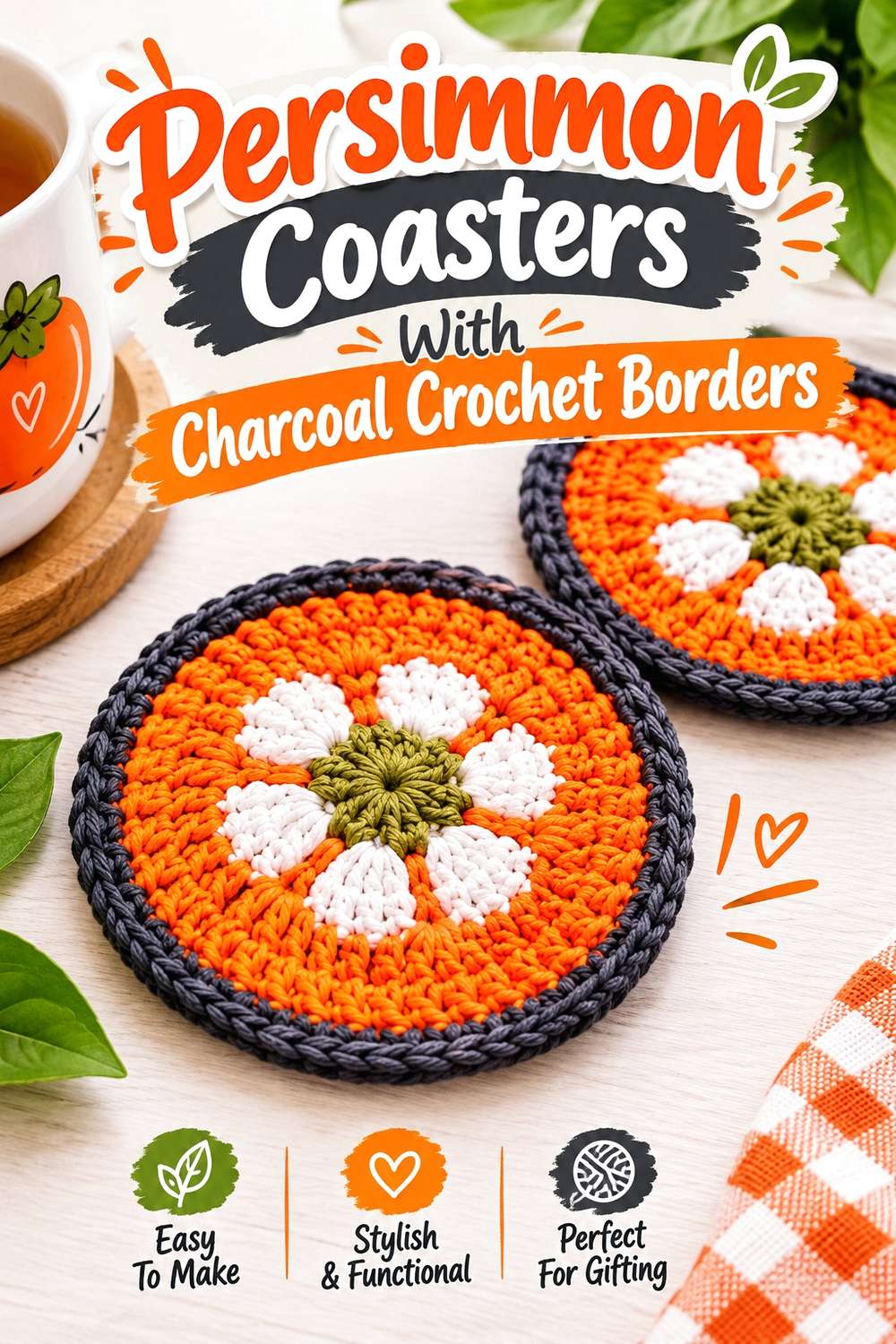
Small coasters give persimmon and charcoal enough room for a clear center-and-edge relationship without requiring complicated color placement. Use persimmon in the center and charcoal as the outer frame across the entire set.
Persimmon Centers Keep the Crochet Coaster Set Visually Connected
Repeating the same warm center across several coasters creates consistency when they are viewed together. This works particularly well if the shape or stitch pattern already provides enough variation.
If you want a little diversity within the set, reverse the colors on one or two pieces rather than introducing a third shade.
Charcoal Borders Give Persimmon Crochet Coasters Clear Definition
A dark charcoal outer round can make the coaster shape easy to distinguish from the surface underneath. Because the item is small, keep an eye on proportion: several wide charcoal rounds can quickly reduce the visible persimmon center.
Test one complete coaster before repeating the color balance across the set.
Creator Credit: HappyBerry Crochet — YouTube tutorial
19. Charcoal Scrunchie With Persimmon Crochet Outer Edge
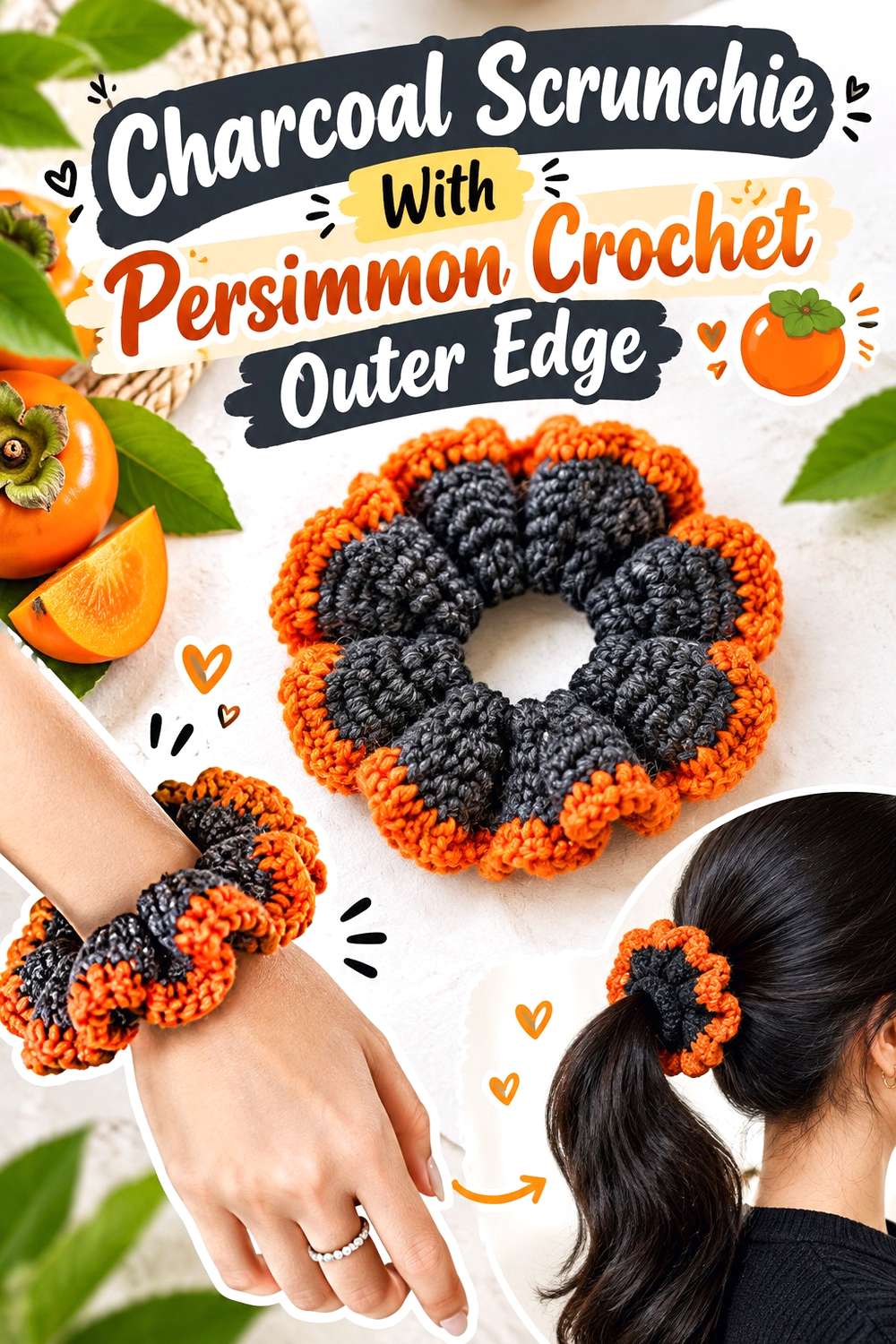
A gathered scrunchie can hide small color sections once the fabric contracts around the hair tie. Using charcoal through most of the body and persimmon only where it remains visible around the outside keeps the palette readable after gathering.
Charcoal Can Carry the Main Crochet Scrunchie Volume
Use charcoal through the larger gathered section instead of alternating tiny persimmon and charcoal areas. The folds already create significant visual movement, so complicated striping is usually unnecessary.
A continuous charcoal body also makes the warm outer detail easier to identify.
Persimmon Needs Enough Width to Stay Visible on the Charcoal Scrunchie
Place persimmon near the exposed outer portion if the selected construction allows a contrasting edge. Make sure the warm section remains visible after the fabric gathers rather than judging it only while the crochet is stretched flat.
If the persimmon edge disappears into the folds, increase its visual width instead of adding more separate color changes.
Creator Credit: VivCrochets — YouTube tutorial
Comparing Persimmon and Charcoal Crochet Directions
If you want persimmon to be the first color noticed, look at the blanket, sweater, bandana, shawl, tote, pillow, beanie, poncho, and coaster ideas. Each gives persimmon a comparatively large uninterrupted surface and uses charcoal mainly for framing or structure.
For a darker overall project, the cardigan, bucket hat, scarf, cowl, basket, headband, crop top, mittens, and scrunchie allow charcoal to occupy more of the finished piece. Persimmon then works as a smaller repeated accent.
Granny squares provide the easiest way to move between the two directions. Putting persimmon in the center and charcoal outside creates a different visual balance from placing charcoal in the middle and letting persimmon occupy the larger outer rounds.
Conclusion
Persimmon and charcoal are most effective when each color has a clear job. Persimmon can create the warm focal surface, while charcoal can outline edges, connect motifs, anchor garment details, or separate the warm color from surrounding areas.
For home decor with a strong persimmon presence, consider the blanket, pillow, coasters, or tote. If you prefer charcoal-heavy wearables with smaller warm details, the cardigan, crop top, mittens, headband, or cowl provide useful starting points. The scarf and bucket hat offer opportunities for more obvious blocks or repeated patterning.
Before committing to any layout, compare the actual yarns in daylight and normal indoor lighting. Check whether stitch texture remains visible in charcoal and whether persimmon stays clearly separated from it. Then place the darker shade where definition is genuinely useful rather than assuming both colors need equal coverage.
Use the credited tutorials for the exact construction of each project and treat the persimmon-and-charcoal placement as your independent color plan.
Frequently Asked Questions
Does charcoal create enough contrast with persimmon crochet?
It often can, particularly when the charcoal is substantially darker than the persimmon, but color names alone do not guarantee the relationship. Place your actual yarns side by side and check them from a distance. A grayscale photo can also help reveal the light-dark difference.
Should persimmon or charcoal dominate a crochet project?
Choose according to the surface you want noticed first. Persimmon works well across large areas when you want a warmer finished piece. Charcoal works well as the dominant shade when you want persimmon limited to smaller focal details such as cuffs, borders, motif centers, handles, or edges.
Can charcoal overwhelm persimmon in a small crochet project?
Yes. Strong value contrast means charcoal can command more attention than its yarn quantity suggests. On headbands, coasters, scrunchies, or bandanas, start with a relatively controlled charcoal area and judge the finished proportion before adding more.
How can I make persimmon crochet texture stand out next to charcoal?
Keep enough persimmon in an uninterrupted area for the texture to remain visible. Charcoal works well around the texture as a frame, but frequent dark stripes through raised stitches can break the surface into smaller visual sections.
What if my persimmon yarn is almost as dark as my charcoal yarn?
Use larger blocks rather than tiny details, or replace one shade with another that preserves the intended persimmon or charcoal character while increasing the difference in lightness. Small motifs and narrow borders depend more heavily on clear value separation.
Can I add cream to a persimmon and charcoal crochet palette?
Yes. Cream can introduce a much lighter value and may help separate persimmon from charcoal in granny squares, stripes, or detailed motifs. Keep it in a supporting role if you still want the project to read primarily as a persimmon-and-charcoal color scheme.