Aubergine gives crochet a deep purple base that can feel dramatically different depending on the colors placed beside it. Soft ivory and cream provide obvious light-dark separation, sage and teal introduce cooler contrast, while camel, antique gold, burnt orange, and mustard add warmth. Mauve, dusty rose, and lilac keep the palette closer to the purple family while still creating visible variation.
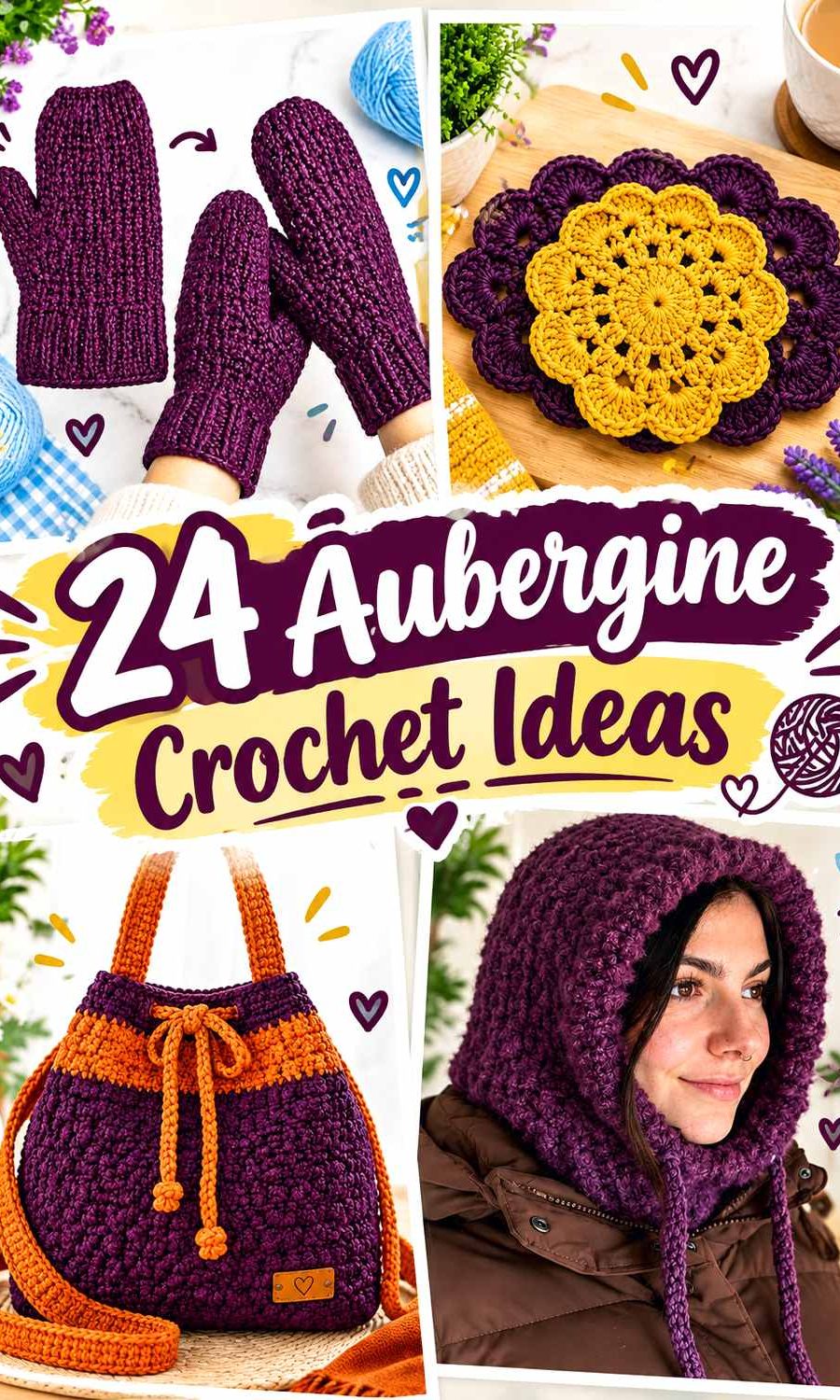
Because Aubergine is relatively dark, color placement matters. Large cardigan, sweater, blanket, pillow, and shawl surfaces can carry substantial Aubergine sections without losing the main color. Smaller projects usually benefit from placing secondary shades around cuffs, brims, handles, straps, borders, motif rounds, or openings rather than breaking the entire surface into equal blocks.
Quick List
- Aubergine And Soft Ivory Crochet Cardigan
- Aubergine And Camel Crochet Tote Bag
- Aubergine And Oatmeal Crochet Bucket Hat
- Aubergine And Dusty Sage Crochet Blanket
- Aubergine And Warm White Crochet Pillow
- Aubergine And Muted Teal Crochet Scarf
- Aubergine And Charcoal Crochet Ribbed Hat
- Aubergine And Blush Crochet Vest
- Aubergine And Antique Gold Crochet Handbag
- Aubergine And Dusty Mauve Crochet Cowl
- Aubergine And Navy Crochet Headband
- Aubergine And Soft Lilac Crochet Top
- Aubergine And Pewter Crochet Shawl
- Aubergine And Sand Crochet Basket
- Aubergine And Moss Green Crochet Granny Square
- Aubergine And Cream Crochet Phone Bag
- Aubergine And Dusty Rose Crochet Fingerless Gloves
- Aubergine And Stone Gray Crochet Balaclava
- Aubergine And Soft Mint Crochet Sweater
- Aubergine And Burnt Orange Crochet Drawstring Bag
- Aubergine And Flax Crochet Poncho
- Aubergine And Powder Blue Crochet Mittens
- Aubergine And Antique Rose Crochet Scrunchie
- Aubergine And Mustard Crochet Coaster
Keep Aubergine Crochet Texture From Disappearing
Dark Aubergine can reduce the visibility of subtle ribbing, raised stitches, and small motif boundaries when the neighboring yarn is also medium or dark. Use a clearly lighter color close to the feature you most want noticed rather than assuming a different hue automatically provides enough contrast.
It also helps to check value separately from color. Aubergine and navy, moss green, charcoal, or deep teal can look very different in hue yet remain similar in grayscale. Those combinations can work beautifully across broad panels and borders, but a cream or pale neutral may be more useful around tiny details that need crisp separation.
Give Aubergine a Different Role on Each Crochet Item
On garments, Aubergine can cover the main panels while supporting colors define cuffs, armholes, necklines, hems, and other finishing areas. Bags and baskets provide equally natural contrast points at handles, rims, straps, bases, and openings.
Motifs require a different strategy. If Aubergine appears only in a tiny granny-square center and several stronger colors surround it, the finished square may stop reading as an Aubergine project. Repeating the main shade toward the outer part of the motif can reconnect the palette.
1. Aubergine And Soft Ivory Crochet Cardigan

Aubergine can cover the broad front, back, and sleeve areas while soft ivory identifies the cardigan’s edges. The strong value difference makes cuffs and neckline finishing easier to distinguish without dividing the torso into numerous contrasting blocks.
Keep Aubergine Dominant Across the Crochet Cardigan Panels
Use Aubergine throughout the large body sections when you want the garment to have one continuous dark-purple field. This also allows textured stitches or panel construction to provide visual interest without frequent color changes competing with them.
If ivory appears in several locations, keep those sections relatively narrow so Aubergine remains the obvious main color.
Soft Ivory Gives Aubergine Crochet Cardigan Edging More Definition
Place ivory around cuffs, the neckline, or front opening where a lighter boundary reinforces an existing structural transition. Repeating ivory at two or three edges creates a more connected finish than placing one isolated pale section across the body.
Creator Credit: TCDDIY
2. Aubergine And Camel Crochet Tote Bag

Camel adds warmth to Aubergine without creating the sharper contrast of white. A tote gives both colors practical roles: Aubergine across the large bag body and camel around the opening or handles.
Let Aubergine Cover the Main Crochet Tote Bag Body
Use Aubergine across the front, back, and lower bag area so the tote has one stable visual foundation. This is especially useful when the crochet fabric contains openwork or strong texture that already creates surface movement.
Camel Warms Aubergine Crochet Tote Handles and Edging
Reserve camel for handles or the upper rim where the tote naturally changes structure. If the camel yarn is fairly deep, compare it with Aubergine first before depending on a very thin camel stripe to create definition.
Creator Credit: Kristines Crochets
3. Aubergine And Oatmeal Crochet Bucket Hat

A bucket hat has clear crown, side, and brim sections, making it straightforward to control a two-color palette. Aubergine can dominate the upper shape while oatmeal introduces a lighter brim.
Keep Aubergine Continuous Across the Crochet Bucket Hat Crown
Use Aubergine from the crown through most of the side wall. Keeping those sections connected allows the shaping to remain easy to read without additional stripes breaking the rounded surface apart.
Oatmeal Separates the Brim From an Aubergine Crochet Bucket Hat
Place oatmeal across the brim or its outer portion. The brim already projects away from the rest of the hat, so the lighter color reinforces a real change in silhouette rather than creating an arbitrary color break.
Creator Credit: VivCrochets
4. Aubergine And Dusty Sage Crochet Blanket
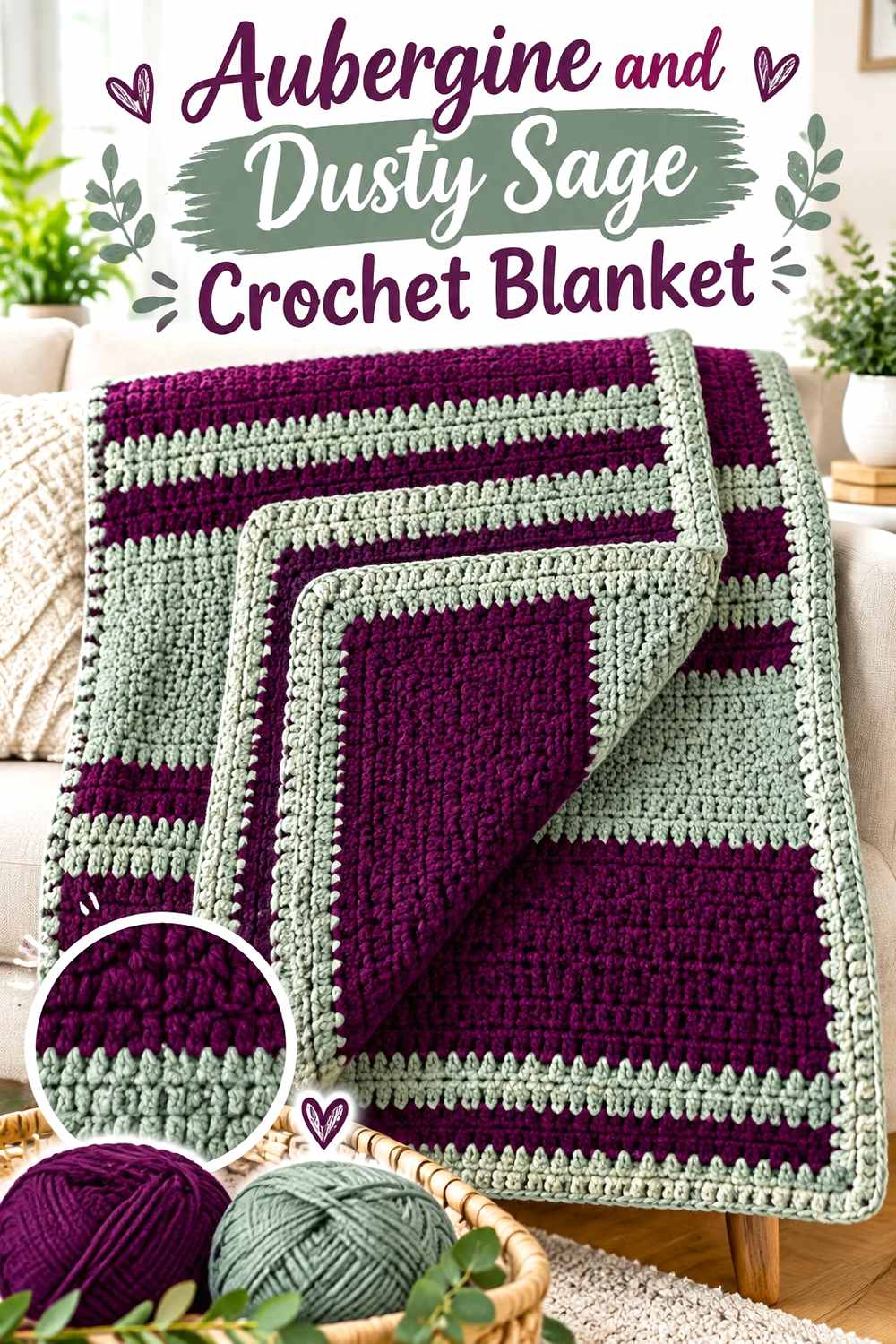
Dusty sage gives Aubergine a muted green counterpoint and keeps the blanket from becoming overly dark. Broad sections or repeated bands let both colors develop without creating a busy surface.
Give Aubergine More Crochet Blanket Area When It Should Lead
Make Aubergine sections wider or repeat them more frequently than sage if the blanket should remain centered on the purple shade. Equal distribution naturally changes the result into a more balanced two-color scheme.
Dusty Sage Gives Aubergine Crochet Blanket Repeats a Cooler Break
Use sage between substantial Aubergine sections rather than only as a tiny accent. If detailed motifs are involved, compare the yarn values first; a medium sage and medium Aubergine may need a lighter border between them when sharp definition matters.
Creator Credit: Daisy Farm Crafts
5. Aubergine And Warm White Crochet Pillow

A pillow offers enough surface for Aubergine to become a strong decorative field while warm white highlights selected texture. This is particularly useful when the pillow face already contains raised stitches or a defined border.
Let Aubergine Cover the Main Crochet Pillow Face
Use Aubergine over most of the front so bobbles, ridges, or other texture have one consistent background. Too many contrasting sections can compete with the texture that gives the pillow its surface character.
Warm White Clarifies Texture on an Aubergine Crochet Pillow
Place warm white beside raised motifs or around the outer border when those details need stronger separation. Concentrating the pale shade around specific features is usually more useful than scattering small white accents across the entire Aubergine surface.
Creator Credit: Crochet With Samina
6. Aubergine And Muted Teal Crochet Scarf

Muted teal provides a strong cool contrast while keeping the scarf rich rather than pale. Since a scarf folds and overlaps when worn, broad color sections make the hierarchy easier to preserve.
Use Wider Aubergine Sections Across the Crochet Scarf
Give Aubergine more width than teal so the main color remains obvious after the scarf is wrapped. Narrow equal stripes can visually mix once several sections overlap around the neck.
Muted Teal Breaks Up Aubergine Crochet Scarf Repeats
Repeat teal at planned intervals instead of using it only once. Consistent repetition connects the cooler color while leaving enough Aubergine between sections to keep the dark purple dominant.
Creator Credit: Bag-O-Day Crochet
7. Aubergine And Charcoal Crochet Ribbed Hat
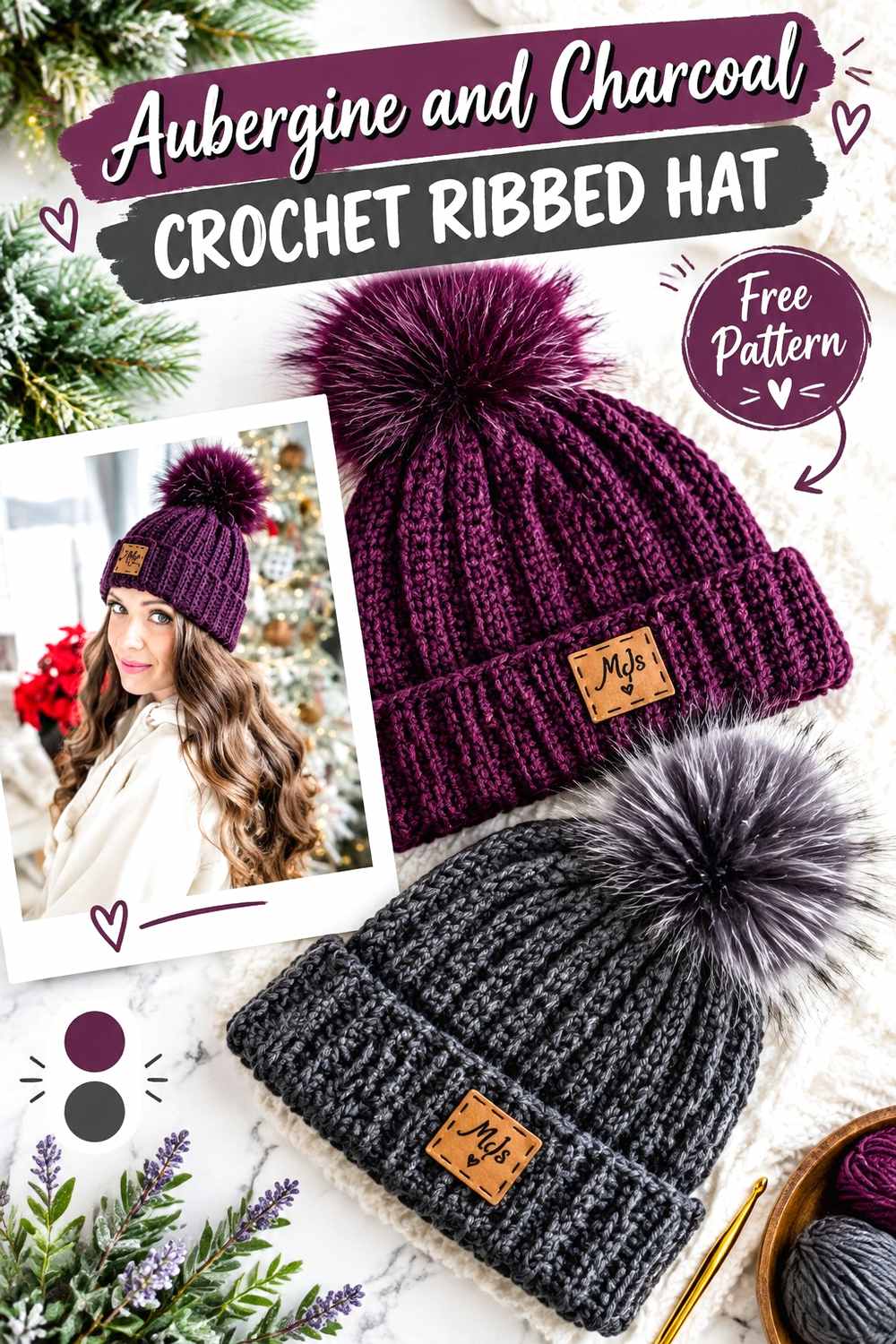
Charcoal gives Aubergine a deliberately dark, low-contrast partner. On a ribbed hat, that subtle shift can work well because the stitch lines provide plenty of visual structure on their own.
Keep Aubergine Across the Crochet Ribbed Hat Crown
Use Aubergine continuously through the crown so the ribbed texture remains uninterrupted. Strong striping can cut across those stitch lines and make the surface feel busier.
Charcoal Creates a Tonal Base for an Aubergine Crochet Ribbed Hat
Place charcoal around a fold-over or lower band. Because both colors can be deep, make the charcoal area substantial enough to read as intentional if the yarns appear nearly identical in grayscale.
Creator Credit: MJ’s Off The Hook Designs
8. Aubergine And Blush Crochet Vest
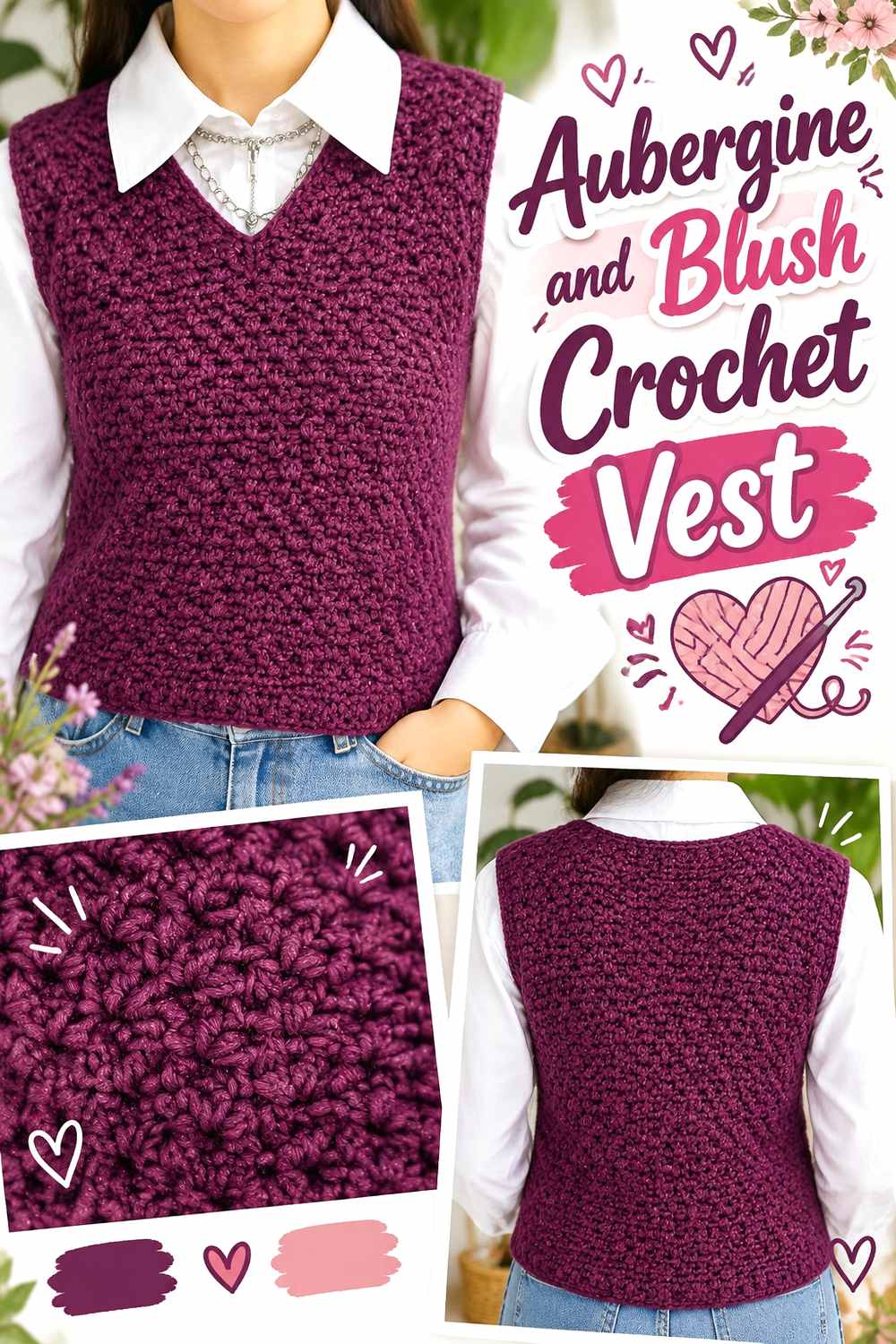
Blush brings noticeable lightness while staying within a broadly red-purple family. A vest has several natural locations for the softer shade, particularly around armholes and the neckline.
Keep Aubergine Across the Main Crochet Vest Panels
Use Aubergine throughout the torso to connect the front and back visually. This is especially useful when the vest already contains joins or separate panels that create construction lines.
Blush Softens the Openings of an Aubergine Crochet Vest
Place blush around armholes, the neckline, or the lower edge. A pale blush creates enough contrast to reveal those openings while feeling softer beside Aubergine than a bright white border would.
Creator Credit: Sirin’s Crochet
9. Aubergine And Antique Gold Crochet Handbag
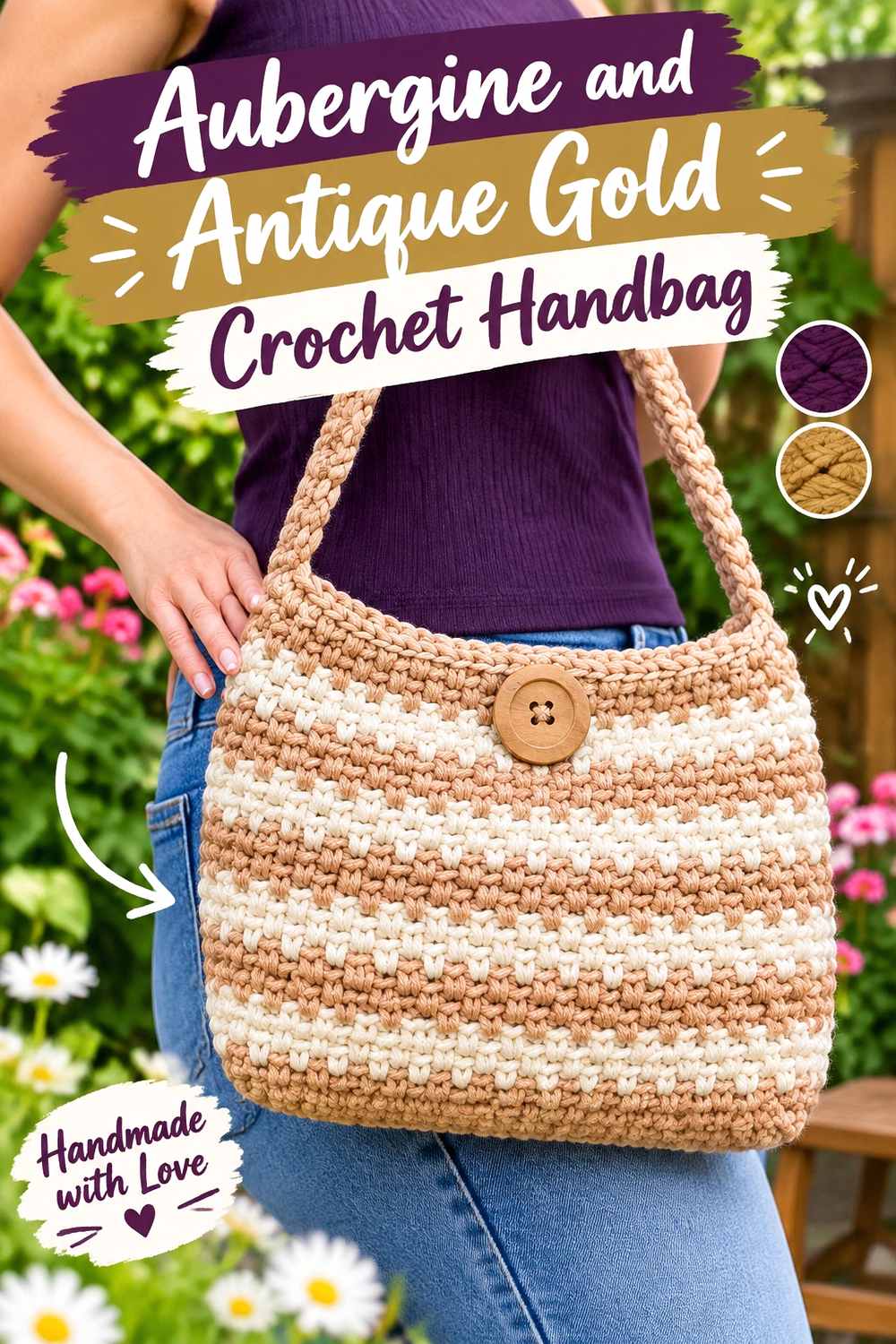
Antique gold is visually strong enough to compete with Aubergine, so keeping it controlled is important. Let the purple dominate the bag body and use the gold-toned color where emphasis is useful.
Keep Aubergine Dominant Across the Crochet Handbag Body
Use Aubergine over the broad front and back sections. On a compact handbag, splitting two saturated colors evenly can make the shape look more fragmented than intended.
Antique Gold Highlights Aubergine Crochet Handbag Details
Reserve antique gold for handles, a closure area, or the upper border. A smaller amount can provide plenty of warmth against Aubergine without becoming a second dominant field.
Creator Credit: naztazia
10. Aubergine And Dusty Mauve Crochet Cowl

Dusty mauve keeps the cowl within a purple family while creating a softer tonal transition. Larger sections help maintain separation once the cowl folds around itself.
Give Aubergine the Larger Crochet Cowl Sections
Use broad Aubergine repeats so the deeper color remains identifiable after the fabric bunches. Equal narrow stripes can blend into one general purple surface from a distance.
Dusty Mauve Reveals Aubergine Crochet Cowl Texture More Gently
Place mauve beside textured sections when you want a change in color without a pale neutral. Choosing a mauve that is clearly lighter than Aubergine will also make raised stitches easier to distinguish.
Creator Credit: Rich Textures Crochet
11. Aubergine And Navy Crochet Headband

Navy gives Aubergine a dark, cool frame without adding another bright shade. Since a headband has limited surface area, small amounts of navy are enough to create an obvious structural effect.
Keep Aubergine Central on the Crochet Headband
Use Aubergine across the widest section so ribbing, cables, or another textured stitch can remain continuous. Avoid breaking the center into several small stripes when the accessory is already narrow.
Navy Frames Aubergine Crochet Headband Edges
Place navy along both long edges or around the joining area. If your Aubergine yarn is very dark, compare it with navy first and make the navy border wider when the tonal difference is subtle.
Creator Credit: B.Hooked Crochet
12. Aubergine And Soft Lilac Crochet Top
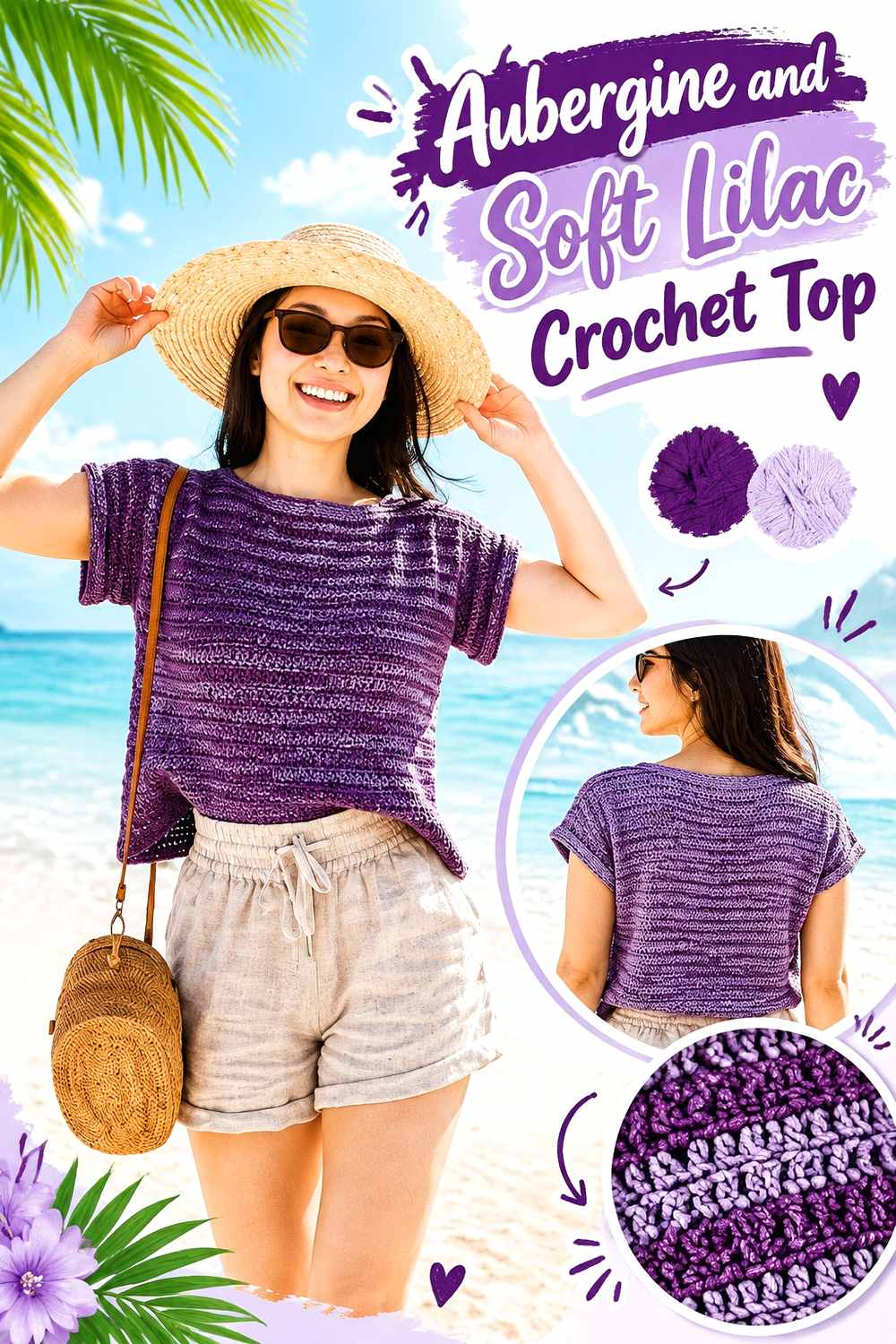
Soft lilac creates a lighter purple contrast while keeping the top closely related in hue. This makes it useful around straps, sleeves, neckline finishing, or another smaller garment detail.
Let Aubergine Lead Across the Crochet Top Body
Use Aubergine across the torso so the main body reads as a continuous field. The top already has natural divisions at its sleeves and neckline, so numerous extra color blocks are not necessary.
Soft Lilac Lightens Aubergine Crochet Top Edges
Place lilac around sleeve edges, neckline trim, or another repeated detail. The lighter purple can make those narrow areas visible without moving the palette away from its overall Aubergine direction.
Creator Credit: For The Frills
13. Aubergine And Pewter Crochet Shawl

Pewter provides a cooler neutral than cream and creates a more restrained Aubergine shawl. Because a shawl has substantial surface area, the gray can appear in broad edging or repeated sections rather than tiny stripes.
Give Aubergine the Broadest Area of the Crochet Shawl
Use Aubergine across a central field or repeat it more frequently than pewter. A small amount of the main shade can become hidden after the shawl is folded or draped.
Pewter Creates a Cooler Frame Around an Aubergine Crochet Shawl
Place pewter toward the outer edge or border. If the gray is fairly dark, use it over a larger area rather than around delicate details that require stronger contrast against Aubergine.
Creator Credit: Fiber Flux
14. Aubergine And Sand Crochet Basket

Sand gives Aubergine a lighter warm-neutral contrast suited to a basket’s rim and handles. The body can remain dark and visually solid while the upper structure becomes easier to identify.
Use Aubergine Across the Main Crochet Basket Walls
Keep the substantial side walls Aubergine so the basket has one stable base color. Three-dimensional form and dense crochet texture already provide visual interest without extra striping.
Sand Defines Handles Against an Aubergine Crochet Basket
Place sand around the rim, handles, or both. These areas identify the opening and carrying points, making them more purposeful places for light contrast than a random stripe through the center.
Creator Credit: Jayda InStitches
15. Aubergine And Moss Green Crochet Granny Square
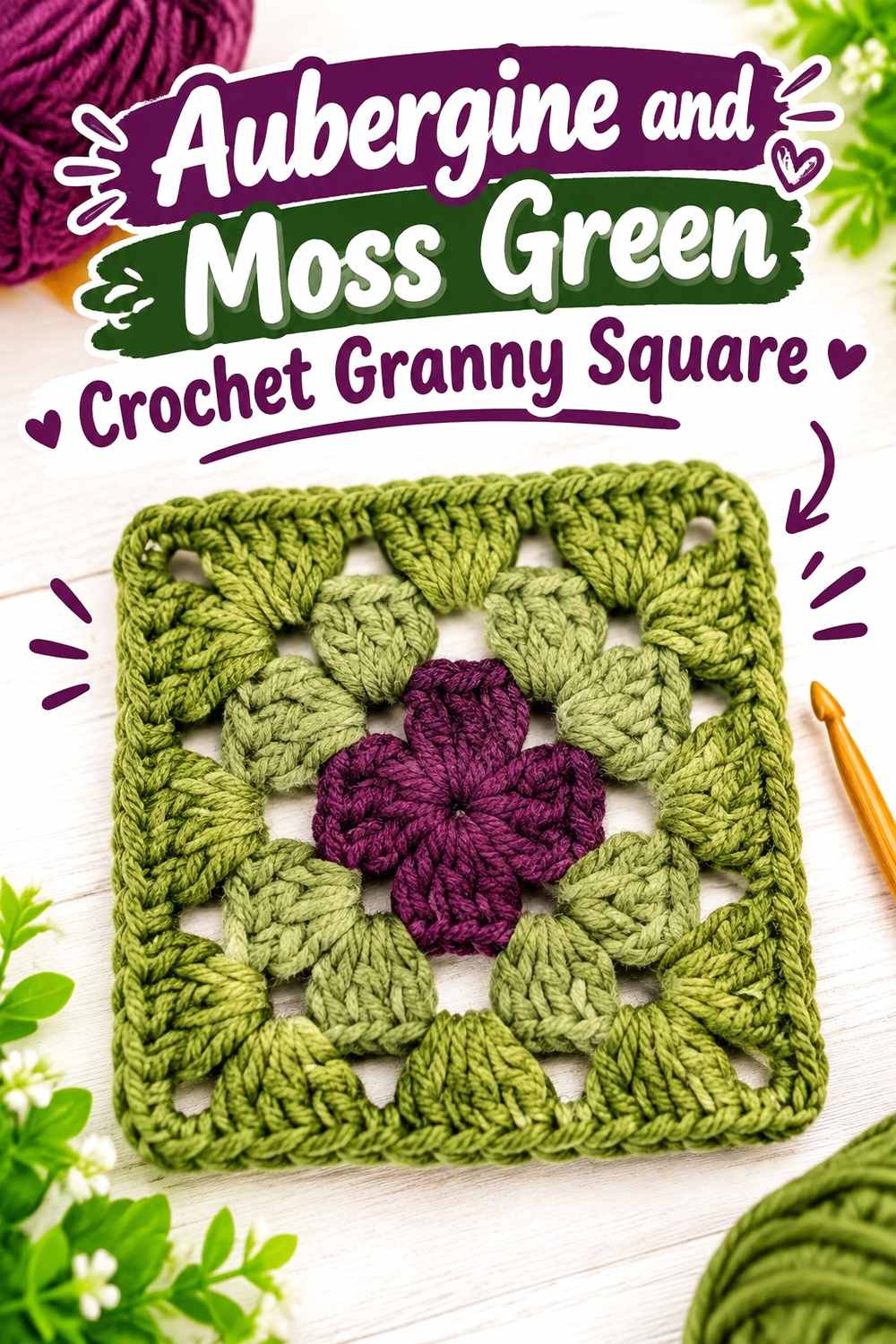
Moss green gives Aubergine an earthy green contrast that works naturally with the segmented structure of a granny square. The main challenge is keeping Aubergine visible through repeated motif rounds.
Repeat Aubergine Through More Than One Crochet Granny Square Area
Use Aubergine at the center and again nearer the outer part of the square if you want the motif to remain purple-led. A single tiny Aubergine center can easily be visually overtaken by later rounds.
Moss Green Should Support Aubergine Crochet Granny Square Structure
Use moss green for an intermediate section or controlled border rather than giving every shade the same area. If many squares will be joined, consistent Aubergine repetition can also connect the separate motifs across the final item.
Creator Credit: Hooked by Robin
16. Aubergine And Cream Crochet Phone Bag
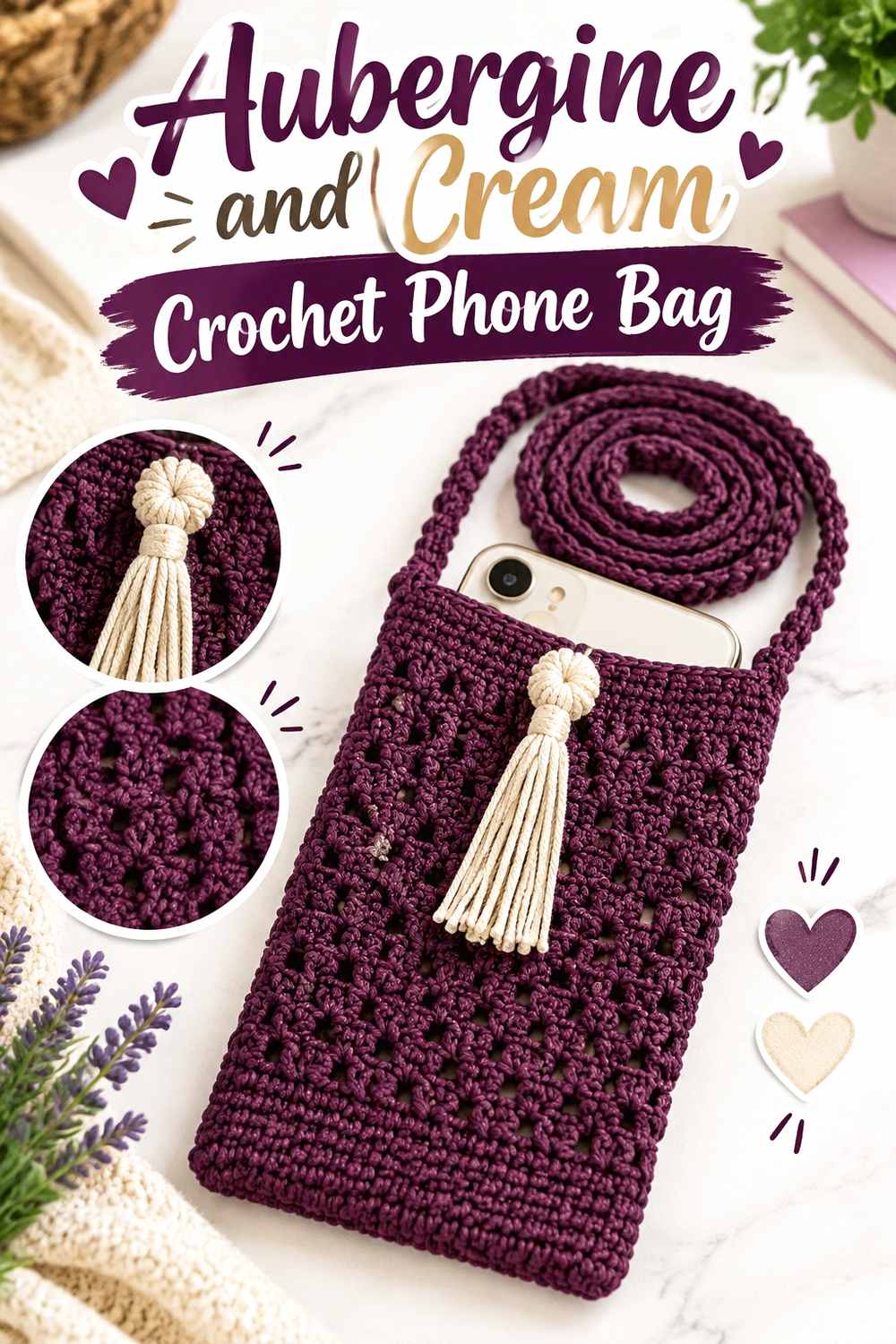
A phone bag offers little room for complicated color distribution. Aubergine can cover the compact body while cream defines the strap, flap, or upper opening.
Keep Aubergine Across the Main Crochet Phone Bag Body
Use Aubergine on the largest front and back surfaces so the small bag has one coherent visual field. This also provides a consistent background for any flap or outer detail.
Cream Makes Aubergine Crochet Phone Bag Details Easier to See
Use cream around the strap, flap edge, or bag opening where narrow pieces need stronger definition. Because the project is compact, even a small amount of cream can create enough contrast.
Creator Credit: Chenda DIY
17. Aubergine And Dusty Rose Crochet Fingerless Gloves
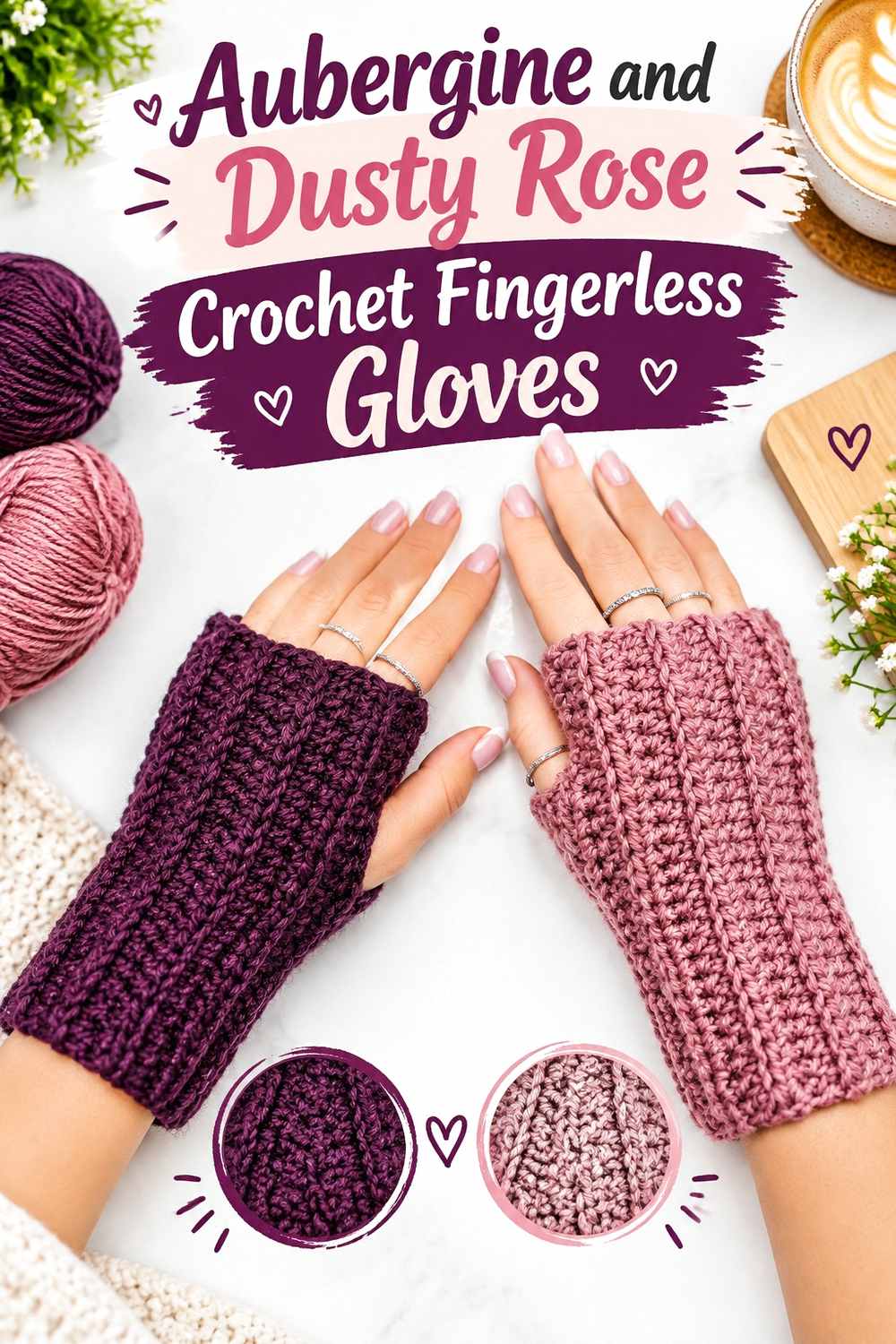
Dusty rose creates a lighter related accent that works naturally around glove cuffs. Keeping Aubergine on the hands prevents the small accessories from becoming divided into too many competing sections.
Keep Aubergine Across the Main Crochet Fingerless Gloves
Use Aubergine through the hand and thumb-opening area so stitch texture remains visually continuous. Mirror the same color placement on both gloves for a coordinated pair.
Dusty Rose Softens Aubergine Crochet Fingerless Glove Cuffs
Use dusty rose around the cuffs, where a color change already corresponds to a structural transition. A lighter rose will make the cuff more distinct; a deeper dusty rose produces a quieter tonal result.
Creator Credit: Cherilyn Q
18. Aubergine And Stone Gray Crochet Balaclava

Stone gray cools Aubergine and gives the balaclava a neutral accent without introducing bright white. The face opening and lower edge provide natural areas for that contrast.
Keep Aubergine Across the Main Crochet Balaclava Surface
Use Aubergine over the crown and larger surrounding areas so the head covering remains visually continuous. This also lets shaping and any ribbed texture remain easier to follow.
Stone Gray Frames the Opening of an Aubergine Crochet Balaclava
Place stone gray around the face opening or lower finishing edge. Choose a gray noticeably lighter than Aubergine when a narrow border needs clear separation.
Creator Credit: Natalie
19. Aubergine And Soft Mint Crochet Sweater

Soft mint creates one of the freshest contrasts in the collection. On a sweater, the pale green is most effective when concentrated around cuffs, neckline finishing, or another repeated edge while Aubergine carries the main body.
Let Aubergine Dominate the Crochet Sweater Body
Use Aubergine through the torso and most of the sleeves so the sweater remains centered on the dark purple shade. A broad uninterrupted field also allows stitch texture to carry more of the visual detail.
Soft Mint Brightens Aubergine Crochet Sweater Cuffs and Neckline
Repeat soft mint at the cuffs and neckline so the lighter accent feels connected across the garment. Keeping it to structural edges prevents the pale green from competing with the larger Aubergine body.
Creator Credit: KnitcroAddict
20. Aubergine And Burnt Orange Crochet Drawstring Bag
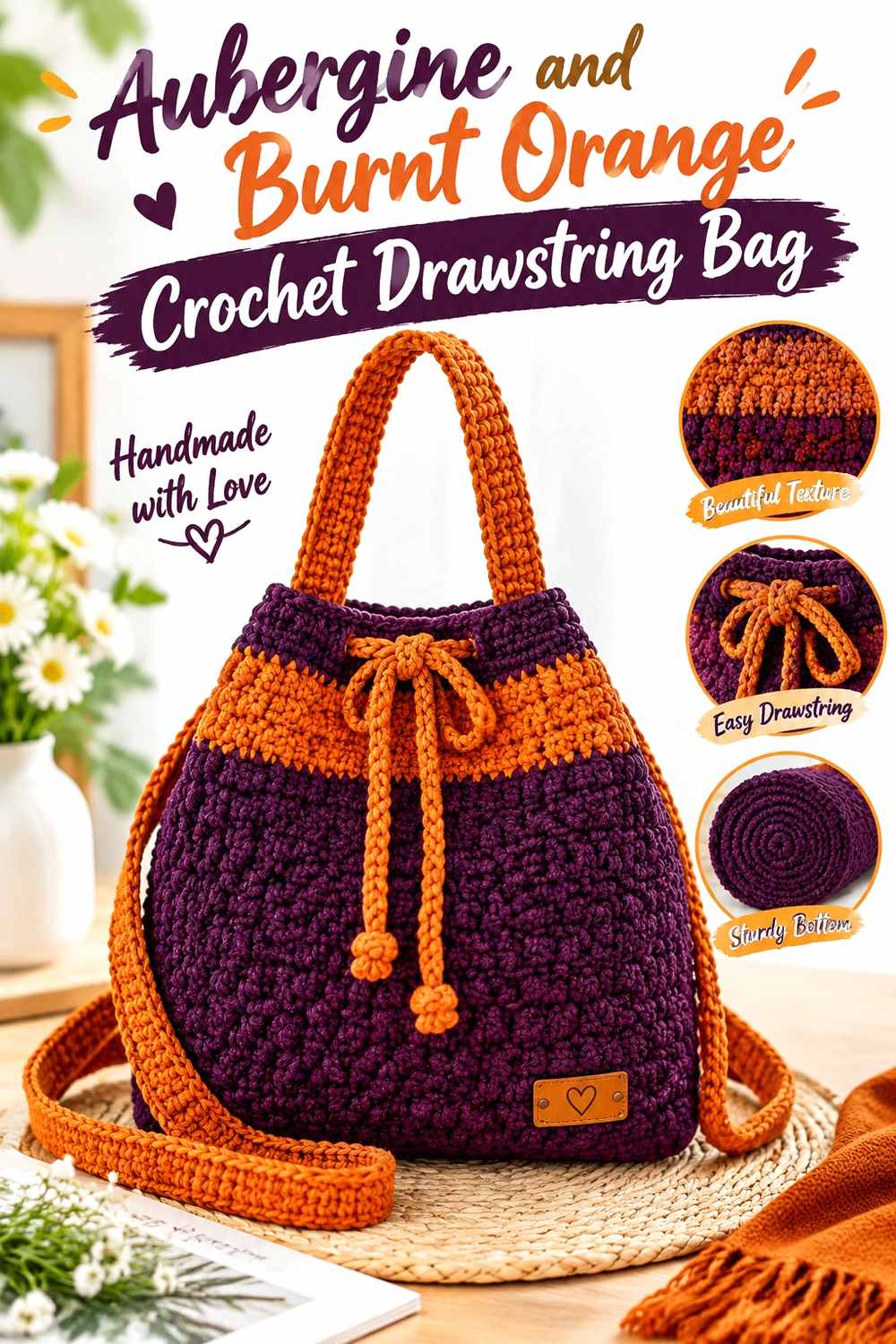
Burnt orange gives Aubergine a strong warm contrast. Since both colors carry substantial visual weight, assigning each one a clear structural role keeps the drawstring bag from becoming crowded.
Keep Aubergine Across the Crochet Drawstring Bag Body
Use Aubergine through most of the pouch so the main body remains cohesive despite the additional visual detail created by the closure.
Burnt Orange Highlights Aubergine Crochet Drawstring Details
Reserve burnt orange for the upper edge, cord area, or another controlled section. If the orange and Aubergine are similar in value, give the accent enough width to make the color shift intentional.
Creator Credit: SANG DEWI CRAFT
21. Aubergine And Flax Crochet Poncho

Flax gives Aubergine a light natural neutral that can break up a large wearable without making it look sharply striped. A poncho provides substantial surface area, so both shades can appear in broader sections.
Let Aubergine Carry the Main Crochet Poncho Field
Use Aubergine across the largest body sections so the wide garment retains a clear dark focal color. Narrow scattered Aubergine accents may disappear once the poncho folds around the body.
Flax Separates Broad Sections of an Aubergine Crochet Poncho
Use flax around outer edging, the neckline, or a substantial repeated section rather than tiny isolated details. Its lighter value can also prevent the expansive Aubergine surface from feeling visually flat.
Creator Credit: Handwork diy
22. Aubergine And Powder Blue Crochet Mittens
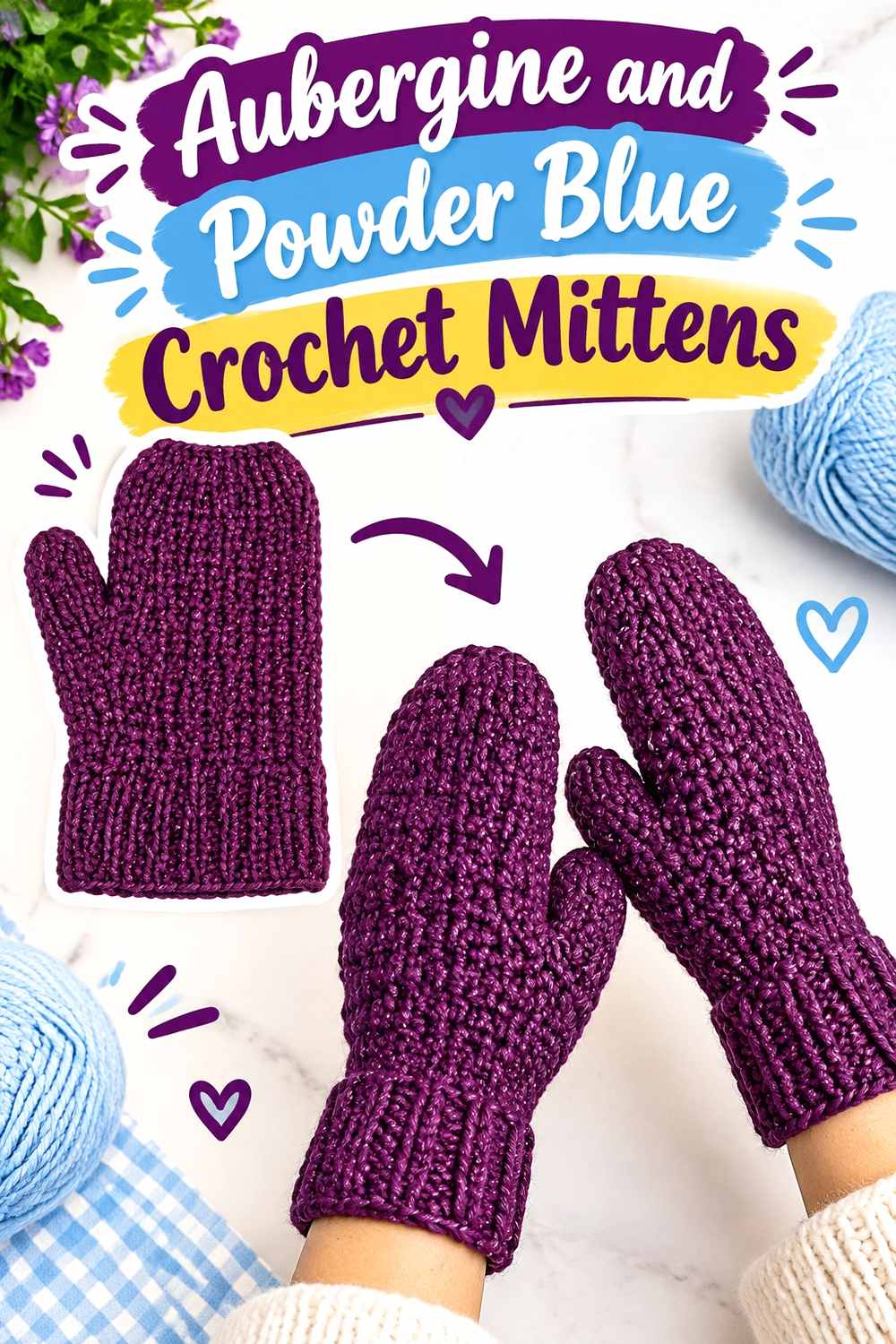
Powder blue creates a noticeably cooler, lighter contrast against Aubergine. Mittens offer limited surface area, making the cuffs the most straightforward location for the second color.
Keep Aubergine Across the Main Crochet Mitten Hands
Use Aubergine throughout most of both mitten bodies and keep the placement consistent across the pair. This preserves one dominant field around the fingers and thumb shaping.
Powder Blue Defines Aubergine Crochet Mitten Cuffs
Use powder blue around the wrists where the change in color naturally identifies the cuff. A pale blue can create useful separation without interrupting the Aubergine hand area.
Creator Credit: Brunaticality
23. Aubergine And Antique Rose Crochet Scrunchie
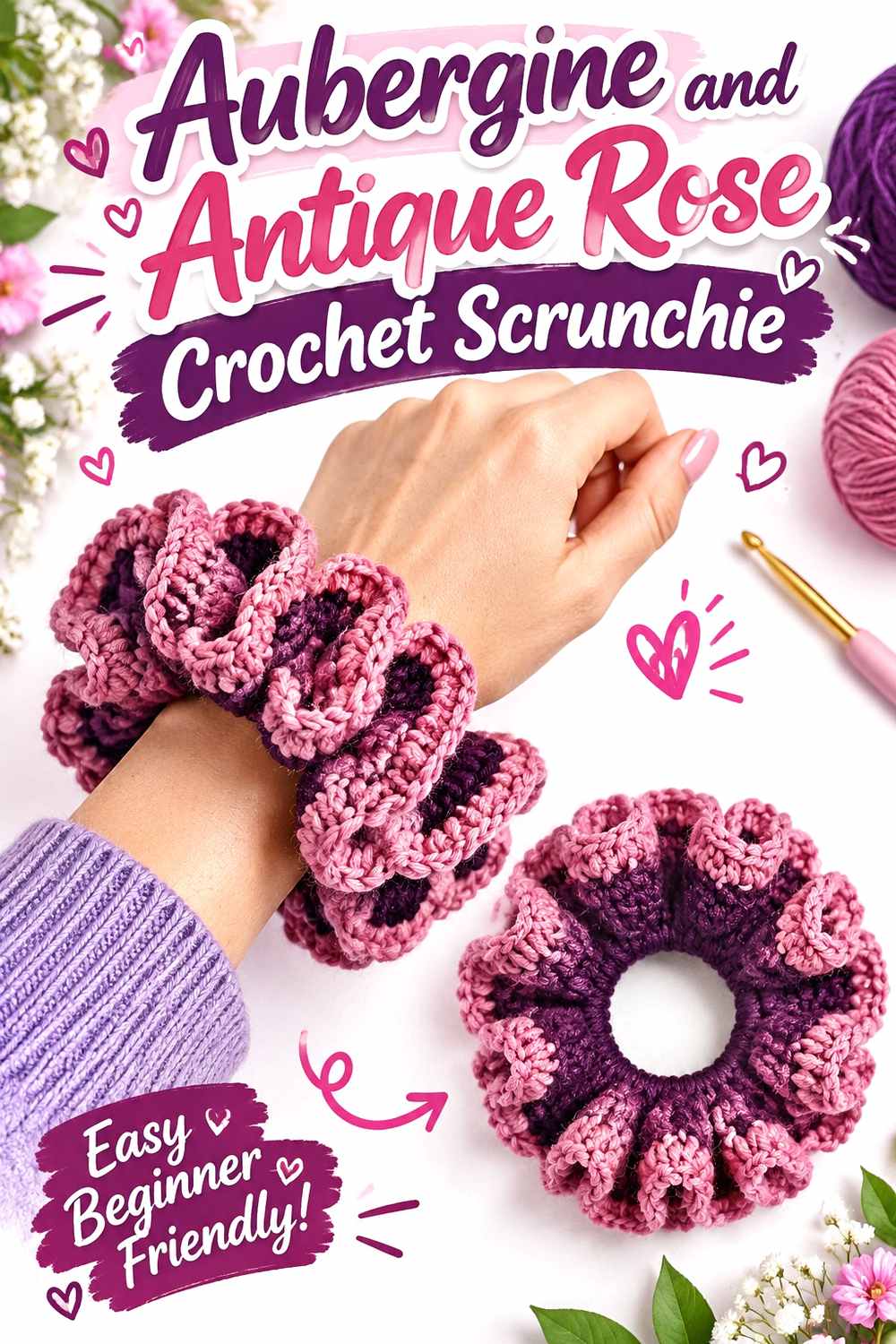
A scrunchie is compact and heavily gathered, so complicated color changes can become visually muddled once the finished fabric compresses. Aubergine and antique rose work best in clear, simple sections.
Keep Aubergine Visible Around the Main Crochet Scrunchie Ruffle
Give Aubergine the larger share of the crocheted fabric so the dark purple remains visible after the ruffle gathers around the elastic. Tiny Aubergine areas may disappear between folds.
Antique Rose Softens the Edge of an Aubergine Crochet Scrunchie
Use antique rose around an outer ruffle or repeated finishing section. The lighter pink-purple shade creates enough variation to distinguish the gathered edge while staying related to Aubergine.
Creator Credit: ElyseCrochets 💌
24. Aubergine And Mustard Crochet Coaster
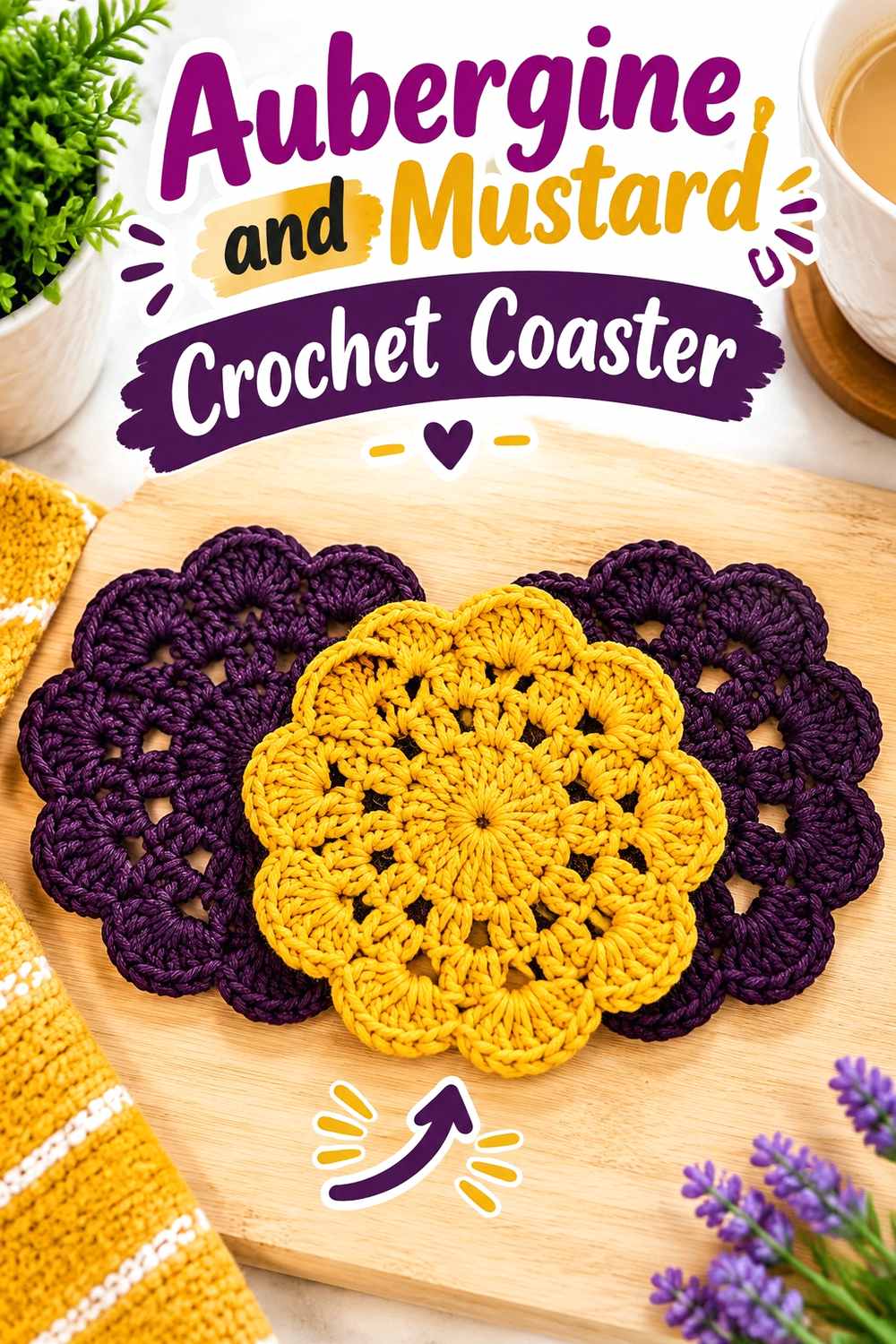
Mustard creates a compact warm contrast that suits the simple, flat surface of a coaster. Keeping Aubergine in the center and mustard around the edge gives both colors an obvious job without overcomplicating a small project.
Let Aubergine Fill the Main Crochet Coaster Center
Use Aubergine across most of the central area so the coaster has one clear focal color. An uninterrupted center also lets the stitch texture remain easier to read.
Mustard Frames the Edge of an Aubergine Crochet Coaster
Use mustard around the outer border rather than splitting the coaster evenly into several rings. The warm edge can clearly define the Aubergine center while requiring only a relatively small amount of the accent color.
Creator Credit: Diving Ducks Crochet
Comparing the 24 Aubergine Crochet Color Directions
For strong light-dark contrast, pair Aubergine with soft ivory, oatmeal, warm white, cream, sand, flax, powder blue, or soft mint. These combinations are particularly useful around garment openings, borders, handles, cuffs, brims, and small crochet details that need to remain easy to distinguish.
Camel, antique gold, cocoa, burnt orange, mustard, dusty rose, antique rose, blush, and dusty mauve keep more warmth in the palette. Burnt orange and mustard create the strongest warm hue shifts, while mauve, blush, and rose stay closer to Aubergine itself.
Dusty sage, moss green, muted teal, and mint add green contrast at different depths. Sage and mint create lighter breaks, while moss and teal produce richer combinations that are often better suited to larger color sections than tiny detailed borders.
Navy, charcoal, stone gray, and pewter keep the overall palette restrained. Charcoal and navy produce deep tonal framing, while pewter and stone gray offer more neutral separation without the brightness of cream.
Conclusion
Aubergine can anchor a wide range of crochet color schemes, but the strongest placement depends on the item. Large cardigans, sweaters, blankets, ponchos, shawls, and pillows can carry the shade across broad uninterrupted surfaces. Smaller bags, hats, gloves, mittens, slippers, scrunchies, phone bags, and coasters usually benefit from concentrating contrast around structural details.
Choose ivory, cream, oatmeal, flax, sand, mint, or powder blue when definition matters most. Sage, moss, and teal introduce cooler green contrast. Navy, charcoal, pewter, and stone gray create more restrained schemes, while camel, gold, cocoa, orange, mustard, blush, mauve, and rose move the palette warmer or closer to Aubergine’s purple-red character.
If an exact supporting shade is unavailable, preserve its role. A pale accent should remain clearly lighter than Aubergine, a dark frame should maintain enough depth, and a strong accent should stay controlled enough that Aubergine remains the intended main color.
Frequently Asked Questions
What Colors Work Well With Aubergine Crochet?
Aubergine can pair with ivory, cream, oatmeal, sand, flax, camel, cocoa, antique gold, mustard, burnt orange, blush, dusty rose, mauve, lilac, powder blue, mint, sage, moss green, teal, navy, pewter, charcoal, and gray. The useful choice depends on the amount of contrast and warmth you want.
How Can I Keep Aubergine Crochet From Looking Too Dark?
Repeat a lighter supporting color around useful structural areas such as cuffs, borders, handles, brims, necklines, motif edges, and openings. This breaks up the dark surface without requiring you to reduce Aubergine across the whole project.
Does Aubergine Crochet Work Better With Cream or White?
Both can create strong contrast. Cream produces a warmer, softer transition, while a cleaner white creates a sharper visual boundary. Compare the actual yarns against your Aubergine shade before deciding which effect suits the project.
Can Aubergine and Green Be Used Together in Crochet?
Yes. Dusty sage creates a muted combination, moss green produces a deeper earthy pairing, and soft mint gives Aubergine a much lighter, fresher contrast. Give one shade a clear dominant role so the two colors do not compete equally.
Can Aubergine and Navy Look Too Dark in Crochet?
They can when both yarns have similar lightness. In that case, use navy across a wider band or edge where a subtle tonal transition is acceptable. Choose a lighter supporting color instead when small details need crisp definition.
Does Aubergine Work With Orange or Mustard Crochet Accents?
Yes. Burnt orange and mustard both create strong warm contrast against Aubergine. They usually work most effectively in controlled areas such as bag closures, borders, coaster edges, motif sections, or other accents rather than occupying the same visual area as the purple.
How Can I Make Aubergine Crochet Texture Easier to See?
Use a lighter color beside important raised stitches, ribbing transitions, motif borders, or edging. If the project is entirely Aubergine, larger uninterrupted areas can also make stitch shadows easier to read than frequent dark-on-dark color changes.
How Do I Substitute a Color in an Aubergine Crochet Palette?
Preserve the original color’s function. Replace a light support shade with another clearly lighter yarn, a dark framing shade with another deep color, and a warm or cool accent with a shade that creates a similar relationship to Aubergine. This keeps the hierarchy intact even when the exact yarn colors change.