Mushroom Taupe gives crochet a soft brown-gray foundation that can lean warmer or cooler depending on the shades placed beside it. Ivory and warm white create clearer light contrast, camel and cocoa keep the palette earthy, while sage, teal, navy, Petrol Blue, and powder blue bring out the cooler side of the neutral. Burnt orange, terracotta, blush, dusty rose, and antique gold add warmth without requiring Mushroom Taupe to give up its dominant role.
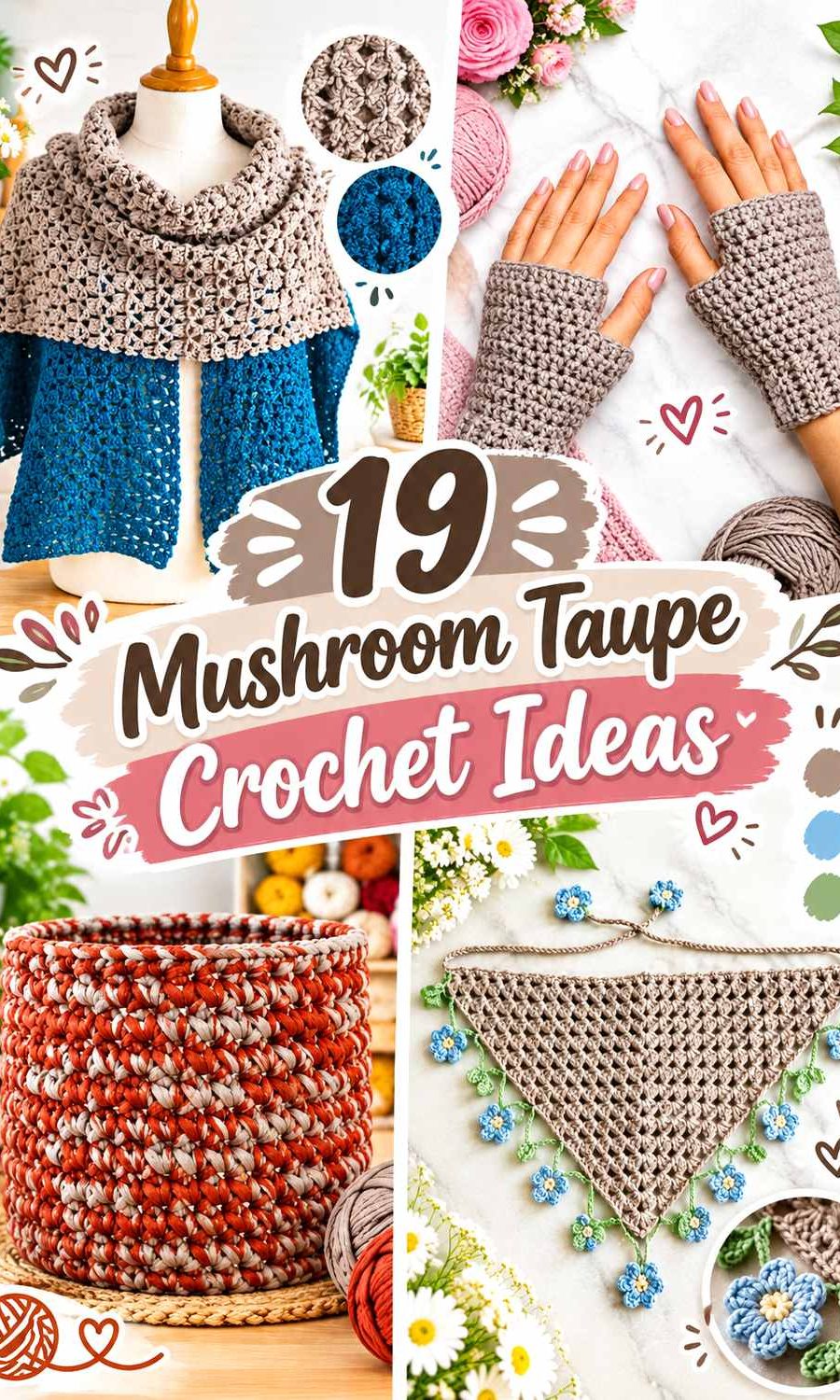
Because Mushroom Taupe is intentionally understated, placement is important. On cardigans, blankets, shawls, and pillows, broad Mushroom Taupe areas give texture room to carry the visual interest. On smaller bags, hats, gloves, and accessories, a more saturated supporting color usually works better around a brim, handle, cuff, strap, border, or opening than scattered evenly across the entire project.
Quick List
- Mushroom Taupe And Soft Ivory Crochet Cardigan
- Mushroom Taupe And Camel Crochet Tote Bag
- Mushroom Taupe And Oatmeal Crochet Bucket Hat
- Mushroom Taupe And Warm White Crochet Pillow
- Mushroom Taupe And Burnt Orange Crochet Scarf
- Mushroom Taupe And Charcoal Crochet Ribbed Hat
- Mushroom Taupe And Blush Crochet Vest
- Mushroom Taupe And Antique Gold Crochet Handbag
- Mushroom Taupe And Deep Teal Crochet Cowl
- Mushroom Taupe And Navy Crochet Headband
- Mushroom Taupe And Soft Lilac Crochet Top
- Mushroom Taupe And Petrol Blue Crochet Shawl
- Mushroom Taupe And Terracotta Crochet Basket
- Mushroom Taupe And Moss Green Crochet Granny Square
- Mushroom Taupe And Cream Crochet Phone Bag
- Mushroom Taupe And Dusty Rose Crochet Fingerless Gloves
- Mushroom Taupe And Powder Blue Crochet Bandana
Keep Mushroom Taupe Crochet From Looking Too Flat
Mushroom Taupe is subtle enough that texture can become the main feature of the crochet fabric, but closely related neutrals may also blend together. If a border, motif, or raised stitch needs to remain obvious, place a noticeably lighter, darker, or more saturated shade next to that area rather than depending on a small shift between similar taupes.
Check value as well as hue. Mushroom Taupe and dusty sage may look clearly different in color but still sit close in lightness, while Mushroom Taupe and soft ivory usually create stronger separation. A grayscale photo can help you decide whether two yarns should be used for tiny details or reserved for broader, softer color blocks.
Decide Where Mushroom Taupe Should Lead
Large crochet surfaces are especially useful for Mushroom Taupe because the neutral does not have to compete with frequent color changes. Cardigan panels, pillow faces, blanket sections, and shawls can stay predominantly taupe while supporting shades identify edges or repeated features.
Small accessories need a firmer hierarchy. Give Mushroom Taupe the largest area and use the secondary color where the construction already changes. Handles, bands, brims, cuffs, straps, borders, and ties all create logical places for contrast without making the project look randomly color-blocked.
1. Mushroom Taupe And Soft Ivory Crochet Cardigan

Mushroom Taupe can cover the large cardigan body while soft ivory defines the garment’s edges. This keeps the overall wearable neutral and easy to layer visually, while cuffs, neckline finishing, or front edging remain clearly separated from the main panels.
Keep Mushroom Taupe Dominant Across the Crochet Cardigan Panels
Use Mushroom Taupe through the main front, back, and sleeve areas when you want texture and garment shape to do more work than color blocking. A continuous neutral field also prevents several separate panels from looking visually disconnected.
Keep ivory narrower than the main panels so Mushroom Taupe still reads as the cardigan’s primary color.
Soft Ivory Gives Mushroom Taupe Crochet Cardigan Edges More Definition
Place soft ivory around cuffs, the front opening, or neckline finishing. Those locations already represent structural transitions, so the lighter shade gives the contrast a practical reason to be there.
If you want a softer result, choose a warm ivory rather than a very bright white while preserving enough light-dark separation.
Creator Credit: Crochet.Box
2. Mushroom Taupe And Camel Crochet Tote Bag

Camel keeps the tote within an earthy neutral family but introduces enough warmth to distinguish handles or the upper opening. Mushroom Taupe can stay across the main bag body so the finished piece does not become a series of similar brown sections.
Let Mushroom Taupe Cover the Main Crochet Tote Bag Body
Use Mushroom Taupe across the front, back, and lower bag area. This creates a quiet background for openwork or texture and makes the tote shape easier to read than repeated narrow neutral stripes would.
A larger Mushroom Taupe field also gives camel more impact when it appears around the top.
Camel Warms Mushroom Taupe Crochet Tote Handles
Place camel on the handles or upper border where the construction naturally changes. The warmer brown can identify the carrying area without interrupting the center of the Mushroom Taupe body.
If the two yarns are very similar in value, use camel across a full handle instead of relying on a thin accent line.
Creator Credit: Kristines Crochets
3. Mushroom Taupe And Oatmeal Crochet Bucket Hat
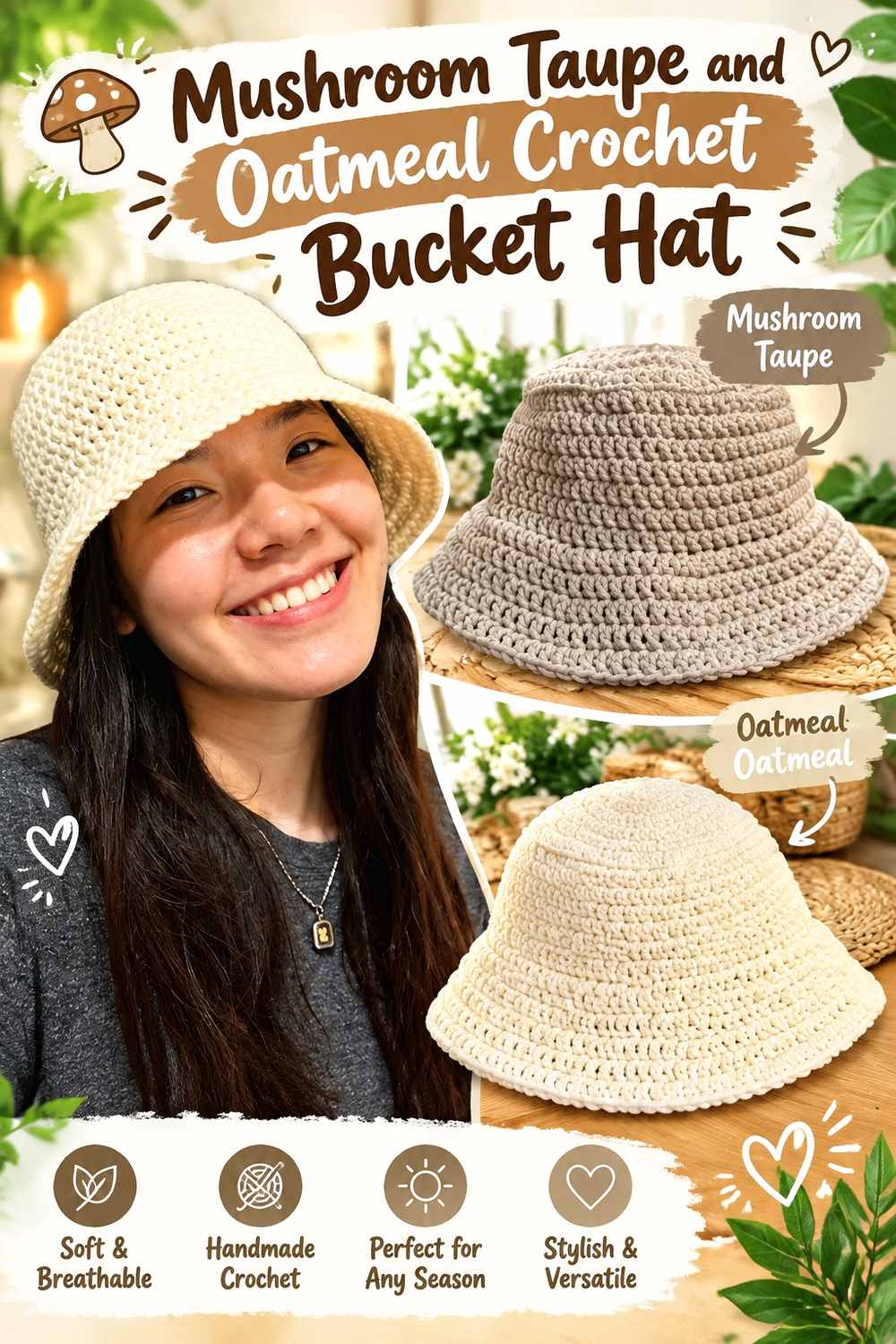
Oatmeal creates a light neutral contrast without moving far away from the understated character of Mushroom Taupe. A bucket hat gives the two shades clear zones through the crown, sides, and brim.
Keep Mushroom Taupe Continuous Across the Crochet Bucket Hat Crown
Use Mushroom Taupe through the crown and most of the side wall so the rounded upper section remains visually unified. The hat already gains movement from shaping, so numerous small color changes are unnecessary.
Keeping the larger upper area taupe also prevents oatmeal from taking over the palette.
Oatmeal Defines the Brim of a Mushroom Taupe Crochet Bucket Hat
Place oatmeal across the brim or only its outer portion. Because the brim projects away from the crown, the lighter color emphasizes an existing change in silhouette.
If you prefer lower contrast, keep Mushroom Taupe near the brim base and introduce oatmeal only toward the outside edge.
Creator Credit: VivCrochets
4. Mushroom Taupe And Warm White Crochet Pillow

A pillow is a useful place to let Mushroom Taupe act almost like a neutral canvas. Raised stitches and other texture can remain central to the design while warm white identifies one border or selected surface detail.
Let Mushroom Taupe Cover the Main Crochet Pillow Face
Use Mushroom Taupe across most of the front when the pillow already includes visible texture. Keeping the surface in one main neutral lets shadows, ridges, or raised stitches create visual movement without additional color competing with them.
If the back will be visible, repeating Mushroom Taupe there can help keep the finished cover cohesive.
Warm White Reveals Texture Against a Mushroom Taupe Crochet Pillow
Place warm white around the outer border or another raised area that needs clearer separation. The light neutral can make a small feature easier to distinguish without turning the whole pillow into a high-contrast design.
Concentrate white around the detail you want noticed rather than scattering it across every section.
Creator Credit: Crochet With Samina
5. Mushroom Taupe And Burnt Orange Crochet Scarf

Burnt orange introduces one of the warmest contrasts in this collection. A scarf provides enough length to repeat orange deliberately while keeping Mushroom Taupe in broader sections so the accessory remains grounded.
Use Wider Mushroom Taupe Sections Across the Crochet Scarf
Give Mushroom Taupe the larger repeats so it remains obvious after the scarf is wrapped and portions overlap. Very narrow alternating stripes could make orange much more visually dominant than intended.
Broad taupe areas also leave more uninterrupted space for stitch texture.
Burnt Orange Adds Warmth Between Mushroom Taupe Crochet Scarf Sections
Repeat burnt orange at intentional intervals instead of using one isolated block. This distributes warmth through the scarf without forcing the accent to occupy as much visual area as Mushroom Taupe.
If the scarf includes fringe, repeating one of the two existing colors keeps the palette more connected.
Creator Credit: Bag-O-Day Crochet
6. Mushroom Taupe And Charcoal Crochet Ribbed Hat

Charcoal gives Mushroom Taupe a darker neutral anchor and creates a restrained hat with more depth than a single-color version. The lower band is the most natural place for the deeper shade.
Keep Mushroom Taupe Across the Crochet Ribbed Hat Crown
Use Mushroom Taupe through the main crown so the ribbing remains visually continuous. Frequent color changes can compete with the directional stitch texture that already defines the hat.
The lighter taupe crown also creates enough room for charcoal to establish a clear base.
Charcoal Grounds the Band of a Mushroom Taupe Crochet Ribbed Hat
Place charcoal around the fold-over or lower band. The darker gray-brown relationship keeps the palette neutral while creating a visible structural break.
If your Mushroom Taupe is already deep, compare the yarns first and use a wider charcoal band when the difference is subtle.
Creator Credit: MJ’s Off The Hook Designs
7. Mushroom Taupe And Blush Crochet Vest
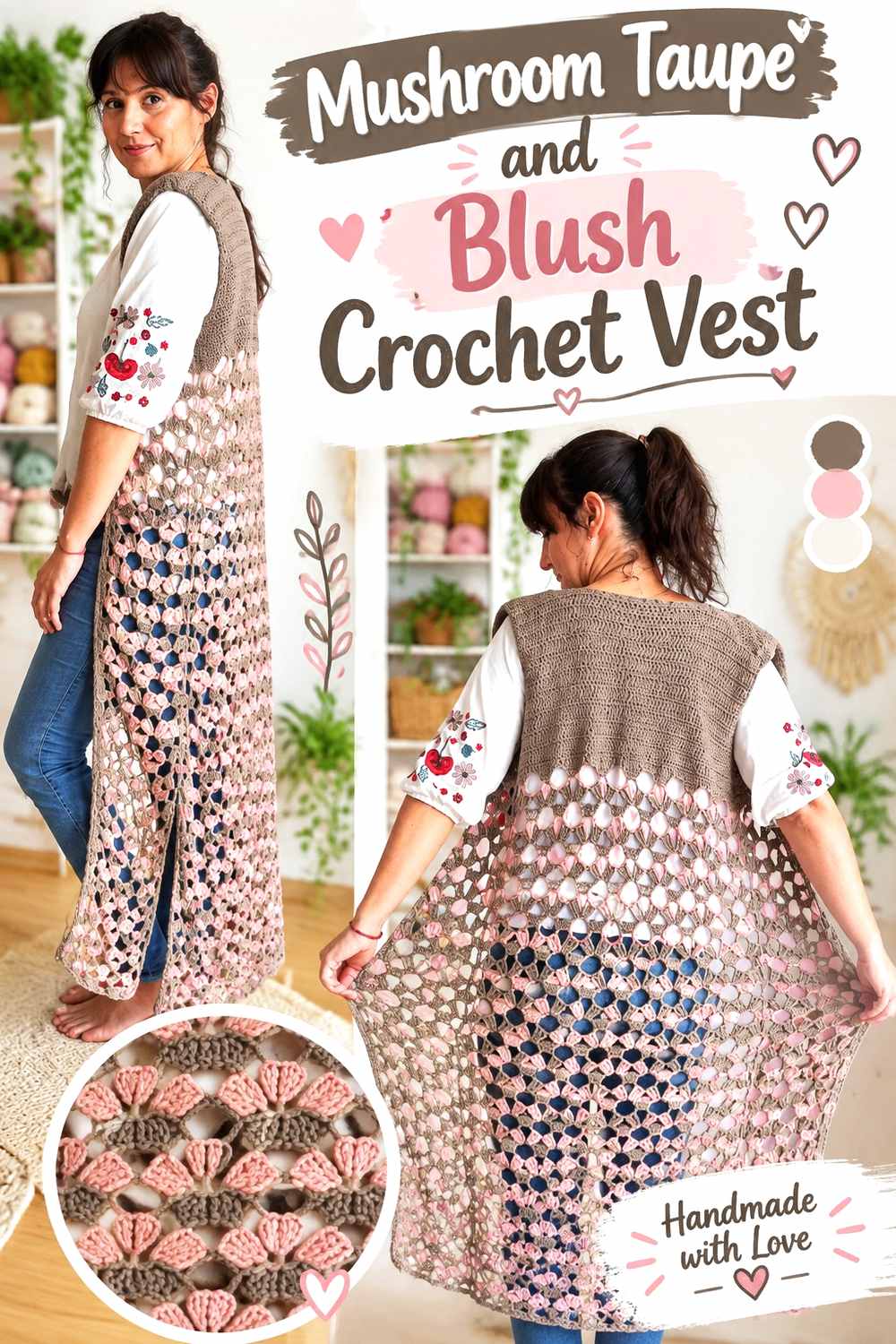
Blush adds gentle warmth and color while keeping the vest soft rather than highly saturated. Armholes, neckline edging, and the hem are natural places to use the pink without interrupting the central Mushroom Taupe body.
Keep Mushroom Taupe Across the Main Crochet Vest Panels
Use Mushroom Taupe through the front and back sections to connect the garment visually. This is especially useful when joins or panel seams already divide the construction.
A broad neutral body also prevents blush from spreading into so many areas that the vest stops reading as taupe-led.
Blush Softens the Openings of a Mushroom Taupe Crochet Vest
Place blush around the armholes, neckline, or hem. A pale muted pink can distinguish those openings while remaining gentler than a crisp white trim.
Repeat the blush at two or more edges if possible so the accent feels connected around the Mushroom Taupe body.
Creator Credit: Sirin’s Crochet
8. Mushroom Taupe And Antique Gold Crochet Handbag
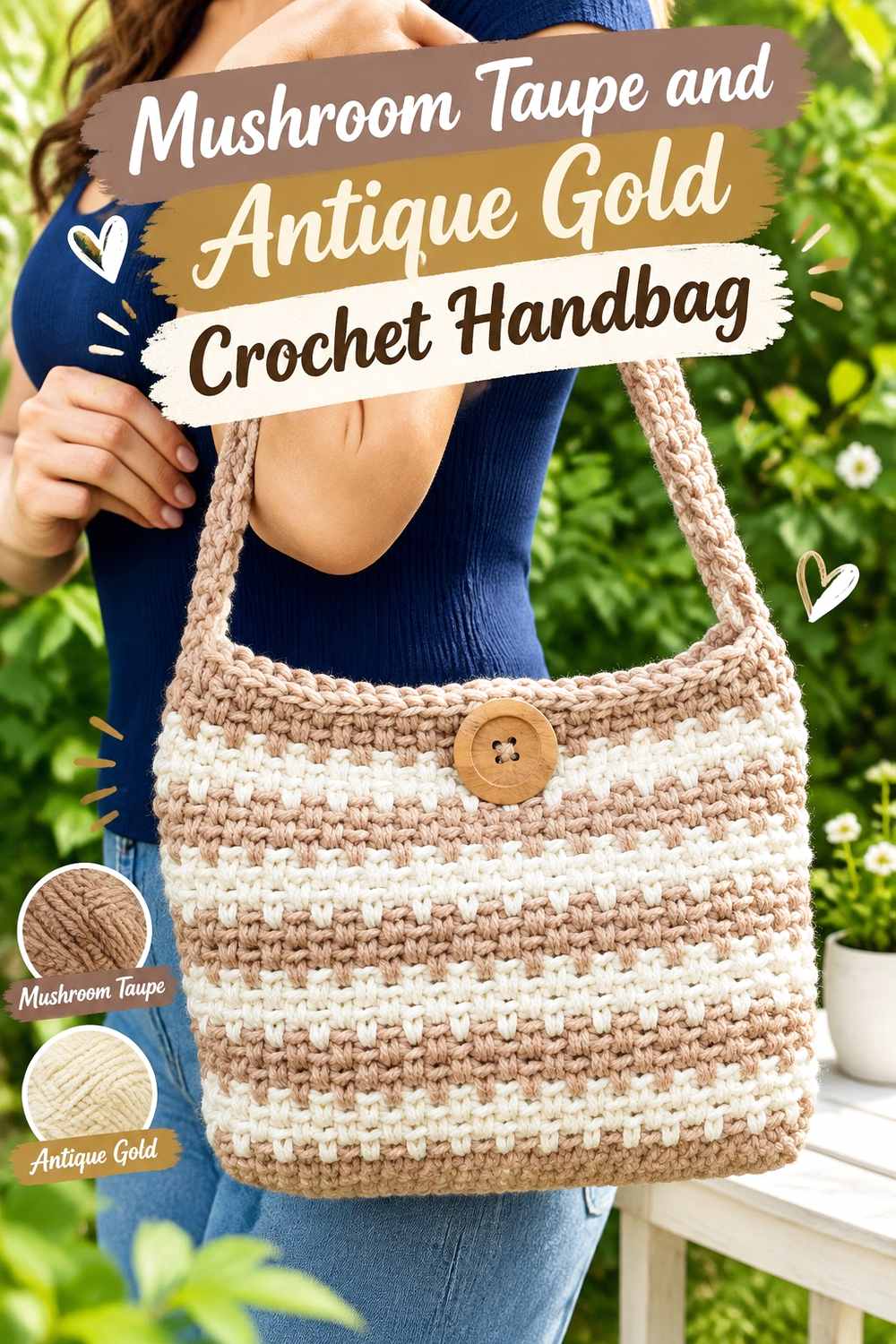
Antique gold adds a richer warm accent to Mushroom Taupe and can become visually strong even in relatively small amounts. That makes handles, trim, and closure areas better locations for it than half of the handbag body.
Keep Mushroom Taupe Dominant Across the Crochet Handbag Body
Use Mushroom Taupe through the broad front and back sections so the small bag remains visually cohesive. A quiet neutral field lets the structure and stitches remain visible without competing against several equally strong color blocks.
Antique Gold Highlights Mushroom Taupe Crochet Handbag Details
Reserve antique gold for handles, the upper edge, or a closure-related feature. Concentrating the accent around structural details gives the warmer color a specific visual purpose.
If the antique gold is muted, give it enough width to remain distinct rather than using a very narrow line against Mushroom Taupe.
Creator Credit: Naztazia
9. Mushroom Taupe And Deep Teal Crochet Cowl
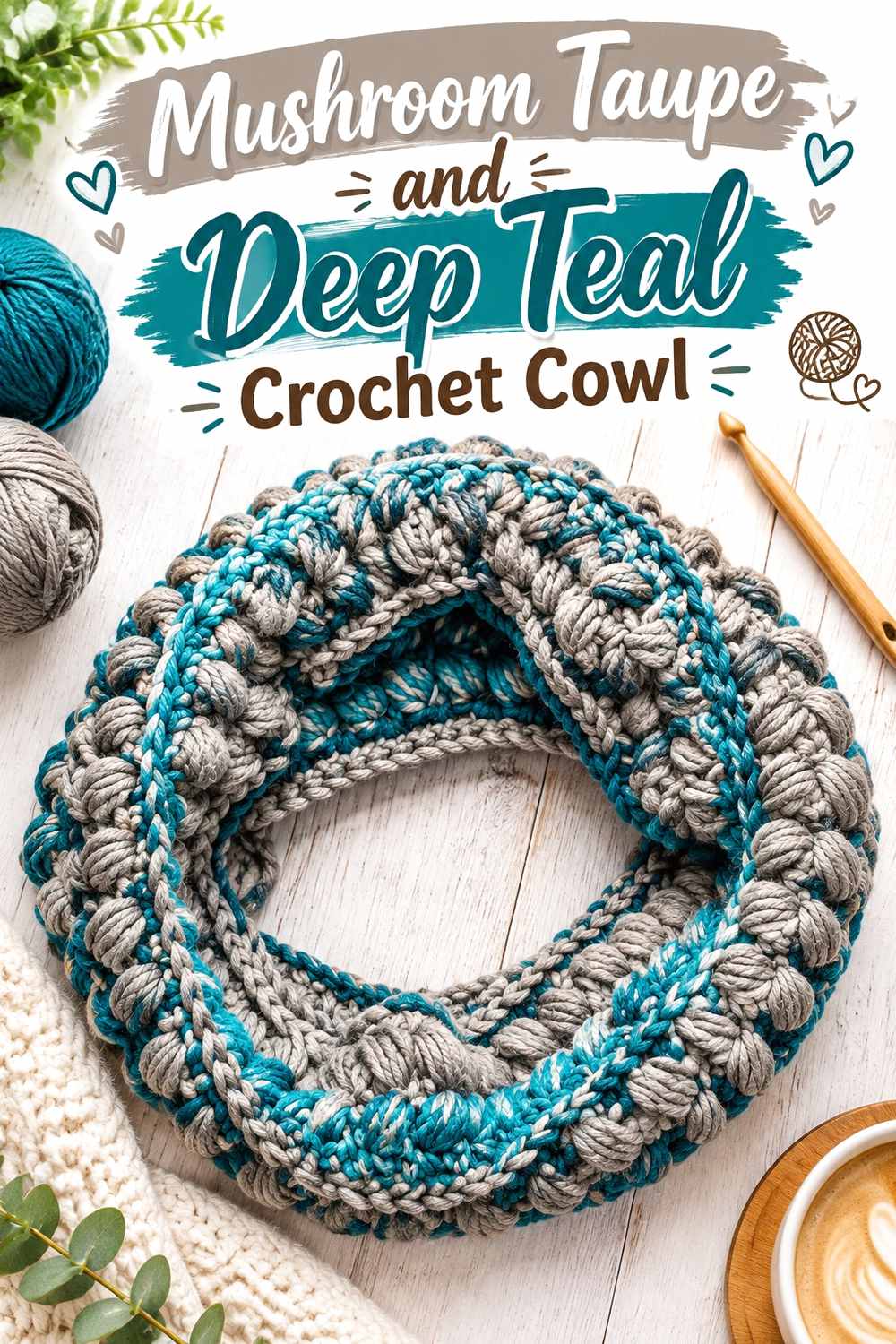
Deep teal turns Mushroom Taupe into a cooler, richer palette without abandoning its neutral foundation. Since a cowl folds and bunches when worn, larger blocks of both shades are easier to control than frequent narrow stripes.
Give Mushroom Taupe the Larger Crochet Cowl Sections
Use broad Mushroom Taupe repeats so the neutral remains visible after the fabric gathers around the neck. If every teal and taupe section is equally narrow, the finished colors may appear more mixed than intentionally layered.
Deep Teal Adds Depth to Mushroom Taupe Crochet Cowl Texture
Use deep teal beside selected textured areas or as a repeated band. The saturated blue-green provides enough hue contrast to change the palette noticeably while Mushroom Taupe continues to calm the overall surface.
Check value before assigning teal to tiny details, because a dark taupe and deep teal may be closer in lightness than expected.
Creator Credit: Rich Textures Crochet
10. Mushroom Taupe And Navy Crochet Headband
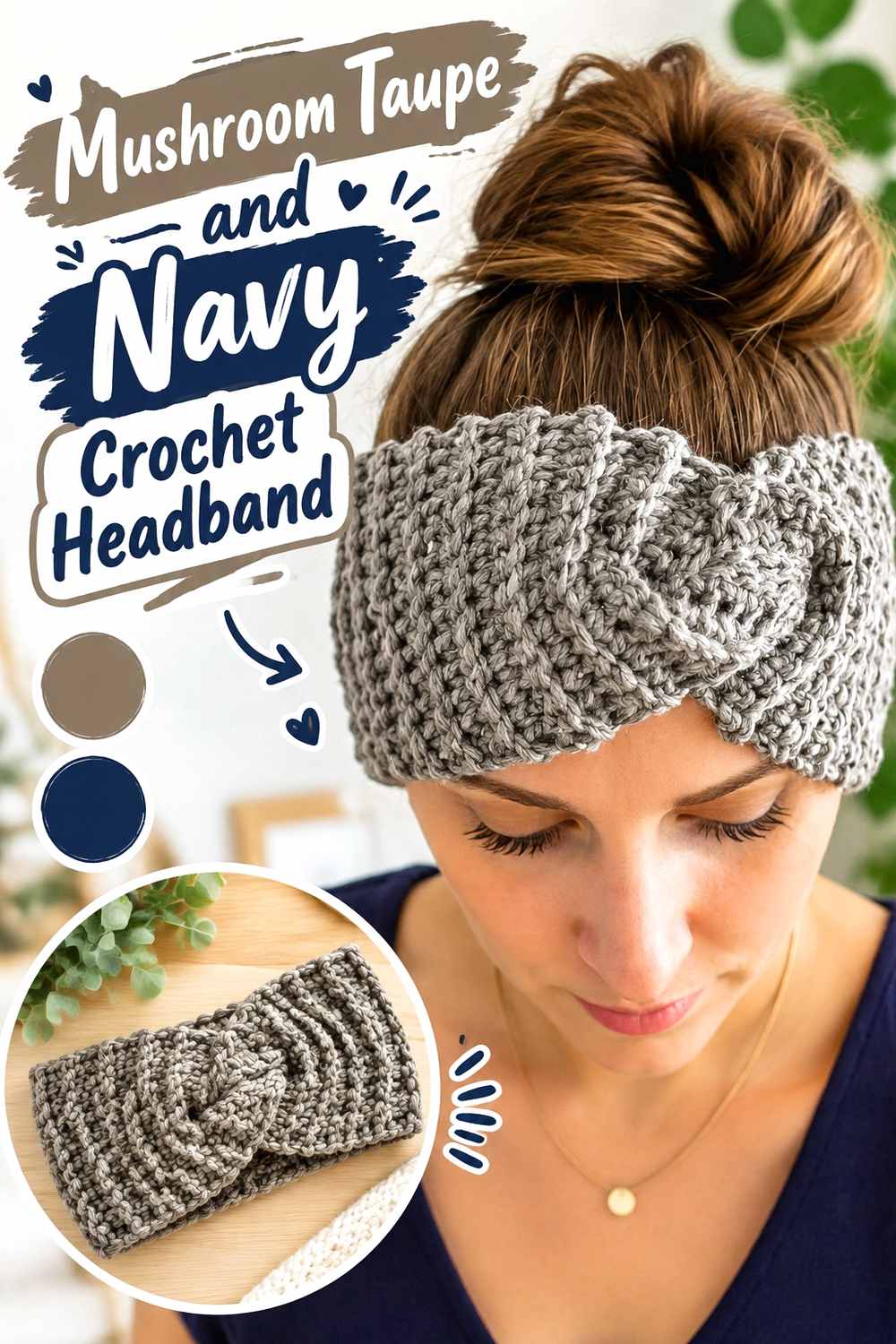
Navy creates a cooler dark edge around Mushroom Taupe and suits the narrow proportions of a headband. Since the accessory has little surface area, even a slim navy border can provide enough contrast.
Keep Mushroom Taupe Central on the Crochet Headband
Use Mushroom Taupe across the widest central section so ribbing or another texture remains uninterrupted. The neutral center also prevents a small accessory from becoming visually divided into several tiny color bands.
Navy Frames Mushroom Taupe Crochet Headband Edges
Place navy along both long edges or around the joining area. A symmetrical dark frame emphasizes the headband shape while leaving most of the visible surface Mushroom Taupe.
If the taupe is unusually dark, check whether the navy remains distinct before using it as very fine edging.
Creator Credit: B.Hooked Crochet
11. Mushroom Taupe And Soft Lilac Crochet Top
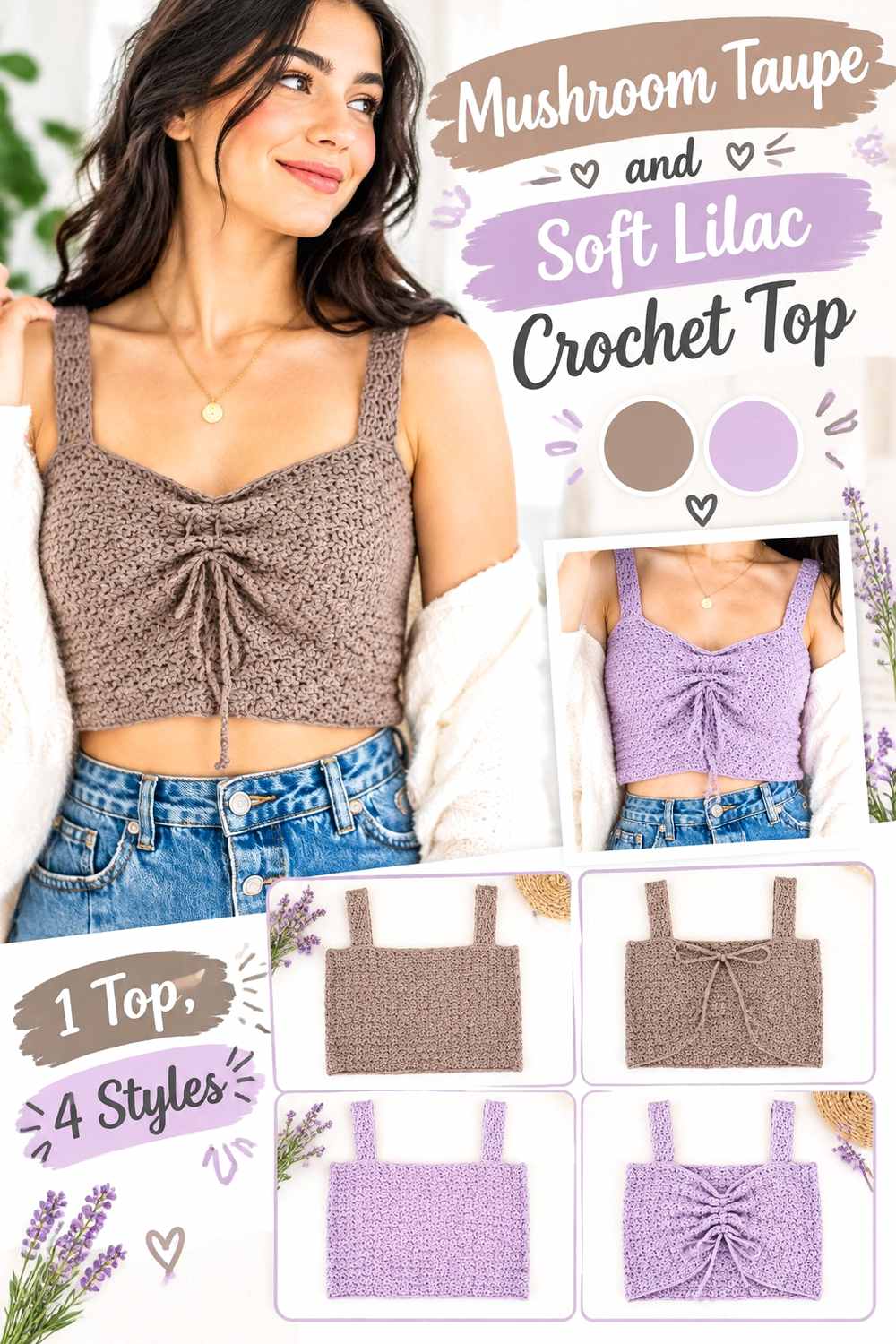
Soft lilac gives Mushroom Taupe a cooler pastel accent and moves the palette away from purely earthy neutrals. It works particularly well around narrower garment details where the light color can remain visible without overtaking the body.
Let Mushroom Taupe Lead Across the Crochet Top Body
Use Mushroom Taupe across the torso so the garment has one stable neutral field. Straps, neckline shaping, and other construction features already create visual divisions, so extra color blocking through the body is not necessary.
Soft Lilac Lightens Mushroom Taupe Crochet Top Edges
Place soft lilac around straps, sleeve edges, or neckline finishing. The lighter purple can distinguish those areas while giving the neutral a cooler direction.
Repeat lilac at another edge where practical so the accent looks intentionally distributed around the Mushroom Taupe body.
Creator Credit: For The Frills
12. Mushroom Taupe And Petrol Blue Crochet Shawl
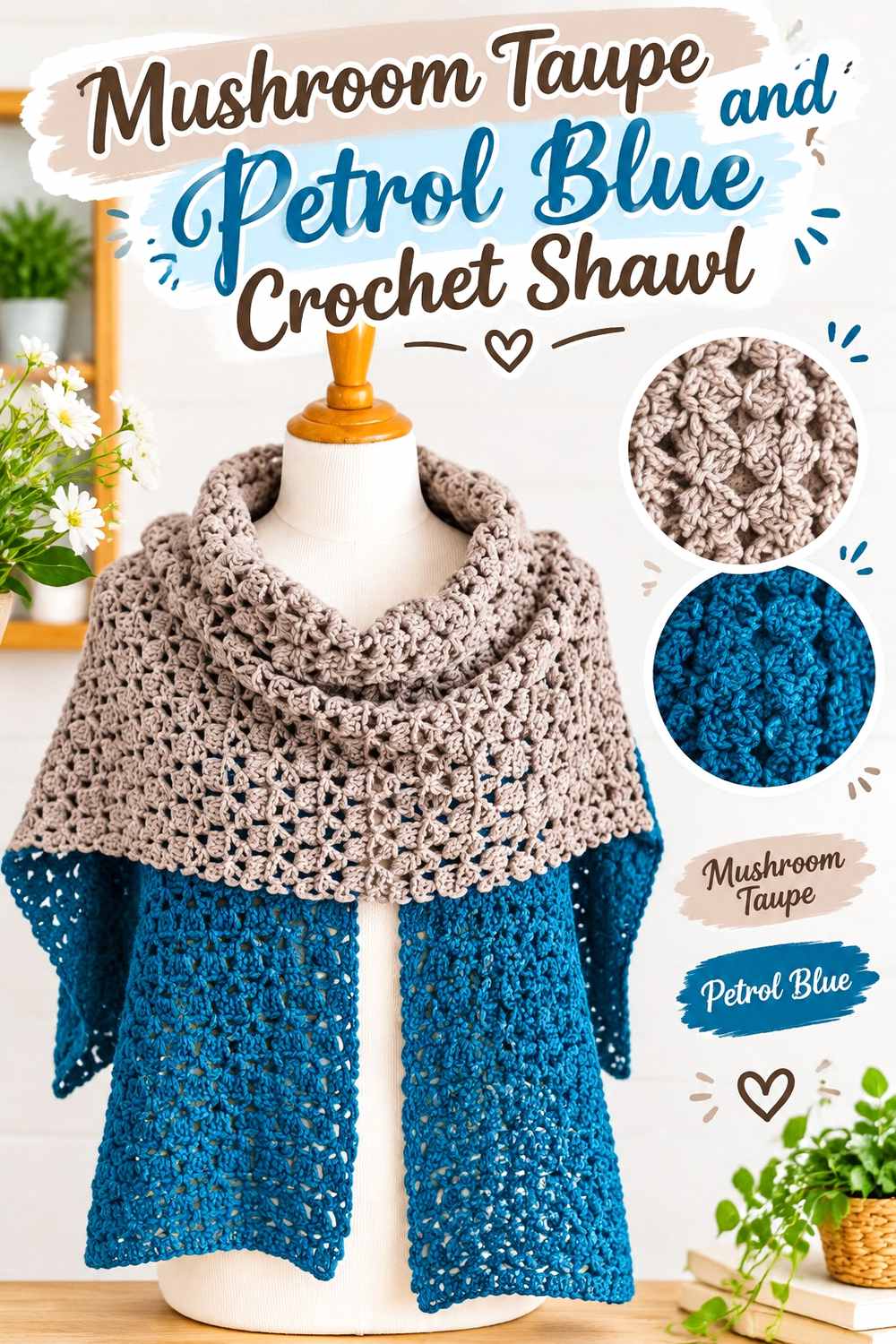
Petrol Blue gives Mushroom Taupe a deep blue-green partner that creates more contrast in hue than in brightness. A shawl provides enough width to use the two shades in broad sections where their subtle value relationship can work well.
Give Mushroom Taupe the Broadest Area of the Crochet Shawl
Use Mushroom Taupe across the main field or repeat it more frequently than Petrol Blue. Since a shawl folds and overlaps, the main neutral needs enough area to remain identifiable from several wearing positions.
Petrol Blue Frames Mushroom Taupe Crochet Shawl Sections
Place Petrol Blue toward an outer section or border to deepen the edge around the neutral center. This works particularly well when you want a darker finish without introducing black or charcoal.
If the two shades are close in grayscale, reserve the blue for broad framing instead of delicate details requiring sharp definition.
Creator Credit: Fiber Flux
13. Mushroom Taupe And Terracotta Crochet Basket
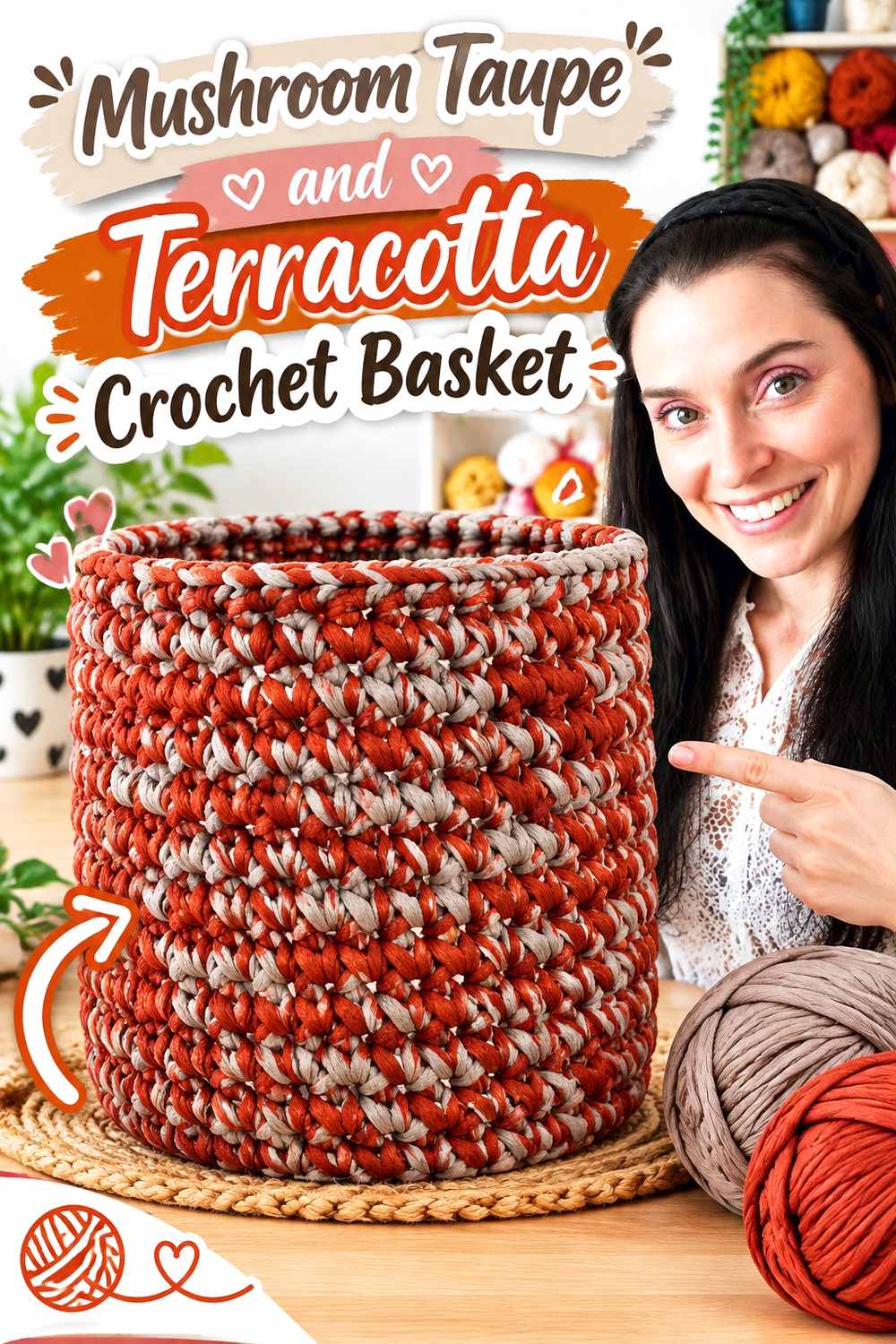
Terracotta warms Mushroom Taupe and makes handles or the upper rim useful places for stronger color. Keeping the substantial walls neutral lets the basket remain understated while the opening becomes more defined.
Use Mushroom Taupe Across the Main Crochet Basket Walls
Keep Mushroom Taupe through the side walls so the basket has a continuous base. The three-dimensional form and crochet texture already supply visual interest, reducing the need for frequent striping.
Terracotta Defines Handles Against a Mushroom Taupe Crochet Basket
Place terracotta around the handles or rim where the basket changes from wall to opening. The warm accent is then tied to a functional part of the object rather than appearing randomly through the body.
If the two yarns are similar in value, use terracotta across a full handle for clearer separation.
Creator Credit: Jayda InStitches
14. Mushroom Taupe And Moss Green Crochet Granny Square
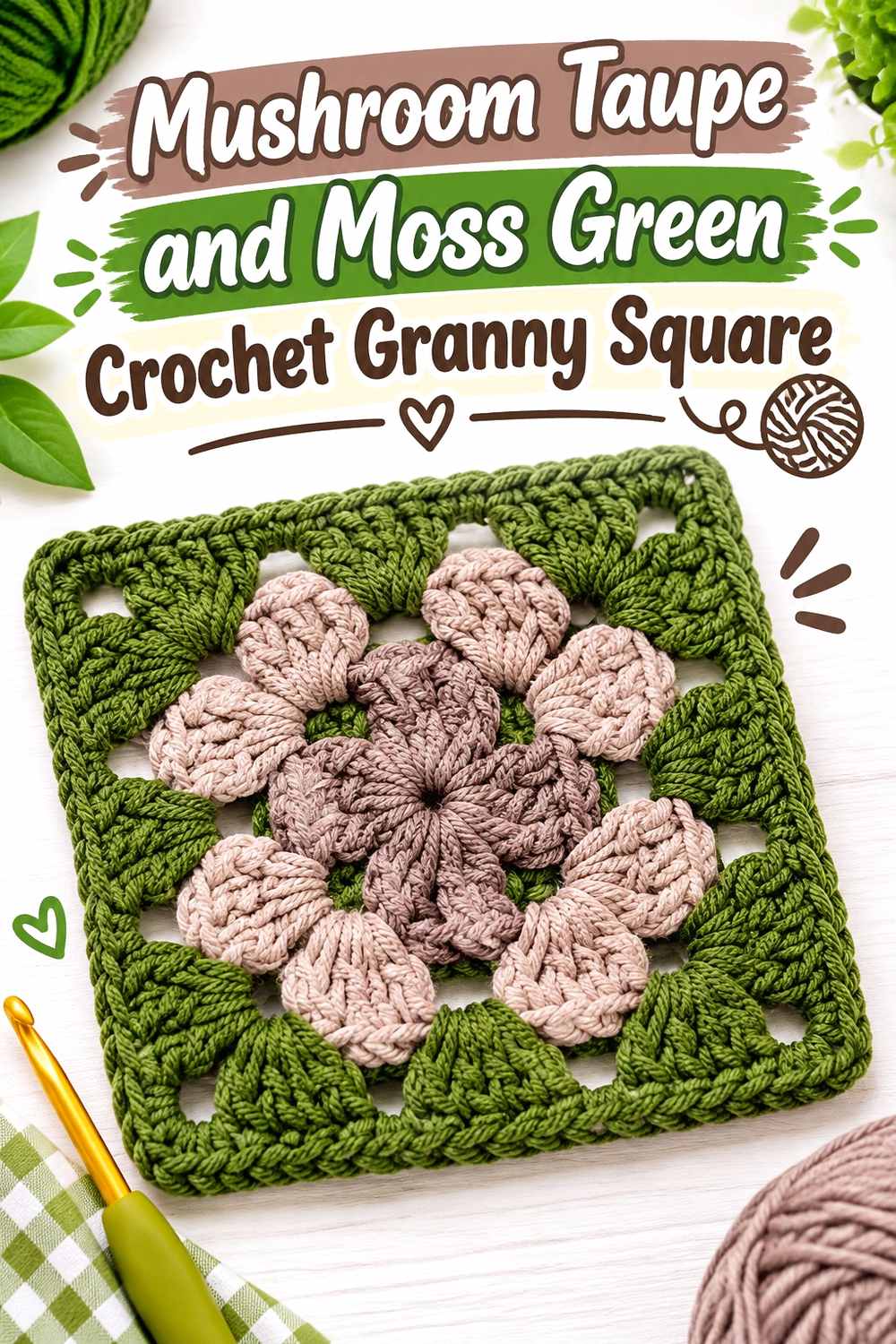
Moss green and Mushroom Taupe create an earthy motif palette with intentionally softer contrast. Because granny squares already contain separated visual zones, repeating Mushroom Taupe is important if it should remain the leading shade.
Repeat Mushroom Taupe Through More Than One Crochet Granny Square Area
Use Mushroom Taupe at the center and again nearer the outer section instead of restricting it to one small round. Repetition keeps the neutral visible after moss green is introduced.
This becomes especially useful when several squares are arranged together across a larger project.
Moss Green Should Support Mushroom Taupe Crochet Granny Square Structure
Give moss green an intermediate round or controlled border rather than automatically dividing every section equally between the two colors.
If motif definition is too subtle, introduce a lighter existing neutral at selected boundaries rather than increasing the number of unrelated colors.
Creator Credit: Hooked by Robin
15. Mushroom Taupe And Cream Crochet Phone Bag
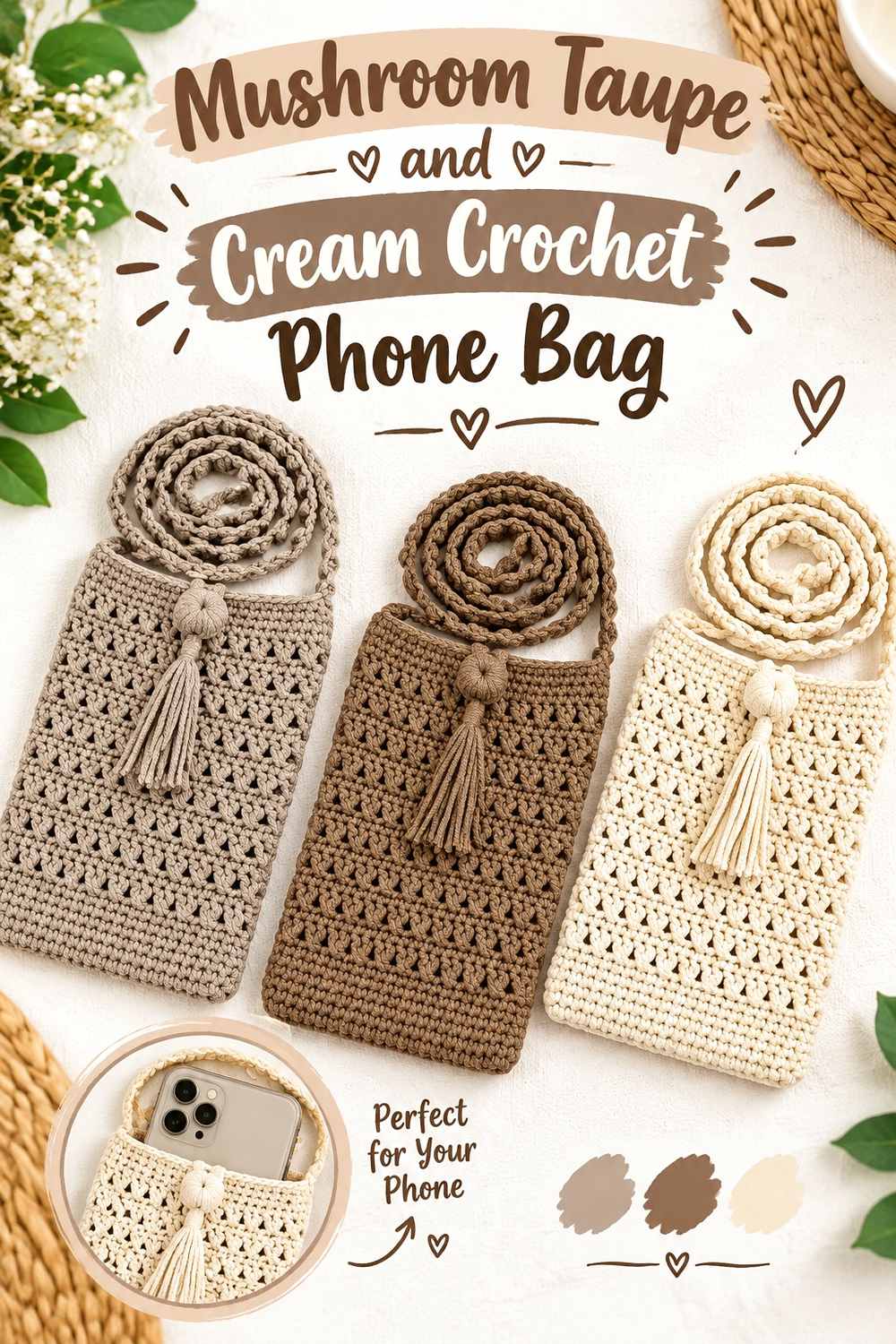
A phone bag has little space for complicated colorwork, making Mushroom Taupe and cream a useful simple pairing. Keep the body taupe and reserve cream for the strap, flap, or opening where narrow details need stronger visibility.
Keep Mushroom Taupe Across the Main Crochet Phone Bag Body
Use Mushroom Taupe over the largest front and back areas so the small bag remains visually unified.
A quiet main surface also gives any layered flap or pocket detail enough room to remain structurally clear.
Cream Clarifies Mushroom Taupe Crochet Phone Bag Details
Place cream on the strap, flap edge, or upper opening. The lighter neutral creates more definition around narrow pieces than another similar taupe would.
Because the bag is compact, a small amount of cream is usually enough; keep most of the surface Mushroom Taupe.
Creator Credit: Chenda DIY
16. Mushroom Taupe And Dusty Rose Crochet Fingerless Gloves

Dusty rose adds muted warmth to Mushroom Taupe and fits naturally around glove cuffs. Keeping the neutral through the hands maintains visual consistency across a small matching pair.
Keep Mushroom Taupe Across the Main Crochet Fingerless Gloves
Use Mushroom Taupe through the hand and thumb areas so stitch texture remains uninterrupted. Repeat the same distribution on both gloves rather than letting the accent placement vary from one to the other.
Dusty Rose Softens Mushroom Taupe Crochet Fingerless Glove Cuffs
Place dusty rose around the cuffs, where a color change already matches the transition from wrist to hand.
Choose a rose clearly lighter or more saturated than Mushroom Taupe if you want the cuffs to be obvious; a deeper muted rose will create a softer blended effect.
Creator Credit: Cherilyn Q
17. Mushroom Taupe And Powder Blue Crochet Bandana
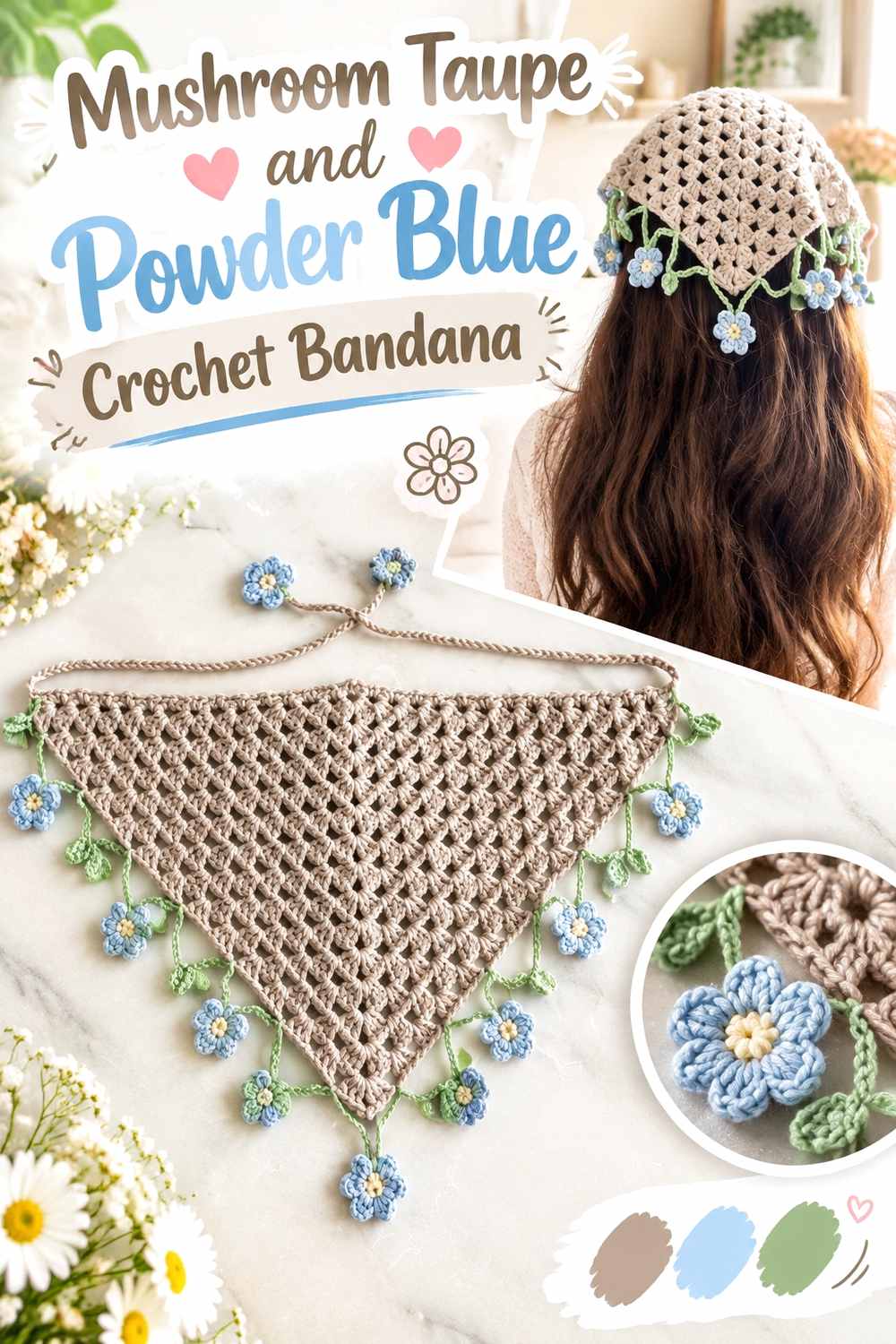
Powder blue gives Mushroom Taupe a light cool accent without introducing the starkness of white. A bandana’s triangular center and narrow ties offer a clear way to divide the two shades.
Keep Mushroom Taupe Across the Main Crochet Bandana Triangle
Use Mushroom Taupe through most of the triangle so the accessory retains one cohesive central field. If the construction contains open spaces, a continuous main shade also helps the lacy surface feel connected.
Avoid frequent color changes that emphasize individual rows more than the overall triangular shape.
Powder Blue Defines Mushroom Taupe Crochet Bandana Edges and Ties
Use powder blue around the outer edge or ties where the lighter shade can emphasize the silhouette and fastening areas.
Repeating blue in both the border and ties connects the accent around the Mushroom Taupe center without requiring it to occupy much of the main triangle.
Creator Credit: Plakshi Jain | Crochet
Comparing the 19 Mushroom Taupe Crochet Color Directions
For the clearest light contrast, Mushroom Taupe with soft ivory, oatmeal, warm white, cream, or powder blue makes borders and structural details easier to distinguish. These palettes are useful when the item contains narrow edging, brims, straps, ties, or texture that should stay visible.
Camel and cocoa keep the scheme close to an earthy neutral family. Camel creates a warmer, lighter shift, while cocoa provides darker grounding. Antique gold, burnt orange, and terracotta move farther into warm color and work particularly well in controlled accents where they can stand out against Mushroom Taupe.
Dusty sage and moss green create muted natural pairings. Sage is lighter and softer, while moss green gives the combination more depth. Deep teal, Petrol Blue, and navy move Mushroom Taupe in a cooler direction and generally work better across broader borders or bands when the two shades have similar values.
Blush, dusty rose, and soft lilac provide softer colored accents. Blush and dusty rose warm the neutral in different depths, while lilac introduces a cool pastel note that can work especially well around garment edges.
Conclusion
Mushroom Taupe is most useful when it is treated as an intentional main color rather than filler between brighter shades. Cardigans, blankets, pillows, shawls, and tops can carry the neutral across large areas, allowing stitch texture and shape to become more important. Bags, hats, gloves, slippers, baskets, and bandanas benefit from placing the secondary color around functional or structural details.
Choose ivory, cream, oatmeal, warm white, or powder blue when definition matters most. Camel and cocoa maintain an earthy neutral look, while burnt orange, antique gold, and terracotta add stronger warmth. Sage and moss green create muted natural combinations, and navy, teal, and Petrol Blue deepen the cooler side of Mushroom Taupe.
When substituting a shade, preserve what it contributes to the palette. A light accent should remain noticeably lighter, a dark anchor should stay deep enough to frame the neutral, and a saturated accent should occupy a controlled amount of the project when Mushroom Taupe is supposed to remain dominant.
Frequently Asked Questions
What Colors Work Well With Mushroom Taupe Crochet?
Mushroom Taupe can pair with ivory, cream, oatmeal, warm white, camel, cocoa, charcoal, terracotta, burnt orange, antique gold, blush, dusty rose, lilac, powder blue, dusty sage, moss green, teal, Petrol Blue, and navy. The useful choice depends on whether you want a neutral, warm, cool, or more colorful result.
How Can I Keep Mushroom Taupe Crochet From Looking Dull?
Give either texture or the supporting color a clear role. Raised stitches, ribbing, and openwork can add surface variation, while a concentrated accent around cuffs, handles, brims, borders, or motif areas can provide color contrast without overwhelming the taupe.
Does Mushroom Taupe Crochet Work Better With White or Cream?
Both can create clear light contrast. A warm cream tends to stay closer to the earthy character of Mushroom Taupe, while a clearer white creates a sharper visual break. Compare the actual yarns before choosing because taupe shades can vary considerably in depth.
Can Mushroom Taupe and Green Work Together in Crochet?
Yes. Dusty sage creates a lighter muted pairing, while moss green gives Mushroom Taupe a darker earthy direction. Use stronger value contrast when the green is meant to define small motifs or narrow edging.
Can Mushroom Taupe and Blue Work Together in Crochet?
Yes. Powder blue creates a light, soft contrast; Petrol Blue adds deeper blue-green color; and navy produces a dark frame. Decide whether the blue should brighten, color, or darken the taupe before choosing where it belongs on the item.
What Warm Colors Work With Mushroom Taupe Crochet?
Burnt orange, terracotta, antique gold, camel, blush, and dusty rose all introduce warmth at different intensities. Stronger shades such as orange and terracotta are usually easier to control when used around borders, handles, cuffs, or repeated accent sections.
How Can I Make Mushroom Taupe Crochet Texture Easier to See?
Place a noticeably lighter or darker shade beside important raised details, borders, or ribbing changes. On a single-color Mushroom Taupe project, larger uninterrupted areas can also help the stitch shadows remain visible rather than being interrupted by constant color changes.
How Do I Substitute a Color in a Mushroom Taupe Crochet Palette?
Preserve its function. Replace a pale contrast with another clearly lighter color, a dark anchor with another sufficiently deep shade, and a warm or cool accent with a color of similar visual strength. Maintaining that relationship is more important than matching an exact shade name.