Espresso brown gives a crochet sweater a deep neutral base without forcing the whole garment into a single-color look. The key is deciding how much of the sweater should stay brown and where a lighter, warmer, cooler, or more saturated shade will actually improve the design.
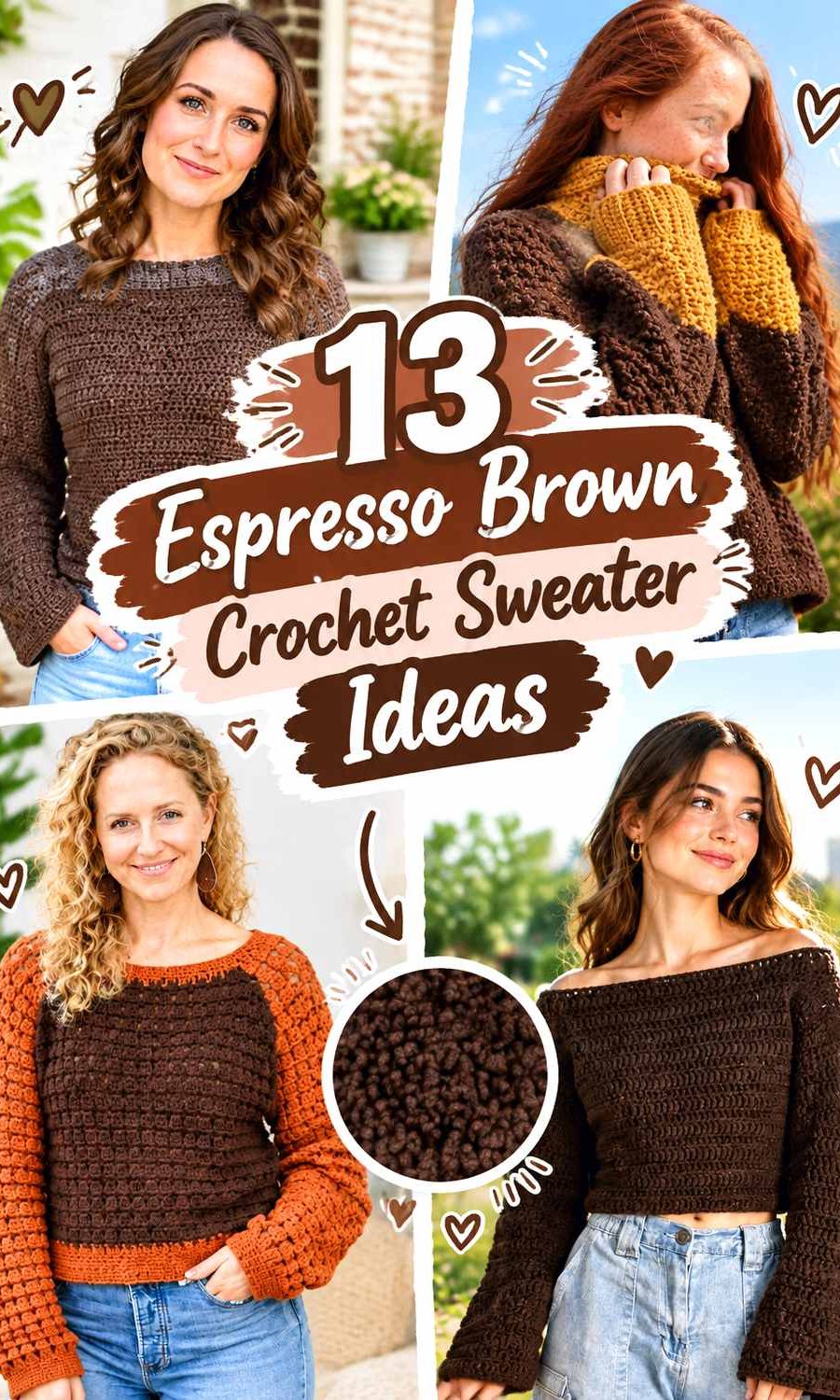
These 13 ideas use Espresso Brown as the visual anchor but take the color in different directions—from soft cream contrast and earthy greens to burgundy, dusty rose, black, and mustard. The linked tutorials support the sweater construction concepts; the Espresso Brown palettes below are independent color adaptations and should not be read as the creators’ original color choices.
Quick List
- Espresso Brown And Cream Granny Square Crochet Sweater
- Espresso Brown And Black Mesh Crochet Sweater
- Espresso Brown And Camel Textured Crop Crochet Sweater
- Espresso Brown And Oatmeal Wide Collar Crochet Sweater
- Espresso Brown And Dusty Rose Off Shoulder Crochet Sweater
- Tonal Espresso Brown And Mocha Crochet Sweater
- Espresso Brown Sage And Cream Striped Crochet Sweater
- Espresso Brown And Burnt Orange Raglan Crochet Sweater
- Espresso Brown And Mustard Chunky Crochet Sweater
- Espresso Brown And Burgundy V Neck Crochet Sweater
- Espresso Brown And Ivory Boxy V Neck Crochet Sweater
- Espresso Brown And Soft Gray Tweed Look Crochet Sweater
- Espresso Brown Forest Green And Cream Oversized Crochet Sweater
Keep Espresso Brown Crochet Texture From Disappearing
A dark sweater can lose some visual stitch definition when the entire surface is worked in colors with similar values. This matters most when cables, raised stitches, granny-square lines, ribbing, or other texture is an important part of the design.
When you want those details to remain easy to see, place a lighter supporting shade near the textured area. Cream around granny-square centers, oatmeal at ribbed cuffs, or camel beside raised Espresso Brown stitches can create separation without turning the garment into a high-contrast color-block sweater.
For a mostly monochromatic design, compare Espresso Brown with mocha, cocoa, or taupe yarns side by side. The shades need enough difference to remain distinguishable once worked into crochet fabric.
Decide Where Supporting Colors Belong on an Espresso Brown Sweater
Supporting colors do not need equal space. Keeping Espresso Brown across the body and repeating another shade at the neckline, cuffs, hem, or selected sleeve sections usually creates a clearer hierarchy than dividing every color evenly.
Sweater construction should guide placement. Granny-square designs can carry contrast inside motifs and joins, while panel sweaters give you larger uninterrupted areas for controlled color blocking. Raglan and striped constructions make repetition especially useful because the accent can move consistently across the body and sleeves.
1. Espresso Brown And Cream Granny Square Crochet Sweater
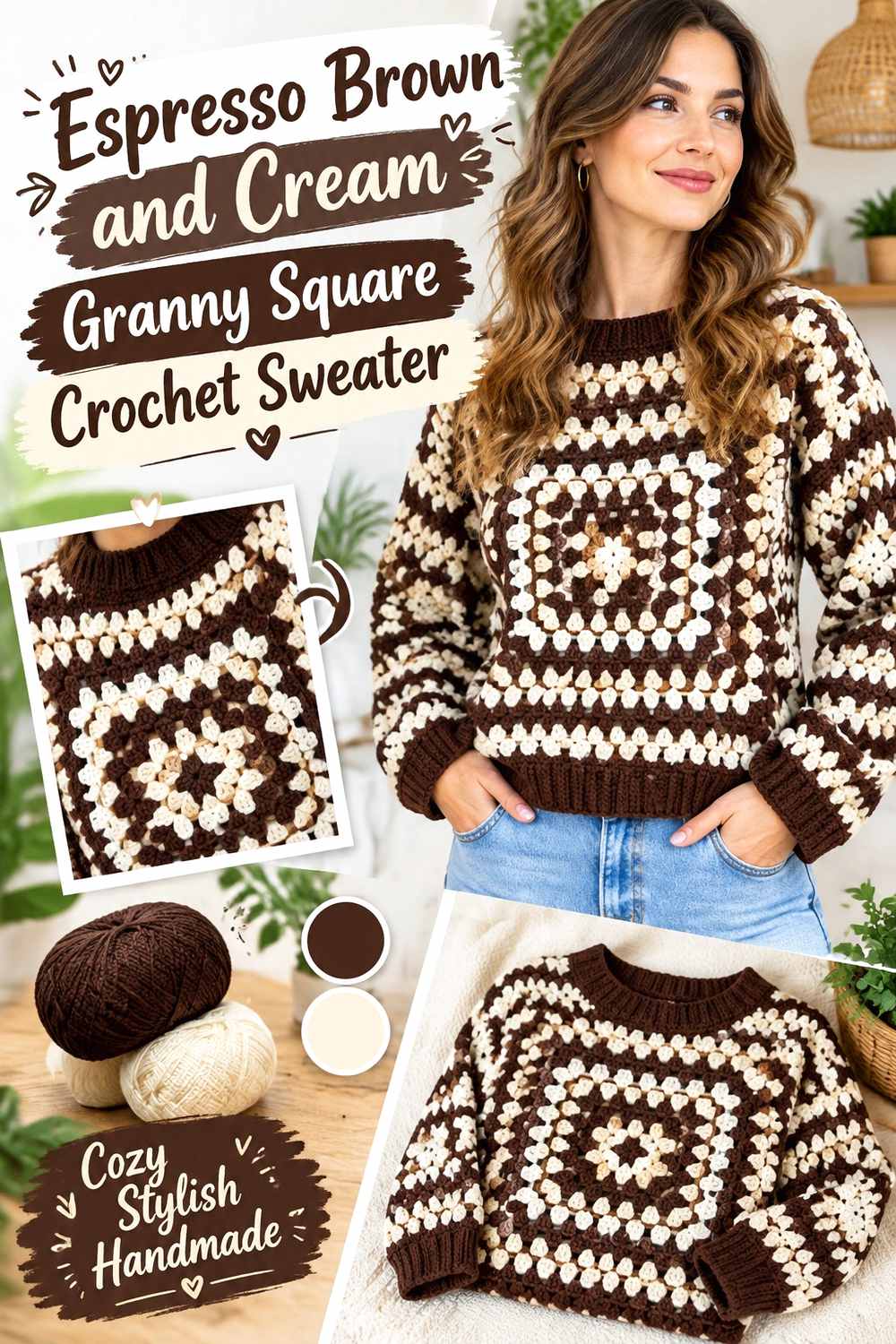
Let Espresso Brown establish the sweater’s overall depth while cream separates the geometry of the granny-square motifs. Instead of using both shades equally in every square, consider keeping Espresso Brown across the larger outer portions and concentrating cream toward selected centers, borders, or repeating rounds. That keeps the sweater recognizably brown while making the motif structure easier to read. The construction concept is supported by a full granny-square sweater tutorial from Zeens And Roger Crochet.
Cream Keeps Espresso Brown Granny Squares Visually Separated
Cream can be most useful where one Espresso Brown motif meets another. A lighter motif edge or repeated cream detail prevents several dark squares from visually merging into one uninterrupted brown surface.
If you prefer less contrast, reduce the amount of cream rather than replacing Espresso Brown as the dominant shade. Small repeated cream areas can still clarify the square structure.
Espresso Brown Should Repeat Across the Granny Square Sweater
Avoid placing Espresso Brown only in isolated square centers if it is meant to define the garment. Repeat it consistently across the body and sleeves so the darker shade connects the individual motifs.
A cream neckline or cuff can finish the design, but repeating a little Espresso Brown within those areas helps the trim remain connected to the main sweater.
Creator Credit: Zeens And Roger Crochet
2. Espresso Brown And Black Mesh Crochet Sweater
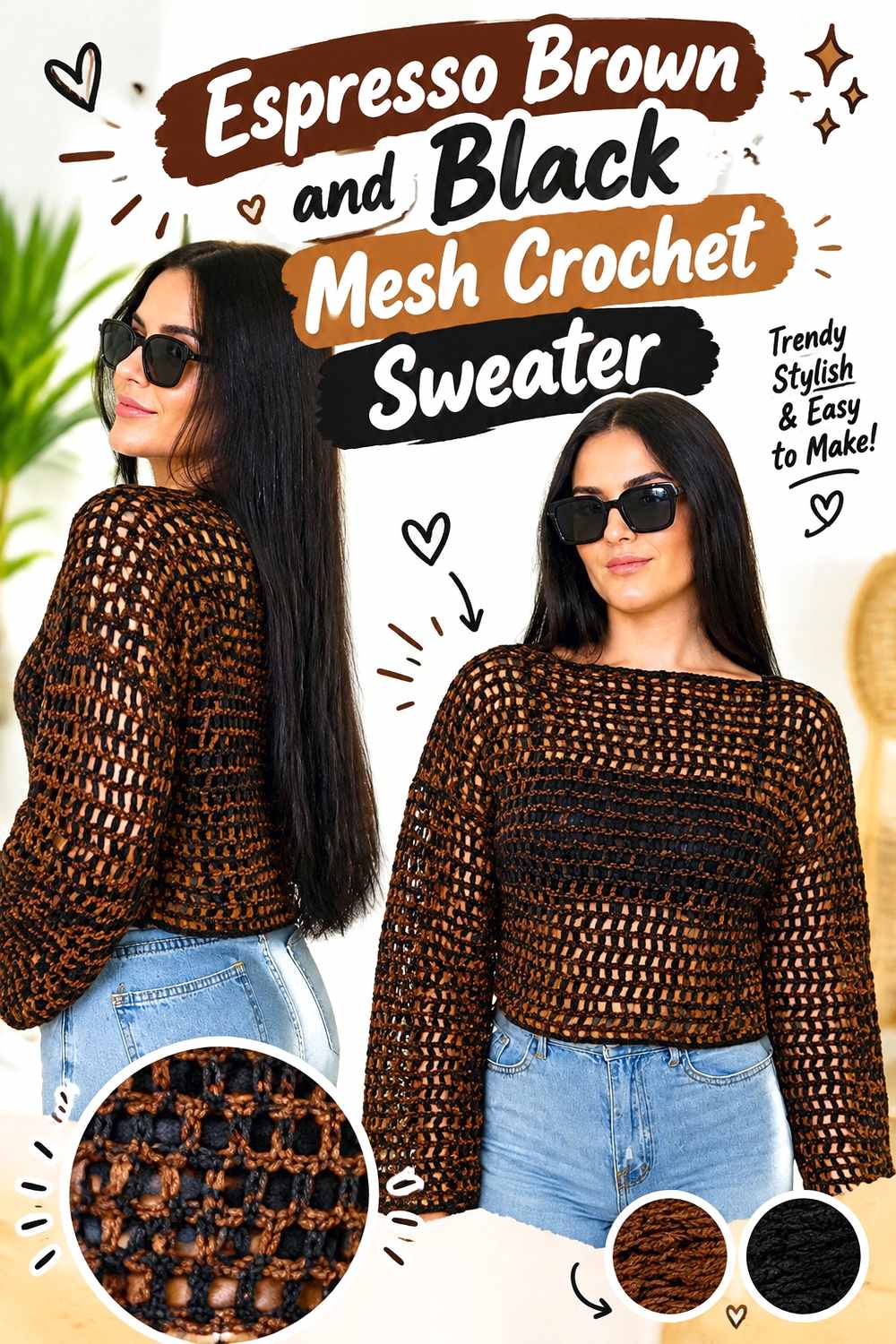
Espresso Brown and black create a low-light-contrast palette that puts more attention on the open structure of a mesh sweater. Keep Espresso Brown dominant if you still want the garment to read clearly as brown, then use black selectively at edges or in controlled sections. Because the two colors can look close from a distance, this scheme works differently from a cream-and-brown combination: the focus is subtle definition rather than strong separation. ElyseCrochets provides the supporting mesh-sweater construction tutorial.
Black Can Frame an Espresso Brown Mesh Sweater
Try black around the neckline, hem, or cuffs instead of alternating black and Espresso Brown through every mesh section. A concentrated dark frame gives the sweater definition without breaking up the openwork repeatedly.
This placement is also easier to evaluate before committing to extensive color changes: lay the two yarns together and check whether the distinction remains visible under normal lighting.
Espresso Brown Needs Enough Area to Lead This Dark Palette
When black and Espresso Brown occupy similar amounts, the sweater can lose a clear main color. Give Espresso Brown the larger visual share if the article’s brown direction is what you want to preserve.
If the two yarns appear almost identical, choose a slightly lighter or warmer brown rather than relying on hue alone to create separation.
Creator Credit: ElyseCrochets 💌
3. Espresso Brown And Camel Textured Crop Crochet Sweater
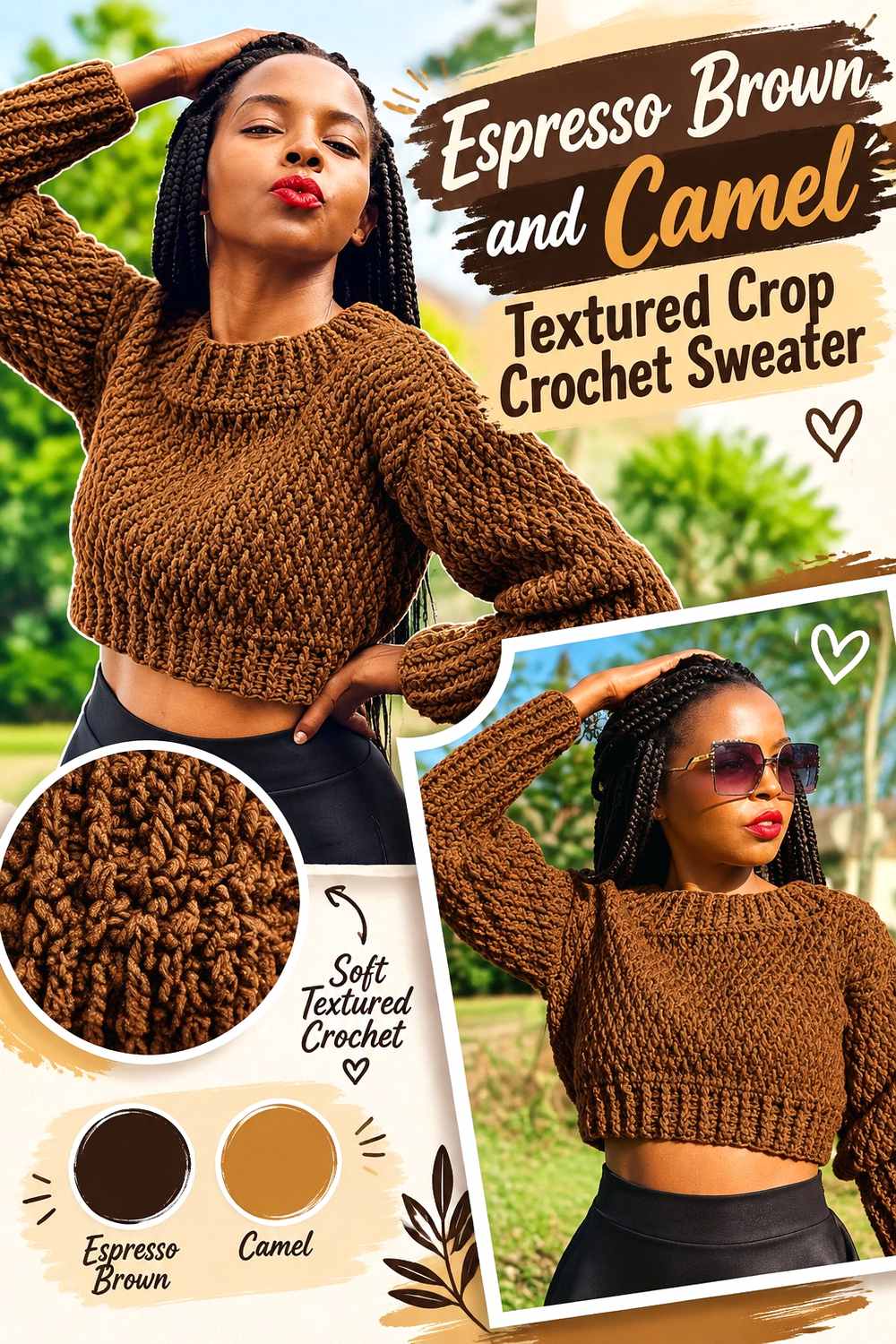
Camel gives a textured Espresso Brown sweater contrast without creating the sharp jump that ivory or white would. On a cropped sweater with a noticeable stitch surface, Espresso Brown can cover most of the body while camel highlights ribbing, cuffs, or a limited section of the texture. AC Crochets’ tutorial demonstrates a textured cropped sweater construction that can support this color approach.
Camel Can Reveal Texture Around Espresso Brown Stitches
Use camel beside the areas where you most want the crochet texture to remain noticeable. The lighter brown family keeps the palette tonal while providing more separation than two nearly identical dark browns.
You do not need to outline every textured section. Repeating camel at the hem and cuffs may be enough to make the warmer tonal relationship intentional.
Espresso Brown Can Keep a Cropped Sweater From Becoming Too Busy
A cropped silhouette has less vertical space for multiple competing color blocks. Keeping Espresso Brown uninterrupted across the main body gives the sweater a calmer center.
Camel can then work as supporting trim or a small sleeve detail rather than dividing the front panel into several short bands.
Creator Credit: AC Crochets
4. Espresso Brown And Oatmeal Wide Collar Crochet Sweater
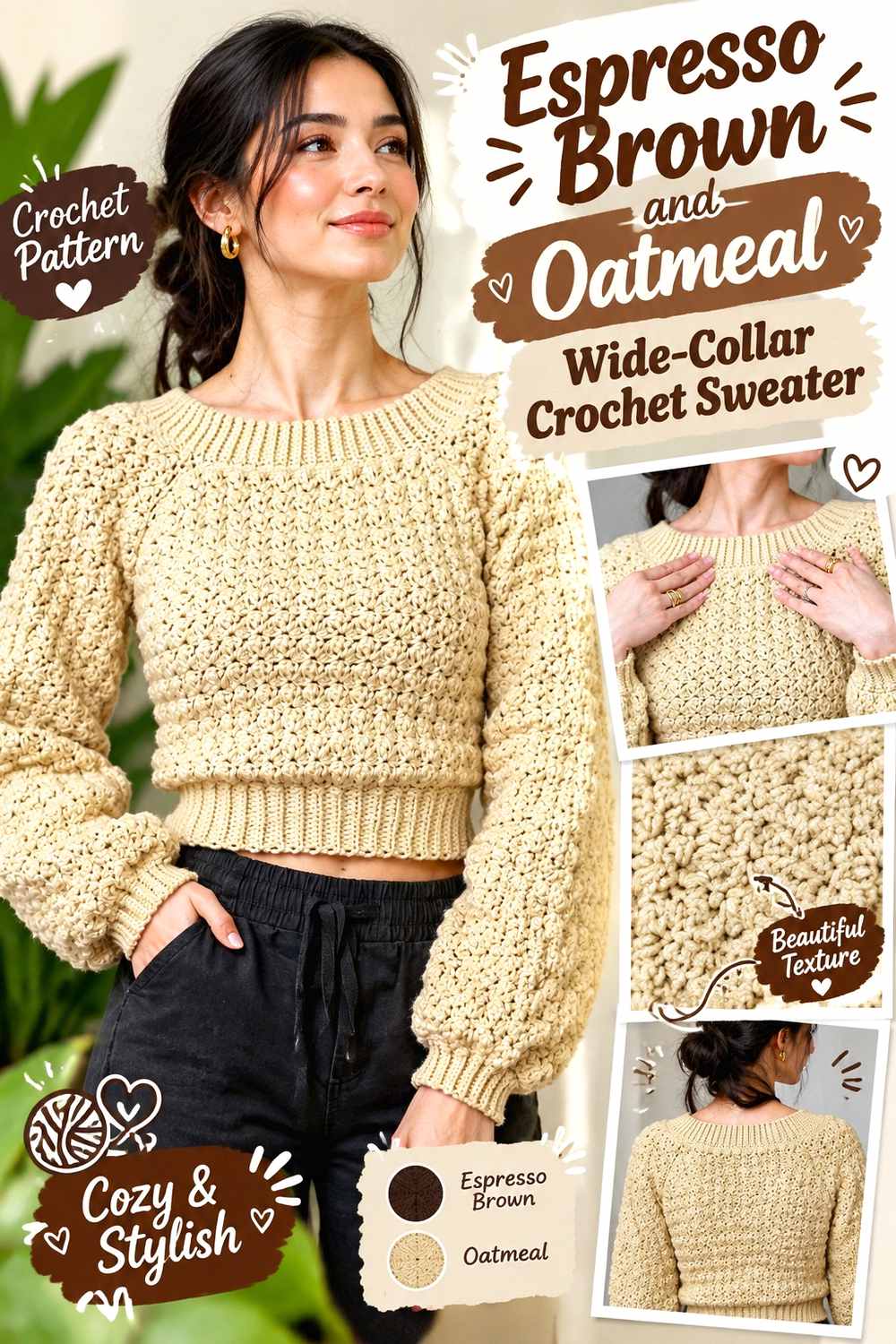
A wide collar gives oatmeal a natural place to contrast with Espresso Brown without taking over the whole garment. Keep Espresso Brown through the body and sleeves, then let the lighter neutral define the collar, cuffs, or lower band. That concentrates the strongest contrast around structural sweater details rather than scattering oatmeal randomly. TCDDIY’s supporting tutorial features a cropped sweater with a prominent collar and textured fabric.
Oatmeal Can Separate the Collar From Espresso Brown
A broad Espresso Brown collar can blend into the body when the same dark shade continues everywhere. Oatmeal makes the neckline more distinct and can visually separate a thick collar from the sweater front.
For a quieter result, work only the outer collar edge in oatmeal instead of changing the entire collar.
Espresso Brown Should Return Below an Oatmeal Collar
When the collar is the lightest area, repeat Espresso Brown immediately through the shoulder and body sections so the garment still has a strong dark foundation.
If you also use oatmeal at the cuffs, keep the repetition symmetrical unless an intentionally uneven color-blocked look is part of the plan.
Creator Credit: TCDDIY
5. Espresso Brown And Dusty Rose Off Shoulder Crochet Sweater

Dusty rose changes Espresso Brown without overpowering it, especially when the pink is softened rather than highly saturated. An off-shoulder sweater gives you a useful horizontal area for the supporting shade: dusty rose can sit near the upper edge, appear in sleeve bands, or repeat as narrow accents while Espresso Brown covers the larger body sections. VivCrochets’ tutorial provides an off-shoulder cropped sweater construction for this adaptation.
Dusty Rose Can Lighten the Upper Edge of Espresso Brown
Placing dusty rose close to the neckline creates contrast where the sweater meets the shoulders without splitting the entire body into equal blocks.
Repeating a smaller amount near the cuffs can make the pink look intentional rather than like a single unrelated stripe.
Espresso Brown Keeps Dusty Rose From Dominating the Sweater
Use Espresso Brown for the broadest panels if you want a grounded rather than predominantly pink garment. Dusty rose works more clearly as support when its total visual area remains smaller.
If your pink is brighter than expected, reducing its coverage can be more effective than adding a third strong color.
Creator Credit: VivCrochets
6. Tonal Espresso Brown And Mocha Crochet Sweater
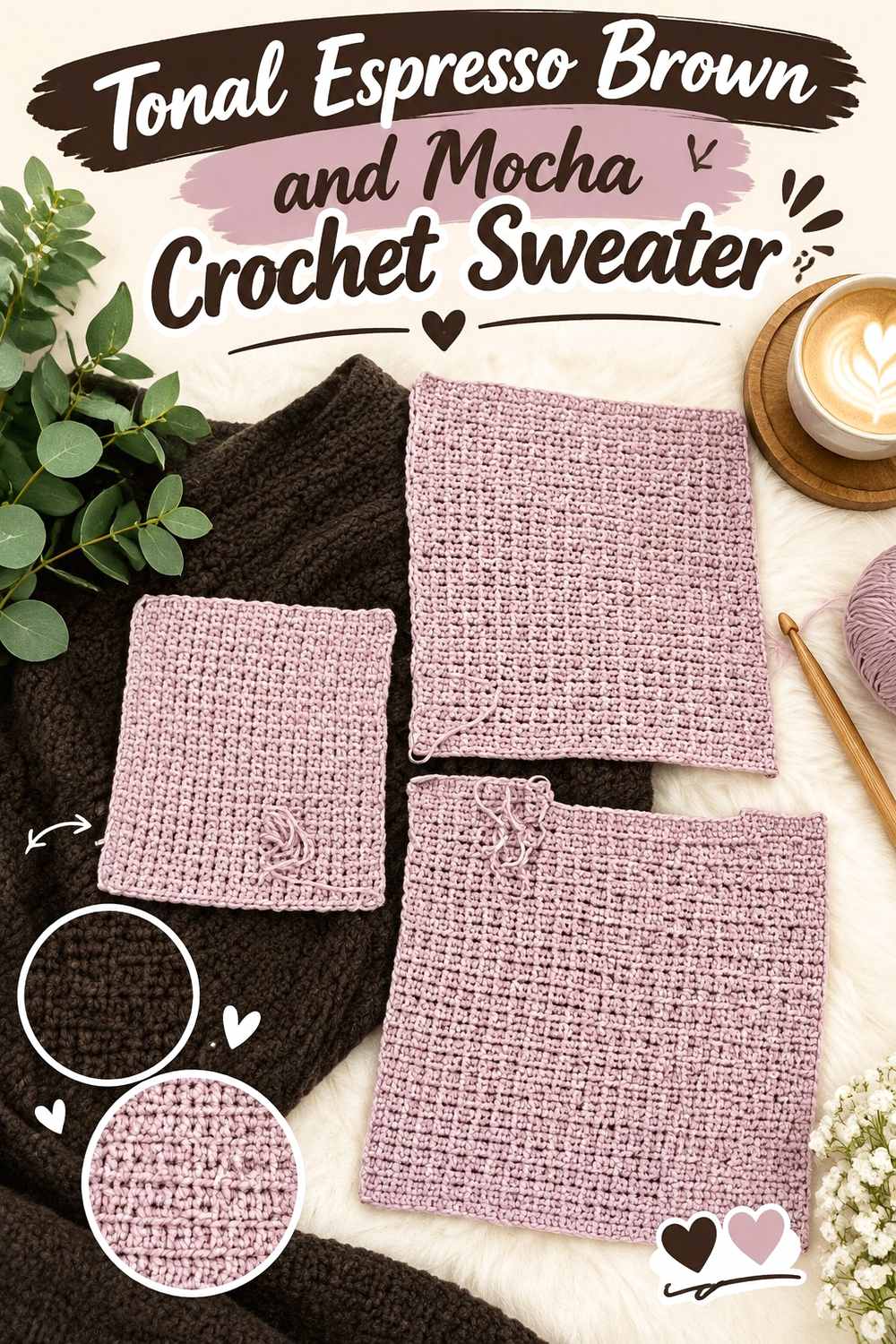
A tonal sweater relies on controlled differences rather than obvious contrast. Espresso Brown should remain the darkest anchor, while mocha can break up larger areas at the sleeves, neckline, or selected panel sections. The result can stay firmly within the brown family while avoiding a completely uniform surface. KnitcroAddict provides the supporting crochet sweater tutorial.
Mocha Needs to Stay Distinct From Espresso Brown
Before committing to large sections, place the two yarns next to each other and check them from several feet away. If mocha disappears into Espresso Brown, the finished color blocking may be almost invisible.
A useful substitute is any medium brown that remains clearly lighter than the Espresso Brown while keeping the same muted, earthy direction.
Espresso Brown Can Define the Sweater Edges
Use Espresso Brown for cuffs, hem, and neckline when mocha occupies part of the body. Returning to the darkest shade at the edges gives the tonal sweater a more deliberate frame.
This is especially useful when the interior color changes are subtle and need a strong repeated anchor.
Creator Credit: KnitcroAddict
7. Espresso Brown Sage And Cream Striped Crochet Sweater

This three-color scheme works best when Espresso Brown clearly leads instead of giving brown, sage, and cream equal visual weight. Use broad Espresso Brown areas, medium amounts of muted sage, and smaller cream stripes for the lightest interruptions. MJ’s Off The Hook Designs provides a modern striped sweater tutorial that supports the striped construction concept.
Sage Softens the Transition Across Espresso Brown Stripes
Sage can sit between dark Espresso Brown and light cream to make the value changes feel less abrupt. It is particularly useful when you want a multicolor sweater without creating repeated dark-to-light jumps.
Keep the sage muted if a quieter, earthy palette is the goal; a highly saturated green would create a different emphasis.
Cream Should Stay Controlled Beside Espresso Brown
Cream produces the strongest value contrast in this palette, so narrow cream stripes can have more visual influence than their size suggests.
Repeat cream consistently rather than inserting it once. A small recurring accent usually looks more connected to Espresso Brown and sage than one isolated light band.
Creator Credit: MJ’s Off The Hook Designs
8. Espresso Brown And Burnt Orange Raglan Crochet Sweater

Espresso Brown and burnt orange stay within a warm, earthy direction while still giving the raglan structure enough color variation to show. Espresso Brown can dominate the torso, with burnt orange appearing around the yoke, sleeve sections, or repeated bands. Make & Do Crew provides the supporting top-down raglan pullover tutorial.
Burnt Orange Can Trace the Espresso Brown Raglan Area
The raglan yoke creates natural lines around the upper body, making it a logical place for controlled color contrast. Using burnt orange there draws attention to the sweater’s construction rather than introducing arbitrary color blocks.
Carry a smaller amount of orange into the sleeves if the yoke otherwise feels disconnected from the lower garment.
Espresso Brown Should Anchor the Raglan Body
Keep the torso predominantly Espresso Brown when burnt orange is concentrated near the shoulders. This preserves a clear dark base and keeps the warmer accent from taking over.
If both yarns have similar darkness, compare them before starting; you may need a lighter burnt orange for the raglan distinction to remain noticeable.
Creator Credit: Make & Do Crew
9. Espresso Brown And Mustard Chunky Crochet Sweater
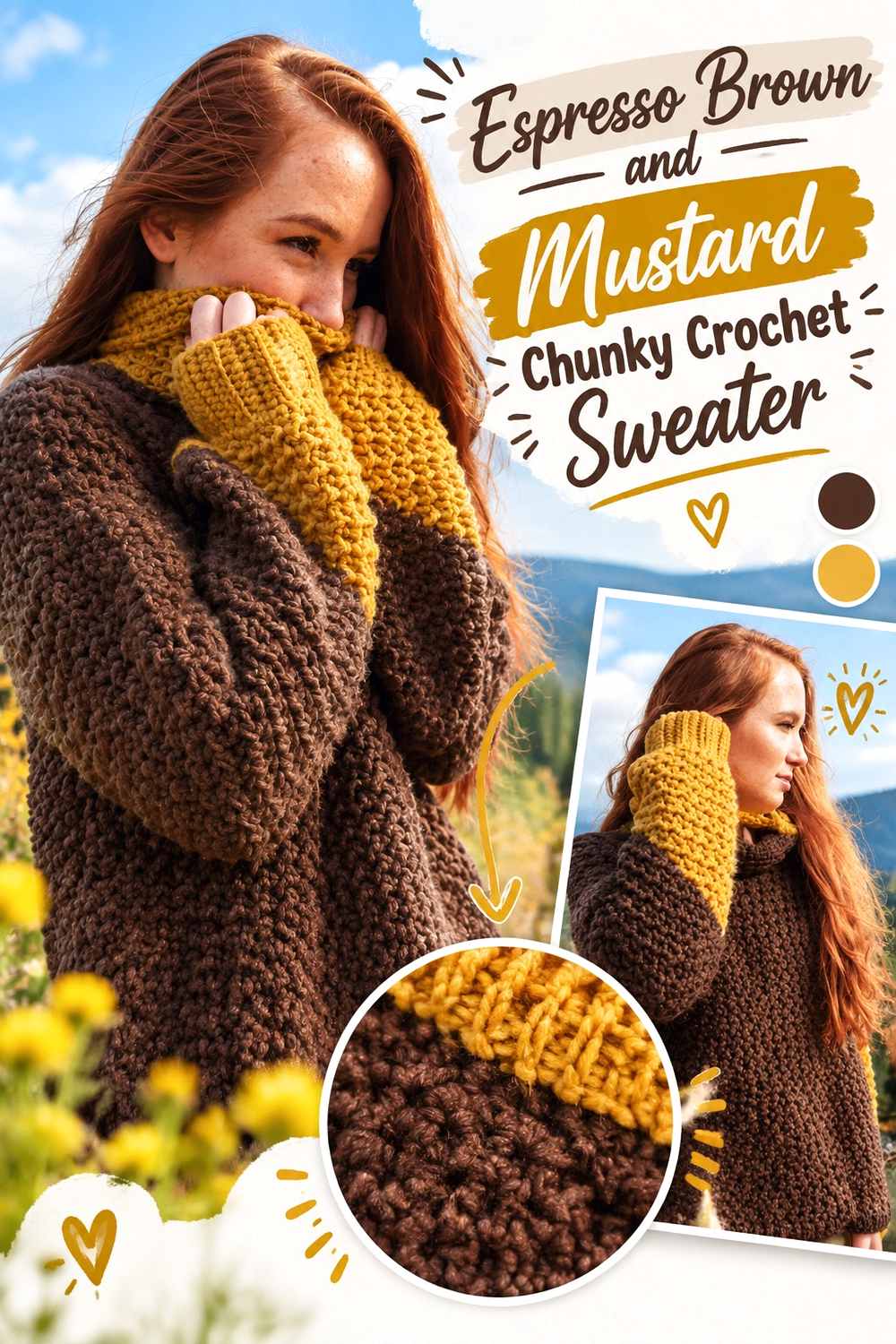
A chunky sweater gives mustard a lot of visual impact even when you use relatively little of it. Keep Espresso Brown across the main body and let mustard appear at the neckline, cuffs, or one repeated stripe location. Hey Carrie’s tutorial provides the chunky sweater construction supporting this color idea.
Mustard Needs Restraint Against a Chunky Espresso Brown Surface
Large stitches and thicker-looking fabric can make contrasting colors occupy more visual space. A narrow mustard cuff can therefore feel more prominent than the same amount of color on a finer-textured sweater.
Start with limited mustard placement if Espresso Brown is supposed to remain dominant.
Espresso Brown Can Connect the Chunky Sweater Pieces
Repeating Espresso Brown across the torso and sleeves prevents the accent from visually separating the sweater into unrelated sections.
If mustard appears at both the cuffs and neckline, an Espresso Brown hem can help return the eye to the garment’s primary shade.
Creator Credit: Hey Carrie
10. Espresso Brown And Burgundy V Neck Crochet Sweater
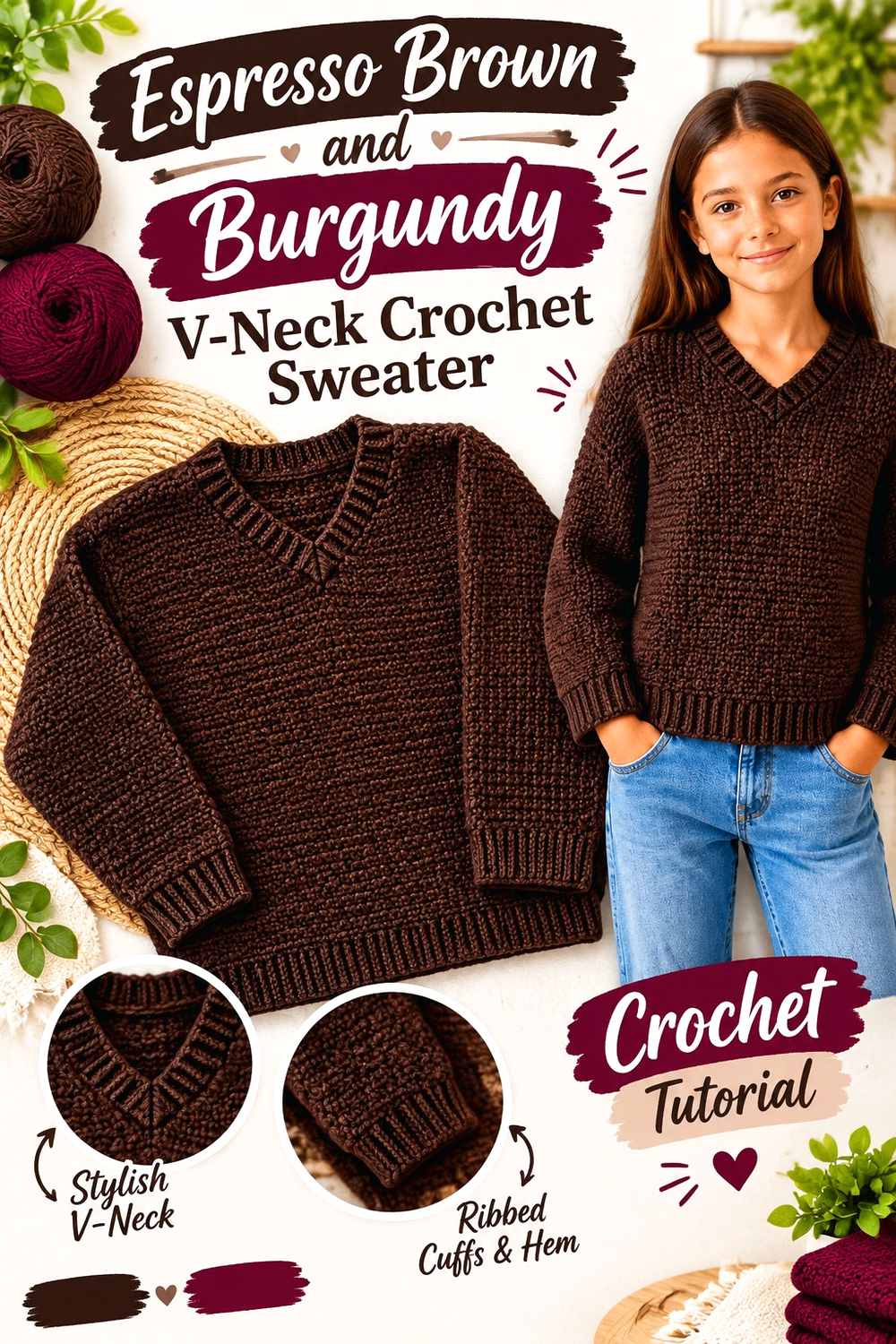
Burgundy adds color while staying relatively close to Espresso Brown in visual depth. That makes it useful for a V-neck sweater where you want a richer palette without outlining every edge in a very light shade. Tommy’s sheep crochet and knitting provides the supporting V-neck sweater tutorial.
Burgundy Can Emphasize an Espresso Brown V-Neck
Place burgundy around the neckline when you want the V shape to register more clearly against an Espresso Brown front panel. A narrow burgundy edge can provide enough hue contrast without becoming the garment’s dominant feature.
If your burgundy and brown are equally dark, check them from a distance before using burgundy specifically for definition.
Espresso Brown Gives Burgundy a Stable Background
Keeping the body Espresso Brown allows burgundy to function as an accent rather than creating two competing dark fields.
You can repeat burgundy at the cuffs or hem, but avoid adding several additional dark colors unless you intentionally want a more complex palette.
Creator Credit: Tommy’s sheep crochet and knitting
11. Espresso Brown And Ivory Boxy V Neck Crochet Sweater
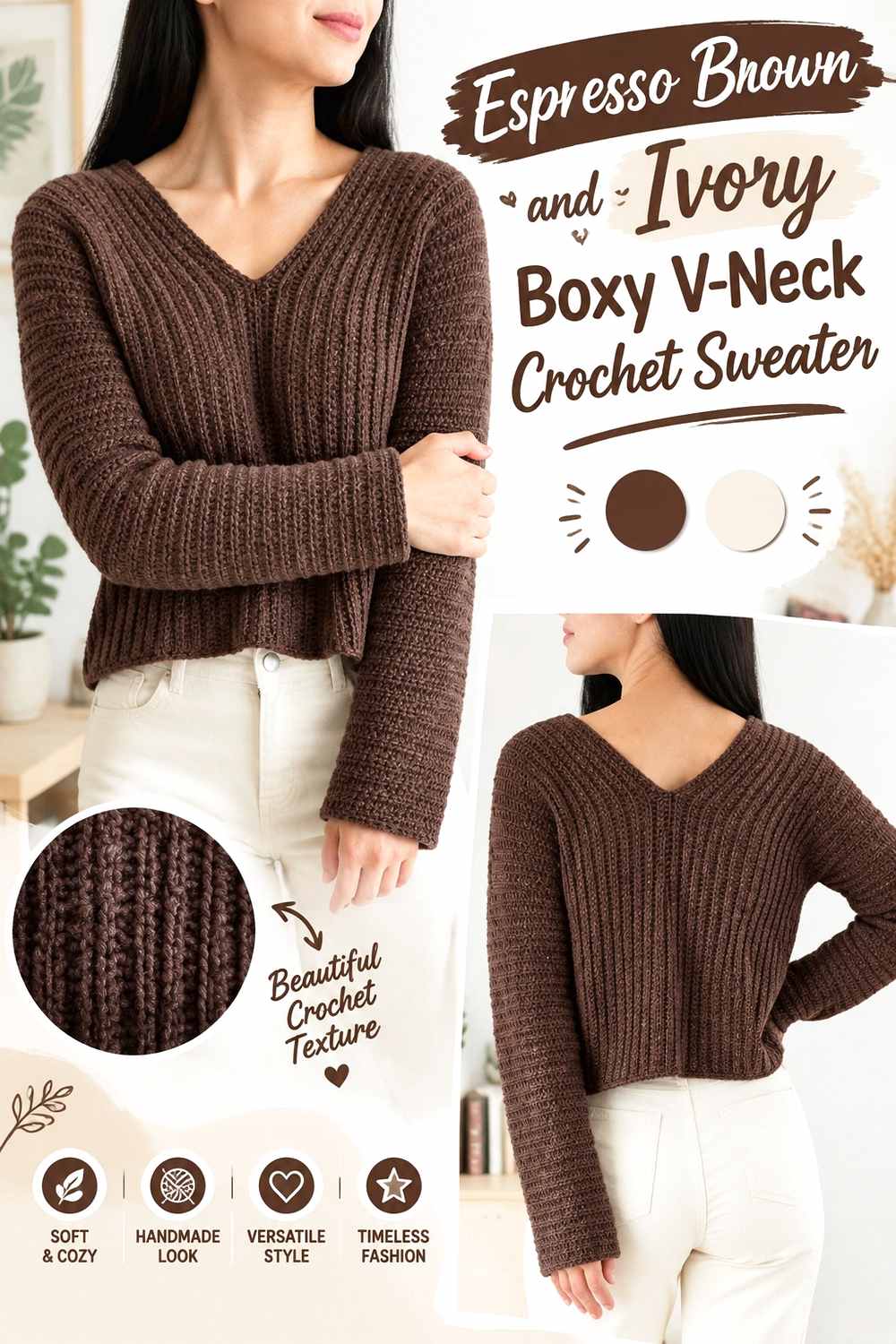
Ivory creates much stronger contrast against Espresso Brown than mocha, burgundy, or black. On a boxier V-neck sweater, that contrast can be concentrated at the neckline and lower edges while the uninterrupted Espresso Brown body keeps the silhouette visually simple. The supporting tutorial from forthefrills features a long-sleeved V-neck sweater with a boxy body.
Ivory Makes the Espresso Brown V-Neck More Graphic
Use ivory along the V-neck edge when you want the neckline to become a major visual feature. The light-dark separation can outline the shape clearly even when the rest of the sweater stays solid brown.
For less contrast, reduce the width of the ivory section rather than distributing ivory over more of the body.
Espresso Brown Keeps an Ivory-Trimmed Sweater Grounded
Allow Espresso Brown to continue uninterrupted through most of the front and back panels. A large, simple brown field balances the lighter neckline and keeps the sweater from looking overly segmented.
Repeating a thin ivory line at the cuffs can connect the sleeves without challenging Espresso Brown’s dominant role.
Creator Credit: forthefrills
12. Espresso Brown And Soft Gray Tweed Look Crochet Sweater

Soft gray cools the palette slightly and creates a different effect from warm cream or camel. Use Espresso Brown as the main surface and introduce gray through cuffs, a narrow lower band, or restrained panel sections. HanJan Crochet provides the supporting adult sweater tutorial for this concept.
Soft Gray Can Cool Down an Espresso Brown Sweater
Place gray beside Espresso Brown where you want a neutral contrast without adding another warm shade. This is useful around ribbing because the change can distinguish the structural detail while keeping the garment neutral.
A medium or light gray will usually create more visible separation than charcoal when paired with a very dark brown.
Espresso Brown Should Remain the Darkest Visual Anchor
If your gray is also dark, check whether the sweater still reads as Espresso Brown from a distance. Similar-value neutrals can merge even when their hues are different.
Choosing a lighter gray preserves the brown-gray relationship more clearly without requiring a bright accent.
Creator Credit: HanJan Crochet
13. Espresso Brown Forest Green And Cream Oversized Crochet Sweater

Forest green and Espresso Brown create a dark earthy base, while cream provides the separation those two deeper colors may need. On an oversized sweater, keep broad areas Espresso Brown rather than dividing the extra surface into too many equal stripes. Forest green can become the secondary shade, with cream reserved for smaller repeats that prevent the dark colors from blending together. Hooked on Homemade Happiness provides the supporting oversized sweater tutorial.
Forest Green Adds Depth Without Replacing Espresso Brown
Use forest green on selected sleeve sections or broad secondary bands rather than matching Espresso Brown stitch for stitch throughout the garment.
Because both colors can be dark, inserting a small cream section between them can make the change easier to see when stronger separation is wanted.
Cream Can Organize an Espresso Brown and Forest Green Sweater
Cream is the strongest contrast in this three-color palette, so use it deliberately. Thin repeated sections can visually organize larger Espresso Brown and forest green areas without turning the sweater predominantly light.
Keeping cream in the same locations on both sleeves can also make a large oversized silhouette feel more coordinated.
Creator Credit: Hooked on Homemade Happiness
Comparing the 13 Espresso Brown Crochet Sweater Palettes
For the strongest light-dark contrast, the cream, oatmeal, or ivory combinations create the clearest separation from Espresso Brown. They are especially useful when neckline, granny-square, ribbing, or other structural details need to remain visible.
For a quieter tonal sweater, camel, mocha, or soft gray keeps the palette more restrained. Black creates an even darker direction, while burgundy adds color without producing the sharp contrast of a pale neutral.
Sage, forest green, burnt orange, dusty rose, and mustard shift more attention toward the accent itself. Give those colors less surface area when you want Espresso Brown to remain unmistakably dominant.
Conclusion
Start by deciding what you want Espresso Brown to do. If it should carry nearly the entire sweater, use cream, camel, gray, or another shade mainly on the neckline, cuffs, hem, or small repeated details. If you want more visible color movement, the striped sage palette, burnt-orange raglan, dusty-rose sweater, or forest-green combination gives the supporting shade more room.
For texture-heavy sweaters, prioritize enough value contrast to keep important crochet details visible. For tonal designs, preserve a noticeable lightness difference between Espresso Brown and the secondary brown rather than relying only on slightly different color names.
The linked creator tutorials provide the exact construction guidance; use the color ideas here as a separate planning layer when adapting your chosen sweater.
Frequently Asked Questions
What colors go well with Espresso Brown in a crochet sweater?
Cream, oatmeal, ivory, camel, soft gray, muted sage, forest green, dusty rose, burnt orange, mustard, and burgundy can all create distinct directions. The more important decision is how light, dark, muted, or saturated the second color is compared with your particular Espresso Brown yarn.
How do I keep an Espresso Brown crochet sweater from looking too dark?
You do not need to replace large sections of brown. A lighter neckline, cuffs, granny-square centers, or repeated narrow stripes can create enough separation while allowing Espresso Brown to remain dominant.
How can I make Espresso Brown crochet texture more visible?
Check the fabric under normal lighting and see whether the texture can still be read at a distance. If raised stitches or motifs disappear, a lighter supporting shade near those features can provide clearer value separation.
Can I make an Espresso Brown sweater with several other colors?
Yes, but give the colors different jobs. For example, Espresso Brown can dominate, sage can support, and cream can act as the smallest light accent. Equal quantities of every shade are not necessary.
What can I substitute if I cannot find the exact Espresso Brown shade?
Look for another deep brown that preserves the role you need it to play. If the pattern includes cream or another light accent, make sure the replacement brown remains dark enough to maintain that contrast.
Should Espresso Brown be used on sweater cuffs and ribbing?
It can be, particularly when you want dark edges that visually frame the garment. If the body is already solid Espresso Brown, using a lighter supporting color on the cuffs or ribbing is another way to reveal those structural details without changing the entire sweater.