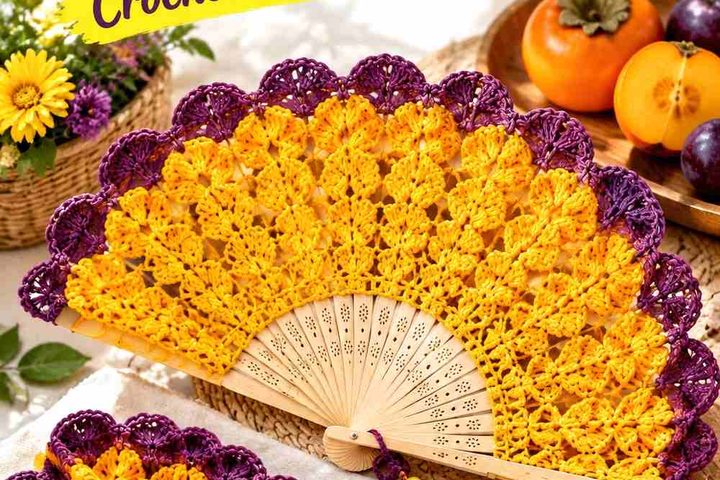
Black cherry and dusty pink give a crochet lace choker enough contrast to show delicate motifs without relying on black or bright white. Black cherry can provide the darker framework around the neck, while dusty pink can lighten scallops, flowers, picots, ruffles, or ties.
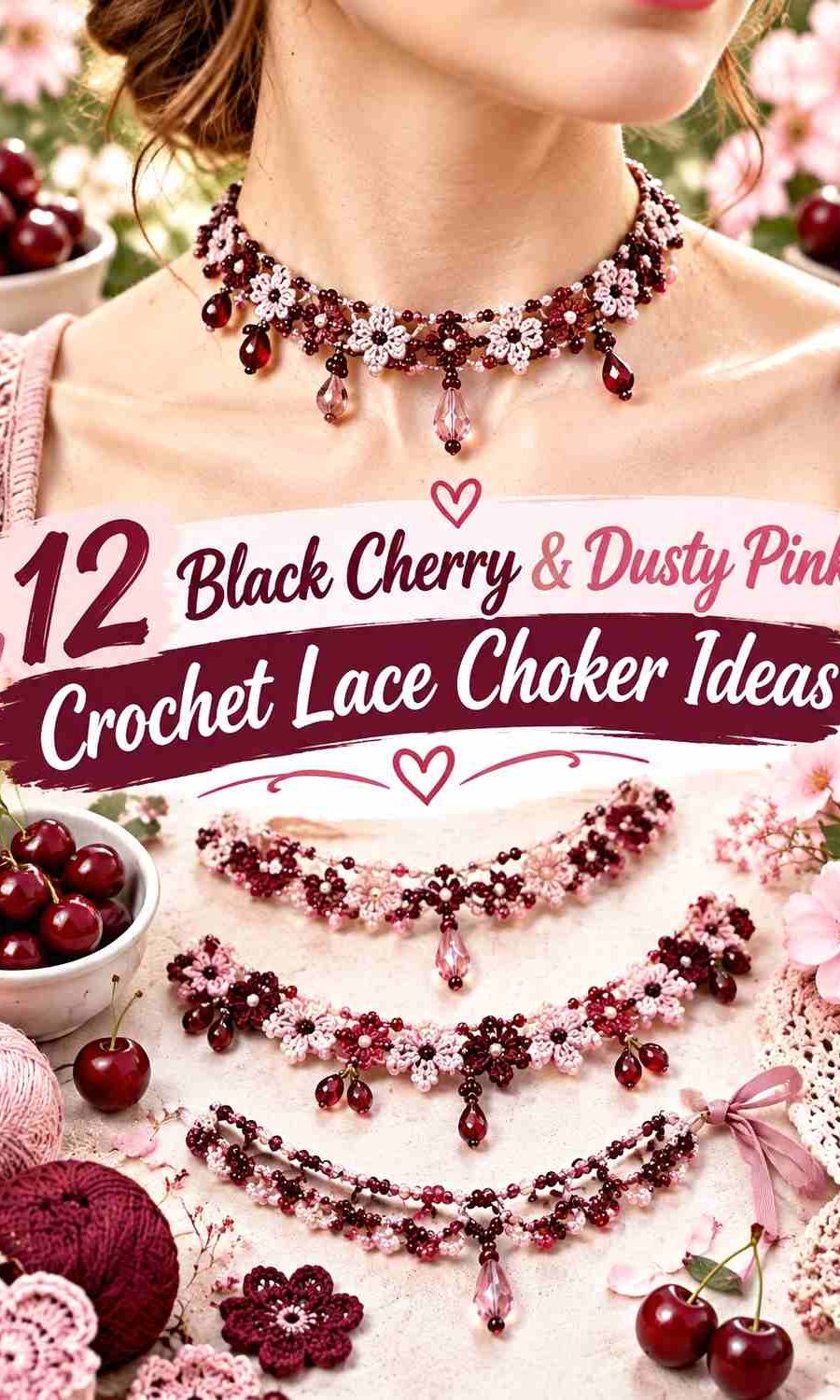
Because a choker has very little surface area, color placement has a strong effect. A dusty pink scalloped edge can noticeably soften a black cherry neckband, while one black cherry flower can become the focal point on an otherwise pale pink choker. Dividing the shades by construction feature is usually more effective than changing color every few stitches.
Lace also creates negative space, so the skin or garment underneath becomes part of the visual result. Dark black cherry outlines are usually easier to follow when motifs have enough open space around them, while dusty pink can keep fine lace from becoming visually heavy.
The tutorials below support the underlying choker, lace-necklace, floral, and close-fitting jewelry concepts. The black-cherry-and-dusty-pink palettes are independent adaptations rather than claims that the creators used these exact colors.
Quick List
- Black Cherry And Dusty Pink Beaded Lace Crochet Choker
- Black Cherry And Dusty Pink Flower Chain Crochet Lace Choker
- Dusty Pink And Black Cherry Statement Flower Crochet Lace Choker
- Dusty Pink And Black Cherry Floral Link Crochet Lace Choker
- Black Cherry And Dusty Pink Victorian Crochet Lace Choker
- Dusty Pink And Black Cherry Petal Motif Crochet Lace Choker
- Black Cherry And Dusty Pink Minimal Scallop Crochet Lace Choker
- Dusty Pink And Black Cherry Openwork Crochet Lace Choker
- Black Cherry Rose And Dusty Pink Crochet Lace Choker
- Dusty Pink Ruffle And Black Cherry Crochet Lace Choker
- Black Cherry Mesh And Dusty Pink Tie Crochet Lace Choker
- Dusty Pink Bunch Stitch And Black Cherry Crochet Lace Choker
Decide Whether Black Cherry or Dusty Pink Should Form the Neckband
The narrow band sitting directly around the neck establishes the base for every hanging scallop, flower, bead, or lace point below it. Black cherry creates the strongest frame and gives dusty pink details a lighter background relationship. A dusty pink band reverses that hierarchy and makes even a small black cherry motif look visually substantial.
Equal proportions are not necessary. Black cherry has enough visual weight to work as a border, tie, or floral center while dusty pink covers most of the lace.
Before committing to tiny two-color details, compare the actual yarns together. A very deep dusty pink and softened black cherry can sit closer in lightness than the names suggest.
Use Dusty Pink to Keep Black Cherry Lace Open and Readable
Very dark lace can visually merge when motifs are small and closely spaced. Dusty pink is useful where the pattern needs a lighter break: scalloped edges, flower petals, open fans, picots, or the lower decorative row.
For intricate lace, avoid changing color inside every small repeat. Larger uninterrupted black cherry and dusty pink sections allow the structure of the lace to remain easier to follow.
The garment beneath the choker matters too. Against a dark top, dusty pink may become the clearest part of the design; against a pale neckline, black cherry provides the stronger outline.
Repeat Black Cherry and Dusty Pink Around Ties and Closures
Ribbon-style ties, crochet cords, buttons, clasps, and bow closures give the supporting color another place to appear without interrupting the main lace.
If the choker body is black cherry with dusty pink scallops, dusty pink ties can continue the lighter perimeter. If dusty pink dominates the body, black cherry ties can frame the piece from both ends.
Keep closure colors balanced on the left and right unless deliberate asymmetry is part of the design.
1. Black Cherry And Dusty Pink Beaded Lace Crochet Choker
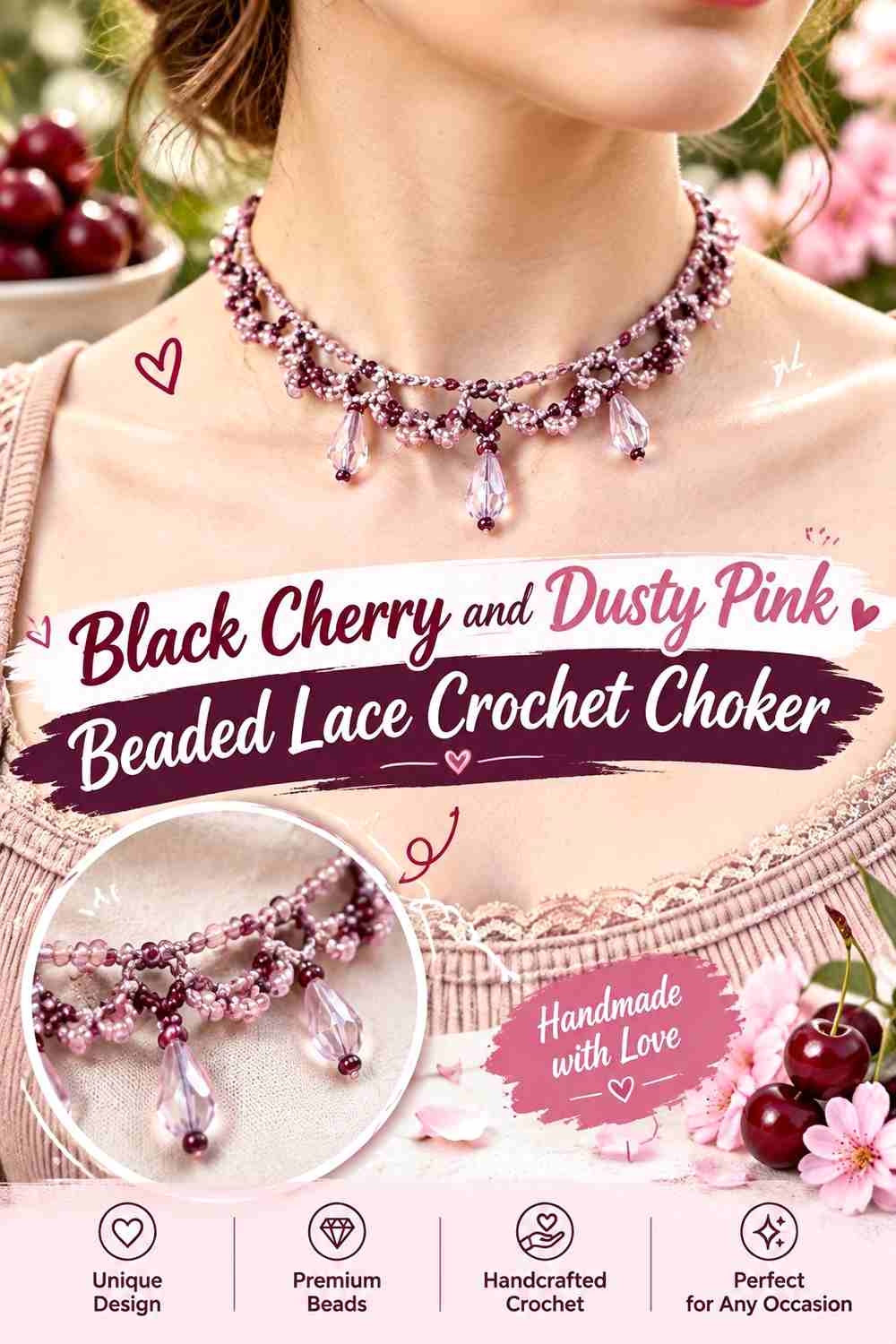
This direction gives black cherry the main lace framework and reserves dusty pink for the lower decorative edge or bead-adjacent details. The dark band gives the choker a defined silhouette, while dusty pink prevents the small openwork from becoming visually dense. A restrained two-color layout is especially useful when beads or another embellishment already supply additional detail.
Let Black Cherry Carry the Main Dusty Pink Lace Band
Keep black cherry continuous across most of the neckband so the choker has one strong structural color.
Frequent dusty pink interruptions through the foundation can compete with the openwork and any bead placement. Larger areas make the dark lace easier to read.
Use Dusty Pink Along the Black Cherry Lower Lace Edge
A dusty pink lower row or scalloped section can soften the dark neckband and keep small decorative points visible.
If the lace already has a prominent central ornament, use dusty pink mainly along the edge rather than creating another large focal area.
Keep Black Cherry and Dusty Pink Bead Details Secondary to the Lace
If beads are incorporated, let them enhance the established two-color hierarchy rather than introducing several more competing colors.
The lace should still read first as black cherry and dusty pink when viewed from normal conversation distance.
Creator Credit: enchantedbycraft
2. Black Cherry And Dusty Pink Flower Chain Crochet Lace Choker
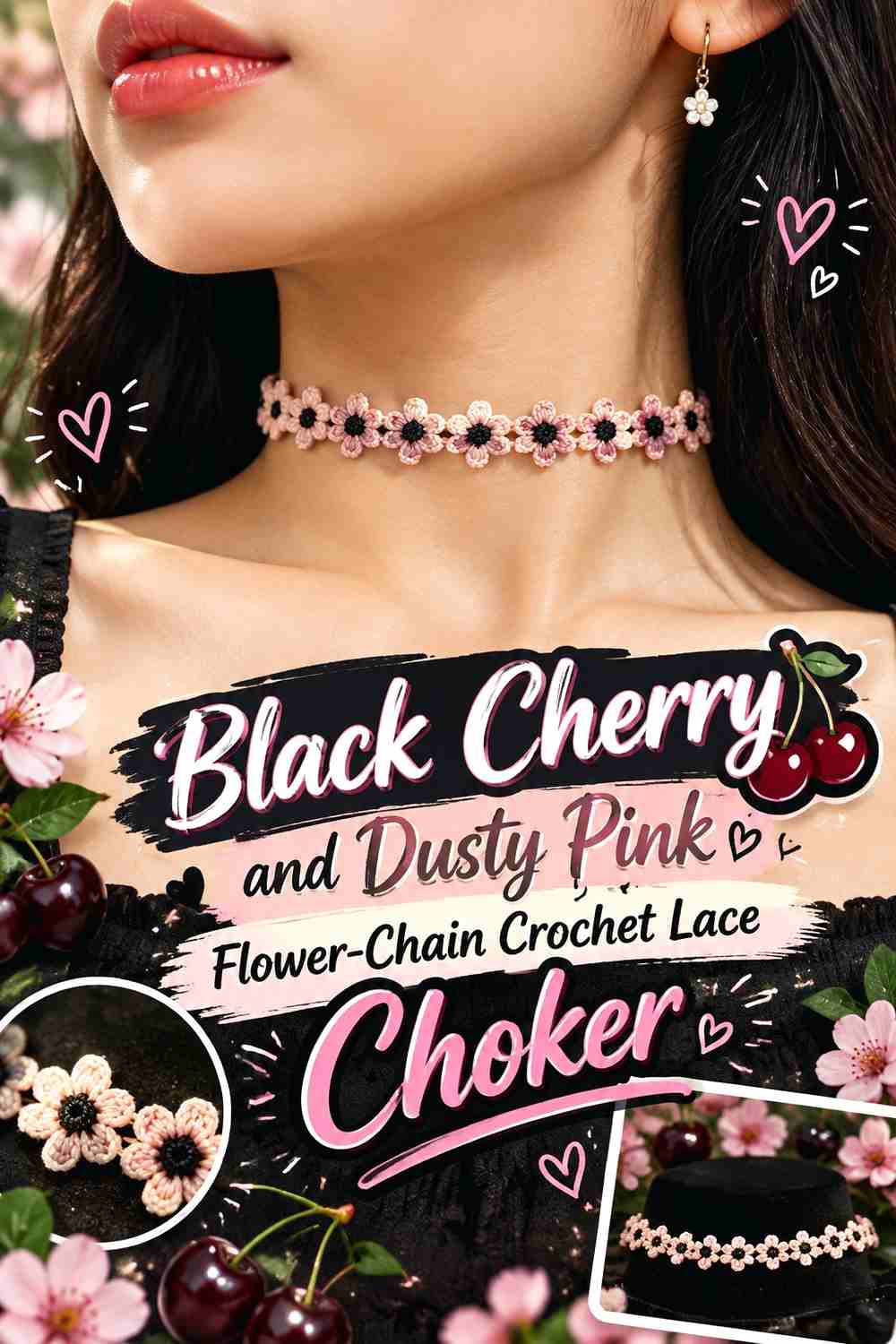
A continuous flower chain gives dusty pink a natural petal role while black cherry can connect the motifs through centers, joining chains, or ties. This creates a floral choker without requiring every flower to use a different color arrangement.
Keep Dusty Pink Flowers Repeating Across Black Cherry Connections
Use dusty pink consistently through the main petal shapes so the flower chain reads as one coordinated design.
Black cherry can then form a darker path between the flowers rather than competing inside every petal.
Use Black Cherry to Define Dusty Pink Flower Centers
A small black cherry center can give each dusty pink flower enough definition to remain visible even when the petals touch neighboring motifs.
Repeat the same relationship across the choker instead of reversing random flowers.
Carry Black Cherry Into the Dusty Pink Choker Ties
Black cherry ties or cords can connect the darker flower centers to both ends of the necklace.
This prevents the dark shade from appearing only as isolated dots inside an otherwise dusty pink piece.
Creator Credit: VivCrochets
3. Dusty Pink And Black Cherry Statement Flower Crochet Lace Choker
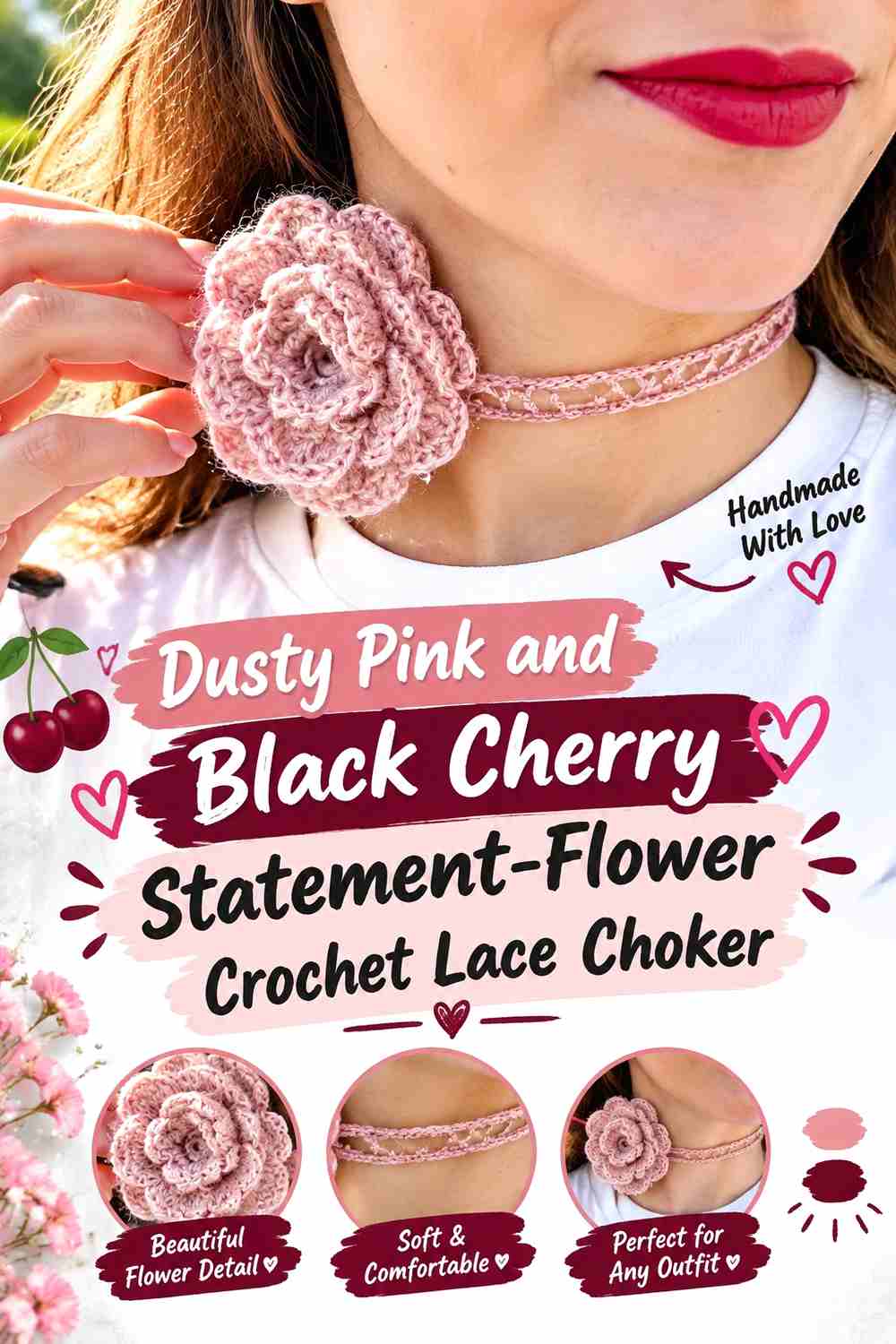
Instead of repeating many small flowers, concentrate black cherry in one larger floral focal point and use dusty pink for the surrounding neckband or ties. The asymmetry of a statement flower can work well when the rest of the choker remains visually quiet.
Let Black Cherry Form the Main Dusty Pink Statement Flower
Use black cherry across the complete focal flower rather than alternating petals between both colors.
A single dark flower has enough visual weight to anchor a dusty pink lace band without requiring more dark motifs across the whole neckline.
Keep Dusty Pink Quiet Around the Black Cherry Flower
A simpler dusty pink band gives the flower clear negative space and prevents the floral area from competing with complex surrounding lace.
If more black cherry is needed for balance, repeat it narrowly at the closure rather than adding another large flower.
Use Dusty Pink Ties to Soften the Black Cherry Focal Point
Dusty pink ties can continue the lighter body color and keep the finished choker from becoming dark at both the flower and the back closure.
Creator Credit: Lana Mala Crochet
4. Dusty Pink And Black Cherry Floral Link Crochet Lace Choker
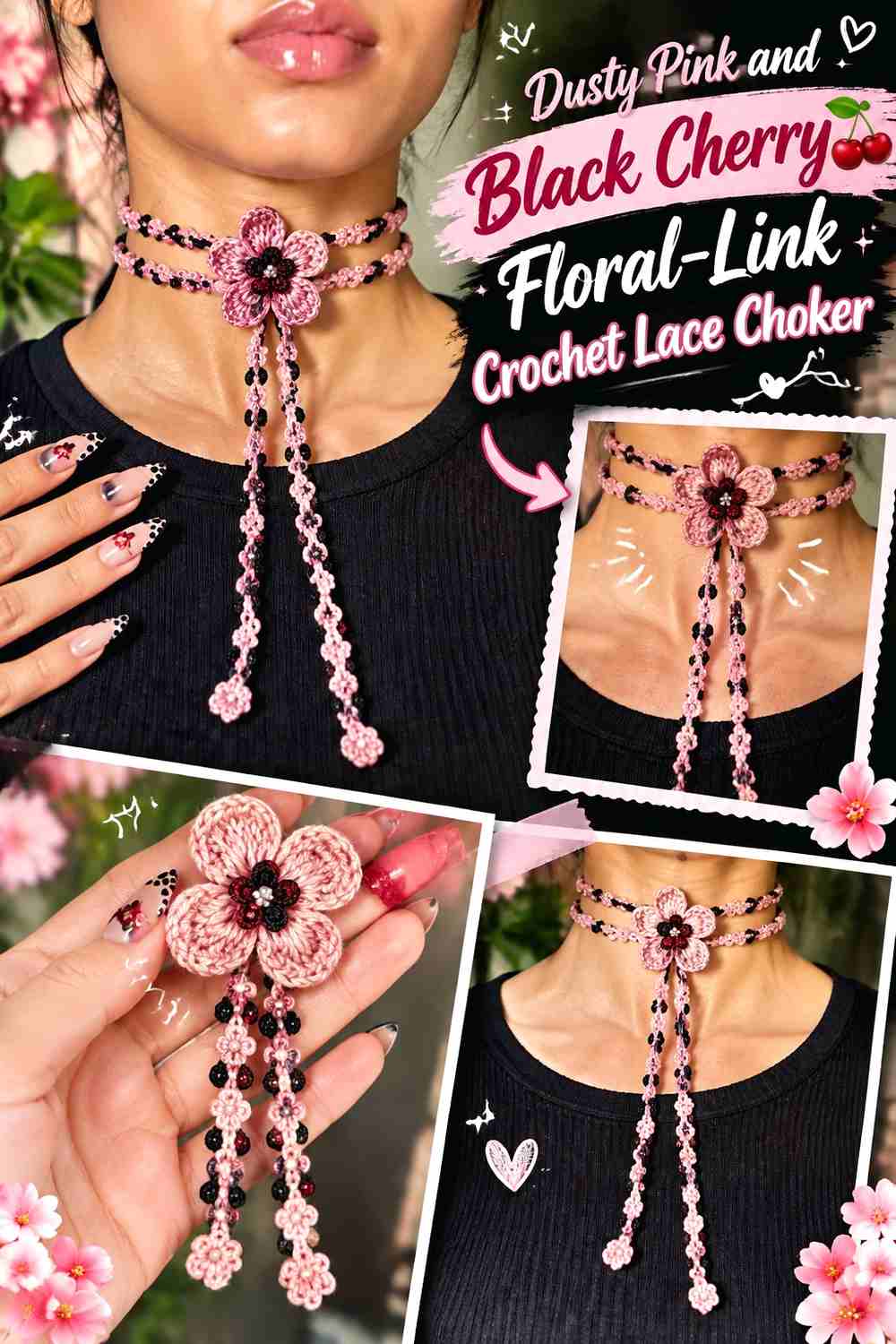
Linked flowers can be adapted into a stronger two-color rhythm by using dusty pink for most petals and black cherry for selected centers or joining sections. The repeating floral structure already provides movement, so the palette benefits from consistency.
Keep Dusty Pink Dominant Across the Black Cherry Floral Links
Use dusty pink on the largest portion of each linked flower so the necklace reads pale and floral from a distance.
Black cherry should support that structure instead of receiving equal area inside every motif.
Put Black Cherry Between Dusty Pink Flower Motifs
Dark connecting sections can visually separate neighboring dusty pink flowers and make each individual shape easier to recognize.
This works particularly well when the petals nearly touch.
Repeat Black Cherry Sparingly Through Dusty Pink Centers
If black cherry also appears in flower centers, keep the detail small enough that the joins remain the strongest dark pathway across the choker.
Creator Credit: Sol Josephine
5. Black Cherry And Dusty Pink Victorian Crochet Lace Choker
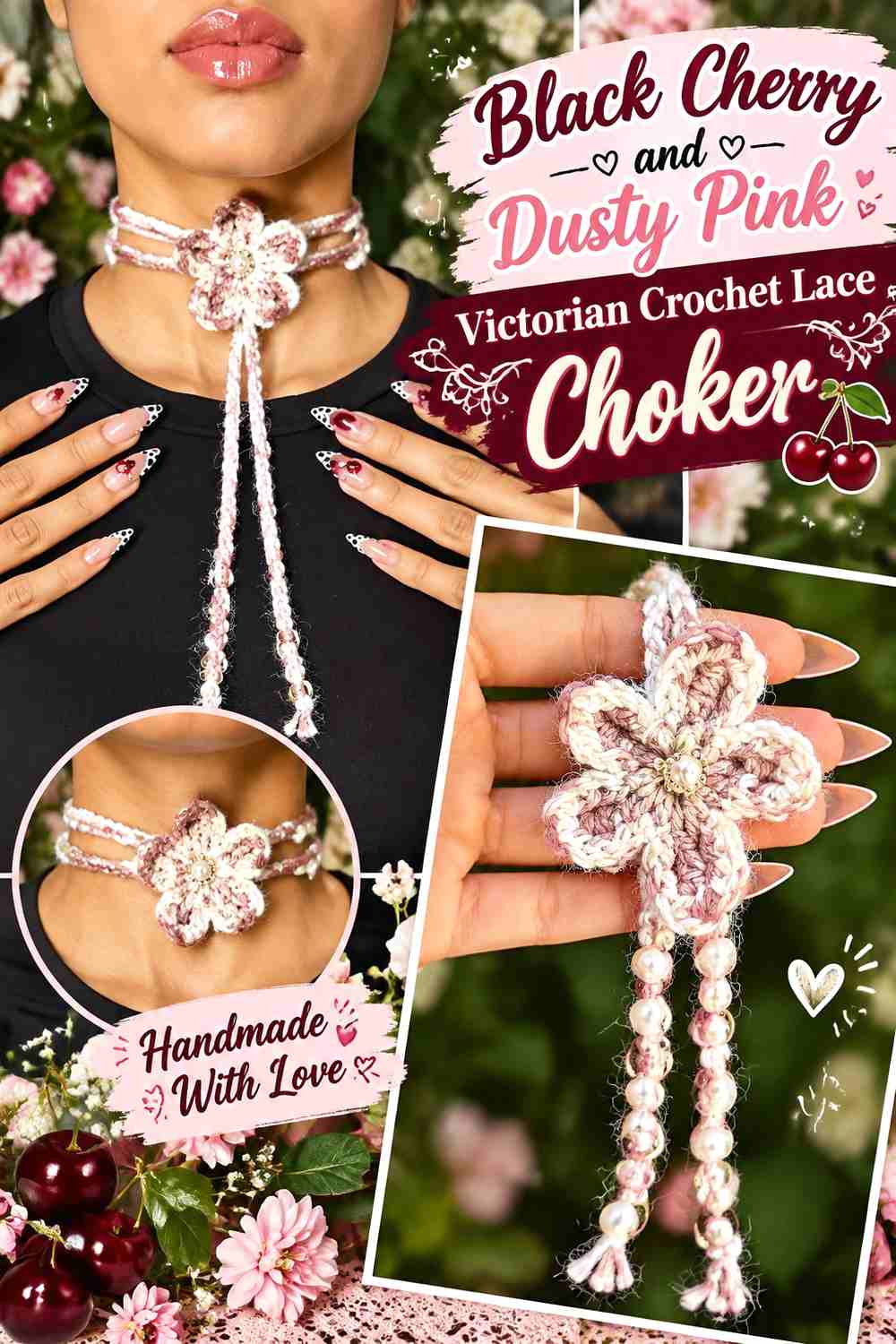
A Victorian-style lace choker can handle a broader black cherry band because fans, loops, and open spaces keep the dark fabric from looking completely solid. Dusty pink works well on selected lower motifs or ties where a lighter color can emphasize the ornamental silhouette.
Let Black Cherry Define the Main Victorian Lace Structure
Keep the principal lace repeats black cherry so the ornamental pattern remains visually connected from one side of the neck to the other.
Changing color inside every fan can make the structure harder to follow.
Use Dusty Pink Beneath the Black Cherry Victorian Fans
Dusty pink along lower scallops, fans, or points can distinguish the decorative edge from the main neckband.
This is particularly useful when black cherry is deep enough that fine lace details disappear against dark clothing.
Repeat Black Cherry in the Dusty Pink Choker Ties
Black cherry ties preserve the darker frame and connect the ends back to the main lace field.
Choose dusty pink ties instead when you want the lower decorative edge to extend visually around the neck.
Creator Credit: Littlejohn’s Yarn
6. Dusty Pink And Black Cherry Petal Motif Crochet Lace Choker

Overlapping or repeated petal motifs create enough texture that the color pattern should remain controlled. Use dusty pink for the broad petal surfaces and black cherry for the edging, center line, or closure.
Keep Dusty Pink Visible Across the Black Cherry Petal Motifs
Dusty pink should occupy enough of each motif that individual petals remain recognizable instead of becoming dark outlines with very little interior color.
Repeated light motifs can keep an intricate choker from feeling visually heavy.
Use Black Cherry to Outline Dusty Pink Petal Edges
A narrow black cherry treatment can increase separation between overlapping dusty pink motifs.
Keep the dark outline consistent so some petals do not appear visually heavier than others.
Let Black Cherry Finish the Dusty Pink Choker Closure
A black cherry closure or short end section can connect the dark motif outlines to the practical fastening area without disrupting the lighter central lace.
Creator Credit: Kristin Omdahl
7. Black Cherry And Dusty Pink Minimal Scallop Crochet Lace Choker
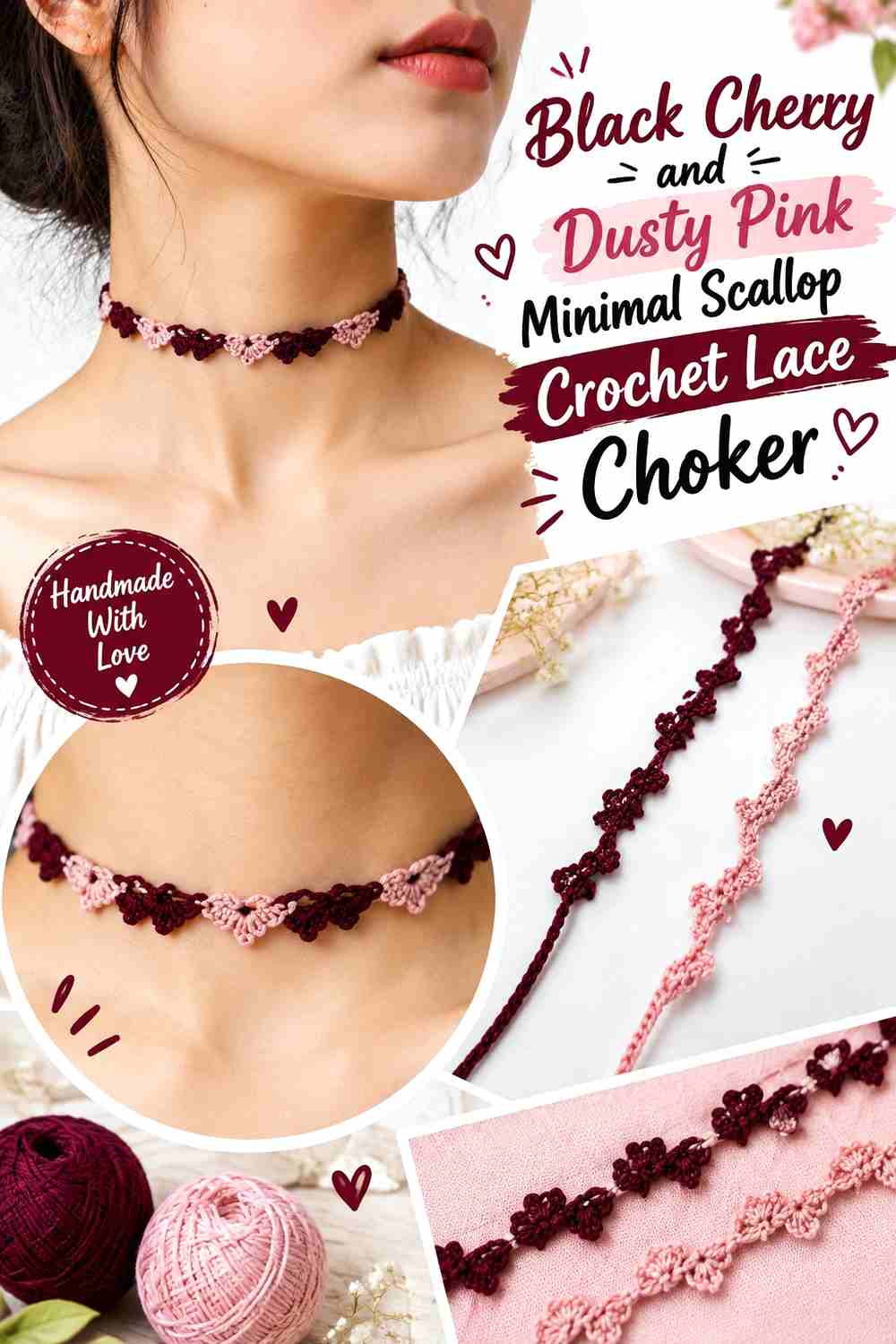
A simple close-fitting choker benefits from one clear accent rather than elaborate multicolor patterning. Use black cherry through the narrow band and dusty pink along the scalloped or pointed lower edge.
Keep Black Cherry Solid Above the Dusty Pink Scallops
A continuous dark neckband gives the accessory a clean base and leaves the lower edge as the main decorative feature.
Because the construction is simple, there is little need for additional stripes through the center.
Let Dusty Pink Trace the Black Cherry Scalloped Edge
Use dusty pink continuously across the decorative lower line so the scallops read as one repeated border.
A very narrow pale edge may be enough when the black cherry band itself is slim.
Repeat Black Cherry Through the Dusty Pink Tie Ends
Black cherry tie ends keep the minimal choker grounded and prevent the pale scallops from becoming the only visible perimeter detail.
Creator Credit: ABoC Studio
8. Dusty Pink And Black Cherry Openwork Crochet Lace Choker
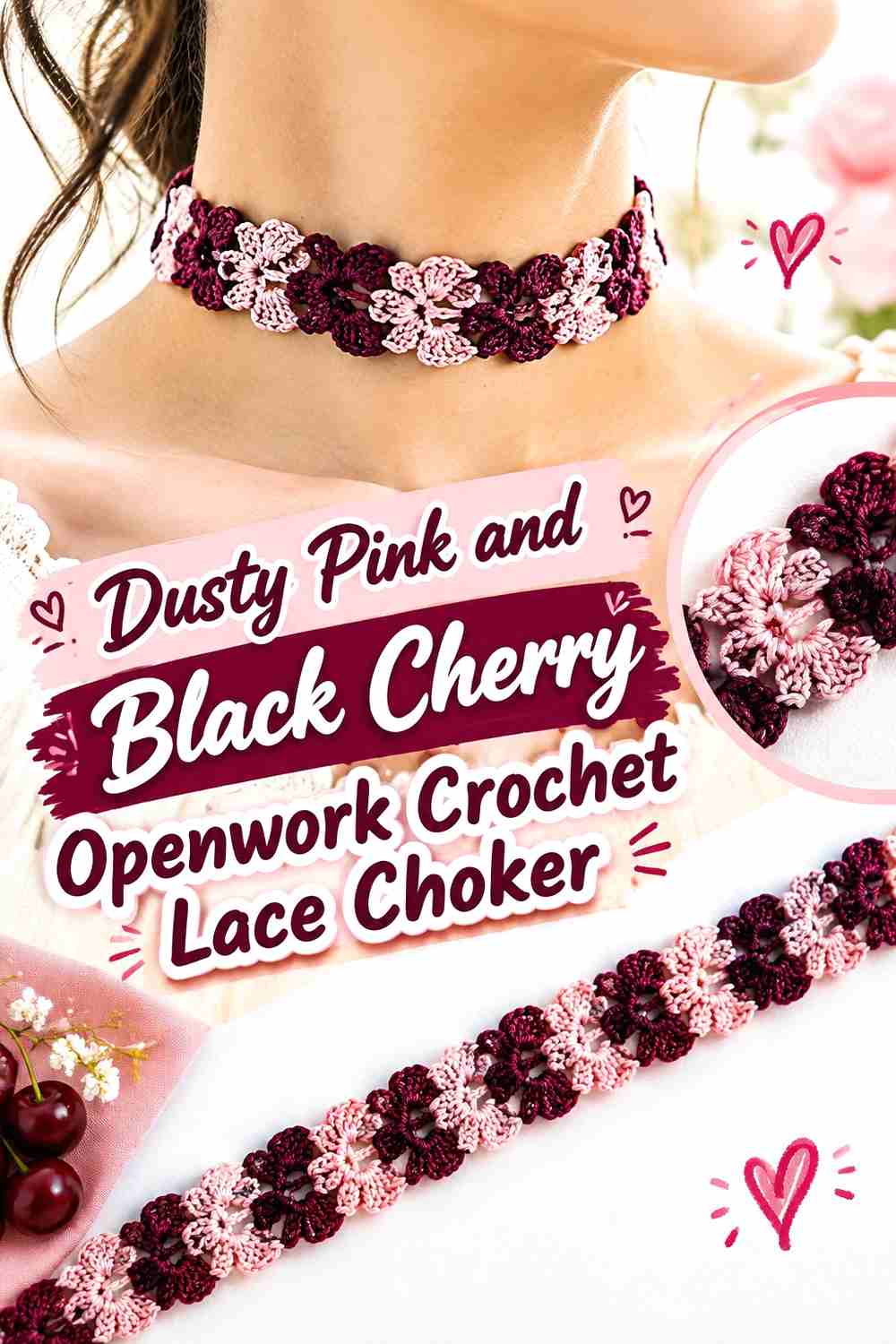
This version reverses the minimal hierarchy. Make dusty pink the main openwork field and use black cherry in one narrow lower band, top edge, or tie section. Dark accents are especially noticeable against pale lace, so they do not need much surface area.
Let Dusty Pink Carry the Main Black Cherry Openwork
Use dusty pink through the complete repeating lace section so the pattern remains visually continuous.
A light field can also make small holes and chain spaces easier to distinguish against darker clothing.
Use Black Cherry Once Along the Dusty Pink Lace Edge
Choose one edge for the strongest dark contrast rather than outlining every row.
A single black cherry border can define the choker without turning it into alternating stripes.
Keep Black Cherry Ties Narrow Beside Dusty Pink
Dark ties can frame both ends and give black cherry a second useful role, but they should not visually outweigh the dusty pink lace center.
Creator Credit: Banoris Crafts
9. Black Cherry Rose And Dusty Pink Crochet Lace Choker

A rose choker lets black cherry become a concentrated floral color while dusty pink carries the connecting band or smaller floral details. Because dimensional roses already create strong texture, the surrounding lace should remain relatively simple.
Make Black Cherry the Main Rose Against Dusty Pink
Use black cherry across the dominant rose or rose cluster so the flower becomes the unmistakable focal feature.
Dusty pink around it gives the darker petals a softer surrounding field.
Keep Dusty Pink Simple Beneath the Black Cherry Rose
A narrow dusty pink band or cord allows the dimensional flower to remain the most detailed part of the piece.
Adding complex two-color lace immediately behind the roses can make the neckline look crowded.
Repeat Dusty Pink Around Smaller Black Cherry Floral Details
If the concept includes more than one floral element, use dusty pink selectively around smaller flowers or connections to prevent the black cherry cluster from becoming one uninterrupted dark mass.
Creator Credit: Nicki’s Homemade Crafts
10. Dusty Pink Ruffle And Black Cherry Crochet Lace Choker
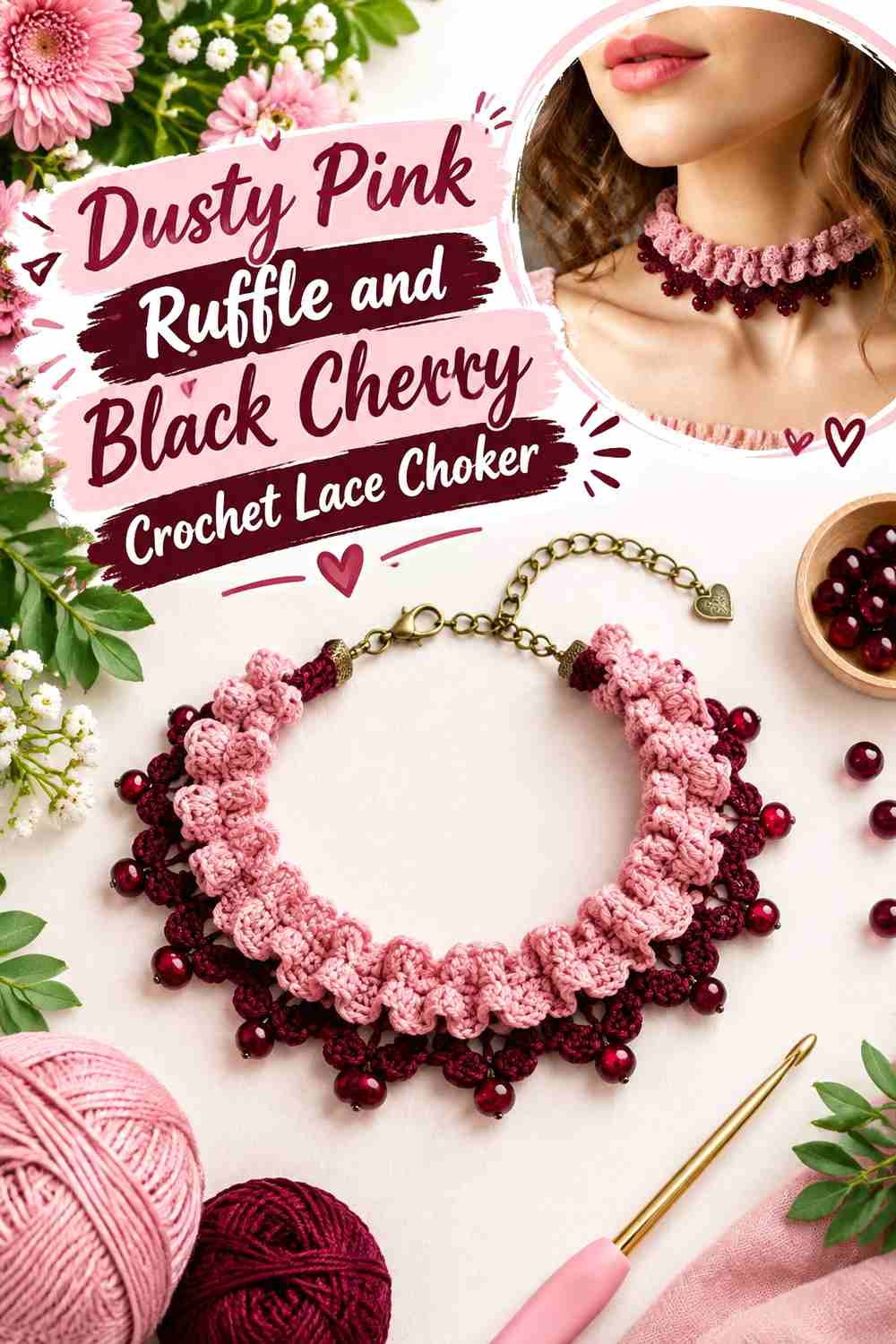
A ruffled necklace concept can be shortened visually into a close-fitting choker direction by keeping black cherry along the stable upper band and dusty pink in the ruffled lower texture. The color break makes the flare easier to distinguish from the section that sits close to the neck.
Let Black Cherry Anchor the Dusty Pink Ruffle
Use black cherry across the narrow upper band so the ruffle has a clear dark starting point.
A stable dark line also prevents the gathered lower section from making the entire choker look visually diffuse.
Give Dusty Pink Enough Depth Below Black Cherry
Dusty pink should occupy most of the ruffle so its folds remain identifiable when the fabric gathers.
If black cherry is repeated at the bottom, keep the line narrow so it outlines rather than replaces the pale ruffle.
Use Black Cherry to Finish the Dusty Pink Ruffle Edge Sparingly
A small dark finish can connect the bottom edge back to the upper band, but it is optional when the two main sections already have enough separation.
Creator Credit: HanJan Crochet
11. Black Cherry Mesh And Dusty Pink Tie Crochet Lace Choker
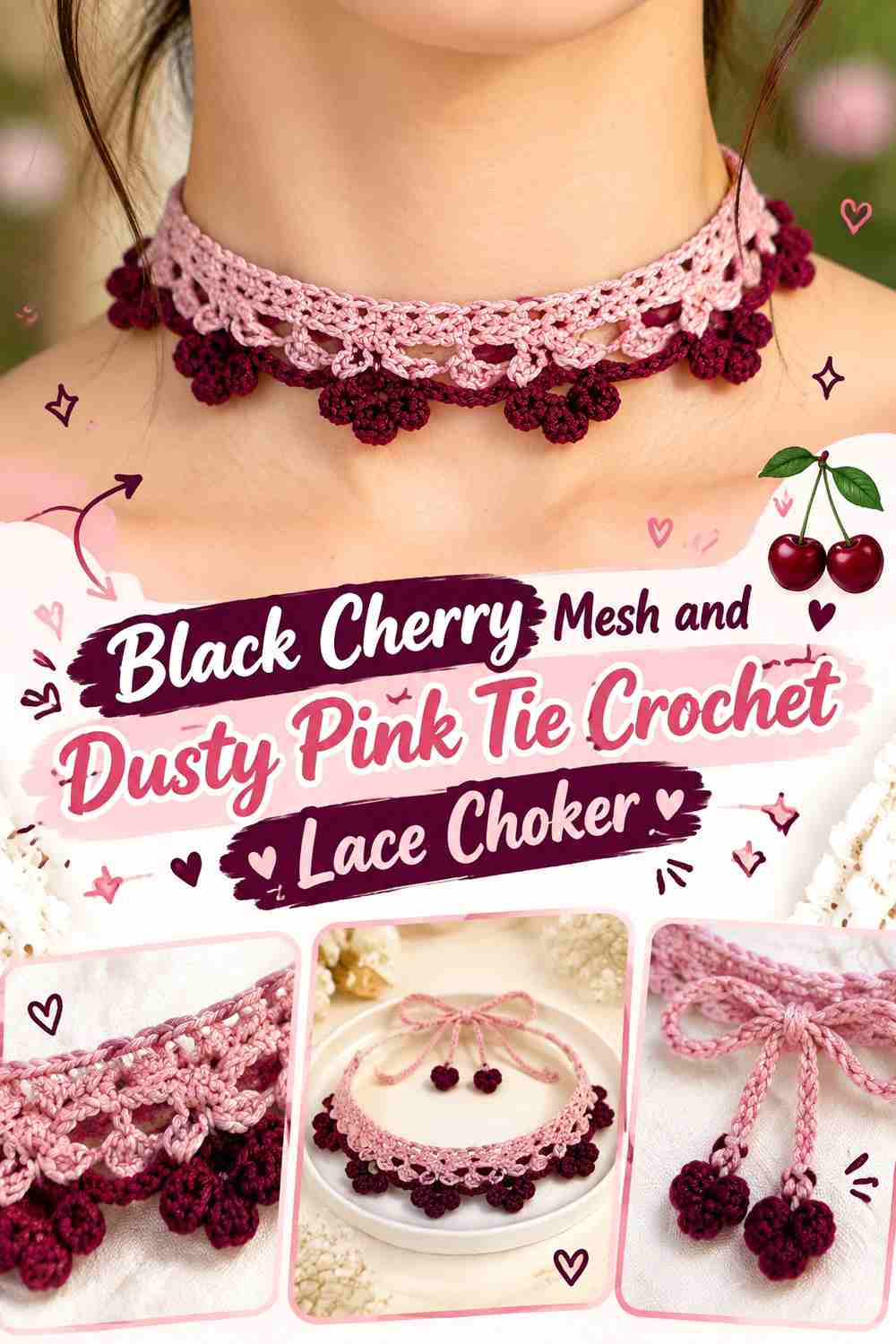
A mesh-based choker lets more skin or fabric show through, so black cherry can remain relatively dark without creating a solid block around the neck. Dusty pink ties soften the ends and create a lighter contrast at the back or sides.
Keep Black Cherry Consistent Across the Dusty Pink-Tied Mesh
Use black cherry through the complete mesh repeat so the openwork forms one continuous dark framework.
Switching between the colors inside many small mesh openings can make the lace look fragmented.
Let Dusty Pink Start Where the Black Cherry Mesh Ends
Change to dusty pink at the ties or end sections so the color transition follows a practical construction boundary.
This creates a cleaner division than introducing a random pale stripe through the center of the mesh.
Repeat Dusty Pink Once Along the Black Cherry Mesh Edge
A narrow dusty pink upper or lower line can connect the ties to the front of the choker without reducing the black cherry dominance.
Creator Credit: GillysCraftWorld
12. Dusty Pink Bunch Stitch And Black Cherry Crochet Lace Choker
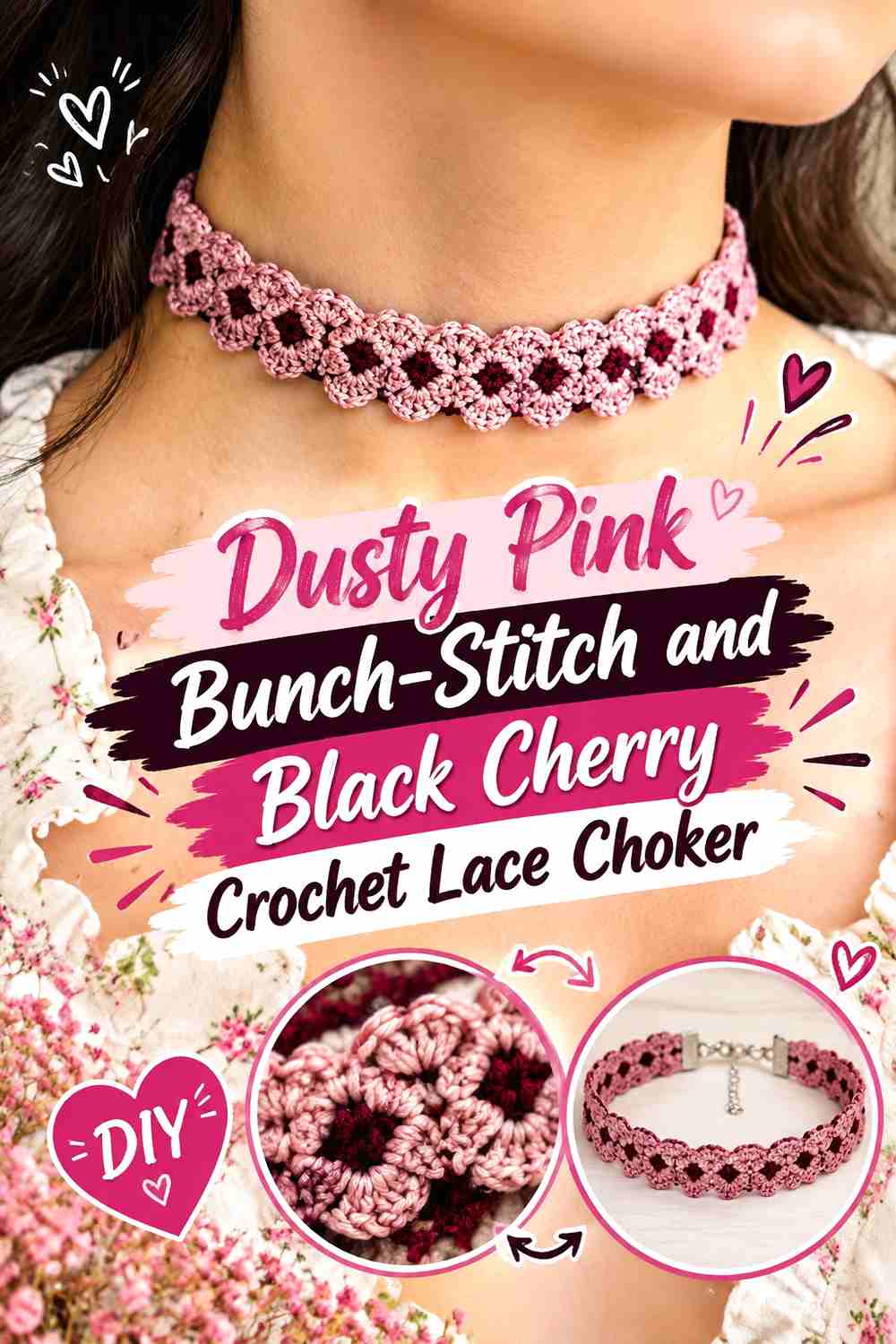
The final direction uses a denser decorative stitch rather than very open mesh. Dusty pink can keep the textured stitch field visually lighter, while black cherry frames the top, bottom, or closure. Because the fabric itself has noticeable texture, the palette should stay comparatively simple.
Let Dusty Pink Show the Black Cherry-Framed Bunch Texture
Use dusty pink across most of the raised or clustered stitch surface so shadows define the texture naturally.
Dark black cherry inside every cluster could hide some of the stitch structure and make the small choker look heavier.
Put Black Cherry Around the Dusty Pink Choker Borders
A narrow black cherry upper and lower edge can contain the textured center and give the pale band a stronger silhouette.
Keep both borders proportional to the narrow width of the choker.
Use Dusty Pink and Black Cherry Closures to Preserve the Two-Color Balance
Choose black cherry ties when you want the dark border to continue around the neck, or dusty pink when the central textured field should remain visually dominant.
Avoid introducing another closure color unless there is a specific functional reason.
Creator Credit: Chic DIY
Comparing the Black Cherry and Dusty Pink Lace Choker Directions
For the strongest dark lace look, the beaded, Victorian, minimal scallop, mesh, and rose versions keep black cherry visually dominant. Dusty pink is used primarily to reveal edges, flowers, ruffles, or closures.
For a lighter result, the floral-link, petal-motif, openwork, ruffle, and bunch-stitch designs put more dusty pink across the visible surface. In those versions, relatively small black cherry details can provide enough definition because the dark shade carries considerable visual weight.
The flower-chain and statement-flower options differ mainly in repetition. A continuous floral chain creates color rhythm around the full neckline, while one statement flower concentrates the contrast in a single focal area.
For the most delicate lace effect, keep the color changes broad and restrained. When the stitch pattern already contains picots, fans, scallops, beads, roses, or multiple petals, frequent additional striping can make those details harder to see.
Conclusion
Black cherry and dusty pink can take a crochet lace choker from dark Victorian-style openwork to soft floral lace simply by changing which shade owns the neckband, motifs, and decorative edge.
Use black cherry across the main lace when you want a defined dark framework, then bring dusty pink into flowers, scallops, petal motifs, ruffles, or ties. Reverse that balance for a softer dusty-pink choker where black cherry acts as the outline, closure, floral center, or focal rose.
Because chokers are narrow and sit directly against the neck, test the palette against the clothing and skin or layer that will appear beneath the lace. Larger color areas are usually easier to read than many tiny two-color changes. Use the linked tutorials for their original construction methods and adapt the black-cherry-and-dusty-pink placement independently.
Frequently Asked Questions
Should black cherry or dusty pink dominate a crochet lace choker?
Either can lead. Black cherry creates a darker framework where dusty pink details stand out, while a dusty pink body gives small black cherry flowers, borders, ties, or centers considerable visual impact.
Where should dusty pink go on a black cherry crochet choker?
Dusty pink works particularly well on scallops, flower petals, picots, ruffles, ties, and selected lace motifs. These areas give the light shade a defined role without breaking up the complete dark band.
How can I keep black cherry lace visible?
Use larger openwork repeats, place dusty pink next to important lace edges, and consider the color of the clothing beneath the choker. Fine black cherry lace may be harder to see against a similarly dark neckline.
Can black cherry and dusty pink work in a floral crochet choker?
Yes. Dusty pink can form petals while black cherry defines centers and joins, or black cherry can become a statement rose against a pale band. Keep the color relationship consistent across repeated flowers.
Should the ties match black cherry or dusty pink?
Match the ties to the border when you want a continuous frame. Use the contrasting shade when the ends need more definition. Keeping both ties the same color generally gives the most balanced result.
How can I tell whether black cherry and dusty pink have enough contrast?
Place the yarns together and view them from a short distance. A grayscale photo can help show whether their lightness differs enough for tiny motifs. If they appear similar, use the colors in larger sections rather than very fine details.
How do I keep a two-color lace choker from looking too busy?
Let the lace structure provide most of the detail. Give one shade the main band and use the second for one or two clear purposes, such as flowers and ties or scallops and borders. Intricate lace usually benefits from fewer, larger color changes.