Burgundy and Caramel give a crochet mini cape a strong dark-and-warm-neutral palette without requiring several accent colors. Burgundy can define the neckline, buttons, shoulder sections, or outer hem, while Caramel can lighten broad cape panels and reveal lace or textured stitches that might otherwise disappear inside a dark field.
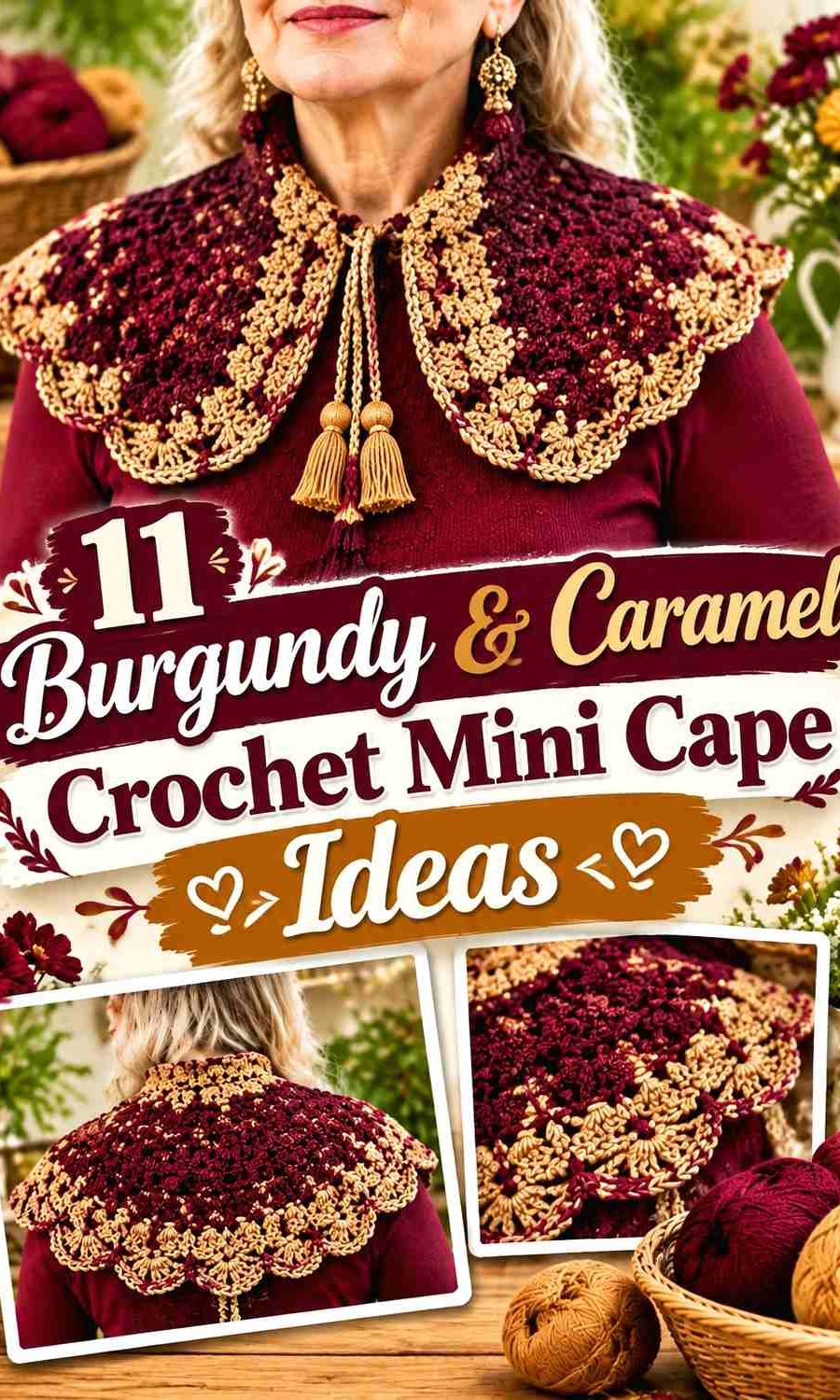
Mini capes also create a different color problem from longer ponchos. Because the garment ends relatively close to the shoulders or upper torso, each color section occupies a noticeable percentage of the finished piece. A deep Burgundy border can therefore carry substantial visual weight even when Caramel covers most of the cape.
The ideas below use capelet, cape, and closely related short poncho tutorials as construction references. Some source projects extend longer than a typical mini cape, so use the original tutorials for their exact shaping and sizing rather than assuming every source has the same finished length. The Burgundy-and-Caramel palettes are independent color adaptations and are not claims about the colors used by the creators.
Quick List
- Burgundy And Caramel Victorian Crochet Mini Cape
- Caramel And Burgundy Buttoned Crochet Mini Cape
- Burgundy And Caramel Cozy Crochet Mini Cape
- Burgundy And Caramel Vintage Crochet Mini Cape
- Caramel And Burgundy Hooded Crochet Mini Cape
- Burgundy And Caramel Openwork Crochet Mini Cape
- Burgundy And Caramel Color Block Crochet Mini Cape
- Caramel And Burgundy Seamless Crochet Mini Cape
- Burgundy And Caramel Lace Band Crochet Mini Cape
- Caramel And Burgundy Draped Crochet Mini Cape
- Burgundy And Caramel Fan Stitch Crochet Mini Cape
Decide Whether Burgundy or Caramel Should Control the Shoulder Field
Burgundy has more visual weight, so it can remain prominent even when Caramel covers a larger physical area. A Caramel shoulder field with a Burgundy neckband and lower border can still read as a strongly two-color cape because the dark shade frames the entire silhouette.
For a darker result, use Burgundy across the main cape body and reserve Caramel for the neckline, selected lace sections, buttons, or the final edge. This works particularly well when the construction contains openwork or raised texture that can provide visual variation without extra color changes.
Avoid dividing a very short cape into too many equal bands. Broad areas usually preserve the small cape silhouette better than several narrow stripes.
Use Caramel to Reveal Burgundy Crochet Texture
Caramel can act as a separator when Burgundy covers highly textured crochet. A lighter band beside shells, lace, ribbing, or decorative edging gives those details a clearer boundary and prevents the whole shoulder area from becoming one dark visual block.
Caramel does not always need to be the border. A Caramel center with Burgundy framing can create a lighter mini cape while keeping the darker color visible around the neck and hem.
Test the two shades in the actual stitch pattern before committing. If the chosen Burgundy and Caramel yarns are unexpectedly close in light/dark value, wider color sections will usually remain clearer than very thin contrasting lines.
Plan Burgundy and Caramel Around the Neckline and Hem
The neckline is one of the strongest structural areas on a mini cape because it determines where the garment visually begins. Burgundy at the neck creates a dark upper anchor, while Caramel gives the same area a softer transition into the shoulders.
The hem has the opposite effect: it defines the width and endpoint of the cape. A Burgundy lower border can make a Caramel cape feel more contained, while a Caramel hem can lighten a predominantly Burgundy garment.
If the construction includes buttons, ties, pom-poms, or a hood, treat those as part of the color distribution instead of choosing their color at the end.
1. Burgundy And Caramel Victorian Crochet Mini Cape

A short Victorian-inspired capelet suits a Burgundy-dominant palette because the compact silhouette can carry one uninterrupted dark field without becoming visually flat. Let Burgundy cover most of the shoulder area and use Caramel at the neckline and lower finishing edge.
The lighter borders give the cape a clear beginning and endpoint while leaving enough Burgundy between them for the garment to retain its deep main color.
Burgundy Should Carry the Main Victorian Mini Cape Surface
Use Burgundy across the broad shoulder section rather than inserting frequent Caramel stripes. A compact cape has limited vertical depth, so multiple narrow bands can make it look segmented.
If the construction includes noticeable stitch texture, let that texture provide the variation inside the Burgundy field.
Caramel Can Lighten the Burgundy Victorian Neckline
Place Caramel around the inner neck when you want a softer transition between the dark cape and the garment underneath.
Keep the Caramel neckband proportional to the mini-cape depth. A very broad light section can visually shorten the remaining Burgundy shoulder field.
Caramel Can Give the Burgundy Mini Cape a Clear Lower Edge
Repeating Caramel at the hem connects the top and bottom while framing Burgundy between them.
If the lower edge contains decorative shaping, the lighter shade can also make that silhouette easier to distinguish.
Creator Credit: Crochet Nurse
2. Caramel And Burgundy Buttoned Crochet Mini Cape
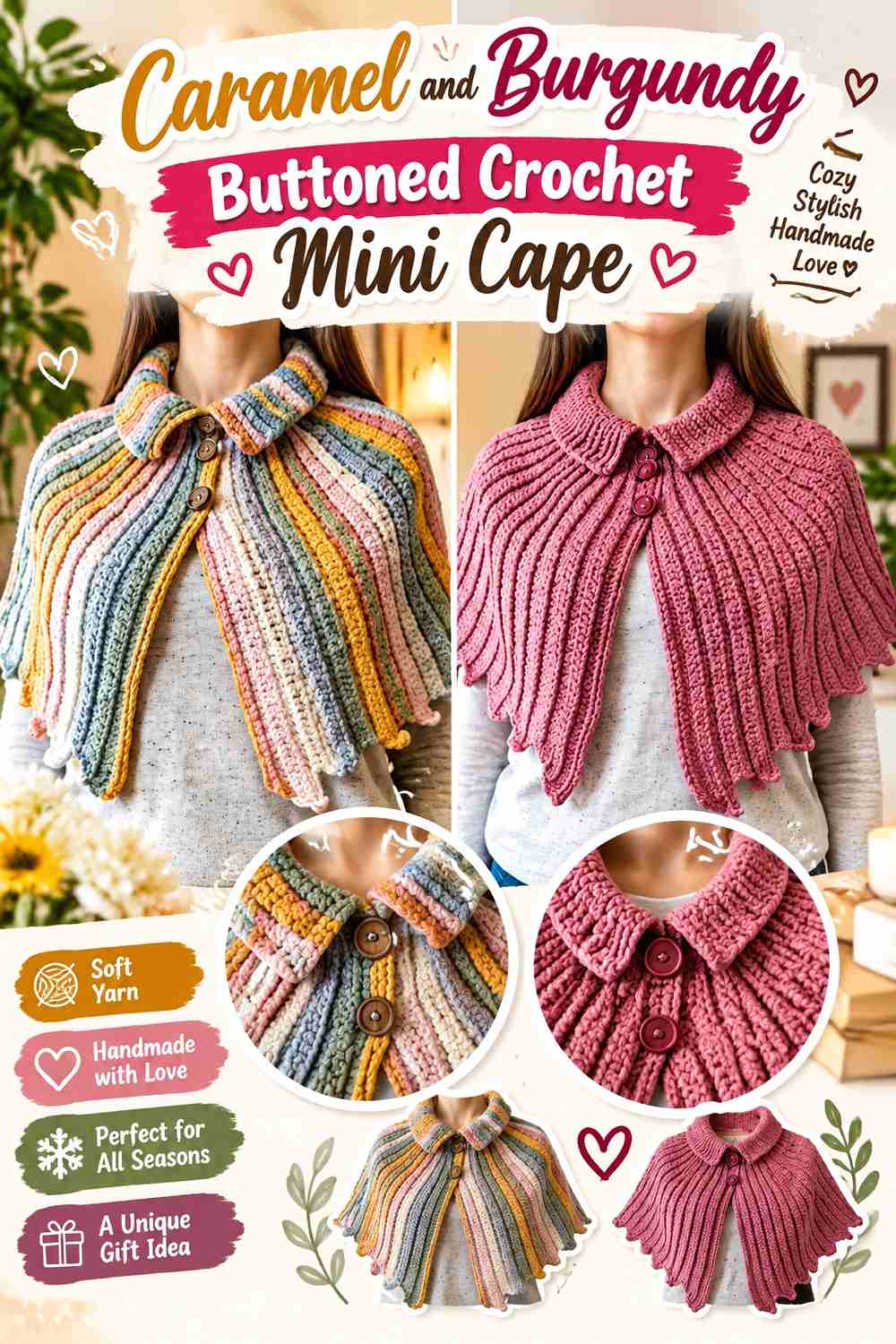
A buttoned capelet provides an obvious place for Burgundy to repeat vertically. Use Caramel through the main body and Burgundy around the neckline, front opening, and button area. The dark color then outlines the structural parts instead of interrupting the shoulder field with stripes.
This is a useful direction when you want Caramel to dominate without allowing Burgundy to become a tiny accent.
Caramel Should Stay Broad Between Burgundy Front Edges
Keep most of the shoulder fabric Caramel so the dark front bands remain clearly separate.
If Burgundy expands deeply into both sides, the light center can become visually narrow when the cape is buttoned.
Burgundy Can Define the Caramel Buttoned Front
Use Burgundy close to the front opening where it can create a continuous vertical line.
If buttons are part of the construction, check how their placement interacts with this color field rather than adding separate contrasting yarn details around every fastening point.
Burgundy Neckline Can Connect Both Sides of the Caramel Cape
Repeating Burgundy around the neck creates one continuous dark frame from one front edge to the other.
That relationship makes the front color placement look structural instead of like two unrelated dark strips.
Creator Credit: Sabrina Melodieuse
3. Burgundy And Caramel Cozy Crochet Mini Cape
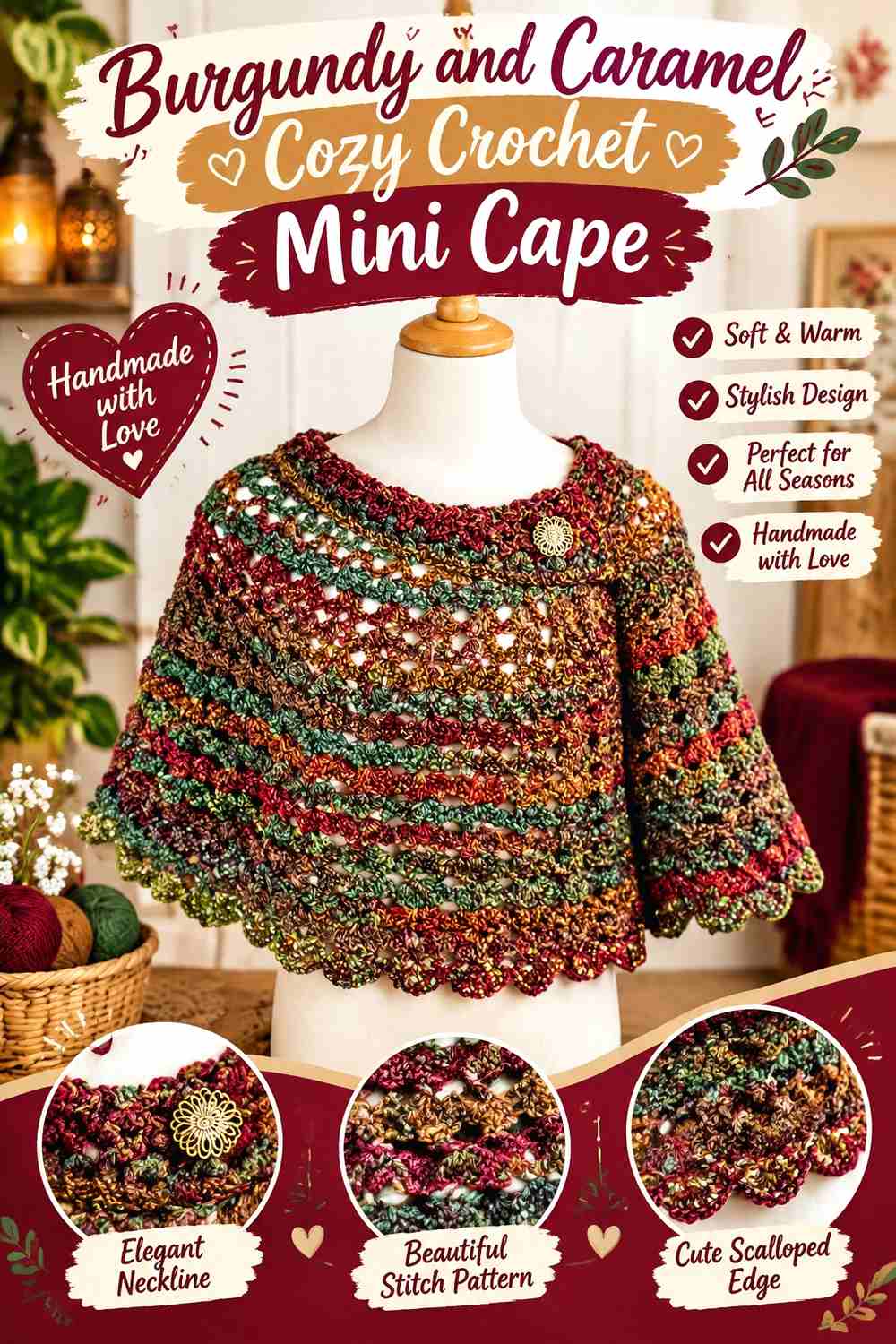
For a softer capelet-style layer, divide the garment into a Burgundy upper section and Caramel lower section rather than repeating several stripes. Burgundy can anchor the shoulders while Caramel spreads toward the outer edge.
This top-to-bottom transition makes both colors substantial and works especially well when the mini cape has a rounded or gently draped silhouette.
Burgundy Can Anchor the Upper Caramel Mini Cape
Keep Burgundy around the neck and upper shoulder area when you want the deeper shade closest to the body.
The uninterrupted dark section establishes a clear starting point before the cape moves into the lighter lower color.
Caramel Needs Enough Width Below Burgundy to Become a Real Color Field
Do not restrict Caramel to a narrow hem if the goal is a balanced two-color cape.
Give the neutral enough shoulder depth that it remains visible from both the front and back rather than reading only as edging.
Burgundy Can Return at the Caramel Cape Hem
A narrow Burgundy final edge can reconnect the bottom to the upper shoulder section.
Keep this return shallower than the main Burgundy area so Caramel remains a substantial middle field.
Creator Credit: Bag-O-Day Crochet
4. Burgundy And Caramel Vintage Crochet Mini Cape
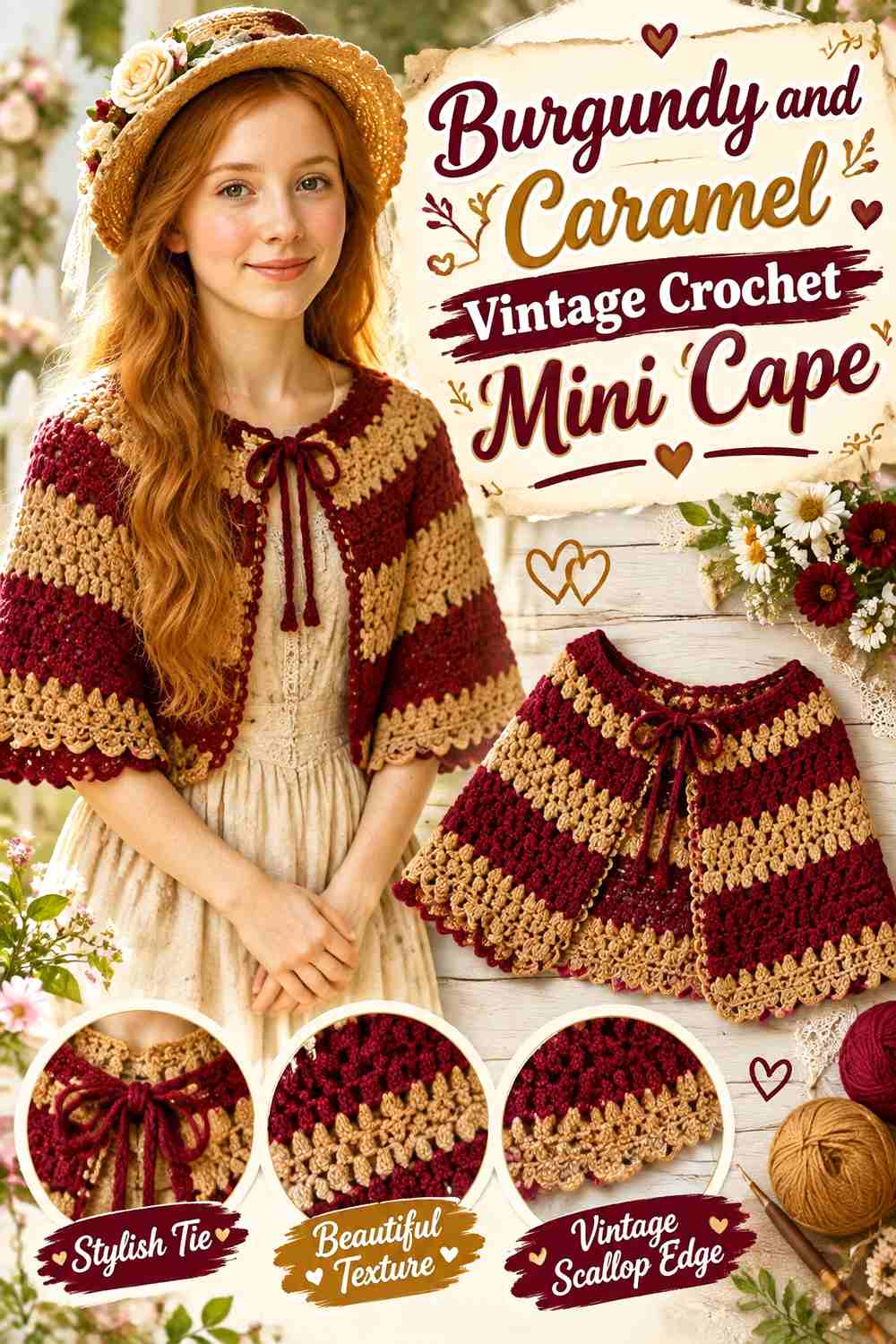
A vintage-style mini cape can use Caramel as a decorative interruption inside a largely Burgundy silhouette. Keep the neckline and most of the shoulder field Burgundy, then introduce one broader Caramel band before returning to Burgundy at the hem.
This creates a dark-light-dark sequence without turning the garment into a conventional striped cape.
Burgundy Should Remain Continuous Above the Caramel Vintage Band
Give the upper cape enough Burgundy depth for the main color to feel established before the first transition.
A Caramel change immediately below the neckline may make the dark upper section look more like a collar than the main cape color.
Caramel Can Break Up a Broad Burgundy Shoulder Field
Use one meaningful Caramel section rather than several narrow lines.
The wider neutral band provides visual relief and can make decorative crochet inside that section easier to notice.
Burgundy Should Finish Below the Caramel Vintage Section
Returning to Burgundy at the hem creates a deliberate frame and restores the dark color at the widest part of the cape.
Keep the lower Burgundy area controlled so it does not visually outweigh the upper section.
Creator Credit: Selina Veronique Crochet
5. Caramel And Burgundy Hooded Crochet Mini Cape
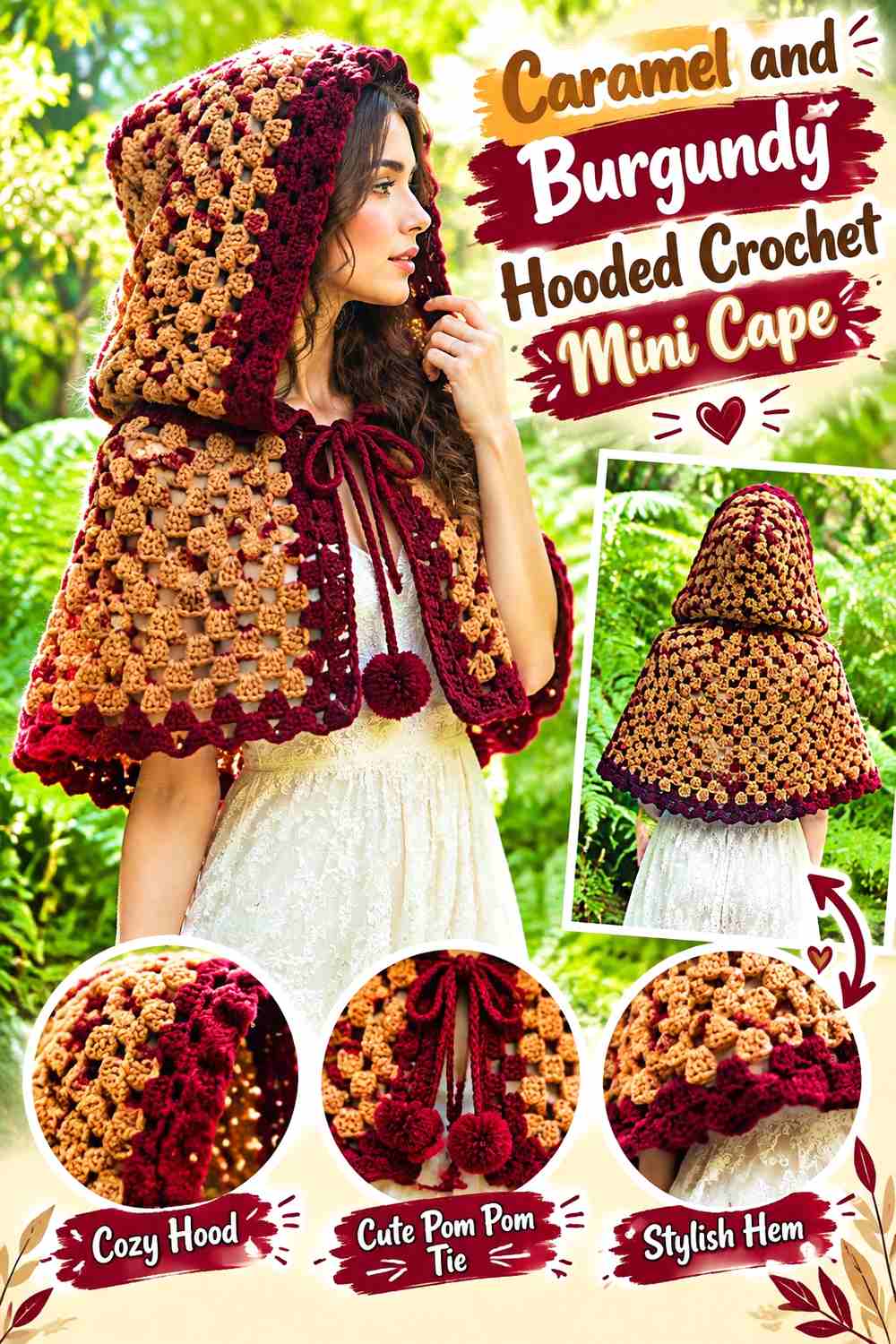
A hood introduces a large additional color area, so it should be planned with the cape rather than treated as an afterthought. Let Caramel cover the main shoulder cape and use Burgundy for the hood, neckline connection, and a narrow lower border.
The dark hood becomes the upper focal feature while the broader Caramel body prevents the entire garment from feeling visually heavy.
Caramel Should Cover Enough Shoulder Area Below the Burgundy Hood
Keep the cape body predominantly Caramel when the hood itself is dark.
A large Burgundy hood plus a Burgundy-dominant shoulder section could leave very little visible Caramel once the garment is worn.
Burgundy Hood Color Should Repeat on the Caramel Cape
Bring Burgundy into at least one structural area below the hood, such as the neckline or outer border.
That repetition connects the hood to the cape instead of making it look like a separate dark piece attached to a neutral garment.
Caramel Can Separate Burgundy Hood and Hem Details
Leave a generous Caramel field between the upper and lower Burgundy sections.
That neutral space keeps the two dark areas distinct and allows the short cape silhouette to remain visually open.
Creator Credit: Jennyandteddy crochet.
6. Burgundy And Caramel Openwork Crochet Mini Cape

Openwork already adds strong visual pattern, so use fewer color changes. Keep most of the lace-like shoulder field Burgundy and reserve Caramel for one outer band or finishing section.
The lighter edge can clarify the openwork silhouette without fragmenting the repeated stitch pattern.
Burgundy Should Stay Continuous Through the Openwork Mini Cape
Use Burgundy across several neighboring lace repeats so the crochet pattern remains easy to follow.
Frequent Caramel interruptions can compete with the holes, fans, or other open spaces already present in the fabric.
Caramel Can Reveal the Burgundy Openwork Hem
A Caramel finishing section gives the dark lace a lighter endpoint and can make decorative lower shapes easier to distinguish.
Judge the width with the cape draped over the shoulders because an outer band occupies more visible circumference than an inner row.
Burgundy Can Return Inside a Wide Caramel Border
If the Caramel section becomes broad, add a narrow Burgundy finishing line only when the cape needs stronger definition.
The return should remain small so the neutral edge still performs its lightening role.
Creator Credit: Crochet Maniak
7. Burgundy And Caramel Color Block Crochet Mini Cape

A basic cape construction is a good canvas for strong two-color blocking. Use Caramel around the upper shoulders and shift into Burgundy across the lower half. Because the cape widens downward, the Burgundy section will naturally gain substantial visual area.
This direction makes color proportion—not elaborate motifs—the main design feature.
Caramel Can Keep the Upper Burgundy Mini Cape Lighter
Use Caramel from the neckline through enough shoulder depth to establish a real upper field.
A narrow neutral neckband would not create the same color-block effect; the Caramel needs visible area before Burgundy begins.
Burgundy Gains More Visual Weight Toward the Caramel Cape Hem
The lower part of a cape has greater circumference, so a Burgundy section there can appear more dominant than its row count suggests.
Check the garment draped before extending the dark block farther upward.
Caramel Can Repeat Against a Burgundy Lower Border
If the Burgundy lower half looks too visually heavy, use a thin Caramel final edge rather than adding another large neutral block.
That small repeat reconnects the hem to the upper field without undoing the dark lower emphasis.
Creator Credit: Hobby Crochet
8. Caramel And Burgundy Seamless Crochet Mini Cape

A seamless cape benefits from a clean palette that follows the continuous construction. Let Caramel dominate from the neckline through most of the shoulders, then use Burgundy for one substantial lower border.
Avoid scattering isolated Burgundy patches through a garment whose construction otherwise looks continuous.
Caramel Should Preserve the Seamless Burgundy-Edged Shoulder Field
Keep Caramel uninterrupted through most of the body so the construction and color direction support each other.
Texture or shaping can provide variation inside the neutral field without another color change.
Burgundy Can Define the Caramel Seamless Cape Hem
A broad Burgundy outer band creates a strong endpoint and adds visual weight at the widest area.
Because Burgundy is dark, compare the cape from a distance before increasing the border depth.
Caramel Can Finish a Very Broad Burgundy Border
If the Burgundy section starts to dominate, a narrow Caramel last edge can soften the transition at the bottom.
Use the repeat only as a finishing detail rather than building another full color block.
Creator Credit: Crochet con Sole
9. Burgundy And Caramel Lace Band Crochet Mini Cape
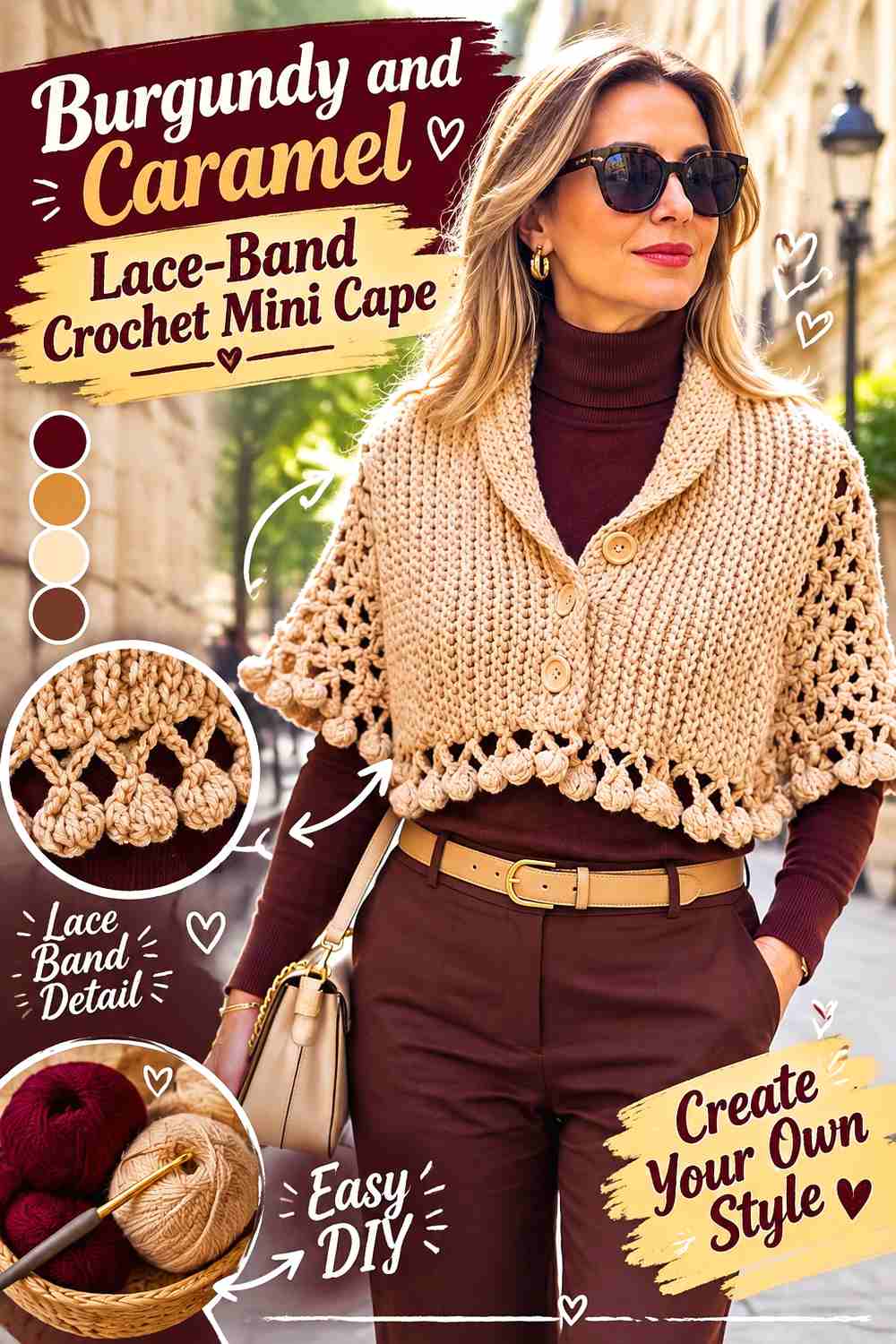
This idea keeps Burgundy across the main cape and concentrates Caramel inside one decorative lace band. Instead of using the neutral only on an edge, make it an interior feature that circles the shoulders.
A defined Caramel lace section can break up the dark body while leaving Burgundy at both neckline and hem.
Burgundy Should Frame the Caramel Lace Band Above and Below
Leave visible Burgundy on both sides of the neutral section.
The dark framing gives the Caramel band a deliberate position and prevents it from looking like the cape simply changes color halfway down.
Caramel Can Make a Burgundy Lace Section More Noticeable
Use Caramel where the crochet pattern becomes more open or decorative if the construction provides a natural transition.
The lighter field can make holes, fans, or shaped stitches easier to distinguish without changing every detail to another shade.
Burgundy Should Remain the Widest Color Around the Caramel Band
If maintaining a Burgundy-dominant cape matters, keep the combined dark sections visibly larger than the neutral feature.
The Caramel band should interrupt the main color rather than replace it.
Creator Credit: Handwork diy
10. Caramel And Burgundy Draped Crochet Mini Cape

For a softer draped effect, make Caramel the main shoulder color and add Burgundy progressively toward the outer portion. This can be done as one broad lower section rather than several narrow stripes.
The result keeps the upper cape lighter while allowing Burgundy to define the movement and width of the lower silhouette.
Caramel Should Stay Broad Across the Draped Burgundy Cape Shoulders
Use Caramel through the area that sits closest to the neck and upper shoulders.
The neutral field can make folds and drape easier to distinguish than a uniformly dark surface.
Burgundy Can Add Weight to the Caramel Outer Cape
Introduce Burgundy lower down where the widening shape gives the color greater presence.
Do not judge the balance only by row depth; the lower circumference makes Burgundy occupy more visible space.
Caramel Can Separate Burgundy From the Neckline
Avoid carrying Burgundy all the way from the outer hem to the neck if the lighter shoulder effect is the goal.
A substantial Caramel upper area preserves the clear dark-lower, light-upper relationship.
Creator Credit: Kiri Kiri
11. Burgundy And Caramel Fan Stitch Crochet Mini Cape
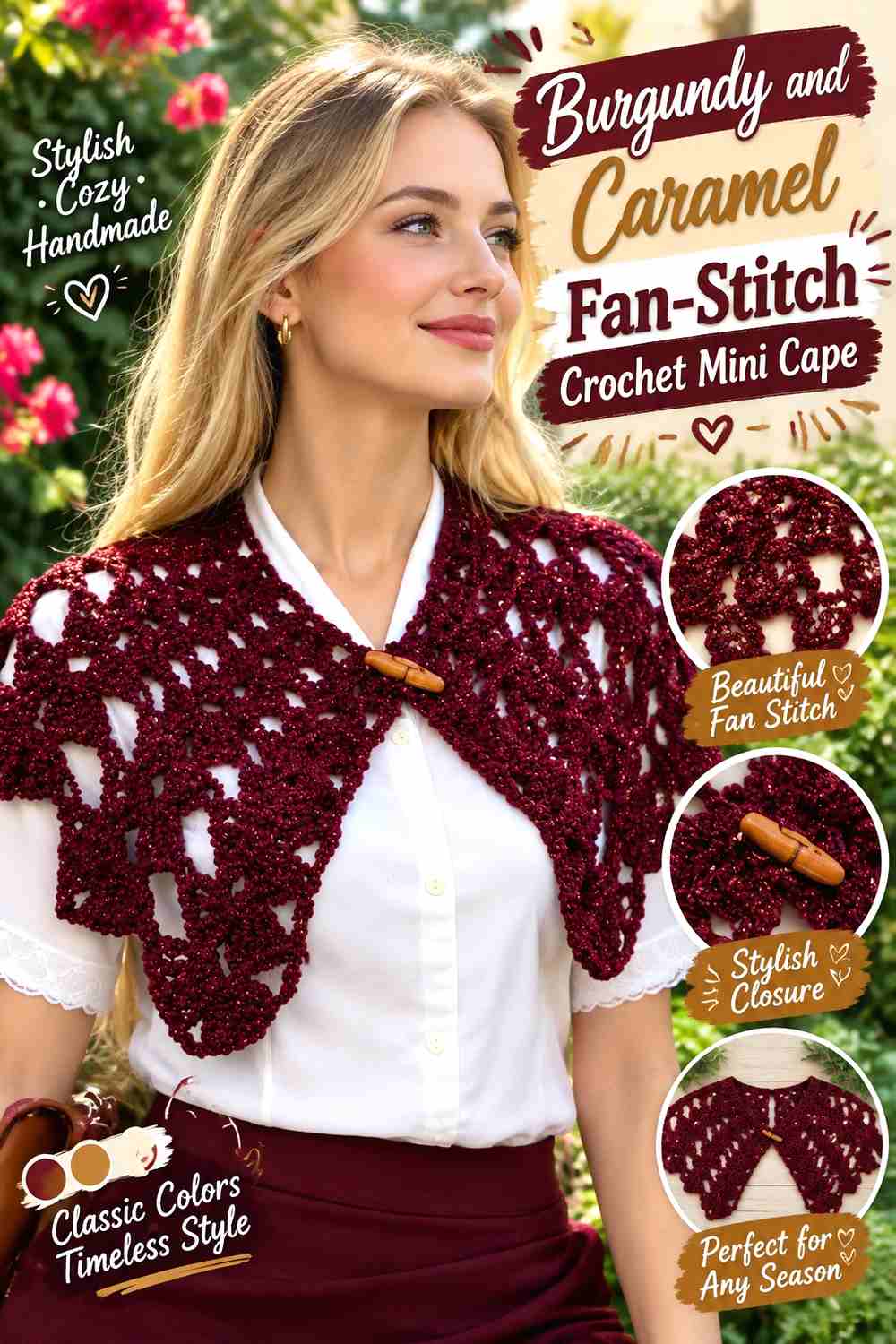
Fan stitch provides enough repeated pattern that the palette can stay simple. Use Caramel through most of the fan-stitch field and Burgundy around the neckline and outermost fans.
The darker framing makes the warm neutral texture the center of attention while giving the mini cape a strong beginning and ending.
Caramel Should Carry the Main Burgundy-Framed Fan-Stitch Field
Use Caramel continuously through several rows of fans so the repeated shapes remain easy to follow.
Changing color on every fan or every small repeat can make the stitch structure look more complicated than necessary.
Burgundy Can Define the Caramel Fan-Stitch Neckline
A Burgundy inner band gives the light patterned fabric a dark structural anchor.
Keep the neckline narrower than the Caramel shoulder field so the main texture retains enough visible area.
Burgundy Outer Fans Can Frame the Caramel Mini Cape
Return to Burgundy at the final decorative section when you want the lower silhouette clearly outlined.
If the outer fans become visually heavy, keep the Burgundy limited to the last section rather than extending it several rows upward.
Creator Credit: Moda a Crochet
Comparing the Burgundy and Caramel Mini Cape Directions
For the darkest overall look, the Victorian, vintage, openwork, and lace-band ideas keep Burgundy across most of the shoulder surface and use Caramel to lighten structural or decorative areas.
For a warmer neutral-led cape, the buttoned, hooded, seamless, draped, and fan-stitch versions give Caramel the largest field. Burgundy then provides strong definition around hoods, front bands, necklines, hems, or decorative edges.
The color-block and cozy directions give both shades more comparable visual weight. These are useful when you want the contrast itself to become the main design feature rather than using one color only as trim.
Construction should guide the final choice. Openwork and fan stitches already contain visual movement, so broad color fields keep those textures readable. Buttoned and hooded capes have additional structural features that can carry the darker shade. Very short capelets benefit from fewer divisions because every band occupies a noticeable percentage of the garment.
Conclusion
Burgundy and Caramel can create mini capes ranging from dark vintage capelets to lighter neutral shoulder layers without adding another color.
For a Burgundy-led piece, use the deeper shade across the main body and let Caramel reveal the neckline, lace, or lower edge. For a Caramel-led cape, reserve Burgundy for the hood, buttons, front opening, decorative bands, or hem. If you want a more balanced two-color result, divide the shoulder spread into two or three broad fields instead of many small stripes.
Also judge the palette on the garment rather than on a flat work surface. A cape becomes wider toward its outer edge, so the lower color can occupy more visible area than its row count suggests. Use the credited tutorials for their exact shaping, stitch instructions, and sizing, then adapt Burgundy and Caramel around the neckline, shoulder field, closures, and hem.
Frequently Asked Questions
Should Burgundy or Caramel dominate a crochet mini cape?
Either can lead. Burgundy creates a darker, more defined cape, while Caramel produces a warmer and lighter shoulder field. Decide which shade should occupy the broadest area before assigning the second color to the neckline, border, buttons, hood, or lace section.
Where should Caramel go on a Burgundy crochet mini cape?
Caramel works well at the neckline, lower edge, openwork band, decorative stitch section, front trim, or selected finishing details. Choose one or two meaningful locations rather than scattering small neutral sections everywhere.
How can I keep a Burgundy crochet mini cape from looking too dark?
Increase the visible Caramel area around important structural sections. A broad Caramel lace band, neckline, or lower field can break up Burgundy while preserving the two-color palette.
Can Burgundy and Caramel work in an openwork crochet cape?
Yes. Openwork already creates visual detail, so keep the color changes relatively broad. One shade can carry the lace field while the other frames the neckline or hem.
Should a Burgundy cape hood match the main mini cape body?
It can, but it does not have to. A Burgundy hood over a Caramel cape creates a strong upper focal point. If you use that arrangement, repeat a small amount of Burgundy elsewhere on the body so the hood feels connected to the full palette.
How can I check whether Burgundy and Caramel have enough contrast?
Compare the yarns beside each other and in the actual crochet stitch. Looking at a grayscale photo can also reveal whether their light/dark values are clearly separated. If they merge, use larger color fields instead of very narrow accent lines.
Should the darkest color go at the bottom of a Burgundy and Caramel mini cape?
Not necessarily. Burgundy can work at the neckline, hem, main body, or decorative band. A dark lower section creates visual weight at the widest part of the cape, while a dark upper section anchors the shoulders. Choose the placement based on the effect you want rather than treating the hem as a fixed rule.