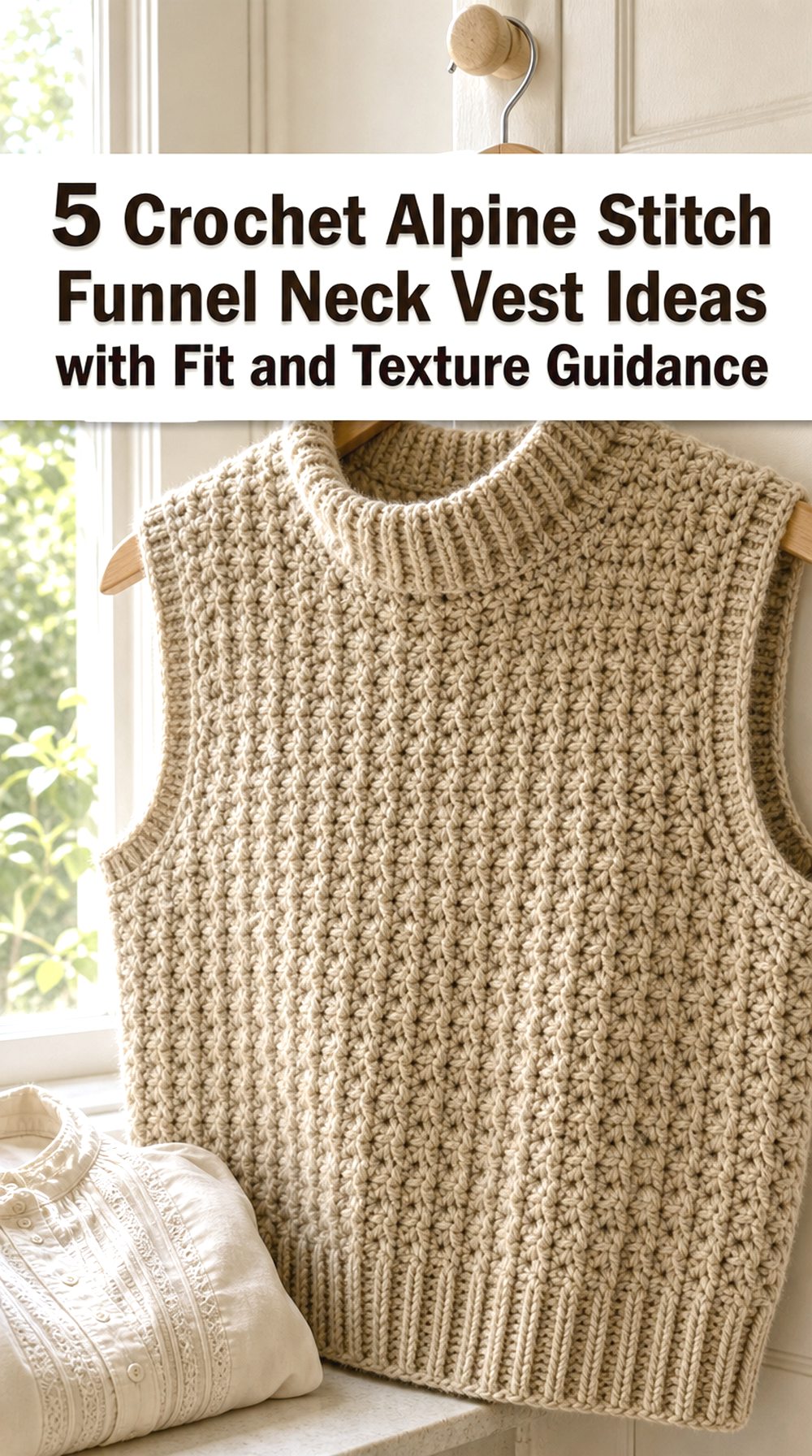
An alpine-stitch funnel-neck vest brings three strong wardrobe features together: raised texture, a warm upright collar, and a sleeveless shape that layers without adding bulk at the arms. This Crochet guide begins with the closest complete match and then compares four useful related options without pretending every source combines all three details. One isolates alpine texture in a classic vest, while three show turtleneck or cowl constructions that help readers judge collar depth, drape, and shoulder coverage. Each Crochet idea is labelled honestly, with notes on what the linked instructions actually provide. You will also find practical guidance on bust ease, neckline comfort, yarn behaviour, armhole finishing, colour placement, and blocking, making it easier to choose a design that suits your preferred fit and layering style.
Quick List
- Crochet Alpine-Stitch Turtleneck Panel Vest
- Crochet Ribbed Turtleneck Layering Vest
- Crochet Alpine-Panel V-Neck Sweater Vest
- Crochet Chunky Cowled Sweater Vest
- Crochet Soft-Drape Cowl Vest
How to Choose a Crochet Alpine Stitch Funnel Neck Vest
Start with the collar because it changes both comfort and styling. A close upright neck should pass over the head without strain, sit comfortably around the throat, and remain stable after wear. A wider cowl gives more drape but may feel bulky beneath a coat. Next, check bust ease and armhole depth against the layers you plan to wear underneath. Alpine stitch creates a pronounced, substantial surface, so a vest worked heavily in that texture may feel firmer than one using open V-stitches or moss stitch. Swatch the main texture and gently stretch it before choosing a size.
Also consider shoulder width. Extended shoulders create more coverage and a modern cap-sleeve effect, while narrower shoulders resemble a traditional sweater vest. Smooth armhole edging matters because tight borders can rub or restrict a shirt underneath. Finally, plan colour placement before starting: solid shades emphasise alpine relief, whereas stripes or contrasting panels divide the torso visually. Block conservatively and follow the chosen yarn’s care label so the collar does not relax more than expected.
Crochet Alpine Stitch Turtleneck Panel Vest
What Stands Out
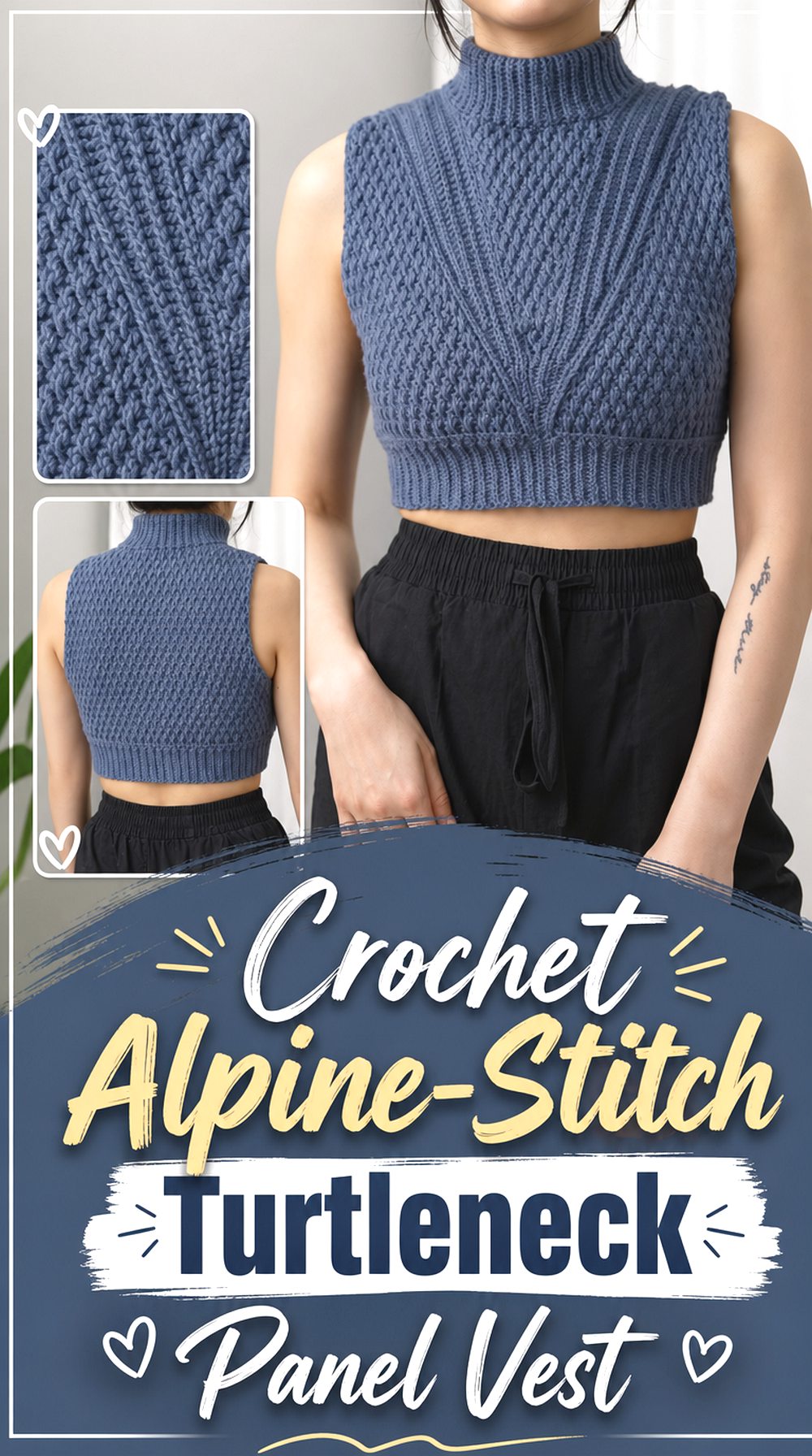
This is the closest all-in-one match to the article theme. The sleeveless Crochet vest uses alpine-stitch sections across the front, including a central textured area and matching side sections, then adds a separate upright turtleneck. The tutorial also covers joining the front components, making the back, seaming the shoulders and sides, and finishing the lower edge and armholes.
Fit and Finish
The panelled front gives the raised texture clear definition and may suit readers who want the alpine surface to remain the main visual feature. Because the neck is high and close rather than softly draped, check head opening and throat comfort before committing to the full collar height. A smooth, solid colour will show the post-stitch relief clearly, while a slightly shorter collar can reduce bulk beneath a jacket.
Crochet Ribbed Turtleneck Layering Vest
Design Details
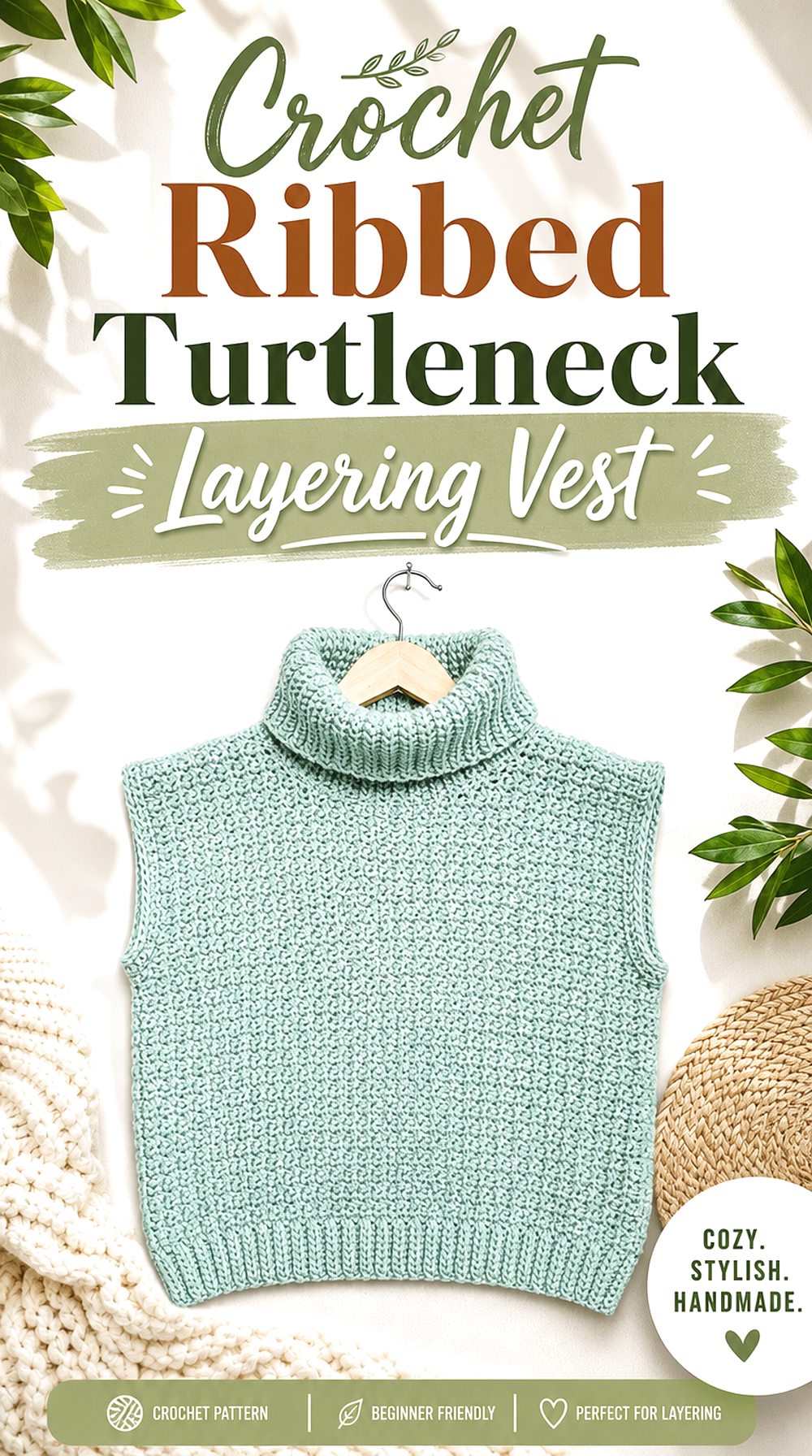
This Crochet turtleneck vest is assembled from a front panel, back panel, and separate oversized collar. Ribbed slip-stitch sections define the lower band and neck, while the main body uses a compact moss-like texture. The upright collar is formed as a cylinder and sewn to the shaped neckline, giving a clear example of how a substantial high neck can be added to a sleeveless body.
Best Use
The pattern covers sizes S through 3XL and suits cold-weather layering over fitted tops or lightweight sweaters. A tonal yarn keeps the ribbing and body texture connected, while a contrasting collar would make the neckline the focal point.
Before You Choose
This source does not use alpine stitch. Treat it as a collar, neckline-shaping, and assembly reference. Because the collar is oversized and made separately, test its depth and circumference before sewing it permanently in place.
Crochet Alpine Panel V Neck Sweater Vest
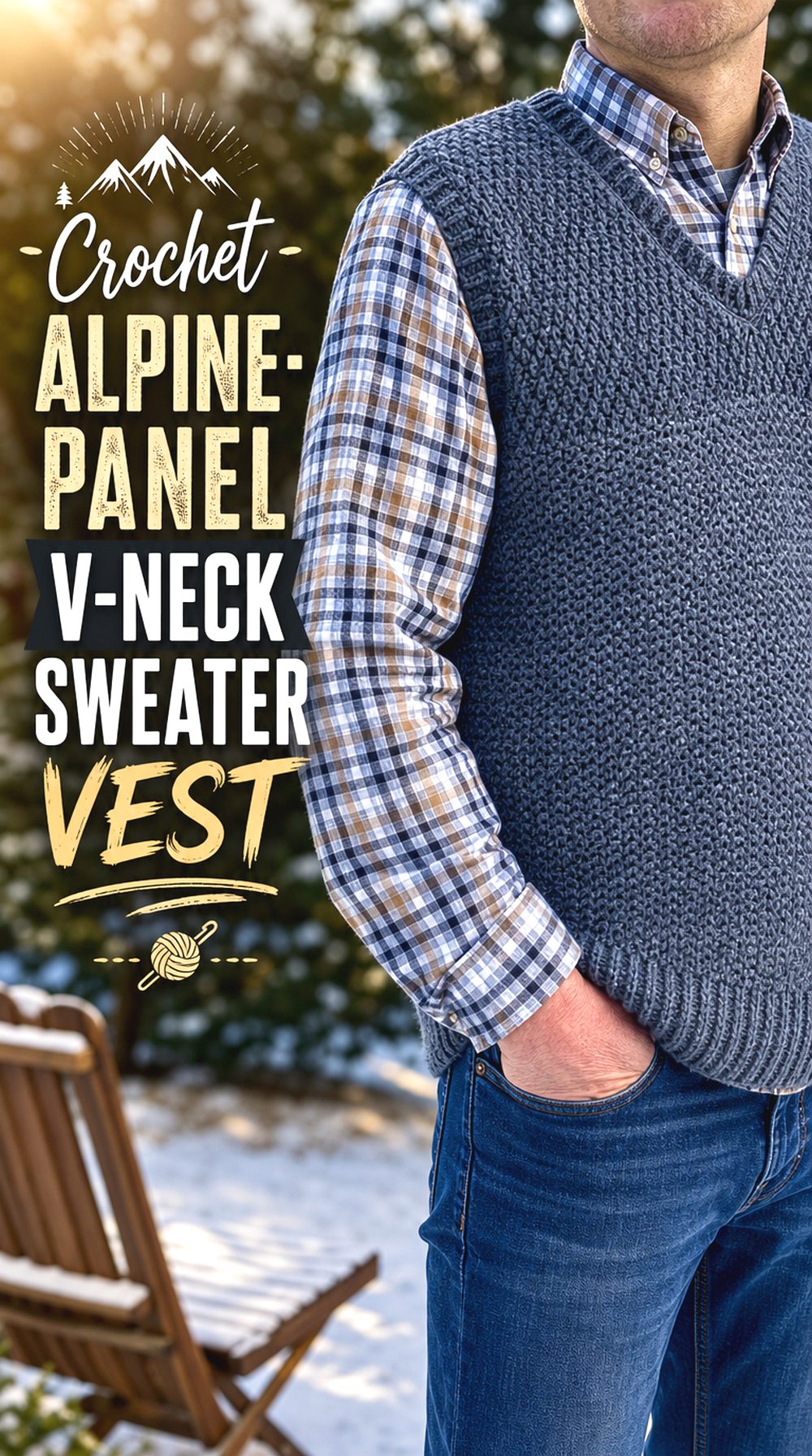
The Ararat Crochet vest mixes two textures instead of covering the whole garment in alpine stitch. Alternating single-crochet spike stitch forms most of the body, while alpine stitch creates a distinct chest section. The result is a streamlined V-neck layering piece with enough surface change to make a single colour look varied.
Who It Suits
The source provides sizes from S through 5XL and builds in room for an undershirt and dress shirt, so this option suits readers who prefer a more traditional vest fit. The lighter-looking lower texture may also feel less visually heavy than full alpine stitch.
Customisation Idea
Use the chest panel as a planning reference for placing alpine texture on a future high-neck design. The linked instructions do not include a funnel collar, however, and replacing the V-neck would require independent neckline calculations rather than a simple edging change.
Crochet Chunky Cowled Sweater Vest
Why It Works
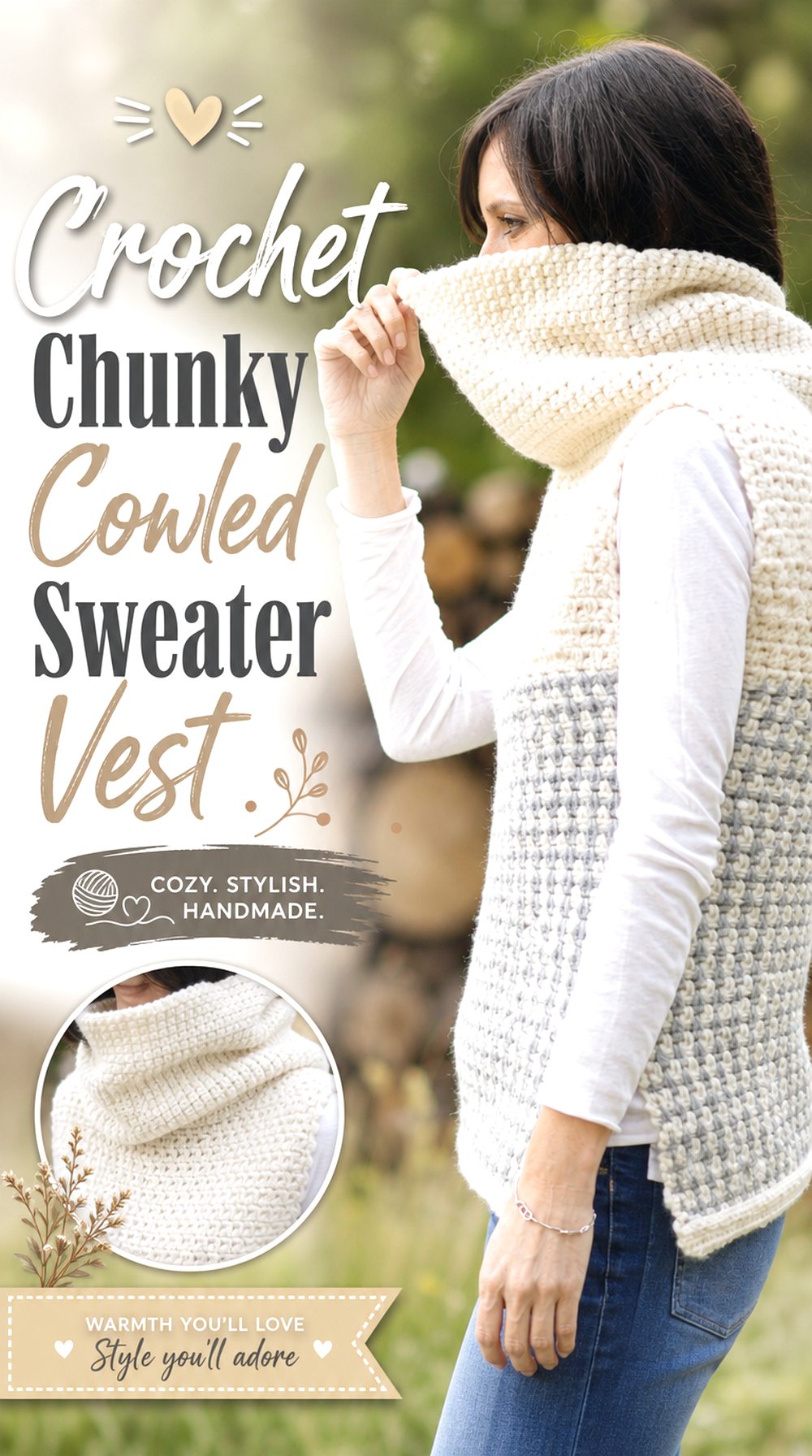
This chunky Crochet vest is built from front and back panels, then finished with a tall cowl worked around the neck opening. Granite stitch gives the body a compact woven look, while narrow stripes add movement across the upper section. Slip-stitch rows form a knit-like lower edge, and open side sections near the hem provide room around the hips.
Practical Point
The cowl is softer and more relaxed than a funnel neck, making it useful for judging how much collar volume you enjoy. The pattern notes that the body stitch can become tight, so tension deserves attention when planning layers underneath.
Colour Direction
A solid shade would make this a quieter wardrobe piece; two close neutrals preserve the stripe detail without overwhelming the texture. This source does not use alpine stitch, so choose it for cowl construction, rectangular shaping, and side-slit inspiration.
Crochet Soft Drape Cowl Vest
What Stands Out
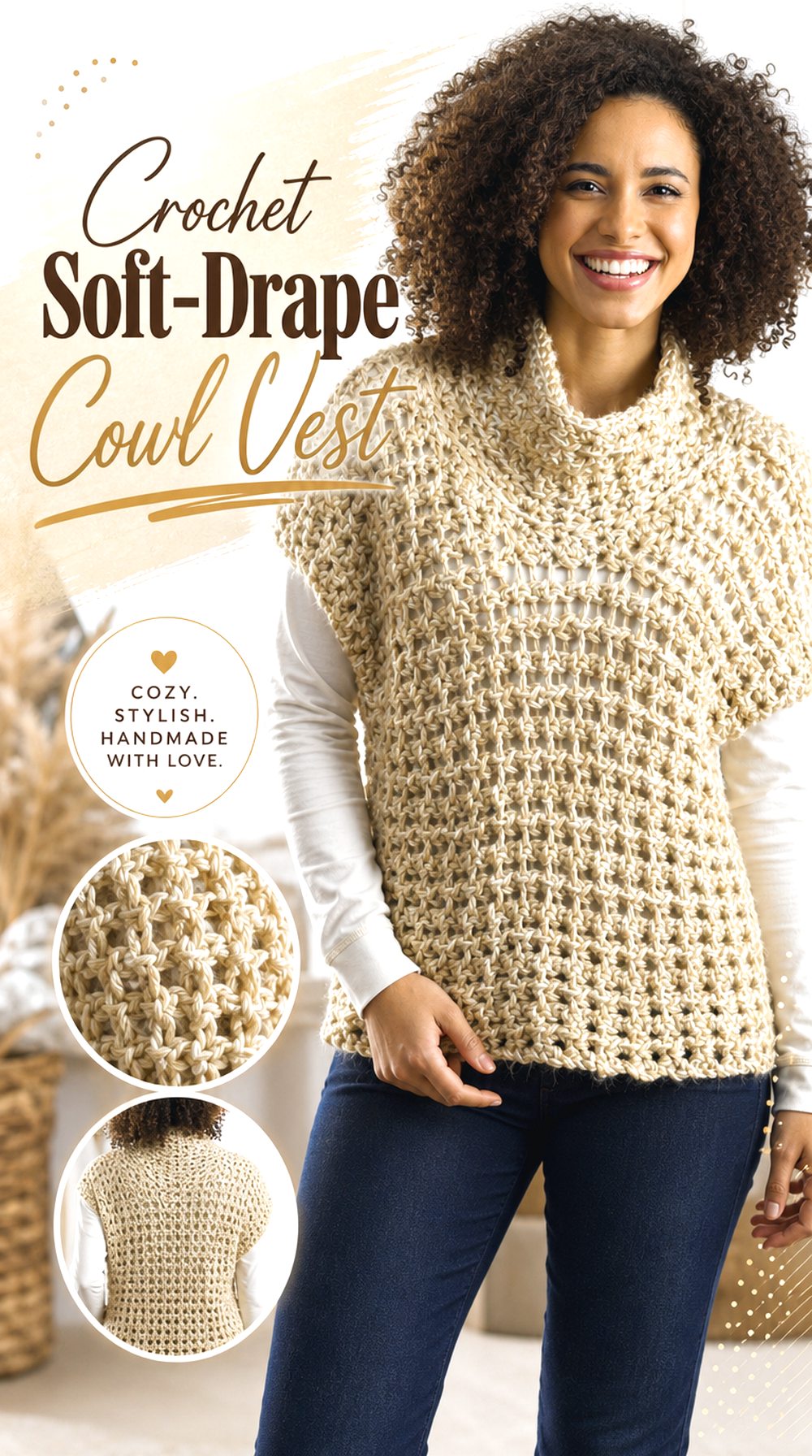
The Caron Crochet cowl vest has a roomy, slightly extended shoulder line and an open V-stitch fabric worked with multiple strands held together. A shaped neck opening supports the cowl, while the same textured stitch continues upward so the collar and body feel visually connected.
Fit and Finish
The instructions cover sizes XS through 3XL and include arm shaping rather than relying only on two plain rectangles. A smaller hook is used for slip-stitch trim around the neck and armholes, which draws those openings in and gives the edges a cleaner outline.
Good to Know
The open body texture will not resemble dense alpine stitch, but the design is a useful comparison for collar drape and shoulder coverage. Avoid sizing down solely because the silhouette looks generous; first compare the finished bust measurement with the clothing you expect to layer beneath it.
Useful Crochet Notes
Swatch the Alpine Texture
Alpine stitch can produce a more substantial fabric than an open vest stitch, and the raised posts may change both width and drape. Make a generous swatch, measure it without stretching, then wear or handle it for a while before measuring again. This gives a better indication of whether the finished vest needs extra ease.
Check the Collar Opening
A funnel or turtleneck collar must be comfortable before its height is added. Test the neck opening over the head after joining the shoulders, and remember that a decorative edge may reduce stretch. For a softer result, keep the collar slightly wider; for a closer fit, use firm edging without making the opening restrictive.
Finish Armholes Evenly
Uneven armhole edging can make a sleeveless vest twist, flare, or feel tight over a shirt. Place stitches consistently around curves and seams, then compare both openings before fastening off. If the border pulls inward, use a larger hook or fewer rounds. If it ripples, reduce the number of stitches picked up.
Conclusion
Choose the TCDDIY vest when the high neck and alpine panels are the priority. The alpine-panel V-neck option is a stronger reference for body texture and traditional layering, while the Crochet with Carrie, Mama in a Stitch, and Caron designs make collar construction and volume easier to compare. Let the intended underlayer, preferred shoulder coverage, and tolerance for dense fabric guide the final choice.
FAQs
Is alpine stitch suitable for an entire funnel-neck vest?
It can be, but an all-over alpine surface may feel firmer and heavier than a vest with textured panels. Swatching is essential. Check drape, stretch, and weight after the swatch rests. A panelled layout can preserve the raised look while keeping the garment less visually and physically dense.
How much ease should a Crochet funnel-neck vest have?
Base the choice on what will be worn underneath. A vest intended for a blouse or fitted tee needs less room than one layered over a shirt and thermal top. Compare the finished bust measurement with a comfortable vest you own, and also check armhole depth and shoulder width.
Which yarn shows alpine stitch most clearly?
Smooth, evenly spun yarn usually reveals the alternating raised posts more clearly than highly fuzzy or heavily variegated yarn. A solid or gently heathered shade also keeps the texture readable. Fibre choice should reflect the desired warmth and care routine, while the yarn label should guide washing and drying.
How can I stop a funnel collar from becoming floppy?
Match the collar stitch and hook size to the structure you want. A close stitch, stable edge, and moderate height can help an upright collar hold its shape. Very soft yarn or an oversized opening encourages drape. Test several collar rounds before completing the full height, then adjust early.
Can a V-neck alpine vest be changed into a funnel neck?
The idea is possible, but it is not merely a matter of adding tall edging. The original neck opening may be too wide or shaped incorrectly to support an upright collar. The shoulders and centre neckline usually need recalculation. Use a dedicated high-neck construction as a reference rather than improvising after completion.


