Crochet arm warmers can range from short wrist covers to longer sleeve-like pieces, so this collection focuses on shape, coverage, texture, and how each finished project might fit into daily wear. Some designs are close to fingerless gloves, while others lean more toward cozy wrist warmers or connected sleeve layers.

The main differences to notice are cuff style, thumb opening, length, surface detail, and how much of the hand or arm remains covered. A ribbed pair may feel simple and streamlined, while granny squares, cables, flowers, or lacy edging create a more decorative finish. Use the original tutorials for exact construction details, then compare the notes below to choose the arm warmer style that best matches your wardrobe and use.
You may also like our Crochet Fall Leg Warmers ideas for more cozy layering inspiration.
Quick List
- Crochet Contrast-Cuff Arm Warmers
- Crochet Ribbed Sleeve-Style Arm Warmers
- Crochet Thumb-Hole Fingerless Arm Warmers
- Crochet Two-Tone Fingerless Arm Warmers
- Crochet Flower-Pattern Fingerless Arm Warmers
- Crochet Ribbed Hand Warmers With Thumb Border
- Crochet Moss-Stitch Hand Warmers With Lacy Edging
- Crochet Slim Wrist Warmers
- Crochet Chunky Wrist Warmers
- Crochet Flat-Panel Fingerless Arm Warmers
- Crochet Autumn Fingerless Mitten Warmers
- Crochet Granny Square Fingerless Arm Warmers
- Crochet Cable-Stitch Arm Warmers
- Crochet Ribbed Foundation Hand Warmers
- Crochet Connected Sleeve Arm Warmers
What to Compare Before Choosing Crochet Arm Warmers
The first decision is coverage. Wrist warmers sit lower and keep the project compact, while longer arm warmers cover more of the forearm and can feel more like a layering accessory. Thumb openings also matter because they affect how the warmer sits on the hand and whether the top edge stays in place.
Texture is the next big difference. Ribbing gives a clean, fitted look, while flowers, cables, granny squares, and lacy edges make the arm warmers more visible as part of an outfit. Before starting, check whether the creator gives sizing notes, material details, a back or side view, and clear finishing guidance. For wearable pieces, small differences in width, length, and stretch can change how useful the finished pair feels.
Crochet Contrast Cuff Arm Warmers
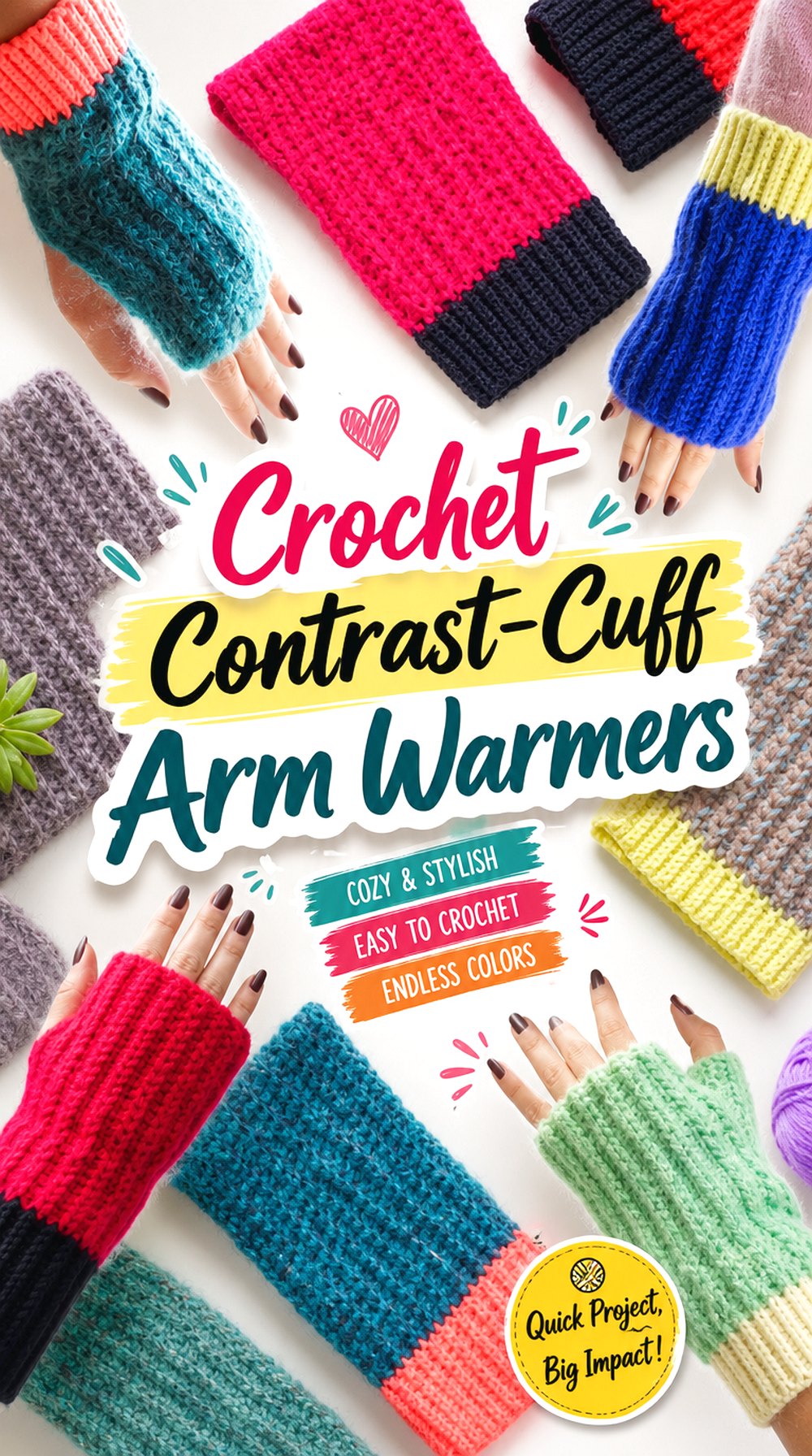
These arm warmers stand out because the wrist area and main arm section are treated as separate visual zones. The result feels more like a styled winter accessory than a plain tube warmer, especially when the cuff color or yarn texture differs from the body.
This option may suit readers who want a finished pair with a soft seasonal look and a clear cuff detail. It is different from the plainer ribbed and flat-panel choices because the contrast area gives the wrist its own focus.
The Cuff Detail Sets the Style
The separate cuff area is the main design feature to notice. It can frame the hand and make the finished warmers look more intentional, even when the overall shape stays simple. Readers choosing colors should think about whether they want the cuff to blend softly with the body or stand out clearly as a border.
Material Information to Review
The source lists yarn information for both the body and wrist areas, so it is worth reviewing the material section before buying supplies. Different yarns can change the look of the contrast, the thickness of the cuff, and the way the finished warmer sits on the arm. Follow the creator’s listed supplies rather than guessing substitutes.
Crochet Ribbed Sleeve Style Arm Warmers
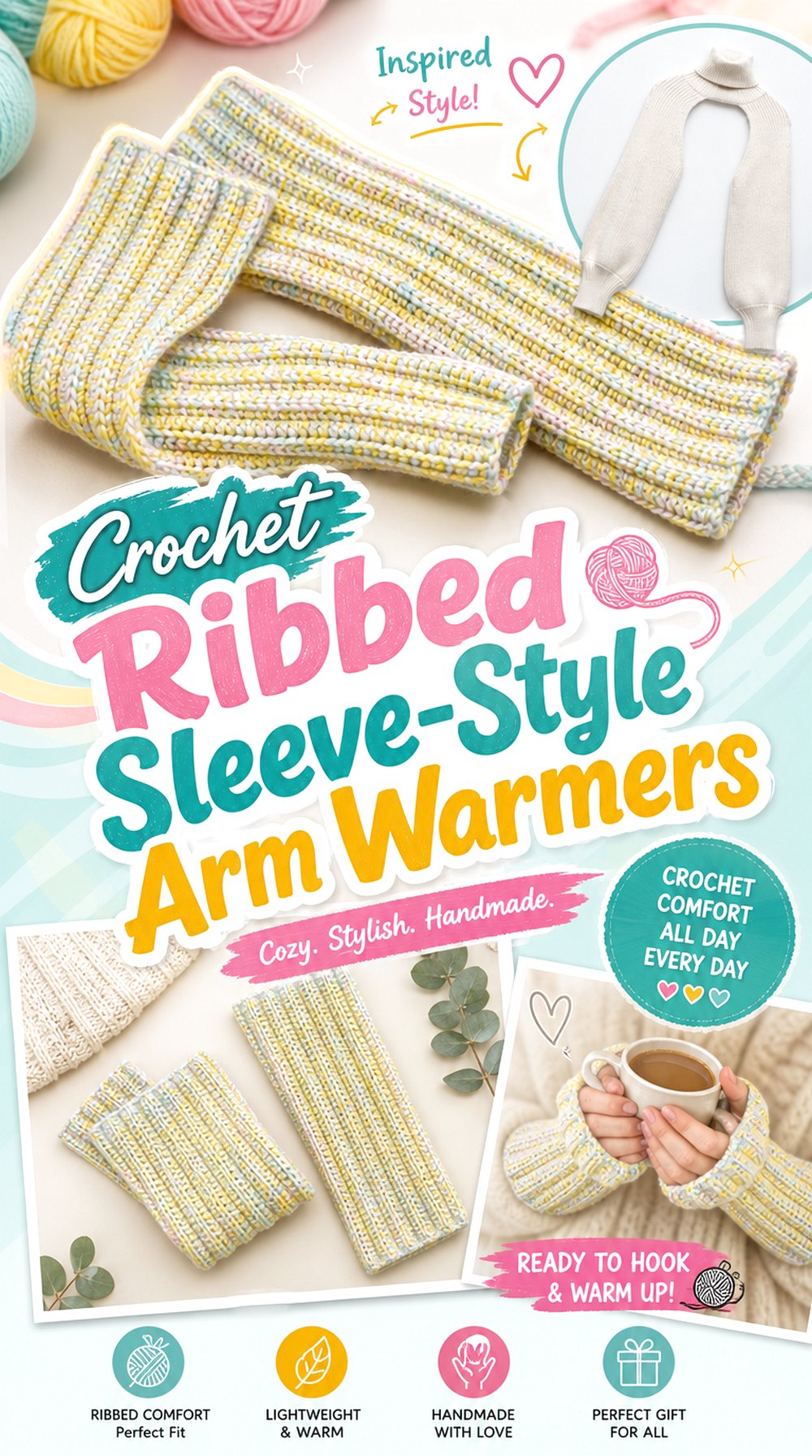
A longer ribbed arm warmer gives more forearm coverage than a short wrist warmer. This design has a sleeve-like feel, so it may work best for readers who want a visible layering piece rather than a small hand accessory.
The ribbed texture gives the project a consistent surface from cuff to arm. Compared with the granny square or flower-pattern choices, this one keeps the focus on fit, stretch, and length instead of decorative motifs.
Forearm Coverage Is the Main Feature
The longer shape is what separates this project from compact fingerless gloves. Readers should compare the intended length with how they plan to wear it, especially if it will sit under a jacket sleeve or over a fitted top. A longer warmer may need more attention to arm measurement than a short wrist-only project.
Ribbing Changes the Finished Look
The ribbed surface gives the warmer a neat vertical texture and can make the finished pair look more fitted. The source notes that the pattern is adjustable, so readers should pay close attention to the sizing guidance instead of assuming one size will fit every arm comfortably.
Watch the Shape Before Joining
Because this style covers more arm length, the shape should be checked as it develops. A short hand warmer may forgive small fit differences, but a longer sleeve-style warmer needs the width and length to work together. Use the original tutorial for the exact joining and finishing details.
Original Tutorial and Creator Credit
Creator: zeelahgumamela
Crochet Thumb Hole Fingerless Arm Warmers
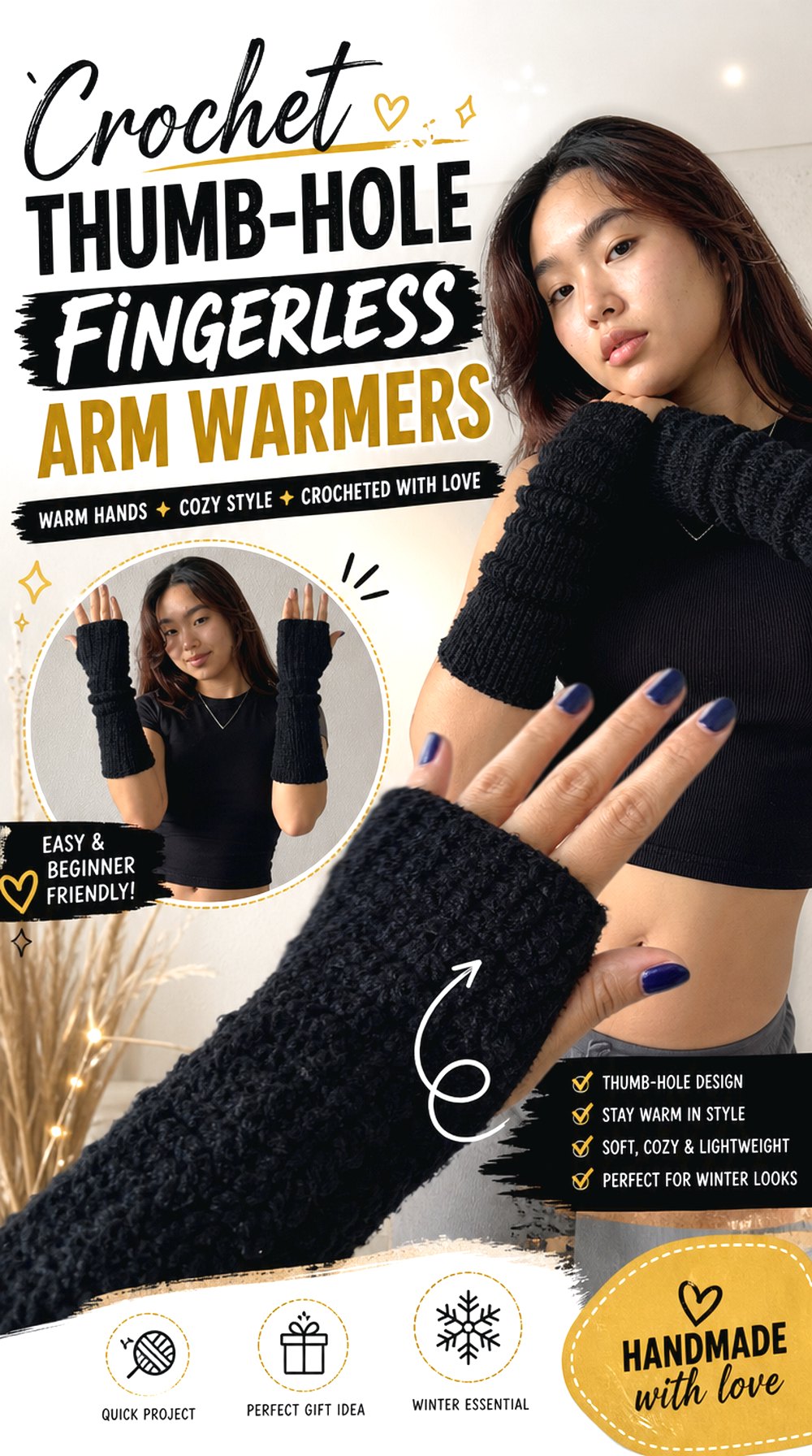
This pair has the practical fingerless shape many readers expect from crochet arm warmers. The thumb opening helps anchor the piece on the hand while leaving the fingers uncovered, making it different from plain wrist tubes.
The design is useful for readers who want a simple hand-and-wrist warmer with a clear wearing position. It is less decorative than the flower, cable, and granny square options, so the shape itself becomes the main point.
Thumb Placement Matters Most
The thumb opening affects how the warmer sits while worn. A well-placed opening can keep the top edge from twisting or sliding around the hand. Readers should compare the tutorial’s measurement guidance with their own hand position before committing to the final fit.
A Simple Shape Leaves Room for Color Choices
Because the surface is not dominated by motifs, color can change the whole mood of this pair. A single shade keeps it quiet and wearable, while stripes or contrast edges can make it feel more playful. Keep any color change simple enough that the thumb area remains easy to follow.
Original Tutorial and Creator Credit
Creator: Ariel Tong
Crochet Two Tone Fingerless Arm Warmers
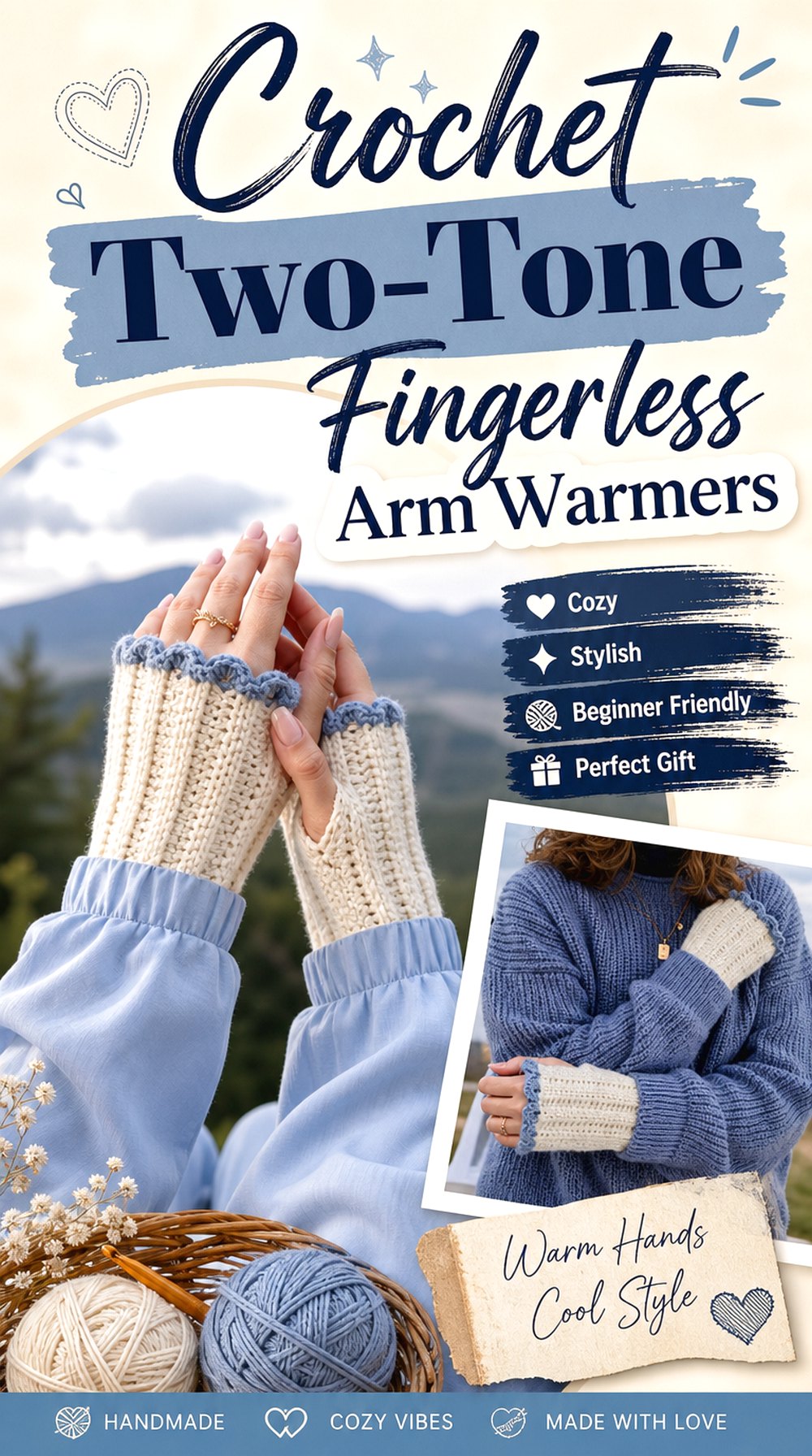
A two-tone fingerless warmer gives the hand area more visual interest without relying on a separate motif. This project can be modified for length and color placement, so it suits readers who want a pair that feels more personal while still staying close to a classic fingerless glove shape.
Compared with the contrast-cuff option, this one places more attention on the overall color pattern rather than only the wrist edge. It may work well for leftover yarn planning if the source’s material notes match what the reader has.
Color Placement Affects the Pair
The two-tone look works best when the color changes feel balanced from one warmer to the other. Readers should decide before starting whether they want both hands to match closely or whether a playful mismatched effect is acceptable. This is especially important if using partial skeins or colors with strong contrast.
Length Can Shift the Use
The source notes that the gloves can be modified to become arm warmers by making them longer. That makes this a flexible choice, but it also means readers should decide early whether they want wrist coverage only or a longer forearm piece. More length changes both the look and the amount of yarn needed.
Trim and Edge Details Deserve Attention
The finishing around the hand opening and wrist edge can make a simple pair look cleaner. Since the project is not covered in heavy texture, small edge details become more noticeable. Use the original video to follow the creator’s finishing approach rather than trying to recreate it from a short summary.
Original Tutorial and Creator Credit
Creator: Savannah Fletcher
Crochet Flower Pattern Fingerless Arm Warmers
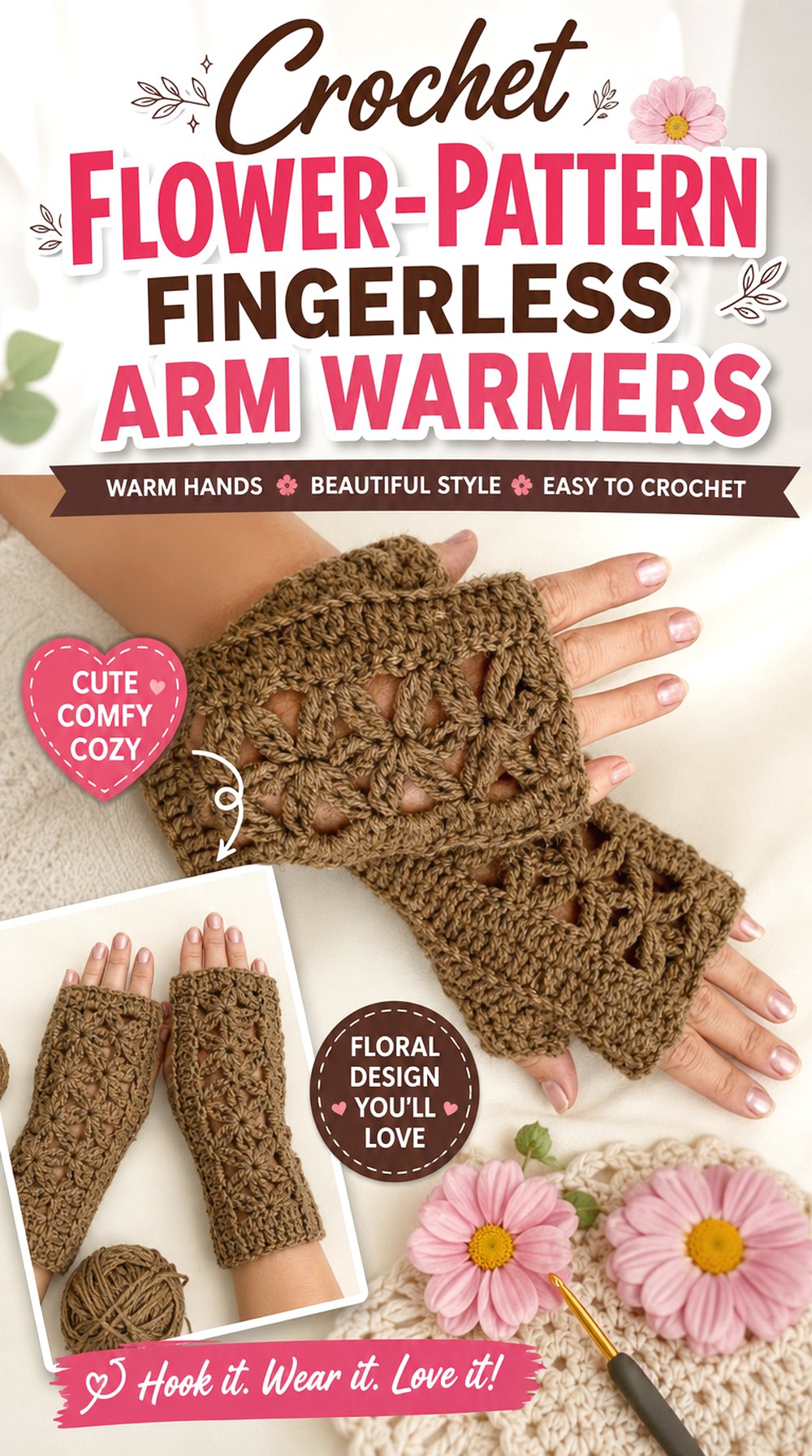
These fingerless arm warmers are the decorative choice in the group. The flower-pattern surface gives the finished pair a more detailed look, so they may suit readers who want arm warmers that show clearly in an outfit instead of disappearing under a coat sleeve.
The floral texture separates this project from the ribbed and chunky options. It also means the front-facing view matters more, because the pattern is part of the appeal.
Keep the Flower Pattern Visible
The flower detail is the main reason to choose this project, so color and contrast should help the pattern show. A very busy yarn could make the surface harder to read, while a calmer yarn may let the texture stand out. Readers should review the finished view before choosing supplies.
Right and Left Hand Notes Matter
The source describes instructions for right and left hand fingerless gloves. That distinction is useful because decorative placement may not look the same if both pieces are treated casually. Readers should follow the creator’s orientation guidance so the finished pair looks intentional when worn together.
Selling Rights Are Not Automatic
The source description includes restrictions around reproducing or distributing the pattern. Readers who make finished items for gifts can still enjoy the project, but anyone planning to sell items from a tutorial should check the creator’s exact terms first and follow any stated limits.
Original Tutorial and Creator Credit
Creator: Knit and Crochet Design
Crochet Ribbed Hand Warmers With Thumb Border
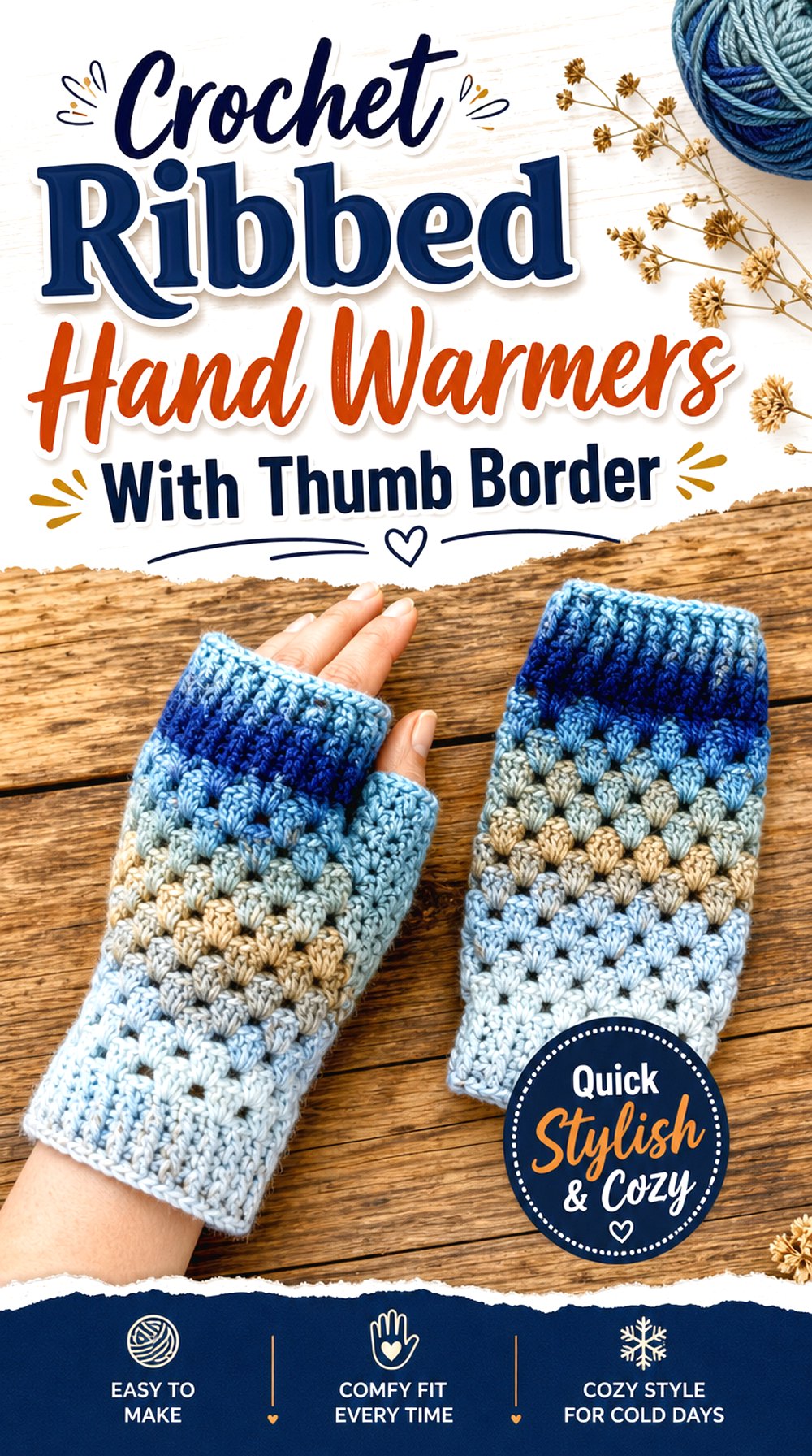
This hand warmer tutorial has a more detailed format, including a thumb border and clear finishing sections. The finished style is practical and classic, with ribbing that frames the hand rather than a bold decorative motif.
It is a good choice for readers who prefer a full walkthrough and want the thumb area to look finished. Compared with shorter videos, this source gives a more extended teaching format, which may suit people who like slower visual guidance.
The Thumb Border Gives a Cleaner Finish
A thumb opening can look unfinished if the edge is ignored. This project includes a thumb border section, which makes that area part of the design rather than only a gap for the thumb. Readers who care about neat finishing should pay close attention to that part of the source.
Long Tutorial Format May Help Careful Makers
The video is much longer than several other options in this list and includes many chaptered sections. That can be helpful for readers who prefer a slower pace and want to revisit specific parts. It may be less ideal for someone who wants a very brief overview before starting.
Written Pattern Availability Is Worth Checking
The creator links pattern options outside the video. Readers who like to work from both written and visual guidance should review those links before beginning. This is especially useful for a pair of hand warmers because it can be easy to lose track of where the second warmer should match the first.
Original Tutorial and Creator Credit
Creator: Little Drops of Wonderful – Crochet & Knitting
Crochet Moss Stitch Hand Warmers With Lacy Edging
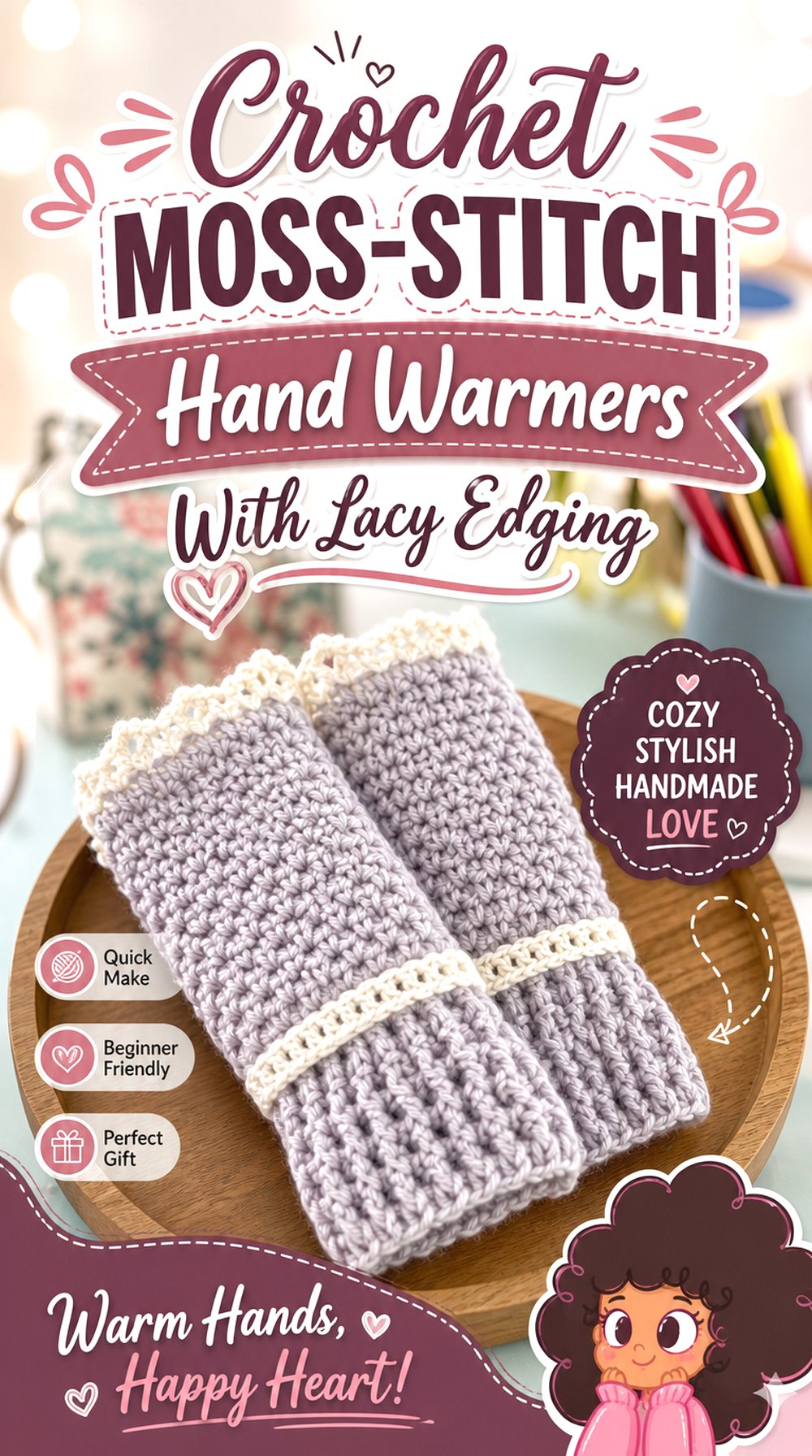
This pair combines a moss-stitch hand section with extra finishing details, including lacy edging and a wrist strap. Those added features make it more decorative than a plain ribbed wrist warmer while still keeping the fingerless hand shape.
The wrist strap is the detail that sets this project apart. It gives the finished pair a more designed look and may appeal to readers who want a small accessory that feels finished from the cuff to the hand opening.
The Wrist Strap Changes the Cuff Area
A wrist strap draws attention to the lower edge of the warmer, so the cuff becomes part of the finished style. Readers should look at how the strap sits on the wrist and decide whether that added detail matches their usual clothing. It may not feel as minimal as a plain ribbed cuff.
Lacy Edging Adds a Softer Finish
The lacy edging gives this project a different mood from the chunkier and cable-textured options. It can make the hand opening look more delicate, but it also means the final edge deserves careful viewing in the source. Readers should check whether the edging style fits the look they want before starting.
Stitch Texture and Open Detail Need Balance
Moss stitch gives the body a small repeated texture, while the edging and strap add separate points of interest. That balance is useful, but too many color changes could make the details compete. A reader planning custom colors should decide which feature should stand out most.
Original Tutorial and Creator Credit
Creator: Charle Rae
Crochet Slim Wrist Warmers
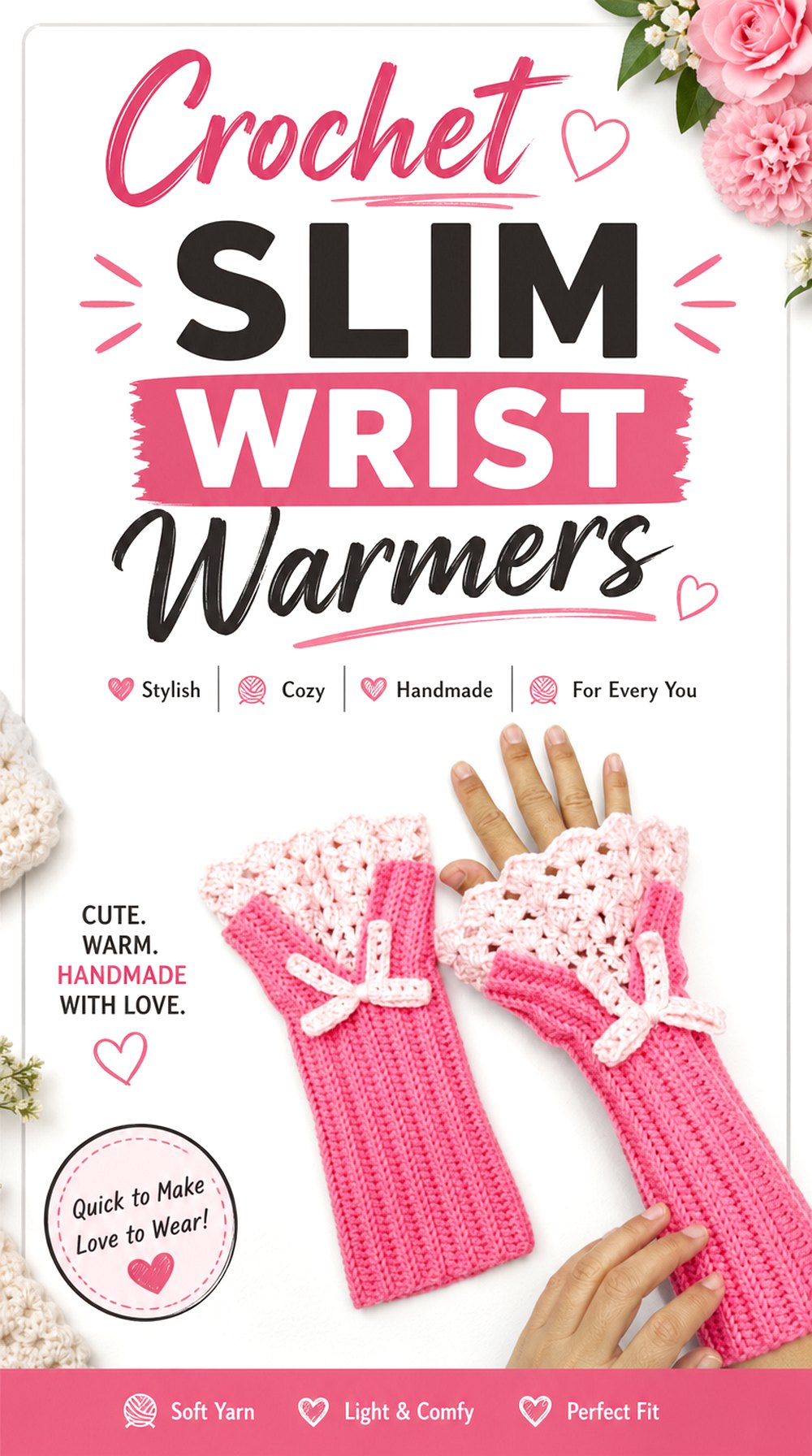
These wrist warmers are the most compact choice in the collection. Instead of covering much of the forearm, they focus on the wrist and lower hand area, which can make them easier to layer with long sleeves or wear indoors.
The source lists cotton yarn and smaller hooks, giving this project a lighter profile than the chunky wrist warmer option. Readers who want less bulk around the hand may prefer this slimmer shape.
Compact Coverage Keeps Them Simple
Short wrist warmers do not create the same visual statement as long arm warmers, but that can be useful. They are easier to pair with sleeves, jackets, or everyday clothing because there is less fabric competing at the forearm. Readers should confirm the finished coverage shown in the tutorial before expecting full arm warmth.
Yarn and Hook Notes Affect the Feel
The listed materials include 4-ply cotton yarn and two hook sizes. That information matters because a slim wrist warmer can change noticeably if made with a thicker yarn. Readers should review the creator’s material section and avoid assuming the same proportions will appear with a very different yarn weight.
Original Tutorial and Creator Credit
Creator: The Crochet Channel
Crochet Chunky Wrist Warmers
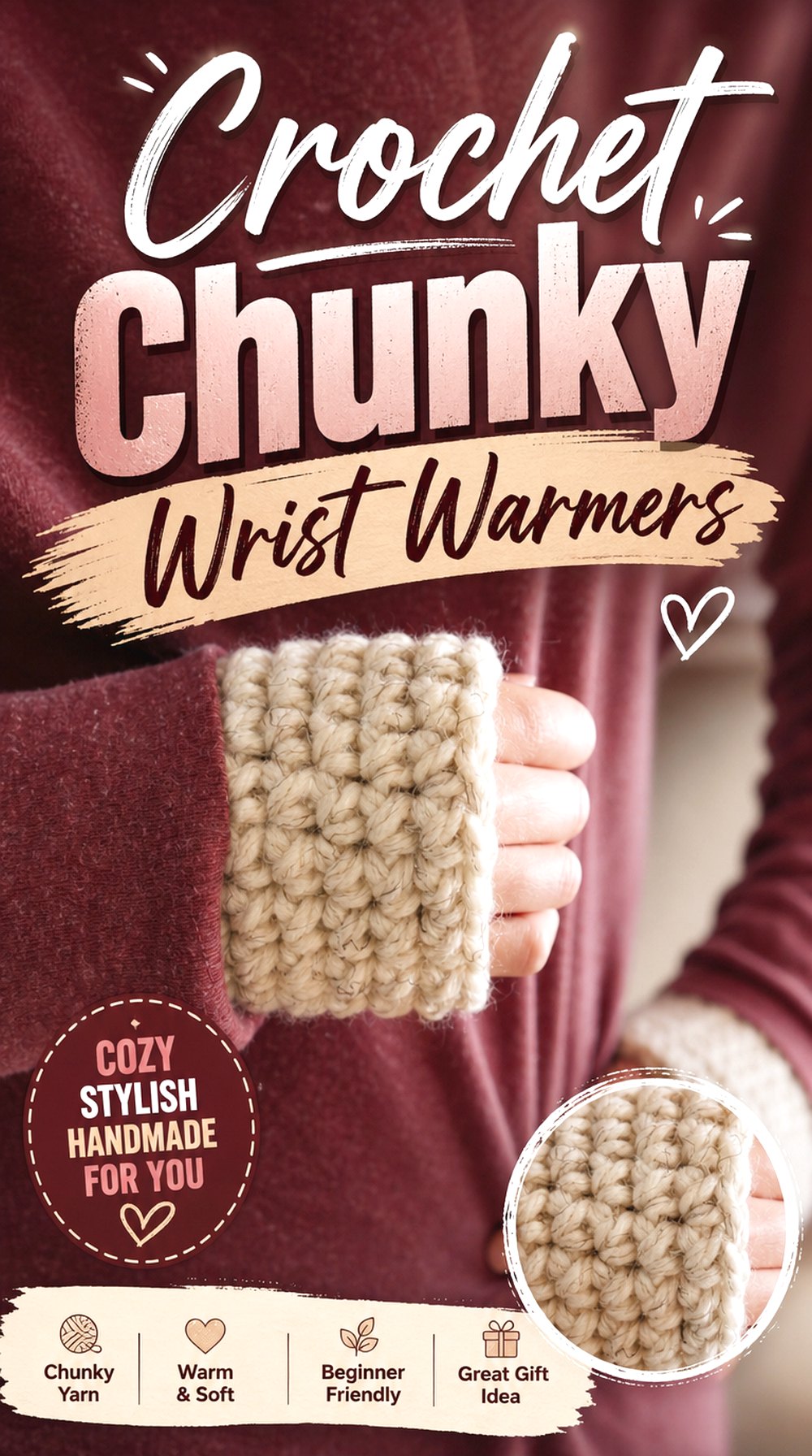
This wrist warmer project uses a chunkier material direction than the slim cotton option, so it creates a bolder finished accessory. The shape is still compact, but the yarn choice gives it more presence around the wrist and hand.
Readers who want a simple project with a thicker look may prefer this one over decorative lace or floral texture. The finished pair is more about soft bulk and clear shape than small surface details.
Chunkier Materials Change the Proportions
The source lists a thick yarn and a large hook, so readers should expect the finished look to differ from finer wrist warmers. A bulky material can make edges, seams, and openings more noticeable. It is worth reviewing the finished view carefully before choosing this as a low-profile layering piece.
Compare the Hand Opening Before Starting
With a thicker wrist warmer, the hand opening needs to sit comfortably without looking too loose or crowded. Readers should compare the top edge with how they plan to wear the pair, especially if they want to use their fingers freely while keeping the wrist covered.
Pattern Links May Help With Matching Pairs
The source points readers to written pattern options. Having a written reference can be useful when making two matching pieces, because it helps keep the second warmer aligned with the first. Check the creator’s linked pattern information if a printable or written guide is preferred.
Original Tutorial and Creator Credit
Creator: B.Hooked Crochet
Crochet Flat Panel Fingerless Arm Warmers
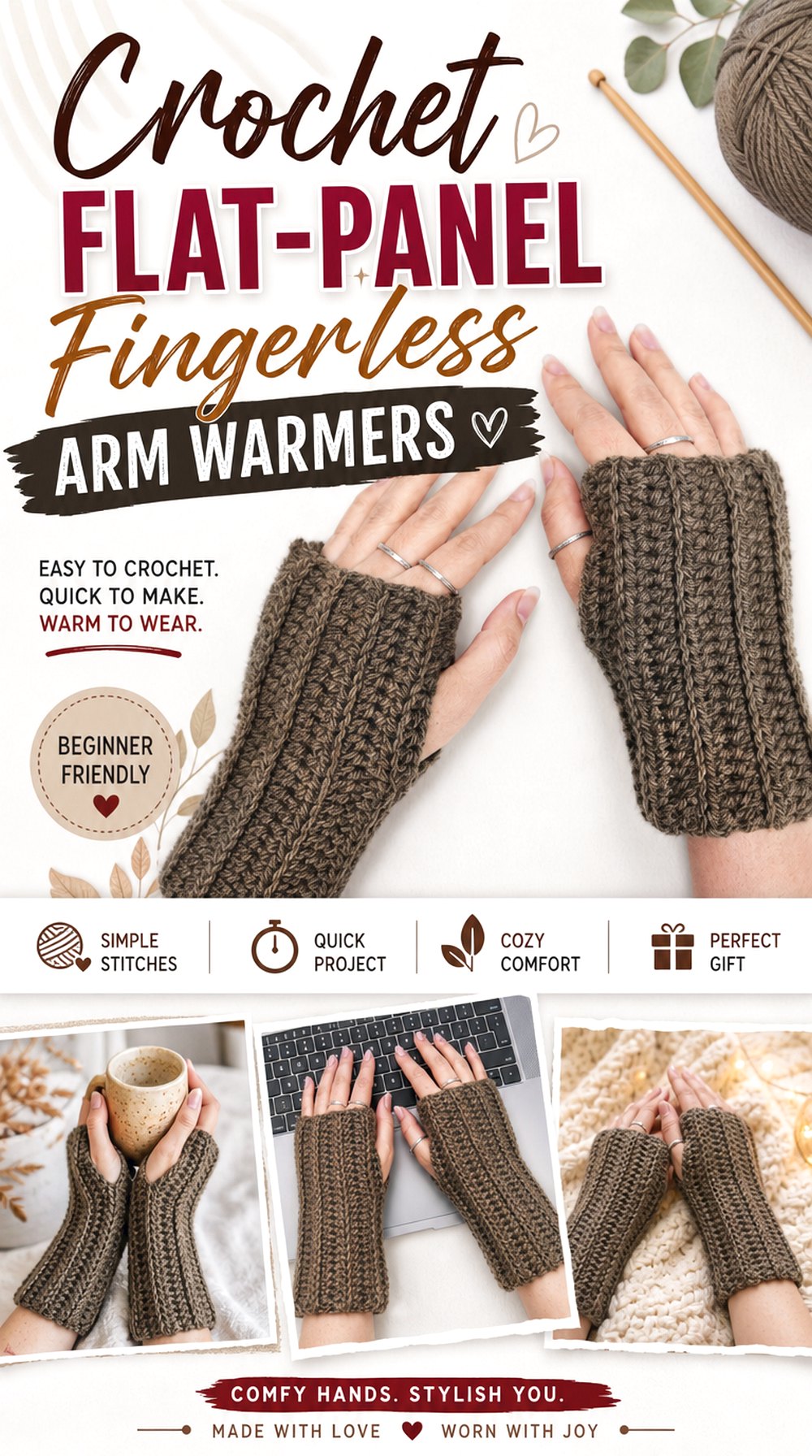
This fingerless glove style has a clean, straightforward shape with width adjustment discussed in the source. It is a good match for readers who want the function of arm warmers without a strong decorative surface.
The main difference is the flat-panel feel before joining. That makes the project easier to understand visually because the piece can be compared for width before it becomes a wearable tube.
Width Adjustment Is the Key Decision
The source specifically mentions adjusting the width, which is important for fingerless warmers. Too narrow can make the pair uncomfortable, while too wide can shift around the hand. Readers should use the creator’s adjustment guidance rather than relying only on the sample shown.
Plain Texture Makes Fit More Noticeable
Because there are no large motifs or bold cables to distract the eye, the fit and edge alignment matter more. A plain pair can look very neat when the edges sit evenly. It can also show uneven joining more clearly, so the finishing section deserves careful attention.
Best Use Is Everyday Simplicity
This option works best for readers who want a basic wearable shape rather than a statement accessory. It can be a good base for solid colors or subtle stripes, but adding too much decoration may change the clean purpose of the design.
Original Tutorial and Creator Credit
Creator: Cherilyn Q
Crochet Autumn Fingerless Mitten Warmers
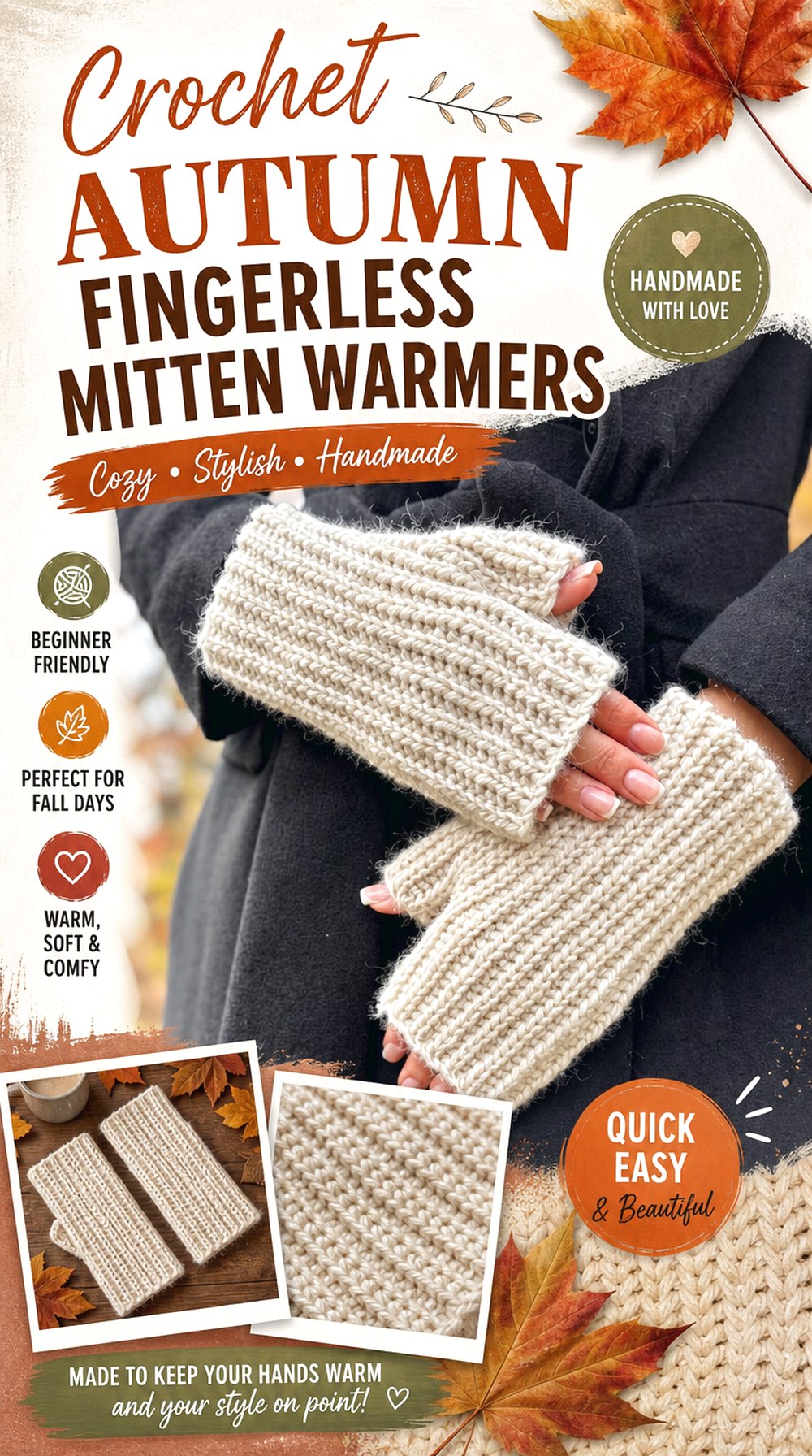
These fingerless mitten-style warmers have a seasonal feel and focus on hand coverage with a thumb opening. The source describes them as wrist warmers, hand warmers, and crochet mitts, so they sit clearly within the arm warmer family.
This option may suit readers who want a mitten-like shape without covering the fingers. It differs from the slim wrist warmers because the hand area is more central to the finished design.
Mitten Shape Gives More Hand Presence
A fingerless mitten warmer covers the hand more noticeably than a wrist-only project. That makes it useful for readers who want the accessory to stay visible while worn. Before starting, compare how much of the hand is covered in the finished view and whether that matches your layering needs.
Size Adjustment Notes Are Useful
The description mentions size adjustment for different wearers. That is helpful, but readers should still compare their own hand measurements with the creator’s guidance. A mitten-style warmer needs the thumb opening, wrist area, and upper edge to work together.
Language and Subtitle Details Matter
The source notes that the video language is Ukrainian and suggests using subtitles. Readers who depend on spoken instruction should check the caption options before beginning. Those comfortable with visual demonstrations may still find the step-by-step format workable.
Original Tutorial and Creator Credit
Creator: В’язання і майстер класи Candy-Yarn
Crochet Granny Square Fingerless Arm Warmers
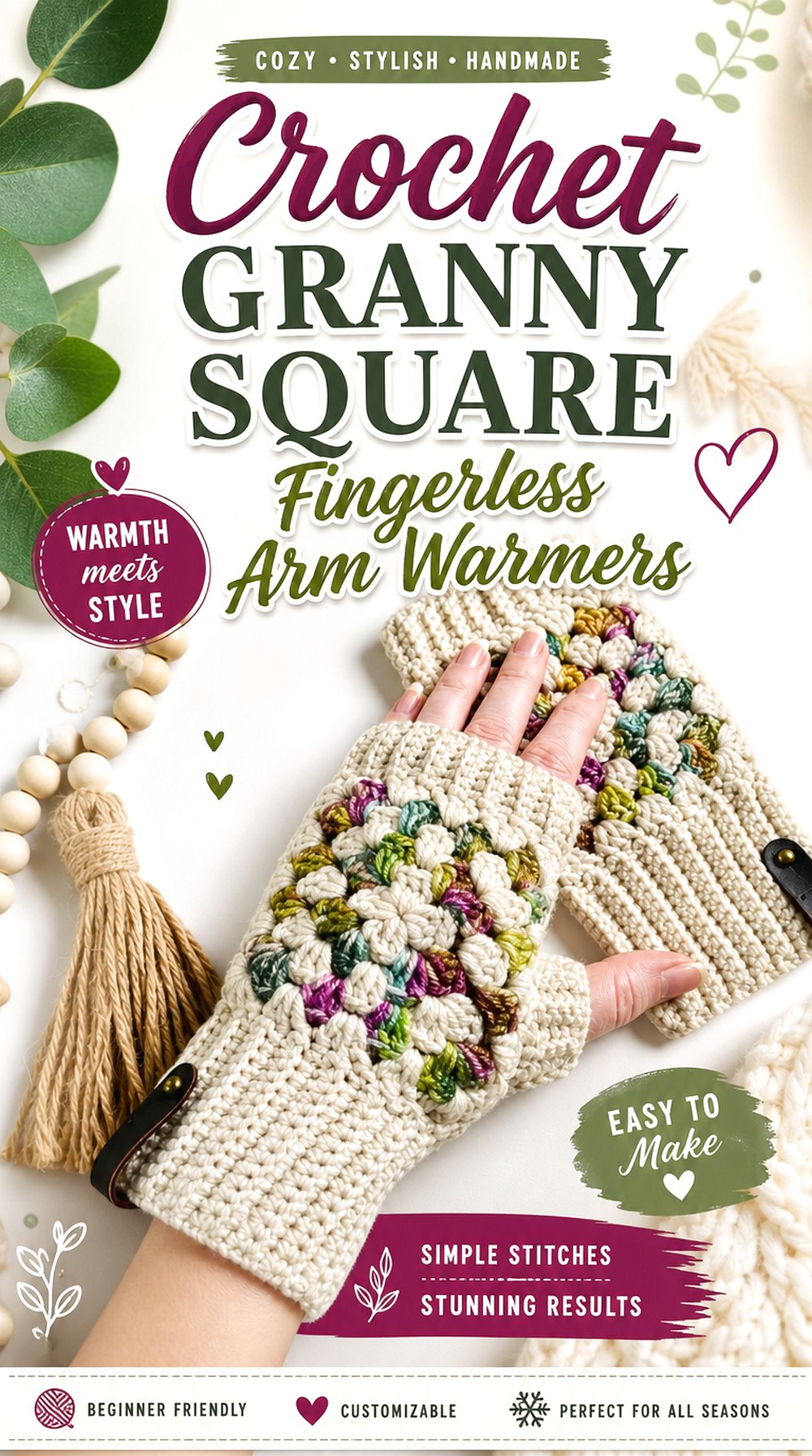
Granny square fingerless arm warmers bring a motif-based look to the category. Instead of a continuous ribbed or plain surface, the finished pair uses square sections that are joined and shaped into wearable gloves.
This project is a strong choice for readers who like a patchwork effect or want color blocks to define the accessory. It feels very different from the cable, flower, and moss-stitch options because the square layout becomes the main structure.
Motif Layout Drives the Design
With granny square gloves, the squares are not just decoration; they shape the look of the whole warmer. Readers should decide whether they want high contrast between squares or a softer palette that blends more quietly. The layout will be much more visible than on a plain ribbed pair.
Joining Deserves Careful Viewing
The source includes joining and ribbing sections, which are important for turning separate motifs into wearable arm warmers. Readers should watch how the pieces are positioned before joining. Motif direction and edge alignment can affect how polished the final pair looks.
Ribbing Frames the Squares
The ribbed areas help the square sections look more wearable and finished. Without a clean frame, motif gloves can look loose or unfinished at the edges. Review the finished cuff and hand openings to decide whether this style gives enough structure for your taste.
Original Tutorial and Creator Credit
Creator: Lullaby Lodge
Crochet Cable Stitch Arm Warmers
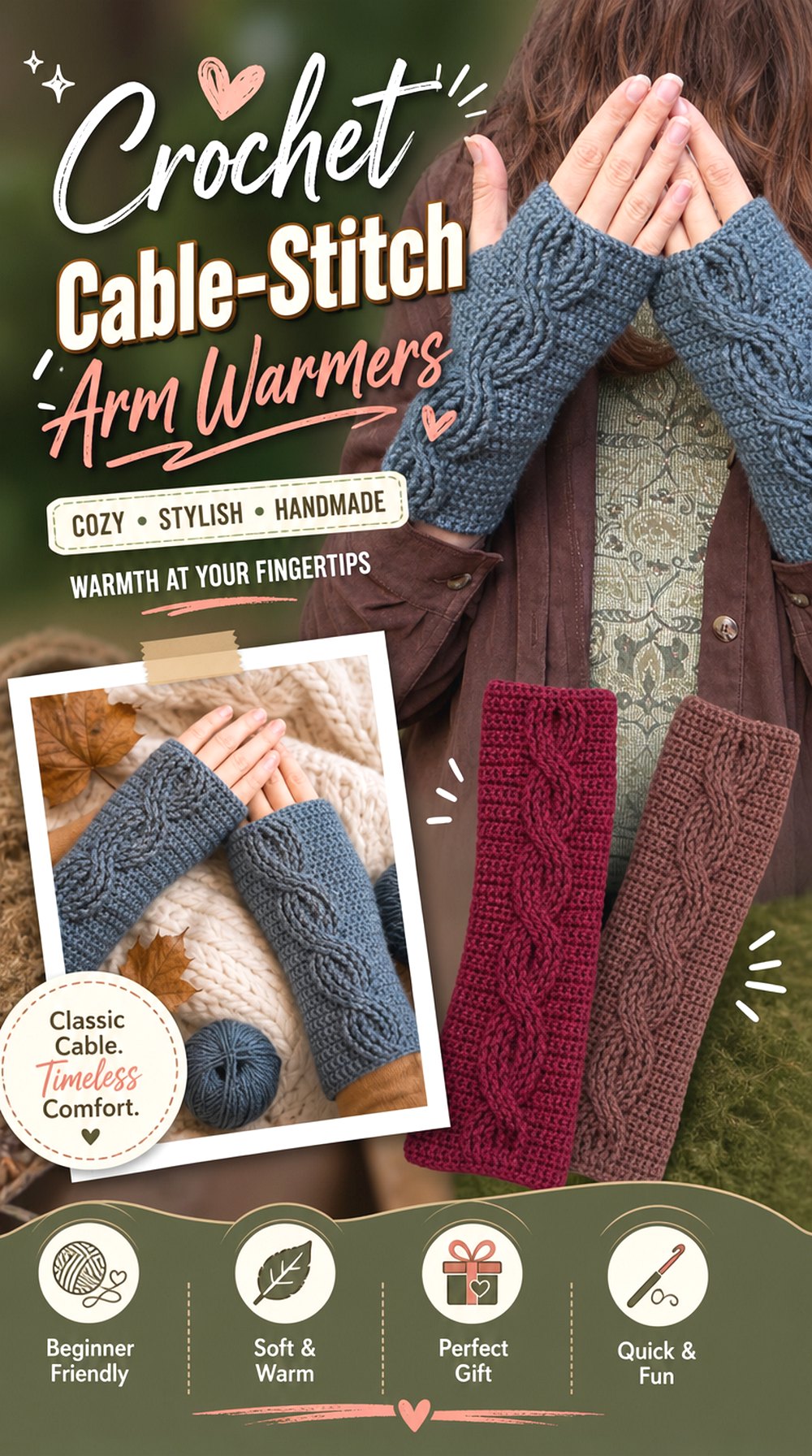
Cable texture gives these fingerless arm warmers a raised, structured look along the back of the hand. This is a good option for readers who want texture without using separate motifs, flowers, straps, or lacy edging.
The design feels more tailored than the simple flat-panel pair because the cable line creates a clear front-facing feature. It can work well when the finished warmer will be visible over long sleeves or with outerwear.
The Back-of-Hand Cable Is the Focus
The source describes a cable stitch along the back, so orientation matters. Readers should notice which side is meant to face outward and how the cable sits when worn. This is not the kind of texture that should be hidden under the palm or twisted around the wrist.
Solid Color May Show Texture Better
A cable detail often reads more clearly when the yarn color does not compete with it. Readers can still choose any color they like, but a busy yarn may soften the cable’s definition. The main decision is whether the texture or the color should be the first thing people notice.
Supply Notes Are Clearly Listed
The source lists yarn weight and hook information, which is useful before gathering materials. Since raised texture can change the feel of a project, readers should review those notes and avoid assuming a much different yarn will create the same cable effect.
Original Tutorial and Creator Credit
Creator: Calluna Crochet
Crochet Ribbed Foundation Hand Warmers
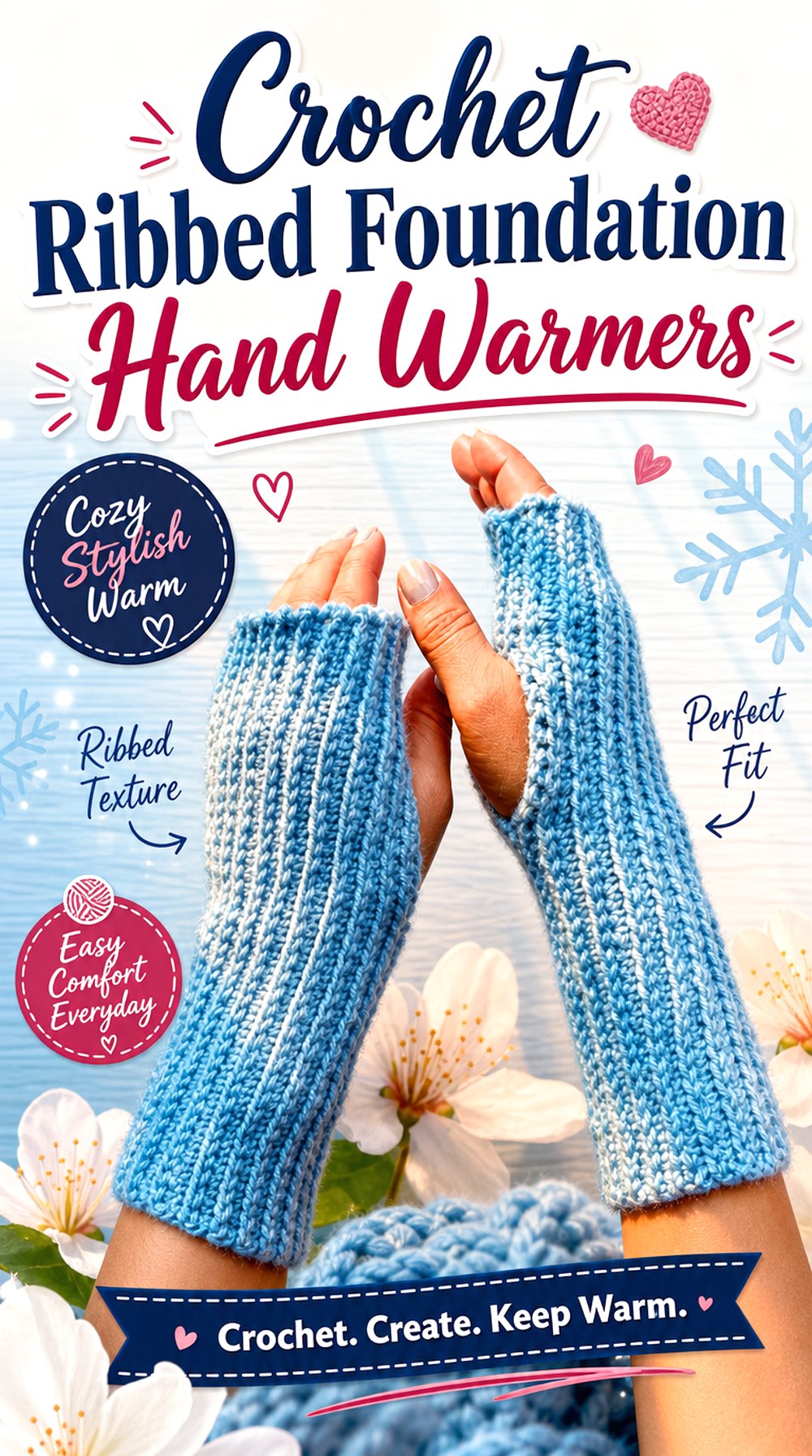
This hand warmer project focuses on a ribbed look and a clean shaped finish. The source includes foundation construction, shaping, seaming, and a thumb hole section, so it may appeal to readers who want a neat ribbed pair with a structured learning flow.
Compared with the chunkier wrist warmers, this pair looks more streamlined. Compared with the flat-panel gloves, the ribbing gives the surface more movement.
Foundation Work Affects the Starting Edge
The source uses foundation work at the beginning, so readers who have not used that method should review the early section carefully. The starting edge can affect how clean and flexible the warmer looks. This is a good detail to notice before deciding whether the tutorial style suits you.
Ribbing Gives a Trendy, Repeated Texture
The repeated ribbed surface makes the pair look simple but not plain. It is a useful middle ground between a smooth fingerless glove and a heavily decorated warmer. Readers who prefer quiet texture may like this option more than the flower, cable, or granny square styles.
Finished Comparison Helps With Pair Matching
The source includes a section comparing the hand warmers near the end. That can help readers check whether both pieces look consistent. Matching matters with ribbed warmers because uneven length or seaming can be easier to see on a repeated vertical texture.
Original Tutorial and Creator Credit
Creator: The Crochet Chemistry
For another sleeve-style layering option, explore our Crochet Sweater Scarf Ideas.
Crochet Connected Sleeve Arm Warmers
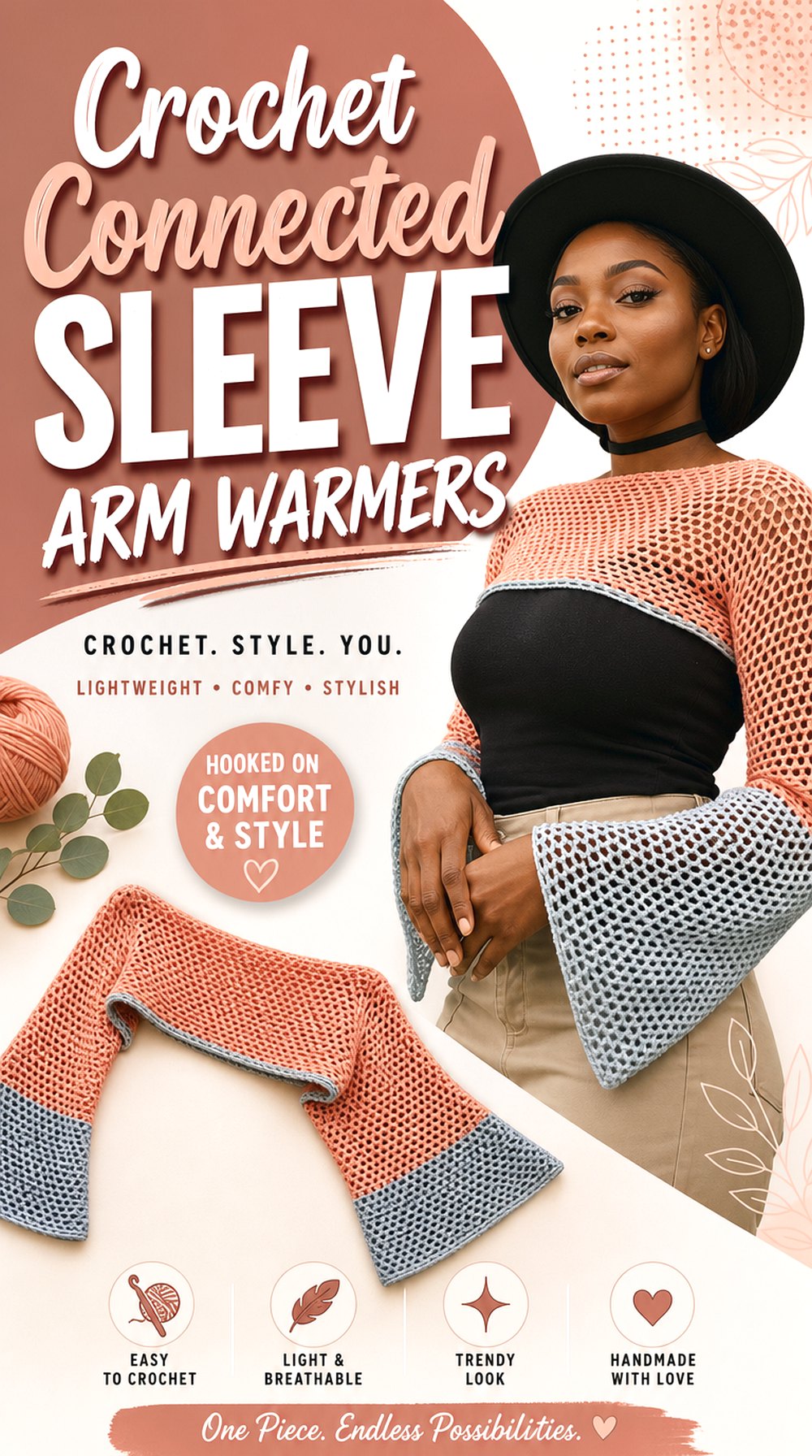
This sleeve, bolero, or shrug-style project gives the collection a different kind of arm warmer. Instead of two separate wrist or forearm pieces, it creates a connected sleeve layer that can be worn over a top.
The style is best for readers who want arm coverage as part of an outfit, not just hand warmth. It is the most garment-like option in the list and should be approached with more attention to length, shoulder fit, and how it layers.
The Connected Shape Changes the Fit
A connected sleeve warmer needs to work across more than the wrist and hand. The arm length, shoulder area, and overall width all matter because the piece sits like a small garment. Readers should compare the finished view with their own layering plans before choosing this over separate arm warmers.
Layering Is the Main Use
This project makes the most sense as a visible outfit layer. It can add sleeve coverage to sleeveless or short-sleeve clothing, but it may not replace the practicality of fingerless gloves. Choose it for styling and arm coverage rather than small hand warmth.
Material Notes Should Be Followed Closely
The source lists cotton yarn and a 2 mm hook. A connected sleeve shape can change a lot if made with a different yarn thickness, so readers should review the creator’s material notes carefully. Any major material change may affect drape, length, and fit.
Choosing Between Short, Long, and Decorative Arm Warmers
For the most compact option, slim wrist warmers or chunky wrist warmers keep the focus close to the hand and wrist. For more coverage, the ribbed sleeve-style warmers and connected sleeve arm warmers create a stronger layering effect. Fingerless glove styles with thumb openings sit in the middle because they cover the hand while still leaving the fingers free.
Decoration also changes the choice. Granny squares, flowers, moss stitch with lacy edging, and cables are more visible as outfit details. Plain ribbed, flat-panel, and contrast-cuff warmers are easier to blend into everyday clothes. Before starting, decide whether the finished pair should be quiet and practical, textured and noticeable, or garment-like enough to become part of the whole outfit.
For another cozy accessory option, browse our Crochet Bat Ear Warmer Ideas.
Conclusion
These 15 crochet arm warmer ideas cover several different needs: compact wrist coverage, fingerless hand warmth, longer forearm layering, decorative texture, and connected sleeve styling. The simplest choices are the flat-panel, slim wrist, and ribbed hand warmer designs. The most decorative options are the flower-pattern, granny square, moss-stitch, and cable projects. For a stronger outfit layer, the sleeve-style and connected bolero-style warmers offer more coverage than standard fingerless gloves.
Use the original tutorials linked under each project for exact construction details, then choose based on fit, coverage, texture, and how visible you want the finished arm warmers to be.
FAQs
Are crochet arm warmers the same as fingerless gloves?
They can overlap, but they are not always the same. Fingerless gloves usually focus on the hand and thumb opening, while arm warmers may extend farther up the forearm or even connect like sleeves. In this list, some projects are wrist warmers, some are fingerless glove styles, and one is closer to a sleeve layer.
What should I check before choosing a crochet arm warmer tutorial?
Check the finished coverage, thumb opening, sizing notes, material list, and final view. For short wrist warmers, the width and top edge matter most. For longer arm warmers or connected sleeve styles, length and fit become more important. Always use the creator’s tutorial for exact counts and construction.
Which crochet arm warmer style is best for layering?
Slim wrist warmers and flat-panel fingerless warmers are easier to layer under sleeves because they do not add as much bulk. Longer ribbed arm warmers and connected sleeve styles are better when you want the crochet piece to show as part of the outfit. Decorative styles work best when the texture will stay visible.
Can I change the yarn for crochet arm warmers?
Only change yarn after checking the creator’s material notes and any sizing guidance. Arm warmers are wearable, so yarn thickness can affect width, stretch, length, and comfort. A thicker yarn may create a bulkier warmer, while a thinner yarn may reduce coverage or change the fit unless adjustments are explained.
Do crochet arm warmers need a thumb hole?
Not always. Some wrist warmers are simple tubes that sit around the wrist, while many fingerless arm warmers include a thumb opening to help hold the piece in place. If you want hand coverage, a thumb hole is useful. If you only want wrist coverage, a simpler warmer may be enough.