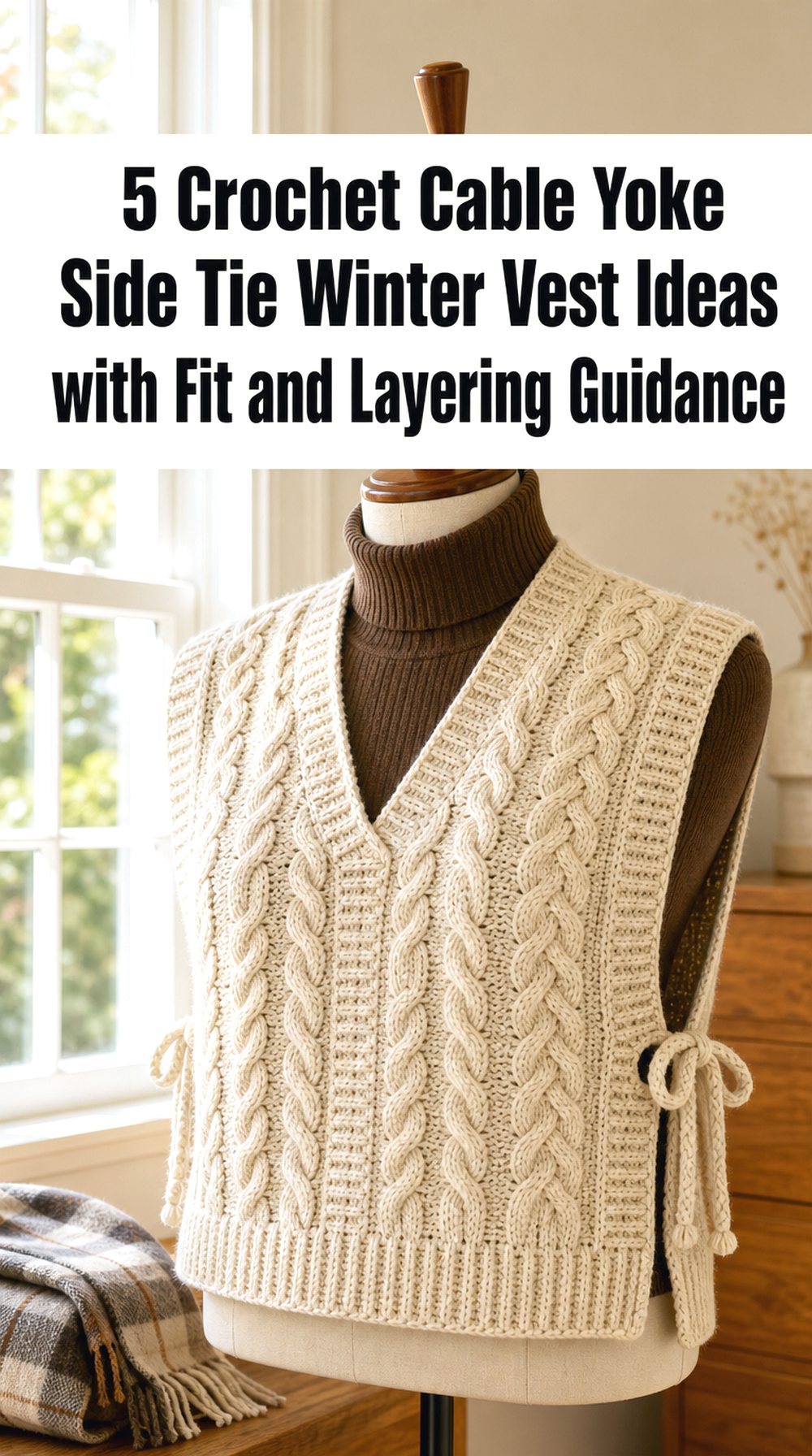
Crochet cable yoke side tie winter vests combine several useful garment features: visible texture, an emphasised shoulder area, adjustable sides, and enough openness for comfortable layering. The five ideas below approach that look in different ways. Some use raised or crossing stitches for cable-like definition, while others rely on shaped shoulders, ribbed necklines, or open side ties to create the silhouette. These Crochet vests can be worn over fitted shirts, lightweight sweaters, turtlenecks, or dresses depending on their ease and fabric density. Along with the design comparisons, you will find guidance on checking bust fit, managing tie placement, choosing yarn with suitable structure, finishing neck and armhole edges, and preventing a textured winter vest from becoming too stiff or bulky.
Quick List
- Crochet Tweed-Texture Side-Tie Layering Vest
- Crochet Granny-Stitch Side-Tie Winter Vest
- Crochet V-Neck Braided Cable Winter Vest
- Crochet Diamond and Swirling Cable Winter Vest
- Crochet Ribbed Textured Winter Vest
How to Choose a Crochet Cable Yoke Side Tie Winter Vest
Begin with the intended underlayer. A winter vest worn over a turtleneck needs more bust and armhole ease than one worn over a thin blouse. Side ties provide adjustment, but they cannot correct shoulders that are too narrow or a neckline that sits uncomfortably high. Check the finished garment measurements rather than relying only on the size label.
Texture also affects fit. Raised cables, dense ribbing, and crossed stitches can produce a firmer fabric, while granny clusters and open side sections create more movement. A yarn with clear stitch definition will display cables well, but an overly rigid fibre may make a wide yoke or thick neckline feel heavy.
Consider where the ties sit. Upper ties influence armhole openness, while lower ties control the waist and hem. They should remain secure without pulling the front and back panels out of alignment. Finally, inspect the edging plan. A stable neckline and neatly finished armholes can prevent stretching, but edging worked too tightly may cause puckering or restrict comfortable layering.
Crochet Tweed Texture Side Tie Layering Vest
Design Details
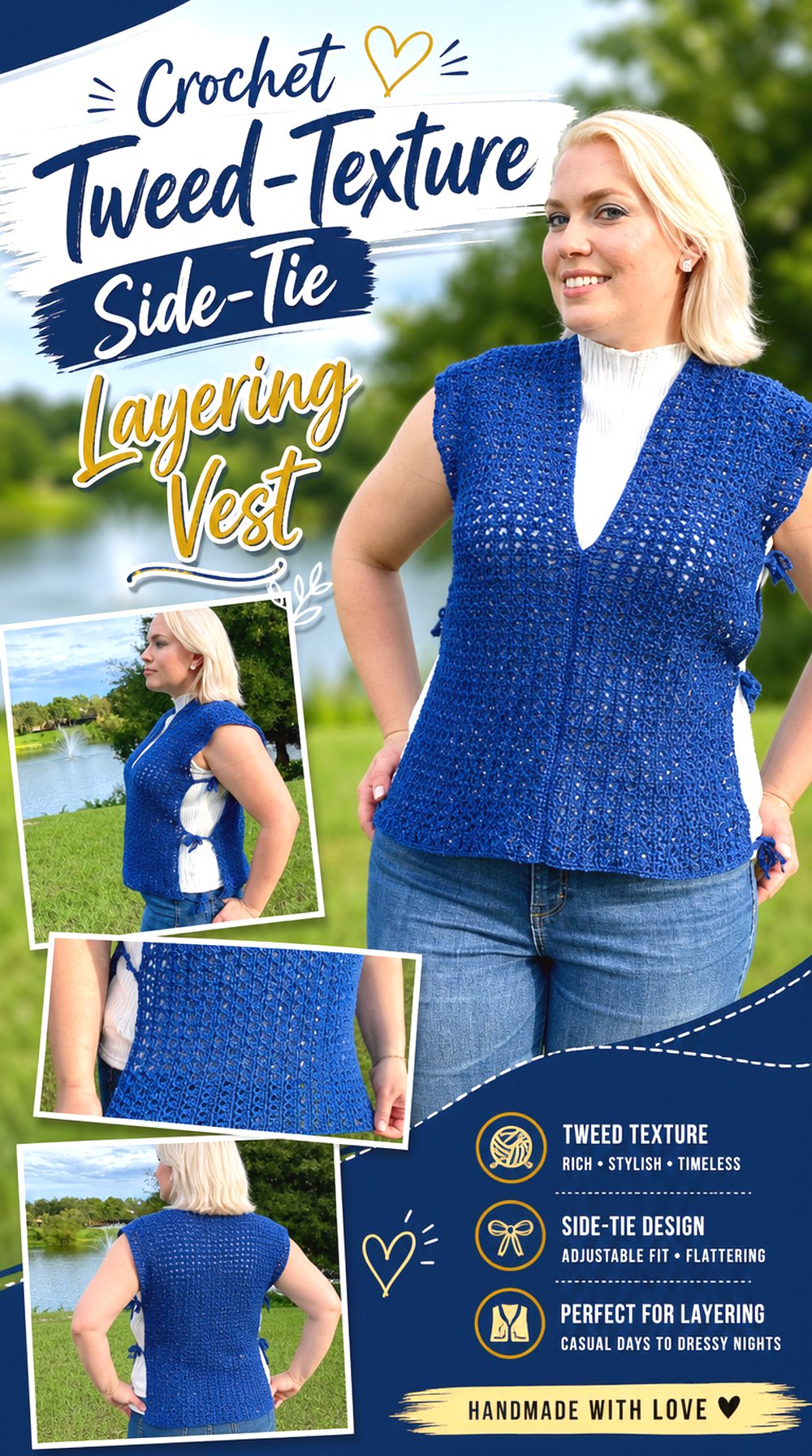
Crossed stitches give this Crochet vest an orderly tweed-like surface without the bulk of large sculptural cables. It is formed from two panels joined along the front and back, leaving the sides open. Multiple ties are integrated along each side edge, so the finished shape resembles a structured tabard rather than a conventional closed sweater vest.
Best Use
The adjustable openings suit layered autumn and winter outfits, particularly over a mock neck, fitted long-sleeved top, or simple shirt. Leaving a little space between the panels can prevent the fabric from bunching over a thicker underlayer.
Before You Choose
The ties are decorative as well as functional, but every pair needs to be positioned evenly to keep the panels level. A smooth DK yarn with some body will preserve the crossed texture better than a very fuzzy fibre.
Crochet Granny Stitch Side Tie Winter Vest
What Stands Out
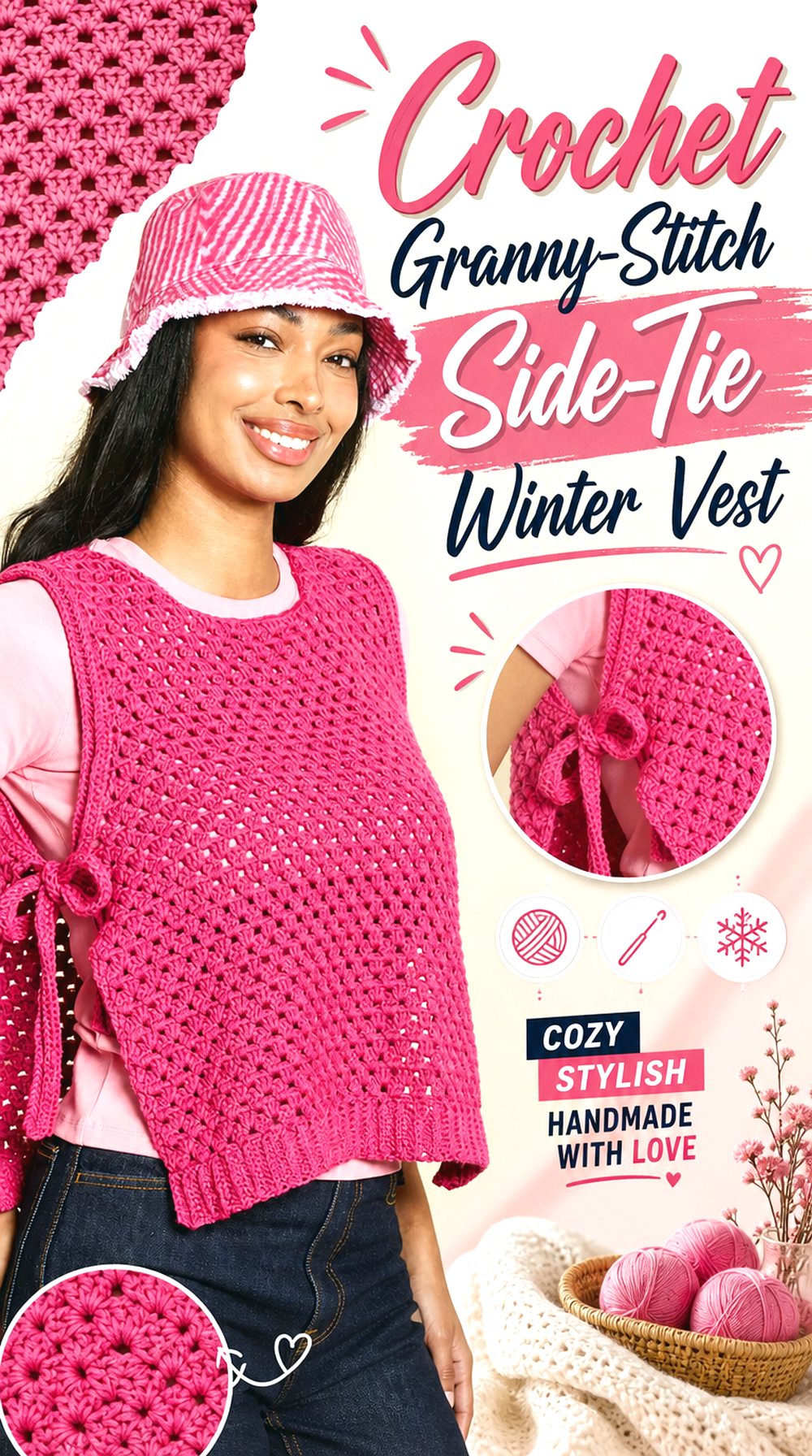
This Crochet vest uses familiar granny-stitch spacing within a modern side-tie silhouette. The open sides make the shape adjustable, while the clustered fabric introduces more visual movement than a solid cable panel. The design is offered across a broad size range, making it useful for comparing actual finished measurements with the amount of ease required for winter layering.
Fit and Finish
Because granny fabric contains openings, the colour and shape of the garment underneath will remain visible. A close-fitting tonal sweater creates a quieter appearance, while a contrasting shirt makes the stitch pattern more prominent.
Practical Point
Open cluster stitches provide less wind protection than dense cable fabric, so this style works better as an indoor layer or beneath a coat. Check the ties after washing and reshape the panels carefully so the sides remain balanced.
Crochet V Neck Braided Cable Winter Vest
Construction Focus
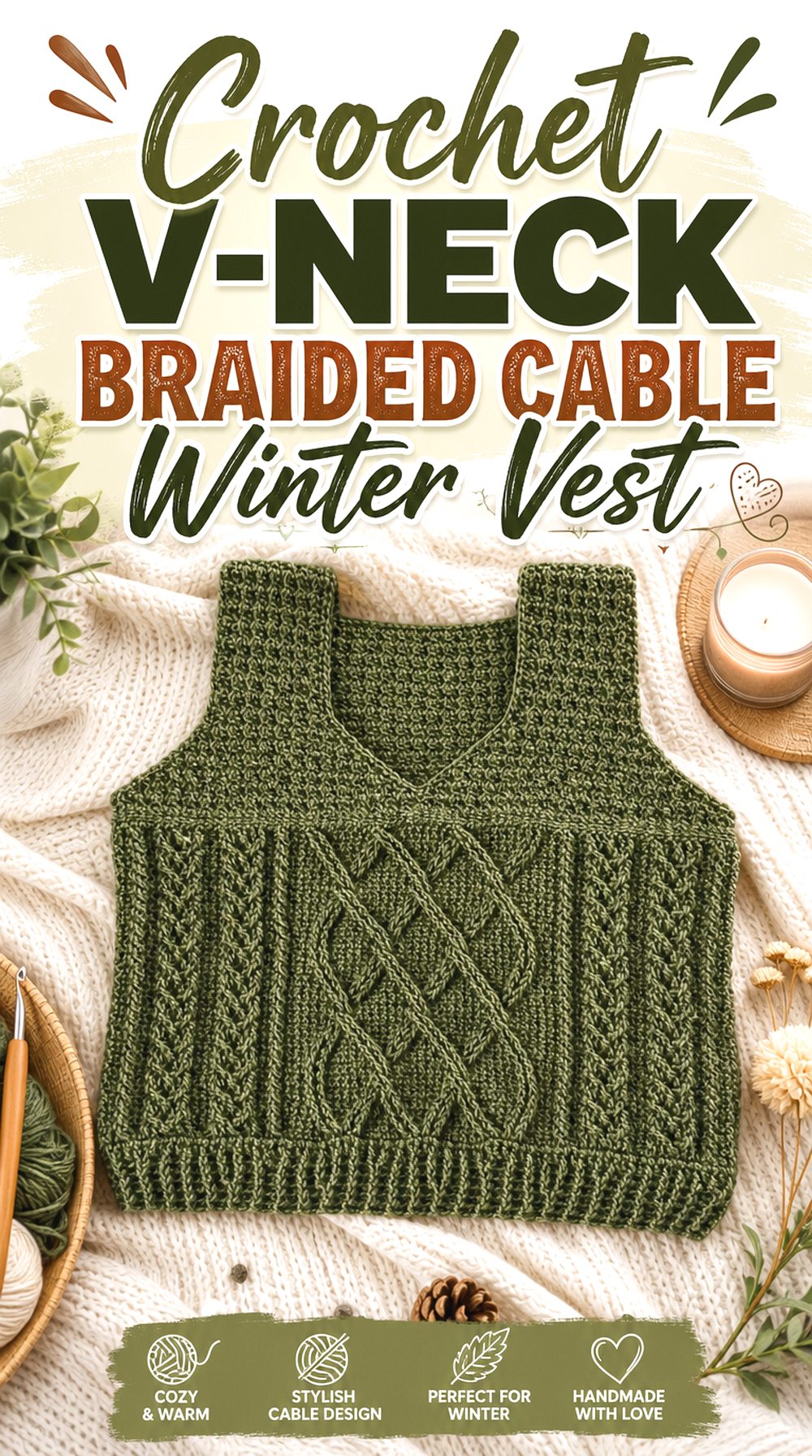
Bold raised cables run through the body of this Crochet sweater vest, creating a substantial winter appearance. The V-neck leaves room for a collared shirt or turtleneck and breaks up the visual weight of the textured front. The pattern uses separate body panels, allowing additional length to be introduced before the upper shaping when a longer torso is preferred.
Who It Suits
This option suits readers who want cable texture to be the main feature rather than a small accent. A solid, medium-value colour will usually reveal the crossings more clearly than a busy variegated yarn.
Good to Know
The pattern includes more complex cable placement, so markers can be useful around the larger repeats. Raised stitches may also reduce the apparent width of the fabric. Swatching the actual cable section is therefore more informative than testing only a plain stitch area.
Crochet Diamond and Swirling Cable Winter Vest
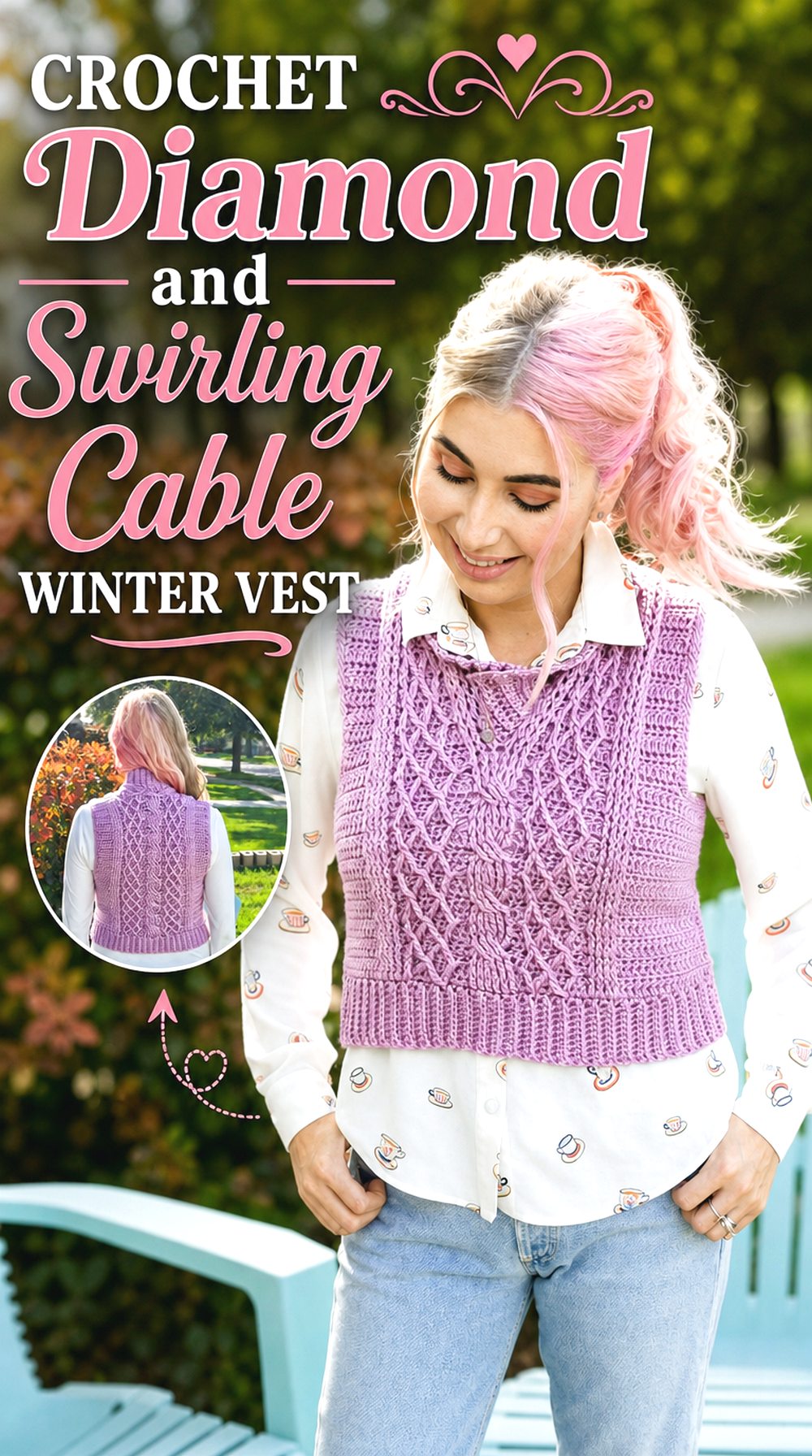
Design Details
A central combination of diamond texture and a swirling raised cable gives this Crochet vest a strongly defined front. The surrounding fabric remains comparatively restrained, allowing the vertical motif to lengthen the appearance of the torso. The close-fitting shape and simple sleeveless outline make it suitable for wearing under a coat without loose side ties adding extra bulk.
Customisation Idea
Choose a lighter neutral or muted solid shade when maximum cable visibility is important. Dark colours can create a sophisticated result, but the stitch crossings may be harder to see unless the yarn has a slight sheen and the garment is viewed in good light.
Before You Choose
The published fit is relatively close. Readers planning to wear it over a winter shirt or fine sweater may prefer additional ease. The large post-stitch motifs also deserve careful counting because a misplaced crossing can remain noticeable through several later rows.
Crochet Ribbed Textured Winter Vest
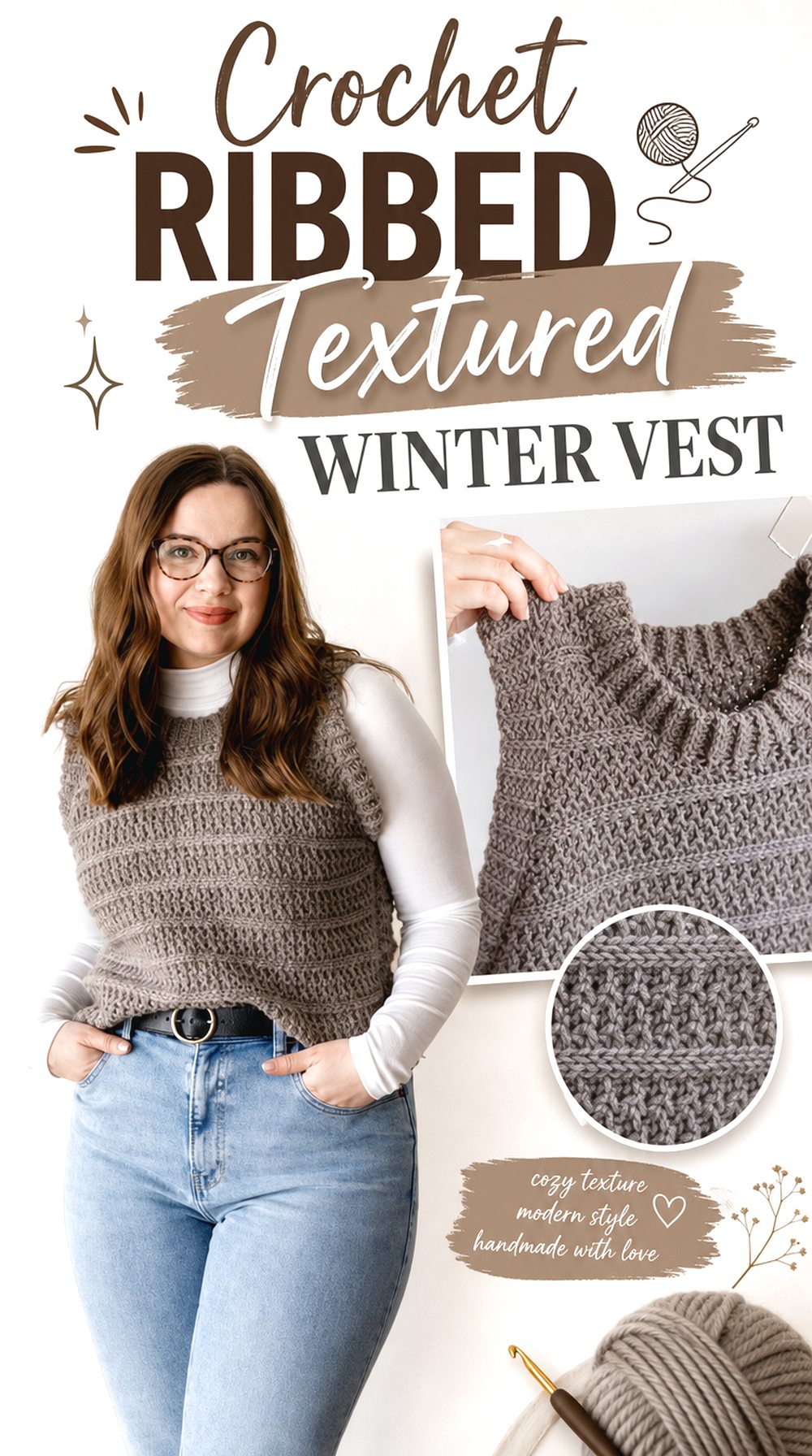
Why It Works
Alternating loop placement and slip-stitch sections create a fabric that resembles understated knit texture. This Crochet vest has bottom ribbing, shaped armholes and shoulders, and attached ribbed finishes around the neckline and arm openings. The result offers a useful yoke-inspired alternative for readers who prefer upper-body shaping without prominent sculptural cables.
Best Use
Its classic closed sides and polished edges make it suitable for everyday layering with trousers, skirts, or shirts. The comparatively neat silhouette can also sit beneath a jacket more comfortably than a vest with bows along the sides.
Care Note
The slip stitches need relaxed tension; working them too tightly can pull in the body and change the intended width. The attached ribbing should also be distributed evenly. Too many edging rows may cause rippling, while too few can draw the neckline inward.
Useful Crochet Notes
Check the Fit Over Winter Layers
Measure a sweater or shirt you already wear comfortably and compare its width with the vest’s finished measurements. Include extra room at the bust and armholes when the vest will cover thick sleeves. Side ties can refine the waist, but they should not be used to compensate for panels that are too narrow across the shoulders.
Keep Cable Texture Visible
Smooth, plied yarn generally shows raised crossings and diamond details more clearly than heavily brushed, slubby, or strongly variegated yarn. Make a generous swatch containing the actual cable repeat. Wash and dry it according to the yarn label before deciding whether the texture remains crisp enough and the fabric still bends comfortably.
Stabilise Ties and Edging
Crocheted cords can lengthen with repeated pulling, especially when worked loosely. Use a firm construction and attach each tie securely through several stitches. When finishing the neckline and armholes, avoid forcing in too many stitches. An overcrowded border may flare, while an overly tight border can pucker the yoke and restrict movement.
Conclusion
Choose a side-tie Crochet vest when adjustable layering and an open tabard shape matter most. Select a bold cable design when raised texture should lead the outfit, or consider the ribbed option for a quieter, everyday finish. Before committing, compare the construction method, upper-body shaping, and cable repeat with your preferred skill level. A well-fitted shoulder area is ultimately more important than how tightly the sides can be tied.
FAQs
What is the difference between a Crochet yoke vest and a panel vest?
A yoke-style vest places noticeable shaping or design emphasis around the shoulders, neckline, and upper chest. A panel vest is generally formed from flatter front and back sections. Some designs combine both ideas by shaping the upper panels or adding textured bands that visually define the yoke area.
How much ease should a winter Crochet vest have?
The right ease depends on the intended underlayer. A vest worn over a fine shirt can sit fairly close, while one worn over a sweater requires additional width and deeper armholes. Measure the underlayer across the bust, then compare that measurement with the finished vest rather than choosing from body measurements alone.
Can side ties make an incorrectly sized vest fit?
Side ties can adjust the space around the waist and bust, but their range is limited. They cannot widen narrow shoulders, reshape a tight neckline, or correct armholes that are too shallow. The panels should already cover the body comfortably before the ties are used to refine the silhouette.
Which yarn shows Crochet cables most clearly?
A smooth yarn with a consistent thickness and firm twist usually provides the clearest cable definition. Solid or gently heathered colours allow shadows around raised stitches to remain visible. Very fuzzy yarn may soften the crossings, while dramatic colour changes can visually compete with detailed cable and diamond motifs.
How should a textured Crochet vest be stored?
Fold the vest rather than leaving it on a narrow hanger, particularly when it has heavy cables or long ties. Secure the ties loosely so they do not tangle or stretch. The garment should be completely dry before storage, and raised details should not be compressed beneath heavy clothing for long periods.


