Cool blue and pearl gray create a natural foundation for a frosted-fir dog pullover. The blue can suggest a cold winter sky while gray forms snowy tree silhouettes, or the colors can be reversed so blue firs stand against a softer neutral body. Because the palette is restrained, the tree pattern can remain recognizable without adding several extra shades.

The tutorials supporting these ideas focus on actual dog-sweater construction: custom sizing, shaped backs, harness openings, textured bodies, collars, color changes, and different size ranges. The frosted fir pattern is an adaptation layer rather than a claim that every source already contains tree colorwork. That distinction matters because changing a plain or textured sweater body to tapestry-style fir motifs can alter gauge, stretch, thickness, and the way the garment fits.
For the cleanest result, establish the dog’s neck, chest, leg openings, back length, and underside coverage using the selected tutorial first. Then place fir motifs only where the garment has enough stable fabric for them.
Visual references for winter-tree placement and icy blue/gray contrast:
Quick List
- Crochet Cool Blue Center-Back Fir Dog Pullover
- Crochet Pearl Gray Custom-Fit Fir Band Dog Pullover
- Crochet Cool Blue Made-to-Measure Fir Panel Dog Pullover
- Crochet Pearl Gray Textured Frosted Fir Dog Pullover
- Crochet Cool Blue High-Collar Fir Dog Pullover
- Crochet Pearl Gray Small-Dog Fir Stripe Pullover
- Crochet Cool Blue Harness-Aware Fir Dog Pullover
- Crochet Pearl Gray Nordic Fir Dog Pullover
- Crochet Cool Blue Minimal Fir Dog Pullover
- Crochet Pearl Gray Graduated Fir Colorwork Dog Pullover
- Crochet Cool Blue Lightweight Fir Row Dog Pullover
- Crochet Pearl Gray Turtleneck Fir Dog Pullover
Plan Fir Motifs Around the Finished Back Width
A fir tree that looks balanced on graph paper can become too wide once it is transferred to a narrow dog sweater. Before choosing the motif scale, establish how much usable back width remains after the chest and leg openings have been fitted.
Small dogs may have room for one centered tree, a short row of tiny fir silhouettes, or partial trees along a border. Larger backs can support several repeated motifs or a broader Nordic-style band. Avoid enlarging the sweater itself simply because the planned motif needs more stitches.
If you intend to use tapestry-style colorwork, make a representative swatch with both cool blue and pearl gray. Compare the resulting fabric with the original tutorial’s gauge and flexibility. Carried yarn can make colorwork firmer than a plain crochet body, especially when color changes are frequent.
Use Frosted Fir Colorwork Where Movement Is Lowest
The broad upper and middle back is usually a better place for geometric trees than the armpits, narrow chest sections, or leg openings. Those high-movement areas benefit from predictable stretch and fewer yarn transitions.
That does not mean every pullover needs a large center-back motif. A fir yoke, lower-back forest band, shoulder pair, or small tree near a harness opening can satisfy the theme while leaving most of the sweater comparatively simple.
Keep the inside of the garment in mind as well. Long carried strands or bulky joins should not create obvious loops that can catch on fur, claws, or equipment. Secure color changes cleanly and check the reverse side before declaring the decorative panel finished.
Let Cool Blue and Pearl Gray Have Separate Roles
For the clearest snowy look, use cool blue as the background and pearl gray for the trees. The gray motifs can resemble firs coated in frost without requiring literal white yarn.
Reversing the combination produces a quieter sweater: a pearl gray torso with deep cool-blue trees feels more graphic and less snow-covered. You can also use pearl gray for the collar, cuffs, and lower edge while reserving blue for a large central panel.
Color boundaries are easiest to manage when they coincide with real construction landmarks. A collar, yoke, lower body, harness zone, or border provides a more purposeful transition than changing colors at arbitrary intervals.
1. Crochet Cool Blue Center-Back Fir Dog Pullover

This idea puts one prominent pearl gray fir on a cool blue back and keeps the rest of the sweater comparatively restrained. The supporting one-piece dog sweater includes ribbing, shaped leg areas, a textured torso, and an integrated harness opening, so it provides several practical landmarks around which a centered winter motif can be planned. Briana K Designs
Fit the Harness Area Before Centering the Tree
A perfectly centered fir is not useful if the dog’s leash connection needs to emerge through its middle. Put the actual harness on the dog and determine where the functional opening belongs before choosing the motif centerline.
If the opening sits high on the back, the fir can begin below it or the design can be divided into two smaller trees. Function should determine the available decorative space.
One Large Fir Needs Plenty of Negative Space
A single tree looks stronger when cool blue remains visible around its branches. Avoid surrounding it with extra snowflakes, narrow stripes, or repeated motifs merely because unused fabric is available.
Pearl gray ribbing at the neck can connect the tree color to the rest of the garment without reducing that visual breathing room.
Watch Colorwork Tension Across the Broadest Branches
The widest section of a tree often creates the longest distance between color changes. If yarn is carried across the reverse, check that it does not pull the blue background inward.
The finished panel should still curve comfortably around the dog’s body rather than behaving like a stiff badge.
Creator Credit: Briana K
2. Crochet Pearl Gray Custom-Fit Fir Band Dog Pullover

Here pearl gray covers most of the sweater and a row of cool blue fir silhouettes crosses the middle or lower back. The supporting tutorial is explicitly built around custom fitting for dogs whose proportions do not align neatly with standard sizes, making it useful when you want the garment dimensions established before designing a decorative band. YouTube
Measure the Usable Band Width After the Chest Fits
The chest determines much of the sweater’s circumference, but the visible back panel is what controls how many trees can fit attractively. Once the body sits correctly, measure the actual decorative area instead of assuming it will match a planned chart.
Three clearly separated trees are usually more effective than five compressed ones.
Keep the Fir Band Away From Major Shaping
A geometric row is easiest to keep level where the body width is relatively stable. If the source construction begins narrowing toward the rear, consider completing the tree band before that shaping becomes pronounced.
This prevents the outer firs from becoming noticeably narrower than the central motifs.
Use Cool Blue as a Concentrated Accent
Because pearl gray occupies the majority of the sweater, even a modest blue forest band will read strongly. Blue does not need to return repeatedly through the collar, legs, and hem unless that repetition improves the overall balance.
Creator Credit: Maria’s Blue Crayon
3. Crochet Cool Blue Made-to-Measure Fir Panel Dog Pullover

This version uses a long pearl gray panel containing several cool blue trees against an otherwise cool blue sweater, creating a framed winter landscape instead of isolated motifs. The supporting construction starts with a ribbed neckline and is made to measure, with leg openings and back shaping adjusted around the individual dog. YouTube
Make the Panel Narrower Than the Full Back
A framed strip creates natural margins where the sweater can bend without interrupting the tree geometry. Those solid side areas also give you some flexibility if the dog’s body requires shaping that would be awkward inside the motif.
The result can feel more intentional than trying to fill every available stitch with colorwork.
Establish the Panel Length From the Dog
A long narrow forest works best when it ends before rear shaping makes the available space noticeably smaller. Determine the wearable back length first and then decide how much of it should carry the panel.
Do not extend the sweater simply to finish another full tree repeat.
Fir Spacing Matters as Much as Fir Size
Trees packed edge to edge can merge into one jagged stripe. Leaving pearl gray between the cool-blue motifs helps each silhouette remain readable.
That separation also shortens the stretches of background yarn that may need to be managed inside the sweater.
Creator Credit: Loops Only Crochet
4. Crochet Pearl Gray Textured Frosted Fir Dog Pullover
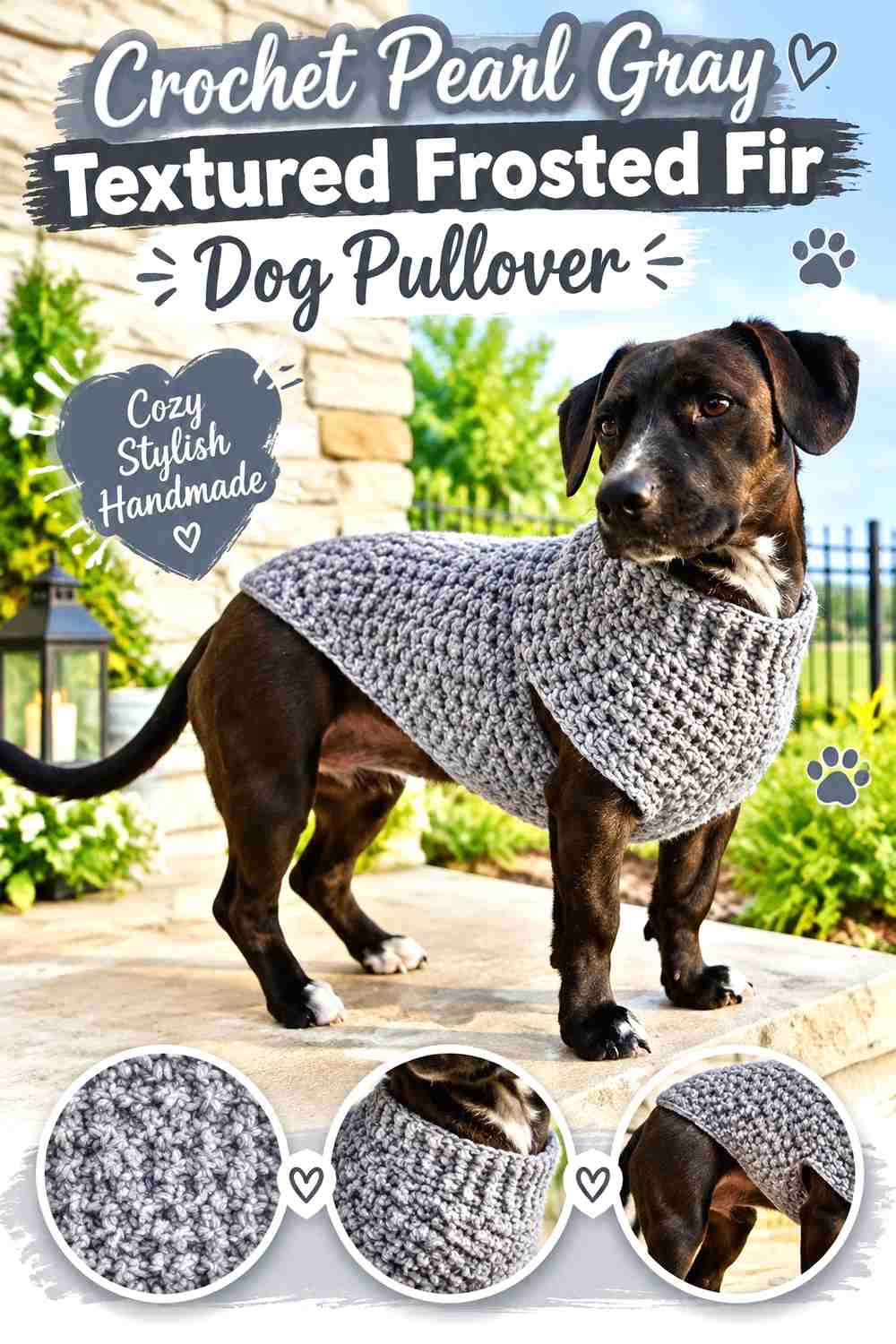
For a softer winter look, keep the body pearl gray and use the original sweater’s textured character across most of the torso, reserving cool blue firs for one smoother back zone. The supporting design uses a ribbed collar and a Suzette-style textured body, providing a useful contrast between structural texture and an independently planned motif area. Heart Hook Home
Give Texture and Colorwork Separate Territories
Strong texture and intricate fir colorwork can compete when they occupy the same small area. A smoother central panel lets the blue trees remain legible while the gray textured sections still add interest around them.
This also reduces the number of variables affecting gauge inside the motif.
Use a Fir Stripe Instead of a Full Forest
A single horizontal line of small trees can bridge the textured side areas without making the entire body graphic. That is useful when you want the sweater to feel winter-inspired rather than overtly holiday-themed.
Check the Transition Between Fabrics
If your fir panel uses a different stitch treatment from the surrounding texture, swatch both. Equal stitch counts do not necessarily produce equal widths.
A transition that draws inward or flares outward can affect fit even when the color placement looks correct.
Creator Credit: Heart Hook Home
5. Crochet Cool Blue High-Collar Fir Dog Pullover
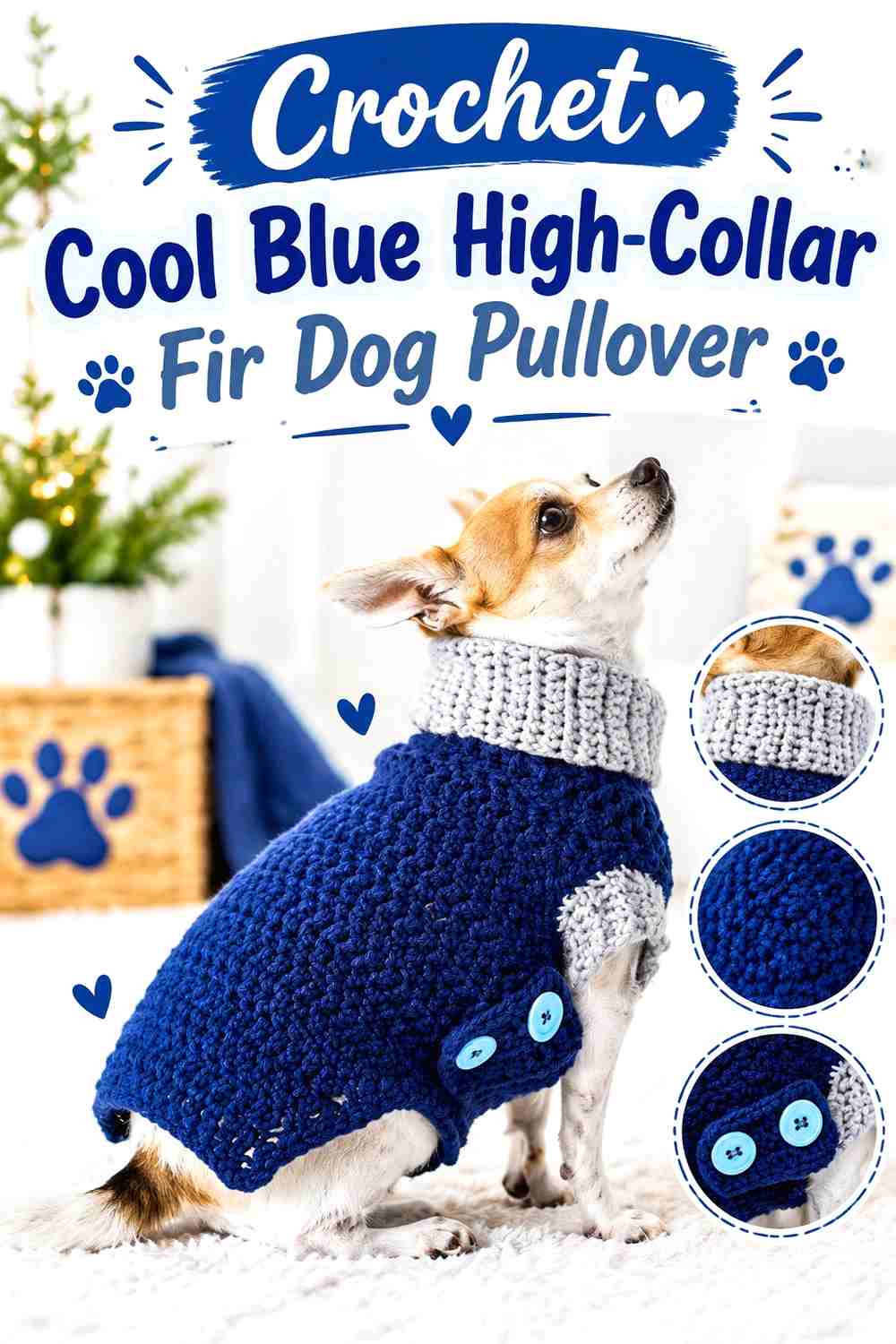
A taller neckline gives this sweater a distinct winter silhouette. Keep the collar and most of the body cool blue, then work a pearl gray fir band across the upper back below the collar. The source uses a substantial cowl-neck dog-coat construction available in multiple sizes, so the neckline itself becomes an important part of the design rather than an afterthought. YouTube
Leave Space Between the Collar and Trees
A large collar can fold over part of the upper back. Position the fir band low enough that the motifs remain visible when the neckline settles naturally.
That spacing also prevents the upper sweater from becoming visually crowded.
A Pearl Gray Upper Band Can Resemble Frost
Instead of individual gray trees floating on blue, consider a broader pearl zone with blue fir silhouettes cut visually into it. The effect is more Nordic and places the darker shade inside the motif rather than behind it.
Whichever direction you choose, swatch before assuming the two methods will have identical fabric behavior.
Check Neck Movement Before Increasing Coverage
A winter appearance does not require fabric to reach the jaw. The dog should be able to turn and lower its head without the collar pushing forward or bunching.
Choose the collar depth that suits the individual animal rather than maximizing height solely for appearance.
Creator Credit: Marly Bird
6. Crochet Pearl Gray Small-Dog Fir Stripe Pullover
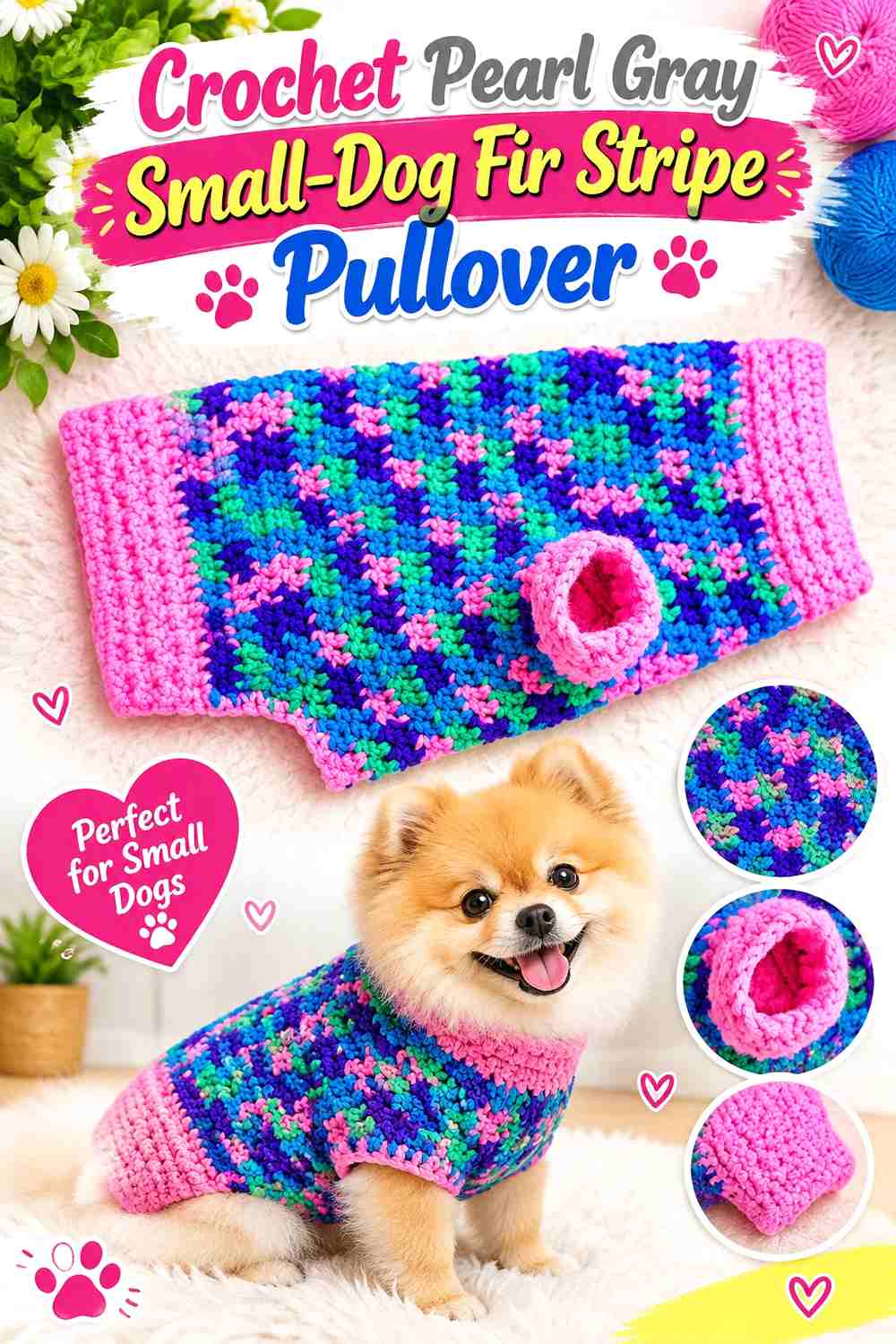
This idea scales the theme down for a compact sweater. Make pearl gray the dominant body color and use one narrow cool blue row of tiny firs rather than forcing several large trees onto a short back. The supporting tutorial demonstrates a clearly defined small-dog sweater with contrast-friendly ribbing and stated sample measurements. YouTube
Reduce the Number of Trees Before Shrinking Them Too Far
Very small motifs can lose recognizable branch shapes. A short row containing only a few readable firs is generally more successful than a dense line of tiny jagged forms.
The goal is a pattern that still looks like trees when the dog is moving.
Put the Stripe Where the Back Is Widest
The broadest stable torso section gives each tree more room and reduces the need to squeeze partial motifs into the side edges.
Once the sweater begins narrowing, switch back to solid pearl gray rather than continuing incomplete branches.
Cool Blue Ribbing Can Echo the Forest Band
A blue collar or lower edge connects the motif to the garment without requiring another tree repeat. Keep that accent comparatively narrow so the fir band remains the distinguishing feature.
Creator Credit: TwinStarHooks 💫
7. Crochet Cool Blue Harness-Aware Fir Dog Pullover

This version combines a cool blue body, pearl gray trim, and several small frosted firs positioned deliberately away from a walking-equipment zone. The source tutorial provides small through extra-large sizing plus adjustment advice and works through the neck, chest, armholes, belly, lower shaping, border, and cuffs as separate garment decisions. YouTube
Build the Functional Upper Body Before Adding Trees
The collar, chest, and armholes determine how the sweater sits during movement. Complete or plan those areas first, then identify which part of the back remains visually stable enough for a fir band.
This prevents the decorative section from dictating important fit choices.
A Split Forest Can Leave a Clear Harness Zone
Rather than one uninterrupted band, use two groups of firs with a plain area between them. That central break can accommodate equipment more gracefully and create deliberate symmetry.
It is also visually different from a standard repeated Nordic band.
Keep the Leg Cuffs Out of the Colorwork
Pearl gray cuffs can provide enough secondary color without introducing tiny trees around moving legs. Simpler openings are easier to inspect for fit and less likely to become rigid from multiple color changes.
Creator Credit: Crochet With Tiffany
8. Crochet Pearl Gray Nordic Fir Dog Pullover
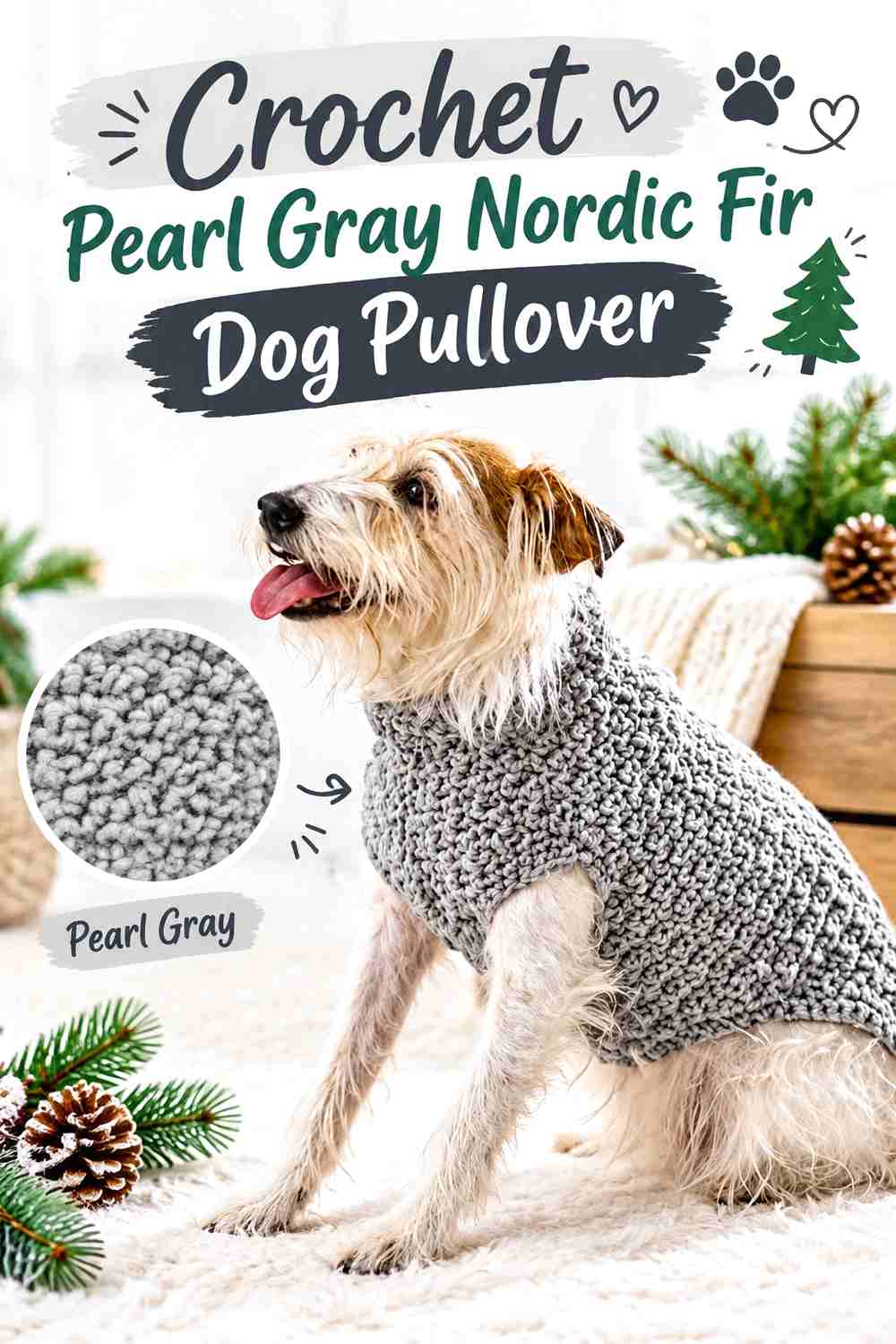
This is the most traditional winter-pattern direction in the collection. Use pearl gray for the body, arrange cool blue trees in a repeated Nordic-style band, and finish with blue at the neck or lower edge. The supporting tutorial provides a complete dog-coat construction in several sizes, creating a broad, uncomplicated canvas for a more decorative central pattern. YouTube
Repeat Trees at a Consistent Visual Scale
A Nordic-style row depends on rhythm. Once you choose the tree width and spacing, keep them consistent across the portion of the back where the garment width remains stable.
If a full repeat no longer fits near an edge, stop the motif section rather than squeezing in a distorted final tree.
Use Pearl Gray as the Snow Field
A gray background lets the blue motifs remain distinct while keeping the sweater softer than a high-contrast black-and-white interpretation. The effect can read as a frosted landscape even without extra snowflake motifs.
Treat the Border as a Separate Design Choice
A broad blue edge can make a medium or larger sweater feel balanced, while the same border may overwhelm a small size. Judge its depth against the actual finished garment rather than copying a proportion from another size.
Creator Credit: Yarnspirations
9. Crochet Cool Blue Minimal Fir Dog Pullover

This streamlined idea uses an almost entirely cool blue sweater with just one pearl gray fir near the center of the back and a matching neutral neck edge. The supporting tutorial has a straightforward finished dog-sweater shape, so the design can remain intentionally simple instead of layering colorwork over an already complicated garment. YouTube
One Tree Can Carry the Whole Theme
A single well-scaled fir avoids the alignment problems of a repeated band and makes the winter motif immediately obvious. This works especially well if you prefer a modern rather than traditional Nordic look.
Leave enough blue around the tree that every branch remains distinct.
Center the Motif on the Worn Sweater
A piece that looks centered while lying flat can rotate slightly once it stretches around the chest. Establish the fit and identify the true spine line before committing to the decorative center.
Stop the Tree Above Major Rear Shaping
The lowest branches need enough horizontal space to remain balanced. Position the tree so its widest section occurs before the body narrows significantly toward the rear.
Creator Credit: Lanas y ovillos
10. Crochet Pearl Gray Graduated Fir Colorwork Dog Pullover
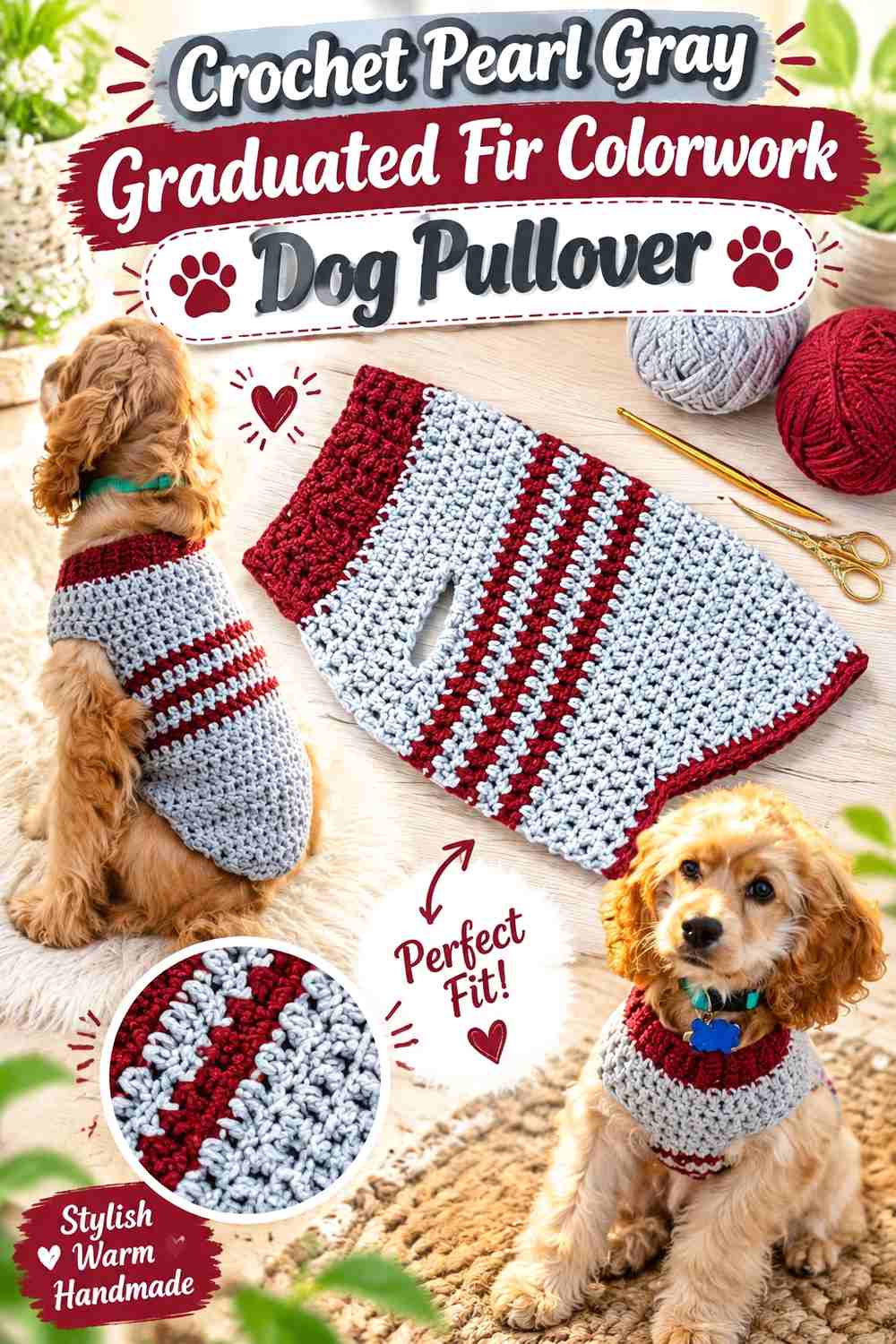
This project uses construction-based color blocking rather than covering the entire body with motifs. Begin with pearl gray at the neck and upper chest, move into a cool blue middle section containing gray firs, then return to pearl gray near the back edge. The supporting tutorial clearly separates neckband, body, armholes, color changes, belly shaping, and border stages and is designed to be adapted to different dog sizes. YouTube
Put the Forest Inside One Defined Color Block
A blue central field surrounded by gray gives the fir section the appearance of a framed winter scene. The trees do not need to continue beyond that panel.
This gives you a clear starting and stopping point for colorwork.
Keep the Transition Away From the Armhole Edges
Color boundaries are cleaner where the torso is relatively uninterrupted. Let the upper gray section carry the most complicated armhole shaping, then begin the blue fir panel once the garment settles into a more consistent body section.
Let the Rear Gray Section Calm the Design
Returning to pearl gray before the final border creates visual rest and avoids forcing tree motifs through belly or rear decreases.
It can also make the middle blue panel appear more deliberate.
Creator Credit: it’s erin b.
11. Crochet Cool Blue Lightweight Fir Row Dog Pullover

For a finer, less visually bulky sweater, use cool blue through the body and place one restrained pearl gray fir row across the back. The supporting small-dog tutorial uses a lighter yarn category than many chunky pet sweaters, making it useful inspiration when you want more stitch positions available for compact colorwork. Crochet Scout
A Smaller Stitch Scale Gives Tiny Trees More Definition
Thinner fabric can provide more stitches across a narrow back, which may allow a recognizable fir to be drawn without making each tree disproportionately large.
That does not mean substituting a fine yarn into a heavier pattern. Follow the source’s gauge and sizing framework for the garment itself.
Keep the Fir Row Narrow
A lightweight sweater can lose its streamlined character if a very dense block of tapestry colorwork occupies most of the torso. One short gray forest band gives the theme enough presence while preserving a lighter overall appearance.
Compare the Two Yarns Before Committing
If your pearl gray yarn is even slightly thicker than the blue, small geometric motifs can bulge noticeably. Make a two-color swatch rather than testing each shade separately.
Creator Credit: Crochet It
12. Crochet Pearl Gray Turtleneck Fir Dog Pullover
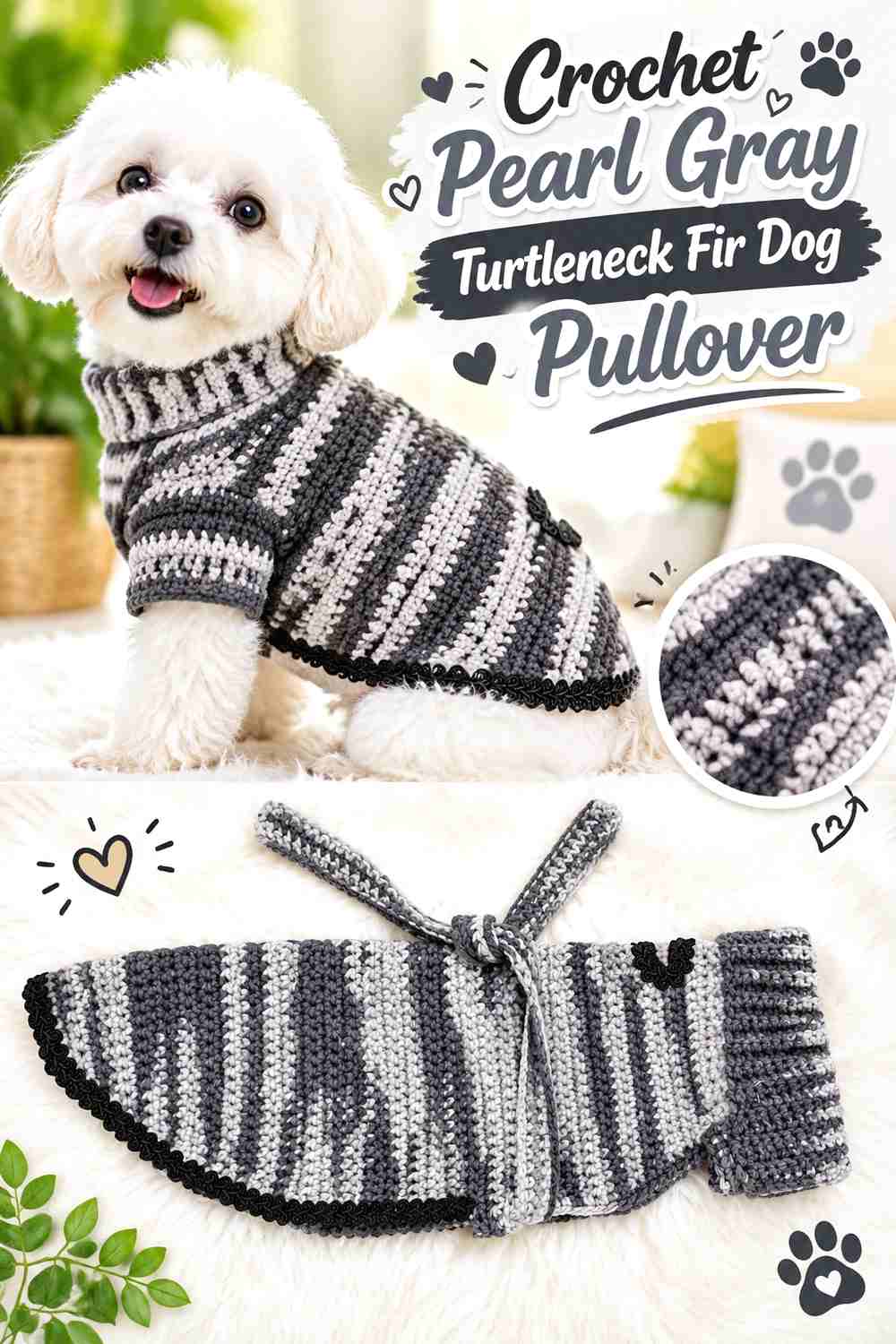
The final idea combines a stronger winter neckline with a simple forest band. Use pearl gray for the turtleneck and upper body, transition to cool blue through the middle back, and work gray fir silhouettes inside that blue field. The supporting tutorial is specifically a crochet turtleneck dog sweater and provides a direct pullover foundation for this higher-neck interpretation. YouTube
Keep the Turtleneck Solid
The collar already has enough visual presence and needs dependable stretch. Leaving it entirely pearl gray keeps the neckline calm and avoids unnecessary color joins near the dog’s head.
The fir pattern can begin after the shoulders, where the back provides a larger canvas.
A Blue Sky Panel Makes Gray Trees Look Frosted
Using cool blue only behind the firs creates a distinct winter-scene effect. The rest of the sweater can remain neutral, which makes this design very different from an all-over blue pullover.
Head Clearance Comes Before Collar Drama
Before making the neck taller, confirm that it passes comfortably over the dog’s head and allows normal head movement once worn. A winter pullover should not rely on a tight opening to stay positioned.
Creator Credit: Last Minute Laura
Which Frosted Fir Pullover Layout Should You Choose?
The single-tree designs in Ideas 1 and 9 are the simplest visually and make sense when the available back is narrow or you want the motif to remain unmistakable. They also require less repeated colorwork than a full Nordic band.
For custom proportions, Ideas 2 and 3 give you measurement-led foundations before the fir layout is finalized. Idea 10 is useful when you prefer large color blocks and want the trees confined to one planned middle section.
Choose Ideas 5 or 12 when neck coverage is an important part of the winter look. Idea 7 is the more practical direction when walking equipment affects the upper back, while Idea 11 offers a lighter-looking approach for a compact dog.
For the strongest traditional winter pattern, Idea 8 gives the repeated firs the largest role. Idea 4 is better when you want stitch texture and fir colorwork to coexist without putting both effects across the same fabric.
Conclusion
Cool blue and pearl gray can produce a frosted-fir dog pullover without relying on a complicated multicolor palette. A blue body with gray trees creates the clearest snowy effect, while a gray sweater with blue firs looks more restrained and graphic.
The placement decision matters more than the number of motifs. One tree can work on a small back, a defined forest band suits a wider stable torso section, and a framed panel can protect the design from armhole or rear shaping.
Choose the original tutorial according to the garment construction your dog needs—custom fit, harness access, a higher collar, lighter fabric, a conventional size range, or a straightforward pullover. Then plan the fir pattern around the finished dimensions instead of altering fit just to accommodate decorative colorwork. Use the original tutorial for exact shaping and construction details.
Frequently Asked Questions
Do the tutorials already include frosted fir tree patterns?
Not all of them. The tutorials provide verified dog-pullover or dog-coat constructions. The cool blue, pearl gray, and fir placements described here are independent adaptation ideas unless a source already contains comparable colorwork.
What is the easiest fir layout for a small dog sweater?
One centered tree or a short row of a few small firs is usually easier to plan than a large repeating forest. Establish the usable back width first and choose a motif that fits without changing the sweater’s required circumference.
Is tapestry crochet suitable for a dog pullover?
It can be, but test the fabric first. Carried yarn and frequent color changes can make a section denser or less flexible than the tutorial’s original stitch. The reverse side should also be checked for loose strands or bulky joins.
Should cool blue or pearl gray be the background?
Cool blue behind pearl gray trees gives the strongest frosted-winter impression. Pearl gray behind cool blue trees creates a softer, more neutral sweater. Both can work if the shades provide enough contrast for the tree edges to remain visible.
Where should I avoid putting fir colorwork?
Be cautious around tight armholes, armpits, narrow cuffs, complicated shaping, and functional harness openings. Broad back sections generally provide more room for geometric motifs without compromising movement.
Can I add a fir motif to a textured dog sweater?
Yes, but placing strong texture and detailed colorwork in the same section can affect both readability and gauge. A smoother motif panel surrounded by textured fabric is often easier to plan and keeps each feature visually distinct.
How do I know whether two yarn colors will work together for the pullover?
Check more than their appearance. Crochet a two-color swatch and compare thickness, stretch, stitch definition, and the way the fabric behaves at color changes. If the finished swatch puckers or becomes noticeably firmer, adjust the material or motif plan before making the sweater.