Crochet lace winter hoods can range from delicate hooded scarves to open granny-square balaclavas, roomy cowls, and shoulder-covering cape styles. The main challenge is balancing the openness that makes lace attractive with enough coverage for the season. A lightly stitched hood may work well over another warm layer, while a denser motif or close-fitting cowl can provide more coverage on its own.

These ten ideas deliberately use different shapes, face openings, neck treatments, and construction styles. One tutorial demonstrates a true crochet lace hooded cowl scarf; several others provide strong hood constructions that can inspire lace adaptations. When changing the fabric of a source design, swatch first and use the original tutorial for its exact construction rather than assuming a different lace stitch will produce the same measurements or fit.
Quick List
- Crochet Crescent-Lace Hooded Cowl Scarf
- Crochet Openwork Striped Scoodie Hood
- Crochet Granny-Square Lace Balaclava Hood
- Crochet Motif-Lace Hooded Scarf
- Crochet Slouchy Lace Balaclava Hood
- Crochet Soft-Drape Lace Hooded Cowl
- Crochet Close-Fit Lace-Panel Balaclava
- Crochet Drawstring Lace-Trim Balaclava Hood
- Crochet Lace-Edged Hooded Cape
- Crochet Lace-Contrast Convertible Snood Hood
How to Make an Open Crochet Hood Work in Winter
An attractive lace repeat can also let cold air pass directly through the hood, so decide where openness matters most. Lace around the scarf ends, crown, or lower cowl can give the project a delicate appearance without placing the largest openings directly over the ears. If you want a very airy hood, consider it a layering accessory rather than a wind-blocking winter hat.
Fiber and fabric density matter too. A fuzzy yarn can visually soften open spaces, while a smooth yarn usually gives clearer stitch definition. Changing yarn or hook size can also change both drape and opening size, so do not judge warmth from yarn thickness alone. For colder conditions, compare the blocked fabric against the way you actually plan to wear the hood, including any hat or other layer underneath.
Check Hood Depth and Lace Drape Before Committing
Lace fabric often relaxes after blocking, which can affect a hood more noticeably than a flat scarf. Extra growth may create a beautifully draped crown, but it can also enlarge the face opening or allow the hood to slide backward. Block a sample in the same way you expect to care for the finished piece before deciding whether a substitution is compatible.
Also think about where the weight sits. Long scarf tails pull downward, cowls place more fabric around the neck, and motif constructions concentrate seams and joins at particular points. A lace stitch that works beautifully in a scarf panel may need more stability along the face edge or neckline when converted into a hood.
Choose the Hood Construction Before Choosing the Lace
For the simplest winter layering, a hooded cowl keeps the accessory compact and removes long scarf ends. A scoodie adds more styling flexibility because the scarf can wrap around the neck. Balaclava constructions provide closer head and neck coverage, while motif hoods make the openwork part of the structure rather than just the stitch pattern.
A hooded cape changes the scale completely by extending crochet over the shoulders. That can make an airy stitch feel more seasonally appropriate because the piece contributes an extra layer over a sweater or coat. Choosing the construction first helps you decide how much lace the project can realistically support without sacrificing the fit or function you want.
Crochet Crescent Lace Hooded Cowl Scarf
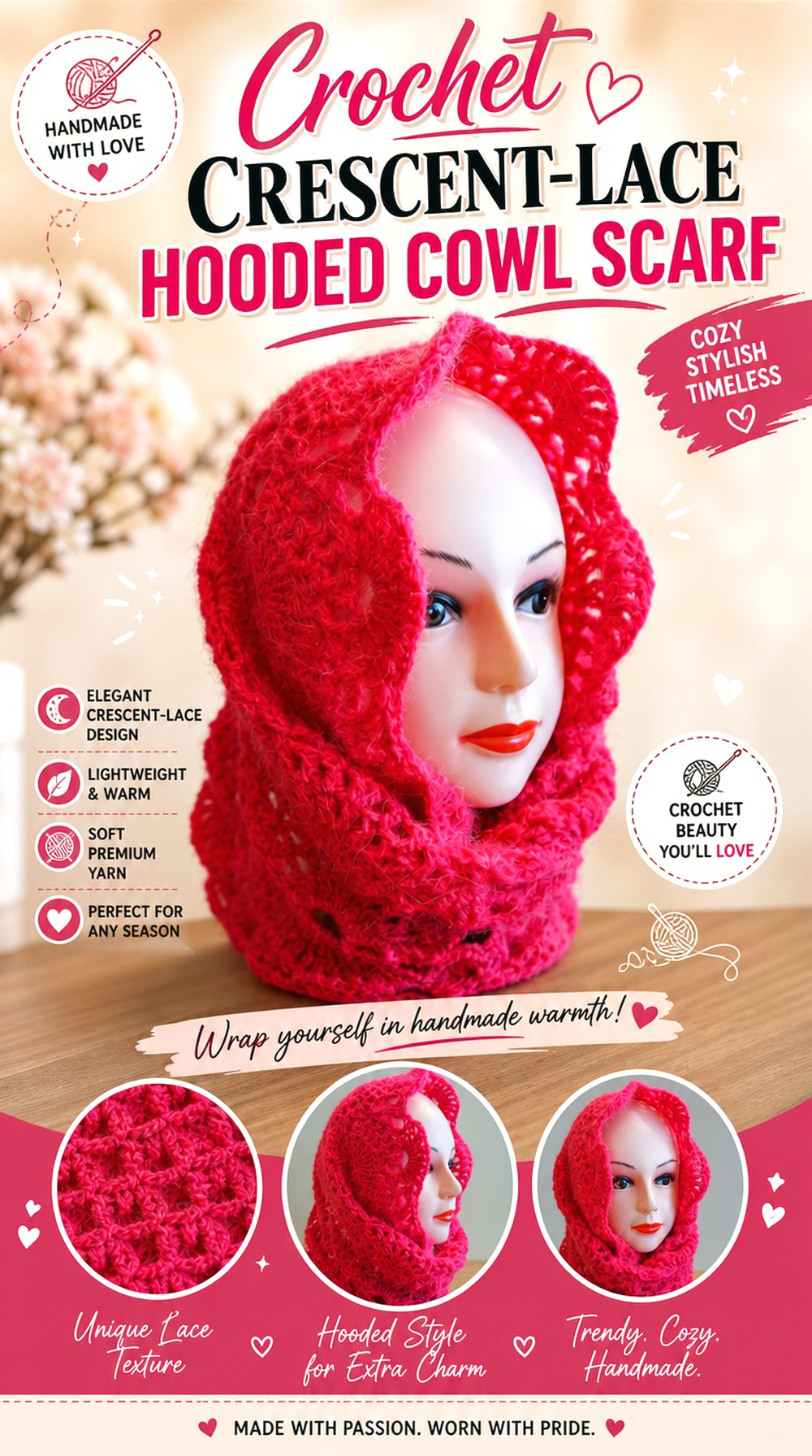
This is the clearest starting point for anyone who wants the word lace to describe the actual crochet fabric rather than just an adaptation. The finished concept combines an airy patterned tube with enough length to sit around the neck or rise over the head as a hood. Its decorative open spaces make the stitch pattern the focus, so it suits a winter wardrobe where the hood is worn as a soft layer rather than expected to perform like a dense ski hood.
Because the lace is continuous, yarn texture and blocking can strongly influence how the hood frames the face.
Keep the Most Decorative Openwork Away From Windy Zones
A repeating lace fabric creates visual movement, but large openings around the ears can reduce practical cold-weather coverage. If your climate is particularly windy, treat this style as an outer decorative hood and combine it with a closer layer underneath. That lets the lace remain visible while avoiding the need to force an airy fabric to behave like dense winter headwear.
Let the Cowl Portion Carry Some of the Drape
A hood that is too loose everywhere may collapse backward instead of framing the head. The cowl section gives this shape additional fabric around the neck, so compare how the piece behaves both raised and lowered. If substituting yarn, check the blocked drape before deciding that the original proportions will transfer cleanly.
Crochet Openwork Striped Scoodie Hood
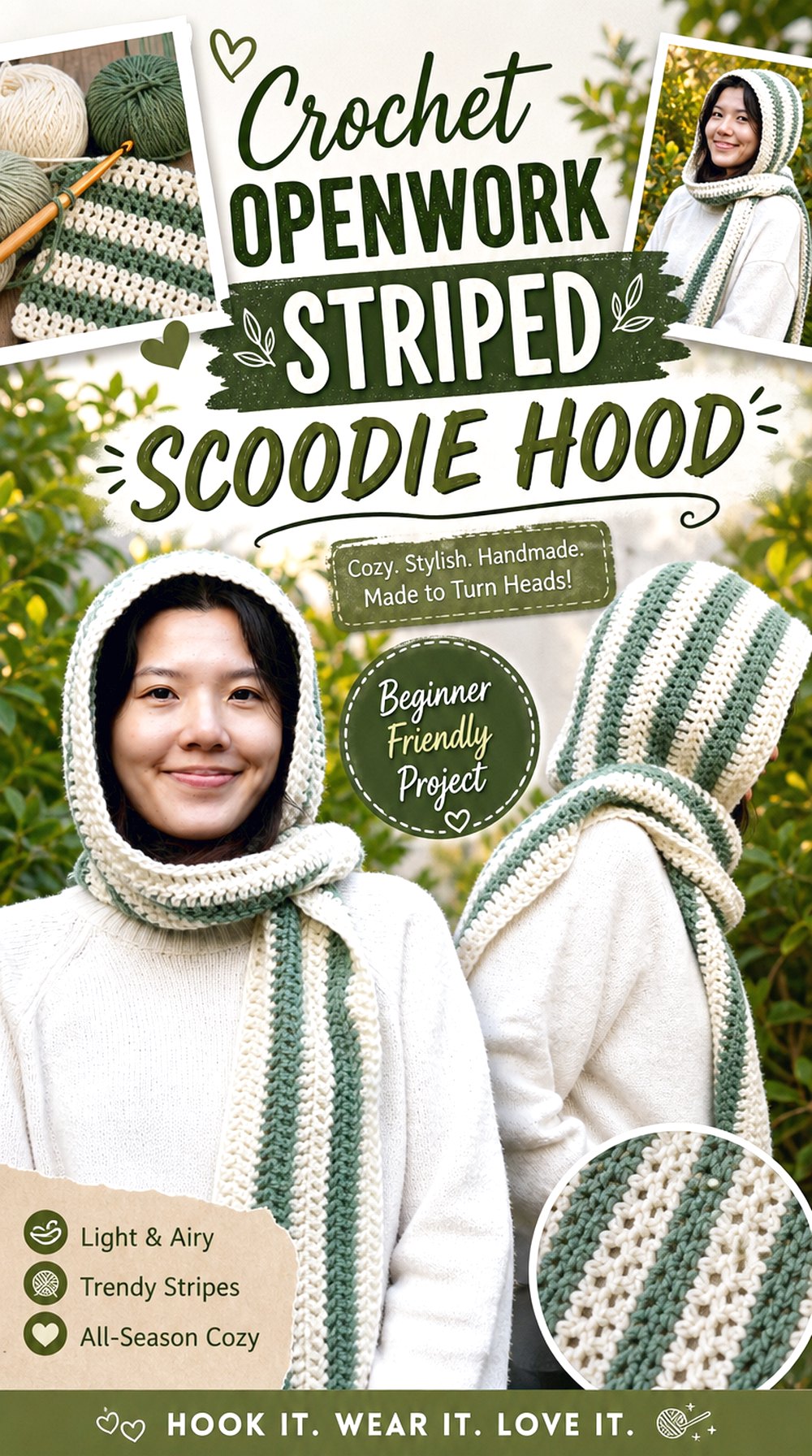
A scoodie combines a hood with long scarf sections, giving this idea more movement than a compact cowl. The striped construction makes it especially suitable for alternating solid and more open-looking sections without turning the entire accessory into highly exposed lace. Long scarf ends can be wrapped for additional neck coverage while the hood remains loose enough to sit comfortably over the hair.
The supporting tutorial uses a no-sew hooded scarf construction and discusses sizing, making it a useful structural reference if you want to explore a more open fabric without changing the basic silhouette.
Use Stripes to Control Visual and Physical Openness
Instead of using one lace repeat throughout, consider alternating more solid bands with lacier areas. The result can keep the striped identity while giving you more control over where air passes through the fabric. Keep particularly open sections away from points that need stability, such as the face edge or where the scarf transitions into the hood.
Watch the Downward Pull From Long Scarf Ends
Scarf tails add useful coverage, but they also place more weight below the hood. A very stretchy lace substitution can therefore change how the hood sits. Before final finishing, try the scarf wrapped in the way you will actually wear it and check whether the crown remains comfortably positioned instead of being pulled backward.
Original Tutorial and Creator Credit
Creator: VivCrochets
Crochet Granny Square Lace Balaclava Hood
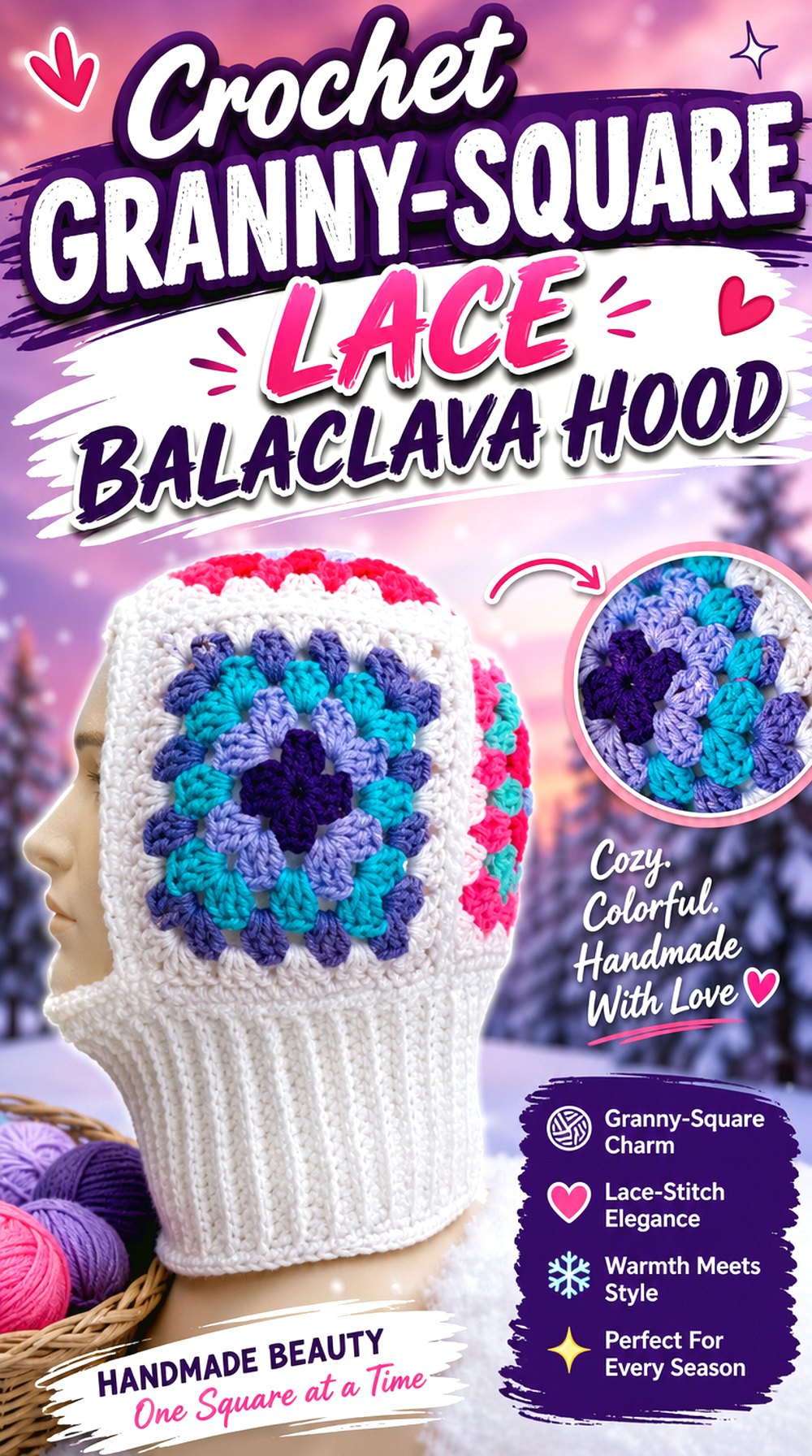
Granny squares naturally introduce small open spaces, making this one of the easiest ways to create a lace-like winter hood without relying on a delicate all-over stitch. The geometric joins also give the hood a stronger graphic structure than flowing lace. This option can suit crocheters who want individual motifs, contrasting borders, or deliberate color placement rather than one continuous fabric.
The source tutorial specifically demonstrates a granny-square hood balaclava, so the motif arrangement is central to the finished form rather than merely decorative.
Block Every Square Before Judging the Hood Layout
Motifs that look almost identical while freshly crocheted can finish at slightly different dimensions. Those differences become more obvious once several squares meet around the head. Block the squares consistently, compare their final measurements, and resolve obvious mismatches before joining. That is particularly important around the face opening, where uneven motifs can make the edge look distorted.
Place the Strongest Motif Joins Where Shape Matters
A granny-square hood depends on joins to transform flat pieces into a three-dimensional accessory. Treat those joins as structural lines rather than invisible details. If you experiment with very airy motifs, check that their outer rounds provide enough fabric for stable joining instead of relying on long, flexible chain spaces at every connection.
Decide How Much Hair and Face Coverage You Want
Motif hoods can feel quite different depending on how loosely they frame the face. Before completing decorative edging, check the hood with your usual winter hairstyle and any layer you expect to wear beneath it. An opening that looks balanced while flat may sit differently once the squares settle around the crown.
Original Tutorial and Creator Credit
Creator: PassioKnit Kelsie
Crochet Motif Lace Hooded Scarf
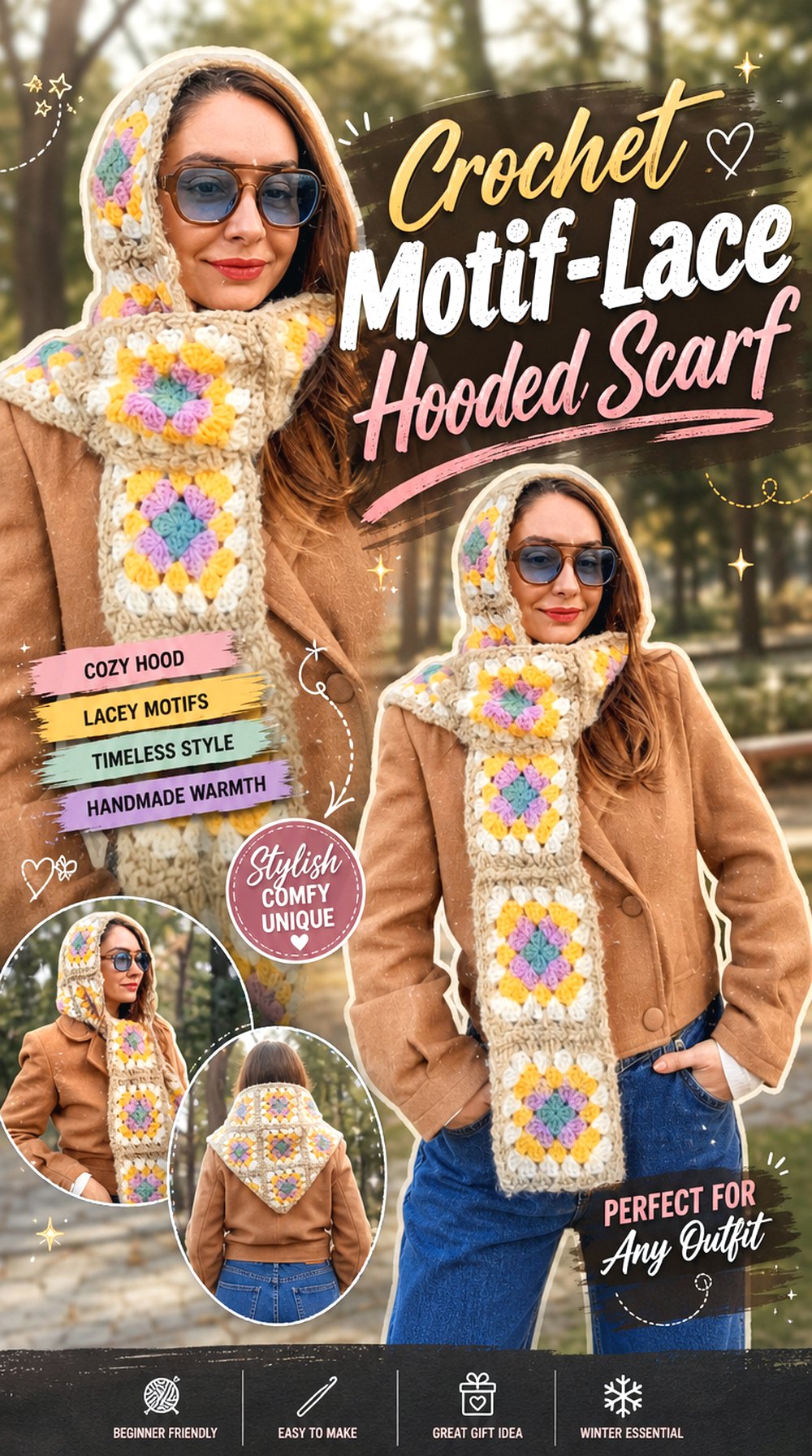
This version expands the motif idea into a hooded scarf, creating more vertical movement and more opportunities to vary the openwork. Instead of concentrating every square around the head, motifs can continue into the scarf and make the joining pattern part of the finished design. It is a strong option if you enjoy assembling repeat units and want the accessory to look decorative even when the hood is lowered.
Kubra Gucuyener’s tutorial demonstrates a hooded motif scarf and includes the motif assembly as an important part of the construction.
Plan Motif Direction Before Joining the Scarf
A motif may have a directional flower, texture, or color arrangement even if the outer edge is square. Lay out the entire hood-and-scarf arrangement before permanent joining. This prevents motifs from unexpectedly rotating around the crown or creating an accidental break in the visual rhythm where the scarf meets the hood.
Keep Joining Tension More Consistent Than Decorative Tension
A lace motif can tolerate some openness inside the square, but uneven joining tension can make the completed scarf ripple or pull. Compare joined sections as you work instead of waiting until every motif is connected. If one area begins to contract, correcting the tension early is easier than trying to block a distorted hood into shape later.
Make the Hood the Visual Center
A long motif scarf already carries significant pattern, so the hood does not necessarily need additional embellishment. Consider concentrating your strongest color contrast or most elaborate motifs near the face and using calmer repetitions down the scarf. That keeps the accessory visually organized instead of making every section compete equally for attention.
Original Tutorial and Creator Credit
Creator: Kubra Gucuyener
Crochet Slouchy Lace Balaclava Hood
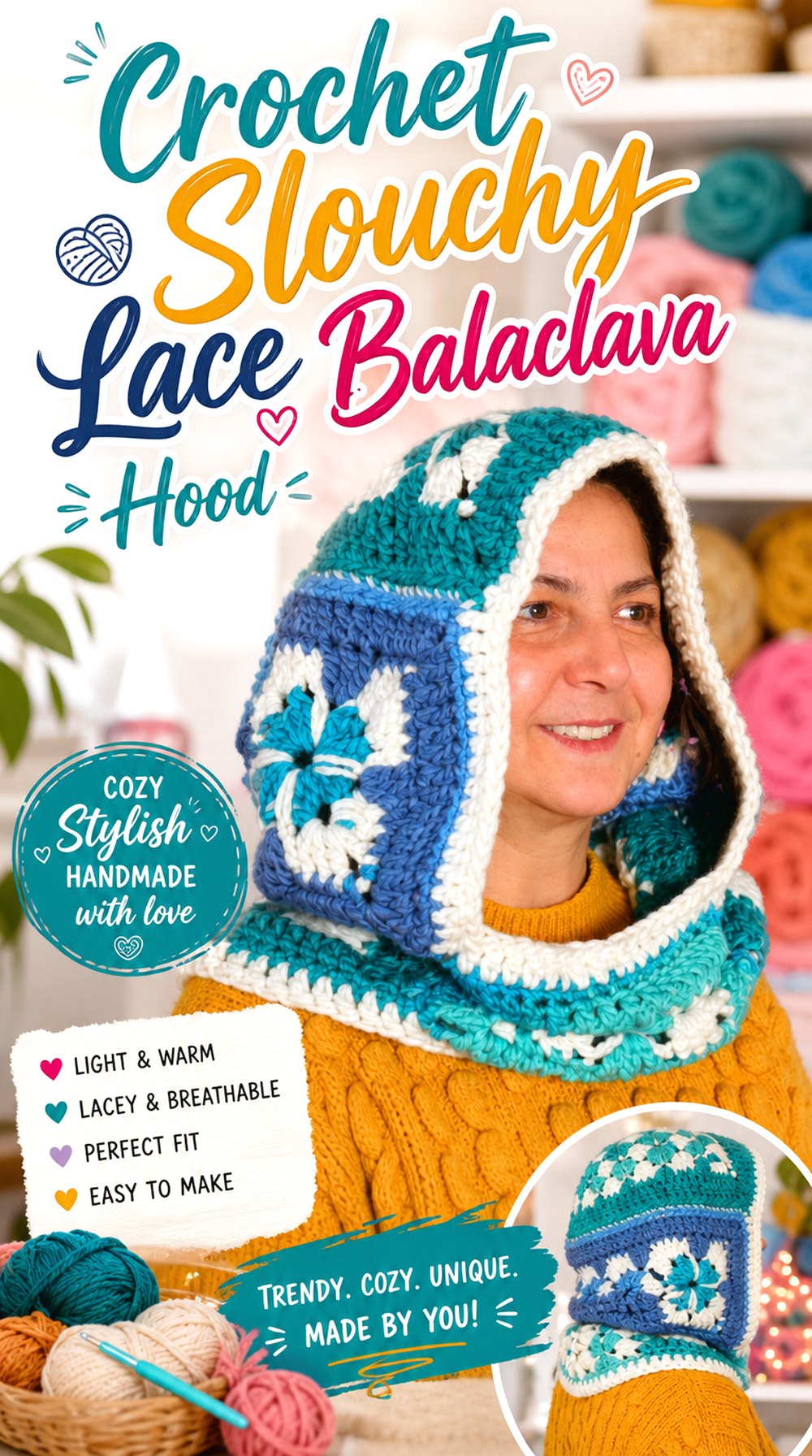
A slouchy balaclava sits between a fitted winter hood and a relaxed fashion accessory. Extra room around the crown makes it a good candidate for softer openwork because the fabric is not expected to hug every contour of the head. The silhouette can also accommodate hair more easily than a tightly shaped balaclava.
For a lace interpretation, keep the opening and lower edge comparatively stable while allowing more drape through the upper hood. Sirin’s Crochet demonstrates a slouchy balaclava format that provides a useful construction reference for this shape.
Extra Crown Room Changes How Lace Falls
When lace has both openness and extra ease, gravity becomes part of the finished appearance. A soft yarn may create a graceful fold, while a springier yarn can hold the hood farther from the head. Swatch enough fabric to judge actual drape rather than choosing solely from the appearance of a yarn ball.
Stabilize the Opening Before Adding More Decoration
The face edge defines the look of a balaclava. If your chosen lace stretches easily, consider keeping that edge visually simple instead of adding heavy trims that pull it outward. Try the hood on before deciding whether scallops, picots, or another decorative border would improve the shape or make the opening less controlled.
Original Tutorial and Creator Credit
Creator: Sirin’s Crochet
Crochet Soft Drape Lace Hooded Cowl
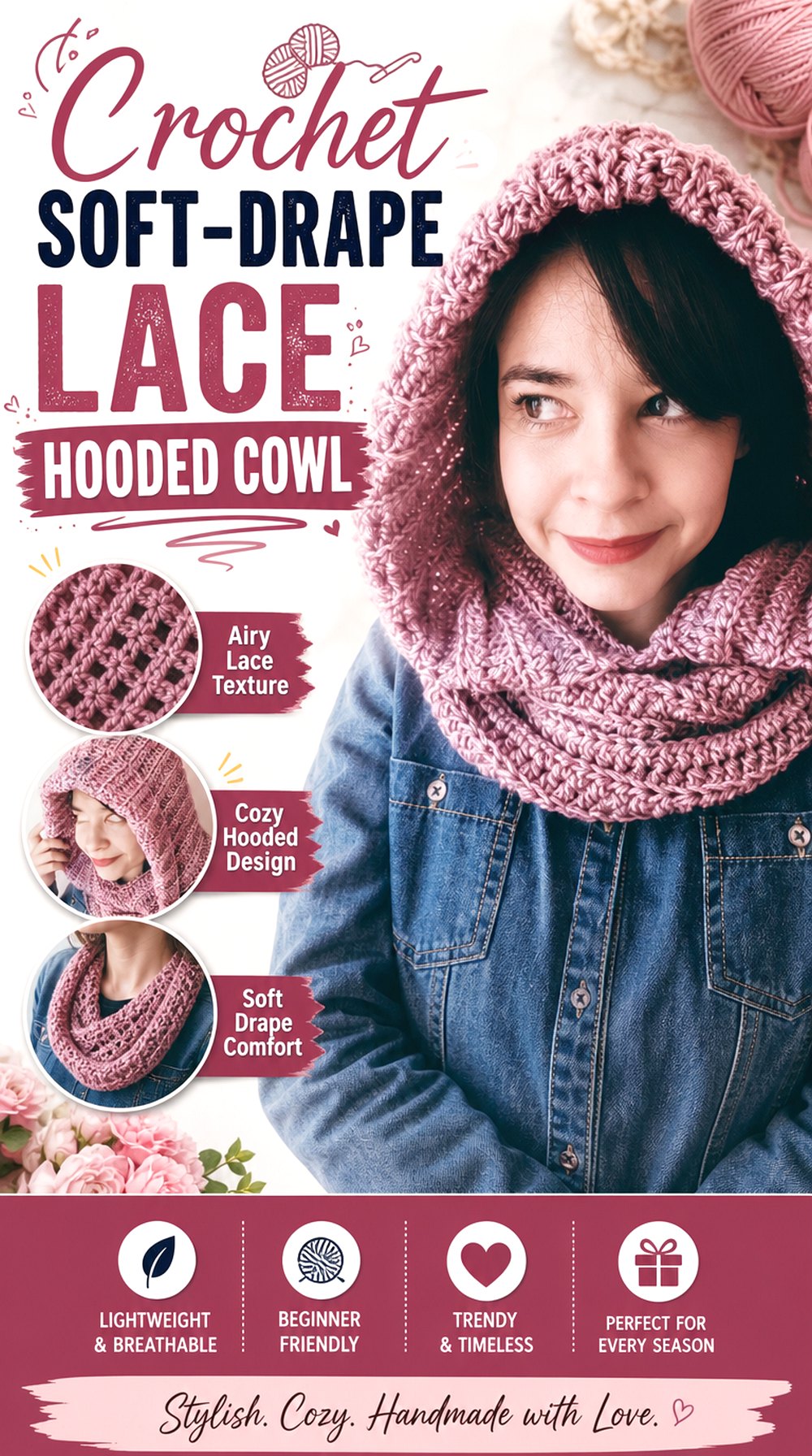
A hooded cowl removes dangling scarf ends and concentrates the fabric around the head and neck. That compact shape can make a lace variation more practical because you can layer the cowl without managing additional length. It also works well for crocheters who want the hood to fall around the shoulders like a decorative collar when not in use.
Kiri Kiri’s tutorial demonstrates a hooded cowl designed around adaptable sizing, making the overall format useful for thinking about how much room a softer lace fabric may need.
Balance Neck Room Against Hood Stability
A roomy cowl can look elegant when lowered, but too much circumference may leave the raised hood with little support. Consider both wearing positions before deciding how loose you want a lace adaptation. The most useful fit is one that drapes comfortably at the neck while still giving the hood enough structure to stay where you place it.
Use the Face Edge as a Fit Checkpoint
Before treating the project as finished, check the front opening from the side as well as the front. A lace hood can look appropriately loose face-on yet extend too far forward or fall behind the crown. Small fit observations at this stage are more useful than judging the cowl only while it lies flat.
Original Tutorial and Creator Credit
Creator: Kiri Kiri
Crochet Close Fit Lace Panel Balaclava
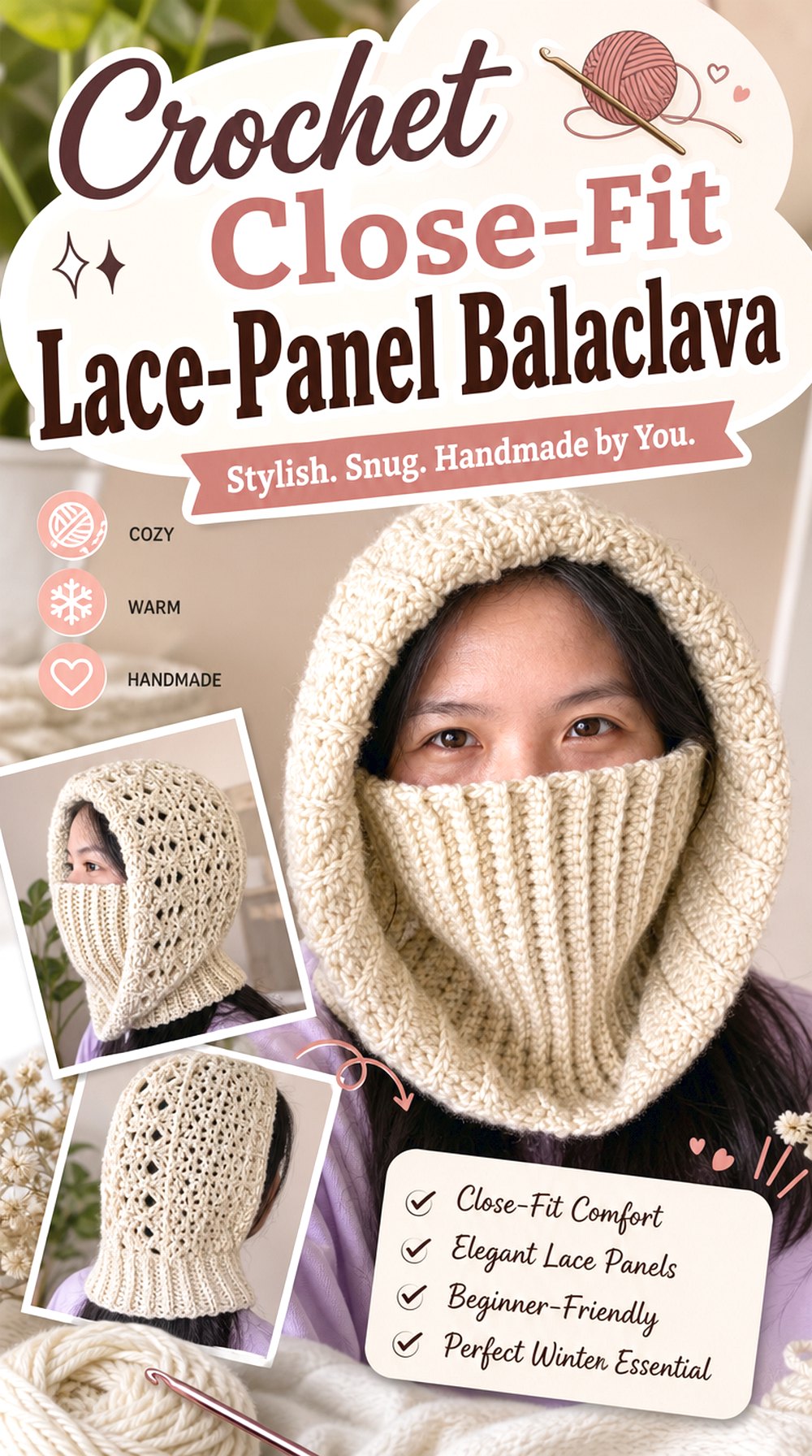
For more winter coverage, start with a balaclava shape that includes the neck rather than relying on a loose scarf. The lace can then become a controlled design element—perhaps through the crown or side panels—while the areas around the ears and lower neck remain visually denser. This produces a different balance from an all-over mesh hood.
Life by Susan’s tutorial demonstrates a balaclava with a collar and shaped hood sections, making it a practical reference for understanding where the close-fitting structure comes from.
Keep Openwork Away From High-Stretch Transitions
Where the neck section becomes the hood, the fabric may experience more stretching during dressing and wear. Very long lace chains or fragile-looking openings in that transition can distort more noticeably than compact stitches. If adapting the fabric, reserve your most open patterning for a broader panel rather than placing it across every structural change.
Test the Collar With Your Actual Coat
A neck-covering balaclava has to coexist with coat collars, zippers, and sweaters. A beautiful lace edge can become bulky or catch awkwardly when several layers meet. Try the unfinished lower section with your winter outerwear before investing in elaborate edging so you can judge whether the collar should remain simple.
Original Tutorial and Creator Credit
Creator: Life by Susan | Crochet
Crochet Drawstring Lace Trim Balaclava Hood
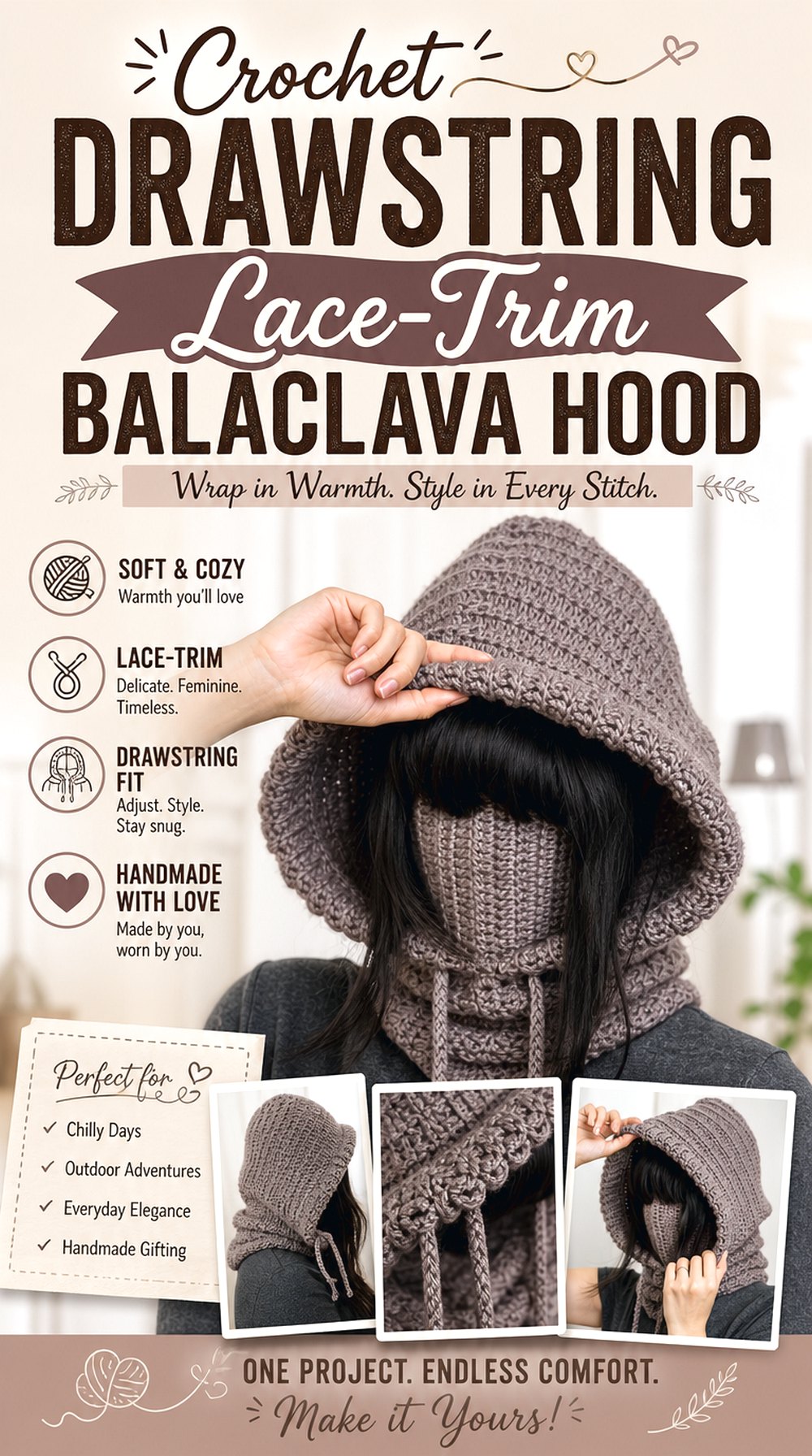
A drawstring gives a lace-inspired hood a different kind of control: instead of relying entirely on stretch to shape the face opening, the edge can be adjusted. That makes this concept attractive for a looser winter hood with a defined front. The lace does not need to cover every inch; it can be concentrated in a trim, crown panel, or decorative band while the neck and brim remain more structured.
TCDDIY’s supporting tutorial demonstrates a hooded balaclava neck warmer with a separate brim and drawstring details.
Treat the Drawstring Area as Structural Fabric
Openwork looks appealing around an edge, but the places carrying a cord need enough stability to resist repeated pulling. If you add lace near that area, avoid relying on oversized decorative loops as the only support. Keep the cord path neat and check that tightening the opening does not collapse or distort the surrounding stitch pattern.
Avoid Overdecorating a Functional Front Edge
The drawstring already adds visual interest, especially if the ends remain visible. Lace edging, tassels, and decorative cords can quickly compete with each other. Decide which detail should be dominant. A restrained lace band may make the hood look more deliberate than stacking every possible embellishment around the face.
Original Tutorial and Creator Credit
Creator: TCDDIY
Crochet Lace Edged Hooded Cape
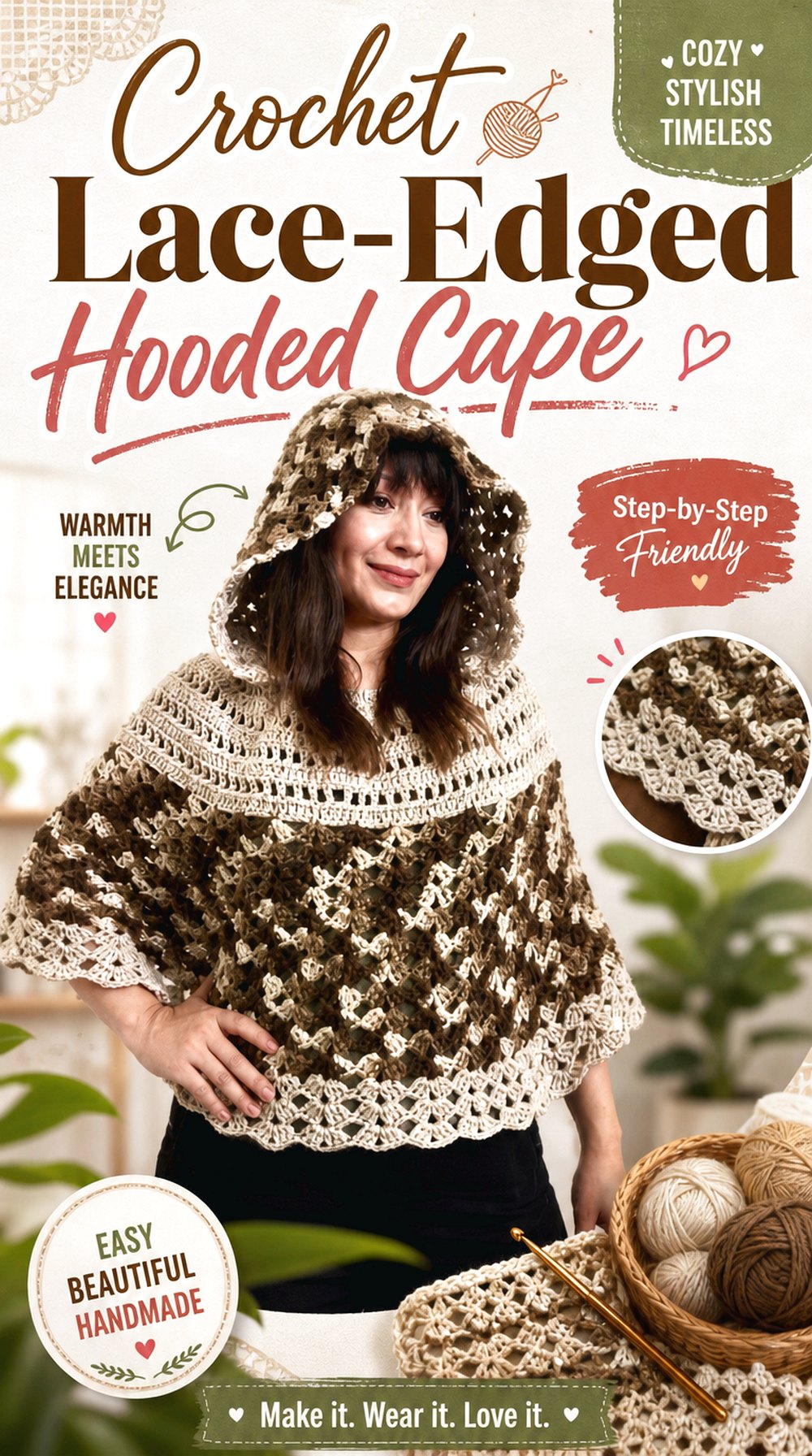
A hooded cape moves this collection beyond small accessories. Extending the crochet over the shoulders gives the design more presence and provides a broad canvas for lace without requiring the hood itself to be extremely open. One effective approach is to keep the hood relatively restrained and let increasingly decorative openwork appear toward the cape edge.
Mariie Crochet’s tutorial demonstrates a hood combined with substantial shoulder coverage, making it a useful construction reference for anyone who wants more than a scarf or balaclava.
Let the Lace Open Up Below the Shoulders
The lower cape is a natural place to increase visual openness because it is less dependent on precise head fit. Moving from denser fabric near the neckline toward lacier fabric farther down can also create a clearer design hierarchy. Whatever stitch treatment you choose, check that the transition lies flat rather than forming an unintended ruffle.
Shoulder Width Changes the Weight Distribution
Unlike a scarf, a cape spreads its weight across a broad area. That can help support a substantial hood, but an overly heavy decorative border may still pull downward. When considering a lace edge, judge the whole garment vertically on the body instead of focusing only on how attractive the border looks while laid flat.
Keep the Hood Compatible With Outerwear
A cape may be worn over a sweater, jacket, or coat, so consider how the neckline stacks with those layers. A hood that already contains a thick border may feel crowded against a high coat collar. If your winter wardrobe is bulky, a flatter lace edging around the neck can be easier to layer than a heavily raised trim.
Original Tutorial and Creator Credit
Creator: Mariie Crochet
Crochet Lace Contrast Convertible Snood Hood
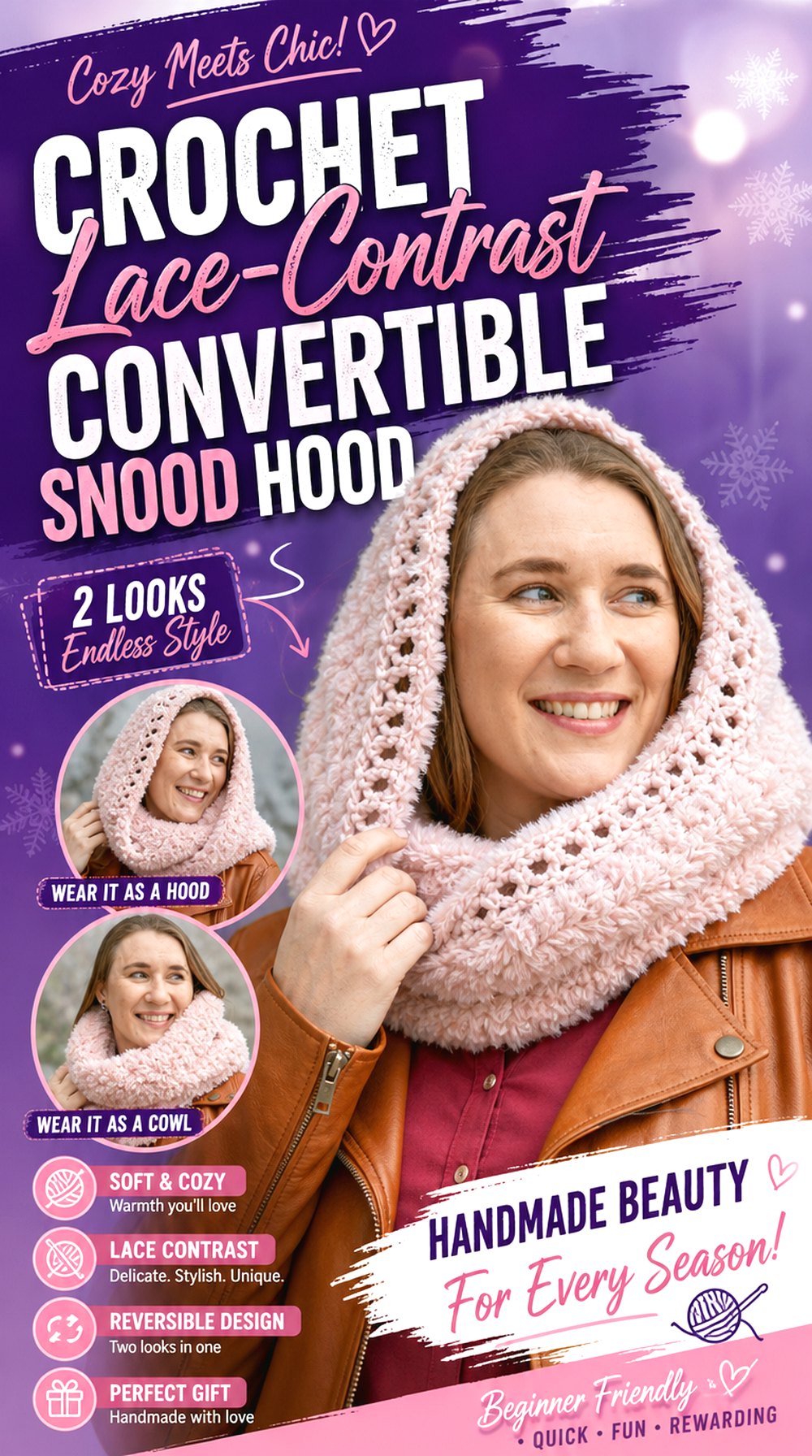
A convertible snood is essentially a generous tube that can gather at the neck or pull upward over the head. That simplicity creates room for experimenting with visual contrast. Instead of making an entirely open winter snood, use the lace idea selectively—such as a decorative outer section paired with a denser fabric concept—so the finished accessory still feels seasonally grounded.
Nicki’s Homemade Crafts demonstrates a faux-fur hooded cowl snood that can shift between neckwear and hooded wear. The original tutorial is not a lace project; it is most useful here as a reference for the convertible tubular shape.
Contrast Lace With a Visually Dense Base
This idea works because the two textures serve different purposes. A dense, soft base can provide the substantial winter appearance, while lace supplies the decorative surface interest. If creating a separate overlay or combining fabrics, make sure the added layer does not restrict the stretch needed to pull the snood comfortably over the head.
Check Visibility Before Investing in a Lace Overlay
Highly textured or furry yarn can visually swallow delicate crochet details. If you want two contrasting textures in one project, hold swatches together first. A bold open motif may remain visible, while tiny lace details could disappear against a fluffy background. The goal is contrast that can actually be seen once the snood is gathered around the neck.
Which Crochet Lace Winter Hood Shape Should You Choose?
| Style | Overall Shape | Lace Potential | Winter Coverage | Main Checkpoint |
|---|---|---|---|---|
| Crescent-lace cowl scarf | Hood/cowl hybrid | Very high | Light to moderate | Face-opening drape |
| Striped scoodie | Hood plus scarf tails | High | Adjustable through wrapping | Weight of scarf ends |
| Granny-square balaclava | Joined motifs | High | Moderate | Blocked motif size |
| Motif hooded scarf | Joined hood and scarf | High | Adjustable | Motif orientation |
| Slouchy balaclava | Relaxed hood | Moderate to high | Moderate | Crown drape |
| Soft-drape cowl | Compact hooded cowl | High | Moderate | Neck circumference |
| Close-fit balaclava | Hood plus collar | Selective | Higher | Stretch at transitions |
| Drawstring hood | Adjustable opening | Selective | Higher | Stable cord area |
| Hooded cape | Hood plus shoulders | Very high at lower edge | Broad layering coverage | Finished weight |
| Convertible snood | Tubular hood/cowl | Best as contrast | Depends on base fabric | Stretch and texture balance |
Conclusion
For the most visibly lace-focused result, the crescent-lace cowl, granny-square hood, motif scarf, and lace-edged cape give openwork plenty of room to become part of the design. If winter coverage matters more, the close-fit or drawstring balaclava shapes make it easier to keep denser fabric around the neck and ears while limiting lace to selected panels or trims.
Scoodies and soft cowls sit between those extremes, offering more drape without committing to a closely fitted hood. Whichever direction you choose, check blocked fabric, face-opening stability, and compatibility with your usual winter layers before final finishing. Use the original tutorials for their exact construction details rather than treating an altered lace fabric as automatically interchangeable.
Frequently Asked Questions
Can a crochet lace hood actually be warm enough for winter?
It depends on the openness of the fabric, the yarn, weather conditions, and how the hood is worn. Crochet lace generally allows more airflow than dense fabric, so it should not automatically be treated as windproof winter headwear. For colder or windier conditions, use lace selectively or wear an open hood as an additional layer over more protective headwear.
What part of a winter hood is safest to make more open?
The lower scarf, cape edge, or decorative crown area often gives you more freedom than the region directly covering the ears. The face edge and structural transitions also benefit from enough stability to hold their shape. A useful approach is to place your largest openings where appearance and drape matter most, then keep critical fit areas comparatively controlled.
Can I replace the stitch pattern in any hood tutorial with crochet lace?
Not reliably. Different stitches produce different widths, heights, stretch, and drape, so using the same stitch count with a new lace repeat can substantially change the fit. Treat the tutorial as a construction reference, make a blocked swatch of the proposed fabric, and plan from actual measurements rather than assuming the original counts will transfer.
Should I block motifs before assembling a lace winter hood?
Yes, blocking before layout is particularly useful when separate motifs need to align around the head. Compare the finished dimensions after the motifs have been treated consistently. If some are noticeably different, correct those differences before permanent joining; otherwise the face edge or crown can become uneven once several squares are connected.
Is a hooded scarf or balaclava better for lace crochet?
A hooded scarf offers more room for decorative openwork because the long scarf sections can carry the lace while the hood remains more stable. A balaclava provides closer neck and head coverage but usually benefits from more controlled stretch. Choose the scarf format for drape and display, or the balaclava when a closer winter silhouette matters more.
How can I stop a crochet lace hood from falling backward?
Start by checking hood depth, face-opening size, fabric stretch, and the weight hanging below the hood. Long scarf ends and highly relaxed lace can both pull the fabric backward. Blocking a representative swatch before construction helps predict growth. A more stable face edge or less excess crown depth may also suit the intended shape better than simply making the hood tighter everywhere.