Crochet mini succulent pots are small enough for desks, shelves, windowsills, craft fairs, and plant-lover gifts, but they still leave room for plenty of variety. Some designs focus on a cactus shape, while others use leafy rosettes, aloe-style leaves, dangling strands, or a playful face on the pot.
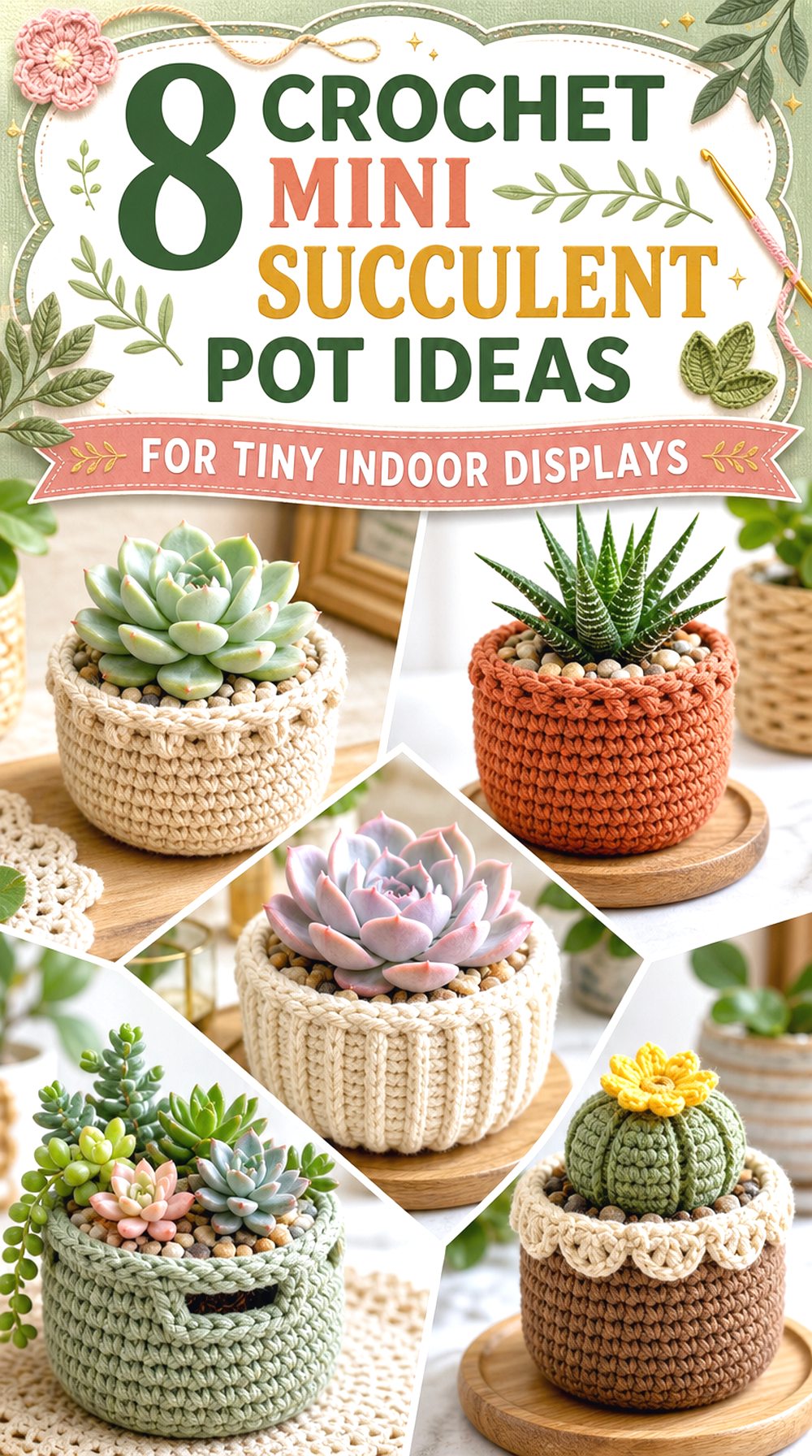
This collection brings together different mini pot ideas so readers can compare shape, display style, and function before choosing a tutorial. A few are simple decorative pots, one turns into coasters, and others work better as soft amigurumi-style desk plants. Each project keeps the plant theme clear without needing water, soil, or a sunny window.
Quick List
- Crochet Teeny Terracotta Cactus Pot
- Crochet Smiling Mini Succulent Pot
- Crochet Rosette Succulent Coaster Pot
- Crochet Aloe Vera Succulent Pot
- Crochet Clustered Potted Cacti
- Crochet Flowered Cactus Pot
- Crochet Soft Succulent Plant in a Pot
- Crochet Compact Succulent Pot Amigurumi
Why These Crochet Mini Succulent Pots Are Worth Making
Mini succulent pots work well when a full-size crochet plant would feel too large for the space. They can sit on a desk, tuck into a small shelf, or become a thoughtful gift for someone who likes plants but does not want plant care. Their small scale also makes the finished shape important: a pot with a defined rim reads differently from a soft amigurumi pot, and a leafy rosette gives a different look than an upright cactus.
These projects are also useful for comparing display needs. Some sit flat, some include soil-style tops, and one design hides coasters inside the plant shape. That range helps readers choose by purpose instead of color alone.
Crochet Teeny Terracotta Cactus Pot
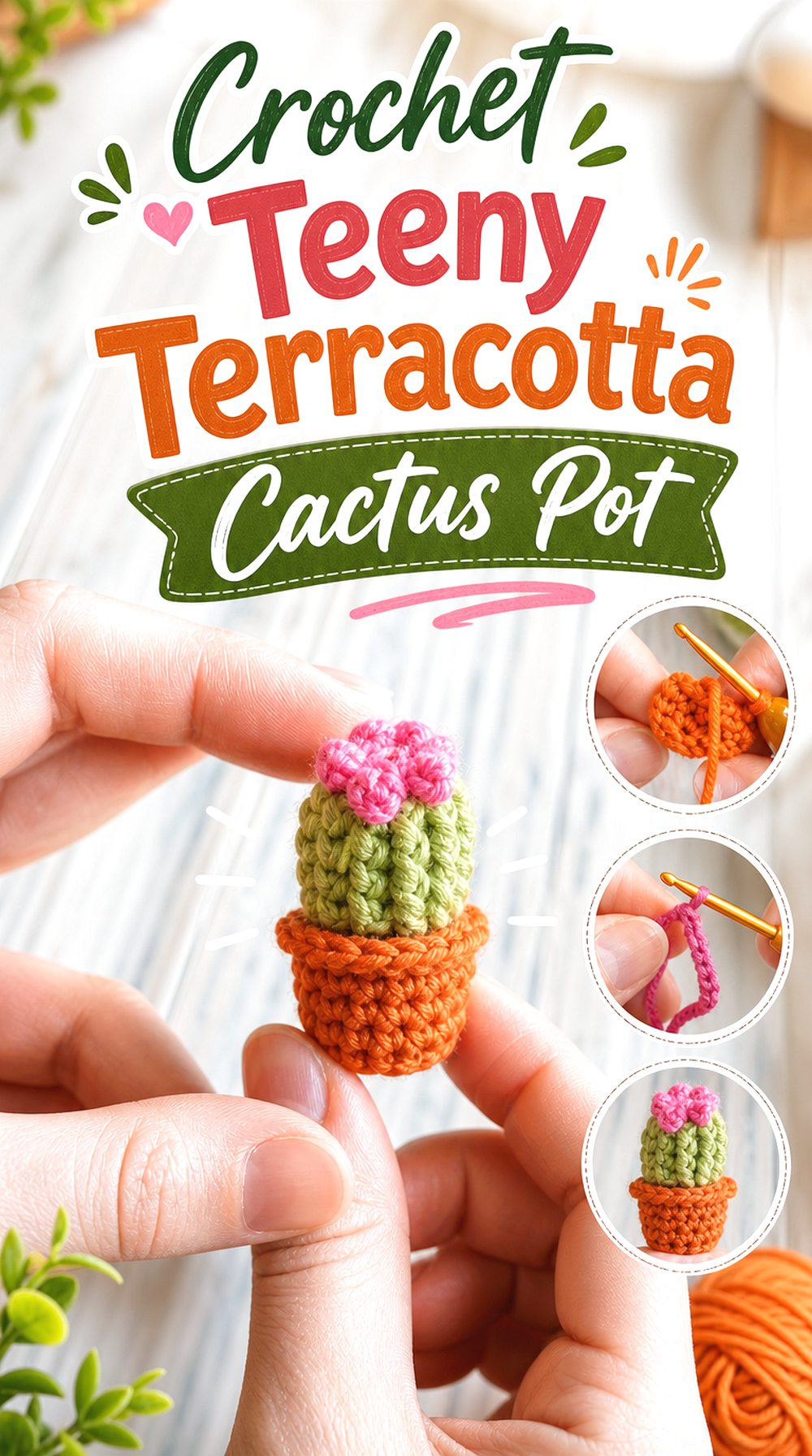
A tiny cactus in a terracotta-style pot has a classic mini plant look, with the upright cactus shape doing most of the visual work. This idea suits readers who want a compact desk plant rather than a fuller leafy succulent. The pot shape also makes it easy to imagine the finished piece sitting on a narrow shelf, beside stationery, or in a small handmade gift box.
The appeal is in the scale: it feels more like a tiny decorative object than a large amigurumi plant.
Match It to a Small Display Spot
This type of mini cactus pot works best when the display space is limited. Before choosing it, readers should think about where the finished piece will sit and whether the height of the cactus matters more than the width of the pot. A narrow shelf, small office desk, or bedside corner may suit this upright shape better than a wide leafy arrangement.
Check the Pot Shape
The terracotta-style pot is part of the finished look, not just a holder. Readers should look closely at how defined the rim and base appear in the source so the cactus does not look unfinished once assembled. If the pot is meant to sit flat, the base shape is worth checking before planning it as a display item.
Review the Written Support
This tutorial also links to a written pattern, which may help readers who prefer to follow along with text after watching the visual guide. The original source should still be used for the exact construction details, especially where the tiny cactus and pot come together. Avoid relying on screenshots or copied notes from the tutorial.
Original Tutorial and Creator Credit
Creator: HappyBerry Crochet
Crochet Smiling Mini Succulent Pot
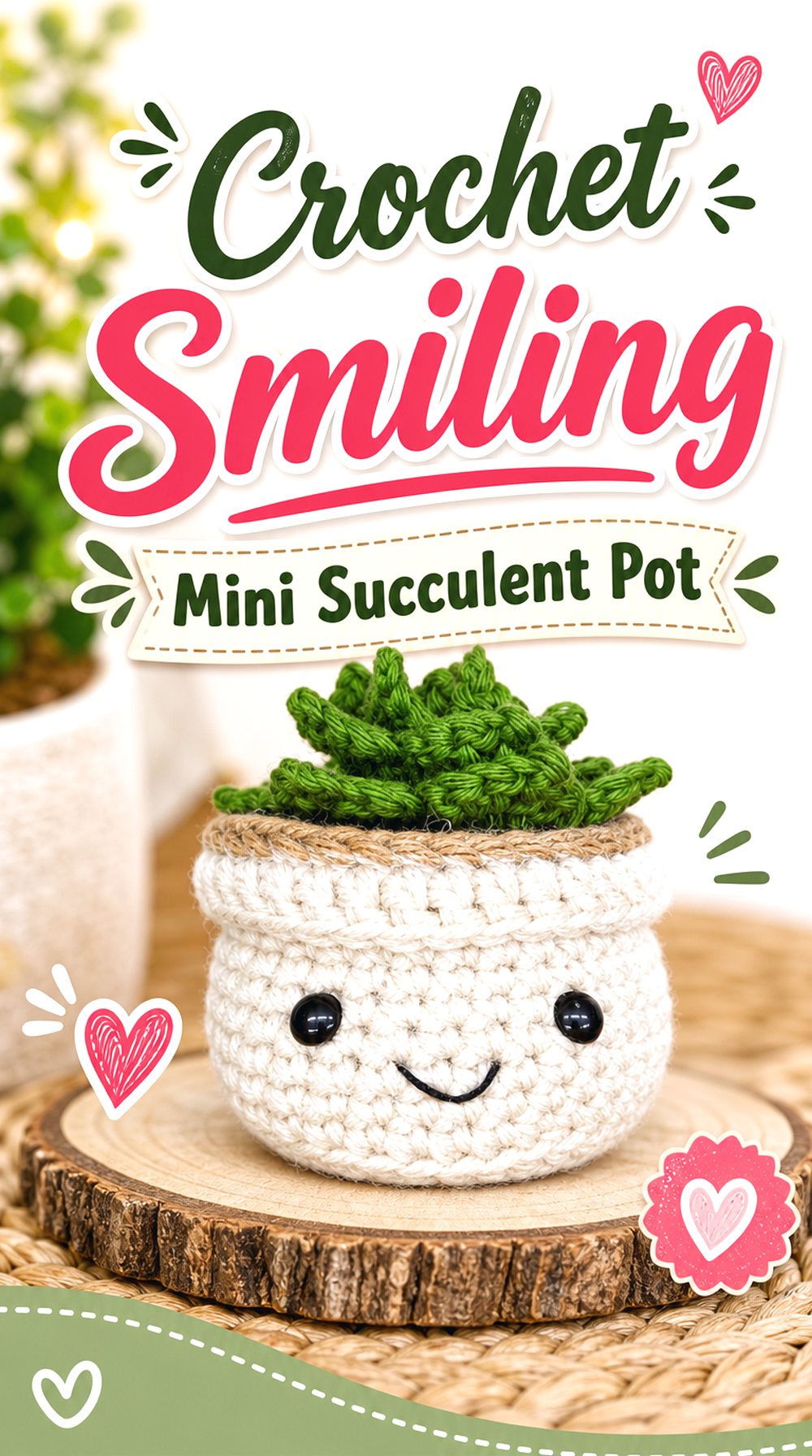
This mini succulent pot has a playful option because the pot can be made with a face or left plain. That makes it different from the more realistic cactus-style projects in this list. The finished design includes a crochet pot, soil or dirt section, and succulent top, so the whole piece reads as a complete little plant rather than a loose leaf cluster.
It may suit readers who want a cute gift-style pot, especially when a cheerful expression fits the recipient.
Decide on the Face Detail
The face changes the mood of the whole project. A plain pot can feel cleaner for shelf decor, while eyes and a mouth make it more like a character gift. Readers should decide that before starting because the final use may be different. A smiling pot may suit a desk buddy, while a plain version may blend better with other plant decor.
Confirm the Assembly Sections
This project is divided into pot, soil, succulent, and assembly sections, so readers should review the full guide before starting. That helps them understand how the separate parts relate to each other without needing to memorize the order. For small amigurumi-style pots, assembly can affect whether the plant sits centered and balanced.
Think About Gift Presentation
A mini pot with a face can work well as a small handmade gift, but the display method still matters. Readers may want to check whether the finished base sits evenly and whether the face is visible from the front. A small plant like this can get lost in busy packaging, so simple wrapping may show the shape better.
Crochet Rosette Succulent Coaster Pot
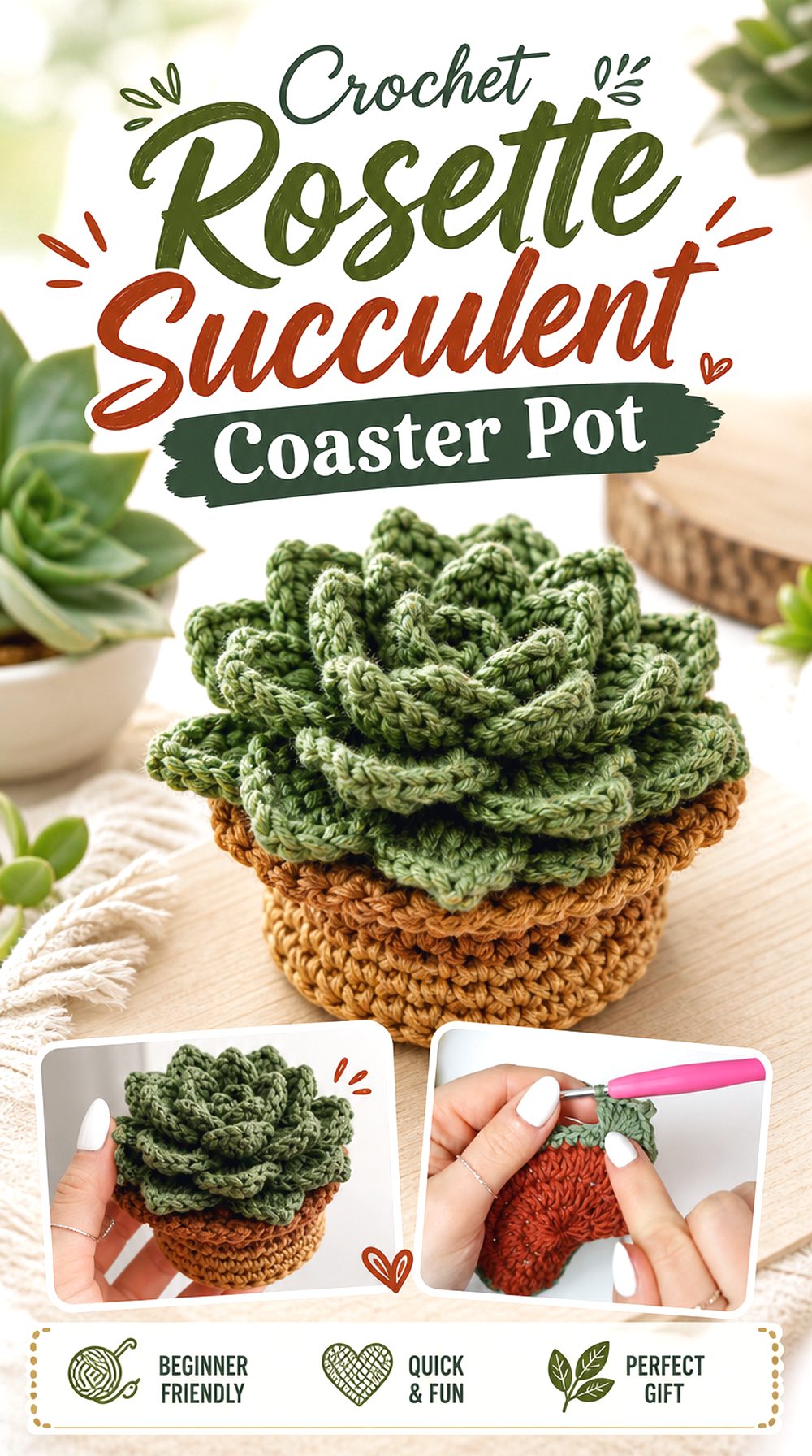
This succulent pot has a clever practical twist: it is made as a plant pot that turns into coasters. The leafy succulent top gives the piece a plant-like display shape, while the hidden coaster function makes it different from the purely decorative mini pots. It may suit readers who like crochet decor that can also be used on a coffee table or tea tray.
Because the finished item has both display and storage roles, the pot shape needs to stay neat when the coasters are tucked inside.
Consider the Coaster Function
The coaster feature changes how this project should be chosen. It is not only a mini succulent for display; it also needs to open, close, and hold the coaster pieces in a tidy way. Readers should think about whether they want a decorative plant that stays untouched or a table item that may be handled often.
Check the Included Pieces
This source includes separate coaster and plant pot sections, plus a final stage where the coaster set is placed into the succulent pot. That means readers should confirm which pieces they want to make before gathering supplies. The finished result depends on the set feeling complete, not just on the pot alone.
Plan Where It Will Be Used
A coaster pot belongs near drinks more than on a narrow display shelf. Readers may want to place it where the coasters can be removed easily without disturbing other decor. If the project is meant as a gift, it helps to explain that the plant shape has a hidden use so the recipient knows how to handle it.
Original Tutorial and Creator Credit
Creator: Brunaticality
Crochet Aloe Vera Succulent Pot
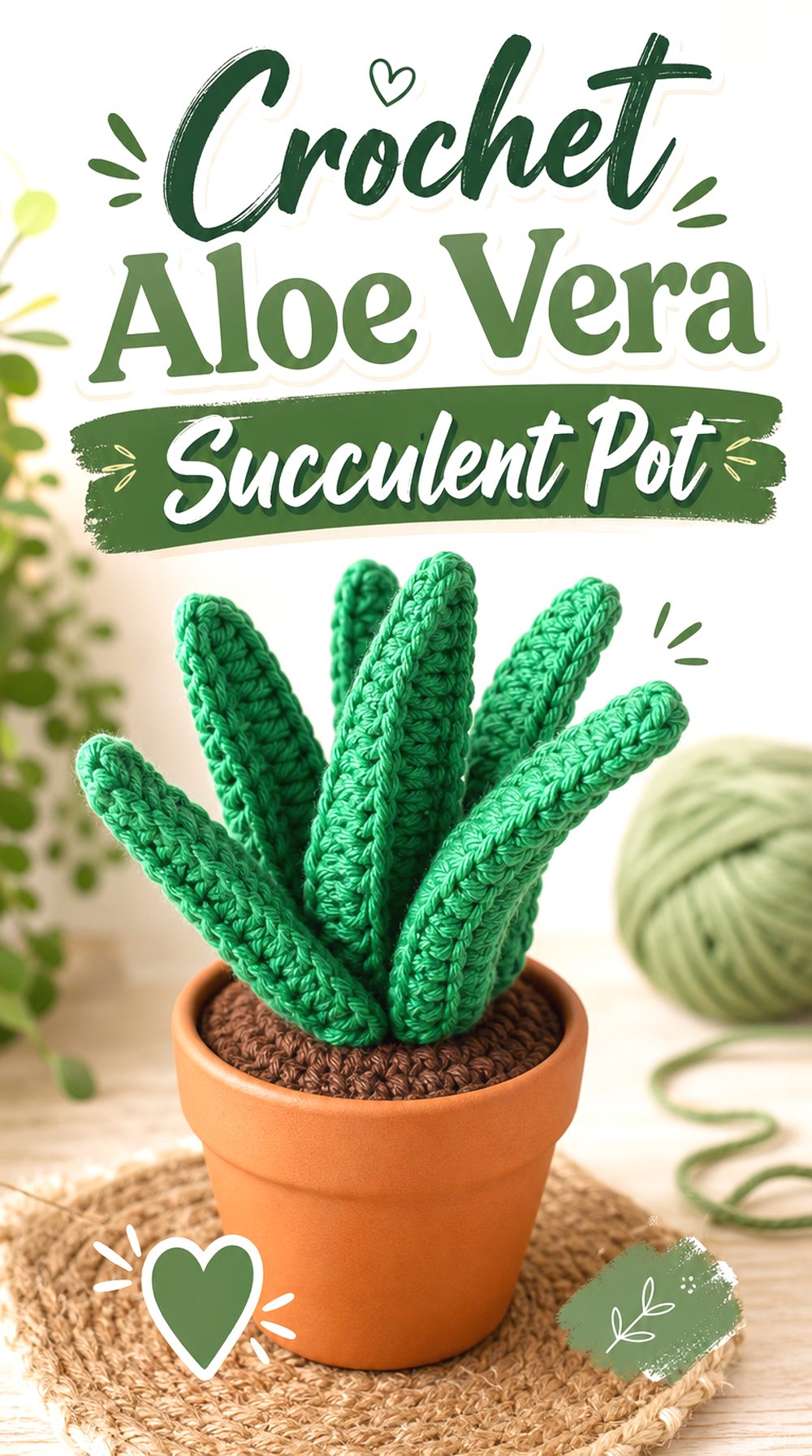
An aloe vera succulent pot gives this list a sharper leafy shape compared with the rounder rosette and cactus options. The plant sits in a pot with a soil-style base, and the upright leaves make the finished piece feel like a small artificial houseplant. This is a useful choice for readers who want a recognizable succulent shape without flowers or a face.
The available information notes a 4-inch soil size, so this option may feel slightly more substantial than the tiniest cactus pot.
Look at the Leaf Spread
Aloe-style leaves create height and spread at the same time. Readers should consider whether they want the finished plant to look narrow and upright or broader from the top view. For a tight shelf, the width of the leaf tips may matter as much as the pot footprint, especially when several crochet plants are displayed together.
Note the Soil Size
The source states that the soil is the 4-inch size, which gives readers a helpful scale reference. That detail matters if the finished piece needs to fit inside a specific pot or match other small handmade plants. Before choosing colors or display placement, readers should compare that size with the space where the plant will sit.
Check How the Plant Sits
The description explains that the plant sits in the pot, with tips for hiding sewing strands inside the soil form. That makes the finishing stage important for a clean display. Readers should pay attention to how secure and centered the plant looks before treating it as a shelf piece or gift.
Original Tutorial and Creator Credit
Creator: The Crochet Crowd
Crochet Clustered Potted Cacti
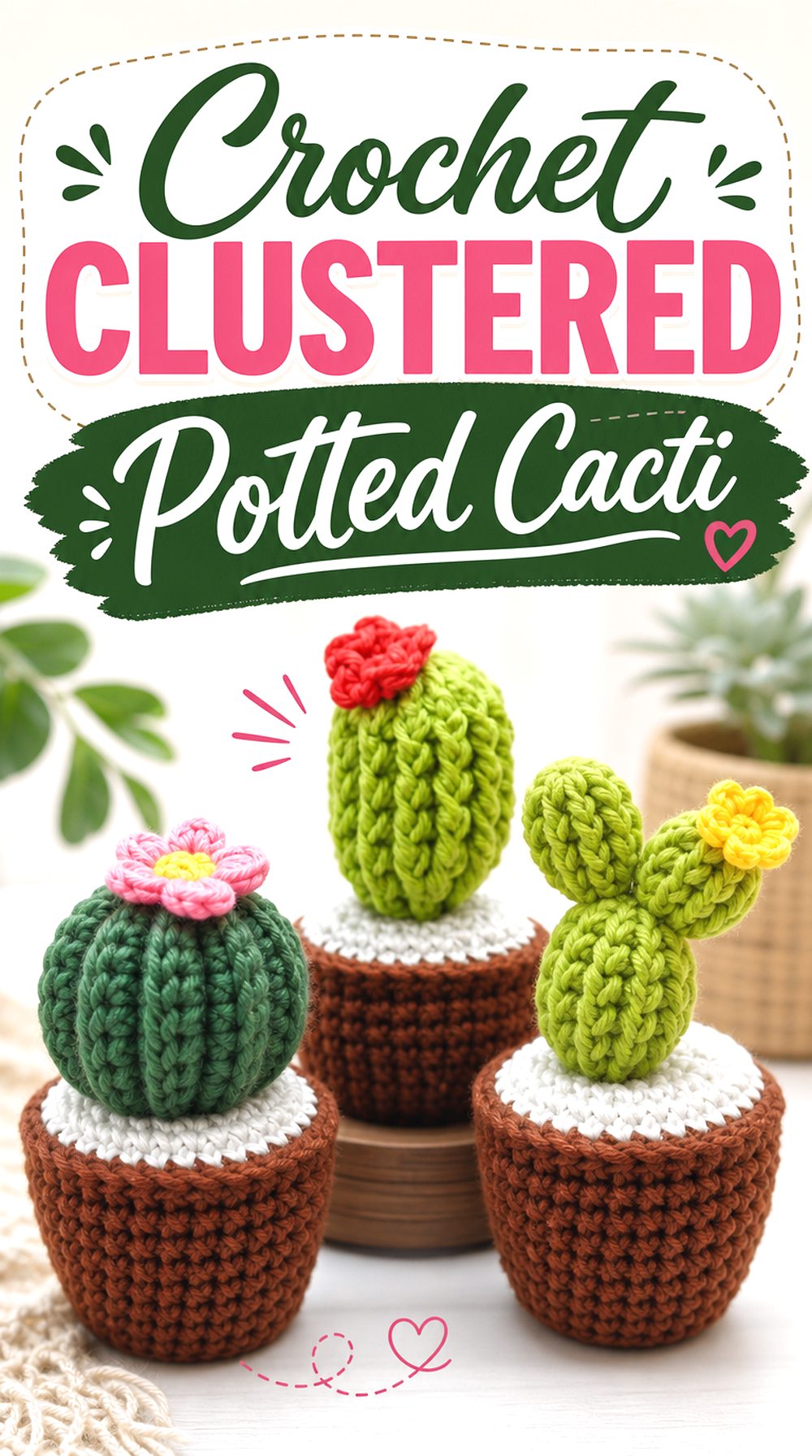
A clustered potted cactus design gives more visual movement than a single stem. Instead of one small succulent form, the finished idea suggests multiple cactus shapes grouped in one pot. That makes it a stronger option for readers who want a fuller tabletop plant while staying within the mini succulent pot theme.
The design also feels different from the smiley pot and coaster pot because the main interest is the arrangement of cactus forms, not a character face or hidden function.
Compare the Cactus Shapes
With a clustered cactus pot, the individual cactus forms need to work together visually. Readers should look at whether the finished pieces vary enough in height or shape to create a balanced arrangement. If all sections look too similar, the pot may feel flat; if they compete too much, the small scale can look crowded.
Confirm the Skill Fit
The source mentions learning new stitches in the tutorial, so readers should review the full guide before deciding whether it matches their comfort level. That does not make the project unsuitable, but it does mean the project may need more attention than a very plain mini pot. Watching the guide once first can prevent surprises.
Watch the Grouping Stage Closely
The final grouping affects the plant’s personality. Readers should pay attention to how the cactus pieces are positioned in the pot and how the finished arrangement is viewed from the front. Since this is a display object, the final angle matters. A small shift in placement can change whether the cluster looks balanced or crowded.
Original Tutorial and Creator Credit
Creator: Maia Maia crochet
Crochet Flowered Cactus Pot
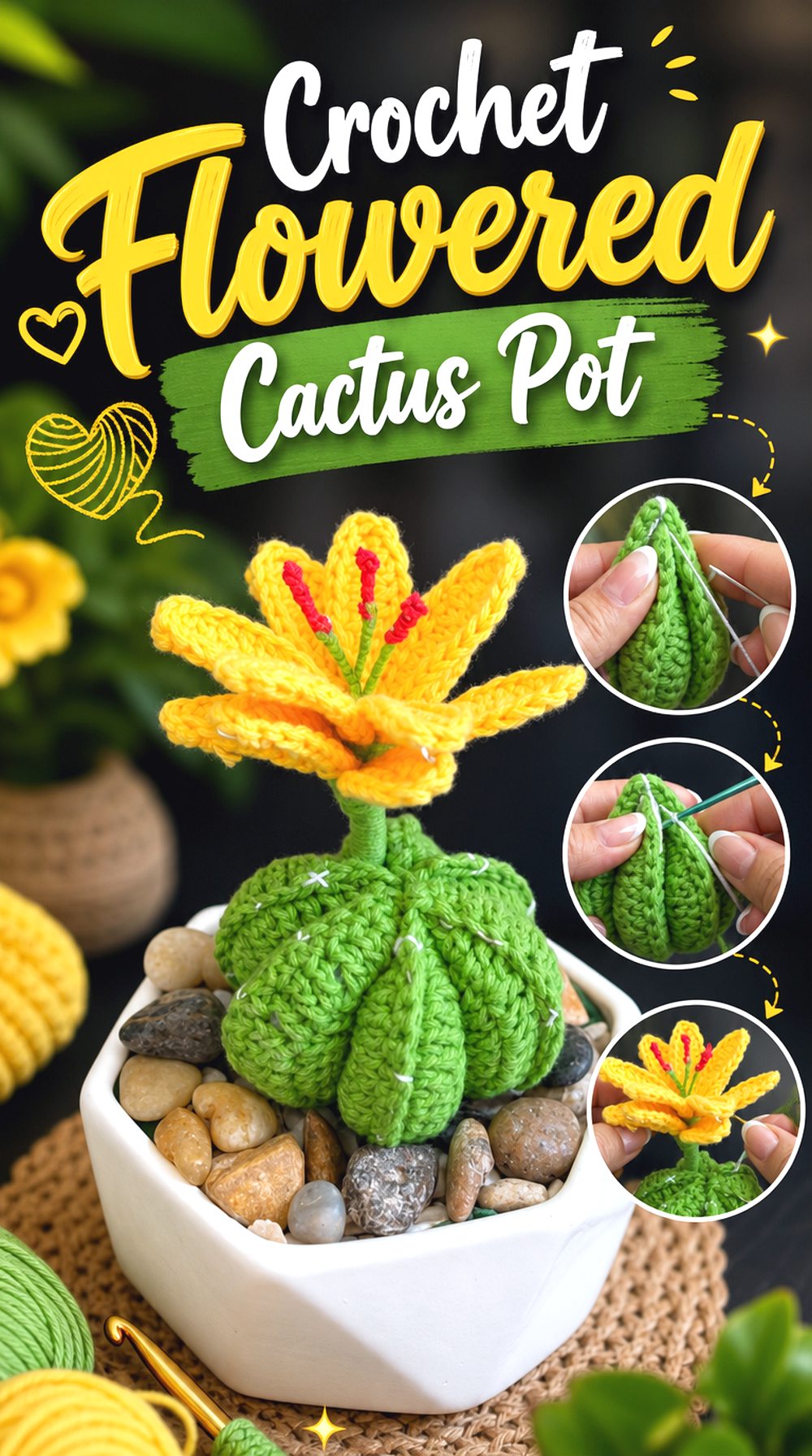
A flowered cactus pot adds a decorative detail to the cactus shape without turning it into a full floral arrangement. The small cactus, pot, and flower elements make it a nice middle point between a realistic succulent display and a cuter gift-style plant. It stands apart from the clustered cactus because the flower becomes the main accent.
This idea may suit readers who want a mini plant with a little color at the top while keeping the cactus form clear.
Keep the Flower Accent Visible
The flower is the detail that separates this cactus pot from plainer versions. Readers should think about contrast carefully so the flower does not disappear against the cactus color. The accent does not need to be large to matter; on a mini pot, even a small flower can become the focal point when the color is clear.
Check the Material List
The source lists yarn, stuffing, a decorative pot, a yarn needle, and scissors among the materials. Readers should confirm the full supply list in the original tutorial before buying anything, especially because a decorative pot may affect the finished look. A separate container can change the project’s size, weight, and display style.
Review the Final Details
This project includes final detail and decoration sections, so the last stage should not be rushed. For a flowered cactus, the neatness of the accent and pot placement can make the finished item look intentional rather than loosely assembled. Readers should use the original source for exact finishing, placement, and shaping guidance.
Original Tutorial and Creator Credit
Creator: Shelen Crochet
Crochet Soft Succulent Plant in a Pot
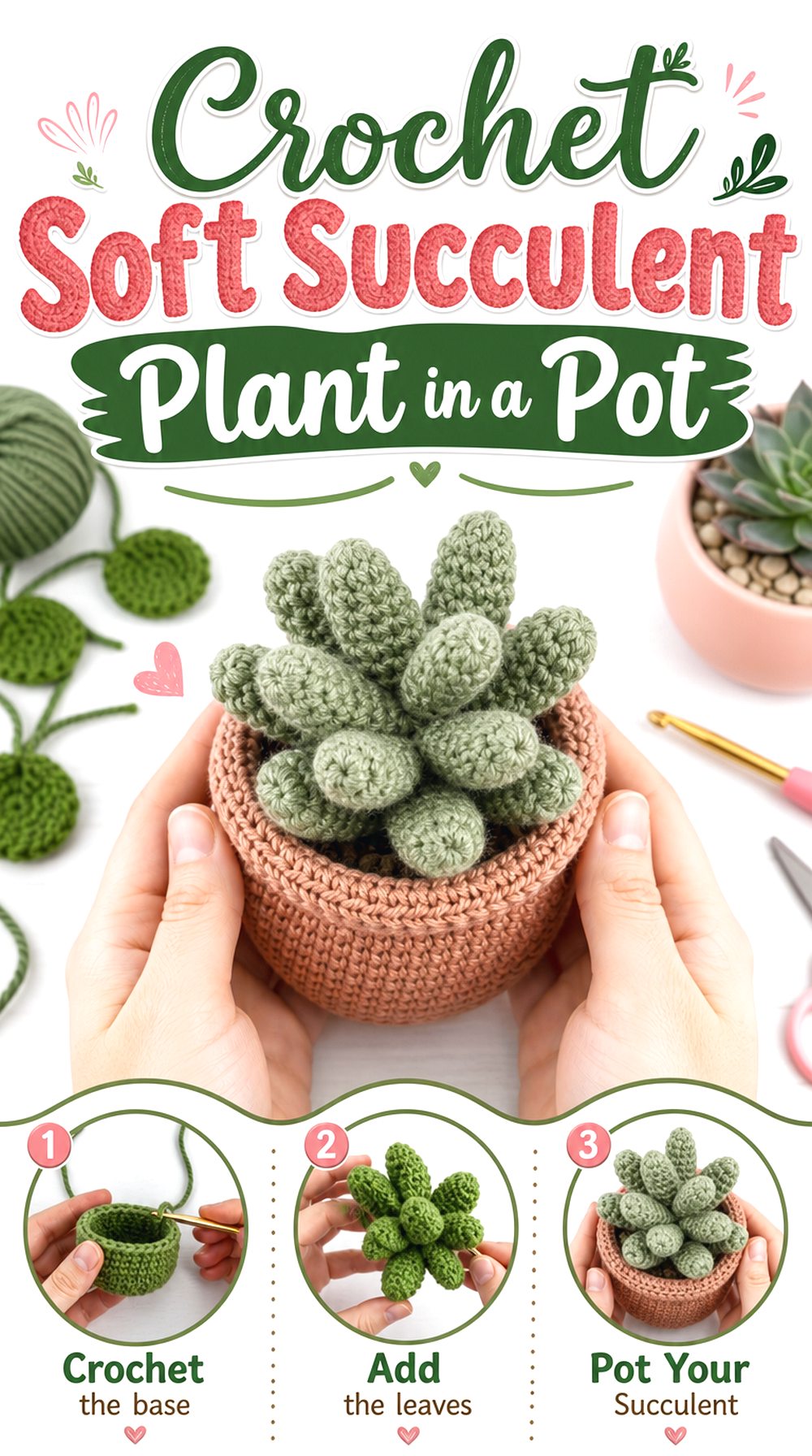
This soft succulent plant in a pot focuses on the plant shape itself, with leaves attached to a stem before the potted display is completed. It differs from the rosette coaster pot because the shape is more plant-like than functional, and it differs from the cactus options because the leafy form gives a softer silhouette.
The source presents it as a step-by-step succulent plant in a pot, making it a suitable choice for readers who want a simple decorative plant form.
Focus on the Leaf Direction
Leaf direction can change how natural the finished succulent appears. Readers should look at how the leaves spread from the center and whether the stem remains visible or hidden in the final display. For a small pot, too much leaf movement can make the plant look messy, while a centered arrangement keeps the shape easy to read.
Check the Separate Pot Reference
The video description points to a separate crochet pot resource, so readers should confirm how the plant and pot information connect before starting. That matters because the plant alone is not the same as a finished mini succulent pot. Anyone wanting the complete display should make sure the pot portion is available and clear.
Decide on Display Stability
A soft crocheted succulent may need careful finishing so it sits well in the pot. Readers should check the final view and consider whether the finished plant is meant for a stable tabletop spot rather than frequent handling. Since no water or soil is involved, the main practical concern is whether the plant stays upright and tidy.
Original Tutorial and Creator Credit
Creator: nengurumi
Crochet Compact Succulent Pot Amigurumi
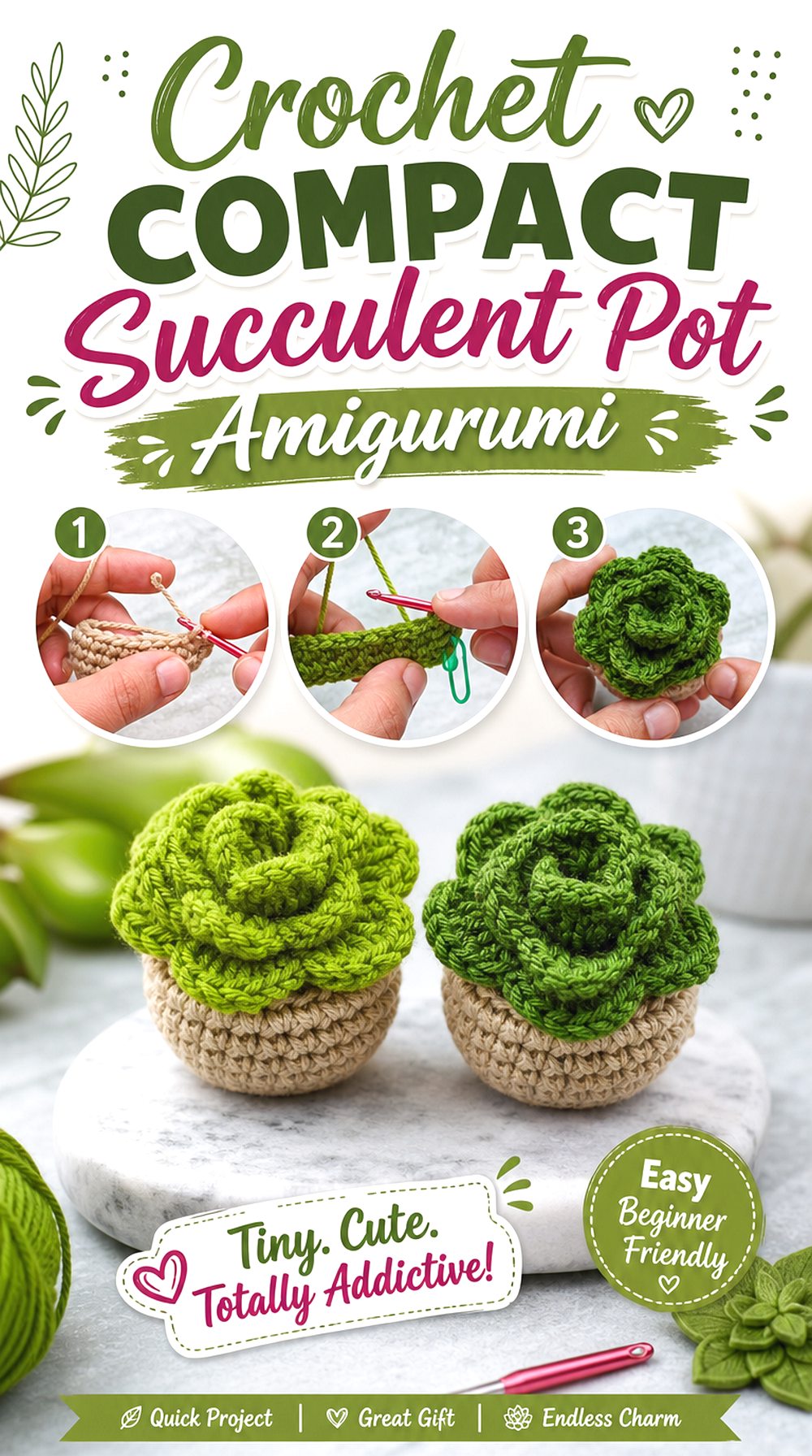
A compact succulent pot amigurumi is a neat choice for readers who want a small, complete plant shape with a pot, soil section, plant top, and assembly stage. The design feels more like a soft decorative object than a realistic houseplant, which makes it different from the aloe vera and terracotta cactus options.
This project may fit a desk, small shelf, or handmade gift basket when the goal is a clear mini succulent shape without extra features like coasters or hanging strands.
Think About the Soft Pot Shape
An amigurumi-style pot often looks softer than a container-style pot. Readers should decide whether that plush look suits the display they want. A soft pot can feel cute and handmade, while a firmer-looking pot may feel more like home decor. The choice depends on whether the finished piece should look playful or more plant-like.
Confirm the Pattern Format
The video description includes timestamps and pattern information, so readers should use the original source carefully rather than copying instructions elsewhere. For a small project with separate pot, soil, plant, and assembly sections, it helps to understand the overall layout first. That keeps the finished plant from feeling like disconnected parts.
Check the Assembly View
The assembly stage is especially important because the plant top needs to sit neatly on the soil and inside the pot. Readers should compare the shape as they work and return to the final view when placement feels uncertain. A compact pot has little room to hide uneven positioning, so the finishing stage carries a lot of visual weight.
Conclusion
These crochet mini succulent pot ideas cover several different display needs. The teeny terracotta cactus is the most classic small plant shape, while the smiling pot feels more giftable. The coaster pot adds function, the aloe vera has a sharper leafy profile, and the clustered and flowered cactus pots bring more detail to a small display. For a soft amigurumi look, the nengurumi and Cute Crochet options keep the plant compact and decorative. Use the original tutorials for exact construction details, then choose the project by shape, pot style, and where the finished piece will sit.
FAQs
How do I choose the right crochet mini succulent pot?
Start with the display space. A narrow shelf may suit an upright cactus, while a desk or coffee table can handle a rounder pot or coaster-style design. Also consider whether the finished piece should look realistic, cute, functional, or gift-like. The best choice is the one that matches the space before color decisions begin.
Should I make a plain pot or a face pot?
A plain pot usually blends better with home decor, especially if it will sit with real or faux plants. A face pot feels more playful and may work well as a desk buddy or small gift. Check whether the creator includes both options, then choose the version that fits the recipient and display location.
Can crochet succulent pots be used near real plants?
They can be displayed near real plants, but avoid assuming they are safe around water, damp soil, or outdoor weather unless the creator clearly says so. Yarn can react differently depending on fiber content. Keep crochet pots away from wet saucers, watering areas, and soil contact unless the project instructions explain otherwise.
What should I confirm before starting a mini succulent tutorial?
Check the finished size, material list, pot style, assembly sections, and whether any written pattern is linked. For very small pots, the finishing stage can be just as important as the plant shape. It also helps to review the final result first so you understand how the parts should look together.
Can I sell crochet succulent pots made from YouTube tutorials?
Do not assume selling is allowed. Check the creator’s description, pattern terms, website, or linked shop information for permission and credit requirements. Some creators allow limited finished-item sales, while others restrict copying, translating, or republishing their work. When terms are unclear, ask the creator directly before listing finished items.