Moss stitch cardigans can look simple from a distance, but the finished shapes vary a lot. Some designs focus on relaxed fall layering, while others use color changes, button fronts, pockets, kimono shaping, or hexagon construction. That makes this stitch family useful for comparing cardigan structure before choosing a tutorial.
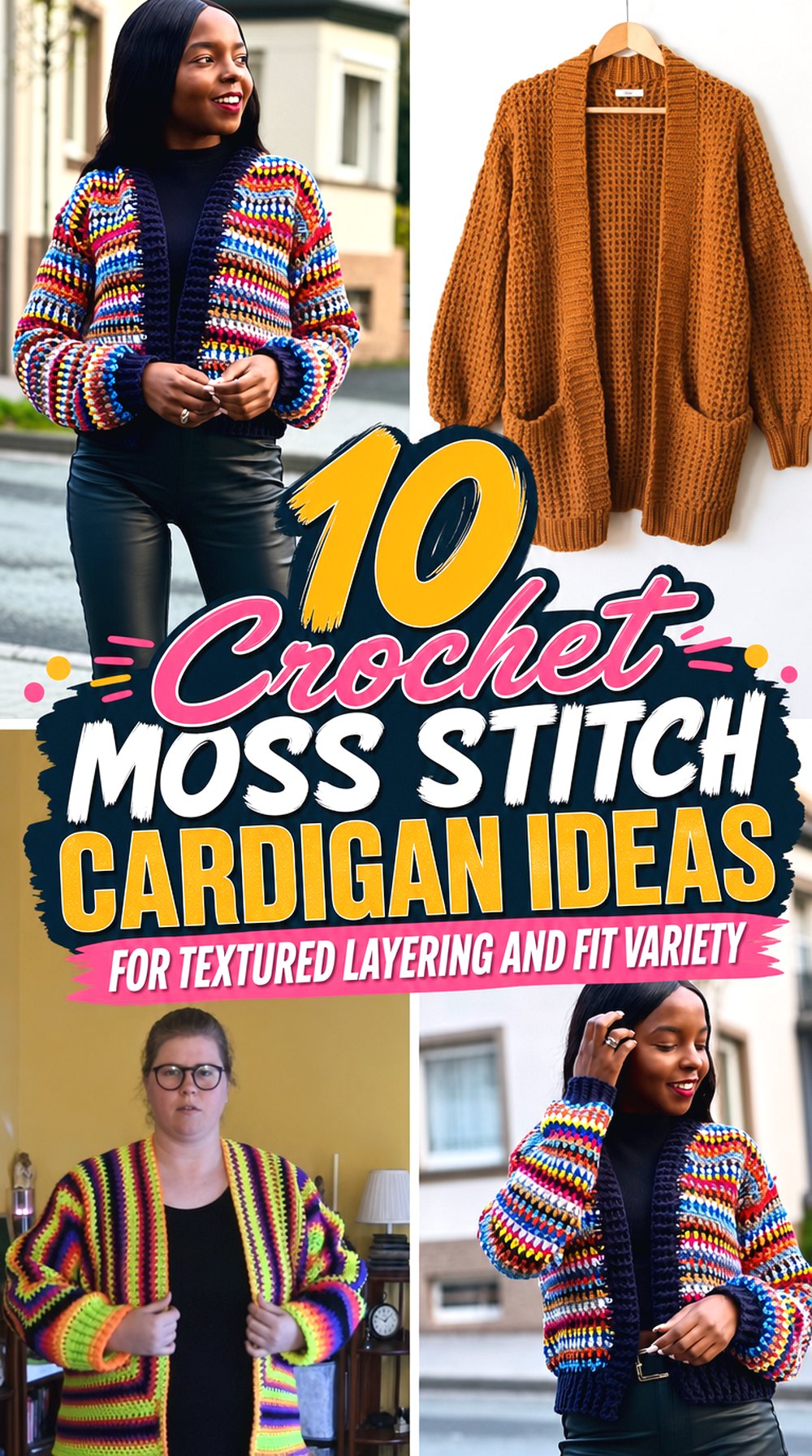
This list gathers ten different cardigan ideas that use moss stitch, linen stitch, granite stitch, or closely related naming. The goal is to help readers compare front openings, sleeve shapes, length, baby sizing, color placement, and finishing details before following the original tutorials.
Quick List
- Crochet Fall Moss Stitch Layering Cardigan
- Crochet Scrap-Color Moss Stitch Cardigan
- Crochet Linen Stitch Everyday Cardigan
- Crochet V-Neck Button Moss Stitch Cardigan
- Crochet Rectangle Kimono Moss Stitch Cardigan
- Crochet Moss Stitch Hexagon Sleeve Cardigan
- Crochet US-Terms Moss Stitch Hexagon Cardigan
- Crochet Granite Stitch Pocket Cardigan
- Crochet Baby Moss Stitch Cardigan
- Crochet Two-Color Moss Stitch Hexagon Cardigan
Why These Crochet Cardigan Projects Are Worth Making
A moss stitch cardigan gives readers a textured garment without relying on heavy surface decoration. The stitch pattern can appear neat, flexible, and wearable across different cardigan shapes, from cropped pieces to longer layers. That makes the category useful for comparing how the same general stitch family behaves in open fronts, button fronts, oversized sleeves, and small baby garments.
These projects are also helpful for planning wardrobe use. A longer cardigan may work as an outer layer, a button-front version may feel more finished, and a hexagon cardigan may appeal to readers who like a relaxed shape. The best choice depends on fit notes, closure style, length, and the amount of shaping shown in the source.
Crochet Fall Moss Stitch Layering Cardigan
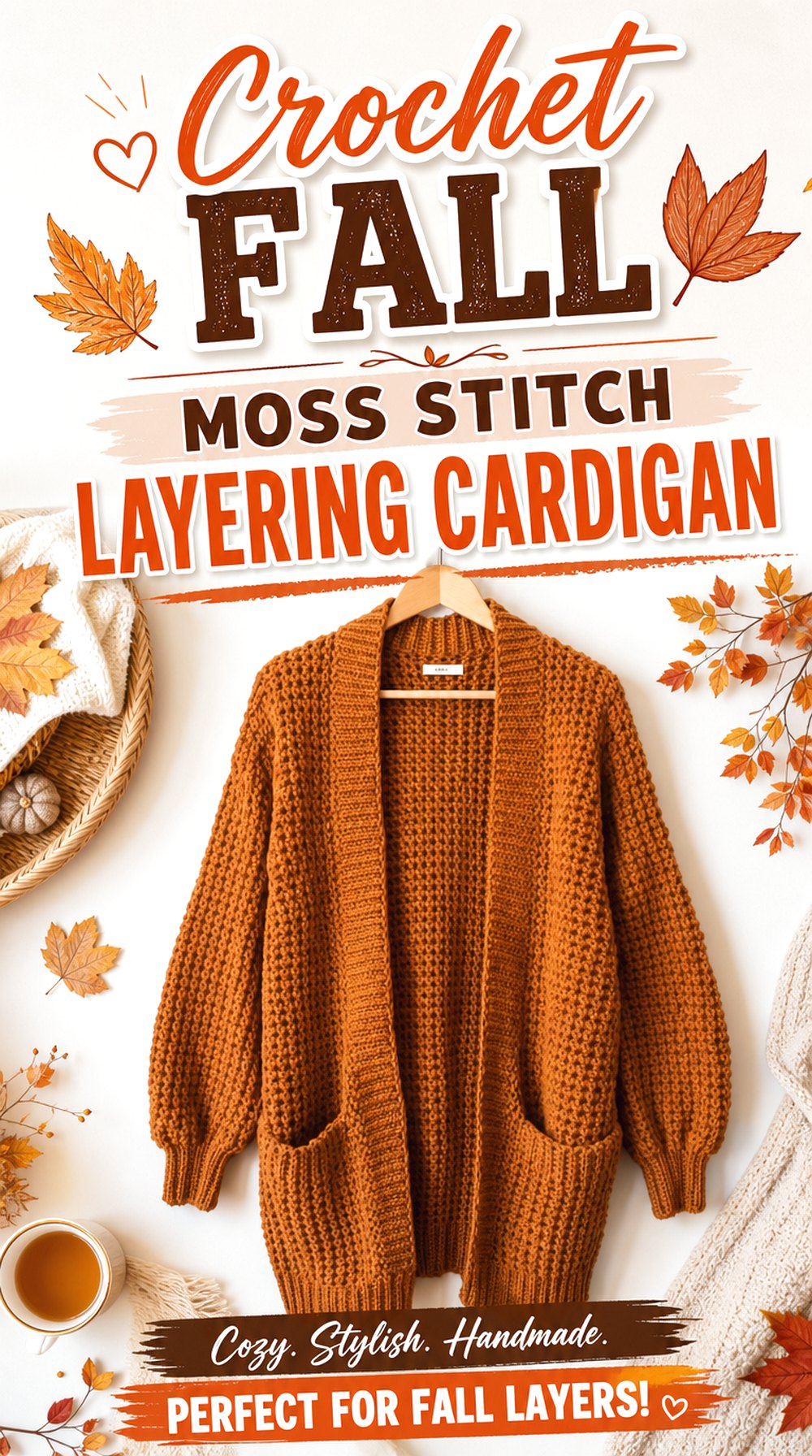
A relaxed fall-style cardigan gives this collection a clean starting point. The finished garment is presented as a warm layering piece with visible moss stitch texture and a simple wearable shape. It stands apart from the more structural button, kimono, and hexagon options because the focus is on an everyday open cardigan look rather than a special closure or dramatic construction shape.
This idea may suit readers who want a cardigan that works over basic outfits, but they should still check the creator’s sizing, sleeve details, and finished views before choosing supplies.
Check the Layering Shape
For a cardigan meant for layering, the front opening and body width matter as much as the stitch texture. Readers should look for how the garment sits over clothing and whether the front hangs straight or pulls inward. A moss stitch fabric can look tidy, but the final comfort still depends on the creator’s size notes, intended ease, and the wearer’s preferred fit.
Review the Size Notes
Before treating this as a wardrobe cardigan, readers should review the full size information from the source. Garment tutorials vary in how they explain measurements, adjustment points, and fit expectations. It is better to compare the listed size details with a cardigan that already fits well than to rely only on the finished look in one sample.
Look at the Sleeve Finish
Sleeves can change the whole feel of a moss stitch cardigan. A relaxed body with tight sleeves, wide sleeves, or tapered cuffs will wear differently. Readers should pay attention to the sleeve opening, wrist finish, and how the sleeve joins the body. Those details are especially important if the cardigan is intended to be worn over long-sleeve tops.
Crochet Scrap Color Moss Stitch Cardigan
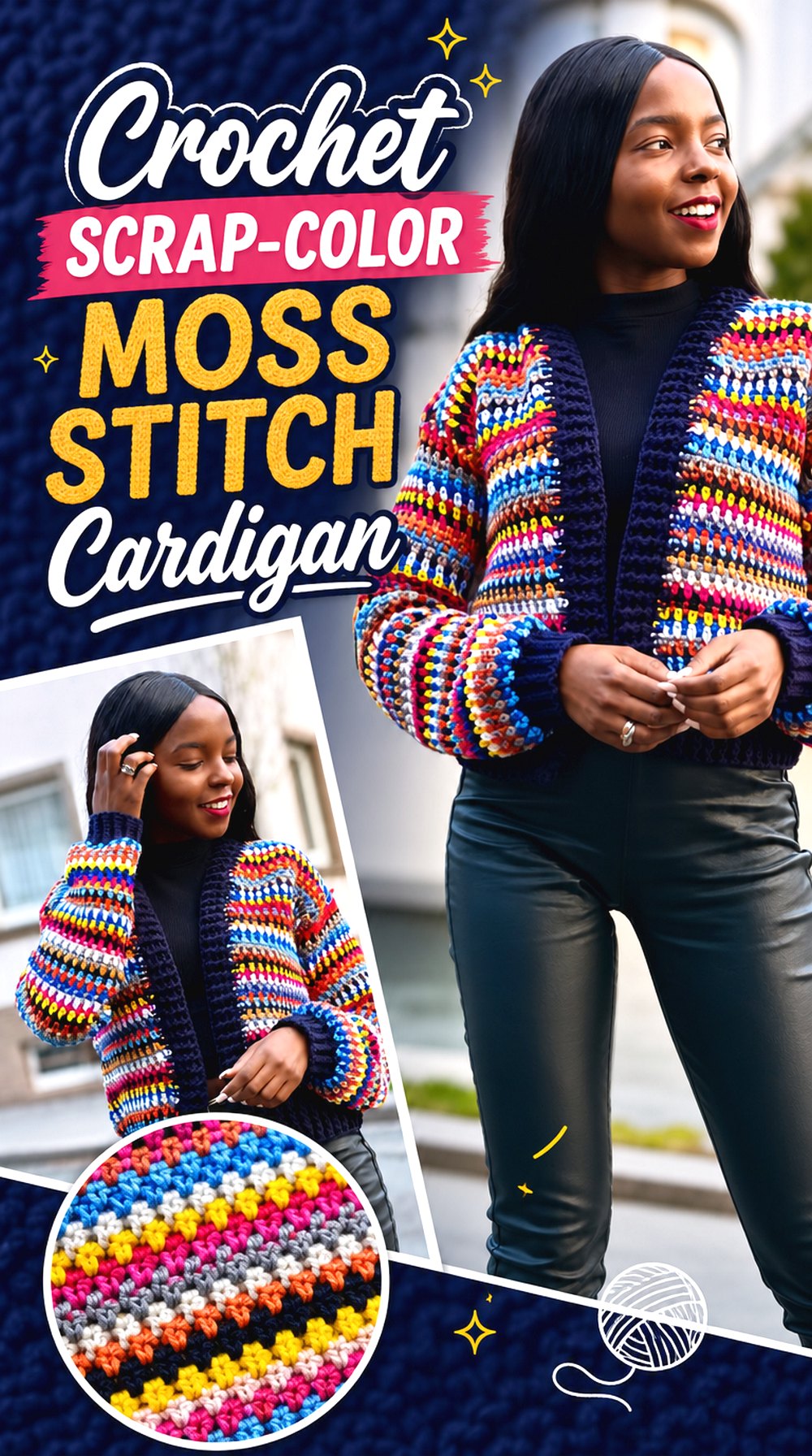
The scrap-color cardigan brings a more playful direction to moss stitch. Instead of relying on one steady shade, this project uses a multicolor effect, making the surface texture and color placement part of the finished design. It differs from the fall layering cardigan because the color changes become a main feature, not just a background choice.
This option may appeal to readers who want to use leftover yarn thoughtfully, though they should confirm the creator’s material guidance before mixing fibers, yarn weights, or textures in one wearable piece.
Plan the Color Changes
Color changes can make a moss stitch cardigan feel lively, but they also affect the finished balance of the garment. Readers may want to decide whether they prefer random shifts, repeated stripes, or softer transitions. The key is to keep the overall cardigan shape readable so the color work supports the garment rather than distracting from the front, sleeves, and hem.
Confirm Mixed Yarn Details
Scrap yarn projects need more checking than single-yarn cardigans. Readers should confirm what the creator says about yarn type, yarn size, and any mixing guidance before using leftovers. Different yarns can behave differently in the same stitch pattern, so the finished drape, thickness, and measurements should not be assumed without checking the original source.
Keep the Shape Consistent
A cardigan made with many colors can still look polished when the body and sleeve proportions stay consistent. Readers should compare the left and right sides as they work and watch for places where color changes might make progress harder to read. Keeping a simple progress note can help prevent one section from drifting away from the intended shape.
Original Tutorial and Creator Credit
Creator: AC Crochets
Crochet Linen Stitch Everyday Cardigan
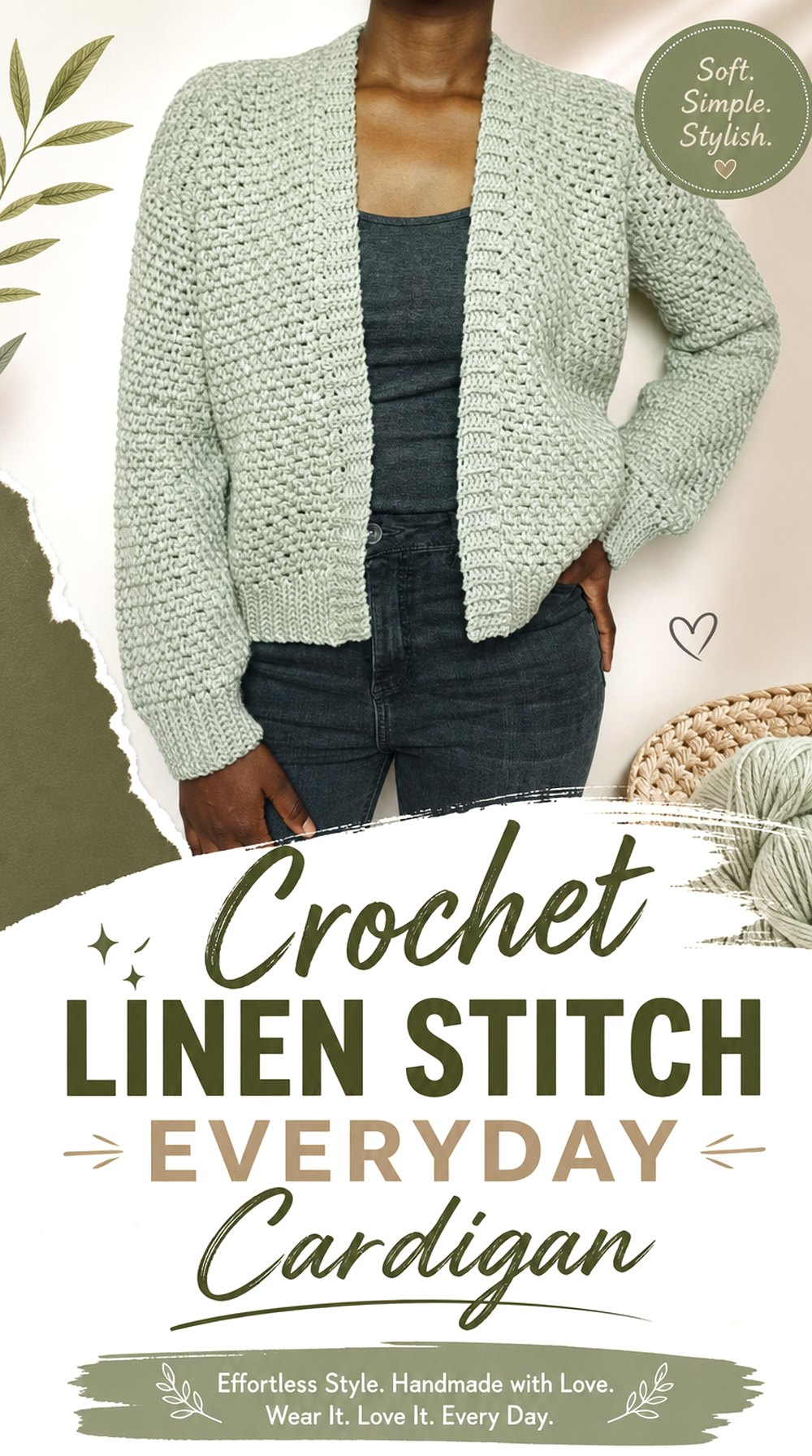
This linen stitch cardigan uses the stitch name often connected with moss stitch, giving readers another way to approach the same textured family. The finished idea is an open wearable cardigan with a clean surface, making it different from the multicolor scrap option and the button-front cardigan later in the list.
The appeal here is the steady, repeatable look of the fabric. Readers who prefer a less busy cardigan may want to compare this project’s front opening, sleeve finish, and body length before deciding whether it fits their everyday layering plans.
Notice the One-Row Rhythm
A linen or moss stitch cardigan often has a calm, repeated texture. That can make the fabric look even, but readers should still follow the creator’s exact counts and turning details instead of trying to rebuild the project from appearance alone. The finished stitch rhythm matters most when the cardigan needs matching fronts, clean edges, and sleeves that stay balanced.
Check the Front Opening
An open-front cardigan needs a neat edge because that edge stays visible while worn. Readers should check how the front opening is finished and whether the source gives clear views of both sides. A simple front can be useful for layering, but it is still worth confirming whether the cardigan is meant to hang loose or overlap slightly.
Compare the Fit From Each Angle
A cardigan can look different from the front, side, and back. Readers should use all available finished views to judge body length, shoulder position, and sleeve proportion. This is especially useful for an everyday cardigan, because the garment may be worn often and needs to suit the wearer’s usual clothes, not just look good in one pose.
Original Tutorial and Creator Credit
Creator: Brenda DIY
Crochet V Neck Button Moss Stitch Cardigan
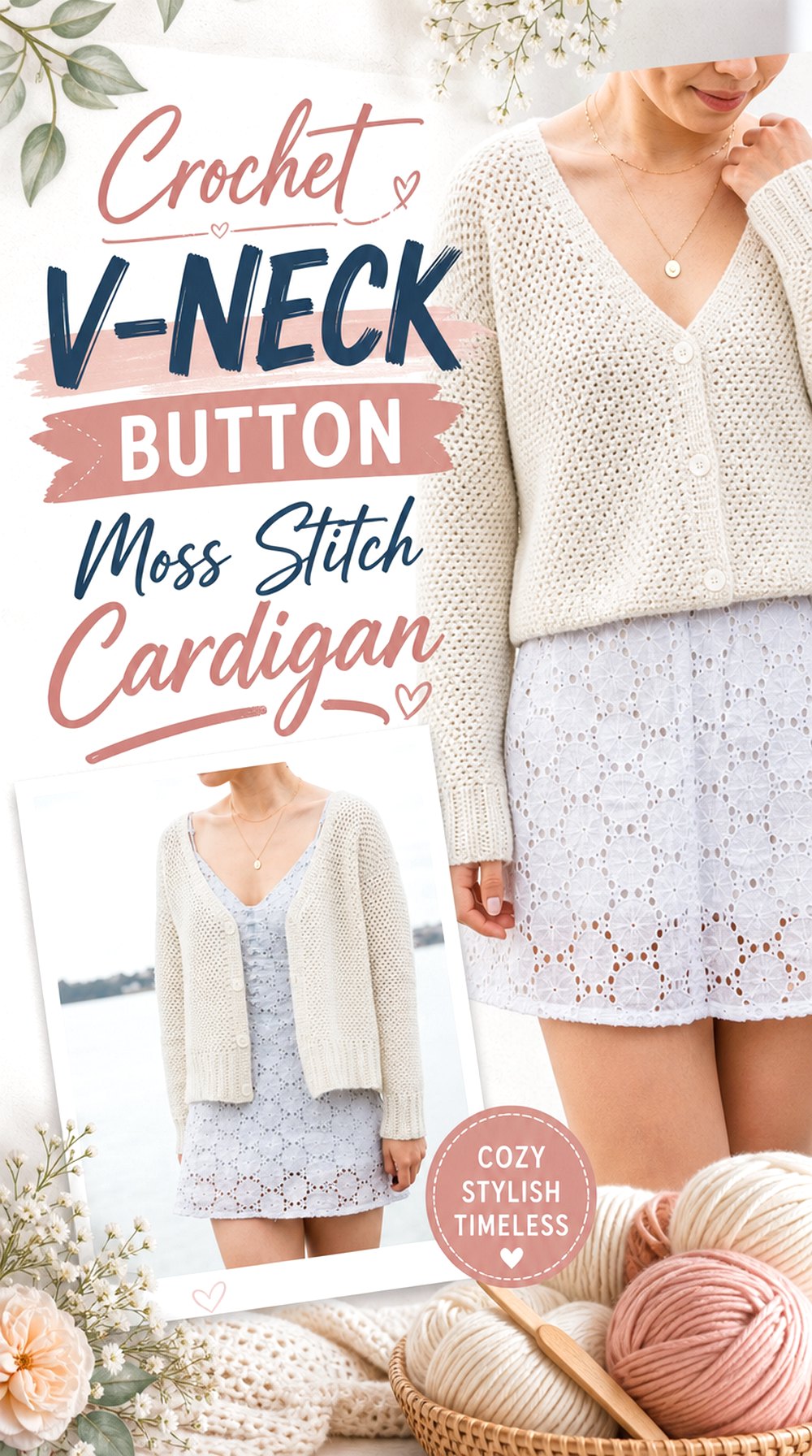
A V-neck button cardigan gives moss stitch a more defined front shape. The button closure makes it different from the open cardigans, while the neckline adds a clearer garment line for readers who want something that can look tidy over a simple top. This source also identifies linen stitch as another name connected with moss stitch, which helps explain why the project belongs in this collection.
This idea is worth considering when readers want a cardigan with a more finished front, but button spacing, garment length, and fit notes should be reviewed before starting.
Look at the Neckline Shape
The V-neck is the feature that gives this cardigan its sharper front line. Readers should look at how deep the neckline appears and how it frames the upper body when closed or partly open. A V-neck can layer neatly over fitted tops, but the final effect depends on the creator’s shaping, size information, and button placement.
Confirm How the Front Closes
Buttons change how a moss stitch cardigan functions. Instead of hanging fully open, the garment can be secured through the front, which affects fit and movement. Readers should confirm how many buttons are used, where the closure sits, and whether the source explains any related spacing. Those details should come from the original guide, not from guesswork.
Plan Button Placement
Button placement is a finishing detail that deserves attention. Readers should check the creator’s instructions for the intended layout and make sure the front edges line up before attaching anything. A small mismatch can be more visible on a cardigan than on a decorative item, especially when the moss stitch fabric creates a clear grid-like texture.
Original Tutorial and Creator Credit
Creator: For The Frills
Crochet Rectangle Kimono Moss Stitch Cardigan
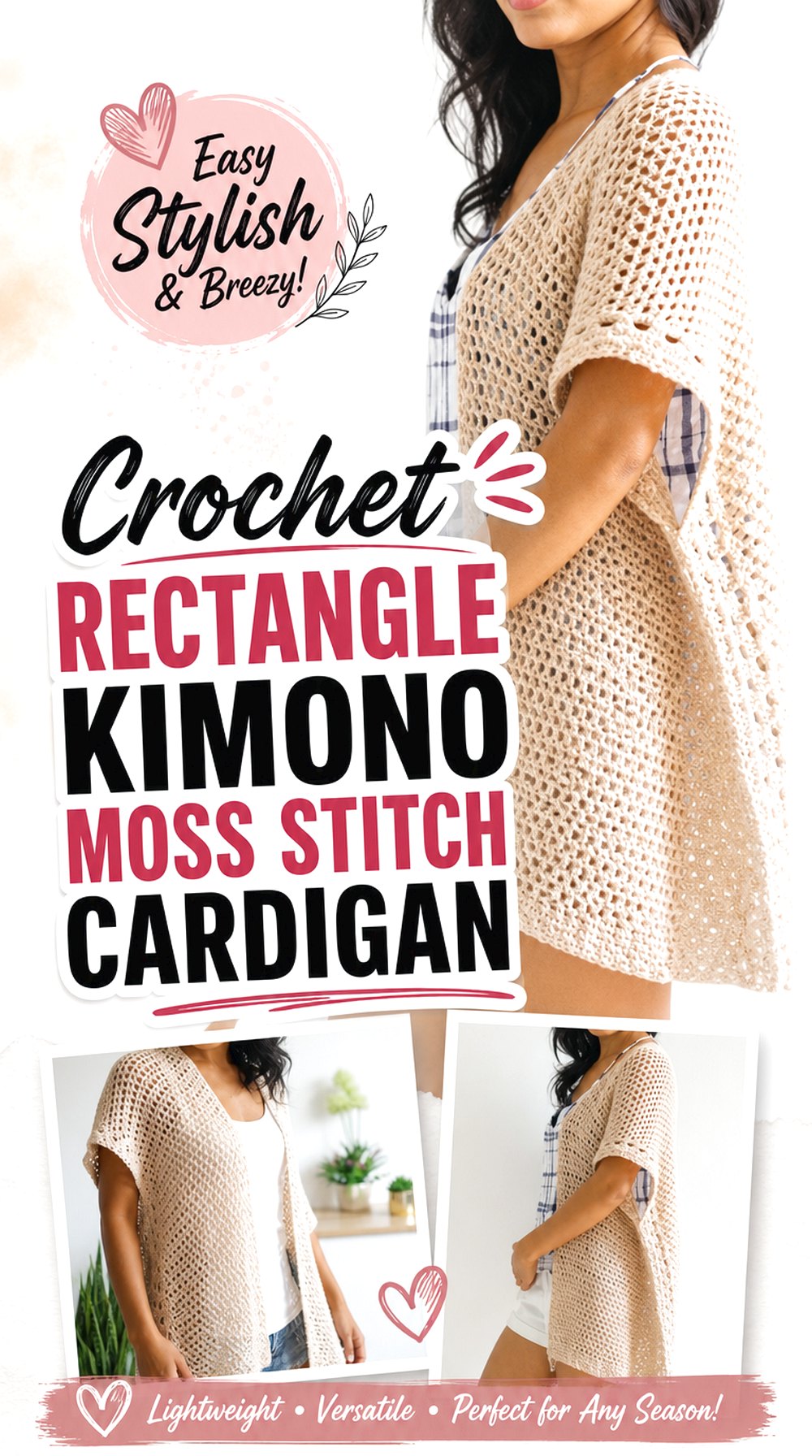
The rectangle kimono cardigan has a very different mood from the fitted button-front option. Its shape is based around simple broad panels, giving the finished garment a loose, draped look. The related source describes this project as a kimono cardigan made with linen or moss stitch and points readers to a video tutorial for the construction.
This idea may suit readers who prefer open coverage without a tight body shape. It is especially useful to compare length, sleeve opening, and how the rectangles join before choosing it.
Think About Open Coverage
A kimono-style cardigan usually gives coverage through width and drape rather than a shaped closure. Readers should consider whether they want a garment that stays open, layers over sleeveless tops, or creates a relaxed outer layer. The open shape can be useful, but it should be compared with the wearer’s preferred shoulder fit and desired body length.
Check the Rectangle Measurements
Rectangle-based cardigans depend heavily on panel size. A small change in width or length can affect sleeve opening, body coverage, and overall drape. Readers should confirm the creator’s measurement information and compare it with their own fit preference before starting. This is not a place to guess from the finished photo alone.
Watch the Joining Section Closely
The joining stage matters because rectangle placement creates the cardigan shape. Readers should slow down anywhere the panels are aligned, folded, or connected. The goal is not to memorize the construction from a summary, but to follow the original source carefully so the arm openings, front edges, and lower hem land where intended.
Original Tutorial and Creator Credit
Creator: jennyandteddy
Crochet Moss Stitch Hexagon Sleeve Cardigan
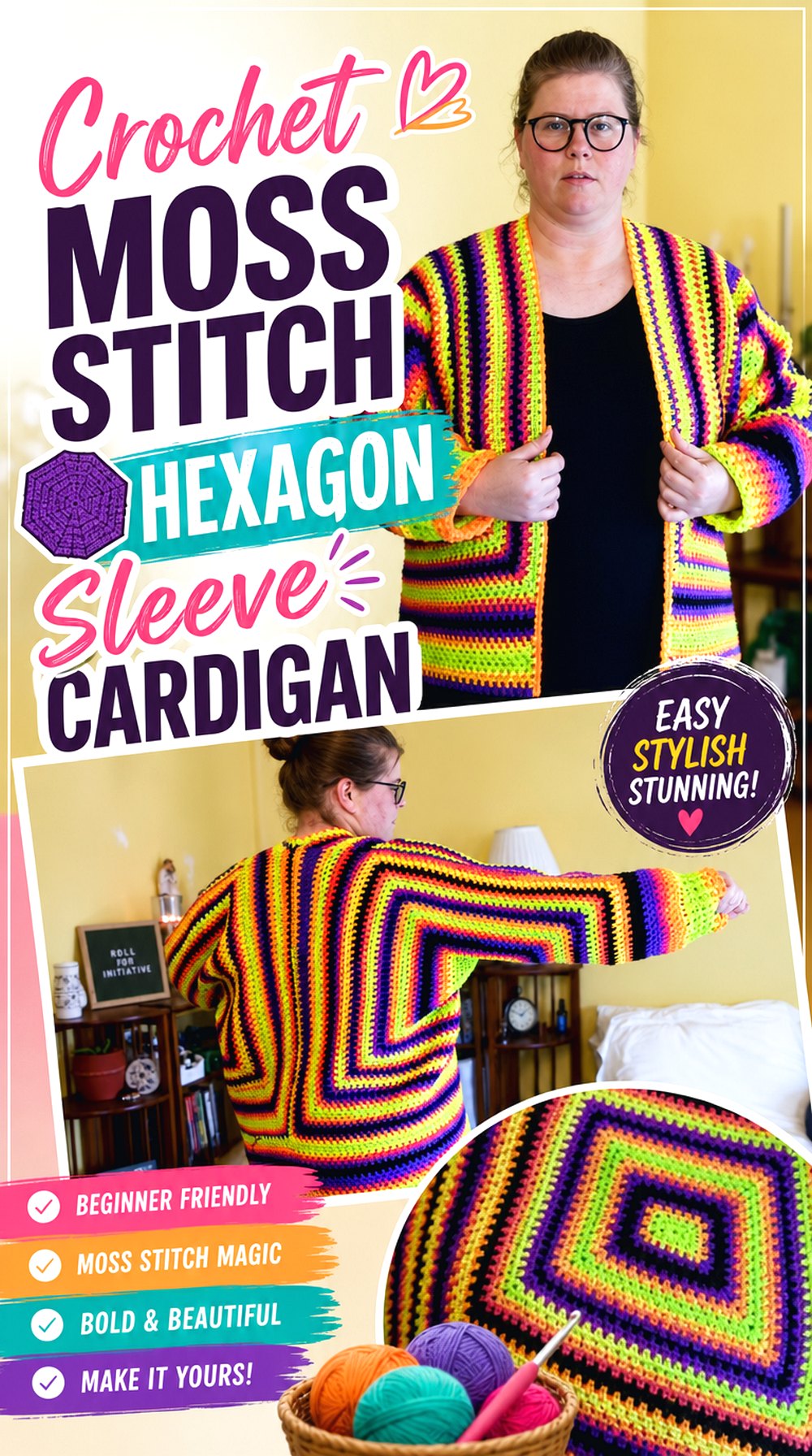
A moss stitch hexagon cardigan gives the list a construction-focused option. Instead of a classic flat body shape, the cardigan grows from a hexagon-style form that creates body and sleeve structure in a distinctive way. This makes it clearly different from the rectangle kimono cardigan, even though both can result in relaxed layering garments.
Readers drawn to unusual construction may enjoy comparing the shape as it develops, but they should rely on the original tutorial for exact counts, turning points, joining, and finishing.
Consider the Hexagon Shape
The hexagon structure is the main decision point for this cardigan. It can create a relaxed garment shape, but it also requires readers to understand how the growing piece becomes both body and sleeve. Before choosing this project, it helps to look at the finished cardigan carefully and decide whether that draped shape suits the intended fit.
Confirm Sleeve and Body Balance
Hexagon cardigans can change noticeably depending on how the body and sleeves are balanced. Readers should check whether the source shows the garment laid flat and worn, because both views can reveal different details. Sleeve width, body depth, and front opening should all be considered before committing to the project as an everyday cardigan.
Compare the Shape as You Work
With a hexagon cardigan, progress checks are especially useful. Readers should compare the developing shape with the creator’s major visual checkpoints rather than waiting until the end. If the piece starts to look uneven or the sleeve area seems unclear, pausing and replaying the relevant section is safer than continuing and hoping the finish will correct itself.
Original Tutorial and Creator Credit
Creator: Stitches and Scribbles
Crochet US Terms Moss Stitch Hexagon Cardigan
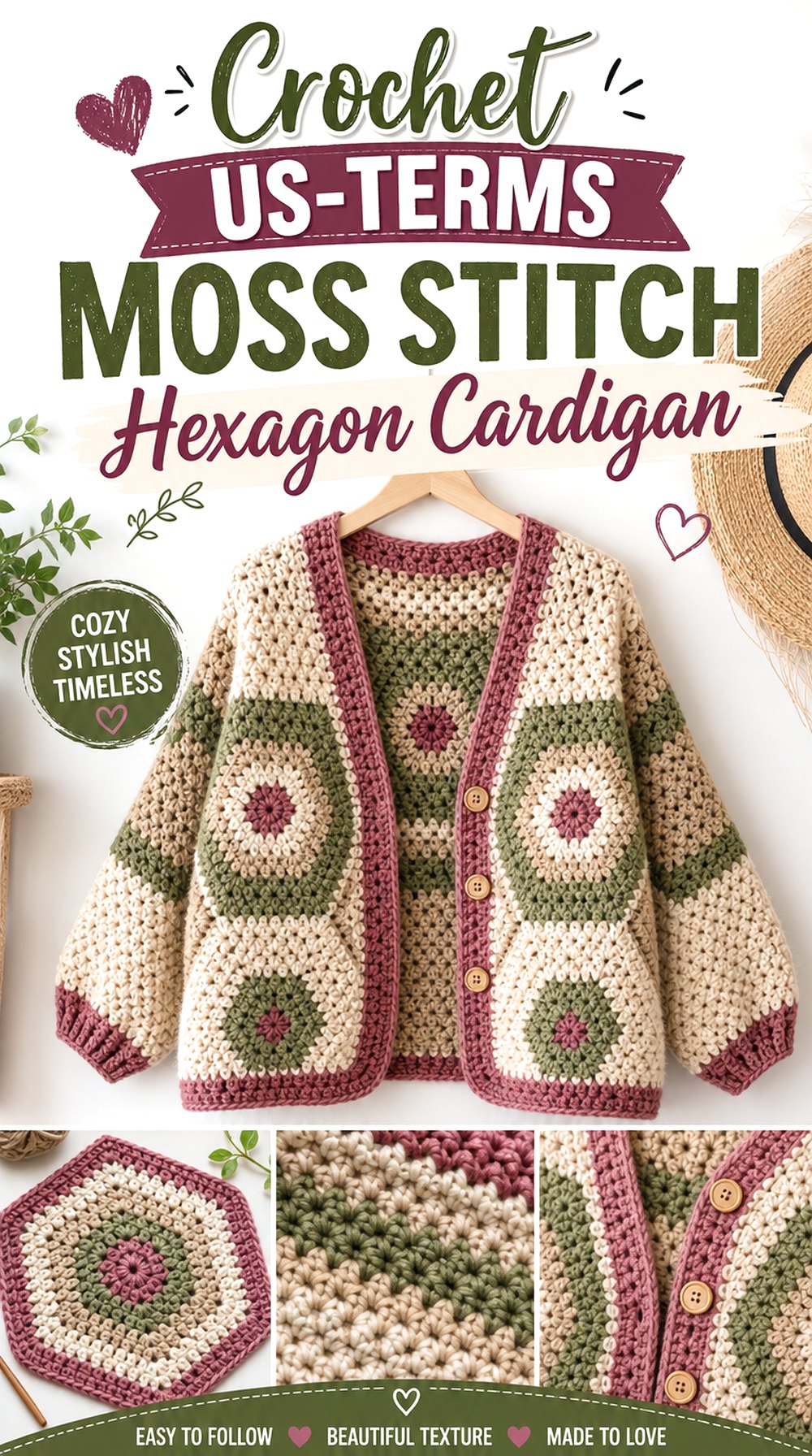
This hexagon cardigan is useful for readers who specifically want a US-terms English tutorial. It still belongs to the moss stitch cardigan family, but the language format makes it different from the other hexagon options. For crocheters who switch between tutorial sources, terminology can affect how confidently they follow a wearable project.
The finished idea is another relaxed hexagon cardigan, so readers should compare it with the previous option by fit, sleeve shape, body length, and how clearly the finished garment is shown.
Check the Terminology First
US and UK crochet terms can use the same words for different stitches, so terminology matters before starting any cardigan tutorial. Readers who prefer US terms may find this source easier to follow, but they should still confirm the creator’s wording at the beginning. This avoids mixing instructions from different systems while working on a garment that needs balanced sides.
Think About Armhole Fit
Hexagon cardigan armholes can feel different from standard set-in or straight sleeve shapes. Readers should look at how the sleeve area sits in the finished garment and whether the arm opening appears relaxed or closer fitting. Since comfort depends on body measurements and preferred layering, the source’s size and adjustment notes are important to review.
Review the Finished View
A finished view helps readers judge whether this hexagon style matches the cardigan they imagine. The front opening, lower edge, sleeve width, and shoulder area should all be checked before supplies are chosen. If only some angles are shown clearly, readers may need to rely more heavily on the creator’s notes and demonstration for fit expectations.
Original Tutorial and Creator Credit
Creator: Nai Nai Makes
Crochet Granite Stitch Pocket Cardigan
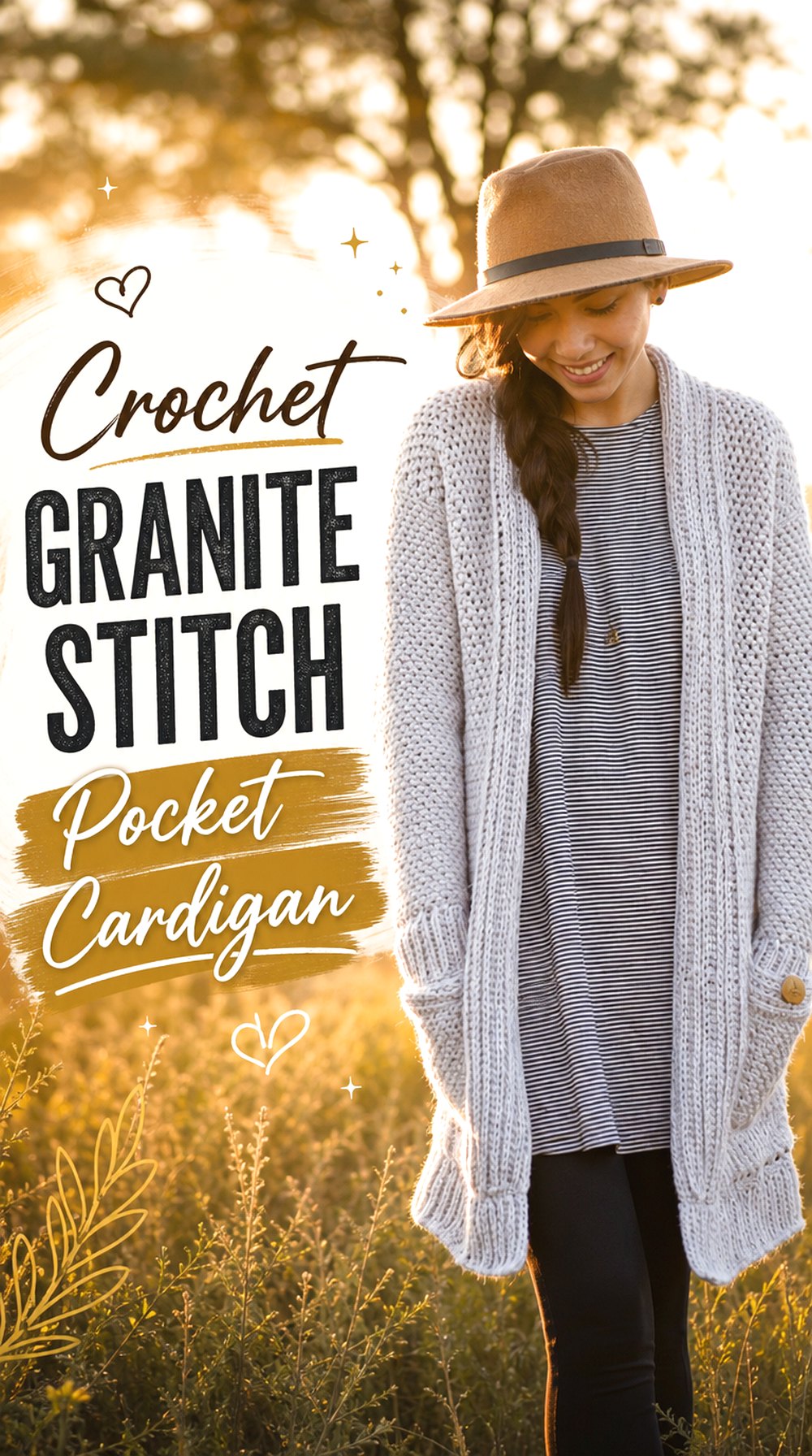
The granite stitch pocket cardigan adds a longer, more practical layer to the mix. Granite stitch is commonly grouped with the moss and linen stitch family, and this project stands out because the finished garment includes long sleeves and pockets. That gives it a different purpose from the lighter open kimono or cropped button-front cardigan.
Readers may want this option when pocket placement and longer coverage matter, but they should confirm the creator’s garment measurements, pocket details, and finishing information before making it for regular wear.
Consider Pocket Placement
Pockets can make a cardigan more useful, but their placement affects both appearance and function. Readers should look at where the pockets sit on the finished garment and whether they align evenly with the body. Since pocket size and attachment affect the final look, those details should be followed from the original source rather than guessed from the project name.
Confirm Garment Length
A longer cardigan changes how the garment layers over clothing. Readers should confirm the finished length and compare it with their height, preferred coverage, and usual outfits. A long moss or granite stitch cardigan may feel more like an outer layer, while a shorter one may work better indoors. The source’s measurements are the safest guide.
Prepare for the Finishing Stage
Pockets, sleeves, and edges can make the finishing stage more important than it first appears. Readers should check all finishing details before beginning, especially if they prefer to understand the full project flow. Keeping track of pocket placement, front edge finish, and sleeve completion helps the cardigan look intentional instead of simply assembled at the end.
Original Tutorial and Creator Credit
Creator: AllAboutAmi
Crochet Baby Moss Stitch Cardigan
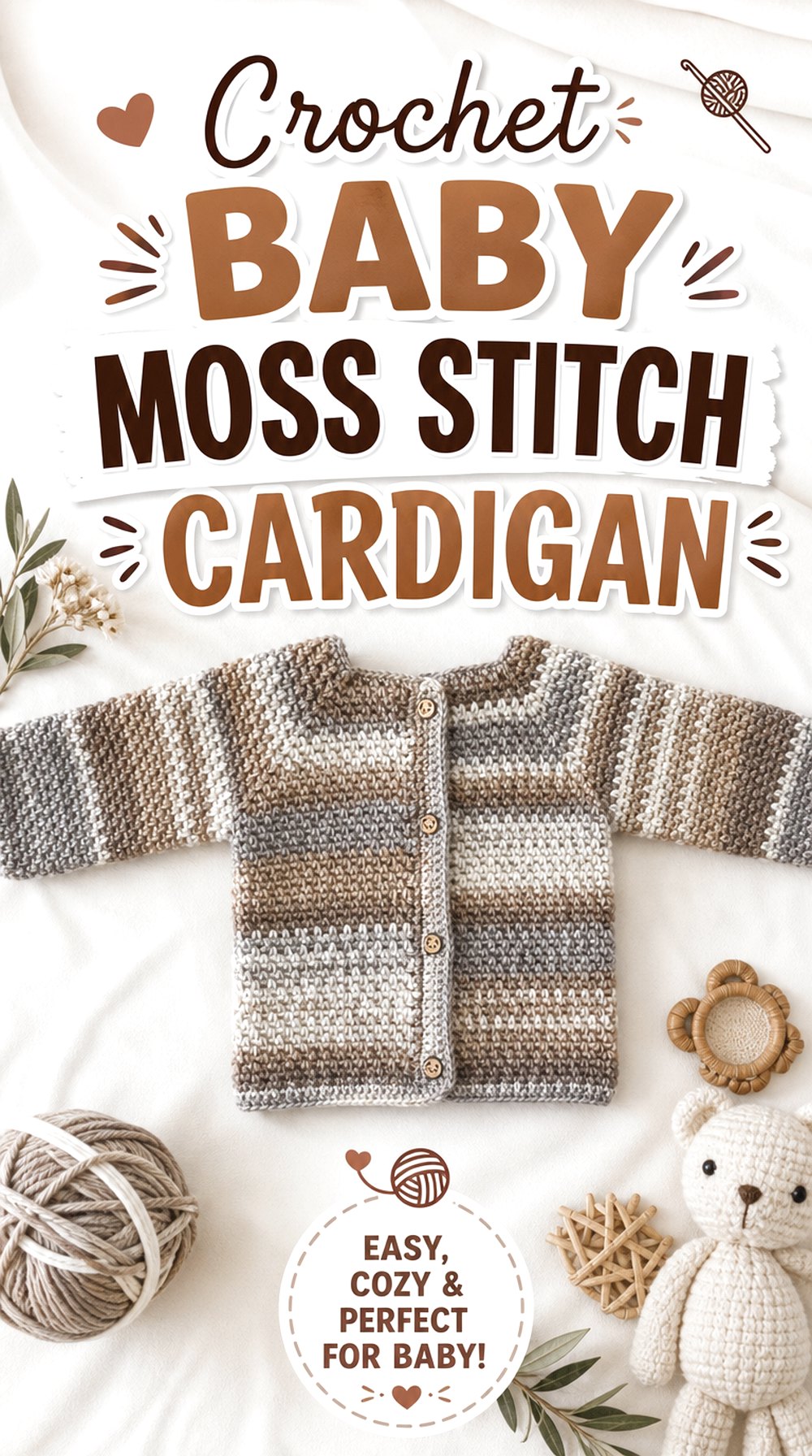
A baby moss stitch cardigan brings the scale down and changes the planning questions. Instead of thinking mainly about adult layering, readers need to focus on size clarity, small garment proportions, and safe finishing decisions. This makes it very different from the longer pocket cardigan and the oversized hexagon shapes.
The finished item is meant as a small cardigan project, but readers should avoid assuming age suitability, care, or comfort details unless the creator states them clearly. Baby garments need extra attention to measurements, closures, and any small attached components.
Check the Intended Size
Baby cardigan sizing should never be guessed from the finished look alone. Readers should check the creator’s stated size information and compare it with the intended recipient’s measurements or current clothing. Babies grow quickly, and tutorials may use age labels differently, so finished measurements are more useful than a general size description.
Review Small-Garment Details
Small cardigans can make details more noticeable. Edges, sleeves, neckline shape, and front closure all sit close together, so readers should review the full source before beginning. It is also useful to check whether the creator gives clear views of the front and back, because small proportions can be harder to judge from one angle.
Avoid Unsafe Assumptions
A baby cardigan should not be treated as child-safe simply because it is small or handmade. Readers should confirm any closure, embellishment, or care information from the source and use their own safety judgment. If the creator does not state safety or care details, the article should not invent them. Practical caution matters more than decorative appeal.
Original Tutorial and Creator Credit
Creator: Sirin’s Crochet
Crochet Two Color Moss Stitch Hexagon Cardigan
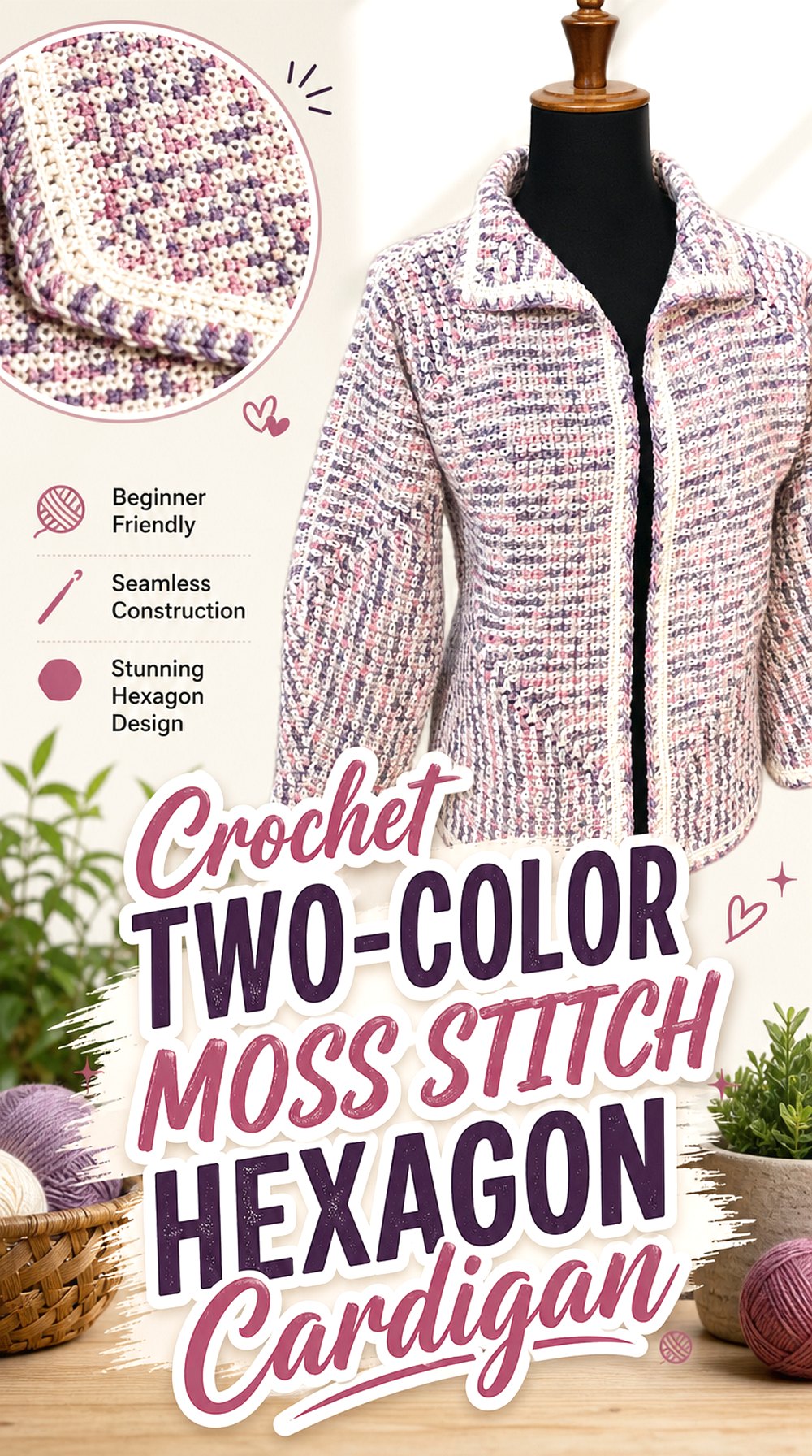
The two-color hexagon cardigan closes the list with another moss stitch variation, but the color blocking and collar-related details make it distinct from the other hexagon examples. The source describes a moss stitch hexagon cardigan with color changes, collar width and length discussion, and sleeve shaping details, giving readers several finishing points to review.
Because this source is labeled as a part in a larger guide, readers should confirm any continuation links or related sections from the creator before using it as their only cardigan reference.
Plan the Two-Color Look
A two-color cardigan needs planning before the first visible contrast appears. Readers should decide whether they want bold separation, soft contrast, or a more subtle shift between shades. The finished hexagon shape already has movement, so the color placement should support the garment’s lines rather than making the front, sleeves, or collar feel visually uneven.
Check the Series Flow
Since the source is presented as part of a tutorial sequence, readers should check the creator’s channel, description, or related links for the full project flow. A wearable cardigan needs all major sections to be covered clearly, including shaping, joining, collar decisions, sleeves, and finishing. This check helps prevent stopping with an unfinished reference.
Watch the Collar and Sleeve Changes
Collar width, cardigan length, and sleeve shaping can strongly affect how a hexagon cardigan wears. Readers should slow down when those changes appear and compare the garment’s shape with the creator’s finished result. These details are not just decorative; they influence the neckline, arm fit, and how balanced the finished cardigan looks from the front.
Conclusion
These crochet moss stitch cardigan ideas show how much variety can come from one textured stitch family. Choose the fall layering cardigan or linen stitch cardigan for a simpler everyday look, the button-front version for a more defined closure, the kimono for open drape, or one of the hexagon cardigans for a relaxed construction style. The pocket cardigan adds longer coverage, while the baby cardigan shifts attention to small sizing and safe finishing checks. Use the original tutorials for exact construction details before starting.
FAQs
Is moss stitch the same as linen stitch or granite stitch?
Moss stitch, linen stitch, and granite stitch are often used for closely related crochet textures, but naming can vary by creator and region. Readers should follow the terminology used in the selected tutorial rather than mixing instructions from different sources. This is especially important for cardigans, where counts and shaping need to stay consistent.
How do I choose the right crochet moss stitch cardigan idea?
Start with the finished shape. Open cardigans are useful for loose layering, button-front cardigans give more closure, rectangle kimonos create drape, and hexagon cardigans offer a relaxed construction style. After choosing the shape, check size notes, sleeve views, garment length, and whether the creator shows the cardigan from more than one angle.
What should I check before changing yarn for a moss stitch cardigan?
Check the creator’s material list, gauge information, and size notes before changing yarn. A different yarn can affect drape, thickness, and finished measurements. For wearable crochet, a yarn change should be treated carefully because the cardigan still needs to fit the body, hang correctly, and match the intended sleeve and body proportions.
Are moss stitch cardigans good for beginners?
Some moss stitch cardigan tutorials may be presented as beginner-friendly, but not every cardigan shape is equally simple. A flat open cardigan may feel more direct than a shaped button front, pocket cardigan, or hexagon construction. Readers should review the full guide first and decide whether the sizing, joining, and finishing steps feel manageable.
Can I sell a cardigan made from a YouTube tutorial?
Do not assume selling is allowed just because a tutorial is public. Readers should check the creator’s written terms, video description, website notes, or pattern license before selling finished cardigans. It is also wise to follow any local labeling, safety, and business requirements that apply to handmade garments.