A crochet sheer poncho can range from a loose beach cover-up with large mesh openings to a much more intricate lace layer that works over a dress or fitted tank. The construction matters just as much as the stitch pattern: some designs grow from the neckline, some begin as rectangles, others form pointed shapes in the round, and a few blur the line between a poncho and a loose summer top.

These 14 ideas focus on those real differences. You can compare openwork density, neckline shape, fringe, motifs, seams, asymmetric hems, and arm coverage instead of choosing by color alone. The accompanying tutorials also use different approaches, so check the creator’s sizing, yarn, gauge, and exact construction before adapting any design.
Quick List
- Crochet Top-Down Mesh Fringe Poncho
- Crochet Beach Cover-Up Poncho
- Crochet Delicate Lace No-Seam Poncho
- Crochet Floral Openwork Summer Poncho
- Crochet Side-Seamed Openwork Poncho
- Crochet Lace Capelet Poncho with Flower Accent
- Crochet Drunken-Granny Poncho Top
- Crochet V-Stitch Summer Poncho Top
- Crochet In-the-Round Summer Poncho
- Crochet Two-Corner Virus Lace Poncho
- Crochet Asymmetrical Rectangle Poncho with Lace Hem
- Crochet One-Rectangle Lacy Summer Poncho
- Crochet Medium-Yarn Openwork Poncho
- Crochet Openwork Poncho with Sleeved Edges
What Makes a Crochet Poncho Look Sheer Instead of Heavy?
“Stitch size” alone does not determine how sheer a poncho appears. The important relationship is between yarn thickness, hook size, stitch spacing, and the amount of solid fabric between openings. A fine yarn worked into tall, widely spaced stitches can create a noticeably transparent layer, while the same general stitch idea in thicker yarn may read as textured rather than sheer.
Decide how much of the layer underneath you actually want visible. Large uniform mesh works well when transparency is intentional, while floral lace, shells, or granny-style groups provide alternating covered and open areas. Before committing to a full garment, make a swatch and view it against the color you expect to wear underneath. Stretch it gently, too: an open fabric can look considerably more transparent once its own weight pulls it downward.
Plan the Neckline, Drop, and Arm Movement Together
Ponchos do not need conventional sleeve shaping, but that does not make fit irrelevant. A wide neckline can slide toward one shoulder, a very deep side drop can limit arm movement, and a long pointed hem may behave differently when sitting than a cropped poncho top.
Pay attention to how the chosen tutorial creates the head opening and where the fabric falls relative to the elbows. For rectangle constructions, changing the rectangle dimensions can alter several parts of the silhouette at once. For top-down designs, extra rounds may increase both length and sweep. If the tutorial provides several sizes or lets you try the garment on during construction, use that information rather than assuming “one size” will create the same drape on every body.
Choose Yarn for Drape as Well as Openness
A sheer poncho usually looks more intentional when the fabric hangs rather than standing away from the body. Fine yarns can emphasize detailed lace; lightweight cottons can give warm-weather openwork clear stitch definition; and even a somewhat thicker yarn can produce mesh when paired with sufficiently open construction. Several tutorials below deliberately use lightweight yarn or open stitch patterns for this reason.
When substituting, compare more than the weight number on the label. A springy fiber, a fluid plant fiber, and a fuzzy yarn can all behave differently in the same open pattern. Swatch first, let the sample relax, and check whether you still like the size of the openings, the edge stability, and the way the fabric hangs.
Crochet Top Down Mesh Fringe Poncho
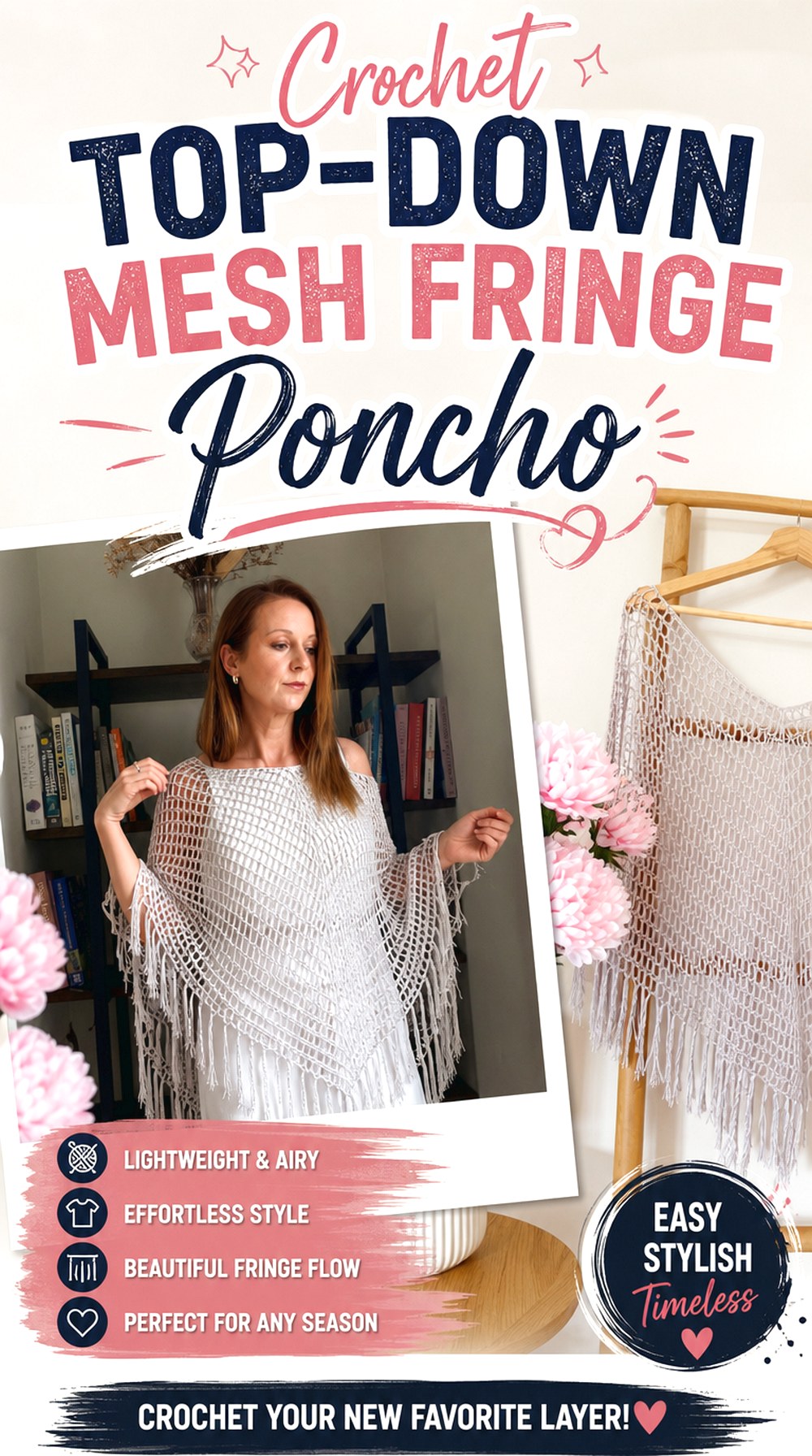
This is one of the clearest choices if “sheer” means an intentionally open grid rather than occasional lace panels. Crochet with Carrie’s design is worked from the top down in the round and uses a lightweight mesh fabric finished with fringe. Because the construction grows outward from the neckline, the finished piece has the classic all-around poncho sweep without relying on two large sewn panels. The source also presents length as adjustable, making this useful for comparing a cropped cover-up with a longer boho layer.
The Neck Opening Is the First Fit Check
A top-down poncho puts a lot of importance on the starting neckline. If that opening feels wrong, adding more length will not solve the problem later. Check the neck before the body becomes large and heavy, and compare it with the creator’s intended fit. If you substitute yarn, remember that a different fiber or tension can change how much that opening relaxes after wear.
Fringe Adds More Visual Length Than Crochet Alone
Fringe creates movement and extends the apparent hem without adding another solid band of fabric. That suits an airy design, but it can also make an already long poncho feel more dramatic. Decide on the body length before adding fringe rather than treating fringe as an afterthought. If you want a cleaner beach-cover-up silhouette, the open mesh itself is strong enough to stand without extra decoration.
Fine Mesh Makes Yarn Behavior Easy to See
In a sparse fabric, irregular tension and yarn texture remain visible because there is little dense stitching to disguise them. A smooth yarn can emphasize the geometric grid, while a fuzzy substitute may soften those spaces. Swatch the actual yarn you intend to use and hang the swatch briefly before judging the final openness.
Original Tutorial and Creator Credit
Creator: Crochet with Carrie
Crochet Beach Cover Up Poncho
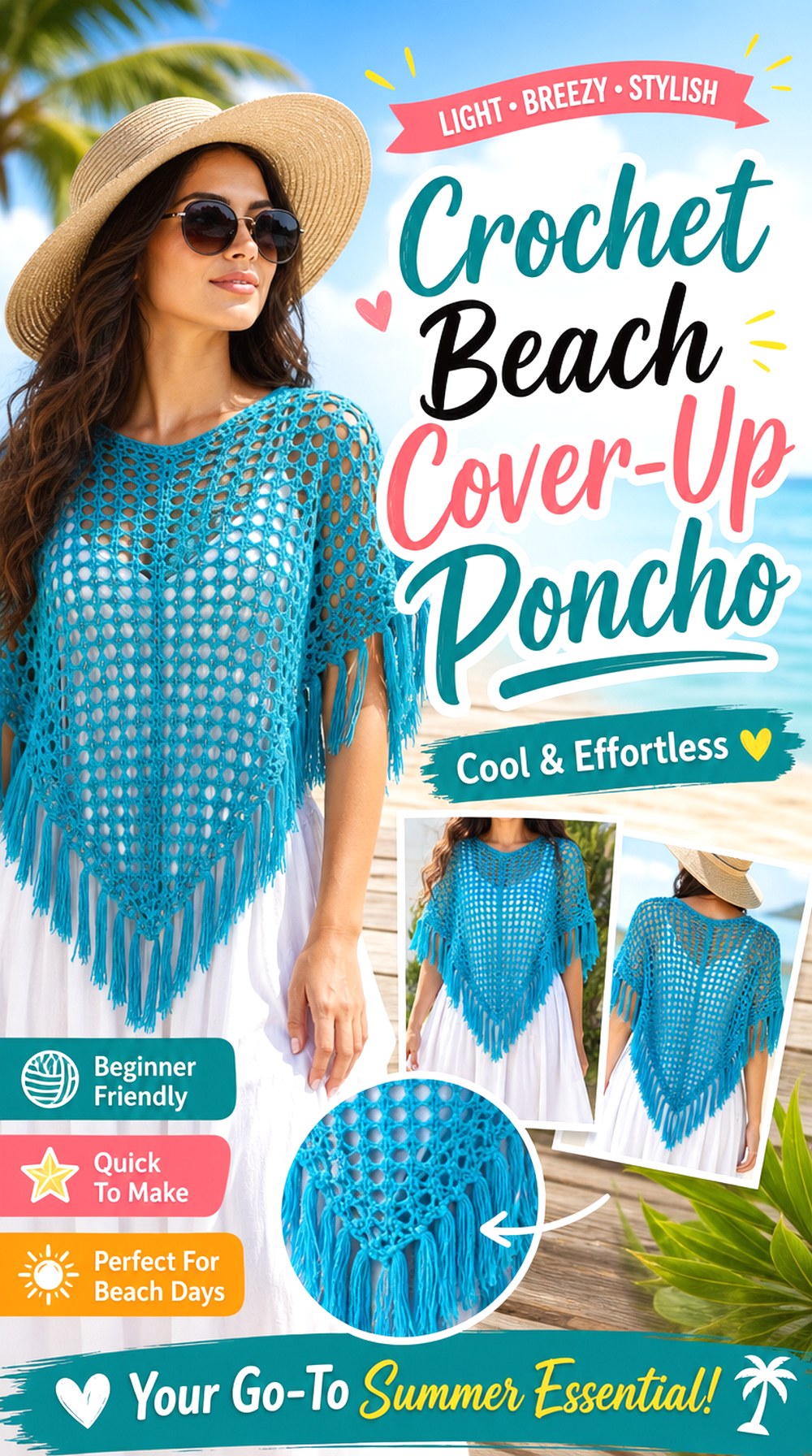
Krystal Everdeen’s project takes the sheer-poncho idea directly toward beachwear. The finished item is presented as both a crochet poncho and beach cover-up, making it a better reference when the goal is visible layering over swimwear rather than a conventional cool-weather poncho. The loose form and open appearance keep the garment decorative instead of coat-like, and the tutorial is specifically framed around a simple poncho construction.
Decide How Much Swimwear Coverage You Actually Want
A beach layer can be very open and still do its job as styling, but “cover-up” does not automatically mean opaque. View the completed fabric against a contrasting background before deciding that its coverage suits your plans. If more coverage is important, a smaller mesh or an additional solid section may make more sense than simply making the garment longer.
Keep the Hem Practical Around Water
Long loose crochet can pick up sand, snag on furniture, or become heavier when wet. A beach poncho does not need to reach the same length as an evening layering piece. Check the worn length with your arms both raised and relaxed, and remember that some yarns stretch under their own weight after extended wear.
Crochet Delicate Lace No Seam Poncho
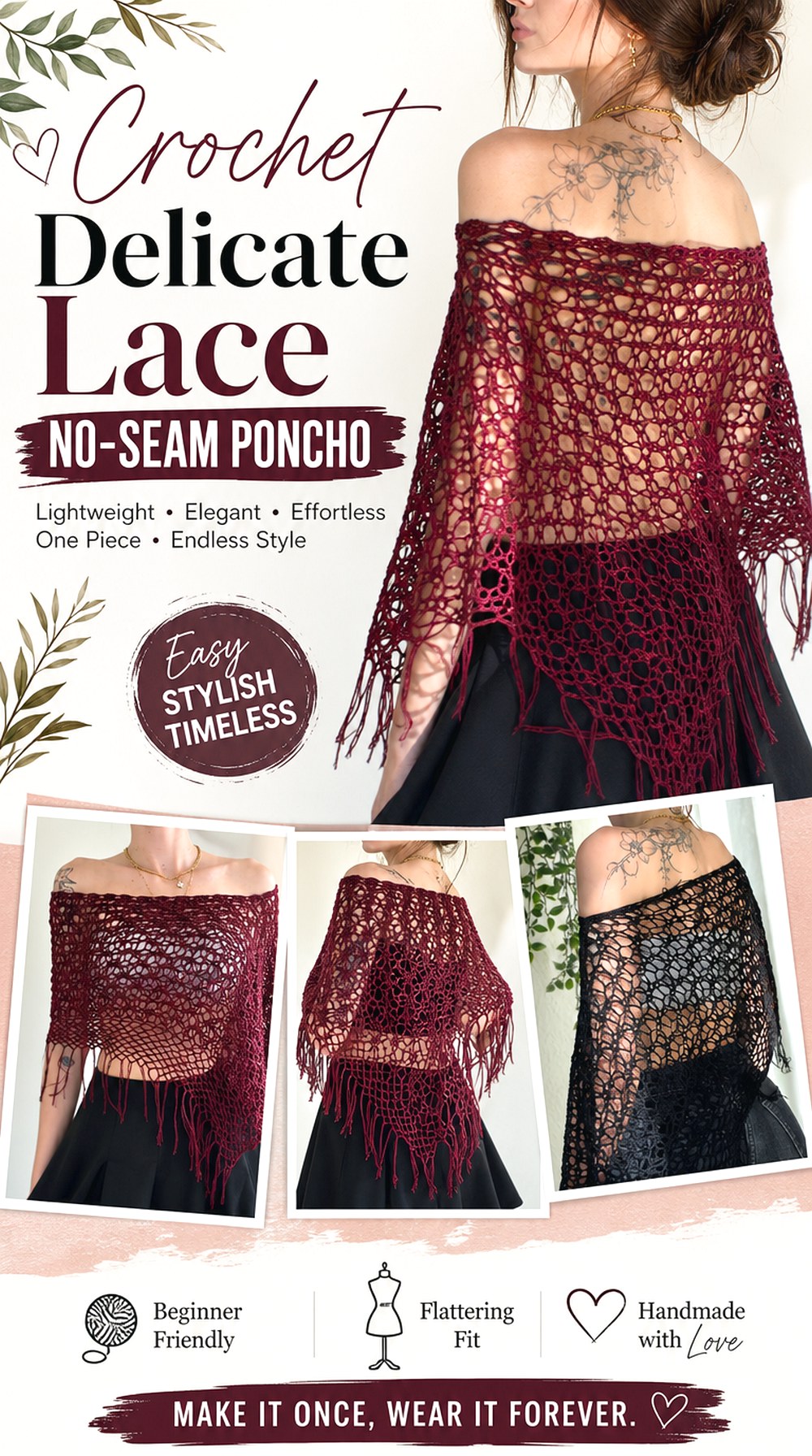
Sophie-Louise’s poncho moves away from obvious square mesh and toward fine, delicate lace. The tutorial uses lace-weight yarn and presents the garment as a no-sewing construction, so the visual interest comes from the open fabric itself rather than panel seams or heavy edging. This is a strong option for someone who wants transparency to look refined and continuous across the garment rather than sporty or beachy.
Lace Weight Makes Small Tension Changes Noticeable
Fine yarn gives intricate openwork room to show, but inconsistencies can also become easier to spot across a large garment. Check your sample after it has relaxed rather than deciding from the first few inches. If the lace contracts into a stiff surface, changing your hook or yarn choice may be more useful than forcing your hands to crochet much more loosely.
Seamless Construction Keeps the Pattern Flowing
With no prominent panel seam interrupting the body, the lace pattern can remain the dominant visual feature. That makes transition points and the neckline especially important. Use markers where the tutorial calls for them and periodically lay the fabric out so you can spot unwanted twisting or uneven expansion while correction is still manageable.
Blocking Deserves a Plan Before You Start
Open lace often changes visibly during finishing because the spaces can settle and the edges can relax. Before using heat or aggressive stretching, check the care instructions for your actual yarn. The goal is to help the fabric lie naturally, not to force it to match dimensions from a different fiber.
Original Tutorial and Creator Credit
Creator: Sophie-Louise
Crochet Floral Openwork Summer Poncho

This Crochet By Skye design uses a lacy floral motif effect rather than plain geometric mesh. The finished poncho also includes fringe, giving it a more decorative summer and festival direction than the simpler grid-style options. The tutorial specifically discusses floral stitch work, drape, and finishing, so it is a good match when the stitch pattern itself needs to be the focal point.
Floral Openwork Needs Enough Contrast to Stay Visible
A complex lace repeat can disappear visually if the yarn is too fuzzy or highly variegated. If the flowers are the reason you chose this project, compare a small sample from a normal viewing distance rather than only close up. A quieter yarn can make motif outlines clearer, while subtle tonal changes may work better than rapid color changes.
Fringe Competes With an Already Detailed Body
Both floral lace and fringe draw attention. That combination can create a strong bohemian finish, but it is worth deciding which feature should dominate. If your floral fabric is visually busy, shorter or more restrained fringe can keep the lower edge from becoming crowded. Conversely, longer fringe can deliberately push the project toward festival styling.
Check the Motif Repeat Before Altering Length
Decorative openwork often has a visual repeat that looks most balanced when completed rather than stopped arbitrarily. If you want a shorter poncho, identify where the tutorial’s motif sequence reaches a natural stopping point. That is safer visually than treating a floral lace fabric like plain mesh and ending wherever the tape measure happens to land.
Original Tutorial and Creator Credit
Creator: Crochet By Skye
Crochet Side Seamed Openwork Poncho
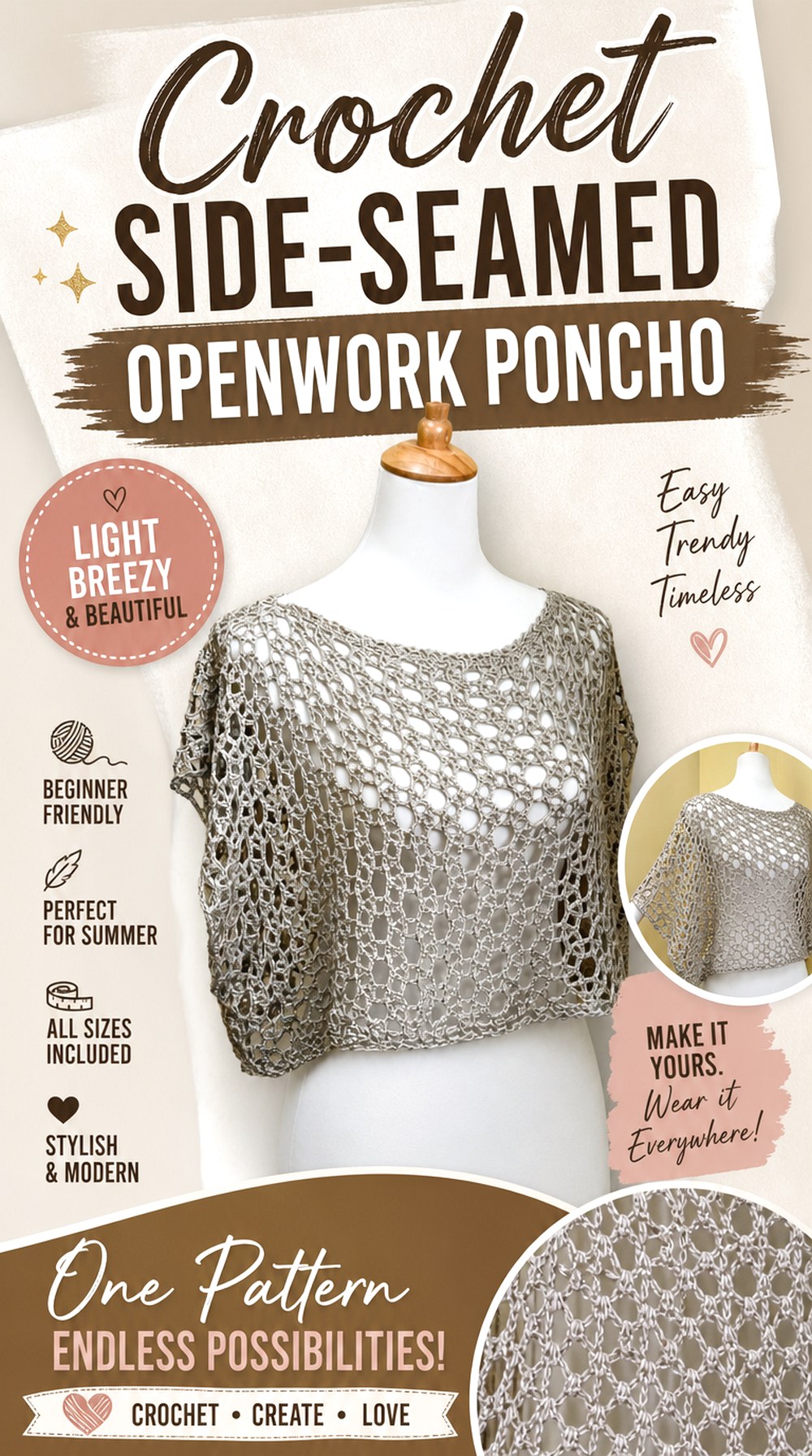
Handwork diy’s tutorial focuses explicitly on an openwork summer poncho and demonstrates sizing, neckline/shoulder division, finishing, and side seams. That gives this idea a more garment-like structure than a pure one-rectangle wrap. The open stitches still create the sheer effect, but the side finishing gives the wearer more control over how the poncho relates to the arms and torso. The video also provides English-dubbed audio support through YouTube.
Side Seams Can Control the Amount of Swing
Leaving every side completely open maximizes movement, but partial side closure can make a poncho easier to wear as a top. Before closing more of the edge, test arm reach and sitting comfort. The correct balance depends on how you plan to layer the garment, not just how tidy the seam looks on a flat table.
Keep the Shoulder Division Symmetrical
When the construction distinguishes neckline, shoulders, and side sections, uneven placement is more noticeable than it would be on an unshaped wrap. Mark key divisions before committing to seams. Trying the piece on or comparing the two sides flat can catch an imbalance before the final finishing makes it harder to correct.
Original Tutorial and Creator Credit
Creator: Handwork diy
Crochet Lace Capelet Poncho with Flower Accent

Alextitia Tuto Crochet’s design sits closer to a lace cape or capelet than a long beach poncho. Its openwork section and decorative crochet flower make the neckline area a stronger part of the finished design, creating a dressier shoulder layer with less visual mass below the arms. The tutorial is a full-length project video rather than a short preview and includes the finished lace garment and flower finishing.
A Shorter Capelet Puts More Attention on the Neck
With less fabric extending down the body, the top edge becomes proportionally more important. Check whether you prefer the neckline sitting close, wide, or slightly relaxed before adjusting anything elsewhere. A flower accent can also draw the eye directly to that area, so placement should look intentional from both the front and side.
Decorative Flowers Change the Styling Direction
The flower makes this option more romantic and ornamental than a bare mesh poncho. If you want the same lace silhouette for everyday use, consider the garment without extra embellishment before deciding. If you keep the flower, make sure its weight does not pull a delicate neckline noticeably out of shape.
Lightweight Cape Shapes Suit Dress Layering
Because a capelet covers the shoulders without creating a deep side drop, it can sit more cleanly over dresses than some oversized ponchos. Still, test it over the actual type of neckline you expect to wear underneath. An open crochet neck and the garment beneath it will visually overlap.
Original Tutorial and Creator Credit
Creator: Alextitia Tuto Crochet
Crochet Drunken Granny Poncho Top

KnitcroAddict’s summer poncho top is made as two matching panels and uses a Drunken Granny stitch, giving the fabric clustered texture with visible openness rather than a regular mesh grid. The creator’s written support covers multiple sizes, while the accompanying video demonstrates a specific size. Its top-like proportions also distinguish it from the longer pointed ponchos elsewhere in this collection.
Panel Width Determines More Than Bust Room
On a loose poncho top, extra panel width also changes how far the fabric extends along the arms and how deeply the sides hang. Do not increase width solely because you want additional torso room without considering that change. Compare the creator’s measurement information with a loose garment you already like.
Clustered Openwork Has More Visual Density Than Mesh
Granny-style groups create alternating areas of yarn and negative space. That makes the result less uniformly transparent than a net stitch while still clearly showing the layer beneath. Choose this direction if you want sheer texture without the stark grid appearance of very open mesh.
Match the Two Panels Before Assembly
Two-panel designs make inconsistencies easy to spot once front and back meet. Count repeat sections and compare the physical panels before seaming, especially after any finishing or blocking. A small difference in length can turn into an uneven hem or shoulder line once the garment is worn.
Original Tutorial and Creator Credit
Creator: KnitcroAddict
Crochet V Stitch Summer Poncho Top
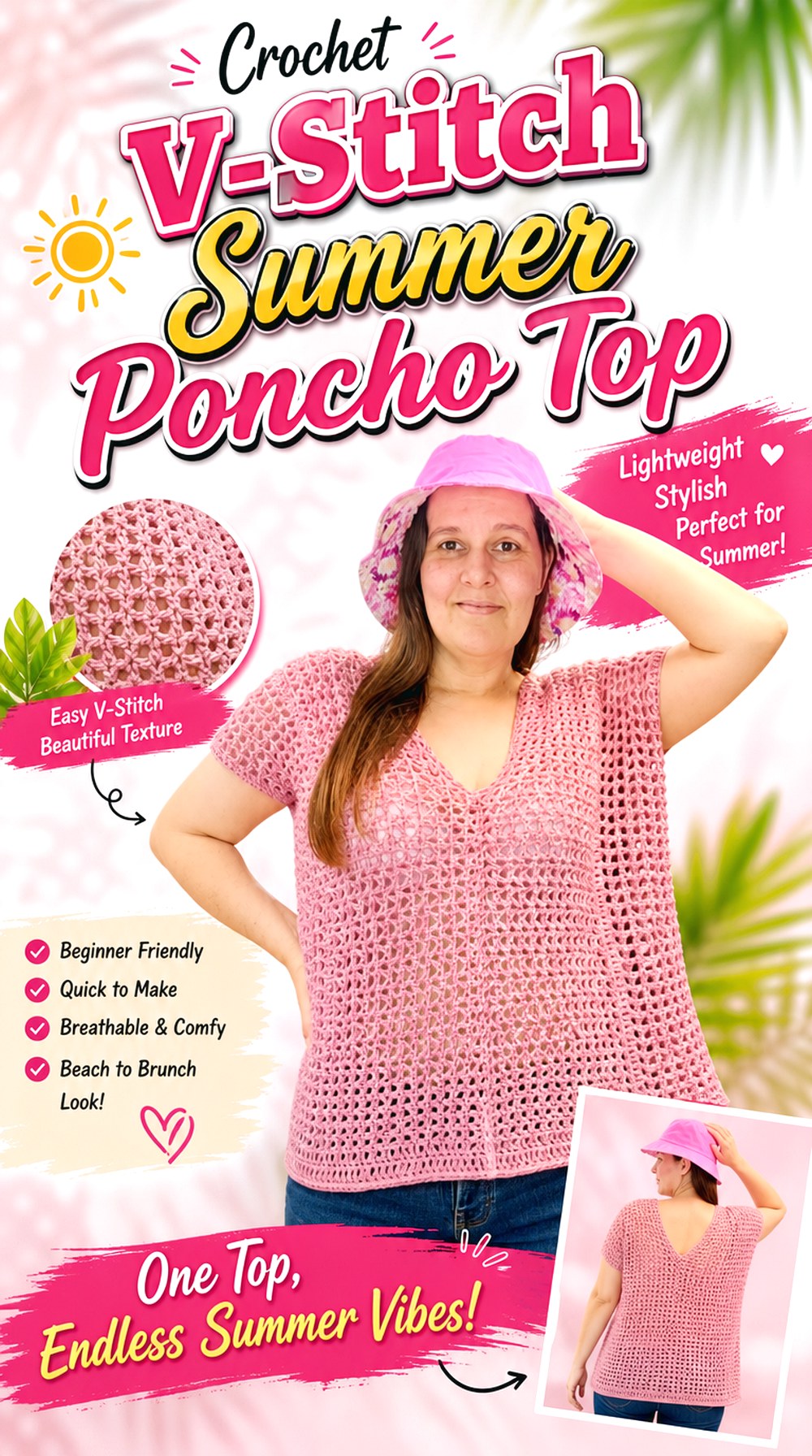
Bag-O-Day Crochet’s project is another poncho-top hybrid, but its V-stitch fabric and V-neck treatment give it a different visual structure from the Drunken-Granny option. The creator describes the top as intentionally wider, so the silhouette relies on generous body width rather than fitted shaping. That makes it a practical reference for a sheer top that keeps the effortless drape of a poncho.
The V-Neck Breaks Up a Wide Front Panel
A broad poncho top can look visually heavy across the chest even when the stitch pattern is open. A V-neck introduces a strong vertical line that interrupts that width. Before sewing or finishing the neck, check the depth over the underlayer you expect to wear most often; a sheer V-neck exposes both the crochet and the neckline beneath it.
Wider Fabric Needs an Underarm Check
The advantage of a wide poncho top is unrestricted torso fit, but fabric can gather around the arm if the width and side finishing are not balanced. Raise and lower your arms before finalizing side closures. The garment should still fall back into place without requiring constant adjustment.
Open V-Stitches Benefit From Consistent Spacing
The eye quickly notices irregular gaps when V-shaped groups repeat across a large surface. If your stitches gradually tighten, the garment can narrow or the openings can become visibly smaller. Compare the panel width at several points while working rather than waiting until the entire top is complete.
Original Tutorial and Creator Credit
Creator: Bag-O-Day Crochet
Crochet In the Round Summer Poncho
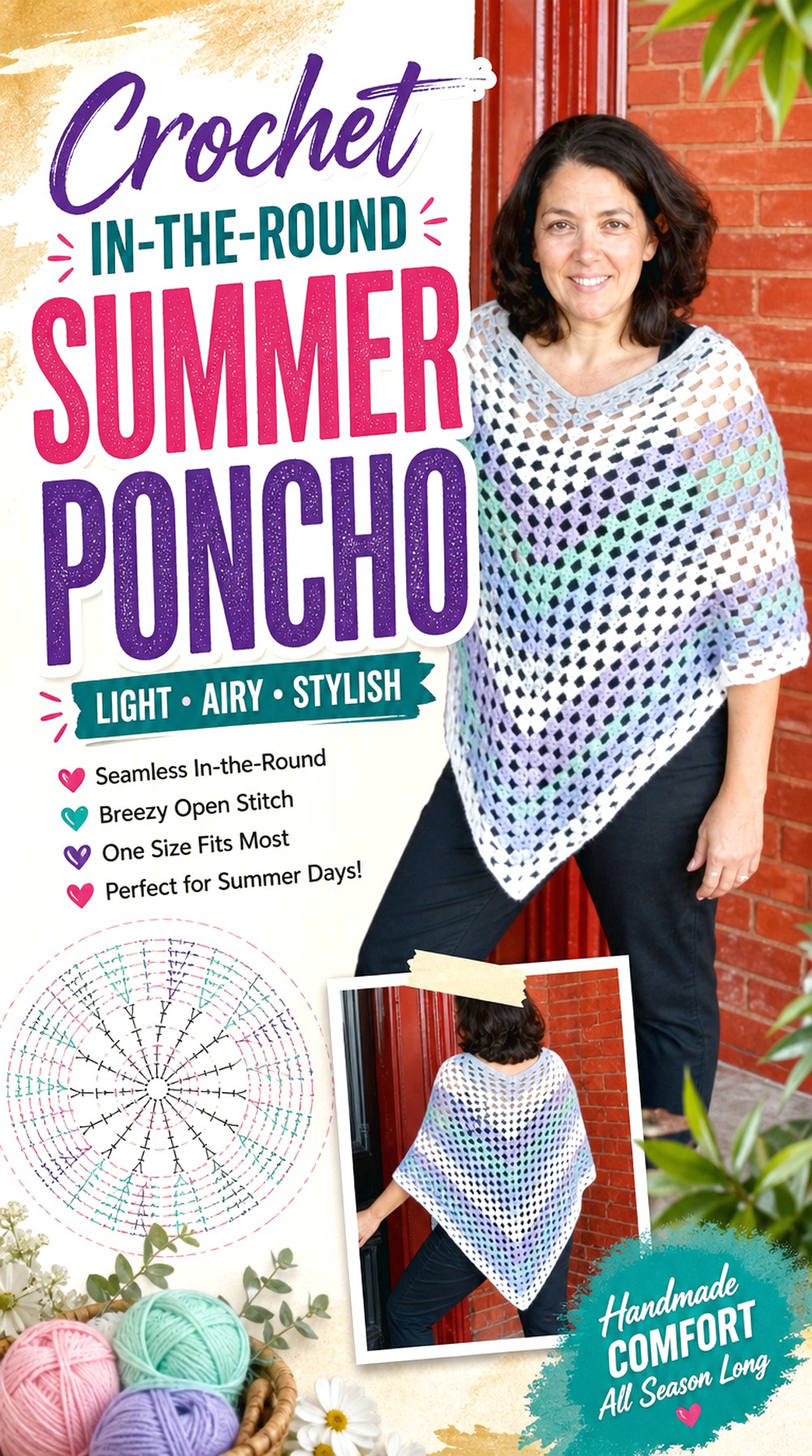
The Crochet Crowd’s summer poncho grows in the round rather than being assembled from two separate panels. That construction produces a continuous poncho shape and allows the length to build around the body as a whole. The tutorial describes the design as adaptable in adult sizing and intended as a light layer for summer evenings, giving it a different role from a dedicated swimsuit cover-up.
Continuous Rounds Make the Points Easy to Judge
A pointed poncho develops its silhouette as the rounds expand. Stop occasionally and look at the front and back points while the garment is hanging rather than flat. If you want a shorter everyday layer, the apparent length at the points matters more than the amount of fabric sitting horizontally at the side.
Watch for a Twisted Starting Round
An in-the-round garment can carry an unnoticed twist much farther than a flat panel before the problem becomes obvious. Check the setup carefully before building significant depth. Stitch markers at key shaping locations are also useful because a missed increase can affect how evenly the poncho hangs.
Length Adds Circumference and Weight Together
On many expanding round constructions, continuing longer does more than move the hem downward: it creates a larger sweep. That means a “few more rounds” may add noticeably more fabric than expected. Judge extension by both worn length and overall volume.
Original Tutorial and Creator Credit
Creator: The Crochet Crowd
Crochet Two Corner Virus Lace Poncho
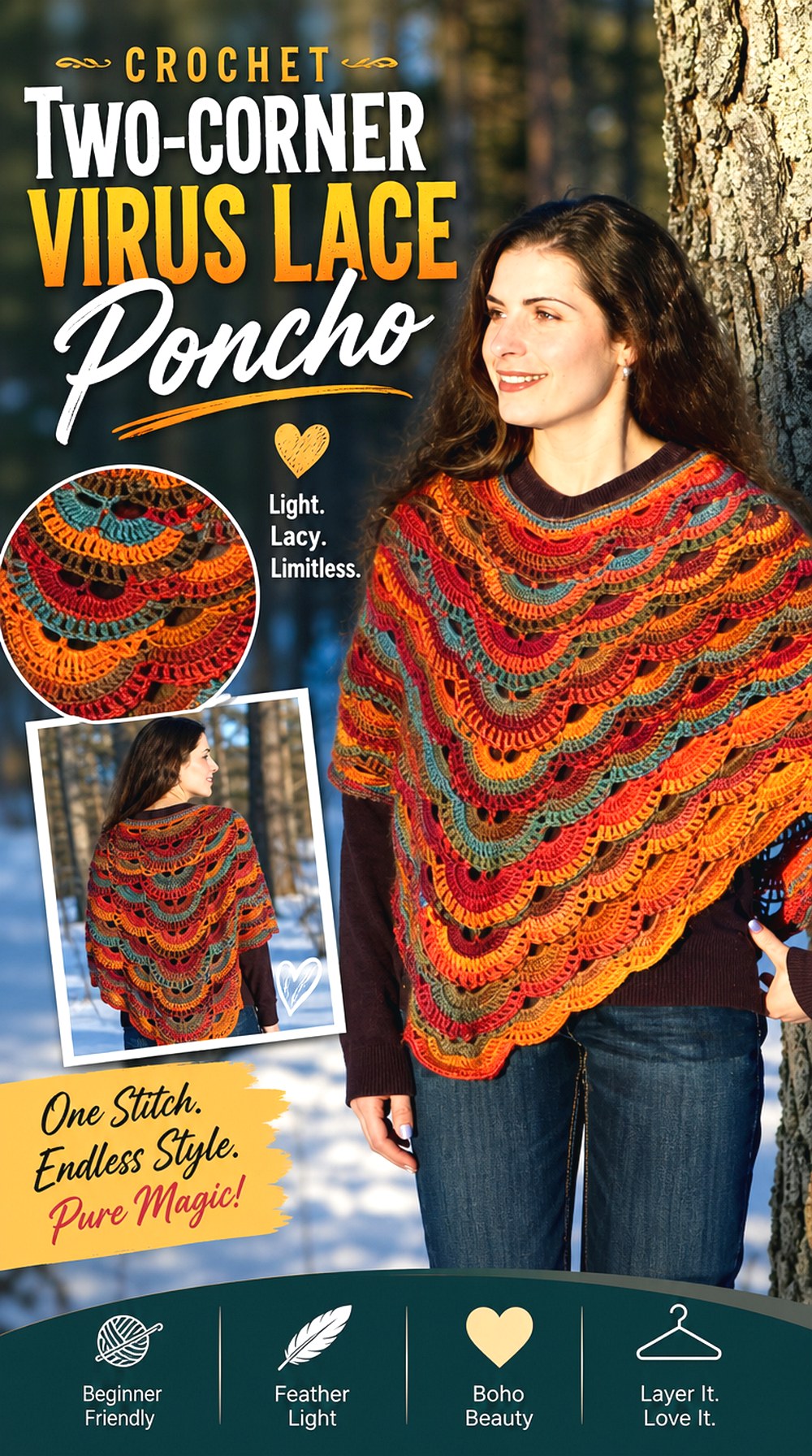
Jonna Martinez’s two-corner virus poncho uses the recognizable expanding shell-and-open-space character of the virus stitch to create a strongly patterned lace surface. Unlike plain mesh, the open areas form part of a repeating decorative rhythm, while the two-corner construction produces distinct front and back points. The tutorial is demonstrated as an adult poncho, with other sizing information referenced separately by the creator.
The Repeat Is the Main Visual Feature
This is not the best choice if you want nearly invisible mesh. The appeal comes from alternating fans, openings, and expanding pattern sections that remain obvious from across the room. Choose a yarn that lets those shapes read clearly; too much fuzz or rapid color noise can compete with the pattern geometry.
Check Both Corners as the Poncho Expands
A two-point shape makes uneven expansion especially visible. Place markers at critical shaping areas and periodically fold the poncho so the two sides can be compared. Catching an offset early is much easier than trying to disguise a point that lands noticeably to one side after finishing.
More Length Also Means More Pattern Presence
Adding repeats changes not only coverage but also the scale of the decorative surface. A longer virus poncho becomes a much stronger statement garment. Before extending it, look at where the front point falls while standing and sitting so the dramatic hem remains practical.
Original Tutorial and Creator Credit
Creator: Jonna Martinez
Crochet Asymmetrical Rectangle Poncho with Lace Hem

crochetdreamz approaches the poncho from a simple rectangle, but the finished garment is not visually plain. A more solid body transitions into a lacy hem, and the assembly creates an asymmetrical drape. This makes it a useful compromise for readers who like the idea of sheer crochet but do not want the entire torso to be transparent.
Partial Lace Gives You Strategic Transparency
Keeping the main body more covered while opening the lower section changes how the garment layers. You can wear a simple underlayer without making it the dominant part of the outfit, while the lace hem still gives the piece movement and airiness. This is an effective direction when all-over mesh feels too exposed.
Asymmetry Makes Rectangle Dimensions More Important
Once a rectangle is turned and joined into an asymmetric poncho, its length and width no longer behave like a conventional front and back measurement. Before changing the proportions, recreate the folding direction with a piece of fabric or pin the crochet temporarily. That shows where your altered corners are likely to fall.
Give the Lace Hem Room to Settle
An open lower edge can hang differently from the denser body above it. Finish and prepare the piece according to your yarn’s care requirements before making last-minute judgments about unevenness. Some apparent waviness may relax, while true mismatched edges will still need correction.
Original Tutorial and Creator Credit
Creator: crochetdreamz
Crochet One Rectangle Lacy Summer Poncho
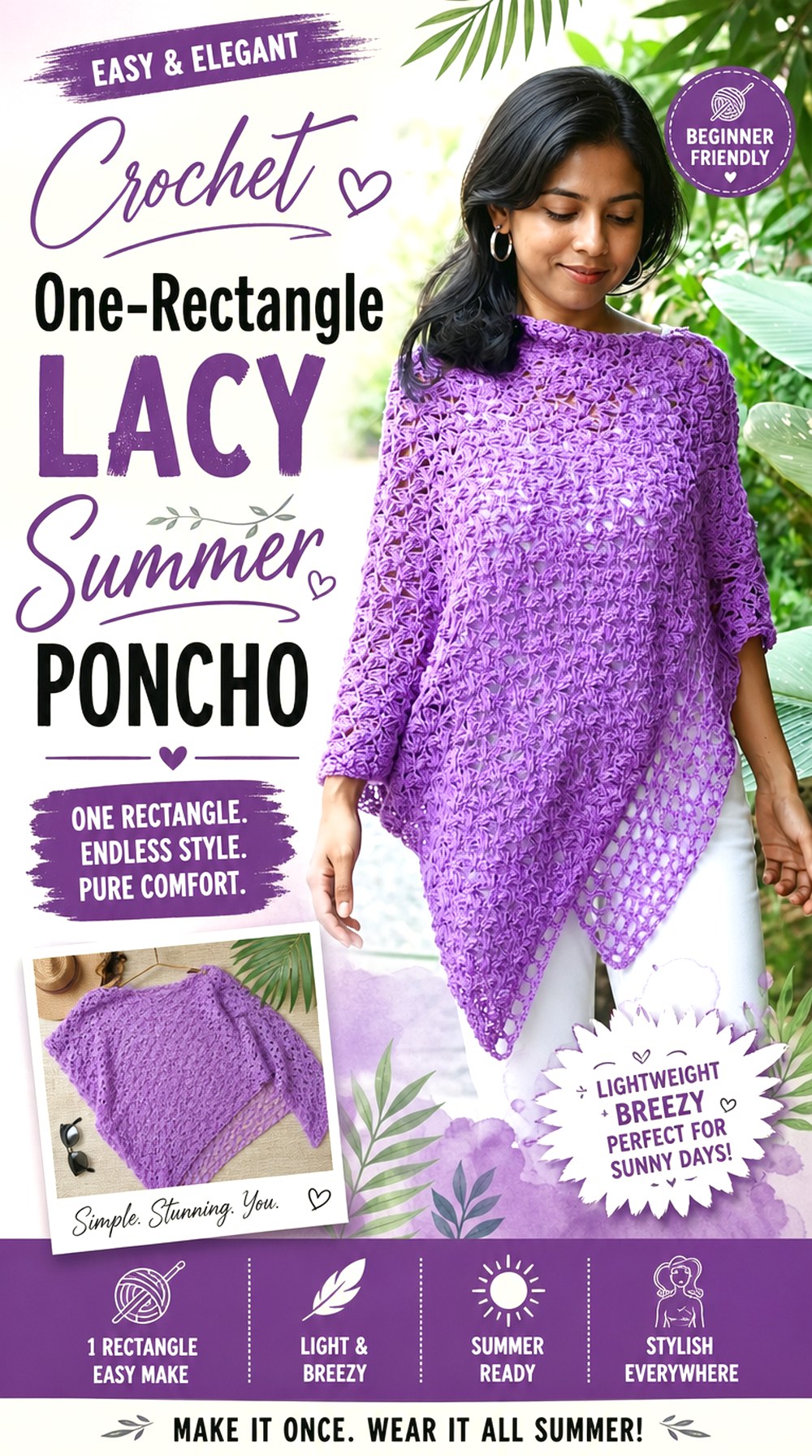
Jennyandteddy crochet. uses one rectangle that is folded and joined with minimal seaming to form a lightweight summer poncho. The associated project emphasizes a breezy lace look and simple construction, making this one of the more accessible shapes to understand before you begin. The biggest difference from a seamless top-down poncho is that the rectangle’s proportions establish much of the final drape before assembly.
Make the Rectangle Fit the Intended Body, Not a Generic Number
A rectangle is simple, but its dimensions are still a fit decision. Before following a size blindly, compare the finished measurements in the creator’s pattern with your preferred shoulder coverage and arm drop. The project’s own comment history also illustrates why actual measurements matter more than assuming everyone’s gauge will produce the same result.
Minimal Seaming Makes Placement More Noticeable
When only a small amount of joining turns a flat piece into a garment, where that seam starts and stops has an outsized effect on the neck opening. Pin or temporarily mark the join first. Try the shape on before sewing permanently so the neckline is comfortable and the two hanging sections feel balanced.
Original Tutorial and Creator Credit
Creator: Jennyandteddy crochet.
Crochet Medium Yarn Openwork Poncho
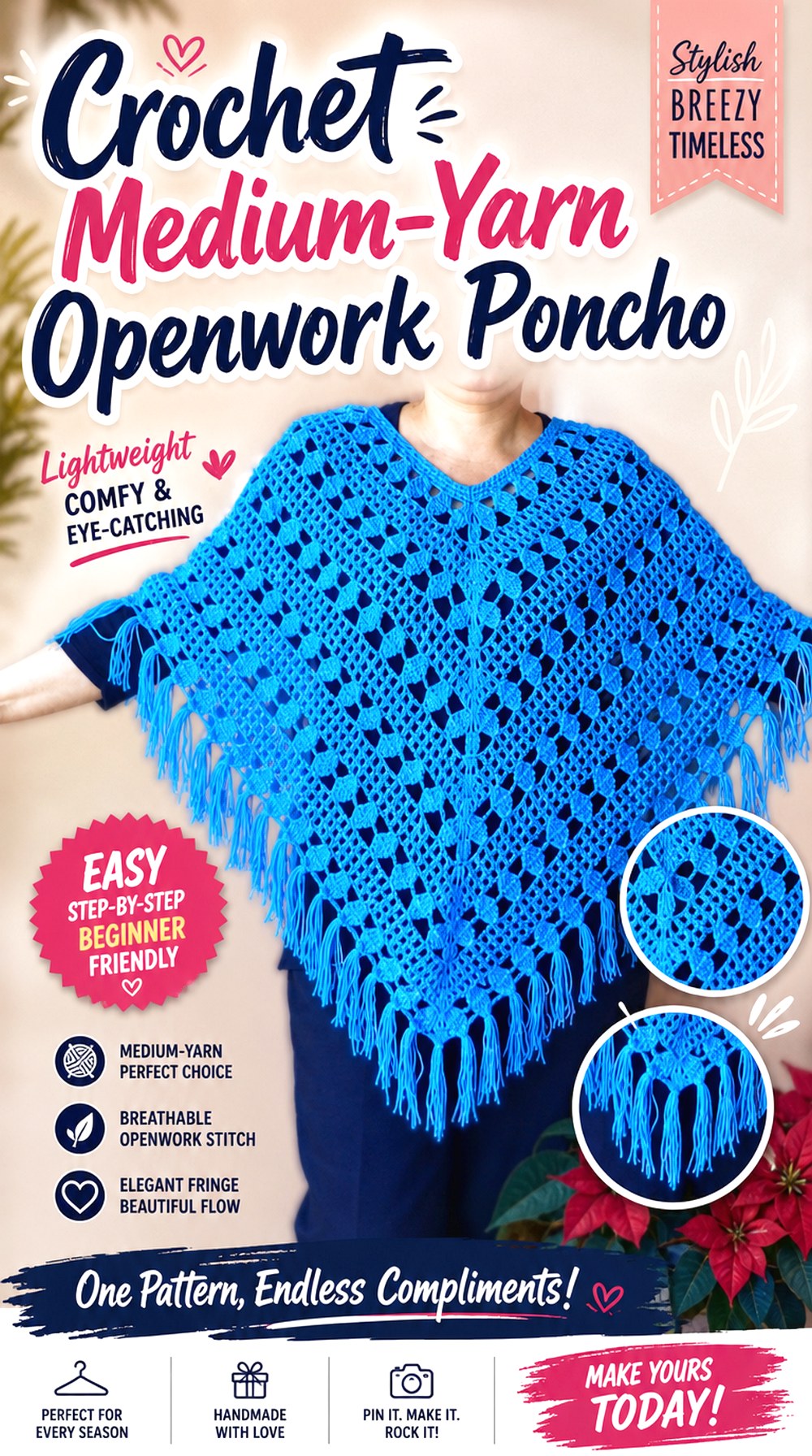
Rosa Isela’s PONCHO CALADO A CROCHET provides another route to transparency: an openwork poncho made with medium-thickness yarn rather than relying on lace-weight thread. That is an important comparison because “sheer crochet” does not have to mean extremely fine yarn. The open stitch arrangement can provide the negative space while the yarn itself gives the pattern stronger definition.
Thicker Yarn Makes Each Open Space More Graphic
When the strands around a hole are visually substantial, the fabric develops a bolder lace effect. That can be easier to read from a distance than delicate thread crochet. If your goal is a statement poncho rather than an almost weightless veil, this balance of yarn presence and open space may suit you better.
Do Not Assume Thicker Means Warmer
The actual coverage of an open crochet fabric depends heavily on how much empty space remains. A medium yarn can still produce substantial airflow when the stitch pattern is sparse. Choose the underlayer and season according to the finished fabric you can see and feel rather than the yarn category alone.
Language Can Influence Which Tutorial Is Practical
This tutorial is presented in Spanish. For makers who are comfortable following visual crochet demonstrations, that may not be a barrier, but terminology matters when sizing or stitch placement becomes ambiguous. Preview enough of the video to confirm the teaching format works for you before purchasing yarn specifically for the project.
Original Tutorial and Creator Credit
Creator: Rosa Isela
Crochet Openwork Poncho with Sleeved Edges
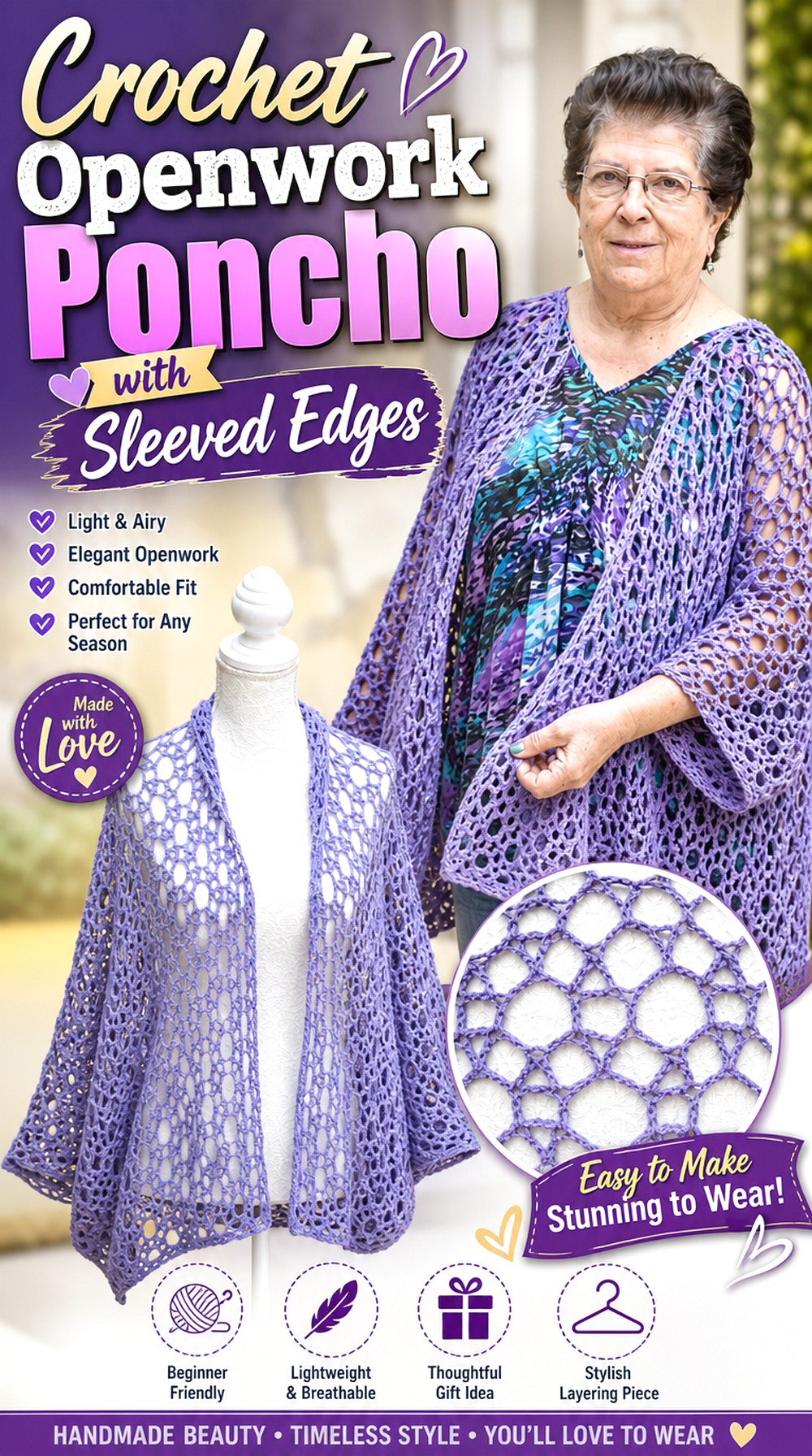
Tejiendo Perú’s design brings arm definition into the sheer-poncho category. The project uses an open crochet stitch and is worked as one straight piece before the sides and sleeve-edge areas are finished, producing a poncho/ruana hybrid with more controlled arm openings. The source provides three sizes and clearly shows the finished openwork garment, making it meaningfully different from a completely sleeveless rectangle wrap.
Defined Arm Edges Reduce the Cape Effect
Adding a sleeve-style edge gives the hands and forearms a clearer exit point, so the garment behaves less like fabric simply draped over the shoulders. This can be useful if you want openwork but dislike constantly repositioning a loose poncho. Check reach before finishing those edges permanently.
One-Piece Construction Still Needs Front-to-Back Balance
A single crocheted piece reduces the number of separate components, but its fold and side placement determine how front and back align. Lay the garment flat at the assembly stage and compare both sides before sewing. With an open stitch pattern, a visibly pulled side seam is difficult to hide.
The Ribbed Sleeve Edge Adds Visual Weight
A firmer edge beside very open crochet creates contrast. That can make the arm openings look intentional, but a substitute yarn that is much stiffer than the original may cause the edges to dominate. Swatch enough fabric to judge how the denser trim interacts with the open body.
Which Crochet Sheer Poncho Shape Should You Choose?
For the most obvious transparency, start with the Top-Down Mesh Fringe Poncho or Beach Cover-Up Poncho. If you want the openings to form a decorative pattern rather than a simple grid, the Floral Openwork Summer Poncho, Virus Lace Poncho, or Delicate Lace No-Seam Poncho gives the stitch design a larger role.
Rectangle projects are easier to visualize flat, but proportion and seam placement determine the final fit. In-the-round and top-down styles reduce large assembly seams and let the shape develop as one piece. For more arm control, the Openwork Poncho with Sleeved Edges stands apart. If full-body transparency feels like too much, the Asymmetrical Rectangle Poncho with Lace Hem keeps much of the coverage while reserving the open effect for the lower section.
Conclusion
The right crochet sheer poncho depends on where you want the openness and how you want the garment to move. Simple mesh gives the clearest beach-cover-up effect, floral and virus lace make the stitch pattern part of the outfit, and rectangle designs keep construction visually understandable. Top-down and in-the-round options are worth considering if you would rather avoid major panel seams, while sleeve-edged or poncho-top shapes provide more control around the arms.
Before choosing, compare neckline shape, finished drop, yarn behavior, and the amount of fabric you actually want to see through. Use the original tutorials near each idea for the creators’ exact construction, sizing, and stitch details.
Frequently Asked Questions
What is the best crochet stitch for a sheer poncho?
There is no single best stitch. Regular mesh creates consistent transparency, while V-stitches and granny-style groups alternate open areas with more yarn coverage. Floral lace and virus-style repeats create the most decorative result. Choose according to how much of the garment underneath you want visible and whether you want the openings to look geometric, organic, or highly patterned.
Can I make an openwork poncho less transparent?
Yes, but changing the crochet itself can alter drape and sizing. The simplest option is often to change the underlayer rather than the poncho. If you modify the crochet, smaller openings or a thicker yarn may increase coverage, but they can also make the fabric stiffer or change gauge. Make and compare swatches before applying that substitution to a full garment.
Is cotton always the best yarn for a summer sheer poncho?
No. Cotton can work very well because it often gives open stitches clear definition, and several warm-weather tutorials use cotton or cotton-oriented constructions. However, the right yarn depends on the specific pattern, desired drape, care needs, and how the fiber behaves after washing. Use the creator’s yarn information as your starting point and swatch any substitute before assuming equivalent results.
How do I know whether a poncho neckline will fit correctly?
Check the creator’s finished measurements or sizing guidance first. For a top-down design, test the neck early because the rest of the garment grows from it. For a rectangle poncho, temporarily pin the assembly before making the final seam. The opening should pass comfortably over the head while sitting where intended on the shoulders without needing constant readjustment.
Can I shorten a crochet sheer poncho?
Often, but the safest method depends on the construction. A top-down mesh design may provide a natural opportunity to stop sooner, while patterned lace may look better when a complete motif repeat is finished. On a rectangle poncho, shortening the original piece can also change the arm drop or asymmetric point. Check the construction before treating length as an independent measurement.
Should openwork crochet ponchos be blocked?
Blocking can help many open crochet fabrics settle, reveal their stitch pattern, and improve edge consistency, but the appropriate method depends on the fiber. Do not automatically steam or stretch every yarn. Follow its care information and the creator’s finishing guidance. A sample swatch is also a useful place to see how much the fabric changes before treating the entire garment.
What should I wear under a sheer crochet poncho?
That depends on the transparency and setting. A fitted tank or camisole keeps the crochet pattern easy to see for everyday layering, while a swimsuit makes sense for designs intended as beach cover-ups. A dress can work especially well under finer lace or capelet styles. Try contrasting and similar colors beneath your swatch—the underlayer can dramatically change how prominent the open stitch pattern looks.