Eucalyptus and saffron create a useful two-color palette for crochet table leg cuffs because the shades can handle very different jobs. Muted eucalyptus can cover the larger surface without making the cuffs visually heavy, while warm saffron can identify the upper edge, create stripes, emphasize texture, or introduce a small repeated detail around all four table legs.

For this particular project, color placement needs to work from room-viewing distance. A tiny accent that looks obvious while crocheting may almost disappear once the cuff is near floor level. Wider bands, clearly defined edges, and repeated placement across the table generally make the eucalyptus-and-saffron relationship easier to see.
The tutorials paired with these ideas teach chair, table, or furniture-leg socks and covers that can support the fitted construction concept. Because furniture legs vary considerably, measure the actual table leg and test one cuff before making the remaining set. If you adapt a closed-bottom protector into a decorative cuff, keep the cuff clear of the floor and make sure it cannot affect the table’s stability.
Quick List
- Eucalyptus Crochet Table Leg Cuff With Saffron Top Band
- Saffron Crochet Table Leg Cuff With Eucalyptus Lower Band
- Eucalyptus And Saffron Split Color Crochet Table Leg Cuff
- Eucalyptus Crochet Table Leg Cuff With Saffron Scalloped Edge
- Saffron Crochet Table Leg Cuff With Eucalyptus Ribbed Top
- Eucalyptus And Saffron Narrow Stripe Crochet Table Leg Cuff
- Eucalyptus And Saffron Wide Block Crochet Table Leg Cuff
- Eucalyptus Crochet Table Leg Cuff With Saffron Accent Motif
- Saffron Crochet Table Leg Cuff With Eucalyptus Double Border
- Eucalyptus Crochet Table Leg Cuff With Saffron Checker Band
- Saffron And Eucalyptus Inverted Pair Crochet Table Leg Cuffs
- Eucalyptus Crochet Table Leg Cuff With Saffron Center Band
Decide Whether Eucalyptus or Saffron Should Lead the Table Leg Cuffs
Choose the dominant color according to how much you want the cuffs to blend with or separate from the table itself. Eucalyptus can work as the larger field when you want a muted botanical direction, leaving saffron to provide warmer definition. Making saffron dominant produces a stronger warm accent near floor level, with eucalyptus acting as the quieter counterweight.
Check the colors against the actual table legs rather than judging the yarn alone. Eucalyptus may lose definition against muted green, gray, or weathered finishes, while saffron may blend more closely with warm honey or golden wood. Moving the contrasting shade toward the upper edge can restore separation without changing the entire palette.
Keep Eucalyptus and Saffron Consistent Across Four Table Legs
A table presents several cuffs at once, so repetition matters more here than it does on a single small accessory. If saffron creates the top band on one leg, repeating the same role on the remaining legs gives the table a coherent visual line.
You can intentionally alternate color dominance, but plan that arrangement before making the set. Two eucalyptus-led and two saffron-led cuffs can look organized when opposite or neighboring legs follow a clear pattern. Four unrelated distributions are more likely to feel accidental.
Check Eucalyptus and Saffron Cuff Height Before Adding Detail
Color placement changes with cuff height. A short cuff has limited room for stripes and motifs, so one dominant field with one contrasting edge may be enough. A taller cuff can support two broad blocks, repeated bands, or a central accent without compressing every color change together.
Fit is more important than decorative complexity. Test the first cuff on the actual leg, including any taper. A decorative cuff should stay where intended without gathering around the foot or extending onto the floor.
1. Eucalyptus Crochet Table Leg Cuff With Saffron Top Band
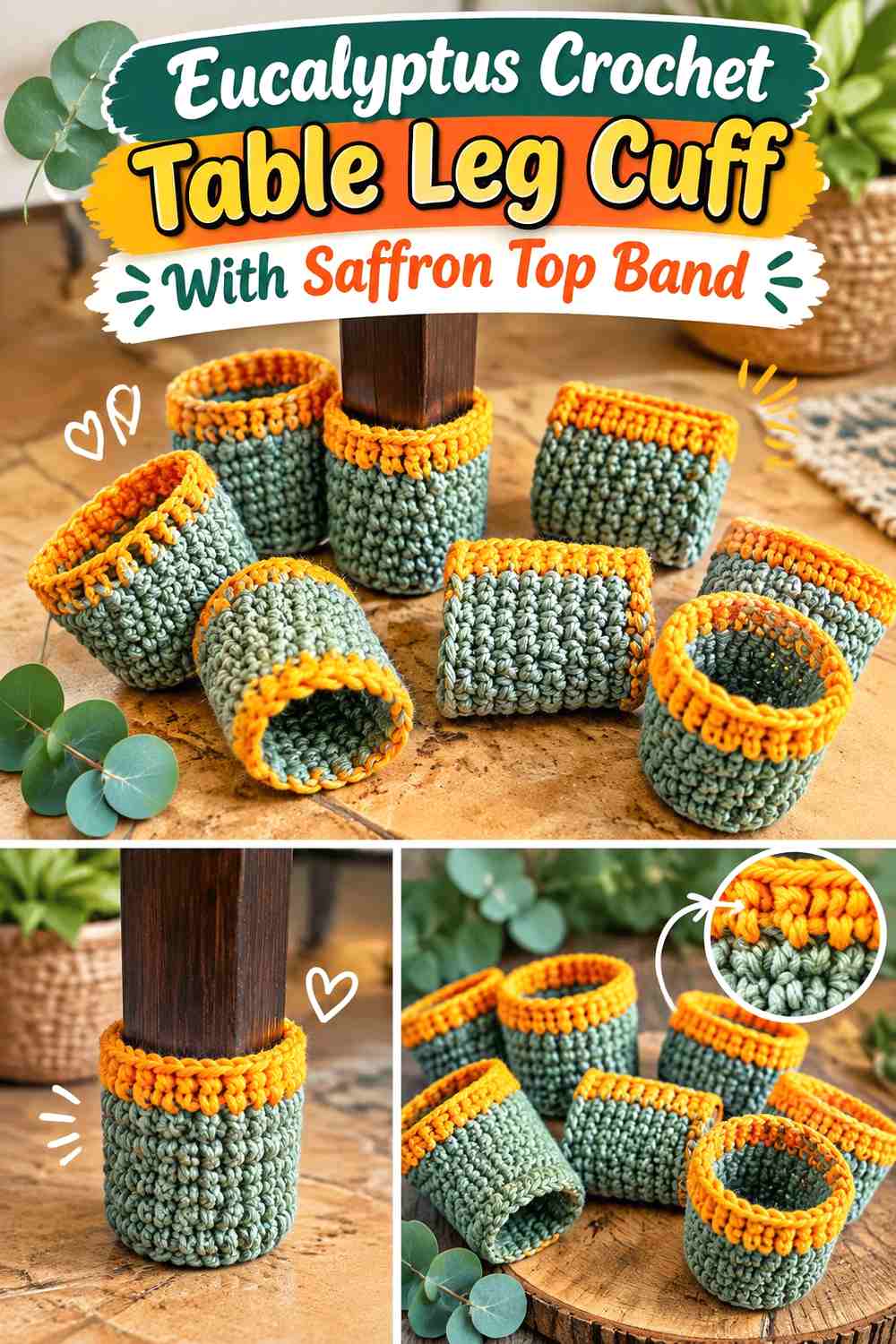
This is the simplest eucalyptus-led direction: keep most of the cylindrical cuff muted green and reserve saffron for one clear band at the top. Because the warm accent sits farthest from the floor, it remains visible instead of being visually compressed into the furniture foot.
Using the same saffron band height on all four cuffs can also create a horizontal visual line around the table even though the legs are separated.
Eucalyptus Should Cover Most of the Table Leg Cuff
Let eucalyptus occupy the main lower and middle surface so the cuff reads primarily green from across the room. A broad uninterrupted field also gives stitch texture room to remain visible without frequent color transitions.
If the table leg itself is dark, check that eucalyptus has enough separation before making the full set. The color should remain identifiable rather than becoming a barely visible extension of the furniture.
Saffron Works Best as a Defined Eucalyptus Cuff Opening
Place saffron around the upper opening where the color can form one continuous ring. This creates a clearer accent than scattering several tiny yellow-orange details through the eucalyptus body.
Keep the transition at the same relative height on every leg. Small differences become surprisingly noticeable when four cuffs are viewed together beneath one tabletop.
Creator Credit: LittleGemsCreations – Fibre Artist
2. Saffron Crochet Table Leg Cuff With Eucalyptus Lower Band

Reversing the hierarchy creates a much warmer result. Saffron covers most of the visible sleeve while eucalyptus forms the lowest contrasting section. The muted green band visually grounds the stronger color before the cuff reaches the table foot.
This direction is particularly useful if you want saffron to be recognizable from a distance instead of appearing only as trim.
Saffron Needs Enough Surface to Lead the Table Leg Cuff
Keep saffron across the upper majority of the cuff so its role is unmistakable. Breaking that area with numerous eucalyptus stripes would move the design toward equal-color striping instead.
The broader saffron surface can also make small variations in crochet texture more visible, so compare the four cuffs together as you work rather than judging each one separately.
Eucalyptus Can Ground the Saffron Cuff Near the Leg Base
Use eucalyptus as a compact lower band while keeping the decorative cuff itself clear of the floor. The darker or more muted section creates a visual transition between saffron and the furniture foot.
If the table leg tapers near the bottom, check the fitted band before repeating it three more times. Color placement should follow the area where the cuff actually sits rather than an assumed measurement.
Creator Credit: Leslie Stahlhut
3. Eucalyptus And Saffron Split Color Crochet Table Leg Cuff
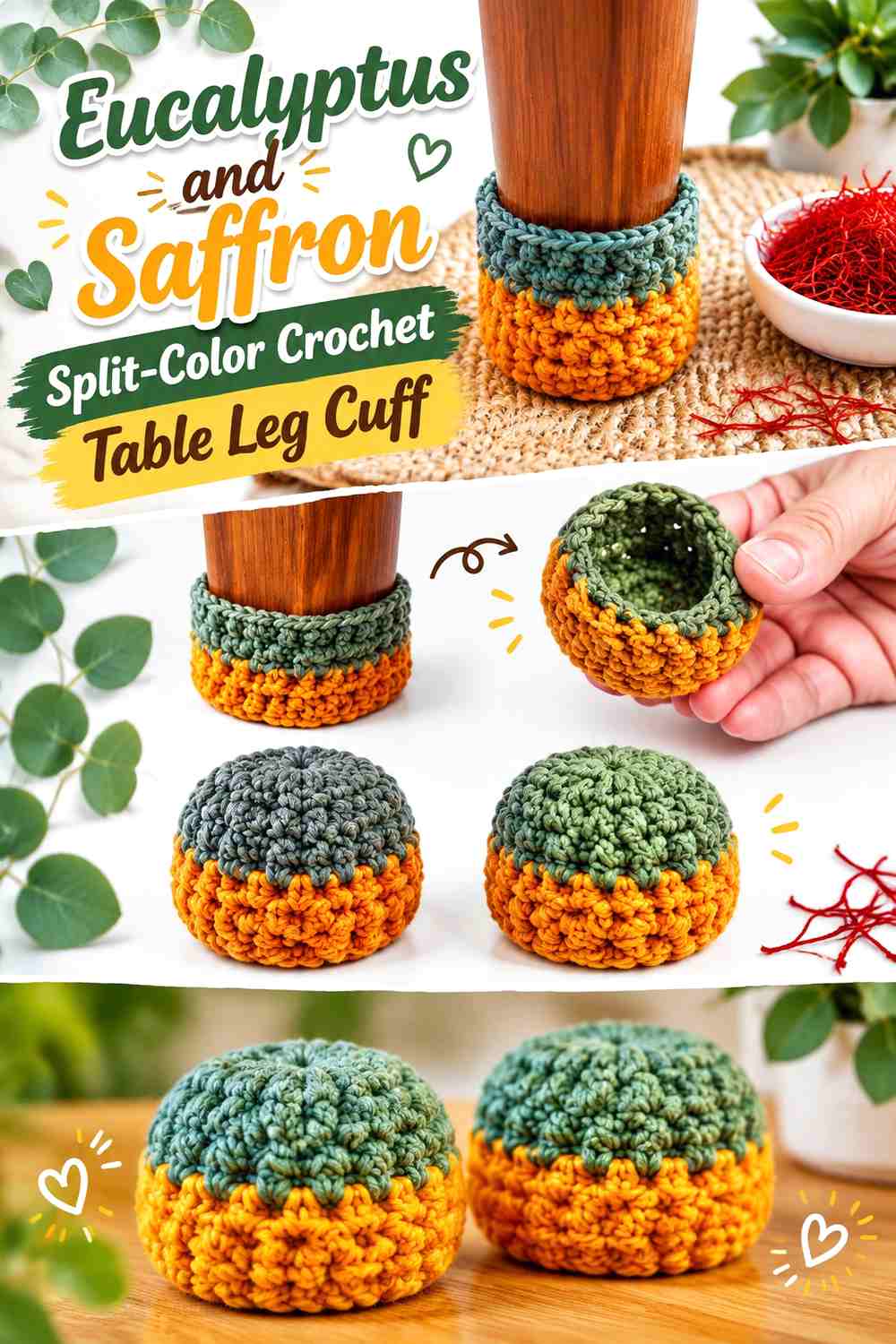
A half-and-half cuff gives both colors substantial visual area without producing many narrow stripes. Eucalyptus can cover the lower portion and saffron the upper portion, creating one deliberate transition around the middle.
This works well on taller cuffs because each color has enough room to read as a proper block instead of a border.
Eucalyptus Should Form a Solid Lower Color Block
Keep the eucalyptus section continuous from its lower edge to the planned midpoint. One broad field makes the two-color division easier to see from standing height.
Before changing colors, try the cuff on the leg. The visual midpoint of a fitted cuff may not match the midpoint of the piece while it is lying flat.
Saffron Needs a Clean Transition Above Eucalyptus
Begin the saffron section at one consistent level and carry it to the upper opening. A clean boundary is the main decorative feature, so it does not need another contrasting stripe through the middle.
Make the first finished cuff your reference for the other three rather than estimating the division independently every time.
Creator Credit: Neuzy Santana
4. Eucalyptus Crochet Table Leg Cuff With Saffron Scalloped Edge
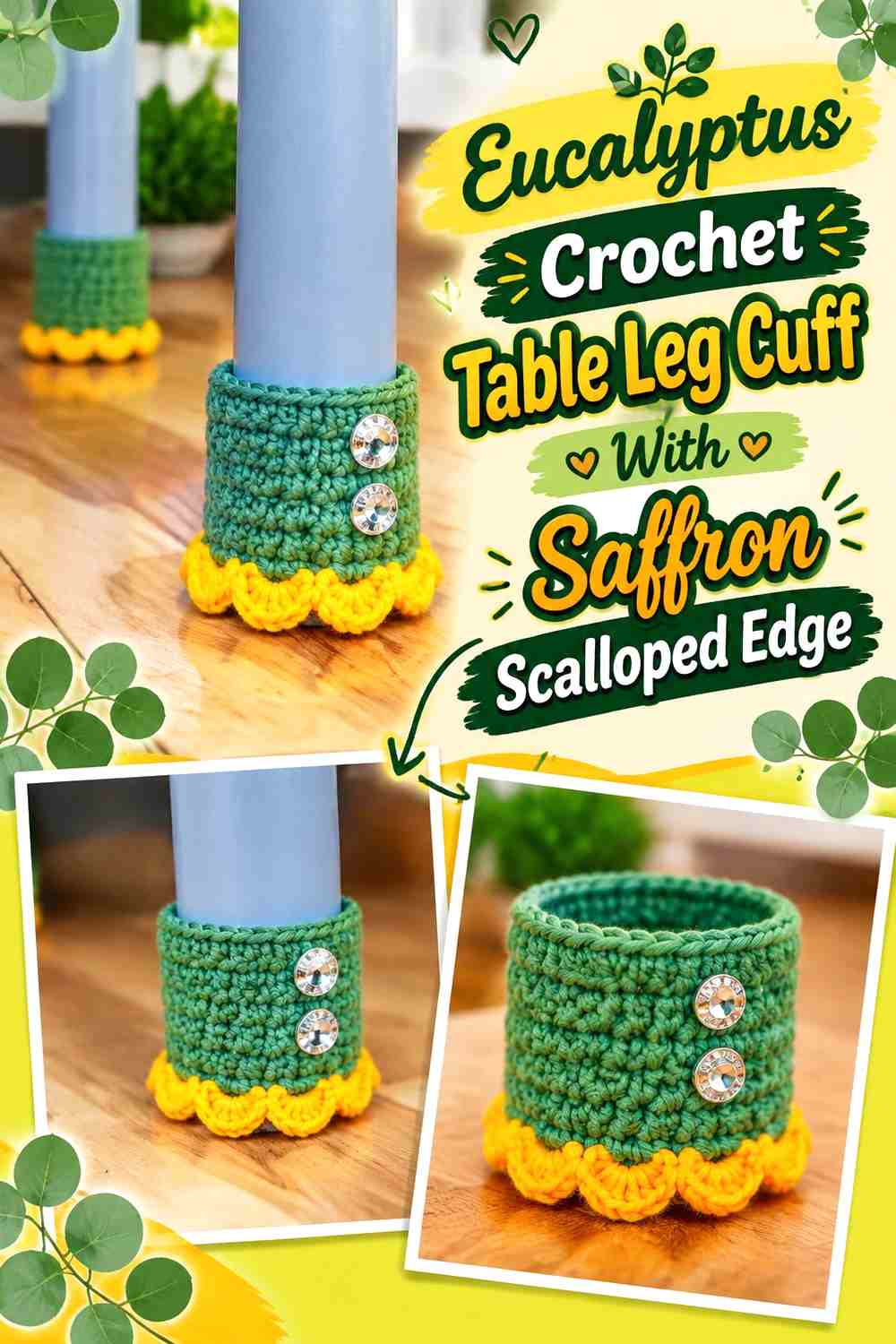
A decorative upper edge gives saffron a different role from a conventional straight band. Keep the fitted body eucalyptus and let saffron appear only around the top finishing detail.
Because the accent changes the silhouette as well as the color, a relatively small amount of saffron can remain noticeable.
Eucalyptus Should Keep the Main Table Leg Fit Uninterrupted
Work the fitted body in eucalyptus so decorative shaping does not compete with repeated color changes. The green field should carry the snug tubular part of the cuff.
Check that the eucalyptus section remains secure before adding any decorative upper treatment. The embellishment should not be responsible for holding the cuff in place.
Saffron Scallops Should Stay Above the Eucalyptus Body
Use saffron only where the upper edge expands visually. Keeping the scalloped or decorative section above the main eucalyptus tube makes the contrast easier to understand.
Avoid an overly loose edge that droops downward. On a table leg, a crisp upper outline is more useful than extra decorative length.
Creator Credit: GabraEl Creations
5. Saffron Crochet Table Leg Cuff With Eucalyptus Ribbed Top
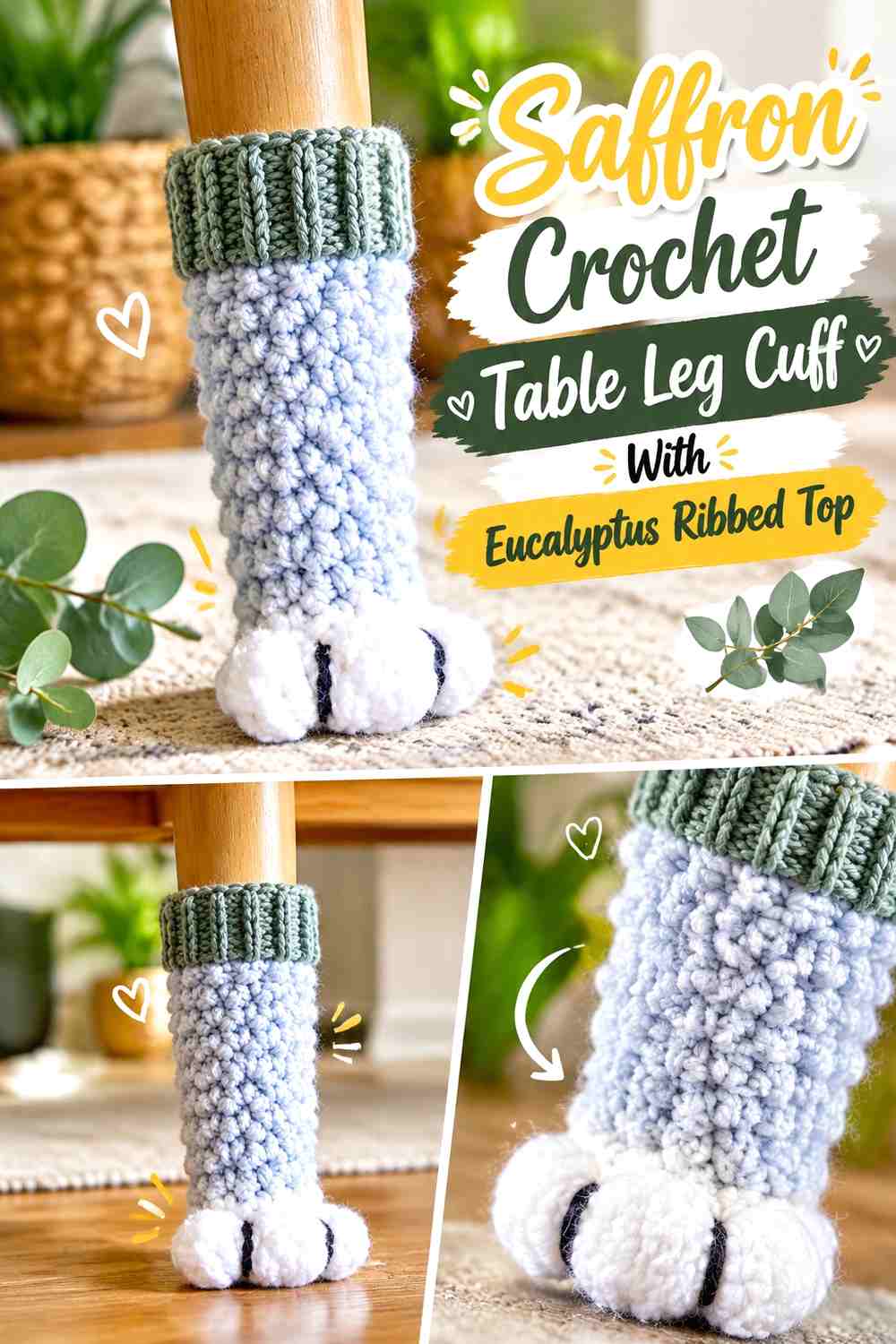
For a texture-focused version, saffron can cover the smooth main cuff while eucalyptus marks a more defined upper section. The change in both color and texture makes the opening visually distinct without requiring multiple extra shades.
This is especially effective on a short cuff where there is not enough vertical space for several broad bands.
Saffron Can Keep the Main Cuff Warm and Simple
Use saffron through the principal tubular section so the color remains connected around the entire table leg.
Because the surface is relatively small, avoid inserting eucalyptus in several isolated rows. Save the green for the upper feature so the viewer can understand its role immediately.
Eucalyptus Texture Can Define the Saffron Cuff Top
Place eucalyptus in the more pronounced top section, whether the construction produces a ribbed, ridged, or simply denser-looking edge.
The green portion should remain visibly narrower than the saffron body if saffron is meant to lead. Compare the cuff while fitted to the leg, because a thick upper texture can visually occupy more area than its actual height suggests.
Creator Credit: RepeatCrafterMe
6. Eucalyptus And Saffron Narrow Stripe Crochet Table Leg Cuff
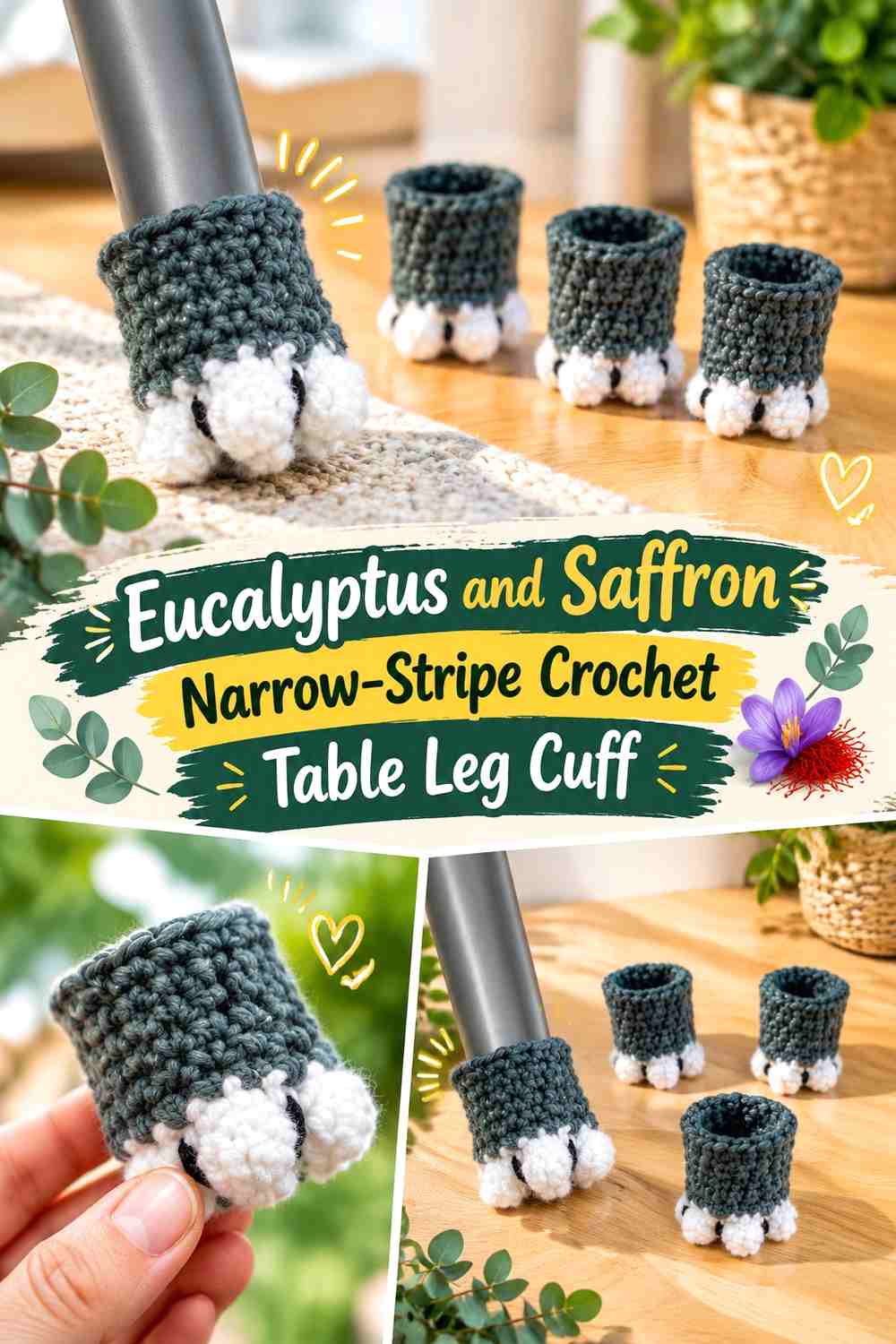
Narrow stripes give the palette a more rhythmic treatment. Instead of assigning one color to one structural feature, alternate eucalyptus and saffron repeatedly through the cuff while still choosing one shade to begin and finish the sequence.
This is the busiest color plan in the collection, so consistent stripe width matters.
Eucalyptus Should Repeat Predictably Between Saffron Stripes
Use eucalyptus at regular intervals rather than introducing it randomly. A repeated sequence makes four separate cuffs look like one coordinated set beneath the table.
If your eucalyptus and saffron are relatively similar in value, test a few stripes first. Very narrow bands need stronger contrast to remain obvious from standing distance.
Saffron Stripes Need Enough Width to Stay Visible Against Eucalyptus
Do not make the saffron sections so thin that they disappear into the crochet texture. A slightly wider accent can be more effective than increasing the number of stripes.
Once the first cuff is complete, place it on the leg and view it from across the room before committing to the same stripe sequence for the remaining three.
Creator Credit: Coco crochet
7. Eucalyptus And Saffron Wide Block Crochet Table Leg Cuff

Wide bands provide a quieter alternative to narrow stripes. Use two or three substantial eucalyptus and saffron sections rather than frequent alternation. This keeps both colors obvious while giving each enough surface to show the crochet texture.
The layout works particularly well on a taller table-leg cuff.
Eucalyptus Blocks Can Give the Cuff Visual Breathing Room
Allow eucalyptus to occupy at least one broad section without interruption. Its muted character gives the stronger saffron areas a visual pause.
If the table has prominent wood grain or metal detailing, wide blocks can also remain easier to read than very fine stripes against that background.
Saffron Blocks Should Repeat at the Same Height as Eucalyptus
Place each saffron block consistently across the four cuffs so the table has recognizable horizontal color points.
Avoid adjusting band heights casually from leg to leg. If one leg requires a different fit because of tapering or shape, preserve the visual relationship as closely as practical rather than forcing identical construction.
Creator Credit: Charmed By Ashley
8. Eucalyptus Crochet Table Leg Cuff With Saffron Accent Motif
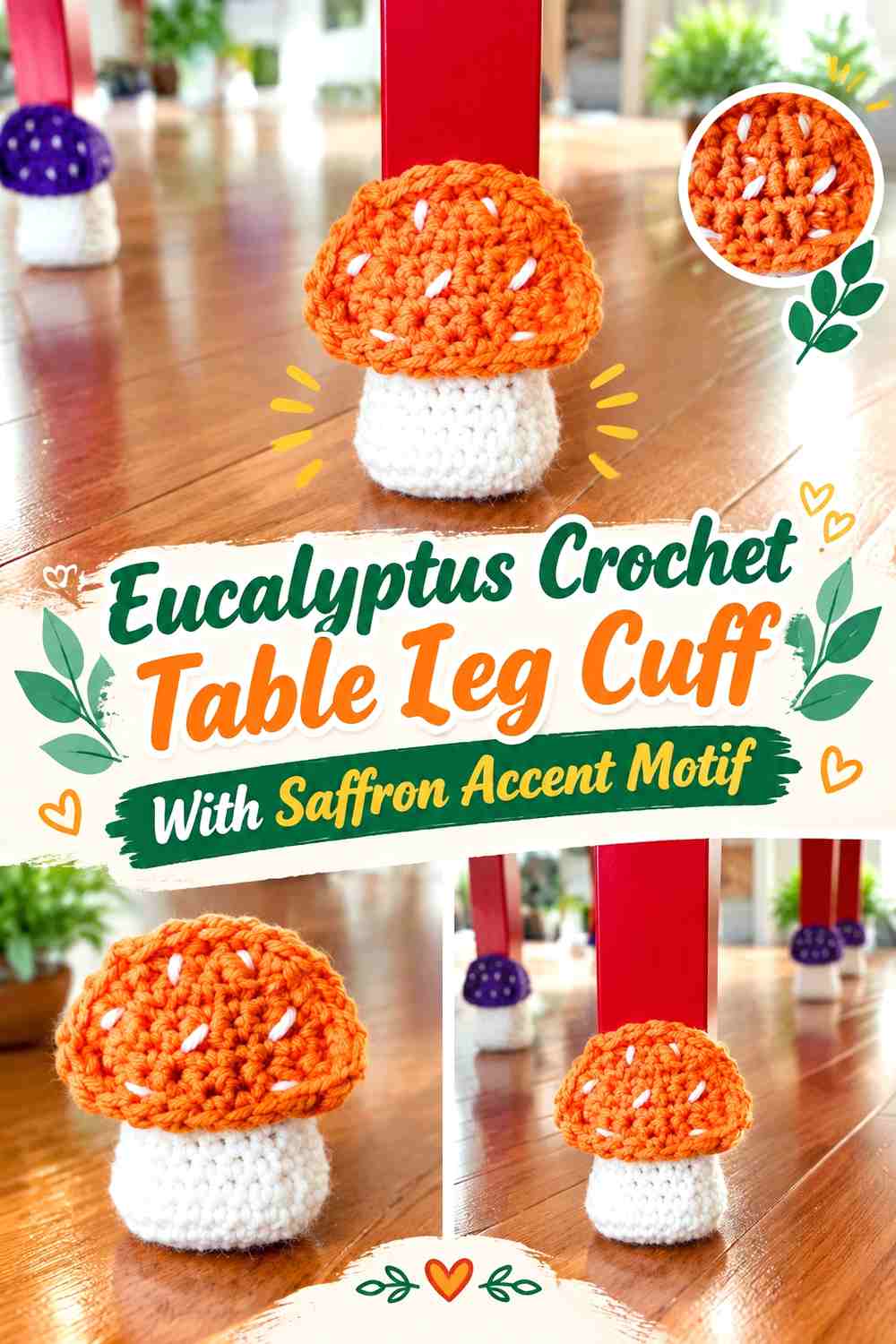
This version uses eucalyptus as a nearly uninterrupted cuff and treats saffron as a small decorative feature rather than a band. A repeated simple motif or raised accent on the outward-facing side can add color without wrapping saffron around the entire leg.
Orientation matters here because the detail should face the direction from which the table is normally viewed.
Eucalyptus Should Remain the Background Around the Saffron Detail
Keep enough plain eucalyptus around the motif for its outline to remain visible. If the saffron element extends across most of the cuff, the design becomes two-color blocking rather than a focused accent.
The green background also makes it easier to align the decorative feature at the same height on each leg.
Saffron Accents Need Consistent Placement on Eucalyptus
Choose whether the saffron detail faces outward from each table leg, toward the room, or follows another deliberate orientation.
Lay out that direction before fixing or finishing all four cuffs. A motif that rotates randomly around individual legs can look inconsistent even when the crochet pieces themselves match.
Creator Credit: Wiwy Crochet World
9. Saffron Crochet Table Leg Cuff With Eucalyptus Double Border
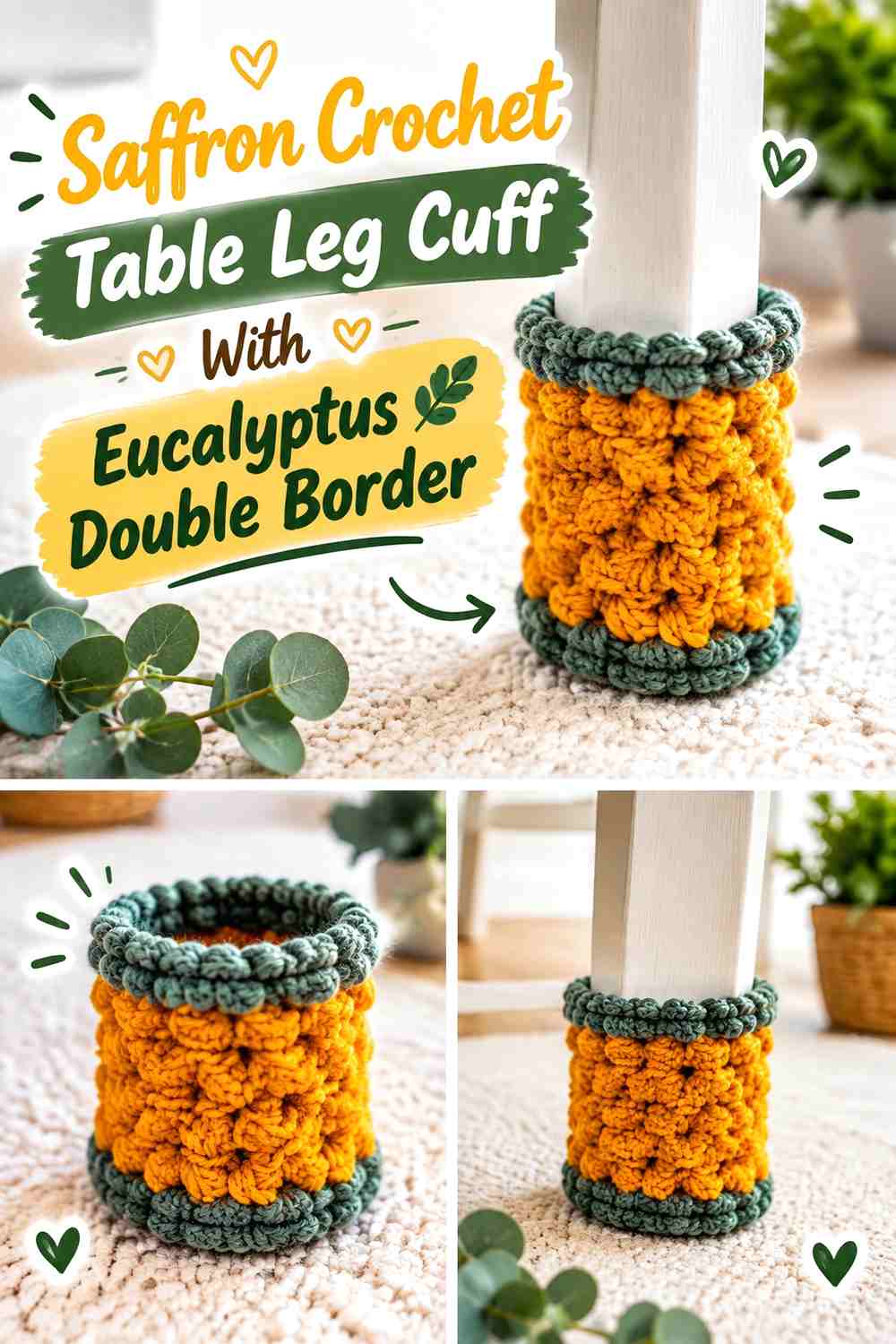
A saffron center framed by eucalyptus at both the top and bottom creates a contained warm color block. The green edges behave almost like brackets, keeping the saffron section from visually running into either the table foot or bare leg above.
This layout can be useful when both colors need to be obvious but you do not want repeated striping.
Saffron Should Stay Broad Between the Eucalyptus Borders
Give saffron enough height to remain the dominant central field. If both eucalyptus borders become too wide, the design can shift toward green dominance.
Judge the proportions on the leg rather than flat on the work surface, especially if the cuff stretches vertically or horizontally once fitted.
Eucalyptus Can Frame Saffron at Both Cuff Edges
Use eucalyptus consistently at the upper and lower visible edges. Repeating the same supporting color twice helps contain the stronger saffron section.
Keep the lower eucalyptus border above the floor if the piece is intended as a decorative cuff rather than a foot-covering sock.
Creator Credit: Hectanooga1
10. Eucalyptus Crochet Table Leg Cuff With Saffron Checker Band
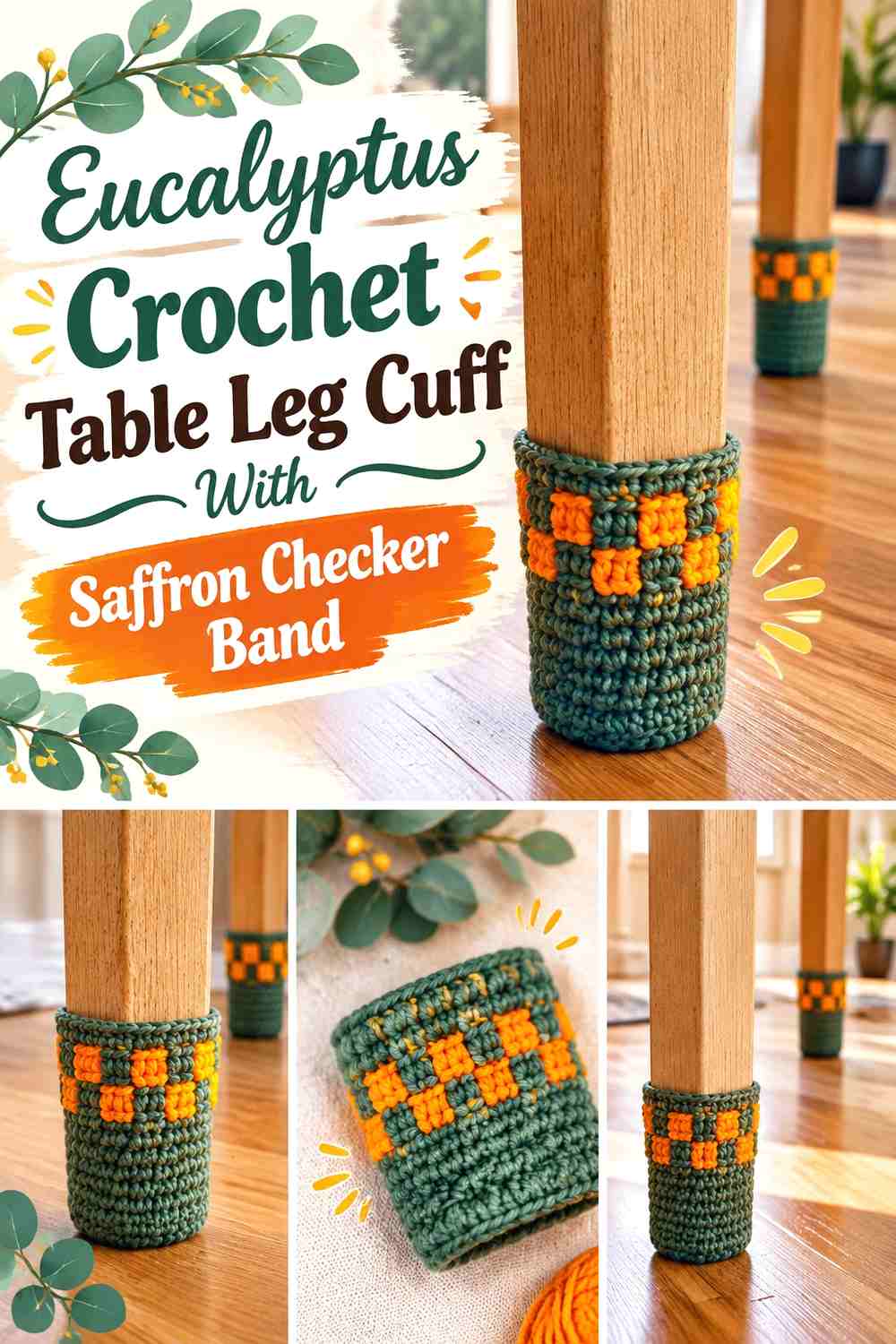
A small checker or alternating colorwork band can introduce more detail without covering the entire cuff in two-color patterning. Let eucalyptus dominate above and below the band, then use saffron inside one concentrated decorative zone.
The placement gives the cuff a focal line while retaining a calm overall field.
Eucalyptus Should Surround the Saffron Checker Section
Keeping eucalyptus on both sides of the decorative band prevents the colorwork from taking over the complete table-leg sleeve.
Choose the band’s height before making the full set. A checker detail placed close to the upper edge produces a different balance from one centered on the cuff.
Saffron Checks Need Clear Contrast Against Eucalyptus
Small colorwork elements depend more heavily on value contrast than large blocks. Compare the two yarns from a few feet away before committing to tiny alternating areas.
If the saffron shapes disappear against eucalyptus, enlarge the decorative band or simplify it to broader blocks rather than adding more tiny color changes.
Creator Credit: Crochet With Tiffany
11. Saffron And Eucalyptus Inverted Pair Crochet Table Leg Cuffs
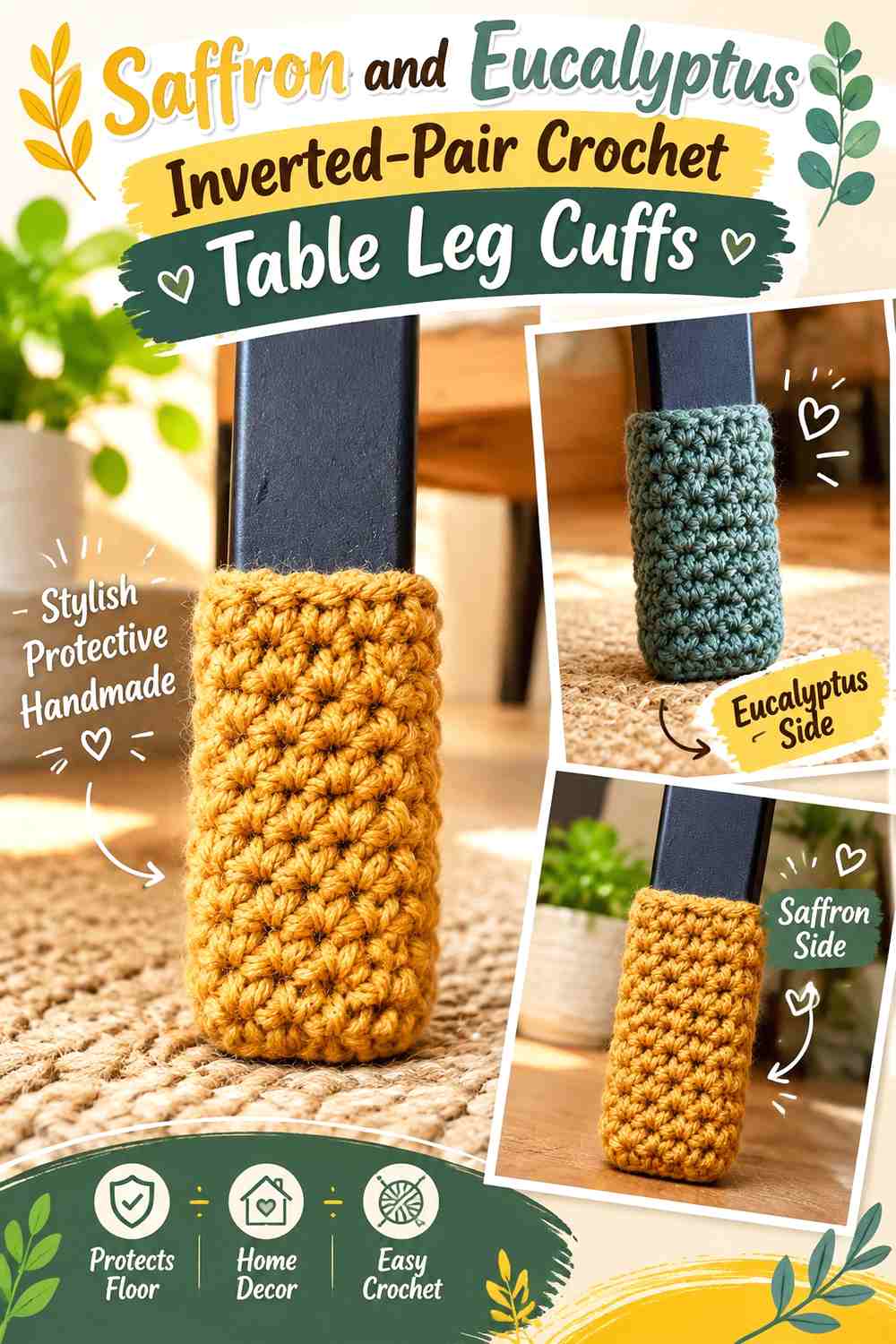
Instead of making all four cuffs identical, create a coordinated inverse set. Two legs can use saffron bodies with eucalyptus tops, while the other two use eucalyptus bodies with saffron tops.
The arrangement keeps the palette balanced across the whole table rather than demanding equal color inside each individual cuff.
Saffron and Eucalyptus Pairs Need a Planned Table Layout
Decide whether matching cuffs will sit opposite each other or side by side. Opposite placement creates a balanced alternation when the table is viewed from several directions.
Do not wait until the cuffs are finished to decide their positions. The table itself is part of the color composition.
Eucalyptus and Saffron Top Bands Should Mirror Each Other
Keep the accent bands similar in visual proportion even though the colors are reversed. That repeated structure is what makes the four cuffs feel like one intentional set.
If one color appears significantly darker in your chosen yarn, you may find it visually heavier despite using the same physical band width. Check the complete set on the table before deciding the proportions are finished.
Creator Credit: Reno Govindarajoo crochet
12. Eucalyptus Crochet Table Leg Cuff With Saffron Center Band

The final direction concentrates saffron through the middle of an otherwise eucalyptus cuff. Unlike a top border or lower block, the central band is surrounded by green and therefore becomes a distinct horizontal focal point.
This placement works especially well when you want the upper and lower edges to blend quietly into the table leg while the center carries the autumnal warmth.
Eucalyptus Should Connect the Top and Bottom of the Cuff
Use eucalyptus above and below the saffron section so both ends of the cuff belong to the same muted field.
Keep the green sections large enough to look intentional rather than like thin outlines. The center band should interrupt eucalyptus, not eliminate it.
Saffron Can Create a Strong Mid-Cuff Focal Line
Place saffron through one clearly defined middle section and repeat that height on all four table legs.
View the finished table from normal standing distance. If the saffron line appears too thin, enlarging that single band will generally create more clarity than adding several additional saffron stripes.
Creator Credit: leytenya
Comparing Eucalyptus and Saffron Crochet Table Leg Cuff Layouts
For a muted, eucalyptus-heavy table treatment, the saffron top-band, scalloped-edge, accent-motif, checker-band, and center-band ideas leave most of each leg cuff green. They work when you want saffron to provide definition rather than cover a large part of the furniture.
For a warmer result, choose the saffron body with eucalyptus lower band, ribbed top, or double border. These designs make saffron visible across a larger area while using eucalyptus to frame or ground it.
The narrow stripes, wide blocks, split-color cuff, and inverted-pair set put the two shades closer to equal visual importance. They are useful when the color combination itself should be the main decorative feature rather than a single accent.
Conclusion
Eucalyptus and saffron can change a small crochet table leg cuff considerably depending on where the color transition sits. A narrow saffron top edge keeps eucalyptus dominant, while a broad saffron body turns the same palette toward a warmer appearance. Wide blocks create cleaner separation, narrow stripes add rhythm, and a small motif or checker band concentrates attention in one area.
For a four-legged table, plan the set as a whole. Repeat borders at comparable heights, align outward-facing motifs, or establish a clear alternating arrangement before finishing every cuff.
Most importantly, fit the first piece directly to the table leg. Adapt the tutorial construction to the actual circumference, taper, and desired cuff height, and keep decorative cuffs positioned so they do not interfere with the table foot or floor contact.
Frequently Asked Questions
Should eucalyptus or saffron dominate crochet table leg cuffs?
Either can dominate. Eucalyptus gives the cuffs a more muted overall field, while saffron produces a warmer and more visible lower-furniture accent. Decide which color should cover the larger area before planning bands or borders.
How much saffron should I use on an eucalyptus crochet table leg cuff?
A single top band, center band, border, or small motif may be enough if you want eucalyptus to remain clearly dominant. For a more balanced two-color result, increase saffron through broad blocks or repeated stripes rather than adding many unrelated tiny accents.
Should all four eucalyptus and saffron table leg cuffs match exactly?
They do not have to be identical, but the variation should follow a visible rule. For example, two cuffs can be eucalyptus-led and two saffron-led, provided their positions and proportions are intentionally coordinated.
How can I check whether eucalyptus and saffron have enough contrast?
Place the yarns together and look at them from several feet away. A grayscale photo can also help show whether their light-dark values are sufficiently different. This is particularly useful before planning narrow stripes or small checker details.
What if my table legs taper and the eucalyptus and saffron cuffs slide?
Use the actual table leg as the fitting reference and test one cuff before making the complete set. Follow the selected tutorial’s fitting approach where applicable rather than assuming that one circumference will suit every portion of a tapered leg.
Can I substitute different eucalyptus or saffron shades?
Yes. For a similar visual direction, preserve the roles of the colors: choose a muted green for the eucalyptus role and a warmer golden yellow or yellow-orange for the saffron role. More important than matching an exact shade is maintaining enough separation for the planned bands, borders, or motifs to remain visible.