Golden Ochre brings a warm, earthy glow to a crochet lantern cover without requiring a complicated multicolor design. It can fill an entire openwork sleeve, form the denser base beneath lacy rounds, or become the strongest accent around a neutral or dark lantern cover.

The most useful color decisions happen around the openings. A lantern cover depends on spaces between stitches to reveal the container and enclosed light, so narrow contrast bands can behave very differently from the same colors in a solid crochet project. Cream and pearl can make Golden Ochre look deeper, while charcoal, indigo, espresso, and plum create darker boundaries around the openwork. Olive, teal, rust, and terracotta keep the palette colorful without losing its earthy direction.
For illuminated displays, keep yarn away from open flames and exposed heat. These color ideas are best treated as decorative covers for jars or lantern structures used with compatible battery-operated LED lights according to the light manufacturer’s directions.
The tutorials credited below support lanterns, jar covers, candle cozies, or closely related cylindrical cover constructions. The Golden Ochre palettes and decorative adaptations are independent color directions and should not be attributed to the creators unless shown in their original tutorials.
Quick List
- Golden Ochre And Cream Crochet Lantern Cover
- Golden Ochre And Indigo Crochet Lantern Cover
- Golden Ochre And Olive Green Crochet Lantern Cover
- Golden Ochre And Charcoal Crochet Lantern Cover
- Golden Ochre And Terracotta Crochet Lantern Cover
- Golden Ochre And Deep Teal Crochet Lantern Cover
- Golden Ochre And Antique Ivory Crochet Lantern Cover
- Golden Ochre And Espresso Crochet Lantern Cover
- Golden Ochre And Rust Crochet Lantern Cover
- Golden Ochre And Pearl Gray Crochet Lantern Cover
- Golden Ochre And Sage Crochet Lantern Cover
- Golden Ochre And Plum Crochet Lantern Cover
- Golden Ochre And Cocoa Crochet Lantern Cover
- Golden Ochre And Copper Crochet Lantern Cover
- Golden Ochre And Midnight Navy Crochet Lantern Cover
- Golden Ochre And Oatmeal Crochet Lantern Cover
- Golden Ochre Cream And Forest Green Crochet Lantern Cover
- Tonal Golden Ochre And Amber Crochet Lantern Cover
Keep Golden Ochre Visible Through Open Crochet Lantern Stitches
Openwork changes the apparent amount of color in a lantern cover. Golden Ochre may dominate the skein and still occupy relatively little visible area once the crochet is stretched around glass and broken into chains, shells, or mesh.
If Golden Ochre is meant to lead the palette, use it through several connected rounds rather than changing color at every opening. A continuous section also gives the eye enough space to read the crochet texture before noticing the supporting shade.
For especially lacy covers, the color of the jar, lantern frame, and wall behind the piece becomes part of the visual result. Test the developing cover over its intended container before deciding that another accent color is necessary.
Use Golden Ochre at the Rim, Base, and Openwork Sections Deliberately
The base usually appears denser than the body of a lantern cover, so a Golden Ochre base can carry more visual weight than the same number of rounds in open mesh. This is useful when you want a supporting color through the lace while keeping the project clearly ochre-led.
The upper rim is another strategic color zone. A dark rim can define the silhouette, a cream rim can lighten the top edge, and a repeated Golden Ochre rim can reconnect a contrasting middle section with the base.
If the design includes a hanging loop, drawstring, bow, beads, or tassels, treat those as accents rather than automatic locations for additional colors. The cover will usually look more coherent when two or three colors have clearly different jobs.
Use Golden Ochre Lantern Covers With Battery-Operated Light
A crochet cover should not be treated as a heat barrier. Yarn, thread, tassels, and decorative fibers should be kept away from open flame and hot lighting components.
For a glowing lantern effect, use a suitable enclosed battery-operated LED light and follow the light manufacturer’s instructions. Check that the light source and its container remain appropriate for the crochet cover before display.
This also gives you more freedom with openwork color placement because the visual goal becomes light filtering through stitches rather than accommodating an exposed candle flame.
1. Golden Ochre And Cream Crochet Lantern Cover
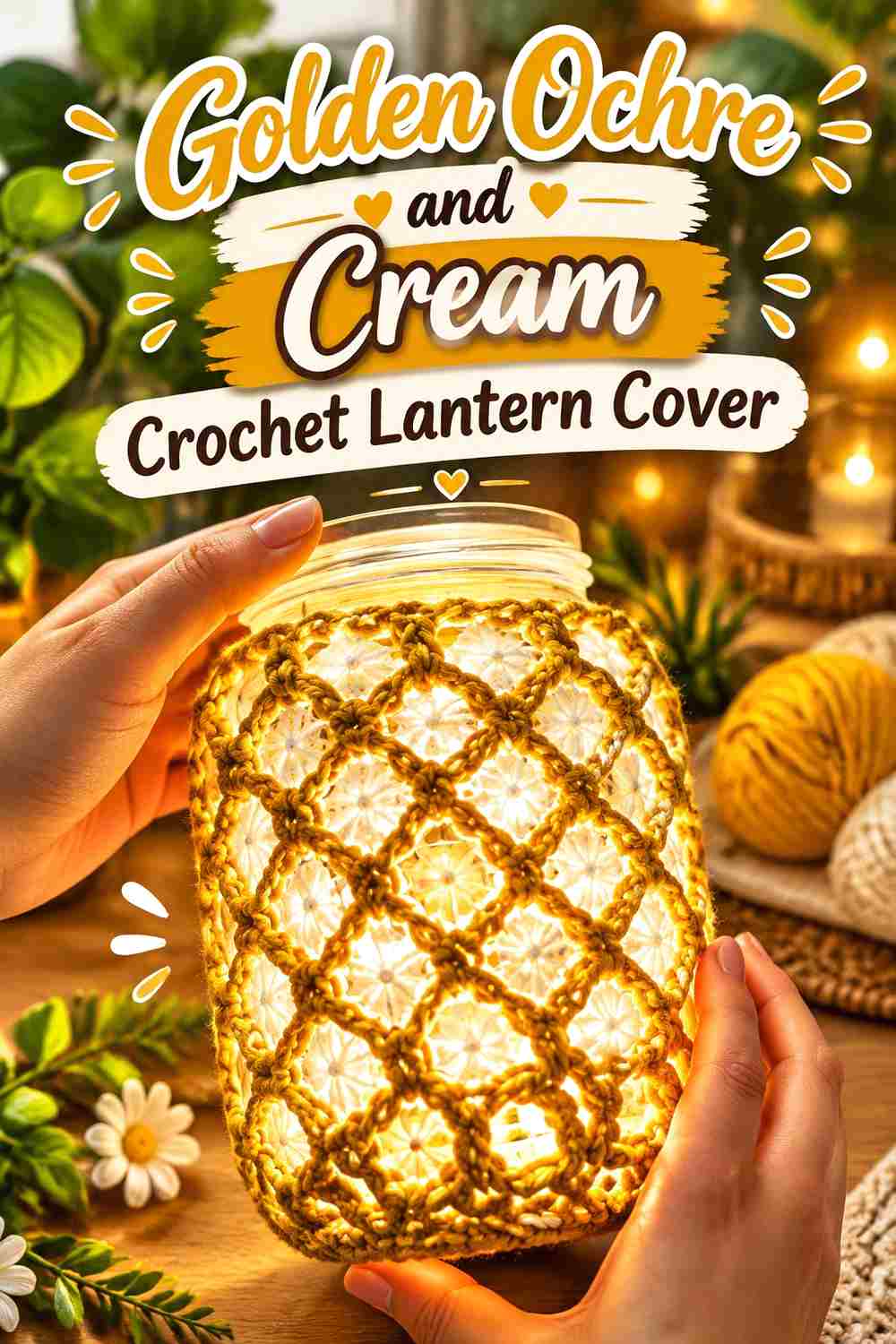
Golden Ochre and cream create a light, warm lantern palette in which the main color can remain across the openwork body while cream marks the top or bottom edge. This is especially useful for a jar-style lantern because the pale accent can separate the rim from the ochre mesh without making the cover look heavily striped.
Keep Golden Ochre Broad Across the Cream Lantern Openwork
Use Golden Ochre through the largest connected lace section so the warm color remains obvious even where glass shows through. Cream needs less area because its lighter value already creates a clear interruption.
Use Cream to Lighten the Golden Ochre Lantern Rim
A narrow cream rim can give the openwork a visible endpoint. Repeating a small amount of Golden Ochre above or below it can prevent the cream from feeling detached from the body.
Creator Credit: Yarn Realm
2. Golden Ochre And Indigo Crochet Lantern Cover

Indigo gives Golden Ochre a deep cool contrast that works particularly well with shell or chain-link openwork. Let Golden Ochre remain the larger field and use indigo where the construction naturally creates a border or repeated structural line.
Let Golden Ochre Lead the Indigo Shell Pattern
Keep several shell sections Golden Ochre before introducing indigo. Frequent alternation can make each shell compete separately, while broader ochre areas allow the open pattern to read as one lantern surface.
Use Indigo to Frame Golden Ochre at the Lantern Base
An indigo base can ground a Golden Ochre body without darkening the complete cover. A small indigo repeat at the top edge can connect the two ends if the lower section otherwise feels isolated.
Creator Credit: Stringsandthreads
3. Golden Ochre And Olive Green Crochet Lantern Cover

Olive green creates an earthy relationship with Golden Ochre and keeps the palette relatively muted. Golden Ochre can fill the textured body while olive is reserved for alternating structural rounds, the top band, or a compact tie.
Keep Golden Ochre Brighter Than Olive Green on the Lantern Body
Allow Golden Ochre to occupy the larger visible area so olive behaves as a grounded supporting shade. If the two yarns are similar in value, use olive in broader sections rather than relying on narrow stripes.
Repeat Olive Green Around the Golden Ochre Lantern Edge
A small olive top band can connect with an olive base without surrounding every Golden Ochre openwork section in dark green. That repetition is usually enough to establish the two-color relationship.
Creator Credit: Crochet With Julie
4. Golden Ochre And Charcoal Crochet Lantern Cover
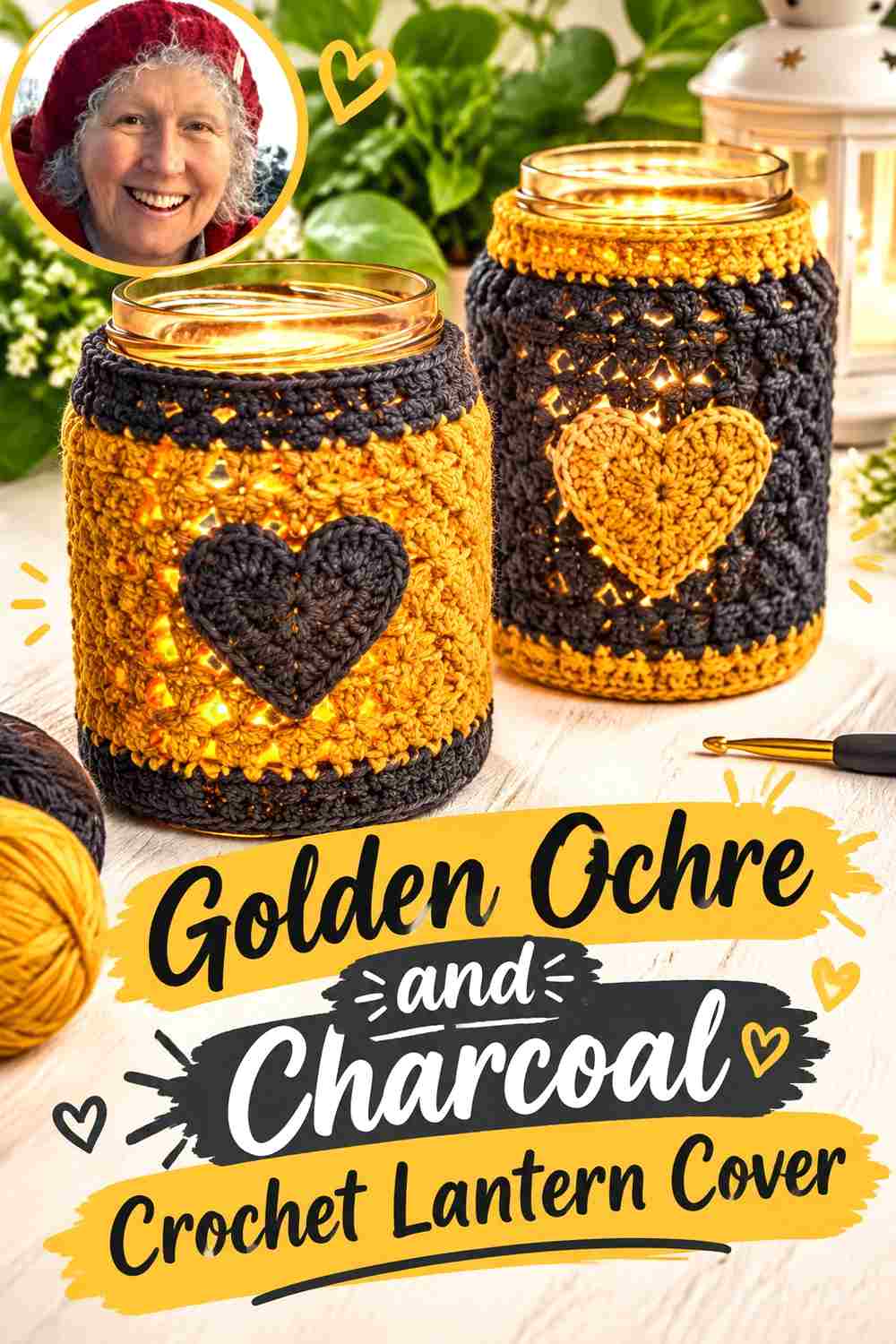
Charcoal creates a stronger graphic contrast and can make Golden Ochre openings easier to identify from a distance. Because charcoal has substantial visual weight, keep it focused around the base, rim, or one central band.
Keep Golden Ochre Larger Than Charcoal on the Lantern Sleeve
A broad Golden Ochre body preserves the warm character of the cover. Charcoal can define a smaller percentage of the surface while still providing a noticeable dark boundary.
Let Charcoal Sharpen the Golden Ochre Lantern Top Edge
Use a charcoal finishing section where the cover meets the jar or lantern opening. Keep Golden Ochre visible immediately below it so the dark edge looks like a frame rather than the start of a separate upper section.
Creator Credit: Carroway Crochet
5. Golden Ochre And Terracotta Crochet Lantern Cover
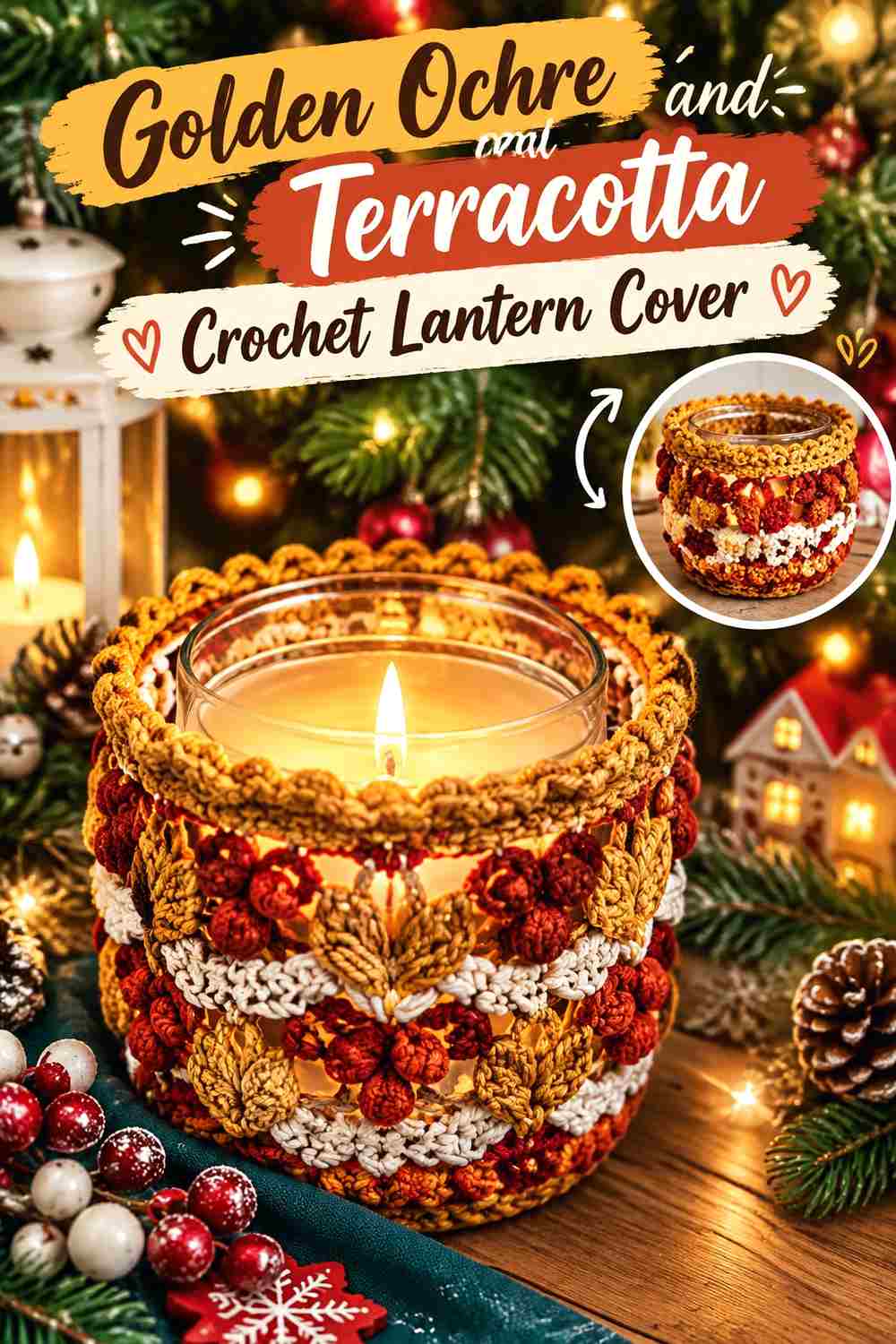
Terracotta creates a close warm-color relationship with Golden Ochre. The distinction is softer than charcoal or indigo, so the crochet texture and size of each color section become more important.
Keep Golden Ochre Lighter Than Terracotta Across the Lantern
Use Golden Ochre for the larger body and terracotta for one deeper band or border. If the two yarns look nearly identical in grayscale, avoid very thin alternations that may disappear once the cover is placed over glass.
Use Terracotta to Deepen the Golden Ochre Lantern Base
A terracotta base gives the warmer Golden Ochre openwork a darker visual foundation. Repeating terracotta only at the topmost edge can create balance without turning the cover into regular two-color stripes.
Creator Credit: The Crochet Crowd
6. Golden Ochre And Deep Teal Crochet Lantern Cover
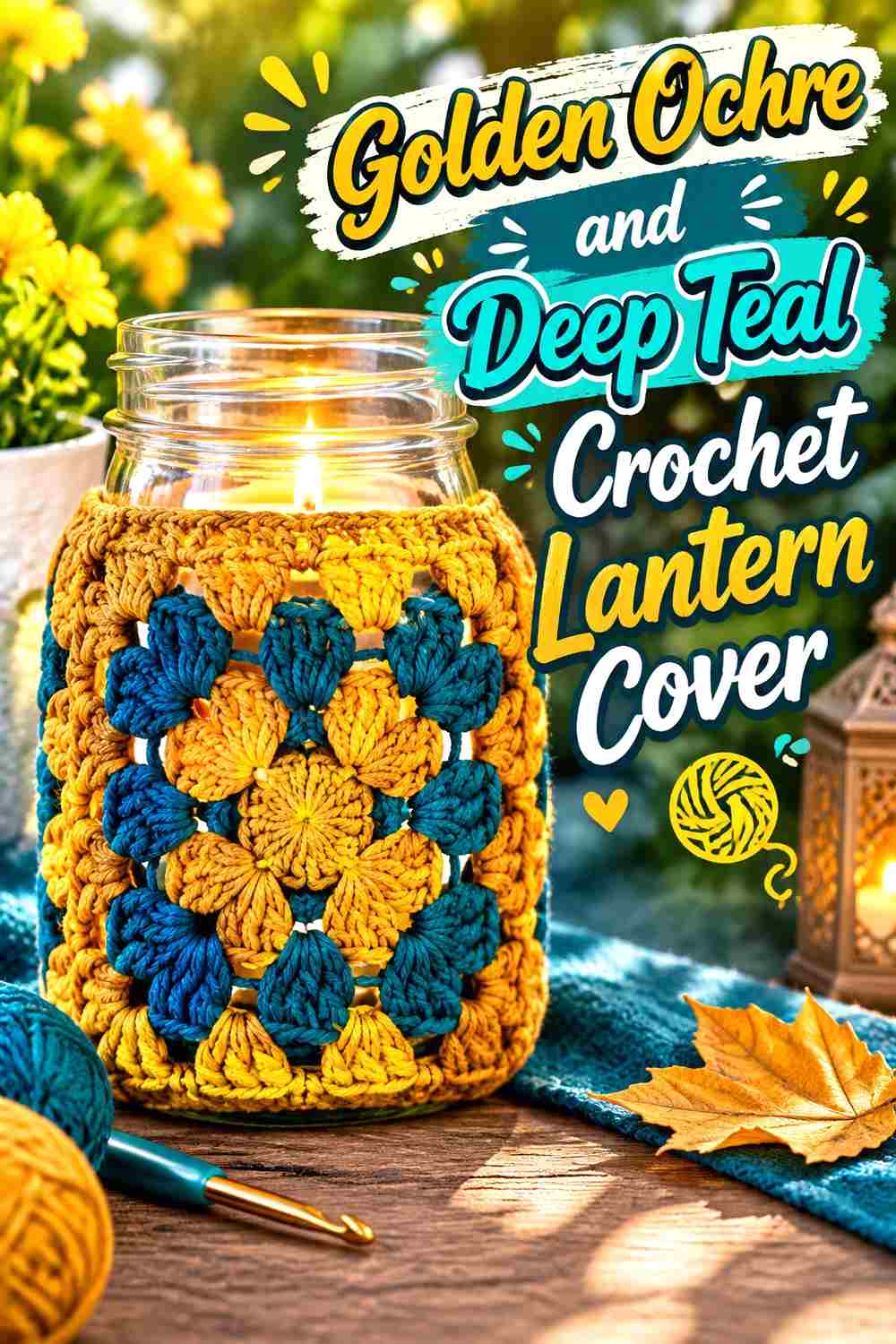
Deep teal gives Golden Ochre a strong warm-cool contrast. This palette works especially well with granny-style sections because each shade can occupy a clearly defined motif area rather than alternating through every stitch.
Keep Golden Ochre Repeated Across Deep Teal Granny Sections
Use Golden Ochre consistently in the same motif position so multiple squares or sections still read as one coordinated lantern wrap. Deep teal can occupy the surrounding rounds or joins.
Use Deep Teal to Separate Golden Ochre Lantern Motifs
Teal joins can define neighboring Golden Ochre motifs, but keep them narrow if you want the ochre sections to remain visually connected instead of looking like isolated blocks.
Creator Credit: Ophelia Talks Crochet
7. Golden Ochre And Antique Ivory Crochet Lantern Cover

Antique ivory gives Golden Ochre a vintage-leaning light contrast without the starkness of bright white. Use ochre through the main sleeve and ivory around the rim or selected textured rounds.
Let Golden Ochre Carry Most of the Antique Ivory Lantern Cover
Keep the central jar-cover surface Golden Ochre so the ivory does not take over the relatively small cylindrical form. One light border can provide enough separation.
Use Antique Ivory Beside Golden Ochre Raised Texture
If the lantern cover uses raised or post-stitch detail, ivory can mark one structural band while Golden Ochre continues through the rest. This keeps the color change connected to the crochet texture.
Creator Credit: Bo’s Handmade Shop
8. Golden Ochre And Espresso Crochet Lantern Cover
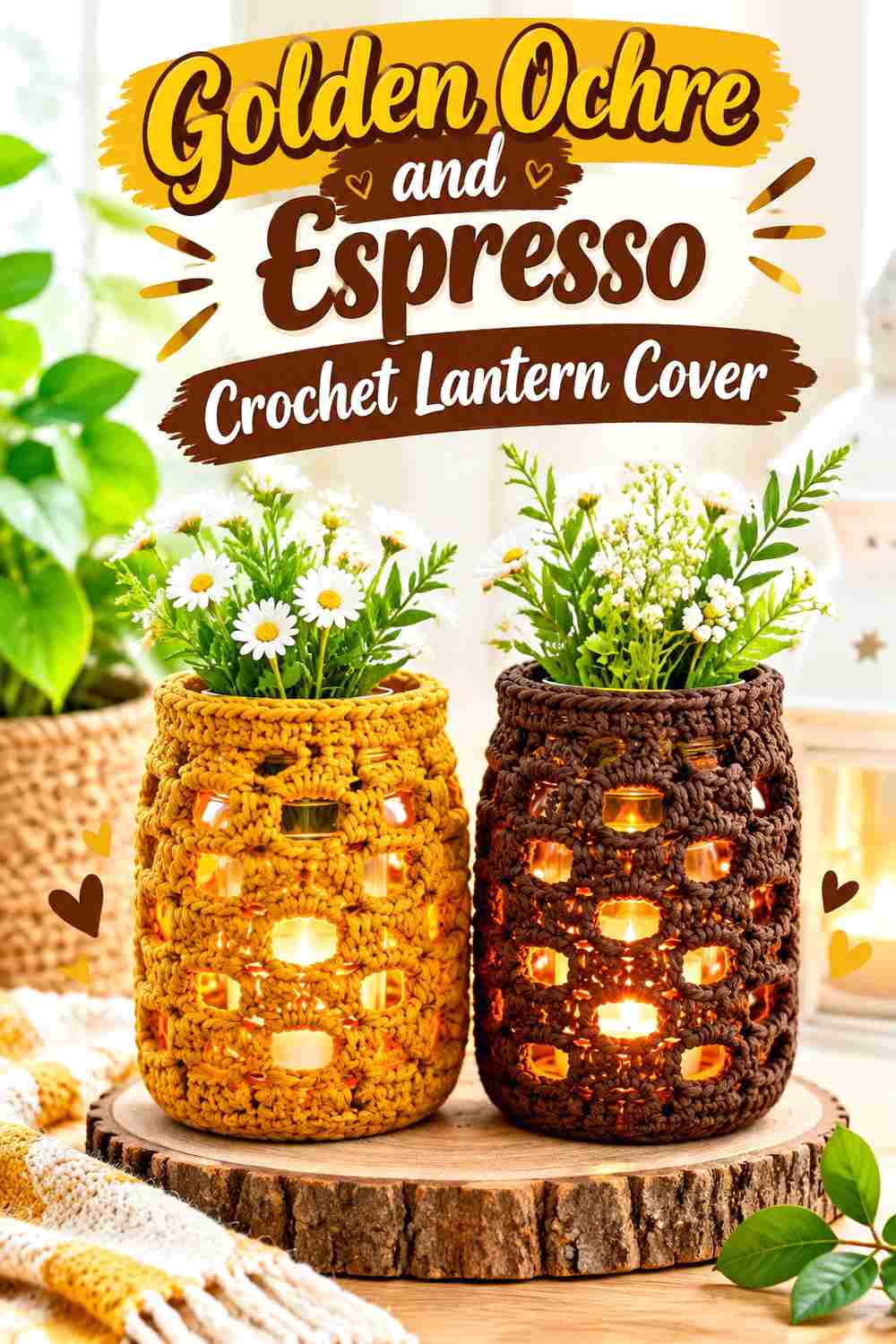
Espresso gives Golden Ochre a deep earthy anchor while staying warmer than charcoal or navy. Concentrate the brown around the densest areas and allow Golden Ochre to occupy the lighter openwork.
Keep Golden Ochre Through the Main Espresso-Accented Lace
The open body should remain mostly Golden Ochre if you want the lantern to retain its warm golden identity. Espresso is dark enough to create definition with fewer rounds.
Use Espresso to Ground the Golden Ochre Lantern Base and Tie
An espresso base can be echoed in a narrow tie or upper detail. Keeping those dark areas separated by a broad Golden Ochre middle section prevents the cover from feeling bottom-heavy.
Creator Credit: HandmadebyRaine
9. Golden Ochre And Rust Crochet Lantern Cover
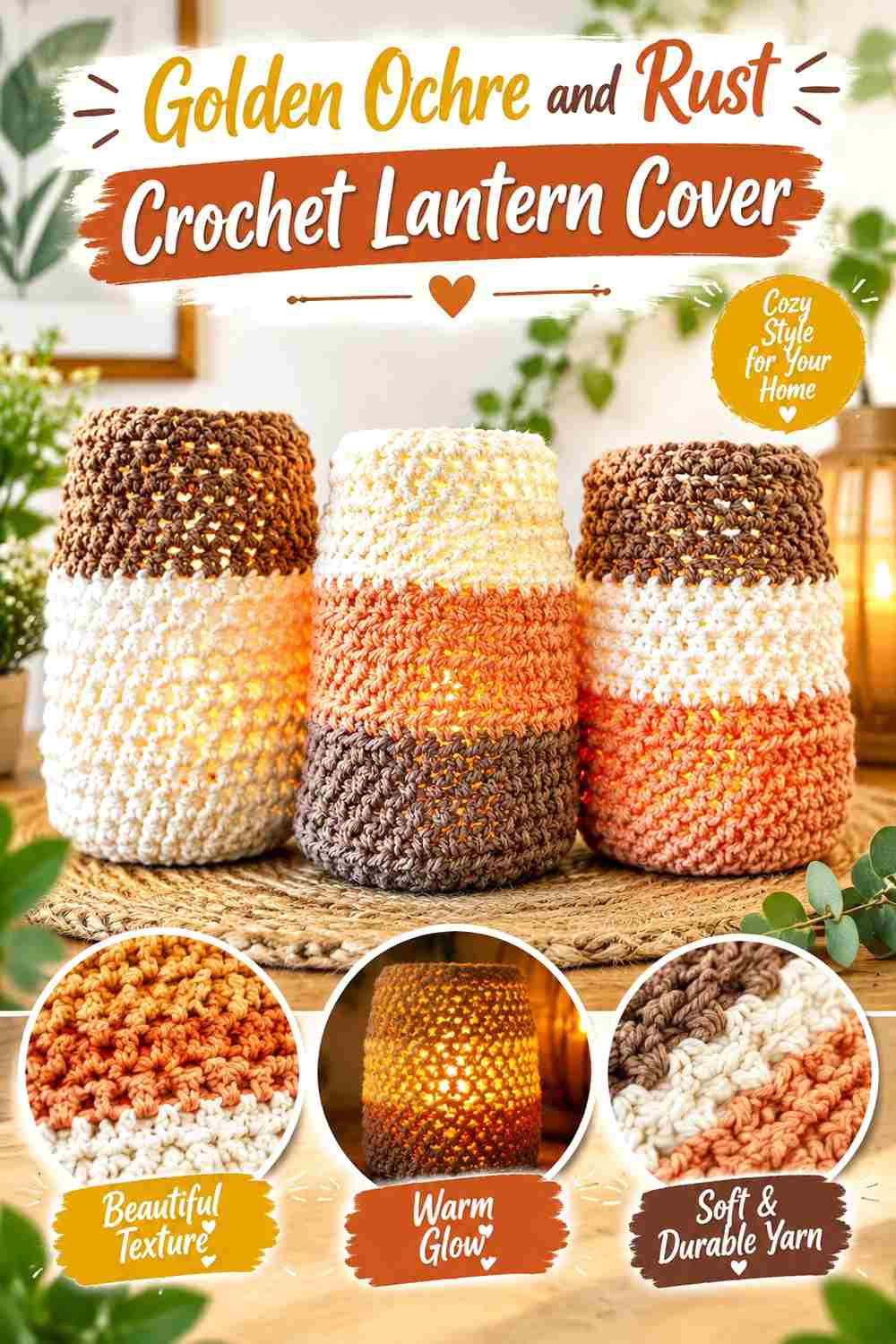
Rust produces a richer warm variation while preserving the earthy character of Golden Ochre. This pairing works best when each shade receives a substantial area rather than many narrow changes.
Keep Golden Ochre Dominant Above Rust Lantern Bands
Use Golden Ochre across most of the jar sleeve and introduce rust in one broad lower or middle band. The warm shades can merge visually if every round alternates.
Check Rust Against Golden Ochre Before Using Fine Lantern Details
Compare the yarns on the actual container. If they are close in lightness, use rust in a larger textured section where hue differences have enough space to remain visible.
Creator Credit: Crochet With Diane
10. Golden Ochre And Pearl Gray Crochet Lantern Cover
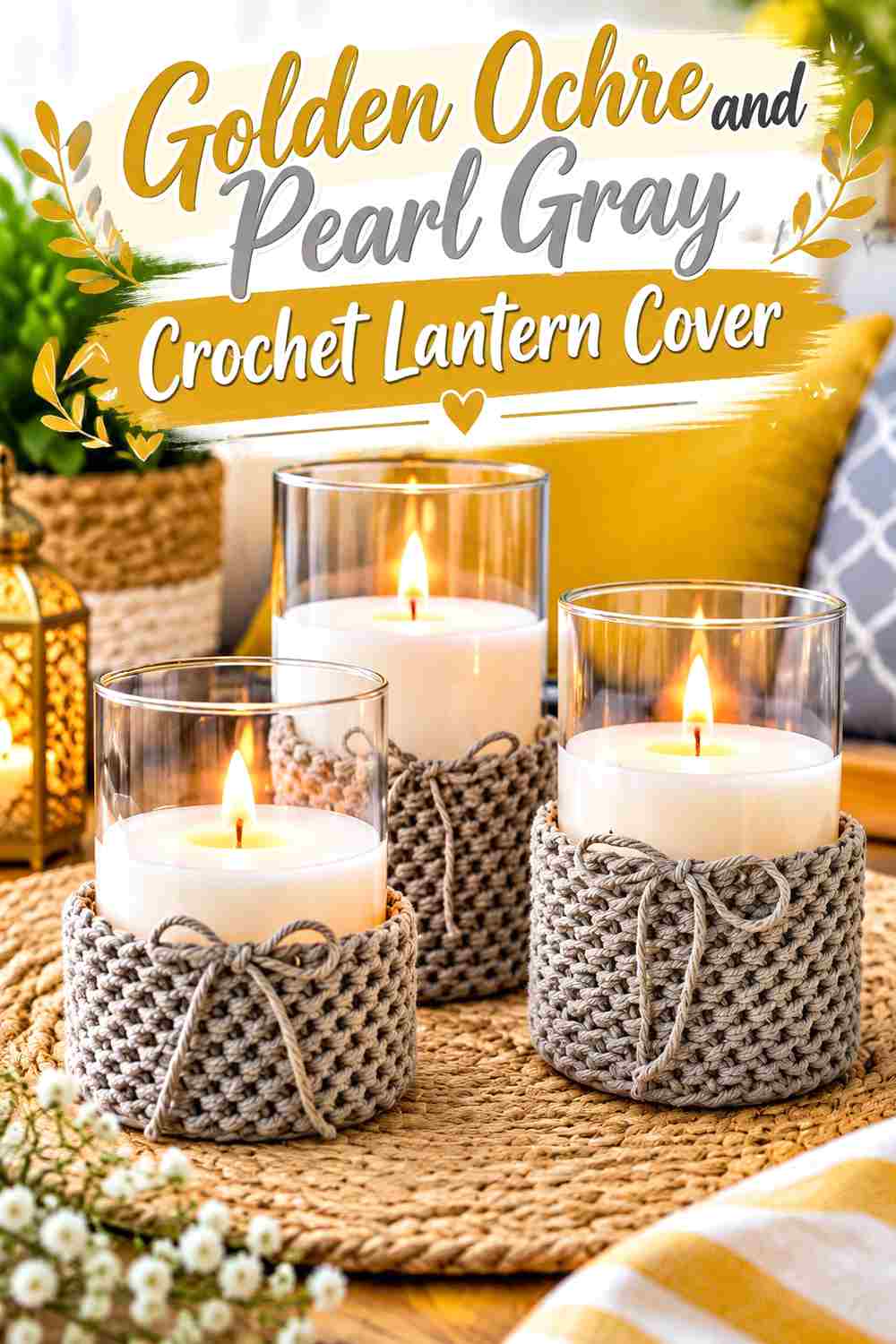
Pearl gray introduces a pale cool neutral that can make Golden Ochre appear warmer without the strong brightness of white. It is particularly useful for a ribbed or textured cozy-style lantern cover.
Keep Golden Ochre Across the Main Pearl Gray Lantern Texture
A continuous Golden Ochre field lets ridges or vertical texture remain easy to follow. Pearl gray can form a simpler top or lower section instead of interrupting every ridge.
Let Pearl Gray Lighten the Golden Ochre Lantern Border
Use pearl gray around one edge and repeat it only if the cover needs additional balance. Too many pale bands can weaken the broad Golden Ochre field.
Creator Credit: Through The Loop Yarn Craft
11. Golden Ochre And Sage Crochet Lantern Cover
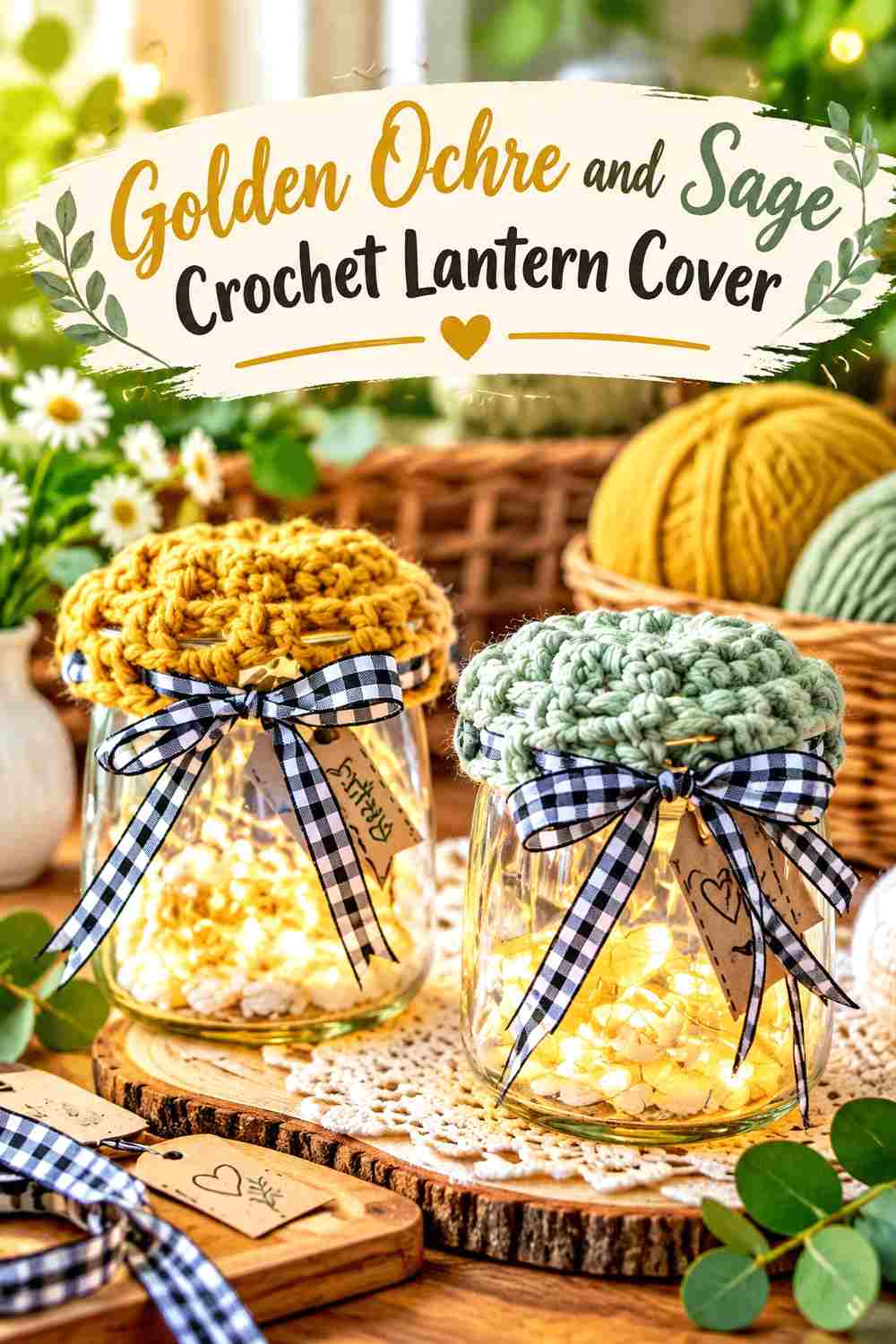
Sage gives Golden Ochre a softer green partner than olive. The pairing works well for decorative glass-jar covers where the crochet includes floral or open motif details.
Keep Golden Ochre Central Around Sage Lantern Motifs
Use Golden Ochre through most of the cylindrical cover and place sage around the motif edge or selected decorative sections. This keeps the cover ochre-led even when the green carries a recognizable botanical direction.
Repeat Sage Sparingly Around Golden Ochre Lantern Openwork
A sage top detail can be echoed near the base or in a tie. Avoid spreading sage into every Golden Ochre opening, which can make the small cover appear overly mottled.
Creator Credit: Elise Rose Crochet
12. Golden Ochre And Plum Crochet Lantern Cover
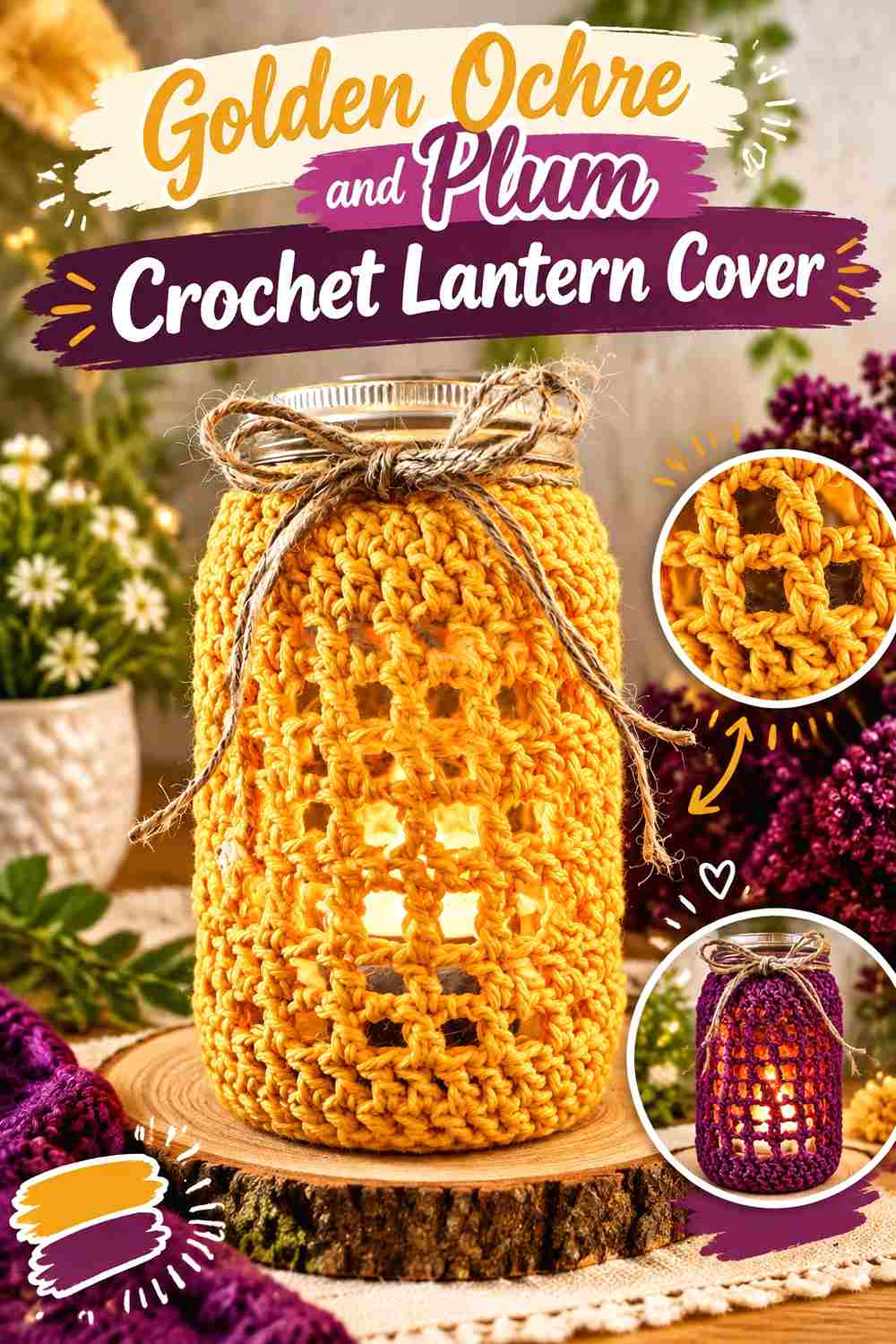
Plum creates a rich dark contrast that gives Golden Ochre more depth without using a neutral. Keep the plum concentrated around the lowest and highest structural areas so the central lantern body remains warm and visible.
Keep Golden Ochre Broad Between Plum Lantern Borders
A Golden Ochre middle section framed by plum can make the openwork easy to recognize. Avoid adding extra plum stripes through the center unless a strongly banded result is intentional.
Use Plum to Define the Golden Ochre Lantern Silhouette
A plum rim can sharpen the upper edge while a small lower repeat balances it. Because plum is visually strong, narrow sections can be sufficient.
Creator Credit: B.Hooked Crochet
13. Golden Ochre And Cocoa Crochet Lantern Cover
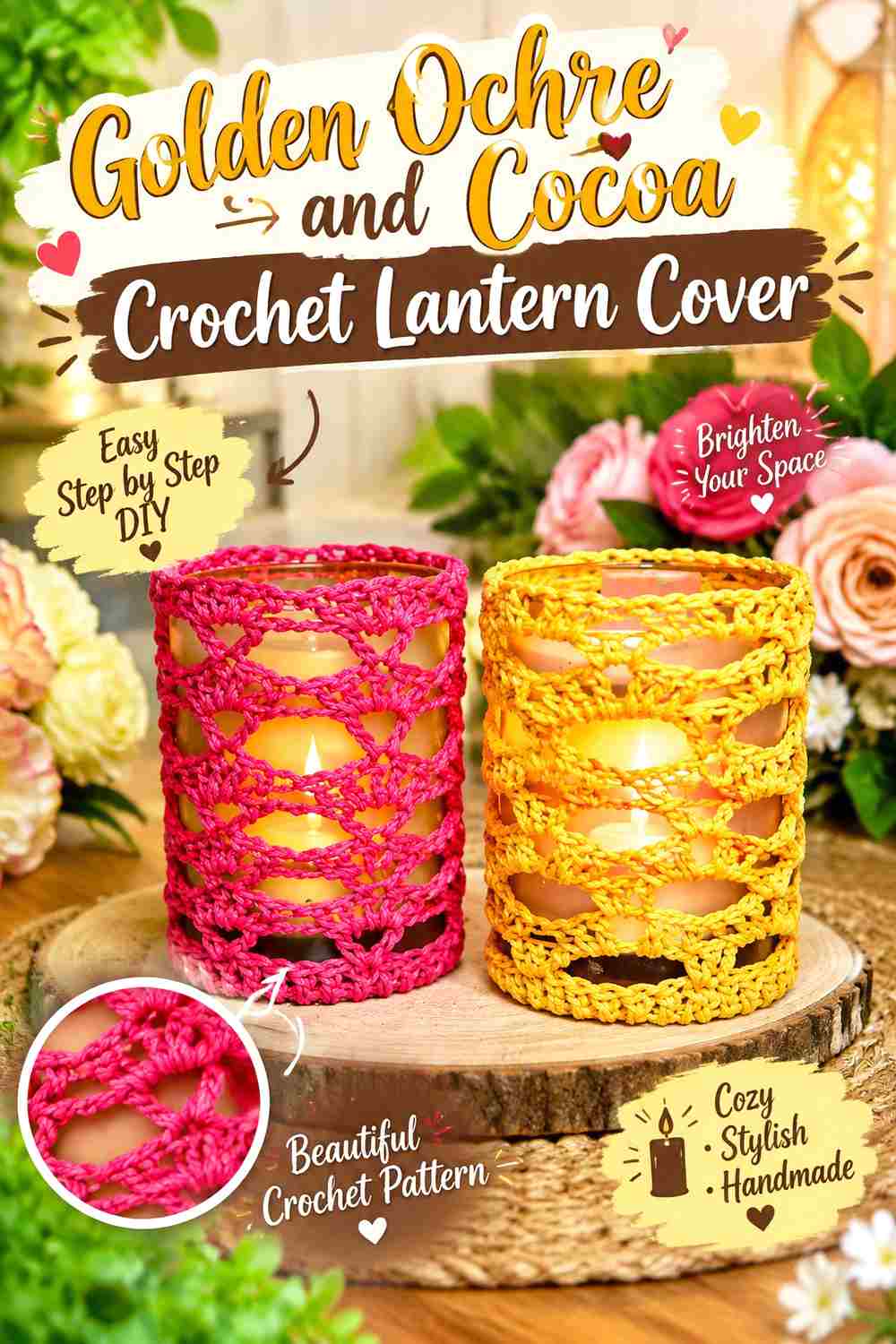
Cocoa gives Golden Ochre a quieter dark-brown partnership and suits denser candle-cozy-style covers adapted for LED lantern use. Use ochre through the main surface and cocoa around the bow, tie, or lower edge.
Keep Golden Ochre Larger Than Cocoa on the Lantern Cozy
A mostly Golden Ochre body keeps the cylindrical cover from looking too dark. Cocoa can mark structural details without requiring several brown rounds.
Use Cocoa to Anchor a Golden Ochre Lantern Tie or Bow
If the cover includes a decorative tie, cocoa can provide a compact focal point. Repeating a little cocoa at the base can connect that detail to the rest of the cover.
Creator Credit: Handmade by Appy
14. Golden Ochre And Copper Crochet Lantern Cover
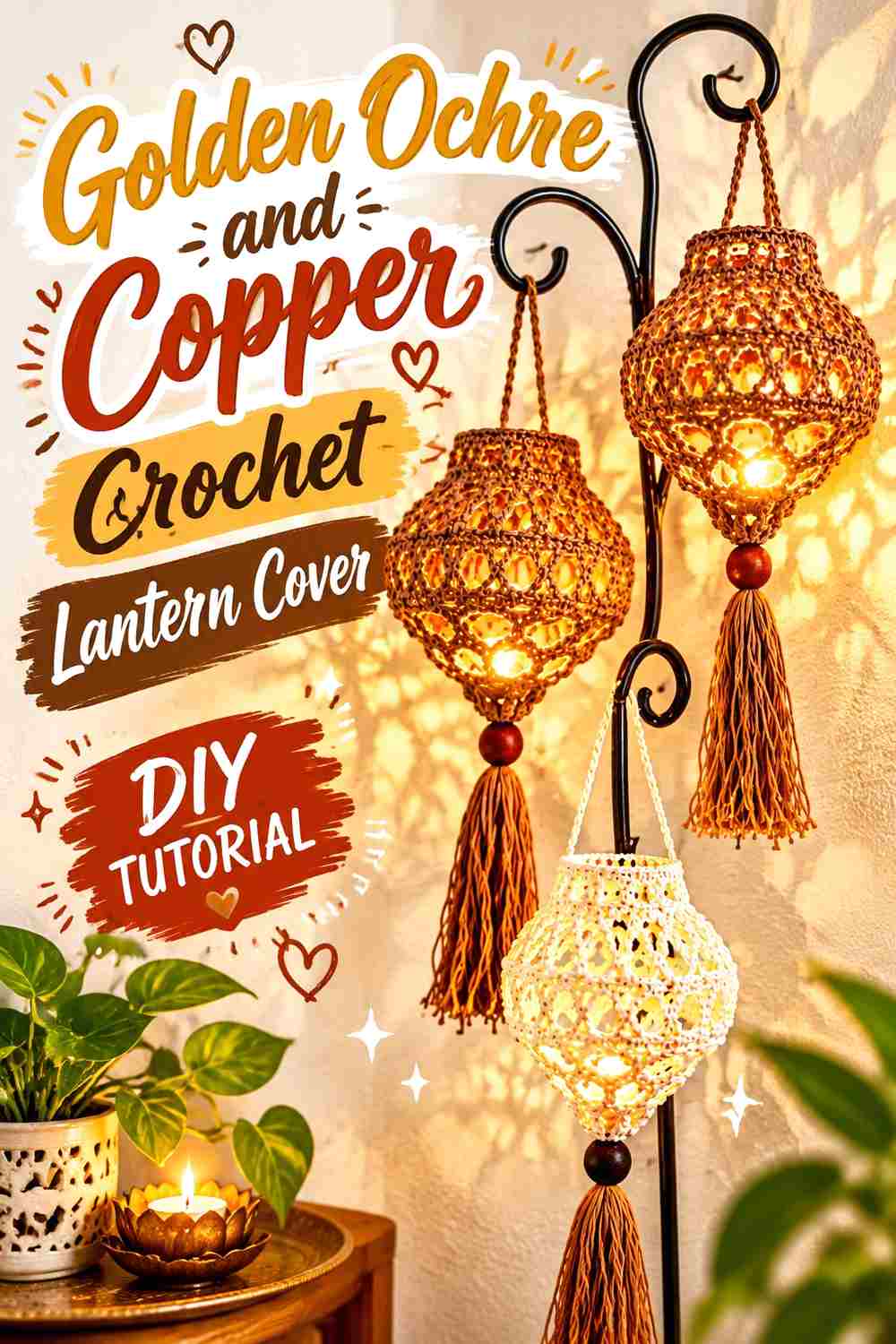
Copper adds a metallic-inspired warm accent to Golden Ochre while preserving a monochromatic autumn direction. This combination is especially effective on a freestanding or hanging lantern with tassels or decorative structure.
Let Golden Ochre Cover the Main Copper-Accented Lantern Structure
Use Golden Ochre through the broad openwork panels and reserve copper-colored yarn for the frame, tassel detail, or one border. The main field needs enough continuity for the lantern shape to remain clear.
Keep Copper Focused Around Golden Ochre Lantern Tassels and Edges
Copper works better as a repeated finishing accent than as an equal second body color. A small amount at the rim and tassels can connect separate decorative areas.
Creator Credit: Francesca Uncinettando Crochet&Love
15. Golden Ochre And Midnight Navy Crochet Lantern Cover
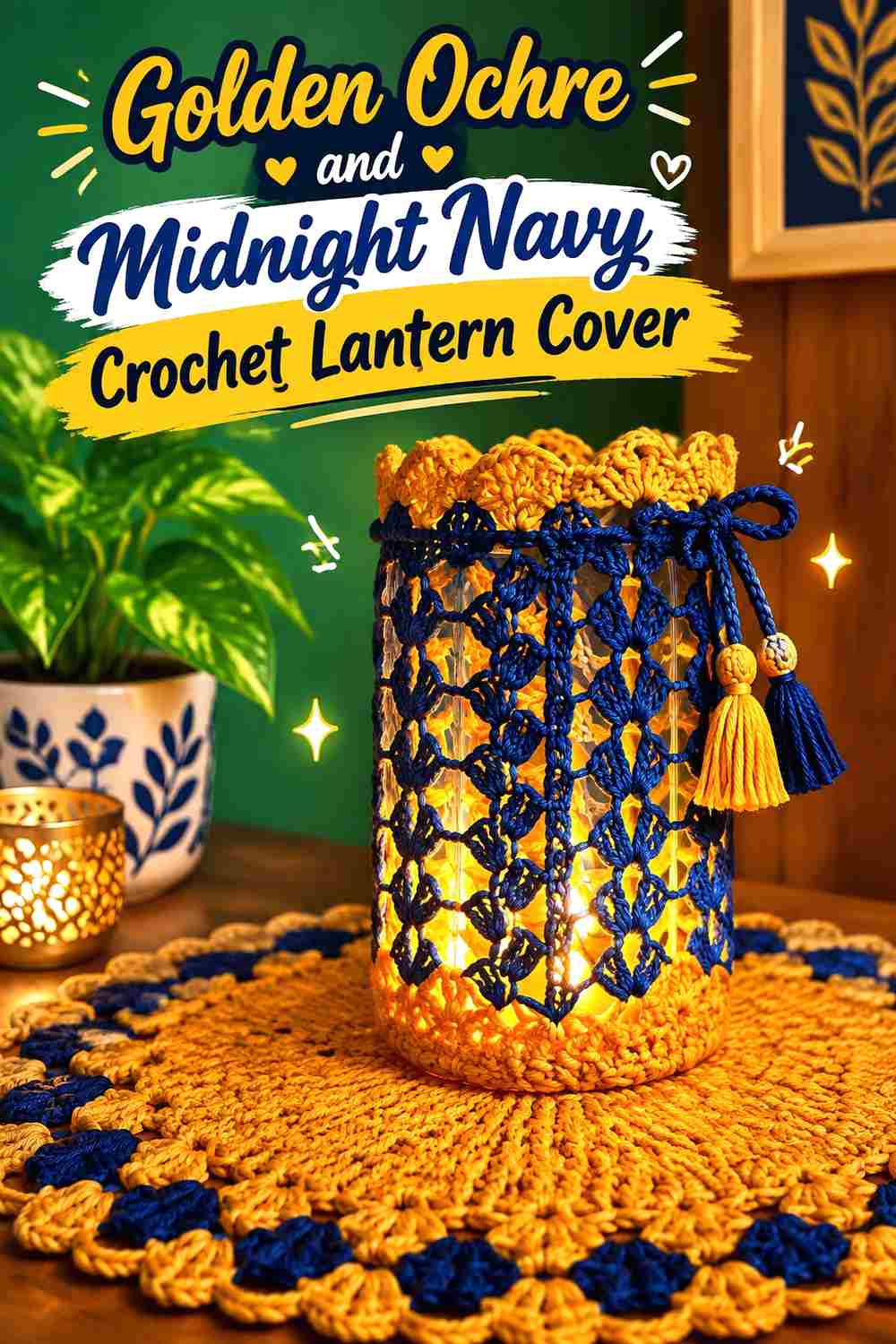
Midnight navy creates a deep cool frame around Golden Ochre. This contrast works particularly well for a compact jar lantern because even narrow navy sections remain visible against the warmer body.
Keep Golden Ochre Dominant Inside Midnight Navy Lantern Edges
Use Golden Ochre through the broad central cover while navy is restricted to the rim, base, or one structural band. This keeps the lantern visually warm instead of predominantly dark.
Use Midnight Navy to Clarify Golden Ochre Lantern Openings
A navy section beside Golden Ochre mesh can make the change in stitch density more obvious. Keep the darkest color away from every opening so the lace does not become over-outlined.
Creator Credit: কুশিকাটার কাজের ডিজাইন
16. Golden Ochre And Oatmeal Crochet Lantern Cover

Oatmeal creates a soft neutral pairing that lets Golden Ochre remain the strongest color without a dramatic boundary. It works well for a small decorative LED holder where shape and crochet texture should be noticed before color contrast.
Keep Golden Ochre Stronger Than Oatmeal on the Lantern Body
Give Golden Ochre the larger or more saturated sections and keep oatmeal near the rim, petal-like edge, or other finishing areas. If both colors are pale, use broader sections so the difference remains visible.
Use Oatmeal to Soften Golden Ochre Lantern Details
Oatmeal can lighten a decorative edge without producing the high contrast of cream or white. A limited amount also allows the Golden Ochre glow effect to remain the main visual direction.
Creator Credit: TheHappyHues🍁
17. Golden Ochre Cream And Forest Green Crochet Lantern Cover

This three-color palette gives Golden Ochre a pale separator and a darker botanical anchor. Keep ochre through the main openwork, cream around the lightest detail, and forest green in the smallest structural areas.
Let Golden Ochre Lead Between Cream and Forest Green
Golden Ochre should occupy the largest connected surface. Cream and forest green become more useful when they serve opposite light and dark roles rather than appearing in equal stripes.
Use Cream to Separate Golden Ochre From Forest Green
If green sits directly beside ochre and the values are similar, a small cream section can provide a visual pause. Use it only where the separation improves an important opening or border.
Keep Forest Green Secondary to Golden Ochre at the Lantern Edge
A forest-green rim or base can frame the cover effectively. Keeping the dark green near the perimeter protects the central Golden Ochre lace from becoming visually crowded.
Creator Credit: 小师妹手作
18. Tonal Golden Ochre And Amber Crochet Lantern Cover
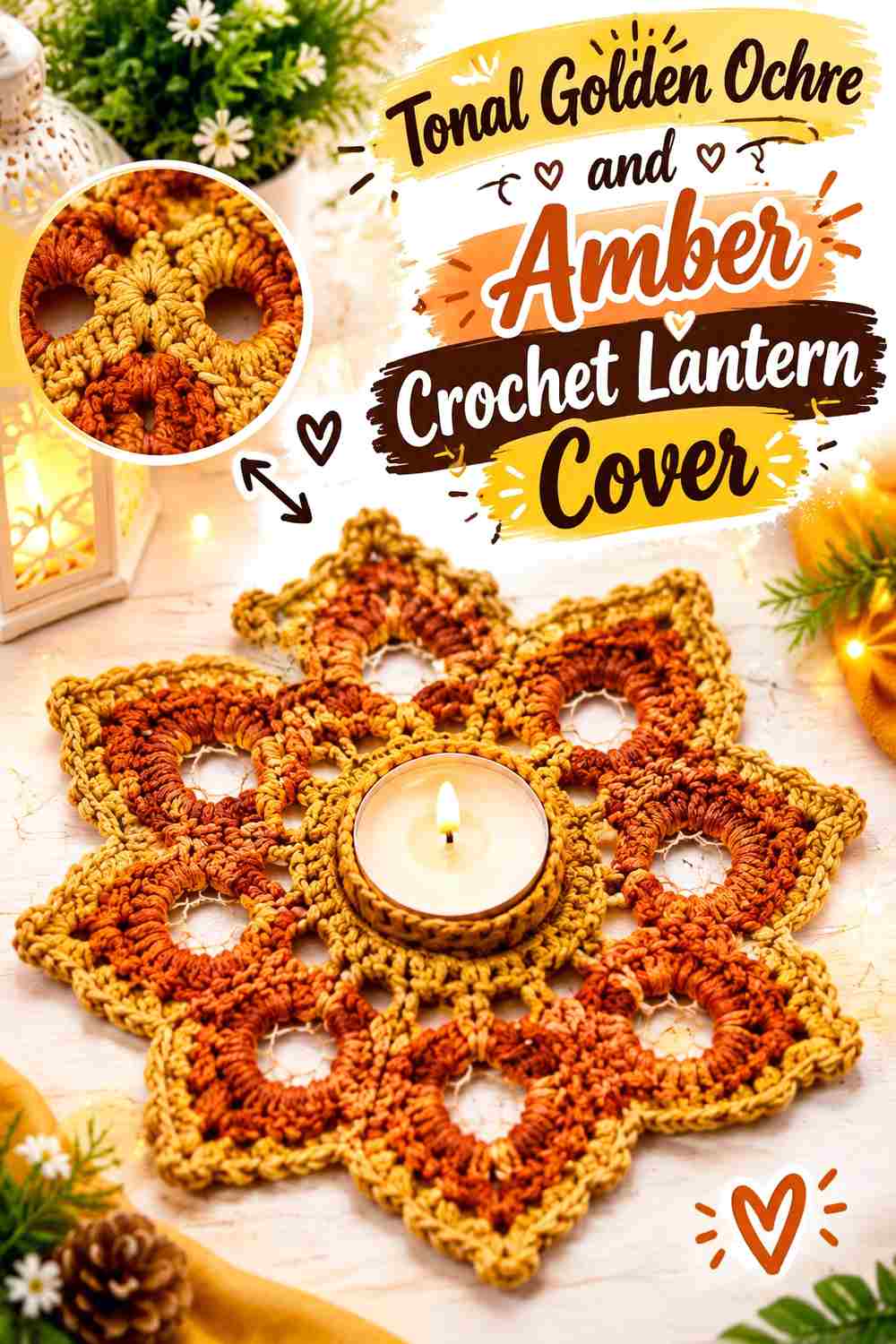
The final idea stays within a golden palette. Golden Ochre serves as the dominant middle tone, amber deepens selected sections, and a lighter wheat-gold direction can highlight the most open areas. The result relies on tonal progression rather than strong hue contrast.
Keep Golden Ochre Central Across the Tonal Lantern Cover
Use Golden Ochre through most of the sleeve so the lighter and darker golds behave as variations rather than three equal colors. Large connected sections help a tonal palette remain readable.
Use Amber to Deepen Golden Ochre at the Lantern Base
Amber can make the base appear visually heavier while the main Golden Ochre body stays brighter. Repeat it only once near the upper edge if the cover needs additional balance.
Keep Lighter Gold Details Separate From Golden Ochre Openwork
A paler gold can mark one upper band or selected open section. Check all three shades together before starting because tonal colors that look different in skeins can become much closer when lit from behind.
Creator Credit: Crochet Jewel
Comparing the Golden Ochre Lantern Cover Palettes
For the strongest light contrast, cream, antique ivory, oatmeal, and pearl gray make Golden Ochre easier to distinguish around rims and open stitches. These palettes suit covers where the crochet pattern should remain soft rather than heavily outlined.
Indigo, charcoal, espresso, plum, cocoa, and midnight navy create deeper definition. They are especially useful around the base and top edge because relatively little dark color can frame a large Golden Ochre section.
Olive, sage, forest green, and deep teal move the palette toward botanical or jewel-toned contrast, while terracotta, rust, copper, and amber keep it firmly warm and earthy.
The tonal amber idea creates the least hue contrast and therefore puts more emphasis on stitch texture and the light showing through the openings. The three-color cream-and-forest-green option provides the greatest value range but needs a clear hierarchy to avoid making a small lantern cover feel busy.
Conclusion
Golden Ochre works particularly well for crochet lantern covers because the warm color remains noticeable even when open stitches expose much of the container beneath. Keeping the central lace or textured body Golden Ochre is the simplest way to maintain a clear dominant shade.
Cream, ivory, oatmeal, and pearl gray create lighter borders. Charcoal, indigo, espresso, plum, cocoa, and navy give the cover stronger definition. Sage, olive, teal, forest green, terracotta, rust, copper, and amber add color while keeping the palette earthy.
Before committing to the complete color sequence, place the developing cover over its intended jar or lantern structure and view it both illuminated and unlit. Openwork, glass, and background color can change how much of each yarn shade is actually perceived. Follow the credited tutorial for its original construction, then adapt the palette without reconstructing its protected pattern instructions.
For an illuminated display, keep yarn away from open flame and exposed heat and use an appropriate battery-operated LED light according to its manufacturer’s instructions.
Frequently Asked Questions
What colors contrast clearly with Golden Ochre on a crochet lantern cover?
Cream, ivory, charcoal, indigo, navy, plum, pearl gray, and espresso can all provide noticeable contrast. The exact result depends on the specific yarns, so compare them together before crocheting narrow borders.
Should Golden Ochre cover most of a crochet lantern sleeve?
It can, and broad Golden Ochre sections are especially useful in openwork because much of the visual surface is actually the glass or space beneath the stitches. Supporting colors can then be limited to rims, bases, ties, or selected bands.
How can I make Golden Ochre openwork easier to see?
Use a contrasting border, choose a container or display background that does not visually merge with the yarn, and keep important openwork sections in larger uninterrupted areas. A darker or lighter neighboring color can also define changes in stitch texture.
Can Golden Ochre and rust be used together on a lantern cover?
Yes. They create a warm tonal palette. Because the shades may be similar in value, use each in substantial sections rather than expecting very narrow stripes to remain obvious.
What color works well around the rim of a Golden Ochre lantern cover?
Cream or ivory can lighten the rim, while charcoal, indigo, espresso, plum, cocoa, or navy can create a darker frame. Olive and sage provide a softer colored alternative.
Can I use a real candle inside a Golden Ochre crochet lantern cover?
A crochet cover should not be treated as protection from flame or heat. Keep yarn away from open flames and exposed hot components. For the decorative glow discussed here, use a compatible battery-operated LED light and follow its manufacturer’s directions.
How do I substitute another shade for Golden Ochre?
Choose another warm muted yellow-gold that preserves the intended contrast with the supporting colors. If the replacement is substantially lighter, darker, or brighter, compare the complete palette again before making the full cover.