Icy blue gives crochet slipper socks an immediate winter direction while remaining light enough for cuffs, ribbing, cables, and snowflake motifs to stay visible. It works especially well as the main foot color because white, navy, silver gray, lavender, or charcoal can then define a snowflake without covering too much of the sock.

Snowflake placement matters on slipper socks. A motif positioned across the top of the foot stays more visible than one placed near the sole, while a snowflake at the outer ankle can become a focal detail above the slipper opening. On taller slipper socks, the cuff provides another useful location for repeated flakes or a contrasting winter border.
The 13 ideas below keep icy blue as the recurring anchor while changing the snowflake color, cuff treatment, toe, sole, texture, and contrast. The credited tutorials support the slipper or slipper-sock constructions; the icy-blue snowflake treatments are independent editorial adaptations.
Quick List
- Icy Blue And Winter White Crochet Classic Snowflake Slipper Socks
- Icy Blue And Navy Crochet Ribbed Snowflake Slipper Socks
- Icy Blue And Silver Gray Crochet Crossover Snowflake Slippers
- Icy Blue And Pearl White Crochet Sideways Snowflake Slipper Socks
- Icy Blue And Lavender Crochet Drawstring Snowflake Slipper Socks
- Icy Blue And Charcoal Crochet House Snowflake Slippers
- Icy Blue And Soft Gray Crochet Chunky Cable Snowflake Slippers
- Icy Blue And Winter White Crochet Slipper Boots With Snowflake Cuffs
- Icy Blue And Misty Teal Crochet Toe Up Snowflake Slipper Socks
- Icy Blue And Dusty Blush Crochet Rectangle Snowflake Slippers
- Icy Blue And Deep Navy Crochet Textured Slipper Boots
- Icy Blue And Pearl Silver Crochet Folded Snowflake Slippers
Keep Icy Blue Dominant Around the Snowflake
A snowflake is easier to recognize when it sits on a broad, consistent background. Keeping the upper foot or ankle area icy blue gives a white, navy, gray, or lavender motif enough uninterrupted space for its points to remain clear.
Avoid surrounding one snowflake with several unrelated stripes or small appliqués. Slipper socks already contain changes in shape around the toe, heel, and cuff, so the motif usually benefits from a quieter field.
Place Icy Blue Snowflakes Where Footwear Texture Will Not Hide Them
The top of the foot, outside ankle, and cuff are useful locations because they stay visible when the slipper sock is worn. Highly textured soles and heel areas are less useful for a detailed snowflake because shaping and wear can distort the motif visually.
Also consider the cuff color. A contrasting cuff can frame an icy-blue foot, but if the snowflake is positioned close to the opening, too many competing colors can make the upper portion of the sock feel crowded.
1. Icy Blue And Winter White Crochet Classic Snowflake Slipper Socks

This is the clearest snow-inspired palette in the collection. Keep icy blue across the foot and ankle, then use winter white for one prominent snowflake and a narrow cuff edge.
Icy Blue Gives the Winter White Snowflake a Clear Foot Panel
Place the white snowflake on an uninterrupted icy-blue area across the top or outer side of the foot.
Leaving blue around every point keeps the motif recognizable and prevents it from merging into a white cuff.
Winter White Can Repeat Around the Icy Blue Slipper-Sock Cuff
A narrow white edge connects the snowflake to the opening without dividing the whole sock into equal colors.
If the snowflake is large, keep the cuff treatment restrained so the motif remains the main white feature.
Creator Credit: Jayda InStitches YouTube tutorial
2. Icy Blue And Navy Crochet Ribbed Snowflake Slipper Socks
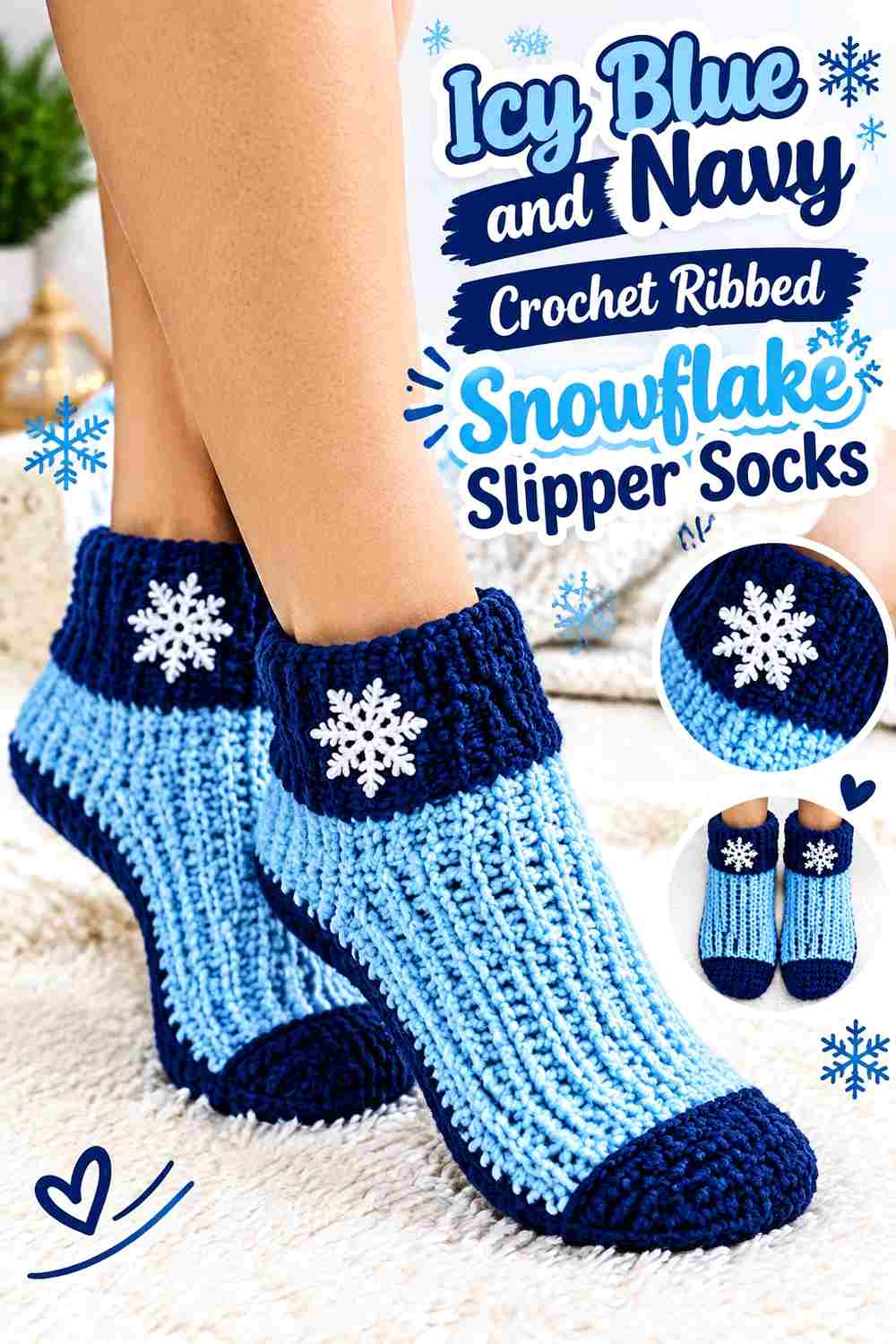
Navy creates the strongest blue-on-blue contrast. Let icy blue cover the ribbed slipper-sock body and use navy for the snowflake, cuff edge, or narrow toe detail.
Icy Blue Keeps Ribbing Visible Around a Navy Snowflake
Work the majority of the ribbed surface in icy blue so the raised lines remain continuous beneath and around the motif.
Wide navy stripes can interrupt that vertical texture and compete with the snowflake.
Navy Gives the Icy Blue Snowflake Strong Definition
A dark navy motif can keep small points and branches visible against pale blue.
Repeat navy only once elsewhere, such as a narrow cuff line, if you want the snowflake to stay visually dominant.
Creator Credit: Littlejohn’s Yarn YouTube tutorial
3. Icy Blue And Silver Gray Crochet Crossover Snowflake Slippers
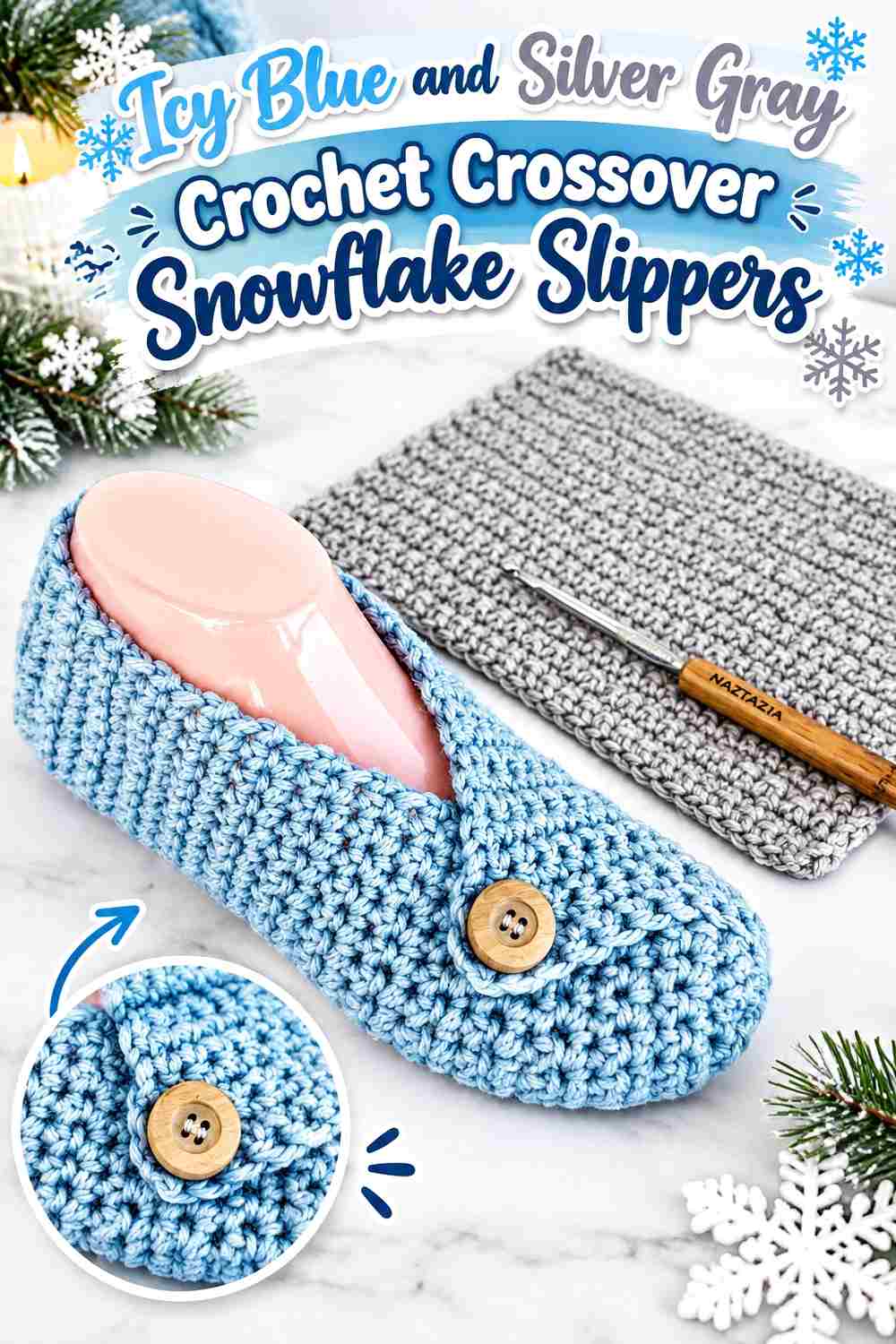
A crossover slipper has overlapping upper sections that already create strong lines. Use icy blue across both overlapping pieces and place silver gray on a small snowflake or finishing border.
Icy Blue Should Connect Both Crossover Slipper Panels
Keeping both overlapping sections icy blue prevents the construction from looking like two unrelated pieces.
That continuous field also provides a cleaner background for a small snowflake near the outer side.
Silver Gray Can Add a Subtle Snowflake to Icy Blue Crossover Slippers
Choose a gray that is clearly deeper or lighter than the blue if you want the motif to show from a distance.
A tonal silver snowflake creates a softer result than white or navy while still keeping the winter theme.
Creator Credit: naztazia YouTube tutorial
4. Icy Blue And Pearl White Crochet Sideways Snowflake Slipper Socks
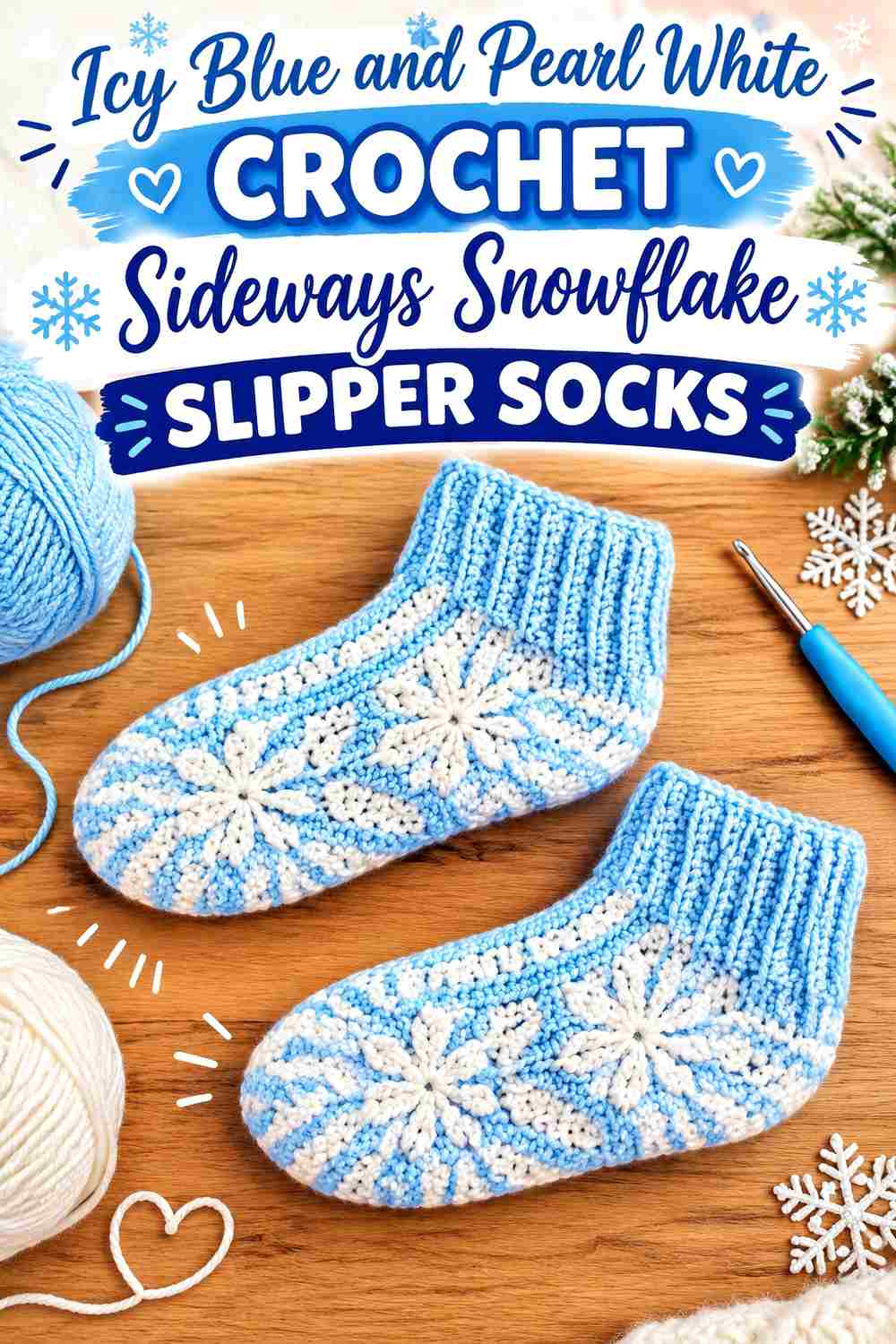
A sideways construction creates long horizontal stitch lines, making pearl white most effective in a contained motif or cuff rather than repeated stripes.
Icy Blue Should Stay Continuous Across the Sideways Slipper Body
Use one icy-blue field through the main rectangle or shaped panel so the stitch direction stays easy to read.
Frequent pale bands can make the sock look striped rather than snowflake-focused.
Pearl White Can Brighten an Icy Blue Snowflake Without Looking Stark
Use pearl white for the snowflake and perhaps one narrow finishing edge.
The softer white keeps the palette light while still giving the motif enough separation from the blue background.
Creator Credit: Yay For Yarn YouTube tutorial
5. Icy Blue And Lavender Crochet Drawstring Snowflake Slipper Socks
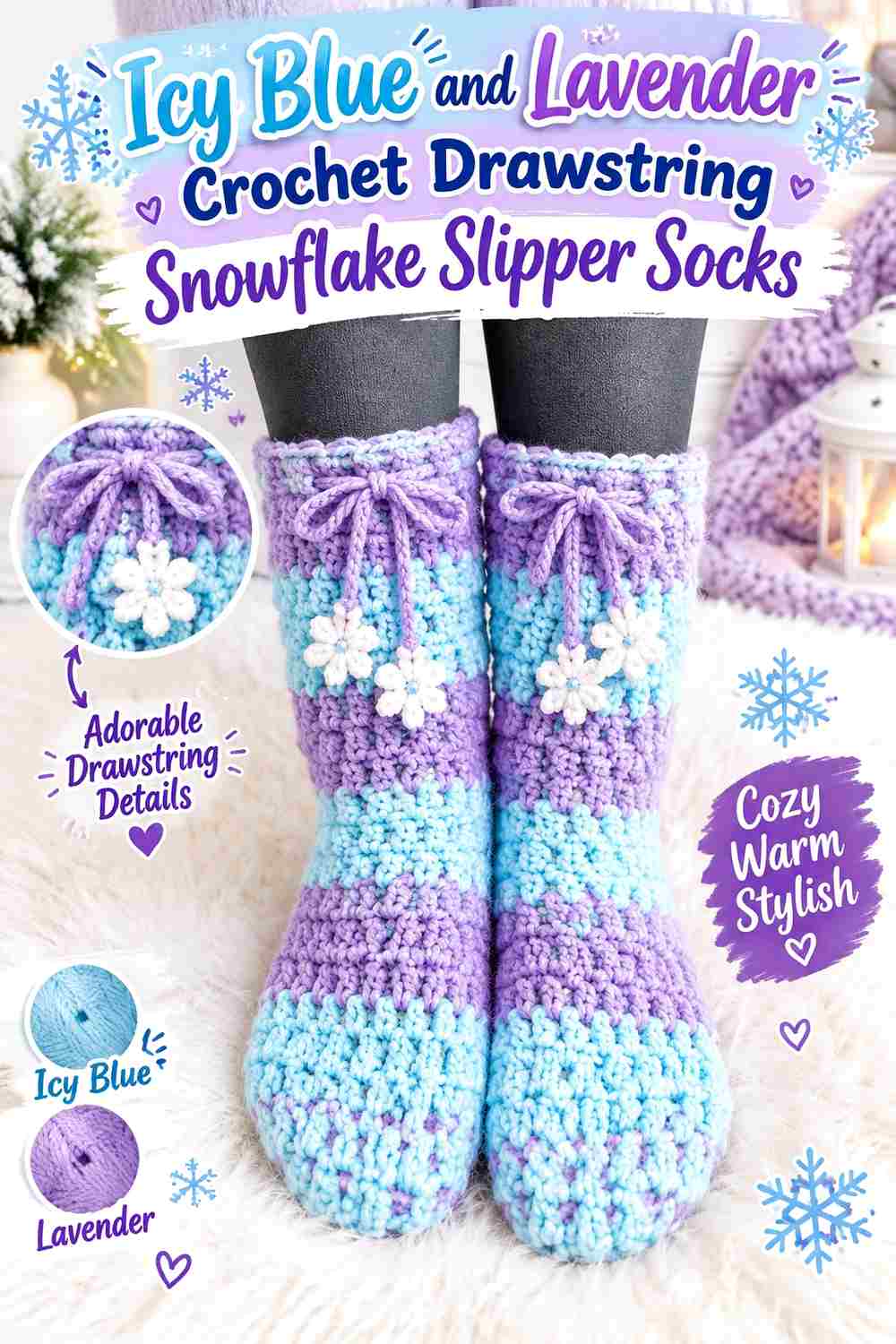
Lavender creates a cool neighboring accent that works well on taller slipper socks. Icy blue can cover the foot and leg while lavender marks the snowflake, drawstring, or pom-pom detail.
Icy Blue Should Dominate the Tall Snowflake Slipper Sock
Keep the long tube largely icy blue so the slipper sock does not become visually segmented from toe to cuff.
A tall construction already gives plenty of room for one or two deliberate decorative areas.
Lavender Can Link the Icy Blue Snowflake to the Drawstring
Use lavender for the snowflake and repeat it on the cord or pom-pom if the construction includes those features.
Keeping both lavender details near the upper half helps the foot remain visually calm.
Creator Credit: Fiber Flux YouTube tutorial
6. Icy Blue And Charcoal Crochet House Snowflake Slippers

Charcoal gives pale icy blue a dark neutral frame. Use blue on the main slipper and charcoal on the snowflake, cuff edge, or a narrow sole-adjacent line.
Icy Blue Needs Plenty of Surface Around a Charcoal Snowflake
A dark motif becomes visually dominant quickly, so leave broad blue areas around it.
This works especially well on simple house slippers where there are few other decorative details.
Charcoal Can Frame Icy Blue Without Covering the Slipper
Use charcoal sparingly on the cuff or opening rather than carrying it across the entire toe.
That preserves the light winter appearance while giving the edges stronger definition.
Creator Credit: KnitcroAddict YouTube tutorial
7. Icy Blue And Soft Gray Crochet Chunky Cable Snowflake Slippers
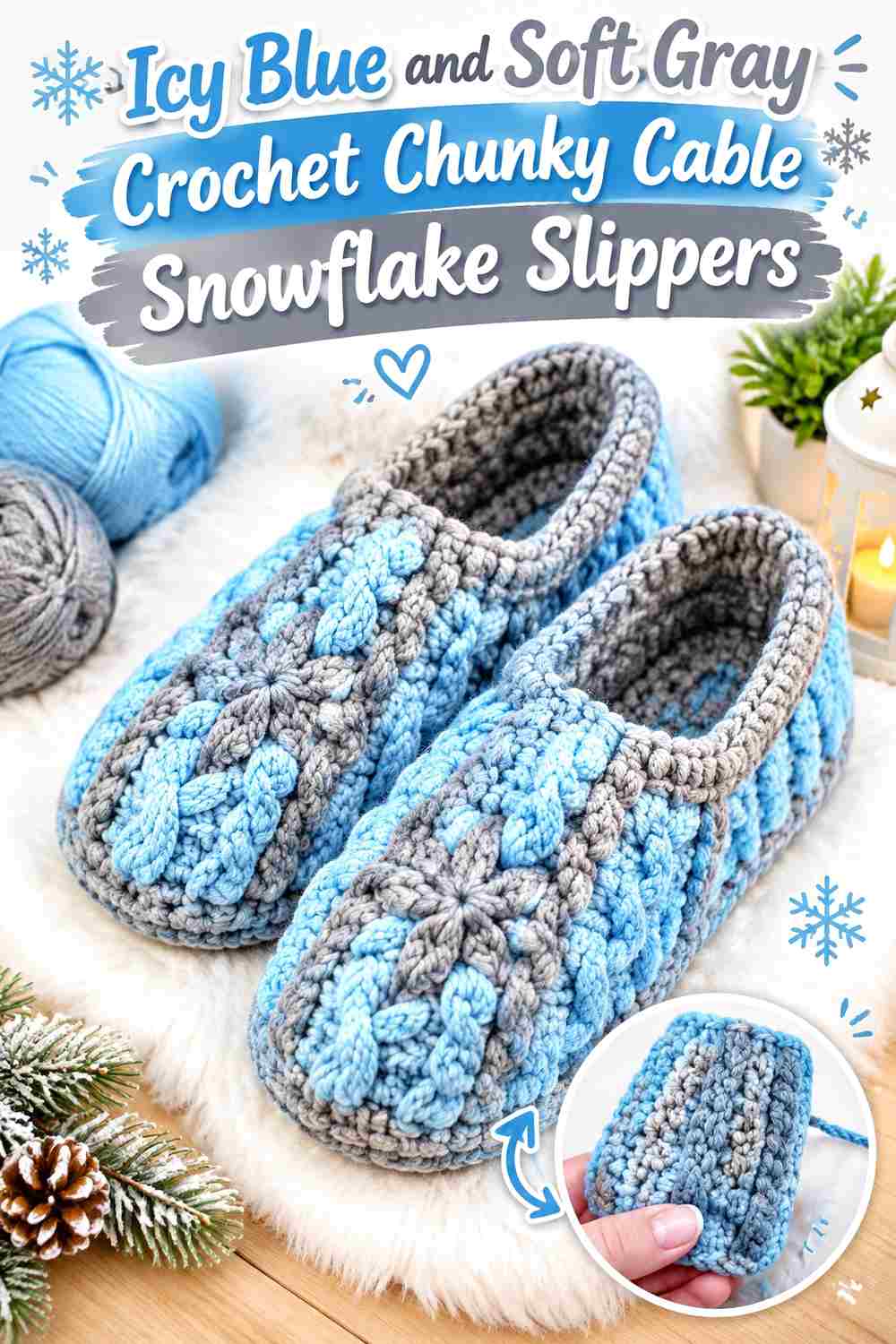
Cable texture already provides strong visual movement, so the snowflake should not compete with every raised section. Keep the cables icy blue and place soft gray on one flatter snowflake area or cuff.
Icy Blue Lets Chunky Cable Texture Stay Visible
Work the cable field in a single blue shade so the raised crossings create their own shadows.
Changing colors inside each cable can make the surface too busy for an added snowflake.
Soft Gray Can Support an Icy Blue Snowflake Without Sharp Contrast
Use soft gray for a small motif or edge when you want a quieter winter effect.
If the gray is too close to the blue, move the snowflake onto a flatter section where shape can help compensate for lower color contrast.
Creator Credit: Tamara Kelly – Moogly YouTube tutorial
8. Icy Blue And Winter White Crochet Slipper Boots With Snowflake Cuffs

A taller slipper boot gives the cuff enough room for snowflake decoration without crowding the foot. Keep the body icy blue and place white snowflakes around the upper section.
Icy Blue Should Connect the Foot and Ankle of the Slipper Boot
Use icy blue continuously from toe through most of the ankle so the taller shape remains visually unified.
A separate white cuff can work, but it should not make the boot appear split into equal halves.
Winter White Snowflakes Can Circle the Icy Blue Cuff
Repeat small white motifs around the upper edge if the cuff provides enough space.
Keep the lower boot simpler so the decorative upper section remains the focal area.
Creator Credit: MJ’s Off The Hook Designs YouTube tutorial
9. Icy Blue And Misty Teal Crochet Toe Up Snowflake Slipper Socks

Misty teal introduces a deeper blue-green accent while staying within a cool winter family. Icy blue can carry the toe-up body and teal can define one side snowflake or cuff.
Icy Blue Should Stay Continuous Through the Toe-Up Foot
Keep the toe, instep, and most of the ankle the same icy blue so the shaping does not also create unnecessary color breaks.
This leaves the snowflake free to become the primary motif.
Misty Teal Can Give an Icy Blue Snowflake More Depth
Use teal where you want more definition than silver gray but less contrast than navy.
Repeating it at the cuff can connect the motif to the top without changing the toe color.
Creator Credit: Woolpedia YouTube tutorial
10. Icy Blue And Dusty Blush Crochet Rectangle Snowflake Slippers
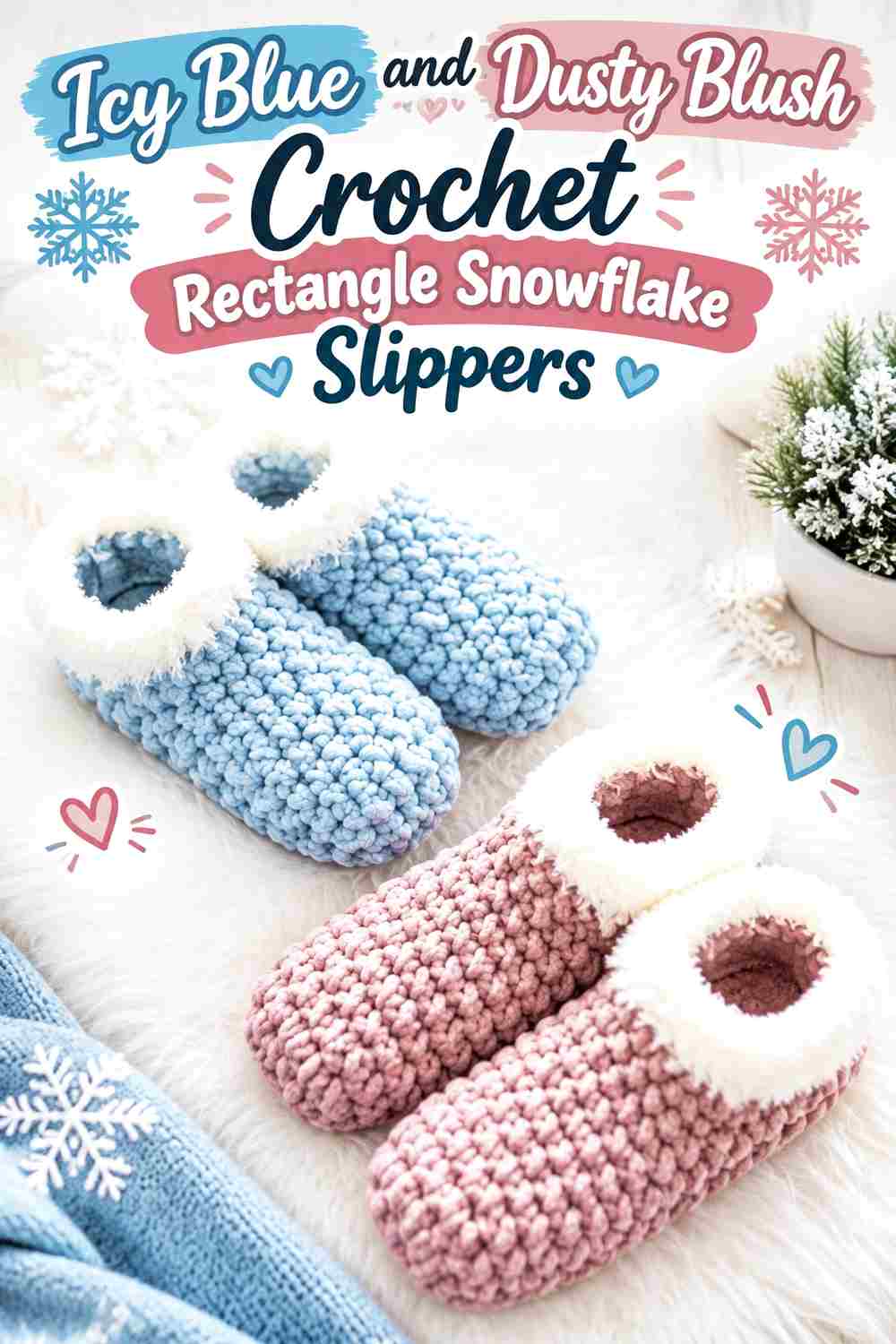
Dusty blush creates the softest warm-cool contrast in the collection. Icy blue should remain dominant while blush appears on a snowflake center, cuff, or small fastening detail.
Icy Blue Should Preserve the Simple Rectangle Slipper Shape
A rectangle-based construction benefits from one main color because the final shaping already creates folds and joins.
Use icy blue through the body before deciding where blush can add useful decoration.
Dusty Blush Can Soften an Icy Blue Snowflake Accent
A blush snowflake or center detail creates a gentler winter palette than navy or charcoal.
Keep the pink area small so the slipper remains clearly icy-blue rather than becoming an equal pastel combination.
Creator Credit: Crochet Dreamz YouTube tutorial
11. Icy Blue And Deep Navy Crochet Textured Slipper Boots
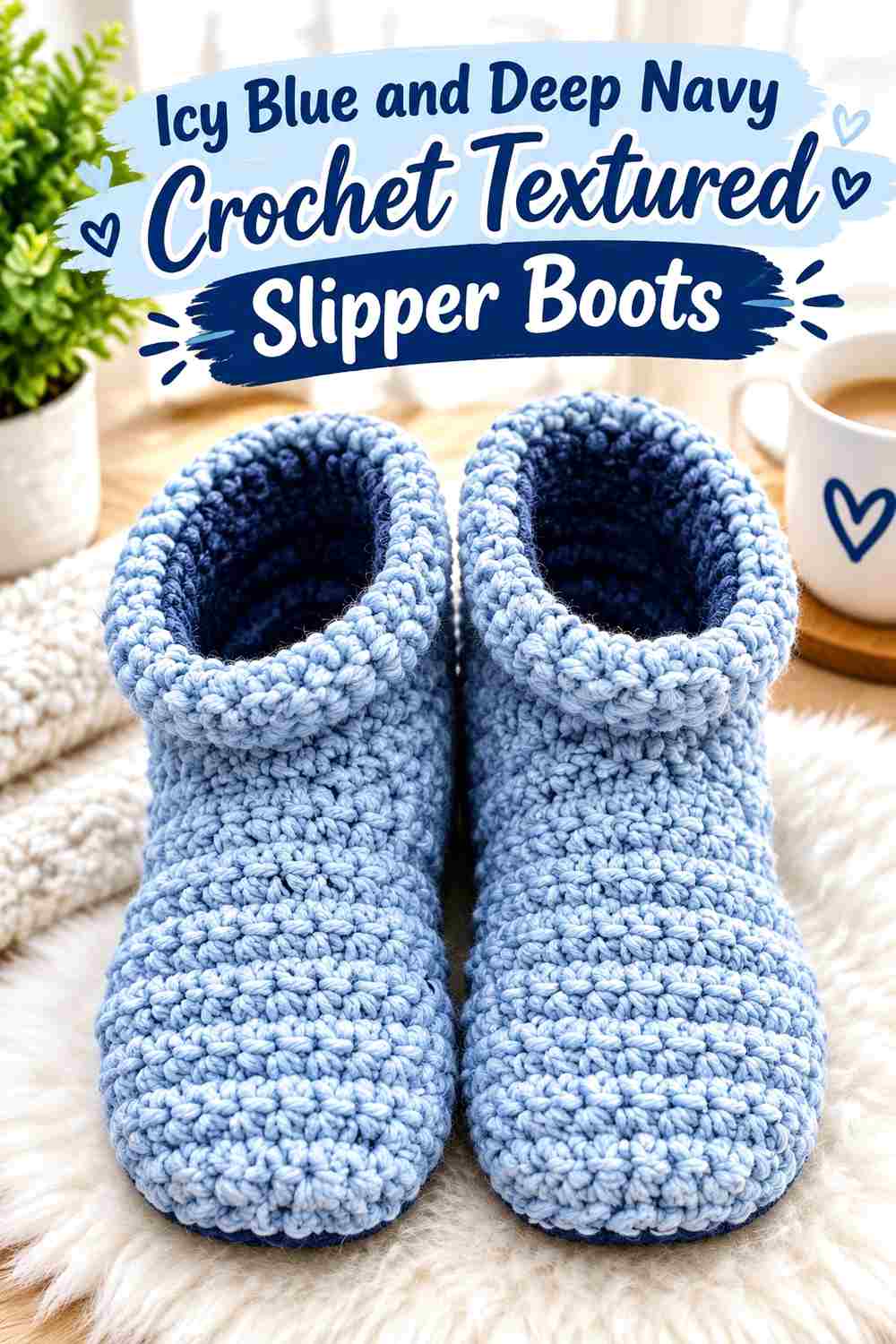
Deep navy works well around a substantial cuff or decorative band while icy blue keeps the foot visually lighter.
Icy Blue Should Cover the Main Textured Slipper-Boot Foot
Keep the toe and foot body pale so stitch texture remains visible and the boot does not feel overly dark.
That also gives a navy snowflake more separation if it is placed near the outer ankle.
Deep Navy Can Define an Icy Blue Snowflake Cuff
Use navy on a narrow cuff section or one strong motif rather than covering the entire upper boot.
A dark top boundary can frame icy blue effectively without taking over the full design.
Creator Credit: Ani Tugushi (Turtle Whicky) YouTube tutorial
12. Icy Blue And Pearl Silver Crochet Folded Snowflake Slippers

Pearl silver gives a cool, understated accent that works especially well on folded or shaped slippers where seams already provide visible structure.
Icy Blue Should Keep Folded Slipper Sections Visually Connected
Use icy blue across the main fabric so folds and seams explain the construction without additional color blocking.
A consistent field also makes the pair look coordinated even when the shaping creates asymmetrical lines.
Pearl Silver Can Highlight an Icy Blue Snowflake Near the Opening
Place the silver motif near the upper foot or side opening where its outline remains visible.
A narrow silver edge can repeat the color if the motif otherwise feels isolated.
Creator Credit: Winding Road Crochet YouTube tutorial
Which Icy Blue Snowflake Slipper Sock Palette Should You Choose?
For the clearest snowflake visibility, pair icy blue with winter white, pearl white, navy, charcoal, or deep navy. Pale whites create the familiar snow-on-blue effect, while dark shades produce stronger graphic motifs.
For a softer winter palette, silver gray, pearl silver, lavender, dusty blush, misty teal, and soft ivory provide gentler contrast. These combinations need more careful value checking because the snowflake can disappear if the yarns are too similar in lightness.
Construction should also guide the choice. Tall slipper socks provide more room for repeated cuff motifs, cable slippers benefit from a quieter color plan, and simple house or rectangle slippers can support one larger snowflake across the upper foot.
Conclusion
Icy blue is a natural base for crochet snowflake slipper socks because it can support both pale snowy motifs and darker winter accents without losing its own identity.
The most useful approach is to decide where the snowflake should be seen first. Place it across the upper foot for immediate visibility, at the ankle for a side detail, or around a taller cuff when the construction provides enough space. Keep the sole and high-wear areas simpler so the decorative color scheme stays focused.
White and ivory create a classic snowy effect, silver and lavender soften the contrast, and navy or charcoal make small snowflake points easier to distinguish. Follow each credited tutorial for the original slipper construction, then apply the icy-blue snowflake palette as an independent adaptation.
Frequently Asked Questions
What Colors Pair Well With Icy Blue Crochet Snowflake Slipper Socks?
Winter white, pearl white, soft ivory, silver gray, pearl silver, navy, deep navy, charcoal, lavender, misty teal, and dusty blush can all work. Choose the supporting shade according to whether you want a crisp snowflake, a tonal winter palette, or stronger dark contrast.
What Color Snowflake Shows Best on Icy Blue Slipper Socks?
White and navy usually create the clearest light-dark separation. Charcoal also provides strong definition, while silver or lavender produces a softer result.
Where Should I Put a Snowflake on Icy Blue Slipper Socks?
The upper foot, outside ankle, or cuff are useful locations because they remain visible while the socks are worn. Avoid placing the main motif on the sole where use and floor contact make it less visible.
Should the Cuff Match the Icy Blue Slipper Sock Body?
It can. An icy-blue cuff keeps the design cohesive and lets the snowflake become the main contrast. A white, navy, gray, or lavender cuff creates a stronger frame around the ankle.
Can I Use Several Snowflakes on One Icy Blue Slipper Sock?
Yes, especially on taller cuffs, but keep their size and spacing consistent. Multiple large motifs across the toe, ankle, and cuff can make a small slipper sock look crowded.
How Can I Tell Whether a Pale Snowflake Has Enough Contrast With Icy Blue?
Place the yarns beside each other and view them from a short distance. A grayscale photo can also show whether their light-dark values are too similar. If they merge, choose a lighter snowflake shade or a deeper icy blue.
Can a Regular Crochet Slipper Tutorial Be Adapted Into an Icy Blue Snowflake Slipper Sock?
Yes. Use the original tutorial for the underlying fit and construction, then treat the snowflake motif and color placement as separate adaptations. Make sure added surface details do not interfere with the slipper opening, fit, or walking surface.