Olive and butter yellow make a useful crochet flower brooch pairing because the two colors can take very different jobs within a small motif. Butter yellow is light enough to bring attention to petals or flower centers, while olive can outline the bloom, form leaves, or add a darker visual anchor behind the flower.
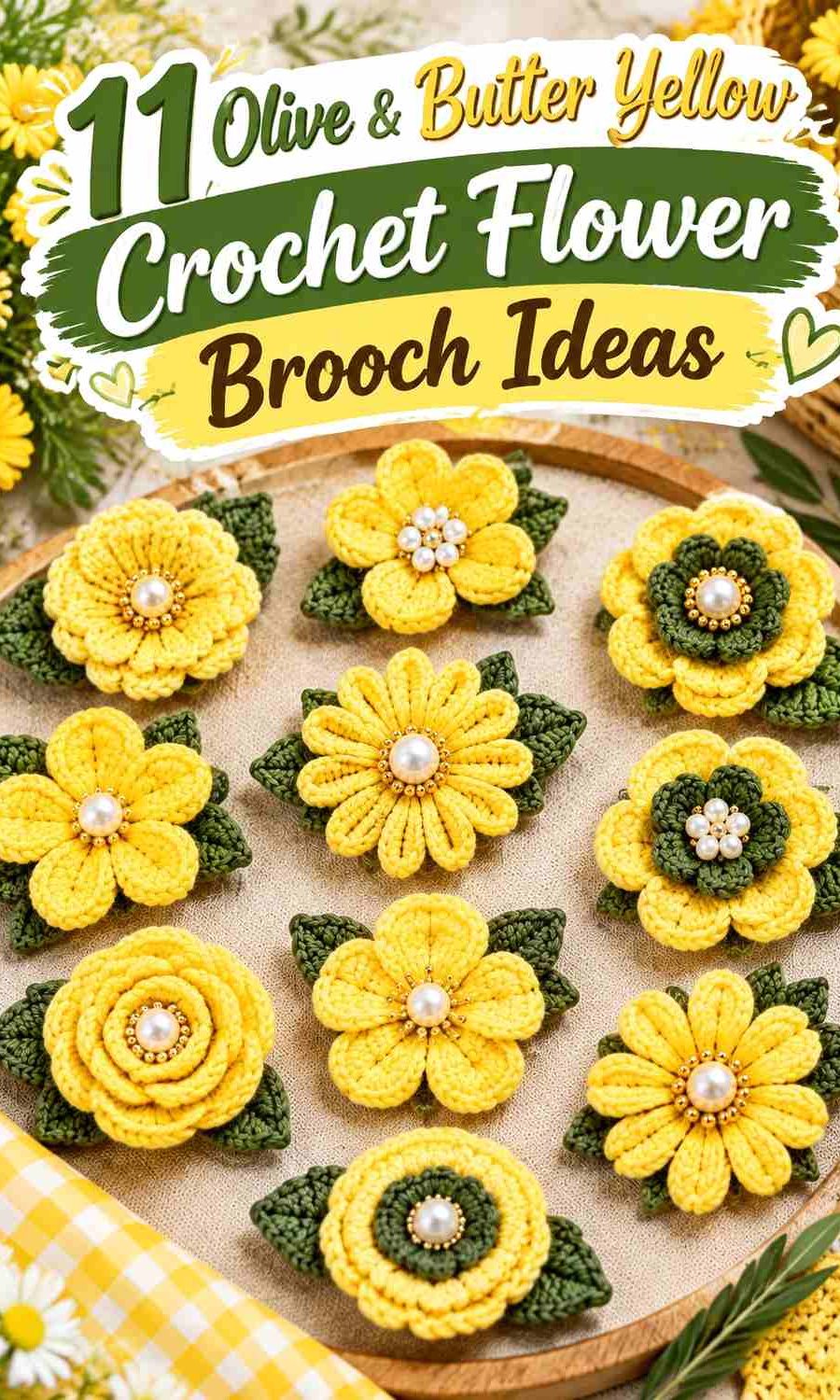
A brooch has much less surface area than a blanket, bag, or garment, so color proportion matters. If olive and butter yellow are divided into too many tiny sections, the flower can look visually busy. Giving one shade a clear dominant role and letting the other repeat in a few purposeful places usually makes the floral shape easier to read.
The tutorials credited below support the flower or brooch construction concepts. The olive-and-butter-yellow color schemes are editorial adaptations, so the creators should not be assumed to have used these exact palettes.
Quick List
- Butter Yellow And Olive Layered Crochet Flower Brooch
- Olive Edged Butter Yellow Crochet Petal Brooch
- Butter Yellow Spiral Rose And Olive Crochet Brooch
- Olive And Butter Yellow Crochet Sunflower Brooch
- Butter Yellow Double Layer Crochet Flower Brooch
- Olive Centered Butter Yellow Crochet Textured Brooch
- Butter Yellow Camellia And Olive Crochet Leaf Brooch
- Butter Yellow Daisy And Olive Crochet Brooch
- Olive Rose And Butter Yellow Crochet Accent Brooch
- Butter Yellow Mini Flower And Olive Crochet Brooch
- Olive Botanical And Butter Yellow Crochet Cluster Brooch
Decide Whether Olive or Butter Yellow Should Lead the Brooch
Because a flower brooch is small, the dominant color usually becomes apparent immediately. Butter yellow petals with olive leaves create a light flower with darker framing, while olive petals with a butter yellow center produce a more grounded, unusual botanical look.
Before choosing, think about where the brooch will be worn. A mostly butter yellow flower may show more clearly on dark fabric, while olive can provide helpful separation on lighter clothing. The strongest option depends on the surrounding color as well as the yarn itself.
Use Olive to Keep Butter Yellow Crochet Details Defined
Butter yellow is soft rather than highly contrasted, so small petal details can visually merge when every part of the flower uses similar light values. Olive can provide definition around centers, leaves, lower petal layers, or outer edges without requiring another unrelated color.
You do not need to outline every petal. On a small brooch, even an olive center or pair of leaves may provide enough darker value to keep the flower readable.
Keep Olive and Butter Yellow Balanced at Brooch Scale
Large crochet projects can accommodate long color transitions. A brooch cannot. Limit the palette to clear roles such as butter yellow petals, olive leaves, and perhaps a second tonal shade of one of those colors.
If you add another neutral, use it sparingly. Too many equal accents can make the pin backing, petal shape, and leaf details compete for attention.
1. Butter Yellow And Olive Layered Crochet Flower Brooch

This version uses butter yellow across the upper petals and olive underneath as a darker supporting layer. The olive should remain visible between selected petals rather than disappearing completely behind the flower. That small amount of darker green makes the layered construction easier to notice when the brooch is worn.
Butter Yellow Should Lead the Upper Crochet Petals
Keep the most visible petal layer butter yellow so the flower retains a light focal point. On a compact brooch, changing color on every petal would break up the shape, while one continuous butter-yellow layer reads more clearly.
Olive Can Add Depth Behind the Butter Yellow Flower
Use olive for a lower petal layer, small backing motif, or leaves. The darker value gives the butter yellow more separation while also making the flower appear layered without relying entirely on texture.
Butter Yellow Needs Enough Space to Stay the Focal Color
If the olive backing extends too far beyond the petals, the brooch can start reading as a green motif with a yellow center. Keep olive subordinate when the goal is a butter-yellow flower.
Creator Credit: Crochet your life YouTube tutorial
2. Olive Edged Butter Yellow Crochet Petal Brooch

Here, butter yellow covers most of the flower while olive appears around the outside or in selected finishing details. This placement is useful when you want more definition than an all-yellow flower provides without turning the petals themselves green.
Butter Yellow Keeps the Crochet Brooch Light
Use butter yellow across the main flower face rather than dividing the petals equally between yellow and green. A consistent main color makes the petal silhouette easier to recognize at the small scale of a brooch.
Olive Can Define the Butter Yellow Outer Edge
A narrow olive finish or small green backing shape can visually separate pale yellow petals from similarly light clothing. Keep the outline narrow enough that it supports rather than redraws the flower.
Creator Credit: Gabriela Andrade YouTube tutorial
3. Butter Yellow Spiral Rose And Olive Crochet Brooch
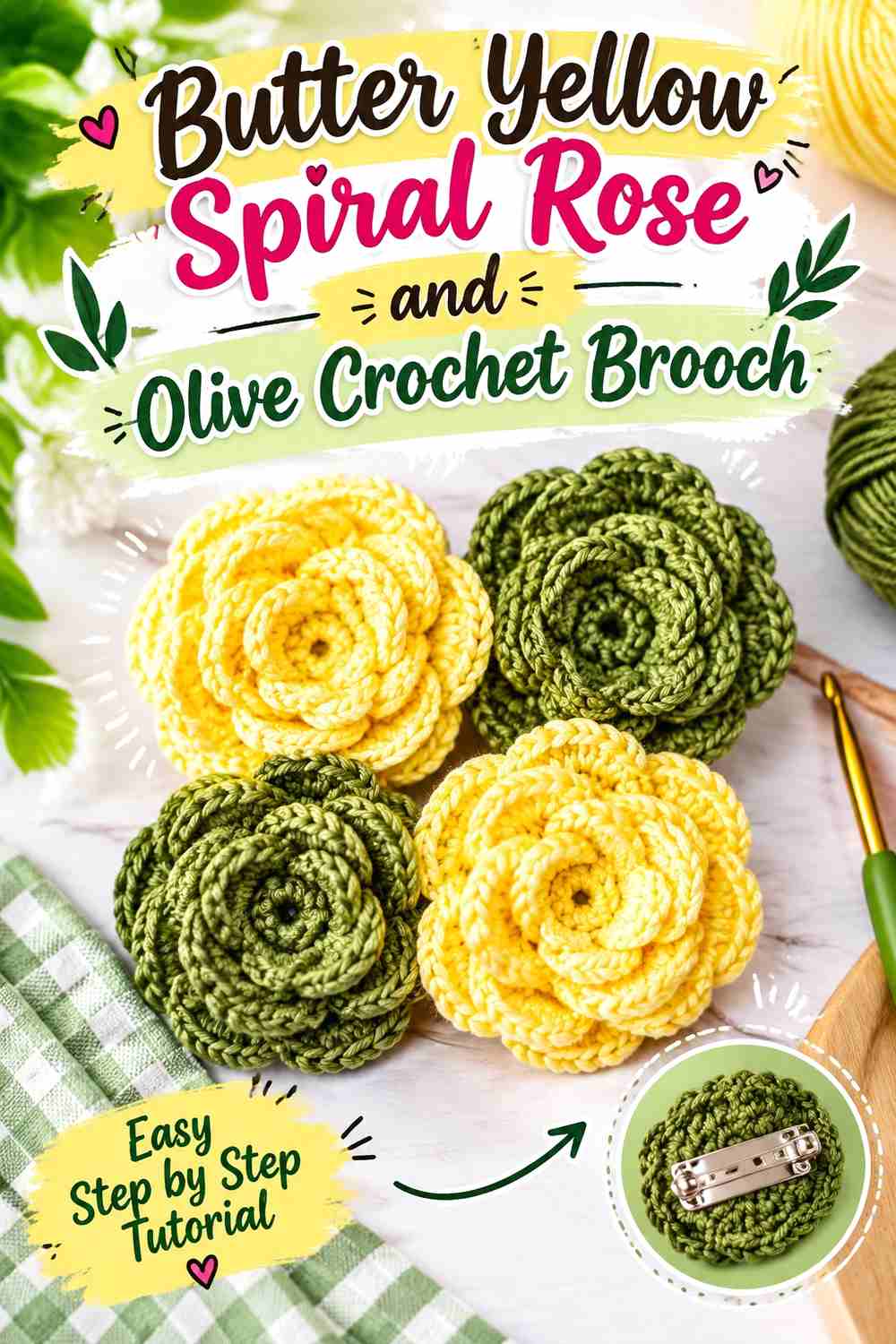
A rolled or spiral rose creates natural shadows between its petals, making it possible to keep the bloom mostly butter yellow while using olive in the leaves and backing. The green should sit outside the rose rather than interrupting every fold so the spiral shape remains continuous.
Butter Yellow Shows the Crochet Rose Spiral Clearly
Keeping the rose itself butter yellow allows the eye to follow the curved petal structure from the center outward. Introducing frequent olive stripes inside the spiral can compete with that movement.
Olive Leaves Frame the Butter Yellow Crochet Rose
Place olive beside or slightly behind the rose as leaves. The darker green gives the pale bloom a visible boundary and creates a botanical connection without reducing the amount of butter yellow on the flower.
Olive Should Not Overwhelm the Butter Yellow Rose
A very large green backing can make a small yellow rose look undersized. Keep leaf or backing proportions visually subordinate to the bloom when adapting the motif into a brooch.
Creator Credit: Crochet con Lillo YouTube tutorial
4. Olive And Butter Yellow Crochet Sunflower Brooch

A sunflower-style brooch gives the palette a natural way to reverse the expected color hierarchy. Butter yellow can form the outer petals while olive replaces a conventional dark center or appears as a green backing and leaf detail.
Butter Yellow Works Naturally Across the Crochet Sunflower Petals
Use one consistent butter yellow across the petal ring so the flower maintains a recognizable radial shape. Small tonal changes can work, but too many separate yellow shades may distract from the center.
Olive Gives Butter Yellow Sunflower Petals a Darker Anchor
An olive center creates a softer contrast than black or deep brown while still separating clearly from the petals. Choose an olive that is visibly darker than the butter yellow rather than two shades with nearly equal lightness.
Olive Can Repeat Behind the Butter Yellow Flower
If you add a leaf or backing section, repeating the same olive used in the center connects the front and lower parts of the brooch rather than introducing a second green.
Creator Credit: Lilyrosycrafts YouTube tutorial
5. Butter Yellow Double Layer Crochet Flower Brooch

A double-layer flower gives butter yellow enough visual area to remain dominant while olive can appear selectively in the lower petals. This version works especially well when the lower petal tips remain visible around the top layer.
Butter Yellow Can Unify Both Crochet Flower Layers
For the softest version, keep both main layers butter yellow and use olive only at the center or as leaves. The layered texture supplies most of the variation, so extra color divisions are unnecessary.
Olive Lower Petals Increase Contrast With Butter Yellow
For a stronger version, make the lower petals olive and upper petals butter yellow. Check how much green remains visible once the layers overlap; the goal is to frame the yellow rather than hide behind it completely.
Creator Credit: Crochet Jewel YouTube tutorial
6. Olive Centered Butter Yellow Crochet Textured Brooch

This palette puts the greatest contrast in the center. Butter yellow petals stay uninterrupted, while olive is concentrated in the textured middle where the darker shade can emphasize raised crochet details.
Olive Makes a Butter Yellow Crochet Center More Distinct
A textured center already attracts attention through dimension. Using olive there strengthens that focal point without requiring a dark outline around every petal.
Butter Yellow Should Stay Continuous Around the Olive Center
Keep the outer petal area predominantly butter yellow so the green center remains the clear color change. If olive is scattered through the petals as well, the central contrast becomes less meaningful.
Olive Texture Can Look Darker Than Flat Butter Yellow Petals
Raised or clustered crochet creates more shadow, which can make olive appear even deeper beside pale yellow. Assess the finished flower rather than judging the two yarn colors only from the skeins.
Creator Credit: Crochet.ElenaRugalStudio YouTube tutorial
7. Butter Yellow Camellia And Olive Crochet Leaf Brooch
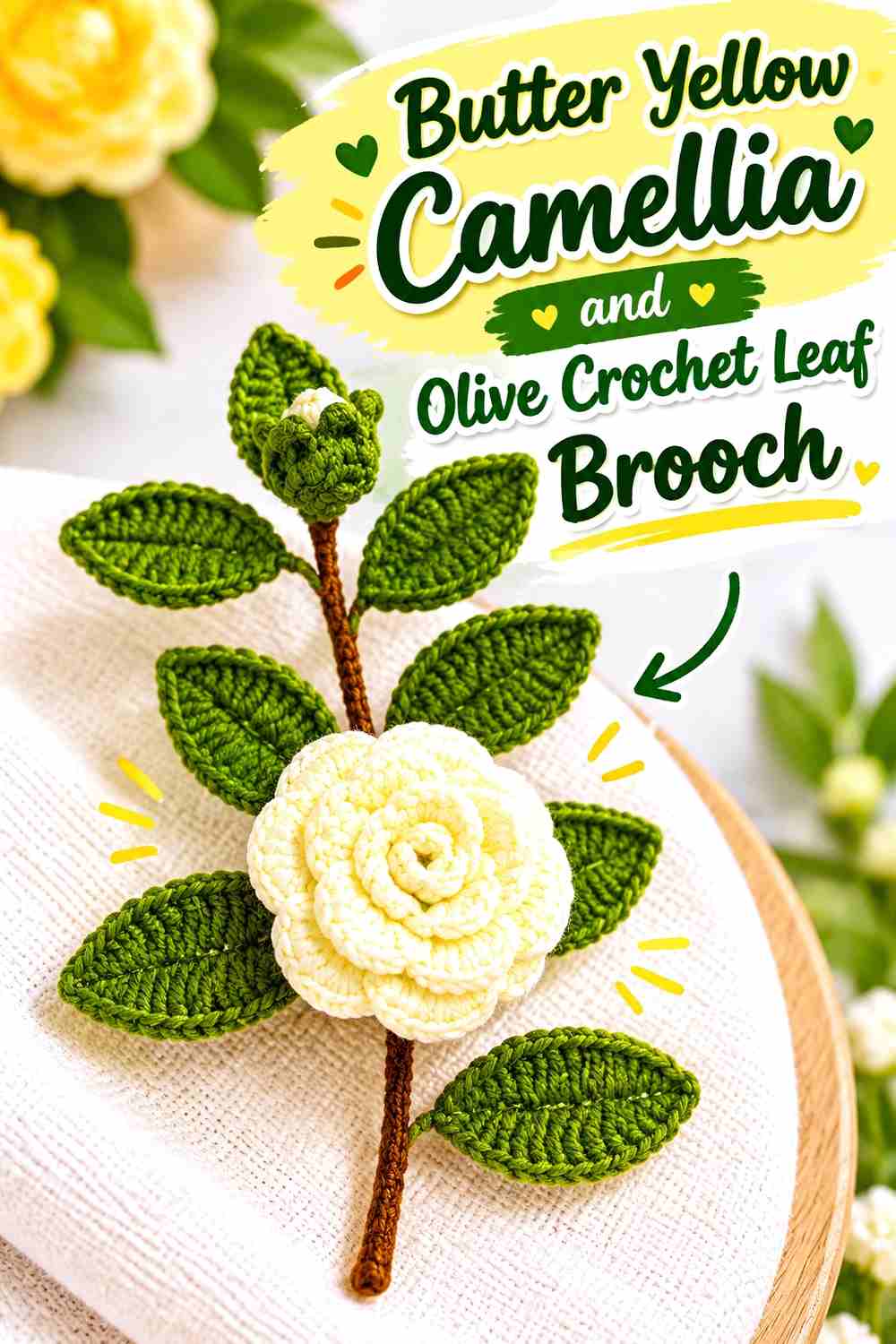
A layered camellia-style flower gives butter yellow plenty of room to create a soft, full bloom. Olive works most effectively outside the flower as one or two leaves or a small backing element, keeping the petal layers visually connected.
Butter Yellow Keeps the Crochet Camellia Layers Cohesive
Use the same butter yellow through most petal layers if you want the dimensional structure to be the main feature. Alternating every layer between yellow and green can make the flower look striped instead of naturally layered.
Olive Leaves Give the Butter Yellow Camellia a Clear Direction
Place olive leaves toward one side or behind the lower edge rather than evenly around the entire flower. Asymmetrical green placement can help the brooch read as a small botanical arrangement rather than a circular badge.
Olive Should Support the Butter Yellow Petal Volume
Because a layered camellia already has visual mass, large dark leaves can compete with the bloom. Use enough olive to frame the flower without matching the yellow petals in total area.
Creator Credit: Crochet Everyday YouTube tutorial
8. Butter Yellow Daisy And Olive Crochet Brooch

A daisy-style motif can simplify the palette to two clearly separated components: butter yellow petals and an olive center, or olive-backed petals with a yellow middle. The first arrangement keeps the brooch lighter and makes yellow the dominant color.
Butter Yellow Gives the Crochet Daisy a Soft Petal Ring
Use butter yellow continuously around the petal ring to preserve the clean radial shape. Because daisy petals are individually separated, the flower already has enough visual rhythm without alternating petal colors.
Olive Makes the Butter Yellow Daisy Center More Noticeable
A medium-to-dark olive center creates a defined focal point against pale petals. If the olive is very muted, compare it directly against the yellow to make sure the center remains distinct at a distance.
Olive Leaves Can Extend the Butter Yellow Daisy Shape
A small leaf or pair of leaves can break the circular outline and make the finished brooch look more botanical. Repeat the same olive from the center to keep the palette controlled.
Creator Credit: Natagor Finlayson YouTube tutorial
9. Olive Rose And Butter Yellow Crochet Accent Brooch
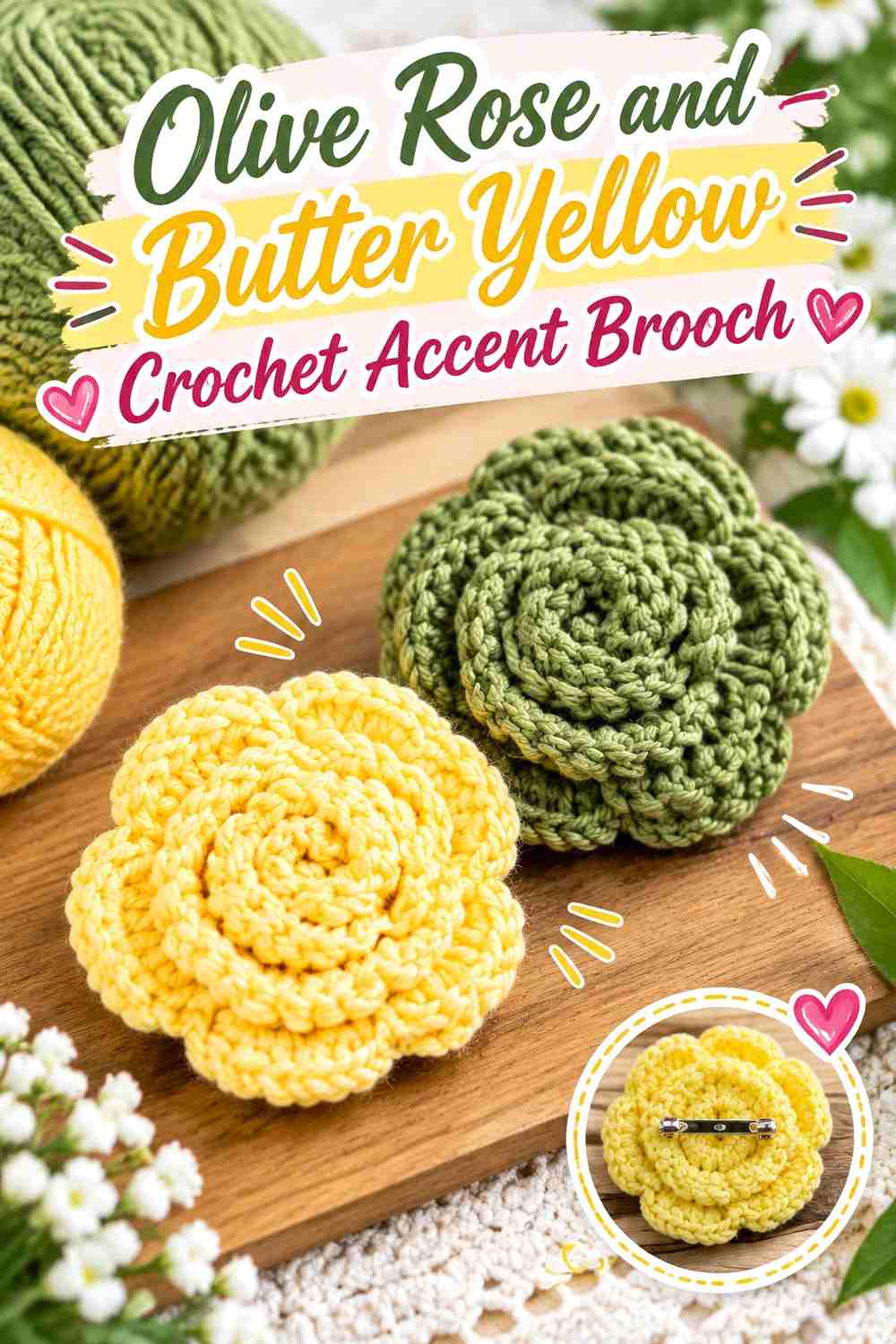
Reversing the palette makes this one of the darker ideas in the collection. Olive forms the rose itself, while butter yellow appears at the center, behind the bloom, or as a small accompanying detail.
Olive Gives the Crochet Rose a Deeper Botanical Look
Keeping the spiral or rolled bloom primarily olive allows the flower structure to remain continuous. Choose an olive light enough that the curved petal edges can still be seen rather than collapsing into one dark shape.
Butter Yellow Can Lift the Olive Crochet Rose Center
A small butter-yellow detail near the center creates a point of light without dividing the whole bloom. Because the contrast is concentrated, even a small amount of yellow can noticeably change the finished brooch.
Butter Yellow Should Stay Smaller Than the Olive Rose
This design depends on olive being dominant. If yellow spreads through most of the outer petals, the idea becomes too similar to the yellow-led rose options rather than offering a genuine palette reversal.
Creator Credit: Hopeful Turns YouTube tutorial
10. Butter Yellow Mini Flower And Olive Crochet Brooch
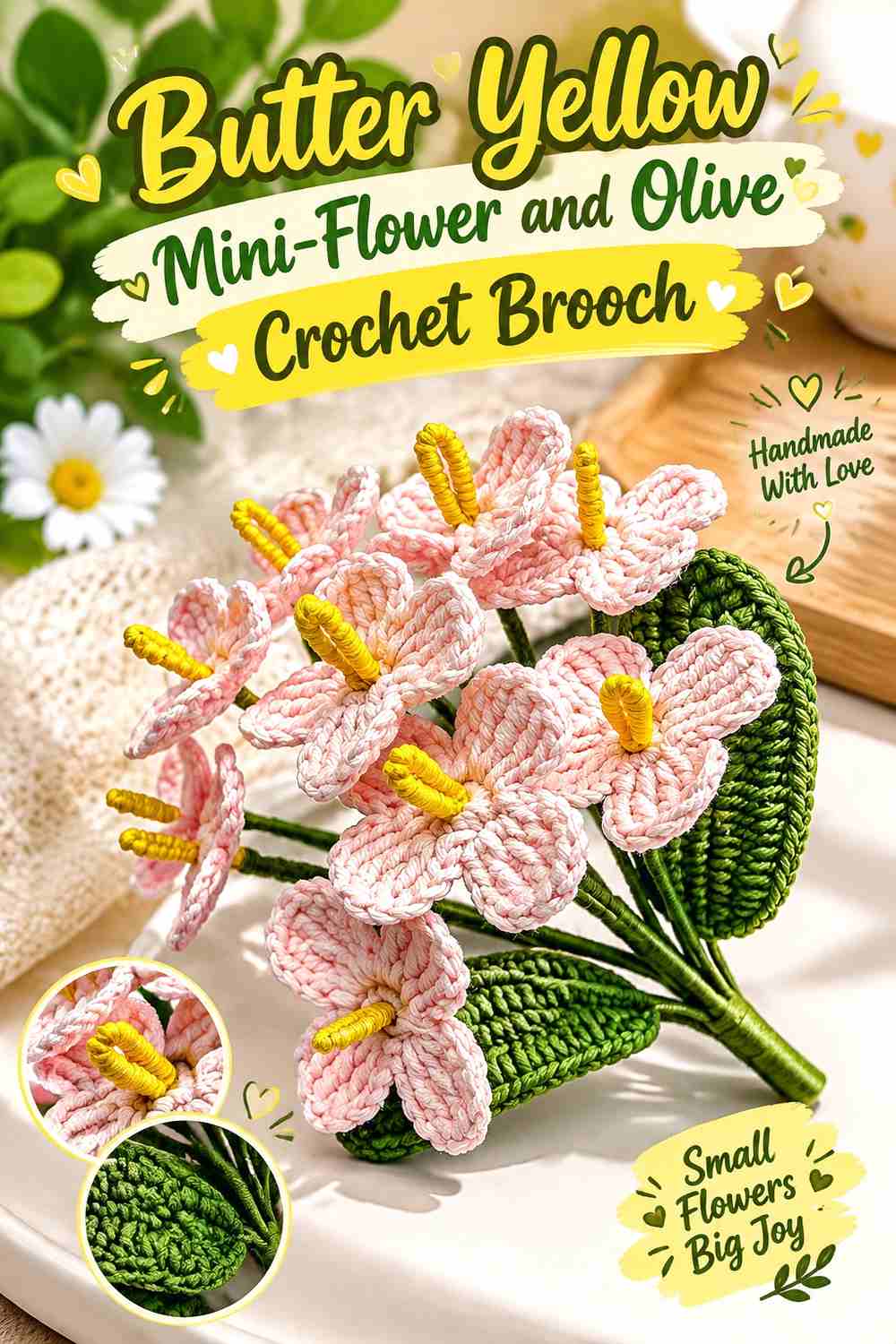
Small flowers require especially careful color hierarchy because there is little space for multiple bands or borders. Make butter yellow the flower color and use olive for leaves or the smallest central detail so each shade has a recognizable job.
Butter Yellow Needs a Clear Role on a Mini Crochet Flower
Avoid alternating olive and yellow across tiny petals. At miniature scale, repeated color changes can make the flower shape difficult to read. One butter-yellow bloom usually creates a cleaner focal point.
Olive Can Connect Several Butter Yellow Mini Flowers
If you combine more than one small flower into a brooch, repeat olive through leaves or joining foliage. This gives the separate yellow blooms a common base and prevents them from looking scattered.
Olive Should Remain Visible Between Butter Yellow Blooms
When several flowers overlap, check that the green foliage does not disappear entirely underneath them. A small amount of visible olive helps define each individual yellow flower.
Creator Credit: KAQNIN KASIKAY YouTube tutorial
11. Olive Botanical And Butter Yellow Crochet Cluster Brooch
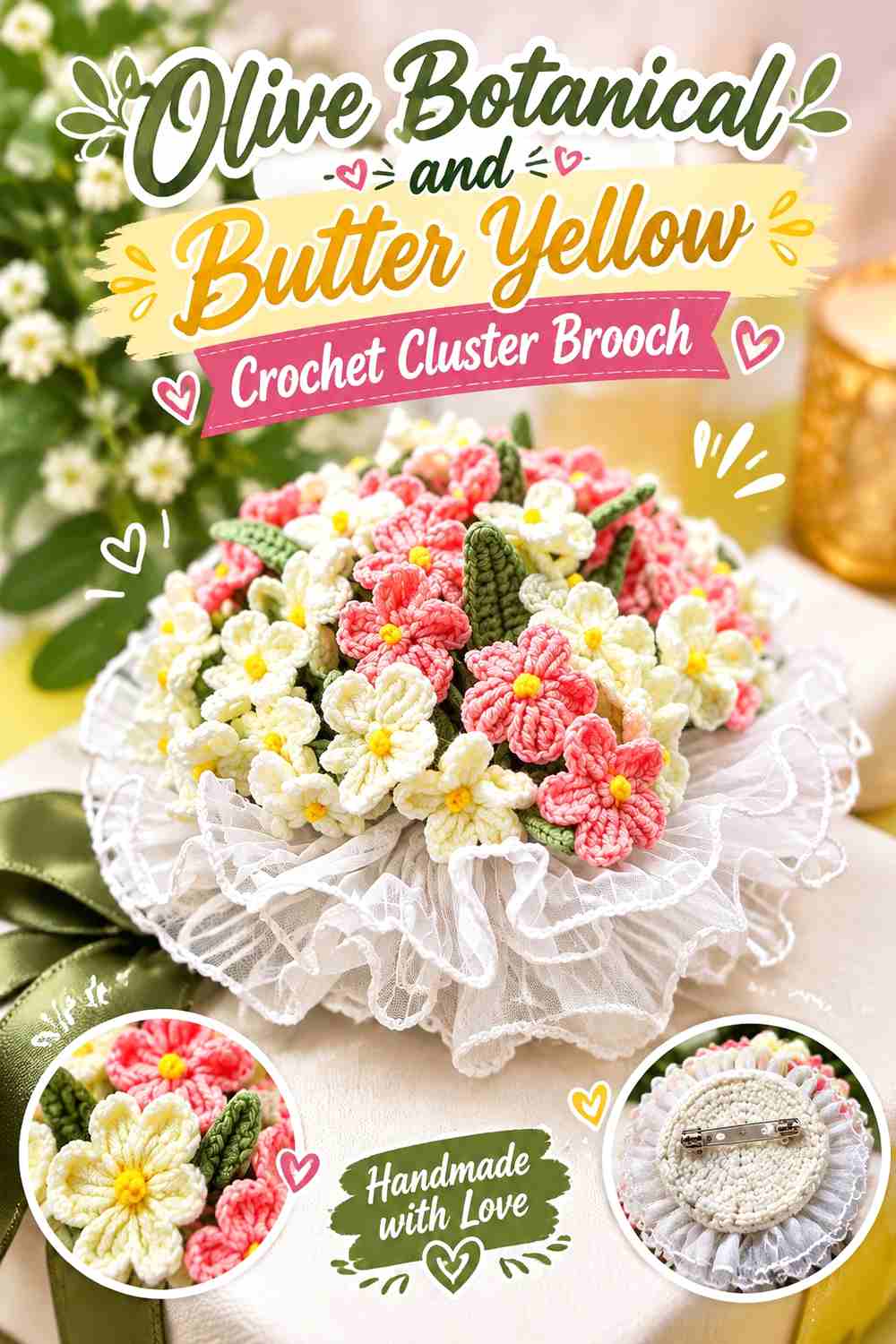
The final idea treats olive as the connecting botanical color and butter yellow as a repeated floral accent. Several small flowers can share olive leaves or foliage, creating a compact cluster that still uses only two main colors.
Olive Can Unite Several Butter Yellow Crochet Flowers
Use olive repeatedly between the flowers so the brooch reads as one arrangement rather than several unrelated motifs. Green works especially well in connecting areas because it can visually recede behind the lighter blooms.
Butter Yellow Should Repeat Consistently Across the Crochet Cluster
Keep the flower heads within the same butter-yellow family if you want a calm two-color result. Changing each small flower to a different yellow can weaken the simple olive-and-yellow concept.
Olive Needs Enough Area to Balance Multiple Butter Yellow Blooms
Several pale flowers together can make the brooch heavily yellow. Increase the visible olive foliage slightly when using a cluster so the green remains a meaningful part of the palette instead of a hidden backing color.
Creator Credit: Tammy crochet & art YouTube tutorial
Comparing the Olive and Butter Yellow Crochet Brooch Directions
For the lightest result, choose a butter-yellow flower with olive limited to the center or leaves. Daisy, camellia, and layered-flower ideas all allow yellow to cover most of the visible brooch while the green provides definition.
For stronger contrast, place olive directly beside the yellow petals as a lower layer, center, or outer edge. The sunflower and textured-center ideas use this relationship especially clearly.
If you want olive to have equal importance, the botanical cluster gives green more surface area without overwhelming the yellow flowers. For the darkest direction, reverse the usual balance completely and make an olive rose with a much smaller butter-yellow accent.
Conclusion
Olive and butter yellow can produce very different crochet flower brooches even when the palette stays limited to the same two main colors. Butter-yellow petals with olive foliage create the clearest light-over-dark relationship, while olive centers or lower layers add definition without changing the overall floral identity.
For a more unusual result, let olive dominate the flower and restrict butter yellow to a small focal detail. Whatever arrangement you choose, keep the color roles easy to identify at brooch scale. The original tutorials can supply the construction guidance, while the olive-and-butter-yellow placement can be adapted to the flower shape you prefer.
Frequently Asked Questions
Should olive or butter yellow be the main color in a crochet flower brooch?
Either can lead, but butter yellow usually creates a lighter flower while olive produces a darker botanical direction. Choose one as the dominant shade rather than splitting every part of a small brooch evenly.
Where should I place olive on a butter yellow crochet flower?
Olive works well in centers, lower petal layers, leaves, backing motifs, or narrow outer details. These positions give pale yellow more definition without breaking up the petal surface unnecessarily.
How can I tell whether olive and butter yellow have enough contrast?
Place the yarns beside each other and compare their lightness as well as their hue. A grayscale photo can help reveal whether the two shades are too similar in value to separate clearly.
Can I make the petals olive instead of butter yellow?
Yes. Olive petals with a butter-yellow center create a noticeably darker brooch and are a useful way to reverse the typical yellow-flower arrangement.
Should butter yellow cover every petal in a crochet flower brooch?
Not necessarily, but keeping one petal layer consistent often makes the flower shape easier to read. Alternating colors is more useful when the flower has clearly separated layers than when every tiny petal changes color.
How can I use olive and butter yellow in a layered crochet flower?
Try butter yellow on the upper petals and olive on a lower layer, or keep both petal layers yellow and move olive to the center and leaves. Make sure enough of the lower color remains visible after the layers overlap.
Can several small butter yellow flowers work in one olive crochet brooch?
Yes. Use olive foliage or connecting leaves to unify the small flowers and repeat butter yellow consistently across the blooms. This keeps the cluster coordinated instead of making it look like separate motifs pinned together.