Plum Noir and olive create a dark, earthy crochet palette with more subtle contrast than combinations built around cream or bright accent colors. Here, Plum Noir works as an editorial color direction for a very deep plum-black shade, while olive introduces a muted green that can soften the darkness without making the project noticeably bright.
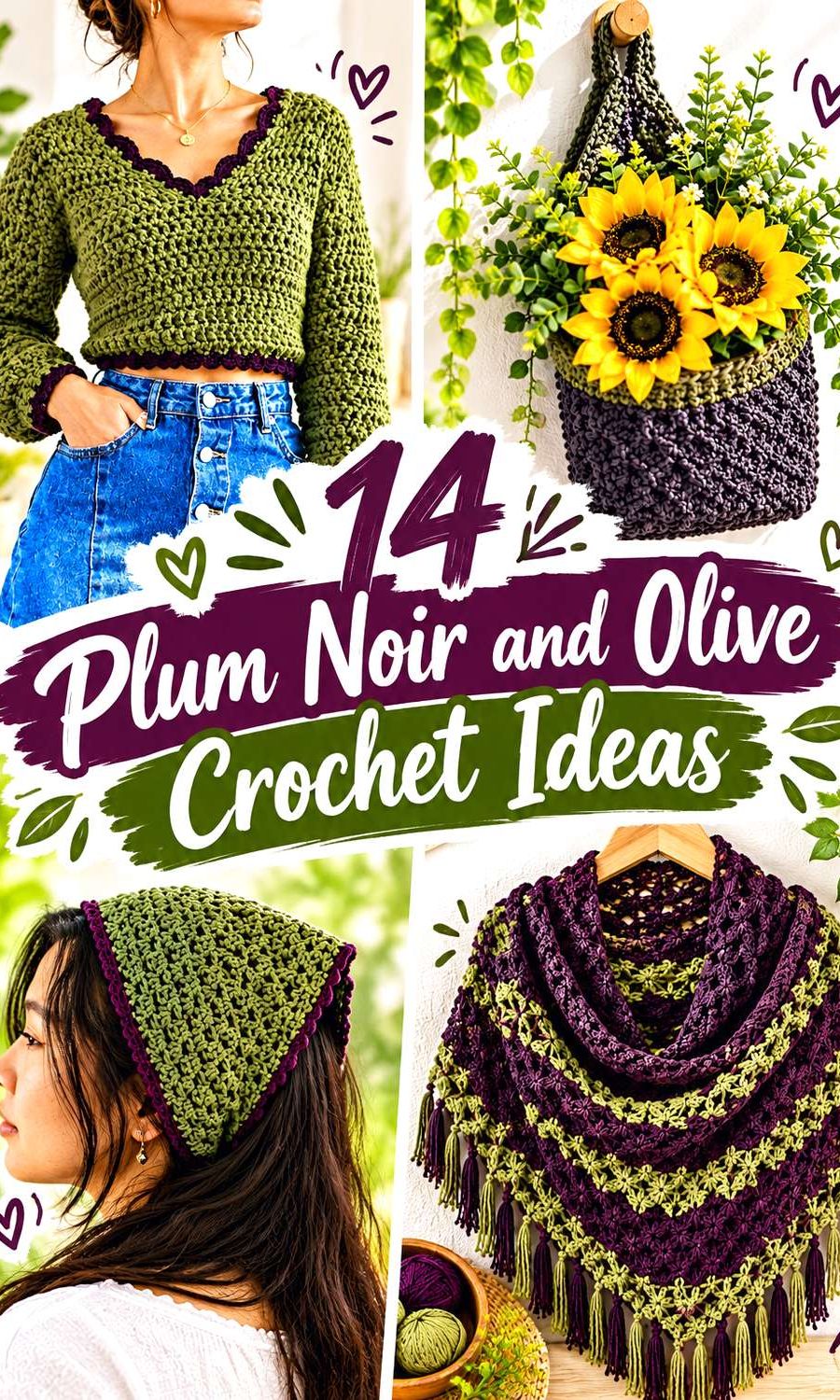
The main challenge is value. A deep olive can sit surprisingly close to Plum Noir once both colors are crocheted, especially in shadow-heavy stitches. That can be useful for a blended, low-contrast look, but it can also make checkerboards, narrow stripes, cables, and small details difficult to distinguish.
The 14 ideas below use the pairing in different ways. Some let olive carry the textured surface while Plum Noir defines borders and structural details. Others reverse the hierarchy and use a large Plum Noir field with controlled olive accents.
Quick List
- Plum Noir and Olive Striped Crochet Blanket
- Plum Noir Crochet Cocoon Cardigan with Olive Edging
- Olive Crochet Panel Bag with Plum Noir Handles
- Olive Crochet Pillow with Plum Noir Border
- Olive Crochet Textured Beanie with Plum Noir Brim
- Plum Noir Crochet Shawl with Olive Texture Bands
- Plum Noir and Olive Checkerboard Crochet Vest
- Olive Crochet Bucket Hat with Plum Noir Brim
- Olive Crochet Bandana with Plum Noir Edging
- Plum Noir Crochet Hanging Basket with Olive Rim
- Plum Noir Crochet Poncho with Olive Border
- Olive Crochet Tote Bag with Plum Noir Base
- Olive Crochet Cropped Sweater with Plum Noir Trim
- Plum Noir and Olive Crochet Balaclava
Check Plum Noir and Olive Before Planning Small Crochet Details
Plum Noir and olive may look very different by hue but still be close in lightness. A blackened plum and deep forest-like olive, for example, can become difficult to separate from across a room even though one is purple-based and the other green-based.
Compare the yarns side by side before committing to narrow stripes or small color blocks. Viewing a photograph in grayscale can help reveal whether the two shades have enough value separation for the design you have in mind. If they nearly merge, use larger areas of each color instead of forcing more color changes.
Use Olive Where Plum Noir Crochet Texture Needs More Visibility
Plum Noir can create deep shadows in cables, waffle stitches, clusters, and heavy ribbing. If stitch definition is one of the main features of the project, olive may be more effective across the textured surface while Plum Noir moves to simpler borders, cuffs, bases, or joins.
That is not a universal rule. A lighter or more purple Plum Noir may show texture clearly. Swatching is especially useful with this palette because small differences between two dark yarns can have a large visual effect once they are worked into crochet.
Repeat Plum Noir or Olive Instead of Using One Isolated Accent
A secondary color generally feels more connected when it appears in more than one logical location. On a cardigan, Plum Noir might repeat at the cuffs and front edging. On a bag, olive might appear at the handles and upper band. On a blanket, a color used in interior stripes can return at the border.
Repetition matters even more with a subdued palette because the colors do not rely on brightness to establish themselves. Placement becomes the organizing tool.
1. Plum Noir and Olive Striped Crochet Blanket
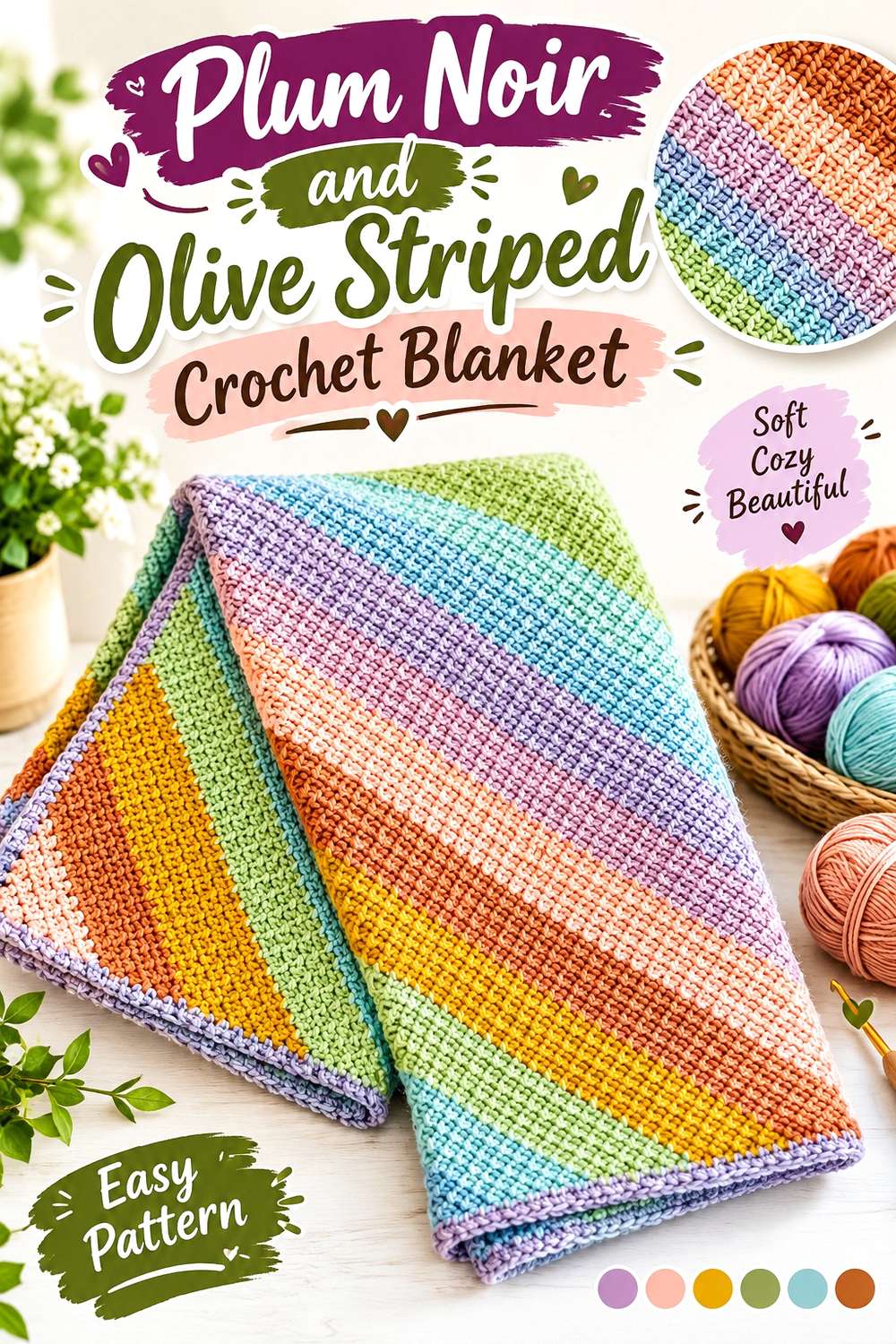
A striped blanket gives Plum Noir and olive enough surface area to remain recognizable even when the two yarns are relatively dark. Broad olive bands can keep the blanket from becoming visually too heavy, while Plum Noir creates deeper intervals and a strong outer frame.
Give Olive the Wider Crochet Blanket Stripes
Use olive for some of the broadest areas when you want the green undertone to remain obvious. Narrow olive stripes surrounded by large amounts of Plum Noir can become visually reduced, especially when the olive itself is muted and dark.
Broad olive bands also give any stitch texture more uninterrupted space to show.
Repeat Plum Noir Around the Olive Crochet Blanket Border
Plum Noir can appear throughout the stripe sequence and return at the outside edge. Repeating the darkest shade this way connects the border with the blanket body.
If Plum Noir already dominates the interior, reverse the strategy and finish with olive so the perimeter does not make the entire blanket feel darker than planned.
Creator Credit: Daisy Farm Crafts
2. Plum Noir Crochet Cocoon Cardigan with Olive Edging

A cocoon cardigan has a broad uninterrupted body, making it well suited to a Plum Noir-led arrangement. Olive can concentrate around the opening and cuffs, where the greener shade introduces contrast without breaking the main panel into numerous sections.
Keep Plum Noir Broad Across the Crochet Cardigan Body
Use Plum Noir continuously over the largest panel if you want a dark, unified cardigan. Because the cocoon shape already creates its own strong silhouette, frequent olive stripes are not necessary to give the garment visual structure.
If the Plum Noir hides too much stitch definition, move one substantial textured section into olive instead of scattering many small accents.
Repeat Olive Around the Plum Noir Crochet Cardigan Edges
Olive can outline the opening and return at both cuffs. Those locations are separated across the garment, so repeating the same color connects them visually.
A muted olive produces a more tonal transition, while an olive that is noticeably lighter than Plum Noir will make the edging more defined.
Creator Credit: Bella Coco
3. Olive Crochet Panel Bag with Plum Noir Handles

A panel-style bag gives the palette clear structural boundaries. Olive can cover the larger body panels so its earthy green remains prominent, while Plum Noir can define handles, upper edging, and selected joins.
Let Olive Cover the Main Crochet Bag Panels
Broad olive panels give the muted color enough space to establish itself. This is useful when your olive is fairly dark because small green accents could otherwise disappear beside Plum Noir.
Before final assembly, look at the color arrangement from the front and sides so the olive distribution remains balanced around the whole bag.
Connect Plum Noir Handles to the Olive Crochet Bag
Do not introduce Plum Noir only at the handles if you want the design to feel fully integrated. Repeat it around the opening, base, or another structural edge.
Those darker repeated points can visually frame the olive body without requiring Plum Noir color changes throughout every panel.
Creator Credit: Brunaticality
4. Olive Crochet Pillow with Plum Noir Border
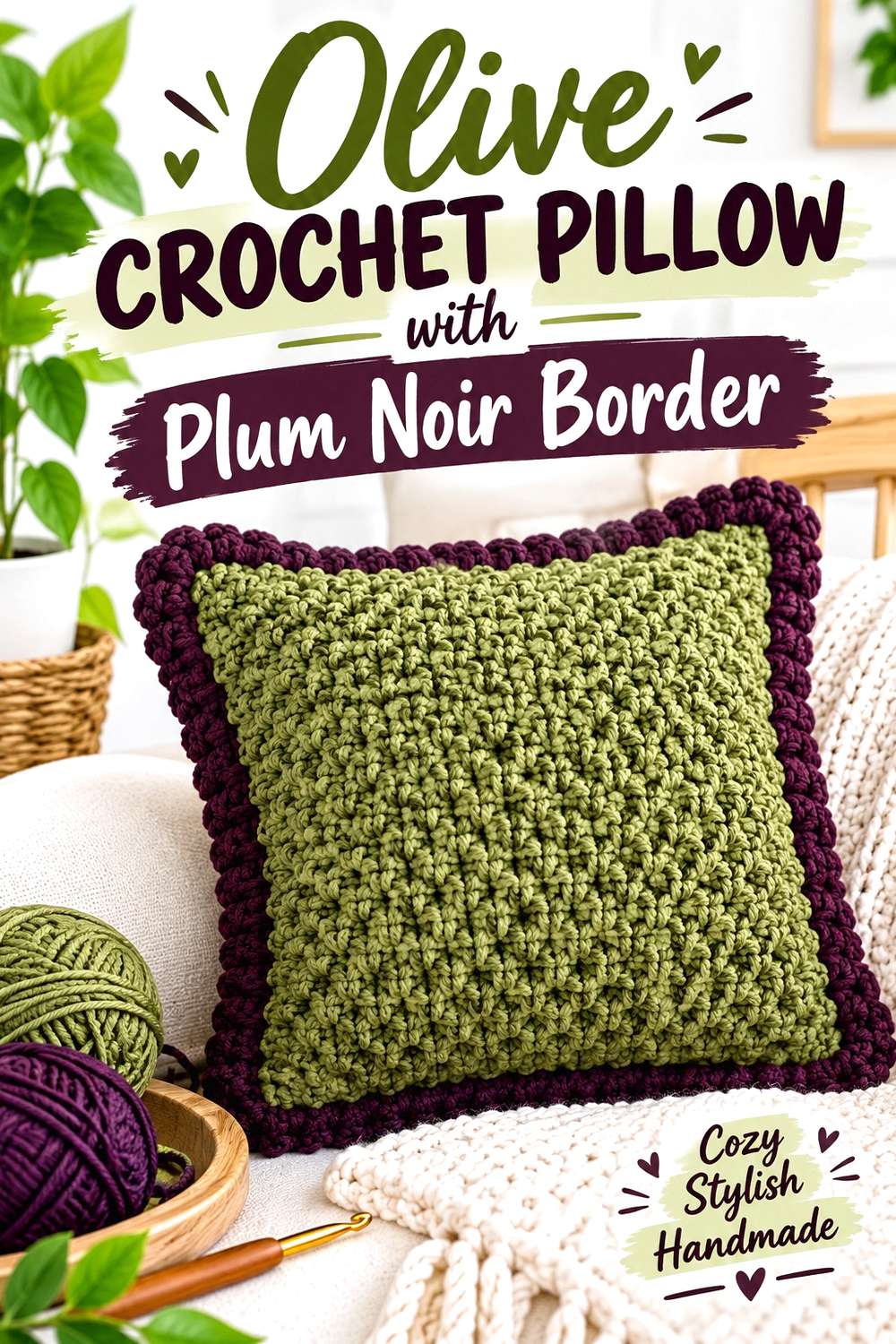
A crochet pillow can make the most of olive across the main face, especially when the surface contains visible stitch texture. Plum Noir can frame that center with a dark outer edge instead of competing with the texture through frequent interior color changes.
Use Olive Where the Crochet Pillow Texture Needs Definition
Olive is worth considering for the main pillow face if Plum Noir is dark enough to hide subtle raised stitches. The green does not need to be light; it only needs enough separation from deep shadows for the surface pattern to remain readable.
View a swatch from several feet away rather than judging the texture only while holding it.
Let Plum Noir Frame the Olive Crochet Pillow Face
A Plum Noir edge creates a strong boundary around the olive center and makes the darker shade visible without covering most of the textured surface.
If the border appears disconnected, repeat Plum Noir in one small central or back-panel detail rather than introducing an unrelated third color.
Creator Credit: MJ’s Off The Hook Designs
5. Olive Crochet Textured Beanie with Plum Noir Brim

A compact beanie needs a simple hierarchy. Olive can carry the textured body while Plum Noir forms a clearly separate brim, giving each color enough visual area without turning the hat into a sequence of narrow dark stripes.
Keep Olive Across the Crochet Beanie Texture
Use olive throughout the most textured portion when stitch definition matters. Clustered or raised sections already create visual movement, so they do not need constant Plum Noir changes for additional interest.
A medium olive will generally separate from shadows more clearly than an extremely deep olive, so check your chosen yarn before committing.
Put Plum Noir on the Olive Crochet Beanie Brim
The brim is a natural place for Plum Noir because it already forms a distinct structural section. The deepest color can anchor the lower part of the hat without interfering with the olive texture above.
If the brim looks too isolated, repeat one narrow Plum Noir band near the crown rather than striping the entire body.
Creator Credit: Rich Textures Crochet
6. Plum Noir Crochet Shawl with Olive Texture Bands

A shawl provides enough surface for Plum Noir to become a genuine main color rather than a narrow accent. Olive can then identify selected bands of texture, helping those sections remain noticeable against the dark background.
Give Plum Noir Wide Areas on the Crochet Shawl
Keep substantial portions continuously Plum Noir so the shawl maintains a deep overall direction. This works especially well when openwork already provides enough visual variation.
Remember that clothing beneath open stitches can affect the perceived color, so consider the likely background when deciding how much Plum Noir to use.
Place Olive Where the Plum Noir Crochet Shawl Texture Changes
Use olive at selected stitch transitions or wider decorative bands rather than inserting it at arbitrary intervals. The color change then helps explain the structure of the shawl.
Leave enough Plum Noir between olive sections for both colors to retain their own visual territory.
Creator Credit: Fiber Spider
7. Plum Noir and Olive Checkerboard Crochet Vest
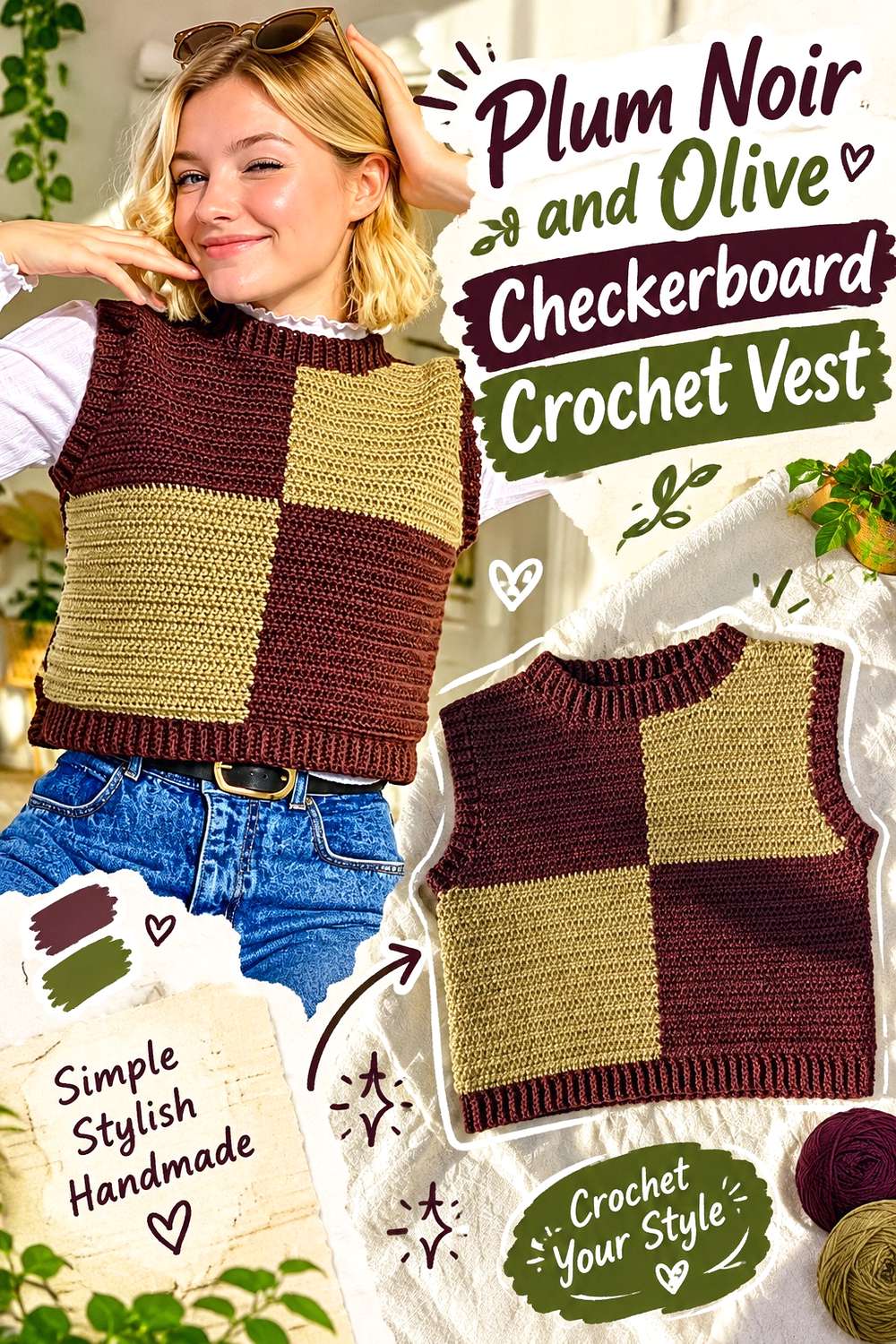
A checkerboard vest gives Plum Noir and olive similar visual importance. This is the project where value contrast matters most because every block depends on the neighboring color being distinguishable.
Test Plum Noir and Olive Before Crocheting the Vest Blocks
Photograph your two yarns together and check the image in grayscale. If the shades nearly disappear into the same gray, the checkerboard will have a subtle tonal appearance rather than a strongly graphic one.
That softer effect can be intentional, but deciding beforehand prevents disappointment after completing large panels.
Choose Plum Noir or Olive for the Crochet Vest Ribbing
The neckline, armholes, and lower edge can shift the apparent balance of a 50/50 checkerboard. Plum Noir ribbing darkens and frames the design, while olive ribbing pushes the green direction farther forward.
Use the same trim logic around related openings so the vest does not look randomly edged.
Creator Credit: Hayhay Crochet
8. Olive Crochet Bucket Hat with Plum Noir Brim

A bucket hat divides naturally into crown, sides, and brim. Keeping the crown and main sides olive while changing to Plum Noir at the brim ties the color transition to a visible change in shape.
Carry Olive Through the Crochet Bucket Hat Crown
A continuous olive crown keeps the upper portion visually unified. If the construction has visible shaping lines, one color also prevents those lines from competing with several narrow stripes.
For more Plum Noir above the brim, one controlled band around the sides is usually enough.
Begin Plum Noir at the Olive Crochet Bucket Hat Brim
The point where the brim flares outward is an effective place to introduce the darkest shade. Plum Noir then creates a strong lower outline while olive remains clearly dominant from above.
If the brim becomes visually too heavy, finish its outermost edge in olive to reconnect it to the crown.
Creator Credit: PassioKnit Kelsie
9. Olive Crochet Bandana with Plum Noir Edging

The center, border, and ties of a bandana provide straightforward color zones. Olive can fill the main fabric while Plum Noir traces the triangular outline and continues into the ties.
Keep Olive Across the Crochet Bandana Center
A broad olive center leaves decorative stitches or openwork uninterrupted. Small alternating Plum Noir details can make a compact piece feel busier than necessary.
If the olive is particularly dark, compare it with the hair or clothing behind the finished bandana because the surrounding colors will influence how clearly its shape reads.
Continue Plum Noir from the Olive Crochet Bandana Edge into the Ties
Using Plum Noir for both the edge and ties makes the darkest shade continuous rather than isolated. It also produces repeated Plum Noir on each side once the bandana is worn.
Keep the olive center large enough that the border does not visually overpower such a small accessory.
Creator Credit: VivCrochets
10. Plum Noir Crochet Hanging Basket with Olive Rim
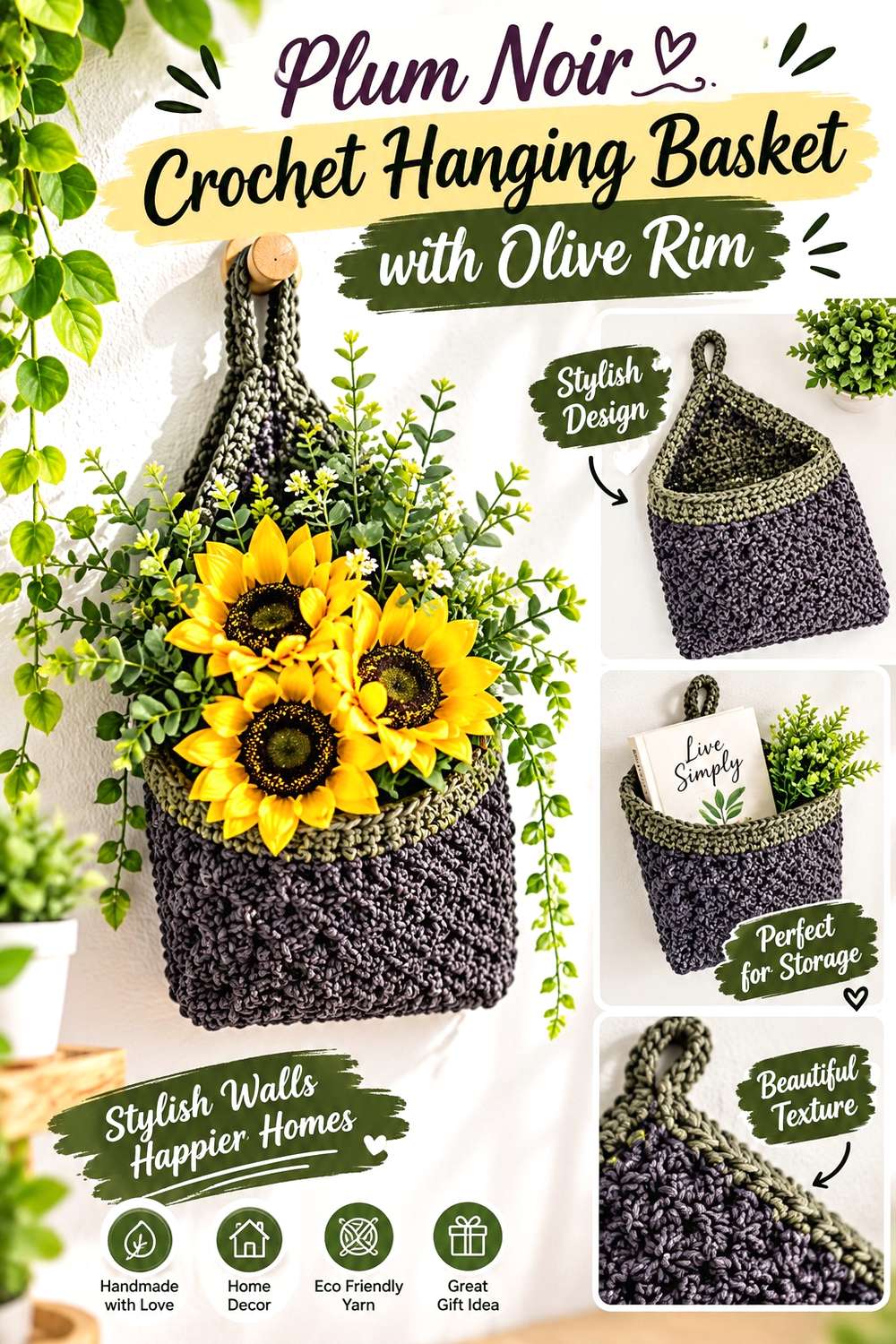
A hanging basket offers vertical color placement rather than conventional striping. Plum Noir can cover the lower storage area while olive appears around the opening, where it stays visible even when the basket contains objects.
Put Plum Noir on the Lower Crochet Hanging Basket
A Plum Noir lower section can give the hanging basket a strong visual base against a light wall. Keeping this area continuous also avoids interrupting a small storage piece with excessive color changes.
If the intended wall is very dark, make sure the basket outline will not disappear into the background.
Use Olive Around the Plum Noir Crochet Basket Opening
Olive at the rim separates the opening from the deep body and brings the earthier color to the most visible part of the basket.
Repeating olive in the hanging loop or another small upper detail can connect the accent without turning the body into a striped design.
Creator Credit: Winding Road Crochet
11. Plum Noir Crochet Poncho with Olive Border

A poncho has enough broad fabric for Plum Noir to dominate confidently. Olive is most effective around the neckline and lower perimeter, where it can warm and soften the large dark field without fragmenting the drape.
Keep Plum Noir Continuous Across the Crochet Poncho Body
Using Plum Noir through the broad central area emphasizes the overall silhouette rather than a sequence of color bands. Stitch texture can provide the internal variation.
If intricate sections become difficult to see, use olive selectively for those areas rather than adding narrow stripes everywhere.
Carry Olive Around the Plum Noir Crochet Poncho Perimeter
A broad olive lower border gives the muted green enough length to remain visible. Repeating olive at the neckline connects the upper and lower edges of the garment.
If the olive is as dark as the Plum Noir, give the border slightly more width so the change is communicated through area as well as hue.
Creator Credit: Bag-O-Day Crochet
12. Olive Crochet Tote Bag with Plum Noir Base

A tote lets Plum Noir sit at the bottom where the darkest color visually grounds the shape. Olive can cover the taller sidewalls and remain the main color from normal viewing angles.
Give Olive Most of the Crochet Tote Walls
Using olive across the main bag body provides a large uninterrupted surface and keeps the project from becoming overwhelmingly dark. The broad area also allows stitch texture to remain visible.
Plan the transition around the entire bag rather than only across the front so the color block stays level and intentional.
Repeat Plum Noir from the Olive Crochet Tote Base to the Handles
Plum Noir can return at the handles or upper edge to connect the dark base with the top of the bag. This creates a framework around the larger olive field.
If full Plum Noir handles feel too heavy, use olive handles with a smaller Plum Noir detail around the opening instead.
Creator Credit: KnitcroAddict
13. Olive Crochet Cropped Sweater with Plum Noir Trim

A cropped sweater has a compact body, so dark trim can occupy a significant percentage of the visible garment. Olive can remain broad across the torso and sleeves while Plum Noir emphasizes the neckline, cuffs, or lower edge.
Keep Olive Across the Main Crochet Sweater Body
A continuous olive torso prevents a shorter sweater from becoming visually divided into too many bands. It also gives textured or shaped areas enough space to be seen.
If you introduce Plum Noir within the body, make it one substantial design area rather than several disconnected rows.
Connect Plum Noir Around Olive Crochet Sweater Edges
Repeating Plum Noir at the neckline and cuffs gives the dark shade balanced positions across the garment. Adding the lower edge creates an even stronger frame around olive.
If that amount of Plum Noir makes the cropped body look too dark, keep the hem olive and reserve the blackened plum for the upper and sleeve details.
Creator Credit: forthefrills
14. Plum Noir and Olive Crochet Balaclava
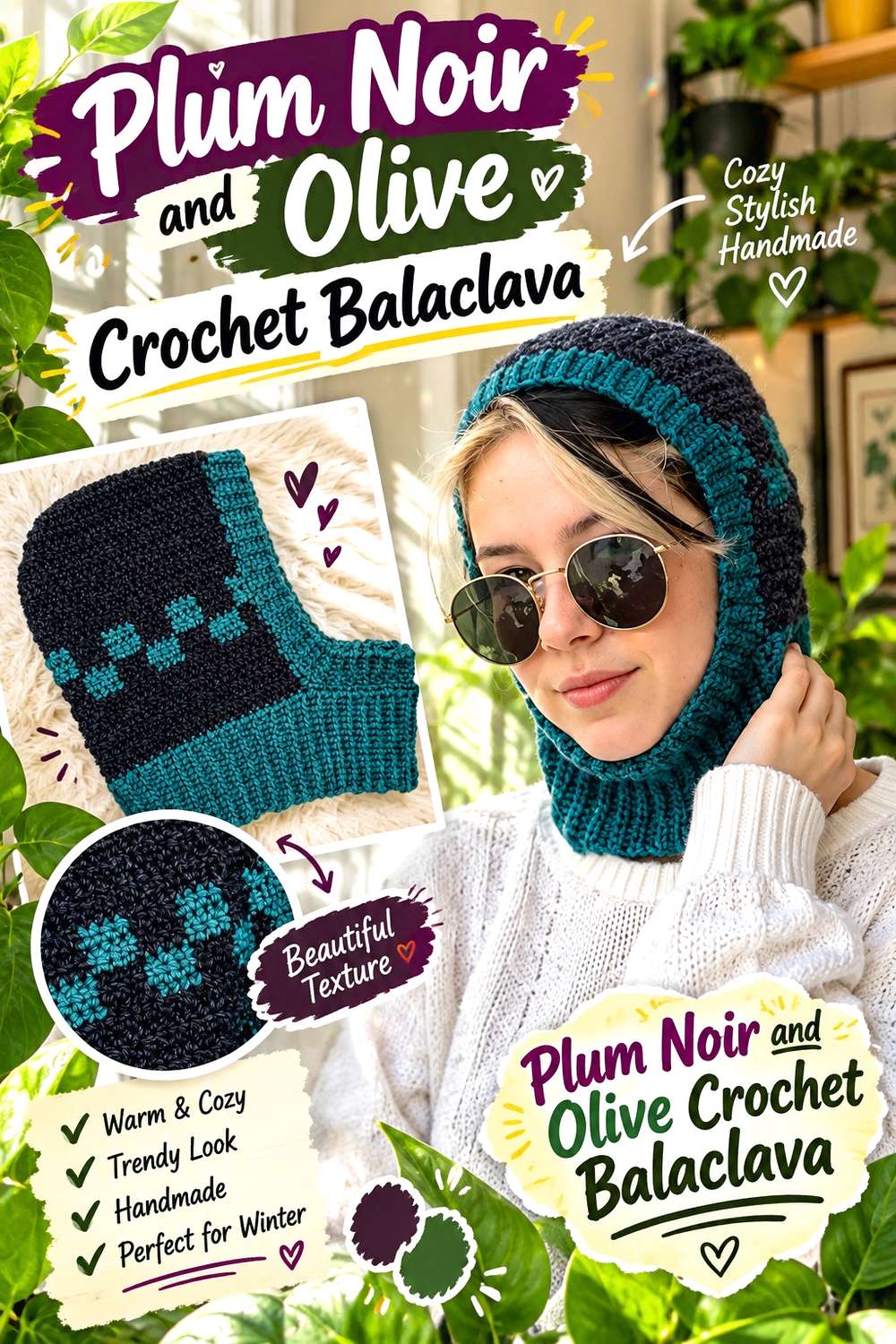
A balaclava has natural boundaries around the crown, face opening, and lower edge, making color blocking easier to control. Plum Noir can dominate the crown while olive surrounds the face and repeats lower on the piece.
Keep Olive Visible Around the Plum Noir Crochet Face Opening
Olive around the face opening brings the greener shade to a prominent area and keeps Plum Noir from controlling every visible section.
If your olive is very dark, use a broad enough section for its green undertone to remain recognizable rather than limiting it to a narrow edge.
Carry Plum Noir Across the Olive Crochet Balaclava Crown
Plum Noir can begin above the olive face section and continue across the top. Repeating it again near the lower edge gives the darkest shade two visually related locations.
For a more blended effect, choose an olive close to Plum Noir in value. For clearer color blocking, preserve a noticeable light-dark difference between the yarns.
Creator Credit: made in the moment
Comparing Plum Noir and Olive Crochet Color Directions
For an olive-led result, the pillow, beanie, bucket hat, bandana, tote, and cropped sweater give the green shade the largest visual area. Plum Noir works mainly as an edge, base, brim, handle, or trim color. This direction is useful when you want the palette to remain earthy rather than predominantly near-black.
For a Plum Noir-led project, the cocoon cardigan, shawl, hanging basket, and poncho let the blackened plum direction cover most of the finished surface. Olive then provides muted contrast at structural or textured areas.
For a more balanced two-color design, the striped blanket, checkerboard vest, and balaclava allow both colors to occupy substantial areas. These projects benefit most from checking value contrast before starting.
Texture can also decide the hierarchy. If Plum Noir hides the shadows in detailed crochet, move olive into cables, clusters, waffle textures, or other raised sections and save Plum Noir for smoother surrounding areas.
Conclusion
Plum Noir and olive can produce either a subtle tonal crochet palette or clearly divided color blocking depending on the yarns you choose. When both colors are very dark, broad sections usually communicate the palette better than tiny alternating details. When the olive is noticeably lighter, smaller borders, checks, and trim can remain easier to distinguish.
Use olive across important texture when Plum Noir reduces stitch definition. Use Plum Noir where the finished item benefits from a strong frame: cardigan edges, bag bases, hat brims, basket bodies, garment trim, and borders.
The checkerboard vest and striped blanket put the contrast under the most pressure, while the bucket hat, bandana, beanie, and tote offer straightforward structural zones for testing the combination. Whatever project you choose, preserve the relationship between deep Plum Noir and earthy olive rather than focusing on exact commercial shade names.
Frequently Asked Questions
What is Plum Noir in a crochet color scheme?
In this palette, Plum Noir describes a very deep plum direction that approaches black while retaining a purple or wine undertone. It is a color role rather than a claim that every commercially named Plum Noir yarn will look identical.
Do Plum Noir and olive work together in crochet?
They can create a muted, earthy combination with both warm and cool undertones. The main issue is value contrast. A deep olive beside an almost-black Plum Noir can look more tonal than expected, so compare the actual yarns before planning small motifs.
Should Plum Noir or olive dominate the crochet project?
Either approach can work. Olive dominance keeps more green visible and can help textured stitches show, while Plum Noir dominance produces a much darker finished piece. Give the secondary color repeated structural locations so it feels intentional.
How can I check whether Plum Noir and olive have enough contrast?
Place the yarns side by side and view them from a distance. You can also take a photograph and convert it to grayscale. If the two colors turn into nearly the same gray, use broader color blocks when clear separation is important.
Where should Plum Noir go on an olive crochet garment?
Cuffs, necklines, hems, front bands, and other edges are useful placements because they already form visual boundaries. Repeating Plum Noir at several related edges usually feels more integrated than adding one isolated dark patch.
Can I add cream to Plum Noir and olive crochet?
Yes. Cream or another noticeably lighter neutral can separate small motifs or lighten a very dark project. Use it selectively if you want Plum Noir and olive to remain the unmistakable main palette.
How do I substitute a different olive shade with Plum Noir?
Preserve the relationship you want. Choose a lighter or medium olive when clear separation and texture visibility matter, or a deeper muted olive when you want a more blended, low-contrast result beside Plum Noir.