Plum Noir and Dusty Rose create a crochet palette with a clear dark-to-soft relationship. Plum Noir can provide the deepest visual anchor, while Dusty Rose introduces a muted pink that lightens borders, motifs, cuffs, panels, and other details without producing the sharp contrast of cream or white.

The exact yarns matter. Some Dusty Rose shades are quite pale, while others are muted and medium-dark. Plum Noir can also range from recognizable deep plum to almost black. If your two yarns look surprisingly similar in grayscale, give Dusty Rose larger areas rather than expecting a narrow stripe to remain clearly visible.
This palette also works in reverse. Dusty Rose can dominate a cardigan, hat, or accessory while Plum Noir defines edges and focal details. The 15 ideas below use those changes in dominance and placement to create visibly different crochet directions.
The credited tutorials support each crochet project concept and construction. The Plum Noir and Dusty Rose color schemes are independent palette adaptations.
Quick List
- Plum Noir And Dusty Rose Crochet Baby Blanket
- Plum Noir And Dusty Rose Crochet Bucket Hat
- Plum Noir And Dusty Rose Crochet Bandana
- Plum Noir And Dusty Rose Crochet Scarf
- Plum Noir And Dusty Rose Crochet Shawl
- Plum Noir And Dusty Rose Crochet Granny Squares
- Plum Noir And Dusty Rose Crochet Tote Bag
- Plum Noir And Dusty Rose Crochet Basket
- Plum Noir And Dusty Rose Crochet Crop Top
- Plum Noir And Dusty Rose Crochet Poncho
- Plum Noir And Dusty Rose Crochet Mittens
- Plum Noir And Dusty Rose Crochet Coasters
- Plum Noir And Dusty Rose Crochet Cowl
- Plum Noir And Dusty Rose Crochet Headband
Decide Whether Plum Noir or Dusty Rose Should Dominate
Plum Noir naturally carries more visual weight when it is much darker than Dusty Rose. That means a relatively narrow Plum Noir border or motif round can influence a project more strongly than its yarn quantity suggests.
For blankets, shawls, bags, and ponchos, Plum Noir can fill the largest surface while Dusty Rose softens borders and finishing areas. Reversing the relationship works particularly well on garments and accessories when you want a lighter overall result with Plum Noir restricted to smaller focal points.
Avoid automatically dividing the project 50/50. Decide which color should be noticed first, then give the supporting shade specific structural jobs.
Keep Dusty Rose Visible Beside Deep Plum Noir
Dusty Rose can lose definition when it is too dark or used in very small quantities next to Plum Noir. Narrow stripes, tiny motif centers, and thin edging are the most vulnerable areas.
Compare the actual yarns from several feet away. If Dusty Rose starts blending into Plum Noir, enlarge the pink section or choose a Dusty Rose that remains clearly lighter while preserving its muted character.
For textured crochet, also check whether Plum Noir hides stitch definition. Dusty Rose placed around raised motifs, ribbing, borders, or other detailed areas can help separate the dark surface.
1. Plum Noir And Dusty Rose Crochet Baby Blanket
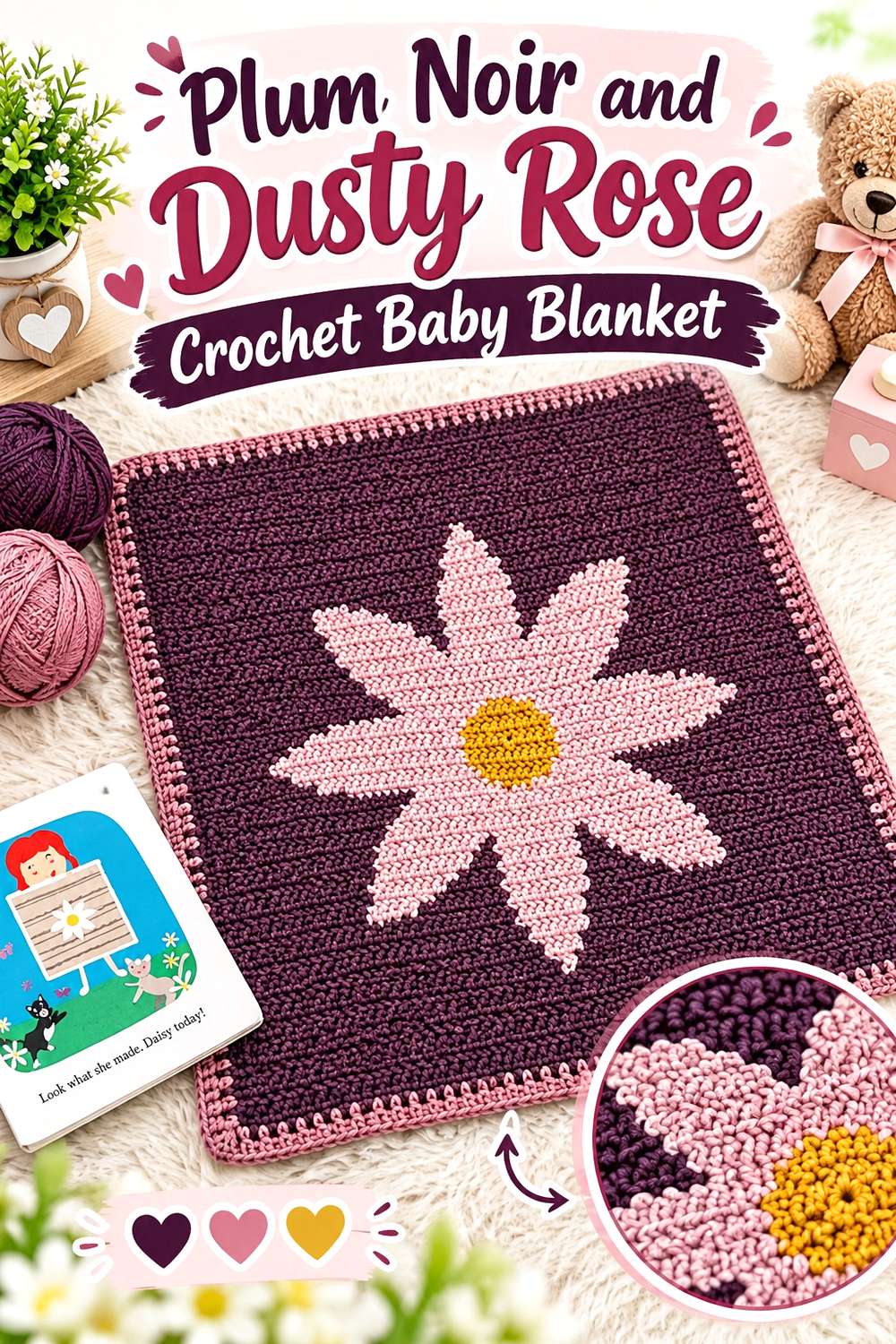
Let Plum Noir cover most of the blanket field and use Dusty Rose around the perimeter or in a few substantial bands. The dark center gives the blanket depth, while Dusty Rose prevents the entire surface from reading as one uninterrupted dark block.
Plum Noir Can Carry the Main Crochet Blanket Field
Use Plum Noir continuously through the center when the blanket already has visible stitch texture. A broad single-color field gives bobbles, clusters, or other surface details more room to establish themselves.
Check a sizable swatch under normal indoor lighting. Extremely dark Plum Noir can hide subtle texture that looks much clearer in brighter working light.
Dusty Rose Softens the Plum Noir Crochet Blanket Border
Dusty Rose can frame the blanket without producing a stark light-dark jump. If your Dusty Rose is only slightly lighter than Plum Noir, make the border wide enough to remain visible from across the room.
A lighter Dusty Rose can work in a narrower border while still providing clear separation.
Creator Credit: Daisy Farm Crafts
2. Plum Noir And Dusty Rose Crochet Bucket Hat

A Dusty Rose crown with a Plum Noir brim creates a softer overall hat while concentrating the deepest color around the outer edge. Reverse the arrangement if you want the crown to feel darker and the brim to become the muted accent.
Dusty Rose Can Keep the Plum Noir Crochet Bucket Hat Lighter Overall
Use Dusty Rose across the crown when you want the muted pink to remain the main impression.
Keeping the crown in one color also gives the hat shape and stitch texture a cleaner surface than frequent narrow striping would provide.
Plum Noir Can Give a Dusty Rose Crochet Brim More Definition
Plum Noir around the brim creates a strong visual boundary and can make the hat silhouette easier to read.
Because the brim projects outward, even a modest amount of Plum Noir can appear substantial. Judge the color balance after the hat is shaped rather than while the fabric is flat.
Creator Credit: PassioKnit Kelsie
3. Plum Noir And Dusty Rose Crochet Bandana

A Plum Noir triangle with Dusty Rose edging gives a small bandana clear color organization. The dark main field carries the surface texture while the softer pink follows the edge and, where suitable, the ties.
Plum Noir Keeps the Crochet Bandana Triangle Cohesive
Let Plum Noir cover most of the triangle when openwork or granny-style clusters already provide visual movement.
Several small Dusty Rose stripes can make a compact project look fragmented, particularly when each stripe occupies very little area.
Dusty Rose Can Outline Plum Noir Crochet Bandana Edges
Use Dusty Rose around the perimeter where it can soften the dark triangle and make its shape more distinct.
If Dusty Rose ties create too much pink, keep the ties Plum Noir and reserve the lighter shade for the main border.
Creator Credit: HayHay Crochet
4. Plum Noir And Dusty Rose Crochet Scarf

A long Plum Noir scarf can use Dusty Rose in substantial end blocks. This creates two clearly repeated softer areas while keeping the main length dark and uninterrupted.
Plum Noir Can Lead the Long Crochet Scarf Center
Use Plum Noir through most of the scarf when texture should carry the visual interest.
A continuous dark center also keeps the palette from becoming a series of small alternating stripes that compete with the stitch pattern.
Dusty Rose End Blocks Can Balance a Plum Noir Crochet Scarf
Repeat Dusty Rose at both ends for a symmetrical arrangement. If the shades are close in value, use broader pink blocks so the change remains visible.
Check the scarf wrapped around the neck as well as flat because the two Dusty Rose areas may sit close together when worn.
Creator Credit: B.Hooked Crochet
5. Plum Noir And Dusty Rose Crochet Shawl
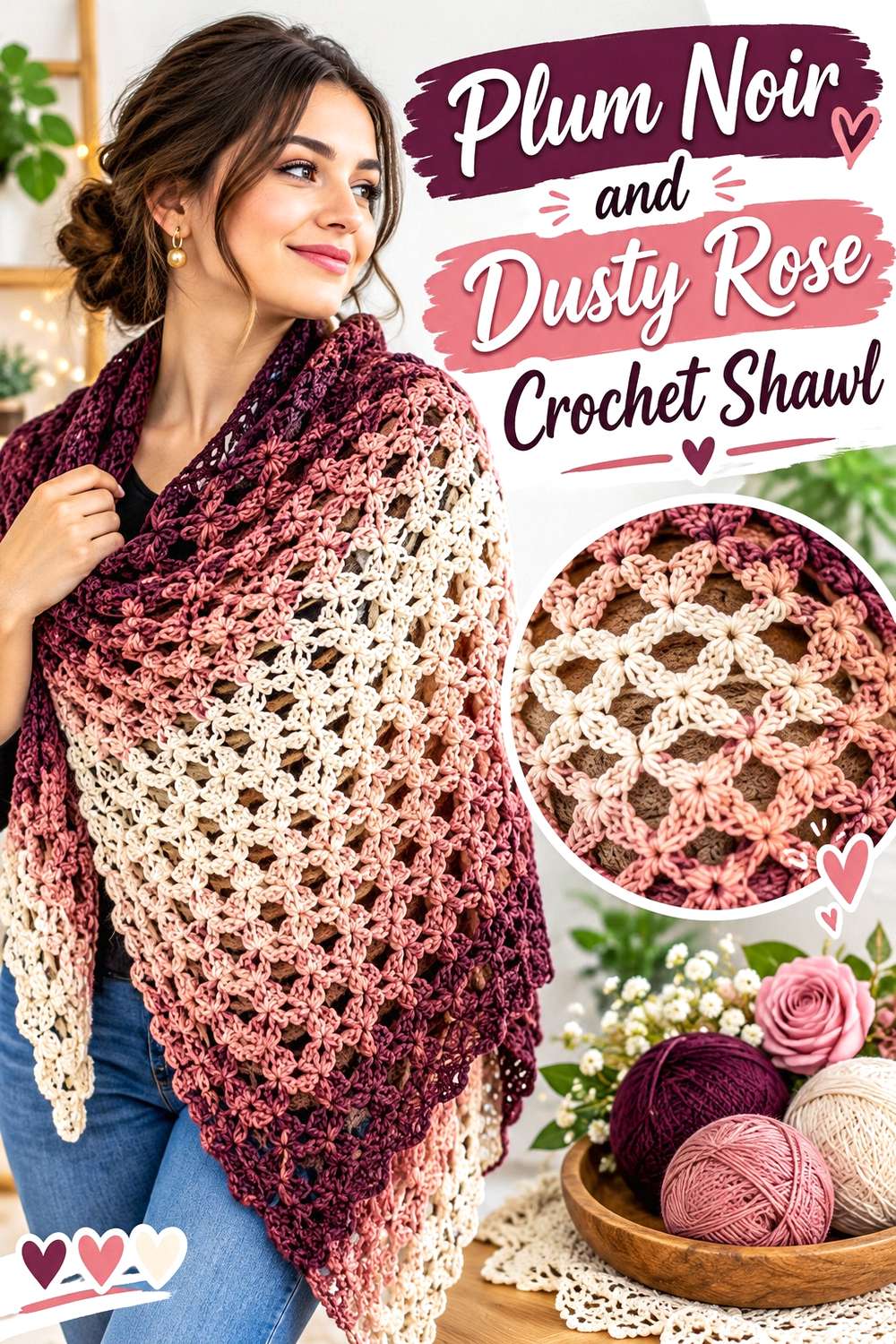
Plum Noir can dominate the central shawl while Dusty Rose follows the expanding outer edge. The pink border softens the deep field and becomes increasingly visible as the shawl grows wider.
Plum Noir Can Keep the Crochet Shawl Surface Rich and Continuous
Use Plum Noir throughout the body when lace, shells, or another stitch pattern already provides enough internal detail.
The surrounding clothing will show through openwork, so consider that background when judging how dark the finished Plum Noir section appears.
Dusty Rose Can Soften the Plum Noir Crochet Shawl Edge
Place Dusty Rose around the outer section when you want a gentler transition than cream or white would provide.
Wait until the main Plum Noir body has grown substantially before choosing the final border depth. Shawl edges occupy more visual area than they may seem to while you are working them.
Creator Credit: Fiber Spider
6. Plum Noir And Dusty Rose Crochet Granny Squares

Granny squares allow Plum Noir and Dusty Rose to exchange dominant and supporting roles without changing the palette. Moving one color between the center and outer rounds can significantly alter how much of it appears in the finished project.
Plum Noir Centers Can Anchor Dusty Rose Crochet Granny Squares
Place Plum Noir in the middle when you want every motif to contain a concentrated dark focal point.
Because the center repeats across many squares, test several motifs together before deciding that the Plum Noir area needs to become larger.
Dusty Rose Centers Can Shift More Plum Noir Toward Crochet Square Edges
Reverse the arrangement for a softer center surrounded by deeper outer rounds.
Since later rounds occupy more surface, placing Plum Noir outside can make the finished motif field considerably darker than a simple center-color comparison suggests.
Creator Credit: Bella Coco
7. Plum Noir And Dusty Rose Crochet Tote Bag

A Plum Noir tote body with a Dusty Rose base and handles gives the colors clear structural roles. The dark shade fills the broad panels, while muted pink connects the upper and lower portions of the bag.
Plum Noir Gives the Crochet Tote Its Largest Color Field
Use Plum Noir across the front and back panels if you want the bag to remain dark overall.
Keeping those large surfaces continuous is useful when the fabric already contains noticeable texture or openwork.
Dusty Rose Can Connect a Plum Noir Crochet Tote Base and Handles
Repeat Dusty Rose at both the bottom and handles so the supporting shade appears integrated rather than inserted as one unrelated stripe.
If Dusty Rose is relatively dark, make these sections broad enough to remain recognizable against the Plum Noir body.
Creator Credit: crochet daniela
8. Plum Noir And Dusty Rose Crochet Basket
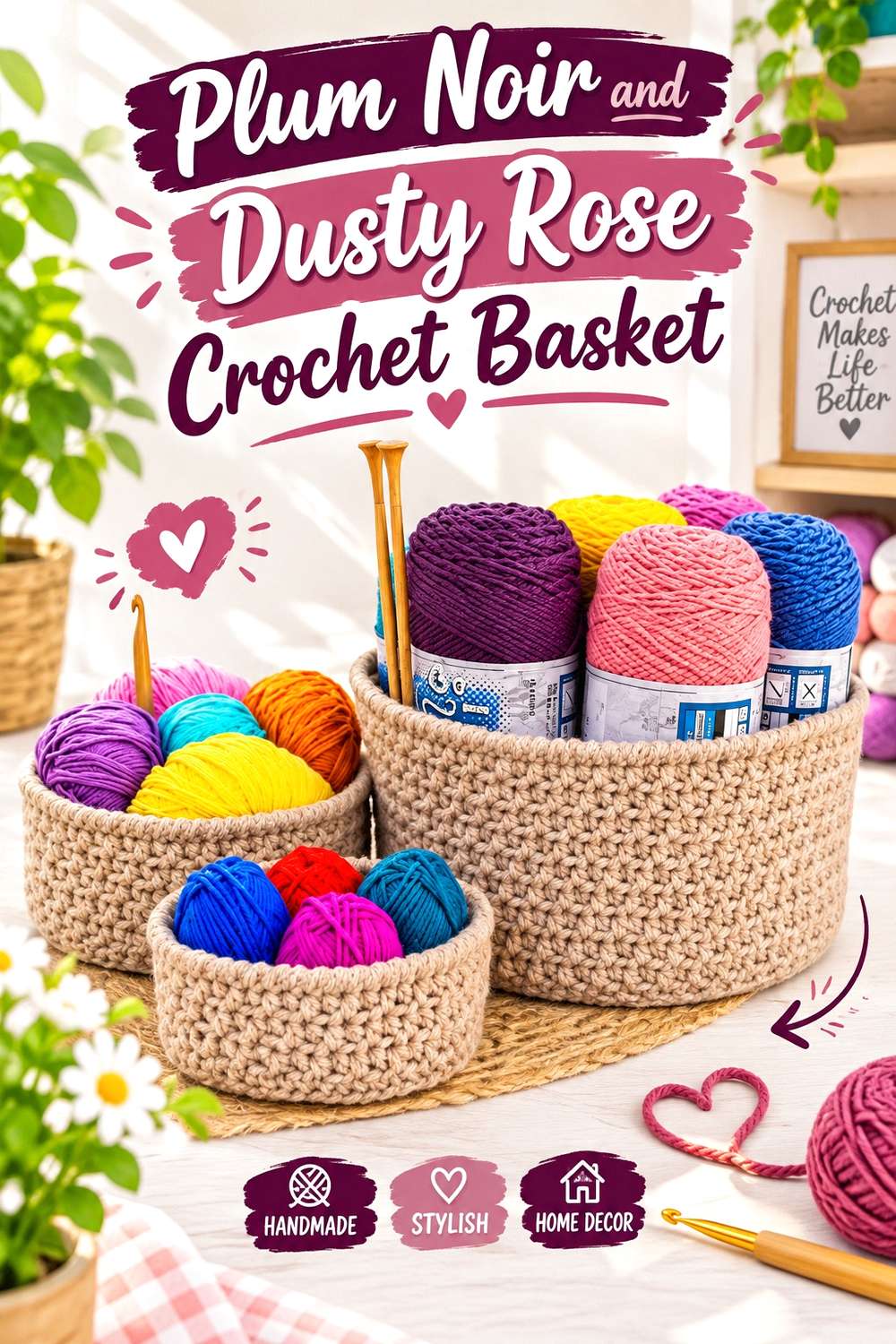
A Plum Noir basket body paired with a Dusty Rose rim puts the softer color where it stays visible even when the basket contains other items. This also avoids dividing the side walls with unnecessary striping.
Plum Noir Can Keep the Crochet Basket Body Visually Solid
Use Plum Noir across the base and walls when you want the basket to have a strong dark foundation.
If the yarn is extremely dark, test the intended stitch texture first. Small surface details can disappear more readily on a basket viewed under ordinary indoor lighting.
Dusty Rose Can Make the Plum Noir Crochet Basket Rim Visible
Place Dusty Rose around the opening for a clear structural accent.
If handles or tabs are part of the construction, repeating Dusty Rose there can connect the upper details without adding another stripe through the Plum Noir body.
Creator Credit: Naztazia
9. Plum Noir And Dusty Rose Crochet Crop Top

Dusty Rose can lead across the crop-top body while Plum Noir defines selected finishing areas. This arrangement keeps the small garment from becoming visually heavy while retaining enough dark contrast around its structure.
Dusty Rose Can Lead the Plum Noir Crochet Crop Top Panels
Use Dusty Rose across the torso if you want the softer shade to dominate.
A consistent Dusty Rose body also gives openwork or other stitch texture room to remain visible without several additional color interruptions.
Plum Noir Can Define Dusty Rose Crochet Top Edges
Repeat Plum Noir at two related areas, such as the lower edge and straps or neckline.
Avoid outlining every garment boundary in Plum Noir unless you deliberately want a strongly framed result. A few repeated dark details are usually enough to establish the palette.
Creator Credit: KnitcroAddict
10. Plum Noir And Dusty Rose Crochet Poncho

Plum Noir can cover most of a broad poncho while Dusty Rose follows the neckline and lower edge. Since the garment has a large surface, even restrained pink finishing can create a meaningful color shift.
Plum Noir Can Carry the Broad Crochet Poncho Surface
Use Plum Noir through the main body when you want the garment silhouette to remain deep and dramatic.
A poncho creates a much larger dark field than a hat or scarf, so evaluate the Plum Noir yarn on a substantial swatch rather than relying on its appearance in the skein.
Dusty Rose Can Link Plum Noir Crochet Poncho Boundaries
Repeat Dusty Rose around the neckline and lower perimeter to create a connection between the top and bottom of the garment.
Keep the lower border proportionate. The same width of Dusty Rose will look more substantial around a wide poncho hem than around the neckline.
Creator Credit: MJ’s Off The Hook Designs
11. Plum Noir And Dusty Rose Crochet Mittens
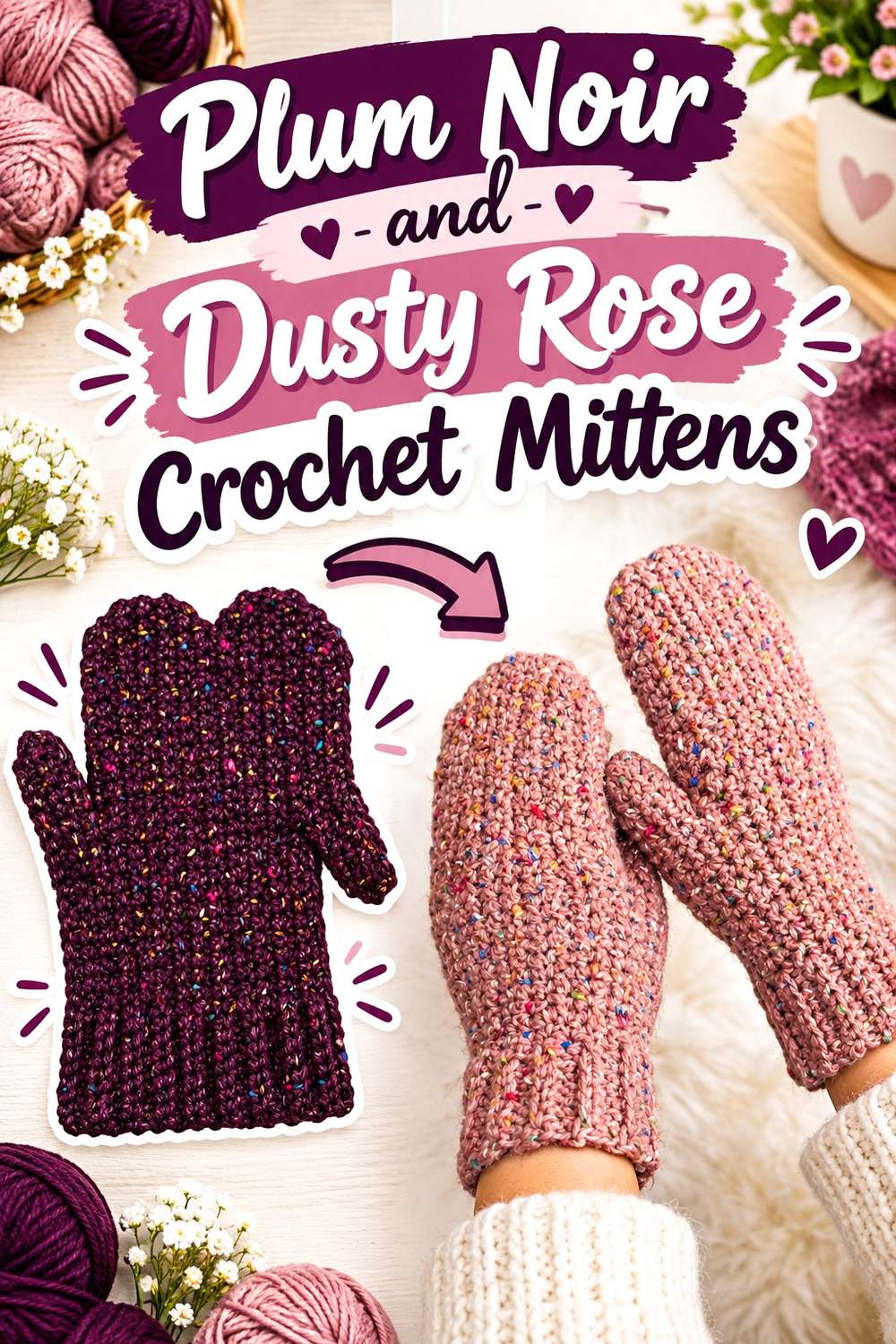
Plum Noir can cover the hand sections while Dusty Rose forms matching cuffs. This straightforward division keeps both mittens coordinated and avoids trying to reproduce multiple small color changes around thumbs and shaping.
Plum Noir Keeps Both Crochet Mittens Consistent
Use Plum Noir through both hands when you want the pair to share the same deep visual weight from fingertips to wrists.
This also gives Dusty Rose one obvious repeated location rather than scattering it around shaped areas.
Dusty Rose Cuffs Give Plum Noir Crochet Mittens a Softer Finish
Work Dusty Rose at equivalent cuff positions so the pair immediately looks coordinated.
Consider how much cuff will remain visible beneath sleeves. A broader Dusty Rose section may be useful if most of the wrist area will normally be covered.
Creator Credit: Brunaticality
12. Plum Noir And Dusty Rose Crochet Coasters

Small coasters work well with a simple Plum Noir center and Dusty Rose outer edge. Because the pieces are compact, the border width can quickly change which shade feels dominant.
Plum Noir Centers Can Connect the Crochet Coaster Set
Repeat Plum Noir through the main area of each coaster so the set maintains one clear dark focal color.
For variation, reverse the two colors on selected coasters rather than introducing a third competing shade.
Dusty Rose Borders Should Leave Enough Plum Noir Crochet Visible
Finish one coaster before repeating the border proportion across the full set.
If Dusty Rose occupies too many outer rounds, Plum Noir may shift from dominant center to small accent. That can be useful, but it should be intentional.
Creator Credit: HappyBerry Crochet
13. Plum Noir And Dusty Rose Crochet Cowl

A Plum Noir cowl center with Dusty Rose around both openings gives the compact accessory a dark textured body and softer framing. The two pink edges may appear especially prominent once the cowl folds during wear.
Plum Noir Can Keep the Crochet Cowl Center Cohesive
Use Plum Noir through the main textured section when you want the stitch pattern to provide most of the surface variation.
Before committing, check whether the darkest yarn preserves enough texture definition under the lighting where the cowl will normally be worn.
Dusty Rose Can Frame Both Plum Noir Crochet Cowl Openings
Repeat Dusty Rose at the upper and lower edges to create a clear relationship between them.
Drape or fold the cowl before deciding the final width because both Dusty Rose sections may sit much closer together than they do when the piece is flat.
Creator Credit: Rich Textures Crochet
14. Plum Noir And Dusty Rose Crochet Headband

A Dusty Rose headband with Plum Noir concentrated at a center feature or edge gives the small accessory clear hierarchy without dividing it into several narrow blocks.
Dusty Rose Can Carry Most of the Plum Noir Crochet Headband
Use Dusty Rose through the larger band section when you want the accessory to remain softer overall.
This also lets the headband’s stitch texture provide interest without several alternating dark stripes.
Plum Noir Should Mark a Clear Dusty Rose Crochet Headband Detail
Place Plum Noir at an existing knot, twist, center area, or edge rather than introducing an unrelated patch.
On a small item, a concentrated Plum Noir detail can provide enough depth without needing equal quantities of both colors.
Creator Credit: Winding Road Crochet
Comparing Plum Noir and Dusty Rose Crochet Directions
For a Plum Noir-forward result, the baby blanket, bandana, scarf, shawl, tote, basket, poncho, mittens, coasters, and cowl give the dark shade substantial uninterrupted surfaces. Dusty Rose then works primarily at borders, cuffs, handles, rims, and finishing details.
For a softer Dusty Rose-led direction, the bucket hat, crop top, or headband lets the muted pink occupy more of the visible item while Plum Noir provides targeted definition.
The granny-square cardigan and individual granny squares are the most flexible options. Moving Plum Noir from motif centers to outer rounds can transform the overall project from Dusty Rose-led to distinctly dark without changing the two-color palette.
Conclusion
Plum Noir and Dusty Rose work especially well when their difference in visual weight is used deliberately. Plum Noir can anchor broad surfaces and structural areas, while Dusty Rose can soften borders, separate motifs, brighten cuffs, or provide a larger muted field around smaller dark details.
If you want a moody finished project, let Plum Noir dominate and repeat Dusty Rose selectively. If the result feels too dark, reverse the hierarchy and use Dusty Rose across the main panels with Plum Noir restricted to edges and focal areas.
Always compare the actual yarns before committing. When Dusty Rose and Plum Noir sit close together in value, larger blocks will communicate the palette more clearly than very narrow stripes or tiny accents.
Use the credited tutorials for the exact project construction, then place Plum Noir and Dusty Rose according to the scale, texture, and structural boundaries of the finished crochet item.
Frequently Asked Questions
Do Plum Noir and Dusty Rose work well together in crochet?
Yes. Plum Noir provides a deep purple-black or very dark plum direction, while Dusty Rose introduces a softer muted pink. The pairing can create strong or moderate contrast depending on the actual yarn shades.
Should Plum Noir or Dusty Rose dominate a crochet project?
Either can lead. Plum Noir creates a deeper overall piece when used across blankets, bags, garments, or shawls. Dusty Rose produces a softer result and lets Plum Noir function as a border, cuff, motif outline, or focal detail.
How can I tell whether Dusty Rose is light enough beside Plum Noir?
Place the actual yarns side by side and view them from a distance. A grayscale photo can also show whether Dusty Rose remains clearly lighter. If the values are close, enlarge the Dusty Rose sections.
Where should I place Dusty Rose in a Plum Noir crochet project?
Borders, cuffs, bag handles, basket rims, motif centers, hat brims, neckline finishing, and other structural details are useful locations because they give the supporting color a clear visual purpose.
Can Plum Noir hide crochet texture?
Very dark yarn can make subtle texture harder to see, especially under dim lighting. Swatch the intended stitch first and consider placing Dusty Rose near raised or detailed areas when more separation is useful.
Can I alternate Plum Noir and Dusty Rose in granny squares?
Yes. You can repeat one arrangement throughout or reverse center and outer-round placement across selected motifs. Lay several finished squares together before joining so the two colors stay balanced across the final project.