Buttercream Yellow gives a crochet daisy headband a softer starting point than a vivid sunflower yellow. It can fill the daisy centers, form the headband base, color the petals, or repeat through ties and motif borders without making a narrow hair accessory look overly bright.

The most useful color decision is deciding where Buttercream Yellow should lead. When it fills the daisy centers, petal color determines how clearly each flower reads. When Buttercream Yellow forms the petals, a darker center can give the daisies more definition. On granny-square headbands, the joining or background color becomes just as important because it controls whether the separate flowers look unified or heavily segmented.
The tutorials credited below support daisy headbands, flower headbands, floral crowns, or closely related flower-accent headband constructions. The Buttercream Yellow palettes are independent color adaptations, so the creators are not being credited with using these exact color combinations.
Quick List
- Buttercream Yellow And Soft White Crochet Daisy Headband
- Buttercream Yellow And Sage Green Crochet Daisy Headband
- Buttercream Yellow And Cocoa Brown Crochet Daisy Headband
- Buttercream Yellow And Dusty Rose Crochet Daisy Headband
- Buttercream Yellow And Sky Blue Crochet Daisy Headband
- Buttercream Yellow And Cream Crochet Daisy Headband
- Buttercream Yellow And Olive Green Crochet Daisy Headband
- Buttercream Yellow And Terracotta Crochet Daisy Headband
- Buttercream Yellow And Muted Lavender Crochet Daisy Headband
- Buttercream Yellow And Charcoal Crochet Daisy Headband
- Buttercream Yellow Ivory And Marigold Crochet Daisy Headband
Decide Whether Buttercream Yellow Belongs in the Daisy Centers or Petals
Buttercream Yellow naturally works in daisy centers, especially when the petals are white, cream, blue, rose, lavender, or another noticeably different shade. This arrangement keeps the flower shape easy to recognize because the center forms a compact block surrounded by a contrasting ring.
Using Buttercream Yellow for the petals creates a different effect. The flowers become warmer and occupy more visual space, so the centers usually benefit from a darker or lighter contrasting color. Cocoa, charcoal, olive, terracotta, or deeper gold can provide definition without requiring another color throughout the headband.
On a narrow daisy chain, repeated color roles help the accessory stay organized. If Buttercream Yellow begins as the center color, repeating that role from flower to flower often looks more cohesive than changing the center treatment on every motif.
Keep Buttercream Yellow Daisy Motifs Clear Against the Headband Base
The band, joins, and ties can either frame the flowers or compete with them. A green base can give Buttercream Yellow daisies a botanical direction, while cream, ivory, or white keeps the whole accessory lighter. Dark cocoa or charcoal creates stronger separation.
For granny-square daisy headbands, pay particular attention to the color around each flower. If every square has a dark outline, the headband may read as individual blocks first and daisies second. A softer neutral or repeated Buttercream Yellow round can visually connect adjacent motifs.
Tie-back designs offer another useful location for color repetition. Carrying Buttercream Yellow into the ties can connect them to the flowers, while keeping the ties in the background color makes the floral section more concentrated across the front of the head.
Use Buttercream Yellow Repetition Without Making the Headband Too Busy
Because a headband occupies a relatively small area, several bright accents can compete quickly. Give Buttercream Yellow one dominant job and repeat it selectively instead of using it in every available border, center, petal, and tie.
View the headband from normal wearing distance before adding extra color. Small flower centers that look subtle in your hands may already form a strong repeated line across the forehead or crown.
1. Buttercream Yellow And Soft White Crochet Daisy Headband
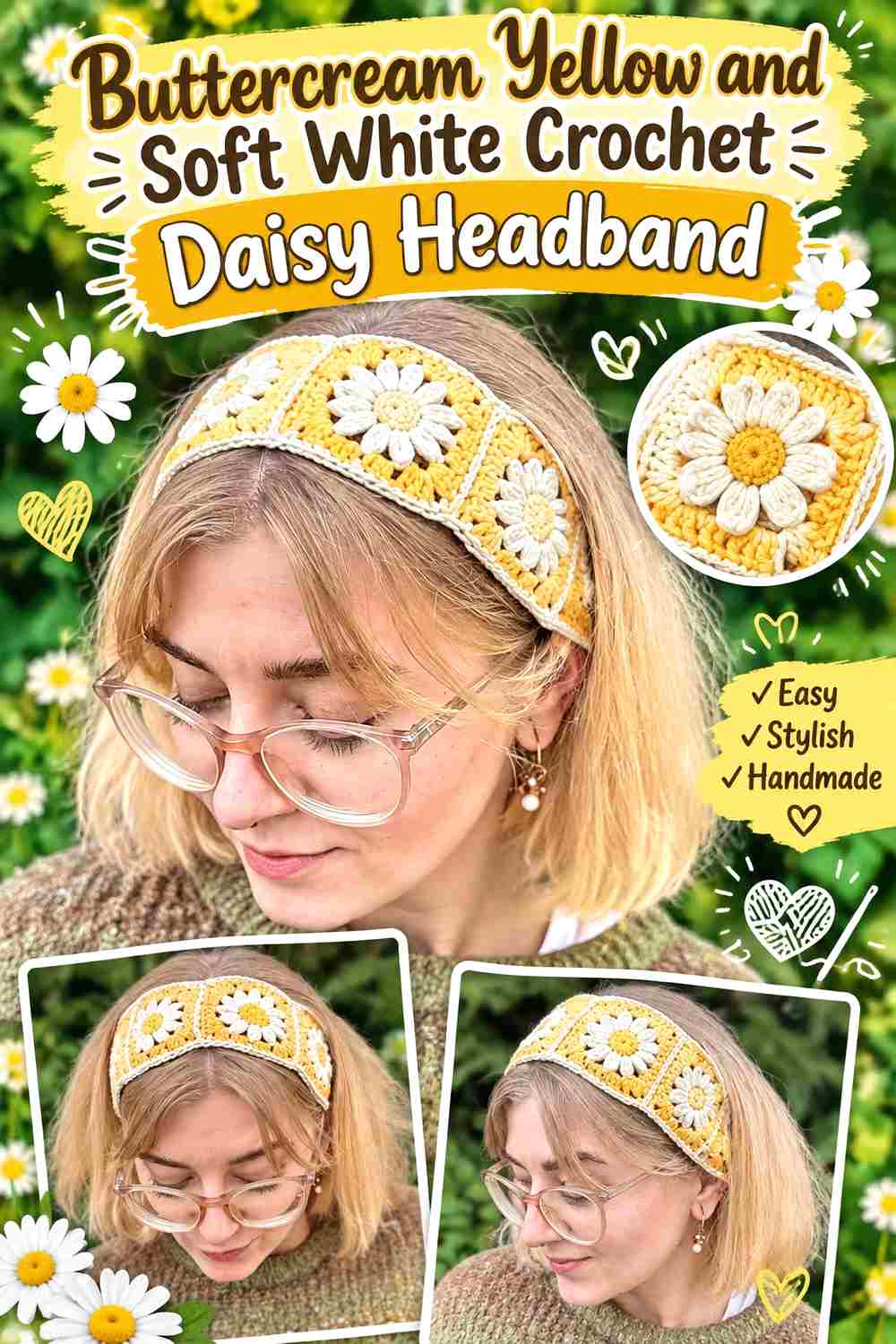
Buttercream Yellow and soft white create the most recognizable daisy direction in the collection. Use Buttercream Yellow for the flower centers and soft white across the petals, then keep the joining or tie color quiet enough that the daisies remain the first thing noticed. This palette is especially useful for repeated flowers because the consistent centers create a clear visual rhythm across the headband.
Keep Buttercream Yellow Concentrated in the Daisy Centers
Place Buttercream Yellow in the same central position on every flower rather than scattering it through the petals and band. The repeated yellow centers give the motifs a common focal point even when their spacing changes slightly across the headband.
For granny-style daisies, keep enough surrounding white visible that the Buttercream Yellow center does not expand into a large warm block.
Use Soft White to Give Buttercream Yellow Daisies Clear Petal Separation
Soft white petals create noticeable lightness around Buttercream Yellow without the sharper effect of a very bright white. If the headband base is also pale, consider a slightly darker joining shade so the flower outlines do not disappear.
Creator Credit: ByBloomAndMoon
2. Buttercream Yellow And Sage Green Crochet Daisy Headband
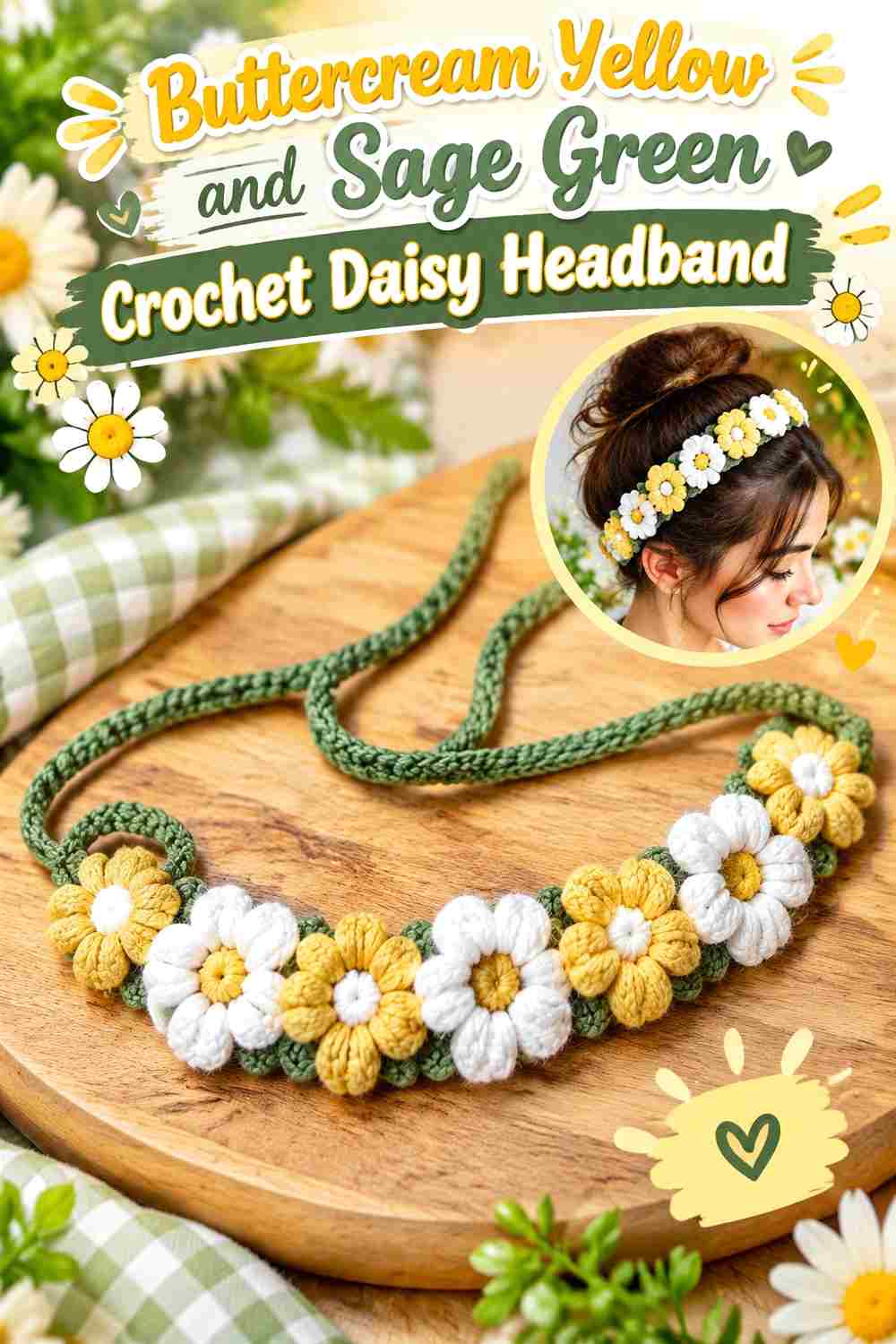
Sage green gives Buttercream Yellow daisies a botanical background while remaining muted enough for the flowers to stay prominent. Use Buttercream Yellow through the centers or selected petals and reserve sage for the band, joins, leaves, or ties.
Let Buttercream Yellow Stand Out Against a Sage Green Band
A sage base can run continuously behind several flowers, giving the repeated Buttercream Yellow sections one shared background. This works particularly well on tie-back styles where the green can continue into the straps without requiring another color change.
Keep Sage Green Secondary Around Buttercream Yellow Daisy Motifs
Avoid filling both the band and large portions of the flowers with sage if Buttercream Yellow should remain the article’s lead color. Small green joins, leaves, or borders are enough to establish the botanical relationship.
Creator Credit: Knitting by Wajida
3. Buttercream Yellow And Cocoa Brown Crochet Daisy Headband

Cocoa brown creates a warmer, earthier contrast than black. Buttercream Yellow can fill the petals or centers, while cocoa defines the opposite part of each flower and can continue through a narrow tie or border.
Use Cocoa Brown to Define Buttercream Yellow Flower Centers or Petals
If Buttercream Yellow forms the petals, a cocoa center gives each flower a clear focal point. If yellow remains in the center instead, cocoa works better as the headband base or joining shade rather than competing directly inside every flower.
Keep Buttercream Yellow Broader Than Cocoa Brown Across the Headband
Cocoa is visually heavier, so it can provide definition with less total area. A narrow brown tie or motif border is often enough to frame the lighter Buttercream Yellow flowers.
Creator Credit: ATELIER GIANECARLA
4. Buttercream Yellow And Dusty Rose Crochet Daisy Headband

Dusty rose creates a softer floral direction that moves away from the standard white daisy. Buttercream Yellow works naturally in the centers, while dusty rose can fill the petals or alternate with a quieter neutral along the band.
Keep Buttercream Yellow Consistent Across Dusty Rose Daisy Centers
Using the same Buttercream Yellow center in every dusty rose flower prevents the color scheme from becoming a random mix of pink and yellow. The repeated center color creates continuity even if the headband uses flowers of different sizes or spacing.
Give Buttercream Yellow Enough Contrast Against Dusty Rose Petals
Some muted rose shades can approach Buttercream Yellow in lightness. Compare the yarns side by side before starting; if they blend, choose a slightly deeper rose or add a quiet darker join around the floral section.
Creator Credit: Krownots
5. Buttercream Yellow And Sky Blue Crochet Daisy Headband
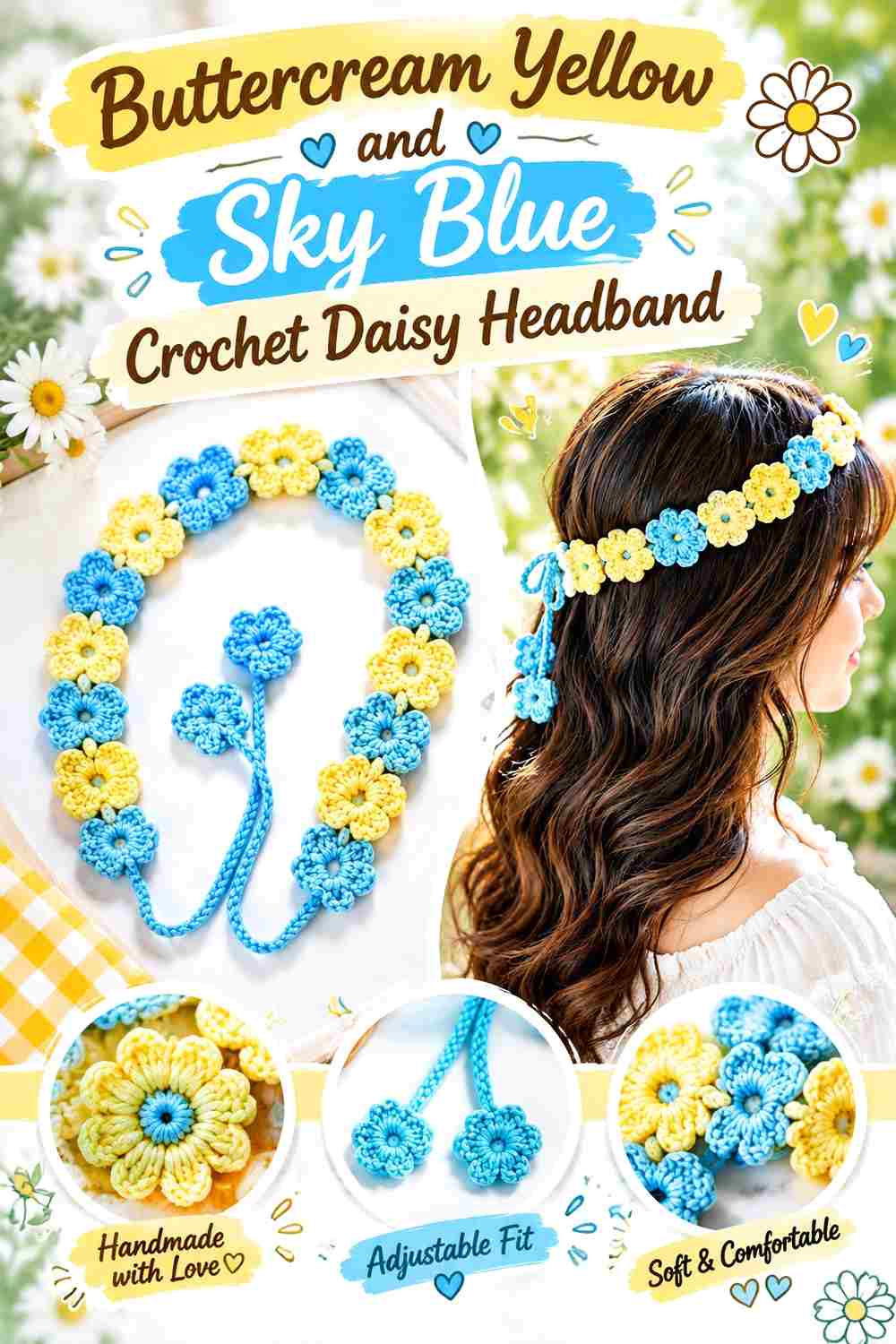
Sky blue creates a cooler contrast that makes Buttercream Yellow appear warmer by comparison. Keep yellow in the flower centers and use blue across petals, selected bands, or a narrow floral chain for a light two-color result.
Let Buttercream Yellow Warm the Center of Sky Blue Daisies
A compact Buttercream Yellow center can provide enough warmth without introducing another strong accent. Keep the center size consistent from flower to flower so the blue petals remain the larger floral element.
Repeat Buttercream Yellow Sparingly Through a Sky Blue Band
If the band itself is sky blue, repeat Buttercream Yellow only at the flowers or perhaps at the ends of ties. Adding yellow stripes between every blossom can make the narrow headband look busier than the daisy construction requires.
Creator Credit: Crochet & Crafts Therapy by Chompu
6. Buttercream Yellow And Cream Crochet Daisy Headband

Buttercream Yellow and cream create a closely related warm-light palette. Because their values may be similar, this combination depends more on flower shape and texture than strong color contrast. Use Buttercream Yellow consistently in the centers and give cream enough petal area for the daisy silhouette to remain recognizable.
Keep Buttercream Yellow Clearly Warmer Than the Cream Petals
Choose a cream that looks noticeably quieter or paler beside Buttercream Yellow. If both yarns become almost identical from a distance, the daisy will rely entirely on texture and may lose its two-color effect.
Use a Cream Base to Keep Buttercream Yellow Daisies Soft and Continuous
A cream headband or joining section can keep the accessory light without introducing a third strong color. Buttercream Yellow centers then provide repeated warm points across the floral strip.
Creator Credit: 하우스 오브 지원 house of Jiwon
7. Buttercream Yellow And Olive Green Crochet Daisy Headband
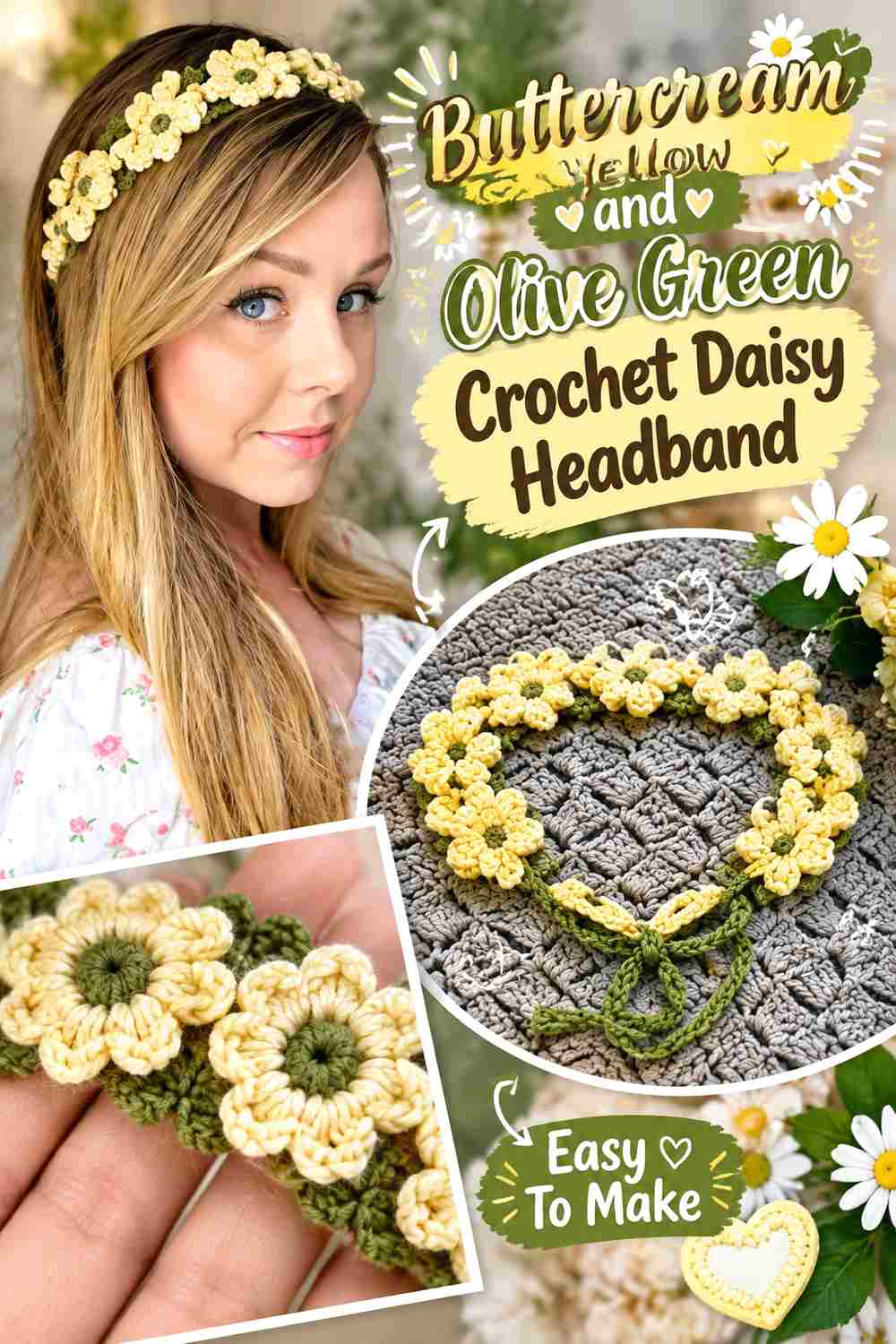
Olive gives Buttercream Yellow a deeper, more grounded green partner than sage. This palette works especially well when the headband includes leaves or a stronger band beneath the flowers.
Keep Buttercream Yellow Bright Against Olive Green Joins
Use Buttercream Yellow where you want the eye to land first—the daisy center or petal field—and concentrate olive around the joining structure. The darker green can define each flower without needing to enter every petal.
Repeat Olive Green Around Buttercream Yellow Without Heavy Outlining
A little olive through the ties or leaf details can connect the headband. Avoid outlining every Buttercream Yellow petal in dark green unless a strongly graphic floral effect is intentional.
Creator Credit: Selina Veronique Crochet
8. Buttercream Yellow And Terracotta Crochet Daisy Headband

Terracotta introduces a muted orange-red warmth that creates a more autumnal flower palette. Buttercream Yellow should remain the lighter focal shade, while terracotta works in centers, surrounding motifs, or a narrower band.
Let Buttercream Yellow Petals Stay Lighter Than Terracotta Centers
A darker terracotta center can give Buttercream Yellow petals strong definition. Keeping that relationship consistent across every flower makes the nontraditional daisy palette feel deliberate rather than randomly multicolored.
Keep Terracotta Controlled Around Buttercream Yellow on a Narrow Headband
Because both shades are warm, too much terracotta can reduce the visual distinction between flowers and band. Limit it to the centers, ties, or one border while Buttercream Yellow carries most of the visible floral area.
Creator Credit: Hope Corner Farm Crochet
9. Buttercream Yellow And Muted Lavender Crochet Daisy Headband

Muted lavender creates a gentle cool contrast that keeps Buttercream Yellow prominent without the starkness of black or white. Use yellow for the centers and lavender for petals, granny-square backgrounds, or a narrow tie-back band.
Keep Buttercream Yellow Repeated Through Muted Lavender Flower Centers
The yellow centers provide a consistent warm point through a lavender floral band. If several motifs are joined, repeat Buttercream Yellow in the same part of each square so the color structure stays easy to follow.
Use Muted Lavender to Frame Buttercream Yellow Without Closing In the Daisies
A lavender motif background can give each yellow-centered flower a visible boundary. Keep the joins relatively quiet if you want the flowers to read as one continuous headband rather than isolated squares.
Creator Credit: Stardust Gold Crochet
10. Buttercream Yellow And Charcoal Crochet Daisy Headband
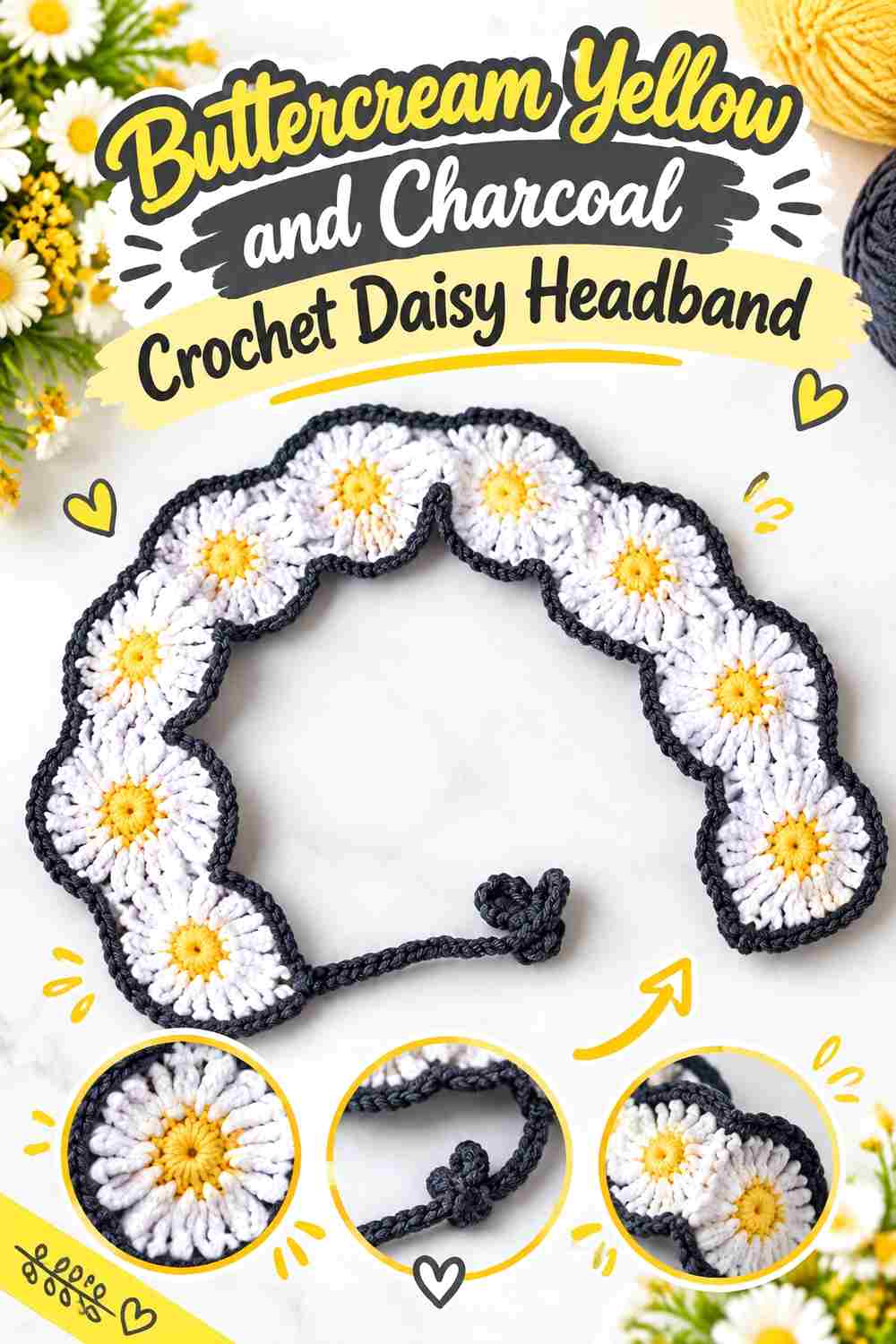
Charcoal creates the strongest dark contrast in the collection. It can make Buttercream Yellow daisy centers or petals highly visible, but it also carries enough visual weight to dominate a small headband if used too broadly.
Keep Buttercream Yellow Larger Than Charcoal in the Daisy Area
Use Buttercream Yellow across the petals or repeated centers and reserve charcoal for the band, a narrow border, or compact flower centers. This keeps the accessory yellow-led instead of becoming a dark headband with small yellow details.
Use Charcoal to Give Buttercream Yellow Daisies a Defined Edge
Charcoal joins can separate adjoining flower motifs clearly. If every motif receives a dark outline, keep those borders narrow so the floral strip does not turn into a heavy grid.
Creator Credit: Asyosh Handmade
11. Buttercream Yellow Ivory And Marigold Crochet Daisy Headband
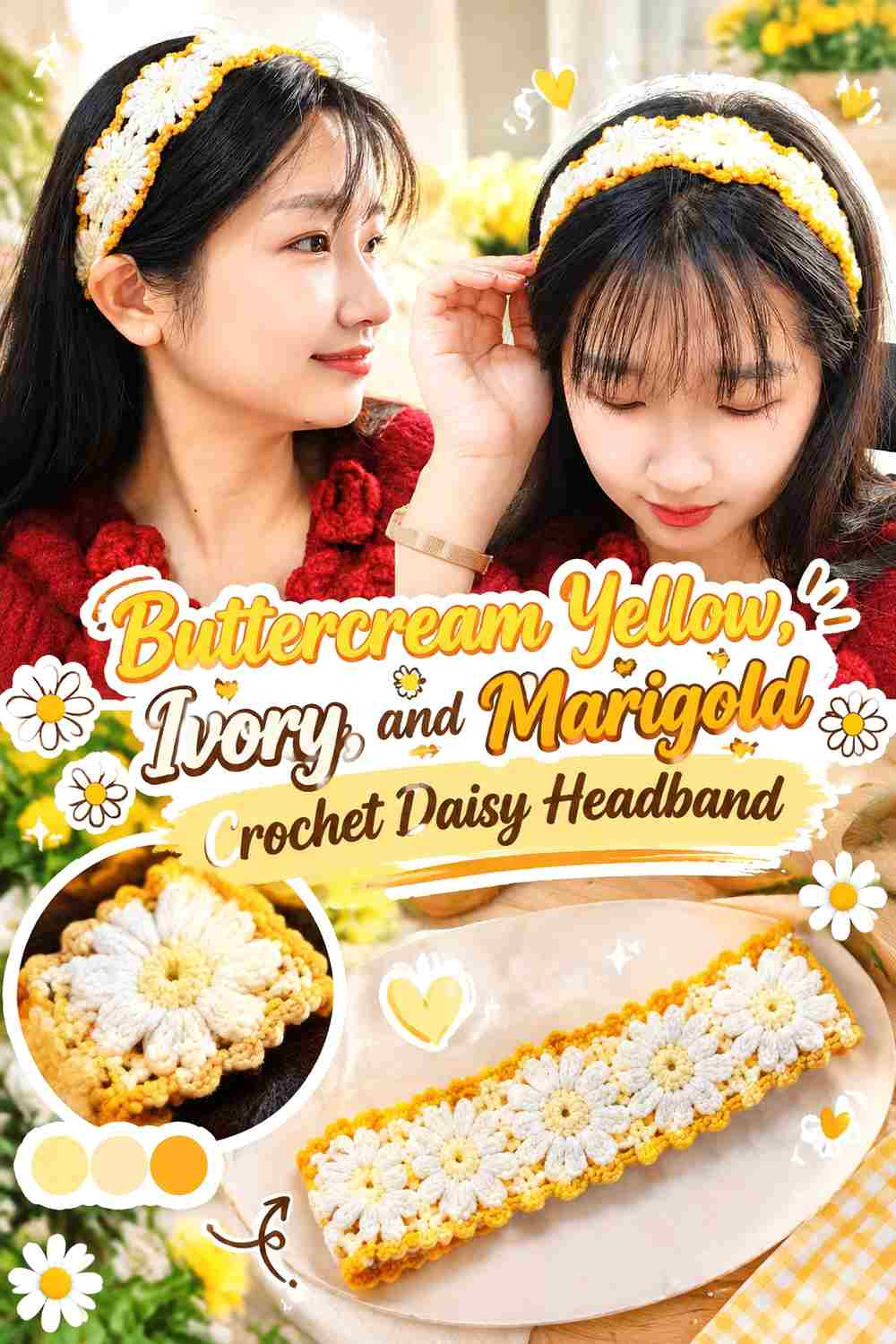
The final idea uses two related yellows with a pale neutral. Buttercream Yellow remains the dominant middle tone, ivory lightens the petals or band, and marigold provides a deeper center accent. This creates more depth without moving away from a warm daisy palette.
Keep Buttercream Yellow Between Ivory and Marigold in Every Daisy
Use Buttercream Yellow as the consistent connecting shade, such as the main petals or motif border. Ivory can provide the lightest area while marigold forms the smallest, deepest center.
This three-value arrangement is easier to read than distributing all three colors equally across every part of the headband.
Use Ivory to Give Buttercream Yellow More Petal Definition
A small ivory round, petal section, or background can keep Buttercream Yellow from merging into the entire warm palette. Keep the ivory placement consistent across repeated flowers.
Reserve Marigold for Small Buttercream Yellow Focal Points
Marigold works best as a compact center or limited accent because its stronger saturation can quickly compete with Buttercream Yellow. Repeating the deeper yellow in every center is enough to connect the complete floral band.
Creator Credit: anxin_crochet
Comparing the Buttercream Yellow Daisy Headband Palettes
For the most recognizable daisy look, Buttercream Yellow with soft white or cream keeps the color structure simple and flower-focused. White provides clearer separation, while cream creates a gentler tonal effect.
Sage and olive introduce botanical greens. Sage keeps the palette lighter, while olive gives the flowers a darker frame. Dusty rose, sky blue, and muted lavender move the daisies toward softer nontraditional floral colors while preserving Buttercream Yellow as a repeated center.
Cocoa, terracotta, and charcoal provide more definition. They are particularly useful when Buttercream Yellow forms the petals and needs a darker center or band. The three-color ivory-and-marigold option stays within a warm palette but gives the flowers more tonal depth.
Conclusion
Buttercream Yellow works especially well in crochet daisy headbands because it can serve as either a repeated flower center or a larger petal color without requiring the entire accessory to become brightly yellow.
Pair it with soft white, cream, or ivory for a lighter floral result; sage or olive for botanical contrast; dusty rose, sky blue, or lavender for softer color; and cocoa, terracotta, or charcoal when stronger definition matters.
Before committing to all the motifs, make one complete flower and view it against the planned headband or joining color. A palette that looks distinct in separate yarn balls can become much softer once the colors occupy small centers and petals. Use the credited tutorials for their original construction and assembly guidance, then apply Buttercream Yellow where it keeps the daisies clear and the full headband visually connected.
Frequently Asked Questions
Is Buttercream Yellow better for crochet daisy centers or petals?
Either placement can work. Buttercream Yellow centers create a familiar daisy arrangement with white, cream, rose, blue, or lavender petals. Buttercream Yellow petals work well when paired with darker centers such as cocoa, olive, terracotta, or charcoal.
What colors give Buttercream Yellow daisies the clearest contrast?
Charcoal, cocoa, olive, deeper terracotta, soft white, and some cool colors such as blue or lavender can provide visible separation. Compare the actual yarns because the color name alone does not guarantee enough light-dark contrast.
How can I keep a Buttercream Yellow daisy headband from looking too busy?
Give Buttercream Yellow one repeated role and limit the number of supporting colors. For example, keep every center Buttercream Yellow, use one petal color, and repeat one band or joining shade rather than changing every flower.
Should the headband base match the Buttercream Yellow daisies?
It can, but it does not have to. A matching Buttercream Yellow base creates a more blended look, while sage, olive, cream, charcoal, or another contrasting base makes the separate daisies easier to distinguish.
How should I color a Buttercream Yellow granny-square daisy headband?
Repeat Buttercream Yellow in the same part of each motif, such as every flower center. Keep the background or joining color consistent so the individual squares connect visually instead of looking like unrelated blocks.
Can I substitute a different yellow for Buttercream Yellow?
Yes. Choose a soft, light-to-medium yellow that preserves the intended relationship with the other palette colors. If your replacement is much brighter or darker, recheck the flower-center and petal contrast before making the full headband.