Persimmon and oatmeal give a crochet tea cozy enough contrast to show its shape without creating a harsh light-and-dark combination. Persimmon can provide the warm focal color around the body, ribs, or decorative top, while oatmeal can separate texture and keep the area around the spout and handle visually clear.

Because a tea cozy wraps around a three-dimensional teapot, color placement needs to work from more than the front. A persimmon stripe that looks balanced on one panel should connect deliberately across the opposite side, while contrasting edging around a spout or handle opening should look intentional rather than like a leftover color change.
The 14 ideas below change which shade dominates, how the colors repeat around the pot, and where contrast is concentrated. The supporting tutorials cover tea-cozy and teapot-cover construction; the persimmon-and-oatmeal palettes are independent adaptations and do not imply that the creators used these exact colors.
Quick List
- Persimmon Body And Oatmeal Top Crochet Tea Cozy
- Oatmeal Ribbed And Persimmon Edged Crochet Tea Cozy
- Persimmon And Oatmeal Chevron Crochet Tea Cozy
- Persimmon And Oatmeal Pleated Crochet Tea Cozy
- Persimmon Panel And Oatmeal Opening Crochet Tea Cozy
- Oatmeal Body And Persimmon Floral Top Crochet Tea Cozy
- Persimmon Ribbed And Oatmeal Pom Pom Crochet Tea Cozy
- Oatmeal And Persimmon Narrow Stripe Crochet Tea Cozy
- Oatmeal Ground And Persimmon Braid Crochet Tea Cozy
- Persimmon And Oatmeal Granny Style Crochet Tea Cozy
- Persimmon Center And Oatmeal Side Crochet Tea Cozy
- Oatmeal Body And Persimmon Scallop Crochet Tea Cozy
- Persimmon And Oatmeal Rose Top Crochet Tea Cozy
- Persimmon Oatmeal And Cocoa Edged Crochet Tea Cozy
Give Persimmon and Oatmeal Separate Jobs on the Tea Cozy
A tea cozy has several natural color zones: the main teapot body, the area around the lid, the lower edge, the spout opening, the handle opening, and any flower, pom-pom, tie, or button detail at the top.
Assigning persimmon and oatmeal to those areas usually creates a cleaner result than changing colors at unrelated points. A persimmon body with oatmeal openings keeps the warm shade dominant while making the functional gaps more visible. Reversing the arrangement produces a lighter cozy with persimmon concentrated where the eye naturally lands.
Use Oatmeal to Keep Persimmon Texture Visible
Persimmon can look noticeably darker once it is worked into deep ribs, pleats, clusters, or braids because the crochet texture creates shadow. Oatmeal can help separate those features when placed directly beside them.
This is especially useful with narrow ribs and raised details. If the persimmon and oatmeal yarns are closer in lightness than expected, test them side by side before assigning them to small texture changes. Larger blocks of each color may work better than numerous fine stripes.
Plan Persimmon and Oatmeal Around the Spout and Handle
The openings are part of the finished tea cozy, so include them in the palette instead of treating them as construction interruptions. Oatmeal edging can clearly outline an opening in a persimmon body, while persimmon can create the same effect against an oatmeal field.
Keep the same color logic on both sides of the teapot whenever possible. If the spout has oatmeal edging but the handle opening suddenly introduces another unrelated color, the cozy can lose some of its visual continuity.
1. Persimmon Body And Oatmeal Top Crochet Tea Cozy
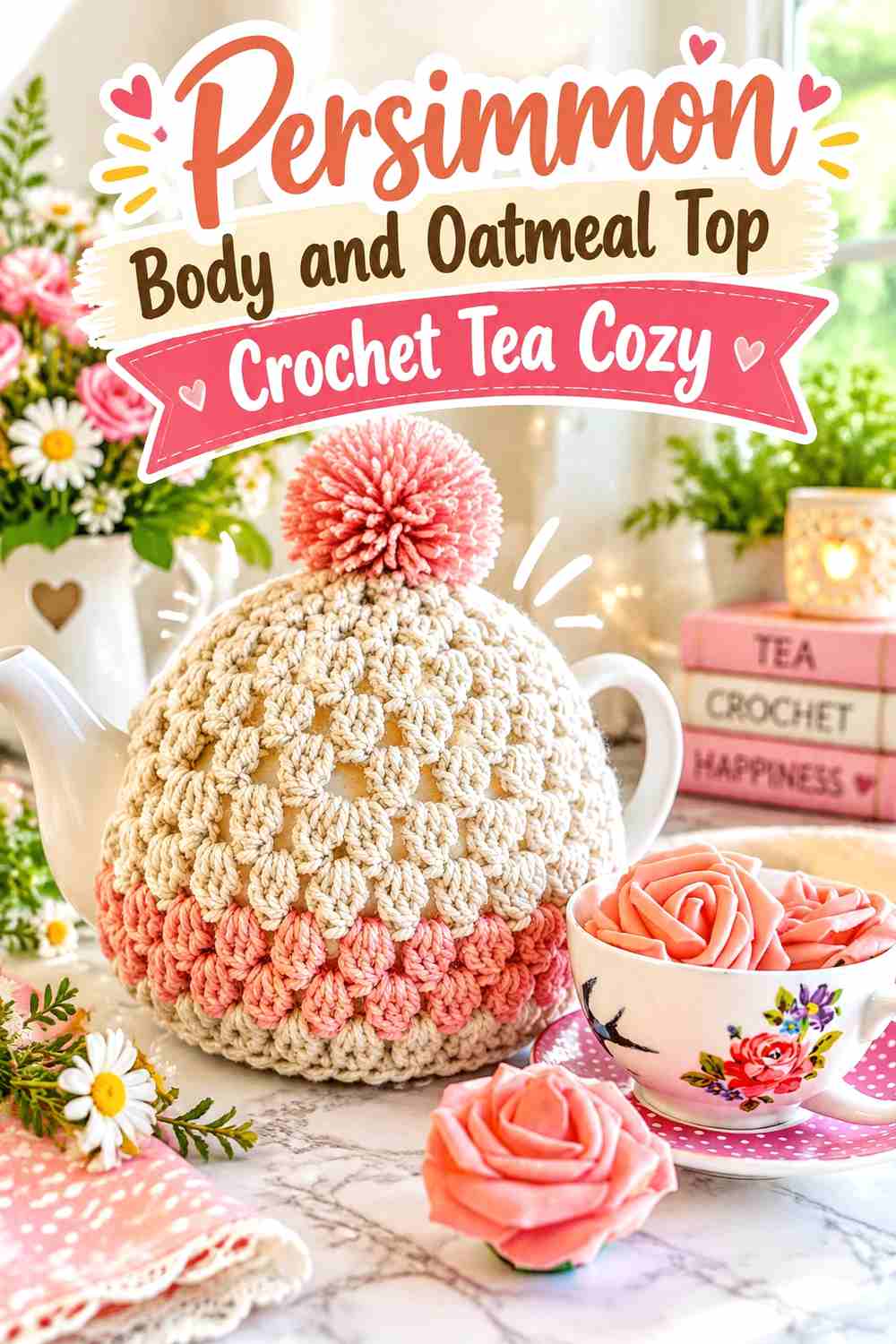
This direction gives persimmon the largest visual area and concentrates oatmeal near the lid. The warm body remains noticeable from every side of the teapot, while the light top creates separation around the gathered or shaped upper section. A small oatmeal repeat along the lower edge can connect the top and bottom without turning the cozy into evenly spaced stripes.
Let Persimmon Cover the Main Tea Cozy Body
Use persimmon continuously through the broad section between the bottom edge and upper shaping. The larger uninterrupted field keeps the teapot silhouette visually simple and gives any ribbing or cluster texture room to show.
If the cozy uses separate panels, keep both major panels persimmon rather than making one side oatmeal solely for variety.
Use Oatmeal to Clarify the Persimmon Top
Oatmeal works well around the upper gathered section, button loop, or lid area because it breaks the darker persimmon surface before the cozy narrows.
Repeat a small amount of oatmeal near the base if the top otherwise feels disconnected from the rest of the piece.
Creator Credit: Bella Coco
2. Oatmeal Ribbed And Persimmon Edged Crochet Tea Cozy
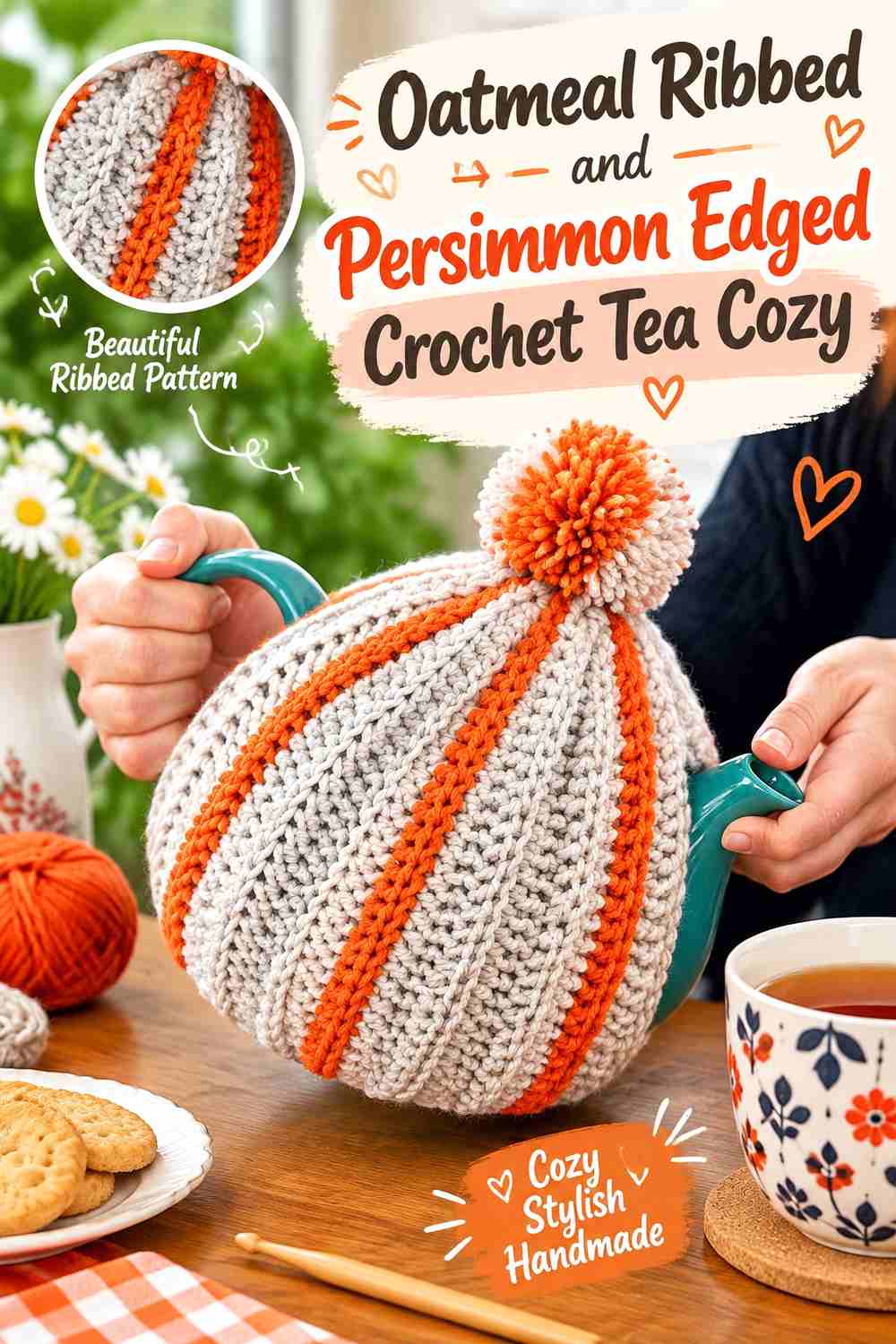
An oatmeal-dominant cozy makes ribbing easier to see in softer light, while persimmon can define the bottom, top, and openings. This is a useful reversal when you want the teapot cover to look lighter overall but still carry a strong warm accent.
Keep Oatmeal Across the Main Ribbed Tea Cozy
Let oatmeal occupy most of the vertical ribs instead of alternating every rib with persimmon. A continuous light field keeps the texture readable and prevents the body from becoming visually striped when the ribs already create strong lines.
Persimmon can then identify the parts where the body changes direction or construction.
Put Persimmon Around the Oatmeal Spout and Handle Openings
Use persimmon edging around the openings when you want them to look integrated into the color scheme. The warm outline can clearly show where the oatmeal body stops without requiring a wide colored band.
Repeating persimmon at the lower edge creates a useful connection between both sides of the pot.
Creator Credit: Cosy Rosie Crochet
3. Persimmon And Oatmeal Chevron Crochet Tea Cozy

Chevron colorwork gives both shades repeated movement around the teapot. Let persimmon form the broader warm bands and use oatmeal as the lighter break between them. The zigzag already creates visual activity, so avoid introducing several additional colors into the same small surface.
Make Persimmon Chevron Bands Wider Than Oatmeal
Broader persimmon bands keep the warm color dominant even though oatmeal repeats throughout the cozy.
If both colors occupy identical narrow bands, the finished cover may read as a balanced stripe design rather than a persimmon-led palette. Adjust the visual proportion according to the result you want.
Keep Oatmeal Persimmon Chevron Points Easy to Follow
The light oatmeal sections should repeat consistently through the chevron so the points remain recognizable as they travel around the teapot.
Check how the color sequence approaches the spout and handle. An abrupt color break at an opening can interrupt the chevron more noticeably than it would interrupt a plain stripe.
Creator Credit: The Crochet World
4. Persimmon And Oatmeal Pleated Crochet Tea Cozy
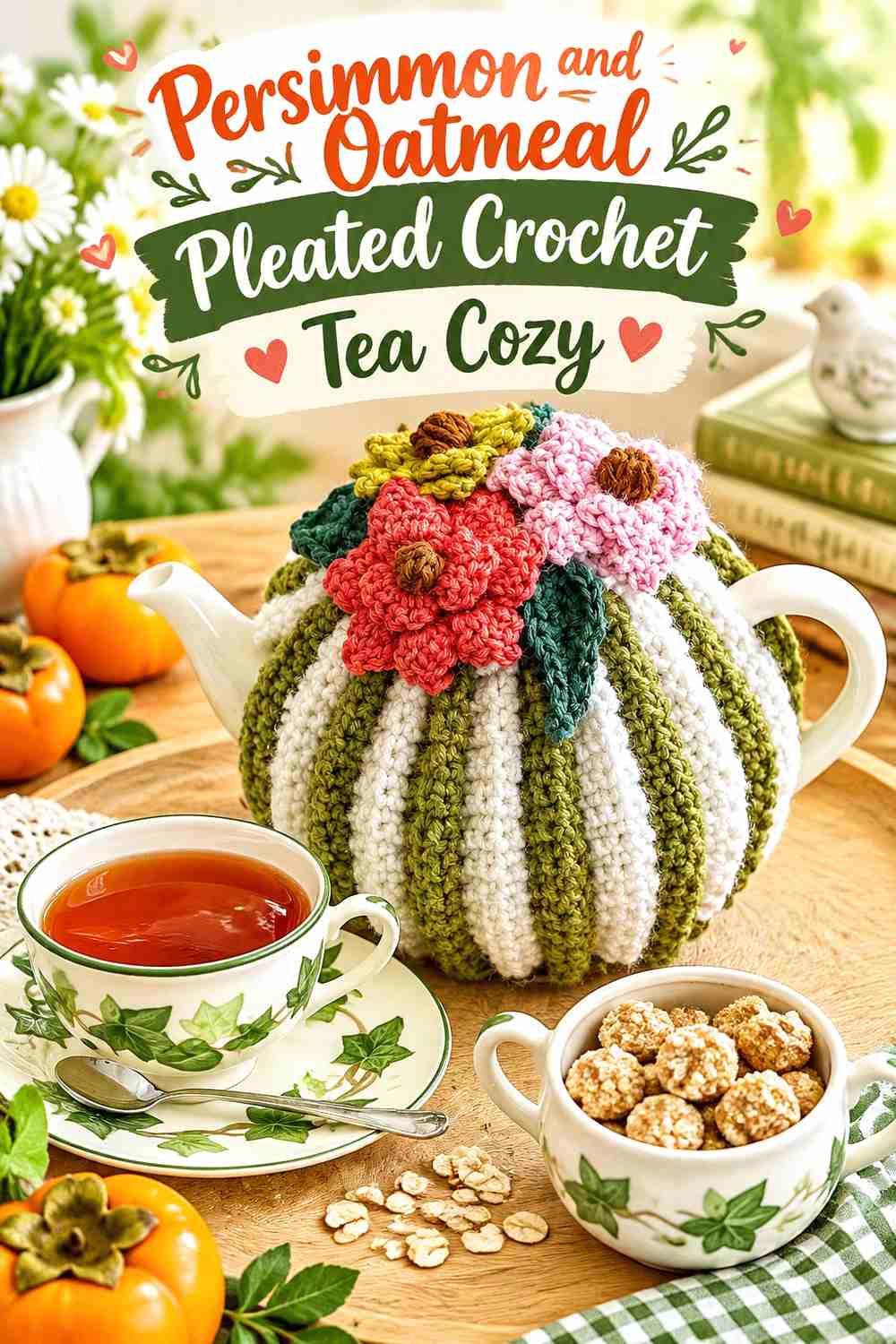
Pleats make this pairing particularly useful because alternating shadow and color can create pronounced vertical texture. Use persimmon on the stronger visible folds and oatmeal in the contrasting sections, or reverse the placement for a lighter overall cozy.
Use Persimmon to Emphasize the Tea Cozy Pleats
Persimmon can make the raised sections feel more visually substantial when it repeats along equivalent folds.
Keep the placement regular. Randomly changing which pleat receives persimmon can weaken the repeated structure that gives this style its character.
Let Oatmeal Separate Deep Persimmon Folds
Oatmeal can lighten the recessed or neighboring sections so individual persimmon pleats do not merge into one dark surface.
Because pleats create shadow on their own, compare the two yarns in folded fabric rather than judging their contrast only from the skeins.
Creator Credit: Creative Crochet Corner
5. Persimmon Panel And Oatmeal Opening Crochet Tea Cozy

This palette treats each main panel as a persimmon field and uses oatmeal only around the functional openings and seams. It is a restrained two-color approach that works well when the construction itself already creates obvious front and back sections.
Keep Persimmon Continuous Across Both Tea Cozy Panels
Use the same persimmon treatment on each major side so the teapot looks connected when viewed from different angles.
Color changes at the center of each panel can make the piece look more complicated without helping define the actual construction.
Frame Persimmon Spout Gaps With Oatmeal
A narrow oatmeal edge around the spout and handle can make those openings feel deliberately finished.
Repeat the same oatmeal width wherever possible. One very broad light opening and one tiny light edge can make the two sides feel unrelated even when the underlying fit is correct.
Creator Credit: Crochet with Clare
6. Oatmeal Body And Persimmon Floral Top Crochet Tea Cozy
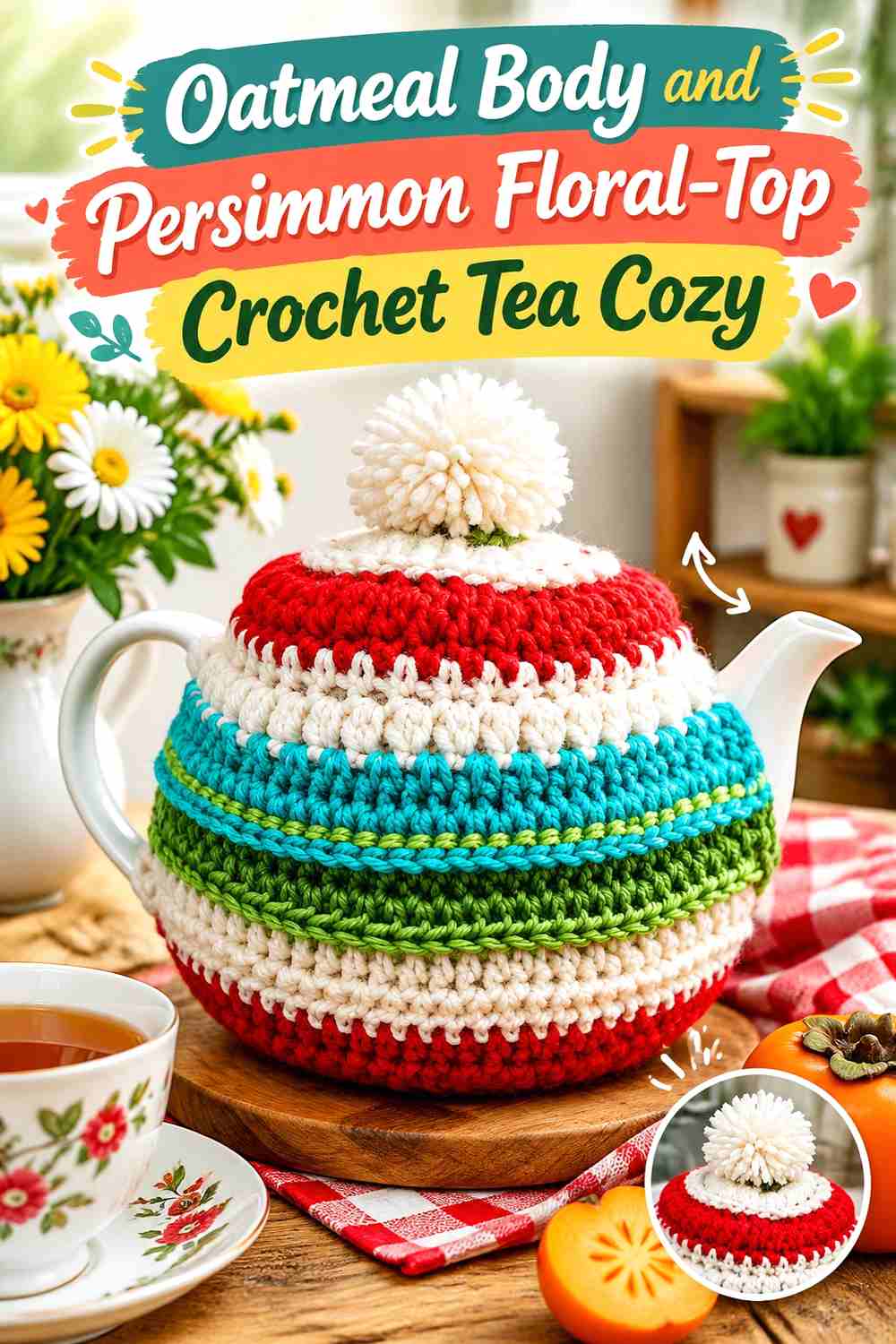
Here, oatmeal provides a quieter body while persimmon becomes the concentrated decorative color at the top. This arrangement works especially well when the cozy already has leaves, flowers, puff details, or another dimensional topper because a strong warm color can identify that feature without covering the entire teapot.
Keep Oatmeal Quiet Beneath the Persimmon Topper
A broad oatmeal body prevents the decorative top from competing with stripes or other large color changes lower on the cozy.
If the oatmeal body includes texture, allow the stitch shadows to provide variation instead of automatically introducing more persimmon through every row.
Repeat Persimmon From the Floral Top Into Oatmeal Edging
A narrow persimmon lower edge or opening trim can connect the topper to the rest of the cozy.
Keep that repetition smaller than the floral feature. The topper should remain the main place where persimmon is concentrated in this color direction.
Creator Credit: YARNutopia
7. Persimmon Ribbed And Oatmeal Pom Pom Crochet Tea Cozy
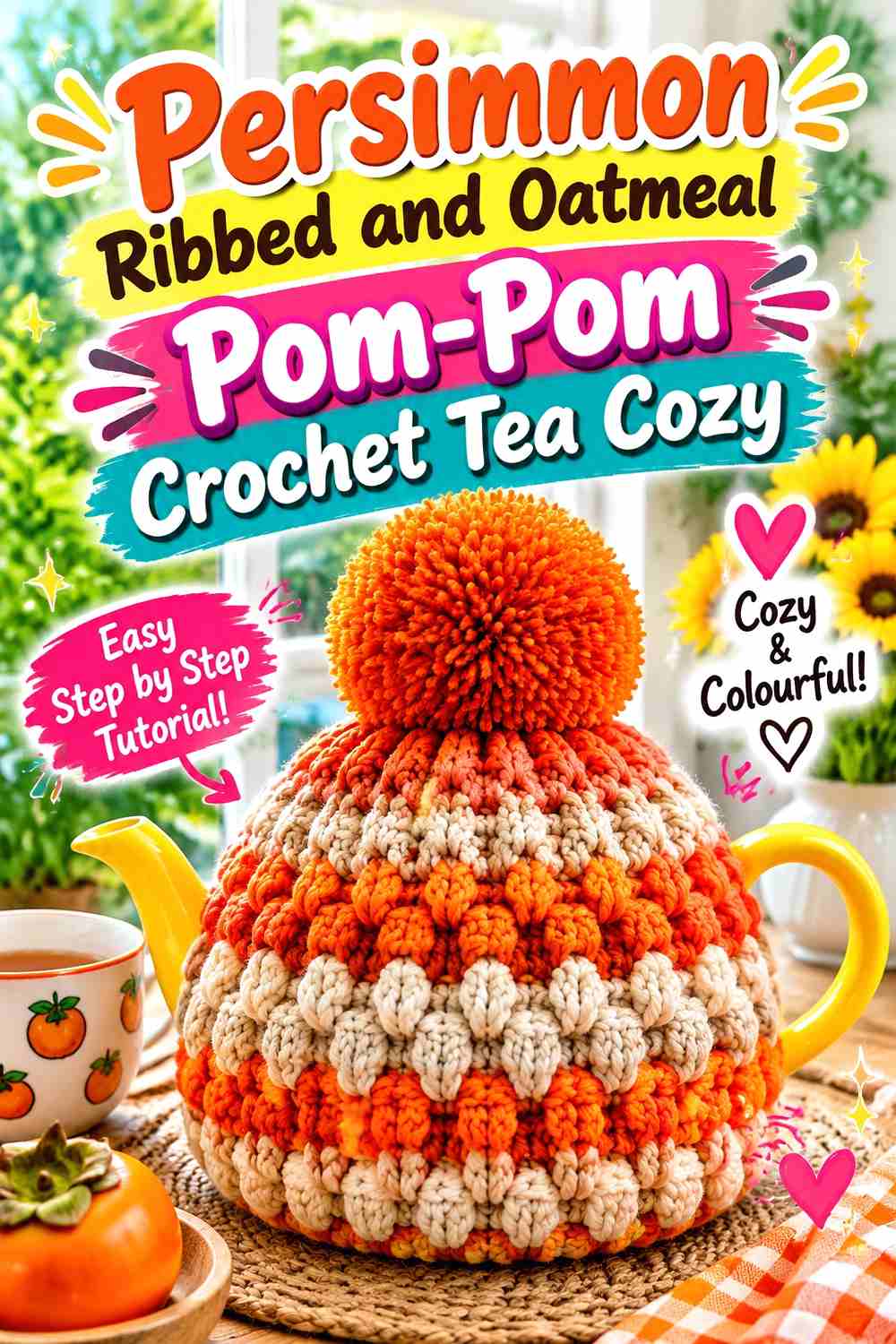
A solid persimmon ribbed body combined with an oatmeal pom-pom gives the light color one clear focal role. Oatmeal can also appear at the bottom ties or narrow top edge, but keeping the body predominantly persimmon preserves a simple, warm surface.
Let Persimmon Ribbing Carry the Tea Cozy Surface
Keep the ribs one continuous persimmon color when you want texture rather than striping to define the body.
This also allows you to see whether the rib pattern itself provides enough variation before deciding that the body needs another color.
Balance an Oatmeal Pom-Pom Against the Persimmon Body
An oatmeal top detail becomes highly visible against a darker body even though it uses little yarn.
Repeat oatmeal in a small tie or edge if the pom-pom feels isolated, but avoid adding broad oatmeal body bands that would change the purpose of this color arrangement.
Creator Credit: Teenie Crochets
8. Oatmeal And Persimmon Narrow Stripe Crochet Tea Cozy

This version uses frequent color repetition but lets oatmeal remain dominant. Narrow persimmon stripes can run through the body at regular intervals while oatmeal fills the larger spaces between them. The proportion prevents the warm color from visually compressing a heavily striped cozy.
Space Persimmon Stripes Across the Oatmeal Body
Use a predictable interval rather than placing persimmon wherever a new row happens to begin. Regular repetition makes the stripes look planned from both the spout and handle sides.
If the cozy has strong ribbing, slightly wider spacing may help prevent the color lines from competing with the texture lines.
Keep Oatmeal Visible Between Every Persimmon Stripe
The oatmeal gap is what allows each persimmon band to remain separate. If the warm stripes sit too closely together, they can merge visually and make the body look mostly orange.
Leave enough light area that the two-color rhythm is still clear from across the table.
Creator Credit: Carroway Crochet
9. Oatmeal Ground And Persimmon Braid Crochet Tea Cozy
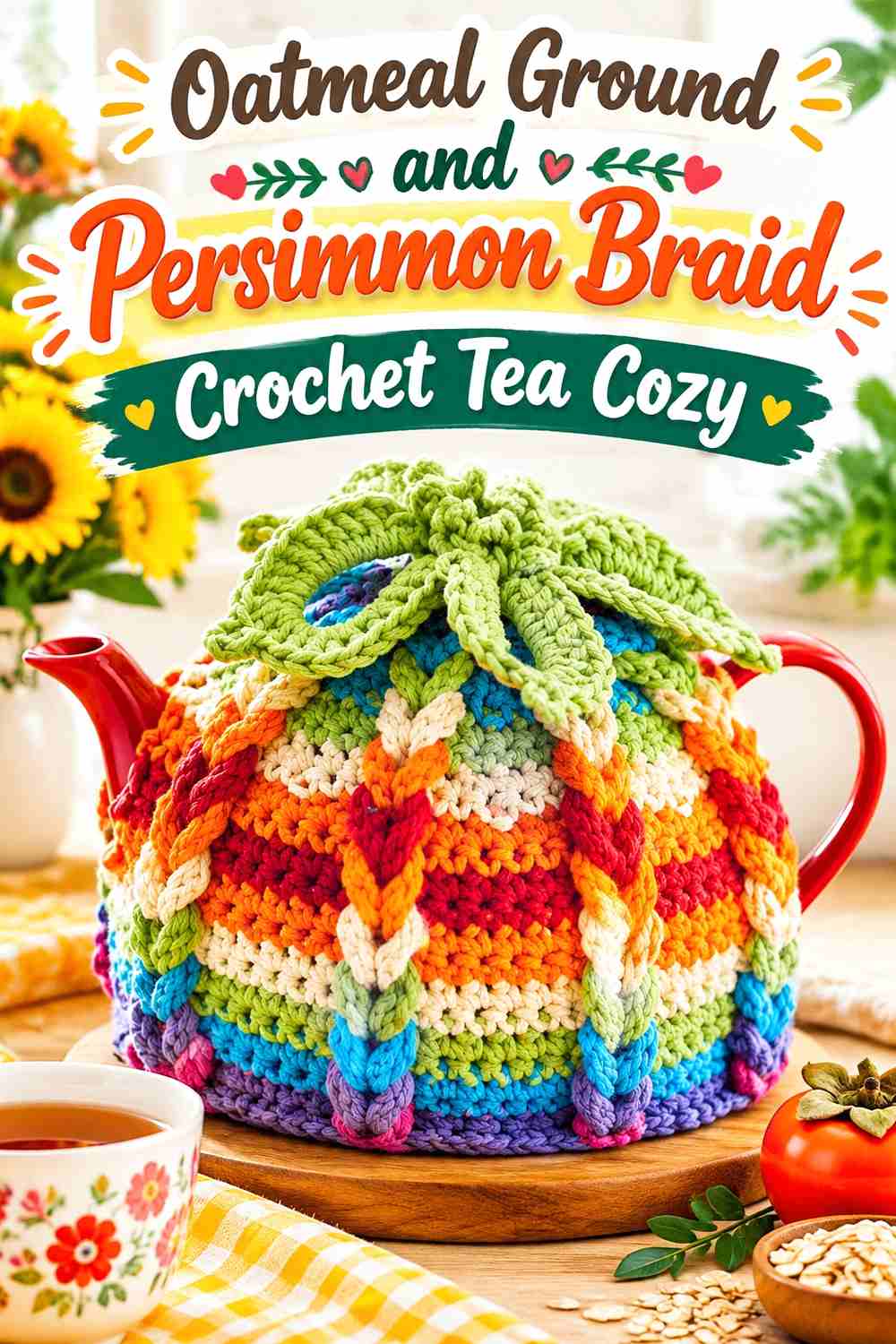
A raised braid or ladder detail gives persimmon a strong accent role without requiring broad warm panels. Make oatmeal the quieter background and use persimmon for the dimensional feature so both the color and texture point to the same area.
Put Persimmon on the Raised Tea Cozy Braid
A persimmon braid becomes a clear focal line against oatmeal. This works particularly well when the raised detail travels vertically or diagonally across the teapot cover.
Avoid adding several other persimmon textures nearby. Giving the braid enough oatmeal space around it makes its shape easier to distinguish.
Let Oatmeal Surround the Persimmon Texture
Use oatmeal for the broader panel so the raised persimmon section does not disappear into similarly colored background stitches.
If the braid approaches the spout or handle opening, check that the color line finishes deliberately instead of ending at an awkward point in the opening.
Creator Credit: The Crochet Crowd
10. Persimmon And Oatmeal Granny Style Crochet Tea Cozy
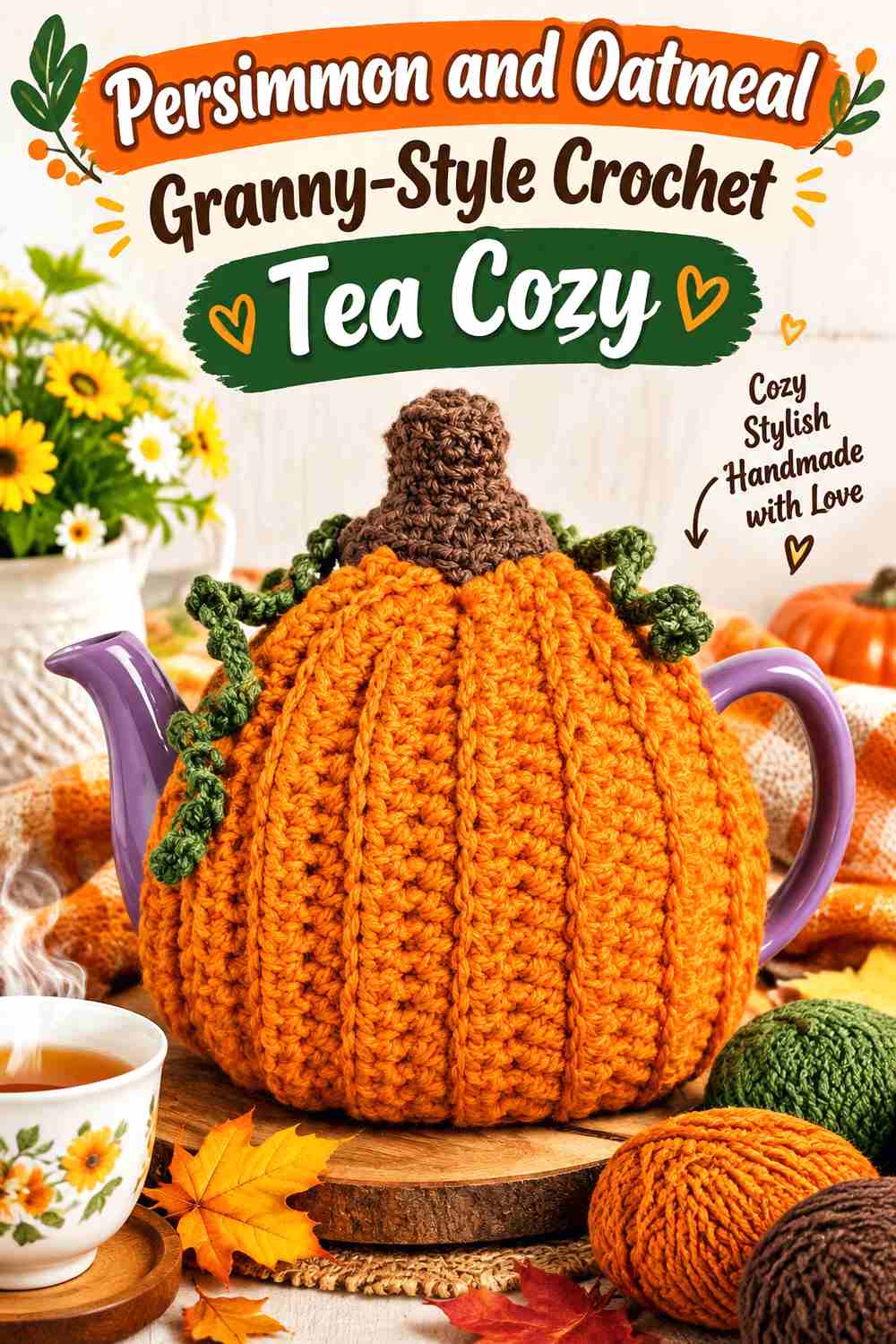
Granny-style clusters give the two colors several opportunities to alternate without creating rigid horizontal stripes. Make persimmon the more frequently repeated round or cluster color, then use oatmeal to separate selected bands and keep the cluster texture visible.
Repeat Persimmon More Often Than Oatmeal in the Granny Texture
Persimmon can appear through several major rounds while oatmeal returns at deliberate intervals. This keeps the warm shade dominant but still gives the eye a lighter break.
Avoid changing the sequence unpredictably unless a scrap-style result is intentional.
Use Oatmeal to Separate Persimmon Cluster Bands
Place oatmeal where two persimmon areas would otherwise meet without much distinction. The light color can clarify the cluster rhythm and prevent the texture from becoming one continuous warm field.
A narrow oatmeal lower edge can also connect those lighter rounds to the base of the teapot.
Creator Credit: Ophelia Talks Crochet
11. Persimmon Center And Oatmeal Side Crochet Tea Cozy
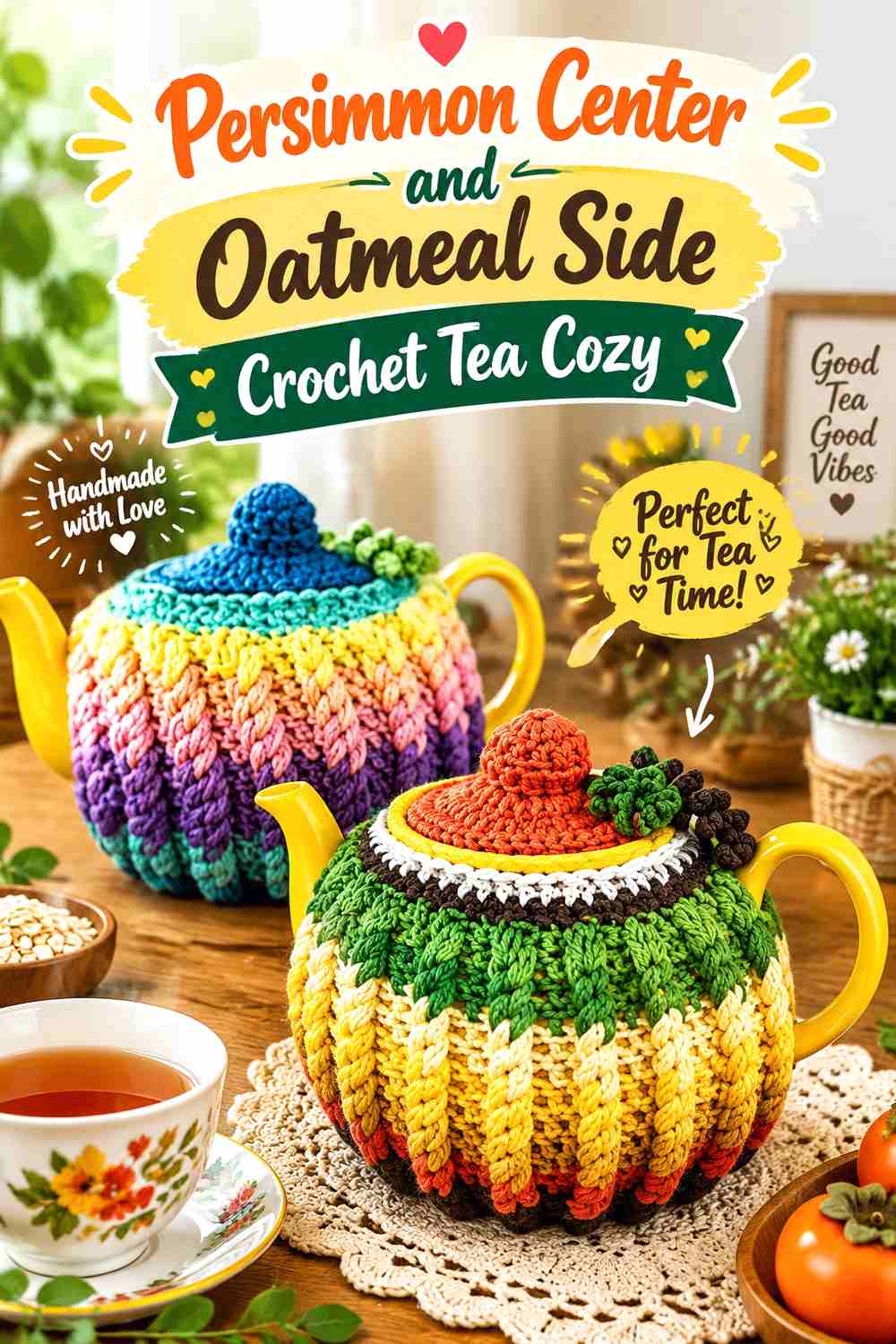
Concentrate persimmon across the broadest visible front and back areas while using oatmeal near the side openings. This makes the warm color look like a central panel and lets the lighter shade visually mark where the cozy separates around the spout and handle.
Keep Persimmon Wide Through the Tea Cozy Center
Give the warm section enough width to read as a deliberate main panel rather than a stripe.
The center can remain persimmon even if the top changes to oatmeal, creating a strong vertical line through the middle of the teapot.
Put Oatmeal Beside Persimmon at the Handle and Spout
Oatmeal side sections can make the openings more noticeable while softening the transition from the central panel to the edges.
Try to maintain a similar color proportion on each side even if the handle and spout openings themselves require different shaping.
Creator Credit: Crochetin’ with Alana
12. Oatmeal Body And Persimmon Scallop Crochet Tea Cozy
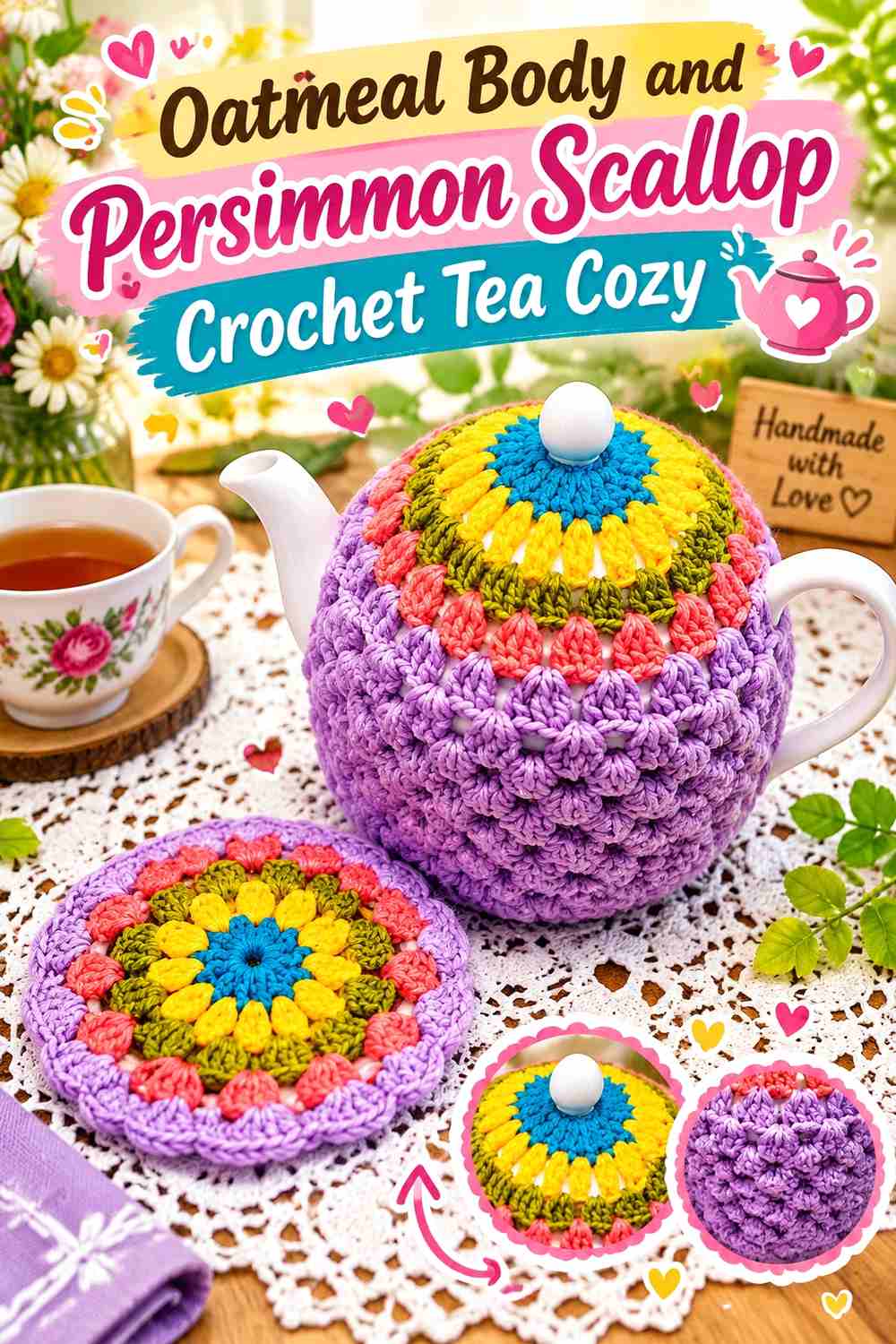
A predominantly oatmeal cover creates a useful background for a warm scalloped or decorative bottom edge. Persimmon can trace the base and repeat around the top for balance, leaving the central body light and relatively quiet.
Keep Oatmeal Broad Above the Persimmon Scallops
A large oatmeal surface gives the decorative lower edge enough room to become visible without requiring additional body stripes.
This is especially useful when the scallops already produce a strong silhouette around the base of the teapot.
Trace the Oatmeal Tea Cozy With Persimmon Scallops
Use persimmon consistently through each lower curve so the edge reads as one repeated feature.
If you also place persimmon around the top, keep that upper detail narrower than the scallops so attention remains on the decorative base.
Creator Credit: خيط وإبرة ريرى فاروق
13. Persimmon And Oatmeal Rose Top Crochet Tea Cozy
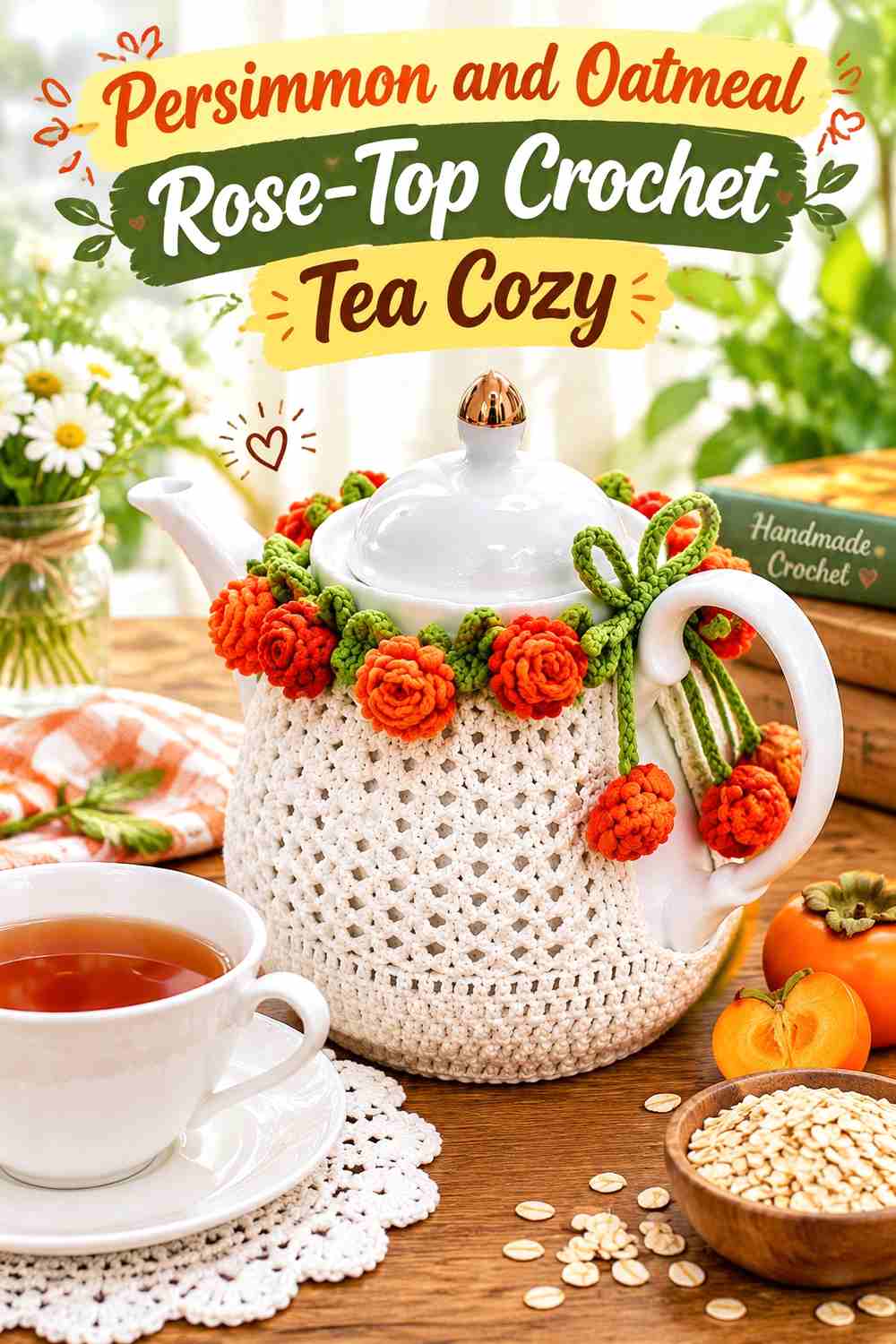
A floral topper provides another way to use both colors without striping the body. Keep the main cozy persimmon, work the larger rose or flower elements in oatmeal, and repeat persimmon inside smaller floral details if the construction allows. The light flowers will stand out clearly against the warm body.
Use Persimmon as the Background for Oatmeal Roses
A broad persimmon body creates enough uninterrupted color for oatmeal flowers to remain distinct.
Avoid scattering small oatmeal stripes behind the flowers. The floral shapes already create multiple edges and will read more cleanly against a simpler field.
Repeat Oatmeal Roses Above the Persimmon Lid Area
Group the light floral details around the top rather than distributing them randomly down the sides of the pot.
This keeps decoration away from the spout and handle openings and creates a clear visual destination at the upper center of the cozy.
Creator Credit: yoyo crochet
14. Persimmon Oatmeal And Cocoa Edged Crochet Tea Cozy
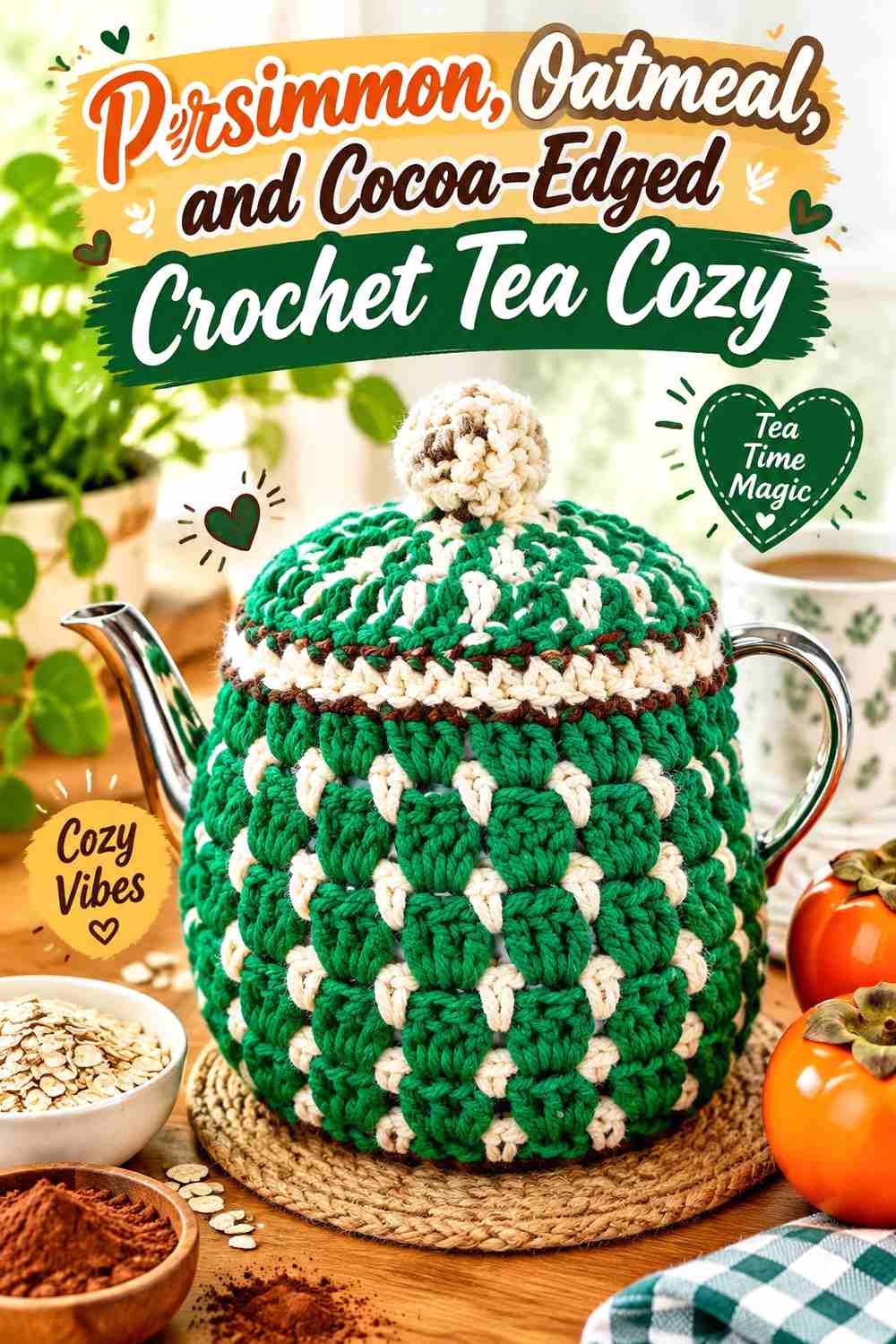
The final palette introduces cocoa only as a dark definition color. Persimmon still owns the main body, oatmeal lightens the upper and side details, and cocoa can be restricted to a narrow lower edge or selected opening trim. This gives the pair more depth without turning the cozy into a three-color design of equal parts.
Keep Persimmon Larger Than the Cocoa Tea Cozy Edge
Cocoa should occupy much less surface than persimmon. Use it where an edge needs a firm visual stop rather than filling another complete body panel.
If the cocoa is close to persimmon in value, compare the yarns before using them together; an indistinct dark trim adds little useful separation.
Use Oatmeal Between Persimmon and Cocoa
Oatmeal can prevent the two warmer dark shades from visually merging. A narrow oatmeal band immediately above cocoa lets the persimmon body remain distinguishable.
This three-level arrangement is especially useful near the base, where several dark colors could otherwise create a heavy-looking edge.
Repeat Persimmon Above the Oatmeal Tea Cozy Opening
Return to persimmon around the upper body or topper so cocoa does not become the only dark color repeated at the boundaries.
The finished hierarchy should still read persimmon first, oatmeal second, and cocoa as a limited defining accent.
Creator Credit: aworkofcraft
Comparing the Persimmon and Oatmeal Tea Cozy Directions
For the clearest two-color contrast, the persimmon-body, oatmeal-ribbed, chevron, panel, and center-panel ideas keep the division straightforward. They work well when you want the color placement to emphasize the overall teapot shape.
The pleated, braided, granny-style, and narrow-stripe options put more attention on crochet texture. In these versions, oatmeal is particularly useful beside persimmon because the lighter yarn helps small raised or recessed areas remain easier to distinguish.
For a decorative focal point rather than all-over colorwork, choose the floral-top, pom-pom, scalloped, or rose-top ideas. They concentrate the second color in one recognizable feature and leave more of the tea cozy body uninterrupted.
The cocoa-edged version offers the darkest contrast, but the third shade should remain small. If cocoa begins covering a substantial part of the cozy, the original persimmon-and-oatmeal relationship will become less obvious.
Conclusion
Persimmon and oatmeal can give a crochet tea cozy very different looks depending on whether the contrast follows the teapot shape, the stitch texture, or the decorative finishing.
Choose persimmon for the broad body when you want a warmer overall result, then use oatmeal around the top, openings, edges, or raised details. Reverse that balance for a lighter cozy where persimmon identifies stripes, borders, flowers, braids, or scallops.
Whatever distribution you choose, look at the complete teapot rather than planning only one flat side. The spout opening, handle opening, top, and lower edge are all visible parts of the color composition. Use the linked tutorials for their original construction details and adapt the persimmon-and-oatmeal placement separately.
Frequently Asked Questions
Should persimmon or oatmeal dominate a crochet tea cozy?
Either can lead. A persimmon body creates a warmer, more color-forward cozy, while an oatmeal body gives persimmon stripes, borders, and decorative details stronger emphasis. Choose the dominant shade according to which area of the teapot you want to appear largest.
Where should oatmeal go on a persimmon crochet tea cozy?
Oatmeal works especially well around the spout and handle openings, at the gathered top, along the lower edge, or beside raised persimmon texture. These placements use the lighter value to clarify parts of the cozy rather than simply adding random contrast.
How can I tell if persimmon and oatmeal have enough contrast?
Place the actual yarns side by side and look at them from several feet away. A grayscale photo can help reveal their light-and-dark relationship. If the colors merge in small details, use larger color areas rather than assuming the hue difference alone will keep the pattern visible.
Can I make a striped persimmon and oatmeal tea cozy?
Yes. Decide first whether the stripes should be equal or whether one color should dominate. Wider persimmon bands produce a warmer result, while broader oatmeal areas create a lighter surface with persimmon acting as an accent.
Should the spout opening match the handle opening?
They do not have to be structurally identical, but repeating the same color treatment around both openings can make the finished tea cozy look more connected. For example, oatmeal edging around both openings can unify a persimmon body.
How can I substitute another color for oatmeal?
Choose a light, softened neutral that preserves oatmeal’s role in the palette. Cream, ecru, or a light natural beige can work when they remain clearly lighter than the persimmon and provide similar separation around texture and openings.
How do I keep persimmon and oatmeal colorwork from looking too busy?
Give each color a defined job. Let one shade cover most of the teapot body and use the other for stripes, ribs, openings, toppers, or borders. When the stitch pattern already has strong pleats, clusters, or raised details, fewer color changes usually keep those features easier to read.