Butter yellow and cocoa create a useful light-and-dark pairing for a crochet ruffled neck cape. Butter yellow can open up the neckline and keep layered ruffles visually light, while cocoa can give the shoulder section, collar, ties, or outer edge more definition.
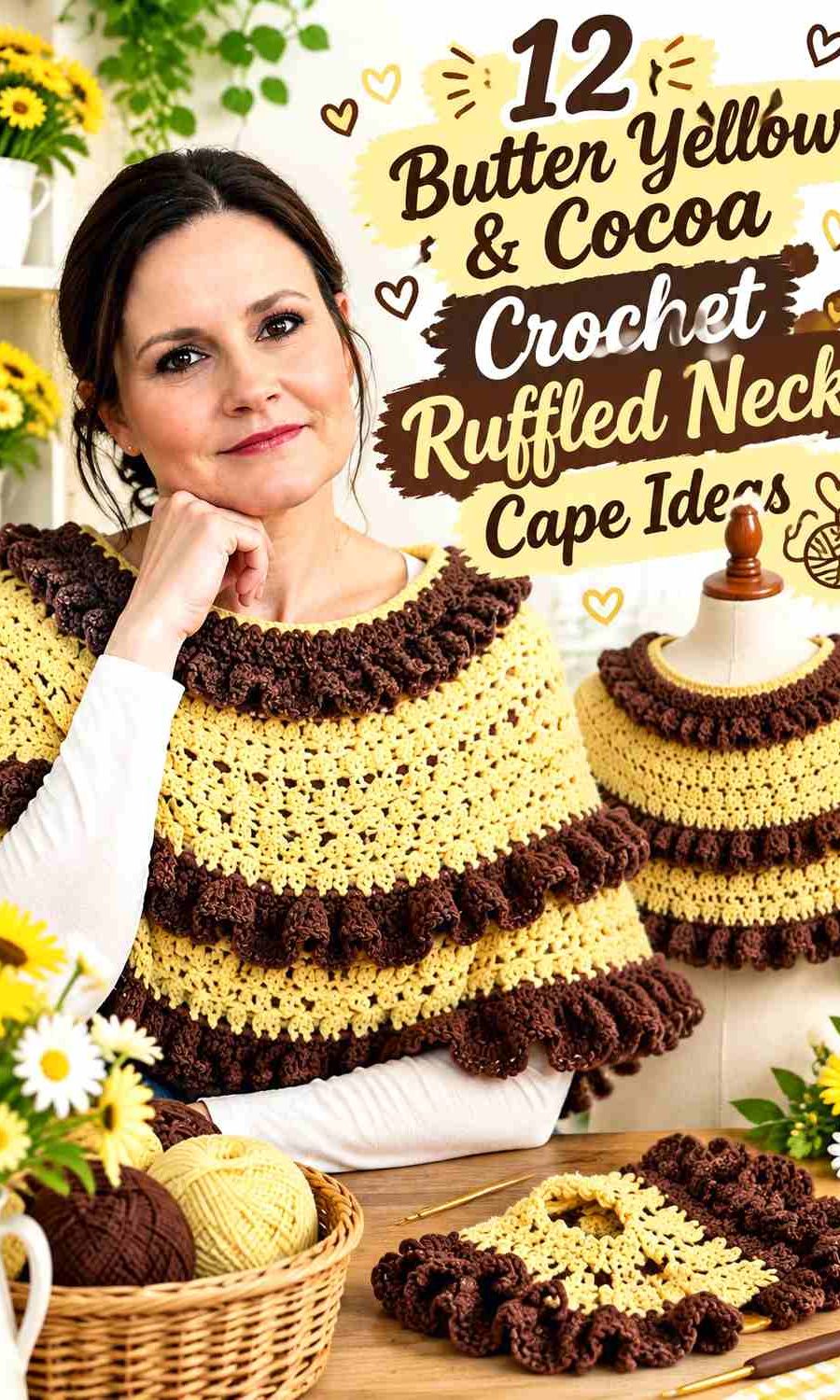
The color placement matters more on a neck cape than on a large shawl because the entire palette is concentrated around the face, neckline, shoulders, and upper chest. A dark cocoa neckband beneath a butter-yellow ruffle creates a very different effect from a cocoa cape body finished with a pale yellow collar.
Ruffles also change how the colors behave. Deep folds create shadows, so a very dark shade can hide some of the texture when used across every tier. Alternating colors, limiting cocoa to the lower ruffle, or placing butter yellow along the outer edge can make the layered construction easier to see.
The tutorials supporting these ideas show capelets, shoulder capes, and related short cape constructions. The butter-yellow-and-cocoa palettes and ruffle placement below are independent adaptations rather than claims that the creators used these exact colors.
Quick List
- Butter Yellow Cape With Cocoa Double Ruffle
- Cocoa Cape With Butter Yellow Collar Ruffle
- Butter Yellow And Cocoa Alternating Ruffle Crochet Neck Cape
- Butter Yellow Cocoa And Cream Vintage Crochet Ruffled Neck Cape
- Cocoa And Butter Yellow Buttoned Crochet Ruffled Neck Cape
- Cocoa Cape With Butter Yellow Tie Neck Ruffle
- Butter Yellow And Cocoa Scalloped Crochet Ruffled Neck Cape
- Butter Yellow Cocoa And Oatmeal Layered Crochet Ruffled Neck Cape
- Cocoa And Butter Yellow Draped Crochet Ruffled Neck Cape
- Butter Yellow And Cocoa Wide Collar Crochet Ruffled Neck Cape
- Butter Yellow Cocoa And Espresso Edged Crochet Ruffled Neck Cape
Decide Whether Butter Yellow or Cocoa Should Frame the Neckline
The neckline sits closest to the face and also forms the visual starting point for the cape. If cocoa is used there, it creates a dark anchor before the color spreads outward into lighter butter-yellow ruffles. A butter-yellow neckline produces the opposite effect and keeps the upper part of the cape visually lighter.
The shoulder section can then repeat the neckline color or switch roles. A cocoa collar with a butter-yellow body gives a defined upper edge, while a butter-yellow collar above a cocoa shoulder cape creates a light focal point against the darker fabric.
Check the actual yarns together before deciding. A muted butter yellow and medium cocoa may produce softer contrast than a pale yellow beside a very dark brown.
Use Butter Yellow and Cocoa to Separate Ruffle Layers
Ruffles naturally overlap, so color can help one tier remain distinct from the next. Alternating butter yellow and cocoa is the clearest option, but it is not the only one. You can keep several tiers butter yellow and reserve cocoa for the deepest lower ruffle or final edge.
If the cape contains dense texture, darker cocoa may conceal smaller details inside the folds. Butter yellow placed along the outermost ruffle can make the silhouette more visible, while cocoa can remain closer to the neckline or shoulder section.
Avoid changing color at every tiny decorative detail. A ruffled cape already contains considerable visual movement, so larger color areas usually give the finished piece a clearer hierarchy.
Balance Butter Yellow and Cocoa Across the Shoulders
A neck cape is viewed from the front, side, and back, so color should continue intentionally around the shoulders. If cocoa appears only on one front tie or closure, it can feel disconnected from a mostly butter-yellow cape.
Repeat the supporting shade somewhere else—a narrow back-neck band, lower ruffle, collar edge, or shoulder border is often enough. This creates continuity without forcing the two colors into equal proportions.
1. Butter Yellow Cape With Cocoa Double Ruffle
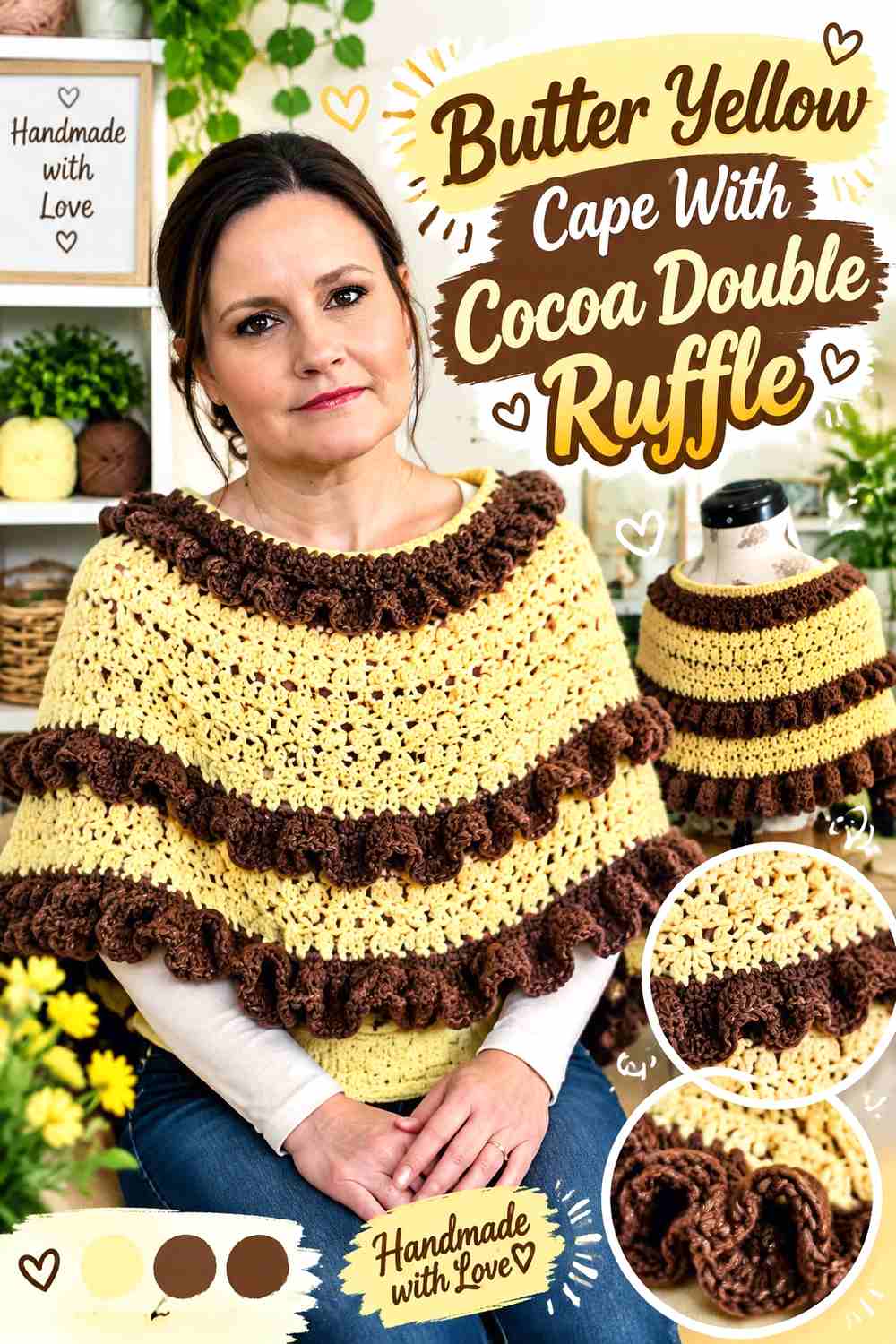
This version lets butter yellow cover most of the shoulder cape while cocoa defines two lower ruffle details. The pale body keeps the short garment visually light, while the darker brown gives the layered edge enough contrast to remain obvious. Keep cocoa concentrated below the shoulders so the cape still reads as butter-yellow dominant.
Let Butter Yellow Cover the Main Shoulder Cape
A broad butter-yellow body gives the ruffles a calm background and prevents the small cape from looking divided into too many dark sections.
If the neckline also stays butter yellow, use cocoa in a narrow neck edge or tie so the darker color appears above the ruffle without competing with it.
Use Cocoa to Separate the Butter Yellow Ruffle Layers
Cocoa works well on the lower tier or along the edge between two butter-yellow ruffles. The darker value makes the layered construction easier to recognize when the cape is viewed from the side.
Avoid turning every ruffle completely cocoa if you want the pale yellow to remain dominant. One substantial cocoa tier can provide enough definition.
Creator Credit: Loopy Mabel Crochet
2. Cocoa Cape With Butter Yellow Collar Ruffle
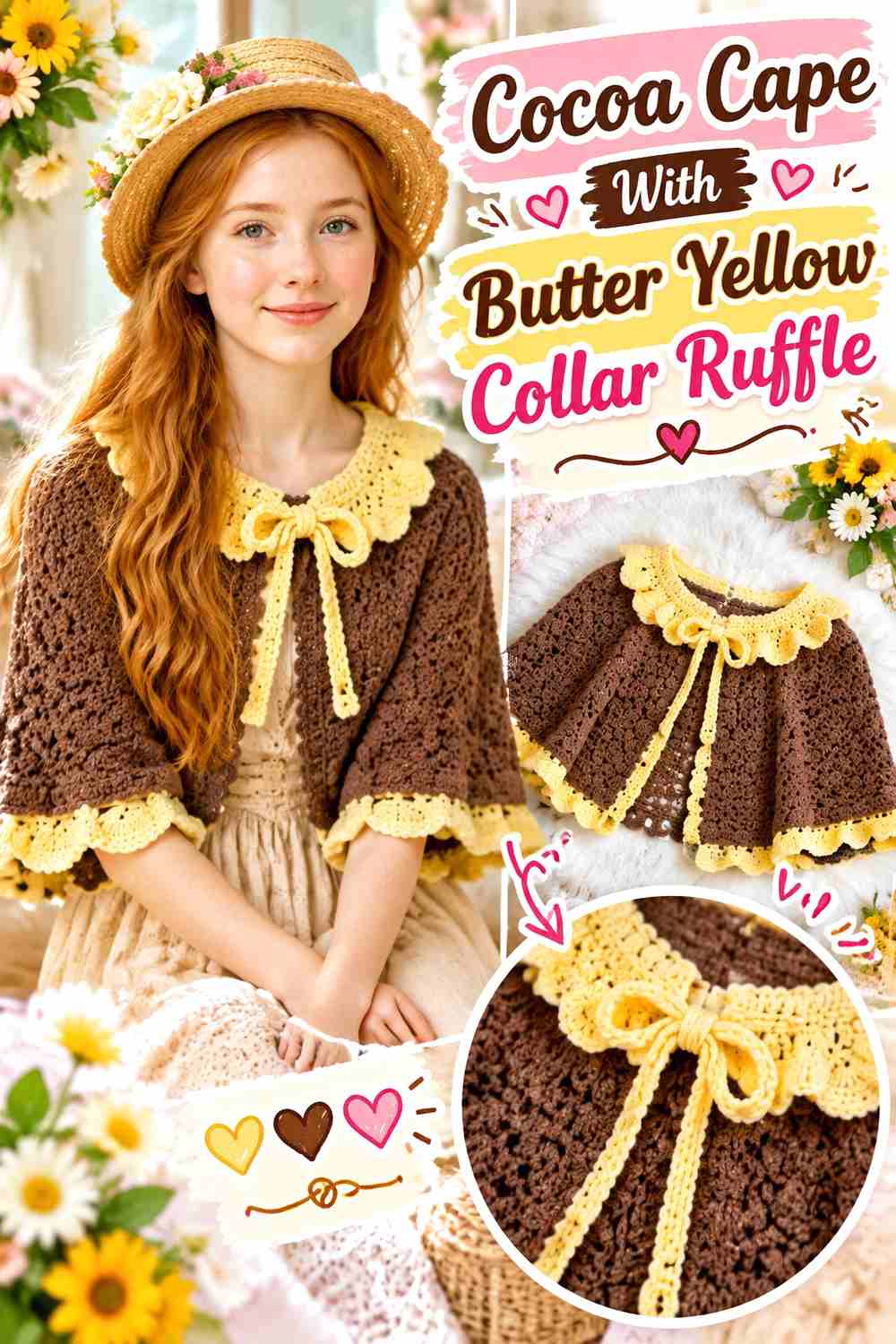
A cocoa-dominant cape creates a stronger, darker shoulder line, while a butter-yellow ruffled collar lifts the color near the neckline. This reversal makes the ruffle the lightest and most noticeable part of the garment instead of placing all the contrast along the bottom.
Keep Cocoa Broad Across the Shoulder Cape
Use cocoa continuously across the front, back, and shoulder area so the cape has a clear dark foundation. Too many butter-yellow stripes through the body would weaken the impact of the lighter collar.
A continuous cocoa section also gives decorative stitch texture room to remain separate from the ruffle color changes.
Let Butter Yellow Brighten the Cocoa Neckline
Butter yellow can cover the entire collar ruffle or appear only along its outermost edge. Either approach separates the neckline from the darker cape below.
If the ruffle is especially deep, consider keeping its inner portion cocoa and changing to butter yellow toward the edge so the two sections connect more gradually.
Creator Credit: Selina Veronique Crochet
3. Butter Yellow And Cocoa Alternating Ruffle Crochet Neck Cape
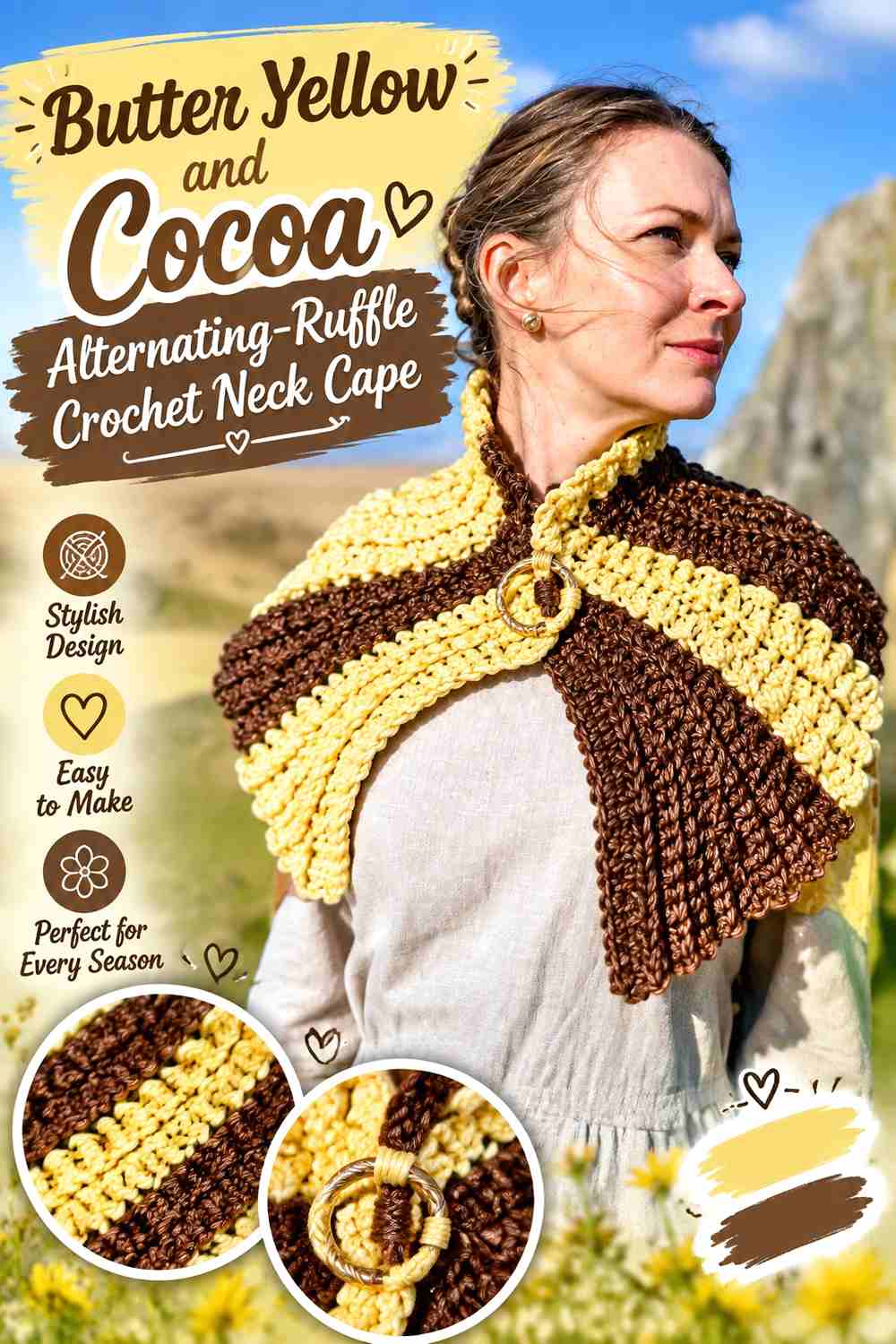
Alternating tiers make color distribution the main design feature. Keep the upper shoulder section butter yellow, then move between cocoa and butter yellow across the ruffles. The sequence works best when each color change corresponds to a complete visible layer rather than switching unpredictably within the same tier.
Alternate Cocoa and Butter Yellow Across Complete Ruffle Tiers
Give each ruffle one clear color so the overlapping layers remain readable. A cocoa tier beneath butter yellow creates stronger separation than mixing the colors repeatedly inside one narrow edge.
Stand back from the cape occasionally to check that both colors remain visible when the ruffles overlap naturally.
Finish the Butter Yellow and Cocoa Cape With One Dominant Edge
Use cocoa for the final edge when you want a stronger dark outline. Choose butter yellow when the upper cape already contains substantial cocoa and the lower silhouette needs to feel lighter.
The edge color can change the overall balance even when the two shades occupy similar amounts elsewhere.
Creator Credit: Ophelia Talks Crochet
4. Butter Yellow Cocoa And Cream Vintage Crochet Ruffled Neck Cape
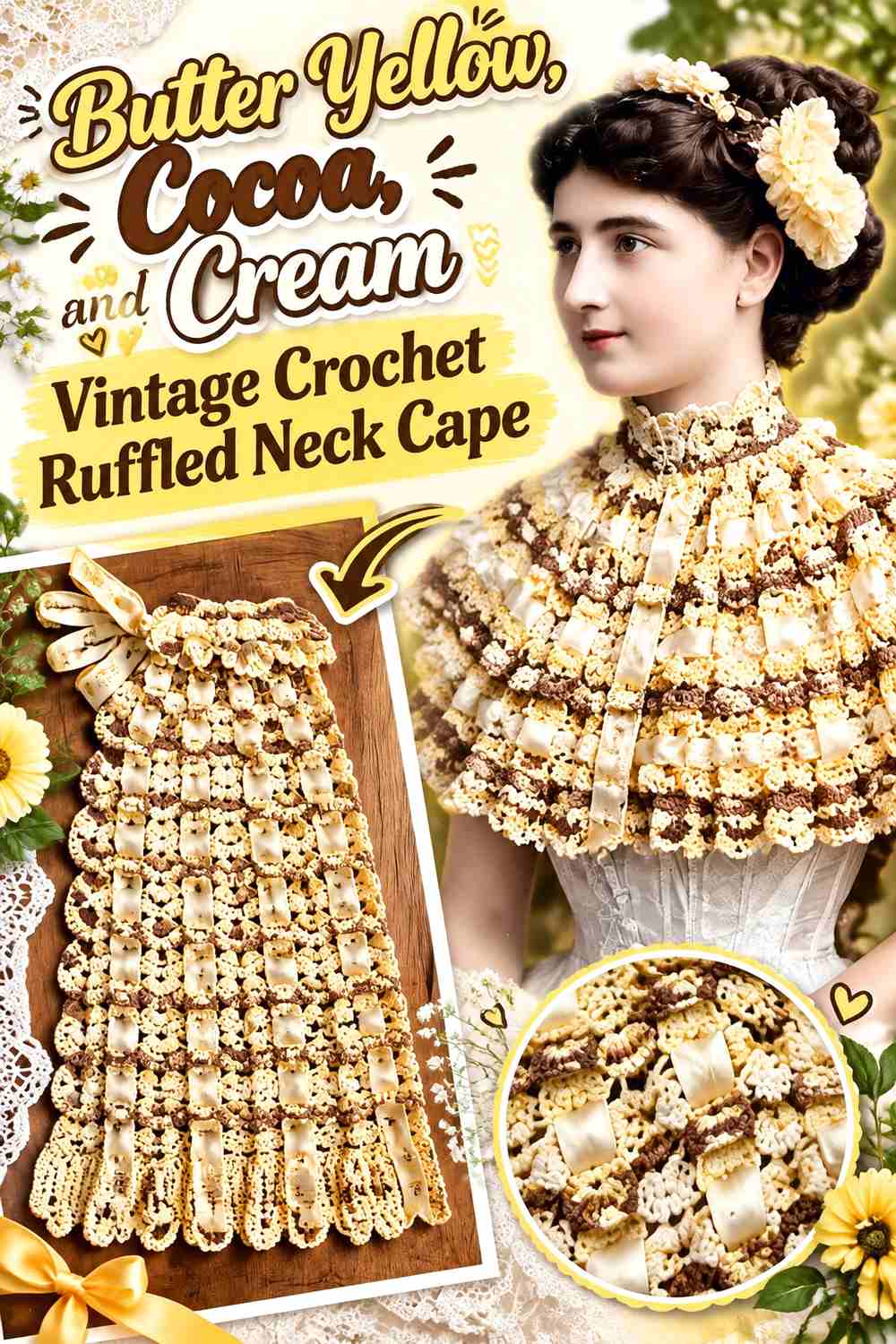
Cream softens the jump between pale yellow and dark brown while supporting a vintage-inspired palette. Let butter yellow remain the primary cape color, cocoa define the neckline or deepest ruffle, and cream appear in a narrow intermediate tier or trim.
Keep Butter Yellow More Visible Than Cream on the Cape
Butter yellow and cream can be close in lightness, so giving both equal surface area may blur the palette. Use butter yellow for the main body and reserve cream for a smaller repeated detail.
This keeps the requested yellow recognizable rather than allowing the cape to look cream-and-brown from a distance.
Place Cream Between Cocoa and Butter Yellow Ruffles
Cream can act as a light transitional strip between dark cocoa and butter yellow. This is especially useful when the cocoa ruffle is visually heavy.
Keep the cream section narrow enough that it separates the main colors without becoming a third competing ruffle.
Use Cocoa to Anchor the Butter Yellow Vintage Neckline
A cocoa neckband, tie, or narrow collar edge can ground the pale vintage palette. Repeating cocoa at the lowest ruffle creates a top-to-bottom connection.
Creator Credit: Just Vintage Crochet
5. Cocoa And Butter Yellow Buttoned Crochet Ruffled Neck Cape
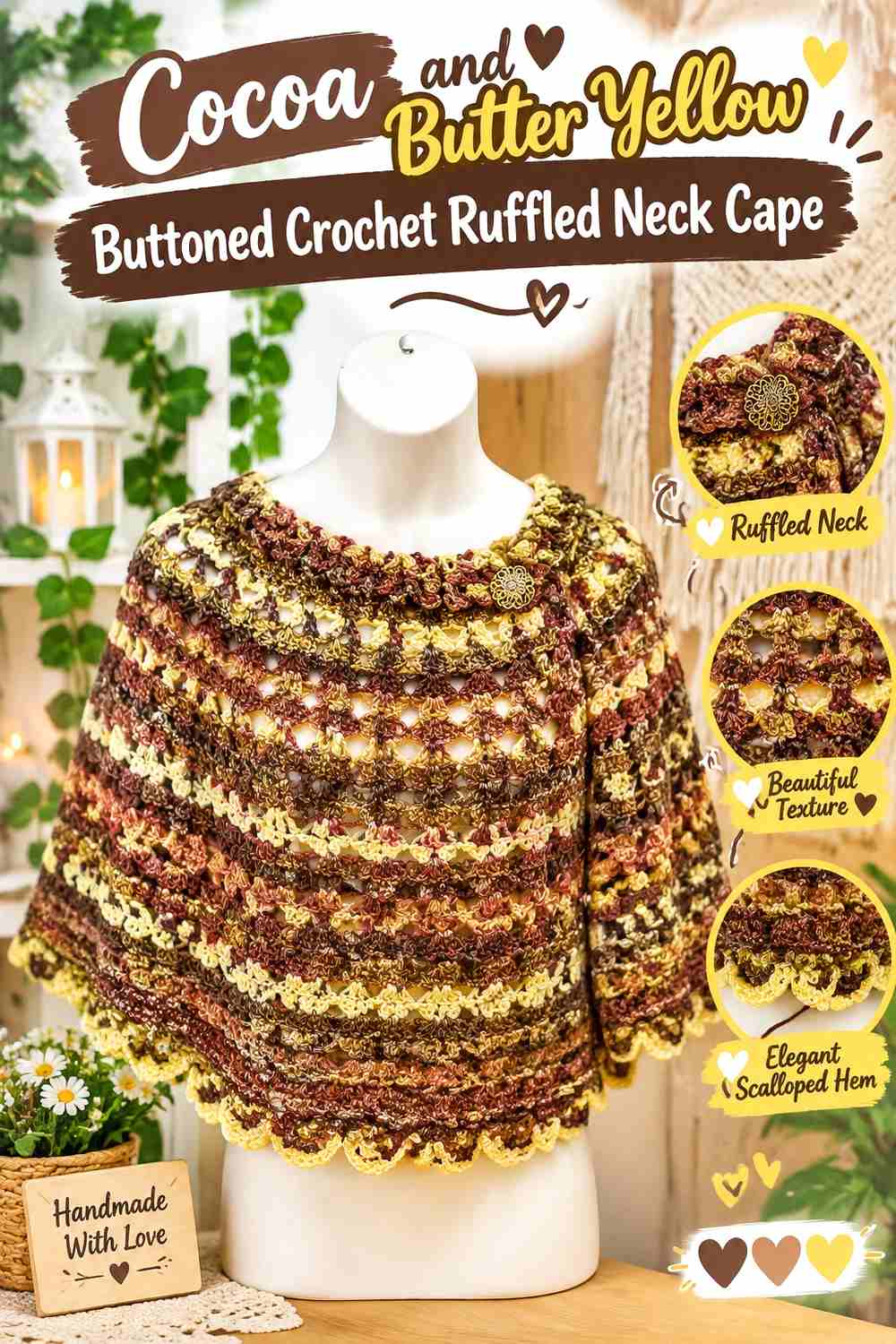
A front button or defined closure creates a natural place to concentrate cocoa. Use cocoa across the neckline and upper shoulder section, then transition into butter-yellow ruffles below. This makes the closure part of the dark framework instead of leaving it isolated against a pale cape.
Use Cocoa Around the Butter Yellow Front Closure
Keeping the neckline and closure area cocoa creates a clear visual center at the front of the cape.
If the cape uses a visible button, consider how its color relates to cocoa before adding more accent shades. A simple closure lets the two-color palette remain the main feature.
Let Butter Yellow Spread Across the Lower Cocoa Cape
Move into butter yellow as the fabric reaches the ruffled portion. The lighter lower section helps the ruffles separate from the dark shoulder band.
A narrow cocoa repeat at the very edge can reconnect the lower ruffles to the neckline without making the bottom excessively dark.
Creator Credit: Bag-O-Day Crochet
6. Cocoa Cape With Butter Yellow Tie Neck Ruffle
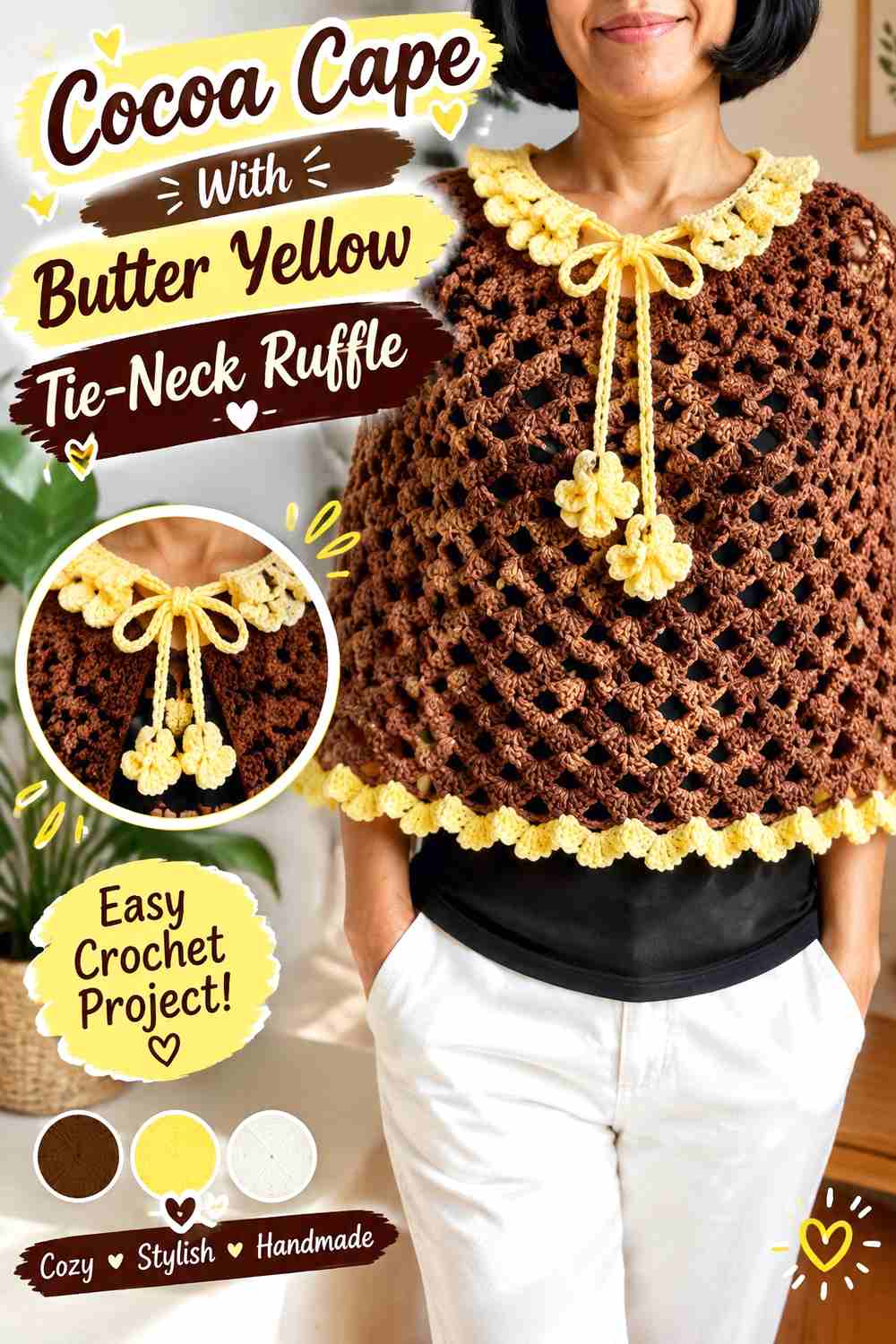
Front ties give butter yellow another useful placement beyond the ruffle itself. Keep most of the cape cocoa, then repeat butter yellow on the neck ruffle and ties. This distributes the pale color across the upper front without dividing the dark shoulder body.
Keep Cocoa Solid Beneath the Butter Yellow Ties
A mostly solid cocoa shoulder section gives the lighter ties and ruffle a clear background. Avoid introducing several additional yellow bands through the center unless a strongly striped effect is intended.
The dark body also helps the tie ends remain easy to distinguish when they fall over the front of the cape.
Repeat Butter Yellow From the Ties Into the Cocoa Ruffle
Using butter yellow for both the ties and part of the neckline ruffle makes the light color feel connected rather than decorative in only one place.
If the ruffle is large, keep some cocoa near its base so the transition from neckline to shoulder section remains visually coherent.
Creator Credit: Crafting Shed
7. Butter Yellow And Cocoa Scalloped Crochet Ruffled Neck Cape
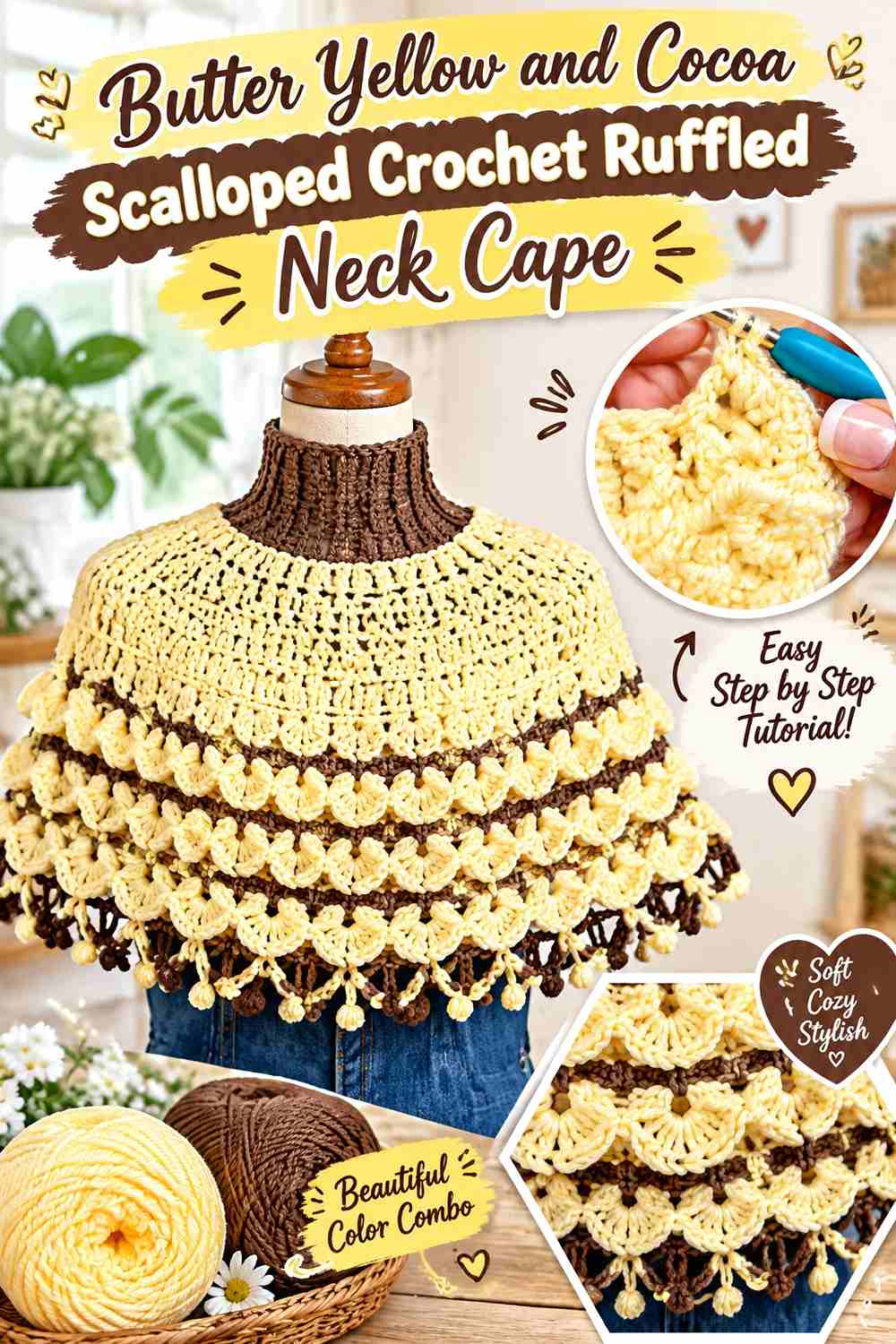
A scalloped lower edge gives the cape a softer silhouette than a straight ruffle. Butter yellow can carry most of the scallops while cocoa emphasizes each outer curve or appears as a narrow band immediately above them.
Let Butter Yellow Lead the Scalloped Cape Edge
Keeping the larger scalloped sections butter yellow prevents the dark accent from making the lower edge feel visually heavy.
The pale shade also allows the shadows between scallops to create some of the definition naturally.
Trace Butter Yellow Scallops With Cocoa
A restrained cocoa outline can make the scalloped edge more visible without changing the main body color.
If the outline becomes too broad, the eye may notice the brown border before the ruffle shape. Reduce the cocoa area when the curves themselves should remain the main feature.
Creator Credit: Stitches n Scraps
8. Butter Yellow Cocoa And Oatmeal Layered Crochet Ruffled Neck Cape
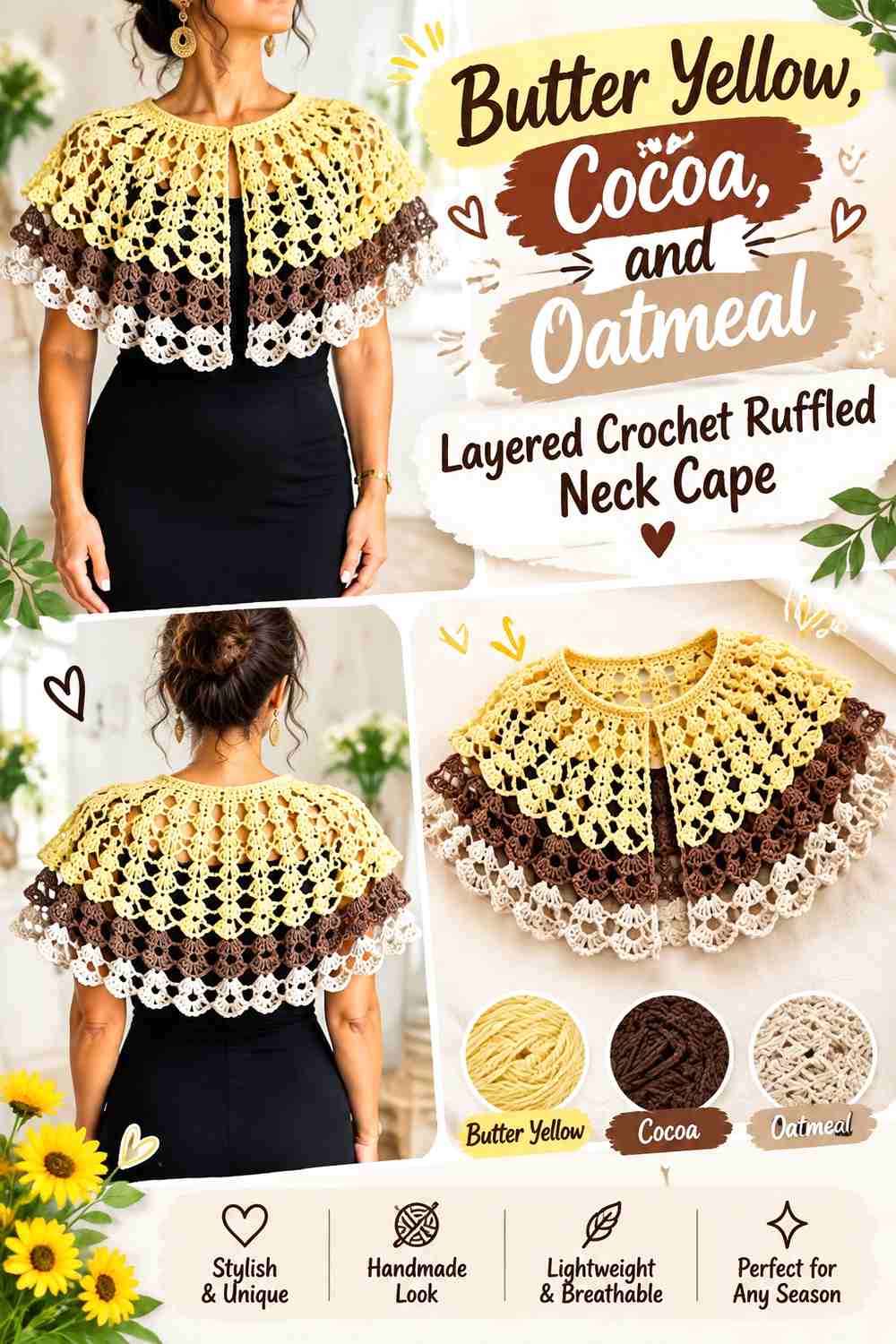
Oatmeal creates a softer middle value than cream. Use butter yellow for the neckline and upper ruffle, oatmeal for a middle tier, and cocoa for the deepest lower layer. The result moves gradually from light to dark rather than alternating abruptly.
Keep Butter Yellow at the Top of the Cocoa-Layered Cape
Positioning butter yellow near the neckline keeps the lightest warm color visible even when the cape is worn over another garment.
Carry a small amount of the same yellow into the outer edge if you want the palette connected from top to bottom.
Let Oatmeal Bridge Butter Yellow and Cocoa Ruffles
Oatmeal should sit visually between the two primary shades. It is useful when direct butter-yellow-to-cocoa contrast feels sharper than the desired vintage or muted direction.
If oatmeal is nearly identical to your butter yellow, remove it rather than creating two indistinguishable light tiers.
Keep Cocoa as the Deepest Ruffle Color
Placing cocoa at the bottom gives the layered cape a dark visual stop and emphasizes the final ruffle.
A thinner cocoa tier will feel lighter; a broad cocoa tier will make the entire cape appear more brown-dominant.
Creator Credit: Hectanooga1
9. Cocoa And Butter Yellow Draped Crochet Ruffled Neck Cape
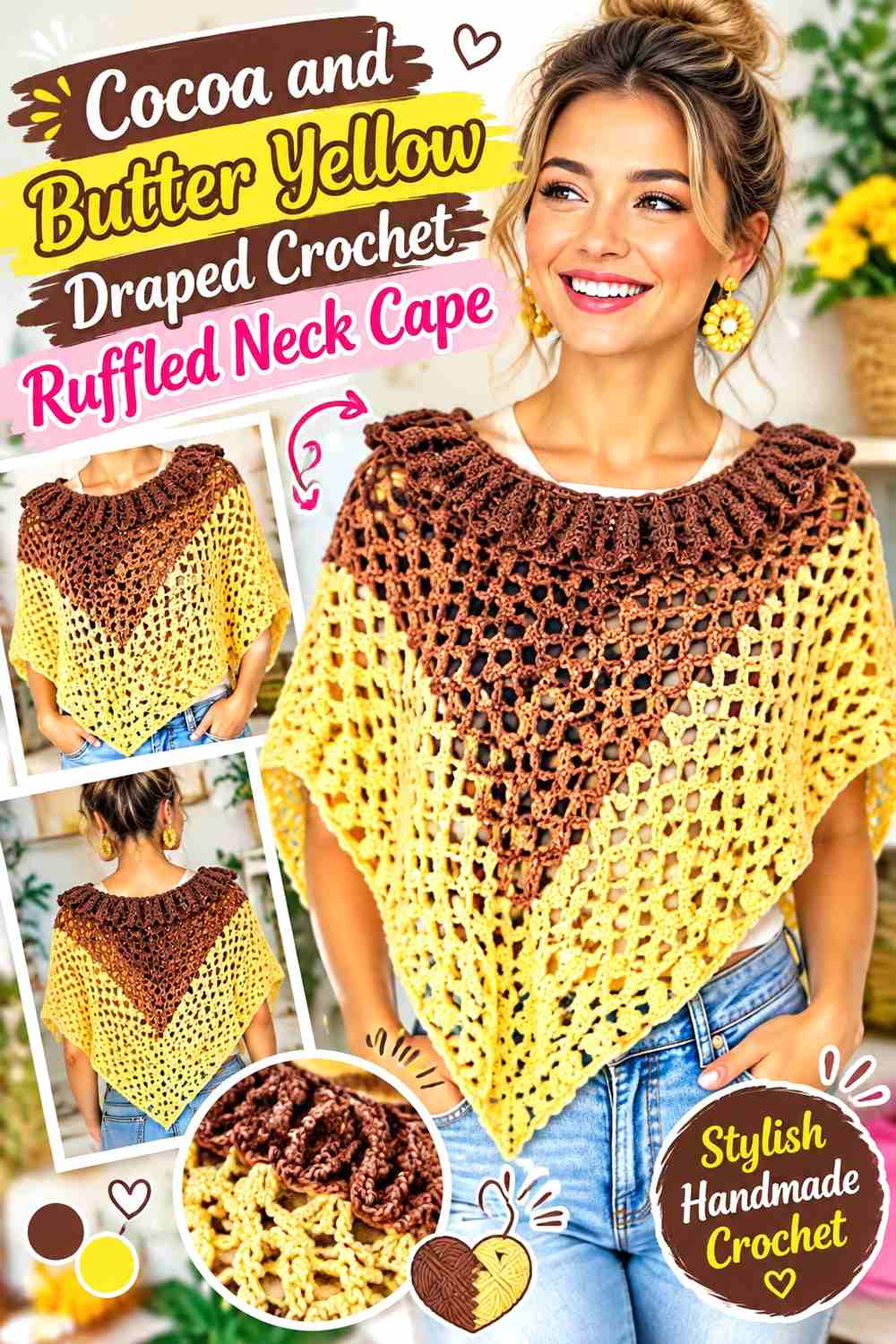
A softly draped cape benefits from larger color sections because the fabric itself already creates folds and movement. Use cocoa across the upper drape and butter yellow through the lower ruffle so the color division follows the silhouette rather than breaking it into many narrow stripes.
Keep Cocoa Continuous Across the Draped Shoulders
A broad cocoa section allows the cape to fall naturally without repeated color changes interrupting the shoulder line.
This works particularly well when the neckline is simple and the lower ruffle is meant to provide most of the decorative detail.
Let Butter Yellow Lighten the Cocoa Lower Ruffle
Move into butter yellow before the deepest folds begin so the lighter shade remains visible across the ruffled edge.
If the yellow disappears when the fabric gathers, increase its visual depth rather than adding several more contrasting colors.
Creator Credit: Crazy Cool Crochet
10. Butter Yellow And Cocoa Wide Collar Crochet Ruffled Neck Cape
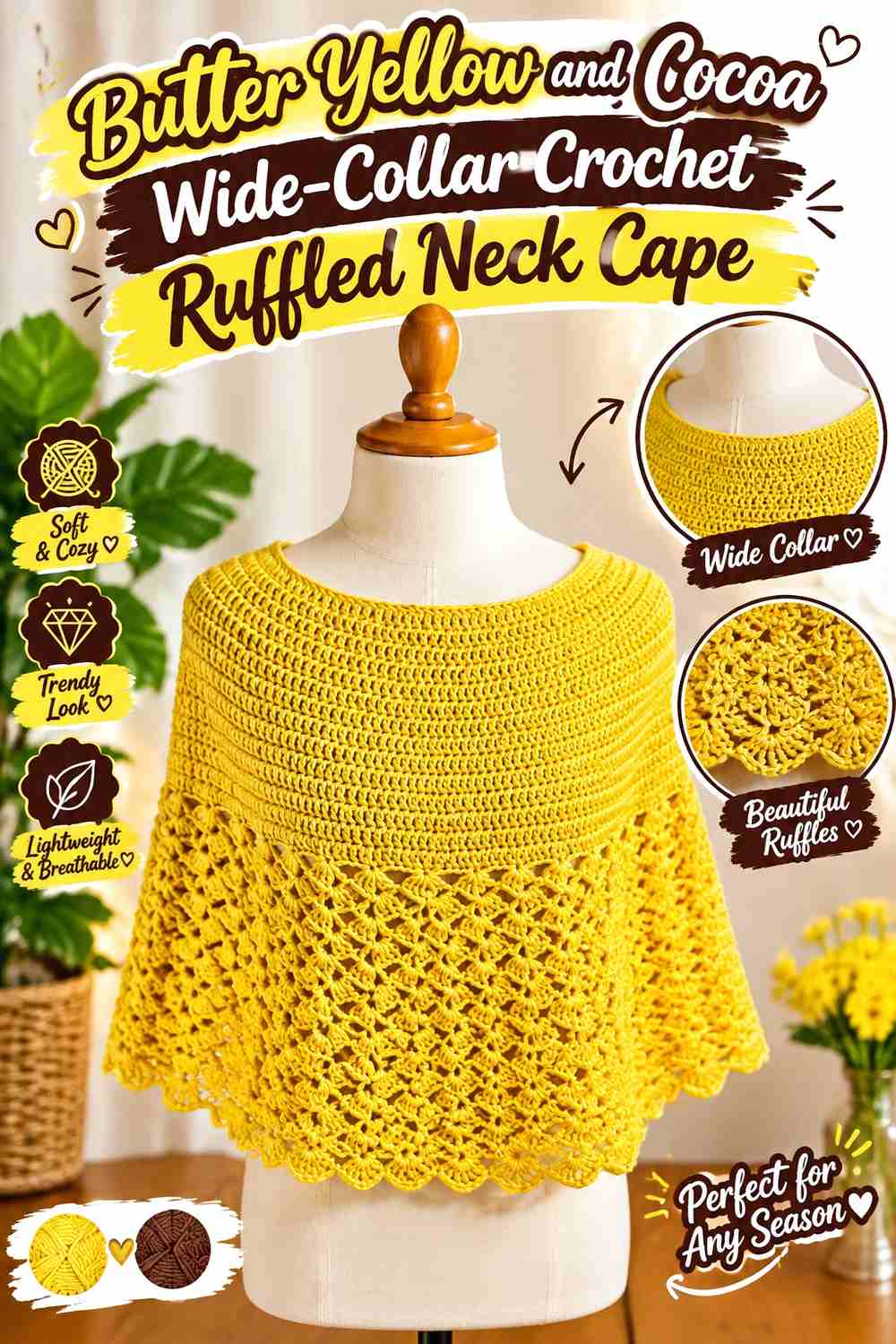
A wide collar gives the two colors more room near the neckline. Let butter yellow cover the collar surface and cocoa define the cape beneath it. The light collar becomes the focal point while the darker shoulder section prevents the entire upper garment from looking pale.
Make Butter Yellow the Main Wide-Collar Color
Use butter yellow across the broadest collar area so its shape remains obvious against the cocoa body.
If the collar includes a ruffled edge, keeping that ruffle yellow creates a continuous light feature rather than separating the collar into several small color bands.
Put Cocoa Beneath the Butter Yellow Collar
Cocoa provides a strong boundary where the collar ends and the shoulder cape begins.
Repeating cocoa at a tie, button area, or lower edge can help the dark section feel connected rather than appearing as one isolated middle band.
Creator Credit: Crochet con Sole
11. Butter Yellow Cocoa And Espresso Edged Crochet Ruffled Neck Cape
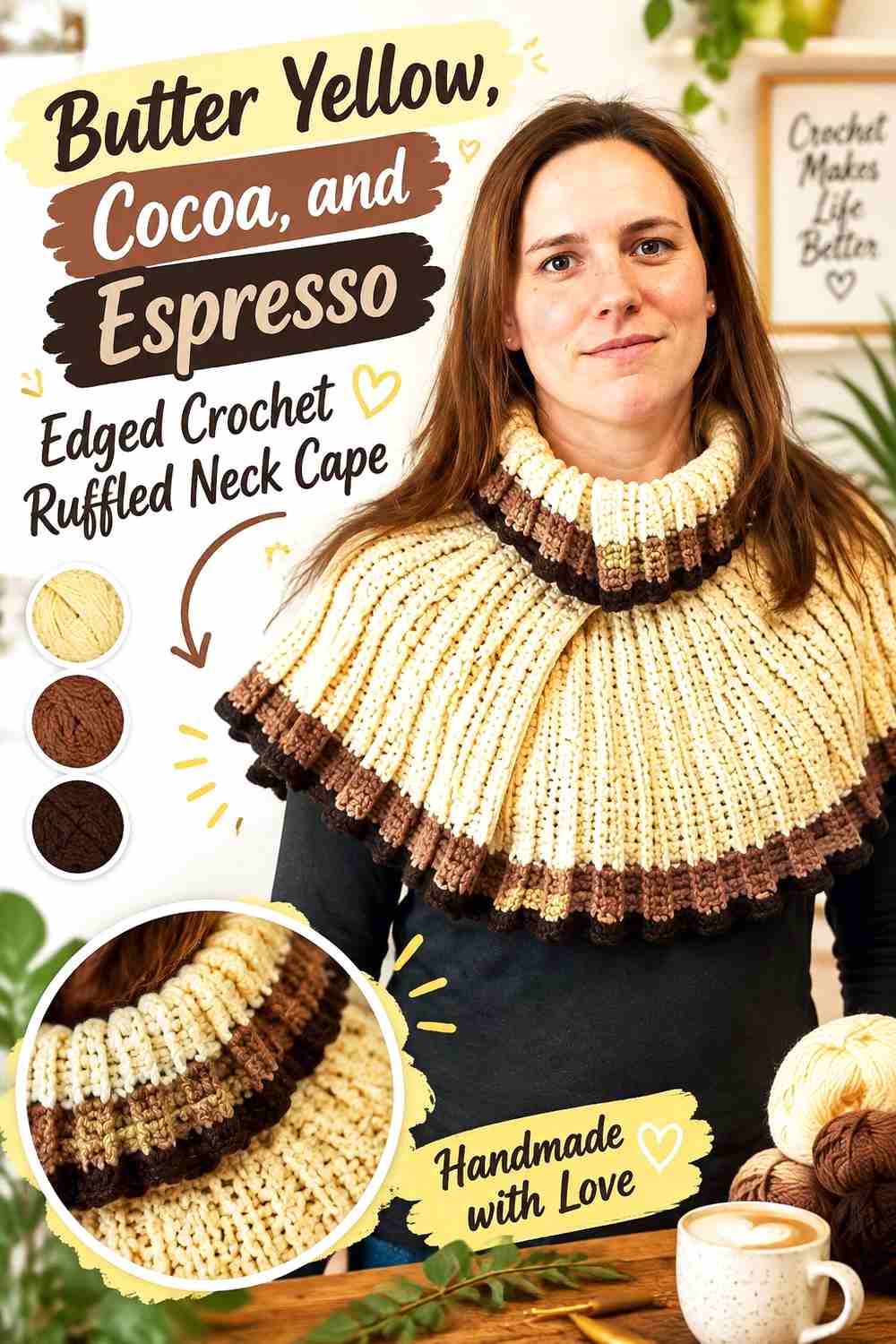
The final palette pushes the dark end of the color range further. Butter yellow remains the light ruffle color, cocoa fills the shoulder cape, and espresso is limited to the narrowest edges. This works best when espresso is visibly darker than cocoa; otherwise the third color adds little useful separation.
Let Cocoa Remain Larger Than the Espresso Cape Edging
Cocoa should continue to function as the main dark color. Use espresso only at the neckline, closure edge, or final border where extra definition is useful.
If espresso spreads across an entire cape section, the project can start reading as yellow-and-espresso instead of butter yellow and cocoa.
Use Butter Yellow Against Cocoa for the Main Ruffle
Keep the most substantial ruffle butter yellow so the pale warm color still has enough surface area to balance the brown body.
The stronger butter-yellow-to-cocoa contrast should do most of the color work; espresso only needs to sharpen selected boundaries.
Keep Espresso Narrow Around Butter Yellow Details
A thin espresso line can emphasize a butter-yellow collar or ruffle edge, but wider dark borders may visually shrink the lighter feature.
Test the three yarns together before committing so cocoa and espresso remain distinguishable under normal indoor lighting.
Creator Credit: Lanas y ovillos
Comparing the Butter Yellow and Cocoa Neck Cape Directions
For the strongest two-color contrast, the butter-yellow body with cocoa double ruffle, cocoa body with yellow collar, alternating-ruffle, and scalloped versions keep the palette simple and make the light-dark relationship easy to read.
The cream and oatmeal ideas soften that contrast. They work well when the selected cocoa is very dark or when a gentler transition between the two main shades is preferred.
For the most neckline emphasis, choose the butter-yellow wide collar or tie-neck direction. For stronger attention at the shoulders, keep cocoa across the upper cape and move butter yellow into the ruffles. The layered version creates the clearest light-to-dark progression, while the espresso-edged option gives the strongest outer definition.
Conclusion
Butter yellow and cocoa can create noticeably different crochet ruffled neck capes depending on where the color transition occurs.
Use butter yellow around the collar and ruffles when you want those decorative areas to appear lighter and more visible. Let cocoa cover the shoulder section, neckband, ties, or lower edge when stronger definition is needed. Reversing that hierarchy produces a warmer brown-led cape with pale yellow concentrated near the neckline.
Because ruffles create their own shadows, check the actual yarn colors in folded fabric rather than judging only from the skeins. If cocoa hides too much texture, move more butter yellow into the ruffled area or reduce the amount of dark edging. Follow the linked tutorials for their original cape or capelet construction and adapt the color distribution separately.
Frequently Asked Questions
Should butter yellow or cocoa dominate a crochet ruffled neck cape?
Either can dominate. Butter yellow creates a lighter shoulder piece with cocoa providing definition, while a cocoa body makes butter-yellow collars and ruffles more prominent. Decide which part of the cape you want to notice first.
Where should cocoa go on a butter yellow ruffled cape?
Cocoa works well at the neckline, lower ruffle, ties, closure area, or outer edge. Concentrating it in a few repeated locations usually creates a clearer result than scattering small brown accents across every section.
How can I keep cocoa ruffles from looking too dark?
Place butter yellow beside or above the cocoa tier so the darker folds have a light reference point. You can also reduce the width of the cocoa ruffle or reserve cocoa for edging instead of the complete layer.
Can I add cream or oatmeal to butter yellow and cocoa?
Yes. Cream provides a lighter, clearer separator, while oatmeal creates a softer warm transition. Keep either neutral secondary so butter yellow and cocoa remain the recognizable main pairing.
Should the neckband be butter yellow or cocoa?
Use cocoa when you want a clearly defined neckline and a stronger transition into a pale cape. Use butter yellow when you want the area nearest the face to remain lighter, especially if the shoulder body is already cocoa.
How can I substitute another butter-yellow yarn?
Preserve the shade’s role rather than trying to match a name exactly. Choose a soft warm yellow that remains clearly lighter than the cocoa and still contrasts enough to show the ruffle boundaries.
How do I keep a two-color ruffled neck cape from looking too busy?
Use larger color areas. Let one shade cover the main cape, assign the second to the collar or one or two complete ruffle layers, and repeat it only where necessary. The ruffles already provide substantial texture, so the palette does not need frequent small color changes.