Cool blue and pearl give a crochet earflap bonnet a clean two-color structure without requiring a complicated palette. Cool blue can cover the crown and side panels, while pearl—a pale creamy or softly off-white neutral—can make the earflaps, face edge, ties, or textured border easier to distinguish.

The placement matters because an earflap bonnet has several visible zones packed into a relatively small accessory. A pearl border around a cool blue crown behaves like trim, while full pearl earflaps create much stronger color blocking. Changing the ties to pearl adds another repeat without interrupting the crown at all.
The tutorials below include true earflap hats as well as traditional, pixie, lace, and vintage bonnets whose crown, face-opening, side-coverage, and tie constructions can inform an earflap-bonnet direction. Follow each creator for the original construction and demonstrated sizing; the cool-blue-and-pearl arrangements are independent color adaptations.
Quick List
- Cool Blue Crown And Pearl Earflap Crochet Bonnet
- Cool Blue Ribbed And Pearl Brim Crochet Earflap Bonnet
- Cool Blue Classic And Pearl Tie Crochet Earflap Bonnet
- Pearl Crown And Cool Blue Earflap Crochet Bonnet
- Cool Blue Adult And Pearl Face Frame Crochet Earflap Bonnet
- Cool Blue Shell And Pearl Ruffle Crochet Earflap Bonnet
- Cool Blue Lace And Pearl Tie Crochet Earflap Bonnet
- Cool Blue Puff And Pearl Edge Crochet Earflap Bonnet
- Cool Blue Vintage And Pearl Lower Edge Crochet Earflap Bonnet
- Cool Blue Lacy And Pearl Side Panel Crochet Earflap Bonnet
- Cool Blue Simple And Pearl Double Edge Crochet Earflap Bonnet
Let Cool Blue or Pearl Own the Main Bonnet Surface
Decide which color should cover the crown before planning the earflaps. A cool-blue crown with pearl earflaps keeps the stronger color above the face and moves the neutral lower. Reversing the arrangement makes the bonnet itself much lighter while concentrating blue around the ears.
The crown usually occupies more visible area than either individual earflap, so changing its color has a bigger effect than changing the ties. If you want a clearly cool-blue-led bonnet, keep the crown blue even when pearl appears in several smaller places.
Check the bonnet from the side as well as the front. Earflap color becomes much more prominent in profile, particularly when the flaps extend below the jawline.
Use Pearl to Clarify a Cool Blue Face Opening
Pearl is especially useful along the face edge because even a narrow light border can separate the cool blue crochet from the wearer’s face. This works well when the crown contains ribbing, shells, lace, or another stitch texture that you do not want to interrupt with internal color changes.
A pearl border should follow the opening cleanly. If it becomes significantly wider near the lower corners, those areas can start to resemble separate white earflaps even when that was not the intended design.
For a stronger two-color treatment, carry pearl from the face edge into the earflaps and ties. For a quieter version, stop the pearl at the opening and keep the lower pieces cool blue.
Coordinate Cool Blue and Pearl Earflaps With the Ties
Earflaps and ties form one long visual line below the bonnet. Matching pearl earflaps with pearl ties creates a continuous neutral extension beneath a blue crown. Using cool blue ties beneath pearl flaps instead introduces a second color transition.
For baby or young-child bonnets, treat ties and cords as a practical safety consideration rather than purely decoration. Use the original pattern’s intended construction appropriately and supervise according to the wearer’s age and setting.
1. Cool Blue Crown And Pearl Earflap Crochet Bonnet

This arrangement gives the classic earflap silhouette the clearest two-color division. Keep the rounded crown cool blue, then move to pearl when the side flaps begin. The blue remains the main color while the lighter lower sections emphasize the coverage around both ears.
Cool Blue Should Stay Continuous Across the Crochet Crown
Use cool blue from the top through the main hat body so the crown reads as one uninterrupted shape.
Avoid adding multiple pearl stripes above the earflaps unless you intentionally want a more graphic hat. The strong lower color change already gives the design enough contrast.
Pearl Earflaps Can Define the Cool Blue Bonnet Sides
Begin pearl where the ear coverage becomes structurally distinct.
Because the two flaps mirror one another, compare their visible pearl area before finishing. Even small differences are easy to spot against a solid blue crown.
Cool Blue Ties Can Repeat Beneath Pearl Earflaps
For a second color transition, return to cool blue at the ties.
This gives the lower edge a blue-pearl-blue sequence while leaving the pearl concentrated around the ears.
Creator Credit: hook hues
2. Cool Blue Ribbed And Pearl Brim Crochet Earflap Bonnet
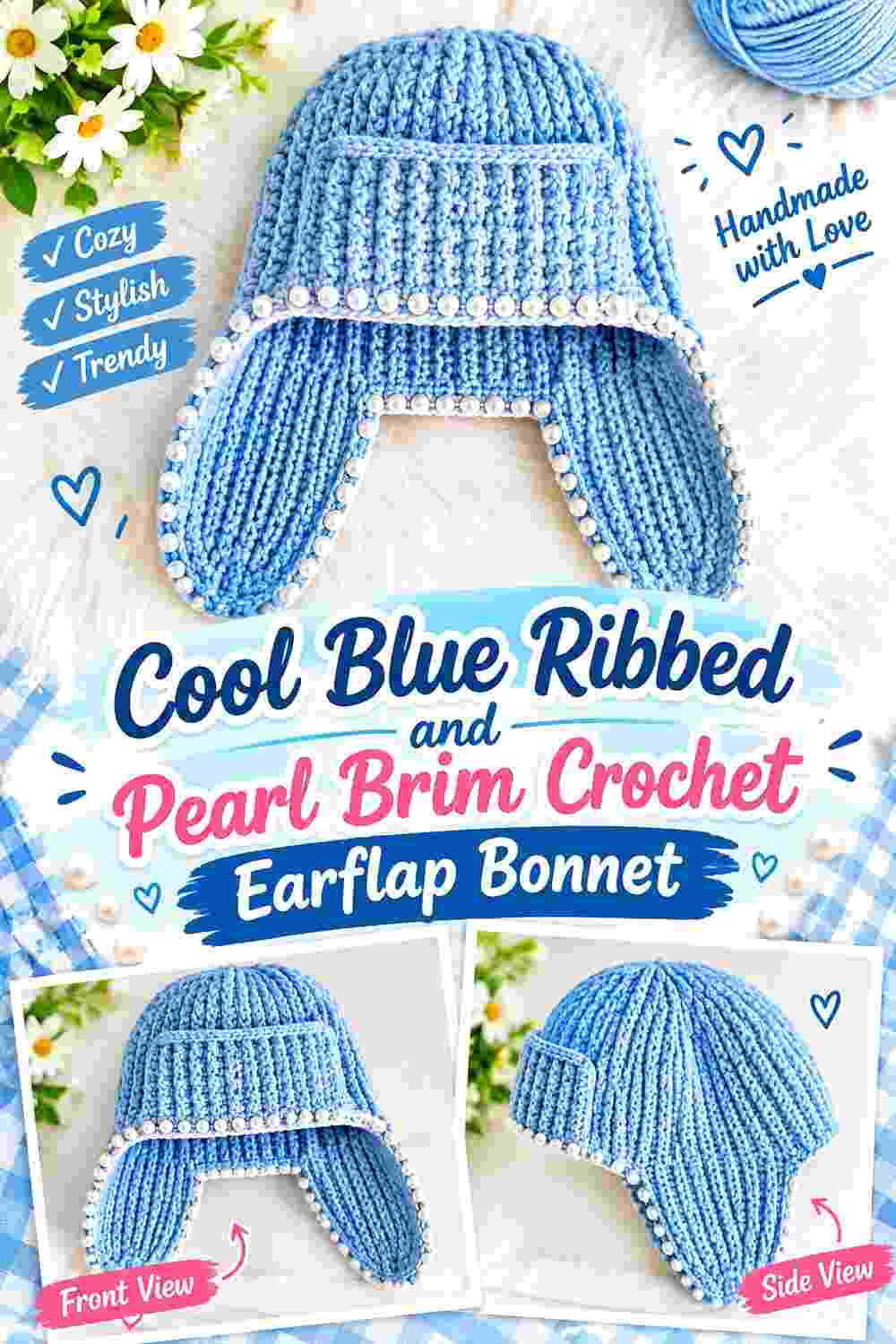
Ribbing creates strong vertical texture, so this design keeps most of the ribbed surface cool blue and reserves pearl for the brim, earflap outline, or lower finishing edge. The supporting tutorial demonstrates a ribbed earflap hat with defined brim and flap sections.
Cool Blue Should Preserve the Ribbed Crochet Texture
Keep the main ribbing one color so the raised lines remain easy to follow around the crown.
Frequent pearl stripes can break those lines into shorter sections and make the color changes more noticeable than the ribbing itself.
Pearl Can Separate the Cool Blue Brim From the Earflaps
A pearl brim creates a lighter horizontal boundary before the lower ear coverage begins.
If pearl continues onto the flaps too, keep the transition intentional so the brim and earflaps read as one connected neutral section rather than several unrelated accents.
Cool Blue Can Return at the Pearl Earflap Tips
A small cool-blue repeat at the lowest portion can reconnect the earflaps with the crown.
Keep that repeat narrow if pearl should remain the main lower color.
Creator Credit: Serafima Crochet & Knitting
3. Cool Blue Classic And Pearl Tie Crochet Earflap Bonnet

This version keeps both the crown and earflaps cool blue, using pearl only once the ties begin. It is the most restrained two-color direction and works well when you want the bonnet silhouette to remain almost entirely blue.
Cool Blue Should Connect the Crown and Earflaps
Continue blue through the side coverage rather than changing color where each flap starts.
This creates one uninterrupted bonnet shape and lets the actual earflap silhouette provide the structural variation.
Pearl Ties Can Finish the Cool Blue Earflaps Cleanly
Switch to pearl only at the ties or braided lower detail.
The light ends become visible against coats and scarves without dividing the main hat surface.
Pearl Should Stay Proportional to the Cool Blue Bonnet
Long ties can occupy more visual space than expected when they hang beside the face.
View the bonnet worn rather than flat before deciding whether the ties alone provide enough pearl or whether a narrow matching face edge would improve balance.
Creator Credit: Jonah’s Hands
4. Pearl Crown And Cool Blue Earflap Crochet Bonnet

Reverse the usual hierarchy by using pearl across the entire crown and moving cool blue onto the earflaps, lower edge, and ties. The saturated shade then sits closer to the jaw and neck instead of covering the top of the head.
Pearl Should Keep the Crochet Bonnet Crown Visually Quiet
A broad pearl crown provides a soft neutral field and gives the hat shape room to stand out without internal striping.
If the crown has a pom-pom or other finishing detail in the source construction, decide whether it should remain pearl before adding more cool blue.
Cool Blue Earflaps Can Anchor a Pearl Crown
Make both flaps cool blue so the stronger shade balances symmetrically on either side of the face.
This placement works particularly well when the flaps are substantial enough to remain visible from the front.
Cool Blue Ties Can Continue the Pearl-to-Blue Transition
Using blue for the ties makes each earflap appear longer and more connected.
If that creates too much blue, return to pearl only at the very ends rather than adding another broad color block.
Creator Credit: ABoC Studio
5. Cool Blue Adult And Pearl Face Frame Crochet Earflap Bonnet

An adult bonnet gives the face opening enough surface for pearl edging to become a deliberate design feature. Keep the bonnet body cool blue and use pearl around the opening and lower sides, extending the edge into ear-covering panels if desired.
Cool Blue Should Fill the Adult Crochet Bonnet Body
Keep the larger crown and side areas cool blue so the saturated color remains dominant despite the wider face frame.
An adult-scale bonnet has more visible surface than a small baby design, so pearl trim can also be proportionally wider without taking over as quickly.
Pearl Can Frame the Cool Blue Adult Bonnet Opening
Run pearl consistently around the forehead and cheek area.
This creates a light boundary that remains visible when the bonnet is viewed head-on, unlike a lower edge that may be partly hidden by clothing.
Cool Blue Ear Coverage Can Extend Below the Pearl Frame
For a more bonnet-like rather than border-heavy finish, return to cool blue on the lowest side panels.
This keeps pearl functioning as the frame while blue owns both the crown and the actual ear coverage.
Creator Credit: シロクロクロシェ (Shirokuro Crochet)
6. Cool Blue Shell And Pearl Ruffle Crochet Earflap Bonnet
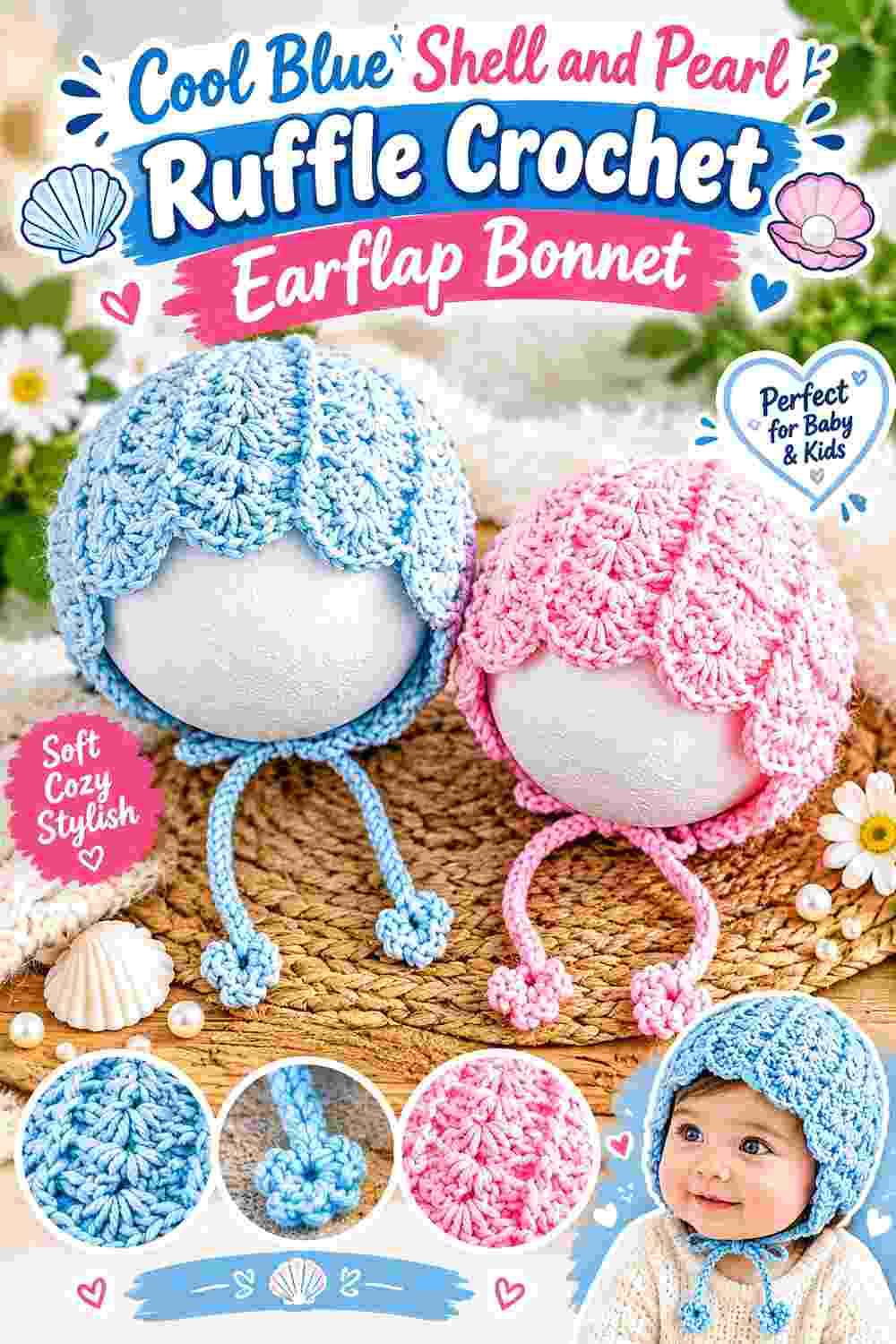
Shell and fan texture already gives this bonnet a decorative face area. Use cool blue throughout the shell body and pearl specifically on the ruffled or shaped edge so the change in color corresponds with a change in texture.
Cool Blue Should Keep the Shell Crochet Pattern Connected
Work the main shells in blue rather than changing shades inside every repeat.
A single color makes the shell shapes easier to see and keeps the face border from competing with numerous internal color changes.
Pearl Can Highlight the Cool Blue Ruffled Face Edge
Use pearl where the decorative edge begins.
The light color emphasizes both the curved outline and the stitch change, so an additional contrasting stripe immediately behind it is usually unnecessary.
Pearl Ties Can Continue From the Cool Blue Shell Edge
Carrying pearl into the ties creates a continuous light line from one lower corner to the other.
If the ties are visually long, keep the rest of the bonnet strongly cool blue so the overall palette remains balanced.
Creator Credit: Maisie and Ruth
7. Cool Blue Lace And Pearl Tie Crochet Earflap Bonnet
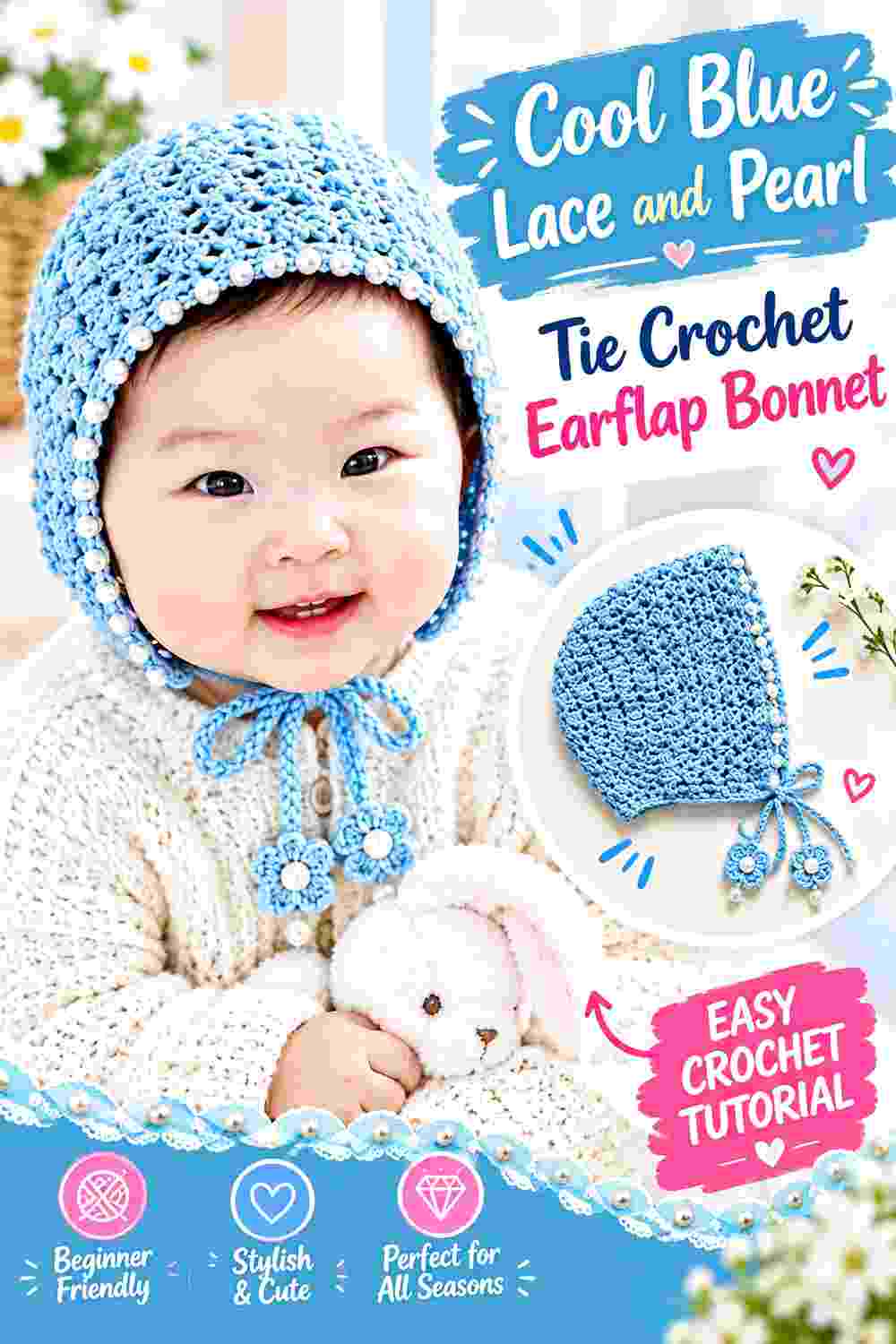
A lace-textured bonnet allows the background behind the crochet to influence the finished color. Keep the main openwork cool blue and use pearl for the ties and a narrow lower border rather than introducing many internal color changes.
Cool Blue Lace Should Stay Continuous Around the Bonnet
A single blue field lets the open spaces and stitch pattern provide visual movement.
Alternating pearl through small lace repeats can make the texture harder to read, especially on a compact bonnet.
Pearl Ties Can Give Cool Blue Lace a Solid-Looking Finish
The denser tie or lower-edge section can appear more substantial than the open blue body.
That contrast in both color and texture creates enough definition without needing additional embellishment.
Cool Blue and Pearl Should Be Checked Against the Underlying Background
Open lace allows hair, a lining, or whatever sits behind it to influence the apparent color.
View the finished blue section against the actual wearer or intended background before deciding that the pearl border needs to be wider.
Creator Credit: Sweet Softies
8. Cool Blue Puff And Pearl Edge Crochet Earflap Bonnet

Raised puff texture gives the bonnet significant surface detail before a second color is introduced. Keep the puffs cool blue and use pearl only at the face edge, ties, or lower corners.
Cool Blue Should Carry the Puff Crochet Texture
A continuous blue field keeps the raised stitches visually connected.
Making alternate puffs pearl would produce a dotted color pattern that competes with the shape of the texture itself.
Pearl Can Give Cool Blue Puffs a Cleaner Boundary
A narrow pearl edge makes the face opening distinct without covering the raised blue fabric.
If the edge begins hiding the outermost puff shapes, reduce its visual width rather than adding more pearl elsewhere.
Pearl Earflap Extensions Can Sit Below Cool Blue Puffs
If adapting the lower sides into more pronounced ear coverage, pearl can begin below the textured body.
This gives the earflap area a quieter surface while the crown remains the most decorative zone.
Creator Credit: Fuad Azmat / YARNutopia by Nadia
9. Cool Blue Vintage And Pearl Lower Edge Crochet Earflap Bonnet
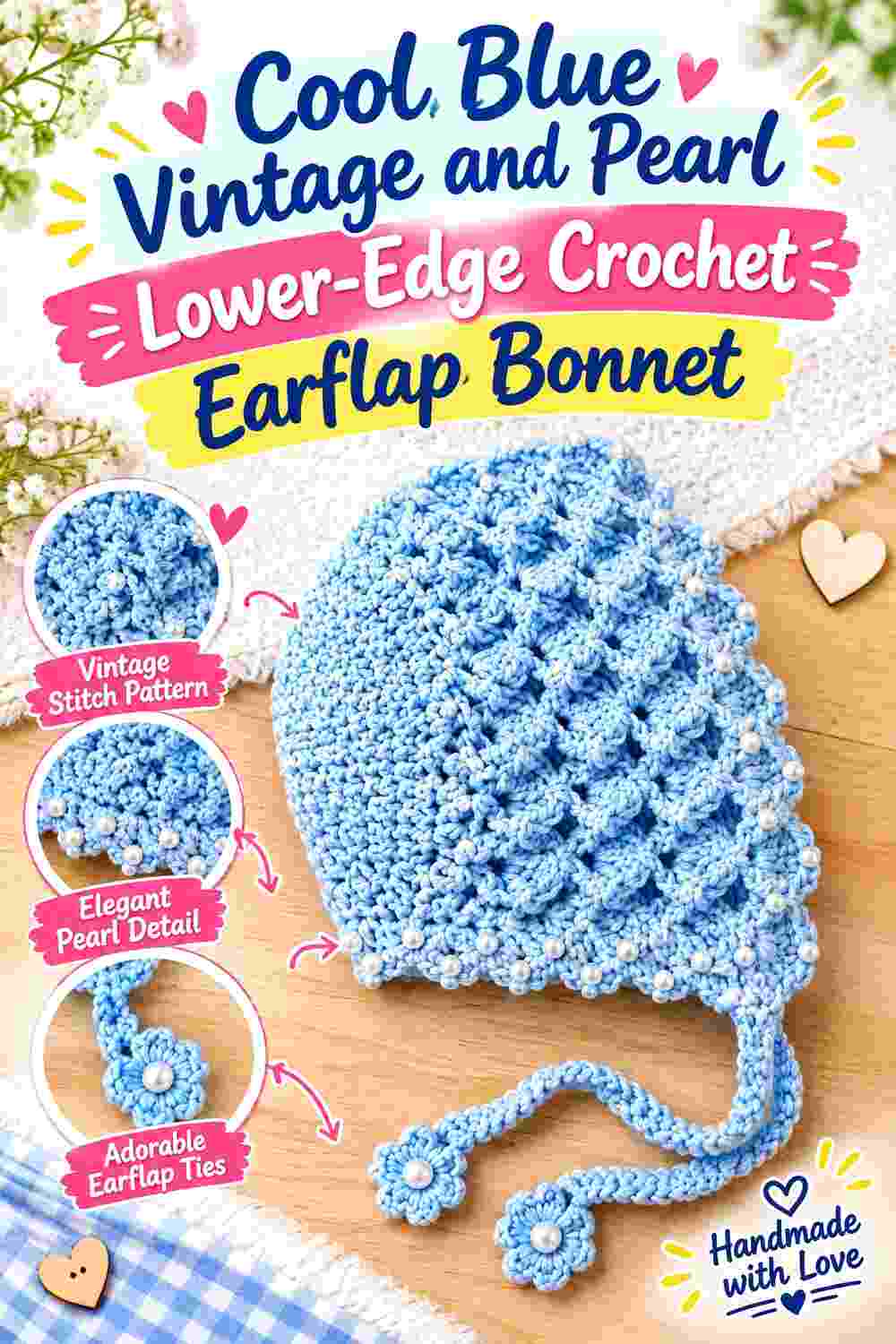
A vintage bonnet benefits from a controlled palette because decorative shaping is already part of the look. Keep cool blue across the body and use pearl around the lower edge and ties, allowing the neutral to outline the jaw rather than the forehead.
Cool Blue Should Remain the Main Vintage Crochet Bonnet Color
Use blue through the crown and side body so the vintage shaping remains visually unified.
Avoid adding pearl at every textured detail simply because the construction changes.
Pearl Can Define the Cool Blue Lower Bonnet Edge
A light lower band gives the jaw and neck opening a clear finish.
This also provides a natural point from which pearl ties can continue without creating another abrupt color change.
Cool Blue Can Stay Around the Face While Pearl Sits Below It
Keeping the front face edge blue and the lower edge pearl creates a less conventional division than a fully outlined bonnet.
The effect places the neutral lower on the accessory and preserves more cool blue near the forehead.
Creator Credit: Toyslab Creations
10. Cool Blue Lacy And Pearl Side Panel Crochet Earflap Bonnet
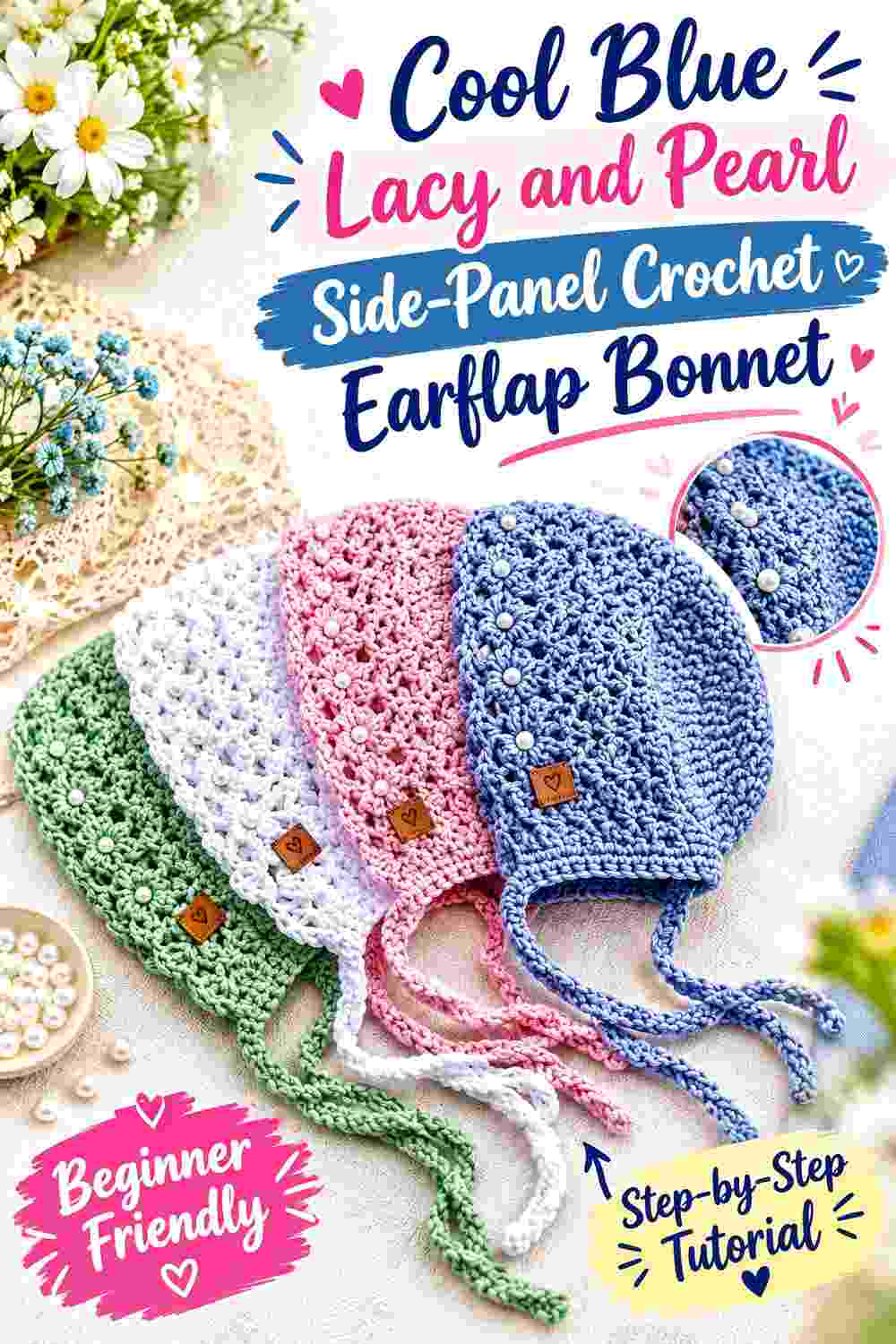
This direction uses pearl on the lower side sections rather than only as edging. Keep the lacy central bonnet cool blue and make the areas nearest the ears pearl so the two colors correspond with different coverage zones.
Cool Blue Should Stay Central in the Lacy Crochet Bonnet
Use blue across the crown and main lace panel so the strongest color remains visible from both front and back.
This also prevents the lace surface from being fragmented into several small blocks.
Pearl Side Panels Can Create Distinct Ear Coverage Beside Cool Blue
Move into pearl where the side area begins to extend downward.
Because those panels sit close to the cheeks and ears, the neutral can become very noticeable even without covering much total fabric.
Cool Blue Ties Can Finish Pearl Ear Panels With Contrast
Return to blue for the ties if you want the saturated shade repeated below the pearl.
For a softer finish, continue pearl instead; choose one relationship consistently on both sides.
Creator Credit: Loopy Mabel Crochet
11. Cool Blue Simple And Pearl Double Edge Crochet Earflap Bonnet
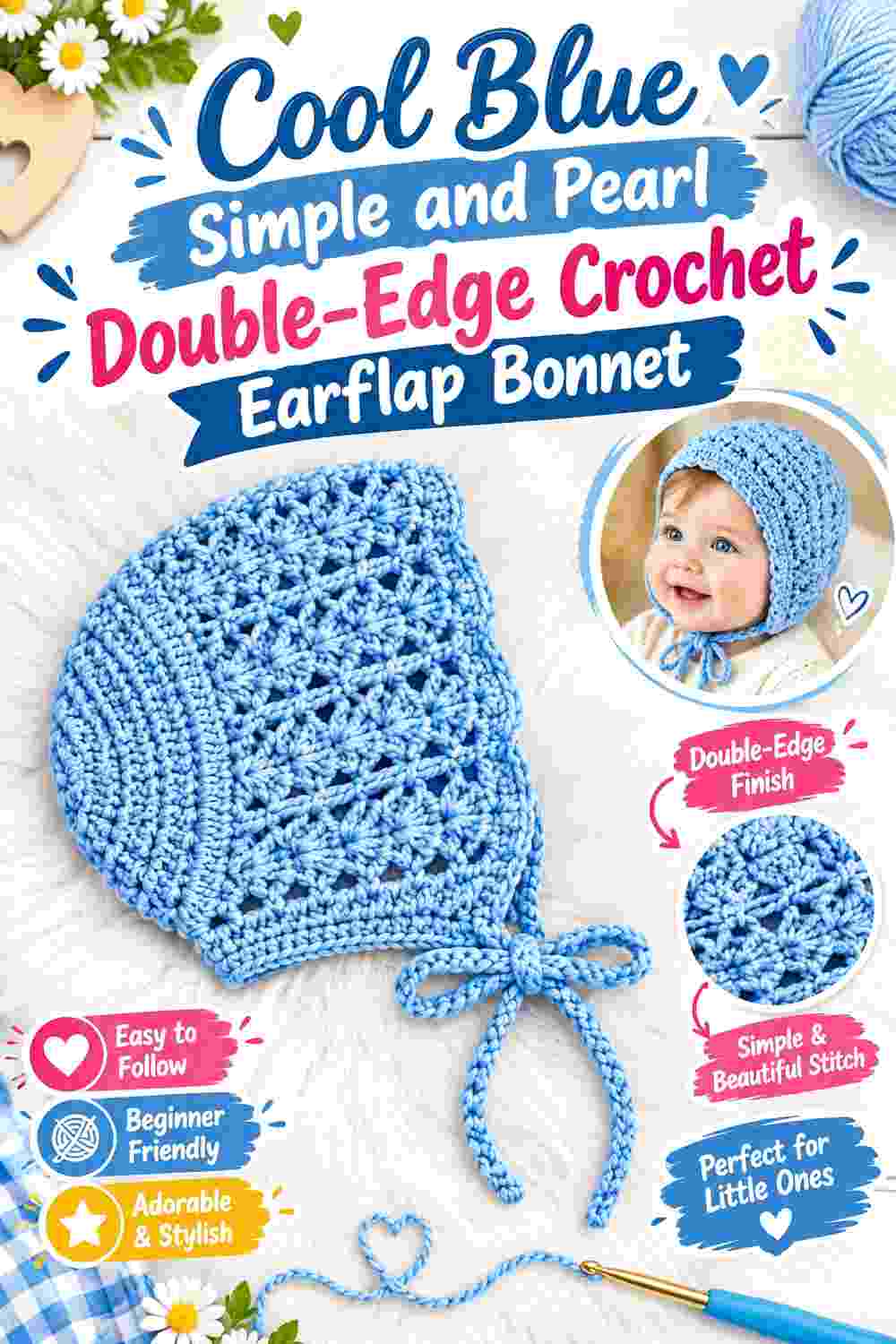
The final idea uses a simple bonnet construction as a clean background for two pearl boundaries. Keep almost the entire bonnet cool blue, then add pearl at both the face opening and lower neck edge while leaving the ear-covering sections blue.
Cool Blue Should Fill the Simple Crochet Bonnet Between Both Pearl Edges
The two light borders only work as framing if there is enough uninterrupted blue between them.
Keep the central field broad and avoid extra pearl stripes inside it.
Pearl Can Frame Both Sides of the Cool Blue Bonnet Surface
One pearl edge follows the face opening while another defines the lower edge.
The result gives the blue body a contained look without requiring full pearl earflaps.
Cool Blue Ties Can Keep Pearl From Becoming Too Dominant
Use blue for the ties when both major edges are already pearl.
This brings the dominant shade back below the bonnet and prevents every finishing feature from becoming neutral.
Creator Credit: Croby Patterns
Comparing Cool Blue and Pearl Earflap Bonnet Directions
For the strongest cool-blue look, choose the classic blue bonnet with pearl ties, the puff-texture version, the lacy bonnet, or the double-edge design. These leave most of the actual head and ear coverage blue.
For stronger two-color blocking, the blue-crown-and-pearl-earflap or pearl-crown-and-blue-earflap versions create the clearest structural division. They work well when you want the ear coverage itself to be part of the palette rather than simply part of the silhouette.
Shell, lace, puff, and ribbed textures already add visual complexity. On those designs, pearl usually works more effectively at a boundary—face edge, brim, lower band, or ties—than scattered through every stitch repeat.
Several supporting tutorials are traditional bonnets rather than purpose-built earflap bonnets. Use those for the crown, side coverage, edging, or ties they actually demonstrate and make any stronger earflap adaptation only after checking fit and proportions.
Conclusion
Cool blue and pearl can create surprisingly different earflap bonnets with only a change in color placement. A cool-blue crown with pearl earflaps makes the side coverage obvious, while a blue body with only pearl ties creates a much quieter two-color result. Pearl around the face draws attention upward; pearl along the lower edge moves the contrast closer to the jaw and neck.
When the bonnet uses strong texture—ribbing, shells, puff stitches, or lace—keep larger areas in one shade so the stitch pattern remains visible. Simpler constructions can support stronger blue-and-pearl blocks without becoming visually crowded.
Check the developing bonnet from the front, side, and back before completing the second-color details. Earflaps and ties can occupy much more visual space when worn than they appear to on a flat project. Follow the credited tutorial for its original construction and demonstrated sizing, then adapt the cool-blue-and-pearl palette around that structure.
Frequently Asked Questions
Should Cool Blue or Pearl dominate a crochet earflap bonnet?
Either can lead, but cool blue across the crown gives the clearest blue-dominant result. Pearl can then define the earflaps, ties, face edge, or lower border without taking over the main bonnet surface.
Where should Pearl go on a mostly Cool Blue earflap bonnet?
Useful locations include the earflaps, face opening, brim, lower neck edge, ties, or a decorative shell border. Choose one or two related areas rather than placing pearl randomly throughout the crown.
Do Pearl earflaps work with a Cool Blue crown?
Yes. This creates one of the strongest structural color-block effects because the color transition occurs exactly where the ear coverage begins. Keep both pearl earflaps visually balanced.
Can Cool Blue and Pearl be used on a ribbed earflap bonnet?
Yes. Keeping most ribbing cool blue preserves the long textured lines, while pearl can be reserved for the brim, earflap border, or ties.
How can I keep Pearl edging from overpowering Cool Blue?
Reduce the width of the pearl section and preserve a larger uninterrupted blue field. On a small bonnet, even a few additional rows of a pale neutral can noticeably change the overall color balance.
Should Cool Blue ties match Cool Blue earflaps?
They can, but they do not have to. Matching ties create one continuous blue line below the ear, while pearl ties introduce a second color transition. Judge the complete bonnet while worn before deciding.
Are ties appropriate on every Cool Blue and Pearl earflap bonnet?
Tie construction should follow the original pattern and be suitable for the intended wearer and setting. For babies and young children, cords and ties require sensible supervision and age-appropriate use rather than being treated as purely decorative details.