Plum noir and silver give crochet opera gloves two very different visual roles. Plum noir can create the long, uninterrupted field that makes the glove read as dramatic forearm wear, while silver can mark the upper cuff, hand opening, thumb edge, lace border, bow, or another smaller detail.

That hierarchy matters more on opera-length gloves than on ordinary wrist warmers. A silver band covering only a small area near the hand may look restrained, while the same width near the upper forearm can become much more prominent because it sits at the widest part of the glove. Repeating silver at both ends can frame the long plum-noir section without breaking it into numerous stripes.
The tutorials below include long arm warmers as well as shorter fingerless, lace, and Victorian glove constructions. When a source stops closer to the wrist, treat it as a reference for the hand, thumb, texture, or decorative treatment rather than assuming its original proportions are opera length. Extending a glove farther up the forearm requires checking the wearer’s changing circumference and the stretch of the actual crochet fabric.
Quick List
- Plum Noir And Silver Bow Trim Crochet Opera Gloves
- Plum Noir Ribbed And Silver Upper Cuff Crochet Opera Gloves
- Plum Noir Long Panel And Silver Edge Crochet Opera Gloves
- Plum Noir And Silver Victorian Crochet Opera Gloves
- Plum Noir Ribbed Cuff And Silver Hand Edge Crochet Opera Gloves
- Plum Noir And Silver Two Tone Crochet Gauntlet Opera Gloves
- Plum Noir Lace And Silver Button Edge Crochet Opera Gloves
- Plum Noir Victorian Lace And Silver Scallop Crochet Opera Gloves
- Plum Noir Minimal And Silver Double Edge Crochet Opera Gloves
- Plum Noir Flat Panel And Silver Seam Line Crochet Opera Gloves
- Plum Noir Lace Panel And Silver Ribbed Cuff Crochet Opera Gloves
- Plum Noir And Silver Romantic Victorian Crochet Opera Gloves
Let Plum Noir Carry the Longest Opera-Glove Section
The easiest way to preserve the opera-glove silhouette is to give plum noir the longest uninterrupted section from the hand toward the forearm. Silver can then identify a structural endpoint instead of fragmenting the entire length.
This is particularly useful on ribbed or vertically textured gloves. Long plum-noir lines help reinforce the elongated shape, while frequent silver bands can make the glove appear visually divided into several shorter sections.
Check both gloves together before finishing the second one. Even a deliberate two-color design can look unbalanced if one silver band sits noticeably higher on the arm than its partner.
Place Silver Where the Crochet Opera Glove Already Changes Structure
Silver has more purpose when it corresponds with an existing glove feature. Useful locations include the upper cuff, thumb opening, knuckle edge, lace trim, ribbing, button band, bow, or decorative border.
Avoid adding silver simply because you want another color change. Opera gloves already have several fit-sensitive zones. Using the accent at one of those visible transitions makes the palette easier to understand and keeps plum noir dominant.
If your silver yarn has shine or metallic content, assess it under the lighting where the gloves are likely to be worn. A reflective accent can appear much stronger than an ordinary gray-silver yarn even when it occupies the same amount of fabric.
Check Plum Noir and Silver Fit at the Wrist and Upper Forearm
A long glove cannot maintain one circumference from wrist to elbow unless the construction is specifically designed to accommodate that shape. When adapting a shorter fingerless glove, establish the hand and wrist fit first, then recheck the arm as additional length is planned.
Color placement can help visually manage those transitions. A silver upper cuff can mark the point where a plum-noir body widens, while a vertical silver detail can emphasize length without creating a horizontal break.
Do not rely on color to hide poor fit. If the upper edge is pulling, rolling, or sagging, correct the underlying fit before deciding whether silver trim improves the appearance.
1. Plum Noir And Silver Bow Trim Crochet Opera Gloves

This direction keeps nearly the entire long glove plum noir and reserves silver for a bow or compact upper-edge detail. The supporting tutorial combines fingerless gloves or arm warmers with decorative bows, making the embellishment a natural place to introduce the second color without splitting the forearm into stripes.
Plum Noir Should Create the Long Crochet Opera-Glove Line
Keep plum noir continuous through the hand, wrist, and most of the forearm. The extended dark field is what gives this adaptation its opera-glove character.
If you lengthen the source construction, compare the fabric against the forearm as you go rather than simply repeating a wrist-sized width. The silver decoration should be added after the main fit is established.
Silver Bows Can Accent Plum Noir Without Dividing the Forearm
A silver bow near the upper edge or wrist creates a concentrated focal point.
Choose one placement first. Silver bows at the wrist, elbow, thumb, and hand edge simultaneously can turn a restrained two-color design into several competing accents.
Silver Upper Edging Can Connect the Bow to Plum Noir
If the silver bow feels isolated, repeat silver in a narrow upper border.
That small line gives the embellishment a reason to belong while leaving almost all of the visible glove plum noir.
Creator Credit: mahum 🎀
2. Plum Noir Ribbed And Silver Upper Cuff Crochet Opera Gloves

Ribbing naturally emphasizes length, making this one of the cleanest treatments for a plum-noir-dominant opera glove. Keep the long ribbed field plum noir and place silver at the upper cuff where the glove reaches its widest forearm area.
Plum Noir Ribbing Should Run Uninterrupted Along the Arm
Let plum noir carry the vertical or lengthwise texture whenever the construction allows it.
A long uninterrupted ribbed section keeps attention moving along the arm. Several horizontal silver bands would produce the opposite effect by visually cutting that length into separate blocks.
Silver Can Mark the End of the Plum Noir Forearm Section
Use silver at the upper edge to create a definite finish.
Because an upper-arm or near-elbow cuff can be wider than the wrist, even a relatively narrow silver band may have substantial visual presence. Judge it while the glove is being worn rather than flat.
Plum Noir Can Return at a Silver Upper Cuff Edge
If a broad silver cuff feels too detached, add a narrow plum-noir finish at its outermost boundary.
This creates a dark-light-dark relationship while preserving silver as the upper accent.
Creator Credit: Ariel Tong
3. Plum Noir Long Panel And Silver Edge Crochet Opera Gloves

A straightforward fingerless-glove construction can become an opera-length color concept by extending the arm portion only after rechecking fit. Plum noir can cover the long main panel, while silver stays close to the upper and lower edges.
Plum Noir Should Be Established Before Extending the Crochet Glove
First decide how the plum-noir hand and wrist section fits. Only then should additional forearm length become part of the adaptation.
This separates two decisions that are easy to confuse: whether the glove fits around the hand and whether the longer tube follows the arm comfortably.
Silver Can Frame Both Ends of the Plum Noir Opera Glove
A narrow silver edge at the knuckle opening and another at the upper forearm creates a clear frame around the long plum-noir center.
Keep those borders proportionally smaller than the main field so the design still reads as plum noir first.
Silver Trim Should Not Restrict the Plum Noir Upper Edge
A decorative border can behave differently from the main glove fabric.
Before finishing the second glove, check that the silver edge has enough usable stretch for the area where it sits. A visually neat border is not useful if it changes the fit of the opening.
Creator Credit: Savannah Fletcher
4. Plum Noir And Silver Victorian Crochet Opera Gloves
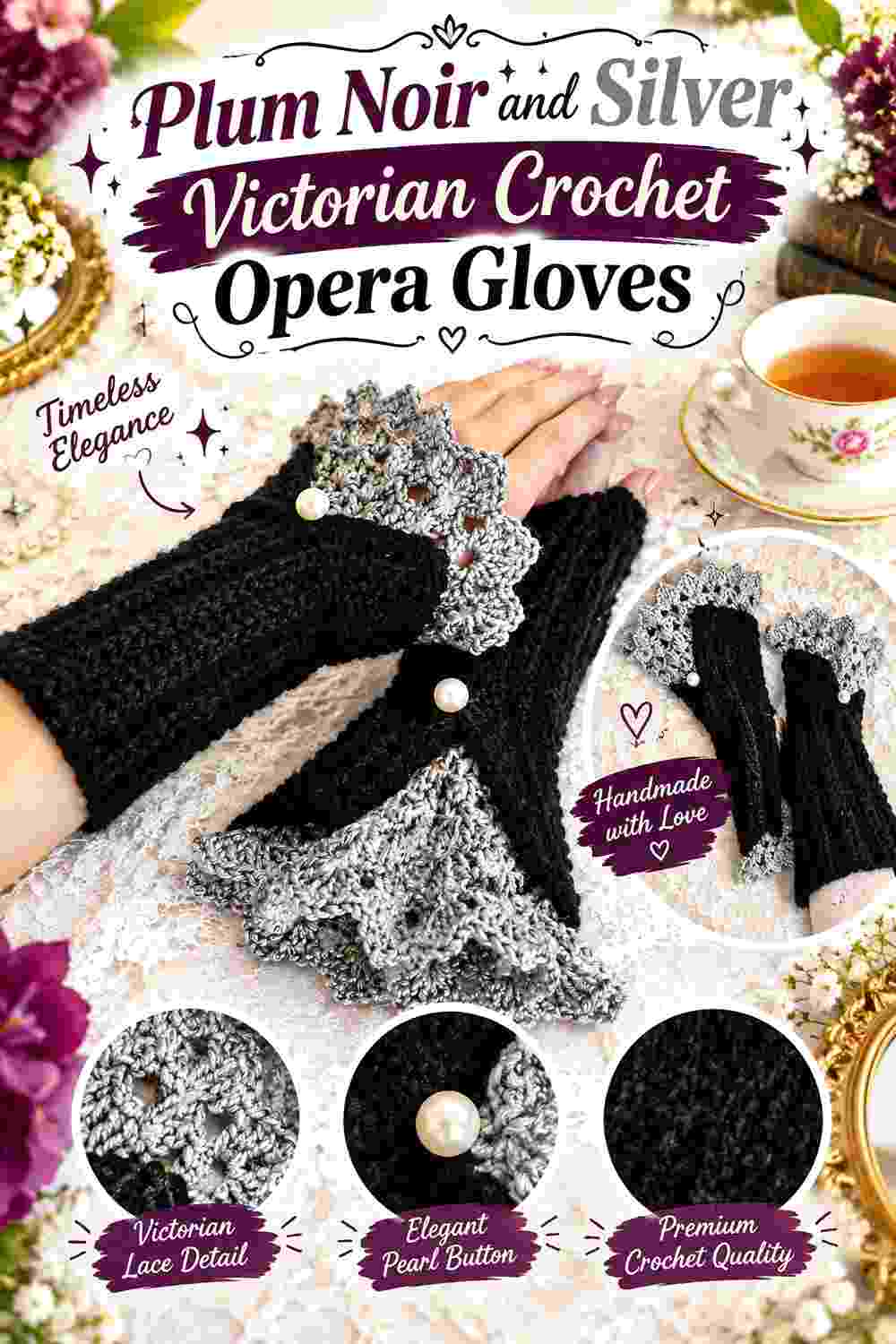
Victorian styling gives silver several natural places to appear: decorative edging, small buttons, a narrow contrasting section, or another concentrated detail. Keep plum noir dominant if you want the glove to remain dark and dramatic rather than evenly two-toned.
Plum Noir Should Carry the Main Victorian Crochet Glove Surface
Use plum noir across the hand and long forearm area so the decorative structure remains easy to follow.
The supporting tutorial itself uses two-color Victorian styling, but the plum-noir-and-silver distribution here is an independent adaptation rather than a claim about the creator’s palette.
Silver Can Highlight Victorian Details Against Plum Noir
Use silver where the construction already has a decorative transition.
A small contrasting border or button-area detail may be enough because Victorian-inspired gloves already contain visual information through shape and embellishment.
Plum Noir Needs Breathing Room Around Silver Embellishment
Leave a clear plum-noir area around any silver focal point.
When contrasting trim, buttons, bows, and multiple bands all sit close together, the individual Victorian details can lose definition.
Creator Credit: Jewelry & Crochet Items
5. Plum Noir Ribbed Cuff And Silver Hand Edge Crochet Opera Gloves

This color plan moves silver away from the upper arm and places it near the hand. Plum noir covers the extended forearm and ribbed cuff area, while silver defines the top fingerless opening or thumb-side detail.
Plum Noir Ribbing Can Anchor the Wrist Before the Long Forearm
A darker ribbed area around the wrist creates a strong visual transition between hand and arm.
If you extend the glove, continue plum noir above that ribbing so the wrist does not become an isolated dark section between larger silver areas.
Silver Can Define the Plum Noir Fingerless Opening
A narrow silver finish across the knuckle edge gives the hand opening more visibility without affecting the long forearm color block.
This works particularly well when you want the silver to remain visible while the glove is worn under a short sleeve.
Silver Around the Plum Noir Thumb Opening Should Stay Controlled
The thumb edge is a small area, so a high-contrast silver treatment can attract attention quickly.
Use it either as a repeat of the knuckle border or keep it plum noir if two silver outlines make the hand section too busy.
Creator Credit: Cherilyn Q
6. Plum Noir And Silver Two Tone Crochet Gauntlet Opera Gloves

A two-color gauntlet construction gives plum noir and silver permission to occupy larger areas. Instead of using silver only as trim, make one clearly defined portion of the glove silver while keeping plum noir dominant across the longer forearm.
Plum Noir Should Occupy More Length Than Silver
If the glove is adapted toward opera length, let plum noir cover the majority of that extension.
An even half-plum, half-silver division creates a balanced two-color gauntlet rather than a plum-noir glove with a silver accent.
Silver Can Mark the Hand Section Against the Plum Noir Forearm
One strong option is a silver hand or wrist section followed by a longer plum-noir arm.
This gives the glove a visible two-block structure while keeping the darkest color responsible for the elongated silhouette.
Plum Noir and Silver Boundaries Should Match Across Both Gloves
Place the two gloves next to each other before finishing the second color transition.
With a high-contrast block design, mismatched transition height is easier to notice than it would be in an all-plum pair.
Creator Credit: Smart Hand Fashion
7. Plum Noir Lace And Silver Button Edge Crochet Opera Gloves

A lace glove already contains open space and decorative edging, so silver does not need to cover a large section. Keep the lace body plum noir and use silver near the button or finishing edge to create a smaller point of contrast.
Plum Noir Lace Should Stay Continuous Through the Main Glove
Use plum noir for the repeating lace so the motif remains visually connected.
Changing between silver and plum noir inside every small repeat can make the color pattern compete with the lace itself.
Silver Can Focus Attention on the Plum Noir Button Edge
A silver border or small detail near the decorative button area gives that part of the glove greater definition.
If the button itself is reflective or pearl-like, assess it alongside the silver yarn before adding another metallic-looking accent.
Plum Noir Opera Length Needs Rechecked Lace Stretch
When extending lace farther up the forearm, do not assume its openness makes fit automatically forgiving.
Stretch the actual fabric gently around the intended upper area and check whether the motif remains recognizable rather than spreading excessively.
Creator Credit: Knot So Hard
8. Plum Noir Victorian Lace And Silver Scallop Crochet Opera Gloves

This version concentrates the palette change along the decorative edges. Plum noir fills the lace or mesh body, while silver creates scallops around one or both openings.
Plum Noir Should Carry the Victorian Lace Between Both Edges
The long dark center gives the glove visual continuity even if both ends are decorated.
If the original wrist-warmer reference is extended, make that adaptation according to the changing arm circumference rather than simply repeating the original width.
Silver Scallops Can Finish the Plum Noir Upper Edge
Silver is particularly visible when it follows a shaped rather than straight border.
Let the scalloped silhouette supply the decoration instead of adding a second broad silver band immediately below it.
Silver at Both Ends Can Frame the Plum Noir Lace
Repeating a smaller silver scallop at the hand opening can connect the top and bottom.
Keep the two edges related but not necessarily identical in depth; the wider forearm opening may visually require less silver than expected.
Creator Credit: Sonam’s craft corner
9. Plum Noir Minimal And Silver Double Edge Crochet Opera Gloves
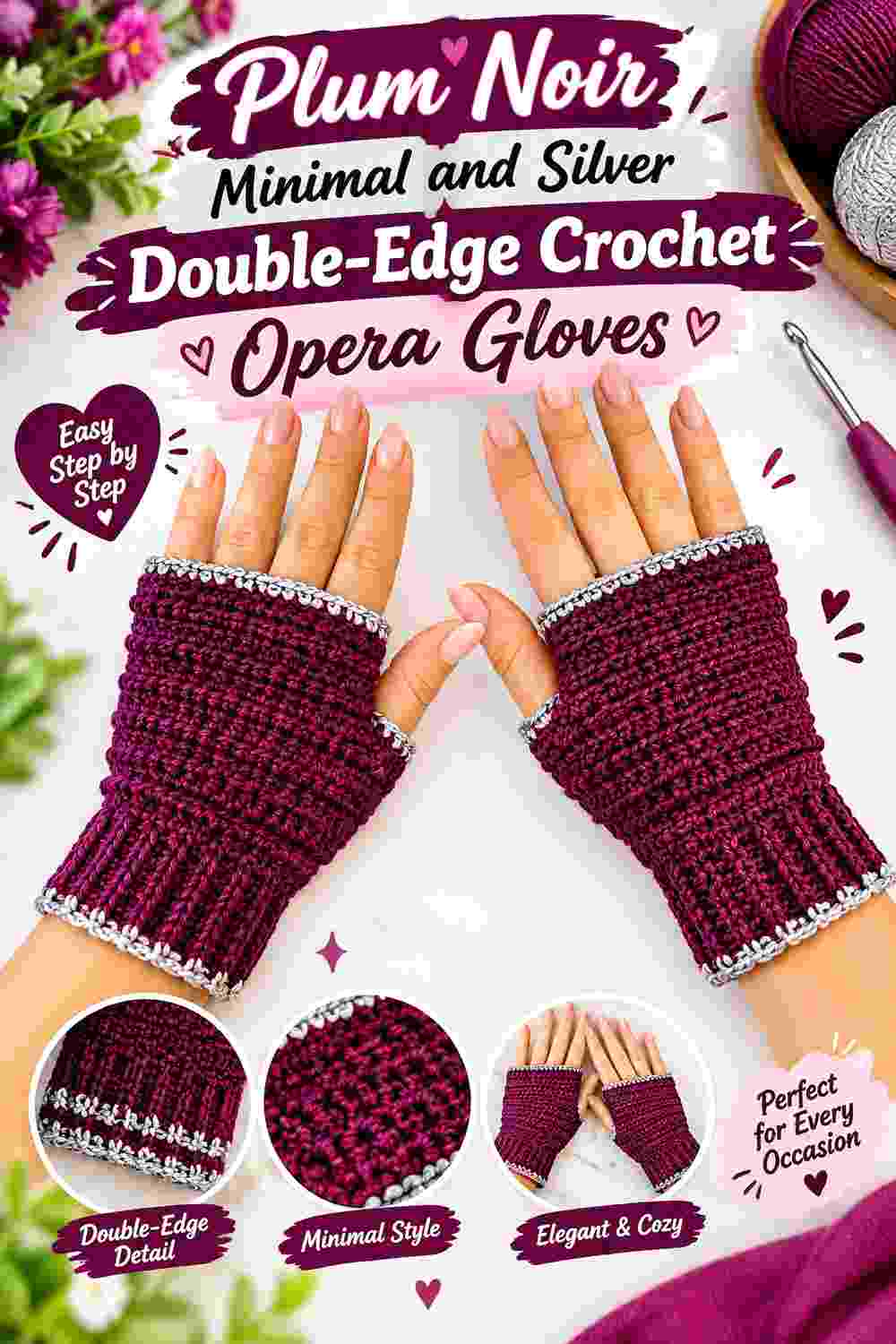
For a cleaner evening style, keep the surface almost entirely plum noir. Silver appears only at the upper forearm and fingerless hand openings, creating two narrow boundaries around an otherwise uninterrupted glove.
Plum Noir Should Remain the Clear Minimal Crochet Field
Avoid introducing extra motifs or internal silver stripes if minimal color blocking is the goal.
The long plum-noir surface itself becomes the statement, particularly when the gloves extend substantially beyond the wrist.
Silver Can Give Both Plum Noir Openings a Precise Finish
Use one narrow silver line near the fingers and another at the upper arm edge.
These two small accents establish the palette without interrupting the forearm.
Plum Noir Fit Matters More When the Color Surface Is Simple
On an undecorated long field, sagging or twisting becomes easier to see.
Check the wrist, lower forearm, and upper edge independently during adaptation so the simplicity of the palette is supported by a clean silhouette.
Creator Credit: Diving Ducks Crochet
10. Plum Noir Flat Panel And Silver Seam Line Crochet Opera Gloves

A flat crochet construction offers a useful opportunity to make the joining line part of the color design. Work the main fabric in plum noir and use silver as a narrow vertical seam or edge detail after the width has been checked against the arm.
Plum Noir Flat Panels Make Opera-Glove Width Easier to Compare
Before joining the fabric, place the plum-noir panel around the wrist and several forearm points.
This is particularly useful for an opera-length adaptation because the fabric can be assessed before the final tube is committed.
Silver Can Turn the Plum Noir Seam Into a Vertical Accent
A narrow silver joining line emphasizes length rather than dividing it horizontally.
Position the line consistently on both gloves—such as along the inner arm—so the pair looks intentionally mirrored or matched.
Silver Should Not Distort the Plum Noir Join
If the silver seam is tighter than the main fabric, it can pull the long glove into a visible ridge.
Treat the color feature as part of the structure, not merely decoration, and make sure the joined edge still follows the arm comfortably.
Creator Credit: yaejiyea
11. Plum Noir Lace Panel And Silver Ribbed Cuff Crochet Opera Gloves

A ribbed cuff and lace body naturally divide the glove into two textures. Assign silver to the denser ribbing and plum noir to the longer lace panel so the color change corresponds directly with that structural transition.
Silver Ribbing Can Anchor a Long Plum Noir Lace Glove
A silver cuff at the wrist gives the neutral a substantial but contained role.
Because ribbing is visually denser than lace, the silver may appear stronger than its actual size suggests. Keep the section proportionate to the much longer plum-noir body.
Plum Noir Should Continue Through the Main Lace Opera-Glove Section
Use plum noir for the repeated lace from the wrist toward the upper forearm.
The uninterrupted color helps individual lace openings read as one continuous pattern rather than several separated bands.
Silver Can Repeat at the Plum Noir Upper Edge
A very narrow silver finish can connect the upper opening to the wrist ribbing.
Avoid matching the full depth of the lower cuff unless you deliberately want the neutral to frame both ends equally.
Creator Credit: Treasurie
12. Plum Noir And Silver Romantic Victorian Crochet Opera Gloves

The final direction uses both colors more decoratively. Plum noir remains the main long-glove color, while silver can appear through the lace edge, contrasting Victorian detail, or a ribbon-inspired accent area.
Plum Noir Should Keep the Romantic Crochet Glove Grounded
Use the dark plum shade across the largest connected section so bows, lace, and contrasting edges do not compete equally.
This is particularly important when adapting a decorative wrist glove to a longer silhouette: the additional plum-noir length can provide visual space around the ornamental hand section.
Silver Can Highlight Victorian Details Against Plum Noir
Concentrate silver around one obvious decorative feature, such as a border or contrast section near a bow.
Because the design already includes period-inspired detailing, one strong silver accent can be more effective than several small scattered ones.
Plum Noir and Silver Bows Need Enough Space From the Thumb Area
If a bow or ribbon-like detail is added, check it while the glove is worn rather than flat.
Keep the focal element clear of the thumb opening and areas that repeatedly bend at the wrist so the decorative color remains visible without interfering with movement.
Creator Credit: Crochet Decor
Comparing Plum Noir and Silver Crochet Opera Glove Directions
For the most plum-noir-dominant look, the minimal double-edge, ribbed upper-cuff, flat-panel seam, and bow-trim ideas leave the longest stretch of the arm dark and uninterrupted. Silver performs one tightly controlled finishing role.
For a stronger two-color statement, use the gauntlet or silver-ribbed-cuff versions. These give silver a clearly defined block rather than treating it as a thin border.
The lace, Victorian, and scalloped designs work differently because texture already supplies substantial detail. On those gloves, silver is often most effective at an opening, button area, bow, or shaped edge instead of being distributed throughout every lace repeat.
If you are adapting a shorter tutorial to opera length, prioritize fit over the color plan. Establish the hand, wrist, forearm taper, and upper opening first. Silver trim should reinforce those areas after the underlying glove sits correctly.
Conclusion
Plum noir works particularly well as the main field for crochet opera gloves because a long uninterrupted dark section emphasizes the extended forearm silhouette. Silver can then define exactly where the glove changes—at the knuckles, thumb, wrist ribbing, upper cuff, seam, lace border, or decorative bow.
For a restrained evening look, keep silver to the two openings or one upper cuff. For stronger color blocking, give silver the wrist or hand section and let plum noir continue through the majority of the arm. Victorian and lace designs generally need less silver because the stitch pattern and embellishment already provide visual detail.
When a tutorial teaches a shorter glove or wrist warmer, use it only for the construction it actually demonstrates. Plan extra opera length separately, checking the changing forearm circumference and how the chosen crochet fabric stretches. The credited tutorials remain the source for their original glove construction and decorative details.
Frequently Asked Questions
Should Plum Noir or Silver dominate crochet opera gloves?
Plum noir is a useful dominant shade when you want the long glove silhouette to remain dark and continuous. Silver can then identify the upper cuff, wrist, hand opening, lace border, or another smaller structural detail.
Where should Silver go on mostly Plum Noir opera gloves?
Strong locations include the upper forearm edge, knuckle opening, wrist ribbing, thumb trim, vertical seam, scalloped lace border, or bow. Choose one or two related areas rather than scattering silver across every part of the glove.
Can I extend short Plum Noir fingerless gloves to opera length?
A shorter tutorial can provide a hand or wrist construction reference, but extra length should not simply repeat the same circumference upward. Recheck the wearer’s forearm width and the fabric’s stretch as the glove extends.
Will Silver stripes make Plum Noir opera gloves look shorter?
Horizontal contrast bands can visually divide a long forearm field. If preserving an elongated look is important, use fewer bands or move silver to the two edges, a vertical seam, or another structural feature.
How can I keep Plum Noir lace visible beside Silver?
Keep the main lace repeat in one color and place silver at its boundaries. Constantly alternating plum noir and silver through a detailed lace pattern can make the color changes compete with the stitch structure.
Should Silver appear on both Plum Noir gloves in exactly the same places?
Matching major color transitions usually creates a more coordinated pair. Place both gloves together before completing the second silver section, especially when the contrast occurs high on the forearm.
What can replace Silver in a Plum Noir crochet glove palette?
Choose a cool pale gray or subdued metallic-looking neutral that remains clearly lighter than plum noir if you want to preserve the same visual relationship. The exact commercial shade matters less than maintaining the dark-dominant and light-accent roles.