Wasabi brings a sharp yellow-green note to a crochet granny square vest, making it especially useful for retro palettes where color placement is part of the garment design rather than an afterthought. It can lead an oversized center-out square, repeat through motif borders, define joins, or appear around the neckline and armholes to connect a patchwork vest.
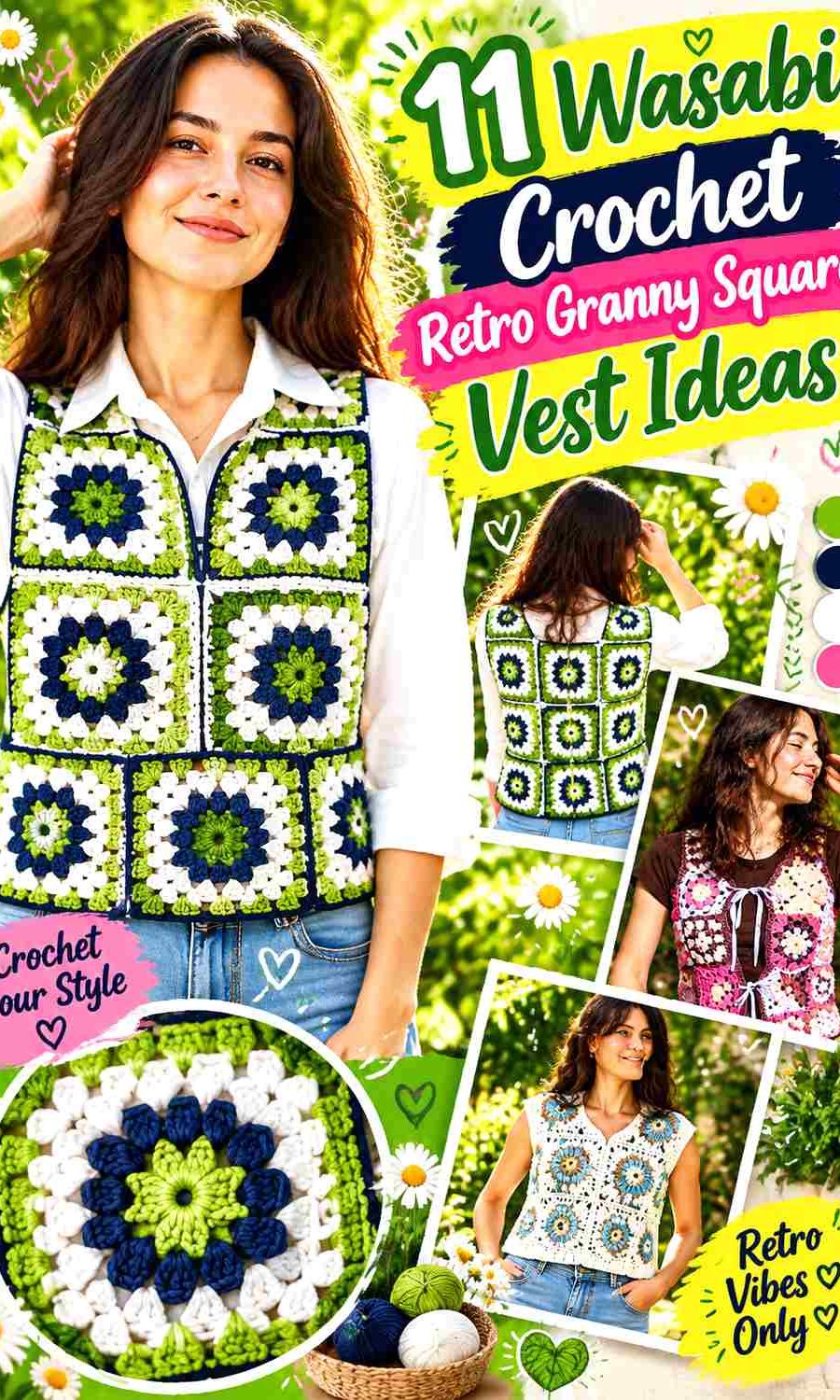
The strongest Wasabi vest palettes give each color a clear role. Cream can open up dense motifs, chocolate brown can frame bright squares, burnt orange can strengthen a warm retro direction, and turquoise or plum can push the vest toward a more colorful vintage look. Where those shades appear matters just as much as which colors you choose.
Granny square vests also respond differently to color depending on their construction. Two oversized squares create large concentric color bands, while many smaller motifs let you alternate centers, borders, and joins. Open fronts, ties, floral squares, mixed-size motifs, and wide edging all create different places for Wasabi to lead or support the finished garment.
Quick List
- Wasabi And Cream Concentric Crochet Retro Granny Square Vest
- Wasabi And Chocolate Brown Patchwork Crochet Retro Granny Square Vest
- Wasabi And Burnt Orange Tie Front Crochet Retro Granny Square Vest
- Wasabi And Mustard Floral Crochet Retro Granny Square Vest
- Wasabi And Turquoise Mixed Scale Crochet Retro Granny Square Vest
- Wasabi And Plum Festival Crochet Retro Granny Square Vest
- Wasabi And Oatmeal Classic Crochet Retro Granny Square Vest
- Wasabi And Rust Scrap Patchwork Crochet Retro Granny Square Vest
- Wasabi And Navy Modular Crochet Retro Granny Square Vest
- Wasabi Black And Ivory Wrap Crochet Retro Granny Square Vest
- Wasabi And Dusty Pink Cropped Crochet Retro Granny Square Vest
Let Wasabi Repeat Across the Granny Square Vest
Wasabi becomes more convincing as the main color when it appears in more than one structural location. For example, it can form the outer round of every granny square and return at the neckline, hem, or armhole edging. That repetition visually connects separate motifs even when their centers use different supporting colors.
On a vest made from two oversized squares, Wasabi can instead occupy one or two broad concentric bands. Large motifs magnify color proportions, so a narrow green band in a small sample can become a prominent block once the square grows to garment scale.
Use Wasabi Contrast Around Vest Joins and Edging
Joining color can change the appearance of every motif at once. A dark brown or navy join emphasizes the grid, while Wasabi joins can visually enlarge the green component of each square. If the motifs already contain several bright colors, a quieter join may prevent the garment from looking fragmented.
The same applies around armholes and necklines. Those edges form long uninterrupted lines, so a strong Wasabi border can have more visual impact than one additional green round inside every square.
Check Wasabi Placement Across the Front, Back, and Shoulders
A granny square layout that looks balanced flat can appear different once worn. High-contrast Wasabi motifs grouped on one front panel or shoulder may make that side of the vest look visually heavier.
Arrange the full motif layout before permanent joining. Check the front panels together, then look at the back separately. If Wasabi is the recurring anchor, distribute it intentionally so the garment feels connected from multiple viewing angles.
1. Wasabi And Cream Concentric Crochet Retro Granny Square Vest

A concentric-square vest gives Wasabi room to appear in broad graphic bands rather than tiny details. HayHay Crochet’s retro-inspired construction uses large granny-square panels, making it a useful reference for this color direction. Let Wasabi establish the strongest colored bands and use cream to create breathing room between them.
Wasabi Should Control the Largest Concentric Vest Bands
Use Wasabi across one or more substantial rounds so the yellow-green tone remains recognizable once the square reaches garment size. If every round changes color, the eye may read a rainbow of narrow stripes rather than a Wasabi-led vest.
Wasabi Looks Clearer When Cream Separates Strong Retro Bands
Cream can sit between Wasabi and another strong band or form the final outer rounds. The lighter neutral creates enough value separation for the green geometry to remain visible without requiring black outlines.
Creator Credit: HayHay Crochet
2. Wasabi And Chocolate Brown Patchwork Crochet Retro Granny Square Vest
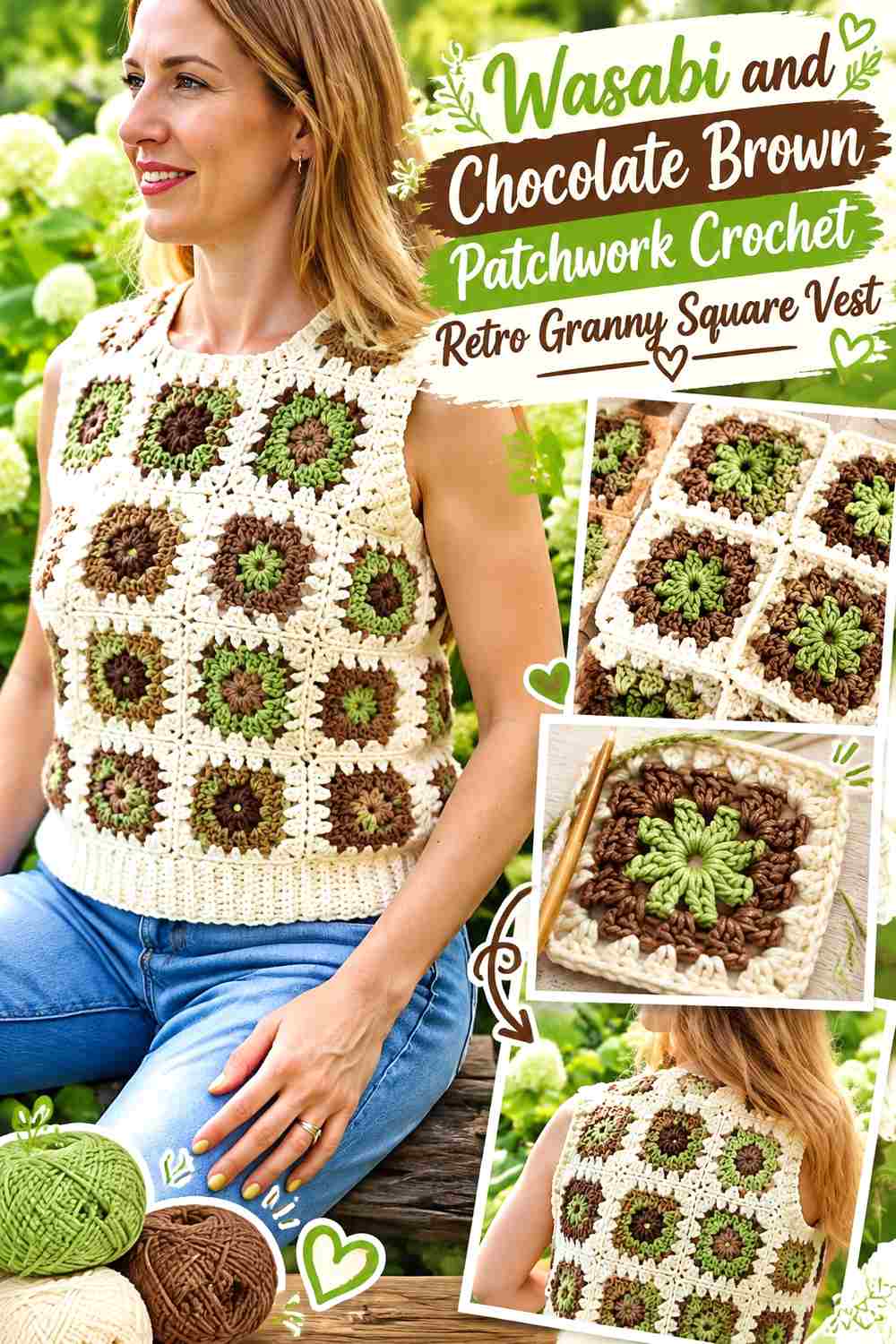
Chocolate brown gives Wasabi a darker anchor and works particularly well on a vest made from many individual squares. Made on Mill’s tutorial uses a scrap-yarn granny-square layout with customizable garment bands, making it suitable for a controlled patchwork adaptation.
Wasabi Can Repeat in Every Chocolate Brown Granny Square Border
Use Wasabi in the same outer round across several different square centers. That repetition allows interior colors to vary while still giving the front and back panels a recognizable Wasabi rhythm.
Wasabi Needs Chocolate Brown Joins to Stay Proportional
If chocolate brown is used for every join, remember that the joining grid becomes a large part of the finished color balance. Keep enough Wasabi inside the motifs or repeat it at the hem and armholes so brown does not visually overtake the vest.
Creator Credit: Made on Mill
3. Wasabi And Burnt Orange Tie Front Crochet Retro Granny Square Vest
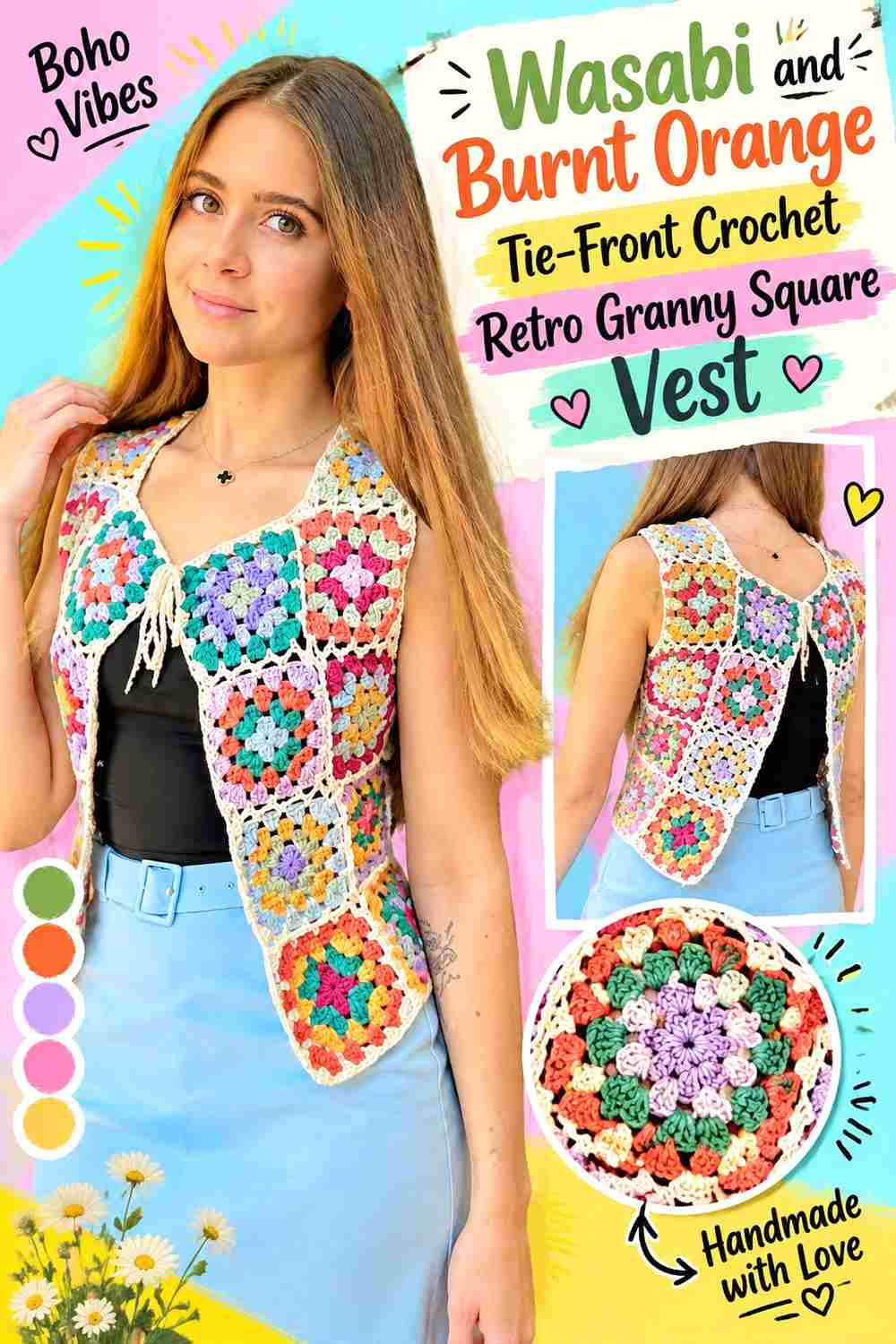
A tie-front construction leaves the center open, so the front-edge motifs receive more attention than they would on a pullover. The Crocheting’s tutorial provides a colorful granny-square tie-vest construction reference. Use Wasabi as the repeated grounding color and burnt orange where you want the retro warmth to concentrate.
Wasabi Should Connect Both Burnt Orange Front Panels
Repeat Wasabi in corresponding locations on the left and right fronts, such as the outer motif rounds or front edging. The panels do not need to be identical, but a recurring green line prevents the open center from making them look unrelated.
Wasabi Ties Can Calm Burnt Orange Granny Square Centers
If orange already appears prominently in the motifs, make the ties Wasabi rather than adding another orange section. This gives the closure a visual connection to the green borders while keeping the warm accent focused inside the squares.
Creator Credit: The Crocheting
4. Wasabi And Mustard Floral Crochet Retro Granny Square Vest
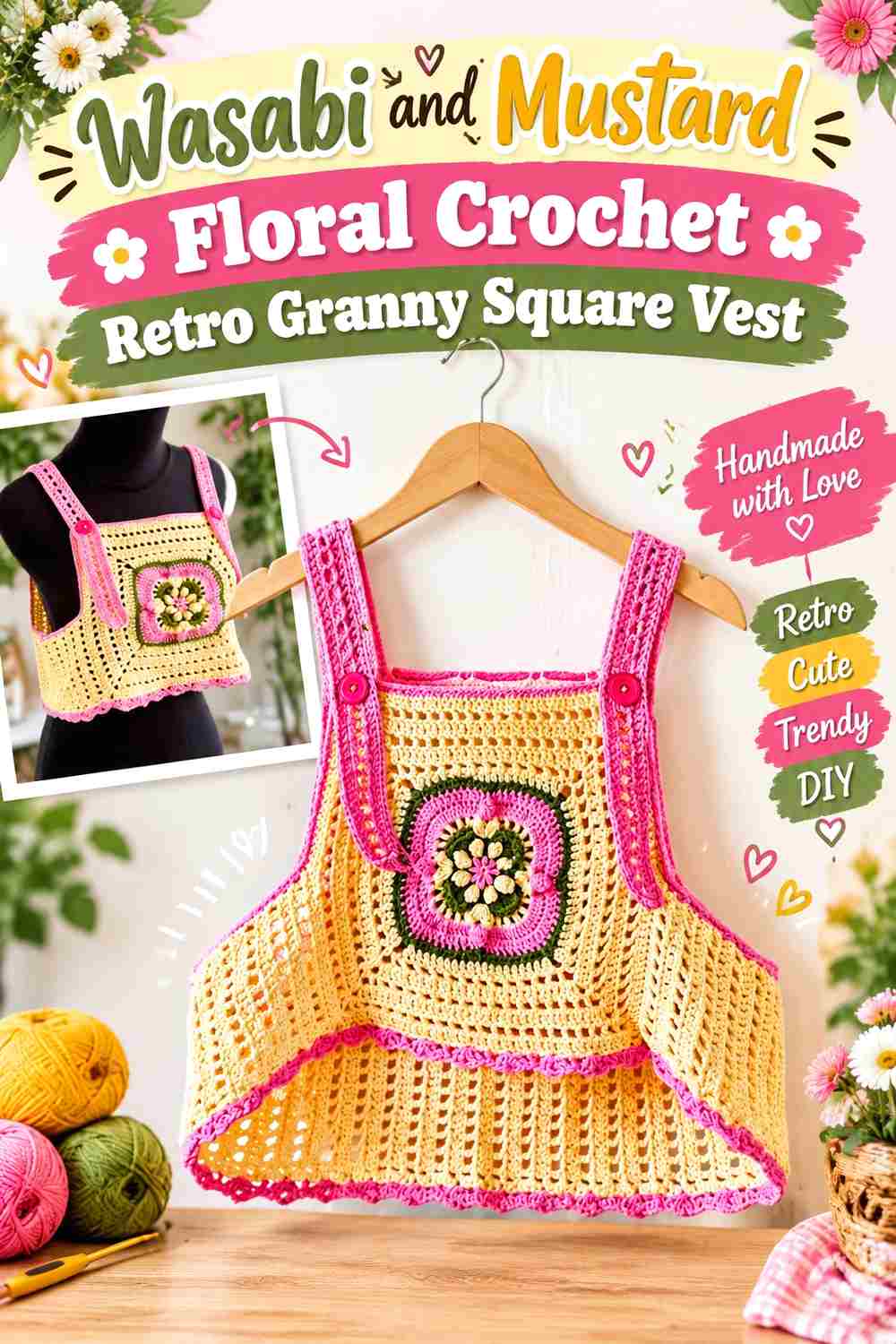
Floral granny squares add another focal point inside every motif, so this palette needs stronger hierarchy than a classic square. Crochet Anne’s tutorial uses a vintage-inspired floral granny-square vest construction, including motif and garment assembly elements. Let Wasabi form the consistent square framework while mustard stays closer to the flower centers.
Wasabi Borders Can Separate Repeated Mustard Flowers
Use Wasabi around each floral motif to create a recurring green frame. When mustard petals or centers repeat across the vest, the consistent outer green round stops neighboring flowers from visually merging.
Wasabi Should Stay Visible Around Mustard Shoulder Motifs
Shoulder squares are partly interrupted by the garment edge and neckline. Keep Wasabi in their outer rounds so those partial views still connect to the full motifs across the body panels.
Creator Credit: Crochet Anne
5. Wasabi And Turquoise Mixed Scale Crochet Retro Granny Square Vest

Wasabi and turquoise create a brighter retro combination that benefits from a controlled layout. Pops de Milk Crochet’s referenced construction mixes large and small granny squares and finishes the garment with defined edging, giving each color different possible jobs.
Wasabi Should Anchor the Large Turquoise Granny Square Panels
Use Wasabi prominently in the larger motifs because those squares naturally attract more attention. Turquoise can occupy selected inner rounds or smaller connecting squares without making both colors compete equally across every scale.
Wasabi Edging Can Contain Turquoise Mixed-Scale Patchwork
A continuous Wasabi neckline, armhole, or hem edge can visually organize motifs of different sizes. This is especially useful when the smaller turquoise areas already create an irregular rhythm through the side panels.
Creator Credit: Pops de Milk Crochet
6. Wasabi And Plum Festival Crochet Retro Granny Square Vest
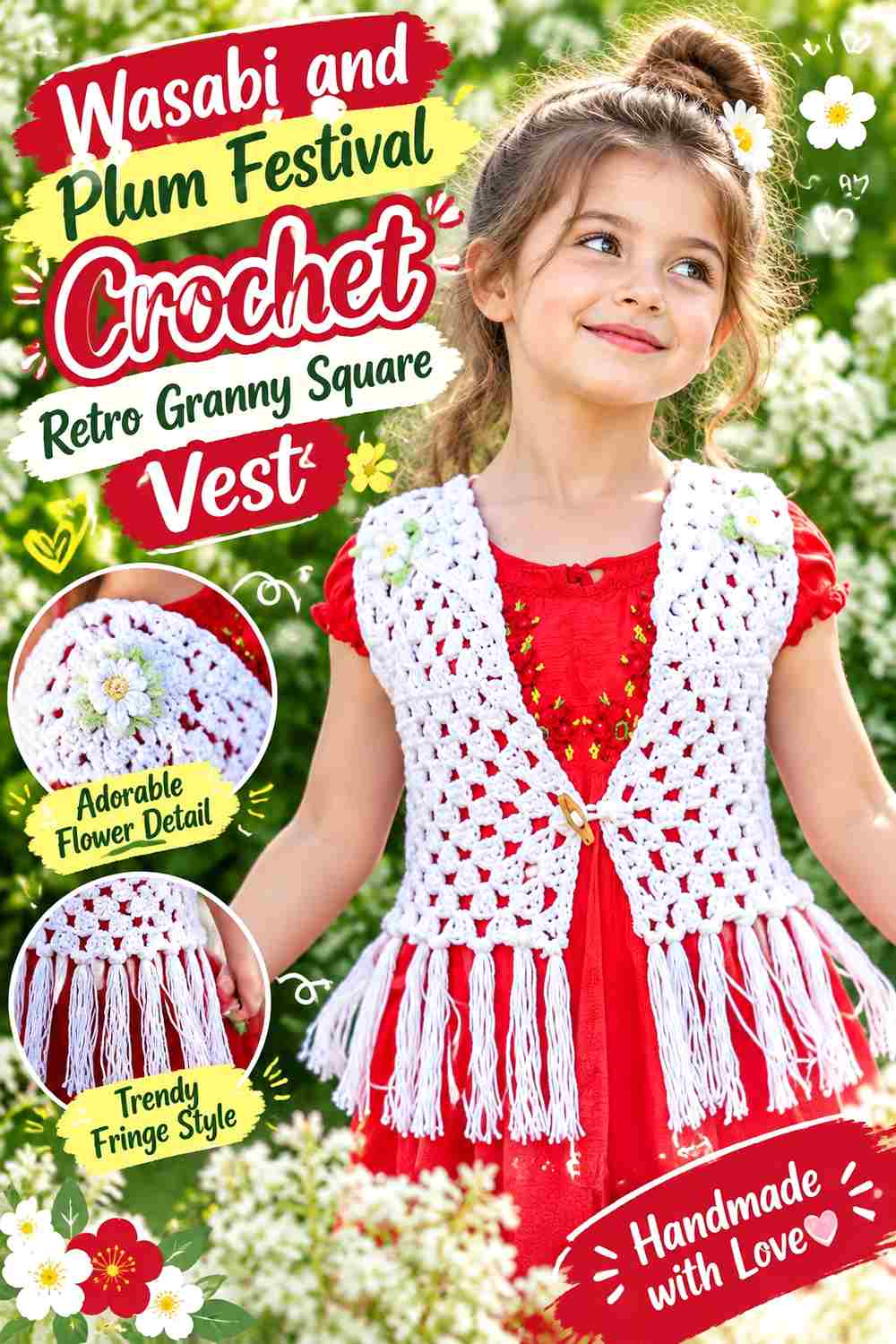
Plum pushes Wasabi toward a richer, more colorful retro palette rather than the earthier orange-and-brown direction. Jayda InStitches’ long-form tutorial is specifically a granny-square vest for festival fashion, providing a strong construction match for a high-color adaptation.
Wasabi Should Repeat Between Plum Festival Motifs
Use Wasabi as a recurring round or join so plum does not cluster into one side of the garment. Evenly repeating the green gives the vest a continuous color thread while allowing some squares to carry more purple than others.
Wasabi Armhole Edging Can Restrain Strong Plum Contrast
Plum and Wasabi both attract attention when placed together. A solid Wasabi armhole edge gives the eye one uninterrupted shape and prevents the shoulder area from becoming a patchwork of competing color breaks.
Creator Credit: Jayda InStitches
7. Wasabi And Oatmeal Classic Crochet Retro Granny Square Vest
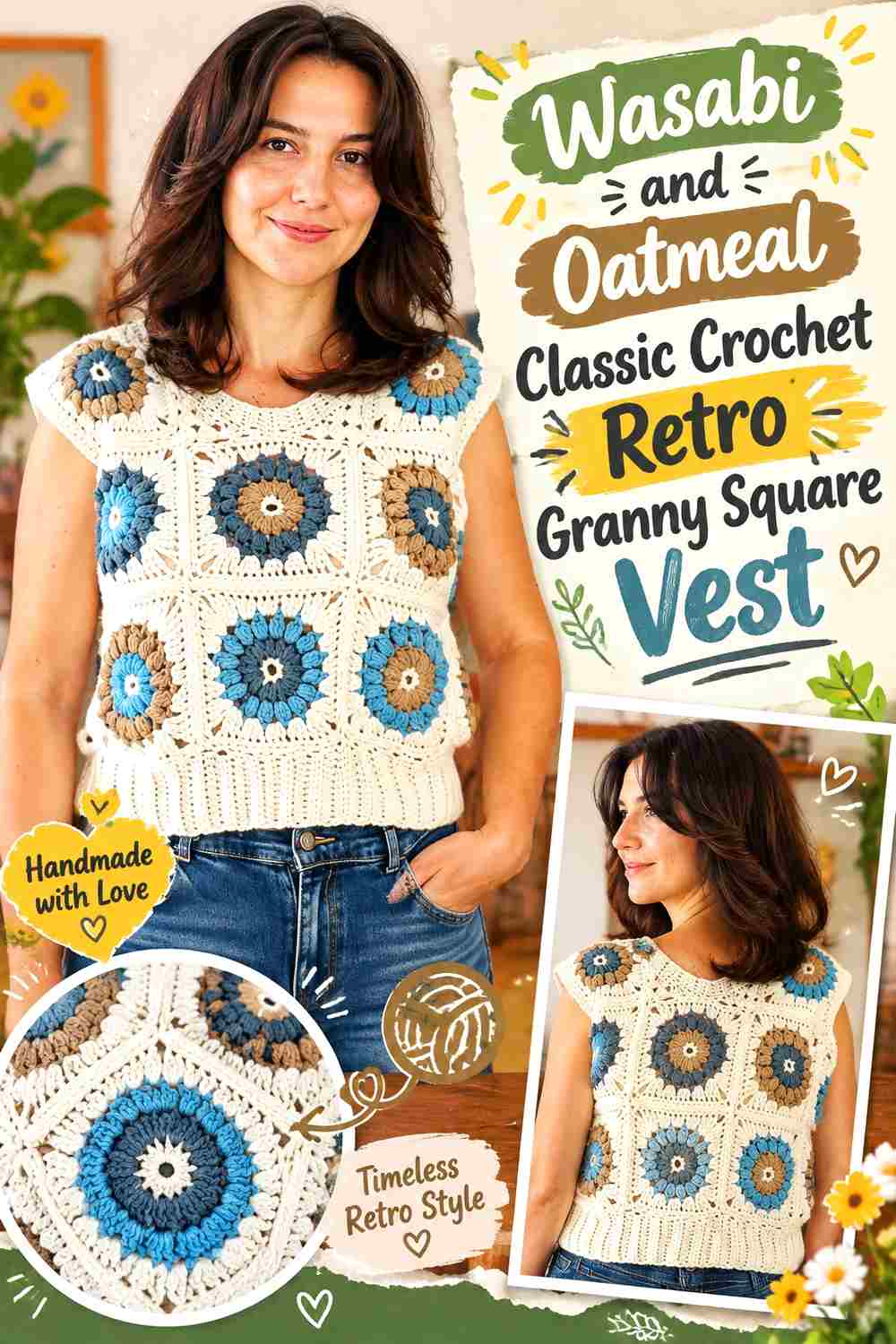
Oatmeal gives Wasabi a softer neutral partner than bright white or cream. Sirin’s Crochet has a straightforward granny-vest tutorial, making this pairing useful when you want the retro character to come primarily from color rather than additional garment details.
Wasabi Can Lead Oatmeal Granny Square Centers and Borders
Choose one location for Wasabi to repeat consistently, such as the center and outermost round of each square. Oatmeal can fill the intervening area and give the yellow-green shade more visual separation.
Wasabi Neckline Edging Should Stay Distinct From Oatmeal Motifs
If the body contains a large amount of oatmeal, make the neckline Wasabi to restore the main color close to the face and shoulders. The uninterrupted green edge also helps define the opening against the lighter granny fabric.
Creator Credit: Sirin’s Crochet
8. Wasabi And Rust Scrap Patchwork Crochet Retro Granny Square Vest

Rust adds a burnt red-orange note that gives Wasabi a strong warm counterpart. A scrap-style vest is particularly useful for this combination because squares can vary without every motif needing the same exact sequence. Calluna Crochet’s referenced tutorial centers on a patchwork vest made from saved yarn.
Wasabi Should Repeat Across Rust Scrap Squares
Even if the centers vary, keep Wasabi in a recurring position across much of the vest. That could be the outer round, joining color, or a repeated inner band. One consistent green feature keeps the scrap layout from becoming visually random.
Wasabi Joins Can Soften a Heavy Rust Patchwork Grid
If several motifs already contain dark rust, joining them with another dark shade can make the grid visually heavy. Wasabi joins create a brighter framework and distribute the main color across the whole garment rather than concentrating it inside individual squares.
Creator Credit: Calluna Crochet
9. Wasabi And Navy Modular Crochet Retro Granny Square Vest

Navy provides one of the strongest dark contrasts with Wasabi while remaining more colorful than black. CraftedComfort’s vest construction uses multiple granny-square sizes, so this palette can assign Wasabi to focal motifs and navy to structural areas.
Wasabi Should Occupy the Largest Navy-Edged Granny Squares
Place Wasabi prominently in the larger motifs where its color can establish the vest’s identity. Navy can frame those focal squares and repeat through smaller units without becoming the garment’s dominant shade.
Wasabi Needs Navy Joins to Stay Away From Equal Color Weight
A navy joining grid touches every square and can quickly become visually dominant. Repeat Wasabi at the neckline, armholes, or hem if you choose dark joins so the yellow-green still appears in both motif and garment-level details.
Creator Credit: CraftedComfort
10. Wasabi Black And Ivory Wrap Crochet Retro Granny Square Vest
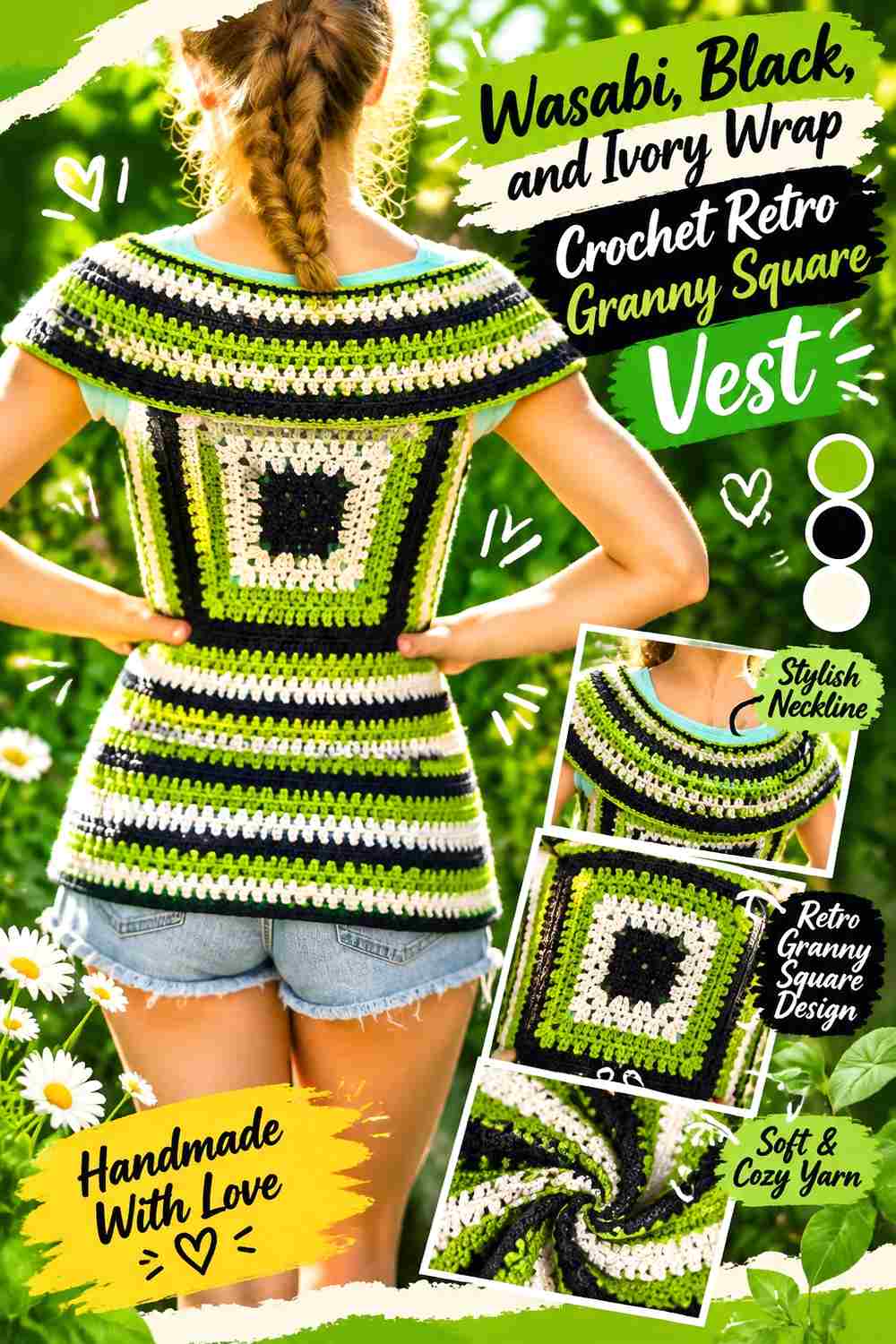
A large square-based wrap vest gives color placement a very different scale from a traditional motif grid. Andrea’s Loops uses a giant granny-square approach with arm openings incorporated into the form, allowing concentric color sections to travel broadly around the garment.
Wasabi Should Dominate Black and Ivory Wrap Bands
Use Wasabi for the widest or most frequently repeated sections. Ivory can separate dark black bands from the green, while black should remain the smallest color if you want Wasabi to stay visually dominant.
Wasabi and Ivory Can Stop Black From Flattening the Giant Square
Place ivory between selected Wasabi and black sections when stronger separation is needed. A pale transition keeps the large center-out geometry readable once the square drapes around the body.
Wasabi Should Reappear Around the Wrap Vest Arm Openings
If the center-out bands place Wasabi far from the armholes, repeat the green in the finishing edge. That connects the openings back to the main palette instead of leaving black or ivory as the only visible finishing colors.
Creator Credit: Andrea’s Loops
11. Wasabi And Dusty Pink Cropped Crochet Retro Granny Square Vest
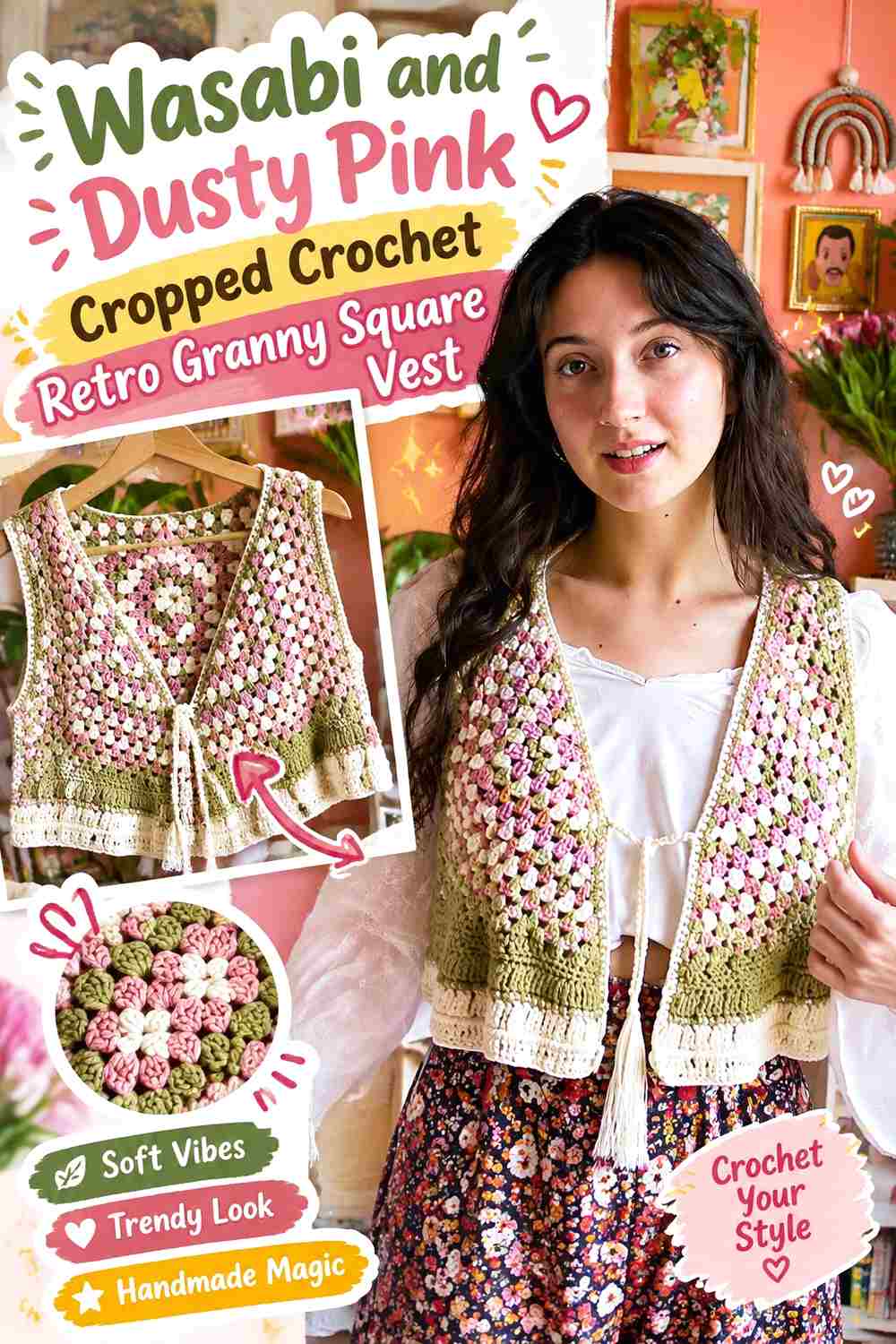
Dusty pink gives Wasabi a softer contrasting color that still produces an unmistakably retro pairing. A cropped vest keeps those colors concentrated around the upper torso, so small changes in motif balance are more noticeable than they would be on a longer waistcoat. The referenced Megan tutorial is presented as a full 70s granny-square vest construction.
Wasabi Should Anchor Dusty Pink Cropped Granny Squares
Use Wasabi consistently in either the centers or outer rounds rather than alternating its role from square to square. A cropped vest has less total surface area, so a clear repeat pattern keeps the compact garment from looking overly busy.
Wasabi Hem Edging Can Balance Dusty Pink Upper Motifs
If several pink sections appear near the neckline or shoulders, bring Wasabi back strongly at the hem. This creates a lower green anchor and prevents the upper half of the vest from carrying all of the strongest contrast.
Creator Credit: Megan (doodies crochet)
How the Wasabi Retro Granny Square Vest Palettes Compare
For an earthy retro direction, pair Wasabi with chocolate brown, burnt orange, mustard, rust, or oatmeal. These shades keep the vest close to warm vintage-inspired color relationships while allowing Wasabi to provide the sharper green note.
Turquoise, plum, and dusty pink create more colorful combinations. These palettes work particularly well when Wasabi repeats consistently in borders or joins, because one recurring green element keeps the stronger accent colors connected.
Navy, black, ivory, and cream give Wasabi the most obvious value structure. Dark outlines can make green motifs appear more graphic, while light neutrals open up the spaces between strong Wasabi bands.
Construction also changes the result. Large concentric-square vests benefit from broad planned bands, while patchwork garments give you more freedom to vary motif centers. Tie-front and cropped versions put greater emphasis on the front edges and hem, making those locations especially useful for repeating Wasabi.
Conclusion
A Wasabi retro granny square vest works best when the green has a consistent role. Use it across broad concentric bands for an oversized-square vest, repeat it in motif borders for patchwork, or carry it through joins and edging when the square centers contain several different colors.
Choose the secondary palette according to the visual direction you want. Cream and oatmeal soften Wasabi, brown and rust make it earthier, orange and mustard intensify the warm retro look, and turquoise, plum, or dusty pink create a more colorful interpretation. Navy and black provide the strongest framing contrast.
Before joining the vest permanently, arrange the squares as a complete garment and check the front, back, shoulders, and armhole areas. A strong palette still needs balanced distribution once the motifs move from a flat layout to a wearable. Follow the credited tutorials for their exact construction details and use the Wasabi palettes as independent color adaptations.
Frequently Asked Questions
What colors work well with Wasabi on a retro crochet granny square vest?
Cream, oatmeal, chocolate brown, burnt orange, mustard, rust, dusty pink, plum, turquoise, navy, black, and ivory can all work. Earth tones produce a warmer vintage direction, while purple, turquoise, or pink create a brighter retro palette.
Should Wasabi go in the center or border of a granny square vest?
Either can work. Wasabi centers create repeated focal points, while Wasabi outer rounds visually connect neighboring motifs and can make the garment feel more unified. Choose one role to repeat consistently if the vest already contains several colors.
What joining color works with a Wasabi granny square vest?
Brown and navy create dark grids, cream or ivory produce lighter separation, and Wasabi itself can unify multicolor squares. Remember that the join touches every motif, so its total visual impact is larger than a small yarn sample may suggest.
How can I stop a Wasabi granny square vest from looking too busy?
Reduce the number of equally strong colors and repeat one structural shade. A consistent Wasabi border, join, hem, or neckline can organize varied centers without forcing every granny square to be identical.
Does Wasabi work for a 1970s-inspired crochet vest?
It can support a retro direction especially effectively beside browns, oranges, mustard, cream, rust, plum, or turquoise. The granny-square geometry, garment silhouette, and color placement contribute to the retro effect together rather than relying on one color alone.
Should all the Wasabi granny squares use the same color order?
No. Patchwork versions can vary their centers and inner rounds while repeating Wasabi in one consistent location. If every square is different, a recurring outer round or joining color helps prevent the finished vest from looking disconnected.
Where should Wasabi appear on the vest besides the granny squares?
The neckline, armholes, hem, front opening, or ties are useful locations. Repeating Wasabi in one of these uninterrupted garment edges can connect the individual motifs and make the main color visible even when a jacket, shirt, or other layer partly covers the squares.