Icy blue and lavender can make a crochet capelet look cool, soft, and winter-inspired without requiring white or silver to create a frosted effect. The key is deciding how the two colors divide the shoulder area. Icy blue can establish a pale, crisp foundation, while lavender can define the neckline, lower edge, openwork, or another structural feature.
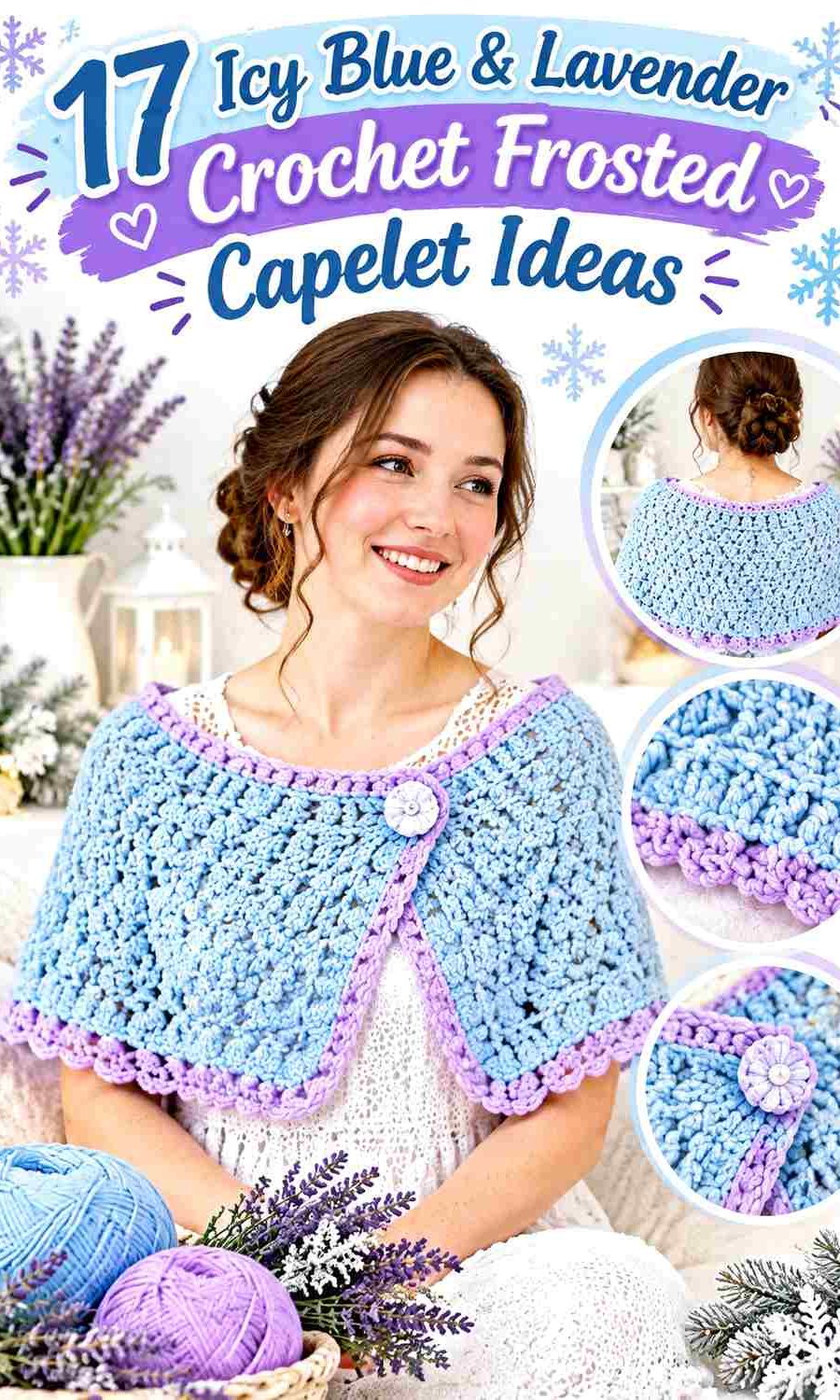
Because a capelet spreads color across the shoulders rather than a small accessory surface, even subtle changes in placement can noticeably alter the finished piece. Wide lavender sections create a different effect from a narrow lavender hem, and an icy blue collar draws attention differently from an icy blue body.
The tutorials below support the underlying capelet, cape, or closely related shoulder-layer constructions. The icy blue and lavender palettes are independent color adaptations, so the creators should not be assumed to have used these exact color schemes.
Quick List
- Icy Blue Crochet Capelet With A Lavender Frost Edge
- Lavender Crochet Capelet With An Icy Blue Neckline
- Icy Blue And Lavender Crochet Collar Capelet
- Icy Blue Crochet Cowl Capelet With A Lavender Ribbed Neck
- Lavender Crochet Cowl Capelet With Icy Blue Color Blocking
- Icy Blue Crochet Cowl Capelet With Lavender Collar Bands
- Icy Blue Crochet Cable Capelet With Lavender Snowy Edging
- Icy Blue Open Front Crochet Cape With Lavender Texture Accents
- Lavender Vintage Crochet Capelet With Icy Blue Edging
- Icy Blue Crochet Spring Cape With A Lavender Lower Edge
- Lavender Crochet Capelet Cowl With Icy Blue Framing
- Icy Blue Crochet Cape With A Lavender Hem
- Lavender Crochet Cape With Icy Blue Shoulder Definition
- Icy Blue Crochet Summer Capelet With Lavender Openwork Bands
- Icy Blue Hooded Crochet Capelet With Lavender Trim
- Icy Blue Starburst Crochet Capelet With A Lavender Cowl
Decide Whether Icy Blue or Lavender Should Lead the Capelet
A capelet gives the dominant shade considerable visual space across the shoulders. If icy blue covers most of that area, the finished piece will read as predominantly blue even when lavender appears at the neckline and hem. Reverse the proportions, and the warmer purple cast becomes much more noticeable.
Choose the dominant shade before planning smaller details. It is easier to distribute a supporting color when you already know whether it should frame the capelet, divide the body, mark openwork, or create a focal point near the face.
Check Icy Blue and Lavender for Enough Value Contrast
Two pastel shades can be clearly different in hue but surprisingly similar in lightness. That matters when lavender is supposed to outline tiny stitch details against an icy blue background.
Place the actual yarns together and look at them from a distance. A grayscale phone photo can also help. If they become nearly identical gray values, use broader blocks of color instead of expecting narrow lavender lines to remain distinct inside detailed icy blue texture.
Let Icy Blue and Lavender Follow the Capelet’s Structure
Capelets already contain natural color-placement zones: neckline, yoke, shoulder field, collar, front edges, hem, hood, openwork sections, or decorative borders. Following those structural lines usually creates a clearer two-color result than scattering small changes randomly across the fabric.
For a frosted look, lighter icy blue often works well across broader areas while lavender supplies shadow-like definition. That balance can also be reversed when you want lavender to dominate and icy blue to behave like a pale highlight.
1. Icy Blue Crochet Capelet With A Lavender Frost Edge

This version starts with the most literal interpretation of the palette: an icy blue crochet capelet with lavender reserved for its outer framing. The supporting tutorial is specifically a capelet shawl and uses textured crochet through its body, giving the blue enough surface interest without requiring frequent color changes.
Icy Blue Should Cover the Main Crochet Capelet Surface
Use icy blue through most of the shoulder area so the capelet reads as one continuous cool field. That uninterrupted color also lets the crochet texture produce its own light and shadow instead of competing with closely spaced stripes.
If your icy blue is extremely pale, compare it against the clothing you expect to wear underneath. An open texture can allow the garment beneath to influence how pale blue sections appear.
Lavender Can Give the Icy Blue Capelet a Defined Frosted Edge
Place lavender at the lower border or another existing finishing line. A narrow lavender edge gives the eye a clear stopping point without reducing the airy icy-blue impression.
If the two colors are very close in value, widen the lavender section slightly. A tiny pastel border can disappear visually when viewed across the full shoulder span.
Creator Credit: All Craft TV
2. Lavender Crochet Capelet With An Icy Blue Neckline

Reverse the color hierarchy here. Let lavender cover most of the capelet while icy blue sits near the neckline, where the lighter shade can brighten the upper edge and visually separate the capelet from darker layers underneath. The supporting tutorial demonstrates a classic shoulder capelet shape.
Lavender Gives the Crochet Capelet Its Main Soft Color Field
Broad lavender coverage creates a distinctly different result from an icy-blue-led capelet. Keep most of the body lavender so that the secondary blue remains a purposeful highlight rather than turning the project into evenly divided stripes.
This approach works especially well when the capelet itself has a simple silhouette and the color placement needs to supply much of the visual direction.
Icy Blue Can Keep the Lavender Neckline Visually Light
Use icy blue around the upper edge when you want the neckline to feel more defined without introducing a dark border. The pale blue still belongs to the frosted palette, but it separates the lavender body from the face and any high-neck layer worn underneath.
Repeat icy blue once at the hem only if the neckline otherwise feels disconnected.
Creator Credit: Crafting Shed
3. Icy Blue And Lavender Crochet Collar Capelet

A collar-style capelet gives both colors clear jobs. Use lavender around the neck and icy blue across the shoulder portion, allowing the color transition to follow the change in function rather than appear as an arbitrary stripe. The supporting project can be worn as a cowl, capelet, or shawl, making the upper section an especially important visual area.
Lavender Can Give the Icy Blue Crochet Capelet a Stronger Collar
A lavender collar creates a concentrated band of color close to the face while leaving icy blue to carry most of the garment. Keep the collar solid lavender if its stitch texture is already noticeable.
Breaking that area into alternating blue and purple rows can weaken the distinction between collar and cape body.
Icy Blue Should Flow Across the Lavender Capelet Shoulders
Once the collar ends, let icy blue take over a broader uninterrupted area. The larger pale field gives the piece its frosted identity and prevents lavender from becoming equally dominant everywhere.
If you want to repeat lavender below the neckline, use a restrained lower edge rather than another large shoulder block.
Creator Credit: Procurando Ideias com Penha
4. Icy Blue Crochet Cowl Capelet With A Lavender Ribbed Neck

A deeper cowl changes the color balance because the neckline itself occupies much more visual space. The supporting cape tutorial features a substantial ribbed collar above the draping body, creating a natural place to separate lavender from icy blue.
Lavender Can Turn the Icy Blue Cowl Into a Clear Focal Point
Use lavender across the raised collar while keeping the cape body icy blue. Because the collar has depth as well as width, lavender will still look important even though it covers less total fabric.
This gives the piece a two-level hierarchy: lavender near the face and icy blue spreading across the shoulders.
Icy Blue Keeps the Lavender Crochet Collar From Taking Over
A broad icy-blue lower section balances the visual weight of a lavender cowl. Avoid adding numerous lavender stripes through the body unless you intentionally want the cape to become more evenly two-colored.
A small lavender hem can be enough to connect the lower edge back to the collar.
Creator Credit: The Crochet Crowd
5. Lavender Crochet Cowl Capelet With Icy Blue Color Blocking

For a stronger two-color look, use lavender across the upper portion and icy blue farther down the cape. The supporting cowl-cape project visibly accommodates color blocking, so broad horizontal areas make more sense here than tiny accent stripes.
Lavender Should Occupy a Broad Crochet Capelet Section
Give lavender enough depth to look like a deliberate block rather than a thick border. A broader section around the cowl and upper shoulders can establish the warmer half of the palette before icy blue takes over.
Keep the transition line consistent around the garment so it reads as intentional color blocking.
Icy Blue Can Lighten the Lower Lavender Capelet
Moving from lavender near the top into icy blue below creates a pale lower field that can make the hem feel less visually heavy.
If your two yarns are nearly equal in value, the color-block boundary may still look gentle. That can suit the frosted theme; stronger contrast is only necessary if you specifically want a graphic division.
Creator Credit: Yarnspirations
6. Icy Blue Crochet Cowl Capelet With Lavender Collar Bands
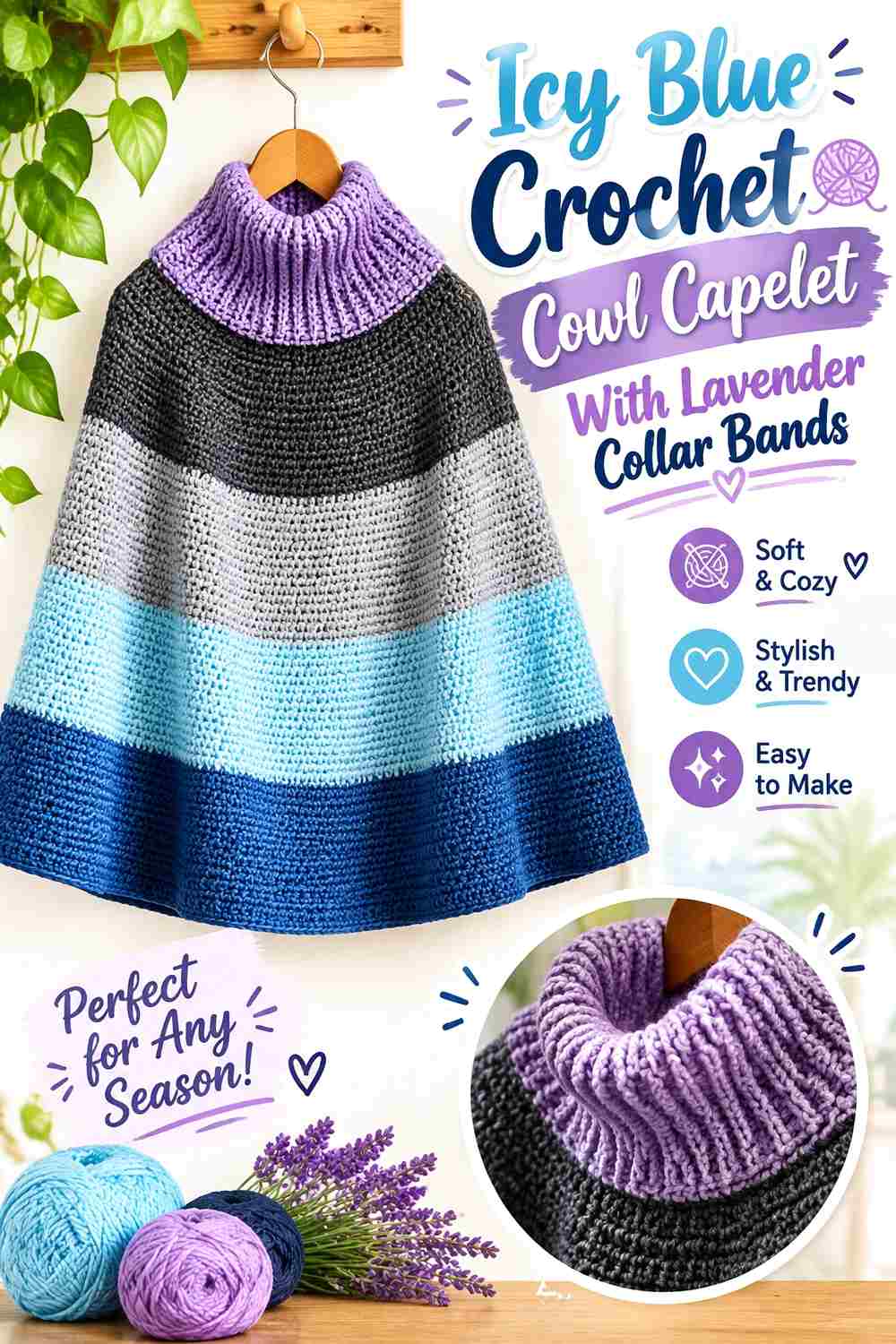
This idea keeps icy blue dominant but uses lavender in repeated collar bands rather than one solid block. The supporting cowl-cape construction gives the upper section enough depth for controlled color repetition.
Icy Blue Should Remain Continuous Across the Crochet Cape Body
Keep the shoulder and lower cape areas icy blue. That continuous field gives repeated lavender collar bands somewhere calm to sit visually.
If lavender starts appearing in several unrelated body stripes as well, the collar loses its special role.
Lavender Bands Can Add Frosted Depth to the Icy Blue Collar
Two or three clearly separated lavender sections can make a deep collar look layered without requiring equal amounts of both colors.
Before adding another lavender band, fold or arrange the collar as it will actually be worn. Some color sections may overlap or disappear once the cowl settles around the neck.
Creator Credit: Left Hand Crochet & Knit Tutorials
7. Icy Blue Crochet Cable Capelet With Lavender Snowy Edging

Texture carries this palette instead of broad color blocking. The supporting Snowdrift capelet has prominent sideways cables, a shaped yoke, and an optional decorative lower border, giving lavender a natural finishing role without interrupting the main textured body.
Icy Blue Helps the Crochet Cable Texture Stay Continuous
Keep the cable-rich body icy blue so the raised texture can be followed across the shoulder area. Frequent changes between two pale colors could make the cable path harder to read.
The shadows produced by the texture already create visual variation, so the main blue does not need additional striping to avoid looking flat.
Lavender Can Separate the Icy Blue Cable Body From the Border
Use lavender around the yoke, edging, or decorative lower finish. This puts the supporting shade where the construction changes rather than through the middle of the cables.
If you choose a decorative border, evaluate it before adding more lavender elsewhere. Texture plus a contrasting edge may already supply enough detail.
Creator Credit: Stitches n Scraps
8. Icy Blue Open Front Crochet Cape With Lavender Texture Accents
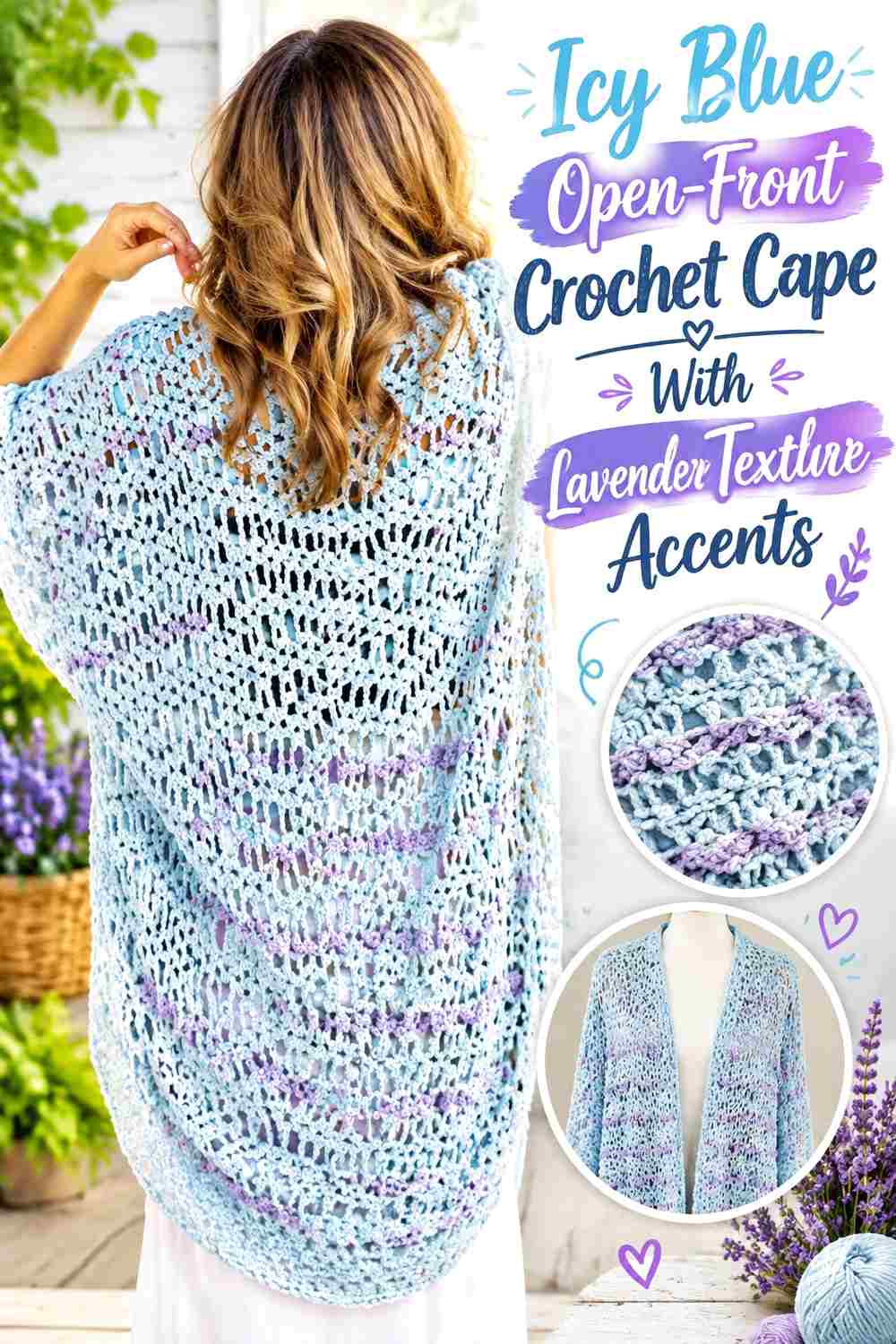
An open-front cape gives color placement a vertical direction. The supporting design uses a knot-like crochet texture inspired by macramé and an open cardigan-cape silhouette, so icy blue and lavender can follow those long visual lines instead of forming standard horizontal stripes.
Icy Blue Can Keep the Open Crochet Cape Airy
Use icy blue over most of the broad cape surface. On an open-front garment, a light main color emphasizes the negative space and keeps the front opening visually clear.
Because both sides of the cape are visible at once, check that color changes line up intentionally rather than creating an uneven left-right balance.
Lavender Can Define Icy Blue Texture Without Filling Every Section
Place lavender along selected textured bands, the front edges, or another repeated structural line. A narrow vertical use of lavender can elongate the open-front appearance without dividing the shoulders into blocks.
If the knot-like texture is already complex, use fewer color-change zones rather than trying to highlight every repeat.
Creator Credit: Lakeside Loops
9. Lavender Vintage Crochet Capelet With Icy Blue Edging
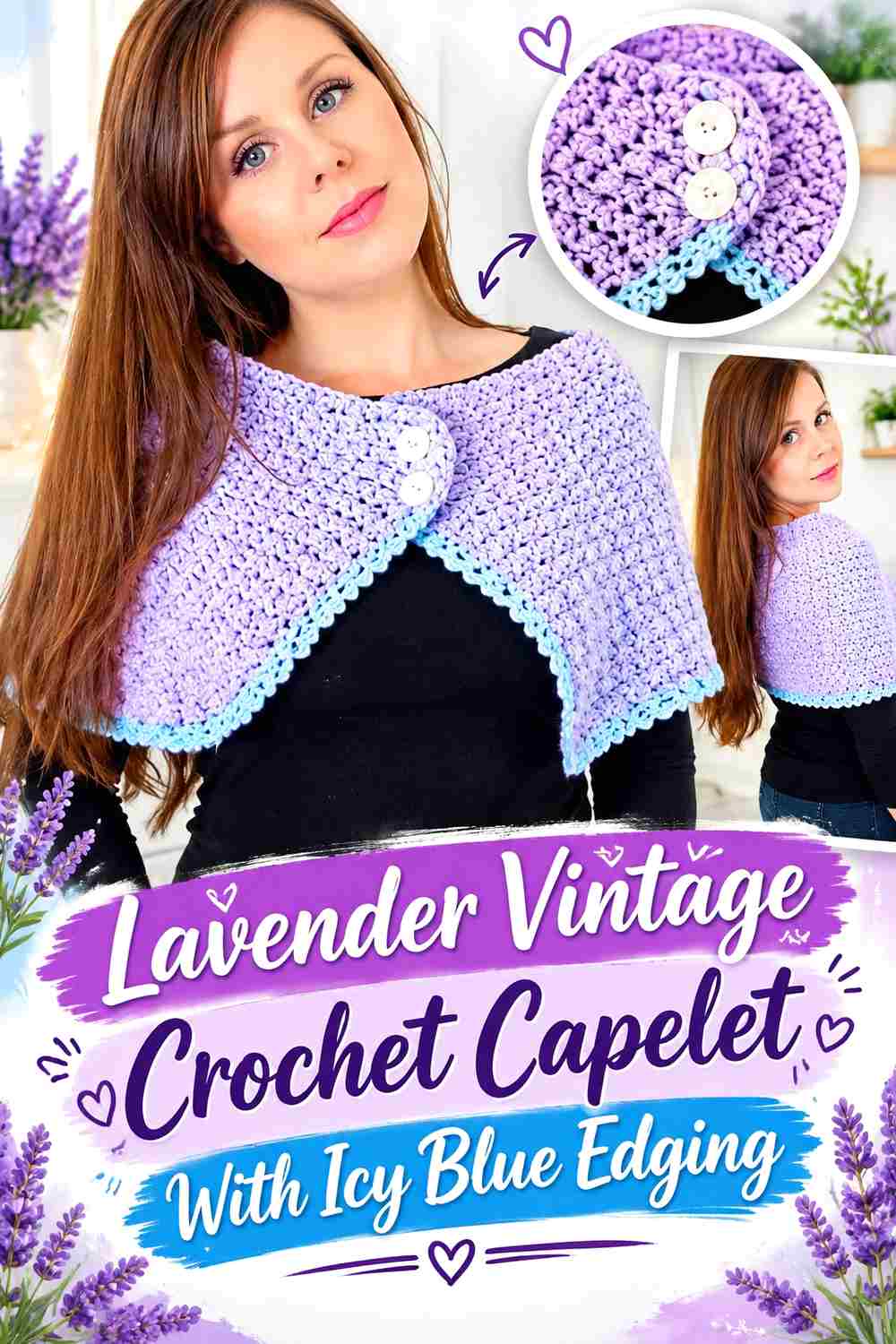
A vintage-inspired capelet can carry a softer distribution: lavender throughout the main body with icy blue used for the finishing edge and closure area. The supporting project is a buttoned vintage-style cape or shoulder warmer, giving the front opening and border a practical color-placement purpose.
Lavender Should Lead the Vintage Crochet Capelet
Let lavender occupy the wide shoulder area so this version feels visibly different from the blue-dominant ideas. A consistent main field also keeps the vintage silhouette from becoming visually fragmented.
For a softer result, choose an icy blue that remains close to lavender in lightness rather than a noticeably darker blue.
Icy Blue Can Trace the Lavender Capelet’s Front Edge
Use icy blue around the open front, neckline, or lower finishing edge. Because those lines surround the lavender field, even a relatively narrow blue section can look deliberate.
If a front closure is part of the design, check how the icy-blue edging meets there; mismatched color transitions can become especially noticeable at the center front.
Creator Credit: Selina Veronique Crochet
10. Icy Blue Crochet Spring Cape With A Lavender Lower Edge

This lighter-looking direction keeps the garment mostly icy blue and uses lavender near the bottom rather than around the face. The supporting open-front cape is designed as a lightweight spring layer, making a restrained lower accent more appropriate than heavy all-over color blocking.
Icy Blue Gives the Crochet Spring Cape a Clear Main Color
Keep icy blue across the neckline, shoulders, and most of the body. This makes the cape feel visually continuous when worn open and keeps the two front sections connected by color.
On an open cape, check the palette while the garment hangs vertically rather than only while it is lying flat.
Lavender Can Weight the Icy Blue Hem Without Making It Dark
A lavender lower edge provides enough contrast to define the bottom while staying within a pale pastel range. That is useful when a dark border would feel too strong for the frosted palette.
Make the lavender hem deep enough to be seen across the full width, especially if the exact lavender and icy blue are close in value.
Creator Credit: Crazy Cool Crochet
11. Lavender Crochet Capelet Cowl With Icy Blue Framing

This compact cowl-cape direction works well with lavender as the large center field and icy blue around the exposed edges. The supporting project combines a capelet/cowl shape with a prominent button closure, providing useful framing points for the second color.
Lavender Can Carry the Main Crochet Capelet Cowl Texture
Use lavender through most of the body so its stitch pattern remains continuous. A compact capelet does not have as much visual area as a full cape, so too many alternating sections can make it look crowded quickly.
Let the lavender fabric establish the garment before deciding how much blue it actually needs.
Icy Blue Can Frame the Lavender Capelet Near the Closure
Use icy blue around the upper edge, lower edge, or another visible line near the closure. The secondary color then helps explain the garment’s shape rather than functioning as a random accent.
If a button is visually prominent, consider whether its existing color introduces another contrast before adding multiple icy-blue details.
Creator Credit: Fiber Flux
12. Icy Blue Crochet Cape With A Lavender Hem
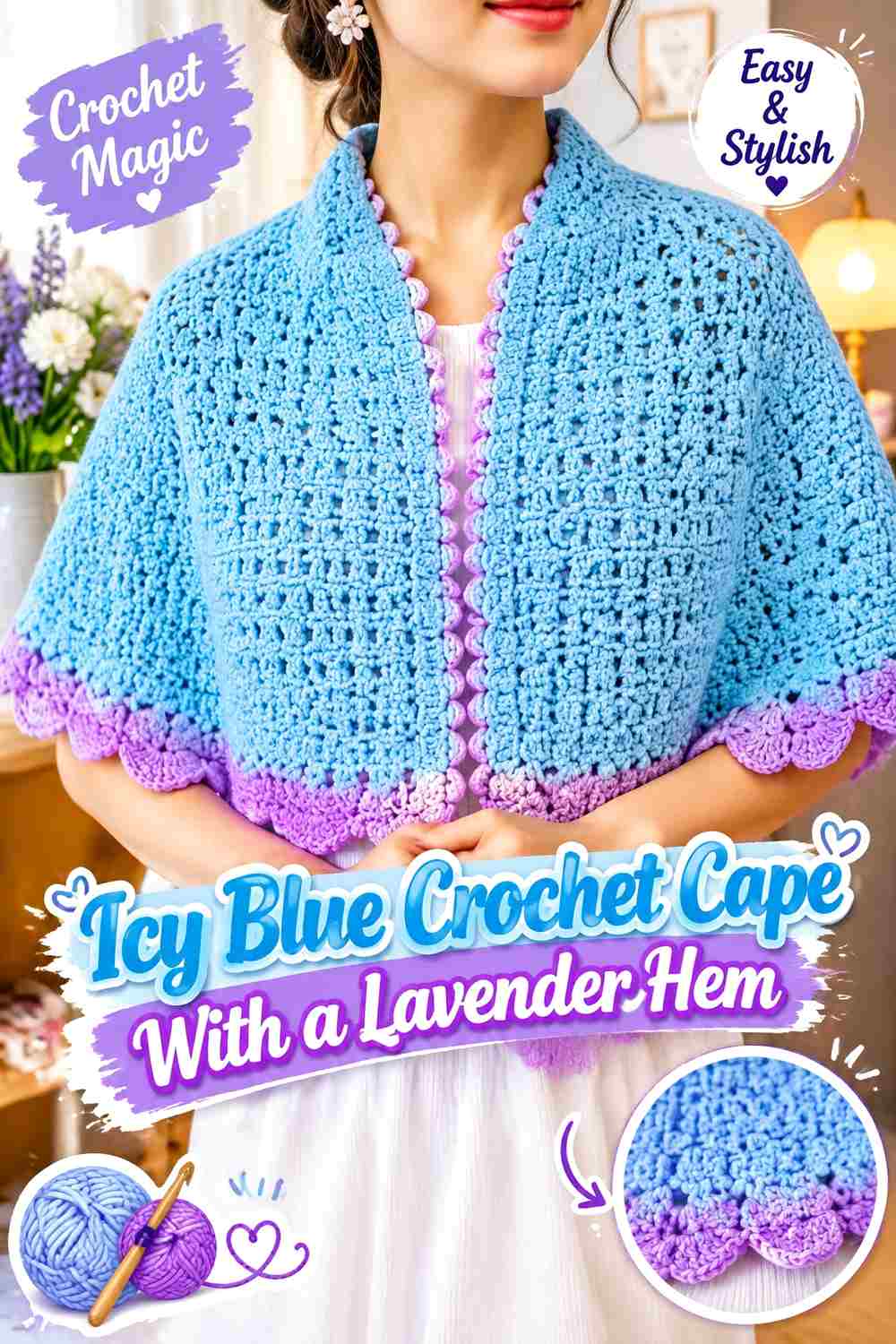
This version uses a straightforward cape construction as a canvas for a clean two-zone palette. The supporting tutorial demonstrates a wearable crochet cape, allowing the editorial color plan to stay simple rather than inventing extra decorative construction.
Icy Blue Should Span the Crochet Cape From Neck to Shoulder
Use icy blue continuously through most of the upper and middle garment. A large uninterrupted section makes the pale blue feel intentional rather than like one stripe among many.
Because a cape presents a broad surface, inspect the color under the lighting where you expect to wear it; very pale blues can shift considerably next to surrounding neutrals.
Lavender Can Give the Icy Blue Crochet Hem a Visible Finish
Introduce lavender only near the lower edge for a dip-dyed visual direction without claiming an actual gradient. The clean change gives the cape a grounded finish while preserving the icy-blue majority.
If you want a softer transition, add one intermediate band that alternates the visual share of blue and lavender rather than many narrow stripes.
Creator Credit: Crochet By Angy
13. Lavender Crochet Cape With Icy Blue Shoulder Definition

Here lavender dominates the broad cape while icy blue is positioned higher, close to the shoulder line. The supporting tutorial produces a compact crochet cape, making the upper area an effective location for a pale contrasting detail.
Lavender Can Give the Crochet Cape More Visual Depth
Use lavender from the main shoulder field through the lower body so the piece reads as lavender first. Because the garment is relatively compact, the dominant color needs enough uninterrupted area to remain obvious.
Avoid dividing the body evenly between multiple pale stripes unless a striped effect is specifically desired.
Icy Blue Can Brighten the Lavender Shoulder Area
Place icy blue around the neckline or upper shoulder section, where it can create the impression of frost resting over the lavender body.
The upper accent should follow the cape’s actual shape. A color break that cuts across an unrelated point in the fabric can look accidental rather than structural.
Creator Credit: Lanas y ovillos
14. Icy Blue Crochet Summer Capelet With Lavender Openwork Bands

A lighter capelet gives the two pastels a more delicate role. The supporting Hectanooga1 project is a top-down summer capelet/shawlette with open spacing through the fabric, so lavender can be introduced in selected openwork bands rather than covering an entire solid section.
Icy Blue Should Keep the Open Crochet Capelet Visually Connected
Use icy blue through most of the openwork. A single pale main color helps repeated spaces and stitch groups read as one continuous fabric rather than a collection of disconnected bands.
Remember that the clothing underneath becomes part of the visual composition wherever the capelet is open.
Lavender Can Mark Selected Icy Blue Openwork Bands
Introduce lavender at wider structural intervals instead of changing color every row. This creates visible repetition while preserving enough icy blue for the capelet to retain a clear dominant shade.
Compare the yarns over the same background garment you intend to wear; pale open crochet can look very different over black, cream, or another pastel.
Creator Credit: Hectanooga1
15. Icy Blue Hooded Crochet Capelet With Lavender Trim
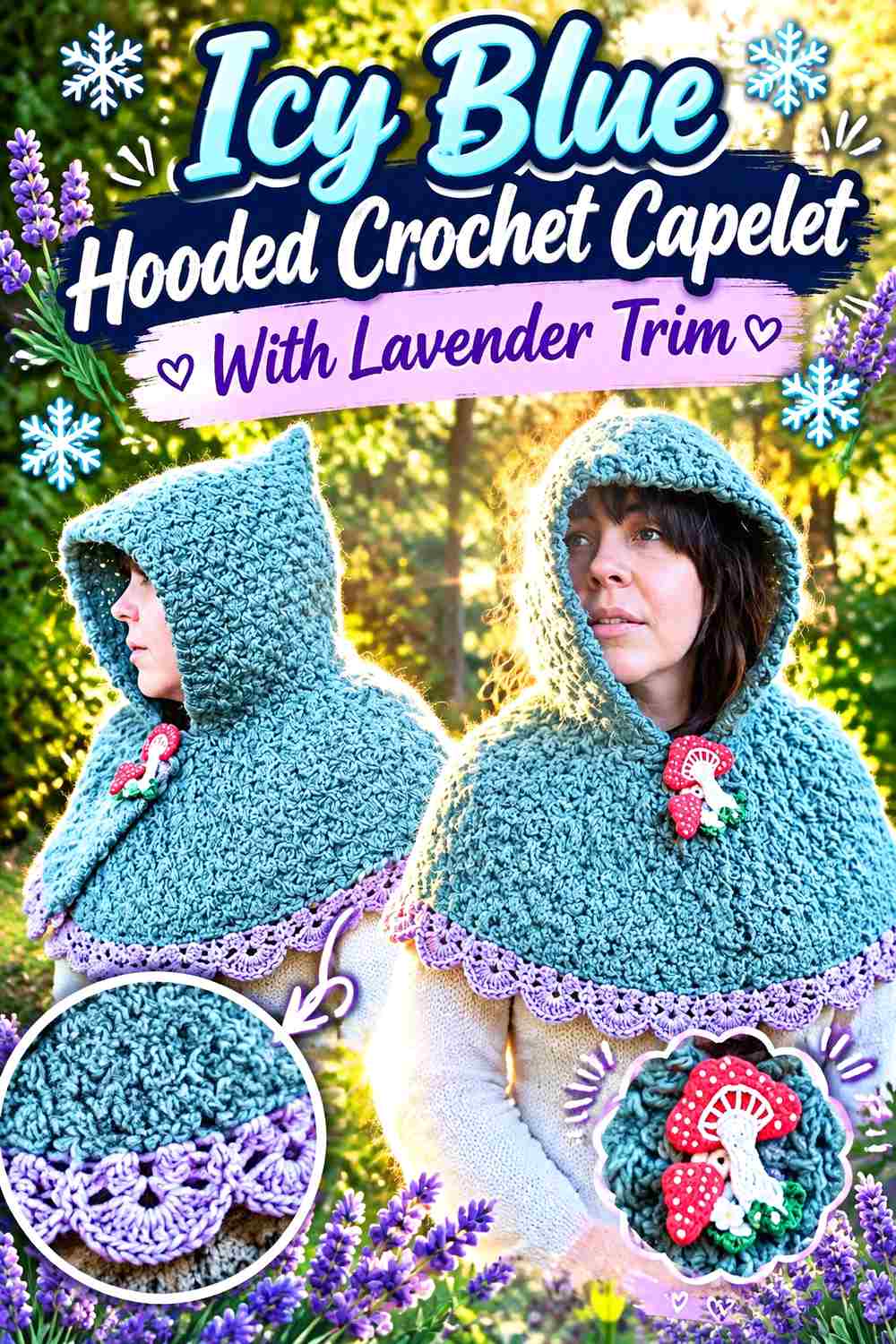
A hood adds another substantial color-placement zone. Keep the cape body and most of the hood icy blue, then use lavender around the hood opening and cape edge. The supporting Mossy Hooded Capelet is a true hooded shoulder layer, giving this palette a different silhouette from the collar and open-front options.
Icy Blue Can Unite the Crochet Hood and Capelet Body
Using the same icy blue across both hood and shoulders prevents the hood from looking like a separate accessory attached to the capelet. This continuity is particularly useful because a hood already adds considerable visual volume.
Let the shape provide the drama and keep the largest color field simple.
Lavender Can Outline the Icy Blue Hood Opening
Use lavender around the face opening, lower edge, or closure area. Those borders remain visible when the hood is worn up, so lavender can contribute strongly without occupying the hood’s full surface.
Check the capelet both hood-up and hood-down. A trim that looks balanced in one arrangement can bunch into a larger block of lavender in the other.
Creator Credit: Lizfaerie Crafts
16. Icy Blue Starburst Crochet Capelet With A Lavender Cowl

Finish with a motif-led cape. The supporting Georgina construction uses large half-circle starburst forms for the cape with a separate cowl that echoes the stitch direction, creating a natural opportunity for icy blue and lavender to divide by component.
Icy Blue Lets the Crochet Starburst Shape Stay Readable
Keep the large starburst sections icy blue so the radiating structure remains visible across the front and back. Changing color too frequently within the motif can make the eye follow stripes instead of the expanding shape.
If you want lavender inside the starburst itself, limit it to one clearly defined outer section.
Lavender Can Separate the Icy Blue Capelet From Its Cowl
Use lavender for the cowl so the neck treatment becomes an intentional second component. The color difference clarifies the transition from collar to cape without requiring another embellishment.
A small lavender repeat at the outer edge can reconnect the cowl to the lower garment, but it is optional if the two-part contrast already feels balanced.
Creator Credit: Kristin Omdahl
Choosing Between Icy Blue-Led and Lavender-Led Frosted Capelets
Choose an icy-blue-led palette when you want the capelet to look lighter and cooler overall. Ideas 1, 4, 7, 8, 10, 12, 14, 16, and 17 keep most of the shoulder area blue while allowing lavender to define an edge, collar, hood, or textured feature.
Choose a lavender-led palette when you want more purple across the garment but still want icy blue to preserve the frosted theme. Ideas 2, 9, 11, 13, and 15 use blue as highlighting or framing rather than the main surface color.
For the most obviously two-color result, ideas 3, 5, and 6 give both shades larger structural roles. These are useful when a subtle accent does not feel different enough and you want the palette division to remain visible from a distance.
Conclusion
Icy blue and lavender work especially well on crochet capelets when the color changes reinforce the garment’s construction. A lavender collar on an icy-blue body creates a different visual focus from a lavender hem, while a hood, starburst, shell texture, open front, or cable section gives the second shade its own logical place.
Start with the effect you want most. Use broad icy blue fields for a pale frosted direction, lavender-dominant bodies for a softer purple result, or larger blocks of both colors when the two-color relationship should become the statement.
Before committing to detailed colorwork, compare the actual yarns for light-dark separation and view them over the clothing you expect to wear beneath the capelet. Use the linked tutorials for exact construction details, then adapt the color distribution without reconstructing or replacing the creator’s instructions.
Frequently Asked Questions
Should Icy Blue or Lavender Be the Main Color in a Frosted Crochet Capelet?
Either can lead. Icy blue creates the clearest cool, frosted direction when it covers most of the shoulders. Lavender gives the capelet more purple presence and works well when icy blue is reserved for edges, collars, openwork, or neckline details.
How Can I Keep Icy Blue and Lavender From Blending Together?
Compare the exact yarns for light-dark value, not just hue. If both colors look almost identical in grayscale, use them in broader blocks. Fine lavender lines inside pale icy-blue texture may disappear more easily than a lavender collar or hem.
Where Should Lavender Go on an Icy Blue Crochet Capelet?
Start with an existing structural feature. The neckline, cowl, hood opening, hem, front edge, border, or repeated textured section can all carry lavender without making the color placement look random.
Can I Make a Lavender Crochet Capelet Look Frosted Without Adding White?
Yes. Icy blue can provide the pale highlight normally associated with a frosted palette. Place it where light visual separation helps most, such as around the neckline, lower border, hood edge, or selected openwork sections.
Should I Alternate Icy Blue and Lavender in Every Crochet Capelet Row?
Not automatically. Frequent alternation creates a striped effect and can hide textured stitches or motifs. Broad color fields, occasional bands, or structural accents often give the capelet a clearer hierarchy.
How Do I Substitute a Different Icy Blue or Lavender Yarn Shade?
Preserve the relationship between the colors. If your original plan depends on a pale icy blue against a slightly deeper lavender, choose substitutes that maintain that light-dark difference. Also preserve whether each shade is muted or saturated so the overall balance does not change unexpectedly.