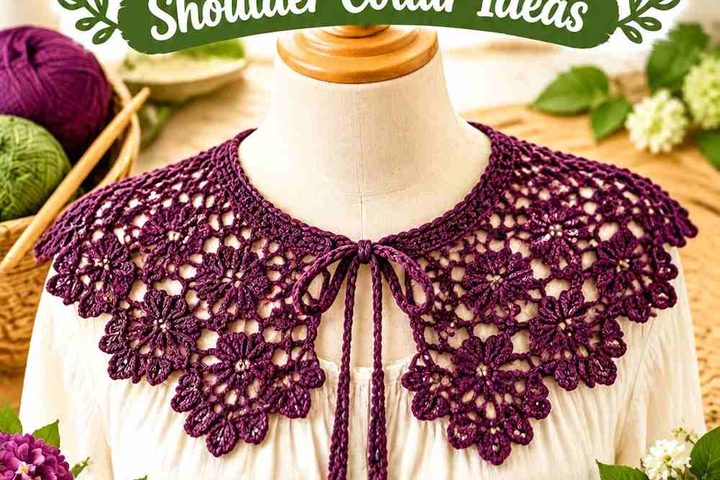
Dusty Rose works especially well on a crochet ruffle scrunchie because the gathered fabric gives the softened pink more visual depth than a flat band would. Some parts of the ruffle face outward, others fold inward, and the area closest to the elastic can become partly hidden. That makes color placement just as important as the color itself.
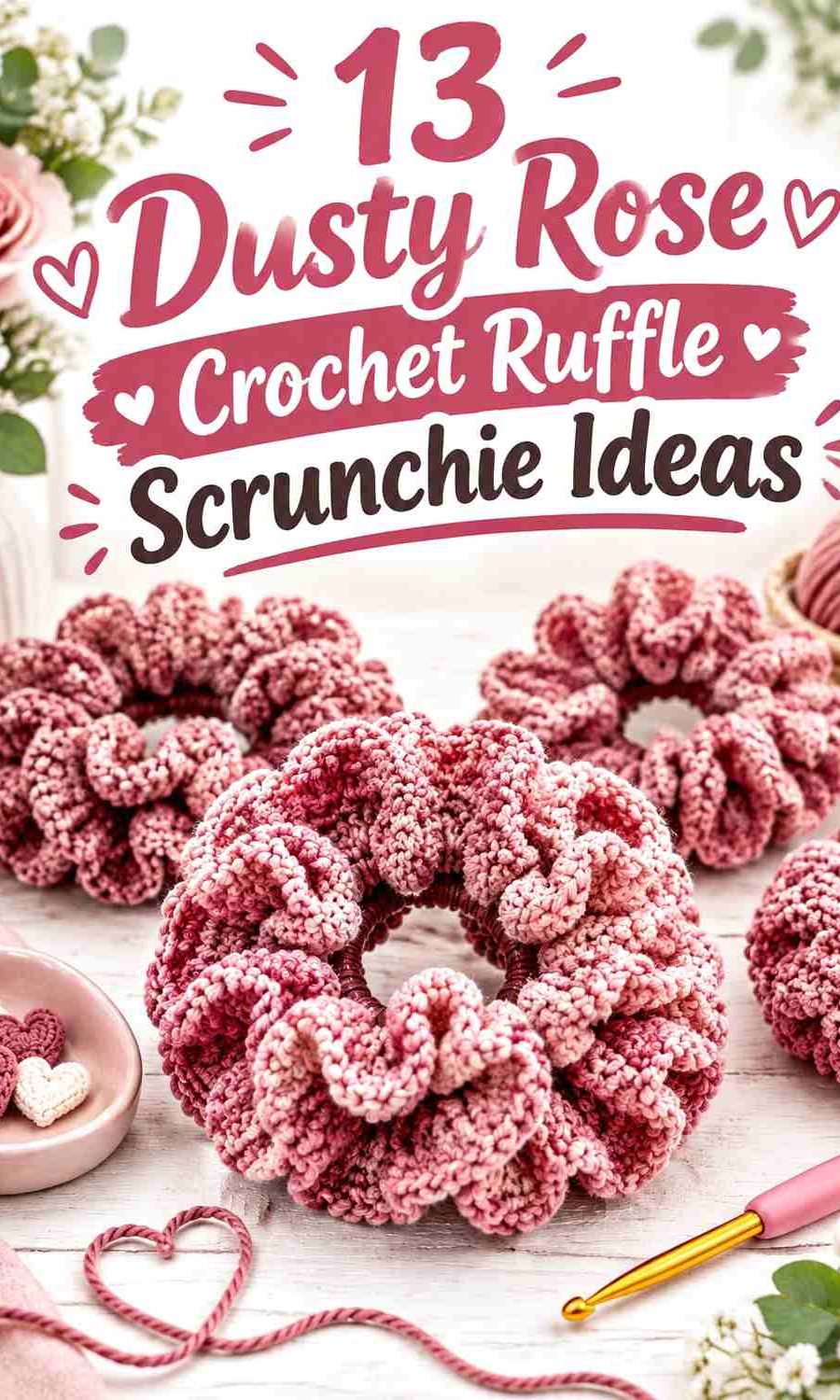
A Dusty Rose scrunchie can stay completely monochromatic, or it can use a second shade to define the inner ring, ruffle edge, lace border, or lower layer. Cream and Oatmeal create softer separation, while Plum, Burgundy, Cocoa, or Charcoal give the folds a darker anchor. Sage creates a muted complementary direction without taking the project away from its Dusty Rose focus.
The tutorials credited below support different ruffled or closely related crochet scrunchie constructions. The Dusty Rose palettes are independent color adaptations rather than claims that the creators used these exact color combinations.
Quick List
- Monochrome Dusty Rose Crochet Ruffle Scrunchie
- Dusty Rose And Cream Crochet Ruffle Scrunchie
- Dusty Rose And Plum Crochet Layered Ruffle Scrunchie
- Dusty Rose And Ivory Crochet Lace Ruffle Scrunchie
- Dusty Rose And Cocoa Crochet Bow Ruffle Scrunchie
- Dusty Rose And Sage Crochet Double Ruffle Scrunchie
- Dusty Rose And Mauve Crochet Tonal Ruffle Scrunchie
- Dusty Rose And Charcoal Crochet Edge Ruffle Scrunchie
- Dusty Rose And Blush Crochet Full Ruffle Scrunchie
- Dusty Rose And Burgundy Crochet Two Tone Ruffle Scrunchie
- Dusty Rose And Soft White Crochet Shell Ruffle Scrunchie
- Dusty Rose And Oatmeal Crochet Textured Ruffle Scrunchie
- Dusty Rose And Cherry Red Crochet Contrast Ruffle Scrunchie
Decide Where Dusty Rose Should Appear on the Ruffle
The most exposed part of a scrunchie is usually the outer folded edge, while the stitches closest to the elastic can disappear between gathers. If Dusty Rose is meant to dominate, keep it on the broad outward-facing ruffle rather than limiting it to the inner ring.
A darker supporting shade can work well closer to the elastic because small glimpses of it create separation between Dusty Rose folds. A lighter supporting color does something different: placing Cream, Ivory, or Oatmeal along the outer edge can trace the ruffle shape and make individual curves easier to distinguish.
Check the color balance after the scrunchie has gathered around the elastic. A flat crochet round can show much more of a supporting color than the finished accessory does.
Let Dusty Rose Ruffle Volume Guide the Accent Color
A very full Dusty Rose ruffle already contains plenty of visual movement. In that case, one narrow accent around the center or edge may be enough. Adding several equal-sized color bands can make a small hair accessory feel fragmented.
A lighter, more open ruffle can support a stronger second color because more space remains between the folds. Lace and shell-style edges are particularly useful for this approach because the supporting shade can define the outline without taking over the Dusty Rose body.
The important question is not how many colors are present, but whether each one has a recognizable job.
Check Dusty Rose Against the Actual Crochet Texture
Dusty Rose may look different once worked into dense stitches, open lace, tall ruffles, or textured clusters. Raised surfaces create shadows, while openwork exposes more of the hair elastic and the background beneath the scrunchie.
If a supporting color is close to Dusty Rose in lightness, test a small section before committing to the full accessory. Similar-value shades can blend together inside gathered folds even when they look clearly different as separate yarns.
1. Monochrome Dusty Rose Crochet Ruffle Scrunchie
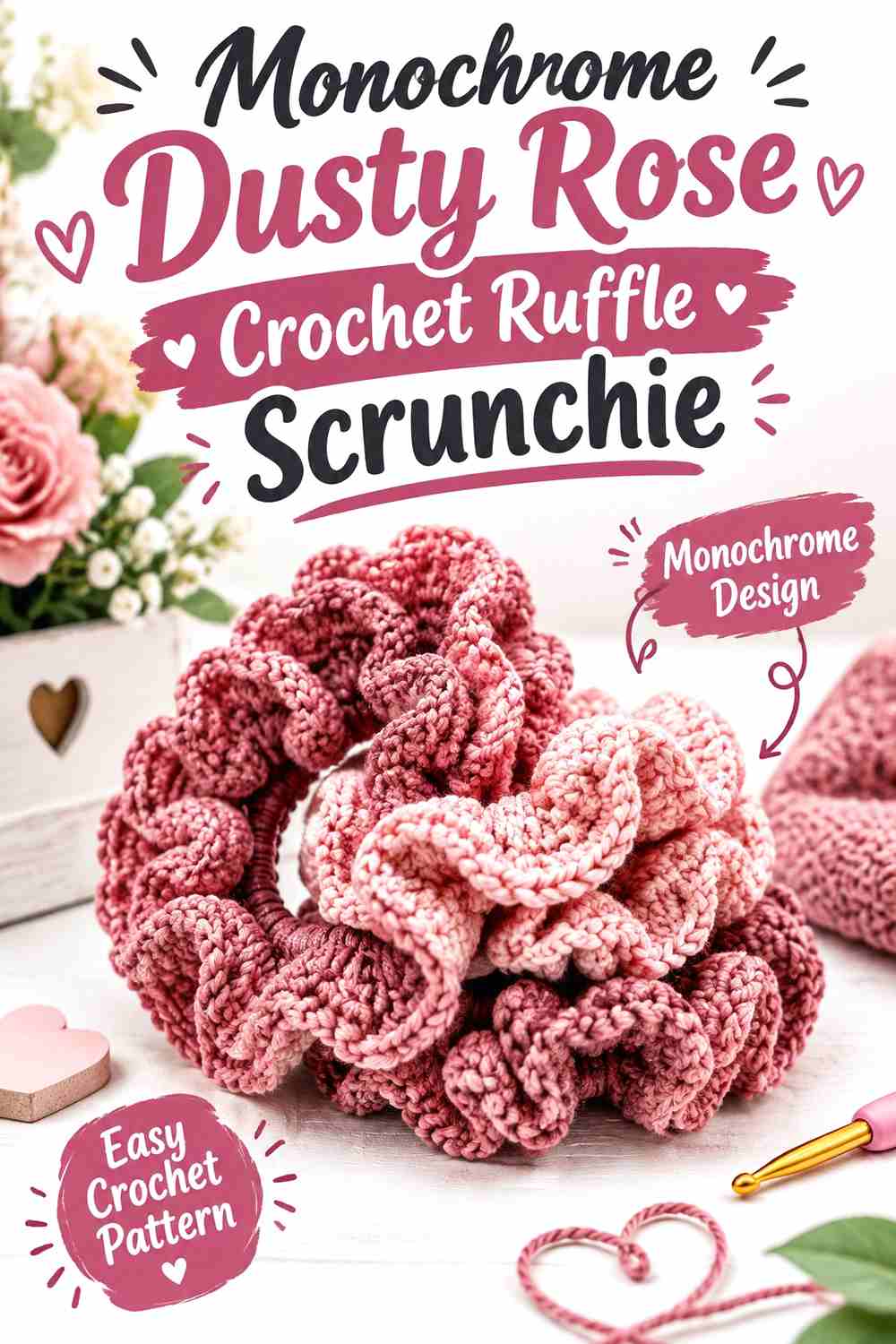
A single-color Dusty Rose scrunchie puts all the emphasis on the shape of the ruffle. Instead of relying on contrast, the design uses highlights and shadows created by overlapping crochet folds.
This is a useful direction when you want Dusty Rose to remain unmistakably dominant. Keep the center, main ruffle, and outer edge in the same general color family, then let stitch height and fullness create the variation.
Dusty Rose Should Cover the Entire Visible Ruffle
Using Dusty Rose from the inner ring through the outer edge creates one uninterrupted color field. This works especially well when the ruffle itself has enough volume to produce visible depth.
Look at the finished scrunchie from the side as well as from above. Deep folds can make a single shade appear darker in recessed areas, giving the monochrome design more definition than the flat crochet surface suggests.
Dusty Rose Texture Replaces the Need for a Contrast Edge
Without a second color, the outer silhouette becomes important. Let the ruffle shape provide the visual finish rather than introducing another shade only because the project feels simple.
If the edge disappears visually, adjust the fullness or choose a Dusty Rose yarn with clear stitch definition rather than adding an unrelated accent automatically.
Creator Credit: Amelia Makes
2. Dusty Rose And Cream Crochet Ruffle Scrunchie
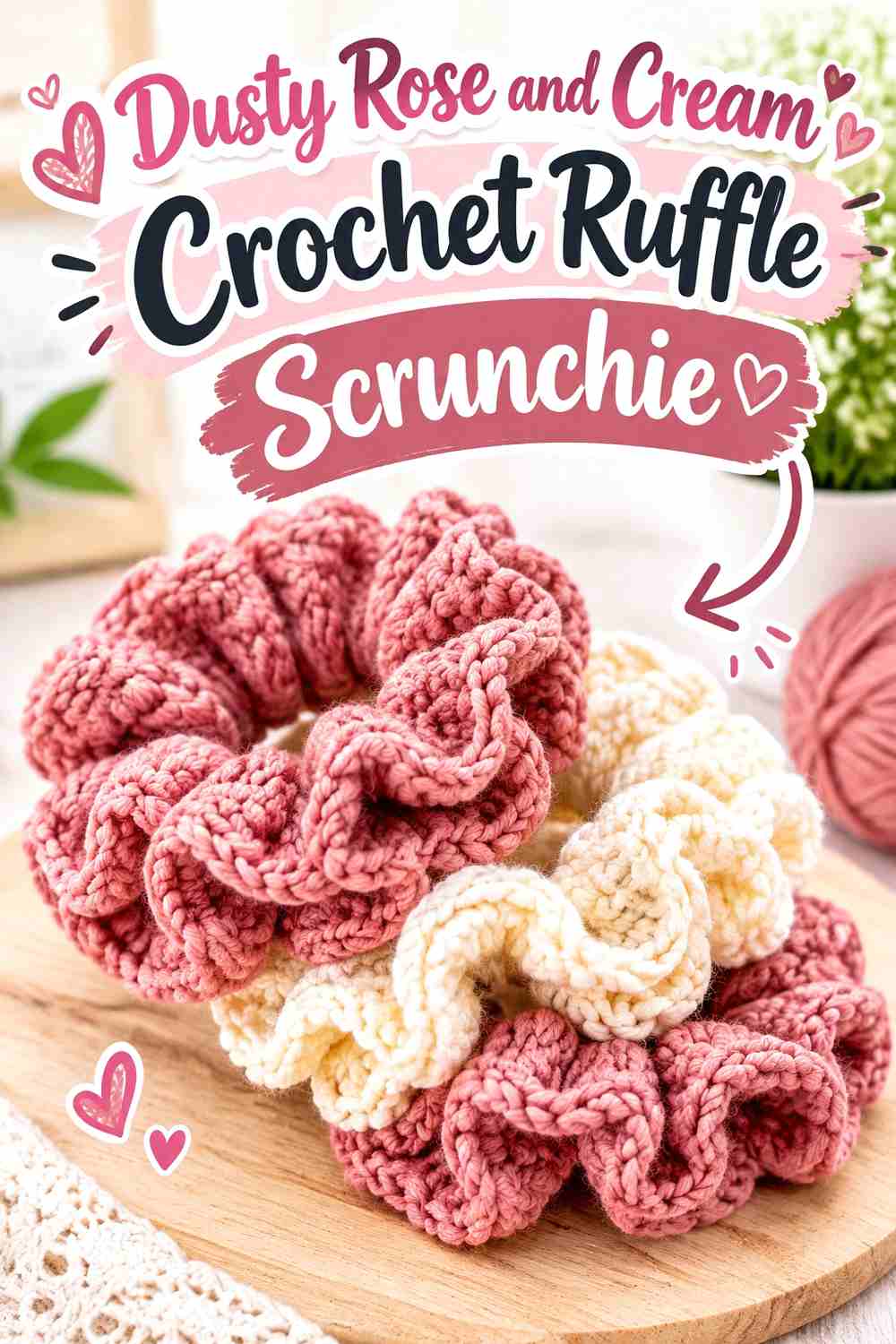
This palette keeps Dusty Rose across most of the visible ruffle and uses Cream only around the outermost edge. The lighter outline can make each wave easier to follow while preserving Dusty Rose as the obvious main color.
Cream works best here as a finishing shade rather than an equal partner. A narrow edge gives the scrunchie definition without turning it into alternating pink-and-cream bands.
Dusty Rose Should Remain Wider Than the Cream Ruffle Edge
Give Dusty Rose enough surface area that the eye reads pink first and Cream second.
If the Cream section becomes almost as wide as the main ruffle, the accessory changes from a Dusty Rose scrunchie with an accent to a balanced two-color design. Reduce the Cream area if maintaining the original color focus matters.
Cream Can Trace the Dusty Rose Crochet Ruffle Shape
Place Cream where it follows the outer curves of the Dusty Rose section. The lighter value can separate overlapping edges and make the ruffle silhouette clearer.
Avoid scattering Cream randomly near the elastic if the main purpose is to outline the ruffle. Keeping the accent concentrated gives it a stronger visual role.
Creator Credit: AccessibleNeatsbyShammy
3. Dusty Rose And Plum Crochet Layered Ruffle Scrunchie
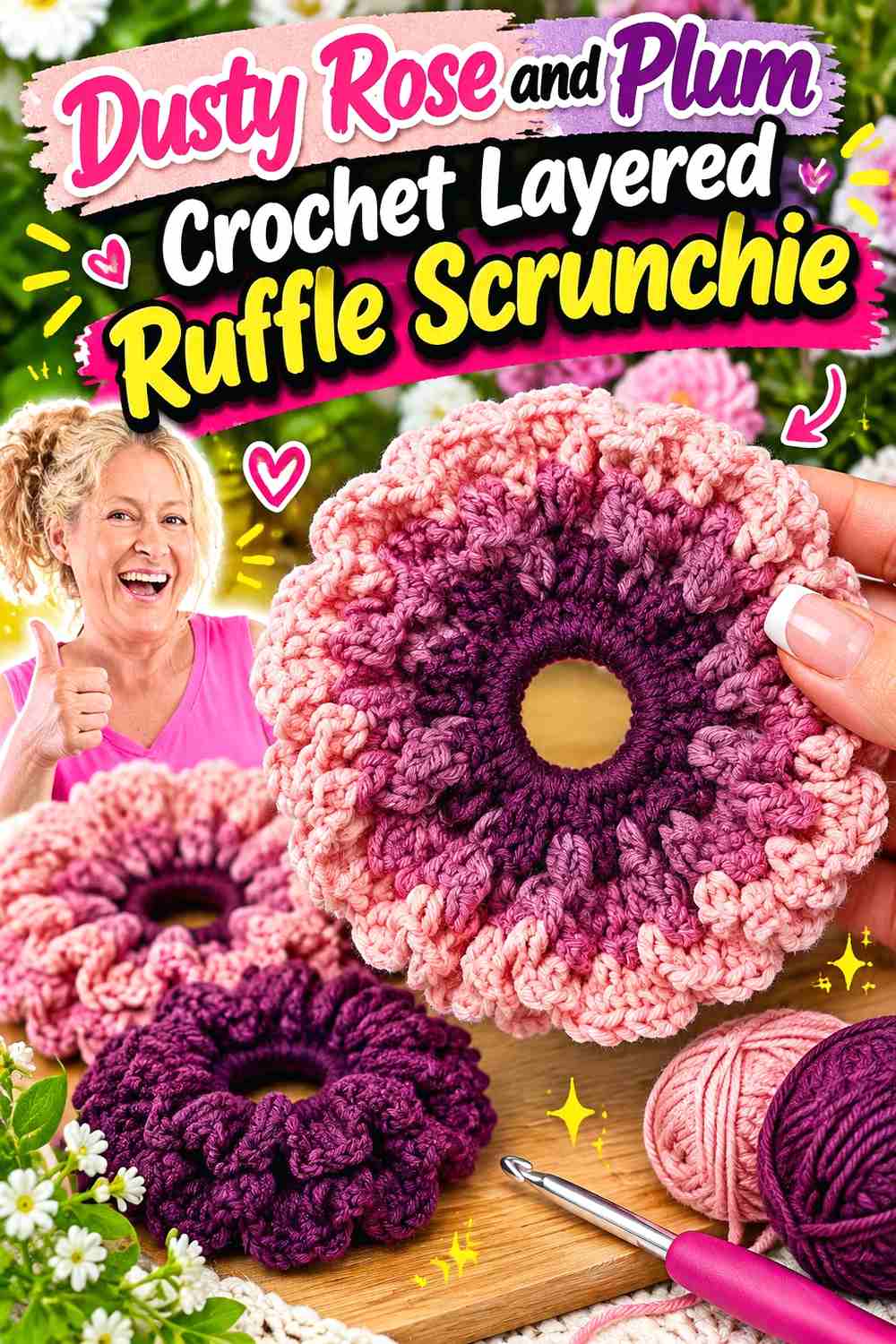
A deeper Plum underlayer gives Dusty Rose more visual separation without changing the soft pink character of the outer ruffle. Keep Plum close to the center and let Dusty Rose expand outward over it.
When the ruffle gathers, the darker color can appear in narrow glimpses between folds. That creates more depth than using Plum as a wide outer border.
Dusty Rose Should Lead the Outer Ruffle Above Plum
Keep the broadest and most exposed layer Dusty Rose. Plum should function like a shadow beneath the pink rather than a competing outer band.
Check how much Plum remains visible once the scrunchie is fully gathered. If it disappears completely, extend the dark section slightly outward rather than adding another accent color.
Plum Can Deepen the Dusty Rose Center Without Darkening the Whole Scrunchie
Concentrating Plum around the elastic gives the accessory a defined central ring.
This placement works particularly well when you want a richer palette but still want the finished scrunchie to read primarily as Dusty Rose from a normal viewing distance.
Dusty Rose Can Return Near the Plum Center
A small Dusty Rose repeat close to the inner edge can connect the center to the larger outer ruffle.
The repeat should remain subtle; the layered effect works best when Plum still has enough exposed space to create contrast.
Creator Credit: Secret Yarnery
4. Dusty Rose And Ivory Crochet Lace Ruffle Scrunchie
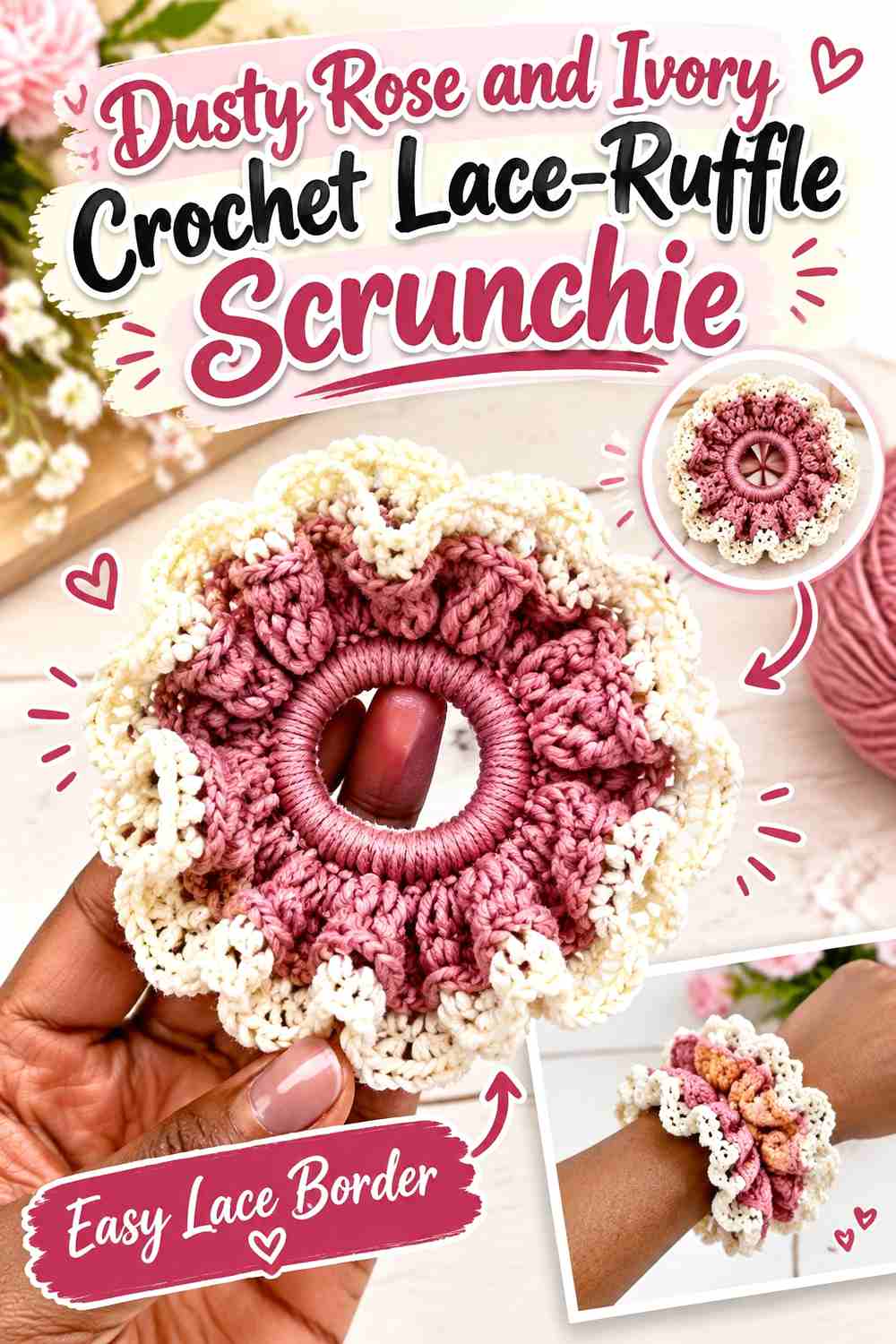
Ivory creates a softer contrast than a dark supporting shade, making it useful for a delicate lace-edged Dusty Rose scrunchie. Let Dusty Rose cover the denser inner section and reserve Ivory for open or decorative outer stitches.
The change in both color and texture helps the edge remain distinct without requiring strong dark-light drama.
Dusty Rose Should Anchor the Ivory Lace Ruffle
Keep Dusty Rose nearest the elastic and through enough of the ruffle that the accessory maintains a substantial pink center.
The Ivory lace should extend that Dusty Rose base rather than visually replacing it.
Ivory Can Make the Dusty Rose Lace Edge Easier to Read
A pale contrasting edge can show the shape of open stitches more clearly when Dusty Rose forms the solid background beneath them.
If the Ivory and Dusty Rose are both very pale, compare them in the actual stitch pattern. A wider Ivory section may be needed for the contrast to remain visible once the lace gathers.
Creator Credit: Cinta Crochet Collection
5. Dusty Rose And Cocoa Crochet Bow Ruffle Scrunchie
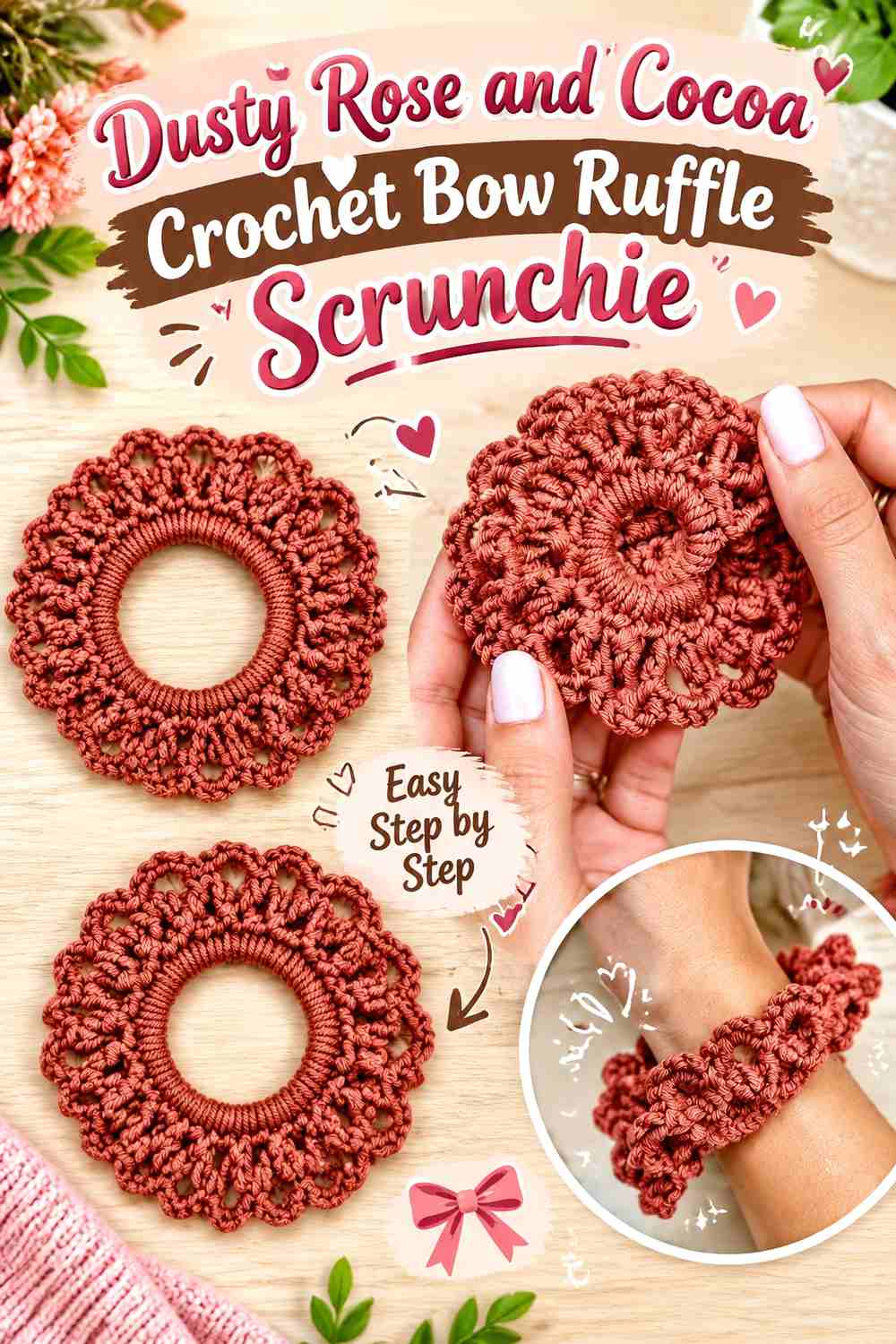
A bow detail gives Cocoa a natural accent position. Keep the scrunchie ruffle Dusty Rose and use Cocoa in the center of the bow, on a narrow bow edge, or close to the elastic.
Because both the ruffle and bow already add shape, the color plan should remain restrained. A small Cocoa detail can create enough definition without competing with the Dusty Rose folds.
Dusty Rose Should Dominate Both the Ruffle and Bow
Use Dusty Rose across the largest ruffled area and repeat it on most of the bow if the bow is part of the design.
That repetition prevents the decorative detail from feeling like a separate accessory attached to the scrunchie.
Cocoa Can Define a Dusty Rose Bow Without Taking Over
Reserve Cocoa for a small center, narrow edge, or inner ring.
The deeper brown has enough visual weight that it does not need a large area to be noticeable against Dusty Rose.
Dusty Rose Should Stay Visible Around the Cocoa Center
Make sure the Cocoa accent is surrounded by enough Dusty Rose to preserve the pink-led appearance.
If the dark section expands too far into the ruffle, the focal point can shift away from the dusty pink folds and toward the center.
Creator Credit: Camila Passadori handmade
6. Dusty Rose And Sage Crochet Double Ruffle Scrunchie
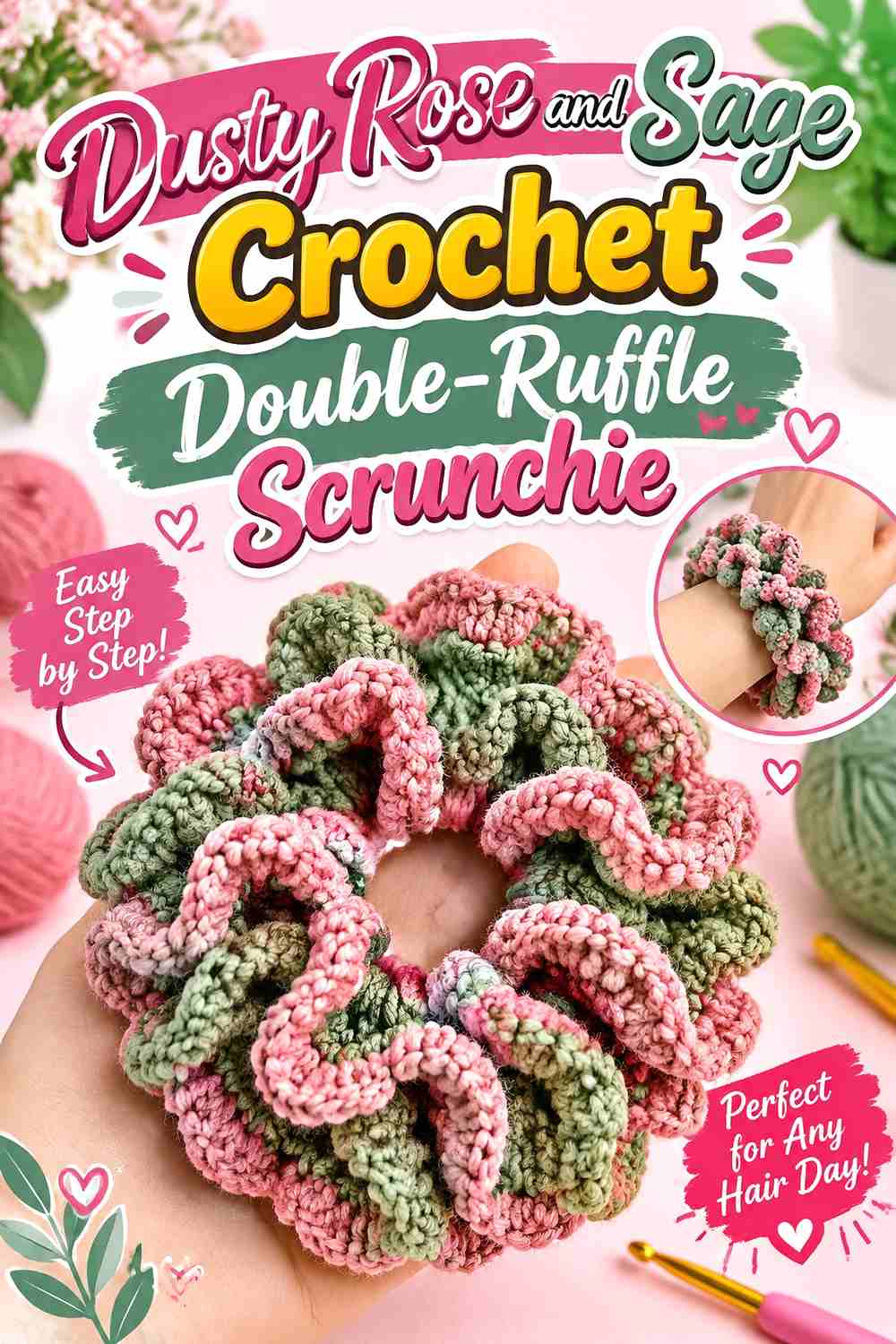
Sage gives Dusty Rose a muted green partner while keeping the palette subdued. Use Sage on the lower ruffle and Dusty Rose on the outer or upper layer so the pink remains most visible.
The success of this palette depends on hierarchy. Equal Dusty Rose and Sage layers can look strongly two-tone, while a smaller Sage underlayer produces a gentler botanical accent.
Dusty Rose Should Sit on the Most Visible Ruffle Layer
Place Dusty Rose where the folds face outward and receive the most visual attention.
The color will remain dominant even when Sage appears between the folds, creating contrast without dividing the scrunchie into equal halves.
Sage Can Peek Between Dusty Rose Crochet Ruffles
Use Sage beneath the main ruffle rather than placing it as a thick outer edge.
Small sections of muted green between Dusty Rose folds can create enough distinction while preserving the soft color direction.
Dusty Rose Can Repeat at the Sage Inner Ring
If the Sage layer becomes prominent around the center, repeat Dusty Rose close to the elastic or along the edge.
That small return keeps the outer and inner pink areas visually connected.
Creator Credit: Crystal Rose Crochets
7. Dusty Rose And Mauve Crochet Tonal Ruffle Scrunchie
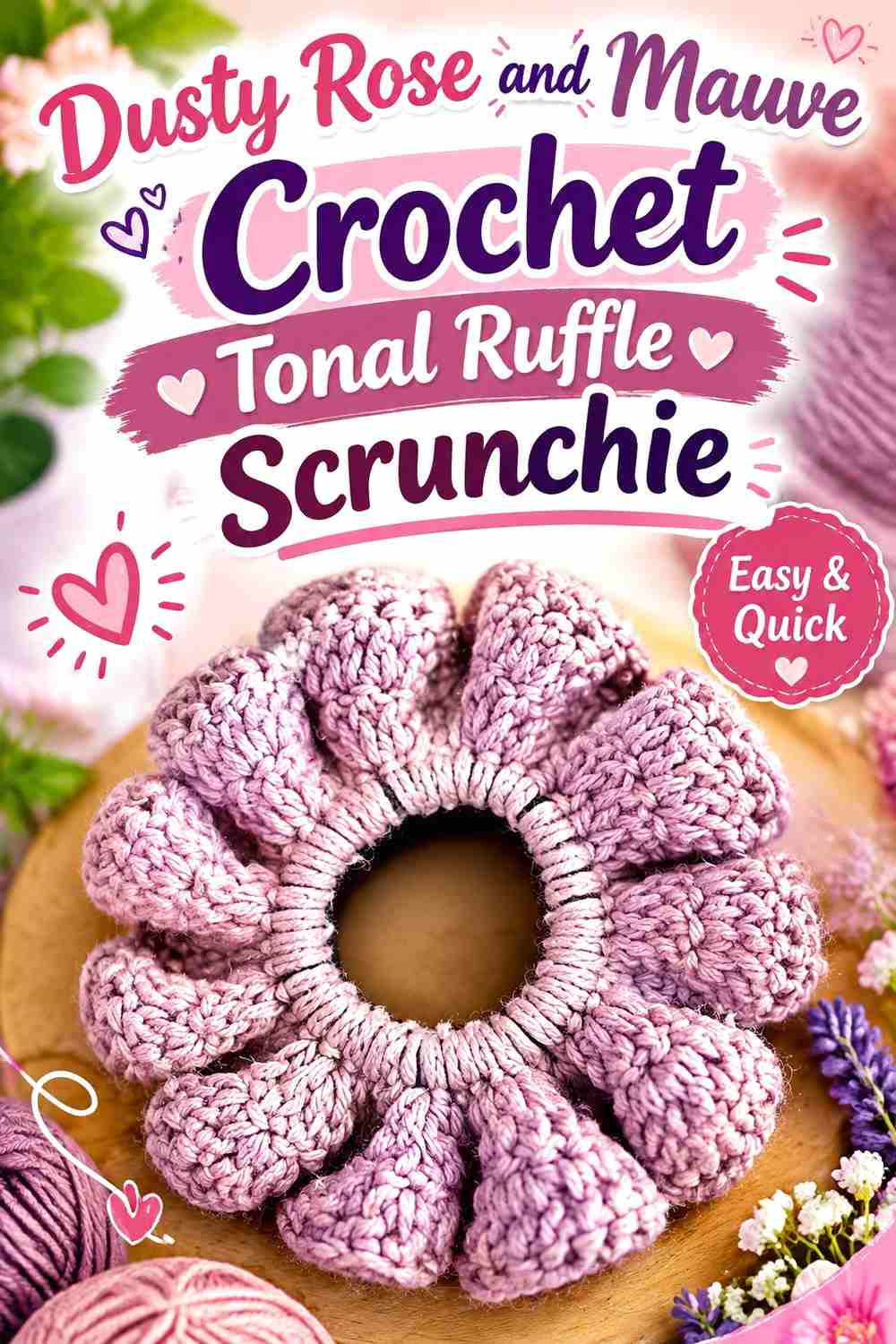
Dusty Rose and Mauve create a low-contrast tonal scheme. Instead of relying on a strong light-dark difference, the scrunchie uses related pink-purple shades to separate the center from the outer ruffle.
This works best when the two yarns are still different enough to remain recognizable inside the gathers.
Dusty Rose Should Stay Lighter Than the Mauve Ruffle Center
Let Dusty Rose occupy the broader outside area and use Mauve closer to the elastic.
The slightly deeper Mauve can make the inner folds easier to distinguish while retaining a cohesive tonal appearance.
Dusty Rose and Mauve Need a Contrast Check Before Crocheting the Full Ruffle
Two related shades can look noticeably different in skeins but blend once worked into overlapping stitches.
Place them side by side in a small sample. If the difference almost disappears, use Mauve in a narrower, more concentrated section where even subtle contrast remains intentional.
Dusty Rose Should Finish the Mauve Tonal Ruffle
Returning to Dusty Rose at the outside ensures that the requested color remains the final visible edge.
This also creates a center-to-edge progression rather than allowing Mauve to dominate the silhouette.
Creator Credit: Rizu’s Flair
8. Dusty Rose And Charcoal Crochet Edge Ruffle Scrunchie
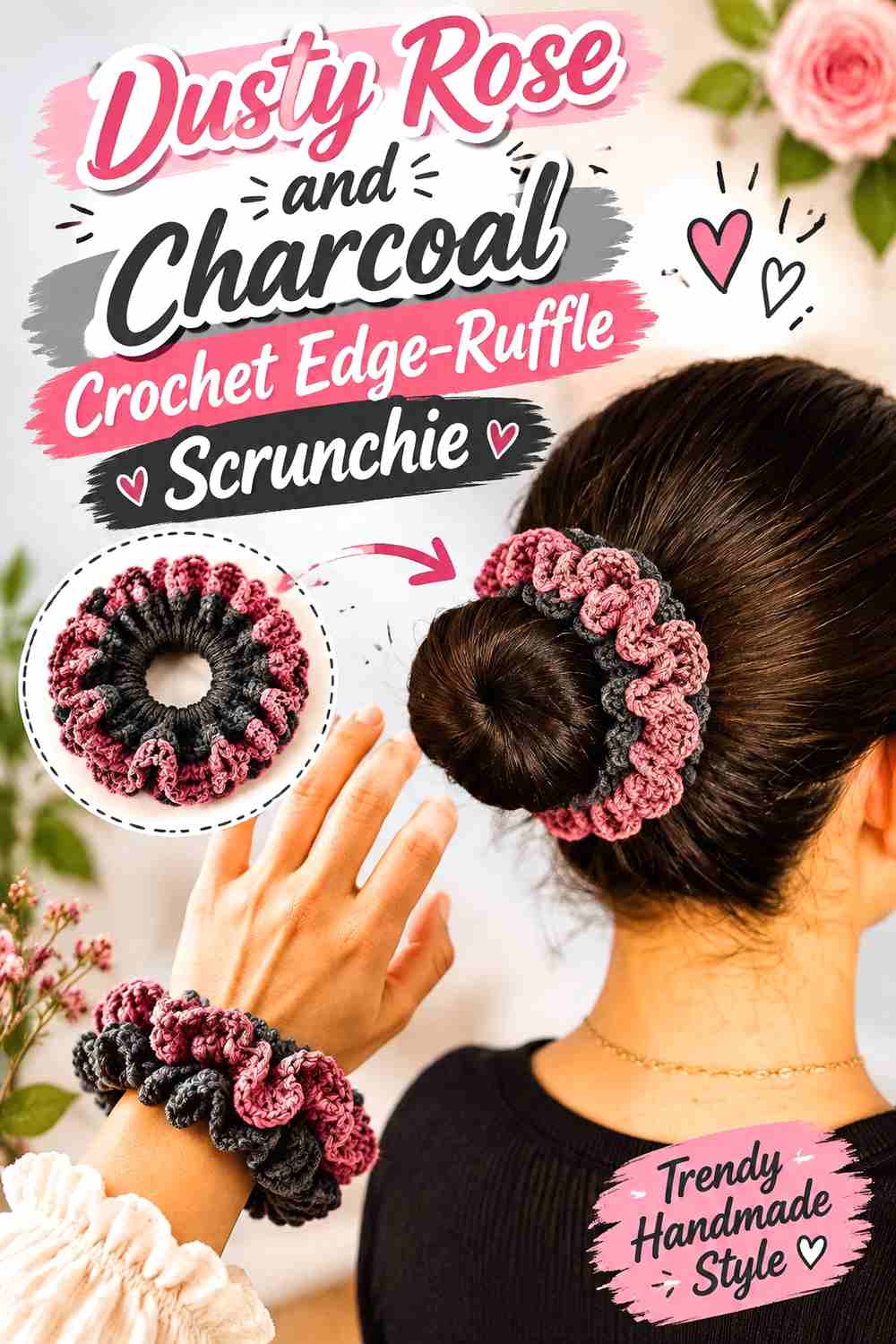
Charcoal creates one of the strongest contrast options in this collection. Keep Dusty Rose across almost the entire ruffle and use only a narrow Charcoal edge.
Because the dark outline has substantial visual weight, it can define the shape even when used sparingly.
Dusty Rose Needs a Broad Field Beside the Charcoal Edge
Make the Dusty Rose portion clearly wider than the dark finishing section.
If Charcoal becomes too thick, the eye may read the outer silhouette as gray first and pink second, weakening the Dusty Rose focus.
Charcoal Can Outline Dusty Rose Crochet Ruffles With Minimal Yarn Area
A narrow dark line around the perimeter can separate individual Dusty Rose waves.
This is especially useful when the pink texture is full and overlapping, since the edge can remain readable even when parts of the ruffle fold inward.
Dusty Rose Should Reappear Around a Charcoal Inner Detail
If Charcoal is also used near the elastic, keep Dusty Rose between the inner and outer dark areas.
That pink separation prevents the two Charcoal sections from visually enclosing the ruffle too heavily.
Creator Credit: Make It With Megan
9. Dusty Rose And Blush Crochet Full Ruffle Scrunchie
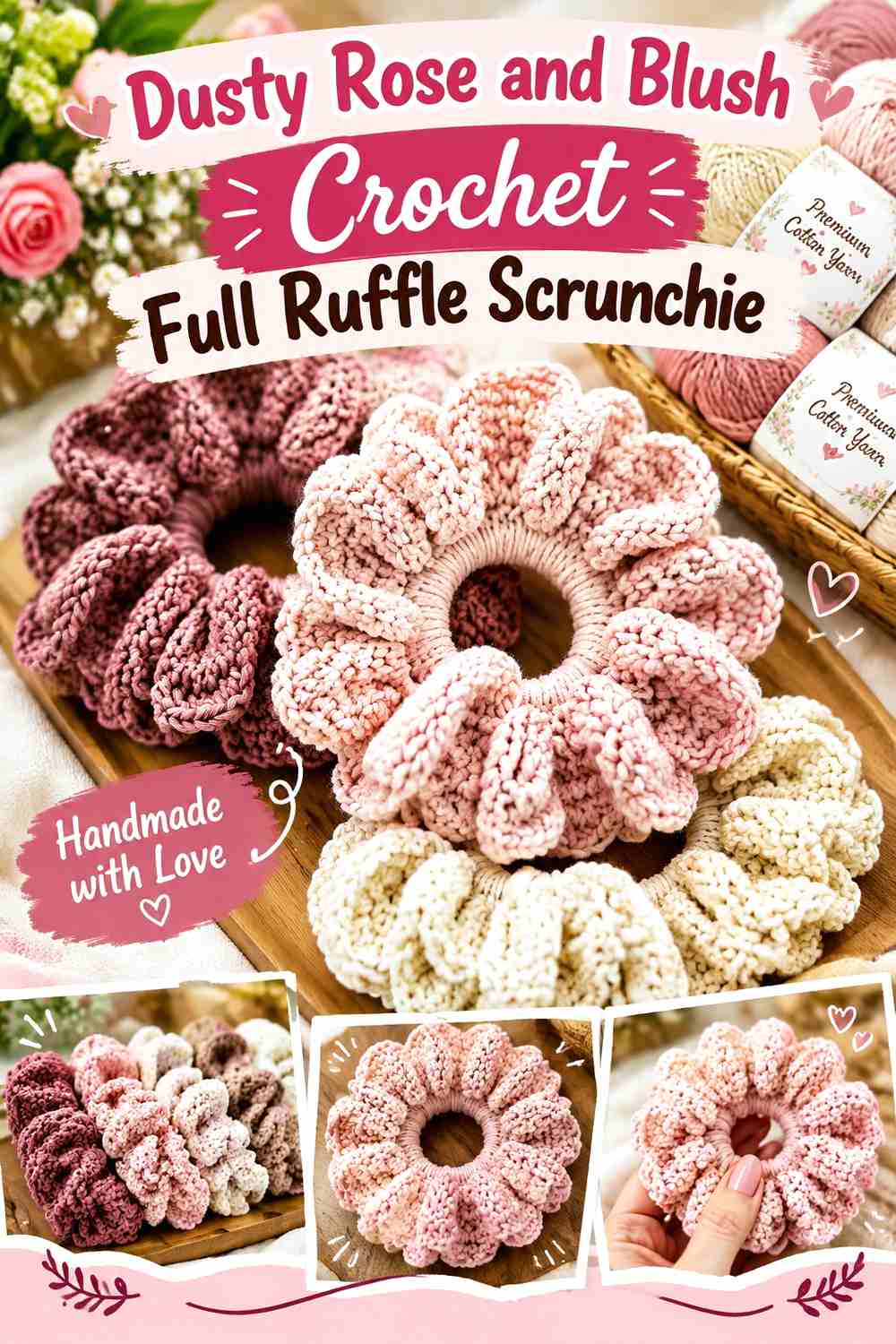
Blush creates an even softer tonal transition than Mauve. Use deeper Dusty Rose near the center and through most of the ruffle, then let a paler Blush appear on the outermost folds.
The palette works because the lightness changes gradually instead of creating a sharp border.
Dusty Rose Should Anchor the Blush Outer Ruffle
Keep Dusty Rose around the elastic and through the larger inner section.
The darker pink gives the paler Blush somewhere to separate visually, especially when multiple folds overlap.
Blush Can Lighten the Dusty Rose Ruffle Edge
Use Blush only toward the outer portion if you want a gradual center-to-edge change.
Because Blush and Dusty Rose are closely related, broad enough sections are important. Tiny alternating stripes may blend together rather than forming a clear tonal transition.
Dusty Rose Should Remain Visible Beneath the Blush Folds
Check the scrunchie after gathering it around the elastic. A very full pale outer layer may hide more Dusty Rose than expected.
If that happens, reduce the Blush coverage or let selected Dusty Rose folds extend farther outward.
Creator Credit: TSUMUGI かぎ針編み🧶
10. Dusty Rose And Burgundy Crochet Two Tone Ruffle Scrunchie
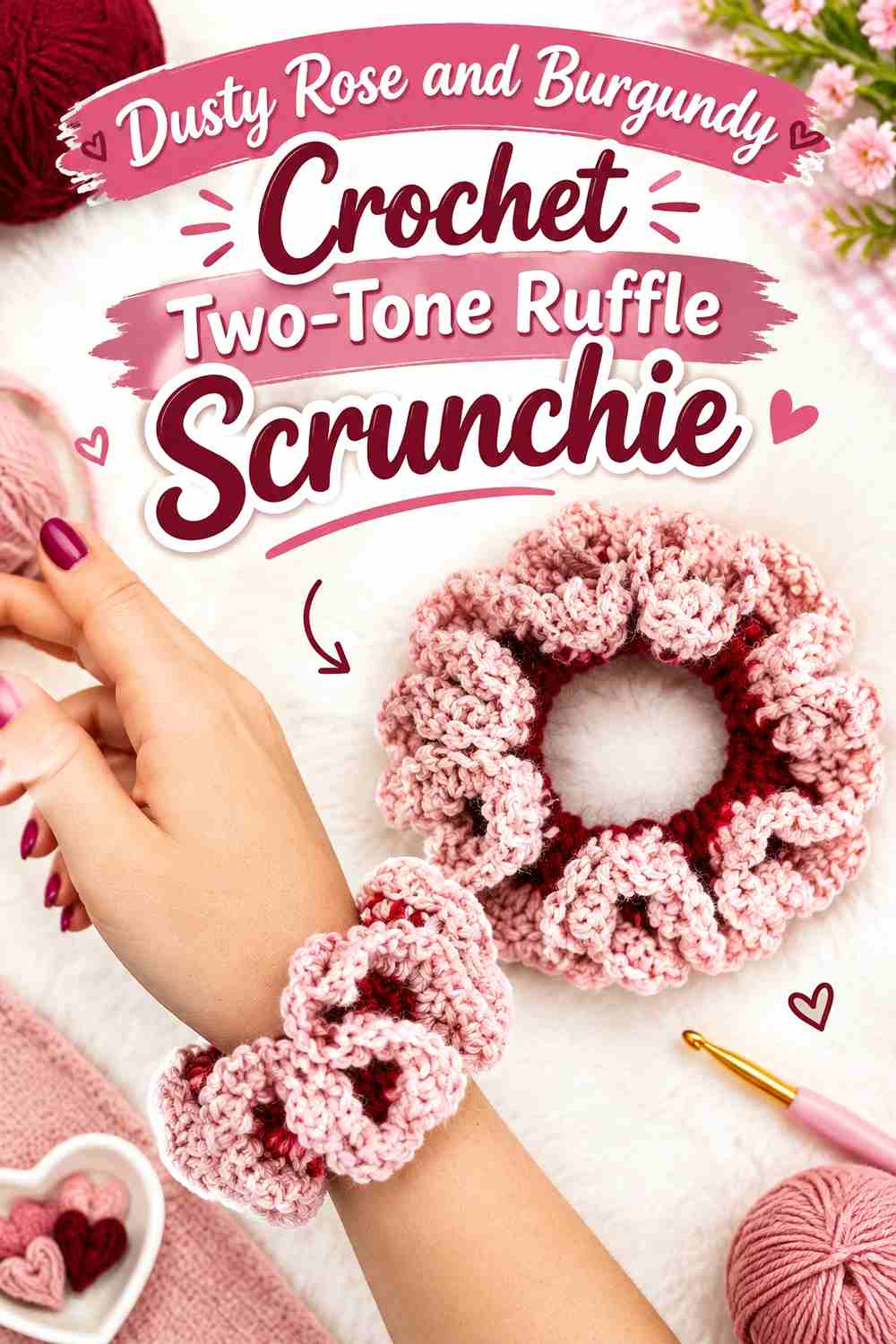
Burgundy creates a deeper, richer partner for Dusty Rose. Use Burgundy at the base and Dusty Rose across the outward-facing ruffle so the dark color appears mainly between folds.
This arrangement keeps the accessory clearly Dusty Rose while giving the gathered center more contrast.
Dusty Rose Should Cover More Surface Than Burgundy
Make Dusty Rose the broad visible field and let Burgundy occupy a smaller inner area.
Because Burgundy is visually strong, it can remain noticeable even when only part of the layer appears between the pink folds.
Burgundy Can Create Shadow Between Dusty Rose Ruffle Layers
Position Burgundy beneath or between Dusty Rose sections rather than using it as a thick outer border.
The deeper shade then behaves like a shadow color and emphasizes the layered construction.
Dusty Rose Should Finish the Burgundy Two-Tone Scrunchie
Keep the final outer edge Dusty Rose when you want the pink to remain the first color seen from a distance.
A Burgundy outer edge creates a much darker overall outline, so use it only if a stronger two-color result is intentional.
Creator Credit: Last Minute Laura
11. Dusty Rose And Soft White Crochet Shell Ruffle Scrunchie
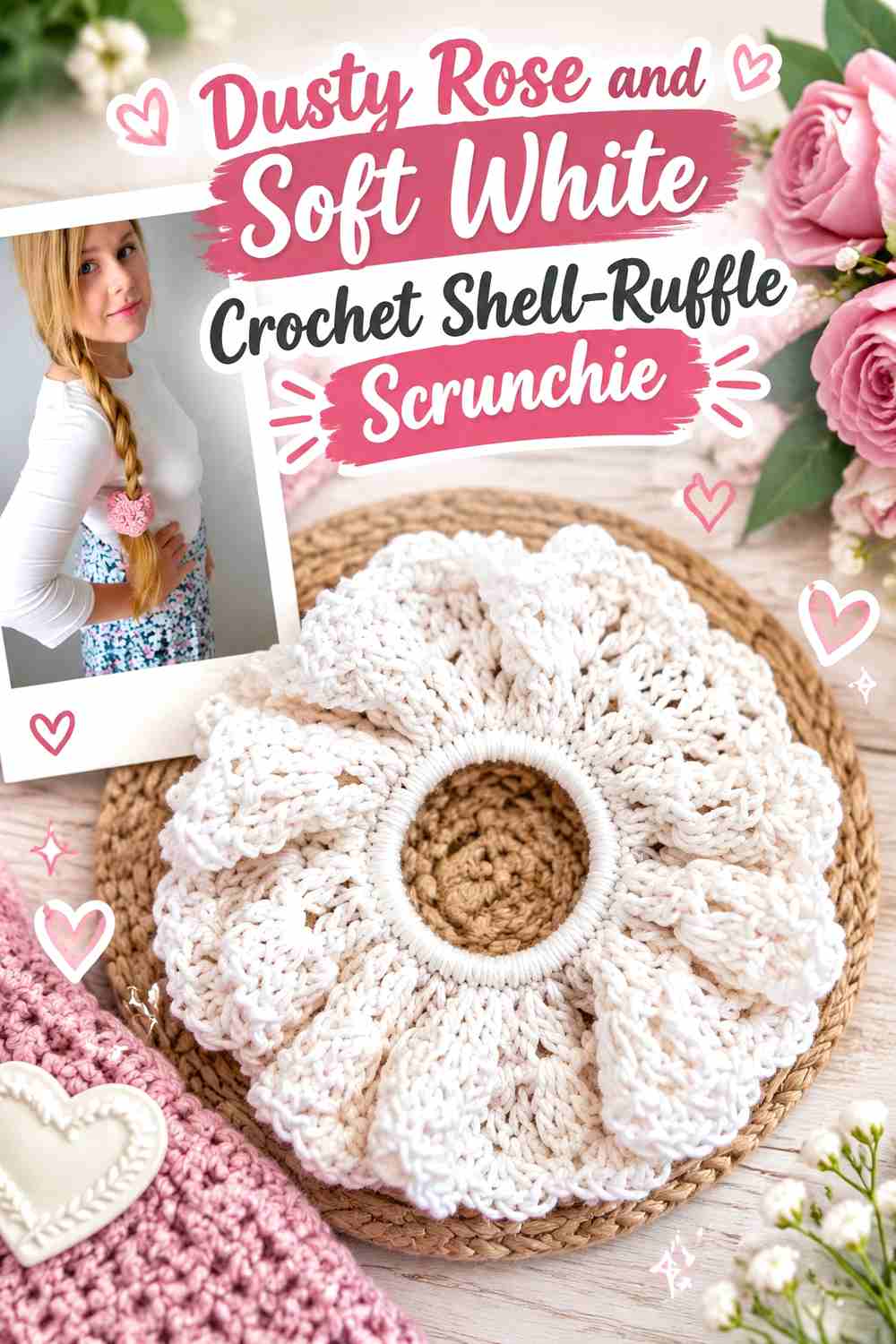
Soft White is useful when the crochet edge contains open shells, fans, or other decorative shaping. Keep Dusty Rose through the body and let Soft White emphasize only the lace-like perimeter.
The light outer shade can make each decorative curve easier to distinguish without requiring a dark contrast color.
Dusty Rose Should Form the Base Beneath Soft White Shells
Use Dusty Rose across enough of the inner ruffle that the shell edge looks attached to a substantial pink foundation.
A very large Soft White section can shift the accessory toward a white-led design, so control its width carefully.
Soft White Can Separate Dusty Rose Shell-Ruffle Details
Place Soft White at the points where you want the decorative edge to be most visible.
The lighter shade works particularly well when Dusty Rose fills the denser stitches immediately beneath it, giving the transition a clear structural reason.
Dusty Rose Can Repeat Inside the Soft White Ruffle Openwork
If the outer section feels too white, let Dusty Rose appear in selected inner spaces or in the round directly beneath the shells.
This keeps the two layers connected without adding another color.
Creator Credit: Selina Veronique Crochet
12. Dusty Rose And Oatmeal Crochet Textured Ruffle Scrunchie

Oatmeal gives Dusty Rose a warm neutral companion that suits a more textured scrunchie. Let Dusty Rose cover the main flared section and place Oatmeal around the center or selected outer stitches.
Because textured crochet already creates visible shadows, the contrast can remain fairly restrained.
Dusty Rose Should Lead the Textured Ruffle Surface
Keep most of the raised or flared stitch pattern Dusty Rose so texture and main color work together.
Avoid changing to Oatmeal too frequently. Repeated color changes can compete with the texture that already makes this scrunchie distinct.
Oatmeal Can Break Up a Dense Dusty Rose Texture
Place Oatmeal near the inner ring or in one controlled finishing section when the pink surface feels visually dense.
The warm neutral gives the eye a pause without introducing a strong contrasting hue.
Dusty Rose Should Return Around an Oatmeal Center
If Oatmeal surrounds the elastic, make sure Dusty Rose begins early enough that it remains visible from both the top and side.
A gathered scrunchie can hide much of its innermost section, so the dominant pink needs enough outward coverage.
Creator Credit: MJ’s Off The Hook Designs
13. Dusty Rose And Cherry Red Crochet Contrast Ruffle Scrunchie
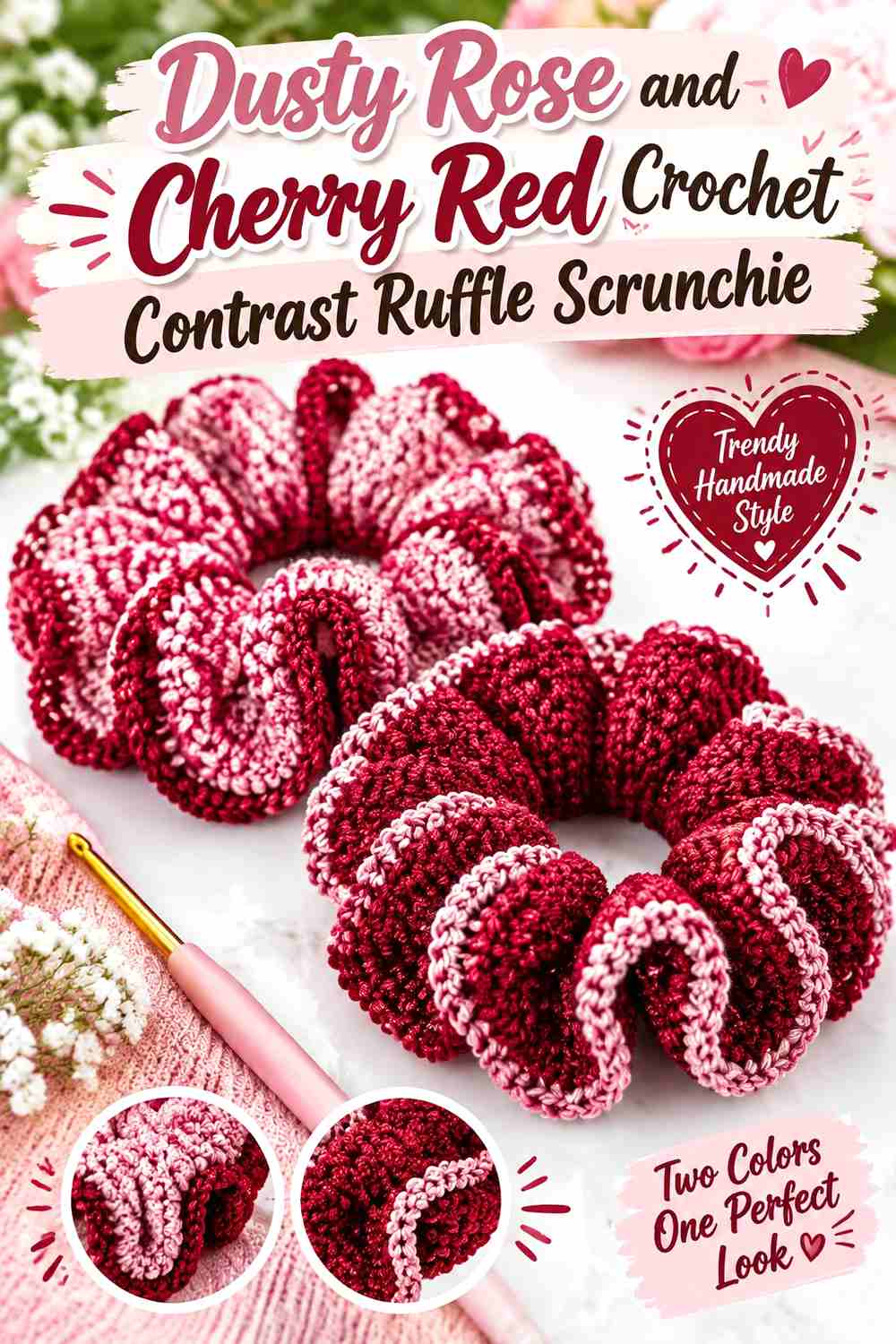
Cherry Red creates the boldest warm accent in this group. Keep Dusty Rose clearly dominant and use Cherry Red only as a narrow center, small repeated detail, or thin finishing line.
The colors are related enough to feel connected, but the more saturated red can attract attention quickly. The amount of Cherry Red matters more than the number of places where it appears.
Dusty Rose Needs More Visual Area Than Cherry Red
Let Dusty Rose cover nearly the entire visible ruffle if you want this to remain a dusty-pink accessory.
Cherry Red can still look prominent in a much smaller amount because its stronger saturation separates clearly from the softened main color.
Cherry Red Can Emphasize the Dusty Rose Ruffle Center
Use Cherry Red close to the elastic when you want a concentrated burst of color.
As the Dusty Rose folds gather over it, small red glimpses can create depth without turning the outer edge bright red.
Dusty Rose Should Finish the Cherry Red Contrast Ruffle
Return to Dusty Rose at the outermost edge rather than allowing Cherry Red to surround the entire silhouette.
This keeps the brighter color contained and makes the Dusty Rose ruffle the main visual feature.
Creator Credit: Crochet Craftsman
Comparing the Dusty Rose Crochet Ruffle Scrunchie Palettes
For the simplest Dusty Rose look, the monochrome version lets the ruffle shape create all the depth. Cream, Ivory, Soft White, and Oatmeal are useful when you want a lighter edge or center without changing the soft neutral-pink direction dramatically.
Plum, Burgundy, Cocoa, and Charcoal create stronger separation. These shades work particularly well near the elastic or beneath a Dusty Rose layer because even small areas can remain visible between the folds.
Blush and Mauve are the most tonal options. They change the pink without introducing a clearly separate hue, so the final effect depends more on lightness and placement than strong color contrast.
Sage provides the clearest muted color contrast, while Cherry Red gives the palette the strongest warm accent. In both cases, keeping Dusty Rose on the broad outer ruffle protects the article’s main color direction.
Conclusion
Dusty Rose can change considerably depending on what surrounds it and which part of the crochet ruffle it occupies. For a clean, single-color result, use Dusty Rose from center to edge and let the folds create natural shadow. For softer definition, add Cream, Ivory, Oatmeal, or Soft White around the edge or center.
If you want deeper contrast, keep Plum, Burgundy, Cocoa, or Charcoal in smaller areas where they can show between Dusty Rose folds. Blush and Mauve are better choices when you want a gradual tonal change, while Sage and Cherry Red create more obvious color variation.
Whichever palette you choose, judge it after the ruffle gathers around the elastic. The overlapping fabric can hide an inner color, magnify an outer edge, or make similar shades blend more than expected. Planning the dominant, supporting, and accent roles before finishing makes the Dusty Rose color direction much easier to preserve.
Frequently Asked Questions
What colors pair well with Dusty Rose on a crochet ruffle scrunchie?
Cream, Ivory, Oatmeal, Blush, Mauve, Plum, Burgundy, Cocoa, Sage, Charcoal, Soft White, and Cherry Red can all create different results. The more important decision is where the supporting shade appears and how much surface area it receives.
Where should Dusty Rose go on a two-color crochet ruffle scrunchie?
Keep Dusty Rose on the broadest outward-facing ruffle when you want it to remain dominant. A supporting shade can sit closer to the elastic, beneath a second layer, or along a narrow outer edge.
How can I make a Dusty Rose crochet ruffle look more defined?
Increase contrast around the folds. A lighter edge such as Cream or Soft White can outline the ruffle, while a deeper center such as Plum or Burgundy can create shadow between Dusty Rose layers.
Can I make a Dusty Rose ruffle scrunchie without a second color?
Yes. A monochrome Dusty Rose scrunchie can use the natural shadows of gathered crochet and differences in stitch texture to create visual depth without another shade.
Why does my accent color disappear inside a Dusty Rose ruffle scrunchie?
The folds may be covering too much of the inner color. Move the supporting shade slightly farther outward or increase the area it occupies before the outer Dusty Rose layer begins.
Should the darkest color go around the edge of a Dusty Rose scrunchie?
Not necessarily. A dark outer edge creates a strong outline, while placing the darkest color near the elastic gives subtler depth between the folds. Choose the placement based on whether you want obvious framing or a shadowed center.
How can I keep a multicolor Dusty Rose crochet scrunchie from looking busy?
Give Dusty Rose the largest visual role and limit each additional color to a specific job, such as the inner ring, underlayer, or outer edge. Avoid dividing several strong colors into equal amounts unless a deliberately bold multicolor result is the goal.