Celadon and Marigold give a crochet bento box sleeve a useful balance between a muted main color and a stronger warm accent. Celadon can cover broad side panels without overwhelming the shape of the box, while Marigold can make corners, borders, drawstrings, handles, or closure sections easier to distinguish. Reverse the balance, and the sleeve becomes warmer overall with Celadon used to calm selected structural areas.
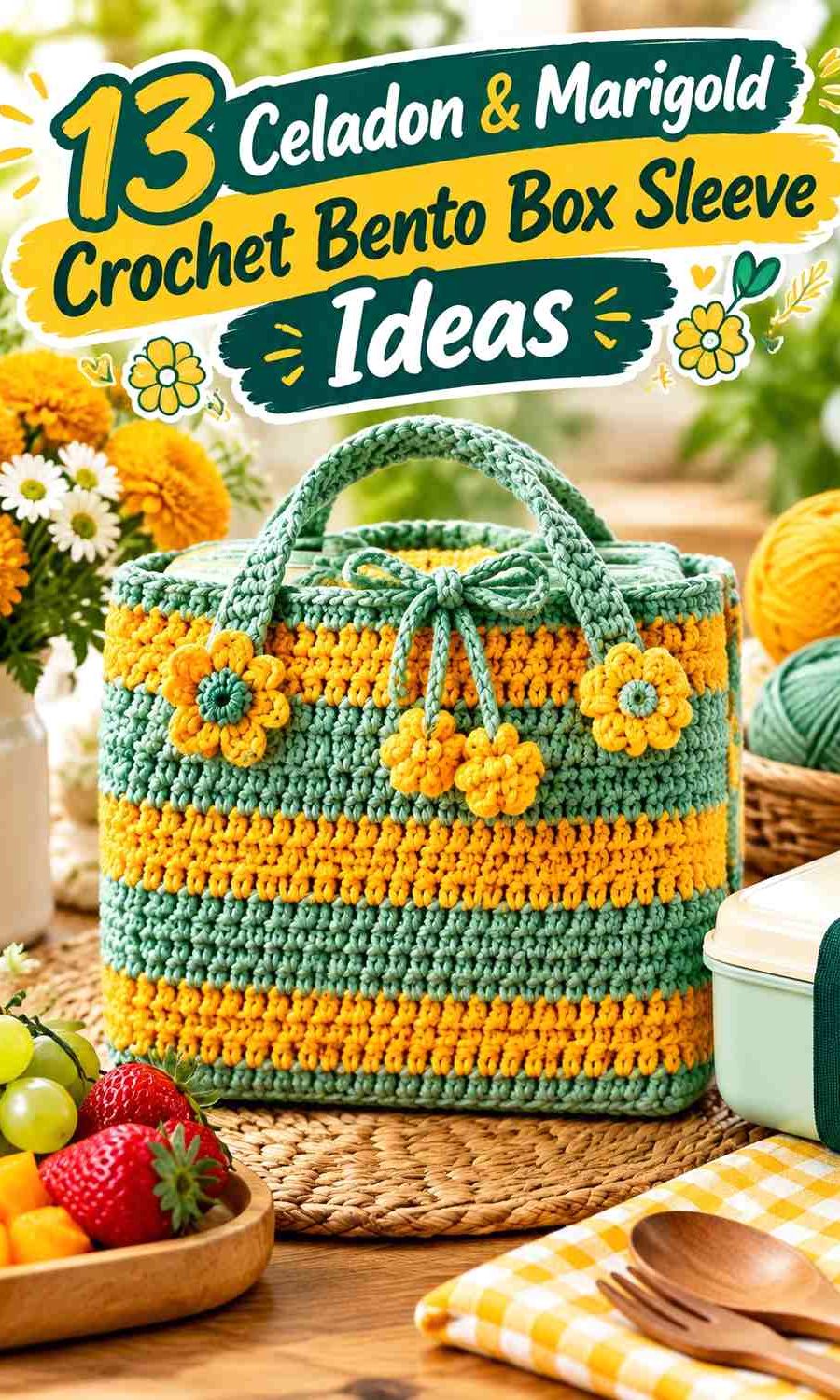
A bento box also changes how the colors are seen. Once the box is inside the sleeve, the broad side panels remain visible, while the base largely disappears and the top may be partly hidden by a lid, handle, or closure. Color placed at the upper edge, corners, or carrying section therefore has a different visual impact from color concentrated underneath the box.
The tutorials credited below include lunch bags, boxy bags, drawstring pouches, rectangular baskets, square-base baskets, carriers, and knot bags that can support different bento-sleeve construction concepts. Use them for their demonstrated crochet structures, then adapt the dimensions to a closed bento box and apply the Celadon-and-Marigold palette independently.
Quick List
- Celadon Panel And Marigold Gusset Crochet Bento Box Sleeve
- Marigold Body And Celadon Tab Crochet Bento Box Sleeve
- Celadon Simple Pouch And Marigold Edge Crochet Bento Box Sleeve
- Celadon Granny Panel And Marigold Join Crochet Bento Box Sleeve
- Celadon Moss Texture And Marigold Knot Handle Crochet Bento Box Sleeve
- Celadon Drawstring And Marigold Top Band Crochet Bento Box Sleeve
- Marigold Cross Wrap And Celadon Center Crochet Bento Box Sleeve
- Marigold Square Base And Celadon Wall Crochet Bento Box Sleeve
- Celadon Basket Style And Marigold Rim Crochet Bento Box Sleeve
- Marigold Dense Base And Celadon Side Crochet Bento Box Sleeve
- Celadon Knot Sleeve And Marigold Handle Crochet Bento Box Sleeve
Plan Celadon and Marigold Around the Bento Box Shape
Before deciding where each color belongs, look at the closed box rather than planning the sleeve as a generic bag. Check the base shape, side-wall height, lid overhang, clips, bands, and any projecting features that should remain accessible.
For a rectangular box, Celadon can cover the broad front and back panels while Marigold emphasizes the narrower side gussets. On a squarer bento, a Marigold base can transition into Celadon walls instead. These larger color zones usually make the two-color plan easier to read than frequent narrow stripes around all four sides.
The upper edge deserves particular attention because it remains visible whenever the box is inside the sleeve. If you want Marigold to function as the accent color, a top band, drawstring channel, handle, or narrow rim can give it enough presence without dividing the larger Celadon panels.
Use Celadon and Marigold Where the Sleeve Remains Visible
The bottom of a bento sleeve is useful structurally, but it contributes little to the visible palette while the box is standing on a table. If Marigold is meant to be the noticeable accent, putting all of it underneath the box wastes much of its visual effect.
Repeat Marigold somewhere higher on the sleeve: around the rim, at the corners, in a fastening tab, or through a handle. Celadon can then remain the dominant surface color without making the finished sleeve look like a single-color project.
For a Marigold-dominant sleeve, reverse the idea. Use the warm shade across the side walls and let Celadon define the rim, base transition, or carrying section.
Keep Celadon and Marigold Crochet Sleeves Focused on Carrying and Coverage
A crochet sleeve can provide decorative coverage and a way to carry a closed bento box, but do not assume that crochet alone gives a particular level of thermal insulation, leak protection, or food-temperature control. Keep food contained in the appropriate closed box and use whatever temperature-control method the food itself requires.
The sleeve should also allow the box to be inserted and removed without forcing the lid, clips, or fasteners. Before extending a decorative Marigold border or Celadon flap across the top, check whether that area needs to remain free for normal box use.
1. Celadon Panel And Marigold Gusset Crochet Bento Box Sleeve
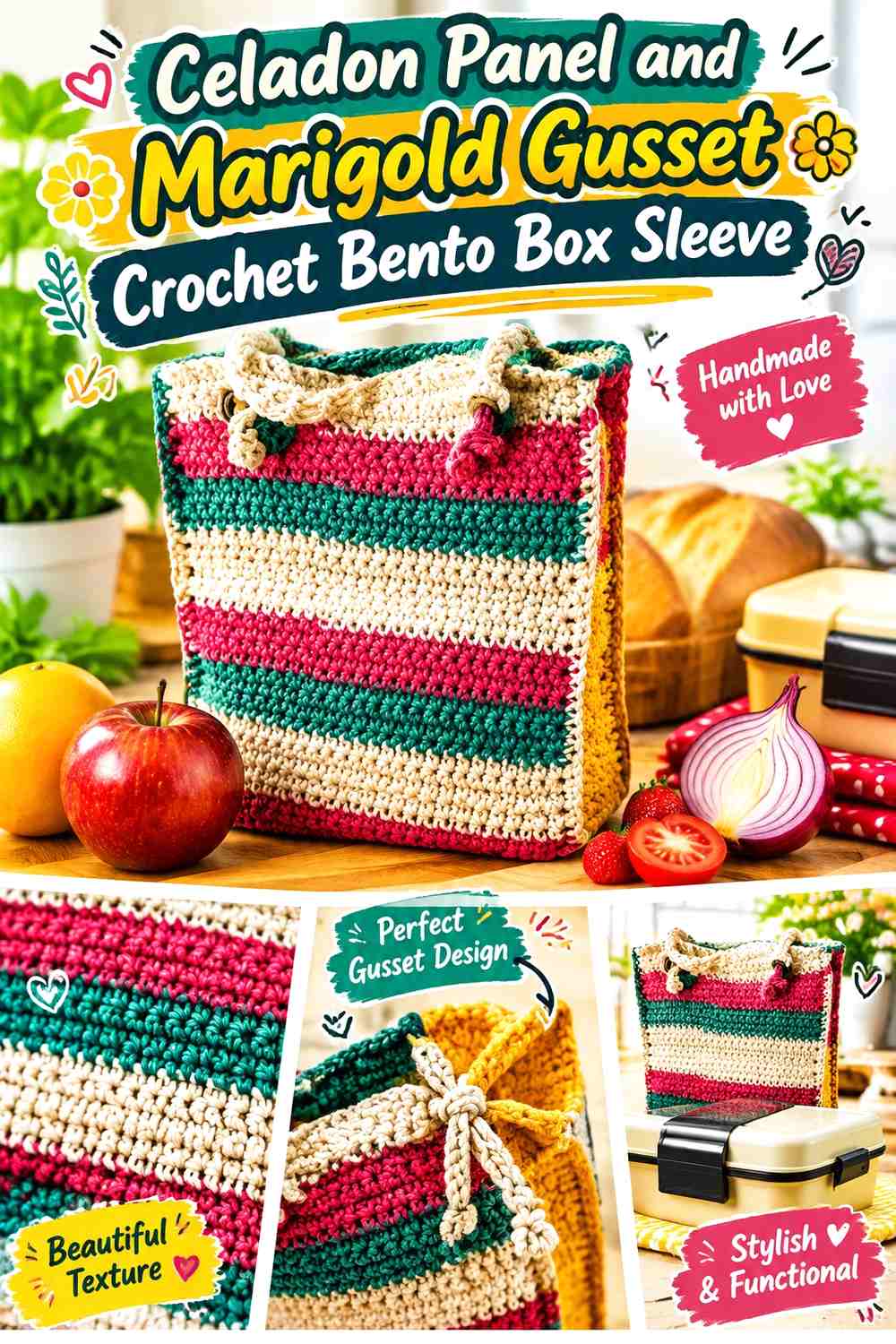
A paneled lunch-bag construction translates naturally into a fitted rectangular sleeve because the broad front and back can be treated differently from the sides and base. Celadon can cover the large panels, while Marigold runs through the gusset and visually outlines the depth of the box.
Let Celadon Cover the Broad Crochet Bento Panels
Use Celadon across the front and back when you want the muted shade to define most of the finished sleeve. Large uninterrupted panels also allow stitch texture to remain visible without the surface being broken into many color changes.
Once the bento is inside, these panels are likely to be among the most visible parts, so Celadon will remain clearly dominant.
Use Marigold to Trace the Celadon Crochet Bento Gusset
Marigold can run along the side-and-base gusset to show where the sleeve turns around the box. The warmer shade then acts almost like a structural outline instead of a scattered accent.
Repeat a little Marigold near the upper edge if the base section becomes mostly hidden when the sleeve is in use.
Creator Credit: The Crochet Crowd
2. Marigold Body And Celadon Tab Crochet Bento Box Sleeve

A lunch-tote construction with a front fastening area creates a useful place to reverse the palette. Marigold can dominate the body, while Celadon appears on the closure tab, handle, or top finishing section.
Give Marigold Most of the Crochet Bento Sleeve Surface
Use Marigold continuously across the main body when you want the warmer shade to be the first color noticed. Keeping the larger sections one color also prevents a compact lunch sleeve from looking chopped into many small bands.
If Marigold feels visually strong, let the box shape and crochet texture supply the variation instead of introducing additional colors.
Put Celadon on the Marigold Crochet Closure Area
A Celadon tab or top section creates a quieter focal point against the warmer body. Because this is a functional part of the sleeve, the contrasting shade also helps distinguish it from the surrounding Marigold surface.
Repeating Celadon on a short handle can connect the closure with the carrying area without taking over the sleeve.
Creator Credit: Sara Sach Crochet Designs
3. Celadon Simple Pouch And Marigold Edge Crochet Bento Box Sleeve
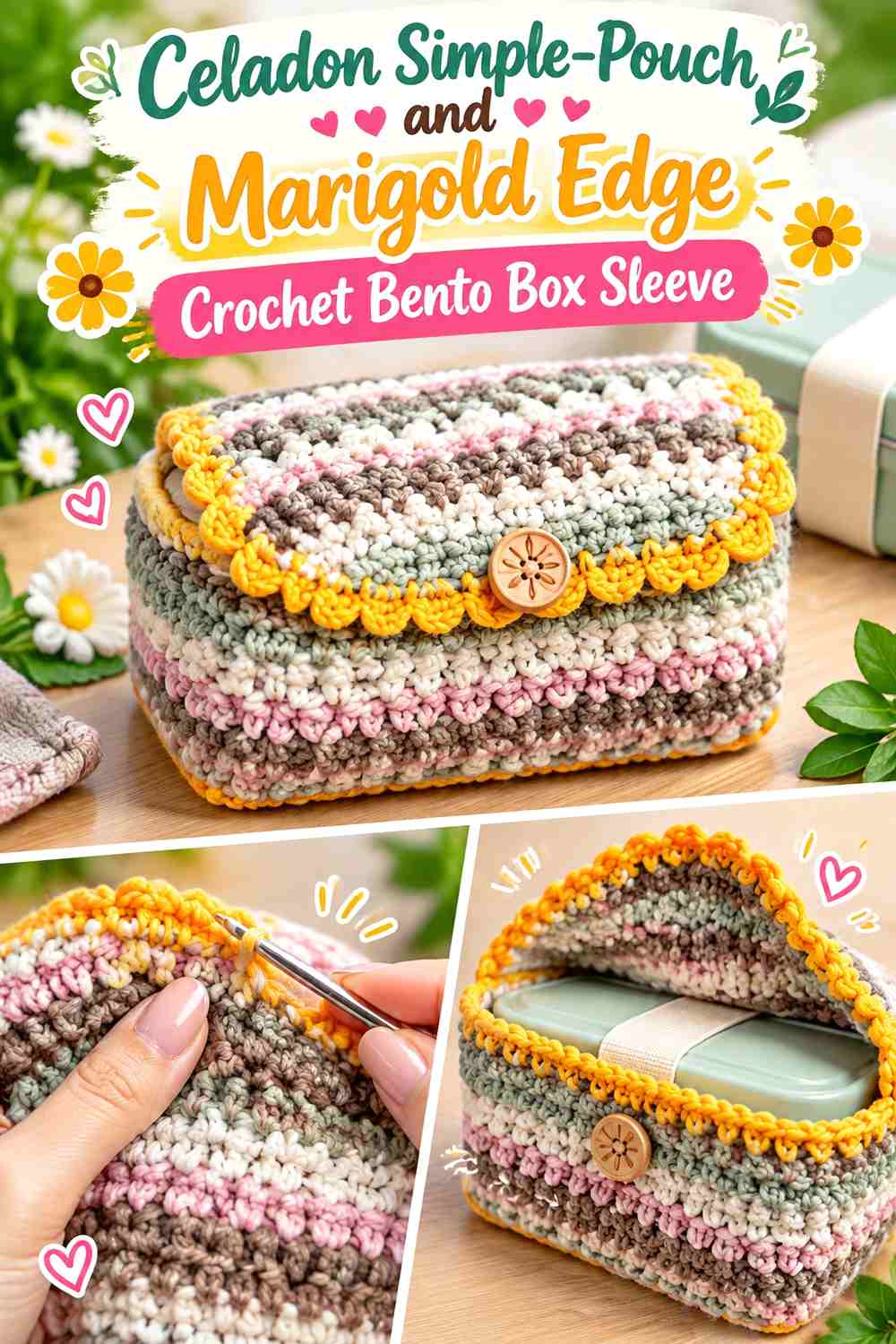
A straightforward lunch-bag shape suits readers who want the color scheme to do most of the decorative work. Celadon can remain uninterrupted across the walls, while Marigold is restricted to the top edge and selected corner details.
Keep Celadon Continuous Around the Crochet Bento Box
A mostly Celadon sleeve creates one calm field around the container. This is useful when the bento itself has a patterned or colorful lid and you do not want the crochet to compete with it.
The uninterrupted main color can also make the rectangular form easier to read than several horizontal stripes would.
Let Marigold Finish the Celadon Crochet Sleeve Edge
Use Marigold at the top where the sleeve meets the box lid. This keeps the accent visible and creates a clear stopping point for the Celadon body.
If the upper edge is narrow, repeat Marigold once at the base corners or handle rather than making the entire border much deeper.
Creator Credit: mocotarou / crochet
4. Celadon Granny Panel And Marigold Join Crochet Bento Box Sleeve

A boxy bag assembled from crochet squares provides a modular direction for a bento sleeve. Celadon can dominate each panel, while Marigold appears around the joins, outer borders, or selected motif centers. The result makes the construction lines part of the palette.
Keep Celadon Dominant Across the Crochet Bento Panels
Use Celadon for the largest areas of every square so separate motifs still read as one coordinated sleeve. If each panel uses a different balance, the small box-shaped accessory can start to look visually fragmented.
You can still vary a motif center, but preserve Celadon as the recurring main field.
Let Marigold Connect the Celadon Crochet Bento Squares
Marigold joins can emphasize the edges where panels meet and visually outline the shape of the box. Because the color repeats around multiple seams, it can have a strong effect without occupying much total surface.
If the join becomes the most visible feature, keep additional Marigold details restrained.
Creator Credit: Marly Bird
5. Celadon Moss Texture And Marigold Knot Handle Crochet Bento Box Sleeve
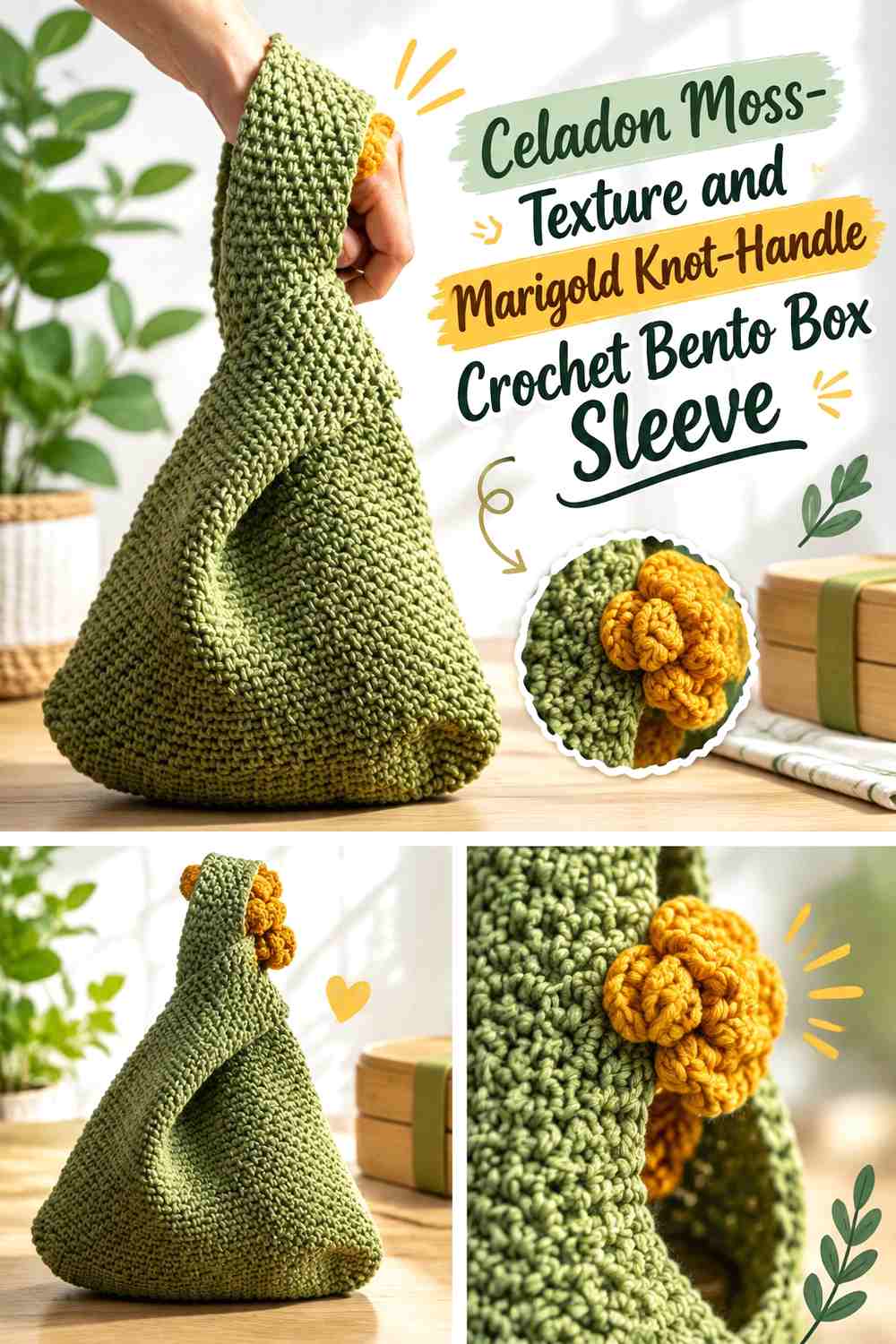
A Japanese knot-bag structure suggests a sleeve that extends upward into unequal handle sections instead of ending at a conventional rim. Celadon can cover the box and textured body, while Marigold marks the handle that passes through the other.
Let Celadon Show the Crochet Bento Sleeve Texture
Use Celadon across the main sleeve so the repeated surface texture remains easy to see. A muted field works particularly well when the construction already supplies plenty of visual interest.
Keep the color consistent through the box-covering portion instead of changing shades on every textural repeat.
Use Marigold to Highlight the Celadon Crochet Knot Handle
Make one handle or the upper carrying section Marigold so the knot-style closure becomes a visible feature. This puts the accent color well above the box, where it will not disappear behind the contents.
If two handles are different lengths, consistent Marigold placement can help clarify which section passes through the other.
Creator Credit: Sweet Softies
6. Celadon Drawstring And Marigold Top Band Crochet Bento Box Sleeve
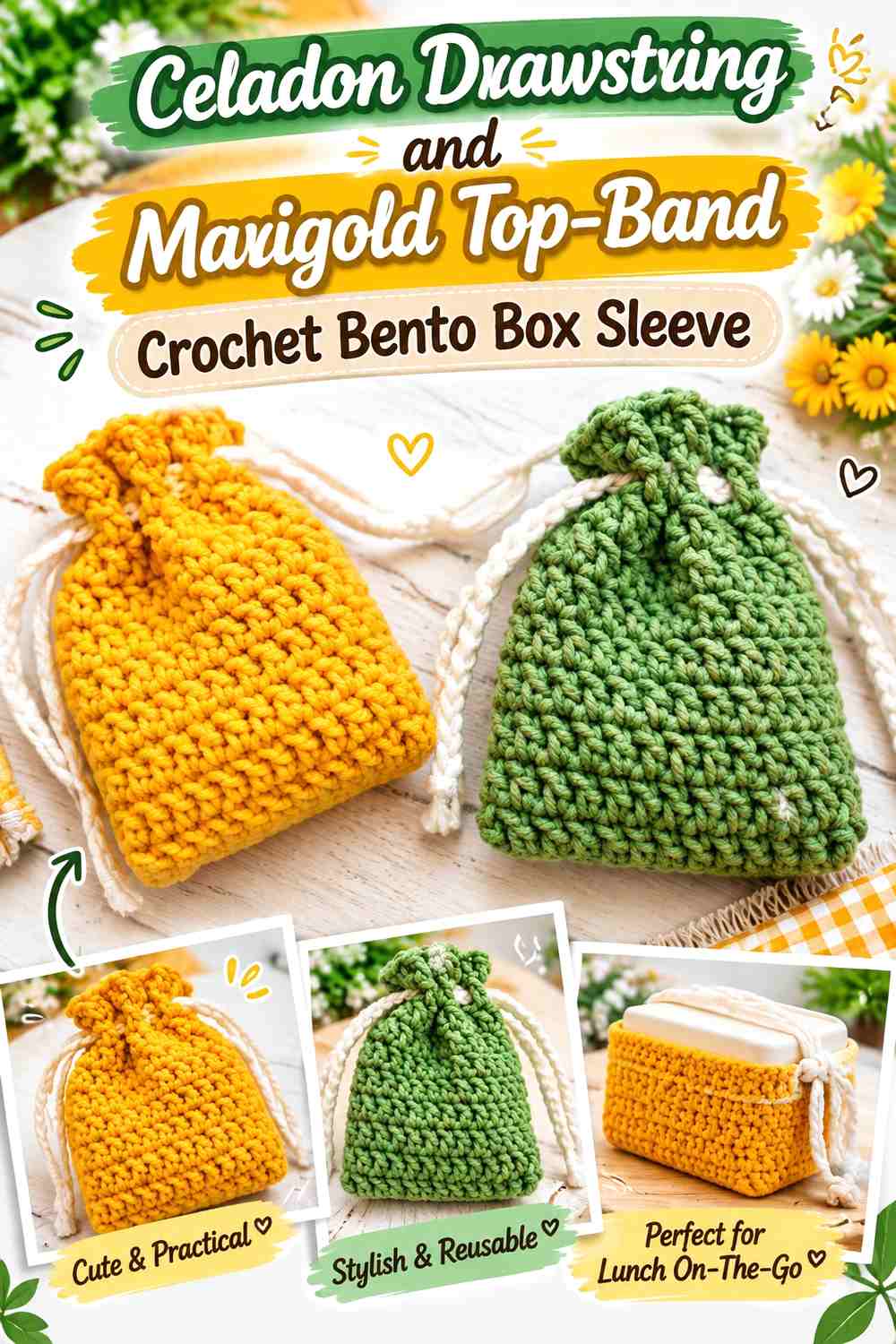
A drawstring pouch provides a useful model for a sleeve that gathers above a compact bento box. Celadon can cover the lower container area, while Marigold is concentrated around the drawstring channel and ties.
Keep Celadon Around the Main Crochet Bento Box Body
Use Celadon from the base through most of the walls so the box-covering section remains visually calm. This keeps the sleeve from looking overly busy even when the gathered top creates folds.
Put Marigold at the Celadon Crochet Drawstring Channel
Marigold is particularly effective at the top because the drawstring area stays visible above the box. Use it for the channel, ties, or both so the accent color marks the opening.
Avoid bringing the gathering so tightly over the lid that normal removal becomes awkward; adapt the pouch concept to the shape and closure of the particular bento box.
Creator Credit: VivCrochets
7. Marigold Cross Wrap And Celadon Center Crochet Bento Box Sleeve
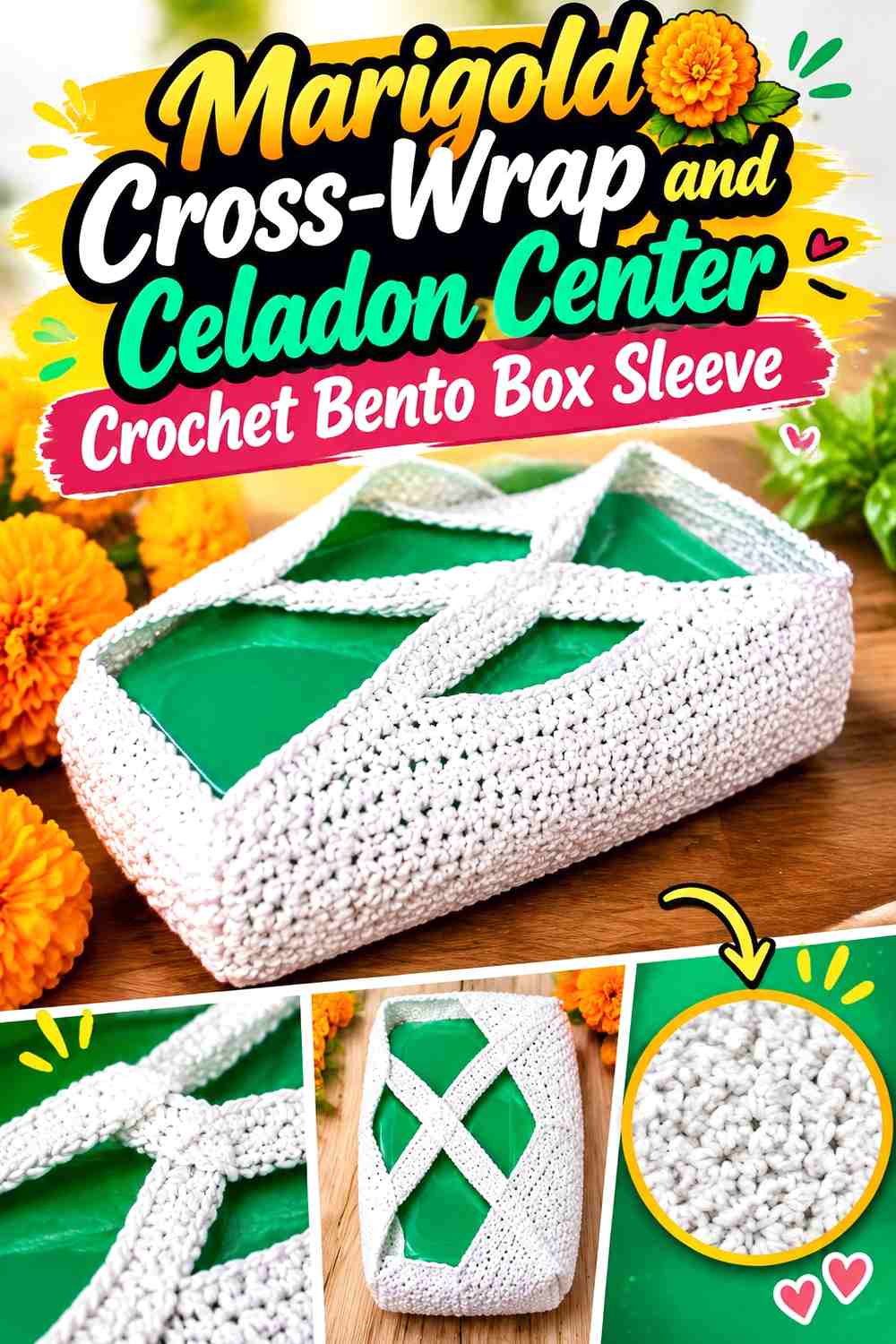
A casserole-carrier concept offers a different direction from a closed bag: the crochet can wrap around a container from below and cross over or meet above it. For a bento adaptation, Marigold can form the visible carrying bands while Celadon covers the central base or contact panel.
Use Celadon Under the Crochet Bento Box Center
Keep Celadon on the lower panel where the box rests. This gives the muted shade a stable structural role even though much of it will be hidden during use.
Repeating Celadon at the central meeting point can make the base color visible from above as well.
Let Marigold Cross Over the Celadon Crochet Bento Wrap
Use Marigold for the bands or sides that travel upward around the box. Because these sections remain exposed, the warm accent becomes much more noticeable than it would underneath the container.
Check that the wrap does not obstruct clips or lid-release points on the box.
Creator Credit: DIY On The House
8. Marigold Square Base And Celadon Wall Crochet Bento Box Sleeve

A square-base basket offers a useful starting point for compact bento containers with similar proportions. Marigold can cover the base and rise slightly around the lower edge, while Celadon takes over the walls.
Let Marigold Define the Crochet Bento Sleeve Base
Use Marigold underneath the box and carry it far enough upward that at least a narrow strip remains visible when the sleeve is standing normally. Otherwise, the warm color may disappear completely beneath the bento.
A visible lower band makes the base color part of the design rather than a hidden construction detail.
Raise Celadon Above the Marigold Crochet Base
Use Celadon for most of the vertical wall area. This moves the quieter color into the section that occupies the largest visible surface and keeps Marigold concentrated near the bottom.
For stronger balance, repeat a small amount of Marigold at the upper edge rather than adding stripes through the Celadon walls.
Creator Credit: Mi cajon verde
9. Celadon Basket Style And Marigold Rim Crochet Bento Box Sleeve
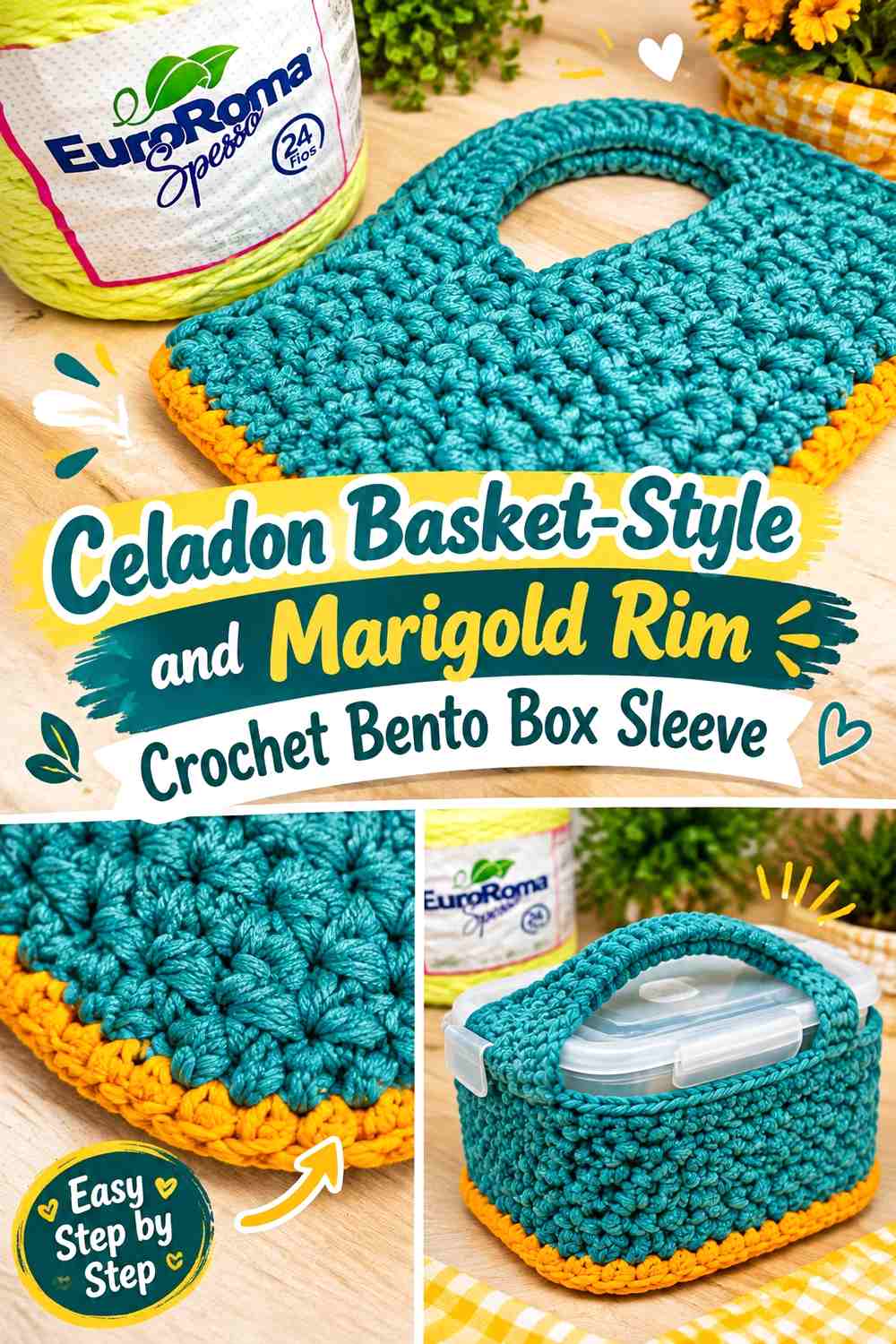
A basket-bag structure can create a sleeve with enough shape to stand open while the bento is being inserted. Celadon can dominate the sides, while Marigold follows the top rim and any short carrying sections.
Let Celadon Carry the Crochet Bento Basket Walls
Use Celadon around the main body to create a continuous box-shaped field. This keeps the structural nature of the sleeve clear and allows the rim color to become the intentional accent.
Repeat Marigold Around the Celadon Crochet Bento Rim
A complete Marigold rim creates a visible line around the top of the box and can remain noticeable even when the sleeve is closely fitted.
If the design includes handles, continuing Marigold into them can visually connect the carrying areas with the upper edge rather than introducing another color change.
Creator Credit: JNY Crochê
10. Marigold Dense Base And Celadon Side Crochet Bento Box Sleeve
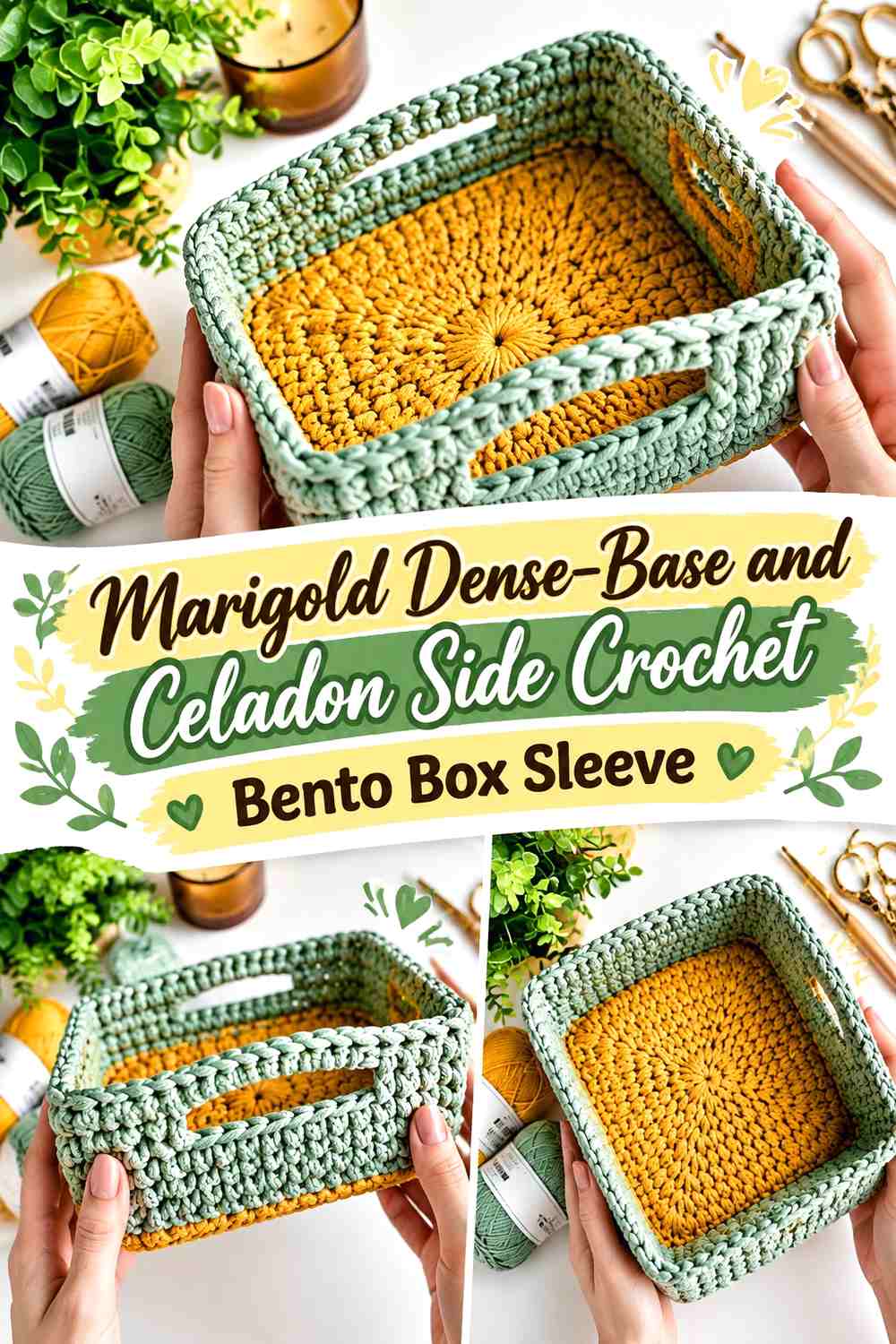
A dense square-base basket construction provides a more structured visual direction. Marigold can occupy the compact base, while Celadon rises through the side walls. The larger contrast blocks keep the two-color plan clear without requiring decorative motifs.
Give Marigold Enough Height Above the Crochet Bento Base
Do not confine Marigold entirely to the underside. Bring it slightly up the lower walls if you want the warm shade visible while the sleeve is upright.
This creates a defined lower band and clearly separates the base section from the Celadon body.
Keep Celadon Continuous Above the Marigold Crochet Band
Use Celadon through most of the walls so the upper portion remains one coherent color. A broad green field also gives you room to add a Marigold handle or rim later without making the sleeve overly striped.
Compare the developing sleeve directly with the intended box rather than relying on generic basket proportions.
Creator Credit: kavume handmade
11. Celadon Knot Sleeve And Marigold Handle Crochet Bento Box Sleeve
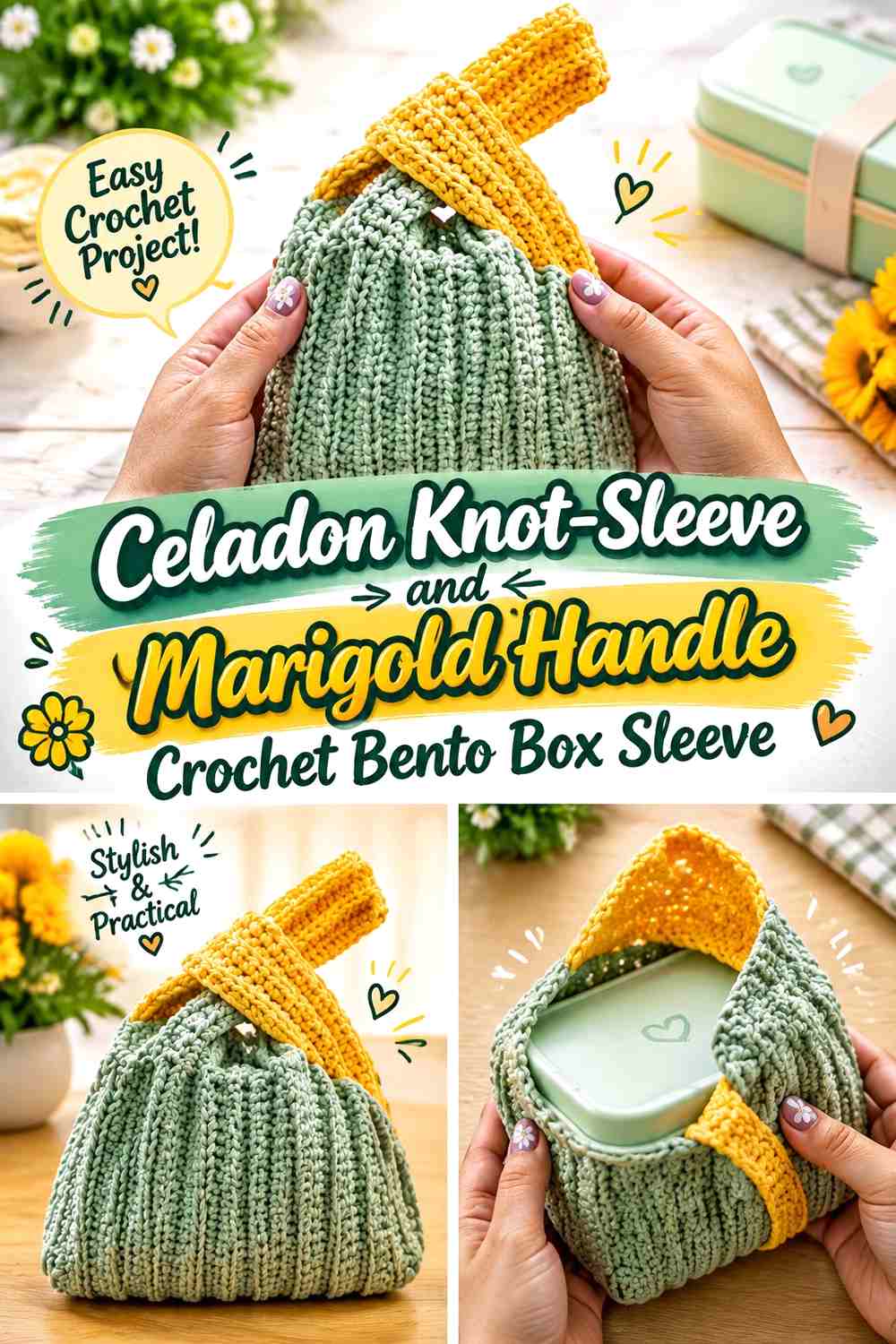
The final idea uses a knot-bag silhouette with a cleaner division between body and carrying sections. Celadon covers the box-shaped lower portion, while Marigold is reserved almost entirely for the handle area. This gives the accent color maximum visibility without interrupting the main sleeve.
Keep Celadon Focused Around the Crochet Bento Box
Use Celadon continuously from the base through the top of the box-covering section. The uninterrupted color makes the sleeve look compact and lets the handle treatment provide the distinction.
If the bento has a brightly colored lid, Celadon can also provide a quieter visual buffer between the lid and the stronger Marigold handle.
Let Marigold Lead the Celadon Crochet Knot Closure
Use Marigold on the handle or upper section that forms the knot-style carry point. Because the warm color sits above the box, it remains visible while the sleeve is carried and when it rests on a surface.
For a subtler version, keep one handle Celadon and make only the section that passes through it Marigold.
Creator Credit: Jesuecrochet
Comparing the Celadon and Marigold Crochet Bento Box Sleeve Directions
For a Celadon-dominant sleeve, ideas 1, 3, 4, 5, 7, 9, 11, and 13 keep the muted green across most of the container surface. Marigold then becomes easier to control through gussets, joins, borders, handles, or closures.
For a warmer Marigold-led sleeve, ideas 2 and 6 put the stronger color across the main visible body, while ideas 8, 10, and 12 give Marigold a more structural role through wraps or bases.
If your bento is strongly rectangular, paneled, rectangular-basket, or gusseted constructions offer useful shape references. A squarer box may suit the square-base and basket approaches more naturally. For a sleeve that extends above the lid, the drawstring and knot-handle ideas provide more decorative upper sections.
Conclusion
Celadon and Marigold can change the appearance of a crochet bento box sleeve simply by moving the warm color to a different structural area. Celadon walls with a Marigold rim create a calm main field with a visible top accent. A Marigold body with Celadon handles makes the sleeve warmer overall, while Marigold gussets or corners can outline a Celadon box without taking over its surface.
Think about what remains visible after the bento is inserted. A Marigold base may be attractive when the sleeve is empty but almost disappear during use, so repeat the color at the rim, handle, or another exposed section if it needs a stronger role.
Most importantly, adapt the construction to the actual closed box rather than assuming a generic lunch bag will fit it. Check the base shape, side height, lid and clip clearance, and preferred carrying method first, then use the credited tutorials for their original construction concepts and apply the Celadon-and-Marigold layout that suits your box.
Frequently Asked Questions
Should Celadon or Marigold dominate a crochet bento box sleeve?
Either can dominate. Celadon works well across broad walls when you want a quieter main surface, while Marigold can create a warmer sleeve or act as a concentrated accent on rims, handles, gussets, joins, and closures.
Where should Marigold go on a Celadon crochet bento sleeve?
Marigold is especially useful on areas that stay visible: the top rim, drawstring channel, handle, side gussets, corners, or closure tab. If you put Marigold on the base, repeat a small amount higher on the sleeve if you want the color visible while the bento is inside.
Can I use a drawstring on a Celadon and Marigold crochet bento box sleeve?
Yes, when the box shape and lid allow enough clearance. Keep the drawstring above the main box body rather than forcing it tightly over clips or other parts that need to remain accessible. Marigold can work well for the channel or ties against a Celadon body.
How can I make Celadon and Marigold work on a rectangular bento box?
Use the geometry of the box to divide the colors. Celadon can cover the broad front and back while Marigold runs through the narrower gussets, or Marigold can form a lower band beneath Celadon side walls. Large structural blocks usually read more clearly than many thin stripes.
Does a crochet bento sleeve provide insulation?
Do not assume a particular level of insulation or temperature control from the crochet sleeve alone. Treat it primarily as decorative coverage or a carrying layer unless a specific design and its materials have been verified for another function.
What if the Marigold base disappears under the Celadon crochet sleeve?
Bring Marigold slightly up the lower side walls or repeat it at the top edge or handle. This preserves the base color relationship while ensuring the warmer shade remains part of the visible palette.
How do I substitute other colors for Celadon and Marigold?
Preserve their roles. Replace Celadon with another muted, relatively quiet green if it is serving as the dominant field. Replace Marigold with another warm yellow, gold, or ochre direction if it is providing contrast. Check the replacements together to make sure borders, handles, joins, and other small details remain distinct.