Cerulean Ink and Burnt Apricot can turn the outer seam of thrifted jeans into anything from a narrow contrasting stripe to a full-length open crochet panel. The construction choice matters because inserting crochet into a side seam is different from simply sewing an appliqué onto denim. A straight narrow strip changes the look with relatively little alteration, while a widening panel can add circumference or create flare through the leg.
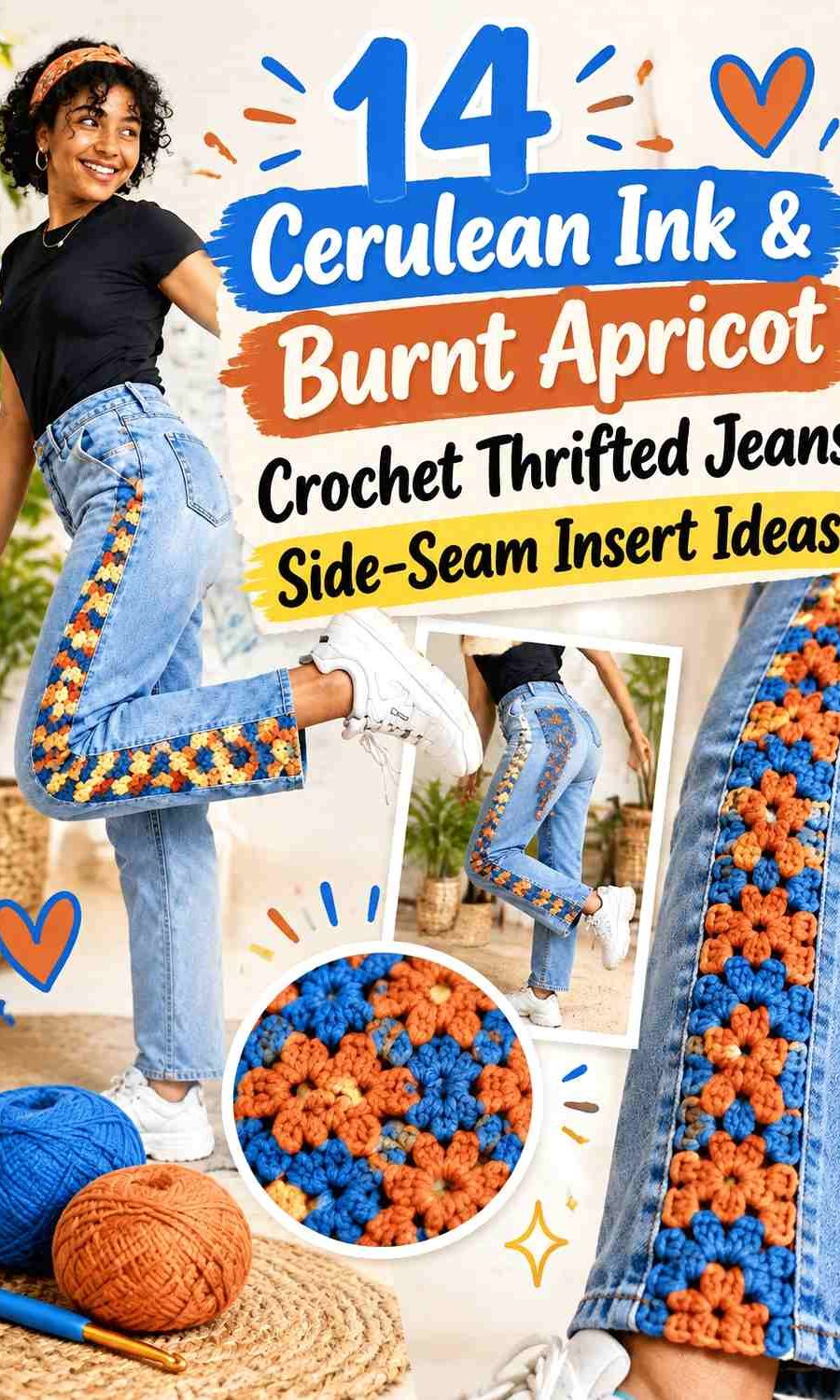
The crochet can be dense, modular, or highly open. Checkerboard and joined granny squares make strong color-blocked statements; flower lattice, fan lace, diamond mesh, and filet expose more of the leg or any backing beneath them. Tape lace works when only a slim stripe is wanted.
The sources below teach a jeans insert, narrow motif strip, lace panel, or transferable crochet structure. Use each original tutorial for the crochet itself, then plan denim cutting, edge stabilization, fit, and attachment around the specific thrifted jeans.
Quick List
- Crochet Two-Tone Checkerboard Thrifted Jeans Side-Seam Insert
- Crochet Classic Granny-Strip Thrifted Jeans Side-Seam Insert
- Crochet Burnt Apricot Daisy-Square Thrifted Jeans Side-Seam Insert
- Crochet Cerulean Sunburst Thrifted Jeans Side-Seam Insert
- Crochet Two-Tone Flower-Lattice Thrifted Jeans Side-Seam Insert
- Crochet Cerulean Vertical-Flower Thrifted Jeans Side-Seam Insert
- Crochet Burnt Apricot Fan-Lace Thrifted Jeans Side-Seam Insert
- Crochet Two-Tone Chevron-Mesh Thrifted Jeans Side-Seam Insert
- Crochet Burnt Apricot Filet-Rose Thrifted Jeans Side-Seam Insert
- Crochet Cerulean Geometric-Screen Thrifted Jeans Side-Seam Insert
- Crochet Two-Tone Ribbon-Lace Thrifted Jeans Side-Seam Insert
- Crochet Cerulean Spiderweb-Medallion Thrifted Jeans Side-Seam Insert
Decide Whether the Insert Is Adding Width or Replacing a Decorative Strip
Opening a side seam and inserting crochet can change the fit as well as the appearance. A narrow panel installed without removing much denim may primarily act as decoration, while a wider insert can increase leg circumference. A tapered panel that becomes wider toward the hem can also push a straight leg toward a flared silhouette.
Measure the jeans while worn before opening the seam. If the waistband and hips already fit, you may want the insert to begin lower on the leg rather than adding width all the way to the waist. Pocket bags and riveted pocket construction can also complicate an upper-thigh alteration.
Make a paper insert shape first. A straight rectangle, long taper, and knee-to-hem triangle produce very different silhouettes even when they use the same crochet stitch.
Account for the Difference Between Denim and Crochet Stretch
Denim and crochet rarely behave identically. A crochet panel may stretch lengthwise, sideways, or diagonally depending on its yarn and stitch structure, while the thrifted jeans may be rigid denim or contain elastane. That mismatch matters along a long side seam.
Finish and block a representative crochet sample before finalizing the denim opening. Clip or baste it into place and check the jeans standing, sitting, and walking. If the lace lengthens significantly under the garment’s weight, a perfectly matched flat measurement can become too long in wear.
Very open stitches such as diamond mesh and flower lattice also place more load on relatively few connection points. Denser granny, checkerboard, or filet panels spread that load differently. Whichever style you choose, attach it to sound denim rather than relying on loose frayed fibers along a cut edge.
Plan the Color Direction Before Crocheting Two Full-Length Panels
Cerulean Ink can visually continue the depth of dark blue denim, making it useful as the structural or outer color. Burnt Apricot creates the stronger interruption and works well in flower centers, checks, fan rows, or narrow decorative bands.
Color direction can also alter the apparent leg shape. A continuous Cerulean border with Apricot centered inside it creates a long vertical line; broad alternating blocks make the side panel look wider. On faded jeans, the darker blue may contrast almost as strongly as the apricot does.
Make both leg panels from the same color plan unless deliberate asymmetry is part of the design. For motifs, lay the entire sequence out before joining. A color order that looks balanced in a short sample can become unexpectedly repetitive across the full length of a jeans leg.
1. Crochet Two-Tone Checkerboard Thrifted Jeans Side-Seam Insert

A checkerboard panel is one of the clearest matches for this project because yoohooit’sisabel’s video specifically shows an upcycled pair of jeans receiving a crochet insert. The finished concept uses bold checkered crochet as part of the denim transformation rather than treating the crochet as a separate accessory.
For this version, alternate Cerulean Ink and Burnt Apricot in a narrow vertical checkerboard running along the outer seam. Equal squares produce a graphic retro look, while a wider panel gives the color blocking more room to read. Choose this option when you want the insert itself to dominate the alteration. Before beginning the second leg, compare the first finished panel with the jeans while worn so you can verify that the block scale works with the leg width.
Keep the Checks Aligned Down Both Legs
A checker pattern provides obvious horizontal reference lines, so mismatched panels are easy to notice. Lay both completed inserts side by side before installation and compare every color transition.
If the panels taper, decide whether the squares will stay the same size while the denim opening changes around them or whether a different panel structure is needed. Distorting square blocks to create flare can make the lower section look uneven.
Use Cerulean Ink at the Denim Edge
A Cerulean border can visually bridge the gap between blue denim and the more conspicuous Burnt Apricot squares. It also creates a calmer attachment line than placing orange directly against every cut edge.
Keep that border consistent on both sides of the panel. Even a narrow dark line can make the checkerboard look deliberately framed rather than inserted as an unrelated strip.
Check Fit Before Committing the Full Seam
A crochet insert may alter both circumference and stretch. Temporarily secure the panel at several points and try the jeans on before completing permanent attachment.
Pay special attention at the hip, knee, and calf, where the required ease can differ. A panel that feels comfortable below the knee may add unwanted volume at the upper thigh if it maintains the same width throughout.
Creator Credit: yoohooit’sisabel
2. Crochet Classic Granny-Strip Thrifted Jeans Side-Seam Insert
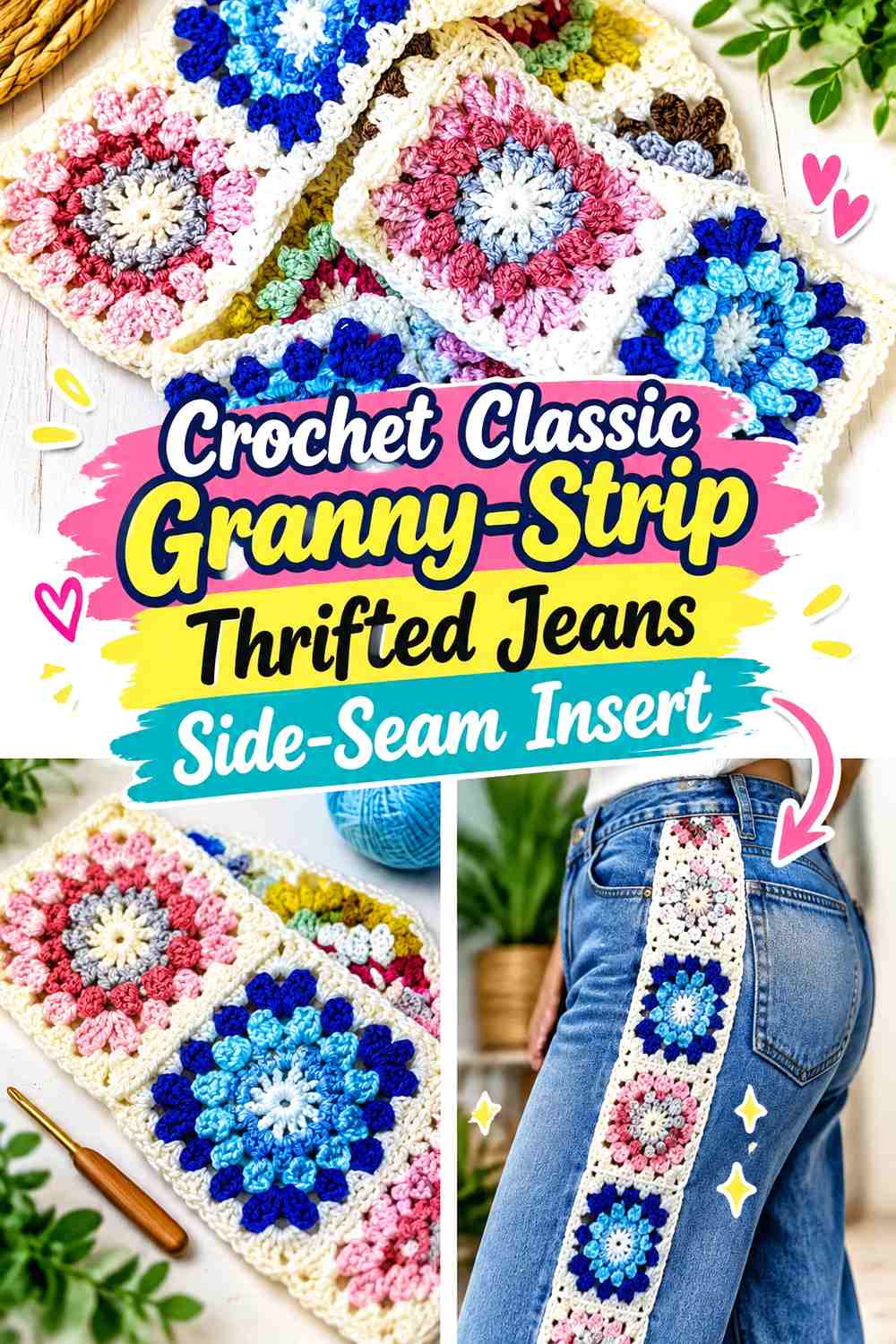
Easy Breezy Crochet teaches a joining method specifically designed to connect traditional granny squares into one narrow, single-row strip rather than a full blanket grid. The tutorial emphasizes consistent square size and a linear construction, making it especially relevant to a long jeans side insert.
Work the granny centers in Burnt Apricot and use Cerulean Ink for the outer round and joining structure. This gives the panel a repeating series of warm focal squares inside a dark continuous edge. A single-square-wide strip is useful when you want modular construction but do not want the insert to become too broad. Because the dimensions increase one complete square at a time, measure the blocked motifs against the side-seam length before deciding how many are required.
Use Motif Size to Control Panel Width
With a one-square strip, the square dimension effectively determines the insert width. Large motifs create a substantial side panel; fine squares make the strip read more like decorative trim.
Make one complete blocked square first. Changing yarn weight after producing a full stack of motifs is much less efficient than testing whether one square looks proportional to the jeans.
Keep Every Join Equally Flexible
The strip should bend smoothly with the leg rather than behaving like a chain of stiff tiles. Uneven joining tension can create narrow pinch points between otherwise flexible squares.
Inspect the strip hanging vertically before installation. If the joints pull inward or the motifs twist, correct the joining issue before denim attachment adds another layer of tension.
Plan the Top and Bottom Motifs
A full square may not fit perfectly between the desired starting point and hem. Decide whether the panel should end above the original hem, disappear into a new hem treatment, or begin lower on the thigh.
Avoid trimming a completed granny square to make it fit. Changing the denim opening slightly is usually cleaner than destroying the motif geometry.
Creator Credit: Easy Breezy Crochet
3. Crochet Burnt Apricot Daisy-Square Thrifted Jeans Side-Seam Insert

RaffamusaDesigns’ daisy granny square places a clustered flower inside a conventional square framework and provides different finished dimensions depending on yarn and hook choice. That makes it a useful motif when you want the strip width to be determined deliberately rather than improvised.
For these jeans, make Burnt Apricot petals the focal point and surround them with Cerulean Ink square rounds. A vertical line of repeated flowers softens the industrial look of a denim outer seam while the dark square edges keep the panel visually connected to the jeans. This idea works particularly well when only a moderate-width insert is needed. The flower shape is more recognizable than a classic granny cluster, so enough of each motif should remain visible after attachment.
Keep the Flowers Facing the Same Direction
Although the square outer shape is symmetrical, the finishing and joining details can still make one side of a motif read differently from another.
Arrange all squares right-side up and in the same orientation before connecting them. Consistency becomes especially important when strong Burnt Apricot petals are repeated in one long vertical sequence.
Use the Dark Outer Round as a Seam Buffer
Cerulean Ink around every daisy creates a practical visual zone between the flower and denim. It prevents the apricot petals from appearing abruptly clipped by the jeans edge.
The dark frame also gives you room to refine overall strip width without changing the flower center itself, provided any additional rounds remain compatible with the original square construction.
Avoid Oversized Flowers at the Upper Thigh
A motif that looks balanced near a wide lower leg can feel disproportionately large near a fitted hip. If the side panel runs from waist to hem, assess the square scale against the narrowest as well as widest part of the jeans.
A knee-to-hem floral strip may be the stronger choice when the upper jeans fit should remain largely unchanged.
Creator Credit: RaffamusaDesigns
4. Crochet Cerulean Sunburst Thrifted Jeans Side-Seam Insert
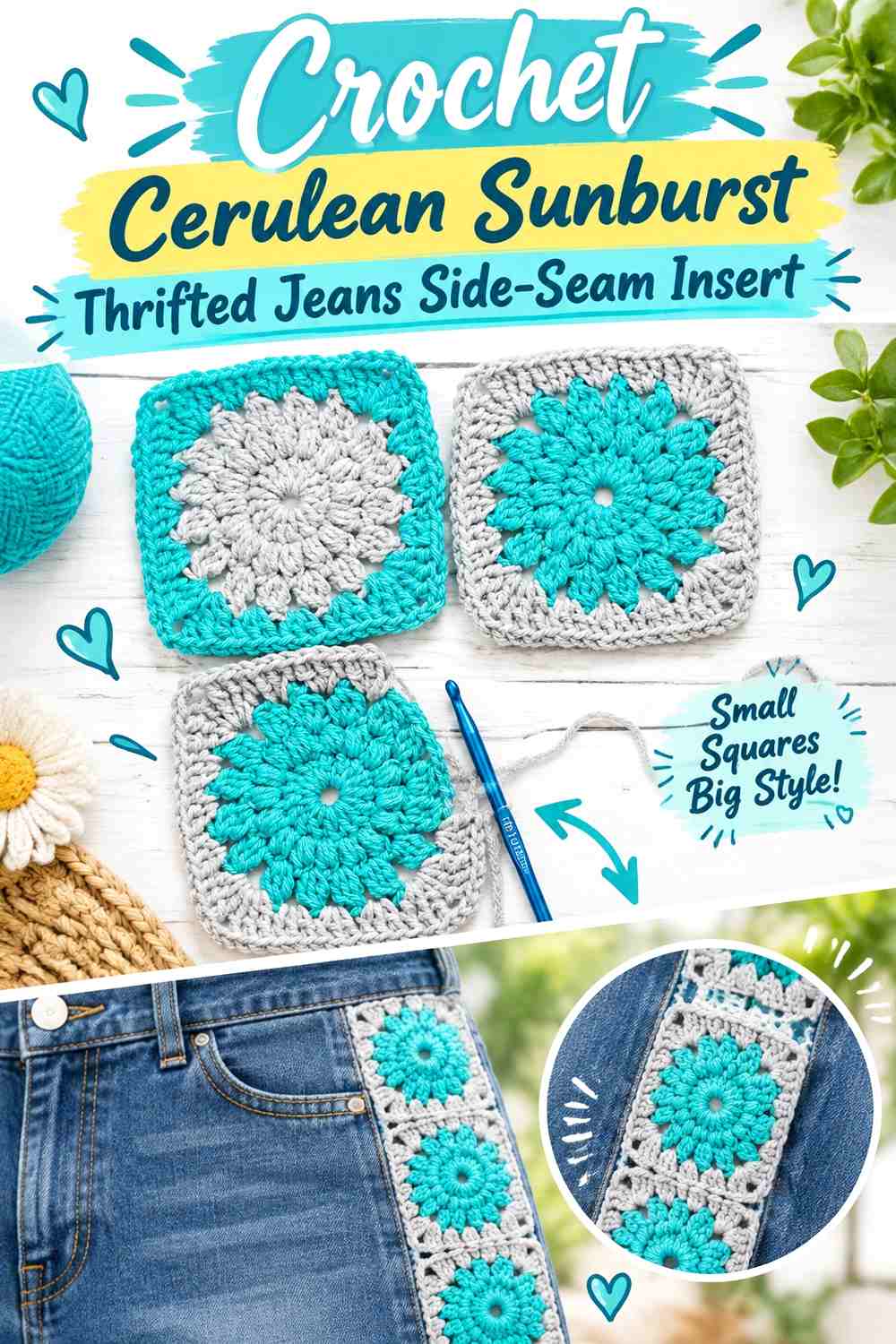
The You Should Craft sunburst granny square builds a circular center with puff stitches and clusters before converting it into a square. The tutorial explicitly presents the motifs as joinable squares suitable for larger projects.
Use Cerulean Ink through the outer square and Burnt Apricot in the sunburst center. That reverses the previous daisy idea: here the warm color is concentrated tightly at the center while the darker shade carries more of the panel surface. The raised inner texture makes this strip more dimensional than a classic granny line, so it suits jeans where the outer seam will not experience constant abrasion from boots, bags, or other clothing layers. Block every motif before joining so the side panel remains straight.
Make the Burst the Accent, Not the Whole Panel
Burnt Apricot is visually strong even when it occupies a small percentage of each square. Keeping it near the center allows the repeated bursts to punctuate the leg without turning the entire side seam orange.
Cerulean Ink can then dominate the joins, corners, and panel edges, creating a long dark framework that relates more closely to denim.
Consider Friction at the Outer Leg
Puff stitches and cluster texture rise above the flatter square rounds. On a side seam, those high points may brush against chair arms, bags, or the opposite leg.
Place a sample against the intended section and move normally. If the texture catches repeatedly, shorten the motif strip or choose a flatter option for the most exposed area.
Match Both Legs Before Sewing
Sunburst centers draw the eye immediately, making any difference in motif count or vertical placement easy to see.
Mark equivalent starting points on both jeans legs and compare the full strips while the jeans hang naturally. Even if the original hems differ slightly from wear, the crochet sequence should still look intentionally paired.
Creator Credit: You Should Craft
5. Crochet Two-Tone Flower-Lattice Thrifted Jeans Side-Seam Insert

Dearest Debi Patterns’ flower lattice creates a continuous field of connected four-petal flowers rather than separate squares. The source also notes that the direction in which the fabric is worked influences its drape, an important consideration when adapting the lattice into a long vertical garment panel.
For the jeans insert, work most of the lattice in Cerulean Ink and introduce Burnt Apricot as occasional flowers or a narrow central path. The spaces between motifs leave more leg or backing visible than a granny strip, making this a lighter-looking full-length option. Because the pattern does not rely on hard square boundaries, it can feel more fluid beside denim. Test its stretch vertically before final sizing, since a long open panel can lengthen differently from a compact motif strip.
Orient the Lattice for Vertical Stability
The source specifically discusses direction and drape, so do not choose the working orientation only for convenience. Crochet a small sample and suspend it vertically as the jeans panel will hang.
Select the orientation that keeps the flowers recognizable without excessive lengthening. The side seam is a long vertical application, so drape matters more here than it would in a small decorative patch.
Let Burnt Apricot Appear at Intervals
Alternating every flower can produce a visually busy full-leg pattern. Spacing apricot motifs farther apart makes each one more noticeable while leaving Cerulean as the connecting structure.
Sketch or photograph the planned sequence before beginning the second panel so the color rhythm remains consistent on both legs.
Consider What Will Show Through the Openings
An open lattice reveals skin, tights, or any backing panel very clearly. That underlying layer becomes part of the color design.
Test the crochet over the way you actually intend to wear the jeans. A lattice that looks subtle over blue backing can appear dramatically different over bare skin.
Creator Credit: Dearest Debi Patterns
6. Crochet Cerulean Vertical-Flower Thrifted Jeans Side-Seam Insert
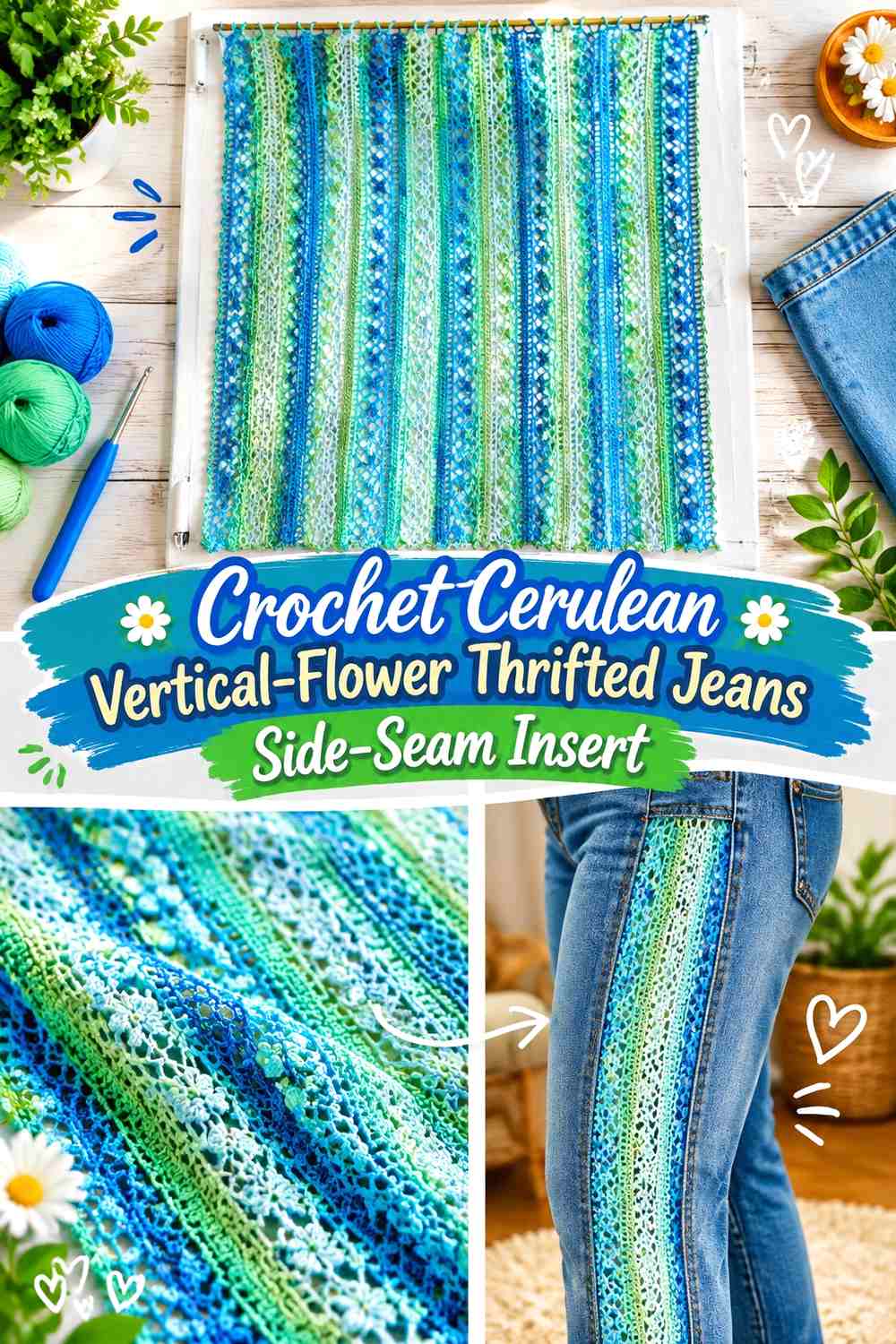
Silk & Wool’s lace flower stitch is worked sideways so that, once the finished curtain is oriented for use, the stitch pattern and color changes create vertical stripes. That directional construction translates particularly well to a jeans side seam because the flowers can run in a continuous column down the leg.
Use Cerulean Ink for the main flower lace and Burnt Apricot for a narrow neighboring stripe or occasional color section. This panel reads more like continuous fabric than joined motifs, which can make a full-length insert feel smoother from hip to hem. The sideways construction does require careful planning: extending the work may affect a different finished dimension than you expect after the panel is rotated into position.
Label Width and Length on the First Swatch
Sideways lace is easy to misread while it is still on the hook. Mark which edge will eventually run along the leg and which will span the side-seam opening.
That simple step prevents you from adding many rows only to discover that you have enlarged the insert in the wrong direction.
Keep the Apricot Stripe Narrow
A slim Burnt Apricot line beside broad Cerulean flower lace creates a long visual path that can make the leg appear more vertical.
A wide orange stripe can make the insert look broader instead. Choose according to whether the panel is meant to add visible width or remain a narrow accent.
Finish Both Panels to the Same Repeat Point
Continuous floral lace looks most deliberate when both legs begin and end on corresponding parts of the pattern.
Do not simply stop once the tape measure reaches the desired length. Finish an appropriate complete repeat, block the piece, and then decide whether the denim opening needs a slight adjustment.
Creator Credit: Silk & Wool
7. Crochet Burnt Apricot Fan-Lace Thrifted Jeans Side-Seam Insert
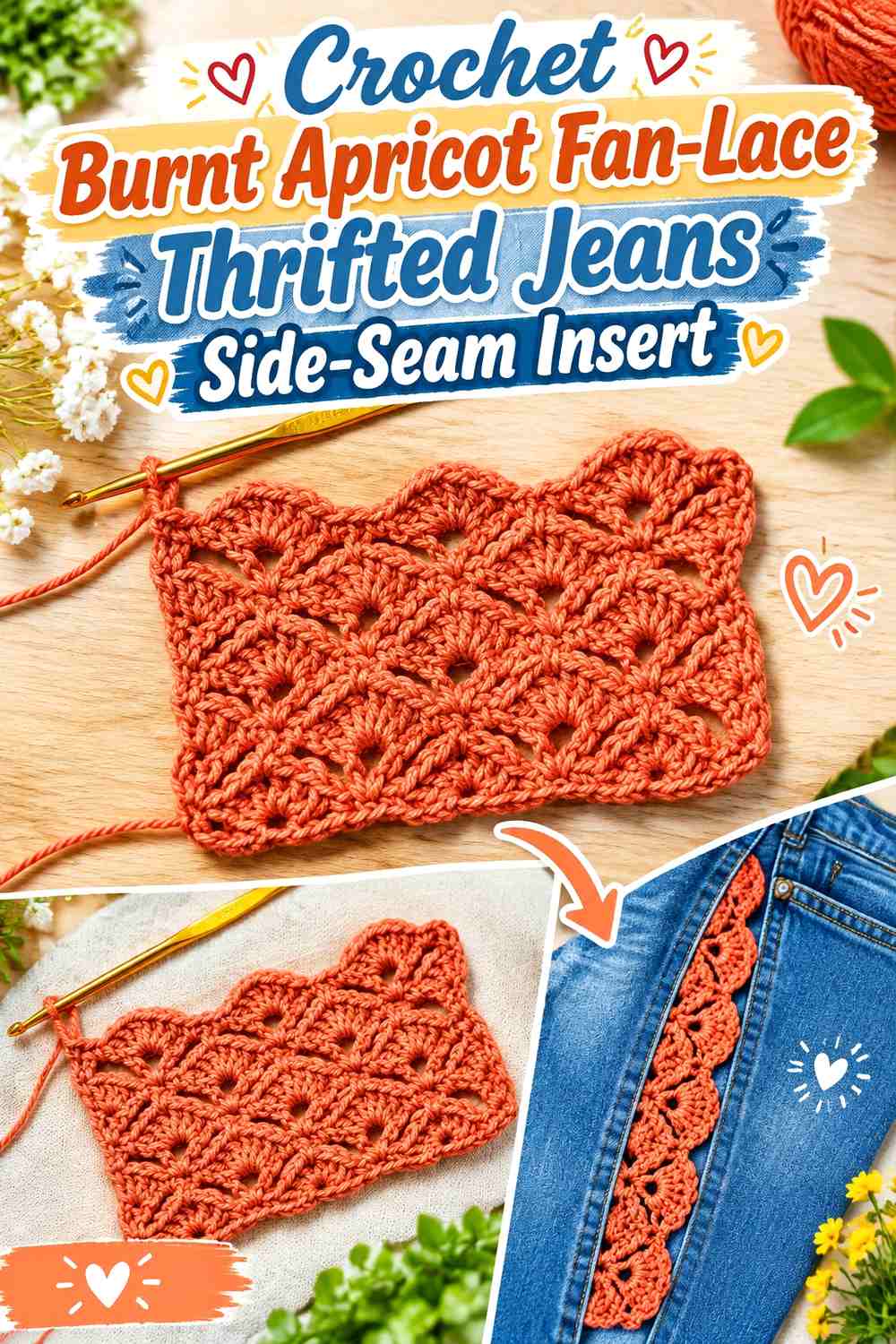
Interweave’s fan-lace tutorial combines double-crochet fans, V-stitches, single crochet, and chain spaces in an offset repeating fabric. The result is open but more substantial than simple netting, with curved motifs that repeat across the surface.
For a jeans panel, let Burnt Apricot carry the fan rows and use Cerulean Ink for occasional separating bands or the attachment edge. This creates visible warmth without relying on individual flower motifs. Fan lace is particularly effective in a tapered insert because its rounded shapes can soften a long wedge cut into the side seam. The stitch pattern still has a defined repeat, so establish the width from a complete swatch before deciding how wide the denim opening should become.
Use the Fans to Emphasize a Lower-Leg Flare
A panel that gradually widens from the knee toward the hem can turn the side insert into part of a flare alteration.
The curved fan pattern reinforces that widening more naturally than a rigid square strip. Keep the upper section comparatively narrow if the original jeans still fit correctly through the thigh.
Check How the Fans Stretch Sideways
Open fan lace can change shape under horizontal tension. A panel that is slightly too narrow may appear to fit when stretched but lose much of its rounded motif definition.
Fit the insert in its relaxed blocked width whenever possible. Use the jeans opening to accommodate the crochet rather than permanently flattening the fans.
Frame Apricot With Cerulean
A dark edge along both sides can prevent a warm fan panel from appearing disconnected from blue denim.
Keep that border relatively narrow so it functions as a transition rather than reducing the visible fan area. The repeated curves should remain the main reason for choosing this design.
Creator Credit: Interweave
9. Crochet Two-Tone Chevron-Mesh Thrifted Jeans Side-Seam Insert
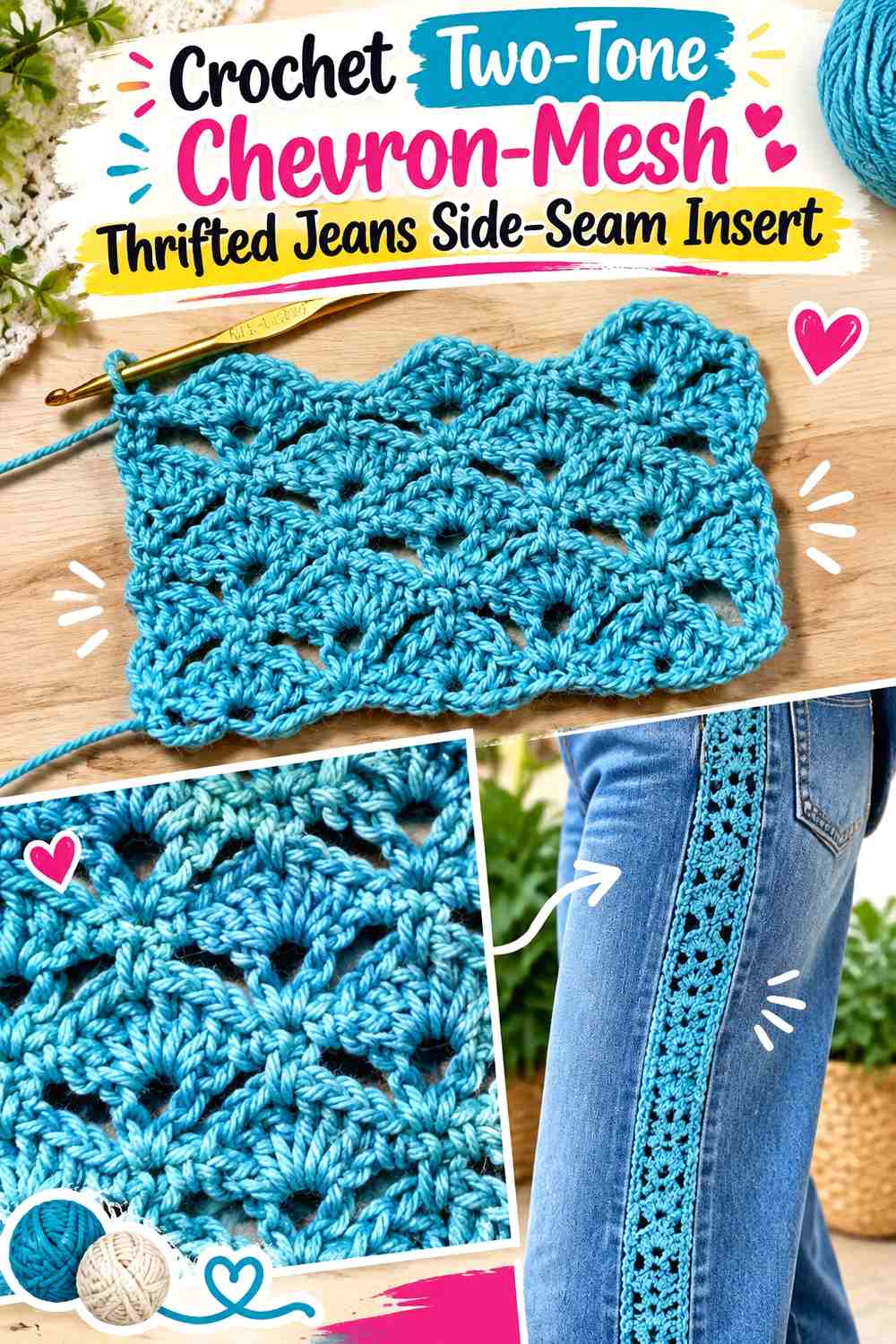
Moogly’s Big Bold Chevron Curtain uses an open chevron pattern worked in alternating color bands, producing strong peaks and valleys while retaining significant negative space. The source provides a full panel construction rather than merely a decorative edging.
Adapted to jeans, narrow Cerulean Ink and Burnt Apricot chevrons can form a continuous zigzag stripe down the outside of each leg. This is more directional than checkerboard: the eye moves diagonally in and out rather than following stacked blocks. A wide side insert can show several full peaks, while a very narrow one may reveal only fragments of the pattern. Sample the desired width before opening the denim seam so the zigzag remains recognizable.
Decide Whether the Chevron Runs Down or Across the Leg
The original panel orientation may not be the only useful one for jeans. Rotate a swatch and compare vertical versus horizontal chevron movement.
A vertically elongated arrangement emphasizes the leg line, while stacked horizontal zigzags make the insert look wider. Choose the direction before calculating panel dimensions.
Keep Both Side Edges Visually Balanced
Chevron repeats can end on different parts of a peak or valley if the width is not carefully planned.
For a narrow jeans insert, equivalent left and right edges make the panel look more intentional. Adjust the crochet width through complete repeat planning rather than trimming the finished lace.
Use Color Bands to Control Boldness
Equal Cerulean and Burnt Apricot bands create the strongest graphic look. A broader blue area with only narrow apricot chevrons is more integrated with denim.
View the sample from several feet away. High-contrast zigzags can appear much bolder on a full leg than they do in a small swatch.
Creator Credit: Moogly
10. Crochet Burnt Apricot Filet-Rose Thrifted Jeans Side-Seam Insert

HandmadebyRaine’s Rose Curtain uses traditional filet crochet, combining open and filled blocks to produce repeating rose imagery inside a flat lace panel. The tutorial includes charted and written guidance for keeping the floral image accurate.
For a side-seam insert, use Burnt Apricot for the rose panel and Cerulean Ink as a narrow edge on both sides. Unlike applied flowers, the rose stays within the surface of the fabric, so the insert remains relatively flat. Filet works especially well on straight-leg or wide-leg jeans where there is enough vertical space for complete rose motifs. The main limitation is width: a recognizable charted image requires a certain number of blocks, so do not compress the motif simply to fit an extremely narrow opening.
Preserve Complete Rose Motifs
The picture depends on the relationship between open and filled filet blocks. Removing arbitrary columns to make the panel thinner can make the rose unreadable.
Complete one full motif at the intended yarn scale before cutting the jeans. If it is too wide, select finer material or another design rather than altering the creator’s chart informally.
Use Cerulean Ink as a Narrow Frame
A dark border can separate Burnt Apricot filet from blue denim while preserving the full rose inside.
Keep the border visually simple. Filet already contains a grid and picture, so a highly textured edge can compete with the motif rather than finishing it.
Consider Motif Placement Along the Leg
A repeated rose can be centered at the thigh, knee, calf, or distributed continuously down the whole side.
Lay paper markers at those positions before making the full panel. The best arrangement may use fewer complete roses with deliberate spacing rather than packing motifs tightly from waistband to hem.
Creator Credit: HandmadebyRaine
11. Crochet Cerulean Geometric-Screen Thrifted Jeans Side-Seam Insert

Concept Creative’s Mashrabiya curtain project uses repeated ornamental geometric motifs inspired by architectural screens. The design is modular and can be expanded by adding or omitting motifs, which makes it a useful source for a side panel built from a controlled sequence of repeating units.
Use Cerulean Ink for the main geometric framework and Burnt Apricot inside selected motif details or at occasional joins. This creates the most architectural insert in the collection and suits thrifted jeans with otherwise simple washes and minimal distressing. Because the geometry itself is intricate, a narrow strip may need especially fine yarn to show complete motif units. Do not force the design into a width that leaves every module visibly cropped.
Build the Width Around Whole Motifs
Modular geometry is easiest to read when complete units remain visible. Determine the blocked motif size before deciding how broad the side-seam opening should be.
If one motif is already wider than you want, this is not the best design for a slim racing stripe. Use it where the crochet is allowed to become a substantial panel.
Keep Burnt Apricot Strategic
The framework already carries a lot of visual information. Coloring every small internal section differently can make the geometry harder to understand.
Use apricot at selected centers, joining points, or spaced motifs while letting Cerulean carry the overall structure. This also makes the warm accents easier to coordinate between the two legs.
Align the Geometry With the Grain of the Jeans
Straight architectural lines look especially deliberate when they run parallel to the leg.
Block the completed panel carefully and mark a center line before installation. A slight diagonal twist will be more noticeable in geometric motifs than in irregular flower lattice.
Creator Credit: Concept Creative
12. Crochet Two-Tone Ribbon-Lace Thrifted Jeans Side-Seam Insert
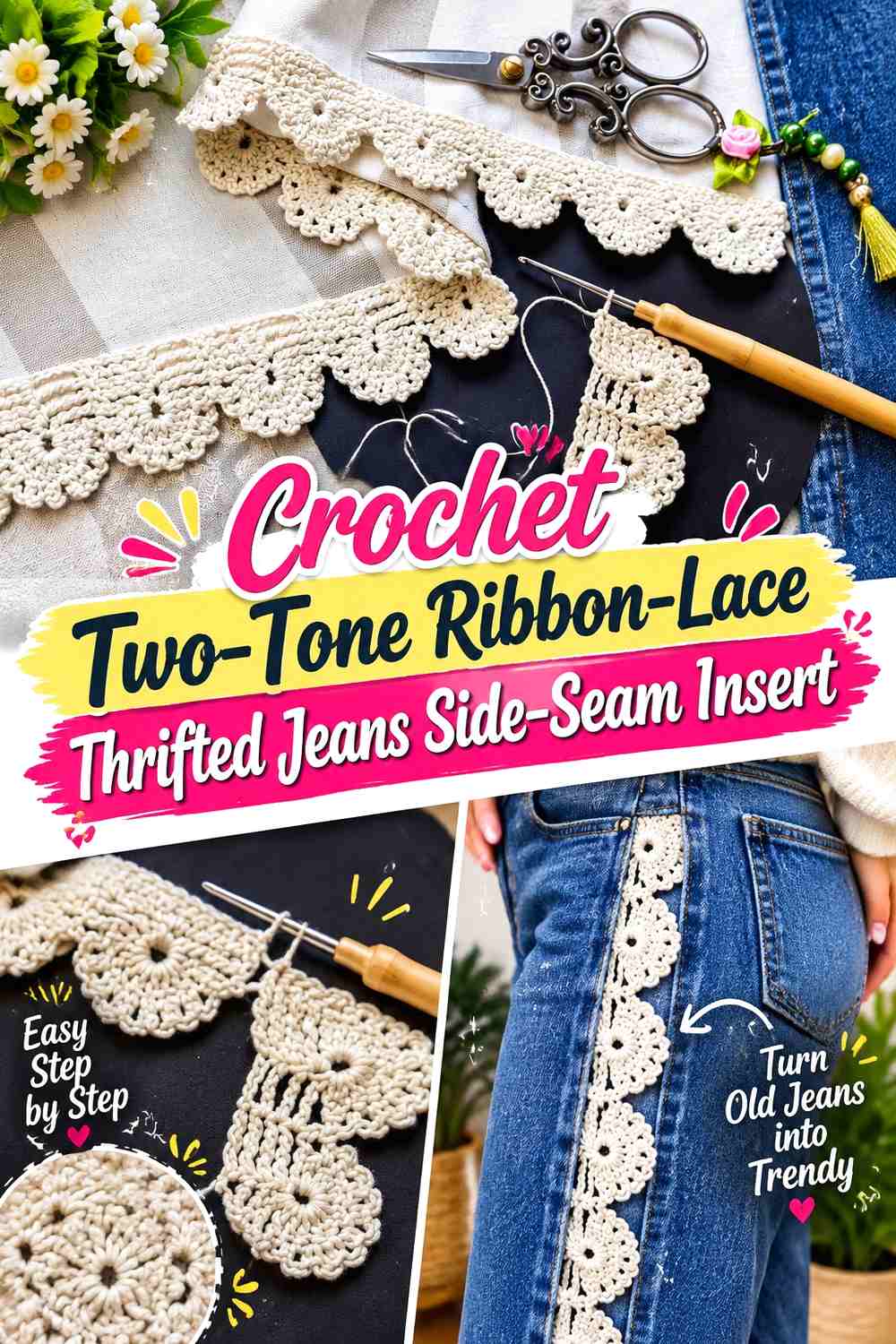
Giani Art’s ribbon-lace tutorial teaches a narrow tape-style crochet lace that can be extended to the length required for a project. The finished strip is much slimmer than a curtain panel or joined granny row, making it particularly appropriate when the denim alteration is intended to look like inserted trim rather than added leg width.
Use Burnt Apricot through the decorative inner lace and Cerulean Ink along a narrow attachment edge, or reverse the two for a quieter effect. This idea suits thrifted jeans that already fit correctly and need only a narrow seam accent. It can also run from pocket level to hem without dominating the leg. Because tape lace has a fixed decorative width, test the finished strip against the existing side seam before removing any denim.
Use Ribbon Lace When Fit Should Change Very Little
A narrow inserted tape can replace a small amount of seam width without creating the dramatic silhouette change of a broad crochet panel.
That makes it a useful choice for jeans you already like structurally. Keep alterations around the hip conservative unless additional circumference is intentionally part of the plan.
Let Burnt Apricot Supply the Ornament
The lace itself contains repeated decorative shapes, so using the warmer shade there gives the narrow panel enough visibility against denim.
A Cerulean edge can visually disappear into dark jeans and make the apricot lace seem almost suspended inside the seam.
Keep the Tape Flat Before Attachment
Narrow lace can twist along a long length if tension varies. Lay both strips side by side after finishing and check that their edges remain straight.
Correct shaping before installation. Denim attachment should secure an already stable strip rather than being used to force twisted crochet into alignment.
Creator Credit: Giani Art
14. Crochet Cerulean Spiderweb-Medallion Thrifted Jeans Side-Seam Insert

Petals to Picots’ spiderweb motif grows radially from a central ring, using progressively larger chain spaces and a pointed outer treatment. That radial structure offers a way to break a side panel into individual circular or near-circular windows instead of one continuous rectangular lace fabric.
Work the webs primarily in Cerulean Ink and use Burnt Apricot at selected centers or connecting points between motifs. Several webs can be placed vertically along a widened side opening, separated by short crochet bridges or deliberate denim spaces. This produces the most unconventional option in the list and works particularly well from knee to hem, where the jeans can flare around a sequence of medallions. Because the source motif is not a jeans panel, establish the entire layout on a paper insert template before modifying the denim.
Use Complete Webs as Focal Windows
The radial structure loses much of its effect if every motif is cropped by the denim edge. Size the opening so complete or nearly complete webs remain visible.
If one web is too wide for the desired strip, choose a smaller finished stage only if it corresponds to a complete point in the original tutorial rather than informally cutting the motif apart.
Connect the Medallions Without Hiding Their Shape
The space between webs is part of this design. Heavy joining can turn several delicate radial motifs into one visually dense column.
Use only the connection structure needed for the planned insert and keep enough negative space for each web circumference to remain recognizable.
Concentrate the Design Below the Knee
A series of round motifs can require significant panel width. Keeping them below the knee allows you to create a tapered or flared opening without automatically changing the fit through the hip.
This also gives the medallions more room to move where the leg is less constrained. Mock up the sequence on both outer seams before cutting either pair of jeans legs.
Creator Credit: Petals to Picots
Comparing the 14 Side-Seam Insert Styles
For the narrowest alteration, start with ribbon lace or a slim diamond-mesh strip. They can add visible crochet while preserving most of the original jeans silhouette. Continuous vertical flower lace and fan lace offer somewhat greater width without the block-like appearance of modular motifs.
Classic granny, daisy, and sunburst strips are useful when you want repeatable modules and strong color placement. Checkerboard and chevron create the clearest graphic two-color effects. Filet roses and geometric screens provide more intricate imagery while staying relatively flat.
Flower lattice, shell lace, and spiderweb medallions are the most openly decorative options. They suit larger side openings where negative space and movement are intentional. If the jeans need significant added circumference, assess the crochet’s stretch and the panel shape as carefully as its appearance.
Conclusion
Cerulean Ink and Burnt Apricot give thrifted-jeans side-seam inserts enough contrast to support both subtle and dramatic alterations. A narrow ribbon or mesh strip can preserve the original fit, while granny motifs, checkerboard, filet roses, shells, and geometric lace can turn the entire outside leg into a focal panel. Tapering the insert toward the knee or widening it toward the hem creates another level of silhouette control.
Before opening the jeans, finish and block a representative piece of crochet and make a paper template for the intended insert. Compare denim stretch with crochet stretch, check pockets and waistband construction, and test the proposed panel while sitting and walking. Follow each credited tutorial for the exact crochet technique; treat cutting, stabilizing, fitting, and attaching the panel to the thrifted jeans as separate garment-alteration decisions.
Frequently Asked Questions
Can a crochet side-seam insert make thrifted jeans larger?
Yes, a panel inserted after opening the outer seams can add circumference, but the amount depends on the panel width and where it begins. A full-length insert can affect the hip, thigh, knee, and lower leg, while a knee-to-hem wedge mainly changes the lower silhouette. Measure the jeans while worn and decide exactly where extra room is needed before choosing panel width. Decorative crochet alone should not substitute for careful garment fitting.
Which crochet panel is best if I do not want to change the jeans fit much?
A narrow ribbon-lace strip, slim flower-lace column, or controlled mesh insert is better suited to minimal silhouette change than a broad granny or geometric panel. You can also open only a small section of the existing seam rather than removing a wide denim strip. Make a paper template at the intended width and hold it against the worn jeans before crocheting the full insert.
Should the crochet panel stretch as much as the denim?
Not necessarily, but a large mismatch can affect comfort and shape. Stretch denim may expand substantially when sitting or bending, while some crochet lace stretches mostly lengthwise. Rigid denim presents a different problem because an overly elastic panel may sag beside it. Swatch the crochet, block it, and compare its movement with the jeans before installation. Pay particular attention to the hip and knee if the panel passes through those high-movement areas.
Is Cerulean Ink or Burnt Apricot better along the actual denim edge?
Cerulean Ink usually produces the smoother transition into blue denim, especially on dark indigo jeans. Burnt Apricot gives a stronger outlined edge and makes the insert look deliberately separate. One useful approach is Cerulean on both attachment edges with Apricot concentrated in the center motifs, checks, flowers, or lace. Test both colors against the actual wash because faded or gray denim can change the contrast considerably.
Should I line an open crochet side panel?
That depends on the amount of transparency you want. Flower lattice, diamond mesh, shell lace, and spiderweb motifs can reveal a great deal of skin or whatever layer is worn underneath. A backing can provide more coverage, but it also changes drape, stretch, and color. If you add one, test all layers together before attachment. The backing should not prevent the jeans from moving in the way you need.
How do I keep two side-seam inserts looking symmetrical?
Finish both crochet panels before installing either one. Block them to the same dimensions, compare motif count and color sequence, and mark equivalent points on both jeans legs—such as waistband, pocket level, knee, and hem. If the jeans themselves have worn asymmetrically, prioritize visual alignment when worn rather than assuming both physical seams are still perfectly identical.
Can I keep the original hem when adding a side-seam insert?
Often you can, but the answer depends on how far the seam must be opened and how the original hem was constructed. A narrow insert may be able to terminate neatly at the existing hem; a wider flare panel may require reopening or rebuilding part of it. Inspect the hem before cutting the side seam and decide how the crochet will finish at the bottom. Do not leave that junction until after the entire panel has been attached.