Aubergine Rose and Custard Cream can turn a vulnerable bag corner into either a quiet reinforcement detail or an intentional geometric accent. The most useful distinction is between a decorative overlay and a true abrasion-conscious corner treatment. A dense double-layer triangle can cover more of the original bag material, while granny clusters, moss stitch, or mesh preserve more flexibility and allow the underlying bag color to remain visible.
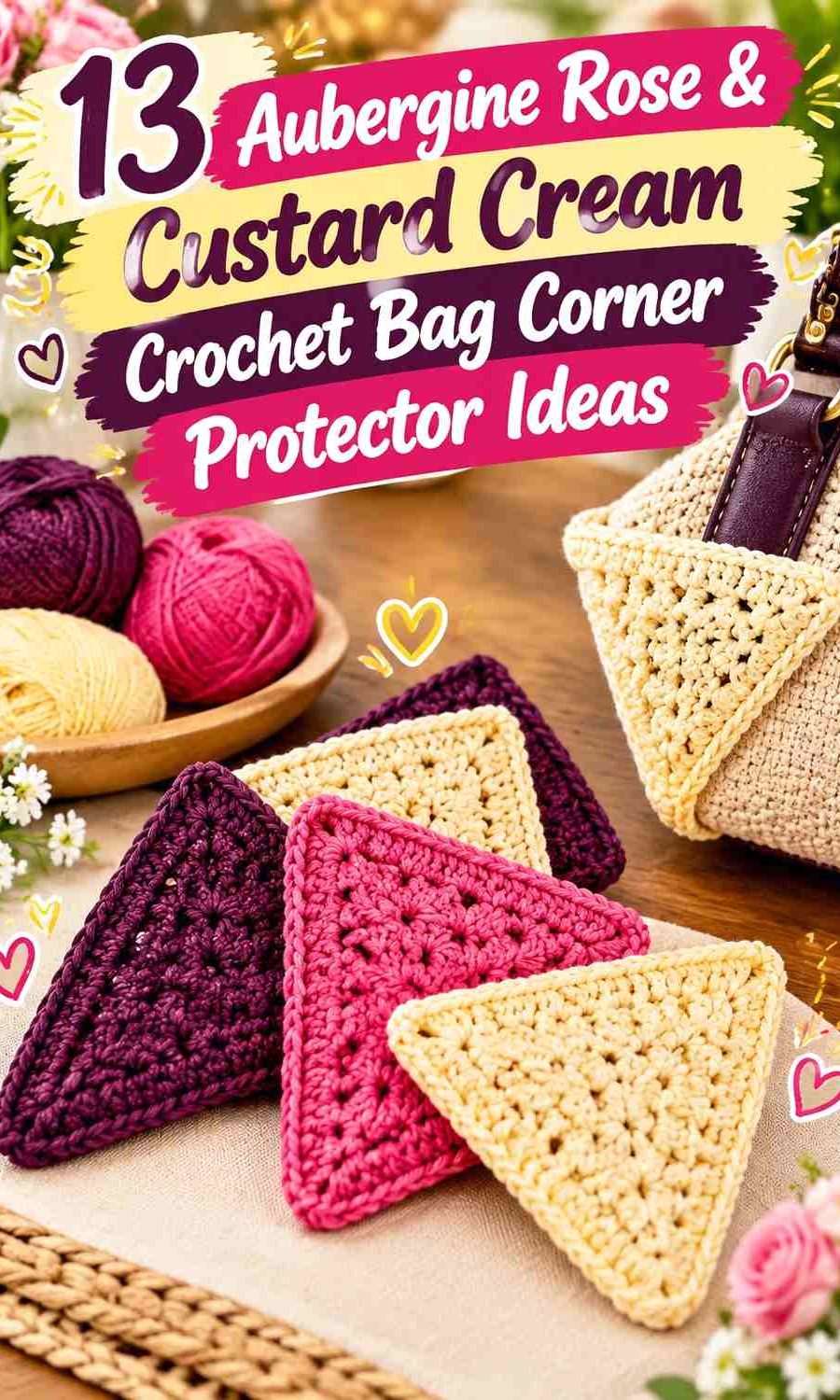
Shape matters just as much as stitch density. Some bag corners need a flat triangular patch on one face; others benefit from a pocket-like protector that wraps over two surfaces. Bottom corners on structured totes behave differently from the soft points of fabric pouches.
The sources below teach triangular crochet motifs, double-layer corner pockets, folding triangle constructions, edging, and bag-base corner shaping. Follow those tutorials for their original crochet methods, then size and attach each protector according to the material, lining, seams, and actual wear pattern of your bag.
Quick List
- Crochet Aubergine Double-Layer Crossed-Stitch Bag Corner Protector
- Crochet Custard Lace-Picot Bag Corner Protector
- Crochet Aubergine Dense Pocket-Triangle Bag Corner Protector
- Crochet Two-Tone Folded Origami Bag Corner Protector
- Crochet Two-Tone Moss-Stitch Bag Corner Protector
- Crochet Aubergine Mixed-Granny Bag Corner Protector
- Crochet Custard Granny-Shell Bag Corner Protector
- Crochet Aubergine Solid-Round Bag Corner Protector
- Crochet Custard No-Gap Triangle Bag Corner Protector
- Crochet Two-Tone Mesh Bag Corner Protector
- Crochet Aubergine Pointed-Edge Bag Corner Protector
- Crochet Two-Tone Structured Base-Corner Bag Protector
Decide Whether You Need Decoration or Actual Wear Coverage
Crochet can cover a scuffed corner and add another textile layer, but it is not automatically equivalent to leather, rubber, metal feet, or another hard-wearing bag component. If the bag routinely sits on rough floors, a decorative openwork triangle should be treated differently from a dense corner cap intended to take some surface contact.
Inspect where the wear actually occurs. A flat front corner may only need a small triangular overlay, while a bottom corner can contact three planes—the front, side, and base. A protector that covers only the visible face may leave the true abrasion point untouched.
If the underlying bag fabric is already torn or weakened, repair that structure first. The crochet overlay can then conceal and protect the repaired area instead of being asked to carry a compromised seam or damaged base by itself.
Match the Protector Shape to the Bag Corner
A right-angle corner on a rectangular tote does not necessarily suit an equilateral triangle. Double-layer corner-bookmark constructions naturally create pocket-like forms that can inspire wraparound caps, while center-out equilateral motifs work better as flat decorative overlays.
Make a paper template over the actual bag corner before crocheting. Fold it exactly where the bag changes from front to side or side to base. If the paper buckles, a single flat triangle may not wrap the corner cleanly without shaping or separate panels.
Also check what sits near the corner. Piping, boxed seams, zippers, bag feet, leather trim, and lining stitches can all affect attachment. A small protector should stop before it interferes with hardware or stiff structural seams rather than simply covering every visible part of the corner.
Use Color to Clarify the Protected Area
Aubergine Rose can create a strong visual boundary around a bag corner, making it useful for dense outer edges, joins, and areas intended to look reinforced. Custard Cream is lighter and works well inside granny spaces, lace sections, moss-stitch rows, or as a center triangle surrounded by a darker frame.
The two shades do not need equal coverage. A Custard Cream triangle with an Aubergine Rose perimeter can resemble a framed corner patch, while an Aubergine body with a narrow pale seam looks more structural.
Consider the bag color as a third part of the palette. Open granny or mesh protectors expose the original bag material through their spaces. Dense solid triangles largely hide it. Test the crochet directly on the finished bag before choosing the final color order, especially when the bag already contains contrasting trim or hardware.
1. Crochet Aubergine Double-Layer Crossed-Stitch Bag Corner Protector
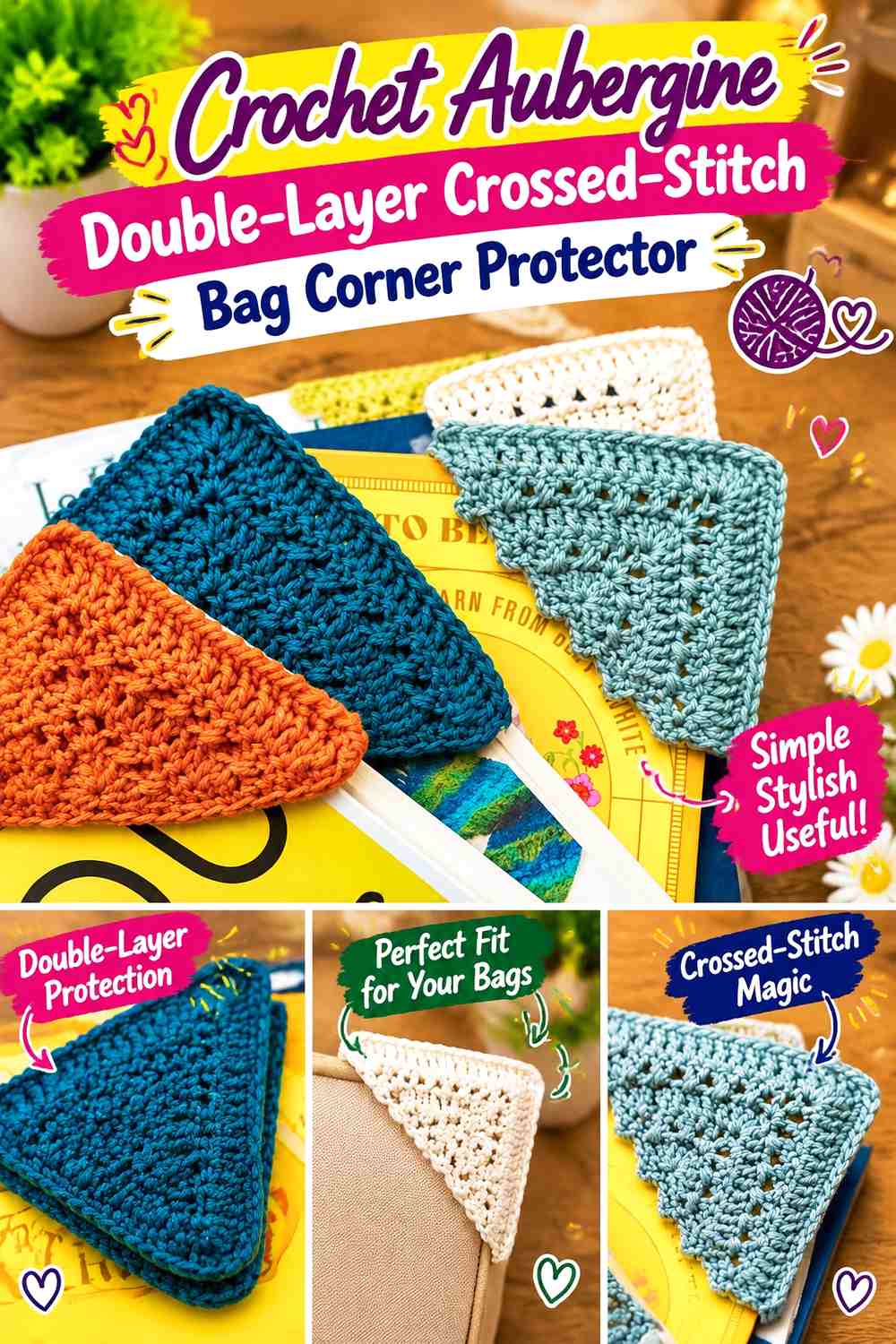
Heart Hook Home’s corner bookmark is made from two separately crocheted triangular pieces that are stacked and joined along two sides, leaving a pocket-like opening. The pattern alternates solid rows with crossed-double-crochet texture and can be finished with picot details. That double-layer construction makes it particularly relevant to a bag corner protector because it already demonstrates how two triangular faces can form a shallow corner sleeve.
For the bag adaptation, work the main triangles in Aubergine Rose and use Custard Cream only along the joined perimeter. Slip the resulting cap over a compatible flat corner before deciding whether permanent attachment is necessary. This concept works best where two relatively flat bag surfaces meet; a bulky boxed corner may require more shaping than the original triangle provides.
Use the Two Layers for Coverage, Not Excess Bulk
Two layers give you more material between the bag and an abrasive surface, but they also increase thickness. That can be useful on a soft canvas or crocheted bag and excessive on a heavily structured handbag.
Make a small sample first and fold it over the actual corner. If the cap pushes the bag panels apart or prevents the corner from lying naturally, use finer yarn rather than forcing a thick protector into place.
Keep the Joined Edge on the Exposed Side
The source joins two sides and leaves one opening. For a corner protector, decide which seam should be visible and which edge needs to remain flexible enough to fit over the bag.
An Aubergine body with a narrow Custard joining line can emphasize the outer corner without covering surrounding seams. Avoid placing the thickest joined section directly over a zipper end, piping cord, or rigid hardware.
Check Movement Before Permanent Attachment
Soft bags collapse and expand as they are filled. A corner cap that looks perfect on an empty tote may pull when the bag contains heavier items.
Temporarily position the protector and load the bag normally. If the triangle shifts or stretches noticeably, increase attachment coverage or choose a flatter single-layer option instead.
Creator Credit: Heart Hook Home
2. Crochet Custard Lace-Picot Bag Corner Protector
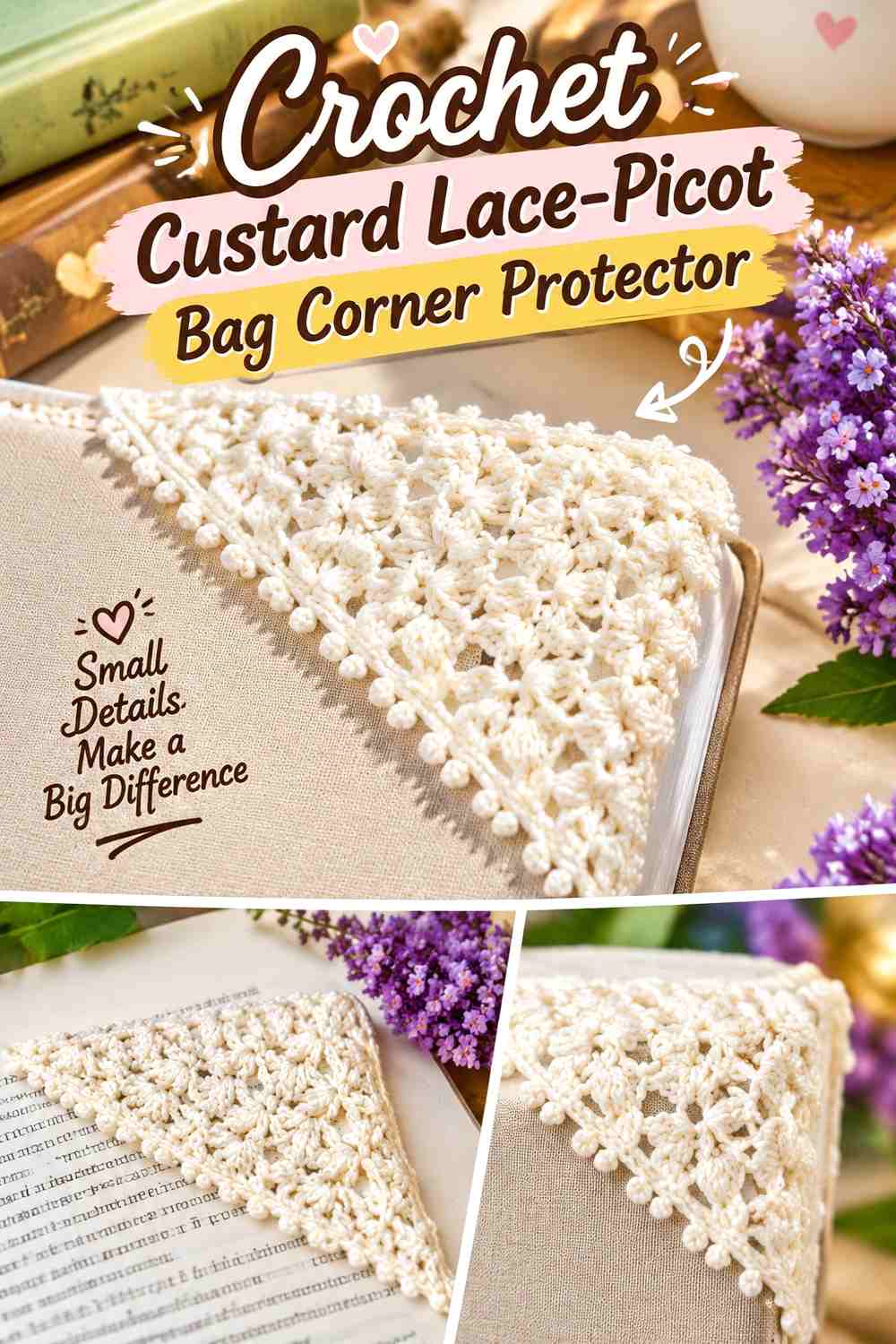
Blue Star Crochet’s Lotte Lace corner bookmark also uses two triangular pieces joined together, but its fabric is considerably more open. The design grows from the triangle point toward the wide edge and combines V-stitches, shells, chain spaces, and a picot finish. This makes it a useful source for a protector intended to soften or decorate a corner rather than create a dense armor-like patch.
Work the main lace in Custard Cream and use Aubergine Rose for the joining edge so the delicate interior remains light while the outline is easier to see. This design suits a bag corner that needs visual coverage but is not routinely dragged across abrasive surfaces. The open lace reveals the original bag fabric beneath it, so its success depends partly on the color and condition of that background.
Reserve Lace for Low-Abrasion Corners
Large chain spaces reduce the amount of yarn actually contacting the bag surface. That is attractive but offers less continuous coverage than solid single crochet.
Use this idea on upper bag corners, clutch edges, or lightly handled decorative bags rather than assuming it will behave like a dense bottom guard. If abrasion protection is the main goal, choose one of the solid options later in the list.
Let the Picot Edge Face Outward
Picots are most effective where they can be seen. Position the decorative edge toward the visible face of the bag instead of trapping it under a seam or lining edge.
If the corner experiences repeated snagging, omit the decorative projection rather than treating every source detail as mandatory. Use the creator tutorial for the original lace construction and make the bag-specific finishing choice separately.
Creator Credit: Blue Star Crochet
3. Crochet Aubergine Dense Pocket-Triangle Bag Corner Protector
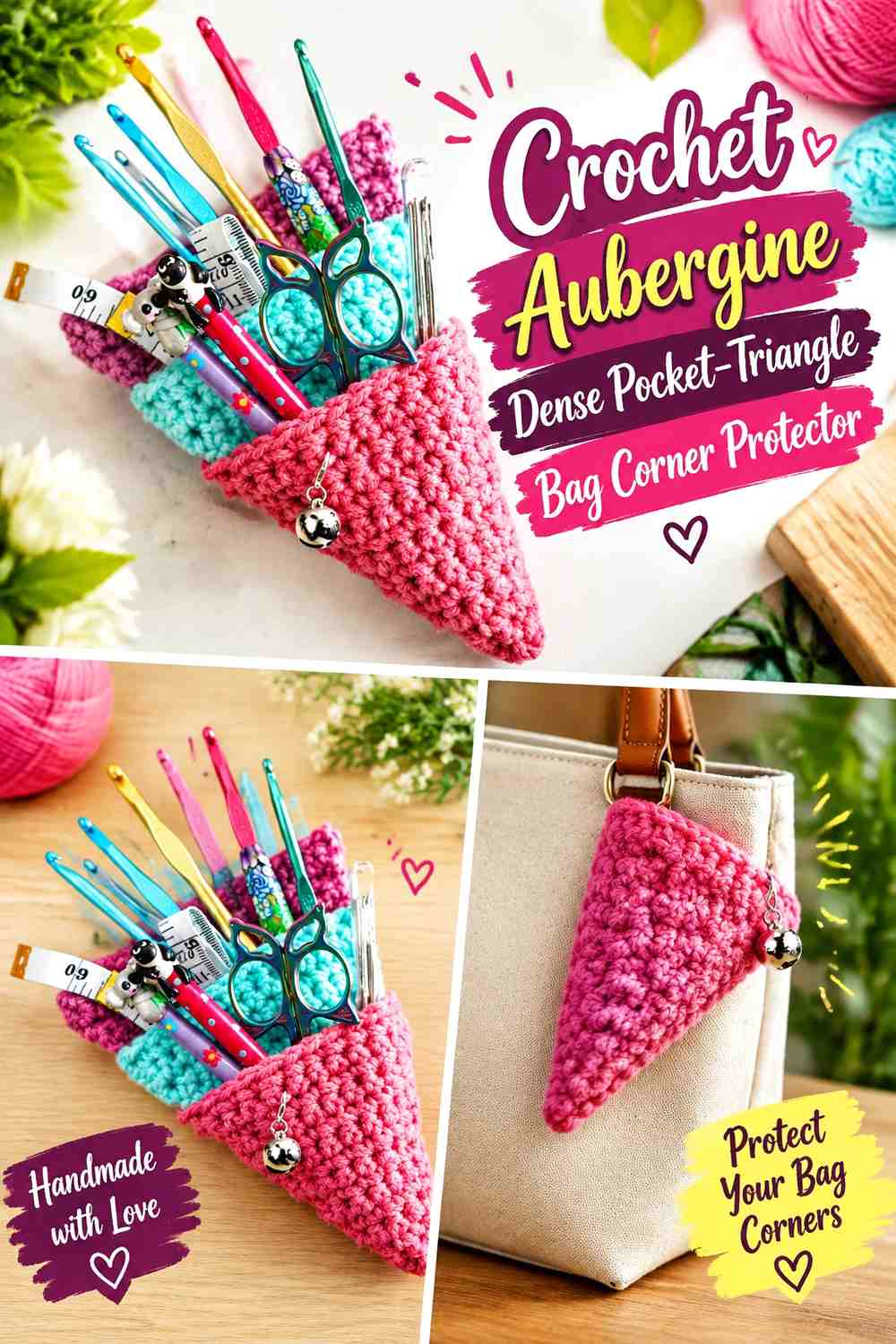
Repeat Crafter Me’s Pocket Storage Triangle is built from simple single-crochet triangles in multiple sizes that are stacked and stitched together to form deep triangular pockets. The dense stitch structure and layered assembly provide a useful model for a protector that needs more coverage than an open granny motif.
For a bag corner, use one or two Aubergine Rose triangles rather than reproducing the entire storage piece. A double layer can form a substantial corner cap, while a single triangle can protect one flat face. Custard Cream can be limited to the perimeter or one smaller nested layer. Because the source triangles are shaped row by row rather than worked in open clusters, they create a comparatively continuous surface that suits everyday totes and soft travel bags.
Use Nested Sizes for a Reinforced Center
The source already demonstrates different triangle sizes. That makes it possible to layer a smaller Custard Cream triangle over a larger Aubergine base without inventing a completely new motif shape.
Place the smaller triangle over the area that receives the most visible rubbing. Keep the outer layer large enough that its attachment stitches sit on sound bag material beyond the worn spot.
Watch Edge Thickness Where Layers Overlap
Two dense single-crochet triangles plus a border can become surprisingly thick. This is useful at an exposed corner but can create a hard ridge if the bag body is very light.
Feel the corner from both outside and inside before finishing. If the edge is too bulky, retain the layered center but reduce the number of border rounds rather than compressing the bag between heavy seams.
Keep the Triangle Point Aligned With the Real Corner
A dense triangular cap looks most intentional when its point coincides with the actual corner or abrasion point.
Mark the bag corner before positioning the protector. On rounded bags, the geometric point may need to sit slightly above the lowest contact area to prevent the triangle from twisting around the curve.
Creator Credit: Repeat Crafter Me
4. Crochet Two-Tone Folded Origami Bag Corner Protector
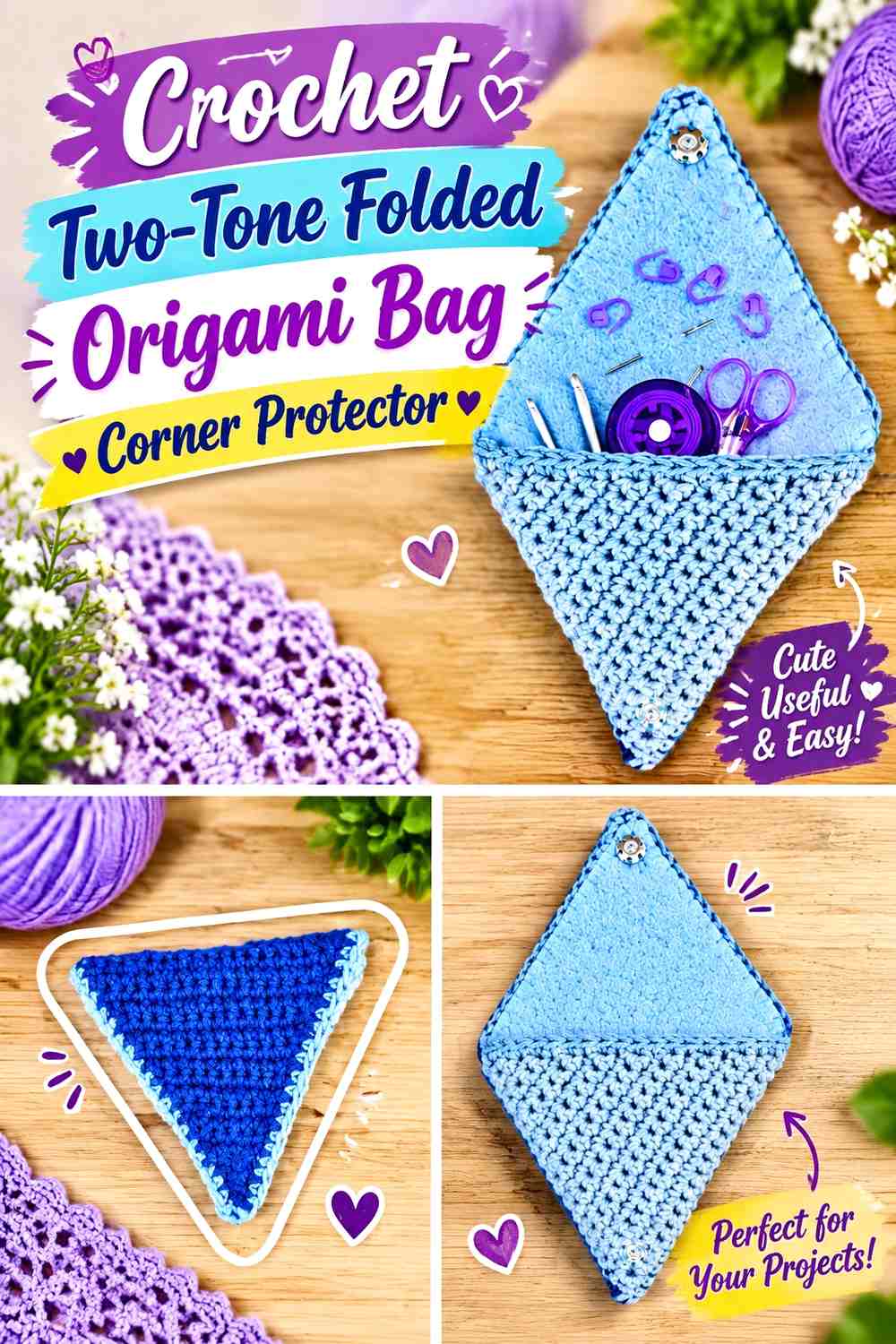
Stitches n Scraps’ Triangle Pouch is constructed from four connected single-crochet triangles that fold into a three-dimensional pouch. The design depends on how those triangles hinge and overlap rather than on a conventional rectangular bag panel. That folding logic makes it a useful source when the protector must wrap over more than one plane of a bag corner.
For a compact protector, use only the triangular folding concept rather than recreating the full pouch. Work adjoining sections in Aubergine Rose and Custard Cream so the fold line remains visible. This idea is especially interesting for boxed corners on fabric bags, where a single flat motif may buckle. Before crocheting, make the intended folded shape from paper and confirm that it follows the front, side, and base without interfering with an existing seam.
Treat Fold Lines as Part of the Structure
A protector that needs to turn sharply around a corner should bend at a planned location rather than wherever the yarn happens to collapse.
Use the source’s connected-triangle construction to understand how a flat crochet piece can become three-dimensional. Keep the actual bag crease aligned with a crochet hinge rather than the middle of a dense triangle.
Use Color to Explain the Fold
Aubergine on one triangular face and Custard Cream on the adjacent one can make the wraparound construction easy to read.
This works particularly well on monochrome bags. On patterned bags, a single dominant crochet color with only a narrow contrasting fold line may be less visually busy.
Keep the Protector Smaller Than the Pouch Concept
The source project is a complete pouch, so its finished triangles are much larger than most bag-corner guards need to be.
Scale the concept through appropriate yarn, hook, and a smaller number of rows instead of trying to fold a full-size pouch section around a tiny handbag corner. Make a test triangle first to verify thickness and proportion.
Creator Credit: Stitches n Scraps
6. Crochet Two-Tone Moss-Stitch Bag Corner Protector
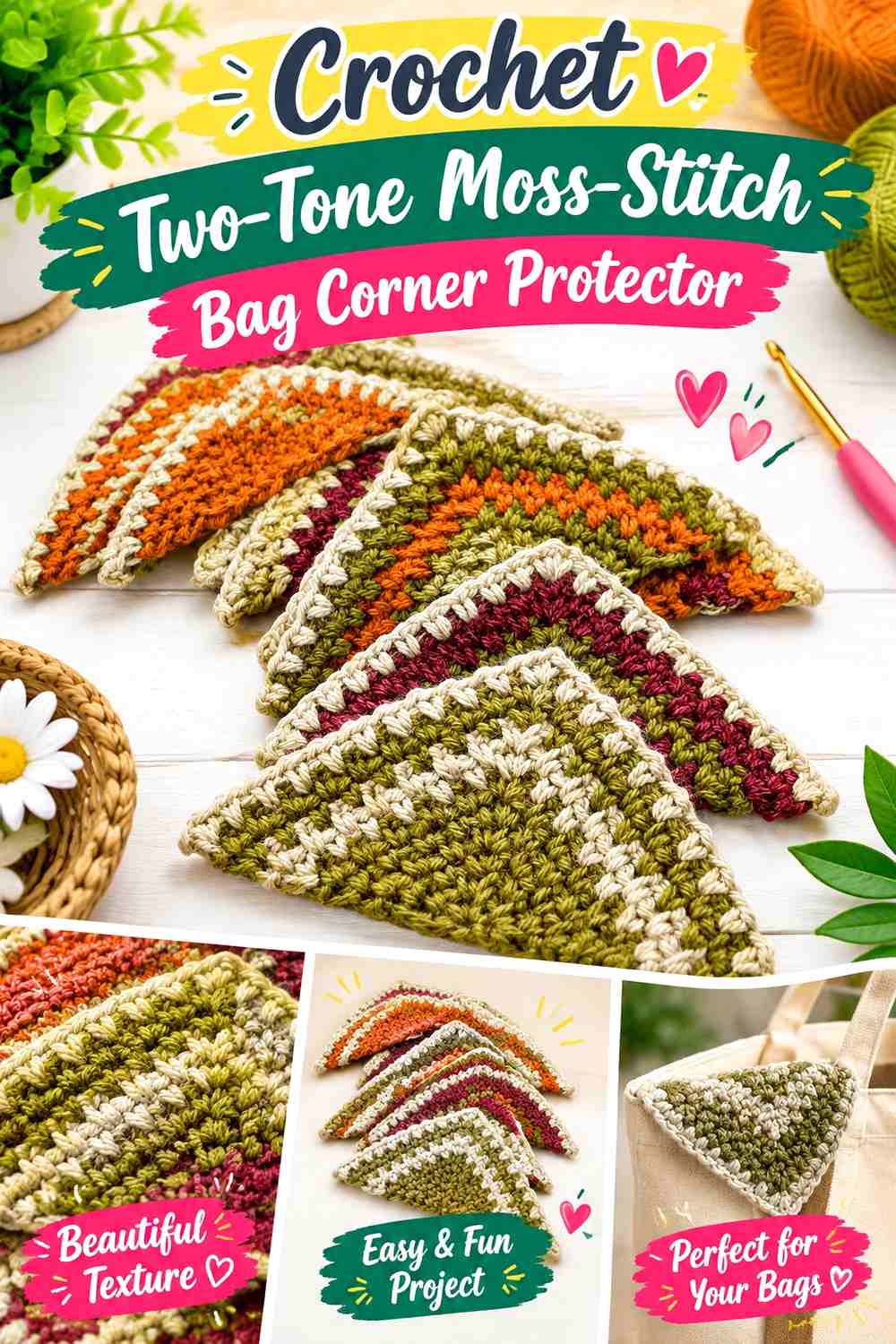
This Pixie Creates’ moss-stitch triangle is worked row by row with single crochet and chain spaces, growing around three increase points. The tutorial also includes planned color-block options and notes that the triangle can be made larger or smaller by continuing the repeat. Moss stitch gives this protector a different balance from both dense single crochet and open granny clusters: the fabric contains small spaces but still reads as a fairly continuous textile.
Use Aubergine Rose for the first section and Custard Cream for a narrow outer band, or reverse the arrangement for a lighter protector. The subtle woven-looking surface suits canvas totes, fabric backpacks, and handmade crochet bags where you want texture without a thick raised motif.
Use Small Chain Spaces as Visual Ventilation
The moss stitch openings allow tiny glimpses of the bag underneath without creating the large holes of mesh.
That makes the technique useful when you want the protector to look integrated with the original bag color. A strong contrast between bag fabric and Custard Cream can make the tiny spaces much more noticeable than they appear on a neutral swatch.
Keep the Color Block Away From the Highest-Wear Edge
Color changes introduce ends that need finishing. Place the main transition slightly inside the protector rather than directly on the point that receives the most rubbing.
A solid Aubergine outer section can visually ground the corner and keep the lighter Custard portion farther from surface dirt or repeated contact.
Check Bias and Stretch
Moss-stitch triangles can feel flexible compared with dense solid crochet. Pin the blocked motif to the bag without stretching before deciding its final size.
If you pull it strongly to reach the attachment points, the small chain spaces can open unevenly and the corner may lose its intended triangular shape.
Creator Credit: This Pixie Creates
7. Crochet Aubergine Mixed-Granny Bag Corner Protector

RaffamusaDesigns’ Scrap Triangle Bunting deliberately combines several triangle constructions, including granny triangles, solid triangles, and a no-gap solid variation. That source provides a useful basis for a protector where one color or stitch structure changes by round rather than relying on a single uniform fabric.
For this bag version, use a denser Aubergine Rose center and transition to a more open Custard Cream granny outer section. The reverse arrangement also works when you want an airy center surrounded by a stronger dark frame. This design is particularly useful for matching a handmade motif bag because it can echo existing granny construction without looking like an unrelated patch.
Put the Denser Section Over the Wear Point
If one part of the source-inspired triangle is more solid, position that section where the bag receives the most contact.
The open granny spaces can remain farther from the exact bottom point, where their decorative appearance matters more than continuous coverage. This makes the motif functional in its color and stitch arrangement rather than merely two-tone.
Use the Border to Standardize Multiple Protectors
If you are adding protectors to four corners of one bag, individual triangle centers can vary slightly while the final Aubergine Rose round remains identical.
That repeated dark perimeter helps the set look coordinated. Measure each finished motif after blocking so color creativity does not lead to noticeably different protector sizes.
Avoid Too Many Stitch Personalities on a Tiny Corner
The source demonstrates several triangle styles, but a small bag protector may not have enough space for every variation to remain readable.
Choose two clear textures—such as solid center plus granny edge—rather than compressing three or four techniques into a motif only a few inches wide.
Creator Credit: RaffamusaDesigns
8. Crochet Custard Granny-Shell Bag Corner Protector
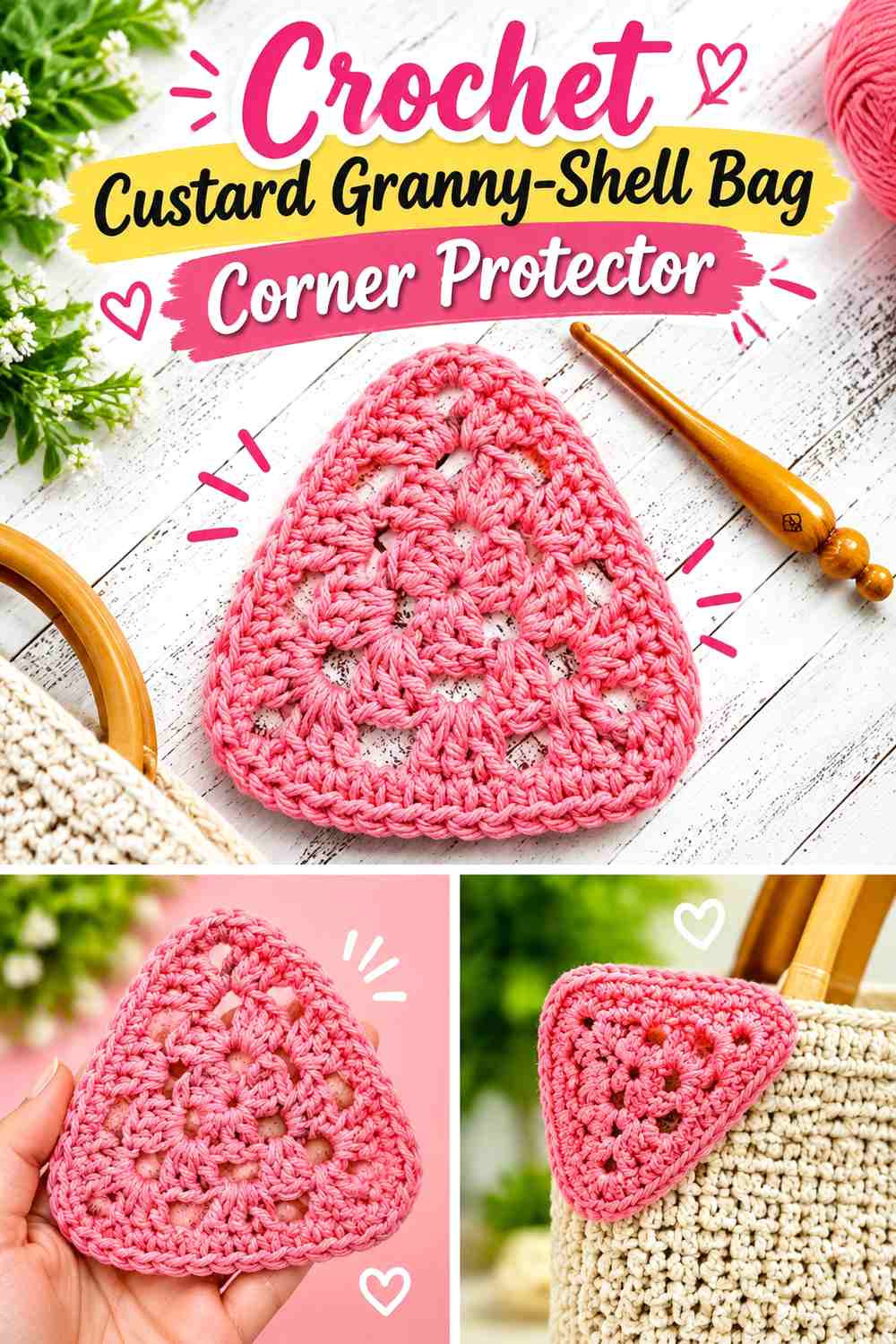
Oombawka Design Crochet’s Granny Triangle Dishcloth is a center-out triangular project that can be enlarged through additional rounds and includes a simple finishing treatment; the tutorial also demonstrates a solid-granny variation. The dishcloth scale makes the source useful for understanding a triangle that is larger and more substantial than bunting but still simple to resize.
For a protector, work fewer rounds in Custard Cream and add an Aubergine Rose outer edge. The granny construction suits a casual tote or yarn bag where open cluster spaces are compatible with the existing style. If the corner needs more physical coverage, use the source’s solid variation instead of the most open version. This flexibility makes the idea useful when several bags need similar-looking protectors but different levels of density.
Choose Granny or Solid Based on the Bag Surface
A woven canvas bag can look attractive through granny openings, while a fraying damaged corner may benefit from the solid variation because it conceals more of the repair beneath it.
Decide after the underlying bag has been stabilized. The choice should respond to what the corner actually needs rather than assuming the most decorative version is always preferable.
Keep the Cream Away From Dirty Contact Zones if Needed
Custard Cream will show surface grime more readily than Aubergine Rose. If the protector sits on the true bottom corner, reverse the palette so the darker yarn occupies the point and outer edge.
You can still retain a cream center for contrast. Color placement is an easy way to acknowledge practical wear without changing the motif construction.
Creator Credit: Oombawka Design Crochet
9. Crochet Aubergine Solid-Round Bag Corner Protector

Lullaby Lodge’s solid-triangle tutorial uses double crochet worked around the triangle with increases at each corner, creating a dense center-out motif that can continue to any required size. Compared with a classic granny triangle, it leaves far fewer open spaces and therefore provides a more continuous layer over the bag.
Work the triangle almost entirely in Aubergine Rose, then use one narrow Custard Cream final round if you want the protected corner to remain visibly two-tone. This construction works well on larger totes where the corner patch needs enough surface area to look proportionate. Double crochet is taller than single crochet, so sample the fabric before assuming it will be as compact as the no-gap triangles elsewhere in the list.
Use the Center-Out Growth to Fine-Tune Coverage
Because each round enlarges all three sides, stop frequently and compare the motif with the paper corner template.
One extra round can add noticeably more coverage on every edge. It is better to stop at a complete round that fits cleanly than to make the protector too large and fold excess crochet behind a seam.
Keep the Light Round Away From the Attachment Stitch if Desired
If you want attachment stitches to disappear visually, work the final round in Aubergine Rose and keep Custard Cream one round inward.
This lets the thread or yarn used for fastening blend into the dark perimeter. The cream remains visible but does not advertise every small variation in the installed edge.
Check Double-Crochet Snag Potential
Dense double crochet covers the surface, but its taller stitches may still catch more readily than compact single crochet on very rough surfaces.
Use this protector where rubbing is moderate rather than assuming density alone makes it ideal for every floor-contact corner. A harder-wearing backing or base solution may still be needed for heavily used travel bags.
Creator Credit: Lullaby Lodge
10. Crochet Custard No-Gap Triangle Bag Corner Protector
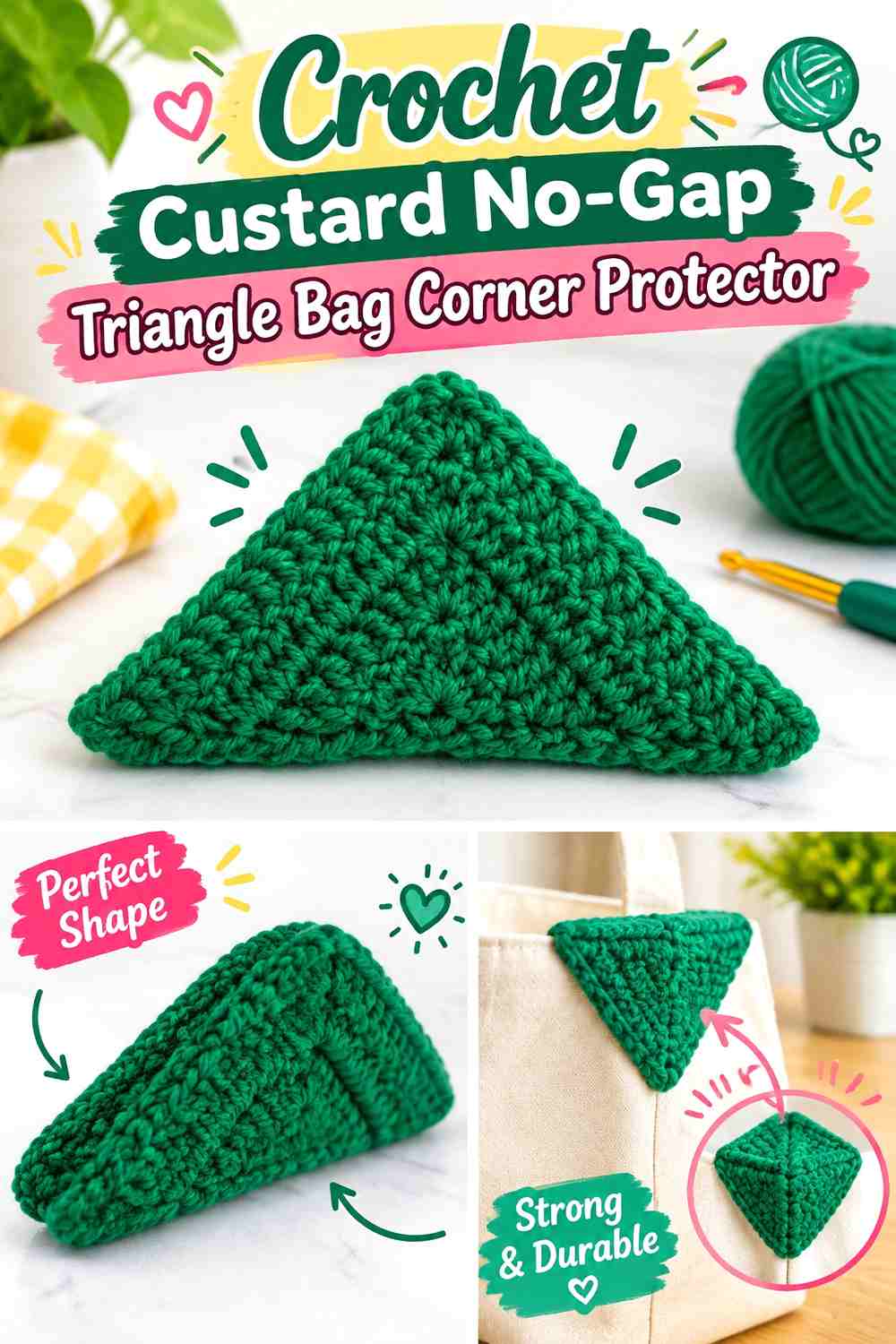
Girlybunches’ solid-triangle video specifically demonstrates a triangle intended to have no gaps or holes and notes that it can be expanded to larger sizes. That continuous surface makes it one of the strongest visual candidates for a protector whose purpose is to hide the underlying corner completely.
Work the body in Custard Cream and finish with Aubergine Rose around the perimeter so the pale triangle remains clearly outlined. This version is particularly suitable when the bag corner has a visible repair you want to conceal after the underlying material has already been structurally fixed. It can also serve as a matching set of four corner patches on a rectangular tote. Because the surface is visually solid, any distortion becomes easier to see, so careful sizing and blocking matter.
Use a Dark Outer Edge to Keep the Cream Crisp
Aubergine Rose around the perimeter separates the light crochet from the bag surface and gives the protector a defined endpoint.
That darker edge is especially useful on pale bags, where Custard Cream alone might blend into the background and make the triangle shape difficult to see.
Do Not Confuse No Gaps With Rigid Protection
A gap-free textile covers the corner continuously, but it remains yarn fabric. It can still compress, abrade, and absorb dirt depending on fiber and use.
Choose it when continuous crochet coverage is the goal. If the bag needs a hard impact or floor barrier, combine decorative crochet with an appropriate structural solution rather than expecting yarn alone to behave like rigid corner hardware.
Creator Credit: Girlybunches
11. Crochet Two-Tone Mesh Bag Corner Protector
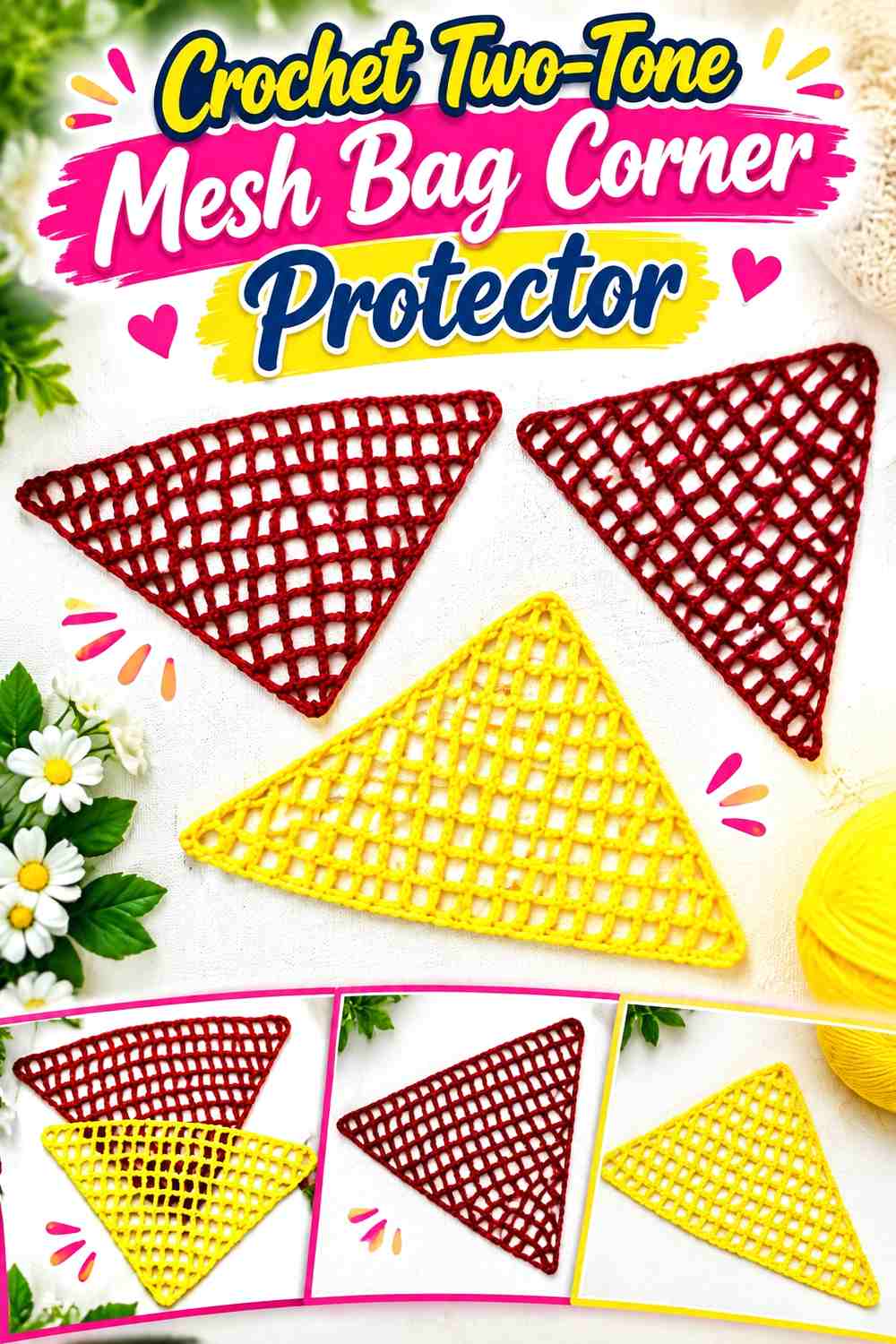
Ravella Design’s mesh-triangle tutorial creates a large-spaced triangular motif using tall stitches and emphasizes the open grid throughout the shape. This is the least coverage-focused protector in the collection and should be chosen primarily for decorative corner framing rather than abrasion resistance.
Use Aubergine Rose for the outer mesh structure and Custard Cream for the center or one inner round. The underlying bag will remain highly visible, so this works particularly well over a contrasting solid fabric, leather-look panel, or existing reinforced corner that simply needs a crochet finish. A mesh triangle can also soften a visually heavy hard corner by adding a textile layer without concealing it entirely.
Put Mesh Over an Already Sound Corner
Large openings do little to hide fraying, exposed batting, or an unstable seam. Repair those issues first and treat the mesh as an outer design layer.
This distinction keeps the crochet from being asked to solve a structural problem it was not designed to handle.
Use Contrast to Make the Geometry Visible
Aubergine Rose mesh over Custard-colored bag fabric—or the reverse—will make the triangular grid much easier to see.
If both crochet and bag are similar in value, the protector may almost disappear except at the edge. Decide whether you want a subtle tonal effect or obvious geometric framing before choosing color order.
Keep the Point Clear of Snag Zones
Tall open loops are more vulnerable to catching than dense single crochet. Avoid placing the most open point directly where the bag scrapes along rough floors or shelving.
This style is better for upper corners, evening bags, or display-oriented handmade purses where the protector is primarily visual.
Creator Credit: Ravella Design
12. Crochet Aubergine Pointed-Edge Bag Corner Protector
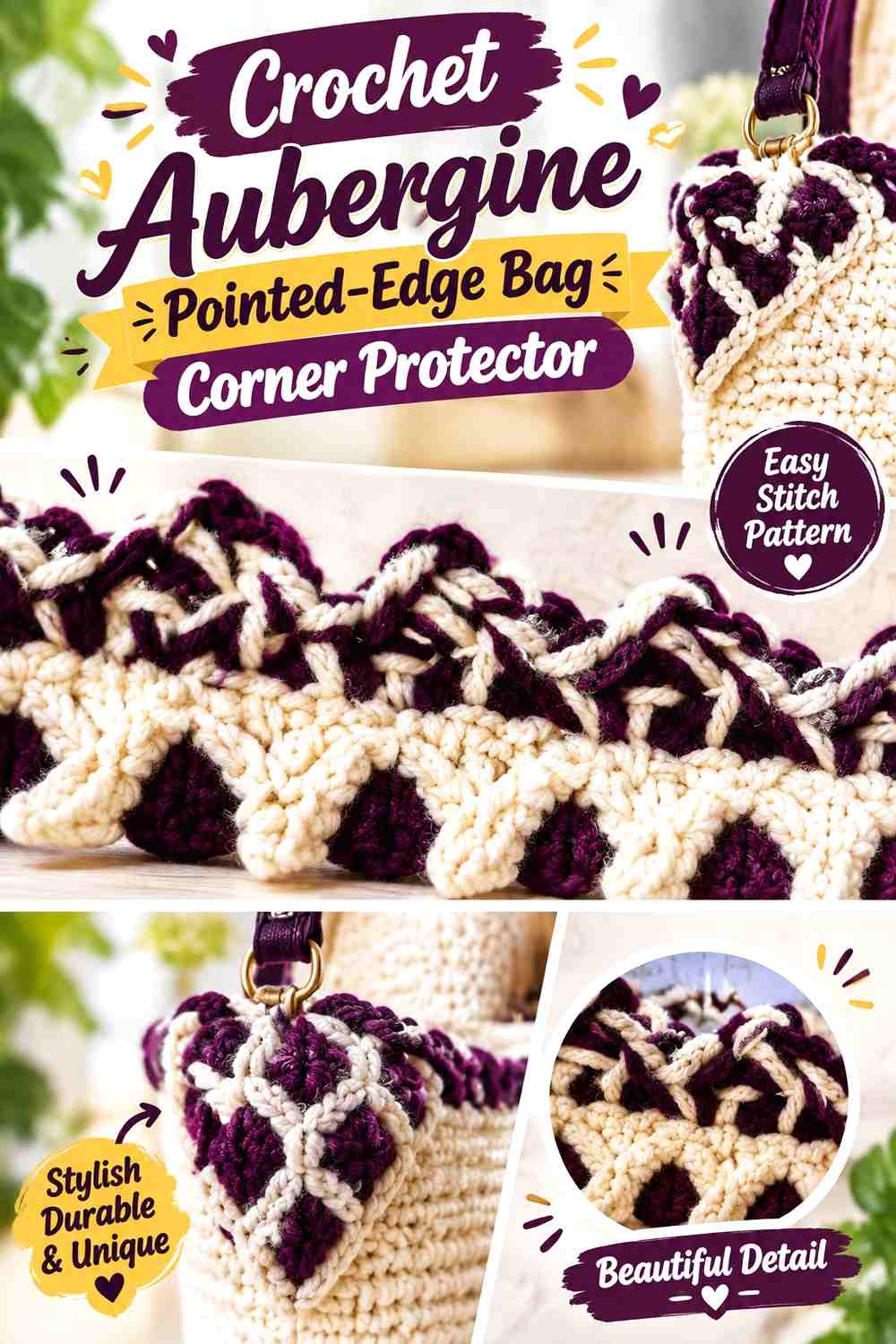
Moogly’s Triangle Crochet Edging creates repeated small triangular points along an existing crochet edge and is designed to work around corners without requiring a separate special corner formula. Instead of covering the entire bag corner with one motif, this idea uses a narrow edging to outline and visually reinforce the perimeter.
Work the base edge in Aubergine Rose and use Custard Cream for the small triangular points, or reverse the colors for a softer finish. This treatment is appropriate when the bag corner is structurally sound but looks unfinished after repair or when you want to coordinate a plain reinforcement patch with the rest of the bag. It can run along two edges meeting at the corner rather than covering the face itself.
Use Edging to Finish a Plain Reinforcement Patch
A simple solid protector may provide the coverage you need but look visually abrupt against the bag. Adding a narrow pointed edge can turn that practical patch into an intentional design element.
Keep the edging proportionate. Large points around a small corner patch can catch on surrounding objects and make the protector appear more decorative than protective.
Let the Corner Turn Naturally
The source is particularly useful because the triangular edging can negotiate corners as part of the repeat. Use that quality to follow the bag perimeter rather than forcing a straight decorative strip to bend sharply.
Check that the edge being crocheted into is stable enough to support the added stitches. Weak frayed fabric should be repaired before any border is attached.
Creator Credit: Moogly
13. Crochet Two-Tone Structured Base-Corner Bag Protector
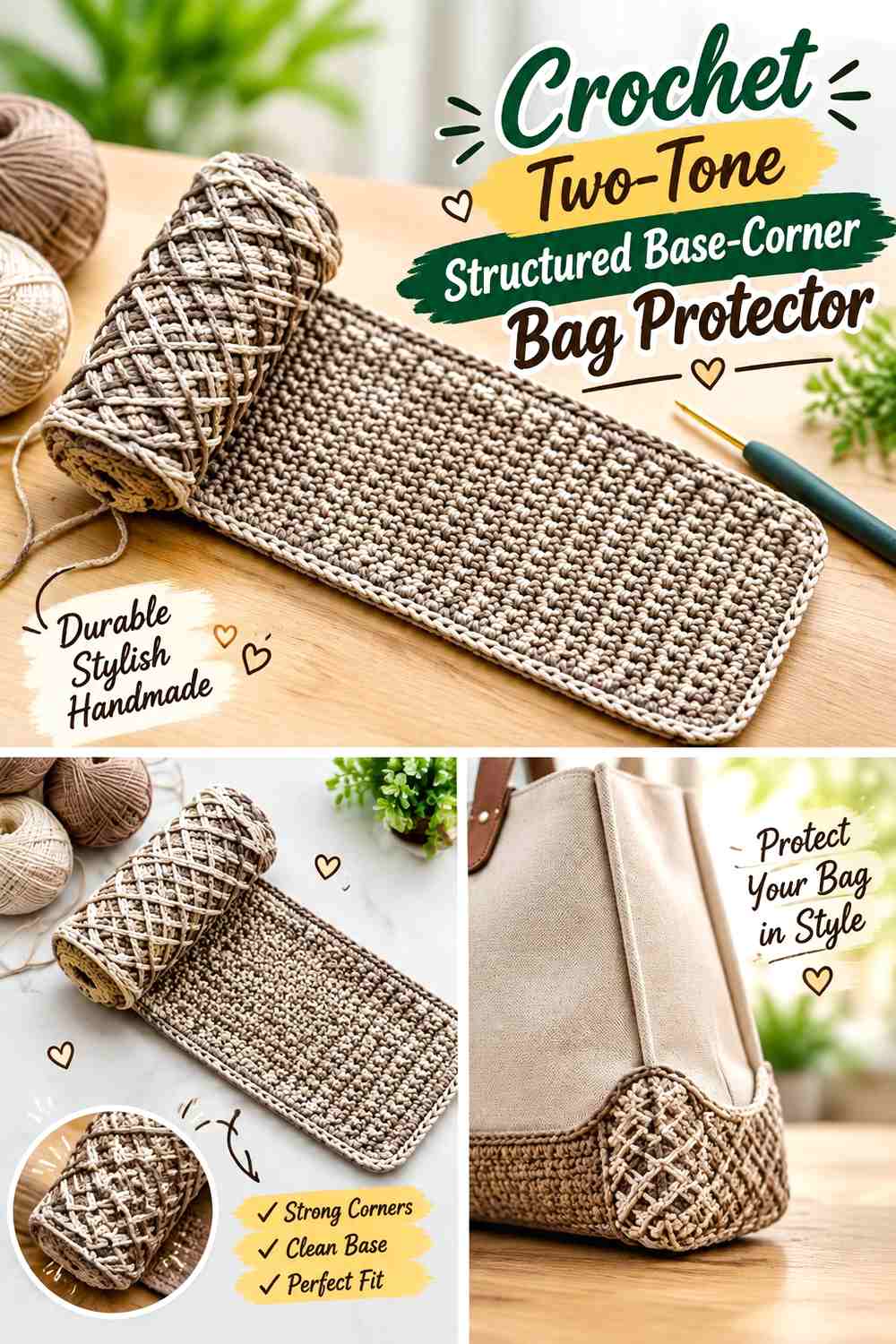
Bagissy’s rectangular bag-base tutorial focuses on producing straight edges and sturdy corners in a crochet base, providing a useful source for a protector that is integrated into the base geometry rather than added later as a decorative triangle. This approach is most relevant when you are making or substantially rebuilding a bag and want the corners reinforced through the construction itself.
Use Aubergine Rose through the lower base and corners, then transition to Custard Cream slightly above the highest-contact area. Instead of a separate patch, the dark color becomes a built-in protective-looking zone around all four lower corners. This is the best idea in the list for a new crochet handbag or a bag whose base is being reconstructed, but it is less appropriate for a finished fabric purse that only needs a small overlay.
Build the Corner Into the Base Whenever Possible
An integrated corner avoids extra patch edges and distributes the visual treatment across the bag bottom.
If you are starting a new crochet handbag, deciding on the reinforced-looking area during the base stage is cleaner than waiting for wear to appear and adding four separate motifs later.
Keep the Dark Color Through the Contact Zone
Aubergine Rose is practical visually at the lowest portion because it will show dirt and scuff discoloration less readily than Custard Cream.
Move the cream transition above the point where the bag normally rests. This allows both colors to remain visible without placing the lightest yarn at the highest-contact edge.
Separate Structure From Color Choice
A darker corner may look stronger, but strength comes from stitch construction, yarn behavior, seams, lining, and any base reinforcement—not from the shade itself.
Follow the creator’s base method for the actual corner construction. Treat the Aubergine-and-Custard division purely as a design layer over that structure.
Creator Credit: Bagissy | Örgü Çanta & Crochet
Comparing the 13 Bag Corner Protector Styles
For maximum crochet coverage, start with the dense pocket triangle, rounded equilateral triangle, solid-round triangle, or no-gap triangle. They place substantially more yarn over the bag surface than granny or mesh constructions.
The two double-layer corner designs provide a different advantage: they can behave more like shallow caps because two triangles are joined into a pocket shape. They are especially useful when the protector needs to wrap around an edge rather than sit on one flat face.
Moss stitch and mixed-granny treatments balance coverage with flexibility. Mesh and pointed edging are primarily decorative and make the most sense when the underlying corner is already sound. For a new or reconstructed crochet handbag, the structured base-corner approach integrates the idea from the beginning instead of adding a separate patch later.
Conclusion
Aubergine Rose and Custard Cream can make crochet bag corner protectors range from dense, almost patch-like caps to delicate geometric edging. The most useful design decision is how the corner actually meets the world: a floor-contact base corner benefits from more continuous coverage, while an upper handbag corner can support lace, granny spaces, or mesh without demanding the same abrasion resistance.
Make a paper template first, then crochet and block one representative protector before producing a full set. Check thickness, corner angle, attachment clearance, and how the bag behaves when filled. Use the credited creator tutorials for the original triangle, corner-pocket, edging, or bag-base constructions, and treat repair, reinforcement, lining, and permanent attachment as separate bag-making decisions.
Frequently Asked Questions
Can crochet really protect a bag corner from wear?
Crochet can add another textile layer between the bag and surrounding surfaces, and dense constructions can conceal or reduce direct contact with the original material. It should not be treated as equivalent to rigid corner hardware or a hard-wearing leather base, however. The amount of protection depends on yarn, stitch density, bag use, and attachment. For heavily abraded bottom corners, combine decorative crochet with an appropriate structural repair or reinforcement when needed.
Which stitch style gives the most corner coverage?
Dense single crochet, no-gap solid triangles, and compact layered constructions provide more continuous coverage than granny clusters or mesh. Double-layer pocket-style protectors add another fabric thickness as well. Openwork can still be useful when the protector is primarily decorative or when a stable reinforcement already sits underneath. Compare actual swatches rather than relying only on stitch names, because yarn thickness and tension can change density substantially.
Should Aubergine Rose or Custard Cream go at the very bottom corner?
Aubergine Rose is usually the more practical visual choice at the highest-contact point because a darker yarn is less likely to show ordinary surface discoloration immediately. Custard Cream can then occupy the center or upper part of the protector. If the bag is rarely placed on surfaces, reversing the palette is completely reasonable. Color does not determine durability, so choose the actual yarn and stitch construction for performance.
Should a corner protector be lined?
Not necessarily. A single dense triangle may be enough as a decorative overlay, while a double-layer cap already provides two crochet surfaces. A lining or backing can be useful when the crochet is open, when you want to conceal a repaired corner underneath, or when the outer motif needs additional dimensional stability. Any extra layer adds bulk, so test the complete corner sandwich before permanently attaching it.
How do I size a crochet protector for a boxed bag corner?
Start with a paper template rather than a flat measurement alone. Fold the paper over the front, side, and bottom exactly as the crochet will need to sit. Mark seams, piping, hardware, and the true contact point. Then make a crochet sample and compare its blocked dimensions with that template. A boxed corner may need connected or folded triangular sections rather than one flat equilateral motif.
Can I add matching protectors to all four bottom corners?
Yes, and repeating the same outer border color can help four handmade pieces look coordinated even if minor stitch variations occur. Make and block all protectors before attaching any of them, then compare dimensions side by side. Position corresponding points at the same height on the bag so the set looks intentional. If wear differs substantially from corner to corner, repair each underlying area appropriately before installing the matching crochet.
What yarn is appropriate for a crochet bag corner protector?
Use the original tutorial’s material information as your starting point, then consider the bag’s use and care requirements. A smooth yarn that produces clear, compact stitches may suit a dense protector, while fine cotton or thread can make a delicate lace cap. Avoid assuming that any particular fiber is automatically abrasion-proof. Make a swatch, rub and flex it in a realistic way, and follow the yarn label for care.