Lagoon Navy and Mango Cream can give a vintage metal purse frame anything from a restrained two-tone body to highly decorative colorwork. The most important choice, however, is how the crocheted insert relates to the hardware. Square frames, rounded kiss locks, small coin-purse clasps, and larger hidden frames require different top-edge shapes, and a beautiful crochet body can pucker if its opening does not correspond with the frame.
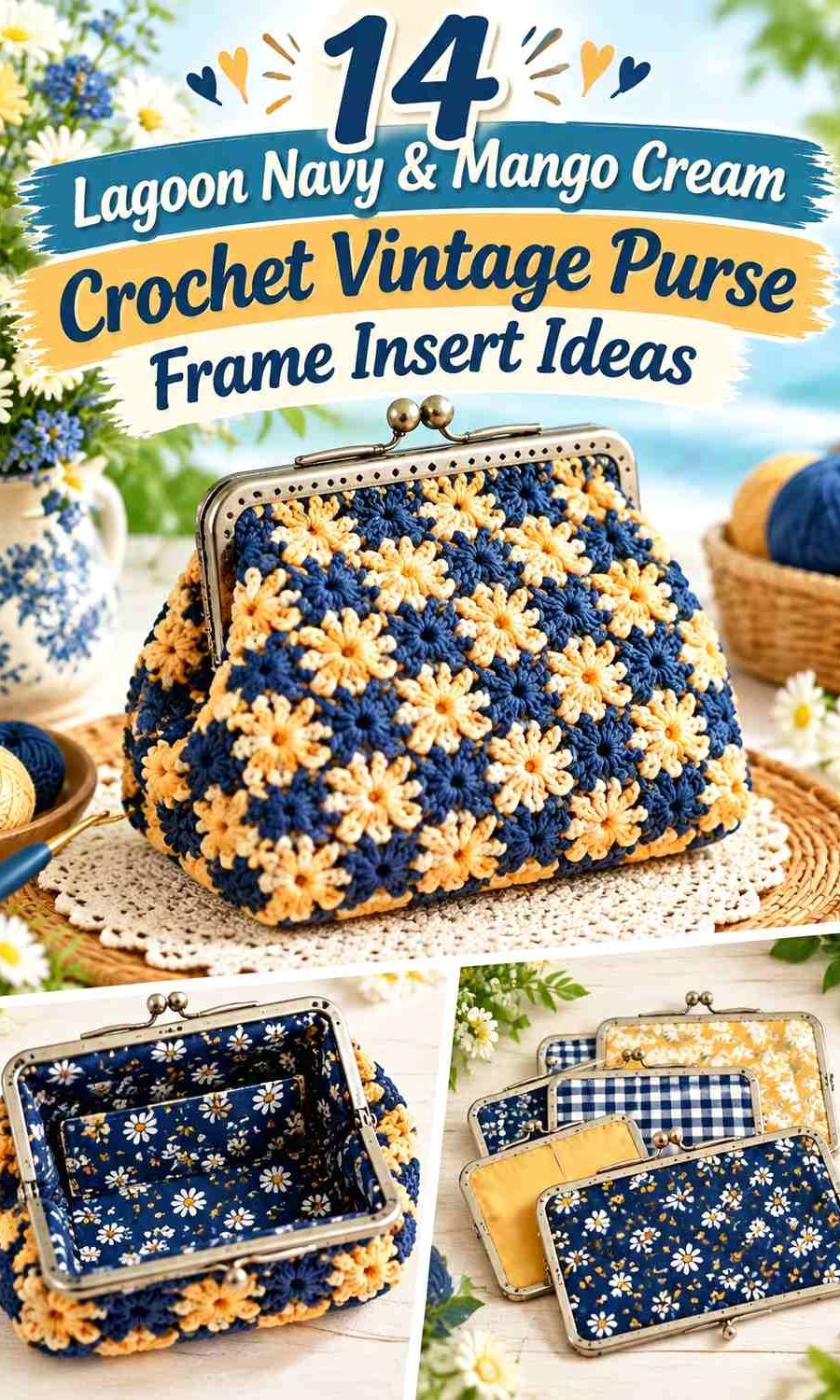
The 14 ideas below also differ in surface and structure. Tapestry crochet, split single crochet, lemon-peel texture, and compact single crochet create relatively dense fabric; modified puffs, EcoBobble texture, tulip clusters, shells, and lozenge colorwork make the insert more decorative. Some constructions taper toward the frame, while others rely on shaped flaps or carefully fitted upper edges.
Use the credited tutorials for their original purse constructions and frame-attachment methods. Adapt color and scale only after checking the exact vintage frame you intend to use.
Quick List
- Crochet Two-Tone Tapestry Vintage Purse Frame Insert
- Crochet Mango Tulip-Band Vintage Purse Frame Insert
- Crochet Lagoon Raffia Knit-Look Vintage Purse Frame Insert
- Crochet Mango Lemon-Peel Vintage Purse Frame Insert
- Crochet Lagoon Puff-Dot Vintage Purse Frame Insert
- Crochet Mango Linked-Column Vintage Purse Frame Insert
- Crochet Two-Tone Layered-Shell Vintage Purse Frame Insert
- Crochet Curved Color-Band Vintage Purse Frame Insert
- Crochet Two-Tone Lozenge Vintage Purse Frame Insert
- Crochet Lagoon EcoBobble Vintage Purse Frame Insert
- Crochet Mango Classic Metal-Clasp Vintage Purse Frame Insert
- Crochet Lagoon Rounded Vintage Purse Frame Insert
- Crochet Two-Tone Lined Rope Vintage Purse Frame Insert
- Crochet Mango Folded-Side Vintage Purse Frame Insert
Fit the Crochet to the Actual Vintage Frame
Vintage purse frames are not interchangeable simply because two measure roughly the same width. One may have a rounded arch, another a shallow rectangle, and another may narrow dramatically near its hinges. The crocheted upper edge must follow the usable frame channel or sewing holes rather than only matching the widest measurement.
Open the frame fully and examine where its hinges stop. Compare that shape with the tutorial source before starting. A round-based purse may gather naturally into one arched frame but fit poorly into a square one designed for separate shaped panels.
If you are reusing genuine vintage hardware, also inspect it before placing tension on the crochet. Check that the hinge moves freely and that sewing holes or channels are usable. Do not rely on new crochet fabric to correct distorted, damaged, or unstable hardware.
Control Bulk Where Crochet Meets Metal
The upper edge usually benefits from more control than the decorative body. Puffs, shells, flowers, and heavy colorwork can make a beautiful purse surface, but forcing bulky stitch groups into a narrow frame channel can create uneven gathers. Many successful framed-purse constructions transition to simpler stitches or shaped flaps near the top.
That makes color placement useful as well. Lagoon Navy can form a dark, compact frame-fitting edge while Mango Cream occupies the decorative center, or the relationship can be reversed when you want the pale color immediately beside antique brass, silver, or dark metal hardware.
Before sewing permanently, place markers at the center and hinge points of both the crochet and frame. Attach or baste from corresponding landmarks rather than beginning at one end and discovering too late that excess fabric has accumulated near the opposite hinge.
Decide Whether the Insert Needs Lining
A lining can hide carried yarn, color-change ends, and the wrong side of textured crochet. It can also prevent small contents from catching in open stitches. However, lining adds another layer close to the purse frame and must fit without forcing the crochet away from the hardware.
Dense split single crochet, tapestry crochet, and compact single crochet may already provide substantial coverage. Open shells and other decorative surfaces reveal more of the interior and can benefit more visibly from lining.
If you add one, complete the crochet body first and determine its actual shape. A lining copied from approximate exterior dimensions can become too tight once the crochet curves into a three-dimensional purse. Follow any lining guidance supplied by the original creator rather than assuming every frame purse takes the same flat rectangle.
1. Crochet Two-Tone Tapestry Vintage Purse Frame Insert
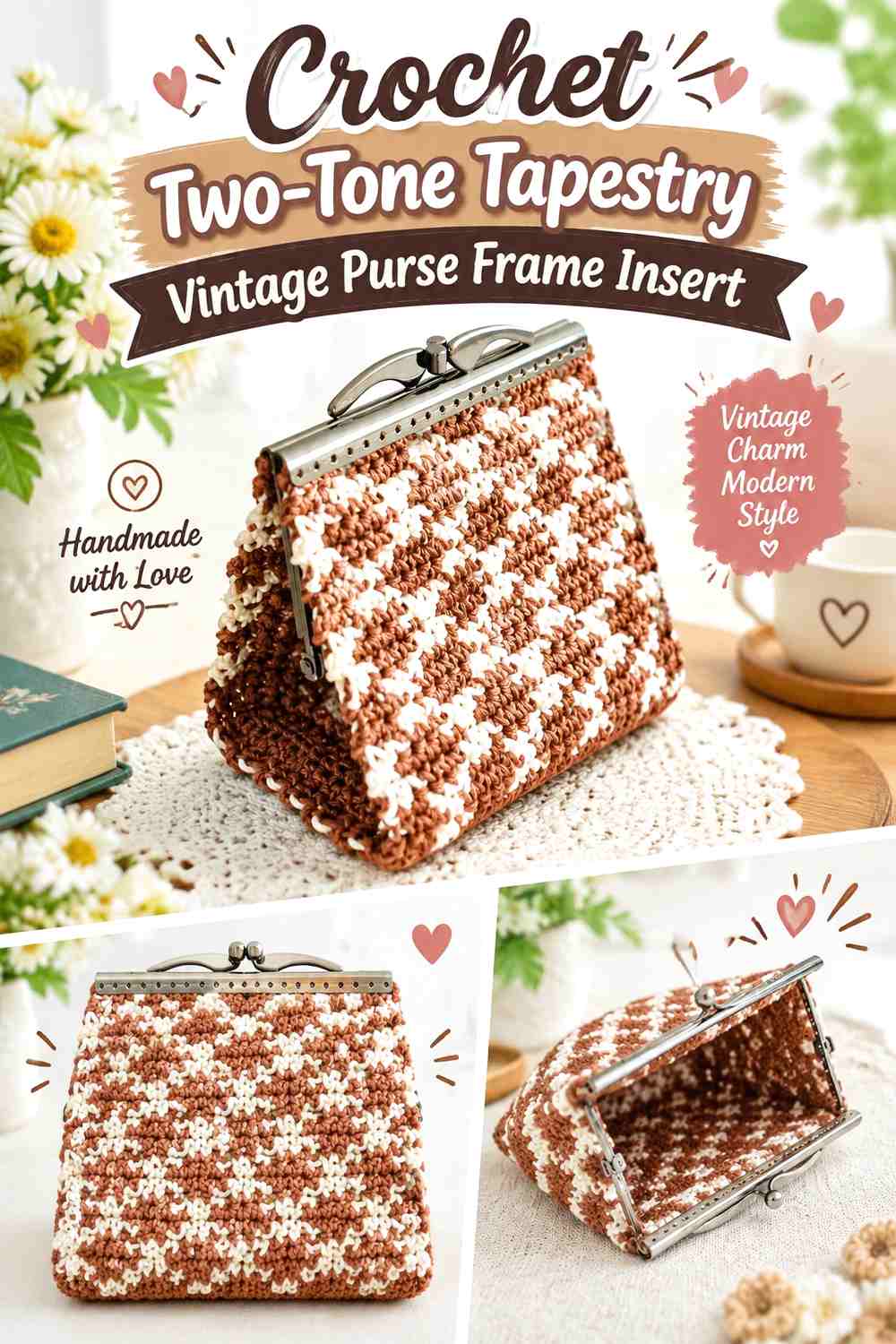
Chabepatterns’ Classic Frame Purse uses tapestry crochet in a back-and-forth construction, with one main piece and two separate side pieces assembled before the crochet is attached to a square bag fastening. That three-piece approach makes this one of the most structured options for a vintage frame because the body does not depend solely on a round tube being gathered into the hardware.
For a Lagoon Navy and Mango Cream interpretation, use navy as the main ground and Mango Cream for the repeating tapestry pattern. The carried color gives the fabric more visual density than ordinary stripes and allows small geometric shapes to repeat across the purse face. This idea is especially useful with a squarer vintage frame where defined sides make more sense than a highly rounded pouch.
Let the Frame Shape Decide Whether This Construction Fits
The source is designed around a specific square-style fastening and explicitly treats the frame shape as important. If your vintage hardware has a strongly arched top, do not assume the same three-piece shaping will transfer cleanly.
Hold a paper mock-up of the main panel and sides inside the open frame first. A different source from this list may be more suitable if the hardware expects curved rather than defined upper edges.
Keep Carried Yarn Away From the Final Frame Fit
Tapestry crochet carries the unused shade inside the working stitches, so the fabric is denser than ordinary single-color single crochet. That can be useful for a purse body but deserves attention at the upper edge.
Work the Mango Cream and Lagoon Navy with even tension so the carried strand does not shorten one section. Before attaching the frame, compare both upper sides to make sure the colorwork has not produced different widths.
Creator Credit: Chabepatterns
2. Crochet Mango Tulip-Band Vintage Purse Frame Insert
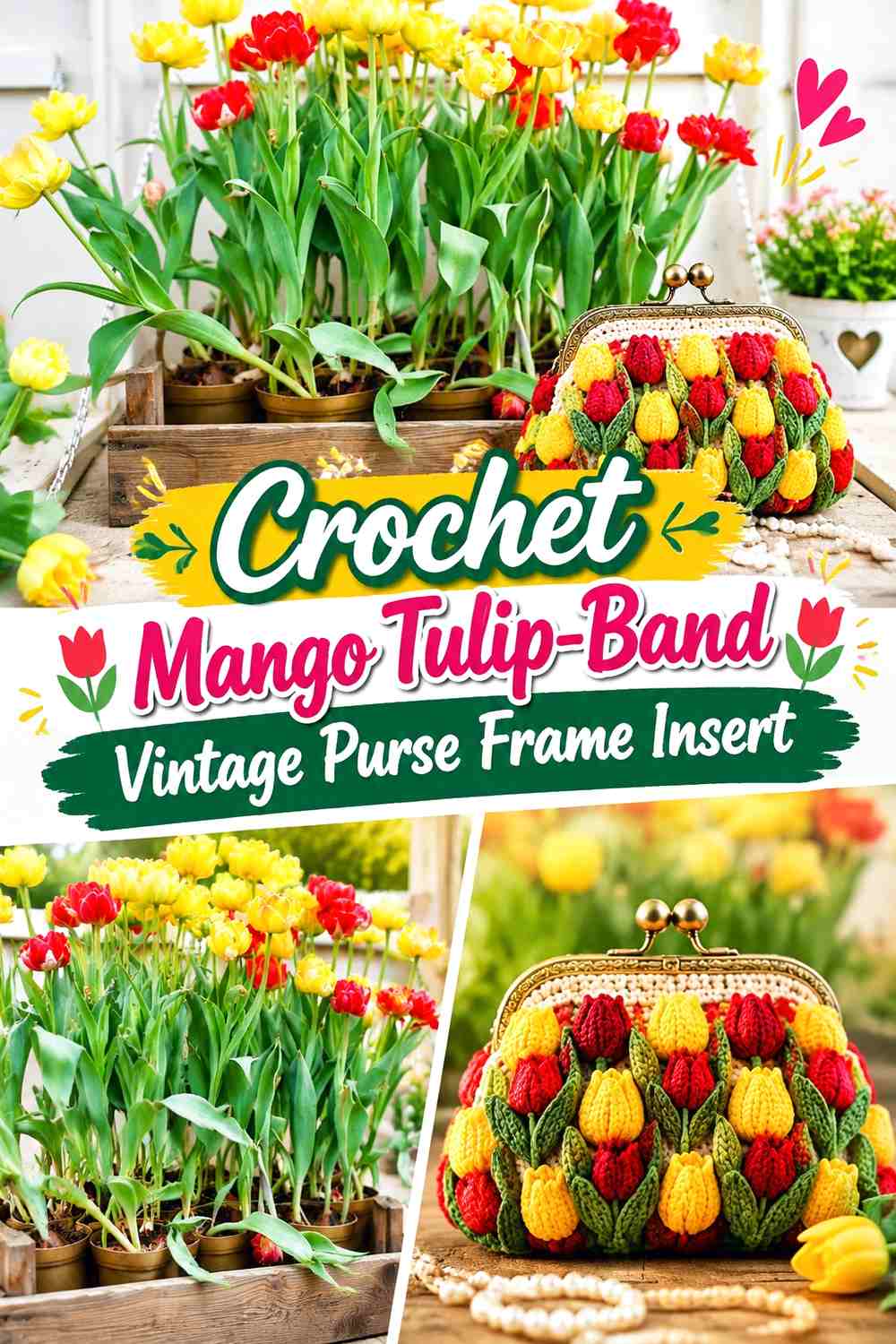
De Estraperlo’s framed coin purse places a recognizable tulip-stitch band between simpler striped sections. The purse begins from a circular base sized in relation to the opened frame, then moves into its decorative body before the metal frame is sewn to the top.
In this palette, Mango Cream can form the tulip blossoms while Lagoon Navy provides the darker leaves, background bands, and frame-facing edge. The result gives the purse a defined decorative center without forcing floral texture all the way into the hardware. This is a useful option for a small rounded vintage frame where one horizontal motif band is enough to make the insert distinctive. Because the tulip repeat has its own stitch requirements, resizing should preserve the creator’s repeat rather than squeezing the floral section into an arbitrary stitch count.
Keep the Tulip Band Visually Centered
The floral row works best when it sits between clear areas of calmer crochet. If you substantially change the purse height, decide where the tulips should fall before simply adding more plain rounds.
On a very shallow vintage frame purse, one floral band may already occupy much of the body. On a taller frame, additional Lagoon Navy sections can give the Mango Cream flowers more breathing room.
Fit the Base to the Frame Before Working the Decoration
The source develops the base until it relates to the opened frame, which is an important checkpoint when changing yarn or hook.
A thicker Mango Cream or Lagoon Navy yarn can reach the required diameter with fewer rounds and alter the eventual stitch count. Confirm the underlying dimensions first; the tulip colorwork should not be used to compensate for a poorly fitted base.
Creator Credit: De Estraperlo
3. Crochet Lagoon Raffia Knit-Look Vintage Purse Frame Insert
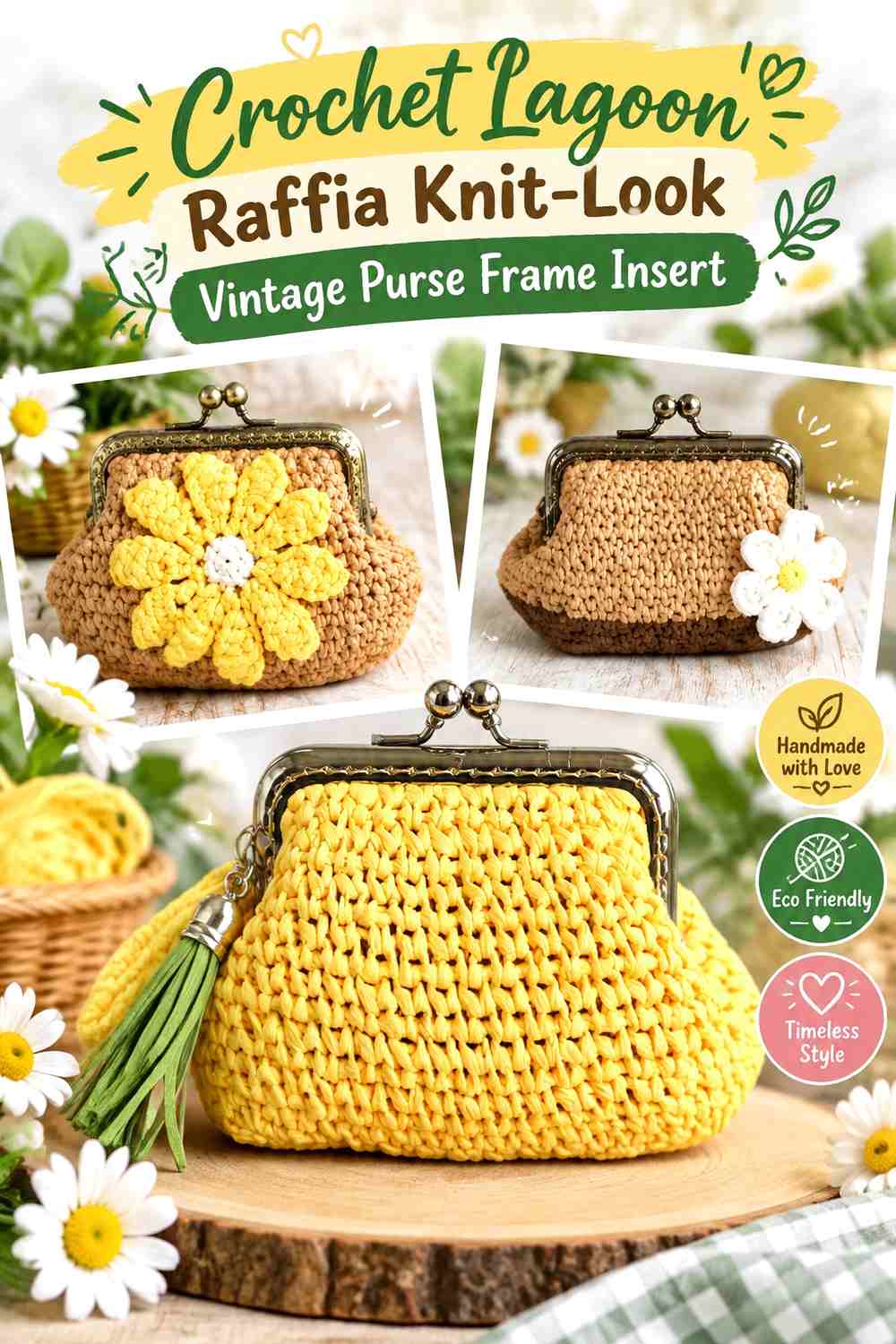
Craft Passion’s kiss-lock purse uses split single crochet, also known as waistcoat or knit stitch, with crochet raffia to create a dense surface that looks markedly different from conventional crochet. Its construction includes a rectangular bottom, a body worked upward, shaped upper sections, and optional fabric lining before the sew-in frame is attached.
Lagoon Navy gives this stitch a tailored, almost woven appearance, while Mango Cream can be added as a narrow center band, upper accent, or contrasting flower if you want a stronger vintage-textile effect. The structured base and tapered frame sections make this especially suitable when you want the insert to look more like a miniature handbag than a soft drawstring-style pouch. If you substitute ordinary yarn for raffia, swatch first because the resulting firmness and stitch definition can change substantially.
Use Mango Cream Where the Knit-Look Texture Can Stay Clear
Split single crochet already produces strong vertical-looking stitch definition. Broad alternating stripes can interrupt that surface more than necessary.
A narrow Mango Cream band or a carefully placed two-color section gives enough contrast while leaving Lagoon Navy responsible for most of the dense texture. View the sample next to the actual frame finish before choosing the final proportion.
Shape the Frame Edge Before Adding the Lining
The source includes optional lining and intentionally shaped upper sections. Finish that exterior shaping before treating the lining as a fixed rectangle.
A lining that is too wide near the frame may bunch inside the tapered portion, while one that is too narrow can pull the crochet inward. The insert and lining should arrive at the frame without fighting each other.
Creator Credit: Craft Passion
4. Crochet Mango Lemon-Peel Vintage Purse Frame Insert
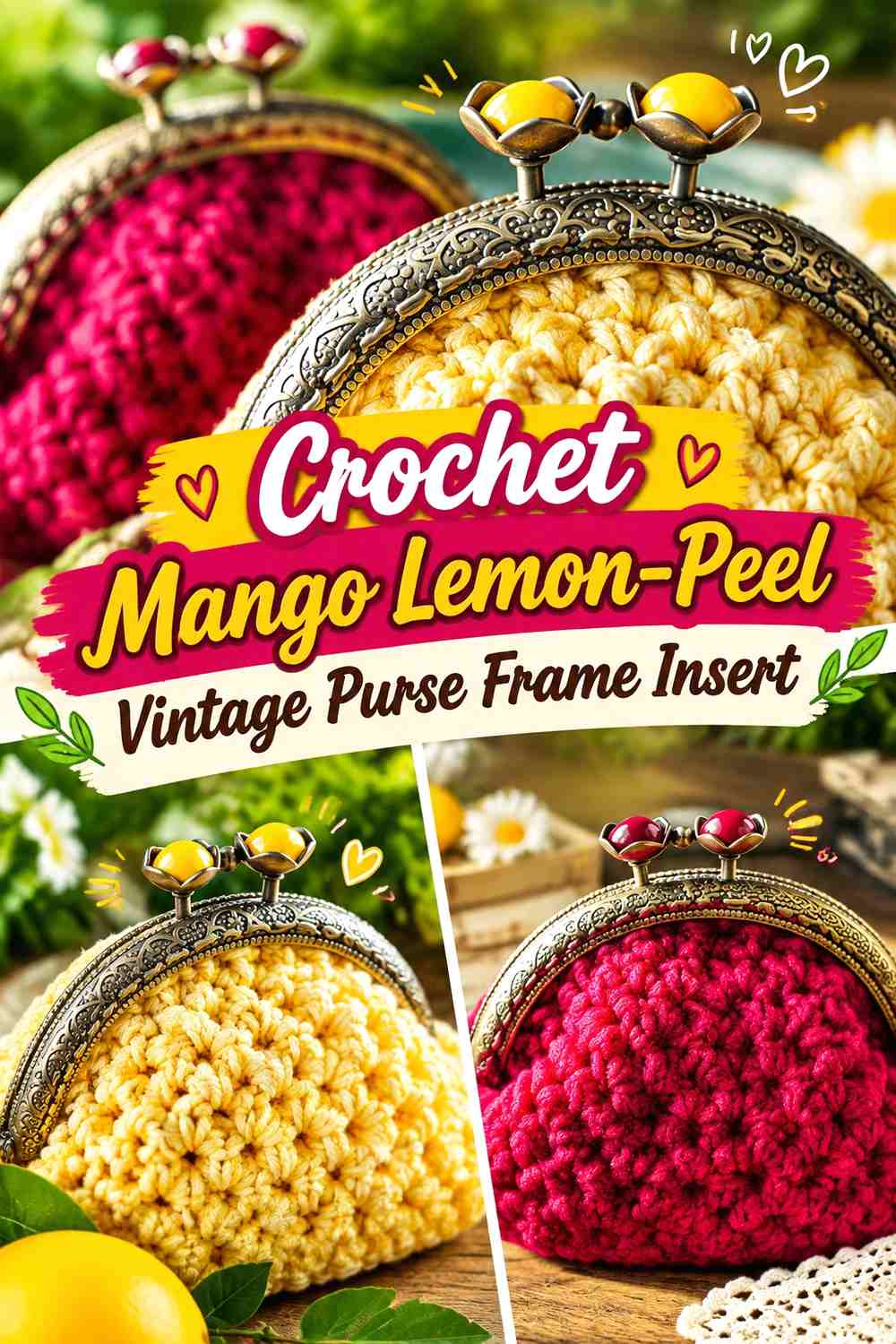
Heart Hook Home’s Classic Coin Purse builds a round base and then works alternating single and double crochet to create lemon-peel texture before sewing the finished opening into a vintage-style kiss clasp. The texture remains compact, making it a practical middle ground between plain single crochet and raised puff stitches.
For this version, use Mango Cream as the main body and Lagoon Navy only in the final frame-facing round or a narrow lower band. The subtle variation in stitch height gives a pale insert enough surface interest without requiring multicolor motifs. This design suits a small ornate vintage clasp because the body can remain visually quiet while the metal hardware takes more attention. Frame alignment remains important: the source marks the purse halfway so that each side can be matched accurately to the clasp hinges during sewing.
Mark Center and Hinges Before Sewing
A symmetrical purse can become visibly lopsided if extra crochet is gathered into one half of the frame. Establish the midpoint of the opening and compare it with both hinge locations before securing the hardware.
Check alignment repeatedly during sewing. Correcting distribution while only a small section is attached is easier than removing an entire completed frame seam.
Let Texture Replace Extra Decoration
Lemon-peel fabric contains small alternating high and low areas, so Mango Cream does not have to be supplemented with flowers, beads, or wide stripes to remain interesting.
If the vintage frame itself is ornate, a restrained body can create better balance. Use Lagoon Navy sparingly to define the frame line without competing with decorative metalwork.
Creator Credit: Heart Hook Home
5. Crochet Lagoon Puff-Dot Vintage Purse Frame Insert

Crochet Dreamz’s framed coin purse uses modified puff stitches separated by chain spaces through much of the body, then transitions toward the upper edge before the kiss clasp is sewn on. The puff texture produces a more dimensional surface than lemon peel while still keeping the overall purse compact.
Lagoon Navy can carry the puff field, with Mango Cream used at the top or in one controlled contrasting round. This arrangement allows the shadows around each puff to remain visible without creating a busy multicolor surface. It works particularly well with a simple vintage metal frame whose hardware needs a more decorative crochet body beneath it. The source also emphasizes checking the base against the opened clasp, an important safeguard when changing the original yarn or hook.
Do Not Let Puffs Determine the Frame Fit
Raised texture belongs in the purse body, while the hardware needs a predictable top edge. If yarn substitution enlarges the puff rounds, avoid solving the problem by forcing excess fabric into the metal channel.
Check the developing circumference before reaching the frame. A smooth attachment edge makes the finished clasp look intentional instead of heavily gathered.
Use Mango Cream to Clarify the Transition
One pale round near the top can signal the shift from textured body to frame edge. It also separates dark Lagoon Navy crochet from darkened antique metal if both are similar in value.
Keep that cream section compact. A wide pale band immediately under the clasp can become the strongest visual element and reduce the impact of the puff texture below.
Creator Credit: Crochet Dreamz
6. Crochet Mango Linked-Column Vintage Purse Frame Insert
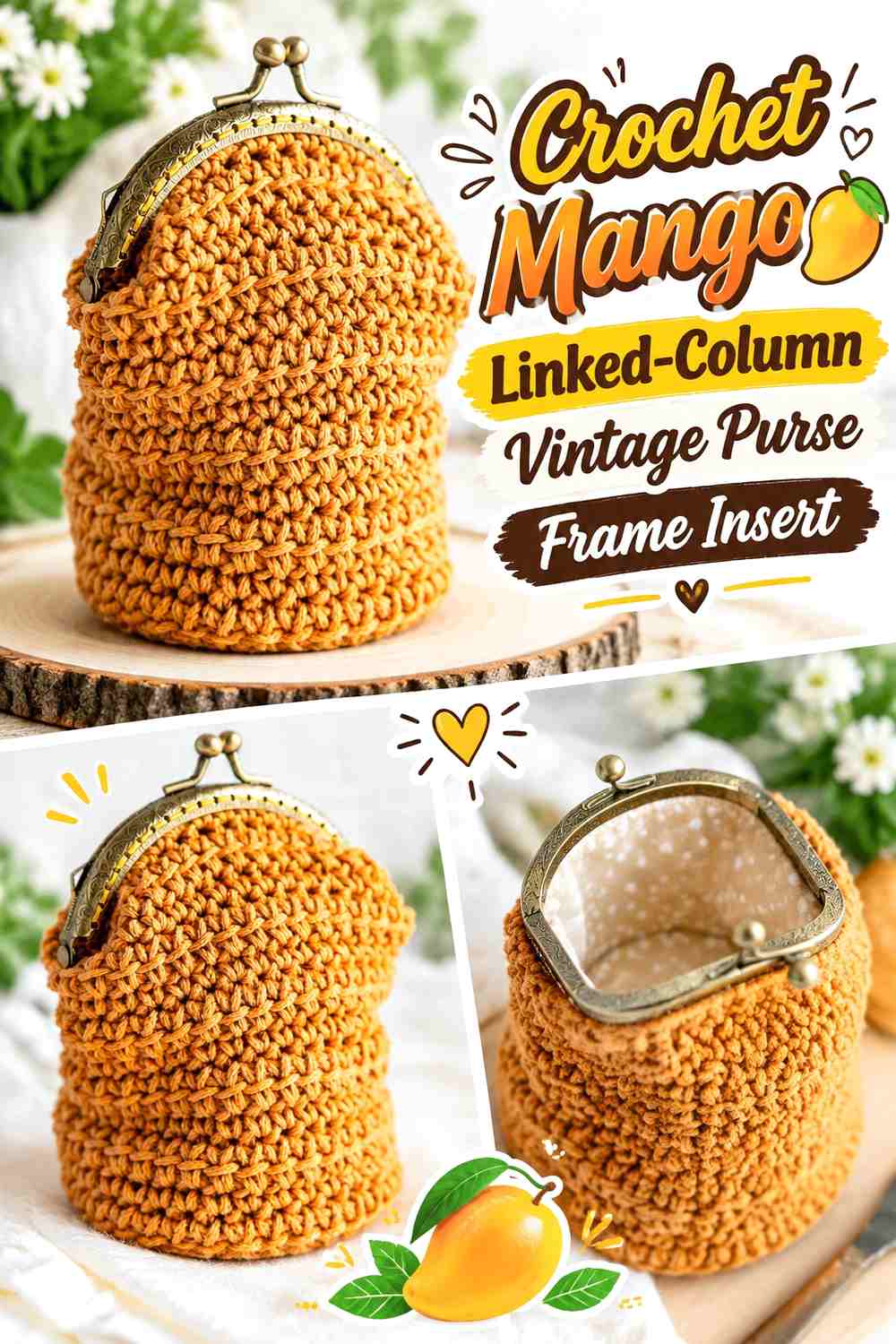
Nicki’s Homemade Crafts’ metal-frame coin purse alternates compact single-crochet rounds with linked double crochet, creating a taller stitch that remains more connected than ordinary double crochet. The body is worked upward from a shaped base before the metal frame is sewn into place.
For a vintage purse insert, Mango Cream makes the linked columns easy to see, while Lagoon Navy can mark the alternating compact rounds or form a simple frame-facing finish. This technique offers more vertical texture than dense single crochet without creating the large openings of conventional lace. It works well when you want the insert to appear refined rather than heavily dimensional. Because the purse is fitted to specific hardware in the source, treat the listed construction as your technique reference and recheck your own frame whenever yarn thickness changes.
Use Color to Emphasize Stitch Height
Lagoon Navy on the shorter rounds and Mango Cream on linked columns can make the vertical difference between stitches more obvious. The result is a subtle banded texture rather than ordinary equal-width stripes.
Make a small sample before committing to this alternation. If the color contrast overwhelms the stitch structure, keep most rounds Mango Cream and reserve navy for the top edge.
Keep the Top Circumference Controlled
Taller stitches can produce different drape from compact single crochet. The purse may feel soft through the body even though the frame itself is rigid.
Check that the final upper rounds remain evenly distributed and do not flare. The metal clasp should finish the opening, not act as a device for gathering an oversized crochet circumference.
Creator Credit: Nicki’s Homemade Crafts
7. Crochet Two-Tone Layered-Shell Vintage Purse Frame Insert

Moogly’s Bonbon Kisses Crochet Pouch builds a flat base and then develops a highly decorative body using repeated shell sections in successive colors. Near the top, separately shaped flaps are created for sewing into the metal purse frame. This makes the project especially useful when you want ornate crochet but still need a purpose-built frame attachment area.
Translate the multicolor original into alternating Lagoon Navy and Mango Cream shell layers. Navy can form the flatter foundation areas while cream marks the projecting shell rows, or the order can be reversed for a lighter purse. This is one of the most dimensional ideas in the list and suits a frame that can visually support an elaborate body. The many layers also create more yarn ends, so inside finishing deserves attention if the purse is not lined.
Keep the Shell Layers Below the Hardware
The shaped frame flaps are important because they separate decorative bulk from the actual sew-in edge. Preserve that distinction when adapting the colors.
Do not extend extra shell rows into the frame channel simply because you want another Mango Cream accent. A relatively plain attachment area gives the metal frame a cleaner seating surface.
Alternate Color by Layer, Not by Individual Stitch
A shell row is already a strong visual unit. Working complete layers in Lagoon Navy or Mango Cream lets the purse read clearly and avoids excessive color management inside each fan.
The darker layers create shadow, while the cream shells appear to project farther forward. Reverse the sequence if you want the navy to dominate the visible relief.
Inspect the Interior Before Mounting the Frame
Multiple shell layers and color changes can leave more ends than a simple coin purse. Finish them while the opening is fully accessible.
Once the frame is sewn on, working neatly near the upper interior becomes more difficult. If you plan a lining, check that it does not flatten the dimensional exterior or add excessive bulk beneath the attachment flaps.
Creator Credit: Moogly
8. Crochet Curved Color-Band Vintage Purse Frame Insert

Hooked On Patterns’ framed Rainbow Purse begins from a shaped circular construction and develops contrasting color rounds before the upper edge is fitted into a small kiss-lock frame. Although the source uses rainbow coloring, its construction can be reduced to two shades without losing the curved band effect.
For this palette, alternate Lagoon Navy and Mango Cream in broad sections rather than reproducing many narrow color changes. The shaping allows the colors to follow the rounded purse body, producing arcs instead of straight stripes. This is especially effective with a small arched vintage clasp because the curved visual movement echoes the hardware. The tutorial also stresses compact stitches and careful frame attachment, both useful considerations when the strong color contrast will make uneven shaping easier to notice.
Use Unequal Bands for a More Vintage Effect
Equal alternating stripes can make a tiny purse very busy. Broader Lagoon Navy sections interrupted by narrow Mango Cream arcs create a calmer two-tone result.
Another option is a cream lower body with a navy crown beneath the frame. Compare several paper color sketches before switching yarn repeatedly; the small surface means each band occupies a significant share of the finished design.
Scatter Color Joins Carefully
The original construction manages joins so they do not stack conspicuously. With only two contrasting shades, an obvious vertical join can become even easier to see.
Follow the source’s finishing guidance and avoid placing every color transition in exactly the same visible position. A smooth curved body should not develop an unintended seam-like stripe.
Creator Credit: Hooked On Patterns
9. Crochet Two-Tone Lozenge Vintage Purse Frame Insert

Cosy Rosie Crochet’s framed coin purse uses a zigzag lozenge stitch and multiple colors, worked as a flat rectangle before the frame is sewn on and the purse sides are joined. That construction creates an unusually graphic framed purse because the color pattern runs in angular repeated lines instead of circles around a pouch.
Reduce the palette to Lagoon Navy and Mango Cream so the lozenges become particularly clear. Alternating the shades across the zigzag structure creates a textile-like surface that works well beneath a wider rectangular vintage purse frame. Because the body is worked flat, this is a useful alternative when you prefer to control finished width directly rather than building circumference in rounds. The frame corners and side joins need accurate alignment so the geometric pattern does not appear tilted after assembly.
Protect the Zigzag Rhythm
High-contrast navy and cream will reveal every color transition. Keep the lozenge sequence consistent across the full rectangle and avoid making an isolated correction that shifts the pattern halfway through.
If your vintage frame requires a different width, swatch the repeat first. The goal is to fit complete or visually balanced portions of the geometry rather than simply ending at the first measurement that matches.
Square the Rectangle Before Adding Hardware
A slightly skewed flat panel may become much more obvious once it is held against a rigid metal frame.
Finish the crochet and use an appropriate shaping or blocking method for the chosen fiber before sewing. Check that both frame-facing edges have equivalent length and that the side seams will meet without pulling the lozenges diagonally.
Creator Credit: Cosy Rosie Crochet
10. Crochet Lagoon EcoBobble Vintage Purse Frame Insert
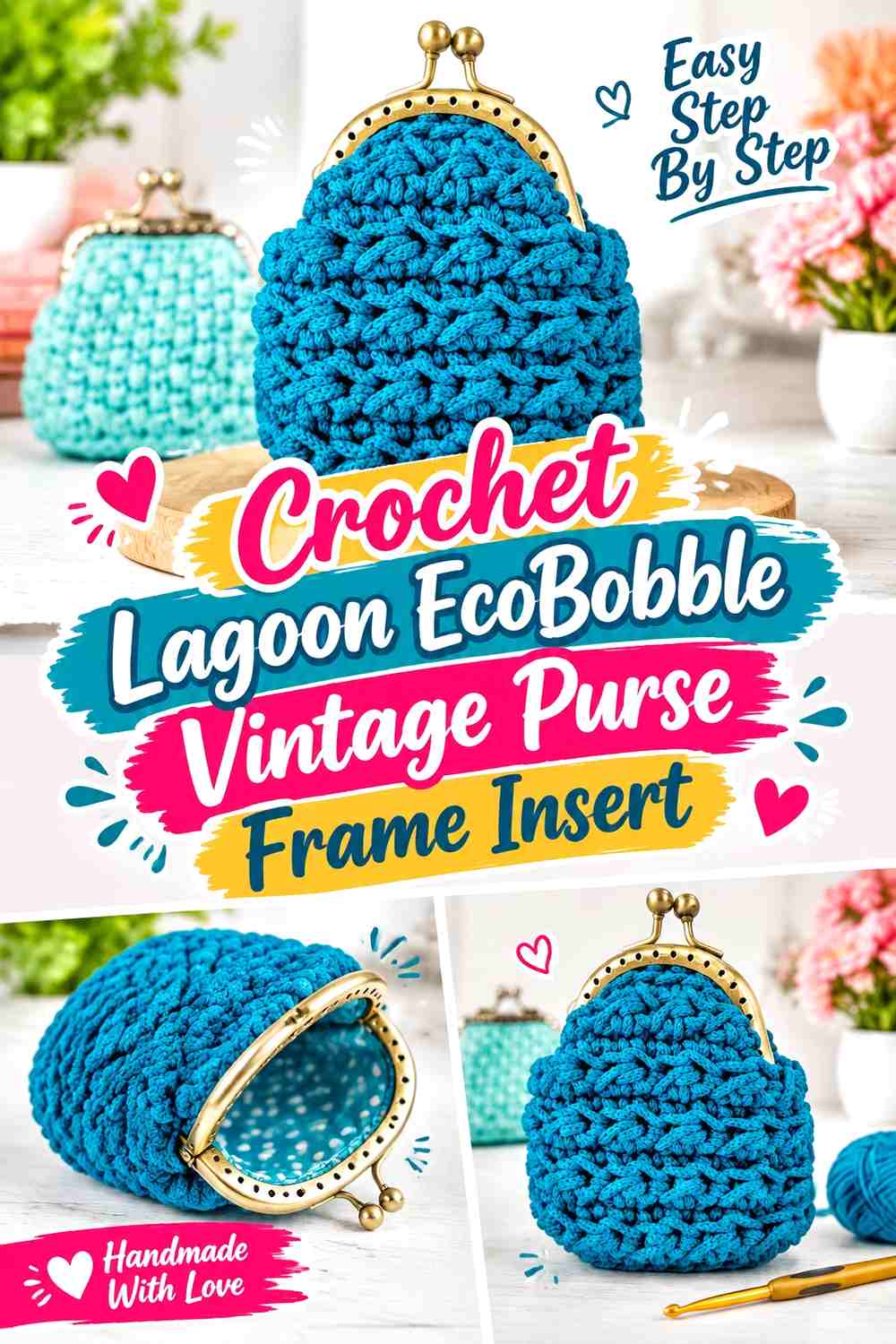
Katy Handmade’s framed coin-purse tutorial uses EcoBobble stitch to create a deeply textured small pouch beneath a metal click-clack frame. The raised texture makes the body visually substantial even though the purse itself remains compact.
Lagoon Navy is a strong choice for the main bobble surface because the darker shade allows shadow to define the individual raised sections. Mango Cream can be reserved for the upper finishing zone or a narrow base accent. This treatment suits a relatively simple vintage frame where a textured body can supply the ornament that the hardware lacks. Because dimensional stitches use more physical depth, compare the finished fabric with the opened frame before sewing; the top should fit the hardware rather than requiring the bobbles themselves to be compressed into it.
Separate Texture From Attachment
Keep the most pronounced bobble areas far enough below the metal channel that the frame can sit against a manageable upper edge.
A frame stitched across uneven raised texture may lean or create irregular gaps. Use the tutorial’s actual construction for the transition instead of continuing decorative stitches higher simply to increase the number of bobbles.
Add Mango Cream Where It Will Not Flatten the Relief
A narrow pale band can define the top or bottom while leaving Lagoon Navy responsible for the dimensional surface.
Avoid alternating every bobble in different colors unless you specifically want a dotted effect. Two strongly contrasting shades plus deep texture can make a very small vintage purse visually crowded.
Creator Credit: Katy Handmade
11. Crochet Mango Classic Metal-Clasp Vintage Purse Frame Insert

Lanas y ovillos’ metal-clasp purse tutorial teaches a complete small crochet purse designed specifically around a frame closure. The compact form offers a useful reference when the hardware itself should provide most of the vintage character and the crochet body should remain comparatively restrained.
Work the main insert in Mango Cream and add Lagoon Navy as a narrow bottom or upper accent rather than introducing a complicated motif. This approach is especially appropriate for an ornate reclaimed frame with engraving, decorative knobs, or unusual metalwork. A quiet crochet surface lets those details remain visible. It is also a useful choice when you are new to fitting crochet beneath rigid hardware and want to focus attention on shaping and alignment rather than managing multiple dimensional stitch patterns simultaneously.
Let an Ornate Frame Be the Focal Point
A heavily decorated vintage clasp already provides texture, shine, and shape. A Mango Cream body gives it a calm background.
Use Lagoon Navy to repeat the darkest tones in the hardware or lining, but keep the placement controlled. One narrow band can create a finished two-color design without competing with the frame.
Compare Both Halves Before Final Sewing
Even a simple crochet body can twist slightly or develop an uneven join. Fold the finished purse at its intended side points and mark the center of each frame-facing edge.
Attach equivalent landmarks to the two frame halves. The simplicity of the insert makes uneven frame placement more, not less, noticeable.
Creator Credit: Lanas y ovillos
12. Crochet Lagoon Rounded Vintage Purse Frame Insert

EZGISSIMO’s framed coin purse is worked in rounds from a circular base, increased until the base relates to the purse frame, then continued upward before decreases shape the upper section for attaching the metal hardware. The approach produces a soft rounded pouch rather than a flat rectangular body.
Lagoon Navy can form the complete rounded shell, with Mango Cream introduced only through the final frame-fitting section or a small central stripe. This idea suits a small arched vintage clasp where a rounded silhouette looks more natural than defined side panels. The decreases near the top are an important structural feature: they help move the wider body back toward the frame dimension rather than requiring excessive gathering when the hardware is sewn on.
Use the Decreases to Shape, Not Hide, Excess Width
A roomy lower pouch and a narrower frame can coexist when the transition is planned. Do not skip the shaping and expect sewing tension to solve the difference.
Watch how the upper edge approaches the open frame during the final section. The fabric should still have enough fullness for a rounded body while reaching a manageable circumference at the attachment line.
Keep Mango Cream Near the Top for a Crown Effect
A pale final section can visually separate the navy pouch from dark metal hardware. Because the purse narrows there, the cream area also appears smaller than the broad body color.
That creates a natural color hierarchy: Lagoon Navy supplies volume, Mango Cream defines the crown, and the vintage frame finishes the silhouette.
Creator Credit: EZGISSIMO
13. Crochet Two-Tone Lined Rope Vintage Purse Frame Insert
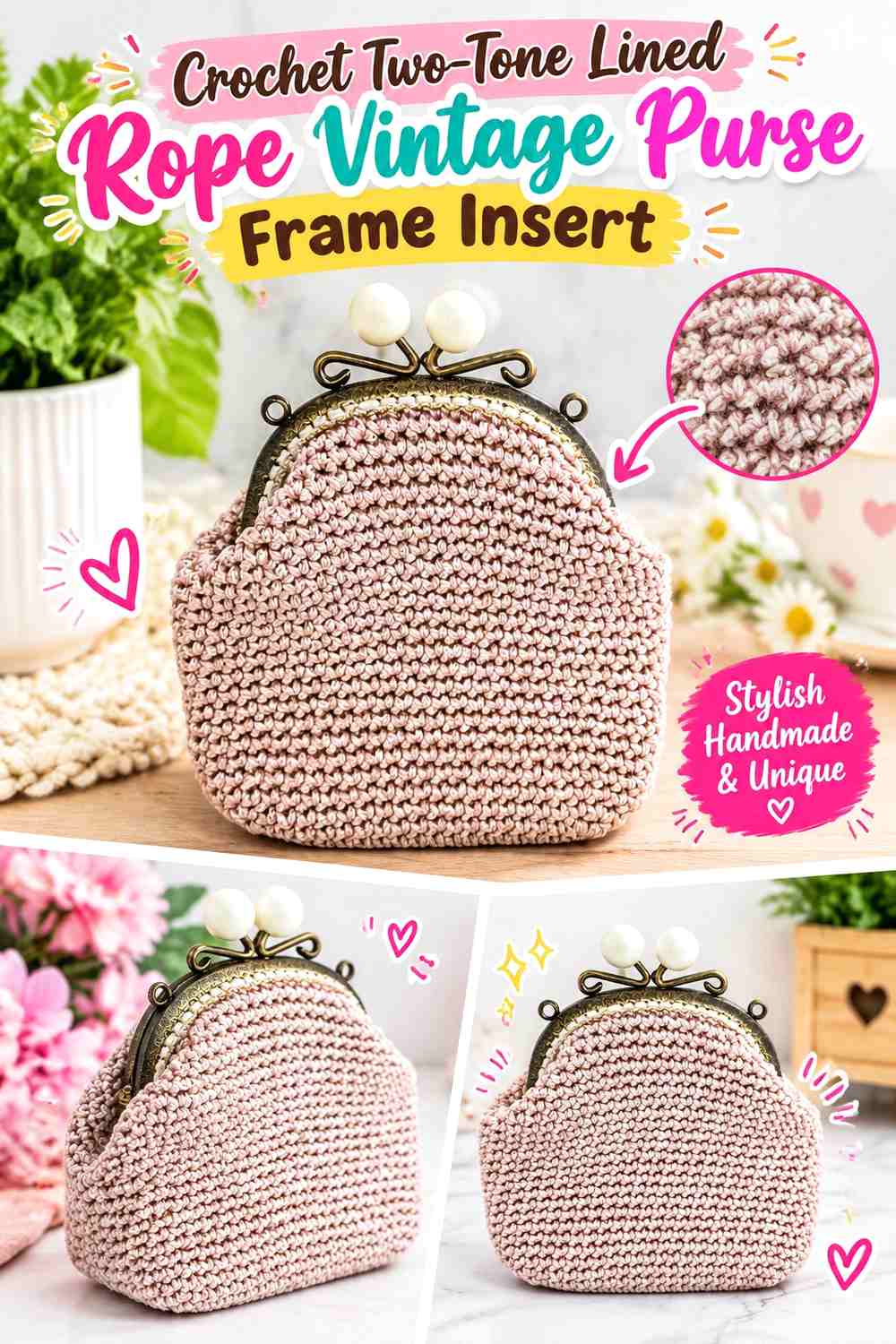
Kristina Virka’s framed crochet purse tutorial uses a thicker rope-style material, a metal kiss frame, and fabric lining, producing a more substantial purse than fine thread coin-purse designs. The project demonstrates how a framed crochet body can move toward a small handbag or mini bag rather than remaining strictly a change purse.
For Lagoon Navy and Mango Cream, use navy for the main structural fabric and cream as a controlled center or upper band. The larger stitch scale makes each color area visually significant, so broad color blocking works better than frequent tiny stripes. This idea is useful when your vintage frame is larger and visually capable of supporting a thicker crochet insert. If you substitute yarn for rope, do not assume the same dimensions or firmness will remain.
Match Material Thickness to the Frame Channel
A substantial crochet fabric needs hardware with enough room to accept the frame-facing edge. Vintage frames designed for very fine fabric may not accommodate thick rope crochet comfortably.
Inspect the channel or sewing-hole arrangement before selecting this treatment. A finer project from elsewhere in the list may be safer for delicate or narrow antique hardware.
Build the Lining Around the Finished Shape
The source includes lining as part of the polished frame-bag construction. With thick crochet, lining can also keep smaller contents from rubbing directly against the textured interior.
Finish the outer body and confirm how it sits under the frame before finalizing the lining shape. Added fabric should support the purse without creating a ridge immediately beneath the clasp.
Use Broad Color Zones
Large stitches magnify every stripe. A narrow Mango Cream band that is only a few rows deep can already become a strong visual feature.
Keep Lagoon Navy dominant if you want the frame and silhouette to remain the principal elements. Equal alternating bands produce a much more graphic modern result.
Creator Credit: Kristina Virka
14. Crochet Mango Folded-Side Vintage Purse Frame Insert
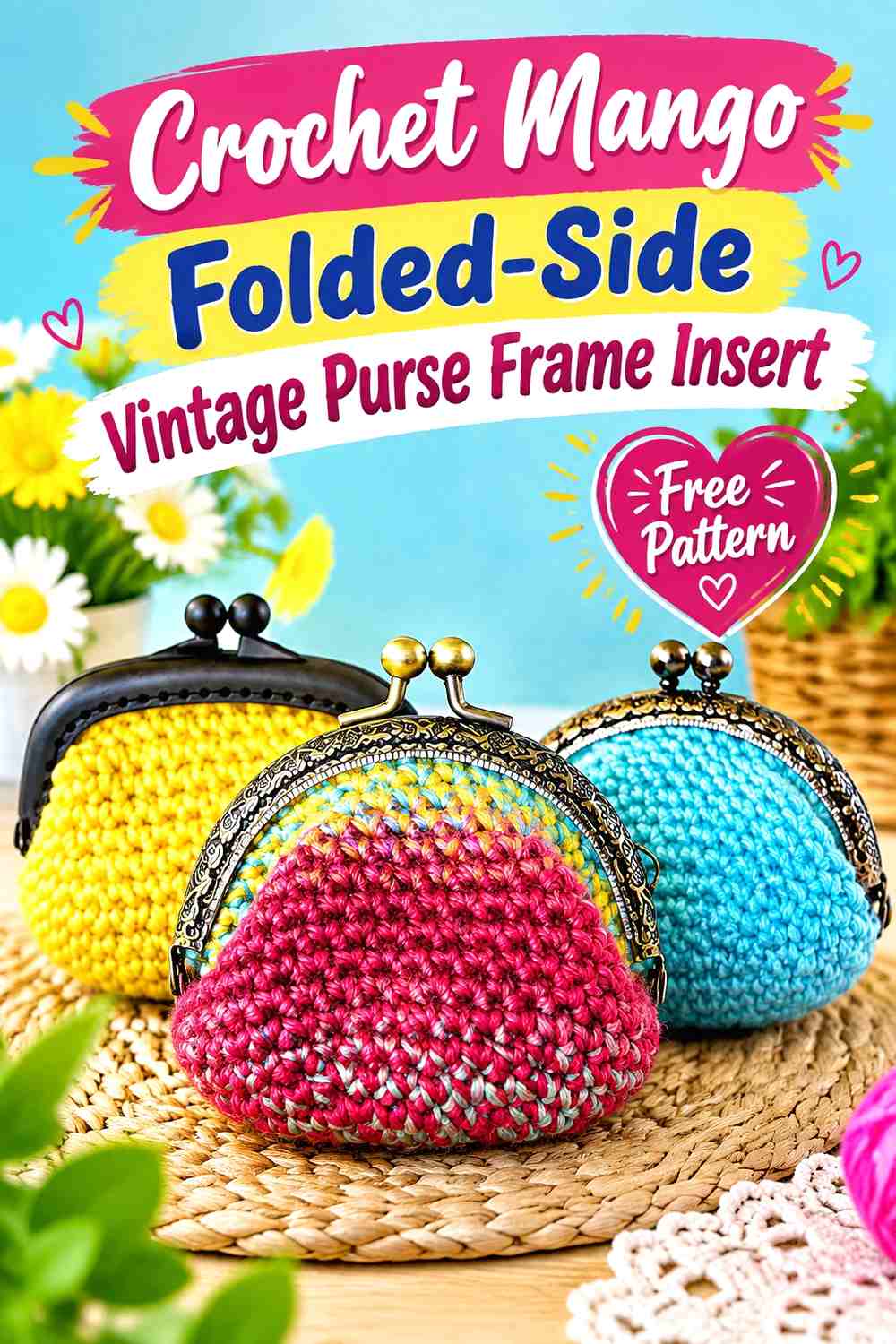
Chrisette Designs’ Quick Change Crochet Coin Purse uses a straightforward crocheted body whose appearance changes noticeably once the frame is installed: the upper sides fold into shape beneath the hardware. The pattern includes direct purse-frame attachment guidance, making it useful when you want a simple surface but still need to understand how a flat-looking crochet body becomes three-dimensional after mounting.
Mango Cream can cover most of the insert, with Lagoon Navy worked in a lower band or final frame-facing edge. This is an effective choice for patterned or engraved vintage hardware because the understated crochet does not compete with the clasp. It also demonstrates an important frame-purse principle: the unfinished body does not always reveal the final silhouette. Judge fit after considering how the frame pulls and folds the upper sides.
Do Not Trim the Body Because It Looks Too Tall
The source specifically accounts for the way the sides change once attached to the clasp. A loose crochet body may therefore look taller or less shaped before assembly than the final purse.
Compare your work with the source construction before removing rows. The rigid frame can change the upper silhouette in ways that are difficult to predict from a flat pouch alone.
Use Lagoon Navy to Emphasize the Fold Line Carefully
A dark upper accent can make the Mango Cream body look visually contained beneath the frame, but a stripe positioned too low may exaggerate the side folding.
Hold the finished body inside the open frame before deciding where the navy should appear. Color should reinforce the finished shape rather than marking a line that becomes crooked once the sides fold inward.
Creator Credit: Chrisette Designs
Comparing the 14 Vintage Purse Frame Insert Styles
For the most controlled, relatively dense surfaces, compare the tapestry, raffia knit-look, lemon-peel, linked-column, classic metal-clasp, and folded-side inserts. They let the metal frame remain a major part of the finished design and are useful when you want fewer large openings in the purse body.
Tulip bands, lozenges, curved color bands, and tapestry colorwork use Lagoon Navy and Mango Cream as integral pattern elements. EcoBobble, modified puff, and layered-shell designs emphasize three-dimensional texture instead.
Frame shape can narrow the choices quickly. Defined square hardware favors constructions with clear panel or flap shaping, while arched kiss locks coordinate naturally with rounded and tapered bodies. Larger frames can accommodate thicker rope-style fabric more readily than delicate small hardware.
Conclusion
Lagoon Navy and Mango Cream can give a vintage purse frame a completely different character depending on the insert beneath it. Dense tapestry or knit-look crochet creates a structured textile body, while tulips, puffs, lozenges, EcoBobbles, and layered shells turn the crochet itself into the focal feature. Rounded and folded-side constructions let the metal hardware do more of the final shaping.
Start with the frame rather than the yarn. Open it, inspect the hinges and attachment channel, and determine which source construction resembles its geometry most closely. Then make enough of the chosen stitch to check thickness, stretch, and color balance before completing the body.
Use the credited tutorial for the original purse construction and frame attachment. Treat changes to hardware size, yarn thickness, lining, straps, and reclaimed vintage components as separate adaptations requiring their own fit checks.
Frequently Asked Questions
Can I use an old vintage purse frame with a new crochet insert?
Potentially, provided the frame is still functional. Check the hinge, clasp, sewing holes or channel, and overall shape before placing tension on it. Remove old fabric carefully so the attachment area is not damaged. The new crochet should be designed around the usable frame dimensions rather than around the dimensions of the old fabric alone. If the metal is cracked, severely distorted, or unstable, decorative reuse may be more appropriate than a functional purse.
Should the crochet opening be exactly the same size as the metal frame?
Not necessarily. The correct relationship depends on the frame style and the original pattern construction. Some crocheted bodies are intentionally slightly different in circumference and are distributed carefully while being sewn; others use shaped flaps or tapered sections that correspond closely with the hardware. Follow the selected creator’s fitting method and compare your own crochet with the opened frame frequently instead of applying one universal measurement rule.
Which insert style works well with an ornate vintage frame?
A restrained lemon-peel, linked-column, split-single-crochet, or simple compact body allows ornate metalwork to remain the focal point. If the frame is plain, tulip bands, tapestry colorwork, lozenges, EcoBobbles, or layered shells can supply more visual detail. This is a design balance rather than a strict rule. Place a completed swatch beneath the actual frame to see whether the textures support or compete with one another.
Should Lagoon Navy or Mango Cream sit directly beneath the frame?
Lagoon Navy creates a strong, defined transition and can visually connect with dark or antiqued metal. Mango Cream provides more contrast against bronze, black, or dark silver frames and can highlight the silhouette of the clasp. You can also use the darker color through the body and reserve a narrow Mango Cream crown for the attachment zone. Judge the combination with the actual metal finish because aged brass, polished silver, and gunmetal change the apparent balance.
Is lining necessary for a crochet frame purse?
No. Dense crochet may provide enough coverage for the intended use, and several frame-purse constructions can be finished without lining. Lining becomes more useful when the stitch is open, the interior contains carried colorwork or many ends, or the purse will hold small items likely to catch on crochet. If you add lining, ensure it does not introduce enough bulk to interfere with the frame attachment.
Can I use thicker yarn to make the vintage purse larger?
Changing yarn thickness changes much more than finished size. It also affects stitch scale, firmness, upper-edge bulk, frame compatibility, and the proportion of decorative motifs. A frame has fixed dimensions, so simply enlarging the crochet may make it impossible to attach cleanly. If the frame is larger, make a swatch in the proposed yarn and follow a construction that explains how to fit the body to hardware rather than scaling every stitch count mechanically.
How do I stop the crochet from bunching inside the frame?
First make sure the opening and frame are reasonably compatible. Mark the crochet center, side points, and the frame hinges or corresponding center positions before sewing. Distribute the fabric between those landmarks instead of attaching continuously from one end without checking the remaining fit. Excessive bunching can also indicate that the body is too wide or that a bulky decorative stitch has been carried too close to the metal channel.