Peacock Navy and Peach Custard can change a mini skirt hem without requiring the crochet to cover the whole garment. A narrow lace strip adds only a small extension, while granny motifs, flower lattice, filet roses, and deeper shell or cluster panels create a more visible lower section. The choice affects opacity as much as appearance: an airy chain border behaves very differently from a broader motif band.
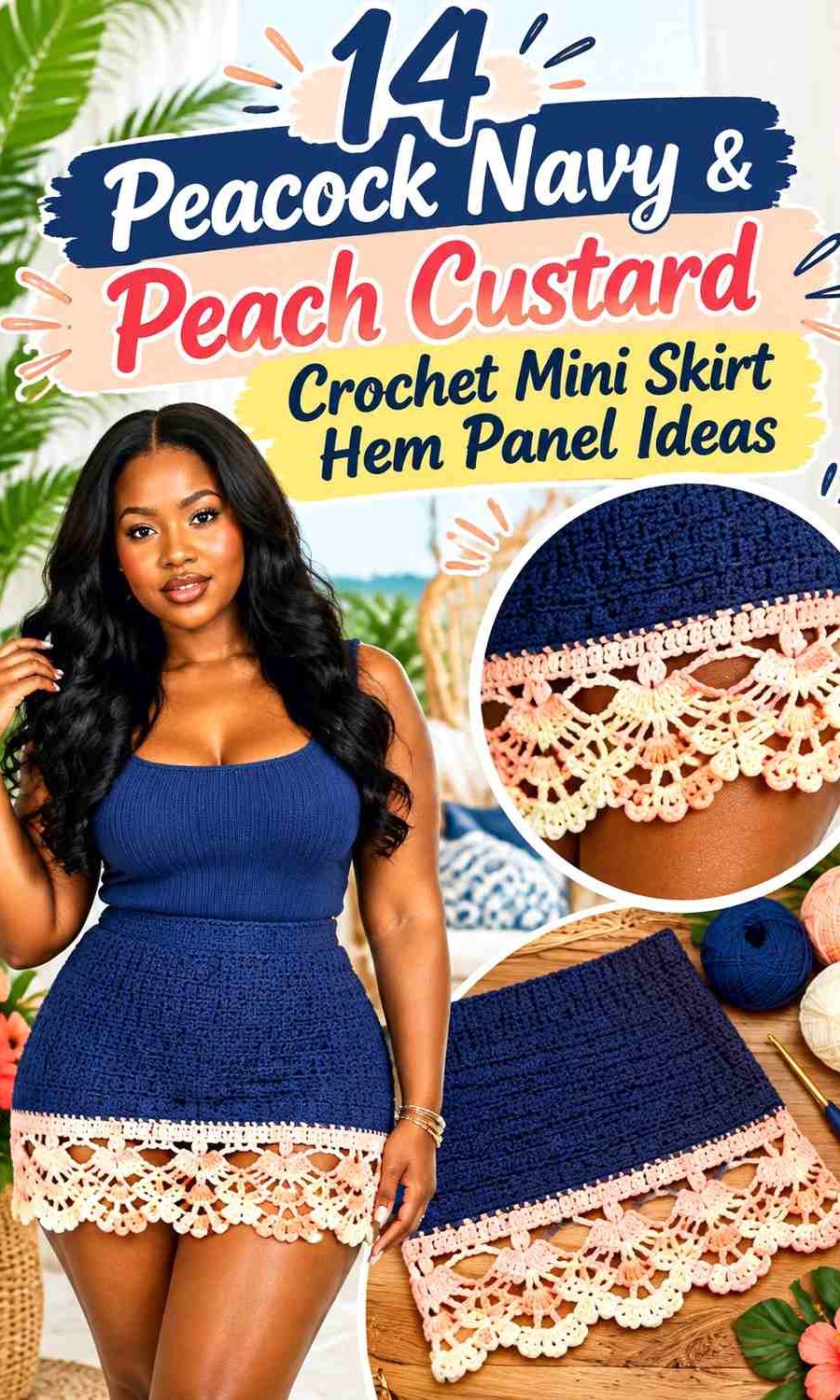
Hem construction also changes how the skirt moves. Ruffles add volume, straight filet panels add vertical drop, and modular squares introduce distinct joins that can make the lower edge feel more structured. A knitted or woven mini skirt may also stretch differently from the crochet attached beneath it.
The credited tutorials teach garment lace, edgings, skirting stitches, motif strips, or transferable lace panels. Use each source for its original crochet method, then size and attach the panel according to the actual skirt circumference, lining, side seams, and desired finished length.
Quick List
- Crochet Peach Custard Applied-Lace Mini Skirt Hem Panel
- Crochet Two-Tone Denim-Trim Mini Skirt Hem Panel
- Crochet Peacock Navy Vintage-Pineapple Mini Skirt Hem Panel
- Crochet Peach Custard Ruffled Mini Skirt Hem Panel
- Crochet Two-Tone Granny-Strip Mini Skirt Hem Panel
- Crochet Peacock Navy Fan-Lace Mini Skirt Hem Panel
- Crochet Peach Custard Chain-Lace Mini Skirt Hem Panel
- Crochet Two-Tone Shell-Skirt Mini Skirt Hem Panel
- Crochet Peach Custard Flower-Lattice Mini Skirt Hem Panel
- Crochet Two-Tone Vertical-Flower Mini Skirt Hem Panel
- Crochet Peach Custard Filet-Rose Mini Skirt Hem Panel
- Crochet Peacock Navy Diamond-Lace Mini Skirt Hem Panel
- Crochet Two-Tone Diagonal-Cluster Mini Skirt Hem Panel
- Crochet Peach Custard Filet-Trim Mini Skirt Hem Panel
Choose Panel Depth Before Choosing the Lace
A narrow edging can change the hem line by only a small amount, while a deep motif panel effectively becomes a new lower skirt section. Decide how much finished length you actually want before choosing a stitch pattern. A mini skirt that already sits at the preferred length may need only scallops or chain lace; a shorter thrifted skirt can accommodate a deeper granny, fan, flower, or filet panel.
Opacity also matters. Filet, chain lace, flower lattice, and open shells reveal skin or lining, while closely spaced motifs provide more coverage. If the skirt is lined, decide whether the lining should stop at the original hem or continue behind the crochet.
Make a paper band in the proposed panel depth and pin it below the skirt. This simple mock-up shows whether the added length still feels proportional before you crochet several feet of lace.
Preserve the Skirt’s Movement at the Join
The original skirt hem and the crochet panel may stretch differently. A rigid woven mini skirt can support a relatively stable motif band, while a stretch-knit skirt needs more careful consideration because a firm crochet strip can restrict the lower circumference.
Measure the hem while relaxed and, if the skirt stretches during dressing or walking, at the amount of expansion it normally needs. A crochet band should not be so short that it pulls the fabric into unintended gathers unless gathering is part of the design.
Side seams deserve attention too. Modular squares and obvious lace repeats look best when their joins meet the garment deliberately rather than leaving a tiny partial motif at one seam. Finish and block a full repeat before calculating quantity. Blocking can change lace width and depth enough to affect both the finished skirt length and circumference.
Use Peacock Navy and Peach Custard to Control Visual Weight
Peacock Navy creates a stronger boundary and can make an airy panel look more substantial, especially beneath pale denim, cream, stone, or faded blue fabric. Peach Custard keeps openwork lighter and makes individual flowers, shells, or filet blocks easier to see against dark skirt fabric.
They do not need equal coverage. A Peach Custard lace field with one narrow Peacock Navy attachment row gives the hem a soft extension with a defined top line. A navy granny strip with peach centers produces a stronger color-blocked band.
Check the palette against the actual skirt rather than a neutral background. The garment color will show through open stitches and effectively become a third shade. Also view the panel from standing distance: small Peach Custard details that appear prominent in your hand may become subtle once they circle an entire mini skirt.
1. Crochet Peach Custard Applied-Lace Mini Skirt Hem Panel

Mihankushea’s lace-hem tutorial is specifically the second part of a crochet dress project and focuses on adding decorative lace to the finished lower edge, including spacing and attachment. That direct garment-hem context makes it a useful starting point when you want the crochet to behave as an extension rather than as a separately joined motif belt.
For a mini skirt, work the lace primarily in Peach Custard and use Peacock Navy only at the attachment row. The lighter lower section can soften a dark or medium-wash skirt without making the join disappear. This approach is useful when the original hem is already even and you want one continuous lace treatment around it. Before committing, confirm that the skirt circumference corresponds comfortably with complete lace repeats rather than squeezing the final repeat into the side seam.
Establish an Even Foundation First
A decorative lace panel can only hang evenly if the attachment row is evenly spaced. On fabric skirts, the original stitch spacing may not correspond naturally with crochet.
Mark the hem at regular intervals before adding the foundation. If one section contains too many crochet stitches, the lace can flare there; too few can pull the skirt inward. Treat that foundation as part of the fit, not merely as a decorative first row.
Keep Navy at the Transition Line
One Peacock Navy foundation row can define exactly where fabric ends and crochet begins. That is especially effective when the skirt itself is dark blue, black, or gray because the transition looks intentional without interrupting every lace repeat.
Let Peach Custard occupy the more open lower section. This keeps the skirt visually lighter toward the hem and prevents the two-tone treatment from becoming narrow horizontal striping.
Creator Credit: 🧶Mihankushea🧶
2. Crochet Two-Tone Denim-Trim Mini Skirt Hem Panel
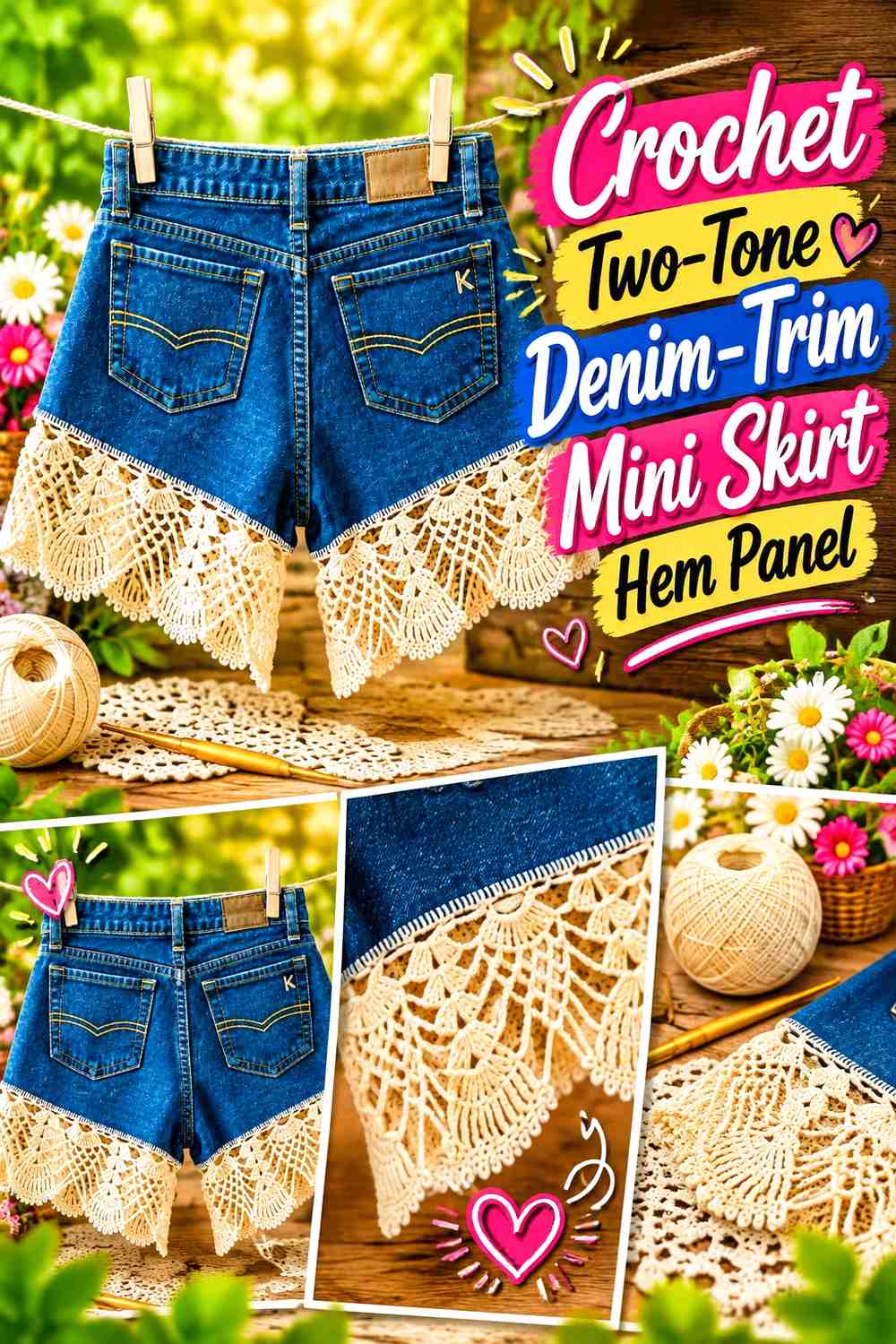
Moda a Crochet teaches lace trim specifically for clothing, including guidance for attaching crochet to denim and other fabrics rather than only to an existing crocheted edge. The tutorial discusses making openings in thicker materials before working the lace, which makes it particularly relevant to a denim mini skirt or another sturdy thrifted fabric.
Use Peacock Navy along the fabric-facing attachment row and Peach Custard through the decorative lower trim. The navy visually bridges blue denim and the paler lace, while the peach section becomes the obvious added hem. This is a better option for a narrow-to-medium extension than for a very deep replacement panel. If the skirt fabric is delicate rather than denim, do not automatically copy a piercing method intended for thicker material; the way you establish the crochet foundation should suit the actual textile.
Space Fabric Entry Points Before Crocheting
Crochet attached directly to fabric depends on consistent entry points. Irregular spacing can produce a wavy hem even when every crochet repeat is worked correctly.
Measure and mark the skirt first. Around a curved or A-line hem, compare the spacing as you move because the outer circumference may differ noticeably from the fabric a short distance above it.
Avoid Weakening the Original Hem
A dense line of holes placed too close to a raw or already distressed edge can reduce the stability of the remaining fabric.
Inspect the hem before altering it. If the skirt is frayed or worn, stabilize that area appropriately before adding the decorative panel. The crochet should finish a sound edge rather than hide continuing fabric damage.
Let Peach Custard Carry the Decorative Detail
Keeping the lighter shade below the attachment row makes the lace pattern easier to see against the skirt. It also avoids multiple color changes through a relatively small trim.
If you want more Peacock Navy, repeat it only at the final edge rather than splitting every row into two colors. That gives the narrow panel a clear top and bottom without visually compressing its lace structure.
Creator Credit: Moda a Crochet
3. Crochet Peacock Navy Vintage-Pineapple Mini Skirt Hem Panel
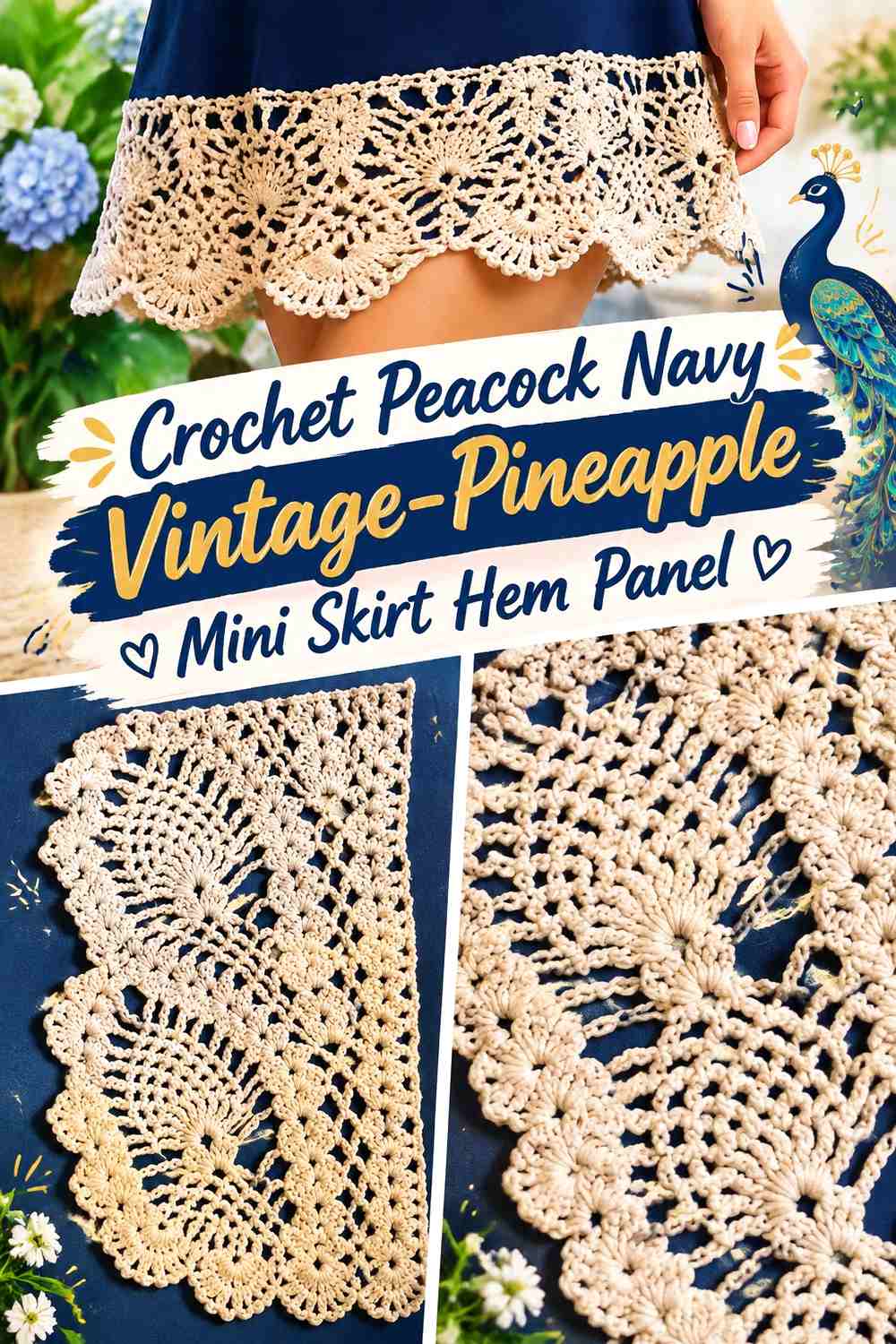
Suvi’s Crochet transcribed a vintage pineapple-lace edging from a piece made by the designer’s great-grandmother. The original lace was joined in a long circle and Suvi notes that it was probably intended for the bottom of a skirt, making the source unusually well matched to a vintage-inspired hem panel.
Work the main pineapple lace in Peacock Navy and introduce Peach Custard only within a narrow upper joining row or selected shell detail. Navy gives the elaborate openings a graphic silhouette and keeps the panel from looking overly delicate beneath a simple mini skirt. Because the edging has a substantial repeating lace sequence rather than a one-row finish, it needs enough vertical room to show its pineapple structure completely. Choose it when you want the crochet hem to become a major decorative component.
Preserve the Complete Pineapple Repeat
Pineapple lace depends on gradual widening and narrowing within the motif. Shortening it by removing arbitrary rows can destroy the recognizable shape.
Use the creator’s full repeat and adjust the skirt length or material scale instead. Fine thread will create a shallower, more delicate panel than thicker yarn without reconstructing the motif itself.
Join the Long Strip Only After Measuring
The source explains how the lace can be formed into a loop. Before making that final join, compare the blocked strip with the skirt’s actual hem circumference.
A slight difference can become obvious across such intricate lace. Avoid stretching the pineapple pattern around the skirt merely to close the last gap, because that changes both motif width and the spacing of the openwork.
Use Peach Custard as a Small Vintage Accent
A narrow peach line at the top can resemble an old-fashioned insertion band and separate the navy lace from the skirt fabric.
Keep the pale shade secondary. The pineapple construction already contains shells, chains, and multiple open spaces, so excessive two-color switching can distract from the vintage motif itself.
Creator Credit: Suvi’s Crochet
4. Crochet Peach Custard Ruffled Mini Skirt Hem Panel
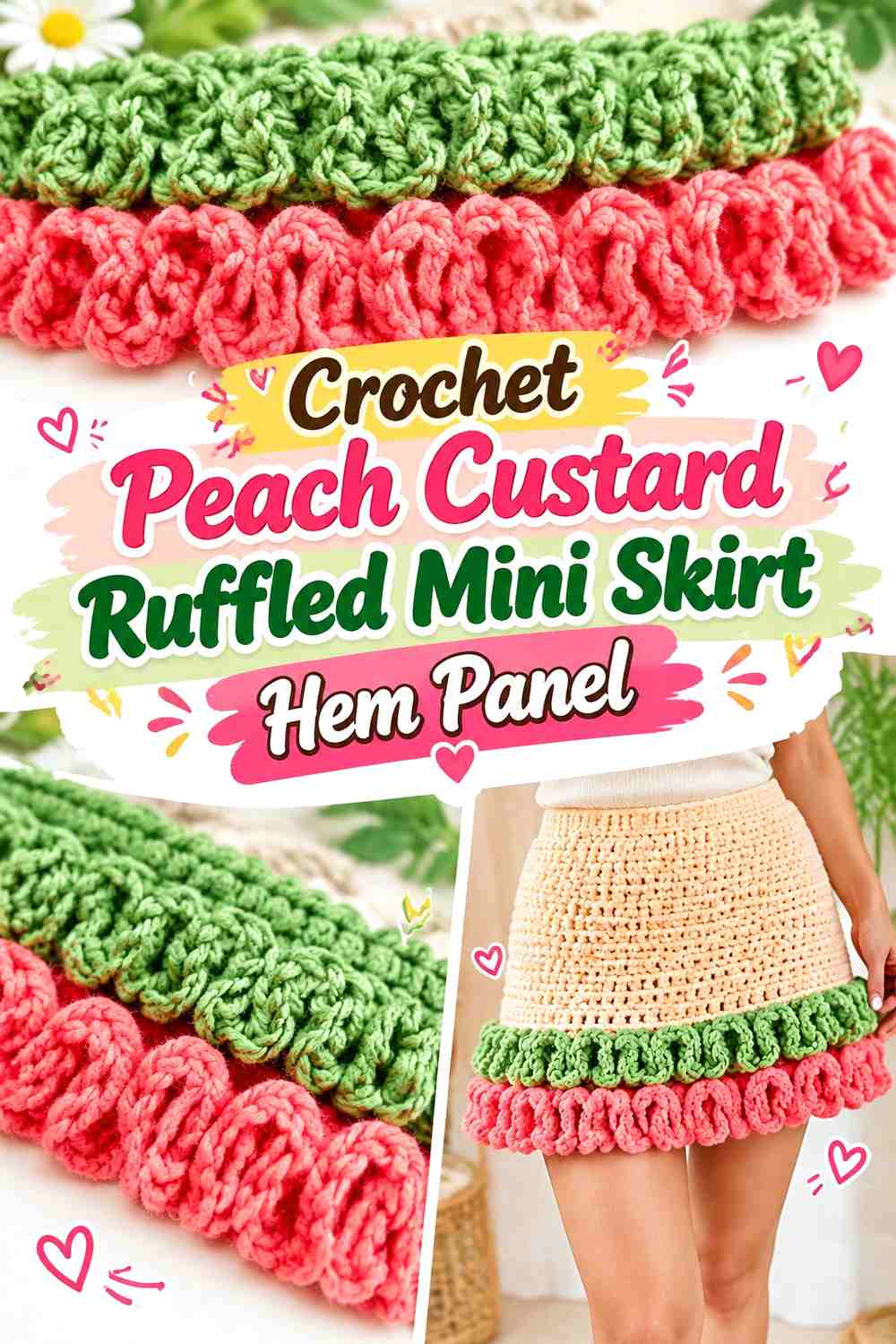
Fiber Flux’s ruffle-edging tutorial is explicitly suggested for the bottom of a skirt as well as other garment edges. The ruffle is created through concentrated increases, producing a dramatically flared edge from otherwise simple crochet stitches.
For a mini skirt, work the ruffle in Peach Custard and use Peacock Navy only for the base row where the crochet meets the garment. The combination keeps the skirt visually grounded while allowing the pale ruffle to project outward. This is the best option in the list when you want volume rather than transparent lace. It also changes the silhouette more than a straight panel, so consider how the skirt already falls. A flared mini skirt can support additional fullness more easily than a very narrow pencil shape, where a large ruffle may look abrupt.
Control Fullness at the First Ruffle Row
Ruffle depth is only part of the result; stitch concentration determines how strongly the edge waves.
Make a short sample along scrap fabric or a temporary crochet band before committing to the full circumference. Too much fullness can make the hem stand outward rather than hang, while too little may look merely scalloped.
Keep the Ruffle Clear of a Tight Lining
If the skirt has a narrow lining that ends at the original hem, a full crochet ruffle can move independently below it. That usually works well.
A lining extended into the ruffle area, however, can restrain the crochet and reduce its flare. Decide whether the lining should remain above the decorative panel rather than assuming both layers need identical length.
Creator Credit: Fiber Flux
5. Crochet Two-Tone Granny-Strip Mini Skirt Hem Panel
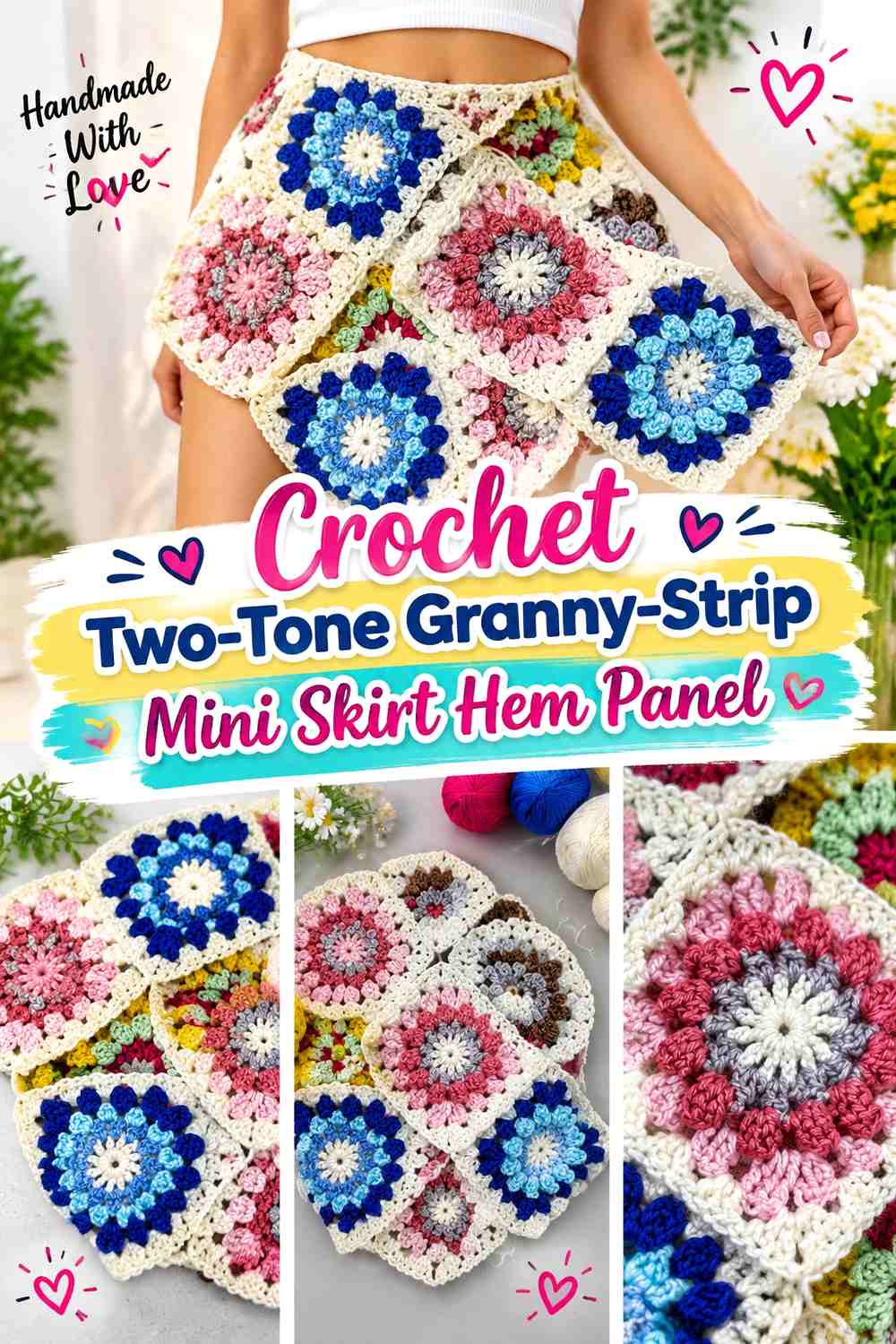
Easy Breezy Crochet’s single-line granny-square joining method is designed specifically to create one-square-wide strips and even explains how the strip can be closed into a circle for skirt edges. That makes it a direct structural match for a modular mini-skirt hem band.
Use Peacock Navy for each square’s outer border and Peach Custard in the centers, creating a continuous dark framework around lighter motifs. The square height determines the panel depth, so this is an easy concept to visualize before making the full circumference. It also offers more coverage than fine lace because the clusters occupy a greater share of the surface. The main fitting limitation is modular sizing: circumference increases in whole-square increments, so motif size needs to be chosen with the skirt measurement in mind.
Make One Block Before Calculating Quantity
A small difference in blocked square size becomes substantial when repeated around an entire skirt.
Complete and block one representative motif in the actual yarn, then divide the hem circumference by that finished width. If the calculation leaves an awkward remainder, change motif scale rather than planning to distort the final few squares.
Put Navy on the Join
A Peacock Navy border and join can make the strip read as one continuous hem panel even though it is built from separate units.
Peach Custard centers then appear as repeated windows rather than disconnected patches. This is especially effective on dark skirts where a pale joining seam would visually break the circumference into individual blocks.
Check the Band for Twisting
A long one-square strip should lie flat before it is closed into a ring. Uneven joins can gradually rotate the motifs and become obvious only after several squares have been added.
Lay the strip out periodically and correct any tight join before continuing. Closing a twisted band around the skirt will not solve the underlying tension problem.
Creator Credit: Easy Breezy Crochet
6. Crochet Peacock Navy Fan-Lace Mini Skirt Hem Panel
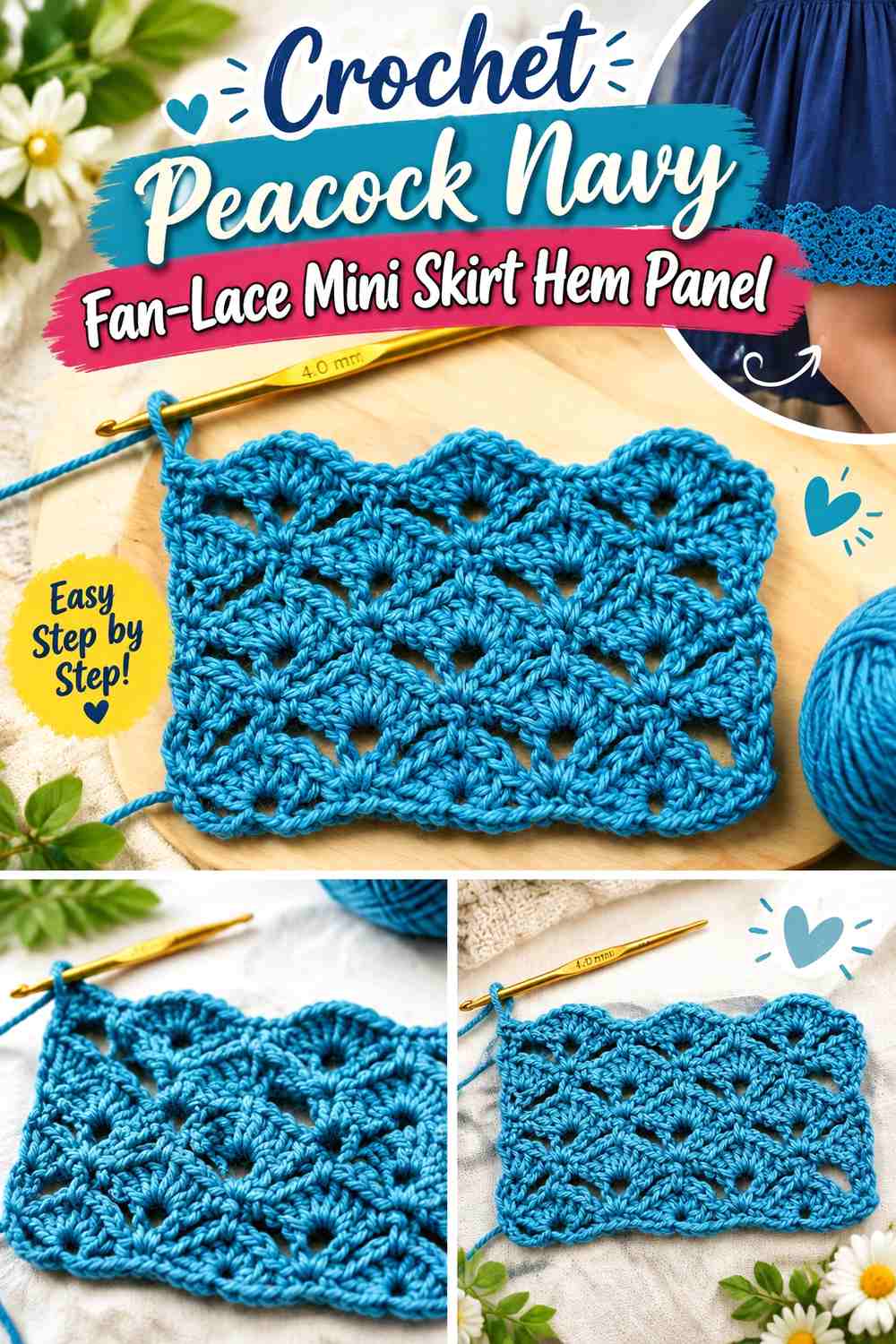
Interweave’s Fan Lace tutorial combines double-crochet fans, V-stitches, single crochet, and chains in an offset four-row repeat. The source describes the lace as suitable for garments and decorative edges, which makes it a flexible reference for a deeper skirt hem panel rather than only a final scallop.
Work the main fans in Peacock Navy and use Peach Custard for a narrow foundation or one repeated separator band. The fan motifs create curved movement across the hem without producing the dimensional volume of a ruffle. Because the repeat can end with a comparatively flat row, the panel can also be planned with a controlled lower edge rather than mandatory scallops. This option suits a mini skirt that needs a medium-depth lace extension while still preserving substantial open space.
Center Complete Fans Across the Circumference
Fans are broad visual units, so a tiny partial repeat at the side seam can look more obvious than a narrow mismatch in plain mesh.
Calculate the circumference from a blocked swatch and aim to finish with complete repeats. If necessary, adjust the attachment row slightly so the lace pattern distributes evenly around the skirt.
Check Horizontal Stretch
Fan lace contains chains and open V-stitches, which means the fabric can expand when pulled sideways.
Do not size the panel from a stretched measurement. The relaxed circumference should correspond closely with the skirt hem, particularly on a woven garment that does not need substantial lower-edge stretch.
Use Peach Custard to Separate the Lace From the Skirt
One pale upper row can distinguish a navy panel from an equally dark skirt and prevent the openwork from disappearing visually.
Keep the rest of the fan section mostly navy if the curved stitch structure is intended to be the main feature. Too many color bands can turn the panel into horizontal stripes before the viewer notices the lace.
Creator Credit: Interweave
7. Crochet Peach Custard Chain-Lace Mini Skirt Hem Panel
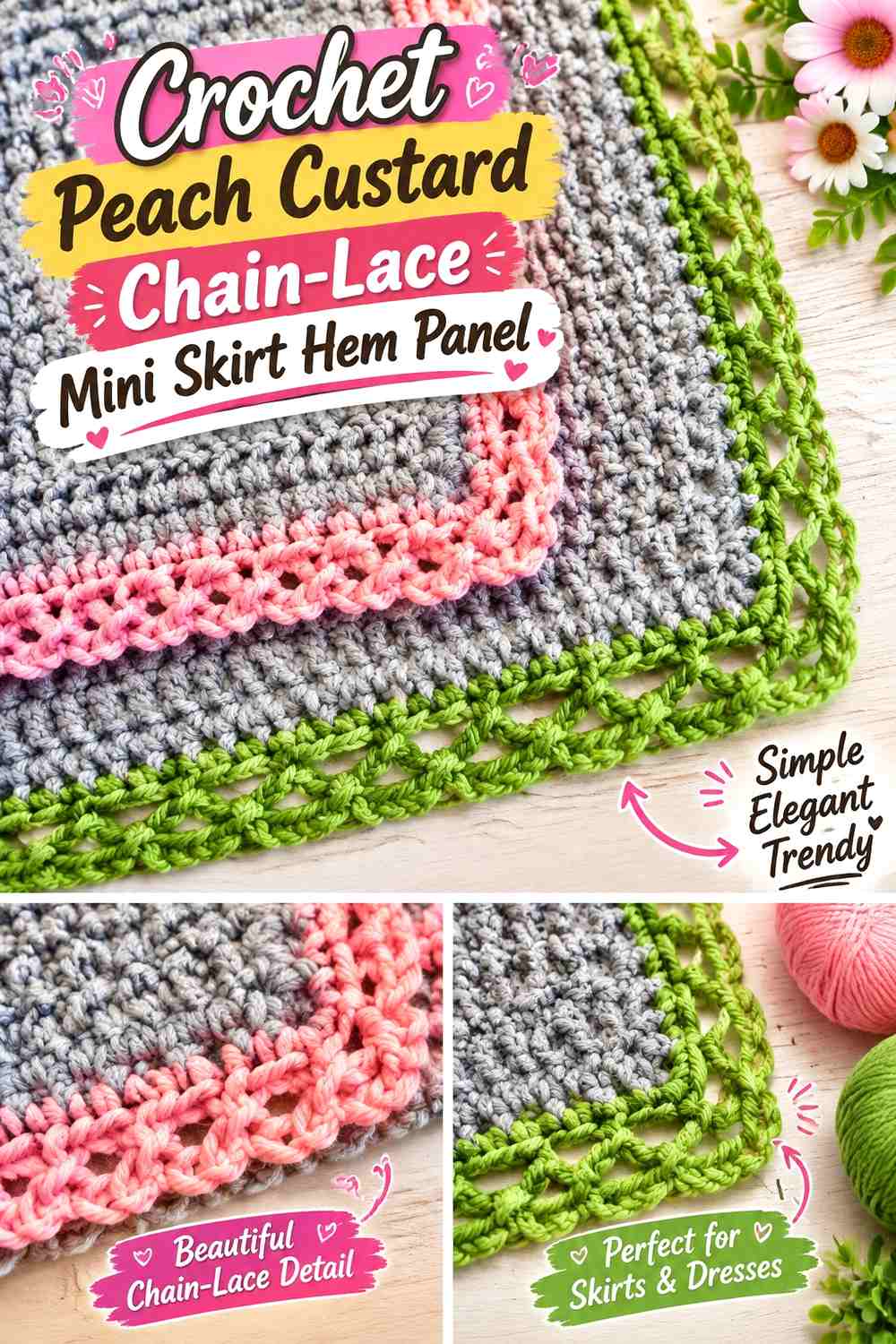
Crafting Happiness teaches an adjustable lace border based on chain loops, with the option to repeat the lace round to create a wider treatment. The tutorial specifically notes that the border can be used on a round edge such as a dress, making it a practical source for a lightweight circular skirt finish.
Use Peach Custard for the open chain structure and Peacock Navy for the base row. This produces the airiest panel in the collection and keeps the original skirt highly visible through the crochet. It works best when you want only a modest extension or when the mini skirt already has enough visual weight and needs a light finish. Because chain loops can snag more readily than dense crochet, consider where and how the skirt will be worn before making the panel unusually deep.
Keep the Base Row Stable
An open chain border depends on its foundation because relatively little yarn connects each lower section to the skirt.
Work that transition evenly and avoid relying on a few widely spaced attachment points to carry the entire hem. A neat Peacock Navy foundation can provide both visual definition and more consistent stitch placement.
Limit Depth When Snagging Is a Concern
Repeating chain-lace rounds makes the panel deeper but also creates more large loops.
For an everyday mini skirt, a shallow treatment may be more practical than a long open fringe of chains. Reserve deeper versions for situations where the hem is unlikely to catch on seating, bags, jewelry, or rough surfaces.
Creator Credit: Crafting Happiness
8. Crochet Two-Tone Shell-Skirt Mini Skirt Hem Panel
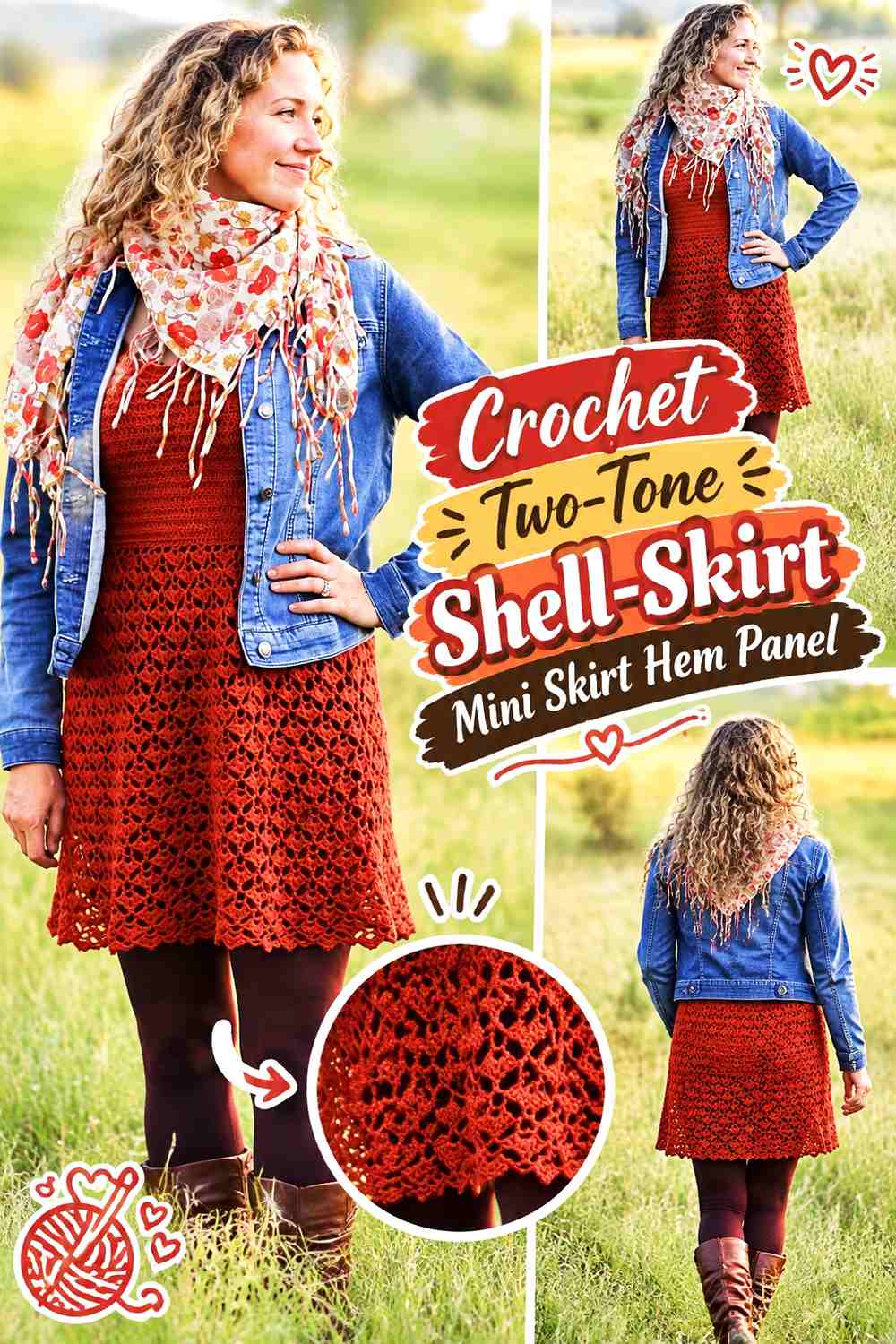
Make & Do Crew’s Idlewild Dress teaches a full lace skirt worked in repeating turned rounds of shell and chain-loop structures. The skirt section is designed to grow downward and can be shortened by working fewer repeats, making its stitch architecture useful for a wide decorative hem panel.
For this adaptation, work the shell rounds in Peach Custard and the connecting loop rounds in Peacock Navy. That division makes the shell shapes highly visible and gives the darker yarn a structural role between them. This idea creates more panel depth than a simple edging and works well when you want the lower several inches of the mini skirt to become crochet. Because the original lace lengthens after blocking, make a representative section and finish it before finalizing how many rounds your skirt actually needs.
Treat Blocking as Part of the Length Calculation
The source warns that the lace skirt grows in length during blocking. That matters considerably on a mini skirt where even a small difference changes the finished proportion.
Crochet enough rounds for a sample, block it appropriately, and measure the actual depth before committing to the complete hem. Avoid judging finished length only from unblocked work hanging from the hook.
Keep Shell and Loop Colors Consistent
Assigning Peach Custard to the shells and Peacock Navy to the connecting structure makes the color logic easy to repeat around the circumference.
It also lets you spot errors more readily because a misplaced color interrupts the expected construction. Finish color changes securely so ends do not remain visible through the open lace.
Allow the Panel to Hang Freely
A broad shell section needs room to move. If a skirt lining or stiff facing continues all the way behind it, the lace may lose some of its open drape.
Consider ending an opaque lining at the original skirt hem when appropriate for the garment. The new crochet section can then function visibly as the decorative extension.
Creator Credit: Make & Do Crew
9. Crochet Peach Custard Flower-Lattice Mini Skirt Hem Panel
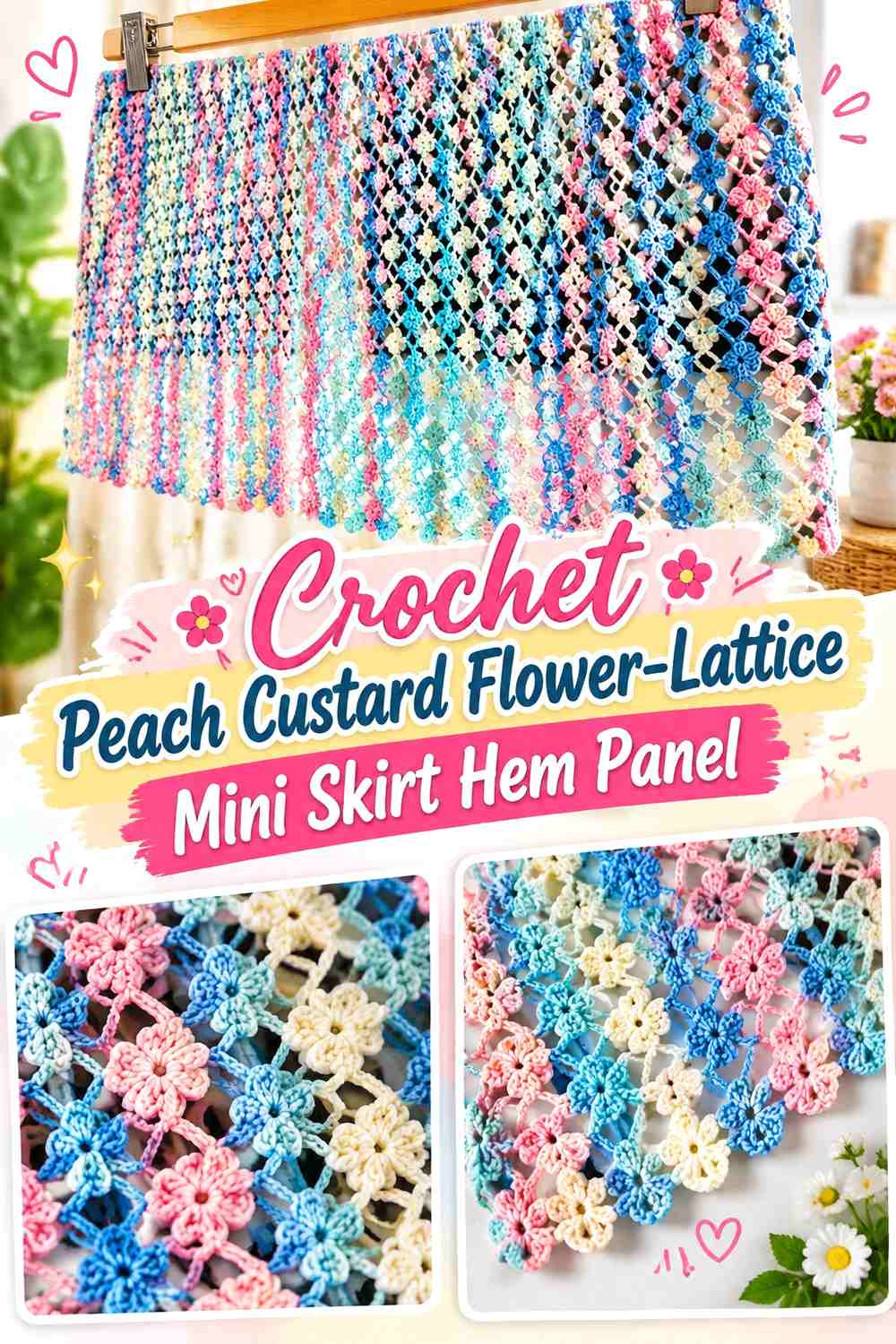
Dearest Debi Patterns’ flower-lattice construction links four-petal flowers into a continuous open fabric and can be adjusted by adding additional flower repeats. The source also emphasizes that working orientation affects how the lattice drapes, an important consideration when turning a curtain-style fabric into a wearable hem.
For a mini skirt, make the lattice primarily Peach Custard and use Peacock Navy for occasional flowers or a narrow upper joining row. The connected blossoms form a more organic lower section than granny squares because there are no hard square boundaries between motifs. The panel remains highly open, so plan for visible skin or lining. This idea is particularly attractive on a simple straight or A-line skirt where the flower pattern can become the primary hem detail.
Choose the Drape Direction Before Sizing
The source notes that flower-lattice orientation changes how the fabric hangs. Make a small sample and rotate it before deciding which direction should run around the skirt.
A panel that stretches downward excessively can lengthen after wear, while the same stitch arranged differently may hold its depth more consistently.
Keep the Flowers Clear at the Lower Edge
If the panel ends midway through a row of floral units, the hem can look unfinished. Plan a complete flower row for the bottom whenever the construction allows.
This creates a recognizable lace silhouette rather than a generic chain edge. Use the attachment row above to reconcile circumference rather than cropping the visible flower shapes.
Use Navy Flowers Sparingly
Peacock Navy flowers scattered through a Peach Custard lattice create focal points without converting the whole panel into a strong checker pattern.
Lay out the intended color sequence before the second half of the circumference. Random placement can work, but the join point should not accidentally place several dark flowers together.
Creator Credit: Dearest Debi Patterns
10. Crochet Two-Tone Vertical-Flower Mini Skirt Hem Panel
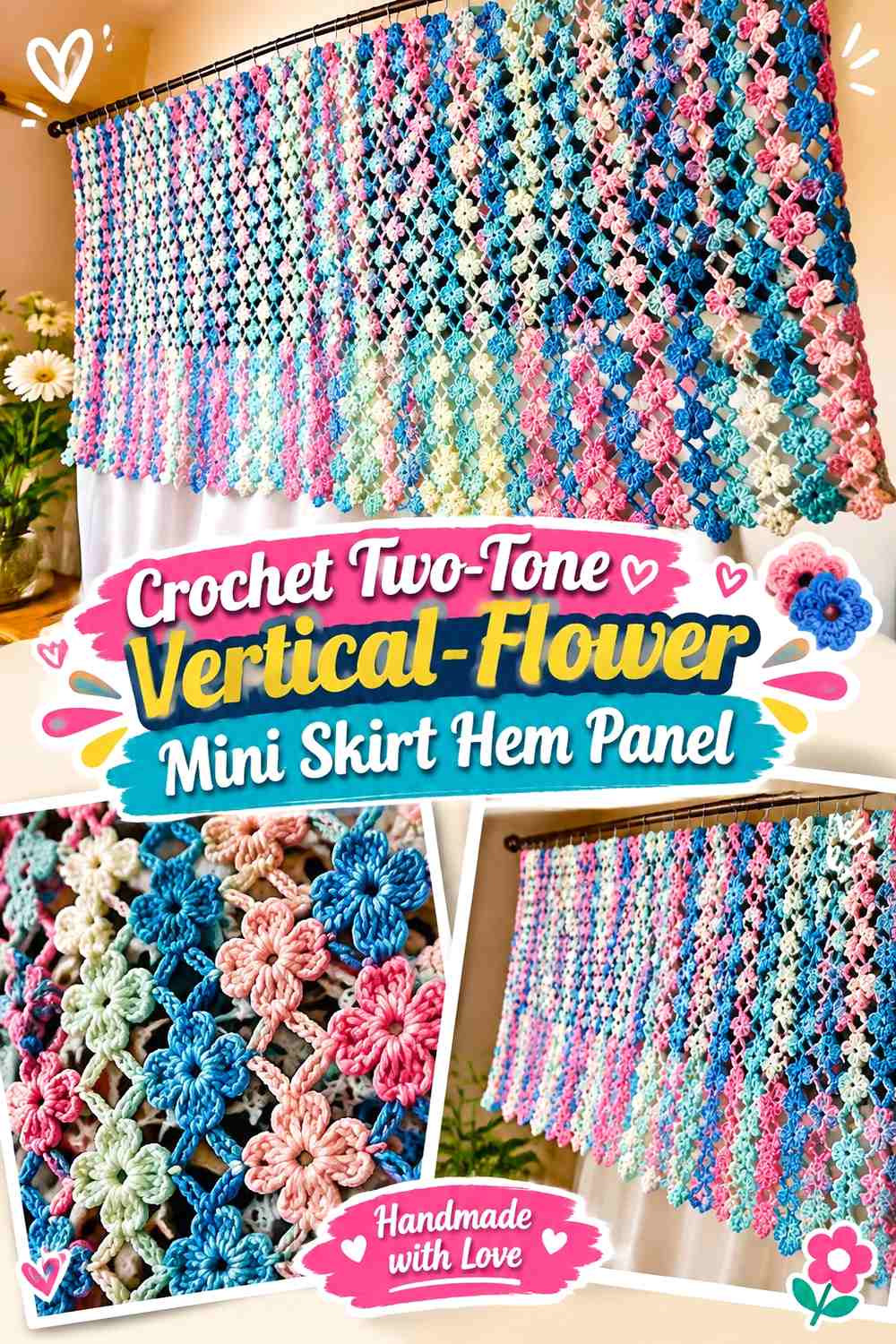
Silk & Wool’s lace-flower stitch is worked sideways so that its pattern and color changes form vertical stripes in the finished curtain. The creator provides an adapted chart and video tutorial and explains the sideways orientation explicitly.
That construction creates a distinctive mini-skirt panel because the stripes can run vertically from the original fabric hem to the new crochet edge rather than horizontally around the body. Work broader Peach Custard flower sections separated by narrow Peacock Navy stripes. The vertical emphasis can visually lengthen a short hem extension and keeps the two-color palette from becoming a series of horizontal bands. Since the work is constructed sideways, width and depth are controlled differently from a conventional top-down border, so swatch and label the intended orientation before calculating the full strip.
Use Vertical Color to Visually Lengthen the Panel
A narrow dark stripe running through a pale lace field draws the eye downward and can make a modest panel depth feel more pronounced.
This is useful when you want a noticeable crochet extension without adding many inches. Keep the navy bands narrow enough that the Peach Custard flower structure remains the dominant fabric.
Join the Sideways Strip Without Interrupting the Pattern
A sideways panel ultimately needs its two short ends connected to form the skirt circumference.
Plan where that seam lands relative to the flower sequence. Placing it at an existing garment side seam can make the join less obvious, particularly if the color repeat starts and ends on corresponding shades.
Block the Strip Before Closing It
Sideways lace can change length and depth during blocking. Close the ring only after the strip has reached its finished dimensions.
This lets you correct a small circumference difference before the seam is permanent and helps prevent one narrow section from being stretched more than the rest.
Creator Credit: Silk & Wool
11. Crochet Peach Custard Filet-Rose Mini Skirt Hem Panel
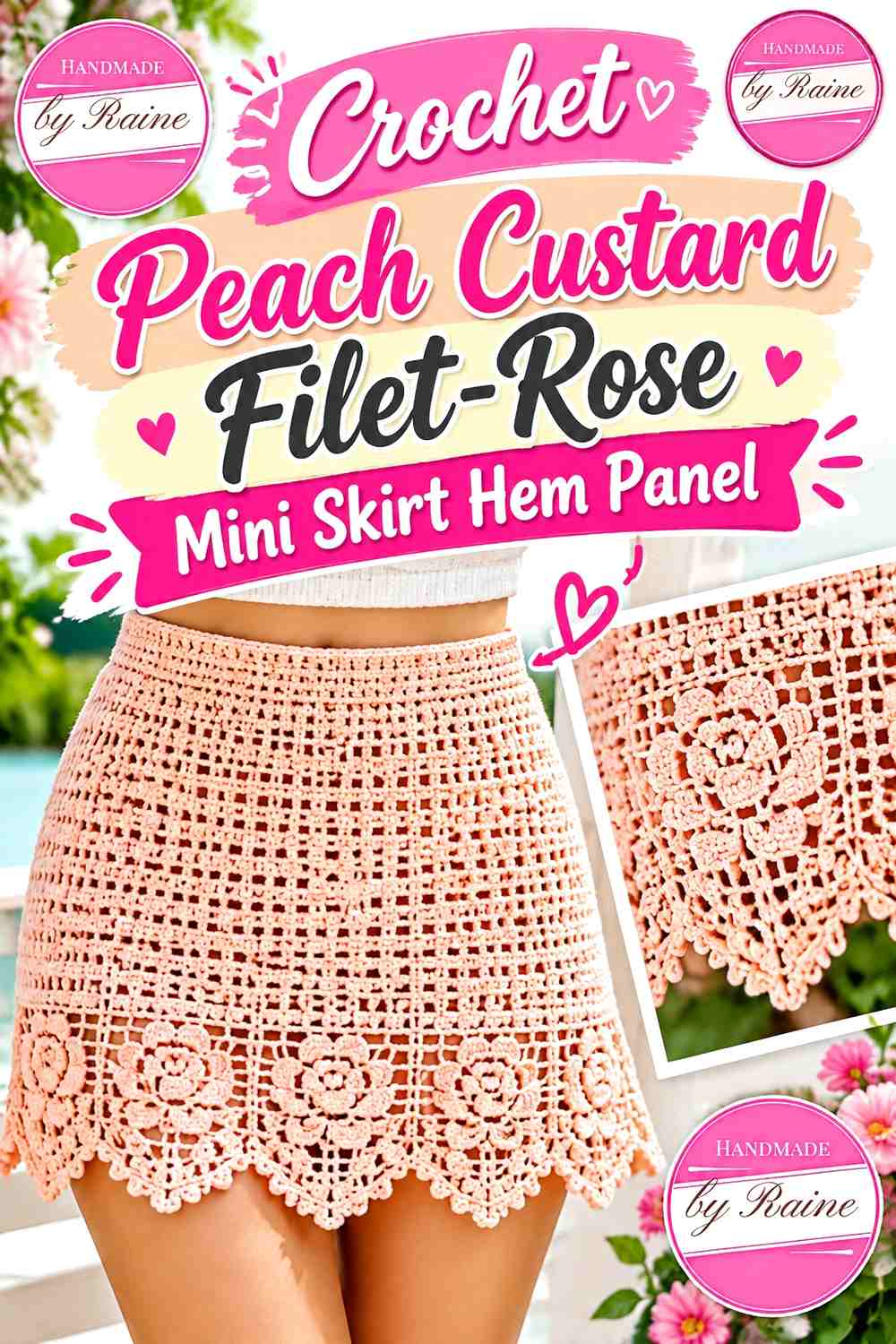
HandmadebyRaine’s Rose Curtain creates repeating roses from open and filled filet blocks and adds a contrasting lace edging below the floral field. The tutorial includes chart, written instructions, and blocking guidance for defining the rose imagery.
For a mini skirt hem panel, work the roses in Peach Custard and reserve Peacock Navy for the narrow lower edging or attachment band. Filet stays comparatively flat because the flowers are formed inside the grid rather than added as raised appliqués. That makes it useful when you want a recognizable motif without heavy dimensional texture. The primary limitation is width: a complete rose requires enough grid cells to remain legible, so this idea needs a deeper panel than a simple scalloped edge.
Preserve Whole Rose Motifs
Filet imagery depends on the exact relationship between open and filled blocks. Cropping the chart to fit a shallower skirt panel can make the flowers unrecognizable.
Determine the finished height of one complete rose in your chosen thread before altering the garment. If the motif is too deep, select a finer material or a simpler lace option instead.
Use Navy for the Framing Rows
A Peacock Navy line above or below the Peach Custard roses can behave like a picture frame and visually separate the filet from the skirt.
Keep that dark section narrow enough that it does not consume space needed by the rose motif. The filet image should remain the main reason for choosing this panel.
Check the View Against Lining or Skin
Open filet blocks expose the background in a regular grid. That background strongly affects how easily the roses can be read.
Hold the blocked sample over the actual skirt lining, tights, or skin tone you expect beneath it. A higher-contrast background can make the flower image considerably clearer.
Creator Credit: HandmadebyRaine
12. Crochet Peacock Navy Diamond-Lace Mini Skirt Hem Panel
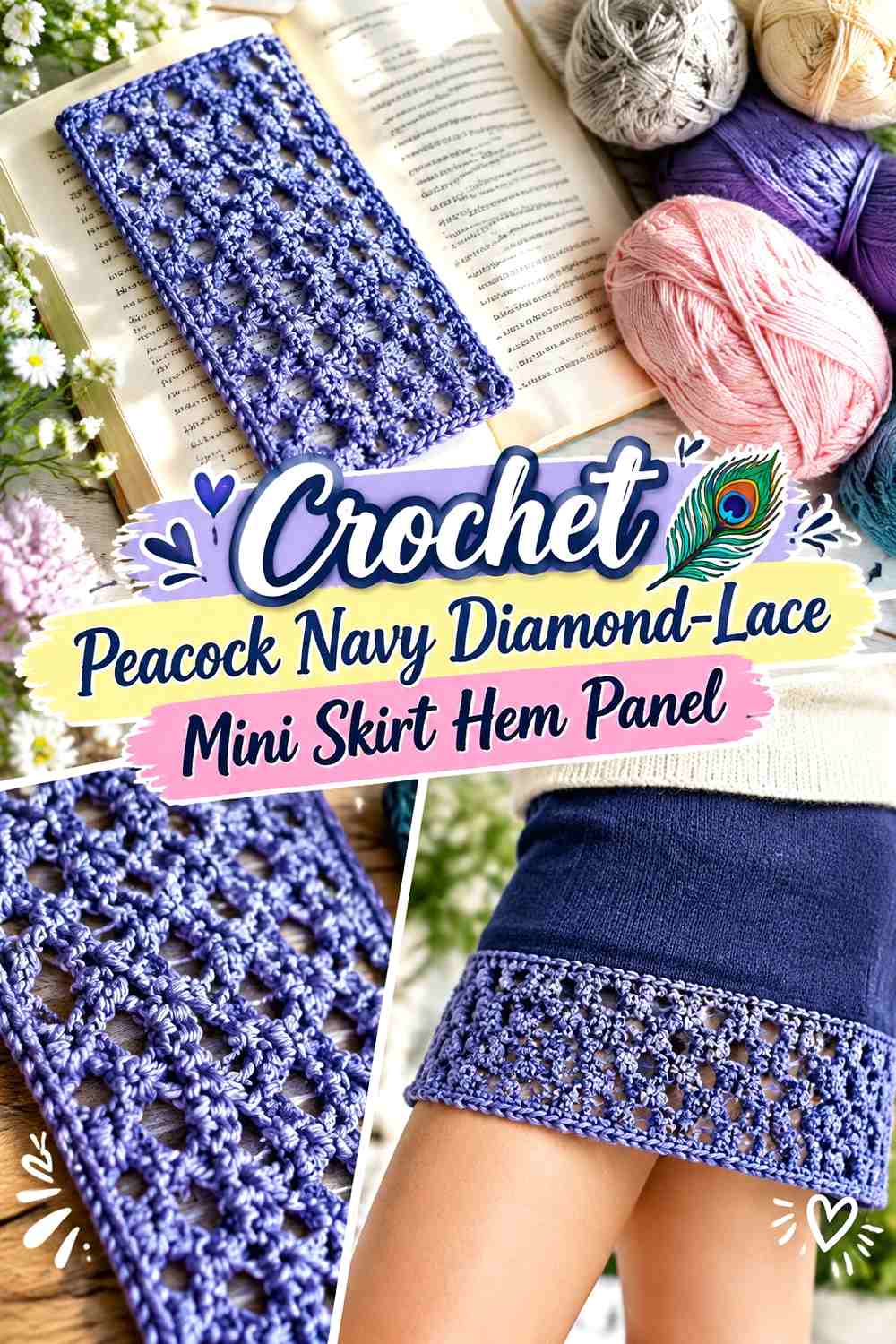
Rich Textures Crochet’s Diamond Lace Bookmark is worked as a narrow rectangular strip whose stitch changes create a row of distinct lace diamonds. The source finishes the strip with an edging after the central diamond pattern is complete.
That narrow geometry translates naturally to a hem panel when only a moderate amount of extra length is wanted. Work the diamond strip in Peacock Navy and use Peach Custard for the upper and lower finishing rows. Compared with flower lattice or shell lace, this design has a more linear appearance and can suit a modern straight mini skirt particularly well. The original bookmark is short, so the key adaptation is repeating or extending the strip structure in a way consistent with the tutorial rather than reconstructing its lace sequence from appearance alone.
Keep the Diamonds at a Consistent Height
The repeated motifs should sit on one horizontal line around the skirt. Uneven joining or attachment tension can make some diamonds ride higher than others.
Block the entire strip flat before fastening it to the garment. Use the skirt side seams as reference points when distributing the panel around the circumference.
Let Peach Custard Define Both Edges
A pale line above and below the navy diamonds can make the strip feel like a self-contained ribbon of lace.
This is especially effective beneath a dark skirt where an all-navy panel might disappear. Keep the cream rows structurally simple so they frame rather than compete with the central diamond pattern.
Creator Credit: Rich Textures Crochet
13. Crochet Two-Tone Diagonal-Cluster Mini Skirt Hem Panel
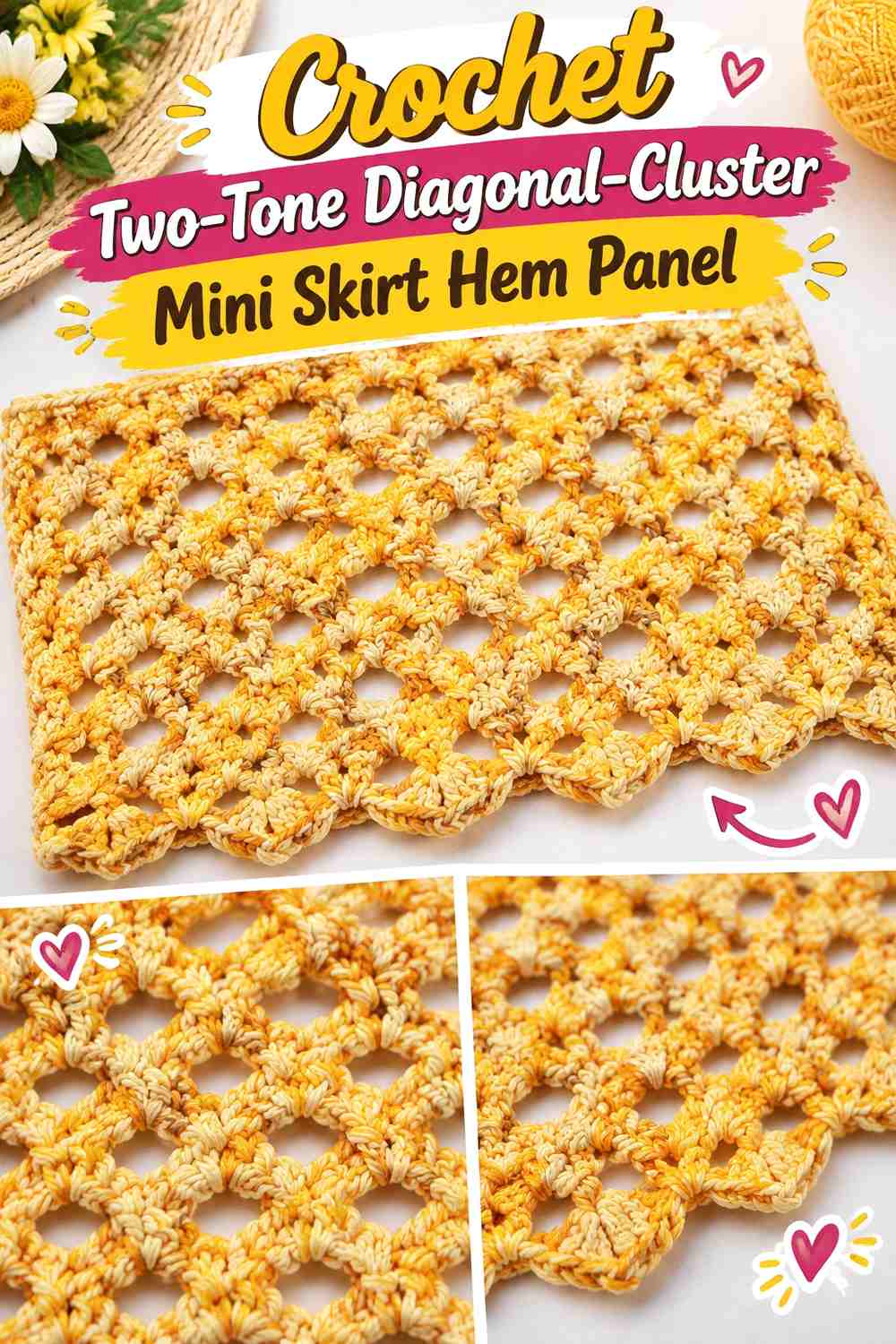
CrochetKim’s Diagonal Cluster Lace is a repeating lace stitch built from clusters and open spaces, and the creator specifically lists skirting and curtain inserts among possible applications. The stitch forms a directional diagonal texture rather than obvious flowers or square motifs.
For a mini skirt, use Peacock Navy for the cluster rows and Peach Custard for alternating open sections or narrow transition rows. This creates motion around the hem without requiring a shaped scallop. The pattern works best as a straight rectangular band, so it is especially useful when you want a clean lower edge beneath a more decorative interior. Because the diagonal line depends on consistent stitch placement, calculate the circumference from complete repeats before joining the strip into a ring.
Keep the Diagonal Direction Consistent
A long panel can accidentally be rotated or joined in a way that makes one section appear to change direction.
Mark the right side and the intended top edge on the first few rows. When the strip circles the skirt, every cluster should continue the same visual movement across the side seam.
Avoid Too Many Narrow Color Changes
The diagonal clusters already create strong directional contrast through texture. Switching between Peacock Navy and Peach Custard every few stitches can obscure that movement.
Use broader color zones or assign one color to the structural clusters and the other to a limited framing section. This keeps the stitch pattern readable from normal viewing distance.
Finish With a Straight Lower Edge
A diagonal lace interior can still end cleanly if the final repeat is chosen appropriately.
Before attaching the panel, confirm that the bottom row lies flat rather than forming accidental dips. This lets the geometry remain inside the fabric while the actual skirt hem retains a deliberate straight silhouette.
Creator Credit: CrochetKim
14. Crochet Peach Custard Filet-Trim Mini Skirt Hem Panel
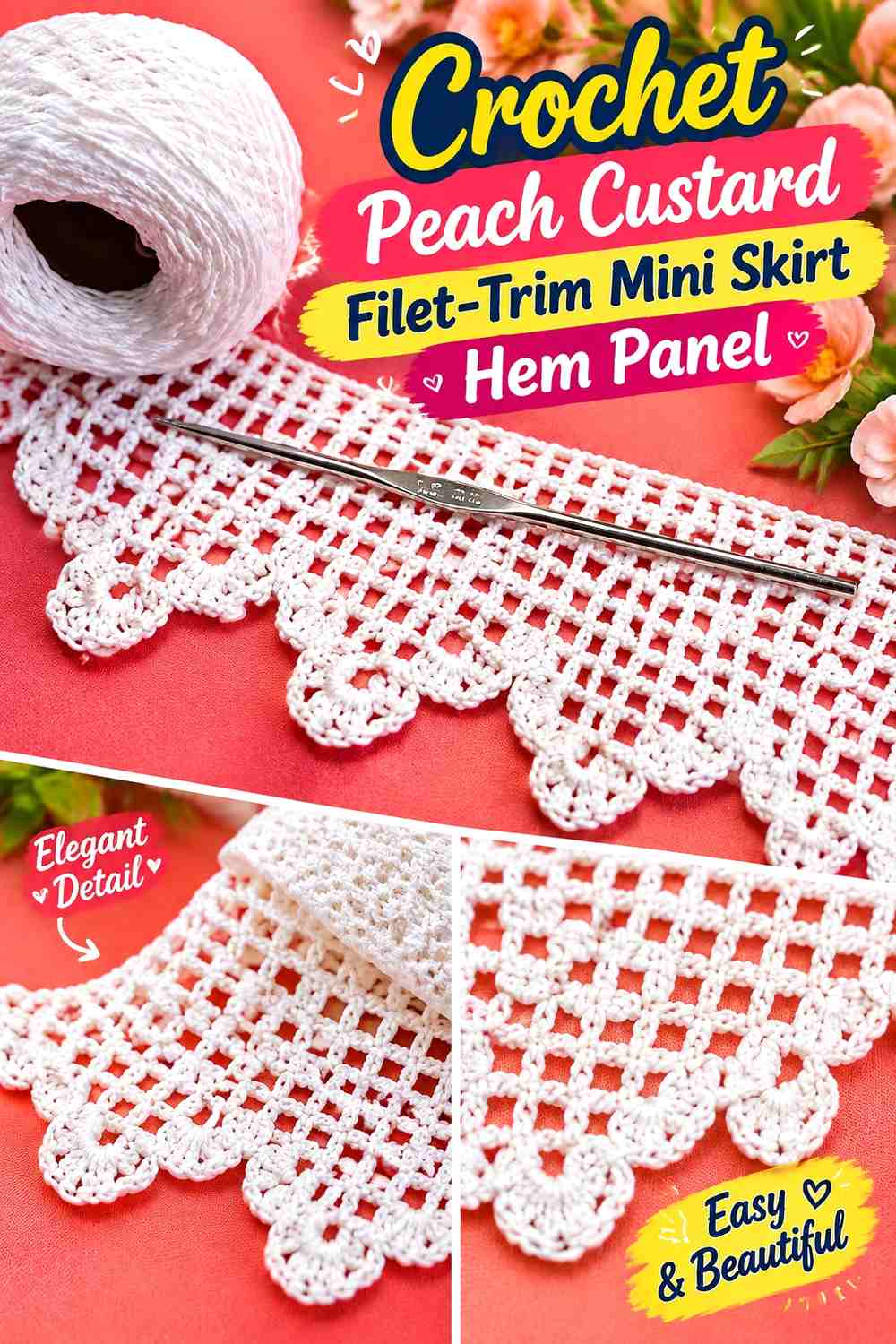
Tiara Lace Crochet’s filet-lace tutorial is specifically designed as an edging, trim, or border and demonstrates a repeated lace strip rather than a full garment panel. The video also compares the appearance of the lace in different material scales, which is useful when deciding how deep a mini-skirt trim should become.
Work the main filet trim in Peach Custard and use Peacock Navy only along the upper attachment line. This creates a vintage-looking light lower edge without requiring a large floral picture like the filet-rose option. It is a useful final choice for readers who want more detail than simple chain lace but less depth than a full shell or flower panel. Because fine filet depends on clear spacing, the insert should be blocked before its final circumference is judged.
Choose Thread Scale According to Desired Depth
The same lace architecture can appear delicate and shallow in fine thread or much broader in thicker yarn.
Make one full repeat in the intended material before deciding whether the trim suits the skirt. Changing material scale is often a cleaner way to alter visual depth than omitting parts of the lace design.
Use Navy Only as a Mounting Line
A Peacock Navy upper row can make the Peach Custard filet appear suspended below the skirt while providing a defined transition.
Keep the lower lace monochrome if you want its repeating grid to remain obvious. A second navy stripe at the bottom can make the hem feel more enclosed and is better reserved for skirts where a stronger outline is desirable.
Creator Credit: Tiara Lace Crochet
Comparing the 14 Mini Skirt Hem Panel Styles
For the smallest change in length, start with the applied lace, denim trim, chain lace, or narrow diamond panel. These treatments keep most of the original skirt visually dominant and work well when you want only a modest decorative extension.
Granny strips, fan lace, diagonal clusters, and shell skirting create a deeper band with clearer textile presence. Flower lattice and vertical flower lace feel more organic and open, while filet roses provide the strongest recognizable imagery.
Ruffles are different from every other option because they add outward volume rather than simply extending the skirt downward. Vintage pineapple lace provides similarly strong decoration but remains comparatively flat. Choose between them based on silhouette as much as motif preference.
Conclusion
Peacock Navy and Peach Custard can take a mini skirt hem from a narrow tailored trim to a deep lace extension. Granny strips and filet panels create defined bands, flower lattice and chain lace preserve transparency, and shells, fans, clusters, and pineapples provide more intricate stitch architecture. A ruffle changes the silhouette most dramatically by adding fullness instead of only length.
Before choosing the final design, decide how many inches of crochet you actually want visible and whether the panel should reveal skin or lining. Crochet and finish one complete repeat, then compare its blocked width, depth, and stretch with the real skirt hem. Use the credited creator tutorial for the original lace construction, and treat fabric preparation, lining, side-seam placement, and garment attachment as separate adaptation decisions.
Frequently Asked Questions
How deep should a crochet hem panel be on a mini skirt?
There is no universal depth. A shallow trim may add only a decorative edge, while a deep filet or flower panel can substantially change the finished skirt length. Make a paper strip in the proposed depth and pin it beneath the skirt before crocheting. Check the result while standing and sitting. The panel should look proportional to the garment and provide the coverage you want without relying on an arbitrary standard measurement.
Should a crochet hem panel stretch as much as the skirt?
Not always, but the difference should not interfere with dressing or movement. A woven skirt may need little lower-edge stretch, whereas a close-fitting knit mini can expand considerably around the thighs. If a firm crochet band restricts that expansion, the skirt may become uncomfortable or ride upward. Swatch the lace and test its horizontal give against the garment before attaching it permanently.
Which color should sit closest to the skirt, Peacock Navy or Peach Custard?
Peacock Navy creates a stronger, more defined attachment line and often blends naturally with dark denim, navy, black, or charcoal skirts. Peach Custard produces a softer transition, especially against cream, tan, faded denim, or pastel fabric. You can also place navy only at the join and use Peach Custard throughout the visible lace. Test both directly against the garment because openwork allows the skirt color to influence the result.
Do I need a lining behind an open crochet hem?
Only if you want additional coverage or the existing skirt construction requires it. Flower lattice, chain lace, fan lace, and filet can remain intentionally transparent. If you add lining, decide whether it should end at the original fabric hem or continue behind the crochet. A full-length lining changes the appearance of every open space and can also affect how freely the lace moves.
How do I stop a crochet hem panel from rippling?
Rippling often comes from a mismatch between the number of attachment stitches and the skirt circumference, or from a crochet panel that is longer than the edge it joins. Work a stable foundation, measure the blocked lace rather than the unfinished piece, and distribute attachment points evenly. If the lace has a fixed repeat, calculate complete repeats before starting instead of squeezing extra stitches into the final few inches.
Can I add a crochet hem to a thrifted denim mini skirt?
Yes, and a clothing-specific trim tutorial can be particularly useful because denim needs a deliberate foundation method. Inspect the original hem first, especially if it is frayed or distressed. Stabilize weak fabric before adding decorative crochet. If holes must be made for the attachment row, space them consistently and far enough from a compromised edge that the remaining denim can support the trim.