12 Crochet Maple Leaf Cardigan Ideas for Autumn-Inspired Layering
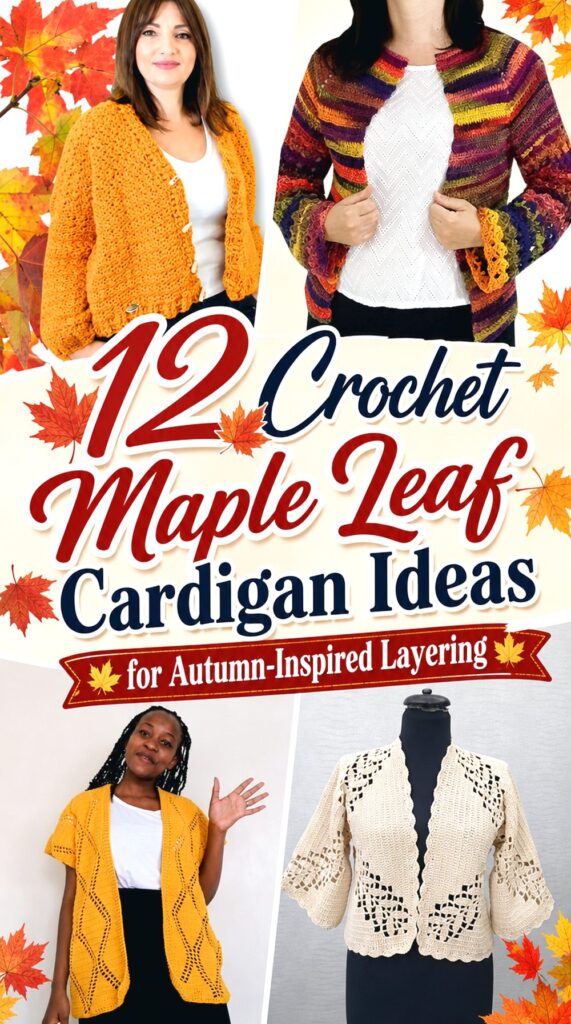
Maple leaf cardigan ideas can go in more than one direction. Some designs use visible leaf stitches, raised foliage texture, or lace-like leaf patterns. Others lean into the autumn side of the theme with warm color, open layering shapes, and cozy cardigan proportions that feel right for leaf-season outfits.
This collection gives readers a wide range to compare before choosing a tutorial. You will find oversized jackets, top-down cardigans, hexagon shapes, lace layers, cropped pieces, shrugs, kimono cardigans, and longer fall silhouettes. Each project has a different structure or styling purpose, so the list is useful for choosing by fit, coverage, sleeve shape, and finished look.
Quick List
- Crochet Oversized Maple Leaf Jacket Cardigan
- Crochet Top-Down Autumn Leaf Cardigan
- Crochet Mini Leaf Stitch Rectangle Cardigan
- Crochet Circle Leaf Lace Cardigan
- Crochet Raised Leaf Texture Cardigan
- Crochet Turkish Leaf Hexagon Cardigan
- Crochet Soft Leaf Hexagon Cardigan
- Crochet Made-to-Measure Leafy Hexagon Cardigan
- Crochet Step-by-Step Leafy Hexagon Cardigan
- Crochet Leafy Shrug Cardigan
- Crochet Open Kimono Fall Cardigan
- Crochet Deep Red Block-Stitch Cardigan
Why These Crochet Maple Leaf Cardigans Are Worth Making
A maple leaf cardigan works well when the finished garment has a clear seasonal identity without being limited to one outfit. Leaf texture can make a plain shape feel more detailed, while autumn colors help a simple cardigan look intentional. Open-front styles are useful for layering over fitted tops, dresses, or long sleeves when the weather changes.
This category also gives crocheters several ways to manage fit. A top-down cardigan may help with length checks, while hexagon and shrug shapes create a different kind of drape. Longer cardigans offer more coverage, cropped ones feel lighter, and lace cardigans keep the leaf theme visible without adding a heavy look.
Crochet Oversized Maple Leaf Jacket Cardigan
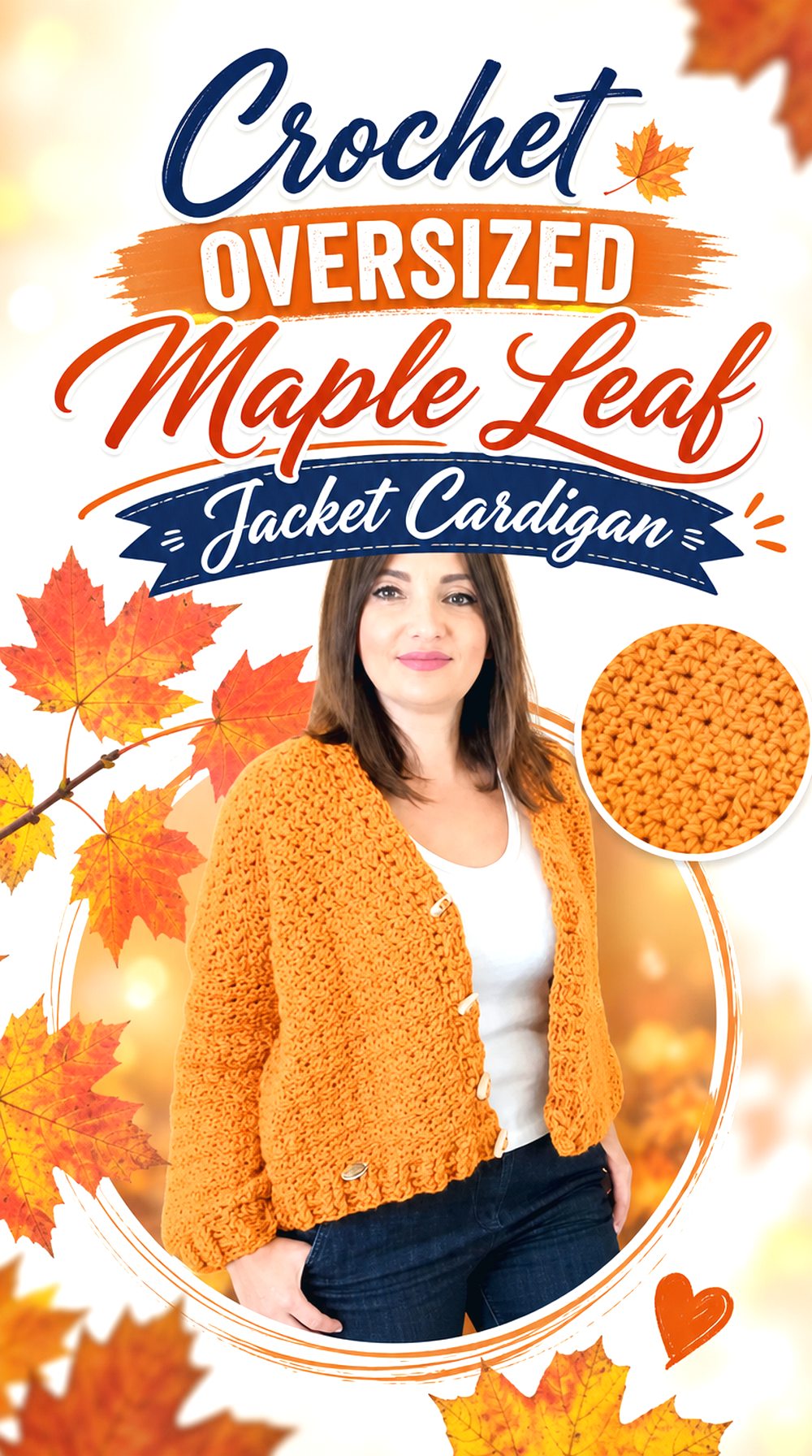
This oversized cardigan has the strongest maple leaf connection in the collection. The finished piece is presented as a jacket-style cardigan with a broad, relaxed shape and a seasonal leaf identity. It suits readers looking for a dramatic autumn layer rather than a small accent piece. The roomy outline makes it different from the closer-fitting cardigans later in the list, and the jacket wording suggests a heavier, outer-layer feel that should be checked carefully before choosing yarn or sizing.
Check the Oversized Proportions
An oversized cardigan can look intentional when the shoulder width, sleeve length, and front opening all work together. Before starting, readers should look closely at how far the body extends and how much ease appears around the arms. A maple leaf jacket shape may be appealing for layering, but the same volume can feel too large if the intended outfit is slim or cropped.
Review the Sleeve Shape
The sleeve shape matters because an oversized cardigan can become bulky around the wrist or underarm. Check whether the sleeve hangs straight, narrows, or stays wide. This is especially useful for a jacket-style cardigan, since it may be worn over another garment. A clear view of the sleeve finish helps readers decide whether the silhouette matches their preferred daily layering style.
Confirm the Material List
A heavier cardigan can change a lot depending on yarn thickness and fiber. Readers should check the creator’s listed supplies before buying anything, especially if they want the cardigan to hold a jacket-like shape. When substituting yarn, the safest choice is to compare gauge and finished drape through the original tutorial rather than assuming any autumn-colored yarn will behave the same way.
Crochet Top Down Autumn Leaf Cardigan
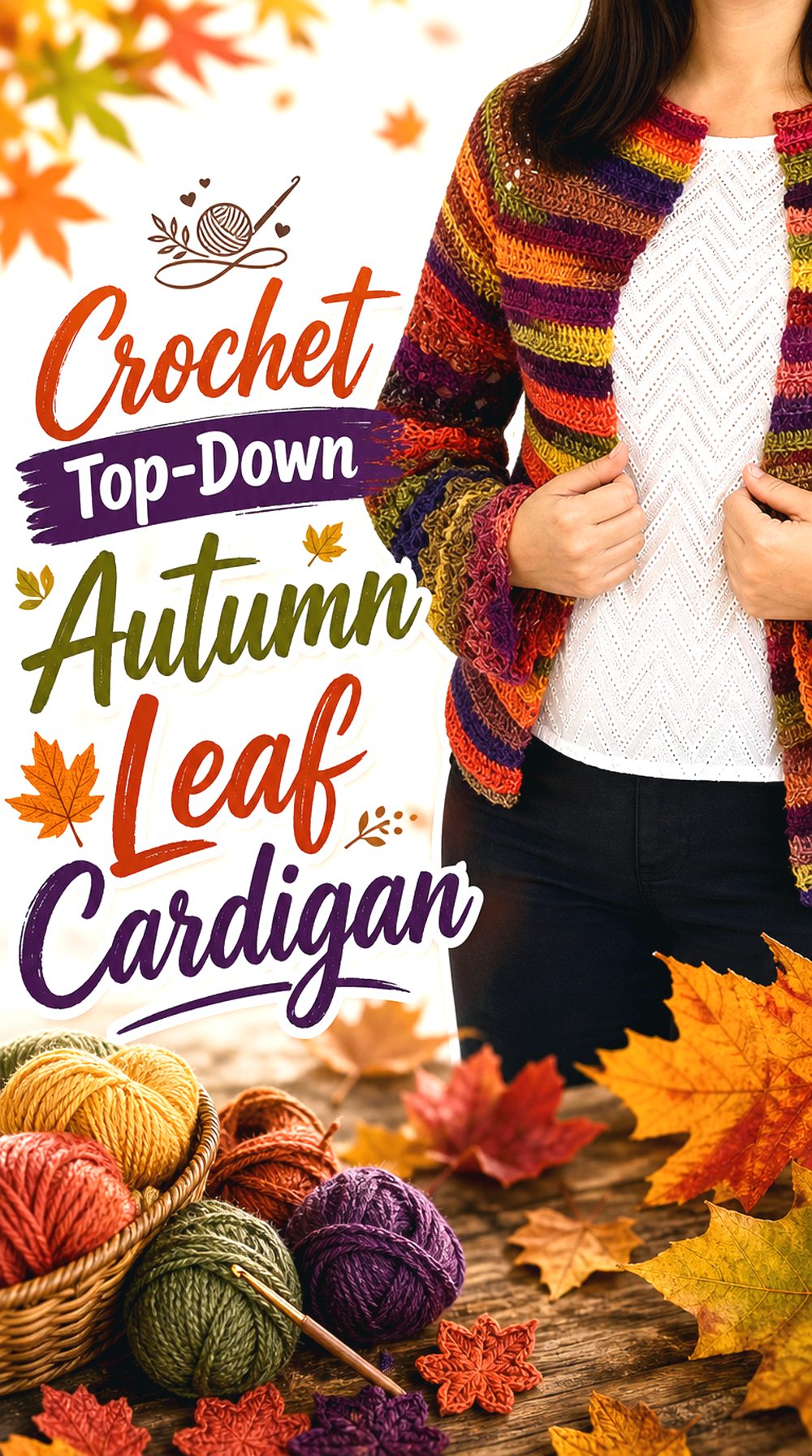
A top-down autumn leaf cardigan is useful for readers who want a garment that grows from the neckline rather than being built only from separate panels. The leaf theme comes through the autumn naming and warm seasonal direction, while the cardigan shape stays wearable for everyday layering. This option feels softer and more classic than the oversized jacket above. It may suit crocheters who want to watch the yoke, front opening, and body length develop together.
Look at the Neckline Shape
The neckline sets the tone for a top-down cardigan. A clean neckline can make an autumn-colored piece easier to wear over plain shirts, while a deeper opening gives more room for visible layers underneath. Readers should check how the neck edge is finished and whether the front hangs open or is shaped for closure. That detail affects both the look and the comfort of the finished cardigan.
Confirm the Garment Length
Top-down construction often makes length decisions feel more visible as the garment grows, but readers should still confirm the creator’s finished length information. A cardigan that lands near the hip works differently from one that reaches lower on the body. For a maple leaf-inspired layer, the length should match the outfits it will be worn with, especially dresses, jeans, or skirts.
Compare the Fit From Each Angle
A cardigan can look balanced from the front but different from the side or back. Readers should review every available view before committing, especially around the shoulder line and sleeve join. This is helpful with a top-down garment because the yoke area affects how the cardigan sits. A good fit check keeps the autumn leaf style from becoming distracting or uneven when worn.
Original Tutorial and Creator Credit
Creator: Gomitolomagico
Crochet Mini Leaf Stitch Rectangle Cardigan
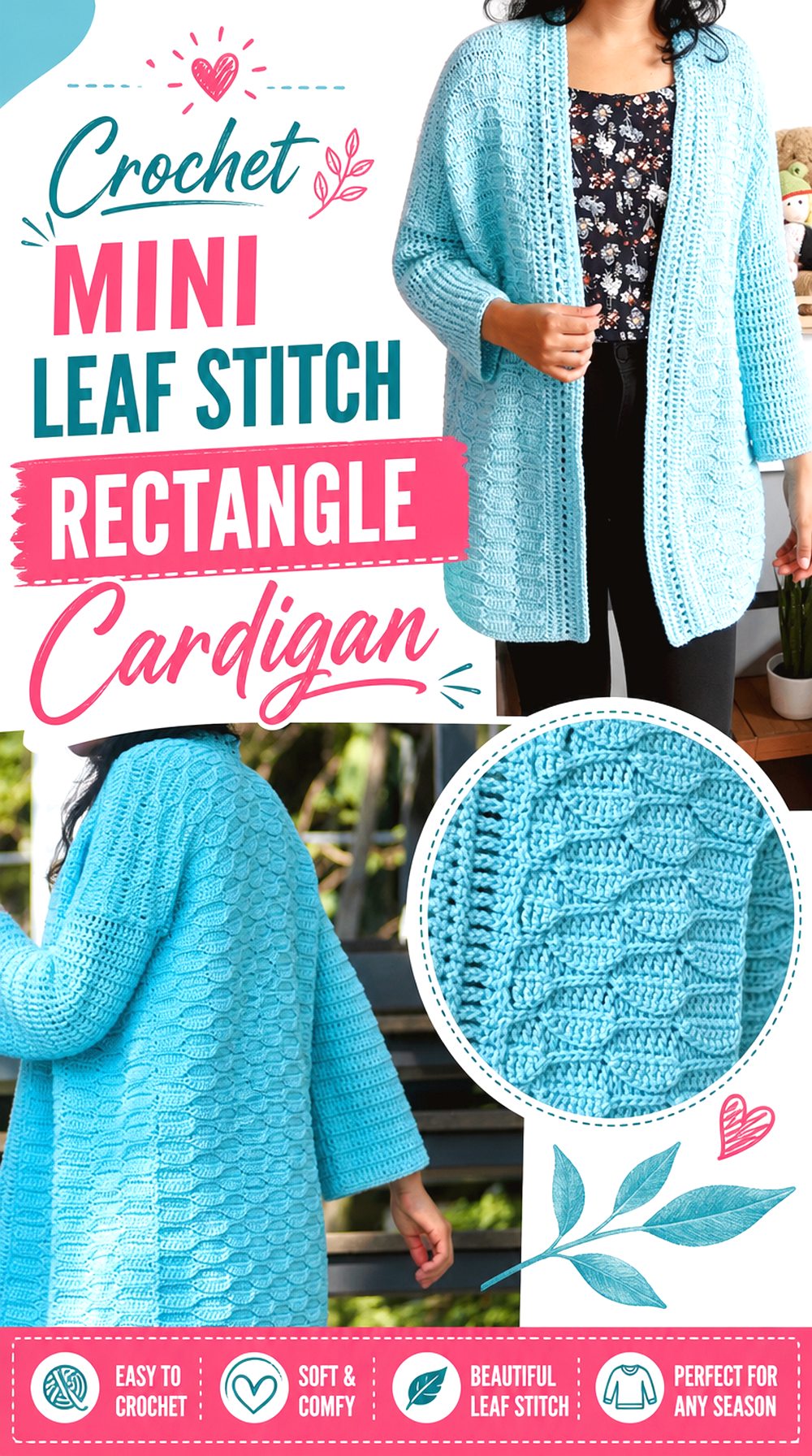
This cardigan uses a mini leaf stitch idea in a simple wearable shape. The finished style is built from rectangle-based construction, which gives it a different feel from top-down and hexagon cardigans. It is a good option for readers who want leaf texture across the fabric instead of one large leaf motif. The long sleeves and collar area make it feel like a practical layering cardigan, while the smaller leaf repeat keeps the surface detail more controlled.
Watch for Separate Pieces
A rectangle cardigan usually depends on how flat pieces are sized, folded, and joined. Readers should pay attention to how many main pieces are involved and where the armholes are created. The simple shapes can be appealing, but the final fit still depends on matching the rectangle size to the body. This is especially important when the leaf stitch has visible texture.
Check the Collar Area
The collar area changes the finished mood of this cardigan. A neat collar can make the mini leaf fabric feel more polished, while a loose collar gives a softer wrap effect. Readers should look at how the neckline and front edges sit when the cardigan is worn. This check helps decide whether the finished piece will work as a casual layer or a more dressed cardigan.
Review the Size Notes
The source information includes size guidance, so readers should compare those notes with their own preferred fit before beginning. A cardigan can be technically the right size but still feel too close, too open, or too long depending on the desired ease. For a leaf-stitch garment, checking fit early also helps keep the textured pattern from pulling in an unplanned way.
Original Tutorial and Creator Credit
Creator: Jennyandteddy crochet.
Crochet Circle Leaf Lace Cardigan
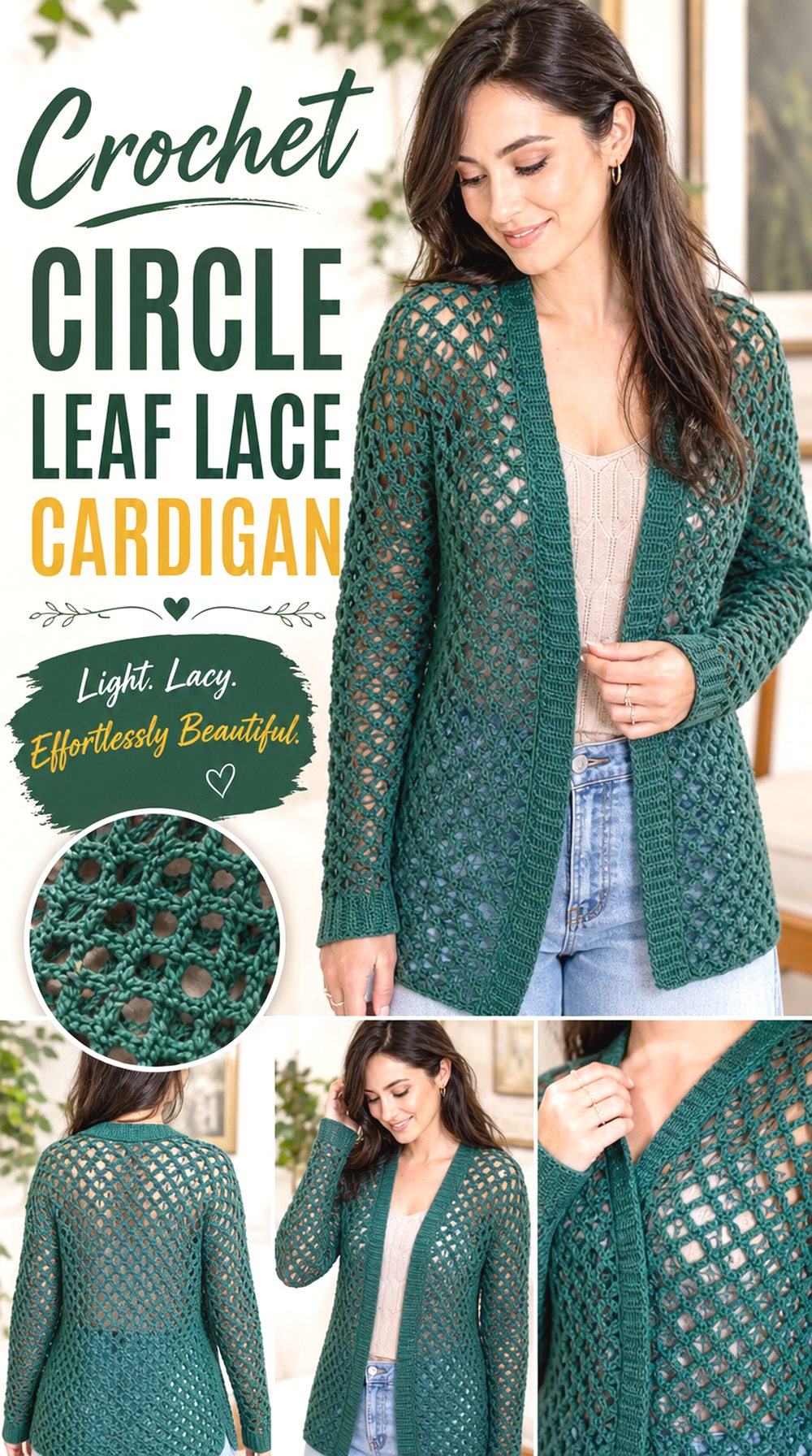
The circle leaf lace cardigan gives the maple leaf theme a lighter, more open interpretation. Instead of a heavy fall jacket look, this piece focuses on a leafy lace texture that can work as a visible layering fabric. The cardigan is useful for readers who like botanical detail but prefer a cleaner modern garment shape. It stands apart from the raised texture and hexagon cardigans because the leaf effect appears airier and more delicate.
Think About Coverage
A lace cardigan can leave more of the underlayer visible, so coverage should be considered before choosing this project. Readers may want to plan what they will wear underneath, especially if the cardigan is for work, events, or cooler weather. The leaf pattern is part of the visual appeal, but the open fabric may not give the same coverage as a solid fall cardigan.
Check the Size Range
The source description includes a broad size range, which is helpful for garment planning. Readers should still review the actual measurements, schematic, or size notes before selecting a size. With lace fabric, ease and drape can affect how the cardigan hangs. A careful size check helps the circle leaf pattern sit smoothly across the body instead of stretching or bunching.
Look for Written Instructions
This project is connected to written instructions and chart support, which may help readers who do not want to rely on video alone. It is worth checking what is included before starting. Leaf lace can be easier to manage when stitch symbols, sizing notes, and a visual guide are available alongside the demonstration. Use the original source for exact construction details.
Original Tutorial and Creator Credit
Creator: Briana K
Crochet Raised Leaf Texture Cardigan
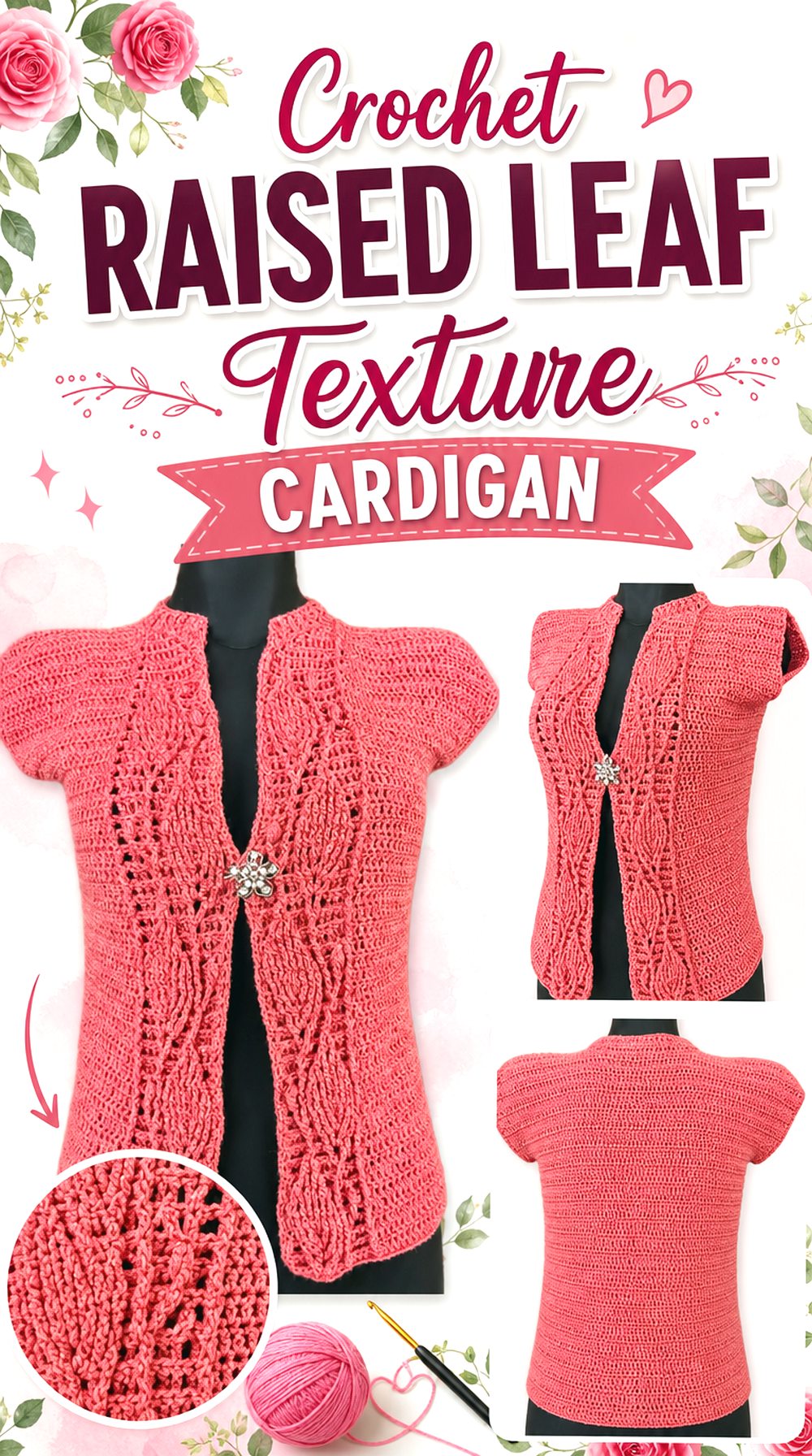
Raised leaf texture gives this cardigan a more dimensional look than flat lace or simple autumn color. The leaf detail appears as a surface feature, making it a strong choice for readers who want the foliage theme to be obvious in the fabric. This idea works well in a maple leaf cardigan roundup because it focuses on texture rather than only color. It also brings a different shape from the lighter lace cardigan and oversized jacket styles.
Keep the Leaf Texture Visible
Raised texture can lose impact if the yarn color is too busy or the lighting hides the surface detail. Readers should look at how the leaves stand out on the finished cardigan and decide whether they want contrast, subtle texture, or a single-color effect. A solid autumn shade may help the raised areas remain visible without making the cardigan feel overly decorative.
Check the Front Opening
The front opening affects how the raised texture frames the body. If the cardigan is worn open, the leaf pattern may become the main detail on the panels. Readers should confirm whether the front edges look straight, relaxed, or shaped. This matters for styling because a textured cardigan can feel heavier visually when the opening does not sit evenly.
Slow Down Detailed Sections
Raised leaf designs usually need more attention than plain rows. Readers who choose this project should be ready to pause at detailed parts and compare the fabric often. The goal is not to memorize the construction from a summary, but to stay aligned with the creator’s exact explanation. A small progress note can help keep the leaf sections consistent from one area to the next.
Original Tutorial and Creator Credit
Creator: Crocheteando con la comadre
Crochet Turkish Leaf Hexagon Cardigan
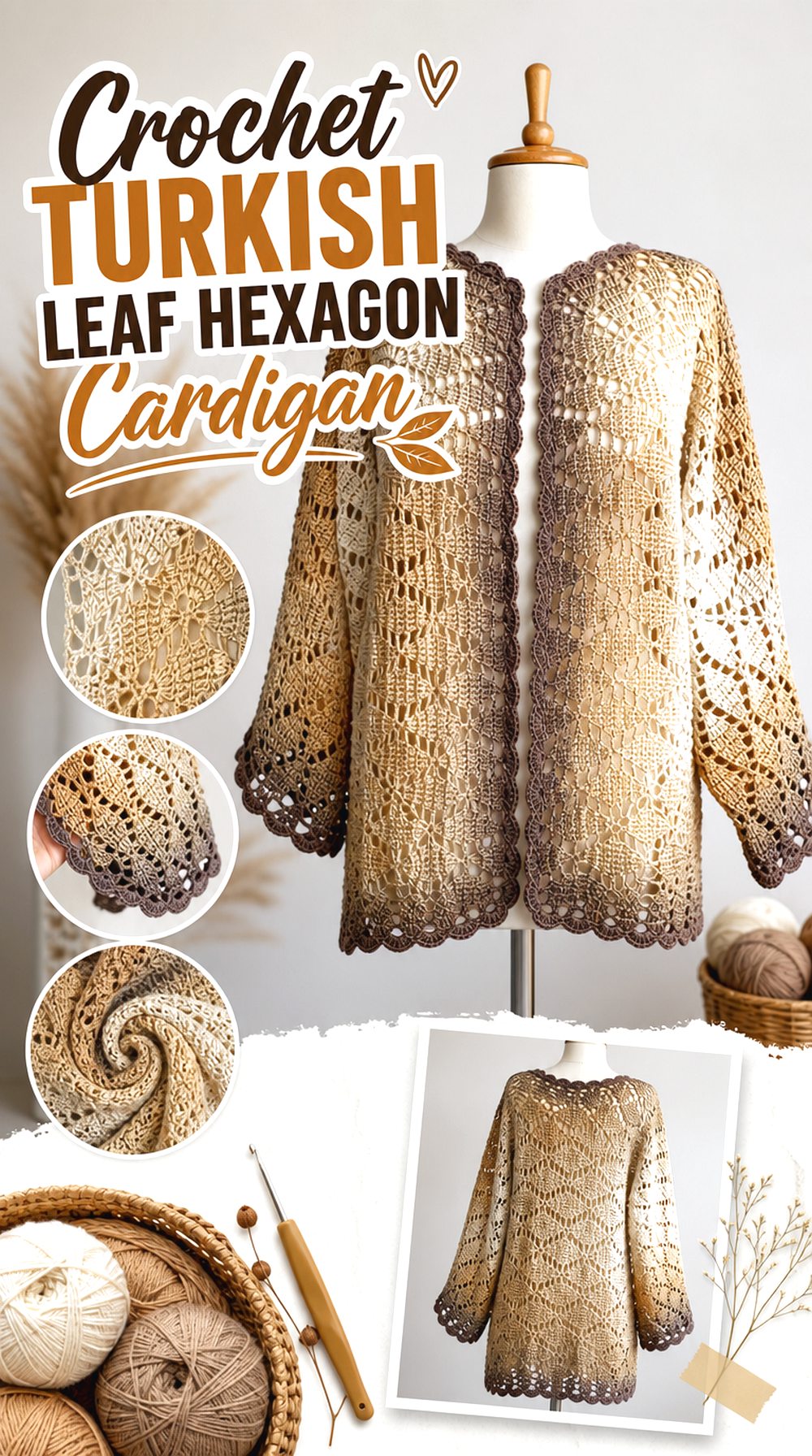
A leaf hexagon cardigan gives the maple leaf theme a geometric twist. Instead of traditional flat panels, the garment grows from hexagon shapes that fold into a cardigan form. This Turkish tutorial is useful for readers who want a leafy texture with a more relaxed handmade silhouette. It differs from the rectangle cardigan because the shaping comes from the hexagon structure, which can create a softer shoulder and sleeve line.
Consider the Hexagon Shape
Hexagon cardigans can look surprising before they are folded, so readers should understand the shape before judging progress. The flat piece may not resemble a cardigan at first. What matters is how the leaf pattern aligns after folding and joining. Checking the overall geometry helps avoid confusion and makes it easier to see how the body and sleeves will form.
Watch the Armhole Fit
Armhole fit is important in a hexagon cardigan because the folded shape creates both sleeve and body areas. Readers should compare the armhole opening with their preferred ease before continuing too far. A leafy texture may make the fabric more noticeable around the shoulder, so comfort and movement should be checked along with appearance. The finished cardigan should not feel tight under the arm.
Compare the Shape as You Work
A hexagon project benefits from regular shape checks. Readers can compare both sides, corners, and folded edges as they go without using any substitute pattern instructions. This is especially helpful when the cardigan includes a leaf motif or texture that should stay balanced. Following the creator’s exact counts and demonstrations is still the safest way to keep the cardigan symmetrical.
Original Tutorial and Creator Credit
Creator: Gülcan Volkan Duran
Crochet Soft Leaf Hexagon Cardigan
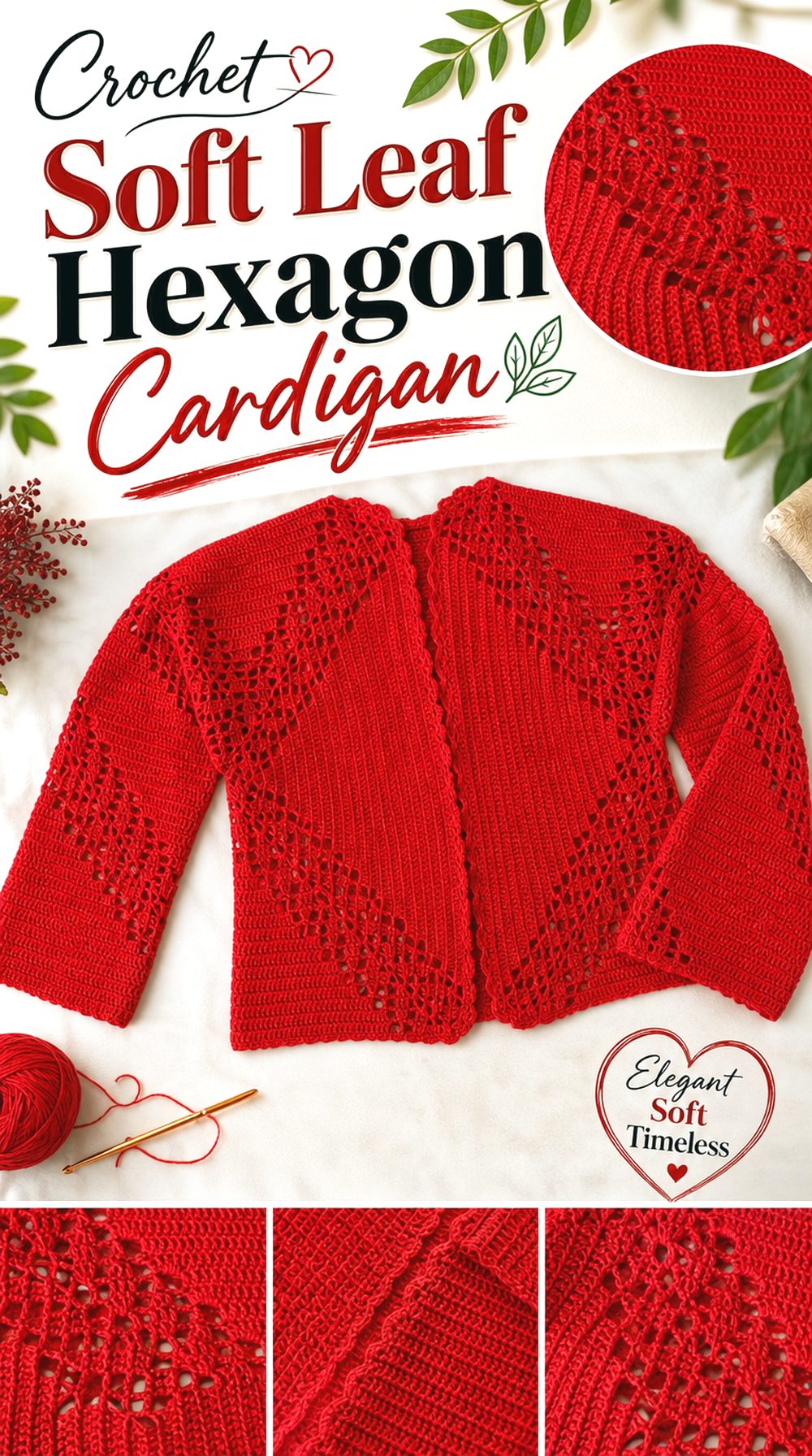
This leaf hexagon cardigan offers another take on the folded-cardigan shape, with a softer visual direction than the more dramatic oversized jacket. It can suit readers who like the idea of leaf texture but want a cardigan that feels casual and wearable. The hexagon construction makes it different from a standard seamed panel cardigan, while the leaf theme keeps it connected to autumn layering. It is a useful option to compare with other hexagon designs before choosing.
Plan the Finished Width
The finished width affects how a hexagon cardigan hangs across the back and front. Readers should pay attention to how the folded pieces meet and how much room appears around the body. A soft leaf cardigan may look relaxed, but too much width can change the sleeve position. Checking the intended fit helps the final garment feel wearable rather than simply oversized.
Check the Sleeve Opening
Because the sleeve comes from the folded hexagon shape, the opening should be reviewed carefully. A wider sleeve can look relaxed and comfortable, while a narrower sleeve gives a closer cardigan feel. Readers should look at the finished sleeve edge and decide whether it matches their wardrobe. This is especially important if the cardigan will be layered over long-sleeve tops.
Recheck Before Moving Ahead
Leaf hexagon cardigans can grow quickly in appearance, but every repeat affects the final size. Readers should pause before major transitions, especially before folding or joining. This gives time to check the shape, texture placement, and overall scale. It is better to confirm the cardigan still matches the intended size than to rely only on the flat piece’s appearance.
Original Tutorial and Creator Credit
Creator: Bir Yumak Sevdasi
Crochet Made to Measure Leafy Hexagon Cardigan
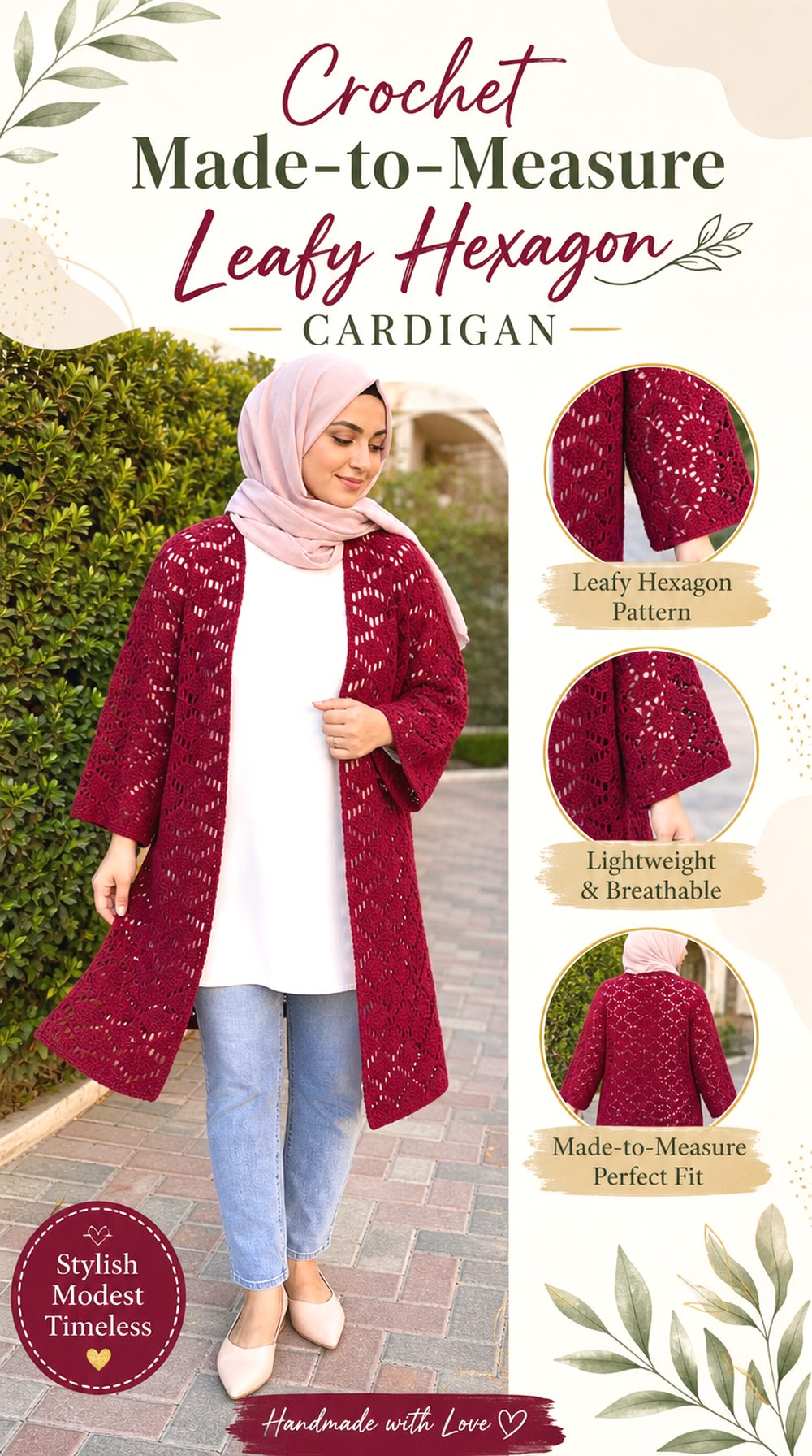
This leafy hexagon cardigan is useful for readers who want more control over the final measurements. The source describes it as made to measure, so the idea is especially helpful for crocheters who prefer checking shoulder-to-sleeve and total length rather than following only one fixed size. The finished direction can lean longer, which makes it different from cropped or shrug-style leaf cardigans. It works well for a maple leaf look with more coverage.
Note the Important Measurements
Made-to-measure cardigans depend on recording the right measurements before starting. Readers should check which body points the creator uses and write them down clearly. For a leafy hexagon cardigan, shoulder-to-sleeve length and total body length can change the whole silhouette. This step is especially useful if the desired result is a longer autumn layer rather than a short cardigan.
Consider the Longer Shape
A longer leafy cardigan can feel more like a coatigan or dramatic fall layer. Readers should think about where the hem will land and how that length works with their usual outfits. A knee-length or lower-hip direction may be attractive, but it also uses more visual space. The leaf texture should still feel balanced across the full garment length.
Plan Before Buying Supplies
The source gives flexible yarn guidance, so readers should avoid buying supplies based only on color. A made-to-measure cardigan may require more or less yarn depending on length, sleeve size, and chosen fiber. Before purchasing, review the creator’s material notes and think about the finished drape. A maple-colored yarn is only useful if it also supports the intended shape.
Original Tutorial and Creator Credit
Creator: Beyond Diary
Crochet Step by Step Leafy Hexagon Cardigan
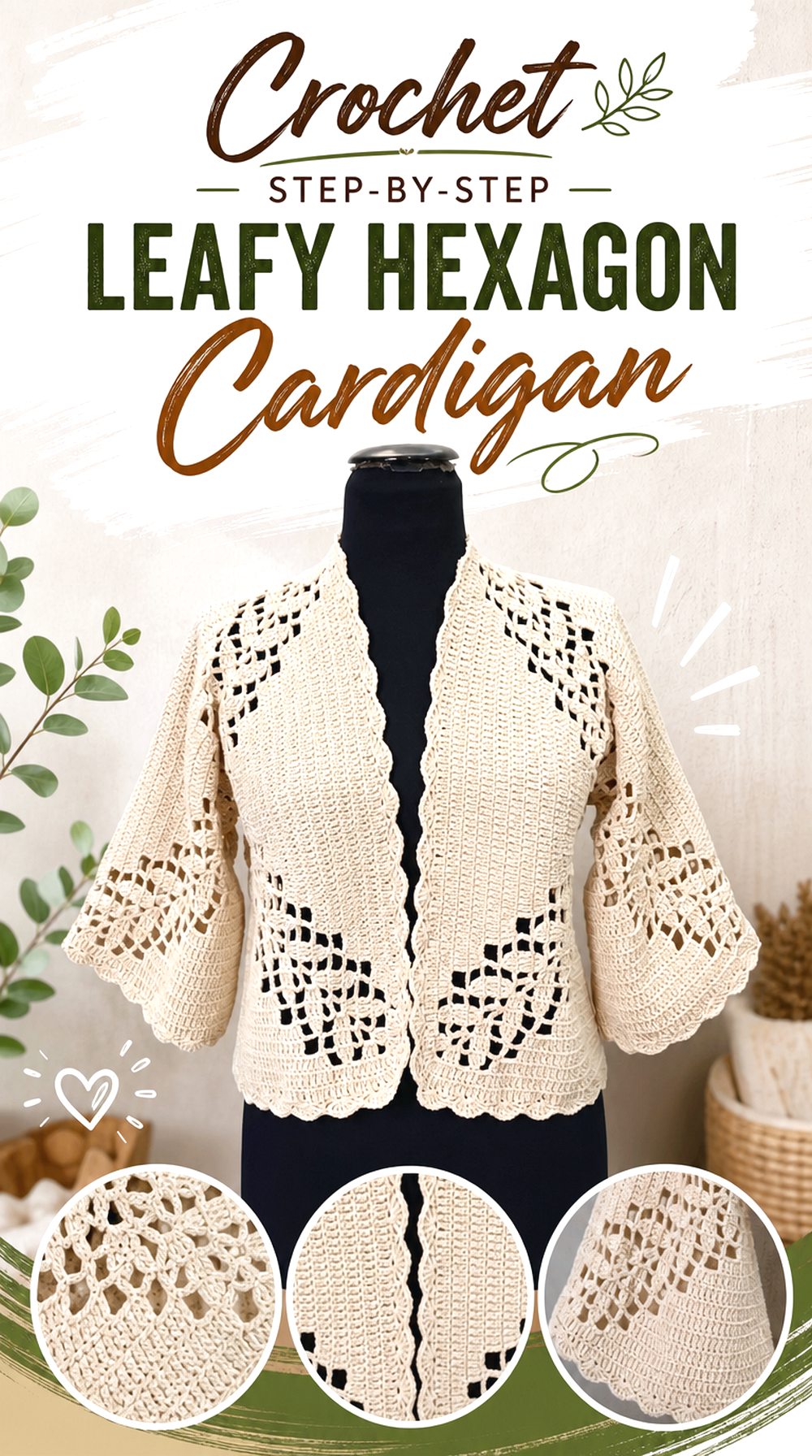
This leafy hexagon cardigan is presented with a start-to-finish teaching angle, which may appeal to readers who want a full visual guide for the shape. It keeps the leaf cardigan theme through the textured hexagon design, but the main value is the clear progression from flat pieces to wearable cardigan. Compared with the made-to-measure option, this idea feels more focused on following the project in order and watching the full transformation.
Review the Full Guide First
A full cardigan tutorial is easier to follow when readers preview the major stages before starting. This helps them understand where the flat hexagon shape becomes sleeves and body. For a leafy texture, previewing also shows where the decorative sections appear. A first review can prevent stopping mid-project because an upcoming fold, join, or edge finish feels unexpected.
Watch the Joining Section Closely
The joining section is a key part of any hexagon cardigan. Even when the pieces look correct, the final cardigan depends on how the folded sections meet. Readers should slow down here and compare orientation before closing seams or joining edges. This keeps the leaf texture facing the intended direction and helps both sides of the cardigan match.
Mark Your Stopping Point
Longer tutorials are easier to manage with a simple stopping note. Readers can write down the last completed section, measurement check, or visible shape change. This is useful for a leafy cardigan because texture, sizing, and folding all need attention. Marking progress keeps the project organized without replacing the creator’s instructions or turning the article into a written pattern.
Original Tutorial and Creator Credit
Creator: Tuğba Kahcevioğlu
Crochet Leafy Shrug Cardigan
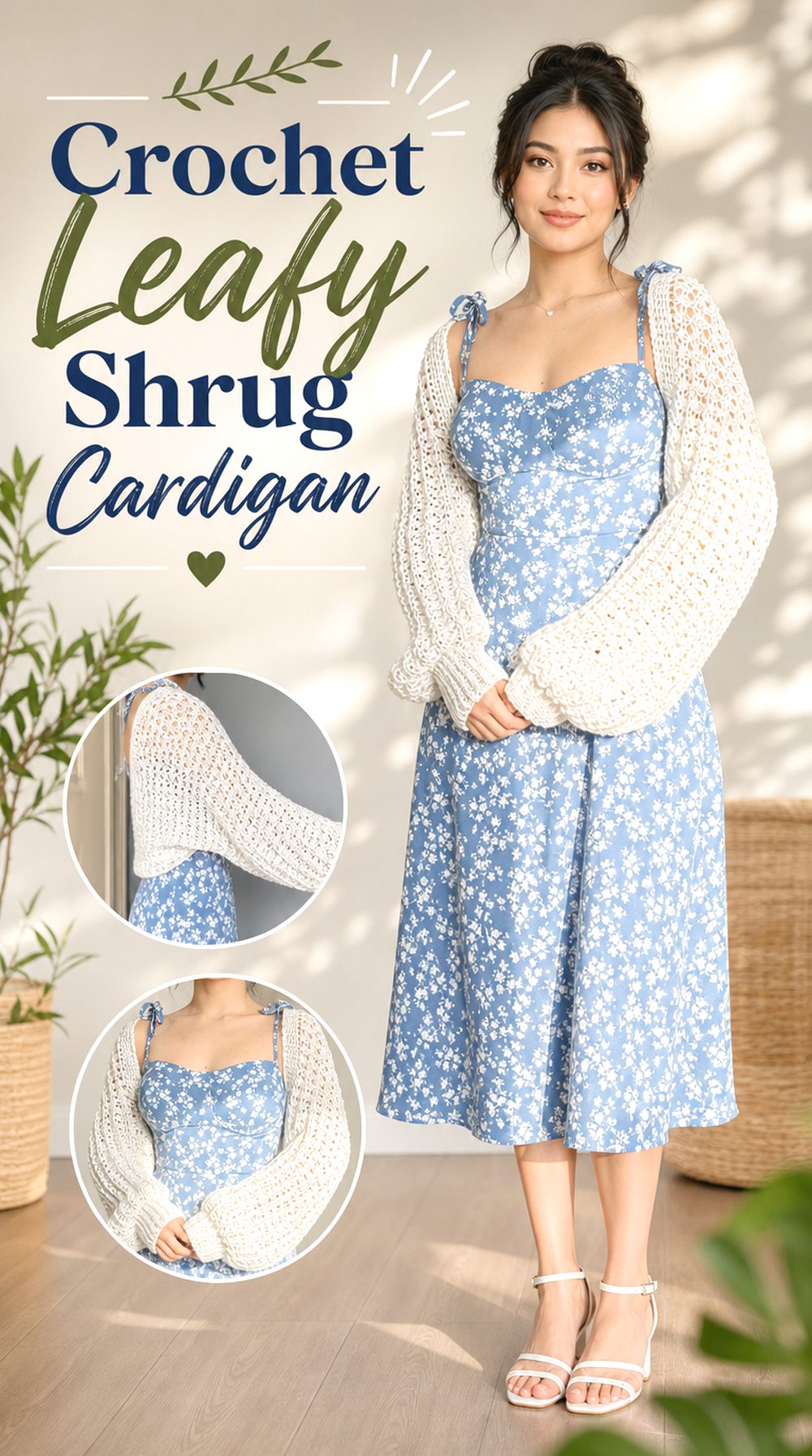
A leafy shrug cardigan is a shorter, lighter option in this collection. It works for readers who like the idea of a leaf-themed wearable but do not want a long cardigan or full jacket shape. The relaxed shrug style can sit over a simple top, dress, or sleeveless layer while still keeping the focus on the leafy texture. Its compact shape makes it clearly different from the long fall cardigan and oversized maple leaf jacket ideas.
Think About Shoulder Coverage
A shrug cardigan usually puts the focus on shoulders, upper arms, and the upper back. Readers should check how much coverage the finished shape provides before choosing it as a main fall layer. It may be more decorative than protective, depending on the fabric and fit. For a maple leaf-inspired outfit, this can work well when the goal is texture and shape rather than full warmth.
Check the Back View
The back view matters more in a shrug than in many open-front cardigans. Since the garment often wraps around the shoulders, the rear shape becomes a major part of the finished look. Readers should confirm whether the back sits smoothly, hangs loosely, or forms a cropped line. This check helps decide whether the shrug will work with high-waisted outfits or dresses.
Prepare for the Finishing Stage
Small cardigans still need careful finishing. Edges, sleeve openings, and any joined areas can affect whether the shrug looks clean or unfinished. Readers should keep enough attention for the final stage instead of treating it as an afterthought. A leafy shrug has less fabric than a full cardigan, so uneven finishing may be more noticeable on the compact shape.
Original Tutorial and Creator Credit
Creator: Miraeculous.Crochet
Crochet Open Kimono Fall Cardigan
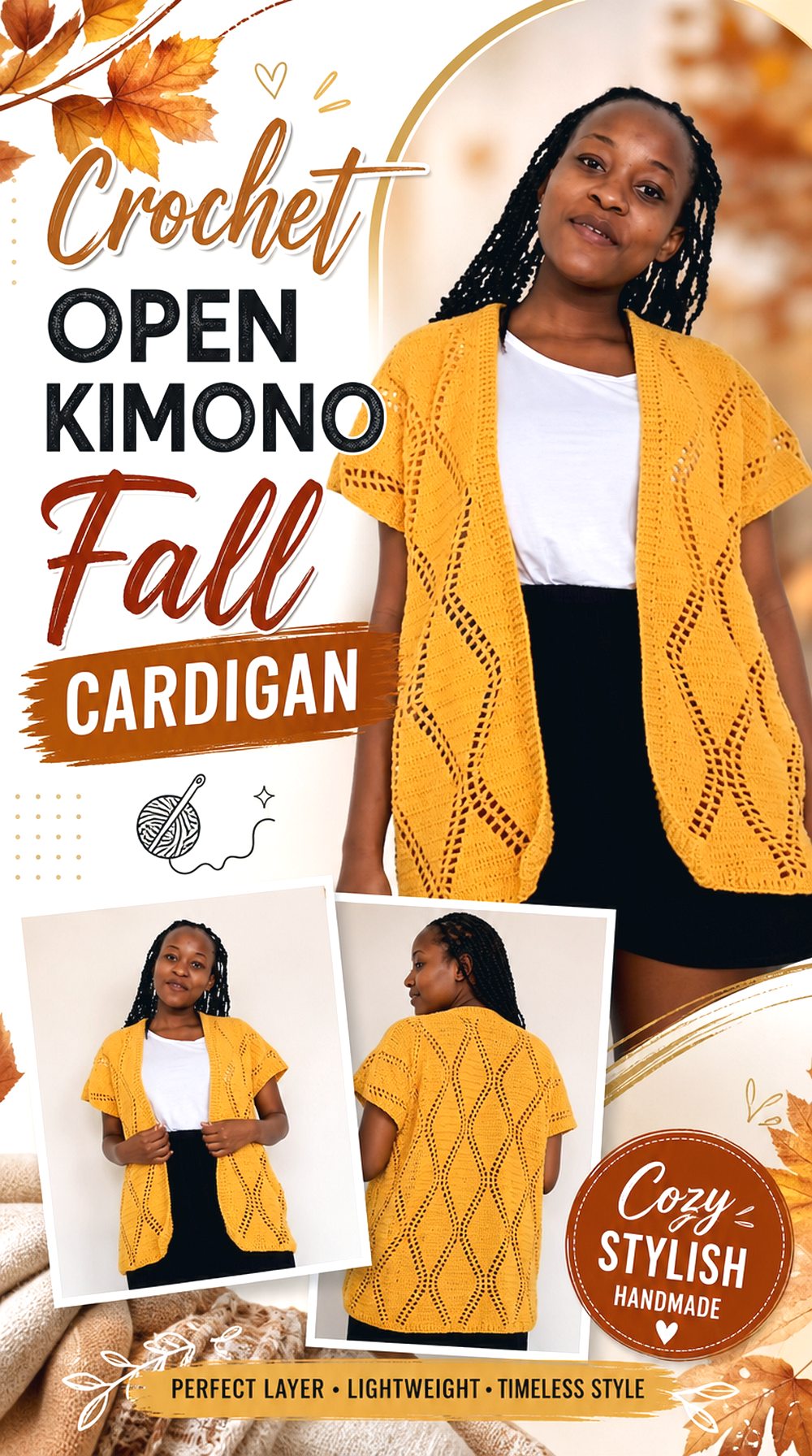
An open kimono fall cardigan gives the maple leaf theme a loose, relaxed silhouette. Rather than focusing on a literal leaf motif, this idea fits the autumn cardigan category through its seasonal purpose and open layering shape. The kimono style can work over fitted basics without needing a close front closure. It is a useful contrast to the textured leaf cardigans because the shape feels wider, easier to throw on, and more outfit-driven.
Check the Side Drape
Kimono cardigans often depend on side drape for their finished look. Readers should check how the body hangs from the shoulder and whether the side edges create a loose rectangle or a more shaped layer. A relaxed side drape can suit autumn outfits, but it may not be the right choice for someone who wants a fitted cardigan. The silhouette is the main decision here.
Confirm How the Front Falls
The front of an open kimono cardigan usually stays loose, so readers should look at how it falls when worn. If the front panels are wide, they may move more as the wearer walks or sits. This can be comfortable for layering, but it is worth checking before choosing the project for daily use. A cardigan without a firm closure should still feel manageable.
Match It to Layering Needs
This kind of fall cardigan works best when readers think about the clothes underneath. A kimono shape may pair well with slim tops, simple dresses, or high-waisted bottoms, but the exact effect depends on length and sleeve width. Before starting, consider whether the cardigan should be a light outfit topper or a roomier cool-weather layer.
Crochet Deep Red Block Stitch Cardigan
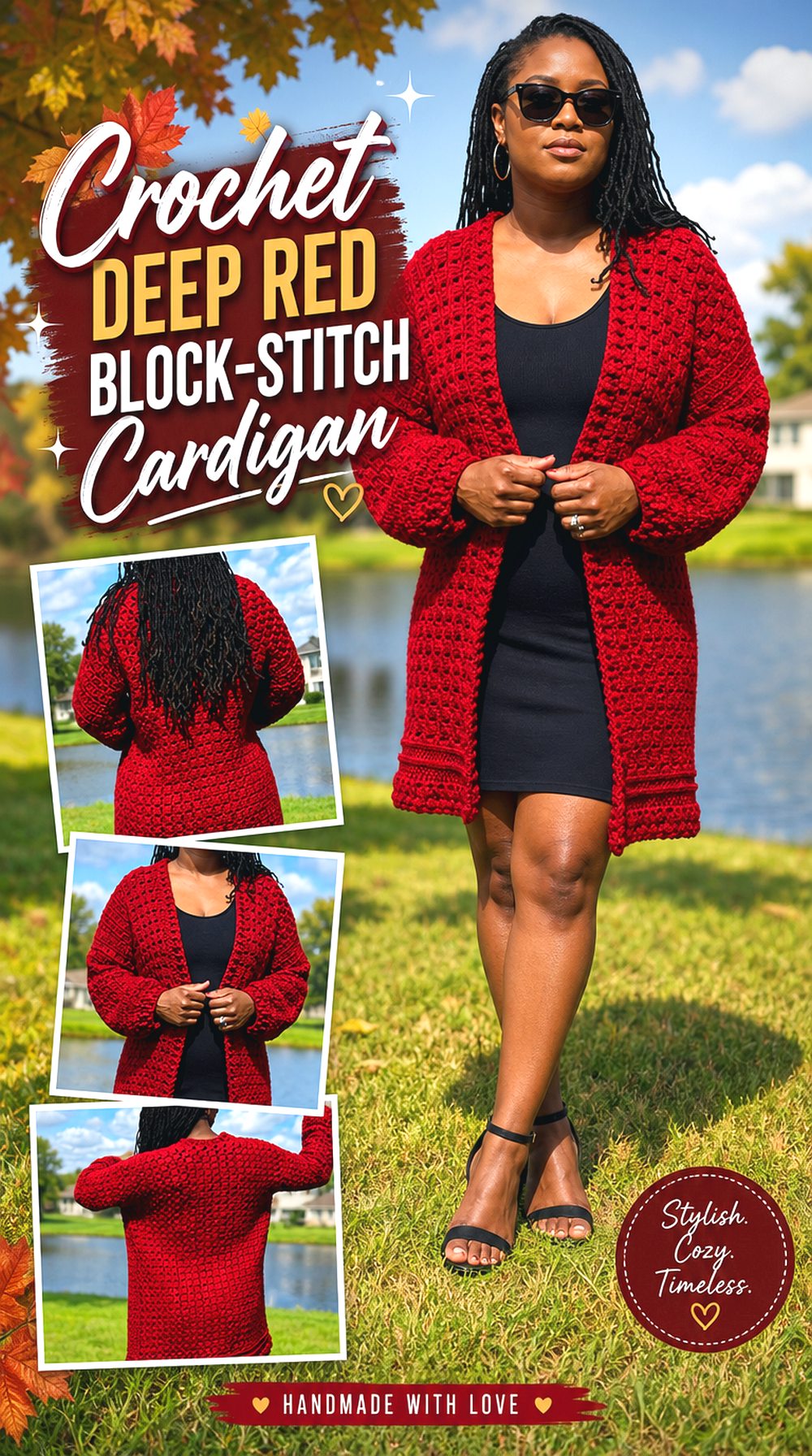
A deep red block-stitch cardigan brings the maple leaf mood through color and seasonal styling rather than a literal leaf motif. The bordeaux tone connects naturally with fall outfits, while the open cardigan shape keeps it wearable beyond one holiday or event. This project is different from the lace and hexagon pieces because the visual interest comes from a structured stitch pattern and polished cardigan layout. It is a good final option for readers who want a classic autumn layer.
Look at the Front Edges
The front edges influence whether a block-stitch cardigan feels neat or casual. Readers should check how the panels meet, whether the border frames the opening, and whether buttons or buttonholes are included. A deep red cardigan can look dressier than a loose kimono shape, so the front finish should match the intended use, especially if it will be worn for dinners or outings.
Consider the Intended Ease
The source describes a made-to-measure approach, so readers should think carefully about ease. A cardigan worn over thin tops can be closer-fitting, while a fall layer for colder days may need more room. Ease affects the shoulder width, front opening, and sleeve comfort. Choosing the right amount helps the deep red fabric look tailored rather than tight or oversized by accident.
Check the Border Finish
A strong border can make a cardigan look more complete, especially when the body uses a visible stitch pattern. Readers should review how the bottom, front, and sleeve edges are finished in the original tutorial. The border is not just decorative; it can affect how the cardigan hangs and how polished it feels. This is worth checking before the final assembly stage.
Original Tutorial and Creator Credit
Creator: Crochet State of Mind
Conclusion
These crochet maple leaf cardigan ideas give readers several ways to approach autumn layering. Choose the oversized jacket if the goal is a bold seasonal garment, or pick the circle leaf lace cardigan for lighter botanical detail. The rectangle and top-down cardigans offer more classic shapes, while the hexagon options create relaxed folded silhouettes. The shrug works for shorter coverage, and the kimono or deep red cardigan leans into fall styling. Use the original tutorials for the exact construction details before starting.
FAQs
How do I choose the right crochet maple leaf cardigan style?
Start with the finished shape you will actually wear. A leaf lace cardigan feels lighter, a raised leaf cardigan looks more textured, and a hexagon cardigan gives a relaxed folded shape. For more coverage, consider a longer fall cardigan or oversized jacket. For a smaller layer, a shrug may be enough.
Should a maple leaf cardigan use leaf stitches?
Not always. Some maple leaf cardigan ideas use visible leaf stitches or raised foliage texture, while others use autumn color, open layering, or seasonal cardigan styling. If the leaf detail is important to you, choose a tutorial where the finished fabric clearly shows a leaf or leafy texture.
What should I check before changing yarn?
Check the creator’s material list, gauge information, and finished measurements first. Yarn changes can affect drape, size, sleeve weight, and how clearly the leaf texture appears. A color may look perfect for a maple leaf theme, but the cardigan still needs the right thickness and movement.
How can I compare cardigan length before starting?
Look for finished photos, measurements, or a worn view in the tutorial. Decide whether you want cropped, hip-length, thigh-length, or longer coverage. Length changes the amount of yarn needed and how the cardigan works with dresses, jeans, or skirts, so it should be checked before buying supplies.
Can I sell a cardigan made from a YouTube tutorial?
Do not assume selling is allowed. Check the creator’s terms in the video description, linked pattern, website, or shop page. Some designers allow finished-item sales with conditions, while others limit use. Also check local labeling, tax, and business rules before listing finished crochet cardigans for sale.