Soft pastels suit a crochet ruffled dog dress particularly well because the dress already has several natural color zones. The fitted bodice can carry the dominant shade, the waist can create a clear transition, and each ruffle gives you another opportunity to repeat, lighten, or contrast the palette without covering the whole garment in color changes.
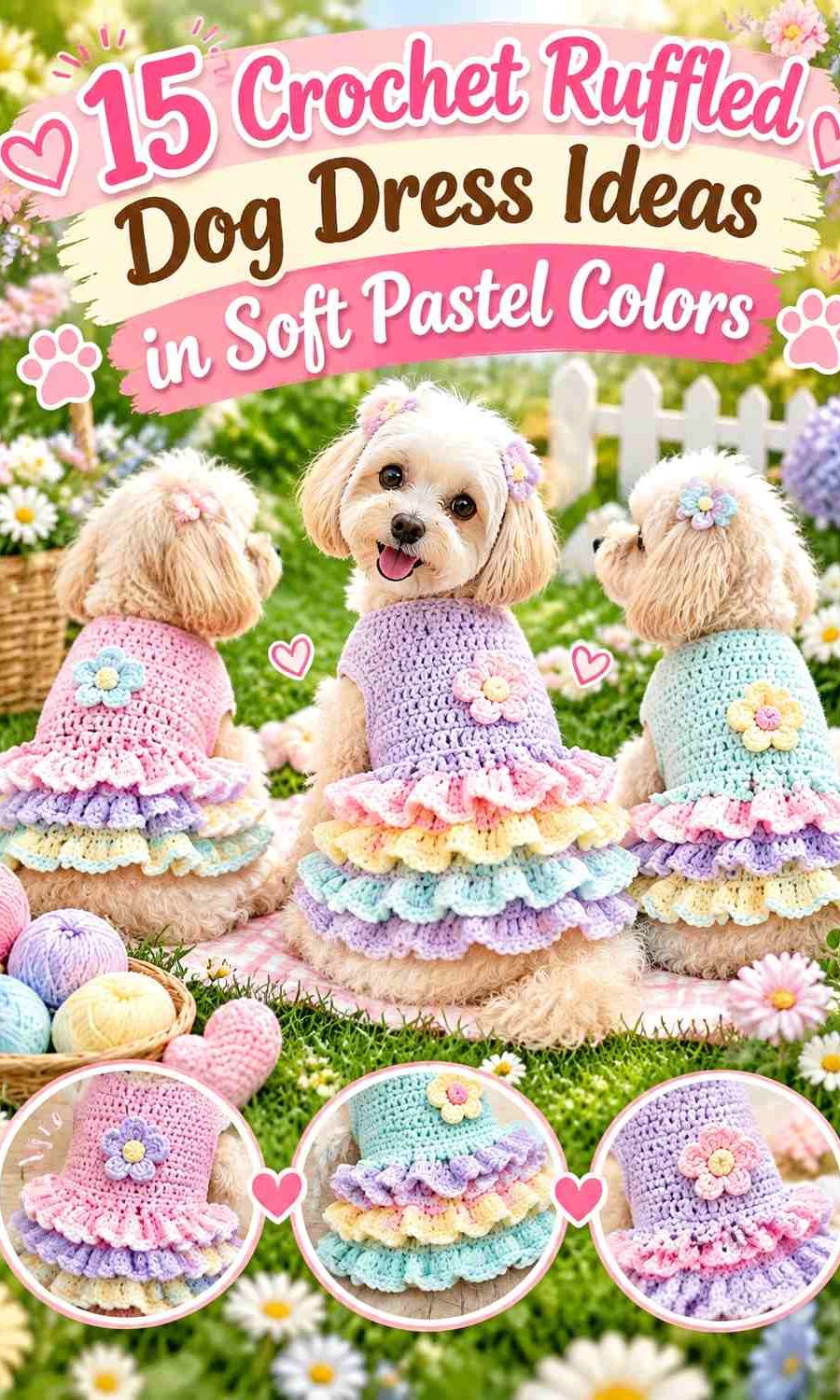
The main challenge is keeping pale shades from visually merging. Blush and cream, mint and ivory, or powder blue and lavender may be different hues but still sit close together in lightness. That subtlety can be useful for a quiet tonal dress, but layered ruffles need enough separation if you want each tier to remain visible.
The credited tutorials below provide construction references for crochet pet dresses and related ruffled garments. The pastel palettes and color placements are independent adaptations; use the original tutorial for its exact construction, fit, and stitch instructions.
Quick List:
- Blush Pink and Cream Crochet Ruffled Dog Dress
- Lavender and Soft Gray Crochet Ruffled Dog Dress
- Mint Green and Ivory Crochet Ruffled Dog Dress
- Powder Blue and White Crochet Ruffled Dog Dress
- Peach and Vanilla Crochet Ruffled Dog Dress
- Butter Yellow and Cream Crochet Ruffled Dog Dress
- Dusty Rose and Sage Green Crochet Ruffled Dog Dress
- Lilac and Mint Green Crochet Ruffled Dog Dress
- Baby Blue and Blush Pink Crochet Ruffled Dog Dress
- Pale Coral and Soft Peach Crochet Ruffled Dog Dress
- Pistachio Green and Pale Yellow Crochet Ruffled Dog Dress
- Mauve, Cream, and Dusty Pink Crochet Ruffled Dog Dress
- Sky Blue, Lavender, and White Crochet Ruffled Dog Dress
- Soft Apricot and Sage Green Crochet Ruffled Dog Dress
- Blush, Mint, Lilac, and Butter Yellow Crochet Ruffled Dog Dress
Give One Soft Pastel the Largest Area on a Crochet Dog Dress
A multicolor ruffled dress is easier to read when one shade clearly leads. The bodice is usually the most useful place for that dominant color because it creates a continuous field before the skirt begins. Supporting shades can then move through the ruffles, collar, waist transition, or narrow edging.
This does not mean every dress needs strong contrast. A peach bodice with vanilla ruffles can deliberately stay tonal, while a lavender bodice with soft gray edging creates more visible separation. Decide whether you want the tiers to blend gently or read as individual layers before choosing how similar the shades should be.
If three or four pastels are involved, avoid giving every color the same visual area automatically. One dominant shade, one or two supporting shades, and a small light accent usually create a clearer hierarchy on a compact pet garment.
Keep Pale Ruffle Tiers Visible With Light-and-Dark Contrast
Pastel colors can look surprisingly similar once crocheted. A pale blue and pale lavender may be easy to distinguish in separate skeins but much less distinct when one ruffle overlaps another.
Before committing to several tiers, place the yarns next to each other and compare their lightness. A grayscale photo can help reveal whether two colors have enough value difference. If they merge more than you want, deepen one pastel slightly or use cream, white, or soft gray between them.
Color placement also affects visibility. A slightly deeper shade at the waist can define where the fitted bodice ends and the ruffled skirt begins. A lighter color along the outer ruffle edge can emphasize the scalloped or wavy silhouette without taking over the dress.
Place Pastel Color Changes Where the Dog Dress Already Changes Shape
The bodice-to-skirt transition is one of the most useful places for a color change because the dress is already changing from fitted fabric to fuller ruffles. Collars, shoulder edges, ruffle tiers, and final skirt edging provide other natural boundaries.
Avoid adding color purely to fill every possible section. On a small dog dress, too many tiny pastel changes can make the garment look fragmented. A solid bodice plus two coordinated ruffle shades often communicates the palette more clearly than six narrow color bands.
Fit remains separate from decoration. Ruffles should not interfere with front-leg movement or extend into an impractical underside area. If decorative bows, flowers, or other attachments are added, secure them carefully and avoid loose elements that a dog may chew or catch.
1. Blush Pink and Cream Crochet Ruffled Dog Dress

Blush pink makes a natural dominant shade for a soft ruffled dress because it can cover the bodice and still leave room for cream to clarify the skirt. Keep most of the fitted section blush, then introduce cream at the waist or along selected ruffle edges. This gives the dress a distinctly pink identity without turning every tier into the same block of color.
Blush Pink Should Lead Across the Crochet Dog Dress Bodice
Keep the bodice mostly blush when you want the dress to read as pink before the ruffles are even visible. A continuous field also gives any textured crochet on the body enough room to show without frequent cream interruptions.
If the bodice includes a defined collar, you can keep that blush as well and save cream for the skirt. That creates a stronger division between the fitted upper section and the fuller lower silhouette.
Cream Can Separate Blush Pink Ruffle Layers
Cream is useful when several blush ruffles begin to visually stack into one large pink mass. Use it as a narrow transition at the waist, a restrained edge around individual tiers, or one lighter ruffle among predominantly blush layers.
Because both colors are light, compare them before starting. If your blush is extremely pale, choose a cream that remains distinct enough to outline the ruffle shape rather than disappearing into it.
Creator Credit: Crochet It
2. Lavender and Soft Gray Crochet Ruffled Dog Dress

Lavender gives the dress its main pastel color while soft gray provides a neutral break that is gentler than a dark outline. This pairing is especially useful when you want layered ruffles to remain visible without adding white or cream. Lavender can cover the bodice and most of the skirt, while gray works at the waist and around selected ruffle edges.
Lavender Can Carry Both the Bodice and Main Ruffles
Repeating lavender across the bodice and at least one substantial skirt tier connects the upper and lower halves of the dress. That repetition prevents a contrasting gray waist from making the skirt look visually detached.
If several ruffles are present, do not feel obligated to alternate lavender and gray evenly. Two lavender tiers with a smaller gray transition can keep lavender unmistakably dominant.
Soft Gray Gives Lavender Ruffles Quiet Definition
Soft gray can outline a lavender ruffle without creating the sharp contrast that charcoal or black would introduce. It is particularly helpful along the waistline, where a subtle darker value can make the beginning of the skirt easier to see.
If the gray and lavender are nearly equal in value, increase the area of the gray slightly rather than adding more colors. A clearly visible narrow waistband may be more useful than several nearly invisible gray edges.
Creator Credit: petpetcrochets
3. Mint Green and Ivory Crochet Ruffled Dog Dress
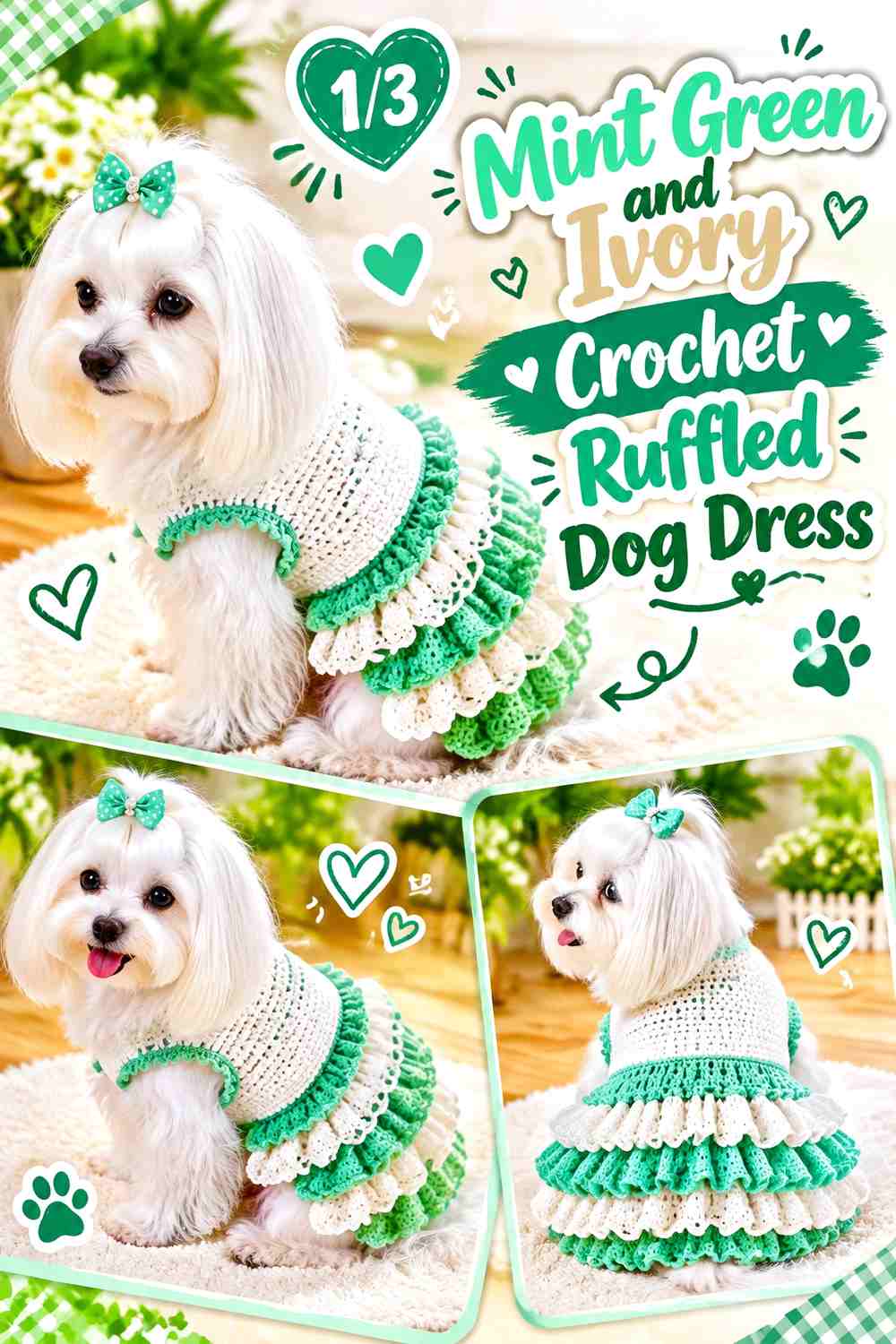
Mint green creates a cool, light main field, while ivory keeps the palette soft and slightly warmer than a bright-white accent would. Use mint across the bodice and larger ruffle surfaces, then let ivory define the waist, outer skirt edge, or selected collar details.
Mint Green Works Well as the Main Crochet Dog Dress Color
A broad mint bodice establishes the pastel direction immediately and gives any stitch texture a consistent background. Continue mint into the skirt so the dress does not become mostly ivory once the ruffles add more surface area.
If the dress has several tiers, consider making the largest ruffle mint. That reinforces the main color at the point where the skirt has the most visual volume.
Ivory Can Define Mint Green Ruffles Without Overpowering Them
Ivory is useful around the outer edge of mint ruffles because it creates a light boundary while remaining softer than a stark high-contrast trim. It can also sit at the waist to separate a fitted mint bodice from a fuller mint skirt.
Keep ivory relatively restrained if mint is supposed to lead. Covering every collar, waist, and ruffle edge in ivory can gradually make the neutral as visually important as the green.
Creator Credit: Noa Handmade
4. Powder Blue and White Crochet Ruffled Dog Dress

Powder blue and white create one of the lightest schemes in this collection. Because both shades can be very pale, placement matters more than simply alternating them. Powder blue can take the bodice and main ruffle tiers, while white is most useful where it clarifies an edge or creates a break.
Powder Blue Needs Enough Surface to Stay Visible Beside White
Let powder blue cover most of the fitted body and at least one broad ruffle. If white occupies too many large areas, the blue can become a minor accent even when you intended it to define the dress.
A blue collar connected to a blue bodice can also produce a cleaner upper section than switching to white immediately at the neckline.
White Can Highlight the Powder Blue Ruffle Silhouette
Use white along the outer edge of a powder-blue ruffle when you want the wave or flare of the skirt to be easier to see. This is particularly useful when the ruffle itself contains openwork or a subtle stitch pattern.
Check your exact blue against white before committing. An extremely pale blue may need a slightly deeper companion blue in one area if the two shades merge more than you want.
Creator Credit: Professora Simone Eleotério (Lifebaby Sapatinhos)
5. Peach and Vanilla Crochet Ruffled Dog Dress
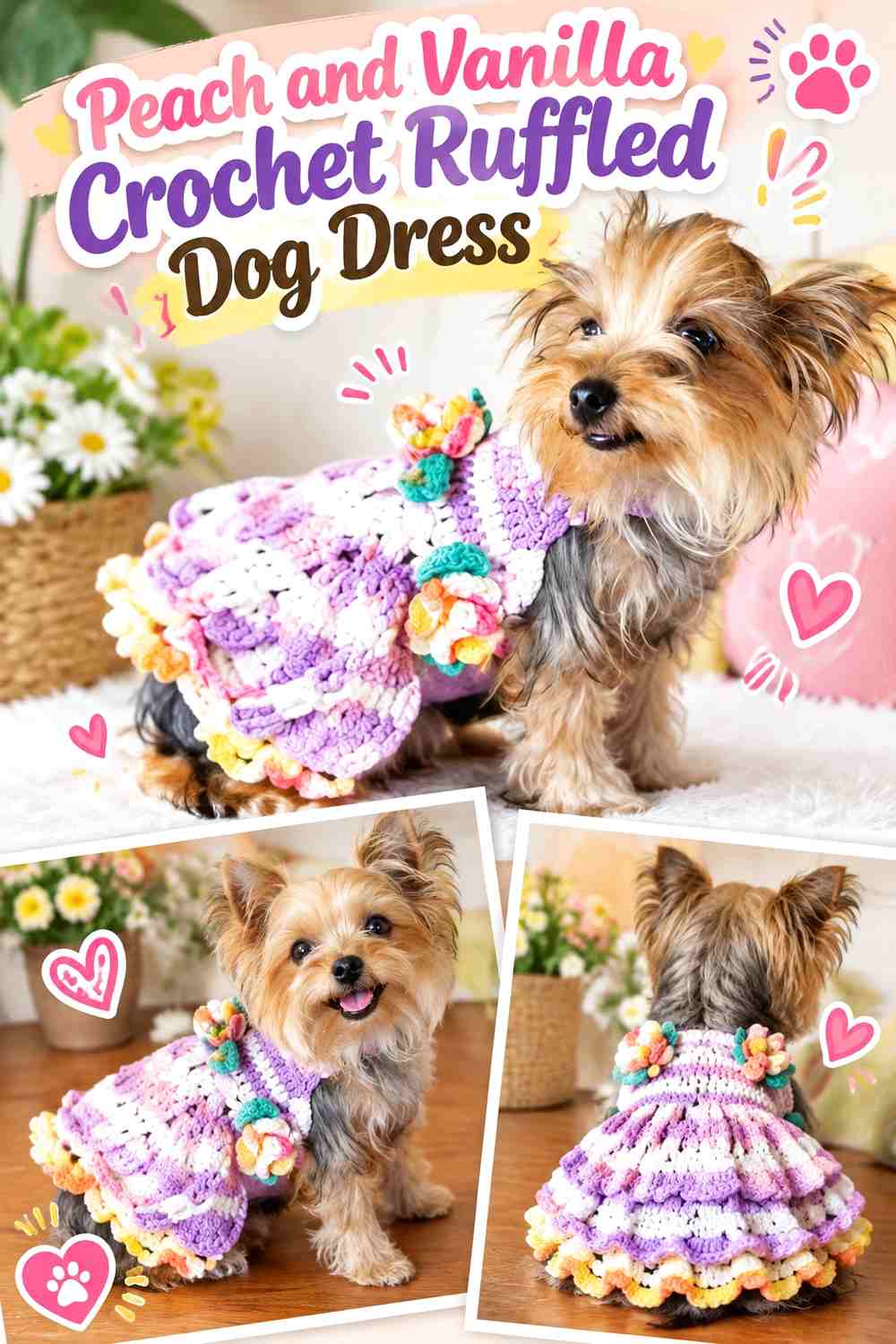
Peach and vanilla create a warm tonal palette rather than a high-contrast one. Peach can dominate the bodice and upper ruffle, with vanilla gradually lightening the skirt. This works particularly well when you want the ruffles to transition softly instead of appearing as separate colored bands.
Peach Can Anchor the Upper Crochet Dog Dress
Keep the collar, bodice, and waist mostly peach so the warmer pastel remains the visual anchor. Starting with the stronger of the two shades also gives you somewhere to move lighter as the skirt flares outward.
If peach is already extremely pale, avoid introducing too much vanilla immediately below it. Preserve a clearly peach section before beginning the lighter transition.
Vanilla Can Lighten Peach Toward the Outer Ruffle
Vanilla works well on a lower tier or final edge because it makes the skirt appear progressively lighter toward the outside. Unlike strict alternating stripes, this creates a directional palette that follows the dress silhouette.
If the transition is too subtle, place the peach and vanilla skeins side by side before crocheting. You may need a slightly deeper peach rather than a brighter or more saturated accent.
Creator Credit: Julie Crochet
6. Butter Yellow and Cream Crochet Ruffled Dog Dress
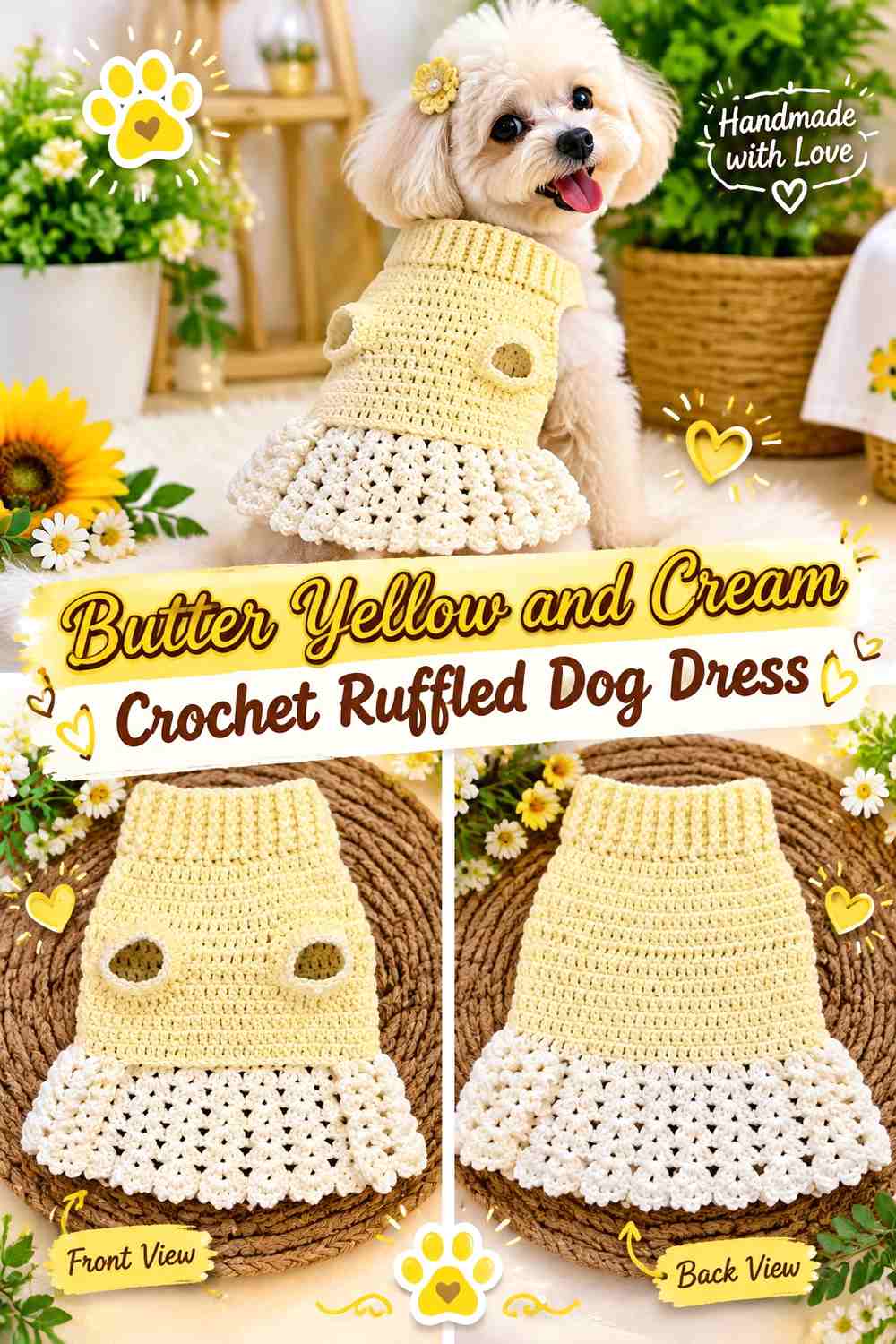
Butter yellow gives the dress a soft warm center without the intensity of a vivid yellow. Cream supports it well because the two shades remain related while still offering enough difference to organize the ruffles. Let butter yellow lead through the bodice and use cream selectively around the skirt.
Butter Yellow Should Cover the Main Crochet Dog Dress Surface
A butter-yellow bodice makes the color recognizable before cream is introduced. Repeat yellow in at least one substantial ruffle so the skirt still belongs visually to the upper section.
If you use cream at the collar, consider keeping the waist yellow. Two separate cream boundaries can otherwise divide a compact dress into several small sections.
Cream Can Give Butter Yellow Ruffles More Separation
Cream is particularly useful between two yellow ruffle layers. A small lighter interval makes the overlap easier to see without introducing another hue.
Because yellow and cream may be very close in value, test them together. If they nearly disappear into one another, preserve the gentle palette but choose a slightly richer butter yellow for the larger areas.
Creator Credit: Luciene crochê 🧶
7. Dusty Rose and Sage Green Crochet Ruffled Dog Dress

Dusty rose and sage introduce two muted pastels rather than pairing a pastel with a neutral. The easiest way to keep them organized is to make dusty rose dominant on the bodice and let sage appear in the skirt or waist. Equal amounts can work, but only when the dress has enough surface to keep the colors from looking patchy.
Dusty Rose Can Give the Crochet Dog Dress a Clear Main Color
Use dusty rose from the neckline through most of the bodice. That uninterrupted placement establishes the warmer shade as the lead before sage enters around the skirt.
Repeating dusty rose on the lowest ruffle can reconnect the bottom of the dress to the bodice if the middle tier is predominantly sage.
Sage Green Works Better as a Broad Ruffle Than Tiny Dusty Rose Accents
Sage is subtle enough that very small details can get lost beside dusty rose. Give it one meaningful area, such as a full ruffle or waist section, rather than scattering tiny green touches across the dress.
If both shades are similarly muted and dark, compare them in grayscale. A small cream transition at the waist is an option when the two colors need more separation.
Creator Credit: Tejiendo Con Candy
8. Lilac and Mint Green Crochet Ruffled Dog Dress
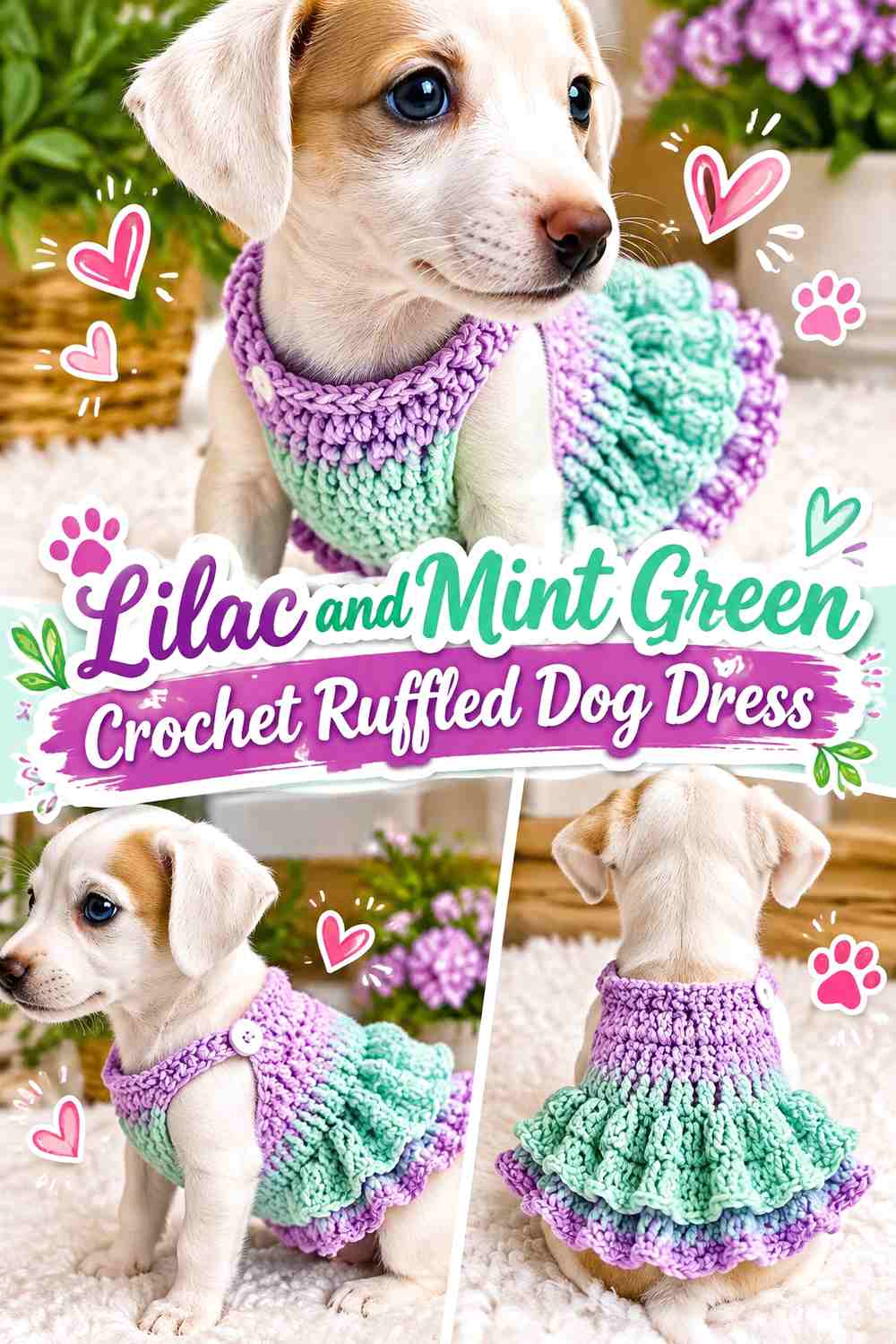
Lilac and mint give you two cool-leaning pastel hues with similar visual softness. Because they can compete when used in equal-sized blocks, assign one to the bodice and let the other become the principal skirt color. A lilac body with mint ruffles creates a clear top-to-bottom change while still feeling connected.
Lilac Gives the Crochet Dog Dress Bodice a Stable Color Base
Keep the fitted section predominantly lilac so the upper half does not become striped or fragmented. If the neckline needs contrast, a small mint edge is enough to introduce the second color early.
Repeating lilac at the outermost ruffle can help close the palette after a mint-heavy middle section.
Mint Green Ruffles Need Clear Separation From Lilac
Place the two yarns side by side before planning narrow alternating ruffles. If the values are very similar, larger color areas will usually show the distinction better than thin stripes.
Another option is to keep whole tiers in one color at a time. The shadow created by overlapping ruffles then helps reinforce the lilac-and-mint change without requiring a third accent.
Creator Credit: Momento crochetero
9. Baby Blue and Blush Pink Crochet Ruffled Dog Dress
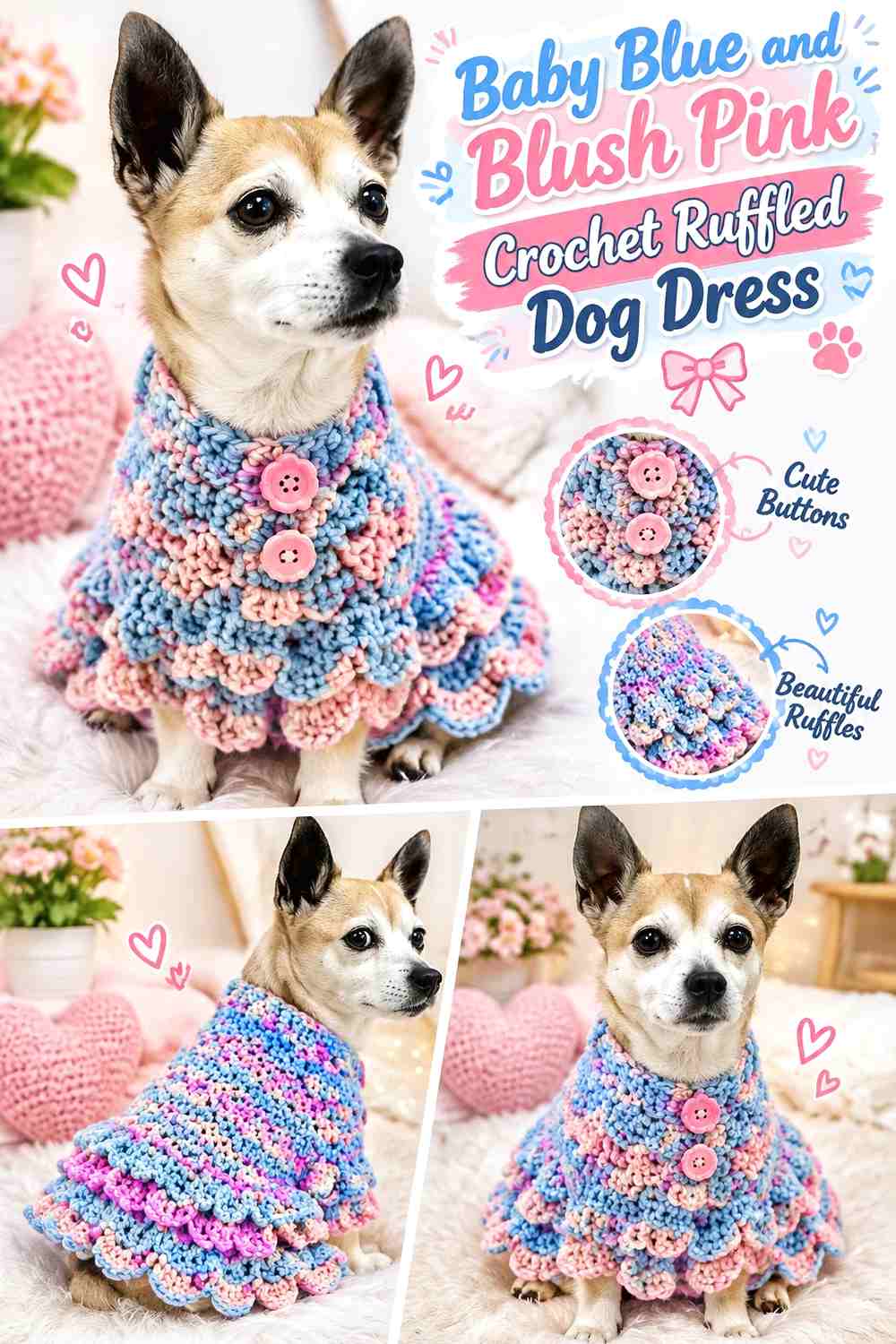
Baby blue and blush pink can share a pastel dress without either shade becoming overly strong. The key is avoiding a strict half-and-half split. Baby blue can lead across the bodice while blush becomes the main skirt color, with one small blue repeat near the lower edge to tie the sections together.
Baby Blue Can Keep the Crochet Dog Dress Bodice Visually Calm
A solid baby-blue upper section gives the ruffled skirt room to introduce blush without turning the entire garment into alternating color bands. Keep the neckline blue as well when you want a particularly clean bodice.
If a decorative waist is part of the design, blush can begin there to signal the transition into the skirt.
Blush Pink Can Dominate the Ruffles Without Losing Baby Blue
Use blush on the largest ruffle or on multiple connected tiers. Then repeat baby blue as a narrow lower edge or a single smaller tier rather than dividing every ruffle equally.
When both shades are extremely pale, a cream line may not add enough contrast because all three colors are light. In that case, slightly deepening either the blue or blush is a simpler correction.
Creator Credit: ALEX CROCHET UNCINETTO MODERNO DI ALEX
10. Pale Coral and Soft Peach Crochet Ruffled Dog Dress
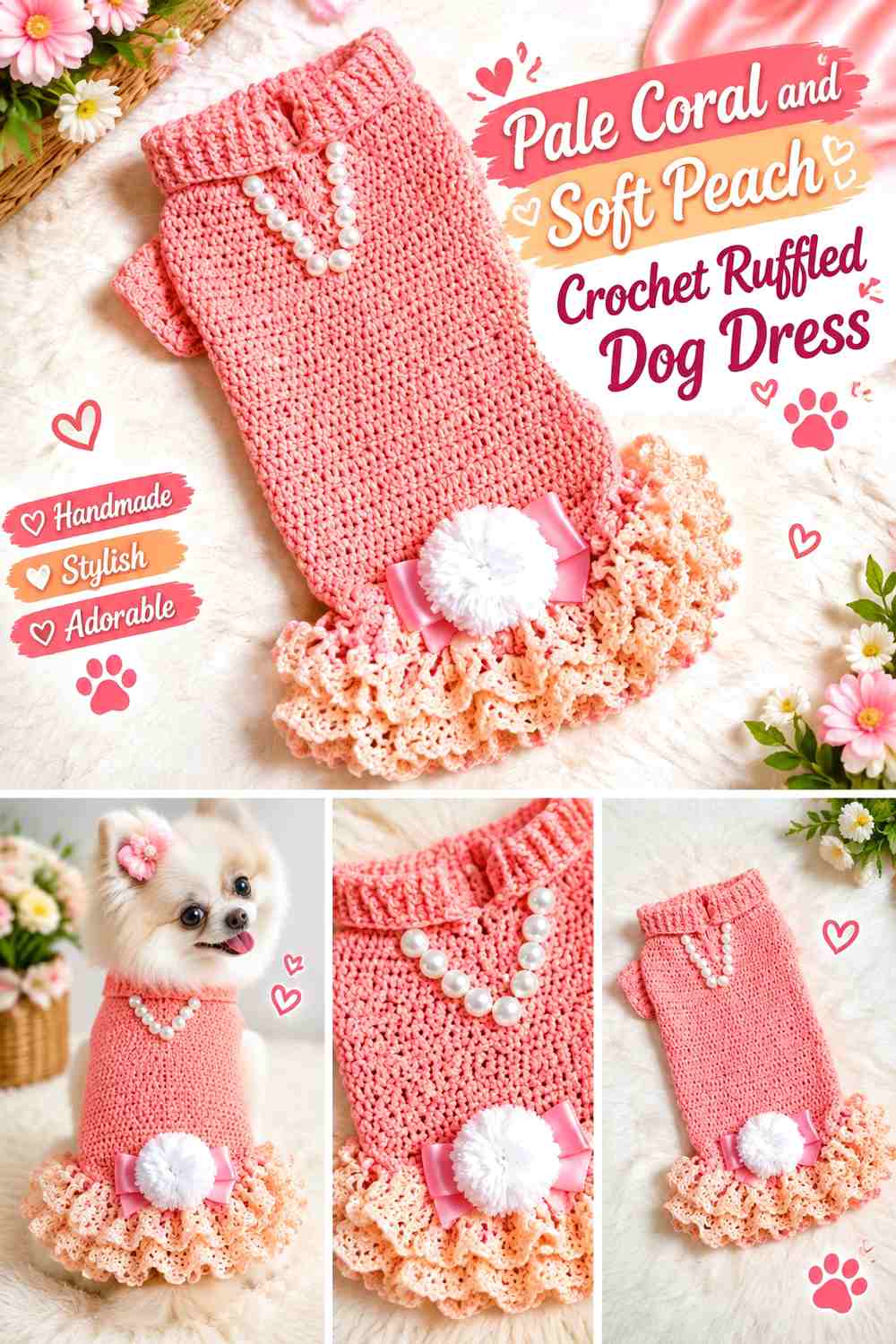
Pale coral and soft peach create an analogous palette in which the colors sit close together. This makes the dress feel more tonal than a blue-and-pink or rose-and-sage combination. Use pale coral as the stronger anchor and soft peach to create lighter ruffle transitions.
Pale Coral Should Define the Crochet Dog Dress Waist and Bodice
Keep pale coral through the bodice and waist if you want the silhouette to have a clear center. Its slightly stronger presence helps distinguish the fitted upper section from peach ruffles below.
You can repeat coral on the lowest edge rather than on every ruffle. That small return gives the palette a finished loop without interrupting the softer peach middle.
Soft Peach Can Create a Tonal Ruffle Transition From Pale Coral
Use soft peach on one or more central ruffles to create a gradual rather than abrupt color change. This is a useful scheme when the ruffle shape itself should provide most of the visual separation.
If coral and peach are nearly identical once crocheted, do not add a random third color simply for contrast. Choose one shade a little lighter or darker while keeping the same warm pastel relationship.
Creator Credit: Искусница SaTi
11. Pistachio Green and Pale Yellow Crochet Ruffled Dog Dress
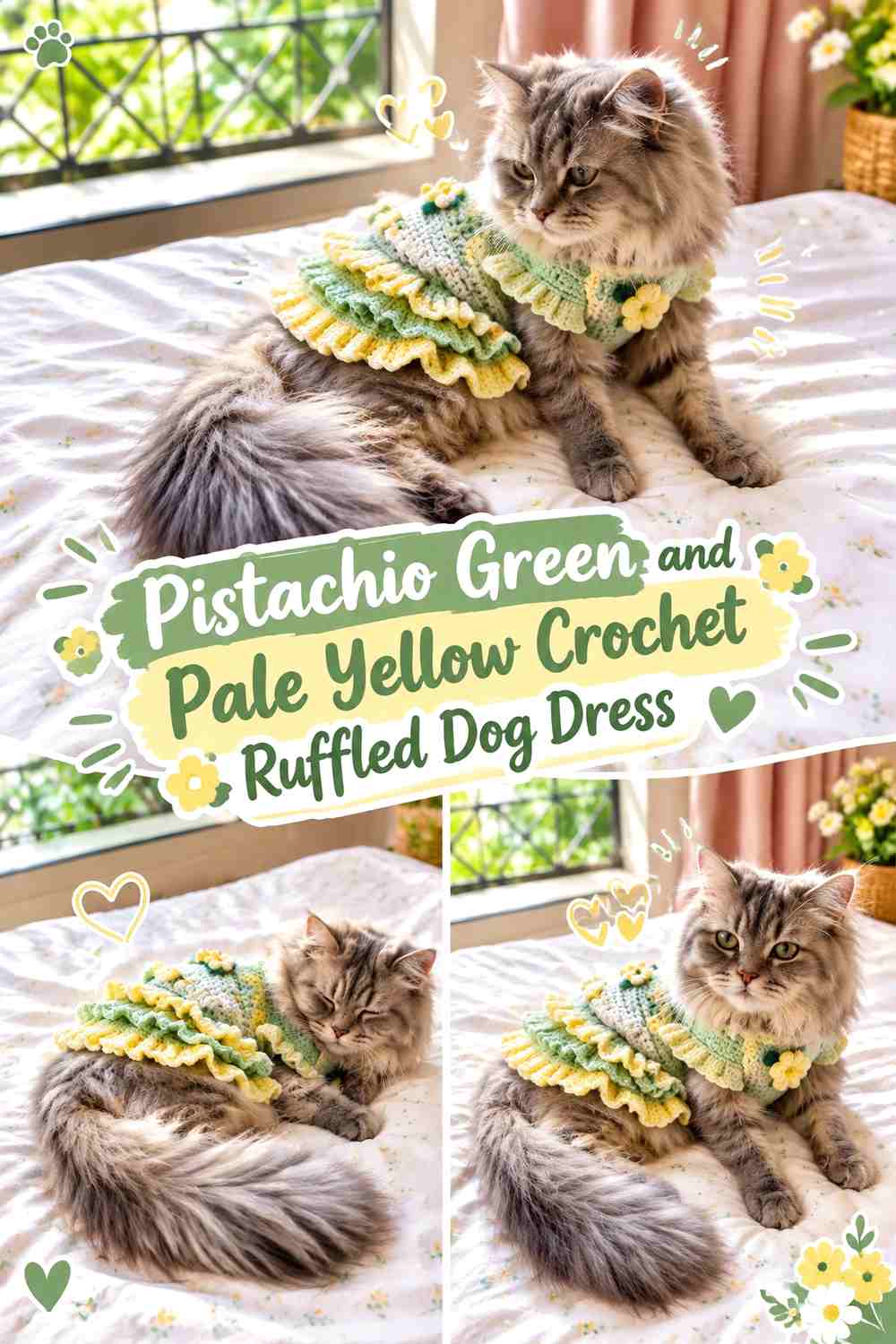
Pistachio green and pale yellow create a light botanical-looking combination without requiring floral appliqués. Pistachio can ground the bodice while pale yellow brings more light to the ruffled skirt. Because both colors can be gentle, larger areas are more effective than many tiny switches.
Pistachio Green Can Anchor the Crochet Dog Dress Bodice
Use pistachio from the neckline through the fitted body so the green has enough area to remain recognizable. A continuous bodice is particularly useful when the crochet texture itself is decorative.
Bring pistachio into one skirt edge or lower tier if the yellow ruffles otherwise feel visually separate from the upper half.
Pale Yellow Can Lighten Pistachio Green Ruffles
Pale yellow makes a useful main skirt color because it creates a clear change from green without introducing a dark contrast. Keep one full tier yellow rather than using it only as thin trim.
If both colors are nearly the same lightness, the overlapping ruffle shadows may provide enough distinction. If not, choose a slightly deeper pistachio rather than turning the yellow much brighter.
Creator Credit: mahum 🎀
12. Mauve, Cream, and Dusty Pink Crochet Ruffled Dog Dress

This three-color scheme uses mauve as the deepest pastel, dusty pink as the bridge, and cream as the lightest accent. That built-in value progression makes it particularly useful for layered ruffles. Keep mauve concentrated in the fitted body, then move progressively lighter through the skirt.
Mauve Gives Cream and Dusty Pink Ruffles a Stronger Starting Point
A mauve bodice creates enough depth that dusty pink and cream do not all blend into one light pastel field. Keep the waist mauve if you want a clearly defined transition into the skirt.
Because mauve already provides the darkest note, there is little need to add another dark trim color.
Dusty Pink Can Bridge Mauve and Cream Ruffle Layers
Place dusty pink between mauve and cream rather than jumping directly from the darkest to the lightest shade on every tier. The middle value makes the skirt progression smoother.
Cream can then be saved for the final edge or lightest ruffle. Restricting it to strategic areas prevents the neutral from becoming more prominent than the pink family.
Creator Credit: Crochet Guru
13. Sky Blue, Lavender, and White Crochet Ruffled Dog Dress

Sky blue and lavender provide two recognizable pastel hues, while white supplies the separation that a two-color version may lack. Make sky blue dominant on the bodice, lavender dominant in the skirt, and use white only at transition points.
Sky Blue Can Keep the Crochet Dog Dress Upper Section Unified
Use sky blue across the neckline and bodice instead of breaking the upper section into all three colors. This creates a stable field before the layered skirt introduces more visual activity.
If you want to repeat blue later, use it on one lower trim rather than turning every ruffle into a three-color sequence.
White Can Separate Lavender and Sky Blue Ruffles
A narrow white break at the waist can make the blue-to-lavender transition immediately clear. White can also edge one lavender tier when two adjacent pastels are too similar in value.
Avoid outlining every component in white. Too much repeated white can turn the dress into a high-detail three-color project rather than a blue-and-lavender design with a light accent.
Creator Credit: Crochet Cuties Creations by Esther
14. Soft Apricot and Sage Green Crochet Ruffled Dog Dress

Soft apricot gives warmth to the fitted section while sage provides a muted green contrast in the skirt. Compared with dusty rose and sage, apricot makes the overall palette lighter and slightly warmer. Use the green in broad areas so it does not disappear against the pale bodice.
Soft Apricot Can Lead the Crochet Dog Dress From Collar to Waist
Keeping the upper dress apricot creates a clear warm field and avoids interrupting the fitted portion with unnecessary green bands. If the neckline has pronounced texture, using one color there can also keep that detail easier to see.
Repeat a small amount of apricot on the skirt so the warm color does not stop abruptly at the waist.
Sage Green Needs Enough Ruffle Area Beside Soft Apricot
Give sage at least one complete ruffle rather than using it only as a narrow edge. The muted green needs enough visual area to register as a deliberate second color.
For a softer result, use apricot again on the final tier. For a greener finished dress, let sage continue through the lowest and largest ruffle while apricot remains primarily above the waist.
Creator Credit: LittleGemsCreations – Fibre Artist
15. Blush, Mint, Lilac, and Butter Yellow Crochet Ruffled Dog Dress
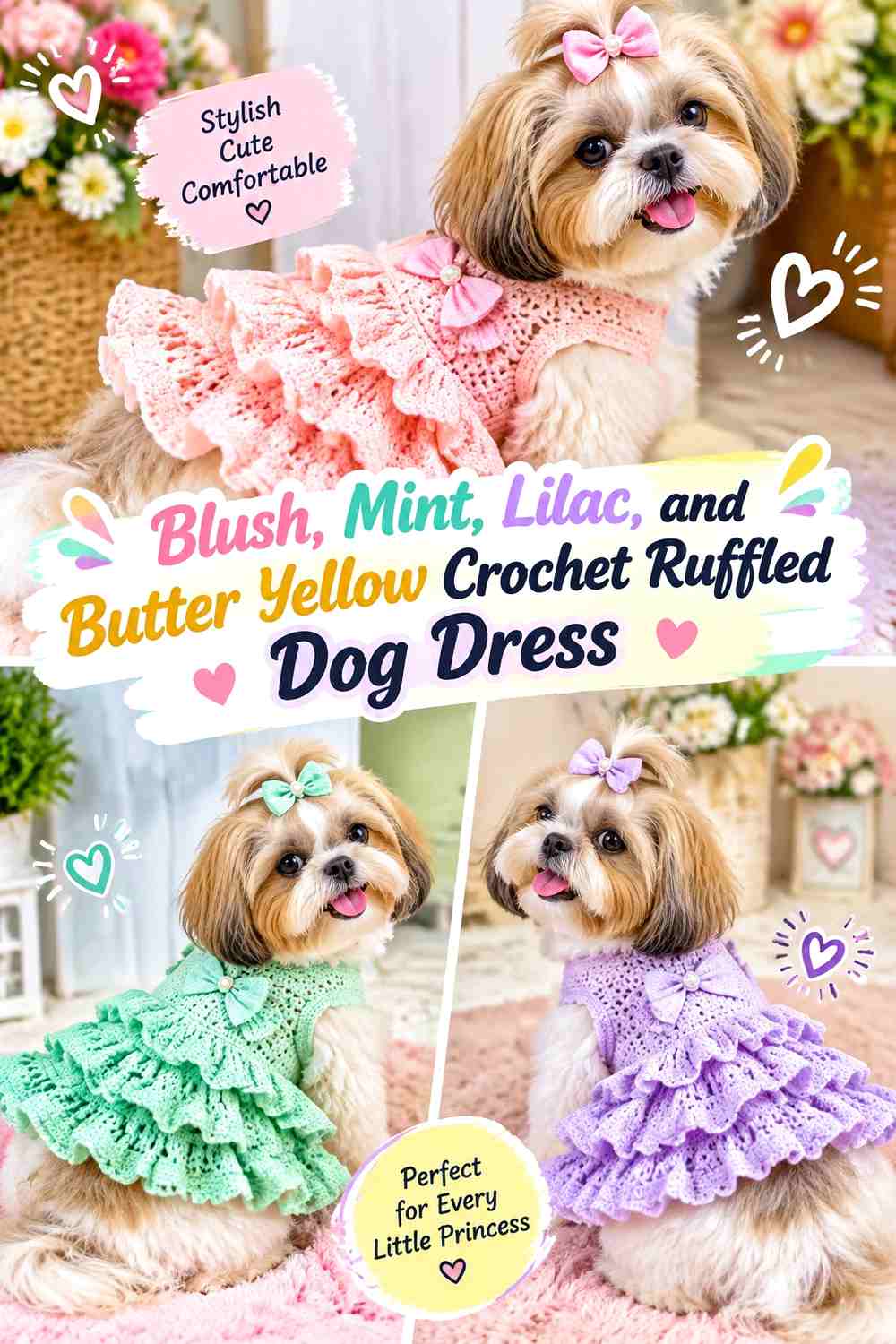
A pastel rainbow dress can use several colors without becoming chaotic when the bodice stays simple. Choose one shade—blush works well here—as the dominant upper color, then distribute mint, lilac, and butter yellow through the skirt in an intentional sequence. The goal is a multicolor ruffle design with hierarchy, not equal fragments of every pastel everywhere.
Blush Can Anchor Mint, Lilac, and Butter Yellow Ruffles
Keep most of the bodice blush and avoid introducing all four colors before the waist. That gives the eye a clear starting point and keeps the multicolor treatment concentrated where the dress naturally becomes fuller.
You can repeat blush on one ruffle or at the final edge to connect the skirt back to the bodice.
Mint, Lilac, and Butter Yellow Need a Planned Ruffle Sequence
Lay the three supporting yarns together before deciding their order. If mint and lilac are slightly deeper than butter yellow, the yellow can work as a lighter break between them. If all three are nearly equal in value, vary the amount of each instead of relying entirely on contrast.
Avoid assigning a new pastel to every tiny trim area. Whole ruffle tiers or broader sections make a four-color palette easier to understand on a small garment.
Creator Credit: Croche By Elisandre
Which Soft Pastel Crochet Ruffled Dog Dress Palette Should You Choose?
For a mostly tonal dress, blush and cream, peach and vanilla, or pale coral and soft peach keep the color shifts restrained. These palettes depend heavily on the ruffle shadows and small differences in value rather than obvious hue contrast.
For clearer two-color separation, lavender with soft gray, dusty rose with sage, baby blue with blush, or apricot with sage gives each section a more recognizable identity. These combinations are useful when you want the bodice and skirt to read as distinct color areas.
Choose mauve, dusty pink, and cream when you want an obvious dark-to-light progression across layered ruffles. Sky blue, lavender, and white gives a cooler three-color option, while the blush-mint-lilac-butter-yellow palette creates the most multicolored result and needs the strongest hierarchy.
Conclusion
Soft pastels work particularly well on crochet ruffled dog dresses when color placement follows the garment’s shape. Start by deciding which shade should own the bodice, then use the waist and individual ruffle tiers to introduce supporting colors in controlled areas.
For very soft contrast, try peach with vanilla, blush with cream, or pale coral with soft peach. For more visible separation between the bodice and skirt, dusty rose with sage, lavender with gray, or baby blue with blush gives you clearer hue differences while remaining pastel. When several colors are involved, keep one shade dominant and use complete ruffle tiers rather than scattering every color across every part of the dress.
Before committing to multiple pale shades, compare them side by side and check their light-and-dark values. That one step can prevent carefully crocheted ruffle layers from visually merging. For exact garment construction and fit, refer to the credited tutorials and adapt the palette without reconstructing or replacing the creator’s instructions.
Frequently Asked Questions
How many pastel colors should I use in a crochet ruffled dog dress?
Two colors are enough to create clear bodice-and-ruffle contrast, while three colors can create a gradual progression through layered tiers. Four or more can also work, but one shade should usually remain dominant so the small garment does not become visually fragmented.
How do I keep two pale pastel ruffles from blending together?
Compare their lightness as well as their hue. If two shades are very close in value, use a slightly deeper version of one, introduce a narrow cream or white separator, or place the colors on separate full tiers so the physical overlap adds definition.
Should the lightest pastel go on the top or bottom ruffle?
Either can work. Placing the lightest shade on the lowest ruffle creates a lightening effect toward the outer edge, while using it between darker pastel tiers creates separation. Choose based on whether you want progression or contrast.
Is cream better than white with soft pastel crochet dog dresses?
Neither is universally better. Cream produces a warmer and usually softer transition with shades such as peach, blush, butter yellow, and sage. White can create clearer separation with powder blue, lavender, or other very light cool pastels. Compare the actual yarns rather than relying only on the color names.
How can I use several pastel colors without making the ruffled dog dress too busy?
Keep the bodice primarily one color and introduce the additional shades after the waist. Assign whole ruffles or substantial sections to supporting colors instead of changing color repeatedly in small areas.
Where is the most useful place for a contrasting pastel on a crochet dog dress?
The waist is especially useful because it marks the transition between the fitted bodice and fuller skirt. Collars and outer ruffle edges are also effective accent areas, but using contrast on every boundary can make a small dress look overoutlined.
What should I check before adding decorative pastel bows or flowers to a dog dress?
Make sure decorative pieces are securely attached and positioned where they will not interfere with movement. Avoid loose or easily chewed embellishments, and supervise a dog wearing decorative clothing, particularly if the dog tends to mouth or pull at attached objects.